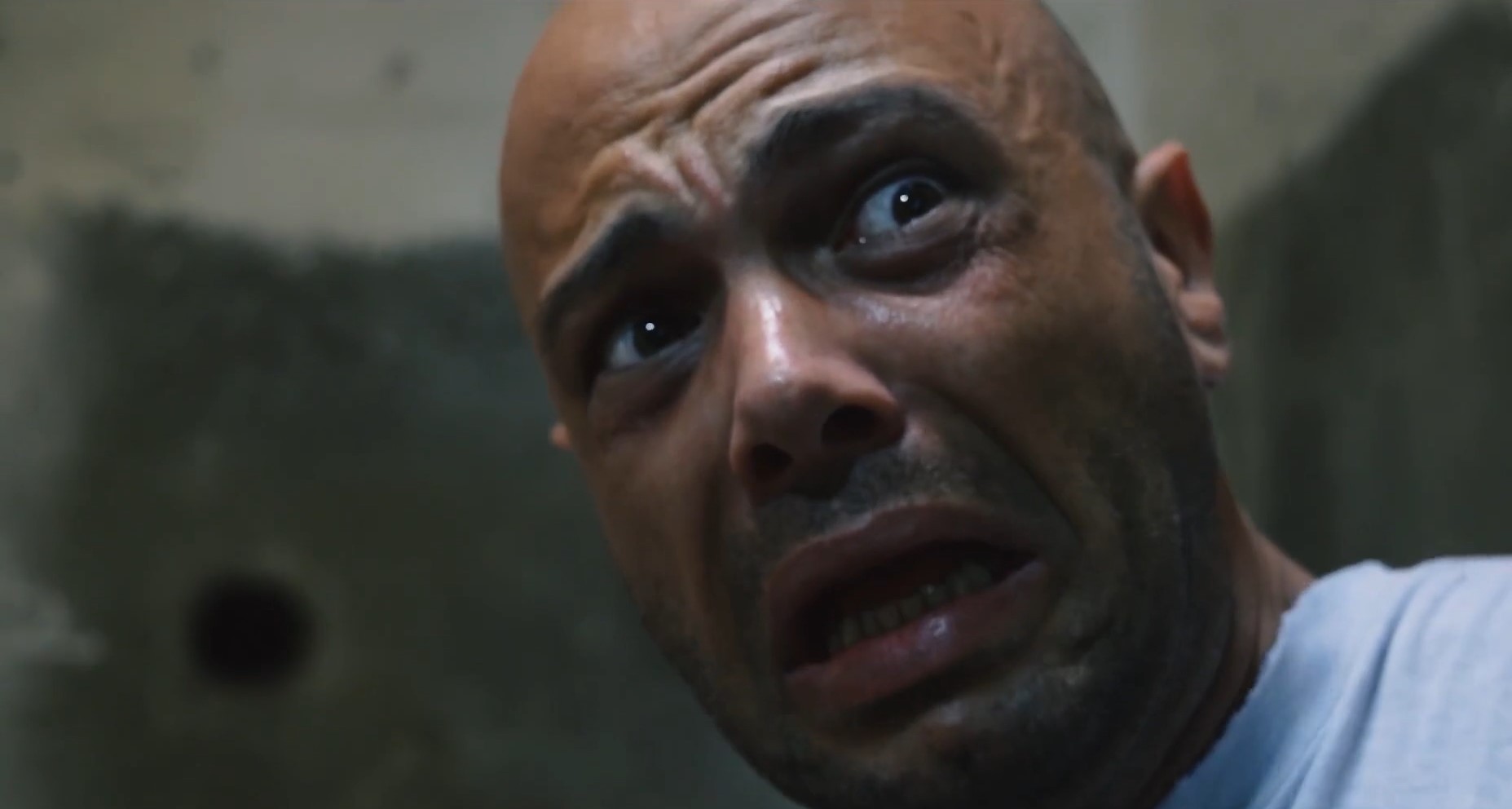
Feminism Fights EVIL The Only Way Possible in “Broken Mirrors” reviewed! (Cult Epics / Blu-ray)

The Best Depiction of the Unpleasant Side of Brothels.  “Broken Mirrors” on Blu-ray.

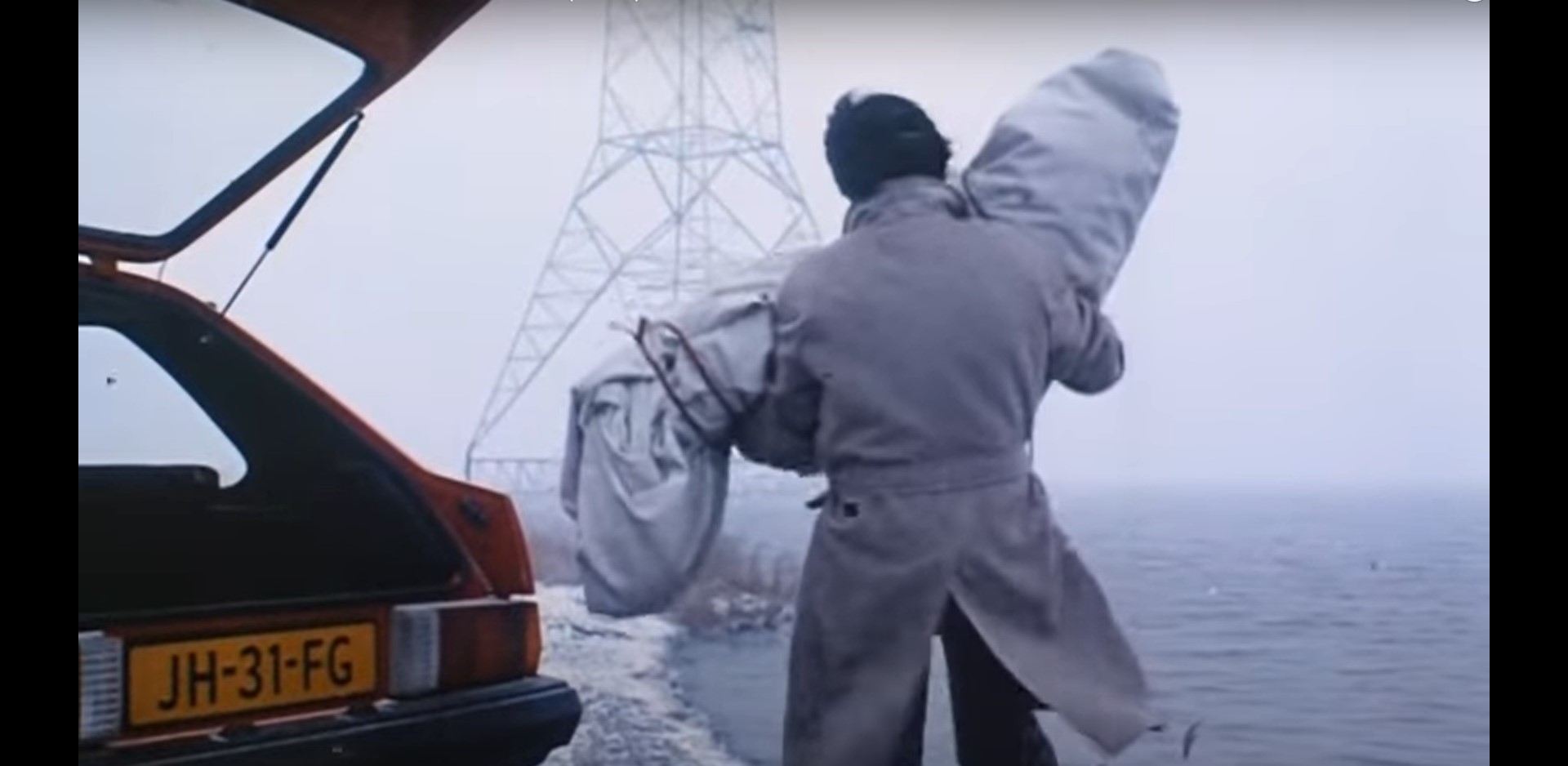
An Amsterdam brothel Happy House Club clings to the good girls that remain employed to pleasure the reprobate and insensitive johns that visit.  Dora, a virtual working girl lifer, brings in new blood, Diane, a young mother desperate in need of financial support because of her drug addicted husband.  Night after night, customers select through the ever-growing service list the club’s owner deems profitable while the women and the matron manager naively cope with a profession that’s quick, easy cash.  They create a process, a standard of procedure so to speak, that tries to make the work that much less degrading but with each client, a little piece of their humanity is chipped away.  Simultaneously, a methodical serial killer abducts the women he previously surveillances from off the street, chains them to a bed in a remote room, takes snapshots of them in confinement, and slowly starves them to death, which could last months.  The two stories are intertwined and connected by a gender dominance disease in which a slow resistance begins to build to an explosive head.
The unofficial sobriquet of the Queen of Feminism Marleen Gorris had made a name for herself as a staunch supporter of feminism and lesbianism with her controversial and provocative films.  Her acclaimed 1982 debut written-and-directed “A Question of Silence” show oppressed gender solidarity and mutiny against a systematically enslaved masculine society.  Continuing her crusade against the patriarchal grain, Gorris followed up “A Question of Silence” with another powerfully messaged, social commentary film that, again, places women emotions and safety under the unyielding thumb of men two years later with “Broken Mirrors.”  Natively known in the Netherlands as “Gebroken Spiegels,” the film marks the return of select cast from her inaugural feature, marshalling in a new narrative in the neo-feminism cinema under the returning production company Sigma Film Productions with producer Matthijs van Heijningen (“A Woman Like Eve,” “The Cool Lakes of Death.”).

As mentioned, a pair of actresses have carried over from “A Question of Silence” to maintain a principal performance in “Broken Mirrors,” beginning with Henriëtte Tol who played the outwitting secretary in Gorri’s debut returns as a woman working in Amsterdam’s red-light district as a seasoned employee of the Happy House Club.  Tol ups the ferocity levels of her previous performance while still maintaining a gradually steady sex appeal.  Another returning actress who nearly didn’t have any dialogue in her previous role as a mother without a voice is Edda Barends now in a character that can’t stop screaming for her life as the latest abductee chained to a cruddy bed in a cruddy room with a coming-and-going, polaroid-enthused sociopath. In Barends starkly different rage against the man machine archetype, the actress finds herself discomposed in the face man she can’t understand but eventually recognizes his nasty need and withdraws it.  Both women excel beyond the unsavory current conditions and transfer the power that’s been dangling over their heads into themselves.  Newcomer Diane, played by Lineke Rijxman, becomes the key to initiate the unraveling of power of a man-owned brothel that subjugates women not as mere employees of a man-owned business but as nothing more than moneymaking ass-shakers and back-layers.  Rijxman puts in the work of having her character be resilient at work and at home as she juggles a wide variety of disgusting clients to please their whims while coming home to deal with a junkie husband’s mess.  As the story progresses and the women fall deeper under life’s heel, Dora and Diane spark what begins as a mutual friendship that slips gradually into sexual tension, giving them more assurances when they need it the most as the brothel parties become bigger and more intense.  The parallel story runs along the same oppressive path but in unconventional, unlawful, and inhuman way with the kidnap and starvation torture of a young mother.  Eddie Brugman is also a returning “A Question of Silence” actor who now finds himself in the shoes of Jean-Pierre, a mild-manner husband and by all rights societally normal seemingly man who visits the brothel for a quickie, easy money as Francine (Marijke Veugelers) would proclaim, but his dark hobby is to snatch unsuspecting women for his own perverse pleasure of watching and hearing them plea for their lives.  By the end of both stories, connected by Jean-Pierre and who finds himself at the end of the disappointing stick for his kicks, crafts more than one way to not give in and to stand up against male malarkey and nastiness.  The cast rounds out with Carla Hardy, Coby Stunnenberg, Anke van ‘t Hof, Elja Pelgrom, Hedda Oledzky, Arline Renfurm, Johan Leysen, Wim Wama, and Elsje de Wiljn.
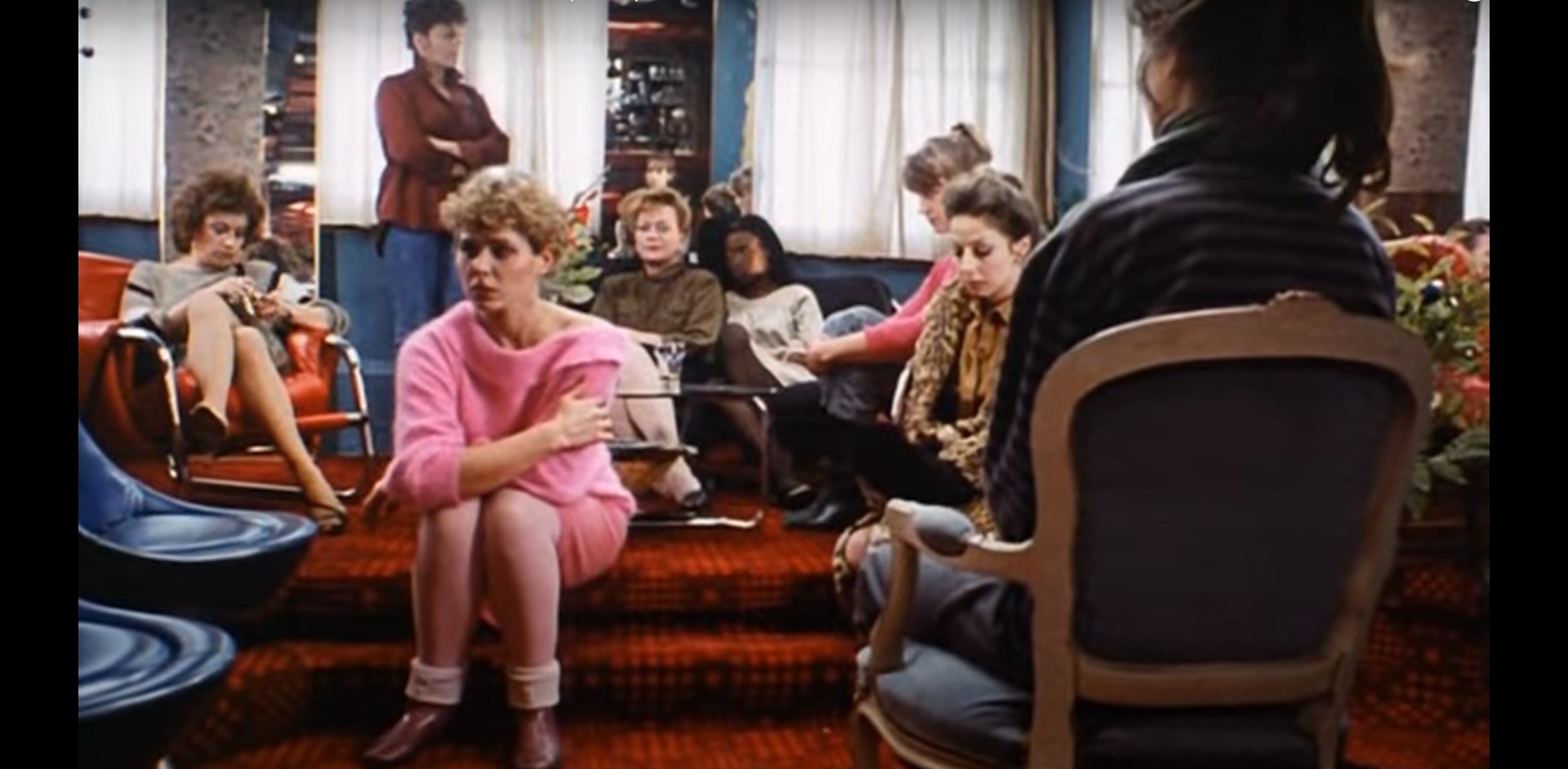
Not only is “Broken Mirrors” another contentious and provocative incendiary story that wedges apart men and women, with the latter being victimized and justified in their actions, but Marleen Gorris also directs one hell of a boiling point intertwining between parallelisms that almost have no link to each other until the reveal.  Gorris doesn’t necessarily employ red herrings to keep audiences guessing but rather keep the killer obscure, as all that we are exposed to see is from behind the man, who doesn’t speak much either and if he does speak, his responses are to the point with as little descriptors and adjectives as possible.  Not only is the editing between simultaneous stories organic but also the other editing techniques that materialize the characters’ emotional decaying befit the mostly linear structure, such as with the student party montage at the brothel that does a roundtable of individualized scenarios between the women and their slimeball clients in an emotionally painful grin-and-bear it series that culminates to which one character best describes the ordeal as feeling like a human lavatory.  The feeling is very much mutual with viewers as well, like a used wet nap to scrub off a soul staining filth covering head to toe, as Gorris represents a thematic exactitude of fiercely dividing feminism that would define her career. A clear understanding of how brothels operate is greatly depicted with that flimsy layer of excitement and efficiency to mask the ugliness underneath.
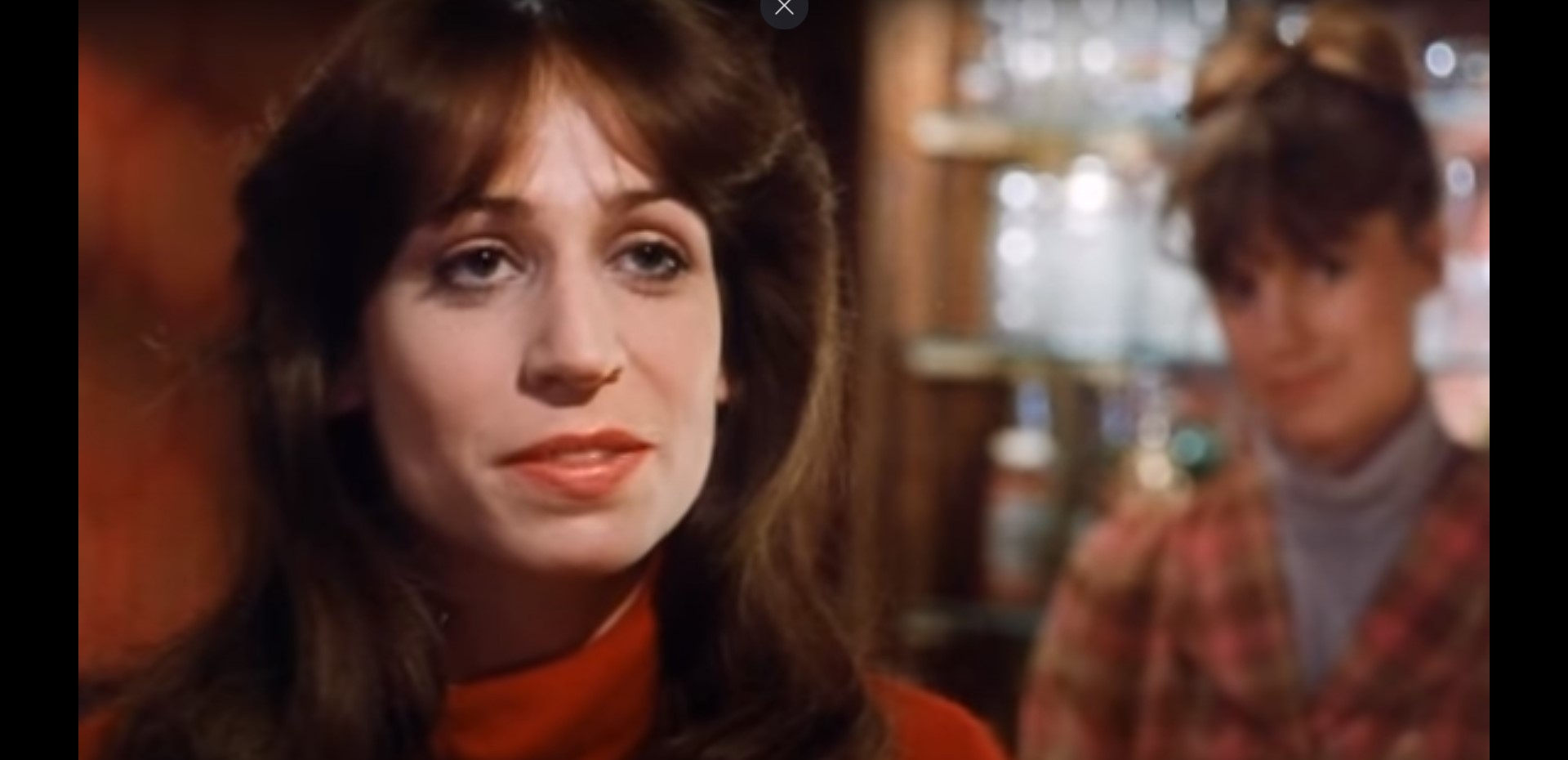
“Broken Mirrors” arrives on a Blu-ray home video from Cult Epics and, once again, resurrects and restores a pièce de résistance of Netherland celluloid. The new 4K high-definition transfer from the original 35mm negative is presented in European widescreen 1.66:1 aspect ratio on an AVC encoded, 1080p, BD50. 35mm print looks none worse the wear over the course of father time with a mint print. Restored color graded has freshened up the natural print palette of the brothel story while the kidnapper’s tale sustains a grayscale to bisect the narrative and the delineation for both presents a palatable depth. The aplenty natural grain doesn’t swarm and takeover the higher pixelations to award us with a satisfying vintage image that now enriched without any smoothing enhancements nor any compression issues to note. The Danish language release comes with two audio tracks: A DTS-HD MA 2.0 Mono and a LPCM 2.0 Mono. “Broken Mirrors” fair well from both dual channel formats with the DTS-HD aggrandizing the Lodewijk de Boer razor synth score with intent that in itself is a character. Comparatively elsewhere, the two outputs offer little differences and sate with forefront dialogue, balanced in front an equally balanced ambient track. Optional error-free English subtitles are available with haste text to keep up with the fast-paced Dutch. Special features include an audio commentary by Leiden University film scholar Peter Verstraten, an archived 1984 interview with U.S. sex worker and activist Margo St. James with Cinema 3 host Adriaan van Dis, a promotional still gallery, and trailers. The Cult Epics Blu-ray comes in a clear, traditional snapper sporting the film’s most iconic and titular moment, displayed also on the disc art, while the reverse side of the cover depicts a still image of Carla Hardy. The region free Blu runs at a not rated 110 minutes. A good double bill against “A Question of Silence,” “Broken Mirrors” makes for a morosely on the trot sister feature in more ways than one to further a Marleen Gorris artfully aired agenda.

The Best Depiction of the Unpleasant Side of Brothels.  “Broken Mirrors” on Blu-ray.

Eventually, You’ll Have to Stand Up to EVIL. “The Retaliators” reviewed! (Quiver Distribution / Blu-ray)

Man Up and Take Back Your Life with “The Retaliators” on Blu-ray!  Click to Purchase from Amazon.

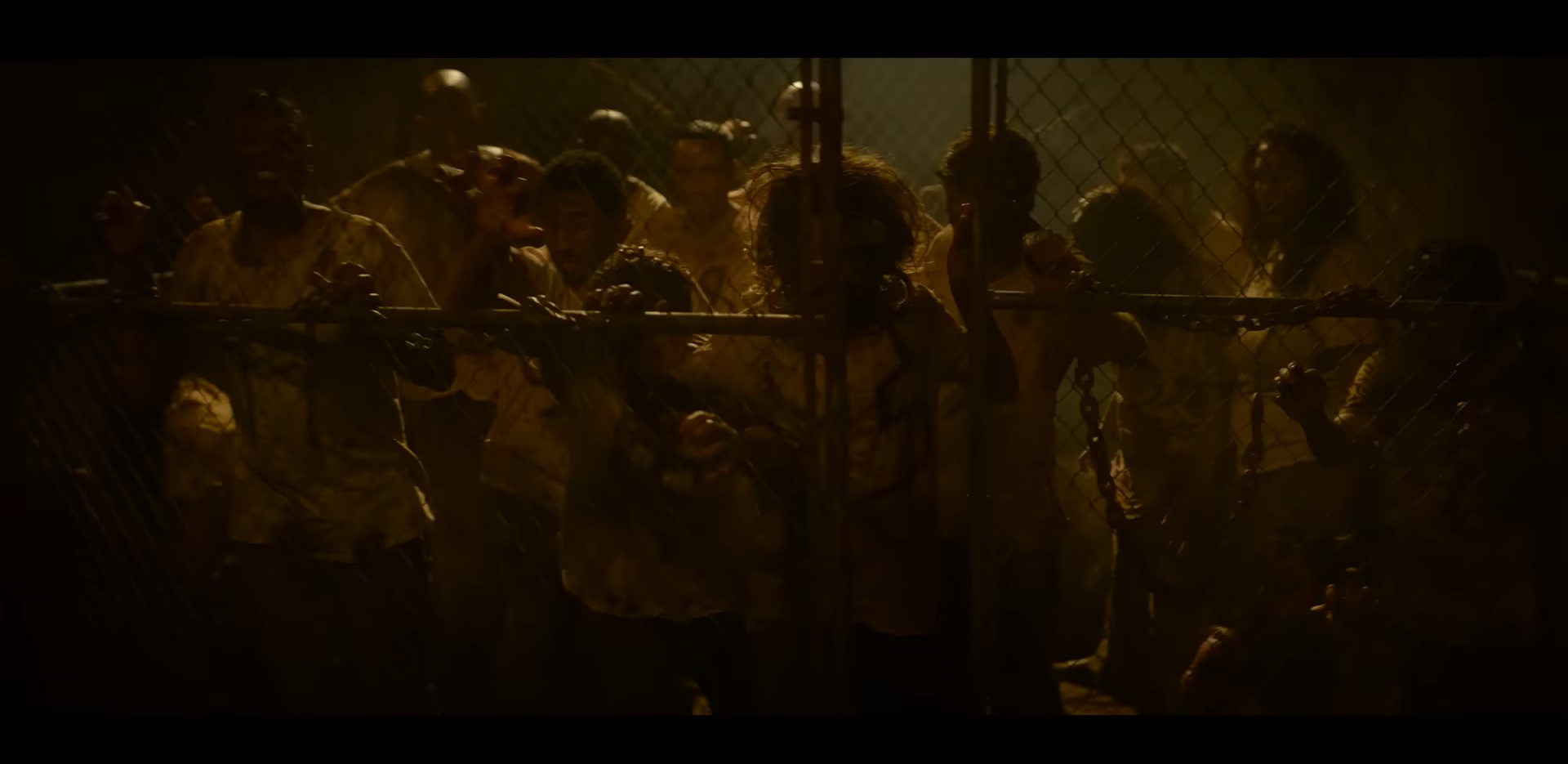
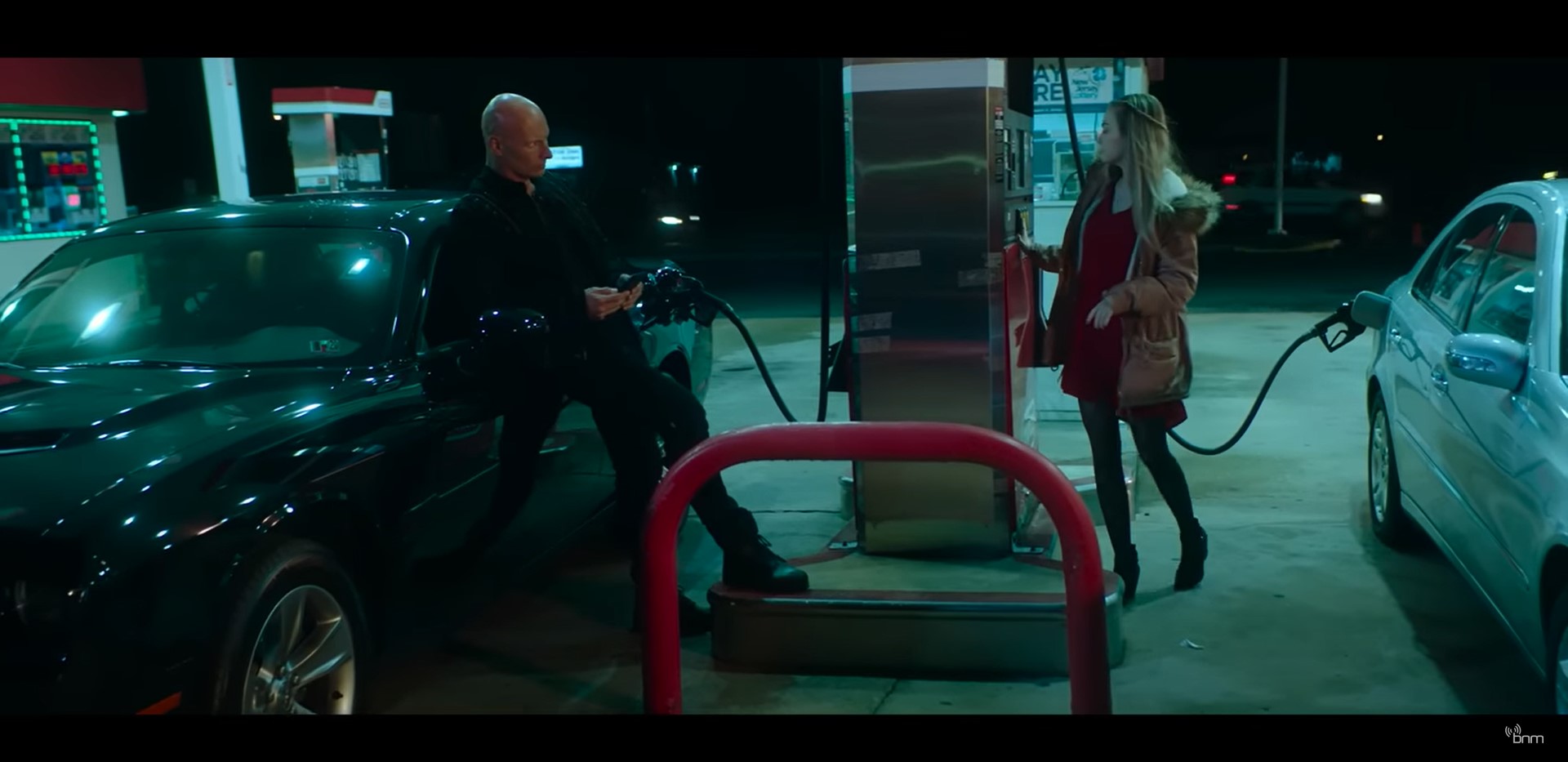
Having recently lost his wife, Pastor Bishop tries hard to keep his two school age daughters safe with an oversight thumb, but when his oldest daughter, Sarah, begs him for the car, God himself knows that the Pastor’s children can’t stay children forever. Bishop fears come reality when Sarah is chased by a sadistic man, ran off the road, and zip tied to her steering wheel as her car is pushed into a nearby ravine. Destroyed by another loss, there is seemingly no way out of the grief hole for the man of the cloth until a Detective, who once shared Bishop’s pain and suffering with a similar, personal experience, introduces him to his isolated former fallout bunker turned torture cabin in the woods with the man who killed Bishop’s daughter chained captive in the basement and next to him sits a variety of melee tools of affliction. Deeper into the Detective’s subterranean dwelling lies a more terrible, caged secret, one that is incidentally unleashed upon the world, and will wreak carnage upon the land and it’s up to the grin and bear it Pastor to take a stand against pure evil.

Frighting for yourself and for special persons in your life is crucial for any self-respecting person to be able to look at themselves in the mirror and say, “I did all I could.” Those who believe in understanding and forgiveness ultimately fall into being trampled on and biting the bullet because just surviving the other end of a contentious situation can be a false sense of security and an opaque veil to the ever-present dangers lurking in every crevice. The 2021 release of “The Retaliators” accouters that theme of following one’s combative conscious to protect what’s dear while also sporting a hefty amount of violence, blood, subhuman psychopaths, and a nearly all nu metal musician cast. Co-directed between from short and music video filmmaker, Samuel Gonzolas Jr., the film’s star and “Central Park” actor, Michael Lombardi, and music video director, Bridget Smith, “The Retaliators” aims to show an ugly, real truth that can affect and twist good men into the same abhorrence and villainy they’ve struggled to repel and resolve. “The Retaliators” mark the first screenplay from the Geare Brothers, Darren and Jeff Allen, is shot across various locations in the U.S., including states Nevada, New Jersey, and Connecticut, and is a production of Lombardi’s Better Noise Films with the company’s CEO, Allan Kovac, and Philly Born Film’s Mike Walsh also producing.

As a company that’s half part a music record label, the film was destined to showcase some of the independent rooted musical and elemental talent of the rock genre, but the narrative is convoyed by a fellow musician, who will humbly admit they are not trained or experienced actors, but rather actors who are rock artist sympathizers, in the case of principal leads Michael Lombardi and Marc Menchaca of Peacock’s new horror thriller “Sick” and who you may not have recognized in the third season of Amazon’s “Tom Clancy’s Jack Reason” as a high-and-tight, clean-cut naval captain. Menchaca is anything but burred cut as a bearded and wavy-haired, somber detective assigned to Pastor Bishop’s (Lombardi) case of his murdered daughter. Menchaca does his work in feeding off the dark energy cocktail of Lombardi’s grief, despair, and vengeance-stricken neo-pastor. Lombardi’s heartfelt performance definitely deserves praise for how one should react in losing a child and also reflects the helplessness that burdens the parent into a black hole of sorrow. As a character, Bishop struggles morally with seeping into and being swallowed by the grim circumstances gifted for him despite however the circumstances may seem to be in his favor. The gears Lombardi has to switch from a faithful person, to rancorous, to then finally a path of soul changing redemption goes smoothly enough to justify his position as principal lead. Menchaca’s demented detective almost feels left out to an extent, but the audience will get enough of a taste to satiate his unglued righteousness. While no love interest makes it into the fold of characters, the narrative does house spots for the nu metal and rock musicians in supporting or minor roles. Papa Roach’s Jacoby Shaddix, Mötley Crüe’s Tommy Lee, Ice Nine Kills Spencer Charnas, Escape the Fate’s Craig Mabbitt, From Ashes to New’s Matt Brandyberry, Lance Dowdle, Danny Case, and Matt Madiro, and Five Finger Death Punch’s Ivan L. Moody, Zoltan Bathory, and Chris Kael are just a select few of rockers you’ll see in “The Retaliator’s” lineup. Personally, I wanted to see more of Jacoby Shaddix as Quinn Brady, a homicidal madman in a horrific cat-and-mouse lark with the detective. Who knows, maybe we’ll see a prequel with Shaddix returning to the role. For the most part, like Shaddix, the musicians are well integrated with diverse roles that range from biker club, to strip club DJs, to bartenders, and to AA participants. “The Retaliators” round out the cast with Katie Kelly (“Deadly Seduction”), Abbey Hafer, Cree Kelly (“Aftermath”), and the massively built and scary-looking Joseph Gatt (“Titanic 666”) as the child-killer strapped and prepped for Pastor Bishop to physically and mentally break.

Better Noise Films is comparable to another divisional filmic offshoot of a larger parent music record label. Cleopatra Entertainment, of Cleopatra Records, often builds film structures and narrative plots around the company’s signed ensembles to promote and market their lyrical and thrash-heavy material as well as putting names to faces and thrusting them out into the world to those who may not have heard of their music. Aside from likely being a huge cost-savings benefit, these films are often scored by their artists, leading to a diverse sounding and electric soundtrack that typically works out less than desired. What the directors end up implementing, musically, yields result only half of the time while the other half is forced unto the audience for the sheer effect of promotion despite the off-putting composition. Not every intense scene needs a band backdrop to flourish raw emotion and pump up the blood but that’s what films, like “The Retaliator’s,” is bred to show off in a marbled genre that has categorical plot pivots all along the way to the grand finale of an all-out brawl, fight for your life skirmish with the criminally and tortured insane. That latter concept is perhaps one of the more interesting and original ideas of reinventing the psychopath that I’ve seen in a long time and the anticipatory excitement and thrills of their release to wreak havoc like barbaric rippers had found moments of great gore excess when Paster Bishop finds his divine strength to help the savage sadists meet their maker by way of machete, a shovel, and a woodchipper. “The Retaliators” make use of familiar horror tropes, such as the fog machine and a blend of lowkey and neon flushed lighting, to conjure an unconventional crypt of rock and homicide, putting its own unique stamp of indirect evil leading to up to another bigger, badder bedlam of things.

Chalked up to be an 80’s-stylized 90’s cinematic horror pulp, with early 2000’s soundtrack, “The Retaliators” arrives onto Blu-ray home video courtesy of Quiver Distribution. The AVC encoded, high definition, 1080p BD50 has a CinemaScope, aka anamorphic, widescreen 2.39:1 aspect ratio. The large storage formatted disc offers more variety as the capacity can handle the expansion of color and range of content. From complex, diversly lit, and heavily foot trafficked interiors to the great outdoors with trees fields, gravel terrain, and watery brooks, the quite a bit that’s going on looks pretty good on screen and the anamorphic widescreen doesn’t have that squeeze-it-in feel either but can’t escape a few scenes of lens flare. Details provide a tactile enamel, but the colors are quite soft with a lower dialed in color grading. The English DTS-HD 5.1 surround sound has more teeth in the soundtrack that overlaps and snuffs out any ambient sound design, essentially making “The Retaliators” a 96 minute, give-or-take a few scenes, music video. Dialogue doesn’t suffer the same backseat fate as the script-to-screen exchanges are in the forefront and though the soundtrack is a bit flat, the original, nebulous-electronic score in between by “Stranger Things” composers Kyle Dixon and Michel Stein does stand out to add a nice underlayer of questionability and suspense. Special features include cast interviews with actors and music artists speaking to their experience on the film, “The Retaliator’s” music video, and theatrical trailer. The physical release comes with a cardboard slipcover on the first pressing with a rendered pseudo-illustrated mockup of pyramid arranged character heads with Pastor Biship standing bloody and machete in hand right smack in the middle. The standard Blu-ray snapper includes the same cover arrangement art as the slipcover. Not listed on the back, the unrated film does support region A playback. “The Retaliators” pumps up the blood as well as the jams during an overhaul of one’s convictions in a baptism by hellfire.

Man Up and Take Back Your Life with “The Retaliators” on Blu-ray!  Click to Purchase from Amazon.

A Gnostically, Esoteric EVIL Acid Trip. “Archons” reviewed! (Syndicado / DVD)

“Archons” are Watching You.  You Can Watch Them on DVD!  Click the Cover to Purchase!

A once promising, up-and-coming rock trio struggles years later to exit the shadow of their only hit song. They embark on an acid-stimulated spiritual canoe trip down the meandering river pathways of British Columbia, hoping the creative juices will flow under the influence while connecting the native wilderness. Along the way, they pick up a beach camping super fan and continue their trek toward mapped out checkpoints and take a hit of acid at each stop. The drugs have seemingly taken effect in a strange, voyeuristic way as if someone, or something, is watching them at each campsite. The visions become terrifyingly vivid as a pair of humanoid creatures rummage through their gear during the night and survey them from afar no matter where the band are or how far they travel. To make the situation worse, the acid they’re ingesting might be the root cause that not only expands their mind beyond the brain’s limited scope but also grows a biological entity wriggling for more room space.

The influence behind Nick Szostakiwskyj’s “Archons” is something fascinatingly outlandish in what’s a simile to the Scientology handbook. Rulers of the realm, creators of the physical universe, guardians of the celestial heavens, architects of the kingdom of darkness, archons, as some historical cultural teachings would have it, rise above traditional and conventional spiritualities with an expanse and infinitude of spiritual knowledge as related to the Gnosticism belief system. For the Vancouver filmmaker, Szostakiwskyj adapts the ideology with a bad acid trip in his 2020 cosmic horror that was once under the working time, “Hammer of the Gods.” “Archons” is the third feature film for Szostakiwskyj and the second otherworldly horror following “Black Mountain Side,” a precursing complementor that also captures the spectacularly natural, yet ominous lit, Canadian terrain in the Winter opposite season compared to “Archons’s'” Summer. The independent Canadian feature is A Farewell to Kings Entertainment production and is produced by Szostakiwskyj with Cameron Tremblay and alongside with the now defunction A Farewell to Kings Entertainment executive producer team of Samantha Carly and Steve Kaszas, who are now in the leadership team of Alright Alice Productions, and James and Susan McDonald.

“Archons” is tightly casted with less than a handful of canoers being spied upon by the gnarly gatekeepers of the universe. The story surrounds the spiritual and drug-laced scull trip of Dog Sled, a three-piece rock band who have lost their creative mojo and star power momentum with a fickle music fanbase. Lead singer Mitchell Ashley-Hoffman doesn’t have the emotional range to synthesize great lyrics but has the vocals of a sway fans and is played with Kurt Cobain-esque and mellow concern by Josh Collins. Rob Raco and Samantha Carly play bassist and songwriter Eric and drummer Olivia, aka Liv, and the pair are more in tune with each other while Mitchell mind wanders and drools over the ride hitcher and tarry eyed fan, April (Parmiss Sehat). The Vancouver based cast have enough chemistry to be slowly dismantling as a band on the fringe of collapse with backdoor dealings from one of them aiming to go solo into the limelight and to hold secrets that lead to life-threatening consequences all in the name of spiritual retreat.  However, to the extent of the being followed, spied upon, and endangered by hostile creatures, the character concern level is too low as if apathy for interdimensional beings that at first were cloaked and now are full view is not at the top of the internal fear alarm list for any of them.  The situation is written downplayed and the subtle actions to understand what’s in front of them mutes the anxiety for the audience.  “Archons” rounds out the cast with radio voices, minor roles, and two archons with Billie-Rae Grant, Lauren Donnelly (“Viral”), Michael Dickson (“Driver From Hell”), Timothy Lyle (“The Revenant”), Cameron Tremblay, Nathaniel Gordon, Marc Anthony Williams (“Black Mountain Side”), and Quinton Boisclair (“Demonic).

“Archons” has this beautiful backdrop of British Columbia’s topographical nature in a panoramic view in a breathtakingly serene opening shot and continues the wilderness motif with a thick forest and a never-ending river that seemingly swallow a group clearly not in their usual element.  “Archons” also has a beautifully disturbing breadth of perception concept laced with drugs and the gnostic universe.  The cosmic horror element is not forced or over-the-top being wrapped and shrouded in ambiguous mystery that keeps audiences glued to the progression baby steps before coming to terms with a dropped veil that causes reactionary looks over your shoulder with every unexplainable sound not in view.  Szostakiwskyj is in no hurry to quickly build an underlayer reality that ties into a dualistic system of two worlds running parallel to each other and colliding when drugs produce the sneak peek behind the curtain.  What shouldn’t be seen is clearly bad for the protagonists’ health, much like drugs in themselves if abused, and Szostakiwskyj plays into that limitation of the mind as if the part the brain or the organism that allows to see it all overloads, or overdoses if you will, the network of tissue and neurons until it bursts outward like a Yellostone geyser in a spray of blood in what is a pretty neat and simple effect, one of the few practical effects by Geoff Ingeberg in this rather performance driven film, as well as a neat scene to behold while the group travels down river when the unexpected pop occurs.  “Archons” is open for a numerous of interpretations, leaving the possibilities endless, but we don’t exactly know where Eric the bassist obtained the snack baggie drugs, what the creatures are intently undertaking, or if the vague final scene is the aftermath of a horrible acid trip gone fatally wrong and has dislodged memories of events, jumbling them up to the point where nothing makes sense and leaves more questions than answers.  The story definitely ends with more desires in detail, delineation, and context but isn’t the less-is-more concept the bread-and-butter of cosmic horror where the unknown is the scariest part that makes us feel infinitely small knowing the world around us is infinitely bigger?

Splice into a new and startling reality with your own DVD copy of “Archons” courtesy of Syndicado Distribution. Stored on a DVD9, “Archons” is presented in a widescreen 2.39:1 that enhances the initial landscape shots in the opening scenes. From then on out, Cameron Tremblay’s cinematography sticks to eyeline mid-to-closeup framing with a here-and-there upward angle to inject foreboding if the scene calls for it. Despite being pitch black, the aphotic zones Tremblay creates without the use of artificial lighting or tinting day scenes provides a sobering and somber authenticity of young people being stalked in the woods. Syndicado stakes a larger storage capacity for a low-budget film and the result pays off despite the decoding 5-6Mbps rate with the blacks looking especially inky without an inkling of compression issues, such as banding or splotchiness that plague darker scenes. The cooler color pallet digs a little more into bleak atmospherics, but there are warm pops of the BC bush with lime green leaves. The English Stereo 2.0 challenges to be more potent than it should be as the quiet and desolate trek the nature should incite more directional channels for a sound design that relies on the rustle of branches and the creatures’ low gutturals off in the distance and in an undeterminable bearing. What’s essentially a bare bones release, the region 1, clear cased DVD comes with the theatrical trailer on a static menu that also includes chapter selection. “Archons” is unrated with a runtime of 88 minutes. A low-key cosmic horror with eye-opening chills, “Archons” is cabbalistic cinema for the selective few who will understand it but does harp on the relatable proverb of with seeking fame comes a price.

“Archons” are Watching You.  You Can Watch Them on DVD!  Click the Cover to Purchase!

Everything is EVILLER in Texas. “The Hoot Owl” reviewed! (Brink Vision / Blu-ray)

“The Hoot Owl” on Blu-ray is Slasher-iffic! Available at Amazon.com!

Blind buying a house is never good idea.  Blind buying a murder house in the middle of nowhere should be on the list of if you bought it, you deserve what’s coming to you.  Scott and April do just that as the recently troubled couple start afresh with a purchase of a fixer upper after suffering a late term miscarriage.  Deciding to not have Chip and Joanna Gains to rehab the dilapidated new residence set deep in the woods, the couple invite a small group of friends and family to assist in the much-needed repair and cleanup.  Interrupting their pass-the-doobie high and their positive high spirits while renewing an old house into a home, death and destruction erupts as a pair of demented squatters don’t take too kindly to the new homeowners. 

As far as debut feature films go, “The Hoot Owl” is a gory practical effect driven, true-to-form independent slasher film born and bred out of the great state of Texas.  The co-directing, co-writing Jasons, Jason Rader and Jason Von Godi, are the masterminds behind the cow head-boned masked killer and the very pregnant and very inbred wild woman lying in wait for the naive trespassers to drop their guard and thin out before the slaughter.  Having worked together for years making short films together, the 2022 released slasher was setup by Rader and Godi as a crowdfunding campaign on Indiegogo, but out of the filmmakers’ flexible 20K goal, “The Howl Owl” concept received a measly $275 from four backers.  That roadblock was only temporary and didn’t stop the aspiring retro-slasher artists to complete their foot-in to the passion project that took over 9 years to complete from pre-production-to-post-production under their co-created company banner, Vanishing Twin Productions, in association with Rise Above Productions and producer Raymond Carter Cantrell.

If you’re going all out to make a slasher film, then you’re going to need victims to slash! Most indie slashers nowadays have a synopsis that begins something like this, “a group of teens go into the woods…,” and just by those few key introductory words, we know perfectly well what to expect as the drinking, smoking, and sex-crazed youth meet the homicidal maniac with a bloody machete in one hand and a decapitated head in the other. There’s a rhythmic comfort in that classic symbiosis. The downside to the structure always boils down to the shot in the dark cast and cast of characters that can make or break a slasher film’s success. Scott (Jason Skeen, “By the Devil’s Hands”) and wife April (Augustine Frizzell) bring along Scott’s longtime good friend Drew (J.D. Brown, “Cross Bearer”) and April’s estranged sister Suzy (Katharine Franco, “The Inflicted”) offer a little bit of everything in a hodgepodge of backstories that don’t quite become reinforced in the end with the exception of April whose miscarriage and loss transcends into twisted maternal madness. Frizzell’s glow for the first two acts doesn’t really yell grief but when the ardency takes over, stemmed by her vivid gruesome dreams of her miscarriage, the Texas-born actress steps up to the plate of a psychotic break. Suzy’s also interesting enough character to spark curiosity with the enigmatic contentiousness in a heartfelt scene of two sisters rekindling their bond while actually actioning those same emotions on screen; instead, Franco enjoys the blithe nature of Suzy’s indecisiveness about school and about her family but discovers a quick and sudden fascination with Drew, the least interesting principal that hires two colorful buddies: Hank (Carl Bailey, “A Ship of Human Skin”), a father of two who a penchant for sexual harassment, and an obvious long hair wig-wearing oddball Bugs (Roger Schwermer Jr.). Bailey resembles pure Texan posture but is stiff as a board in his sleazy contractor role. “The Hoot Owl” rounds out the cast with Joshua Ian Steinburg playing the boned-face killer and Johnny Wright reaching inside to extract his inner Neanderthal-like wild woman ready to emulate a putridly picturesque birth.

“The Hoot Owl” is a by-the-numbers man-in-a-mask slasher riddled with familiar tropes and conventional clichés.  Baseline fact is that the film is not breaking any molds here and won’t be a contender for horror picture of the year.  With that said, and as harsh as that may sound, what “The Hoot Owl” represents is pure spirit and appreciation for what the film ultimately represents – a love for the heyday horror. Rader and Godi firmly believe in their film with a sincere attempt at a feature and pulling all the material together during a near decade-long process to get the film released out into the world. Far from perfect, “The Hoot Owl” relies heavily on the gruesome practical effects and there are some good gory terminations with a piledriving beartrap, a split-head decapitation with a large chain, and a long, rusty drill bit through the eye socket that ends in a spurting splatter of blood. The expo is an impressive effort from Allan David Caroll in his first go-round with the effects trade that could rival the early works of Tom Savini or Greg Nicotero. What breaks up the story most of all are the secondary shoots used to swell and cut into the first-round material shots to beef up a feature production. For instance, the opening credit chase sequence of a maniac cop (at least I think it was a cop) hunting down a man and his pregnant wife is a moment that is never clearly referred backed to, but the assumption is that the pregnant woman is the encountered savage later on in the unveiling climatic and the bone-head killer is her child from the rundown who then impregnates his own heathenized mother…? Connectively, it’s all unclear in unfused ends, causing a break in the signal from the lead-in to the trunk of the story, and that underdevelopment pursues throughout with loops never coming to a close.

In my first brush with Brink Vision since reviewing their DVD release of the 2008 alien transmitted dead-resurrecting bacteria film, “Evilution,” a tinge of satisfaction embraces my little heart to see Brink Vision come back across with a Blu-ray release of their latest “The Hoot Owl,” distributed by MVD Visual. The quick-paced 72-minute film is presented in a widescreen 1.78:1 aspect ratio, is not rated and is region free. Video quality doesn’t represent the best-of-the-best of the 1080p high-def resolution with a commercial standard definition equipment and know this mainly because compression that doesn’t display a myriad of issues. Details are not as sharp and there is banding more obvious in one scene of negative space, but the picture is otherwise free of artefacts and other data loss issues. The English Language 5.1 surround mix fairs much of the same albeit the electrostatic noise. While not overwhelming the dialogue to a point of murkiness, the steady shushing combined with the poor audio recordings can vary the quality and depth with a blunt flatness. Bonus features includes a commentary with directors Jason Rader and Jason Von Godi, a second commentary with Creepy Peepy Podcast, a featurette of Rader and Godi looking back at their 9-year pilgrimage to completion, Godi’s short film ‘The Voyeur,” trailer and still gallery. The physical release has beautiful artwork of the Hoot Owl killer in a throwback, almost Scream Factory-esque, illustration. The back cover is a little wonky with a composite that’s hard to read with deep purple lettering on the credits and bonus material listing almost invisible amongst the black background. “The Hoot Owl” endears the slasher fandom with a callback to the brute strength of a wanton villain and if only the script was smoothed over, this little indie film from Texas could have better laid a stronger foundation.

“The Hoot Owl” on Blu-ray is Slasher-iffic! Available at Amazon.com!

EVIL Atones with Drugs and Torture! “Xpiation” reviewed! (Unearthed Films / Blu-ray)

Atone for Your Sins By Buying “Xpiation” on Blu-ray from Amazon!

An elegantly dressed woman thrones herself into the middle of a grungy corridor, pointing a video camera toward two unconscious men. One man lies face down on the floor while the other is gagged and bound naked to a chair. When both men awake from their slumber, the man from the floor continuously tortures the man confined the chair by beating him, slicing his face open with a knife, scraping his skin open with steel wool, bludgeoning him with a clothes iron, and hammering his scrotum all the while the mysterious woman videotapes. The woman coddles her delusional torturous goon with powerful narcotics and motherly affection to do her bidding. She also participates in a few pain inflicting activities that adds more insult to injury to the beaten to a pulp and humiliated young man hanging onto his life by a thread.

Italian gore and shock filmmaker Domiziano Cristopharo wanted to emulate the notoriously extreme and underground horror series Guinea Pig that originated in Japan and was westernized for North American audiences with their own version of American panorama of sadism. For Italy, Cristopharo set out to create his own compendium of starkly violent and gory films Cristopharo dubs the Trilogy of Death. All three films dealing with a theme of punitive suffering were produced in 2017, beginning with “Sacrifice” that written by Samuel Marolla and directed by Poison Rouge (“A Taste of Phobia”). “Sacrifice” was actually turn Cristopharo’s aspiration into reality when it was picked up by the American Guinea Pig series. The next film, “Torment,” was cowritten by Cristopharo and Likov Milotoskih and directed by Adam Ford (“XXX Dark Web”) that pulled inspiration from the infamous John Wayne Gacy murders. The third and last segment, “Xpiation, was helmed by Cristopharo himself from an Andrea Cavaletto (“Dark Waves”) script that finally placed Cristopharo personal touch upon the series he fully endorsed as creator and producer under his production company, Enchanted Architect.

The principal cast is tightly coiled around just the three individuals in the isolated corridor of a vacant, graffiti painted building.   Right away, we’re intrigued by the opening scene of a sophisticatedly dressed woman with blond hair draped over her left eye.  She’s sitting in an armchair with her exposed legs to the side.  She has forearm length black gloves, lushes red lipstick, a tightfitting low cut short skirt black dress slightly exposed by her short sleeve steel gray jacket with a matching pin hat with a clear veil over her face, a purse around her left forearm resting on her thigh, and a camera clutched in her right hand for viewing the spectacle before her.  The provocative Italian actress Chiara Pavoni is the sharply eye-catching center figure amongst the rumble she sits and the two disheveled men she videotapes. Having had roles in previous obscure horror, such as “Demonium,” “Bad Brains,” and VelvetMorgue,” Pavoni established herself as an Italian scream queen that suited her more domicile, yet underhandedly authoritative, role as the Lady in “Xpiation” that has since been a springboard for her career working with Cristopharo on a number of future projects.  We see what Cristopharo sees in the mature in age actress:  a commanding presence with range and willingness to absorb extreme content for the sake of art.  As the Lady, Pavoni orchestrates the drug-fueled violence of Simone Tolu’s character, the drug addict.   Tolu’s crazed approach to a hallucinating and aggressive, substance abusive druggie is more childlike that crosses the line into overzealous disability.  The addict is supposed to be under the Lady’s narcotic spell, bewitched by her motherly presence in feeding love to him by way of various powders, pills, and penetrating needles of unknown liquid matter and while that is certainly what’s on screen, Tolu oversteps his swiss-cheese child mind into more of just maniacal horseplay that cheapens the desired effect.  One of the easier performances in the film is from Emanuele Delia who has to sit naked in a chair, bound and gagged, and take Tolu’s manhandling beatings for most of the duration.  Delia has a handful of scenes where he’s engaged with the Lady in flashback and an existential representation finish but neither one of his three-sided role squeezes out a smidgen of dialogue, reducing his inked and pierced body to be a model of crime and punishment, or in this theme, sin and atonement.

Sin and atonement.  “Xpiation” is simply that.  A minor reconstructing toward a more panache play on the word expiation, the act of making right for wrongdoing, to home in on concluding Cristapharo’s Trilogy of Death.  “Xpiation” expresses this message in the form of vengeance in an exploitation playground of brutality where eye-for-an-eye is a steep slide toward grinding a sinner into the rubber mulch of penitence.  Cristpharo directs a straight up torture film that aims to avoid a fanciful apathetic and really divulges itself into humanizing the torturer with flashbacks of far-from-comfortable life.  Multitudes of abuse fester in the Lady’s past until it suppurates outward after one final act of transgression pushes the Lady beyond the point of enough-is-enough and every ounce of anger and hate that’s been bottled up tightly all the years is shook so hard the cap finally explodes into a meticulously premeditated plan for revenge and relief. Non-linear avant garde is Cristpharo’s go-to storytelling weapon, one that provides “Xpiation” with more layers than just surface level brutality as the director spoon feeds the audience with little bits and pieces of the Lady’s background. As he accomplished with his breakout film, “House of Flesh Mannequins,” the filmmaker is a master at commanding the pace, a maestro del ritmo!

You can now own a piece of the trinity or conclude Domiziano Cristopharo’s trilogy of death with a Blu-ray release of the last installment, “Xpiation,” as the director attempts to revive erotic-horror and institute extreme horror in his home country of Italy. Unearthed Films, a leading distributor in gore, arthouse, and horror films, releases an AVC encode full high definition, 1080p, Blu-ray in a standard widescreen 1.85:1 aspect ratio. Distributed by MVD Visual, I tested the Region A release on a Region B setting and was able to play the not rated film in its 73-minute entirety. Image looks consistently good and more gruesome with the closeup mauling of skin. Colors are vivid enough in the blood and in the contrast, through good lighting, of the lady’s aristocratically lush and starkly colored outfits compared to the bleak rubble that surrounds her. Often, during the flashbacks, does the coloring dull or reduce to indicate flashback. The English dubbed PCM 2.0 stereo is where most of the inconsistencies lie with an uneven dialogue track due to the forced English upon English dub, as the actors are basically whispering their lines in English, and “Sick Sock Monsters from Outer Space’s” Antony Cola’s industrial hum and brood soundtrack masks the dialogue to a muddled intelligibility. I wonder why if the plan was to always dub the film in English, why even bother with dense accents? The bonus features include a decent blooper reel that showcases a lot of the dubbed dialogue, an interview with director Domiziano Cristopharo as he goes into the construction and issues of his seeing his trilogy to fruition, a still gallery of the film, and trailers. With “Xpiation,” Cristopharo continues to amaze and impress with small bubble stories that seldomly traipse to new locations, sticking to a confinement and cruelty disposition, and still be able to build interesting, layered characters trounced in pain and dripping with blood.

Atone for Your Sins By Buying “Xpiation” on Blu-ray from Amazon!