
Trapped Inside His Own Body While EVIL Buries Him Alive! “Short Night of Glass Dolls” reviewed! (Celluloid Dreams / 4-Disc 4K UHD and Blu-ray)

Collector’s Run to Grab Celluloid Dreams’ “Short Night of Glass Dolls” on 4K UHD and Blu-ray!

Gregory Moore’s body is found motionless and wide-eyed in a Prague Plaza and is confirmed deceased by local doctors, but Moore is actually alive, paralyzed and trapped inside with only his inner voice able to cry for help.  As his mind races about how to communicate with those around him, Moore must recall the previous days events to see how he ended up this way.  Days before, the American journalist, currently stationed in Prague and soon to be relocated in another European country once his assignment comes to term, is visited by his beautiful girlfriend Mira and they attend an affluent party hosted by socialite Valinski.  Soon after, Mira disappears from his apartment late a night, leaving all her belongings behind in his apartment and as the police begin to suspect Moore as primary suspect, the journalist uses his trade to discover a powerfully mysterious and sexually depraved organization, known as Klub99, may be behind her disappearance.
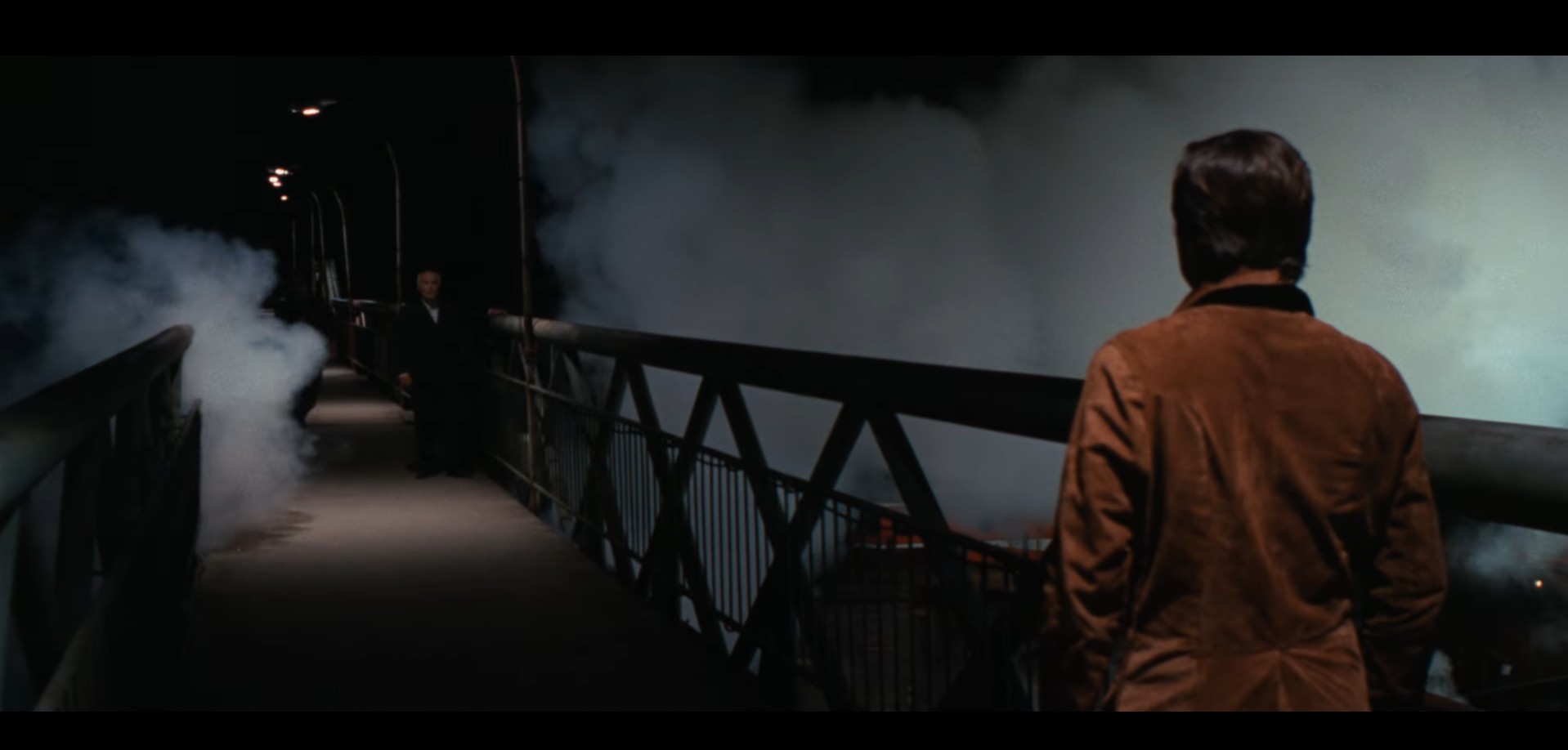
Aldo Lado’s written-and-directed murder mystery goes by many Italian and English names:  “Short Night of Glass Dolls,” “La Corta Notte Delle Bambole di Vetro,” “Malastrana,” “La Corta notte delle Farfalle,” “The Short Night of the Butterflies,” and, finally, “Paralyzed.”  Doesn’t matter what you call it, “Short Night of Glass Dolls” needs very little title nomenclature as Lado, a dark sided and rich yarn spinner of Italian cult cinema with credits like “Who Saw Her Die?” and “Last Stop on the Night Train,” debuts his 1971 tale of mystery with precision and style that speaks global themes of affluent power for the sake of retaining that power as well as their youth.  The Italian production is a cross-country affair being filmed in not only Italy but also in Croatia, Slovenia, and Prague and is a production of Doria Cinematografica, Jadran Films, and Dieter Geissler Filmproduktion with Enzo Doria (“Beyond the Door,” “Tentacles”) and Dieter Geissler (“Kill! Kill! Kill! Kill!,” “The NeverEnding Story”) as producers.

“Short Night of Glass Dolls’” American protagonist was actually not played by an American but by French actor Jean Sorel with a handsome stached face, bronze swagger, and whose taste of giallo carried into the Lado film after acting in “The Sweet Body of Deborah” and Lucio Fulci’s “A Lizard in Woman’s Skin.”  It’s not surprising or even uncommon for a 1970s through the 1980s Italian production to cast non-native Italians to star and perform as Italy sought foreign talent to be highly marketable abroad and “Short Night of Glass Dolls” is bursting with international talent from America, Yugoslavia, and Sweden to perform alongside Italians.  The only American in the film is the petite and lovely Barbara Bach whose career was mostly a decade and half of Italian films, including “The Great Alligator,” “The Humanoid,” and “Black Belly of the Tarantula.”  Bach’s short stint as Moore’s girlfriend, Mira, is the epitome of innocence and cherished love, an quality lost by Moore because of his work blindness and his philandering with colleague Jessica, “Salon Kitty’s” Ingrid Thulin entrenched into Jessica’s passion for Moore but also keeping a stark low-profile on her looks against Mira with Thulin’s naturally blond hair contained in a colorful headwrap for most of the film.  The love triangle is downplayed from the early revealing signs that Moore may be playing both sides but from the moment Mira vanishes, Moore and Jessica, along with fellow journalist Jacque (Mario Adorf,  “What Have You Done To Your Daughters?”) become a single unit of vocation to find Mira and they bitterness drains from Jessica to just despair by the shocking finale when all the cards laid upon the table.  Lado neatly keeps a tight lid on Klub99’s patrons with only the assures of Valinski as the organization’s ringleader of undisclosed purpose.  José Quaglio (“The Eroticist”) dons well as the oligarchal head keeping a low profile that emerges out like sordid serpentine of perversion and wickedness.  Daniele Dublino, Fabijan Sovagovic, Relja Basic, Piero Vida, and Semka Sokolovic-Bertok are the Croatian and Italian support actors that fill out the cast. 

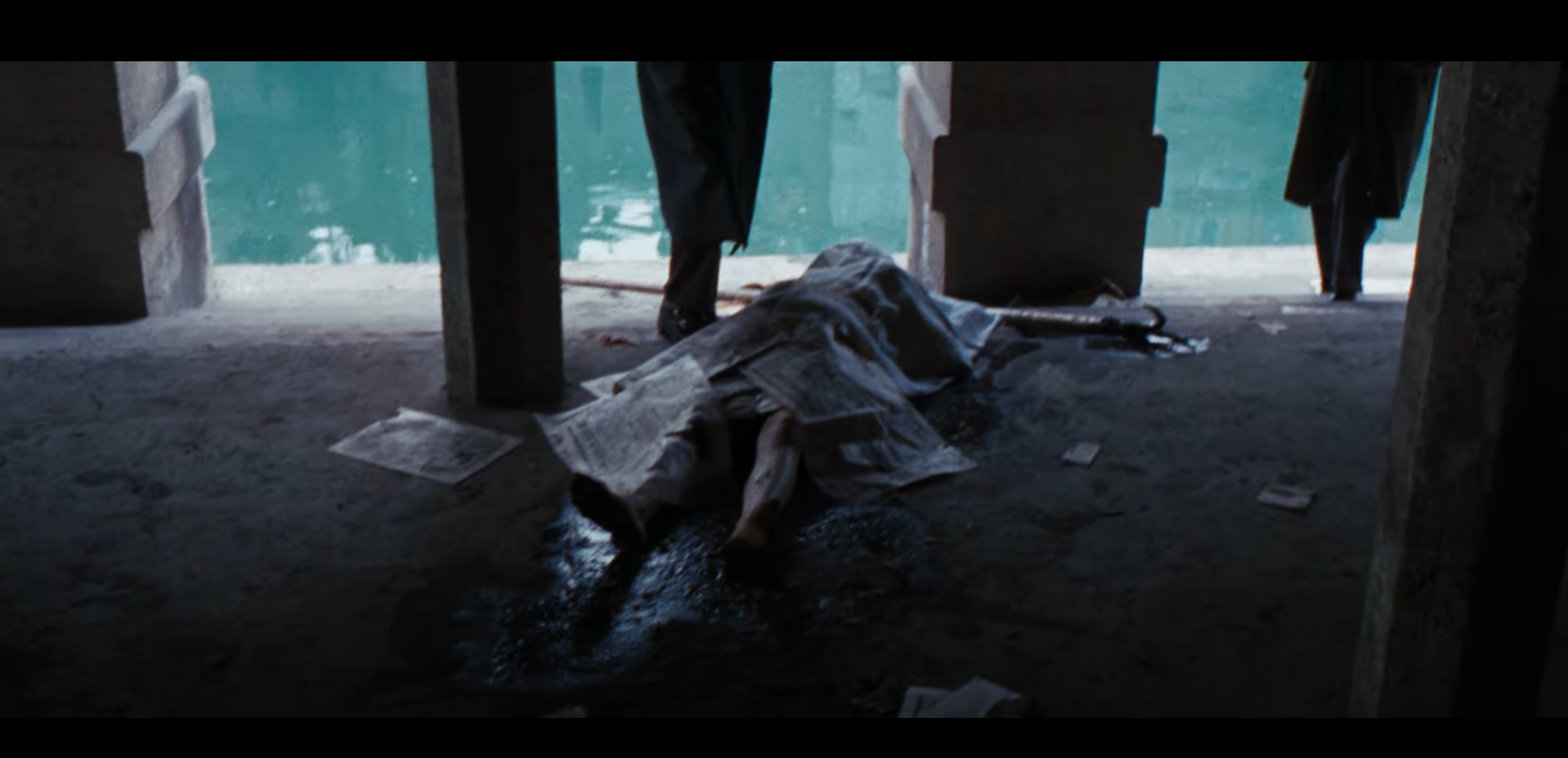
Aldo Lado’s debut film pins him as a productional prodigy with a naturally gifted cinematic eye and a phenomenal storyteller.  “Short Night of Glass Dolls” sallies forth in an untraditional, nonlinear narrative through the perceptive procession of a paralyzed man’s thoughts and recollections.  That man being journalist Gregory Moore who audiences are first introduced lying motionless in the bushes of the plaza morning and, from the start, Moore is at the mercy of bystanders, medical professionals, and friends who mostly believe he’s dead but, on the inside, is in his thought’s echo chamber screaming for help.  Every frame captures the act and emotion, amplified even more so when Jean Sorel is absolutely still, eyes open, and withstanding forces upon, such as chest compressions, to which he doesn’t even flinch.  Lado finds beauty in the macabre imagery when dead women are laid out nude, splayed with an arrangement of flowers or juxtaposed wet against a dry paved ground.   Lado also doesn’t cater to a fixed position and, instead, tracks the characters with smooth movements, coalescing at times a back-and-forth or side-to-side to get lengthier, more dialogue and dynamically enriched, scenes with director of photography, Giuseppe Russolini (“Firestarter”), achieving a naturally dissemination of lighting and color.  “Short Night of Glass Dolls” is not a film without flaws as Moore’s investigation takes the easy pickings route as if briefly glancing over the reported missing, naked women list is an automatic ladder to the winner’s circle for unearthing mostly everything of an deprave inner circle of the powerful rich and so Aldo cheats a little to give his story’s theme of flightless butterflies some much needed wings.
Following up on their definitive, carefully curated, stunning release of Giuliano Carnimeo’s 1972 giallo “The Case of the Bloody Iris,” Celluloid Dreams doesn’t pump the breaks delivering their latest “Short Night of Glass Dolls” with an all-encompassing, 4-disc collector’s edition set that includes 4K UHD and Blu-ray. Scanned and restored in 4K from the original camera negative, the UHD is an HVEC encoded BD100 with 2160-pixel resolution and the Blu-ray is AVC encoded BD50 with 1080-pixel resolution. It goes without saying that both transfers are impeccable in their damage and blight free form for those who might have owned or once owned the cropped, VHS-sourced release under one of its many titles, “Paralyzed.” The grading blends a natural, dynamic pop with peppered psychedelic trips down the dark rabbit hole with Klubb99 is open for business and the color is diffused with balanced, natural saturation, adapting to lighting of all varieties. UHD offers a richer depth of focus with the increased pixel Dolby Vision seizing better delimitation around objects, but that doesn’t mean the Blu-ray doesn’t do the same, the UHD just enhances it by a quarter approximate percentage, while still keeping healthy, transpicuous grain. Two fidelity-true 1.0 DTS-HD offers mostly a dialogue entrenched mix that, audibly, has an imbalance against a rather omitted ambience and that’s not the release’s doing but rather a lack of Foley work amongst an ADR English or Italian track. Ambience hits where it counts but there are times when establishing shots or slow pans of Prague go nearly into a coma state, letting the dialogue and the renowned Ennio Morricone’s piano, triangle, and melodic vocal score take flight through the course of the mystery. English subtitles are available for the Italian language track. Disc one and two not only contain the feature but also contain identical extras with writer-director Aldo Lado & and Freak-O-Rama’s Frederico Caddeo feature-running commentary, a second parallel commentary track with Celluloid Dream’s founder Guido Henkel, an assortment of trailers labeled as grindhouse, Italian, English, and the Catalepsis, with an isolated score that pedestals Ennio Morricone’s score. Disc three delves into the Italian-language, English-subtitled feature documentaries and featurettes with a 2015 archived interview The Nights of Malastrana, clocking in over 100 minutes, that have isolated discussions with Aldo Lado and actor Jean Sorel, All About Aldo is another archived interview with the director circa 2018, The Quest for Money is an interview with producer Enzo Doria, To Italy and Back touches base with producer Dieter Geissler’s perspective and historical context, The Most Beautiful Voice in the World interviews Italian singer Edda Dell’Orso’s haunting vocalizations on Morricone’s score, Cuts Like a Knife speaks to editor Mario Morra, the Flying Maciste Brothers’ video essay The Man on the Bridge: Philosophy, Perception and Imprisonment in Aldo Lado’s ‘Short Night of Glass Dolls,’ the alternate title Malastrana’s German export credits, and an image gallery. Finally, disc four brings the encoded special features home with not one, but two alternate cuts of the film, a 35mm Grindhouse version and the cropped Paralyzed VHS version. If you thought the encoded special features weren’t hefty enough, Celluloid Dream’s physical presence is certainly imposing with a rigid slip box with newly designed cover compositional cover art on back and front, a massive 64-page color picture and poster booklet features a retrospective essay from Andy Marshall-Roberts as well as reprinted column and magazine reviews from the film’s initial release, and, of course, the thick Amaray case, which is surprising in the traditional Blu-ray blue rather than the 4K UHD black. The cover art is an original rendition that brings all theme elements of giallo into the illustrated fold in circling chaos of catalepsy with the reverse side displaying the same image but titled in Italian. Inside, an advert for “The Case of the Blood Iris” and their upcoming third title “La Tarantola dal Ventre Nero” is inserted. The 4K is region free while the Blu-ray is hard coded region A. The unrated main feature has a runtime of 97 minutes.

Last Rites: Celluloid Dreams pursues excellence and strikes twice achieving it with a heart-and-soul poured release that by far has blown all other limited-edition copies, collector sets, definitive releases out of the water and “Short Night of Glass Dolls” deserves every bit of the attention.

Collector’s Run to Grab Celluloid Dreams’ “Short Night of Glass Dolls” on 4K UHD and Blu-ray!

EVIL Tossing Back an EVIL Hail Mary! “The Last Match” reviewed! (Cauldron Films / Blu-ray)

“The Last Match” is Now on Blu-ray From Cauldron Films!

A sovereign, Latin American banana republic is a beautiful paradise for those seeking tropical getaways, such as with 18-year-old Susan Gaylor and her boyfriend George indulging in paradisial romance, but paradise turns into hell when Susan is accused of smuggling drugs out while going through the departure gate at airport security.  George flees the scene to evade capture and phones Susan’s father, famous football quarterback Cliff Gaylor, to help administer talks to release Susan.  When negotiations fall on deaf ears, the American consul is handcuffed by little-to-no relations with the incarcerating nation, and the local counsel are nothing more than greedy exploiters, Cliff and George have no one and nowhere else to turn to except for Cliff’s team of broad shoulder teammates and a gameplan-calling coach dedicating their lives to suit up and extract Cliff’s daughter from the cruel grip of Warden Yashin and his miscarriage of the law and order with an all-out offensive assault.

Italian filmmakers directed a football movie.  No, I don’t mean fútbol, aka soccer.  I’m talking about American football with face-masked helmets, shoulder pads, and a prolate spheroid shaped ball with laces you kick through the uprights.  The contradictory idea isn’t so much of a theorotical concept as it is a reality with Fabrizio De Angelis’s directorial attempt at pigskin gridiron in the early 1990s.  The “Killer Crocodile” director helms the jailhouse break picture entitled “The Last Match, or “L’ultima meta,” released in 1991, from a script by fellow Italians Gianfranco Clercic (“Cannibal Holocaust,” “The New York Ripper”) and Vincenzo Mannion (“Murder-Rock,” “The Last Shark”) that blitzes hardnosed foreign opponents with not only high caliber assault rifles and ammo but also done in full team gear, right down to the numbered jerseys and cleats.  Angelis produces the shot in the Dominican Republic film with Mark Young serving as executive producer with Fulvi Films as the production company.

Not only does “The Last Match” have a theme around an American sport, but it also employs a nearly all-American cast, a popular course of casting once the Italian industry started to gain traction and making films in The Boot proved to be more costly at the time, plus American actors were also far more marketable than Italian actors.   Ernest Borgnine (“Escape from New York,” “The Poseidon Adventure”) plays the fair-weather looking coach who knows common football terms, about as generic as coaching on screen comes without dipping into play strategies and being inundated by the game.  Borgnine’s cruise control motivation is equaled by Charles Napier (“Supervixens,” “Rambo:  First Blood Part II”) in the performance of a hands-tied American Consul stationed in the unnamed tropical country.  While Borgnine and Naiper act in natural nationality aspects, there are also another pair of Americans who transition their talents to be native islanders who are subsequently more deviously portrayed in what becomes a pro-American, anti-foreigner perception.  The actors, whom are also both New York City born, are Martin Balsam (“Death Wish 3,” “The Delta Force”), as a greedy local defense attorney who tries to exploit Cliff Gaylor’s desperation, and Henry Silva (“Almost Human,” “Allan Quartermain and the Lost City of Gold”) with his wide face stretching a maniacal grin as the sadist warden Yashin and though Balsam and Silva tout the root of evil archetype, molded to their individualized immorality, they barely fit in the framework of Latin American men with a less than convincing swarthy spray tan.  In the middle of it all is German-born “’Tis Pity She’s A Whore” actor Oliver Tobias as football star father, Cliff Gaylor, determined to try every line of legal offense to acquit his daughter for the firm hand of the country’s tight authoritarian, punitive system.  Gaylor’s arc possess a line of natural progression through anger, confidence, and desperation, and perhaps even a little bit of all hope is lost but does become stymied, or neutralized, but Coach’s unconventional jailbreak playbook that sends Gaylor into the backseat though he still quarterbacks the mission, at least on paperwork.  Melissa Palmisano as the Gaylor’s wrongfully incarcerated daughter Susan and Rob Floyd playing her determined to help but pretty much young and useless boyfriend George fill out the remaining principal cast alongside bit part support from Jim Klick, Jim Jensen, Jim Kelly, Mike Kozlowsky, Mark Rush, Bart Schuchts and Elmer Bailey as Gaylor’s football brethren in arms. 

As for escape from foreign prison/work camp films go, “The Last Match” ranks at mid-range with a plausible conflict involving being a foreign tourist patsy to mule drugs through airport customs only to be caught, charged, and sentenced to be condemned without fair due process and entitled to incorruptible legal representation.  The scenario enacts frightening destabilizations of a pre-CCTV and security vigilance airport situation, evokes hopelessness of relief or assistance within a near lawless republic, and you can feel Gaylor being drained of all avenues where even his fame and fortune can’t even muster any type of traction in releasing his daughter.  Being a father myself, there’s a compelling aspect to see an expat father helpless in strange surroundings, suppled by indifferent and aggressive native blockades in a corrupt system, with his only choice then being to extract his only child with violent force.  This is the point where the compelling subjugation stops and the gaminess of the story begins to unravel when Coach brings the boys to the yard, yard being the tropical island, to acquire an arsenal, helicopter, and suit up in their conspicuous gridiron gear for an all-out prison assault.  Garbed in bumblebee yellow football pants, black helmets, and white jerseys, the elite wildcat formation commando unit isn’t dressed to blend into the background, foliage, or even the night with their reflective color gametime getup.  Coaching from the sky, Borgnine is perched high in the helicopter calling off plays while his offensive team makes quick and dirty work of the island prison defense without nearly a fumblerooskie.  Conceptual neat for the movies, but practically asinine for reality, “The Last Match” favors the fortunate heroes with a near obliteration of the entire prison camp without a single loss to their own, especially when they’re not in any kind of bullet resistance helmets or vests.  Fabrizio De Angelis runs the ball with confidence in his mildly amusing sports themed actioner as he’s able to blend footage of a national police bowl game into his narrative by fashioning matching football uniforms.  About as surprising as a fleaflicking trick play to win the game, “The Last Match” is worth going for the endzone on 4th and long.

A pulled-pin pigskin grenade explosion thrill ride in the tropics is “The Last Match’s” hard-hitting American football done the Italian way. Cauldron Films’ new Blu-ray release is the U.S. home video and worldwide debut from a new 4K restoration from the camera negative.  The AVC encoded, 1080p high-definition, BD50 presents the film in the original aspect ratio, the European widescreen 1.66:1.  There’s hardly anything to fault in this clean, sharp, diffused color saturated picture from a well-stored camera negative that has seemingly suffered no time or external wear and tear.  Grain appears naturally disseminating into a favorable detailed reproduction print with skin tones that are organic and don a nice sheen and rivulets of sweat when things get heated in football and in armed assault.  Tropical landscape remains focused in back and foregrounds, especially in instances of Giuseppe Ruzzolin’s (“Hitch-Hike,” “Firestarter”) mirror reflection shots, but not a ton of wide or long shots to take in the scope of the Caribbean battleground, limiting scenes to medium-to-closeups that crop the milieu quite a bit when you’re trying to sell a large-scale football bowl game or an ambiguous kakistocracy tropic nation.  The English language DTS-HD Master Audio 2.0 provides lossless fidelity with full range diffusing evenly through the dual-channel output, separating decisively the dialogue and the action.  With a majority of the cast native English speakers and having been filmed party in the U.S. and in the western hemisphere, ADR is not the main source of recorded dialogue with boom work providing and capturing the distinct voices and personalities of some of the more recognizable voice talent, such as Ernest Borgnine and, especially, Charles Napier’s Kentuckian twang.  However, there’s quite a bit of hissing feedback sporadically throughout.  Action depth is a bit front loaded, naturally with any dual channel, with the explosions and gunfire that never quite hit the same distance markers but do excel in being robust where needed.  English SDH subtitles are available.  Cauldron conjures new and exclusive special features with an interview with special effects artist Roberto Ricci Blown Away, a minidoc about American actors in Italian cinema narrated and directed by Mike Malloy, Italian film aficionado Eugenio Ercolani provides a video essay Understanding the Cobra, a commentary by Italian exploitation critic Michael A. Martinez, an image gallery, and the film’s trailer.  Cauldron Films has continued to provide eye-catching artwork with reversible cover sheets and “The Last Match” is no exception with dual compositional illustrations of football players wielding AR15 rifles and bazookas, though I’m not so confident the illegal purchase of Island armory would be police issued AR15s and bazookas.  Just sayin’.  There are no other tangible supplements with this release.  The region free Blu-ray is not rated and has a 94-minute runtime.

Last Rites: An Italian film using big named American actors pitting an armed, American football-cladded, rescue team against a hostile and sinister island prison, creating “The Last Match’s” action extraction of hairbreadth escape and pulling it off!

“The Last Match” is Now on Blu-ray From Cauldron Films!

No Film is Complete Without a Flying EVIL Baby! “The Necro Files” reviewed! (Visual Vengeance / Blu-ray)

A

I Want To Believe…That You Will Check Out “The Necro Files” on Blu-ray!

An unhinged serial rapist terrorizes the young women of Seattle, ripping into shreds their internal innards and even dabbles in tasting their flesh.  Two detectives hellbent on stopping his reign of terror intercept the killer in the middle of an attack.  Though too late to save the girl, the detectives shoot six slugs into the rapist, stopping his continuous, heinous sexual assaults and grisly murders…at least for nine months later, when a satanic cult resurrects the zombie cannibal rapists from the grave after sacrificing the rapist’s bastard baby from his only surviving victim.  The killing spree begins again and this time being undead provides superhuman strength and a larger penis.  The two detectives, now embroiled in their own corruption, must embark on another manhunt while two of the satanic cult members, seeking to undue the horrors they’ve unleashed, willingly summon a demon into the dead baby to counteract the zombie cannibal unbeknownst to them the demon baby will kill anyone it’s in airborne trajectory.

Just from the above synopsis, this film sounds nuts, darkly funny, and depraved all wrapped into one undisclosed file of sex, gore, and floating baby dolls.  And, you know what?  It’s all true.  The creator behind all this madness is Matt Jaissle who helms the shot-on-video “The Necro Files” as an underground horror spoof of a popular science fiction you made have heard of – “The X-Files.”  The Truth is out there.  Well, the truth is actually not in the sky, it’s under the dirt, it’s inside some scantily cladded woman being molested by a rotting corpse, and it’s in a doped-up cop looking to wipe all the scumbags off the face of the Earth.  The 1997 released is co-written between long time Jaissle collaborators Todd Tjersland (“Faces of Gore” series) and Sammy Shapiro, based off of Tjersland sleazy horror comic series “Psycho Zombie Love Butcher,” and is the third film from Jaissle that solidifies the filmmaker as a certifiable depravity and gore-meister that has themes of rape, necrophilia, heartless exploitation, and disembowelment clothed as clearly a comedy.  Filmed around the surrounding Seattle, Washington area, “The Necro Files” is produced by Jaissel with Tjersland serving as executive producer Washington state-based Threat Theatre International production banner.

The acting pool that “The Necro Files” plucked their talent from must have been severely limited with a cast more concerned about their robotic performances rather than the unsavory story content.  Fine by me!  I don’t expect award-winning caliber thespianism on campy SOV D-movies where the main focus is guts, girls, and the grotesque.  The two detectives, Martin Manners and Orville Sloane, and the killer, Logan, are the principals caught in the middle of everything that is eloquently evil of “The Necro Files.”   Isaac Cooper plays Logan the Rapist aka Zombie Logan the Rapist and the wild-eyed, chimpanzee-running Cooper doesn’t have a lot of dialogue with his unpleasant roles with many of talking parts going toward a third character of a drug pusher before having his head blown off by a traumatized and unstable Det. Manners.  By the way, Steve Sheppard, who plays Det. Manners, has the best monologue about wiping out scumbags while sitting in the police car, looking maniacal, and just admiring his handgun next to a more rational, more off-cue Gary Browning as his partner, Det. Sloane.  “The Necro Files” cast isn’t doesn’t end there as Snell’s film has a surprisingly sizeable, small role contingent, mostly of playing Satanists, drug dealers and sexual miscreant males, and women in compromising positions.  The actresses playing the latter roles are mostly under pseudonyms, alternate aliases that provide more to the film’s campy nature.  Names like Anne R. Key (Anarchy) and Jenn O’Cide (Genocide) are a couple.  Present day, Jenn O’Cide is actually a sideshow performer, belly dancer, and an overall alternative, fearless woman of the strange and usual fine (dark) arts while keeping her stage name.  Another is Dru Berrymore and no, not the “Firestarter” and “Scream” Drew Berrymore we all know of horror fandom.  This Dru Berrymore comes from Germany and is a pornographic actress who’s had bit pars in Katheryn Bigelow’s “Strange Days,” David Lynch’s “Lost Highway,” and even in “Die Hard 2”.  Each of these ladies, including a fourth in Theresa Bestul, are supposedly claimed from the local strip club and don’t mind being the plaything for undead’s wicked whims in their simply objectifiable credited rolls as Shower Girl, Doll Lover, Camping Girl, and S&M Amazon.  The cast rounds out with Todd Tjersland, Jeff Nelson, and Christian Curmudgeon and Jason McGee has hapless Satanists. 

“The Necro Files” bares very little resemblance to the show it spoofs but bares it all with an opening shower scene containing full frontal nudity.  From the get-go, “The Necro Files” plays into schlocky, campy attire with an unpretentious, unapologetic swagger.  The story doesn’t really make much sense and is terribly choppy from a continuation standpoint.  We’re fed fleeting moments of connective information that hardly tether scene-to-scene let alone the nine-month gap where Logan’s baby must be sacrifice by a Satanist cult to randomly resurrect one of the vilest murderers for unknown reasons and then immediately regret it as part of an oopsie, what did I do moment.  Yet, at the same time, these random bits of tongue-and-cheek leave the door open for unknown possibilities and seeing a clear path on how “The Necro Files” case will close is about as predictable as selecting all the Mega Millions lottery numbers right. Matt Jaissle’s gonzo-gore-a-thon is nonetheless a winning jackpot of underground, sadistic-splaying horror with an extensive as it is impressive DIY blood-and-guts effects and makeup by Jaissle and Tjersland. You can’t name your film “The Necro Files” and not have a deluge of viscera be a collective hematoma of popped blood vessels in every other scene in what’s an all ghoul and girls brazen bloodbath of demonism and dark humor.

“The Necro Files” is the second catalogued title for Wild Eye Releasing’s new kid-sister sublabel of extreme, SOV cult and horror films called Visual Vengeance. The Blu-ray release comes with a precaution of video quality, stating that the original elements were pulled from consumer grade equipment and SD video tape masters. The final product is better-than-passable and better-than-expected based off the source material as the 1.33:1 presented feature has an abundance of interlacing, aliasing, and macroblocking throughout. The video format plays into much of the problems with soft color palette and details in which not one single scene looks particular sharp enough to call Blu-ray’s best. For underground SOV horror, the quality is what was expected, if not better, and will continue to expect with future Visual Vengeance releases. Audio options give viewers two formats to select from: An English language Dolby Digital 2.0 and an English DTS-HD MA 2.0. The DTS track is the winner between the two audio arrangements with a slightly hefty decibel soundtrack and a better job isolating the already isolated lo-fi ambient and Foley. Dialogue, to the naked ear, sounds relatively the same with the lossy strength and level inconsistencies (again with 1997 video equipment issues), but overall free from obstructions. English subtitles are option. Special features include two audio commentary tracks with director Matt Jaissle on one and with Matt Desiderio of Horror Boobs and Billy Burgess of the Druid Underground Film Festival on the other, a brand-new graveyard self-chat with Matt Jasissle providing background color on making movies in general and a little history of himself, Dong of the Dead: The Making of the Necro Files with a talking head interview of Matt Jaissle, with spliced in movie clips, speaking on the complete genesis and completion of his film, the original and Visual Vengeance trailer, the super 8 short “The Corpse,” and a bonus movie, the sequel “The Necro Files 3000!” Physical release bonus material includes a reversible Blu-ray cover, a 2-sided artful insert with Blu-ray produced acknowledgements, a mini poster, a Wild Eye VHS sticker set, a cardboard slipcover, and the official “The Necro Files” condom not intended for actual use. Probably just a little something to ward off unplanned evil floating babies! The film comes unrated, region free, and the feature clocks in at 72 minutes with another 65 minutes on the sequel. “The Necro Files” is 137 minutes of sleazy-zombie humpfest that you won’t (you can’t!) forget.

I Want To Believe…That You Will Check Out “The Necro Files” on Blu-ray!