EVIL’s Duality May Be More Than What Meets the Eye. “The Ugly” reviewed! (Unearthed Classics / Blu-ray)

“The Ugly” Limited Edition Blu-ray Now Available!

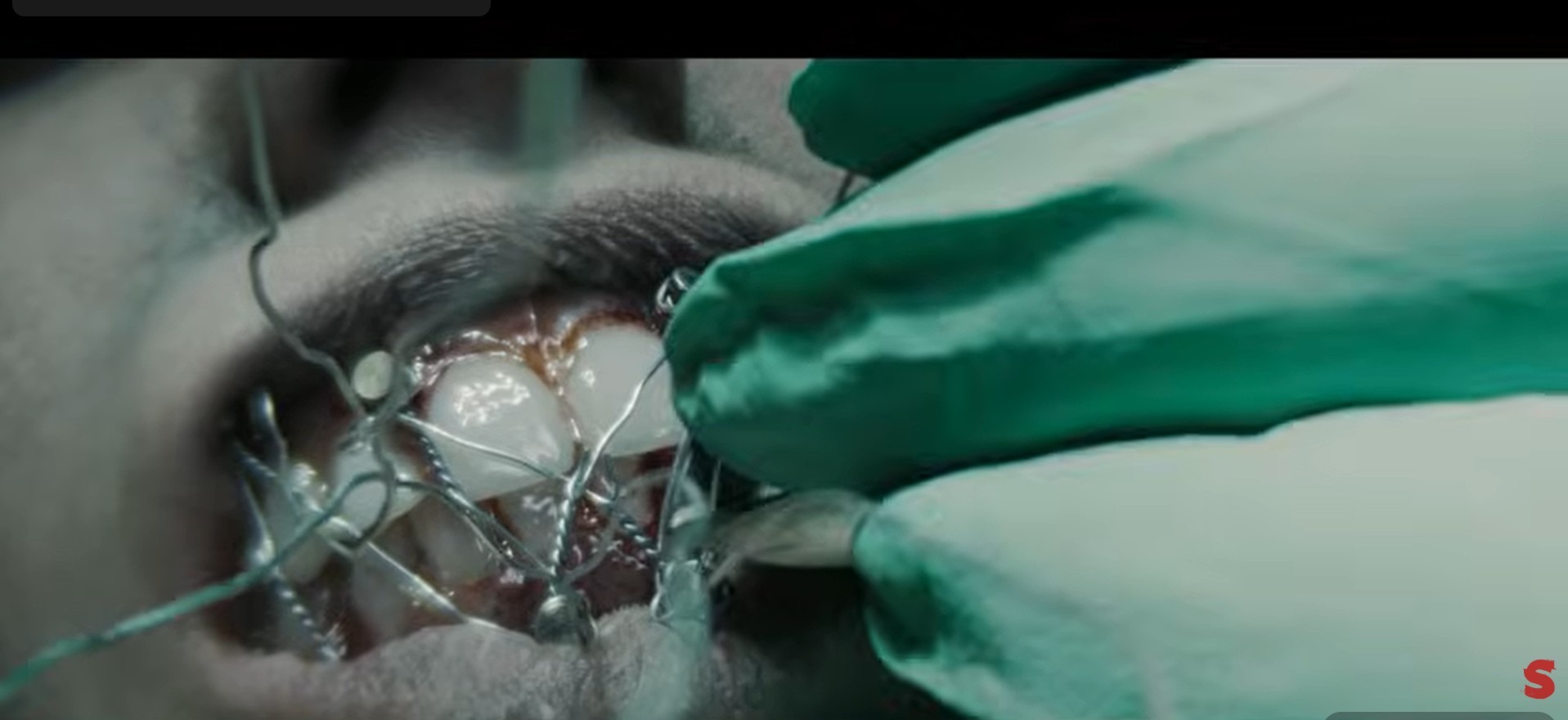
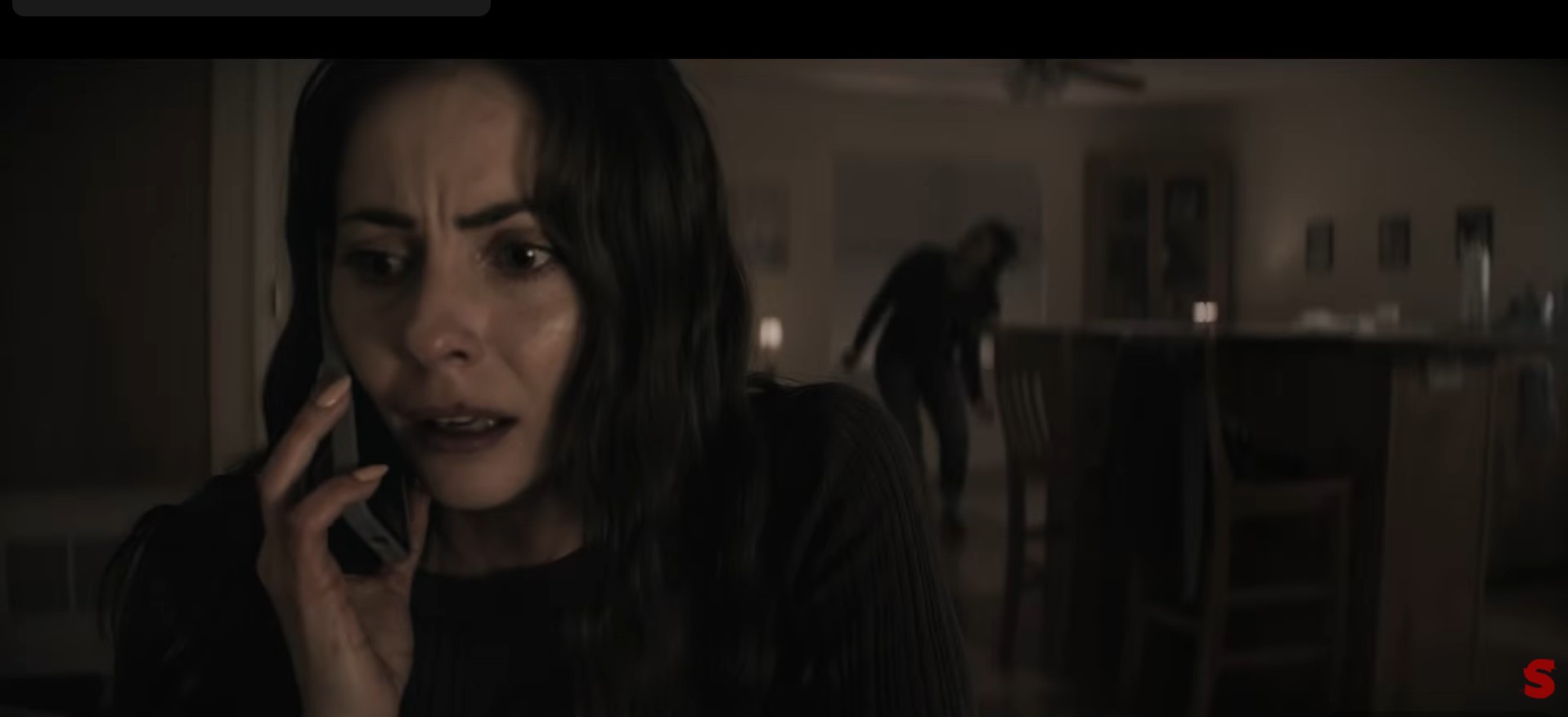
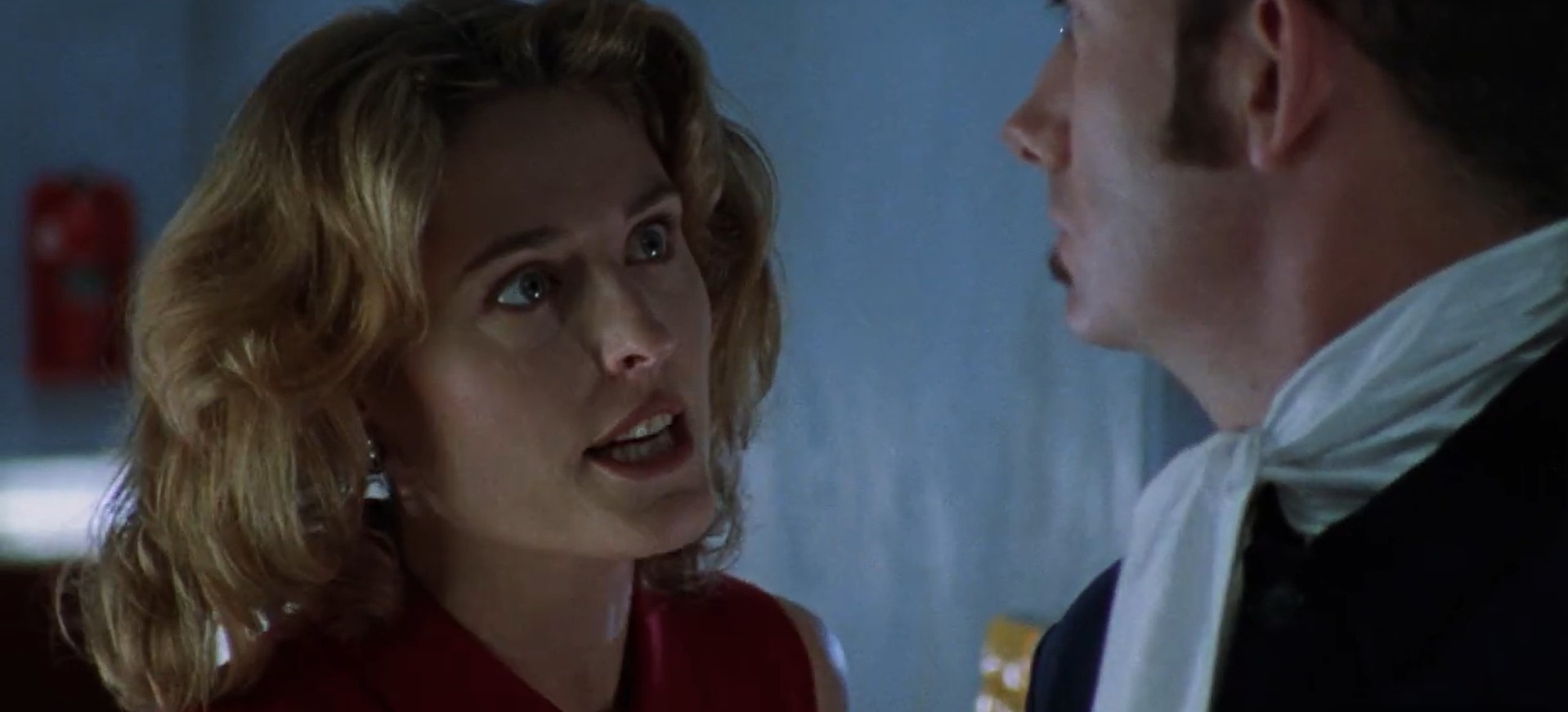
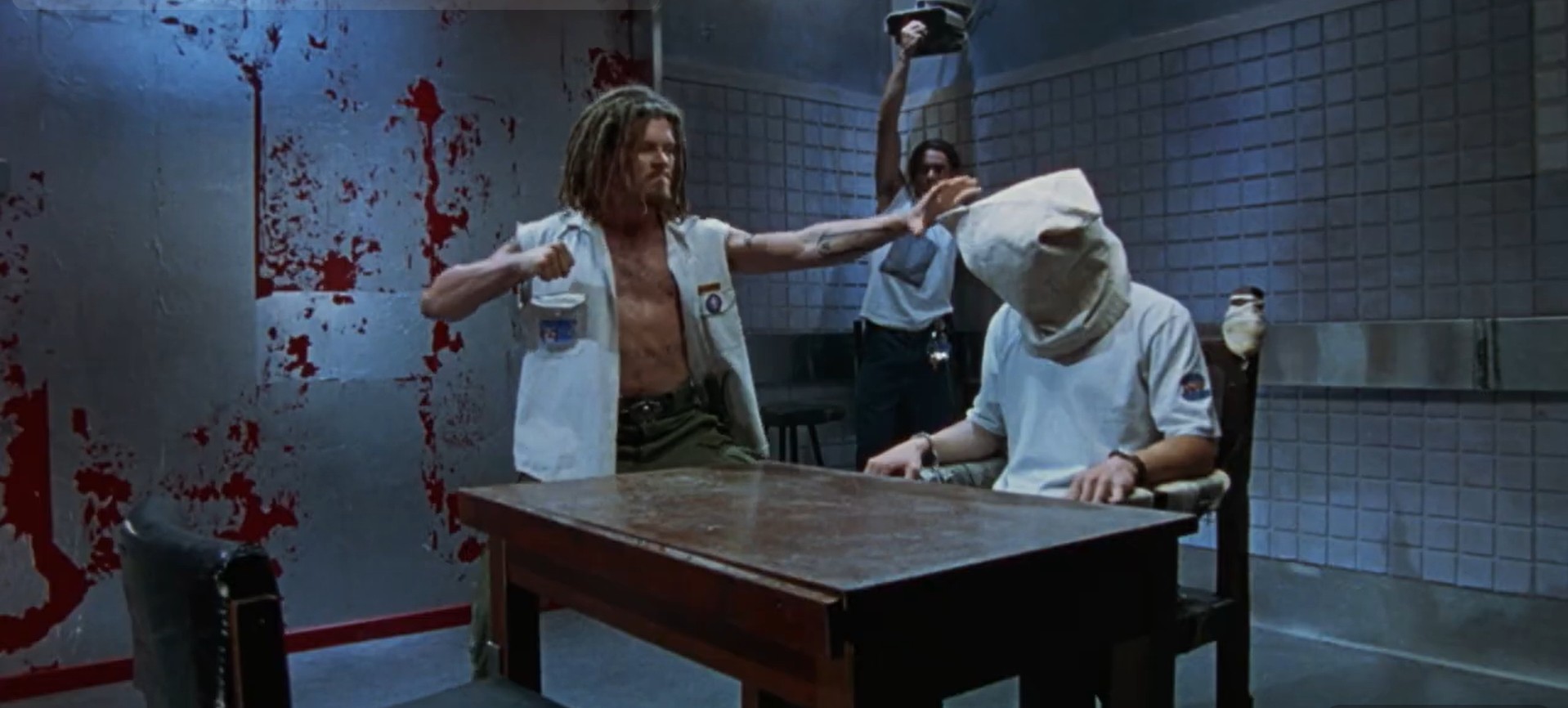
A famed female psychologist is requested to work the possible acquittal case of a serial killer named Simon Cartwright and understand his possible motive for slashing his victim’s throats at seemingly random.  Unscrupulously tormented by a pair of odd orderlies, Simon Cartwright calmly carries himself as a humble, articulate, and friendly conversationalist and confessed killer with a darker side, an ugly side that drives him to kill at will.  Cartwright gives her the anecdotal trappings of his kills that prove to be unprovoked and unsystematic from a side of him he can’t ignore.  Confounded by this, the psychologist pushes him to brink for an exact reason, one Cartwright keeps buried deep inside his subconscious that may or may not be supernaturally driven.  As Cartwright’s past continues to haunt him and with the psychologist assertive herself into his psyche, the dangerous method of analyzing criminal behavior won’t stop a plagued killer from killing again as his next victim might just be sitting across from him in the cross-examination room.  

Themes of split personality, past abuse and trauma, and the limited authority of control course through “The Ugly’s” veins like acid, sweltering with tension and ready to burn a hole through the safety of custody and storytelling once the twisted truth is told.  New Zealand filmmaker Scott Reynolds debuted with his feature length film back in 1997. Reynolds also wrote the script that kept an intimate approach between killer and doctor, kept audiences guessing the supernatural aspect, and made taut the lead-up moments filled with human tenderness that went into subsequent violence that painted a portrait of a conflicted killer afflicted by derangement that might not be his own.  Shot in Auckland, New Zealand, “The Ugly” is a production of Essential Films with funds from the New Zealand Film Commission and is produced by “Jack be Nimble” producer Jonathan Dowling.

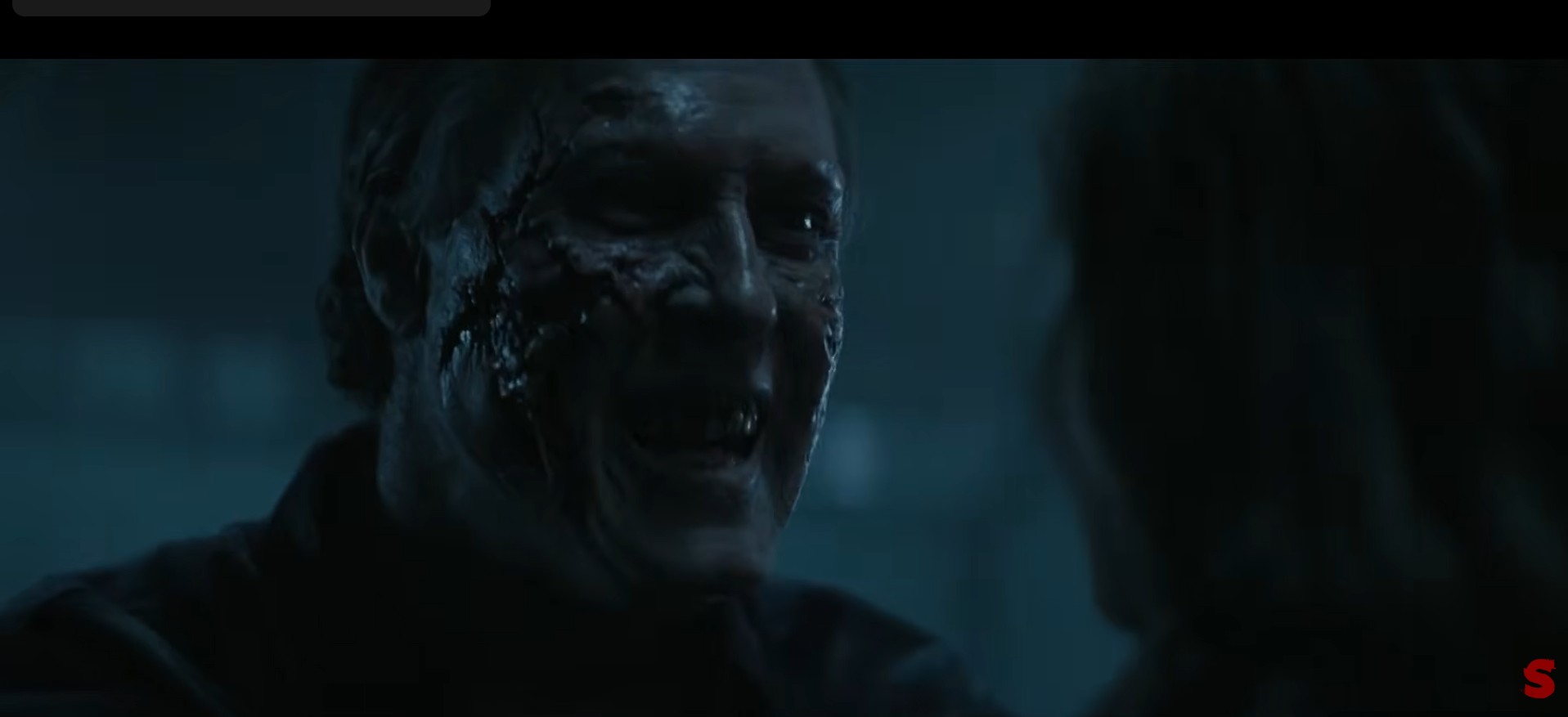
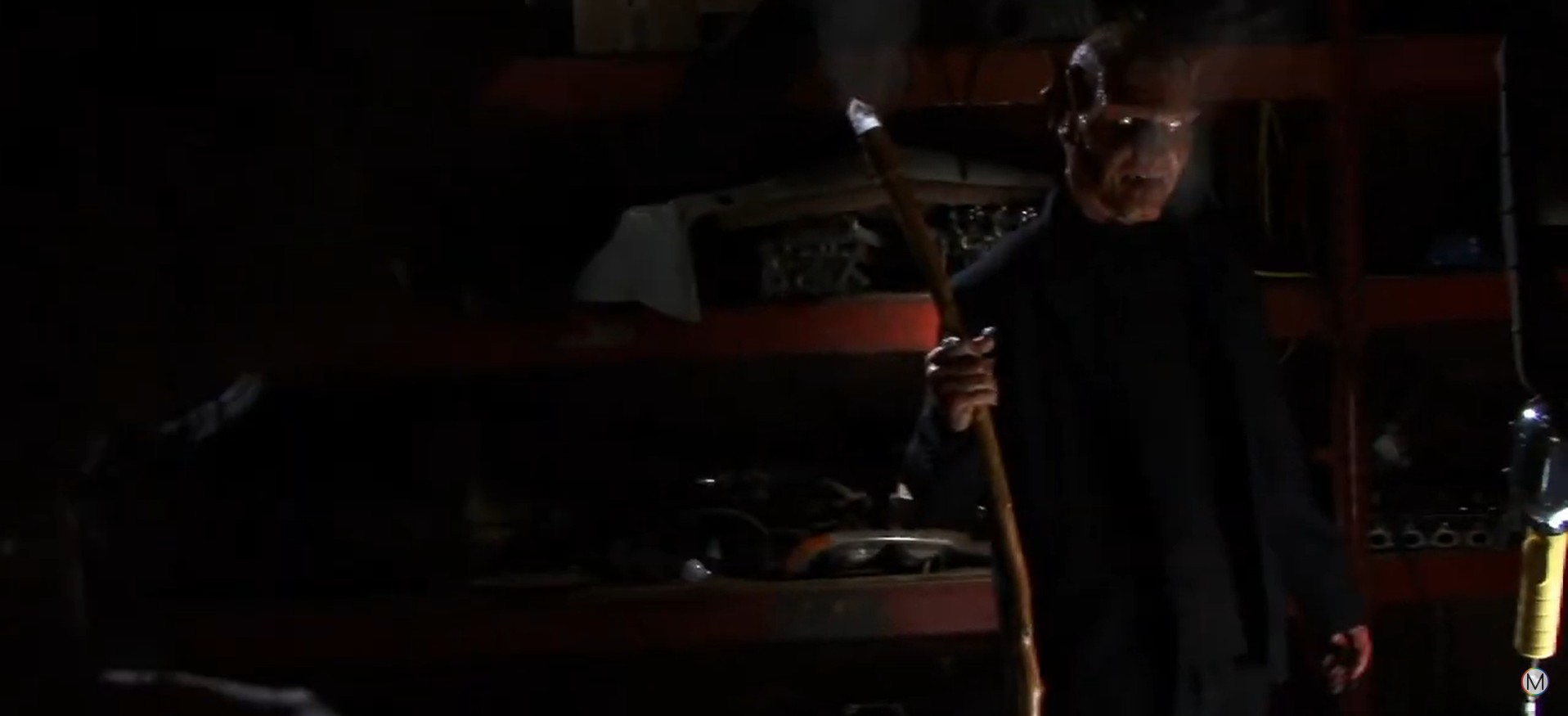
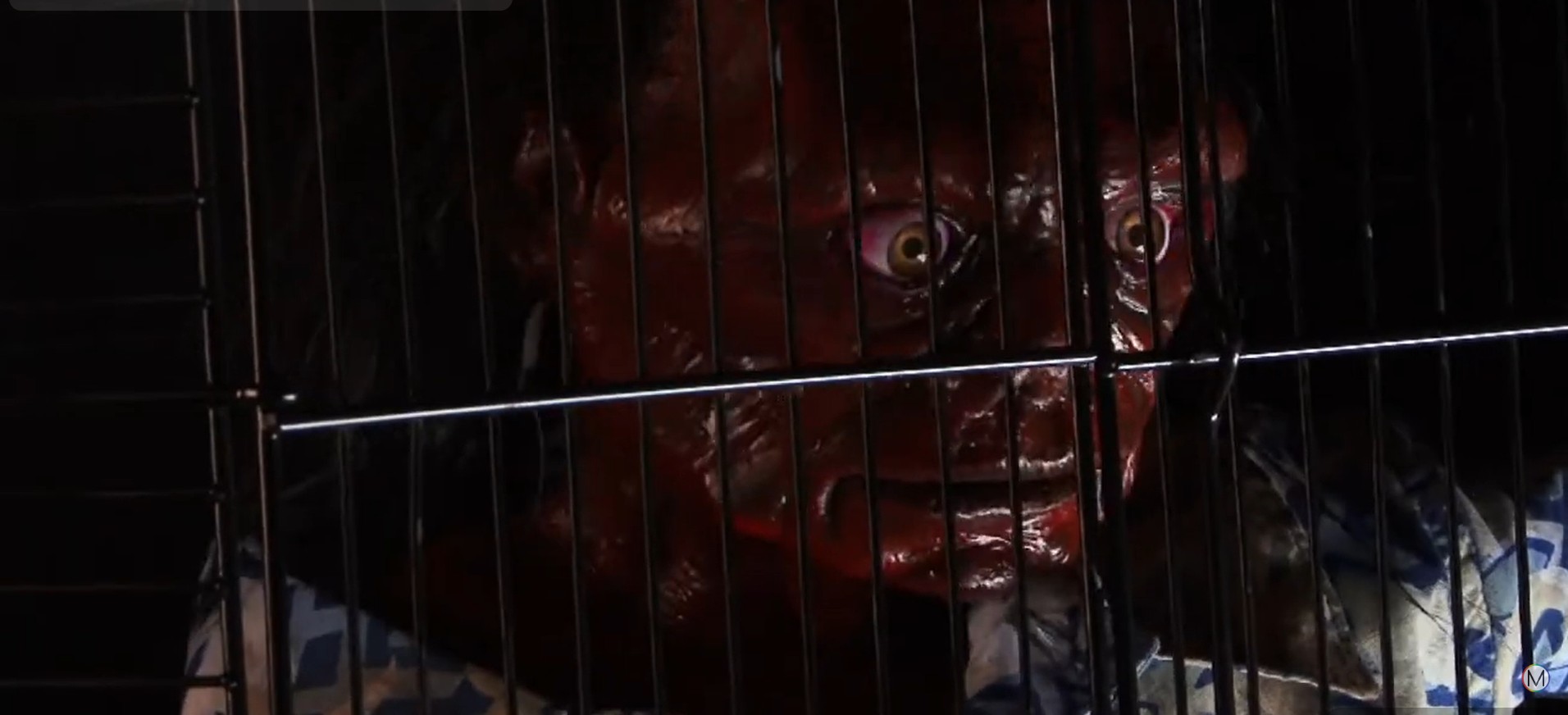
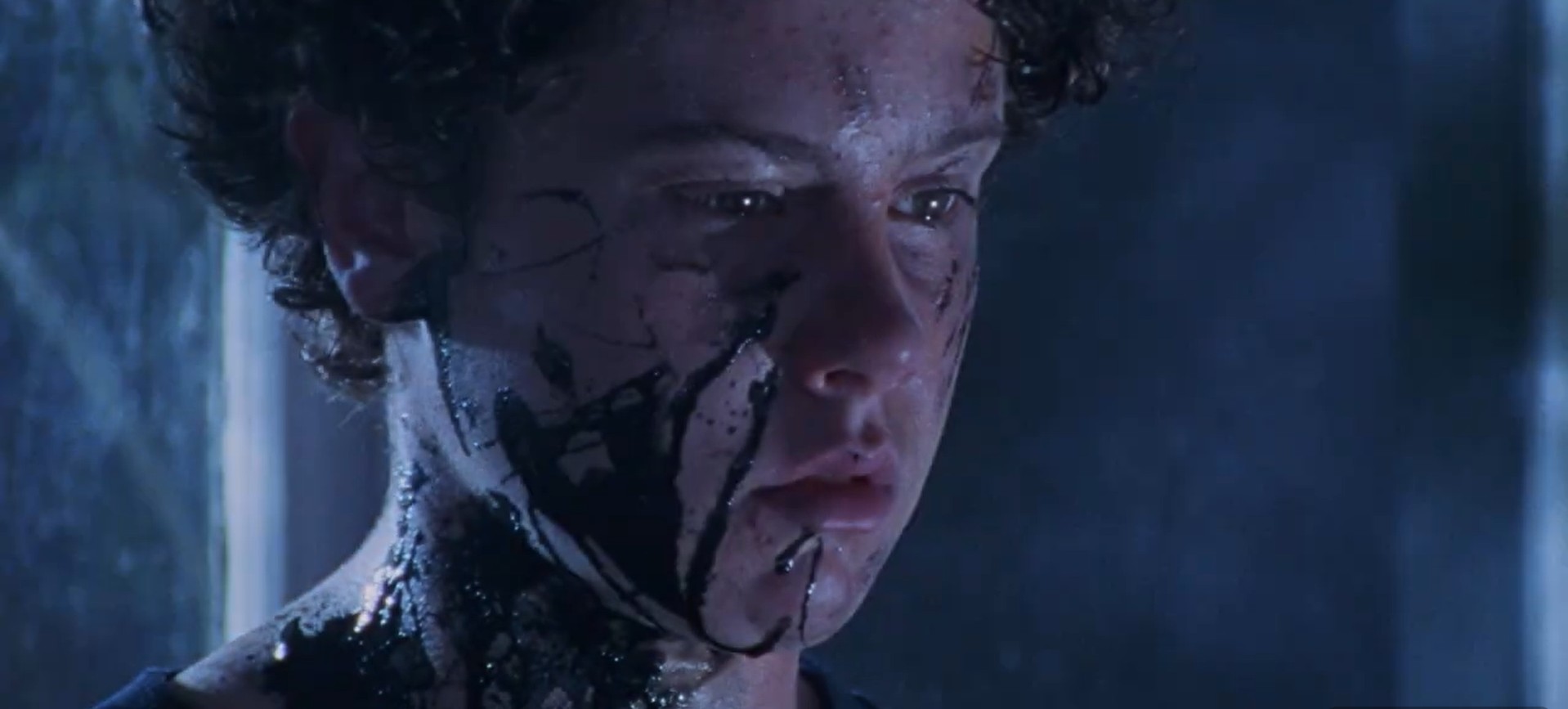
In a vague mirroring of Dr. Hannibal Lector and FBI Clarice Starling from “Silence of the Lambs,” there’s still the intention to understand the mind of a serial killer.  In the Clarice-like role is a civilian, a psychologist to be more precise, one that has received recognition to get the most dangerous criminals released from incarceration, is Dr. Karen Schumaker, played by Rebecca Hobbs (“Lost Souls”) that would be her biggest lead role in the New Zealand film market.  Opposite her, across the table mostly and chained to a chair, is Paolo Rotondo with a cold stare and a handsome face that doesn’t exactly say I’m a serial killer.  When graced with a prosthetic that makes half his face appear melted or scared in fleeting glimmers or reflections, scenes that often felt needed more attention or a longer say, that’s when Rotondo could exact his intimidation upon the viewer as the true monster, as Cartwright has referred to himself in more words.  Instead, Cartwright’s a clean shaven, well-dressed, and respectable Patrick Batman type without the three-piece suit and the Huey Lewis and the News obsession and not as King’s British and as quirky in his demeanor as Anthony Hopkins as Lector.  Both characters fall and fail hard to the supporting case of the two orderlies and their employing resident psychologist.  Sporting dreads and walking with confidence like a WWE wrestling being introduced, Paul Glover (“The Locals”) has more flavor in his mostly stoic intimidating orderly performance alongside his more animated and ragdoll movement buddy in Chris Graham (“Moby Dick”) as the two mistreat the Cartwright with disdain.  Their employer, Dr. Marlowe, has a snooty creepiness about him that’s akin to being a mad scientist-type that’s fits into the goon orderly dynamic with Roy Ward (“Perfect Creature”) at the helm.  Darien Takle and Vanessa Byrnes costar as chief supports. 

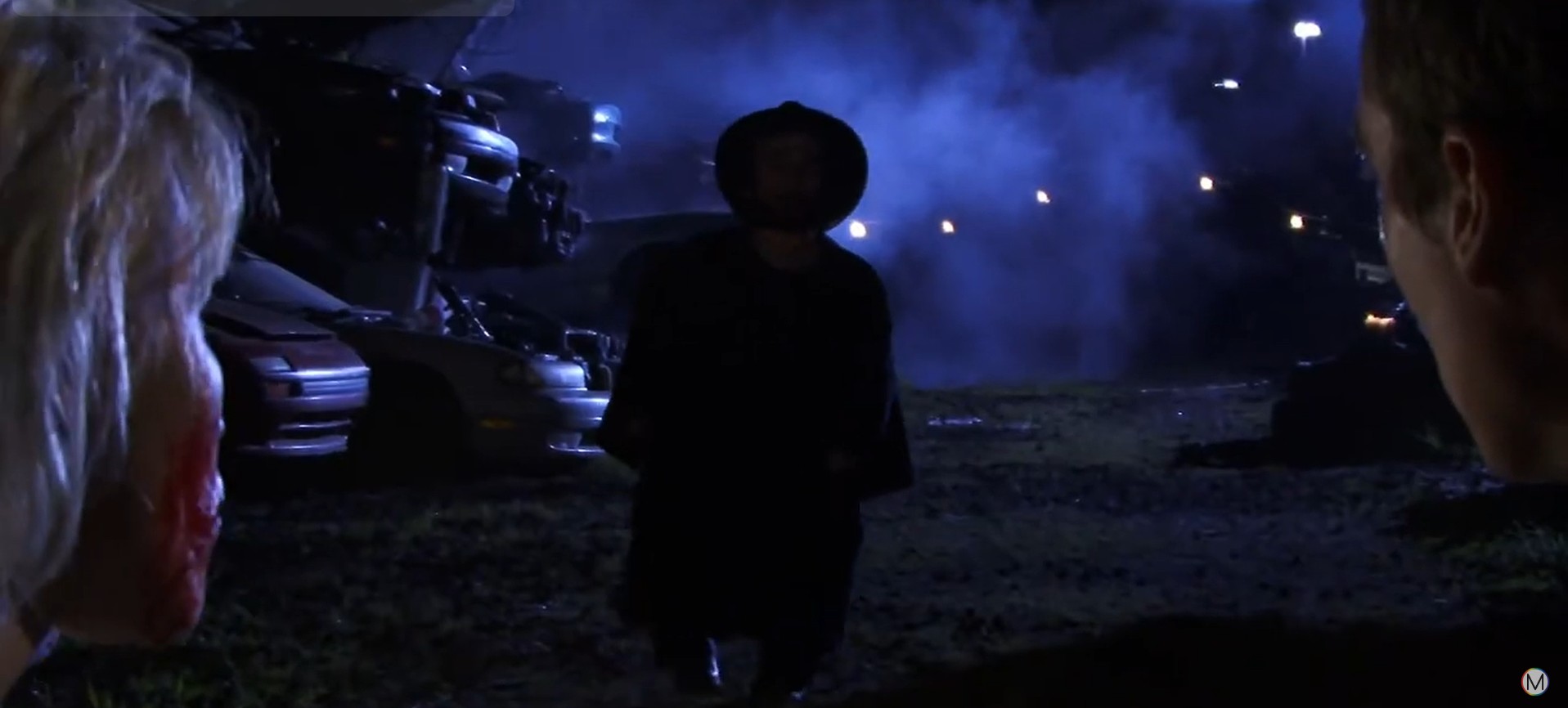
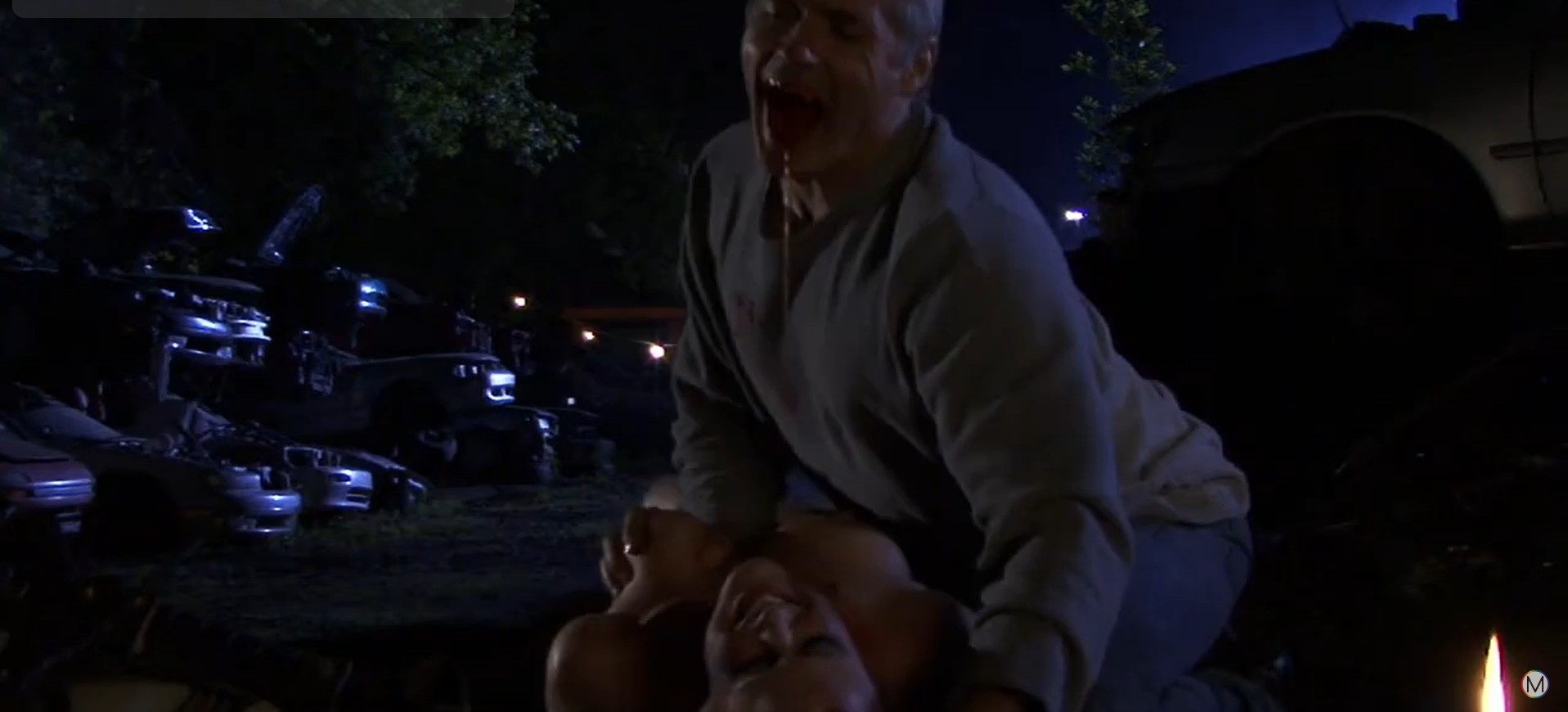
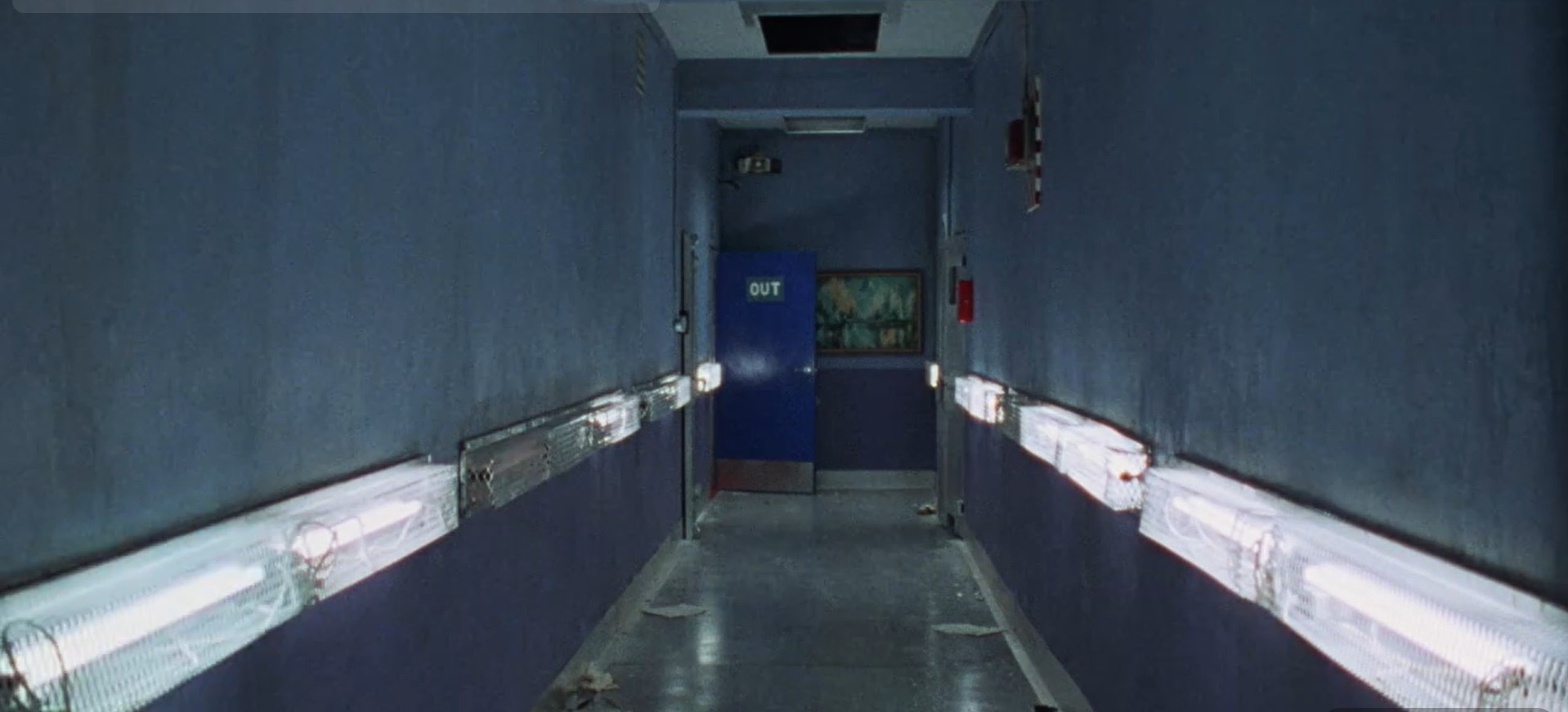
‘The Ugly” is certainly a child of the 1990s with that glossy gleam without it a lens flare spark of digital anamorphic.  The aesthetic matches the subject matter with dreary, cold, and gloomy nu metal nuisances, teetering on the edge of being also grungy.  Editor Wayne Cook’s transitions and cuts are indicative of the era in filmmaking with whooshing transitions and flashes of disorienting cuts, such as white outs or seamless segues.  This techniques also translates into Simon Cartwright’s headspace with acute and fleeting glimpses of his mental state visualized into the real word, or it’s the real world sheathed by a layer from beyond the grave, but either way his perspective quickly provides a glimpse into his reason for killing, his duplicitous degradation into insanity, and that it can be projected to others outside the exclusive rights of his person.  Most of the story is told anecdotally through Cartwright’s perspective and as storyteller, his events are muddled by his own struggle with killing that becomes more evident as the story progresses.  What’s most interesting about Reynold’s film is it’s reality bending to keep the audience engaged as he puts the psychologist character, Dr. Karen Schumaker for those who forgot, right into the frame of his story as a third party speaking directly to Cartwright and only Cartwright can see and hear, but she’s implemented naturally as if sitting at the table with the storied characters or being a part of a three-way conversation that but not truly.  Between these style characteristics and the narrative’s odd macabre, along with the deep black, sour crude oil shaded blood, “The Ugly” is grimly beautiful with visuals and stimulating to watch. 

Unearthed Films, under their Unearthed Classics sublabel, provide a new Collector’s Edition Blu-ray release to the table.  The AVC encoded, 1080p high-definition resolution, BD50 has stored on it a 4K restoration from the film’s original 35mm interpositive and looks neat as a pin presented in it’s 1.77:1 widescreen aspect ratio, rendered with a well-diffused color palette of a lighter blues and grays that contrast starkly with the deeper black blood in a semblance of a dystopian or alternate reality in circa late 90s to early 2000s films.  Saturation is copious with all colors and the details are sharp mostly in the peripheral setting with the focal objects having be defined nicely but there is some textural loss on the skin and clothing under its higher contrast.  The audio formats within are an uncompressed LPCM 2.0 Stereo of the original theatrical audio and a relatively uncommon 4.0 DTS-HD MA that caters to the side and back channels rather than a central output and a LFE subwoofer, so the track is not as deep and resonating and it discerns as such with more range and less punchy impact that encompasses at the dialogue, ambience, Foley, and soundtrack excellently considering.  Dialogue is clean and clear without obstruction or touchups to the original audio files.  English SHD and Subtitles are available for selection.  The collector’s edition contents include an isolated score from composer Victoria Kelly (“Black Sheep,” “The Locals”), a 1997 radio interview from New Zealand with writer-director Scott Reynolds, an audio commentary with chief principal actors Paolo Rotondo and Rebecca Hobbs, Reynolds’ early 90’s short films “A Game With No Rules” and “The M1nute,” “The Ugly Visual Essay” compares “The Ugly” to true crime serial killers of reality, a photo gallery, and the original theatrical trailer.  The physical presence of “The Ugly” is anything but with it’s beautiful packaged design, beginning with the commissioned Slipcover cover art that wholly embodies the essence of the story, rather than being an exploitative mislead, by Scott Jackson of Monsterman Graphic.  The clear Blu-ray Amaray case has a reversible sleeve with the same Jackson art with the reverse containing the film’s original one-sheet artwork.  Inside is a 6-page booklet a pair of essays by Jason Jenkins along with monochrome and colored stills.  The disc is also pressed with a tense hunting scene as well.  The 18th Blu-ray title for the Unearthed Films’ sublabel is region A locked, not rated, and has a runtime of 93 minutes.

Last Rites: As far as understanding the mind of a New Zealand serial killer, Scott Reynold’s “The Ugly” depth charges reality with not only a promising supernatural layer but also a strange world these characters live and act against that invigorates a rather talkative and anecdotal story with eccentric and uncomfortable personalities that rival the killer himself.

“The Ugly” Limited Edition Blu-ray Now Available!

Keep an Eye on EVIL Unloved Ones with a Camera in the Coffin! (Wild Eye Releasing / DVD)

“Watch Me Sleep” Now Available on DVD!

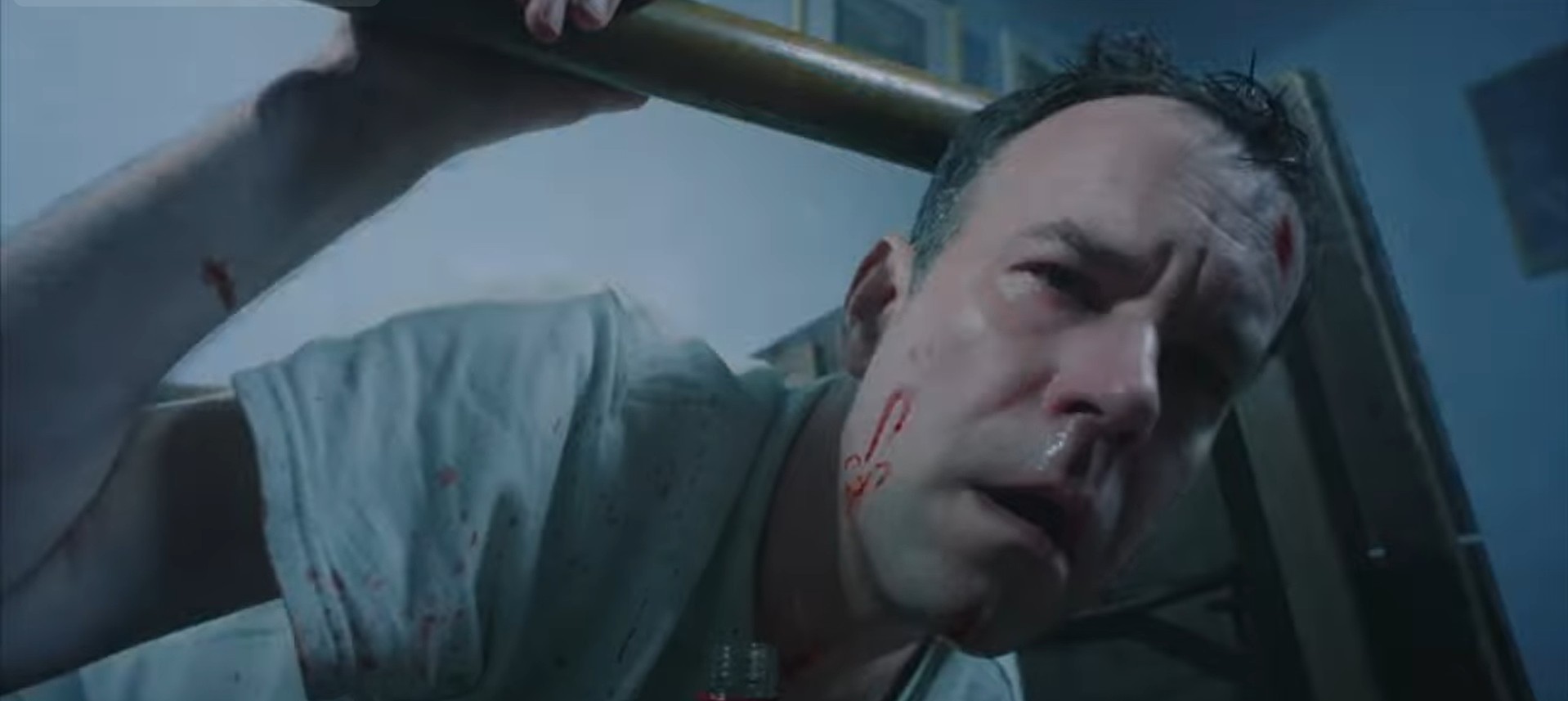
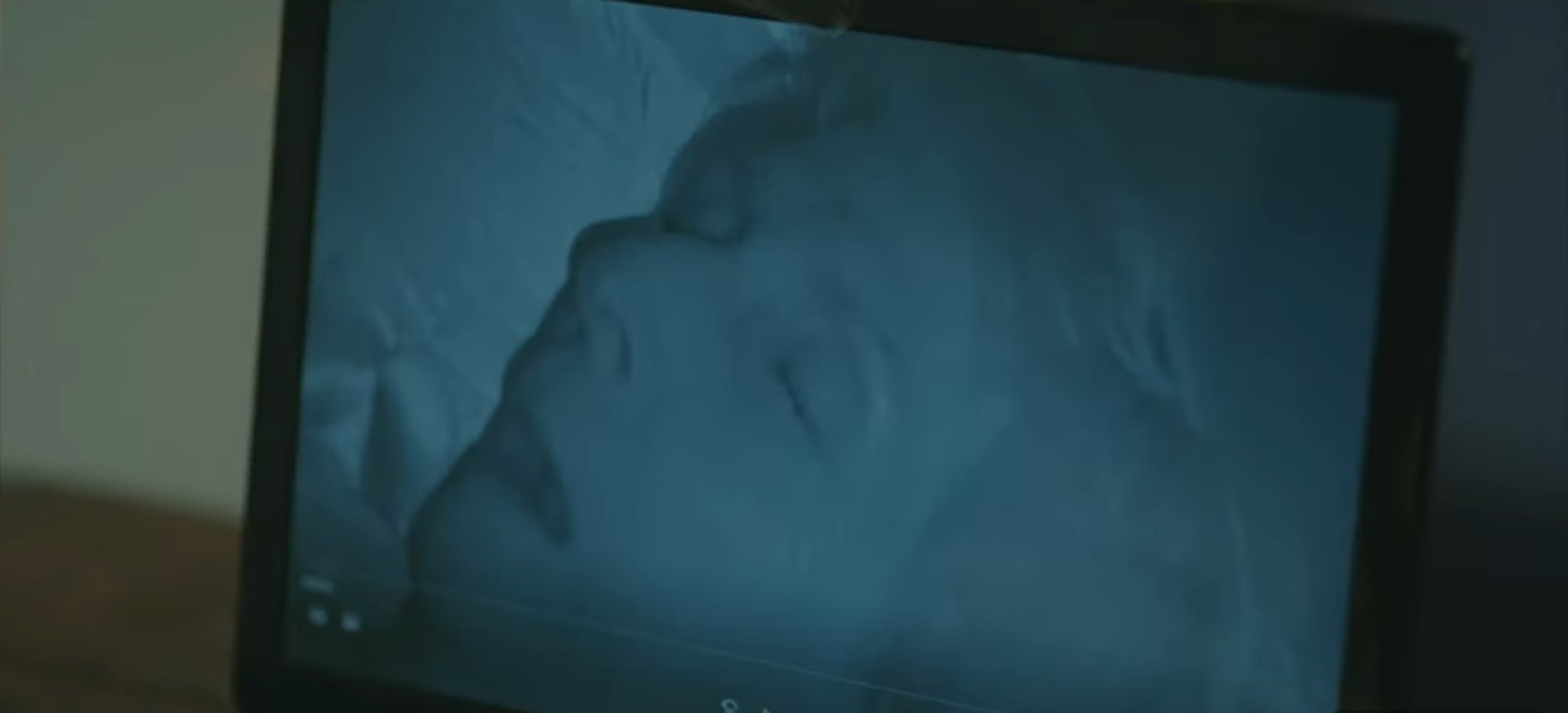
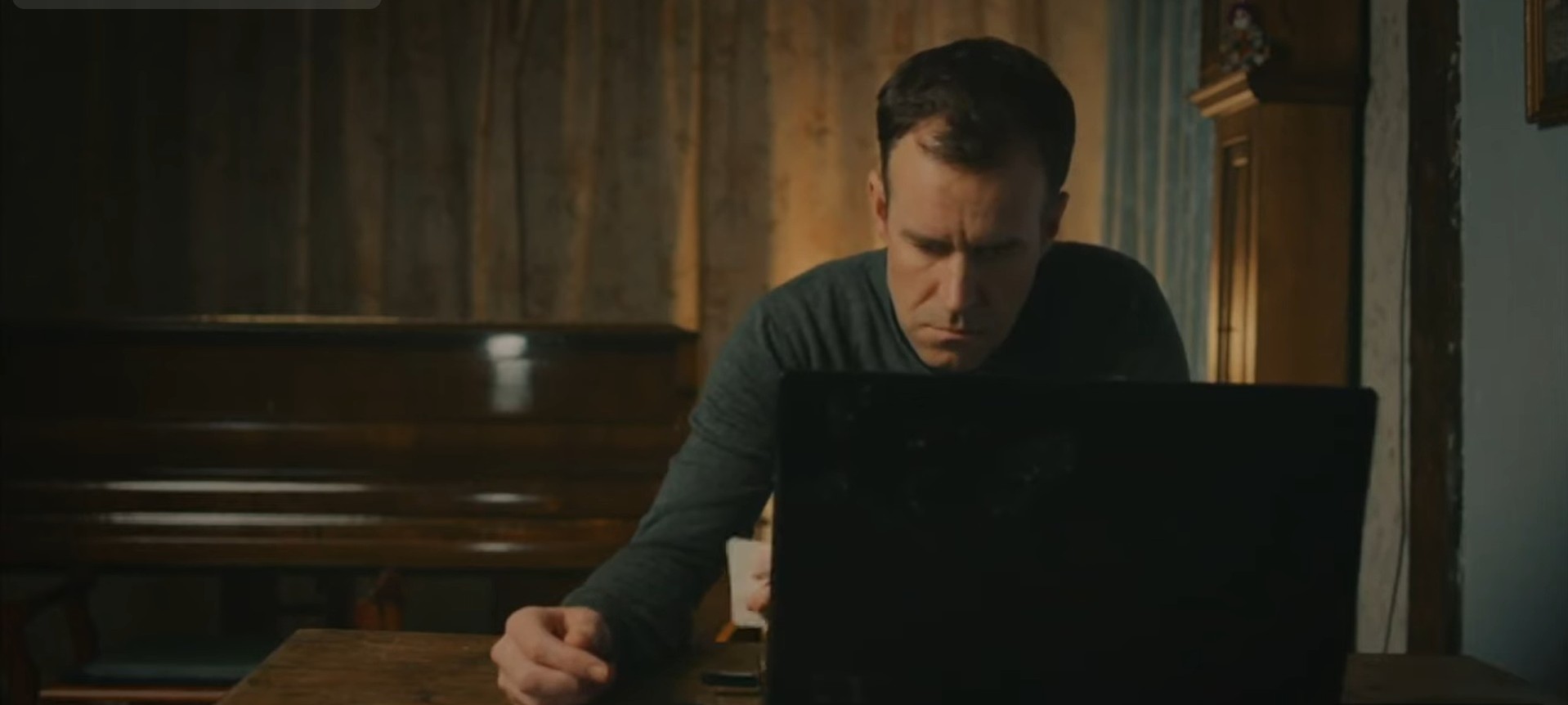
After the death of his abusive mother, recovering alcoholic Sean returns to his hometown with ulterior motives other than attend her funeral.  He hires a webcam company service to install a camera inside her coffin to ensure that his mother, who would repeated micro-stab him in the back with knives, is, in fact, dead.  As he struggles with his addiction and plagued by nightmares of random occult images involving his mother, Sean can barely hold it together to watch the video fee but when he does, what he sees often horrifies him – a rotting skeletal corpse with maggots, brief movements caught in a glimpse, and even her staring right back at him.  He implores a town friend to check his sanity, but all seems normal as normal can be with a coffin-cam facing directly at a corpse.  As the nightmares intensify, a presence takes hold of Sean, a familiar presence that hasn’t terrified him since he was a child. 

“Watch Me Sleep” might sound like a ploy phrase your kids would say to get you to stay with them at night or during nap time but for John Williams – the director of the 2023 film and not the “Jaws” and “Star Wars” composer – the lingering effect of trauma can be a powerful, often adjacent to being supernaturally scary, and is nowhere near being child’s play.  The director of 2015’s “The Slayers” and “Creatures of the Night” writes and directs the British voyeuristic graveside thriller that concentrates on the lasting aftermath effects of trauma despite our past being buried six feet underground.  Filmed in Staffordshire England, “Watch Me Sleep” is an independent production with Williams and Claire Ward as their third production together since 2021, behind “Creatures of the Night” and “There Something in the Shadows,” and executive producer Volker Plassmann, producer behind “Next Door” and “The Beast of Riverside Hallow.” 

Small production equals small cast but that doesn’t equate to poor performance as “Watch Me Sleep’s” cast is brilliant within the oversimplification explanation of the plotline which is more or less a traumatized man obsessed with watching his dead mother on camera to ensure she stays dead.  That doesn’t sound too exciting but with the actors’ performances and with Williams evolving of the plot to keep Sean’s sanity teetering on edge, “Watch Me Sleep” is more fleshed out with richer than expected character backstory and development of Sean, played intently and without hesitation by William’s go-to actor Darren McAree, and his problems with alcohol, a tormented childhood, and his blinding spite for his mother.  Mum is played by Sarah Wynne Kordas in a dialogue-free peripheral of psychological spookiness as a lifeless head on a webcam for most of the picture but is able to shine in the shadows of Sean’s vivid imagination and be diabolically on point when that lifeless head moves unexpectedly in a not-so-subtle manner for the chill and thrill triggered moments.  While the mum is certainly a presence, Sean is basically a one-man show of bopping between his struggles with drinking, his affliction of nightmares, his hesitation of webcam voyeurism, and trying to blow off steam and showcase his questionable sanity to townie friend Tom (James Whitehurst, “Creature of the Night”) who humors his friend’s hysteria with rather tranquil patience that is unusual.  The rest of the characters support where needed with brief interactions surrounding Sean’s cam setup and AA meetings with  Zane Hopkins (“The Beast of Riverside Hollow”), Steve Wood (“Cannibals and Carpet Fitters’), Charles O’Neill (“The Jack in the Box Rises”), Katie Elliff, and David Tunstall (“Beyond the Witching Hour”) as a mysterious man once friend to Sean’s mother. 

Despite the budget and some unpolished areas, there’s surprisingly more bang for your buck in “Watch Me Sleep” with a thrilling storyline that houses competent performances, editing, and one hell of a movie magic accomplishment in its special effects.  The black and white dream sequences of randomized occult and supernatural imagery are reminiscent of “Ringu’s” the contents of VHS tape with more visceral sound design to give it a lasting, haunting discord and the editing done an all accounts of these dreams are spliced perfectly into Sean’s sleeping and waking nightmares.  Between this reoccurring onslaught of mixt pernicious phantasmagoria and the out of left field special effects that reap the success for “Watch Me Sleep,” John Williams’ little English film is a bit a sleeper itself we should watch in a statement that’s ironically punned.  Keeping it mysteriously ambiguous, Williams doesn’t define the context that is kept open to be obscure and confusing for Sean who’s trying to pieces his dreams, evidence, and his mother’s curious connections together, a puzzle that could be an explanation why she tortured him with a knife, but the gist of the story delves into the occult as his mother dabbled in ritual and paganistic indoctrinations in the layer much more satanists or demonology driven.  Yet, those details are never verbal explained and that keeps you guessing whether his mum had dark dealings with the Devil or is the trauma, stress, and alcohol withdraw doing a number on his fractured psyche.  

You never know what kind of film you’re going to unearth at Wild Eye Releasing with its mysterious grab bag of horror schlock and independent ambition.  There have been titles of questionable taste that not even the sleaziest or gorehound fans would touch with a ten foot pole, but titles like the now out-of-print first-person-shooter occult-actioner “Hotel Inferno” and the satirical crude-humor of “Race Wars:  The Remake” are absolute low-budget gold held in high esteem.  “Watch Me Sleep” ranks up in that small layered stratosphere for the company who releases it on DVD.  The MPEG2 encoded DVD5 leaves much on the table technically with fuzzy detail on its standard 720p definition.  There’s no intricate picture quality nor does it have textural achievement but what you see is what you get, a picture constant and watchable B-horror you may catch on USA’s Up All Night hosted by Rhonda Shear and guest starring Gilbert Godfrey on cable television, broadcasting in analog through a tube set.  I will say the special effects are damn good for money and with no signs of how they’re achieved, such as wires, CGI, nor other.  The UK English language PCM Stereo 2.0 has its problems as well with a boxy, depth-less dual channel output that has a subtle layer of interference static, likely due to inexperience or poor equipment, but the dialogue track remains front and center with prominence and the sound design, the jarring clicks and pops along with the discord sounds of Sean’s nightmares and the overall brooding score, shoulders a lot of the weight by carrying the film’s technical problems.  There are no available subtitles.  Bonus features include only an image gallery, the trailer, and other Wild Eye Releasing previews.  The clear DVD Amaray comes with Wild Eye Releasing’s on brand exaggerated artistic rendition of an intense and scary old woman emerging from her coffin.  It’s a bit hyperbolic but eye-catching.  The reversible sleep has a sheet spanning, bloody depicted still from the film and no other bonus inserts.  The region free DVD is not rated and has encoded a 91-minute runtime.

Last Rites: Definitely one Wild Eye Releasing titles to pick up and enjoy, “Watch Me Sleep” has mother issues, alcoholic issues, trust issues, relationship issues, paranoia issues, and supernatural issues in what is a sleeper hit from the writer-director John Williams.

“Watch Me Sleep” Now Available on DVD!

Two Cops. Two Girls. One EVIL Crime Boss! “Rosa” reviewed! (88 Films / Limited Edition Blu-ray)

Grab the Limited Edition Blu-ray of “Rosa” from 88 Films!

Little Monster and Lui Gung didn’t get along to begin with when Little Monster’s accident put Kung’s sister in the hospital for minor injuries but when the two rookie cops get on the bad side of their direct supervisor, Inspector Tin, they have no choice but to work together under his pleasure to see them suffer.  The two cops are assigned to the case of Li Wei-Feng, a smalltime crook who tries to black male mob boss Wong with incriminating photographs of a deal gone deadly.  They stay on top of and befriend Wei-Feng’s ex-girlfriend Rosa in hopes he’ll show up but the cops find themselves going on more double dates between Kung wooing the model Rosa and Little Monster courting Kung’s sister than actually doing any detective leg work.  Before they know it, they’re assisting Rosa out of her gambling debts with medium level bosses and on hot coals with Boss Wong’s formidable henchmen who will stop at nothing and will kill anyone in their way from obtaining the smoking gun film roll. 

“Rosa” is the 1986, Tung Cho “Joe” Cheung directed buddy cop comedy-action film from Hong Kong,  Cheung has delivered a string of action comedies prior, such as with the a torn Kung Fu novice must jealous mend the rift between his two masters before a war ensues in “The Incredible Kung-Fu Master” in 1978 and the story of a veteran police officer who must work both sides of the law to manage his wife’s gambling addiction is paired with a rookie cop to take down transgresses in “Shadow Ninja,” release in 1980.  “Rosa” is another notch of comedic effort in Cheung’s belt but on a bigger scale with well-known actors, a large cast, incredible stunts, and fast martial arts choreography in a script penned by the “Chungking Express” director Wong Kar-Wai and “Hard Boiled” and “Mr. Vampire” writer Barry Wong.  Wong and Anthony Chow (“The Cat”) produce the film under the Golden Harvest Company and Bo Ho Film Company flags.

“Rosa” uses an ensemble cast more for comedic purposes rather than to instill dramatic action, beginning chief principal Biao Yuen, who we’ve recently reviewed in another new phenomenal physical 88 Films Blu-ray release in “Saga of the Phoenix” and has had roles in “Game of Death,” “Encounter of a Spooky Kind,” and “Picture of a Nymph,” as the endearingly named Little Monster, a go-lucky rookie cop with skilled martial arts moves.  Charming and confidence, Yuen plays the most sensible of protagonists without absorbing a lot of humiliation unlike his costar Lowell Lo who finds himself in a more subordinate role of Lui Gung underneath Little Monster’s suavity by having more overreactions, slapstick, and chasing with his tongue out a lost cause – that being Rosa.  “Inferno Thunderbolt’s” Hsiao-Fen Lu plays that titular role, a gambler addict and model with loan shark debt with ties to a small-time crook that incidentally involve her in a deadlier high-stakes blackmail with a power crime boss, but her importance is depreciated by Yuen and Lo’s buddying comedy and not the driving focus of the plot.  In all, the progression is a group effort rather than encamping around a centralized person.  With that being said, Kara Ying Hung Wai (“The Ghost Story”) often feels like an afterthought, a proverbial fourth wheel, as Gung’s sister Lui Lui whos’ gifted lines and a presence here and there but is mainly only Little Monster’s love interest in corporeal presence only.  Rounding out the good guys is the hapless Inspector Tin (Paul Chun, “To Hell With the Devil”), an arrogant supervisor who doesn’t want to get his hands dirty with police work and recruits Little Monster and Kung as punching bags for wrong him in their individualized opening, mishap run-ins with the inspector, another comedy outlet absorbing Rosa’s unintended entrenched Mob connection.  The Mob and other baddies fill out the cast with Billy Sau Yat Ching, James Tien, Charlie Cho, Fat Chung, Chen Chuan, and Dick Wei. 

As far as “Rosa’s” action is concerned, it is topnotch quality between the wide-variety of stunts, the pinpoint choreography, and the excellently executed martial art fights that disproportionately leaves the narrative as a quintessential chop-socky police story.  I say disproportionately because the action is overly consumed by the comedy that, in itself, has struggles.  The humor physicality lands with precision with big hits taken in accidental error or are made within the context of choreographed fight scenes mostly stemmed by Lowell Lo and Paul Chun as they bumble their way through situations, but the dialogued jokes and other vocal gags are terribly corny that unfortunately dilute the overall mirth-murky pool that it becomes too often cringeworthy to swim in.  The light-hearted and sexualized humor is blended with an endless wooing and an outdo rivalry between the forced partnership that evolves into a fond friendship between Little Monster and Lui Gung, who is often referred to as Big Brother.  Lowell Lo embodies a larger slapstick piece of the pie with his distinguishable friendly face and doughy-eyed demeanor, contrasted against the athletic slender of Biao Yuen who outshines him on the conventional society determined good looks scale with an unassuming martial arts skillset to match.  All the serious and grim nature comes out of the Hong Kong’s criminal element with deadly assassins that use piano wire and large caliber handgun to lacerate jugulars and explode cars full of betrayed crooks.  The third act finale finally puts the pieces together and creates a harmonious brawl that blends action and comedy evenly, even integrating Lui Lui into the fold with an out of the blue ability to hold her own and fight just as fast and furious as Little Monster.  

Another Golden Harvest distributed production garners attention once again on 88 Films, in association with Fortune Star Films, with a definitive Blu-ray set from the UK boutique label making their presence known here in the North American market.  The AVC encoded, 1080p high-definition transfer, onto a BD50 has remarkable presentational quality with a pristine print transferred onto a 2K scan from its original 35mm negative.  The immersive quality shows no sign of destabilizing the matrix, leaving audiences with the immense scope of a cleaner, natural image full of depth and range of saturated and diffused color.  Skin tones appear organic and nitty-gritty with the stubble, sweat, beauty marks, and the subtle contrasts of tones.   88 Films’ flexes their restoration efforts that extends the color palate to suitable measure and each scene, through its superb editing by chop-socky veteran Peter Cheung, segues into the next without missing a color resolution beat.  The film is also presented in original 1.85:1 widescreen aspect ratio.  There are two ADR mono tracks, Cantonese and English.  Cantonese is preferred with the better mouth-to-sound synchronization, but both deliver a really good decoded mono mix despite the singular direction of all the audio but with post-production sound, that can be manipulated to exact timing with the exact sound to create a better disbursed audio design.  There some crackling and hissing in the dialogue but very low-level interference that doesn’t hinder the prominence and really affect the clarity.  The newly translated UK English subtitles are available from Ken Zhang and synch fine with a steady pace and come without typos.  Encoded special features have a new audio commentary by Hong Kong Cinema experts Frank Djeng and F.J. DeSanto, a second new commentary from another Hong Kong Cinema expert David west, an interview with director Tung Cho “Joe” Cheung and assistant director Benz Kong, alternate English opening and closing credit titles, an image gallery, and the original trailer.  The limited-edition set comes with a rigid slipbox sheathed by an O-Ring slipcover with new artwork by Sean Longmore that plays into Rosa’s bosomy running ga. Inside the slipbox is a 40-page color booklet with stills and a pair of essays from Fraser Elliott and Paul Bramhell, a collectible postcard, and the clear Amaray case with the same primary Langmore art on the sleeve that can be reversed for the original Hong Kong poster art.  The booklet and slipbox have more original art as well that speaks the action and slapstick.  The not rated, region A and B encoded release has a runtime of 97 minutes.

Last Rites: Fun, exciting, and moderately droll, “Rosa” might hit-and-miss on the comedy, but what definitely hits is the martial arts action defined in a harmony of perfect scrappy chorography.

Grab the Limited Edition Blu-ray of “Rosa” from 88 Films!

EVIL Would Be to Not Allow Yourself to Enjoy Japanese Gravure! “J-Girl Yummy: Mitsuha Kikukawa, Toka Rinne, and Reona Kirishima” reviewed! (Gravure Glamour Girls / Blu-ray)

You Can Find Mitsuha Kikukawa, Toka Rinne, and Reona Kirishima on DVD and Blu-ray at JGirlYummy.com

The J-Girl Yummy series presents three gorgeous new women who are prevalent from the pornographic Japanese Adult Videos (JAV).  Instead of hardcore assembly of action that often doesn’t feel as intimate as maybe one hopes, your favorite starlet now only has eyes for you in this softcore series that nearly leaves nothing to the imagination.  Mitsuha Kikukawa (“My Father Steals My Beautiful Fiancé,” “My Compliant Pet”), Toka Rinne (“Mamacita Stories,” “Married Woman’s Cheating Heart”), and Reona Kirishima (“Countdown to Nakadashi,” “On a Stormy Night – I found Myself Alone with My Sister-in-Law Upon Whom I had a Crush”) find themselves as the next trio lot for the showcasing series that explores their solo talents and provides a one-on-one between their hot bodies and the camera, seducing the lens with playful flirtation, a captivating allure, and a stimulating interaction that breaks the fourth wall as they stare, talk, and moan back with inviting eyes for their loyal fanbase. 

In a world where sex sells, any form of the vice is surely to be valuable.  Hardcore adult films reign as king amongst viewers but there’s also a sizable market for softcore productions, if the ever-desired Skinemax and more highly sought after risky mainstream erotic dramas were not prime evidence enough to make the case.  Across the oceans and lands, hailing from Japan, and landing in the North Americas are the gravure videos, Japanese media of idols, or models, posing suggestively with innocence, brazenness, and fun time pleasureful.  Gravure videos are typically bikini-cladded women, but the Gravure Glamour Girls produced J-Girl Yummy series go the extra mile by rolling back the clothes with the Japanese censorship working overtime trying to keep the pelvis area obscured from view with impenetrable strategically placed objects.  The films offer no credits other than its centerpiece idol on all surfaces of the packaging and in the encoding on the feature.   

We begin with Mitsuha Kikukawa, the now 28-year-old from Tokyo measures in at 5’5” tall with a waist at 61cm (24 inches) that curve down to just above a 3’ hip span and a Japanese F cup bust, equivalent to a U.S size between B and C cup.  With a high and full cheek bone structure, large round eyes, and pearly white teeth underneath a lighter color bob cut, Mitsuha has petite in all the right places of her traditional Japanese physique with a nicely round and slightly larger than hand size breasts and thick tail end around the thighs and rear.  Mitsuha’s presence the best example of erotic foreplay without any physical interaction with a partner as she’s able to work the camera with her eyes, mouth, and body language by herself and that speaks to her level of rising arousal talent coupled by her unique look that closely resembles a live example of an Anime interpretation of a young girl.  Each scene introduces a new element into her working the camera to maximize the intended result, to provoke the viewer’s keen feelings for their obsession, or sex in general, and Mitsuha is the clear winner amongst her J-Girl Yummy counterparts. 

Next, Toka Rinne from the China prefecture feels like a whole foot taller than Mitsuha but according to her stats, Rinne is the same 5’5” in height.  Waist and hips are similar too at 58cm (23 inches) and 90cm (35 inches), making this Amazonian-built like woman smaller around the torso than Mitsuha, despite a small and immaterial front pooch belly, yet her bust size measures in a 98cm, a Japanese I cup, that would secure a U.S. 34D.  Rinne also has long auburn-black hair down to mid-back with a big smile and almond-shaped eyes, Rinne has a classical Japanese face that can be slightly masculine in some areas, such as cheek bones and chin and while she may have more of an hour glass figure with a large rack to appease breast men, she tightens and tucks her chin while leaning her forehead forward slightly.  This might be age related as she’s a whole 6-7 years older than her counterparts, born in 1990.  This is about the tip of the iceberg for her awkward and stiff movements in front of the camera, as if she doesn’t know how to work her hands on herself and she nearly sticks to a single pose for most of the clothes on portions.  Rinne’s body carries her through each scene but is less adventurous within the confines of her imagination to pretend being an intimate partner where it counts. 

Lastly, we come to Tokyo’s Reona Kirishima, the shortest of the three standing at 5’ tall that translates to her 56cm waist (22 inches), hips (33 inches), and a perky D cup bust, a healthy C-cup in the U.S.  Kirishima has lower back length dark hair with a red tint stringing through overtop her girl-next-door-face, well-manicured, slightly freckled face in which she looks more Latina than Japanese.  Though cute and appetizing in all regards to her physical appearance, her camerawork lacks the energy and the sensuality that graces the lens with little-to-no smiles but rather dull, blank stares; her eyes are not overly unique to warrant gazing alone.  She poses half-heartedly through her scenes with a hand timidity and rigidity in her movements, often revealing her hesitation where and how to move her body and, likely, working off verbal instruction from the videographer.  Though lacking kinetic enticements, Kirishima does unveil a little more bush area than Mitsuha (who has no bush) and Rinna (who has some bush).  This opens more opportunity for visual cues for the viewers’ imagination to run wild when teasing just below the top waistline of her bikini bottoms and with her last few scenes, Kirishima may be the most adventurously provocative gravure model of the three despite her lack of expression. 

Each gravure idol entry follows a similar formula that begins innocently enough in the backyard with a simple strip down of clothing, moving toward a semblance of athleticism, such as Mitsuha playing with a toy bat and ball that speaks to her love of baseball, Rinna’s bouncy-in-all-the-right-places jump roping, and Kirishima working the hips quite well with hula hooping.  After breaking a sweat going through the fun physical play motions, it’s time to get ironically down and dirty with a shower scene that begins with a coursing shower head around the button-down white shirt to finally ending up in the tub of murky soap water.  In between, each lady does soap up and massage themselves, missing no spot of skin in the process.  Kirishima nearly bypasses the censorship leg spread in her bath water which is less opaque compared to the others.  From there, it’s sexy secretary time as the ladies’ don similar black skirts, white button downs, and thigh-high or full black stockings that cover a bad girl’s lingerie beneath, slowly being unveiled in an enticing dress down as they longue seductively on leather or velvety upholstered furniture.  Through all the down shirts, up skirts, extreme closeups, thrustings, grindings, and overall peeling back of innocence, the next to last scene embarks head first into a spicier flair by already skimping down the idols into lingerie or bikini in a more vibrantly hot colored walls and décor and introducing a toy of sorts, such as a glass phallus or a fur wand, to accentuate and punctuate their desire and kink.  This sets up the JOI or POV scene of intercourse simulation to the eventual explosion of the male kind right onto the idol’s chest.  These scenes drop the soundtrack and volume up the in-scene sound for erotic dialogue or moaning.  However, not all three participate in the grand finale with Toka Rinna having either opted out or her footage was not included as her video ends with the spicier scene prior; speculation is that since Rinna had retired from JAV a few years prior, she may have opted out of a ”sex” scene.  There’s plenty to like from each three gravure idols but I do wish production was more attended to especially around covering up certain scuffs on the models’ bodies with simple makeup, such as a pair of clotted scrapes on Mitsuha’s hand or even removal of the Band-Aids on the back of Kirishima’s ankles, and this surely speaks to the limited crew and price value of the series and something we’ve noticed before with our last J-Girl Yummy trio review of Ryo Harusaki, Ai Haneda, and Aoi Kurungi.

From Pink Eiga and Gravure Glamour Girls, Mitsuha Kikukawa, Toka Rinne, and Reona Kirishima are now personally available to you in high-definition on the J-Girl Yummy gravures.  The Blu-rays are AVC encoded, offer 1080p resolution, on a 25 gigabyte BD-R, presented in a widescreen 1.78:1 aspect ratio.  Organic image and lots of natural lighting use, the picture often appears with a resulting soft effulgence, or a heavenly light to go with the heavenly bodies, but there are also no counteractive measures to stop the overexposure, washing out some of details not only in the backdrop but also on the body and face.  The digital quality, in its natural state, can’t re-produce the exact detail without a filter or touchup but this more natural approach provides a realism to the gravure despite the non-compression issue image loss.  A BD-R does not replicate or help retain the picture integrity to its fullest, but the J-Girl Yummy product encoding still manages to sustain a sharper image.  I did notice on Reona Kirishima’s static menu some macroblocking with the replay loop but that’s the extent of the glaring artefacts.  I suspect there is an issue with the encoding as Mitsuha and Toka come with an elevator music layer with the static menu but for Reona there is no music but the menu still loops.  The Japanese PCM Stereo is mostly silent during the feature with a genre variety of music from instrumental piano lounge to alternative rock, to a dabble in a low-key synth mix, often rough cutting from on to another in the same scene.  Dialogue, mostly pleasure derived moans and groans, does come about in the last simulated sex scene from the idol and is organically resonating within the given space and unfiltered camera mic.  There are no translation subtitles with the feature dialogue.  Special features are generally the same across the board that includes a captioned interview with the model just after wrapping the gravure, focusing primarily on their sexual habits and pleasures while dipping toes into their personal time favorites, such as hobbies when not filming scenes.  Compared to Mitsuha and Tokas’ interviews, Reona was extremely short with only a couple questions and a statement to the fans.  There is also a still gallery with each idol, the J-Girl Yummy trailer for them, and a preview of the next gravure model.  The Blu-rays come in standard Amaray with half-naked model front and center overtop a black banner with their name and a rainbow design in the backdrop.  Inside is an insert card with a definite NSFW image of them.  Each title is unrated and are region free with runtimes of 60 minutes for Mitsuha, 58 minutes for Toka, and a full feature-length of 80 minutes for Reona.

Last Rites: Sex is subjective. Depending on your desires and your hots for certain Japanese models, these gravure ladies – Mitsuha, Toka, and Reona – could make for great softcore sessions tailored to be tease in a solo performance that makes intimate and sexy. One thing is for sure, J-Girl Yummy series eases the most beautiful women adult stars from the East to the West and we just might not be ready for them yet!

You Can Find Mitsuha Kikukawa, Toka Rinne, and Reona Kirishima on DVD and Blu-ray at JGirlYummy.com

Creating the Perfect EVIL Race Takes Needless Amounts of Surgery and a Good Pair of Balls! “S.S. Experiment Love Camp” reviewed! (88 Films / 4K UHD and Standard Blu-ray)

“S.S. Experiment Love Camp” 4K and Blu-ray is Ripe for the Taking!

Nazi officer Colonel von Kleiben heads a concentration camp where he experiments of young Jewish and Russian female prisoners.  His experiments bore through the encampment lot with unconventional reproductive system surgery for the good of and in the name of purifying the Aryan race, experimentations that also including nonconsensual sexual activities between the women captives and the top physical specimens of the Nazi ranks.  Kleiben’s masked, real intentions are to practice for his own sake in a testicle transplant after a Russian woman castrates him during his attempted raping of her during conflict.  Woman after woman is sacrificed for the surgeon’s rigorous rehearsal by having their uteruses removed and replaced by another and when they expire on the table, their corpses are discarded into the camp’s incinerating ovens.  One Nazi solider is earmarked to be Kleiben’s hope to be whole again and uses the soldier’s affections toward a female prisoner to gain power and control in coercing him blindly into the experiment. 

If pleasure seeking banned films from certain sovereign states, then perhaps “S.S. Experiment Love Camp” should be on your short list.  The 1976 Nazisploitation film from Italy depicts a semblance of torture simulations used from Hitler’s Reich and lays the groundwork for total absurdity with a plot coursed with nonsense motivation at the disadvantage of a minority group under the threat of torture and death.  Also known as “Captive Women II:  Orgies of the Damned,” as more of a sequel in the collective Naziploitation subgenre popular in the 70’s, or most widely known as simply “S.S. Experiment,” the film is from the “Django the Bastard” and “Kill Django… Kill First” director Sergio Garrone, who co-wrote the script alongside “The Weapon, the Hour, & the Motive” co-screenwriter Vinicio Marinuci.  The Società Europea Films Internazionali Cinematografica produced the video nasty venture and expressed no regret the depictions of Nazi terror with the continuation of the subgenre by producing “S.S. Camp 5:  Women’s Hell” as well as other rape-inclined exploitation, such as “Mandinga” between master and plantation slaves and the caged women narrative of “Barbed Wire Dolls.”  

Sifting through the atrocious Nazi experiments, the unabashed sum of nudity, and the ridiculously selfish plot of one Colonel’s lengths to restore his manhood, “S.S. Experiment Love Camp” has a handful of mainstay principals key to the premise’s perpetuation encircled around Colonel Kleiben’s clandestine reasons to willingly and uncompassionately order a new type of surgical procedure on innocent civilian women prisoners.  Played by the square jawed, blonde haired Italian Giorgio Cerioni, who after “S.S. Experiment Love Camp” went on a string of playing a woman abusing Nazi in nazisploitation films between ’76 and ’77 with “Deported Women of the SS Special Section,” “SS Camp:  Women’s Hell,”  “The Red Nights of the Gestapo,” Kleiben’s a stoic, behind-the-scenes force and Cerioni dons the decadence evil well behind German medals and sense of false soldier duty as he works both the known to Kleinben Jewish world class surgeon Dr. Steiner (Attilio Dottesio, “The Sinful Nuns of Saint Valentine”) pretending to be German and Kleiben’s targeted German solider Helmet (Mircha Carven, “Death Will Have Your Eyes”) sought for his textbook testicles.  Dottesio’s Dr. Steiner is a conflicted man brought to do surgery on his fellow Jews that will result in their certain death and while he knows this, and it weighs on his conscious, the stuck doctor keeps himself from being exposed from other than the Colonel who knows and exploits his little secret for advantage; Dottesio wears a burden upon the surgeon’s face but doesn’t do enough to provide the body language of resistance in being doctor death against his will.  Yet, Carven wholly depicts an outlier amongst the typical German national who rather read books than shoot the sexual gab of his countrymen, which is in itself a nice slice of visual irony with the Nazi being known for burning literature.  Carven keeps Helmut relatively quiet, reserved, and a watcher from afar, noticing blonde prisoner Mirelle as the two fall for each other at the moment of locking eyes.  Carven and Paolo Corazzi (“SS Camp:  Women’s Hell”) sizzle with chemistry that’s left pieced too far apart and with not enough relationship context toward their insta-love connection.  There are other peripheral dialogue characters that keep the story spicy in their debauchery with Serafino Profumo (“Escape from Hell”) who had that perfect thin mustache and bald and stout look that makes him a formidable slimeball as the Nazi Seargent, Patrizia Melega (“SS Camp:  Women’s Hell”) as Dr. Steiner’s sadistic lesbian colleague Dr. Renke, and a handful of German soldiers to be the plug to the female prisoner outlet, such as with Matilda Dall’Agilio, Agnes Kalpagos, and Almina De Sanzio.  One of the more details to gripe about the cast is that they’re all Italian bronze that dilutes the allusion of the nationalities their portraying. 

“S.S. Experiment Love Camp” comes with a smidgen of notoriety having been banned in select western European countries over its depiction of violence, especially at the hands of Nazis, and its controversial poster of a naked woman crucified upside.  To this day,  Garrone’s film is still shocking and abhorrent with the aforesaid but also the emotion confliction etched into characters like Dr. Steiner or Helmut who must make a choice, weighing the balance of self-preservation over the salvation and safety of others, and that’s what really drives this nazisploitation to have tremendous impact in an absurdist plot of colonel cajones.  Garrone favors a more realistic approach to the tortures and horrors of a Nazi concentration camp by including close reenactments to their torture methods and Garrone also lingers ever so uncomfortably on the complete discard of corpses into the oven without any dialogue, expression on any faces, and even adds a surrealist glance into the oven of the bodies moving, in an artful dance way, when the flames are ignited.  There’s also the given, often gratuitous nudity that accompanies most nazisploitation films and while nudity usually arouses, stimulation stalls under the barbarism that’s present in the air, the context of which the sex acts are being conducted for, and the outcome of ghastly blood and sinew that follows to the end of the mortal coil.  There’s sensuality between lovers and transactions between prostitution and paying customers but even those innocuous instances rapid degrade into unnerving anticipation. 

88 Films’ new 2-disc, dual format 4K UHD Blu-ray and Standard Blu-ray set is a marvel of physical media engineering.  The 4K UHD is HVEC encoded and presented in Dolby Vision HDR10, 2160p ultra high-definition, and stored on a BD100 while the Standard Blu-ray is AVC encoded with a 1080p resolution on a BD50, both brand new 4K remastered transfers stem from the original negatives and displayed in a widescreen 1.85:1 aspect ratio.  Between the two formats, there’s identical visuals to the naked eye but the 4K UHD does provide a slightly sharper image that has more an immersive pop when comparing the two formats side-by-side.  Colors are rich with a complete hue saturation that isn’t present in previous, more muted DVD or other Blu-ray editions.  Darker scenes have an intention rough quality about them as well as the concrete and unpigmented concentration camp as intended by director Sergio Carrone to put forth as much realism as possible.  No identifiable issues with compression as the picture quality looks clean through-and-through with blacks retaining an inky bide, grading remains consistent and stable, and the minutiae of fabric and skin color doesn’t contest with any ambiguity as Nazi uniforms distill a gray cotton-wool blend, you can also touch the little fuzzies on their garb, and the stubble and sweat greatly show the length of detail on strained and tense faces during torture or combat scenes.  The formats both have the same audio mixes:  an ADR English 2.0 LPCM and an ADR Italian 2.0 LPCM.  The uncompressed audio brings an unfiltered and considerate quality to the front channels with clean and clear dialogue under a diminutive amount of interference and an ambience track that puts its best foot forward, or rather the front, with distinct, sundry range of electronic voltage, machine gun fire, and the surgical slippery stickiness of organs being handled.  The new translated English subtitles are paced well and have no grammatical or misspelling issues.  Special features include a feature tandem audio commentary with Italian film experts Eugenio Ercolani and Nanni Cobretti.  Plus, Italian audio only interviews subtitled in English, including an interview with the late director Sergio Garrone Sadistically Yours, Sergio G., an interview with music historian Pierpaolo de Sanctis SSadist Sound, an interview with editor Eugenio Alabiso The Alibiso Dynasty (a back cover misspelling error perhaps?), an interview with cinematographer Maurizio Centini Framing Exploitation.  The special features conclude with the Italian title credits for the opening and closing of the film and the original Italian trailer.  88 Films and Joel Robison bring a newly illustrated, censored and uncensored cover art with the censored version on the rigid dual-sided slipcover that’s crazily detailed in all its tempestuous glory with the backside depicting the original poster art of a reverse crucified naked woman, both images are impressed with a pop-pulp coloring and chrome effect. The uncensored version lies within the plastic slip of the black 4K Amaray with a reverse side depicting also the original cover in its more traditional coloring of the horrendous and country-banning portrayal.  Inserted on the left interior is an uncensored illustrative cover, of the original poster art, atop of a 11-page English essay from Tim Murray entitled “Nazisploitation, Punks, and The Nasties…”  The Not rated, 95-minute film is region free for global player use. 

Last Rites: If nazisploitation or Eurosleaze just isn’t what tickles your movie mania, any cinephile can appreciate the pristine transfer, the raw and uncompressed audio, and its physical accoutrements that rise “S.S. Experiment Love Camp” into a must-have release.

“S.S. Experiment Love Camp” 4K and Blu-ray is Ripe for the Taking!