EVIL Wants the Industry Hot and Desired Jana Bates to be in His Movie! “The Last Horror Film” reviewed! (Troma / Tromatic Special Edition Blu-ray)

“The Last Horror Film” is Now Available on Blu-ray to Obsess Over!

Obsessed with horror scream queen Jana Bates, New York City cabby Vinny Durand heads to France’s Cannes Film Festival to cast her in his own horror movie, “The Love of Dracula.”  Halted at every entry point of the private, star-studded events that include Jana Bates and being intercepted and rejected by Bates’s producer ex-husband, a rival producer, current boyfriend-manager, her agent, and a director, all of whom are in an intergroup conflict concerning the starlet, Jana, nothing will deter Durand from his perfect star.  When Jana walks in on the decapitated corpse of her ex-husband, a series of murders and missing persons involving her close friends and colleagues ensues in the days after and in all the while, Durand tries every attempt to meet the actress, stalking her with a video camera to film the perfect leading lady in his secret horror movie, invasively stepping into her life in the same instance the murders began to occur. 
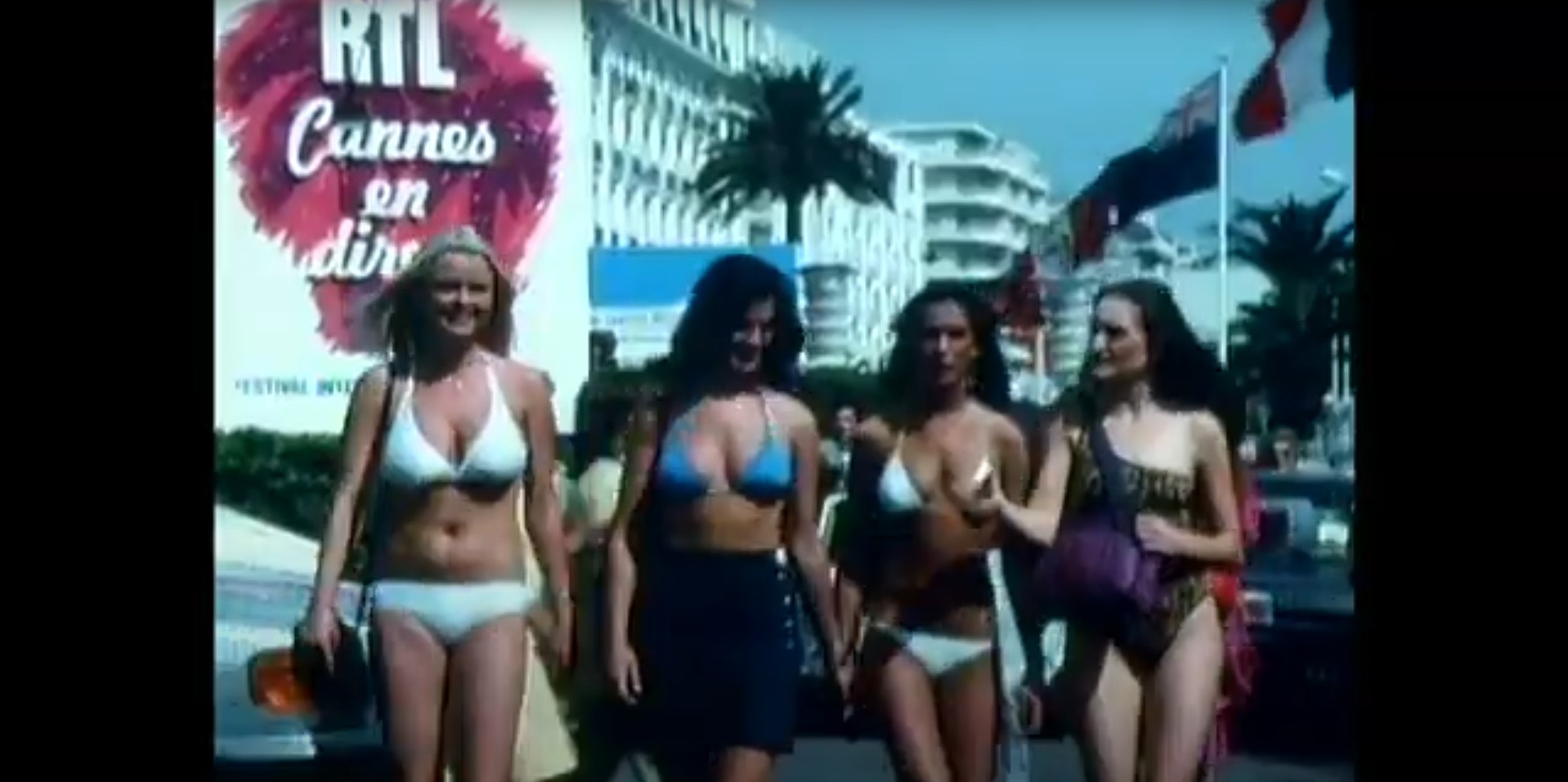
A deranged NYC taxi driver flying to Europe for an aggressive meet, greet, and casting of a totally unaware horror actress to be in his own B-picture is the plotline everyone could, should, enjoy!  What’s not the love?  “The Last Horror Film” takes us from the grimy streets of the Big Apple to the exquisite sights and sounds of the seashore Cannes along the scenic French Riviera.  Helmed by London-born David Winters (“Thrashin’”) and penned by Winters, Tom Klassen, and Judd Hamilton (“Maniac”), “The Last Horror Film,” also known as “Fanatic,” is one of the best obsessed fan thrillers out there, such as containing the same context of the Clint Eastwood picture “Play Misty for Me,” but is lesser known to mainstream audiences because it features genre icons Joe Spinell and Caroline Munroe and has been primarily distributed under the unconventional indie picture and filmmaking risk taker, Troma Films, who at times isn’t everyone’s cup of tea distributor.  David Winters’s Winters Hollywood Entertainment and Shere Productions with Judd Hamilton and David Winters producing the 1982 American feature. 

Fans of Joe Spinell (“Maniac,” “Rocky,”) already know this but those who haven’t experienced the New York City-born and bred actor, “The Last Horror Film” role of Vinny Durand is one of his best.  Spinell obviously suits psychosis well, but Vinny Durand takes it down a different path and, believe me or not, Spinell finesse with the character is beyond magnificent in all his mannerisms, expressions, and intonations, in addition to his egg-shaped physical, slick greasy hair, and thin black mustache, that make Vinny Durand a likeable and infatuated with obsessed crazy.  “The Last Horror Film” is the third costar collaboration with female lead, and genre icon in her own right, Caroline Munroe behind “Starcrash” and “Maniac.”  The “Dracula A.D. 1972” and “Captain Kronos:  Vampire Hunter” Munroe essentially plays herself in the role of Jana Bates but with a role that comes with more glamour and prestige as horror actresses rarely received such recognition in the major industry circuits.  Munroe equals Spinell in performance but in her own right as more of normie actress with accolades living it up at Cannes and eventually landing in the final girl trope, exceled into terror within the radius of her killer.  Being embroiled in a different kind of love triangle, one that includes her silver fox husband ex-husband Bret Bates (Glenn Jacobson, “Wild Gypsies”), current boyfriend Alan Cunningham (Judd Hamilton, “Starcrash”), and rival producer Marty Bernstein (Devin Goldenberg, “Savage Weekend”).  As the potential body count rises, so does the continued cast list with David Winters himself in a reflected cameo role as a horror director named Stanley Kline, Susanne Benton (“That Cold Day in the Park”) playing an orthographic variant of her namesake in Susan Archer, and Sean Casey as a rockstar lending his castle to Alan and Jana for retreating safety.  The cast rounds out with Spinell’s mother, Flilomena Spagnuolo, playing Durand’s mother in a convincingly nagging and comedic way that makes me it’s not terrible too far from the truth of their off-screen relationship. 

For a Spinell, Munroe, and David Winters production, “The Last Horror Film” is surprisingly vaulting with ambition for an unpermitted guerilla shot feature through the streets of Cannes.  Large parapet roof signs, gothic castles, the ritzy and beachy French Riviera, a score of happenstance and scripted extras,  and lots of topless women on the beach shots, Winters musters moneyed shots to coincide the well-dressed interiors of Durand’s apartment and hotel room and a slew of exteriors to play into the stalking fold.  Couple these manifested scenes of grandeur with the shocking moments of precision and effective gore and Spinell’s theatrically pleasing, creepy behavior performance and you got yourself a halfway decent meta slasher full of red herrings and a high body count, circling and overlapping itself within Duran’s directorial vision, the fake films within the critic panel and festival screenings and, as well as, the gotcha moment ending that gives one pause to think if what was just witnessed was actually the story, but while you’re scratching your head, perhaps feeling like a cinematic dummy of storytelling comprehension, there’s no doubt that David Winters successfully produced one hell of a horror picture starring Joe Spinell.

The new Tromatic Special Edition of “The Last Horror Film” is seemingly a repeat in some ways to the Blu-ray release from a decade earlier down to the exact cover art without the Tromatic Special Edition banner.  The AVC encoded, 1080p resolution and 1.78:1 widescreen aspect ratio, is compressed onto a BD50, an uptick in format storage from the 2015 to warrant it a Tromatic Special Edition.  However, image refinement is not in this re-release’s repertoire with a mirrored result of a lightly anemic look that still fails to color pop the feature in its eclectic set designs.  Darker scenes are in and out based of contrast, losing definition, and are inclined to be grainer negatively in the negative spaces.  In the brilliance of light, details can rooted out, especially in skin textures as Spinell’s pot marked face is exhibited in great detail amongst the other casts’ individual facial features.  Winter’s diverse and organized framing, plus with a little editing garnish, elevates whatever kitschy content there might have been into a grade-A B-picture; yet that doesn’t go without saying that there weren’t any editing flaws in the print that was subsequently transposed to the Troma transfer as horizontal cut lines and breaks in recurrent cells kink the chain ever so slightly.  The release also features the same English Dolby Digital 2.0 mix, a fidelity lackluster that doesn’t reflect the power the action medley and the score, the latter from composers Jesse Frederick, the vocalist of the “Full House” theme, and musical instrument compliment, Jeff Koz.  Dialogue renders above the layers but is on the softer side of volume, diluting the more intense moments of chase and murder without that impact punchiness.  Troma, like in my instances, flaunt a noteworthy tidbit in their releases, if there is one to flaunt, and in “The Last Horror Film’s” case, Depeche Mode’s track Photographic is the quoted feature music, says in big white and yellow font on the front cover.  What primarily separates the 2015 and the 2025 releases are the special features.  Archived commentary with Joe Spinell’s assistant and associate producer Luke Walter commentary moderated by Evan Husney from 2009, “The Return of Dolphin Man” short film by director John Patrick Brennan, a segment entitled “Kabukiman’s Cocktail Party,” the feature scrapped “Maniac II:  Mister Robbie’s” promotional trailer, the theatrical trailer, and a Lloyd Kaufman intro that dresses him in drag in the streets of an uninterested NYC are included on the special edition that features additional supplements with two more, 2023 produced, re-used commentaries from 1) Caroline Munro moderated by FrightFest’s Alan Jones and 2) again with Luke Walter by moderated by Severin Films’ David Gregory for the label’s own 2023 release.  Also from the Severin vault is the Like a Father Figure:  Sal Sirchia Remembers Joe Spinell interview with Sirchia’s memories and phoned tape recordings of Spinel’s voice messages, My Last horror Film Ever audio interview with producer Judd Hamilton, and “The Last Horror Film” location revisit featurette from New York City to Cannes, plus additional trailers under the title “Fanatic” (2) and the main title (1).  There are additional Troma materials with trailers from “Return to Nuke ‘Em High Vol. 1” and “Vol. 2,” The Toxic Avenger,” “Class of Nuke ‘Em High,” and “#Shakespeare Shitstorm.”  Aforementioned, the physical properties of the release nearly identical aside from the special edition banner across the top and the additional bonus content.  The 2015 Troma release is region locked A but a decade later Troma realized region free is the smarter move with the single 87-minute cut defining the release that comes not rated.

Last Rites: Take “Maniac” out of the equation, “The Last Horror Film” is Joe Spinell’s finest performance not taken lightly and though the story’s lurching flashes the check engine light, David Winters is able to still cruise along in his fanatic slasher.

“The Last Horror Film” is Now Available on Blu-ray to Obsess Over!

Herding EVIL Emotions to Your Doom! “Shepherd” reviewed! (Darkland Distribution / Digital Screener)

“Shepherd” on Blu-ray from Darkland Distribution!

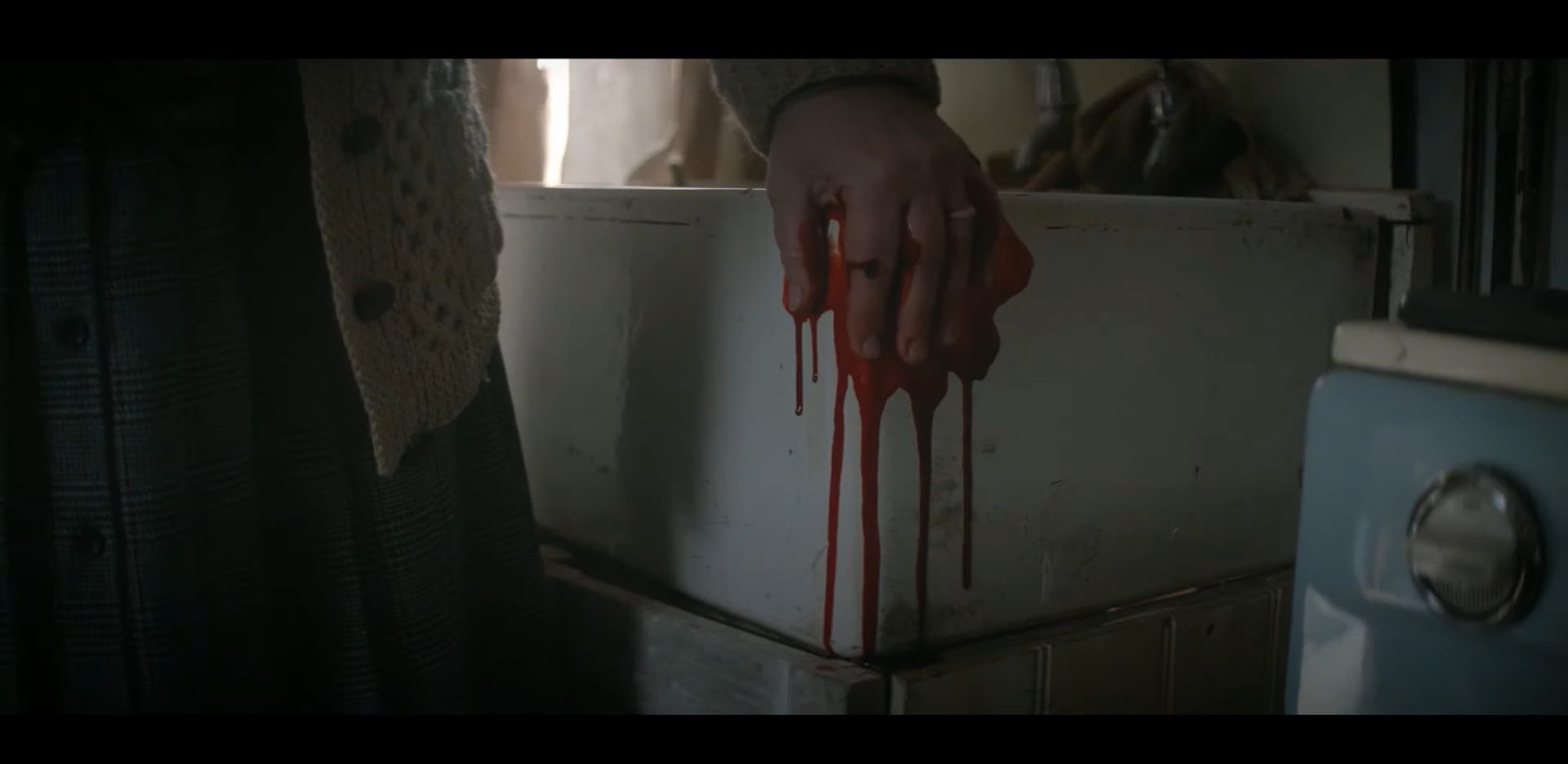
The death of his young, adulterous, and pregnant wife pushes Eric Black into wanting nothing else but space from the rest of the world.  He ships off with his dog Baxter to an isolated lighthouse island, answering a classified job ad to be a shepherd of a flock over 600 sheep.  His arrival to the island’s dilapidated living house is beyond below expectations but serves the purpose of avoiding everything that reminds him of his lost wife and previous life.  When loneliness creeps around the entire stretch of the fog-covered island and intense nightmares sweep over him nightly, being trapped at his new home away home stirs madness into his everyday cup of life that also could be possibly the malevolent dealings of a supernatural presence residing on the island with him. 

Mourning is already a powerful post-shock emotion that can swallow a person whole without warning.  Couple the intense bereavement with a bristly line of behind-the-scenes loathing creates a perfect maelstrom that bears a force more soul crushing and more untouchably violent on the mind.  This is the psychological assaulting premise for Russell Owen’s new film entitled “Shepherd.”  The Welsh-born writer-director conjoins daunting atmospherics with slow burn deterioration and a Hell of one’s own making that questions conscious and subconscious morals.  Owens stretch through grim realities continue well after his first two films, a 2013 post-apocalyptic thriller in “Welcome to the Majority” and a 2020 survival of zombified inmates with “Inmate Zero,” the latter initiating the island motif for Owen’s latest film.  “Shepherd” is 103 minutes of bone-chilling folk horror from Golden Crab Film Production (GC Films) and Kindred Film under fellow producers Aslam Parvez and Karim Prince Tshibangu reconnecting with Owen from “Inmate Zero.”

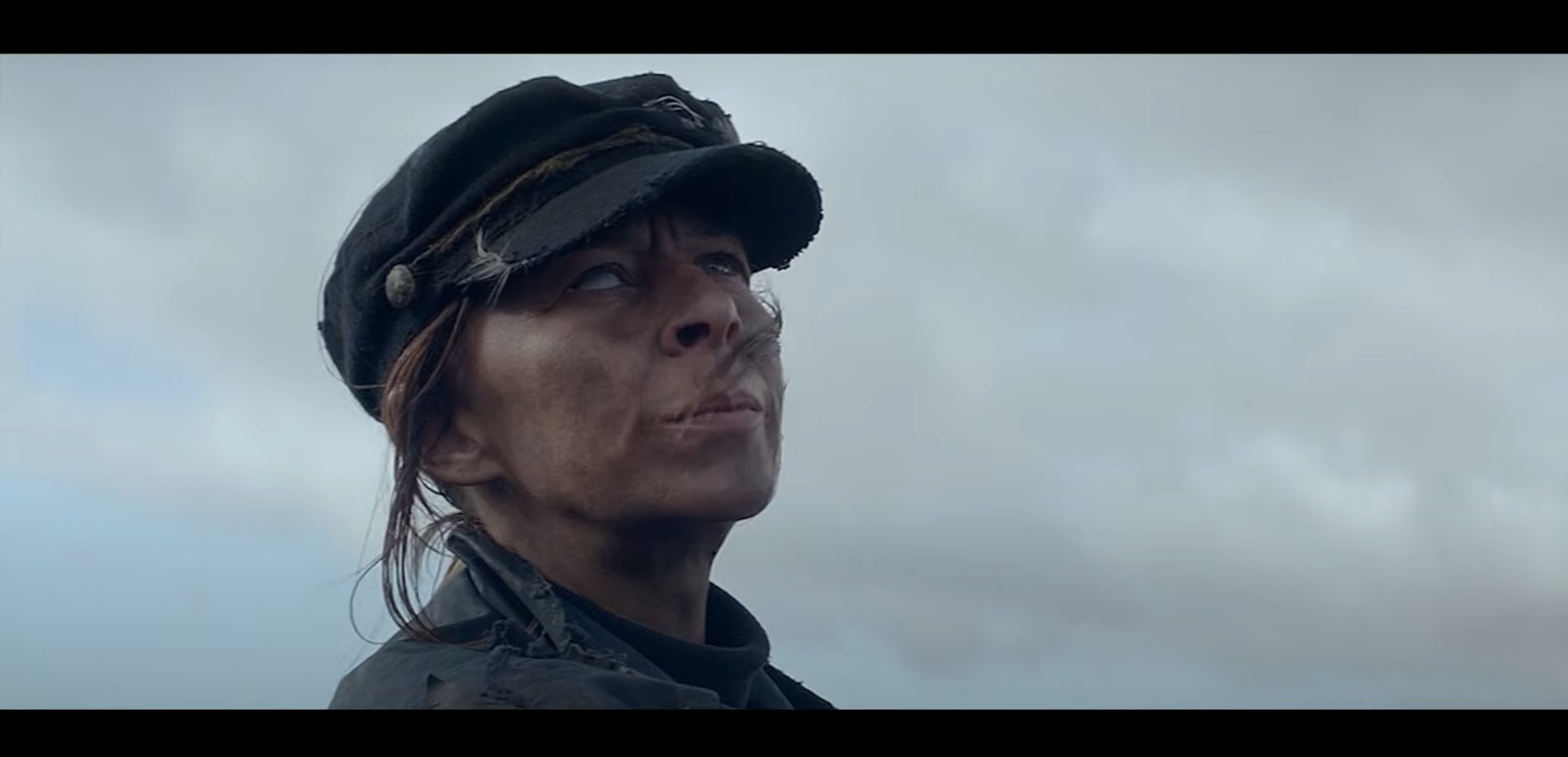
“A Discovery of Witches’” Tom Hughes embarks nearly solo on this frigid and fog-encrusted journey through self-segregating terror as Eric Black in order to break off Black from a world that won’t leave him be nor let him forget.   Hughes amasses a broody-flavored anguish, quietly stewing, fretting, and absorbing with great sedated composure the bombardment of strange occurrences during his stay on sheep island.  From his time with witches and vampires, the Cheshire-born, mid-30’s actor might be the lead of “Shepherd,” but it’s actually Kim Dickie (“Prometheus,” “The Green Knight”) who steals the show with her forebodingly salty fisher.  Haggard in appearance with a white, ghostly eye, Dickie’s frightsome performance and unsettling calm tone of voice could instill shivering fear into anyone who charter’s her boat heading toward a forsaken island.  The interactions between Hughes and Dickie are scarce with Dickie overshadowed by Hughes often wandering the island screen time like an avatar lost on in the fog of a Silent Hill horror game, waiting for something to pop out of the shadows and collecting clues to progress his story along.  Rounding out the cast is Greta Scacchi as Eric’s widow-bitter and devout mother and Gaia Weiss in a flashback and dream role of Eric’s deceased wife.

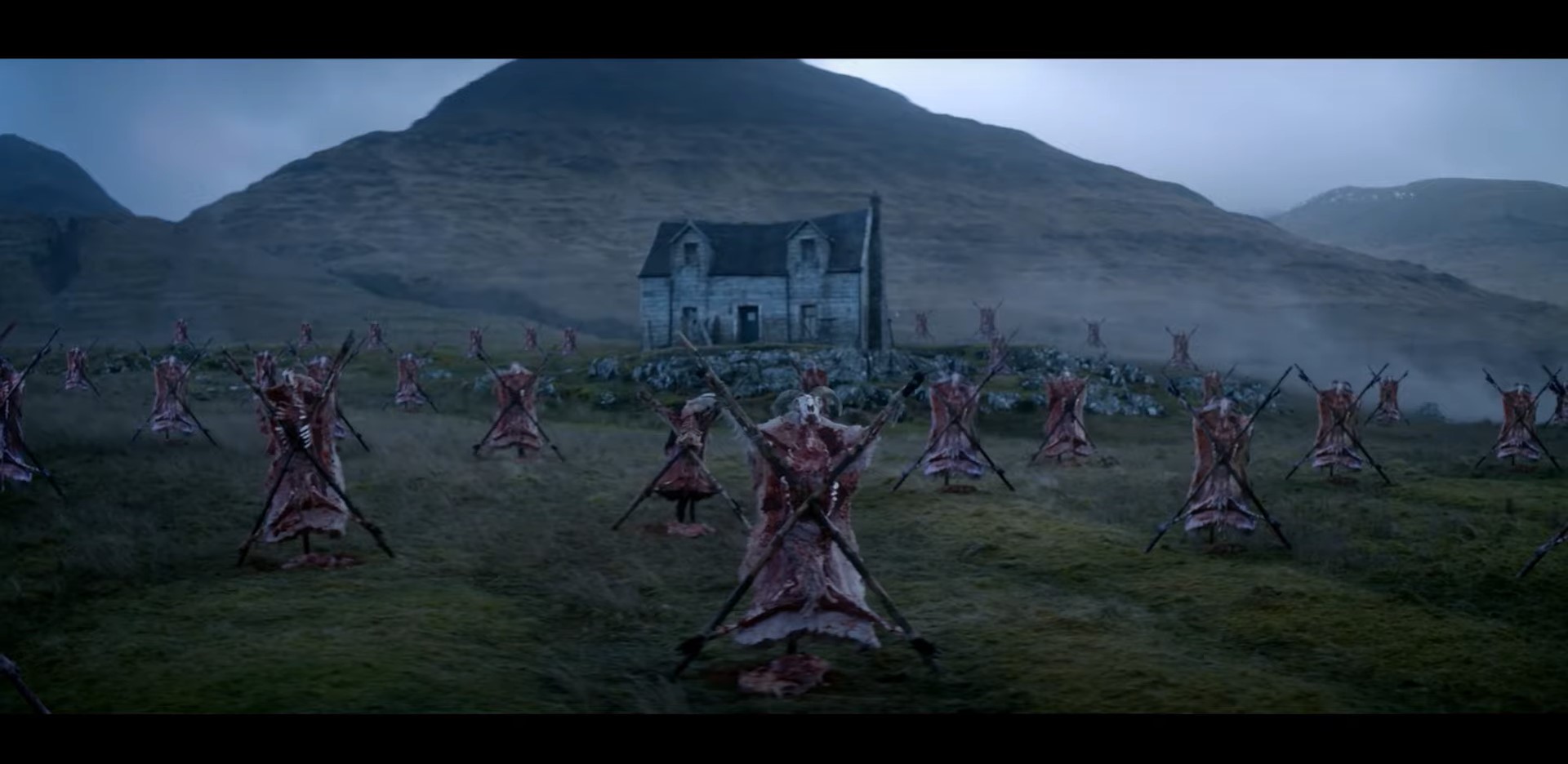
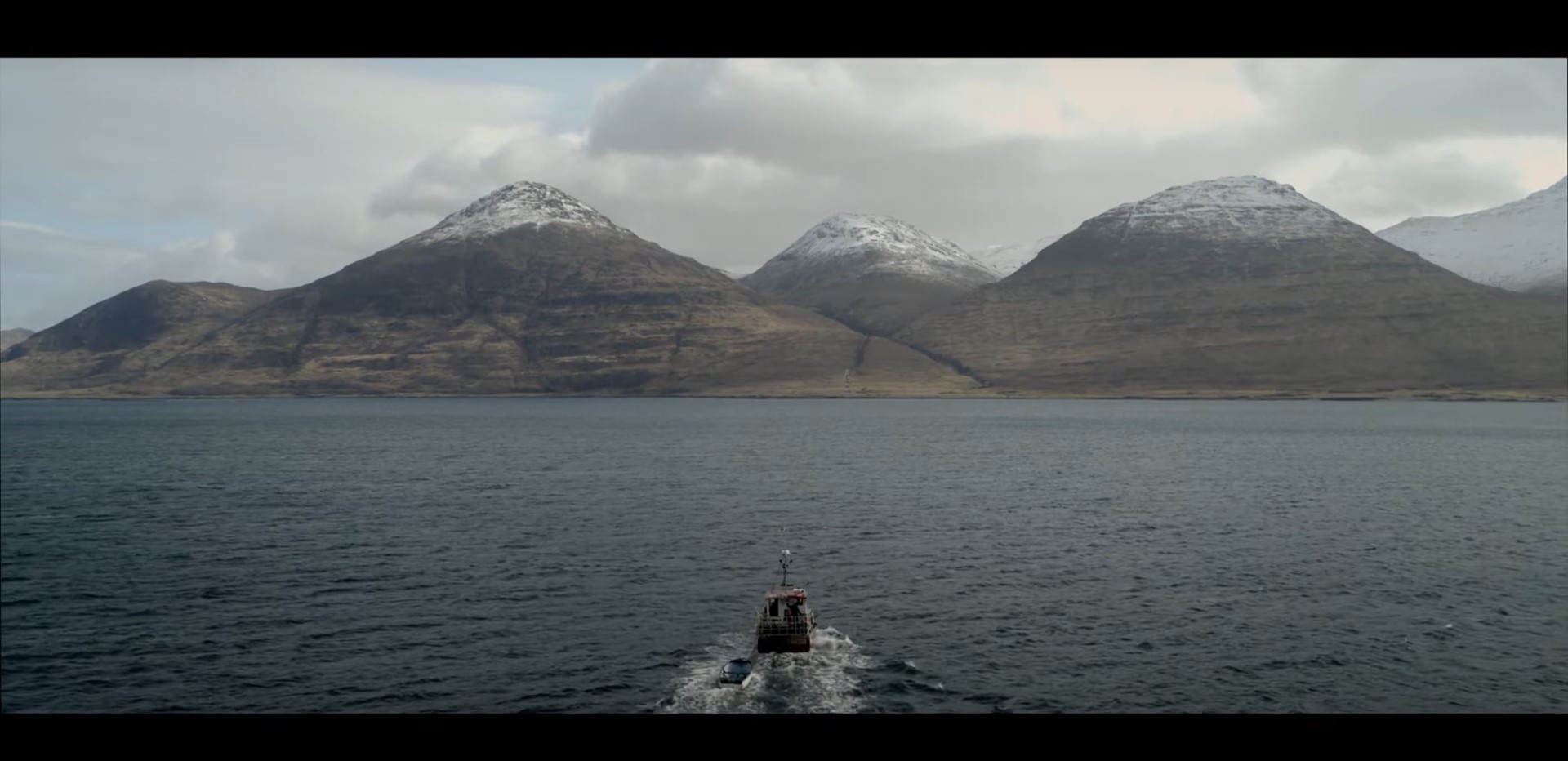
“Shepherd” immerses itself fully into the ideal concept of personal Hell with a wraparound mystery that batters and bruises the psyche of the protagonist, shielding away the hard-to-face truth, until a realization moment unfolds all the paranormal pastiche we’ve seen before in films such as Andrew Wiest’s “The Forlorned” and even Robert Egger’s “The Lighthouse,” both which involve lighthouses, lighthouse keepers, and a mixed-nuts’ tin of supernatural-madness. Trying to separate’s “Shepherd’s” niche from a very specific type of supernatural mystery subgenre surrounding a beacon of warning, or hope in some cases, is difficult to accomplish because each film, though stylistic diverse and eerily alluring in their own rite, regurgitate the same core context hinged on being unhinged. Now, what I’m not saying is that a remote, weather-beaten, and creepy lighthouse doesn’t make for a good setting – it sure as hell does – and cinematographer Richard Stoddard’s visual redecoration of the popular holiday tourist refuge, Isle of Mull, into a seemingly desolate, yet still a behemoth, island of nothing but monolithic rock faces and green grass as far as the eye can see. Stoddard’s use of in-flight drone cameras enables the visionary to capture breath-taking wide shots that dwarf Eric Black on his walkabouts in search for various odds and ends, providing an additional sense of overwhelming loneliness that pressurize the character to a breaking point. Space becomes an emblem of cursed irony for Eric between his need for separation from his disconnected place in the world to the vast space of Earth that inundates him into a bone-shivering panic. Space is also utilized by Russel Owen who’s able to manipulate through decent computer imagery the illusion of a large ship liner eerily resting a valley of fog or even taking a note out of Hitchcock’s shooting technique handbook of POV distortion, faltering Eric’s mind by disorienting him with swaying depths that play into the character’s fear of heights in another nod to the Hitchcockian coffer.

About every few years, a tense lighthouse lip-biter washes ashore. Released this past February of 2022, filmmaker Russel Owen’s psychological pilgrimage of coming to terms with consequential terror is his shot at the equivocal contretemps of one unlucky soul stuck on an eroded plinth of stone and shore. Darkland Distribution releases “Shepherd,” the second indie horror from Parkland Distribution’s dark subsidiary motion picture line, onto a UK Blu-ray with certified 15 rating and digital download, available off such platforms as Itunes, Amazon Prime, GooglePlay, Sky Store, Vubiquity (Virgin), BT, BFI Player, Rakuten TV and more. Since this review is based on a digital screener, I am unable to comment on the specifics of the Blu-ray A/V quality. The inhospitable-saturated soundtrack by Callum Donaldson is an unnerving mixture of low industrial rumblings and high anxiety string dissonance sure to keep the blood curdling with every resounding note and slice deep when the shocking time is right. I mentioned Stoddard’s eye for profound looming landscapes, capturing the natural beauty of the island, that are kept in continuity with the weathered fiber of the house and lighthouse interiors to match despite being shot inside a constructed studio set; however, a deep blue tint is added in post at random intervals of interior shots that pop out of place like a dislocated thumb, taking away from the realism and stepping more into the cerebral caged surrealism from which Owen ebbs and flows. “Shepherd” herds all the right tropes into a pen of madness. With a ferocity of natural imprisonment and the threat of evil dense within every molecule of the island, this awake nightmare fuels the ominous fire, but can’t quite reach its gut punch ending that curtails off toward ambivalence without cherishing a satisfying single resolution.

“Shepherd” on Blu-ray from Darkland Distribution!

Unleashed, Nature Inspires the EVIL in All of Us! “In The Earth” reviewed (Neon / Digital Screener)

A deadly virus has ravaged the world, placing the inhabitants on a high alert edge of incessant sanitation and relentless paranoia. Martin, a scientist from the city, ventures to an ecological nature preserve to convey equipment for tests being conducted deep in the forest. Park Ranger, Alma, guides him on a two day trek toward a camp in total isolation supervised by Dr. Olivia Wendle, but during the second day of the journey, Martin and Alma are attacked in the middle of the night, left with no gear and a vague sense of what happened. The virus has yet to stake a claim on those living within the woods, but another malicious-driven presence, entombed by superstition and mental manipulation, enacts the forest to come alive around them, forcing them into a direction that presents a summoning of nature’s folkloric revenant.

COVID-19 has brought a tremendous amount of sorrow and an unforgiving plight upon the world, but for a few filmmakers, a global pandemic has been a source of inspiration that been a silver lining amongst the Earth’s population upheaval. Director Ben Wheatley tapped into that filament, you could say ,with his man versus nature mystery horror “In The Earth.” The filmmaker of “U is for Unearthed” short from the “ABCs of Death” and soon-to-be helming the follow up big screen sequel to novelist’s Steve Alten’s widely popular monster shark book series with “Meg 2: The Trench,” Wheatley writes and directs a quarantine start-to-finish feature that also incorporates the pandemic into the story, much to the same likes as Rob Savage’s “Host” that uses the virus as a means to drive the characters into doing something they normally wouldn’t be doing. The UK production is from Wheatley’s founded Rook Films and Neon, who last co-produced Brandon Cronenberg’s violent sci-fi thriller, “Possessor.”

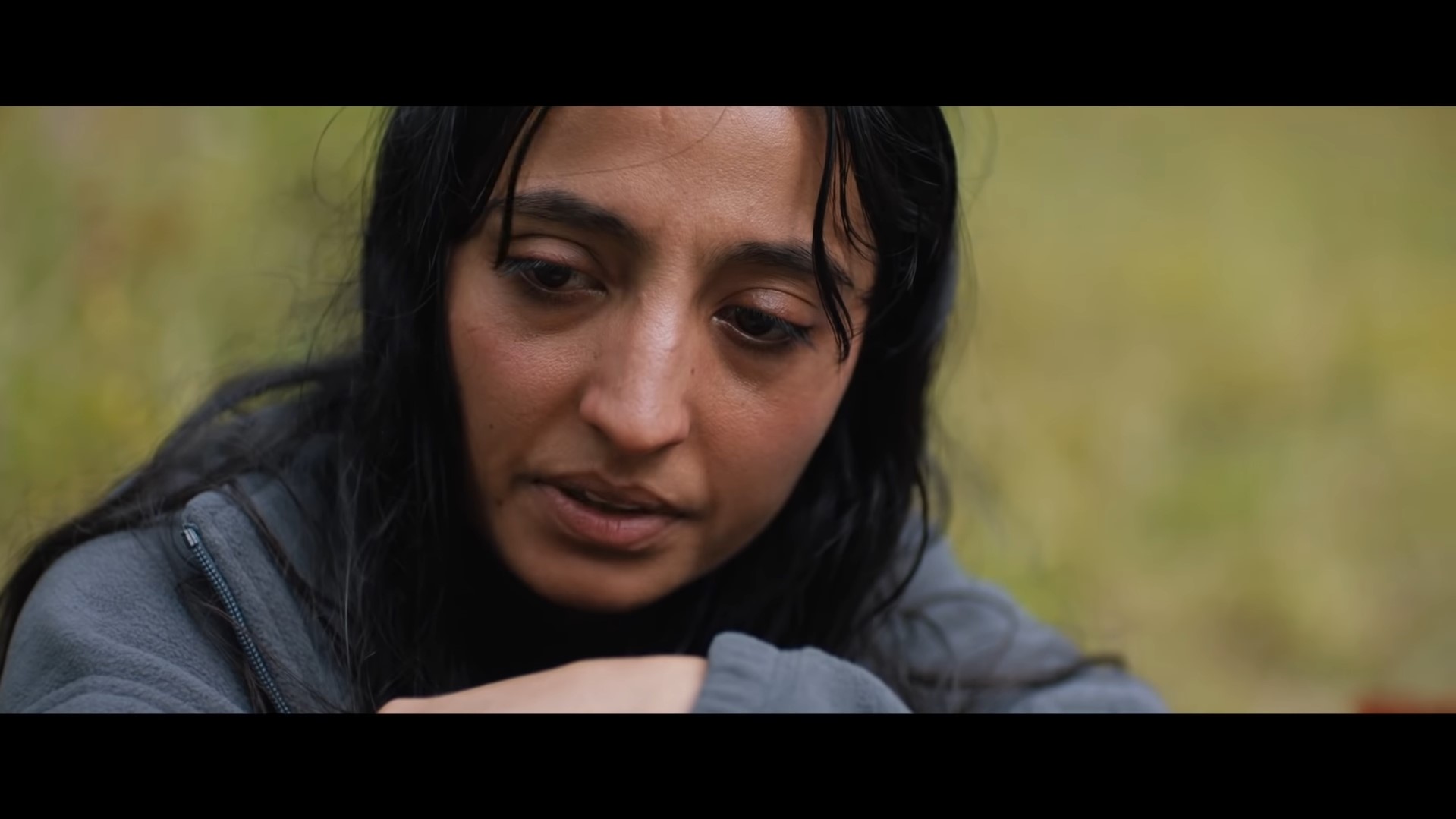
With the pandemic resulting quarantine and a story set in the thicket of woods, “In The Earth” is innately slim around the casting waistline that concentrates the performance zest amongst a few, beginning with the introduction of Martin the scientist walking up to the sentry lodge located at the forest edge. Played by Joel Fry (“Game of Thrones”), the London born actor must endure as a hapless city boy taking woodland shots on the chin without much complaint, but definitely a grimace, a whimper, and a pass out. Guiding Martin through the woods is Alma, a seasoned park ranger under the eye of “Midsommar’s” Ellora Torchia who balances out her travel companion’s near ill-equipped, yet hazardously attempting, roughing the outdoors. Martin and Alma are nearly mirrored by the only other two people they come across in the forest – Zach and Dr. Wendle. Yet, Zach and Dr. Wendle’s similarities channel through how they instrument a link to the forest being, known as Parnag Fegg, that calls them to release it from the timber and foliage prison. Zach (Reece Shearsmith of “Shaun of the Dead”) honors Parnag Fegg with ritualistic images and symbols while Dr. Wendle (Hayley Squires) uses a combination of technological lights and experimental music to speak with the powerfully alluring presence. Shearsmith is devilishly certifiable with Squires backing up his character craziness with her own version that never places Martin and Alma into a safe haven’s circle. “In The Earth” rounds out the cast with Mark Monero and John Hollingworth.

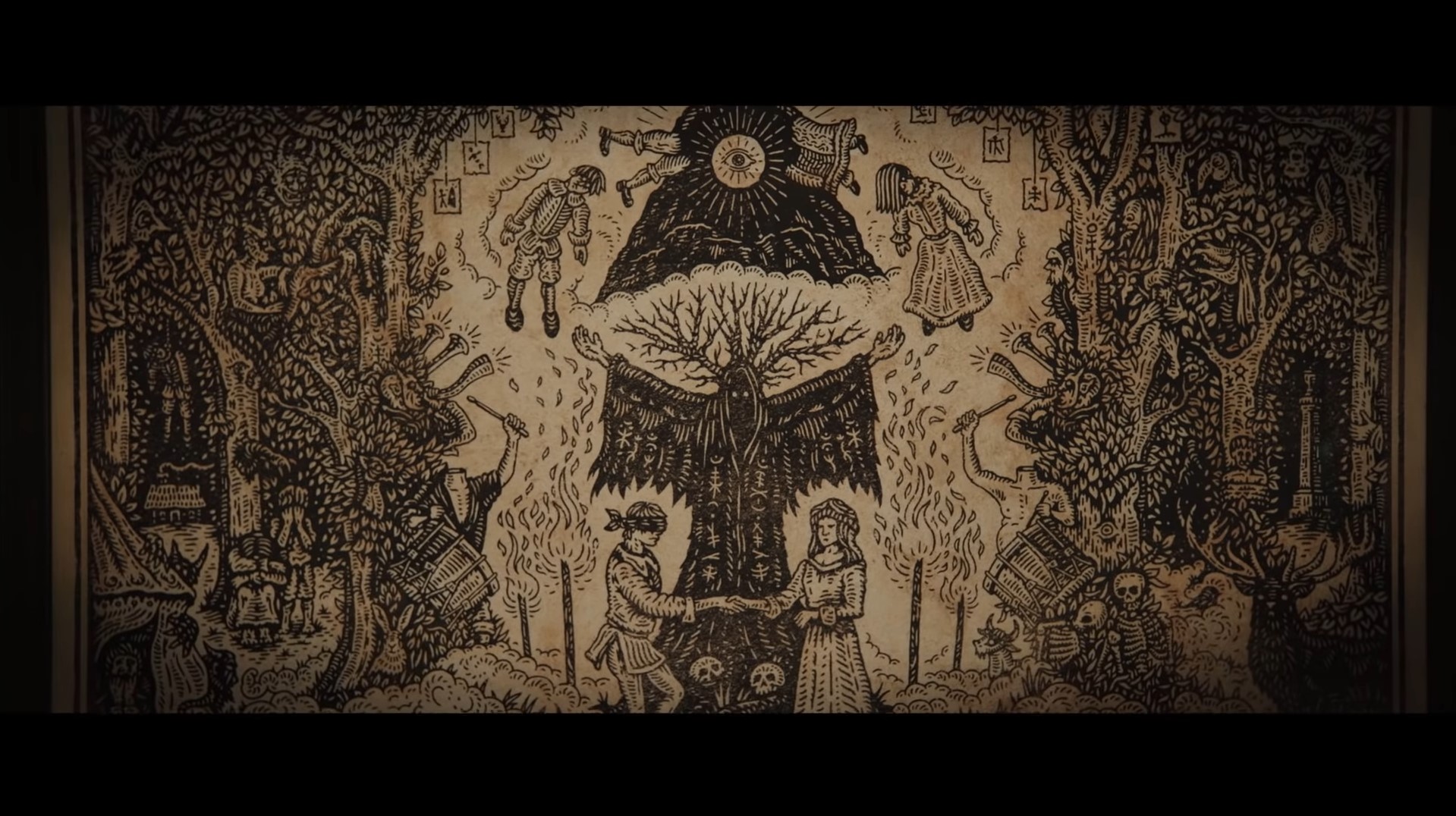
“In The Earth’s” binary coding of nature versus urban, plus sublets of traditions versus technology, runs as a seamless motif to a bigger theme that nature has a global network web of personified communication and reason. I imagine Wheatley succeeded in what M. Night Shyamalan tried to accomplish in the Mark Walhberg’s headlining “The Happening” with bringing nature to the forefront stand against man who continuously seeks to destroy themselves and the world, forcing nature’s hand to take drastic measures, but Wheatley’s film more so tells not the story of a worldwide assault on mankind but rather as the resurrection of a single entity, an archaic necromancer of local legend, eager to walk the Earth once again after being driven to disembody their spirit to the forest. “In The Earth” also provokes a literal meaning toward an age old saying of “nature calling” by using the aforesaid network to unconsciously lure specific individuals into the woods and gather near a gateway relic or stone,. This act of intention calls for a sacrifice of purity and so one of the four individuals – Alma, Martin, Zach, and Olivia – will involuntary be the vessel of Parnag Fegg’s return while the others, under the persuasion of forest spirit, due it’s song-and-dance bidding. Ben Wheatley taps into a very John Carpenter archetype of people on the cusp of unleashing certain doom upon the world, invoking not only a spirit but also that very sense of last stand against damnation as epitomized in “The Thing” and “The Prince of Darkness.” “In The Earth,” however, isn’t so easy to see the forest through the trees with an first act setup that zips through the situation that leads Martin and Alma trekking through the woods and Parnag Fegg is only briefly dappled to be a dangled carrot for bigger things to come.

A chiseled, fey story with a dark, ominous cloud of impending doom lingering overhead, “In The Earth” is transcendence horror at it’s finest. Neon is set to release the R-rated, 107 minute film, “In The Earth,” in theaters on April 30th. The scaled down budget didn’t hinder Wheatley’s grand platform and with Nick Gillespie’s sophomore credit as feature film cinematographer, the playbook was unwritten for Gillespie to rework how to shoot a film under the confines of a pandemic with limited cast, a living forest, and still maintain safe social distant practices under strict mandated guidelines. Gillespie formulated wide-angles to capture an expanse of trees diminutively enshrouding the characters, almost like the forest was going to gulp them at any moment. A composition of artful imagery compiled together in a collage of intoxicating colors and feverish styles interprets nothing concrete in the heroines journey of an nearly unknowable presence only knowledgeable by world of mouth, leaving also the audience induced with a psychedelic vision at the whims of Wheatley’s direction. There were no bonus scenes during or after the credits and the perfunctory ending opens the door for interpretation that can be more impacting than a firm resolution. Born and bred from the depths of the coronavirus pandemic, “In The Earth” dispatches a diversion from the immediate, the real world, and the tumult of a virus with a bewilderingly diversion of troubling folk horror sown directly into Mother Nature herself.