EVIL Sentences You to the Torture Dungeon and his Bedroom! “Night of the Blood Monster” reviewed! (Blue Underground / 4K UHD + Blu-ray)

“Night of the Blood Monster” on 4K + Blu-ray is Here and On Sale!

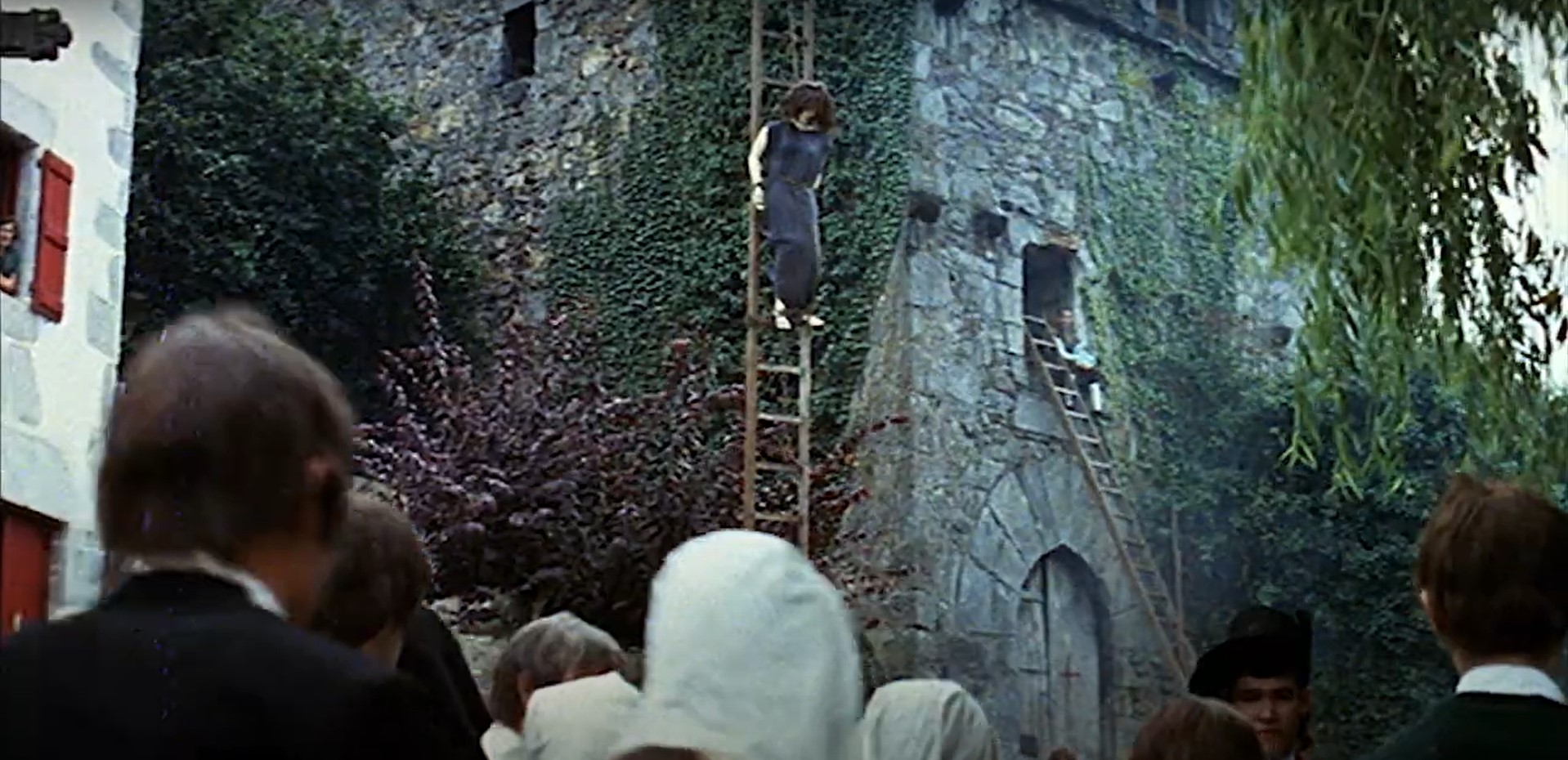
After the death of King Stewart, 17th century England went into asunder chaos with the ruthless, usurping King James and the rightful, exiled King William of Orange who sought to return and topple King James’s authoritarian rule of a false claim to monarchy.  During the beginning and at the height of the revolution, Chief Justice George Jefferies presides over witchcraft cases with extreme and unethical prejudice, subjecting them to the torture chamber for what is labeled a ‘thorough examination” of their heretic ways, and eventually sentencing to public execution.  When the sister of one of the condemned women attempts to flee the country with a nobleman’s son, Jefferies learns of their dissidence and sends his henchmen to fetch the lovely woman to exploit her within the context of his own licentious litigiousness but closer and closer do the rebels and William of Orange’s men come to men like Chief Justice Jefferies who believe their power, influence, and proximity to God will save them from the noose.

A 17th century Eurotrash period piece forged out of mostly flesh and wolfish self-importance, “The Night of the Blood Monster” is yet another reteaming of Jesús (Jess) Franco and Sir Christopher Lee based loosely on historical context despite Lee’s best efforts for the contrary.  Also wildly and otherwise known as “The Bloody Judge,” and not to neglect mention the exorbitant unofficial titles from around the globe like “Witch Killer of Broadmoor,” “Throne of the Blood Monster,” and “Trial of the Witches” to name a few, the Spanish-German-British coproduction, cowritten between Jess Franco and Enrico Columbo (“Hell Commandos”) is a biographical interpretation of the Chief Justice George Jefferies and the brief span of his cruel litigator’s life set against an epic regime kerfuffle and grimy, exploitation barbarity.  The storyline concept was imagined by longtime Jess Franco producer and overall B-movie votarist Harry Alan Towers (“99 Women,” “The Blood of Fu Manchu”) alongside Columbo and Arturo Marcos (“She Killed in Ecstasy”) under production firms of Fenix Cooperative Cinematografica, Prodimex Film, and Towers of London Productions.

In yet another instance similar to Jess Franco’s “Eugenie” of a prior year or two where Christopher Lee channels the spiritual embodiment of a pain-and-pleasure pundit connected to the Marquis de Sade yet is unaware of the actual skin-and-sleaze that’s happening all around him while he crafts his melodramatic character, “The Night of the Blood Monster” has Lee conduct a stern symphony for Chief Justice George Jefferies’ conceited righteous carnage, living true to the factual George Jefferies designation of a hanging judge.  Lee is ruthless and cold while proper in public as he peeps beautiful bosoms and skirts from afar.  His costar, the gorgeous blonde with soul pierce eyes in fellow “Eugenie” thespian, Maria Rohm, who was also Harry Alan Towers wife at the time, definitely wasn’t clueless about the more undressed scenes, going full frontal in a couple of occasions with one of the supposedly with Lee as the exploiter of her beauty and circumstances.  However, Lee is never shown and only Jefferies’ hands are seen caressing Rohm’s character’s, Mary Gray, bare skin with post-event moments alluding to the implied affect.  Yet, there’s plenty of well-scripted dynamic play for Lee to bounce off against, which Franco is good at in his work as long as his at least 75% of the work makes it to the screen and not too terribly chopped up and spliced for the sex appeal and gratuitous blood.  Milo Quesada (“The 10th Victim”) swings a mean bastard sword as one of Jefferies head knights of dirty work, Hans Hess (“X312 – Flight to Hell”) is more vanilla than complex as the rebellious nobleman son and Mary Gray paramour Harry Selton, and Leo Genn, who initially wasn’t supposed to play the Lord Wessex, really cements Lee’s genuine performance with his own as the aristocratical, oppositional counterpart to Jefferies sadism.  “Night of the Blood Monster” rounds out with Peter Martell (“The French Sex Murders”), Margaret Lee (“Asylum Erotica”), Howard Vernon (“Angel of Death”), and Maria Schell (“99 Women”) as the clairvoyant old woman Mother Rosa living in the hills. 

Like “Eugenie,” “The Night of the Blood Monster,” and most of Franco’s scripts and films, the historical accuracy you must take with a grain of salt.  Though the underline basis of historical figures and perhaps time periods are more-or-less on point, there’s a greater number of misrepresentation of events or an imprecise use of period appropriate props and costuming that is deemed close enough by a fast-and-loose industry standard. Yet, with any Jess Franco film, the modern-day consumer is not expecting award-winning and emotionally moving cinema but rather fleapit flicks of the fleshy kind with handfuls of equally perversive cruelty.  “The Night of the Blood Monster” fits the bill perfectly with a dressing that, to the untrained eye, would pass historical surroundings, give tribute to sordid bygone figures, and revel in its own unabashed filth outside the interpretations of its own core group of filmmakers.  On one hand I feel bad for Christopher Lee who didn’t know, maybe, that the edification of the character was being twisted into something more carnal but on the other hand, the man has been in quite a few Franco and Towers productions to have learned by then.  However, Franco does depict a remarkable presence of a low-level epic with fabricated Classicism set dresses and interior architecture while keeping the budget down by having multiple scenes of men on horses gallop through an unrecognizable, middle-of-world forest.  With that said, the story doesn’t have perfect fluidity with a choppy sense of tempo that fails to coordinate our specific concepts of time.  Seasons don’t change yet months pass between the wrongful execution of Alicia Gray and the impending arrival of William of Orange’s invasion. In all, there’s a brilliance in the behind the face value and a heart to make Chief Justice George Jefferies the worst person possible yet the timing feels off and the story suffers for it.
I’m curious to understand why Blue Underground used the title “Night of the Blood Monster” on their new 2-Disc 4K UHD and Blu-ray set instead of their previous DVD that had the less-generic-more-fitting title “The Bloody Judge.” No judge-ment here really other than “Night of the Blood Monster” isn’t as catchy. The 4K UHD is HVEC encoded, 2160p high-definition, on a double layered BD-66 presents a new 2023 Dolby Vision HDR 4K scan that is gorgeously sharp in detail of interior structures, brighter exteriors, and even the dungeon scenes invoke the dewy coldness and bloodletting squirms. The skin tones can get a little funky at times with an overly warm, and orange-ish, glow not conducive to elements around the ambiance. Other than a few instances of the skin tones, the grading is overall rich in saturation where we get some really nice and thick contrasting reds and yellows with no artefact inference that cause distraction in darker spots or around the edge of objects. The Blu-ray format offers a lesser immersive picture with a lower pixel count but the compression decoding around 35-38Mbps and the compilation of transfer as well as the high-definition pixels is worth the combo set alone. The English language DTS-HD Master Audio Mono track has lossless compression that renders a clean and unfiltered fidelity in dialogue and in the other audio composited audio layers. Granted, some actors are dubbed due to the international co-production with German and Spanish natives not speaking their native tongues but the dub itself, especially in Lee’s own dubbed track, is one of the better inlaid and integrated tracks compared to most with not a load of static feedback. Blue Underground was able to obtain a cut that is the complete and uncensored version of “Night of the Blood Monster” by combining multiple transfers but in adding additional scenes of nudity and blood from a German transfer, the English dialogue track does briefly switch over to German with burned in English subtitles for two segments. English, French and Spanish optional subtitles are available. The 4K UHD carries with it three historian audio commentaries: 1) Troy Howarth and Nathaniel Thompson, 2) Kim Newman and Barry Forshaw, and 3) David Flint and Adrian Smith. The Blu-ray carries a bit more. Including the aforementioned commentaries, there is also deleted scenes and alternate scenes that rework scenarios or add stylistic choices, an archival interview Bloody Jess with Jess Franco and Christopher Lee, an interview with Stephen Thrower, author of “Murderous Passions: The Delirious Cinema of Jesus Franco, in Judgement Day, an interview with Alan Birkinshaw and Author Stephen Thrower as they discuss producer Harry Alan Towers in In the Shadows, and rounds off with trailers, TV spots, and still galleries. What I love about this new Blue Underground UHD+Blu-ray combo release is not only the picture but also the cardboard slipcover, a remarkable blend of film factuality and gratuitous sleaze of half-naked and scared women chained up in the dungeon with the embossed tactile title “Night of the Blood Monster” in bold gothic lettering. The same image graces the front cover of the black 4K UHD Amary case but if you do want “The Bloody Judge” title, you can reverse the cover art and there it is but with a different, less fun front cover art that’s more in tune with the narrative. Each disc, punch locked into its own side of the interior case, is pressed with a different illustrated image, 4K being the same as the slipcover while the Blu-ray is more Lee and Executioner focused. No inserts or books included. The not rated, 103-minute release comes region free on both formats.

Last Rites: The verdict is in! “The Night of the Blood Monster” now has the best-looking, most-complete version possible with a new, uncensored cut from Blue Underground. Christopher Lee heralds in hopelessness in squalid measure while holding his nose up high as one of England’s most notorious magistrates to ever rule and the brazen Jess Franco brandishes brilliance that glints through the cracks of an overrun production.
“Night of the Blood Monster” on 4K + Blu-ray is Here and On Sale!

Staying in the Closet Can Lead to an EVIL Series of Events! “The Latent Image” reviewed! (Cinephobia Releasing / DVD)

Out today on DVD “The Latent Image” from Cinesphobia Releasing!

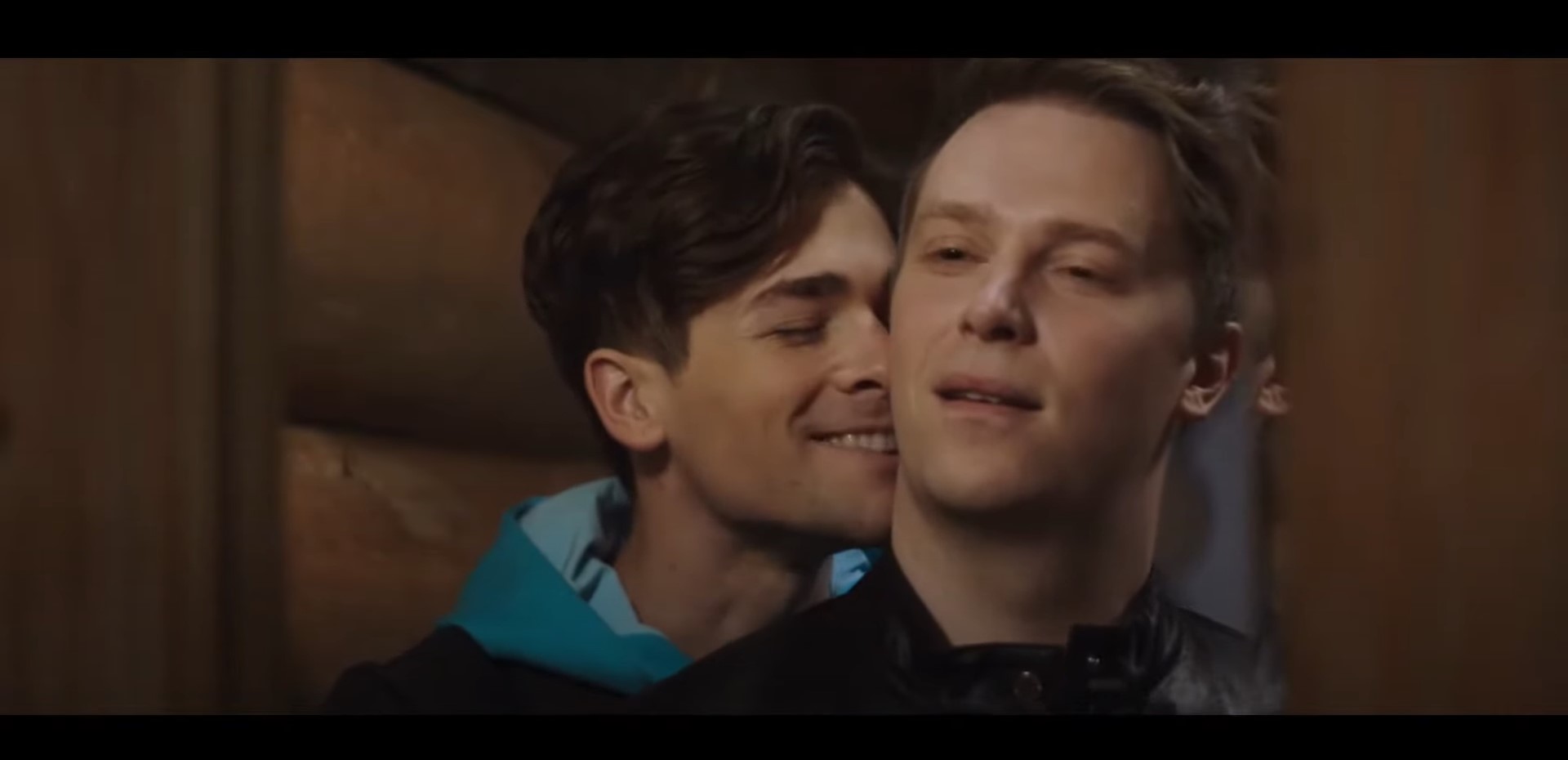
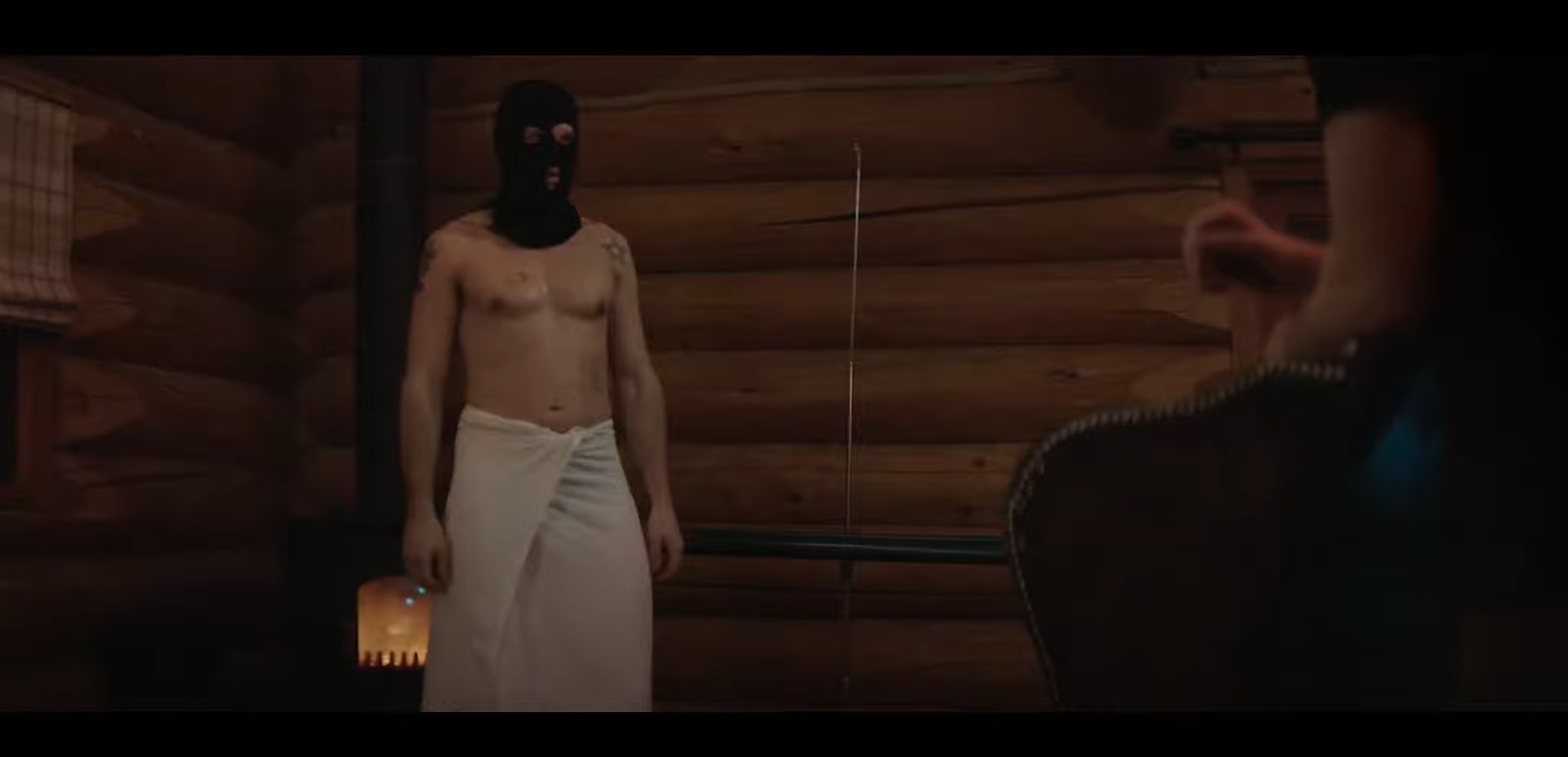
An aspiring novelist isolates himself in a secluded cabin to write his work-on-progress thriller without distractions, especially avoiding he contentious ones with his longtime boyfriend. Working through the night hours on the precipice of a storm, a mystery man drifts into the cabin, injured and claiming car trouble. After letting him stay the night on the couch and knowing he should ask the drifter to leave, the man’s rough allure instills deep desiring dark fantasies to bubble up to the surface that result in keeping his lingering presence around while also the experience doubles as subject inspiration for his novel. Yet, there’s something off about his unexpected and unusual visitor that lends to curiosity into what’s being hidden or being unsaid. The drifter’s trunk becomes an object of obsession that turns into wild speculation. Fear and fantasy collide into an explosive and destructive cat-and-mouse game of downlow and deadly secrets.

Based on the 2019 short film of the same title, writer-director Alexander McGregor Birrell (“Braincell,” “Sleepaway Slasher”), alongside co-writer and star Joshua Tonks, return to “The Latent Image” for a 2022 full script treatment to flesh out a fleshy grass isn’t always greener on the other side homoerotic thriller.  “The Latent Image” is Birrell’s third feature length film of essentially is Joshua Tonks inaugural writing and producing credit into the United Kingdom production that clashes tantalizing and dangerous one-time temptations with the safety and security of routine and longevity woven out of being inside a complicated gay relationship that stings with old systematic-induced worries and consequences.  Latent Image defines as an exposed picture or film not yet developed and Birrell and Tonks use that to purposely shield viewers from the utmost truth until the petrifying picture is clear.  Latent Image LLC in association with the queer community storytelling serving June Gloom Productions are the picture’s production handlers with the latter company’s Brandon Kirby and Michael Varrati as executive producers and Tonks and Birrell co-producing their debut feature collaboration.

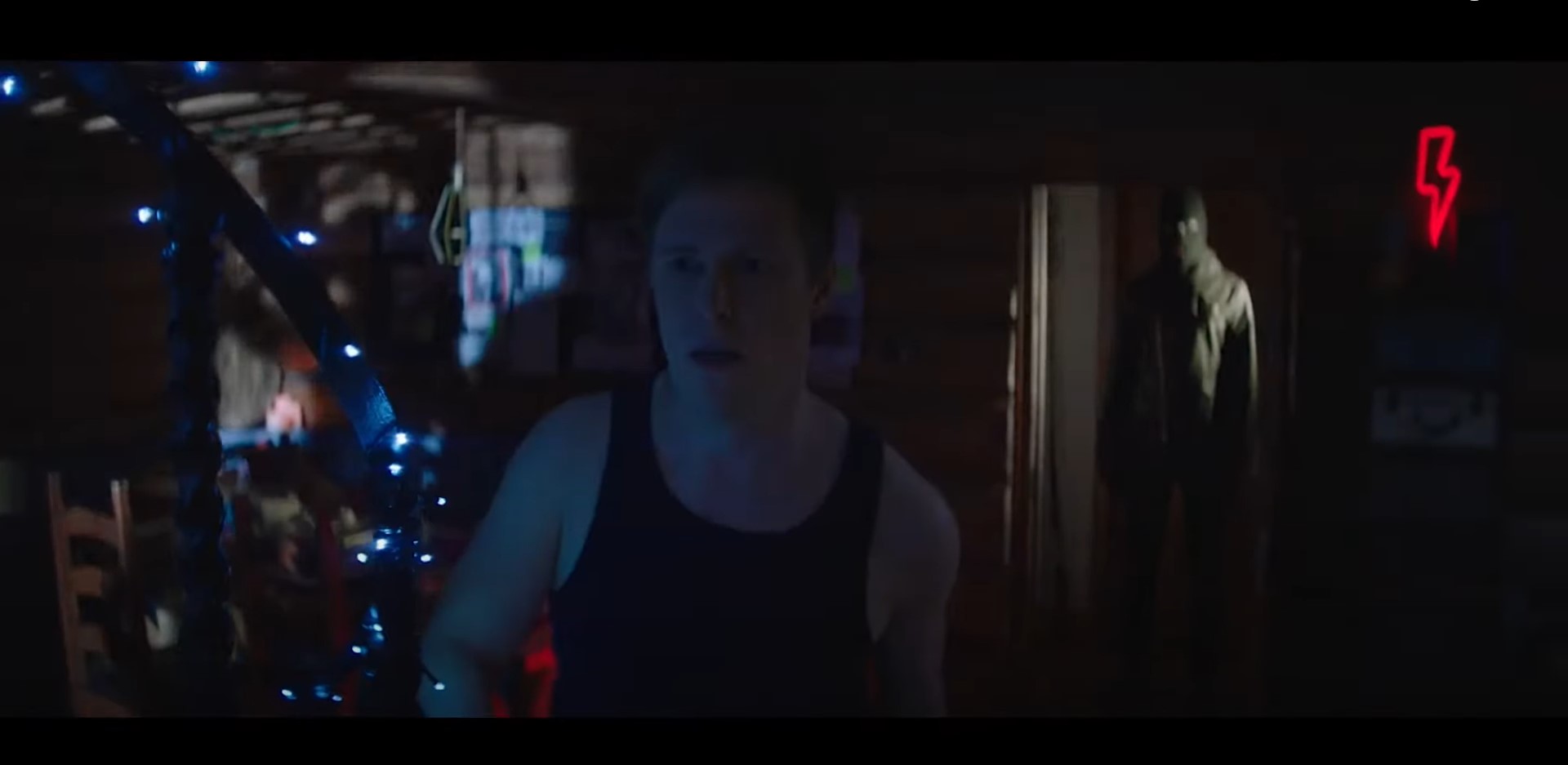
Being Joshua Tonks’s grandstand into his first feature production and as the lead character, the British-born, Vancouver film school-trained actor reprises his short film part with only two significant differences:  one being a principal name change from Robert to Ben and the other in providing Ben with more substantial backstory in the form of reveries or creative abstractions of a linear trickster narrative.  Ben’s old school, a reflection seen through his love for old photography without a display screen, his typewriting of the novel, and filming on celluloid film stock with a Super 8 camera.  This affinity for the antiquated matches his sexual stigmas, a flaw that shepherds in more harm than good.  Tonks readily handles Ben’s technological quirks as well as deepen his character’s philandering fantasy life with sexual daydream and night terror trances of being pursued, abused, and enjoying it.  Tonks works off the more indelicate stranger-danger of fellow Vancouver film school graduate Jay Clift.  Long hair, leather jacket, rugged approach, Clift in the role simply known as The Man portrays patience as weapon to wield to win over the quasi confidence and trust of the lonely and relationship confused novelist with an active imagination, a deadly combination to be caught with your pants down.  Clift becomes the character interloper in Ben’s life in more ways than one, some more subtle than others, and equivocally provides baited lure to either seduce the novelists or setup him for a fate far worse.  To complicate matters, Ben’s boyfriend, who he has a current agitated relationship with and viewers will initially think is safe and cozy back at their abode, will eventually enter the picture with newcomer William Tippery in the role to complete the all-male, three-man cast.

“The Latent Image” plotline doesn’t justify Birrell’s picture as anything else but another stranger showing up at cabin in the woods thriller.  However, beyond the shallows of the film’s surface level tension are deeper waters surrounding Ben’s parting of pathways.  The novelist not only struggles to conjure up a decent spinetingling narrative, but he also struggles personally with an uncertainty of where he fits into his relationship with at-home boyfriend Jamie and with this new, dark fella wandering into the cabin in rake portance.  From the beginning, Birrell and Tonks often visits Ben’s unconscious chimera but also often feels very real in its merge of reality and fantasy of what Ben’s sometimes wishes would happen, but don’t expect this thriller to be a based in psychosis.  “The Latent Image” is not a mental health movie of one man’s isolation snaps his baseline reality.  That would have overdone, overcooked, and overserved with stale bread and flat soda.  What “The Latent Image” taps into is not the age-old tale of a drifter’s in doubt motivations but rather a fear of being found out or fear of oneself when they themselves are unsure of who they are as a person and that can be a scary thought to let the imagination run wild. 

“The Latent Image” lands a debut distribution deal with the Philadelphia based Cinephobia Releasing.  The single layer DVD, arriving on retail shelves September 12th, is a compressed MPEG presented in anamorphic widescreen 2.39:1 aspect ratio.  Between the use of anamorphic lens, split lens, Super 8 reverse stock, and a ton of mood lighting, “The Latent Image” really pops cinematically with a variety of visuals and looks that can induce a breadth of emotions.  For a DVD presentation in an age where Hi-Def continues to the upward climb, the Cinephobia Releasing has tremendous sharpness and detail inside and out of the fuzzy warmth and often the vividly brilliant, focused lighting that induce back and front shadowing, decoding at average of 8 to 9 Mbps that eliminates any prospect of compression complications.  The English audio options include a Dolby Digital 5.1 surround sound and a Dolby Digital 2.0.  The 5.1 trumps the 2.0 In offering much environmental elements of rustled foliage and depth of character actions.  Dialogue conveys strongly, securing its spot Infront of the other tracks where depth allows.  English optional closed caption subtitles are available in the setup menu.  Special features include an audio commentary with director Alexander McGregor Birrell and stars Joshua Tonks and William Tippery going over their mindset of the characters, background, and visual and stylistic choices in an enlightening discourse, the 2019 short film “The Latent Image,” the audio commentary for the short featuring just Birrell, and other Cinephobia Releasing trailers.  The 83-minute film is released not rated and has region 1 layback, untested for other regions.  Well executed indie suspenser with a subtext clout to one’s essential nature and a smartly planned story has exposed “The Latent Image” as impressively top-notch and worth seeing. 

Out today on DVD “The Latent Image” from Cinesphobia Releasing!

The Slammer is Full of Correctional Officer EVIL in “Lust for Freedom” reviewed!

The Jailed Chicks “Lust for Freedom” on Blu-ray!

Broken by the violent death of her partner, who she was also engaged to marry, after a drug bust goes south, undercover officer Gillian Kaites abandons law enforcement and drives across country in an internal turmoiled mess.  She’s pulled over by a Georgia County cop after she aids a frantic woman fleeing to escape two men in a black van.  Framed for narcotics possession by the corrupt officer, Gillian is drugged and locked away in the County’s women’s penitentiary overseen a strong-handed matron and an unscrupulous warden who dabbles in prostitution trafficking, drug smuggling, and even the occasional snuff filmmaking.  Back into a cellblock corner, Gillian must defend herself against the warden’s goons, protect other girls also falsely incarcerated, and lean into the sympathetic ear of the same corrupt cop that framed her after voicing his years of disgust with the warden’s malfeasance.

Part II of our bamboozled behind bars and following the 1986 examination of Eric Karson’s military simulation turned enslavement “Opposing Force,” is our next feature helmed by another director named Eric, notably Eric Louzil, with “Lust for Freedom.”  The debut film of Louzil, who went on to helm “Class of Nuke ‘Em High Part II and Part II” for Lloyd Kauman and Michael Herz of Troma Entertainment as well as slaving over standalone horror and sleazy schlockers in “Bikini Beach Race” and “Night of the Beast,” was also the first feature penned by the American-born, UCLA grad with a penchant for low-budget lewidies, cowritten alongside the “Shadows Run Black” writing duo, Craig Kusaba and Duke Howard.  With the working title of “Georgia County Lockup,” which in actuality the film was shot in various California and Nevada locations, such as Ely, Nevada, “Lust for Freedom” is an 8 x 8 cell of nudity, violence, and corruption under the co-production companies of Mesa Films and Troma Entertainment, with the latter reediting the original script and adding ADR adlibs to apply a sexed up and Troma-fied integration of product into their independent collection.  Louzil and Laurel A. Koernig produce the film with Troma bigwigs Lloyd Kaufman and Michael Herz as executive producers.

“Lust for Freedom” has many eccentric characters with many assorted plotlines in what is essentially an all women battle royal brawl in the cat-scratchin calaboose.  Stirring up trouble like a piece of scrap metal lodged in the gears of a well-oiled machine is tall and beautiful former cop, Gillian Kaites.  Played by Melanie Coll in her only known role, Kaites is only the bear in the bees’ nest, forced into confinement under false pretenses and to be subjugated by the likes of a wayward officialdom with lust in their eyes, greed in their pockets, and a disdain for disobedience.  Coll’s a bit flat footed with her performance and her Karate Kokutsu Dachi stance could use some improvement, but the tall, muscular, curly haired and light blonde actress can wield a multi-round popping automatic rifle with authority.  Stark against her Amazonian physique, not in a hard pressed and sexualized way, is main antagonist is the unbecoming Southern gentleman Warden Maxwell under the balding and overweight guise Howard Knight, but Kaites is more in tune against the procrustean penitentiary matron Ms. Pusker and Judi Trevor gives a Hell in a cell pastiche of early fascist women of Roger Corman produced WIP films, enforcing her will with prison muscle in the miscreant tough Vicky (Elizabeth Carlisle, “Evil Acts”) and the oversized guerilla (professional wrestler Dee “Matilda the Hun” Booher, “Spaceballs,” “DeathStalker II”).  Ultimately, Kaites sees her only path to escape through the very same person that wrongly confines her in the first place.  William J. Kulzer (“Class of Nuke ‘Em High Part II:  Subhumanoid Meltdown”) doesn’t quite fit the corrupted bill of Sheriff Coale, a mild manner and seemingly reasonable officer who goes with the despicable flow of sex trafficking amongst other indelicacies.  Yet, maybe that’s the purpose in Kulzer’s character, to be conflicted by the choices he and his callous cohort has made that made him stick out as the least repulsive individual behind the concreate and metal barred big house.  “Lust for Freedom” rounds out the cast with Donna Lederer, John Tallman, George Engelson, Rob Rosen, Shea Porter, Rich Crews, Raymond Oceans, Elizabeth Carroll, Lor Stickel, and Joan Tixei.

Gratuitous, full-frontal lesbian sex.  Yes, “Lust for Freedom” appeals to the very definition of its own title, like many other WIP productions and though a core element to the integrity of the subgenre, the creamy smoothness of two curvaceous, naked bodies getting it on shouldn’t always be the main selling point.  Luckily, Louzil ponies up more salacious material for his pinks in the clink caper.  An elaborate spiderweb of activity balloons and pulsates outward from the moment Kaites crosses path with an evening-dressed escapee being chased by a scary looking Native American and his sociopathic hooligan partner in a black van.  “Lust for Freedom” may be hammy and cheesy but what it’s definitely not is dull in its multifaceted approach to expose character layers.  Some characters grade more toward deviancy, such as Warden Maxwell and Ms. Pusker, while others are lifted toward a more redemptive means, such as with Sheriff Coale; that shepherd “Lust for Freedom” into a culminating jailbreak.  The narrative doesn’t necessarily focus around Kaites but she’s on a redemption arc to dig her out of a despair pit and into a fight worth fighting for purpose after the death of her finance, set up in the opening act.  As she evades the Vickey’s directed infringement to rough up the new girl, Kaites takes under her wing a fright clink chick named, another wrongly accused prisoner after being taken wandering the road, a theme that is a reoccurring motif from Kaites to Donna in thinking the young women can manage the world and their problems on their own accord but at a cost. However, whatever semblance is left of Louzil’s original script has likely been lost once Troma revamped it into the finished product you see today. Riddled with choppy cuts and incoherent segues, we have to wonder about Kaites’ role that may have been transmuted into a lesser core commodity in the final product.

Troma Entertainment releases a high-def, Blu-ray release of “Lust for Freedom.” The AVC encoded, 1080p resolution, widescreen release, in a 1.78:1 aspect ratio, compressed from its original aspect ratio of 1.85:1. Lloyd Kaufman mentions Louzil had shot the film on 16 mm and Troma subsequently blew up the negative to a 35 mm print that reframes the transfer for projection. Image-wise, the picture appears relatively clean albeit a plush grain and a few visible 16 mm cigarette burns with little-to-no age wear or exposure issue and the BD25 storage format has capacity aplenty to render an adequately compressed image with hardly any loss to the quality. Since the quality is heavily granulated, definitely no DNR implemented, the compression doesn’t suffer from a lack of a sharper, restored image. The audio is an English language Dolby Digital 2.0 Stereo can be echoey at times, as if the boom is catching warehouse reflection, but dialogue does topple in an appropriately laid out track mix that’s intertwined with hair metal band Grim Reaper’s titular “Lust for Freedom” single. We don’t get a ton of depth in the close quarters of the prison set but neither do we receive any depth in the exteriors either, sustaining most of the volume in a forefront stasis. Troma adds spotty ADR to kitschy up to Troma’s ludicrous level and its quite evident like a sore thumb that doesn’t quite match the ingrained audio mix. There are no subtitles available. Extras include the original DVD intro by Lloyd Kaufman, which also plays automatically at the startup of the feature, a directory’s commentary by Eric Louzil that is asynchronous with the feature in what is an approx. one-minute delay behind the Louzil’s retrospect, the original theatrical trailer, an interview with Lloyd Kaufman, a brief, brief clip of Eli Roth’s encouragement to just go and do a movie to the best of your ability, a Troma-themed showcase of one of their more modern Tromettes – Mercedes the Muse, the Radiation March, Gizzard Face 2: The Return of Gizzard Face, which has been on a slew of Troma’s releases over the past year, and coming attractions from the independent company. The Blu-ray comes in a tradition snapper with a guard tower, barbed wired, and Gillian Kaites with a semi-auto in her grip and barely cladded and torn clothes. No insert inside the case and the disc pressed art is the same as the cover illustration. This Troma release comes unrated, is region free, and has a runtime of 94 minutes. Plenty of desire for “Lust for Freedom,” busty babes behind bars barely bores and this vintage Troma keeps the WIP lacquer wet with self-satisfactory sadism and sexual spiciness.

The Jailed Chicks “Lust for Freedom” on Blu-ray!

The Clap is the Real Evil Here. “Quiet Days in Clichy” reviewed! (Blue Underground / 4K Ultra HD and Blu-ray)

“Quiet Days in Clichy” 4K Ultra HD and Blu-ray Combo Set Available Now!

Joey and Carl are two broke writers living the coquet bachelor life in a small Paris, France apartment where they have a revolving door of transient sexual encounters with various women.  Despite being writer poor and hungry for most of the time, Joey and Carl happily lead a charmed life of meaningless moments.  Doesn’t matter to them how or from who they contracted a sexual transmitted disease.  Doesn’t matter to them how they pay for their carnal escapades.  And, mostly, doesn’t matter to them the age of the women they sleep with as long as it doesn’t cause them trouble.  The woes of everyday life do not stop the roommates from enjoying night clubs, traveling abroad, and the simple, bodily pleasures of French women.

In the same preface vein as Jens Jørgen Thorsen adaptively written-and-directed “Quiet Days in Clichy,” some readers may find the following material offensive, revolting, and not up to the universal moral standard – especially more so in the politically awareness of contemporary times.  Based off the novel of the same title from American writer Henry Miller, who was seen as an intellectual surrealist enlightened by the chauvinistic viewpoints on women and sex, the Danish, 1970-released blue film, “Quiet Days in Clichy,” resembles something of a semi-biographical depiction of Miller’s own personal non-fictional experiences as a proofreader in Paris during the 1930s, but updated to more contemporary times in the 1960s with genre designation that’s more of sex comedy than bio documentary.  The novel, which was banned in the United States for many years, focuses on the frivolous joys of simple pleasures that superseded the life sustaining necessities, such as food or money for food and become something of a blend between Miller’s explicit anecdotes and some wishful fantasy.  Shot on location in the small outer rim Paris neighborhood in Clichy, “Quiet Days in Clichy,” also known in the U.S. as the “Not So Quiet Days” or “Stille dage i Clichy” in the Norse Danish tongue, is produced by comedy producers Klaus Pagh and Henrik Sandberg.

A full skin, hang loose, and complete sexist semblance is no easy task and yet the two principal Dane actors Paul Valjean and Wayne Rodda, as Joey and Carl, are not the best looking in the men gene pool. “Quiet Days in Clichy” marks Valjean and Rodda’s one and only leading roles in their shrimpy career and while their performances paint the characters as apathetic womanizers, they still render a dopey slack-jawed dialogue as if delightful halfwits, a description not terrible too far off from the roles their portraying. The story substantially surrounds around Joey more frequently in what is an uneven dynamic development of the buddy comedy system to undercut Carl nearly completely out of the picture if no half-naked women are in the scene. Perhaps because Paul Valjean, or at least Valjean made up in Joey’s balding hair line and spectacles, looks a lot like the adapted story’s novelist author, Henry Miller. Again, this film is a semi-biographical onset of one man’s intellectual philosophy on sex and nihilism. There’s even a bit of nonchalant pedophilia as Carl takes a dunce young girl, Colette (Elsebeth Reingaard) at the ripe age of 14 off the street and keeps her as a sexual pet who keeps the house tidy in nothing more than a shirt and the way Thorsen depicts the introduction and the proceedings of keeping her around feels rather normalizing and whimsical despite Carl practically shoving her pubescence right in our faces with repetitive noting the illegality of underage exploitation and trouble that comes with it as long as the law doesn’t finds out. Even when the roommates are found out and confronts sans police, Joey and Carl’s punishment is nothing more than a stern warning from Colette’s mother. A plethora of women cross the screen and round out “Quiet Days in Clichy’s” menagerie of lewd and sensual women with roles by Ulla Koppel, Susanne Krage, Avi Sagild, Lisbet Lindquist, and Anne Kehler.

Henry Miller may have been something of a surrealist author, Jens Jørgen Thorsen was also something of a surrealist director that approached the adaptation with the knowledge the content would offend likely most people who find cavalier sex and arrogance to be offense.  “Quiet Days in Clichy” is certainly obscene with wanton waywardness.  Thorsen has a way of telling the lewd and crude story from the philanderer’s perspective that construes a routine day-and-a-life and everyone appears okay with what would usually be a Molotov cocktail exploding self-spiraling madness.  Instead, Thorsen paints a happy-go-lucky portrait of Joey (and Carl too) with aimless ambivalence and does so with frenzied edited scenes that trims out frames and you still get the gist of sequential events by letting your brain connect the dots.  The same cerebral interpretation also takes place during the photograph montage of Joey and Carl’s trip to the small country of Luxembourg in a flurry of images that tell a sequential ordered story of their whirlwind trip filled with seeing the sights, causing some mischief, and, of course, flirting with the local women.  Thorsen also showcases ground level Paris to the fullest with mom-and-pop storefronts, open aired dining, the widened trafficked lanes, and the night club scenes complete with featuring American Jazz saxophonist Ben Webster scoring a subdued hot number while Joey and Carl become handsy and indulge in covert public exhibition with the female patrons at a small-time cabaret club.  Miller’s adapted work is a philosophy of sexual freedom that takes precedent over personal welfare is akin to self-torpedoing with still a starry-eyed and goofy grin expression.

Stylistically, even though this Thorsen sex comedy is labeled a blue film by subgenre the film actually is voided color all around with a black and white cinematography approach by Jesper Høm that looks super slick with a well-preserved transfer in a slight low contrast on the new Blue Underground 2-disc 4K Ultra HD and Blu-ray set. The brand-new restoration on a 66GB, double layer, release comes scanned in 4K 16-bit from recently discovered uncut and uncensored original fine-grain negative that absolutely is very fine indeed! The black and white picture is presented in a European widescreen standard of a 1.66:1 aspect ratio and barely shows signs of age with an anti-wear, which makes me suspect there might have been some cleanup work. There’s clearly some DNR use to smooth out the grain, but this effort also clears up the black and white picture very nicely, resulting in a solid contrast that favors the lower said a tad. The 4K Ultra HD and Blu-ray process mid-to-high 30s Mbps with no pacing issues to the frame rate. Both come with new rescored English 1.0 audio mixes with the 4K Ultra HD sporting a Dolby Vision HDR while the Blu-ray’s DTS-HD Master Audio presents an equally clean file. Both offer quality audio designs that are free from undercutting distortions, such as a cracking, popping, hissing, etc, and are greatly robust with the Dolby Vision eking out a little fuller bodied product. One gripe I have is that Blue Underground doesn’t translate the French-speaking ancillary roles that become lost to conversation if one does not know the tongue, but the English subtitles are free from error and synch up well without any delay or being too quick. French subtitles are also included. Bonus features include new deleted scenes and new theatrical trailer on both discs. The Blu-ray also includes the Songs of Clichy – a 2002 interview with soundtrack composure Country Joe McDonald speaking about one note role of just scoring the film and coming to terms with his unaware sexism, Dirty Blooks, Dirty Movies, Barney Rosset on Henry Miller – an interview with Henry Miller’s editor and publisher that touched upon the mad, chauvinistic genius and perversions of the blacklisted author, Midnight Blue – an archival second interview with Barney Rosset, new poster and still gallery, a new Henry Miller book cover gallery of the title, and new scanned court documents when America seized the film upon entry into the country and the legal fight that ensued to obtain it back. The physical release comes with a not safe for work cardboard slipcover with imprinted frames from scenes while the blacked out 4K and Blu-ray snapper case comes with original artwork of one of the more memorable scenes. The release comes not rated with a runtime of 91 minutes. “Quiet Days in Clichy” lead to more rambunctious nights in the Paris suburb of debauchery and Blue Underground preserves the perverse with a higher quality of lower standards in a beauty of a release.

“Quiet Days in Clichy” 4K Ultra HD and Blu-ray Combo Set Available Now!

No Film is Complete Without a Flying EVIL Baby! “The Necro Files” reviewed! (Visual Vengeance / Blu-ray)

A

I Want To Believe…That You Will Check Out “The Necro Files” on Blu-ray!

An unhinged serial rapist terrorizes the young women of Seattle, ripping into shreds their internal innards and even dabbles in tasting their flesh.  Two detectives hellbent on stopping his reign of terror intercept the killer in the middle of an attack.  Though too late to save the girl, the detectives shoot six slugs into the rapist, stopping his continuous, heinous sexual assaults and grisly murders…at least for nine months later, when a satanic cult resurrects the zombie cannibal rapists from the grave after sacrificing the rapist’s bastard baby from his only surviving victim.  The killing spree begins again and this time being undead provides superhuman strength and a larger penis.  The two detectives, now embroiled in their own corruption, must embark on another manhunt while two of the satanic cult members, seeking to undue the horrors they’ve unleashed, willingly summon a demon into the dead baby to counteract the zombie cannibal unbeknownst to them the demon baby will kill anyone it’s in airborne trajectory.

Just from the above synopsis, this film sounds nuts, darkly funny, and depraved all wrapped into one undisclosed file of sex, gore, and floating baby dolls.  And, you know what?  It’s all true.  The creator behind all this madness is Matt Jaissle who helms the shot-on-video “The Necro Files” as an underground horror spoof of a popular science fiction you made have heard of – “The X-Files.”  The Truth is out there.  Well, the truth is actually not in the sky, it’s under the dirt, it’s inside some scantily cladded woman being molested by a rotting corpse, and it’s in a doped-up cop looking to wipe all the scumbags off the face of the Earth.  The 1997 released is co-written between long time Jaissle collaborators Todd Tjersland (“Faces of Gore” series) and Sammy Shapiro, based off of Tjersland sleazy horror comic series “Psycho Zombie Love Butcher,” and is the third film from Jaissle that solidifies the filmmaker as a certifiable depravity and gore-meister that has themes of rape, necrophilia, heartless exploitation, and disembowelment clothed as clearly a comedy.  Filmed around the surrounding Seattle, Washington area, “The Necro Files” is produced by Jaissel with Tjersland serving as executive producer Washington state-based Threat Theatre International production banner.

The acting pool that “The Necro Files” plucked their talent from must have been severely limited with a cast more concerned about their robotic performances rather than the unsavory story content.  Fine by me!  I don’t expect award-winning caliber thespianism on campy SOV D-movies where the main focus is guts, girls, and the grotesque.  The two detectives, Martin Manners and Orville Sloane, and the killer, Logan, are the principals caught in the middle of everything that is eloquently evil of “The Necro Files.”   Isaac Cooper plays Logan the Rapist aka Zombie Logan the Rapist and the wild-eyed, chimpanzee-running Cooper doesn’t have a lot of dialogue with his unpleasant roles with many of talking parts going toward a third character of a drug pusher before having his head blown off by a traumatized and unstable Det. Manners.  By the way, Steve Sheppard, who plays Det. Manners, has the best monologue about wiping out scumbags while sitting in the police car, looking maniacal, and just admiring his handgun next to a more rational, more off-cue Gary Browning as his partner, Det. Sloane.  “The Necro Files” cast isn’t doesn’t end there as Snell’s film has a surprisingly sizeable, small role contingent, mostly of playing Satanists, drug dealers and sexual miscreant males, and women in compromising positions.  The actresses playing the latter roles are mostly under pseudonyms, alternate aliases that provide more to the film’s campy nature.  Names like Anne R. Key (Anarchy) and Jenn O’Cide (Genocide) are a couple.  Present day, Jenn O’Cide is actually a sideshow performer, belly dancer, and an overall alternative, fearless woman of the strange and usual fine (dark) arts while keeping her stage name.  Another is Dru Berrymore and no, not the “Firestarter” and “Scream” Drew Berrymore we all know of horror fandom.  This Dru Berrymore comes from Germany and is a pornographic actress who’s had bit pars in Katheryn Bigelow’s “Strange Days,” David Lynch’s “Lost Highway,” and even in “Die Hard 2”.  Each of these ladies, including a fourth in Theresa Bestul, are supposedly claimed from the local strip club and don’t mind being the plaything for undead’s wicked whims in their simply objectifiable credited rolls as Shower Girl, Doll Lover, Camping Girl, and S&M Amazon.  The cast rounds out with Todd Tjersland, Jeff Nelson, and Christian Curmudgeon and Jason McGee has hapless Satanists. 

“The Necro Files” bares very little resemblance to the show it spoofs but bares it all with an opening shower scene containing full frontal nudity.  From the get-go, “The Necro Files” plays into schlocky, campy attire with an unpretentious, unapologetic swagger.  The story doesn’t really make much sense and is terribly choppy from a continuation standpoint.  We’re fed fleeting moments of connective information that hardly tether scene-to-scene let alone the nine-month gap where Logan’s baby must be sacrifice by a Satanist cult to randomly resurrect one of the vilest murderers for unknown reasons and then immediately regret it as part of an oopsie, what did I do moment.  Yet, at the same time, these random bits of tongue-and-cheek leave the door open for unknown possibilities and seeing a clear path on how “The Necro Files” case will close is about as predictable as selecting all the Mega Millions lottery numbers right. Matt Jaissle’s gonzo-gore-a-thon is nonetheless a winning jackpot of underground, sadistic-splaying horror with an extensive as it is impressive DIY blood-and-guts effects and makeup by Jaissle and Tjersland. You can’t name your film “The Necro Files” and not have a deluge of viscera be a collective hematoma of popped blood vessels in every other scene in what’s an all ghoul and girls brazen bloodbath of demonism and dark humor.

“The Necro Files” is the second catalogued title for Wild Eye Releasing’s new kid-sister sublabel of extreme, SOV cult and horror films called Visual Vengeance. The Blu-ray release comes with a precaution of video quality, stating that the original elements were pulled from consumer grade equipment and SD video tape masters. The final product is better-than-passable and better-than-expected based off the source material as the 1.33:1 presented feature has an abundance of interlacing, aliasing, and macroblocking throughout. The video format plays into much of the problems with soft color palette and details in which not one single scene looks particular sharp enough to call Blu-ray’s best. For underground SOV horror, the quality is what was expected, if not better, and will continue to expect with future Visual Vengeance releases. Audio options give viewers two formats to select from: An English language Dolby Digital 2.0 and an English DTS-HD MA 2.0. The DTS track is the winner between the two audio arrangements with a slightly hefty decibel soundtrack and a better job isolating the already isolated lo-fi ambient and Foley. Dialogue, to the naked ear, sounds relatively the same with the lossy strength and level inconsistencies (again with 1997 video equipment issues), but overall free from obstructions. English subtitles are option. Special features include two audio commentary tracks with director Matt Jaissle on one and with Matt Desiderio of Horror Boobs and Billy Burgess of the Druid Underground Film Festival on the other, a brand-new graveyard self-chat with Matt Jasissle providing background color on making movies in general and a little history of himself, Dong of the Dead: The Making of the Necro Files with a talking head interview of Matt Jaissle, with spliced in movie clips, speaking on the complete genesis and completion of his film, the original and Visual Vengeance trailer, the super 8 short “The Corpse,” and a bonus movie, the sequel “The Necro Files 3000!” Physical release bonus material includes a reversible Blu-ray cover, a 2-sided artful insert with Blu-ray produced acknowledgements, a mini poster, a Wild Eye VHS sticker set, a cardboard slipcover, and the official “The Necro Files” condom not intended for actual use. Probably just a little something to ward off unplanned evil floating babies! The film comes unrated, region free, and the feature clocks in at 72 minutes with another 65 minutes on the sequel. “The Necro Files” is 137 minutes of sleazy-zombie humpfest that you won’t (you can’t!) forget.

I Want To Believe…That You Will Check Out “The Necro Files” on Blu-ray!