What EVILS Lie After Death? “We Go On” reviewed! (Lightyear Entertainment / Remastered Blu-ray)

Get Haunted as “We Go On” is now on Blu-ray!

Miles Grissom lives in fear every minute of his life.  What scares the editor of shoddily performed, midnight television infomercials the most is the unknown after death.  The question is Is there a life after you die or is there just a black void of nothingness?  To answer that existential question, Miles places a quarter page newspaper ad seeking an ounce of proof of the afterlife with a $30,000 reward attached for one single person who can show him that there is an existence beyond death.  With the unconditional support of his mother, he scours through hundreds of fakes, solicitors, crazies, and the like until he narrows down the advert answerers to a few possibilities that have real promise.    As Miles investigate the claims of each one, he finds himself closer to the truth than he ever wanted to be and now he’s forever trapped between existential planes for the rest of his life.  

One of the longstanding and biggest questions in the universe is what happens to us when we die?  Where does our immortal soul, the individualistic essence of our being, wander to after the corporeal shell is empty?  Or does it just poof vanish, like an extinguished candle flame?  While all of these questions can be up for philosophical debate amongst the various, and often contentiously stubborn, religious groups and cultures, filmmakers Jesse Holland and Andy Mitten use the idea for their 2016 drama-horror “We Go On” that gives one possible, uncontested and cinematically electric, explanation as well as imparting a somethings are better left unknown dread.  The duo behind “YellowBrickRoad” returned to write-and-direct their sophomore U.S. production with a principal photography location shoot in Los Angeles.  “We Go On” is produced by Logan Brown, Irina Popov (“Chilling Visions:  5 Senses of Fear”), and Richard W. King (“The Witch in the Window”) under the production banner Filmed Imagination.

Miles Grissom is a mild-mannered and scared into solitude individual.  His loneliness, though not conspicuous to any extent, extends to his profession of a video editor of infomercials and other overnight television programming.  Agoraphobia and thanatophobia keeps Miles securely isolated in his modest apartment building where a recurring dream of a car accident sends his heart racing, a side effect of a core, back history moment yet to be explored when we meet Grissom, who is played by a stiff, but gets the psychologically wounded character across, Clark Freeman who has worked previously with Holland and Mitten on “YellowBrickRoad.”  “Cat People” and “Superman III” actress Annette O’Toole fills in as Miles’s ride-or-die, overprotective mother with a deep, dark secret of her own coated with a thin film of backseat family drama that’s doesn’t make her character shine like it should, especially being an important piece and highly influential to Grissom’s character.   Instead, the exposure of the secret and the impact it’s supposed to have is left on the backburner for Nelson to come into play, a greasy airplane janitor with deadly drug problem in what can be described as the best Sean Whalen role he never played with Jay Dunn filling those janitorial coveralls.  Dunn, who would go on to have a role in Andy Miton’s solo project, “The Harbinger,” dons slicked over balding hair, grimy teeth, and a deep, sunken eyes to be a bane toward Grissom’s existence and while Dunn doesn’t have dialogue for half of his onscreen time, he makes for a perfect hang around the background, meanspirited glarer.  The rest of the “We Go On” cast pop in and out as Grissom dwindles down his list of fakes and phonies with appearances from Laura Heisler (“YellowBrickRoad”), Giovana Zacarías, and the always wonderful on screen, “Gremlins 2’s” actor, John Glover, as a scientist trying to scare Grissom into giving him the reward money.

“We Go On” encases more drama elements than horror but the circling horror imagery enclosed has a beautifully grim layout with the minor touches, such as the slow turn of a hanging corpse or the statement of a ripe smell of a long dead overdose victim, that add a palpability, reinforcing the horrific moments and increases the ghastly tension.  The further we journey with Miles Grissom in his obsessive search, the grislier the imagery gets in what is essentially a two-part tale that firstly puts us and Miles on the hunt for life after death that quickly nosedives into a leeching supernatural torment.  Oddly, Grissom takes his newfound nuisance almost instantly in stride with not a ton of obstacle or self-realization work to warrant an acute enlightenment of how to handle an orbiting ghost that flashes disturbing images every other minute inside his mind and allows him to see between the planes of other gruesome ghosts stuck in limbo.  There are other examples of these sudden reversals or improvements that work against the pacing and don’t invite reward through struggle or pain in what is a walk in the park for Miles Grissom to see and handle ghosts being introduced to audiences as a man emotionally crippled by a traumatic, underlying fear.

Via Lightyear Entertainment, an American coast-to-coast independent film distributor, “We Go On” receives the Blu-ray treatment with an AVC encoded, 1080p high-definition resolution, BD25.  There’s little information regarding the remastering of the film with the only kick up being a digital restoration and enhanced visual effects and touchups to provide a smoother, cleaner picture presented in the film’s original anamorphic widescreen aspect ratio of 1.78:1.  Having never watched the DVD or first Blu-ray version, I have to take Lightyear’s restoration at face value which does have a crisp, clear picture full of natural color and graded with brilliance that sometimes makes the picture look too digitally sterile with not a ton of contouring shadows that can make the picture look depthless at times.  The infused visual digital f/x add about the same flavor, but the images never linger on screen, turning brevity to the film’s effects advantage.  No apparent issues with compression on the 25gig BD; textures modestly tactile despite the bright and airy grading and blacks are deeply saturated with spectrum banding.  The English language audio options include a lossy Dolby Digital 5.1 and a lossy Dolby 2.0 Stereo.  Dialogue is clear and projecting over the other layers but lacks that full-bodied, full-channeled trait of lossless.  Supernatural effects find distinctive ground and synch greatly with the sudden scares in transition between reality and the ghost realm.  Range and depth are favored by the remastering in the scenes that warrant both, such as the LAX’s airstrip takeoffs that considers the jet plane’s positioning in the background or above, increasing steadily the jet noise volume whenever a plan is in the extreme background to a more overhead location.  Also added for the remastered release are three new, feature-length commentaries:  two with the individual directors in Andy Mitton and Jesse Holland with the third houses the two stars, Annette O’Toole and Clark Freeman. The clear Blu-ray Amaray arranges a darker composition cover art than what the movie actually entails with an interior disc pressed with the same cover and a reversible cover that has one of the more memorable scenes from the feature. There are no insert materials included. The region free, unrated release has a runtime of 89 minutes.

Last Rites: You get what you ask for is the moral of the story maxim in Andy Mitton and Jesse Holland’s “We Go On,” a commercially technique, light-weight thriller with a thin lining of grim imagery between drug overdoses and suicide and adequate performances by Annette O’Toole and Clark Freeman that drops the everlasting question of desire and extreme, emotional fear for instant peace of mind, even if experiencing the terrifying truth firsthand.

Get Haunted as “We Go On” is now on Blu-ray!

The Stillness, the Quiet, and the Darkness evokes EVIL to Home In. “Skinamarink” reviewed! (Acorn Media International / Blu-ray)

The Kids Aren’t All Right in “Skinamarink” on Blu-ray!

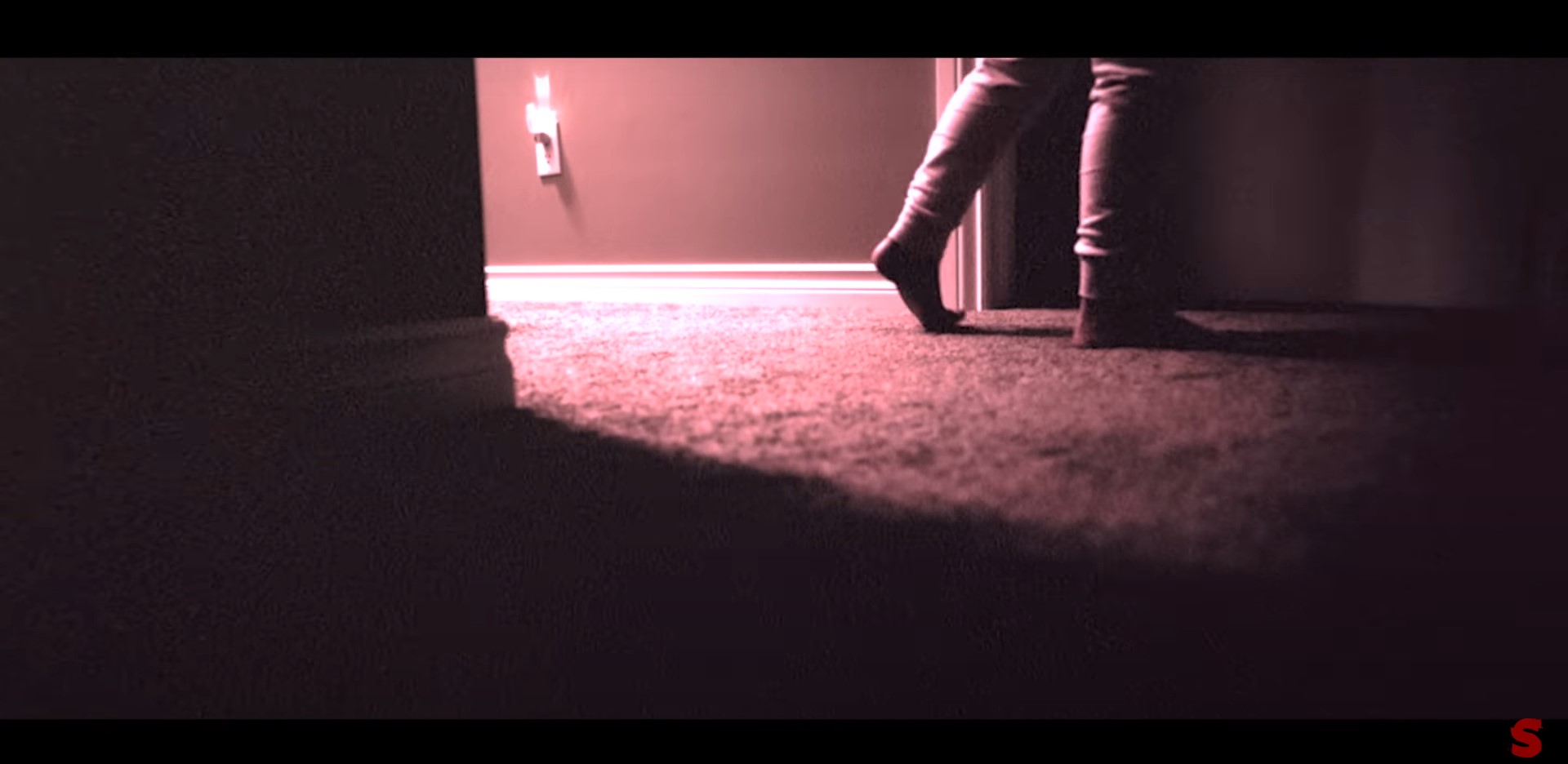
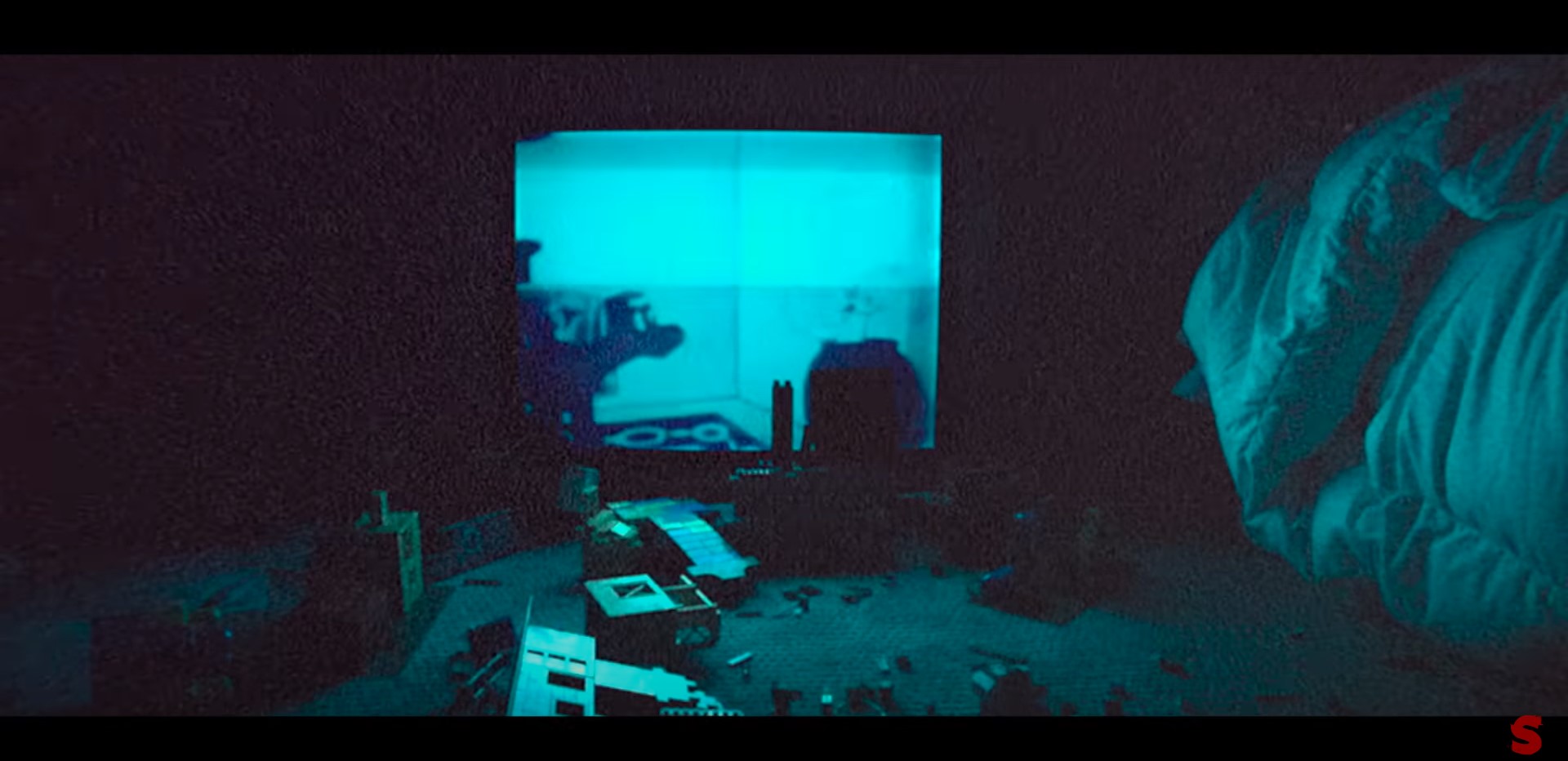
A night of silence is disturbed when a young boy, Kevin, falls down the stairs of his two story home.  Rushed to the hospital to return to the same silence-soaked house, the restless boy and his sister Kaylee search for their dad who has suddenly vanished from his bedroom.  Doors, windows, and even the bathroom toilet has strangely disappeared right from sight.  Feeling scarred under the cover of isolated darkness, the siblings head downstairs to sleep on the couch softly lit b0 the fluorescent glow of the television set.  As they watch old cartoons, crayon, and build with large Legos, while catching a few ZZZs in between, strange noises resonate through the home, floor based objects are found stuck onto the walls and ceilings, and a twisted, omnipresent voice slips the siblings commands that exposes them the darkness from within the house.

Schismatically different from any other spine-taut chills ever experienced before, Kyle Edward Ball’s written-and-directed 2022 Shudder exclusive “Skinamarink” is no joyful and innocent children’s song in the filmmaker’s debut feature film.  Based and expanded upon Ball’s 2020 short film entitled “Heck,” viewers will be enveloped and swallowed by the very core of childhood fears that plays like a fever dream, or a distant nightmare, where faces are a blur, spatial direction is nothing more than theoretical concept, and the voices around us are distorted, muffled, and cold.  “Skinamarink” offers little warmth under constant blanket of darkness and leaves no room for hope when parents are removed from the picture.  What’s Ball leaves behind is primordial and innate terror that rarely can be seen straightforward and lucid.  The Canadian picture, which was filmed in Ball’s childhood home in Alberta, is a micro-budget production of ERO Picture Company, distributed by Bayview Entertainment, Shudder, and IFC Midnight, crowdfunded by Seed & Spark contributors and produced by “Texas Road” producer, Dylan Pearce.

Shot over the course of a week’s time, “Skinamarink” works more like CCTV footage recording the static surroundings within the scope of the lens.  The cast is small, rarely visible, and when visible, they are often obscured or never directly focused upon to mint atmospheric dread.  Two parents.  Two children.  A nuclear family becomes the objective of an omnipresent, ominous presence, but there are concerning questions about the integrity of the family that Ball incites with clues of broken household.  Father and mother briefly make an appearance, or with one of them just their voice, throughout the course of the night, restricted their attendance exclusively around the children’s perspective that makes viewers shrink and become engulfed in childish fears – sometimes they are adult fears as well – of the dark and of being separated from parents.  Lucas Paul and Dali Rose Tetreault as kids Kevin and Kaylee kill their seldomly seen performances with the patter of little feet running through the house and up-and-down stairs, their soft, angelic voices whispering to each other and calling out for their father, and when briefly in frame, or at least the back of their heads, they manage to complete the succinct shot just in the way Ball intends to secrete fear from our every pore amongst the quiet and stillness.  “Skinamarink” is not a character-driven film in the least as Ball cherishes a chilling atmospheric horror so father (Ross Paul, Lucas’s real life dad) and mother (Jamie Hill, “Grotesque”) receive what essentially is cameo roles to establish a feeling of lost when they’re gone and are perhaps the easiest roles the two actors have ever taken and turn out to be the most eerily effective on screen and over the audio track.

“Skinamarink” experiments more with surroundings, audio and visual senses, and common inborn anxieties rather than progressed by traditional methods of character dynamics and that is where the film will be conflict-ridden and divisive amongst the niche group of diehard horror fans.  General audiences will find “Skinamarink” to be a bore without much popcorn pageantry to keep short-attention spans entertained and a disembodied villain.  Slow burn horror usually has an elevated element to it and Kyle Edward Ball certainly incorporates an open for interpretation access door for the deep-dive genre conspiratorialists to work overtime on reasoning and explaining “Skinamarink” to the masses still trying to process what they just experienced themselves after watching the film.  Theories will run amok with the most prominent being Kevin’s fall that reduced him to a coma state and what we experience is all in Kevin’s conscious-cracked cerebrum trying attempting interpret, at best guess, the dissolution of mom and dad’s relationship.  Again, this is just a theory as Ball aims for ambiguity to fester fathomable, one-solution explanations.   Perhaps in a type of narrative the world is not ready for, but in my opinion, “Skinamarink” fills in what is void from modern day horror, a uniquely fresh and chance-taking pervasive eidolon scare package to revitalize genre numbness with slow burn phobias.

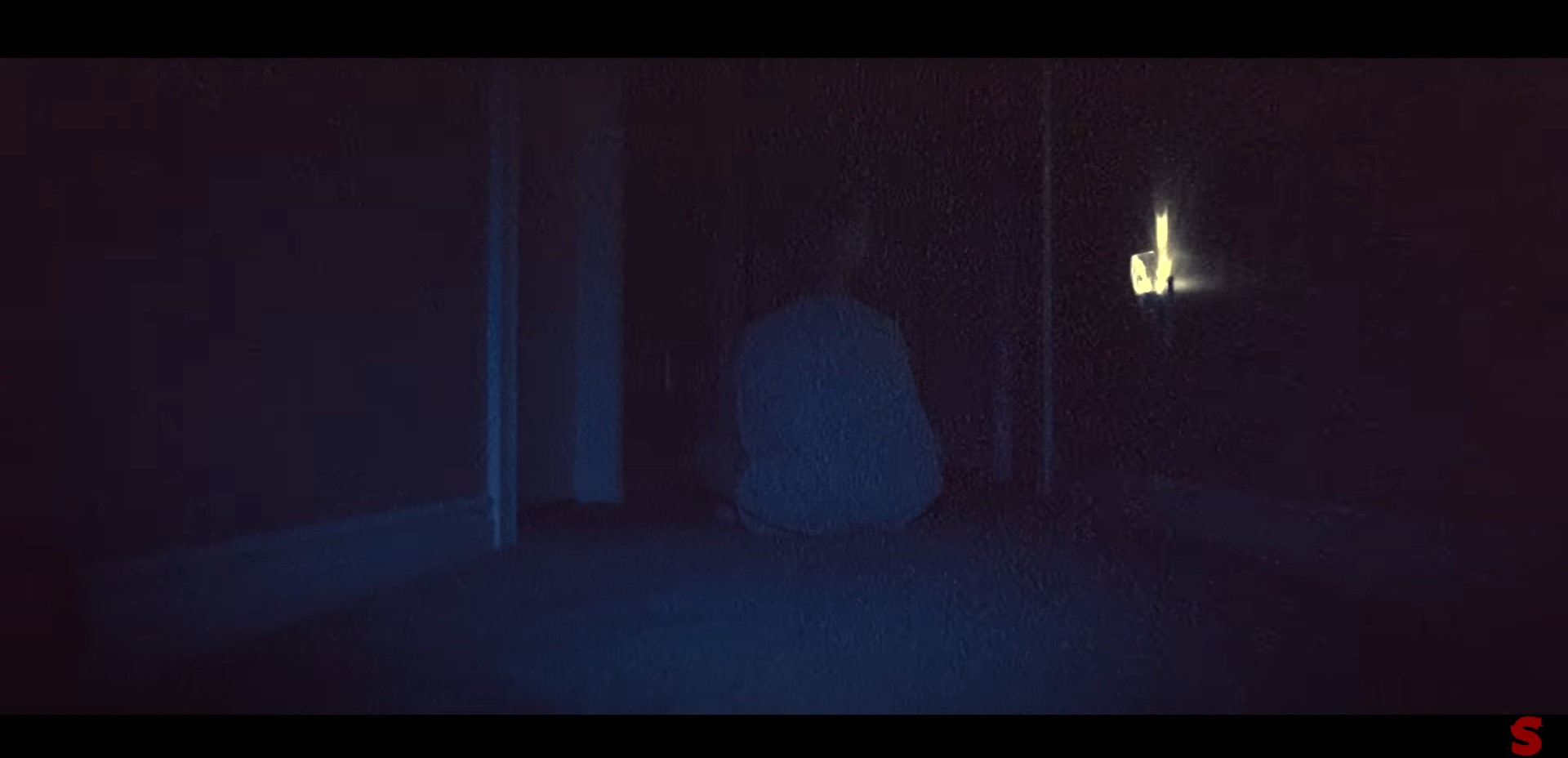
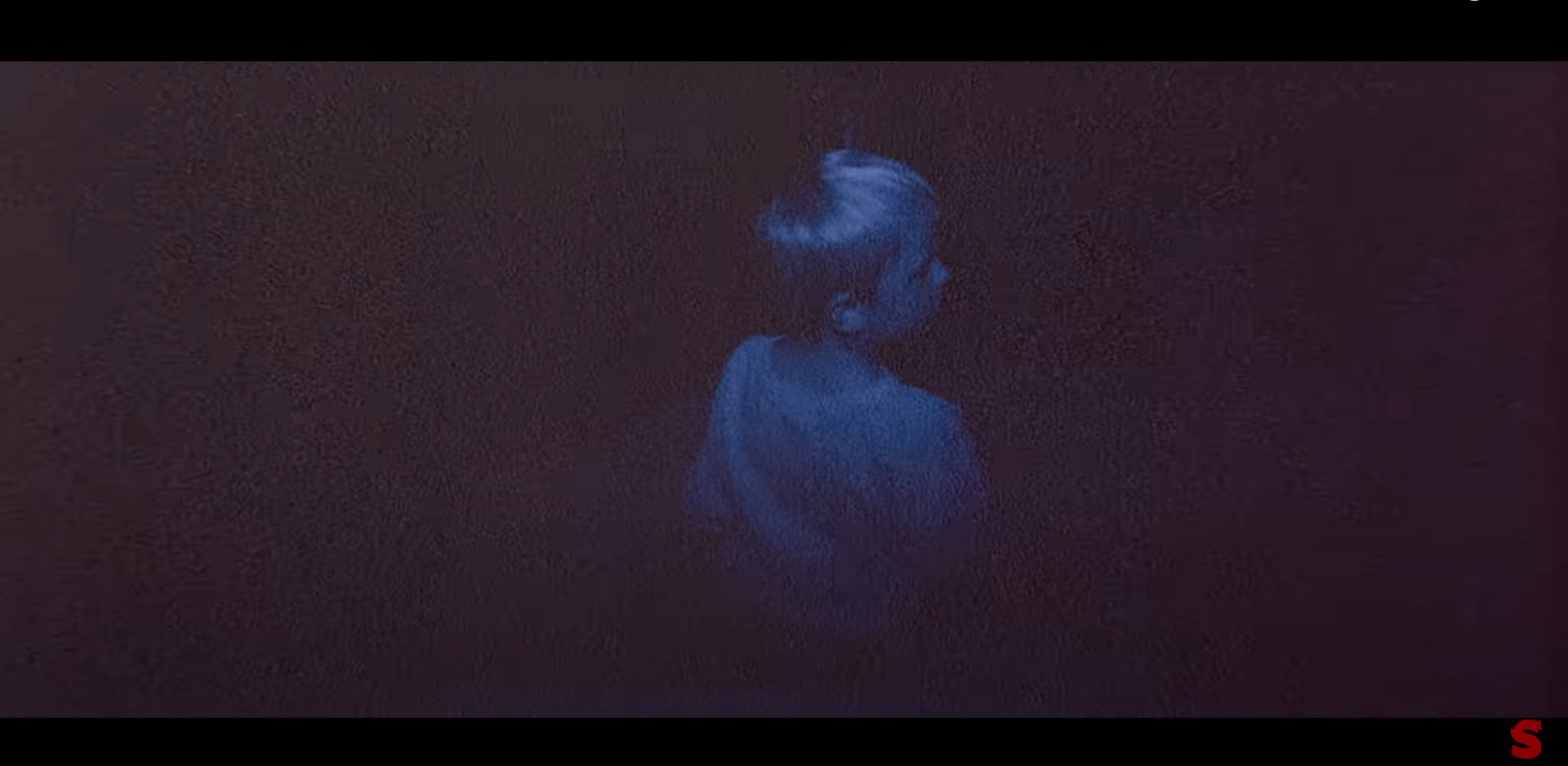
An original parapsychological paralyzer, “Skinamarink” arrives on a Blu-ray home video courtesy of Acorn Media International, the acquired UK distribution company of RLJ Entertainment.  Presented in a widescreen aspect ratio of 2.39:1, the AVC encoded BD25 sustains a purposefully intended lo-fi A/V feature, set to the date tune of 1995, much like when SOV quality films were abundantly popular because of their cost value and accessibility.  If you’re expecting depth of detail, you won’t get it from “Skinamarink’s” dense static approach that all but eliminates object definition.  Delineation is scarce to an effective scare tactic to which Ball tones the film; yet, the static is not, for lack of a better word, static as the current changes within the blips, increasing and decreasing visibility for desired poltergeist potency, if poltergeist is what we want to call it.  Set entirely in nighttime, sleepy home, the basking glow of tube television is the only semblance of color that emits a faint blue luminous while antiquated cartoons provide flat caricature coloring.  Certain scenes are shot in obvious night vision with the spherical focus that becomes unnatural in the frame, but there’s really nothing natural about Ball’s auteur style.  The lo-fi style choice continues into the English DTS-HD 5.1 surround mix that doesn’t exercise every channel.  Instead, we’re back to canned content with intentional hissing, popping, and distorted tracks.  Aside from a couple of innate audio recordings of a squeaking closet door, all the other ambient audio and dialogue is done after the fact in post-production to be rendered appropriately misshaped and muddled.  There’s also no score, retaining realism of a hushed house sound design to pay heed to soft footsteps and other delicate and mortifying milieu noises.  Depending on your audio setup, subtitles may be your friend here as the whispers are so low, they’re nearly inaudible.  There are a handful of scenes that have burned in English subtitles for that very reason, but full menu English captioning is available too for the minute amount of dialogue.  Special features only include an audio commentary track with the director and director of photography Jamie McRae.  Acorn Media’s release mirrors the U.S.’s RLJ Entertainment’s Blu-ray with the exception of a slightly thicker Blu-ray snapper. The front cover denotes essentially what to expect in the future, a low-resolution and a blue-toned, dark, inverted screenshot image of the young boy; this scene also translates to the disc art.  Encoded with a region B playback, “Skinamarink” comes UK certified 15 for strong horror and sustained threat in its 100-minute runtime.  Take my advice:  there’s nothing quite like “Skinamarink” outside the experimental gallimaufry but it’s sleepy time nature should not be viewed at the late-night weary hours or else it’ll lull you into a nightmare of your own.

The Kids Aren’t All Right in “Skinamarink” on Blu-ray!

The Death of a Daughter Leads Down to a Psychological Path of EVIL! “The Haunting of Julia” reviewed! (Imprint / Blu-ray)

Limited Edition of “The Haunting of Julia” Available at Amazon.com!

This morning was like any other as the Julia rustles up breakfast for her all-business husband Magnus and their lively vivacious daughter Kate, but when Kate violent chokes on a piece of apple and Julie performs a bloody, untried tracheotomy in a state of panic in order to save her daughter’s life, their lives are forever changed as Katie dies in Julia’s arms. For weeks, Julia’s melancholic depression commits her to hospital care. When she’s ready for release per the Doctor’s recommendation, Julia avoids returning to Magnus as their relationship was never a mutually loving one but rather a normal route connected by the presence of their daughter Kate. In order to restart her life, Julia separates from a controlling Magnus and purchases a magnificent London house only to then be plagued by ghostly occurrences she suspects is the work of her late daughter. What Julia comes to find out is the troubling history of her newfound home.

Mia Farrow solidified herself as a genre actress by starring in the archetype for films revolving around the prince of darkness, Satan, in 1968 with “Rosemary’s Baby.”  Unlikely seeing herself as a prominent woman of a notable rite horror, Farrow quickly understood her value in the genre as a complex female lead in the unsettling and gothic protuberance atmosphere style.  Nearly a decade later, Farrow stars in the Richard Loncraine directed “The Haunting of Julia,” similar only to the menacing supernatural child component but digs deeper in manipulative complacency, psychological guilt, and of that distorted reality created by the stout motherhood connection.  The “Slade of Flame” director set his sights off of Rock’N’Roll inspired dramas around the ugliness of the music industry and onto the filmic adaptation of the Peter Straub novel “Julia,” penned by the Dave Humphries and “Xtro” trilogy director Harry Bromley Davenport.  The joint United Kingdom and Canadian production, titled originally as “Full Circle” in the UK, is produced by Peter Fetterman (“The Exorcism of Hugh”), under Fetterman Productions, and Alfred Pariser (“Shivers”) of the Canadian Film Development Corporation. 

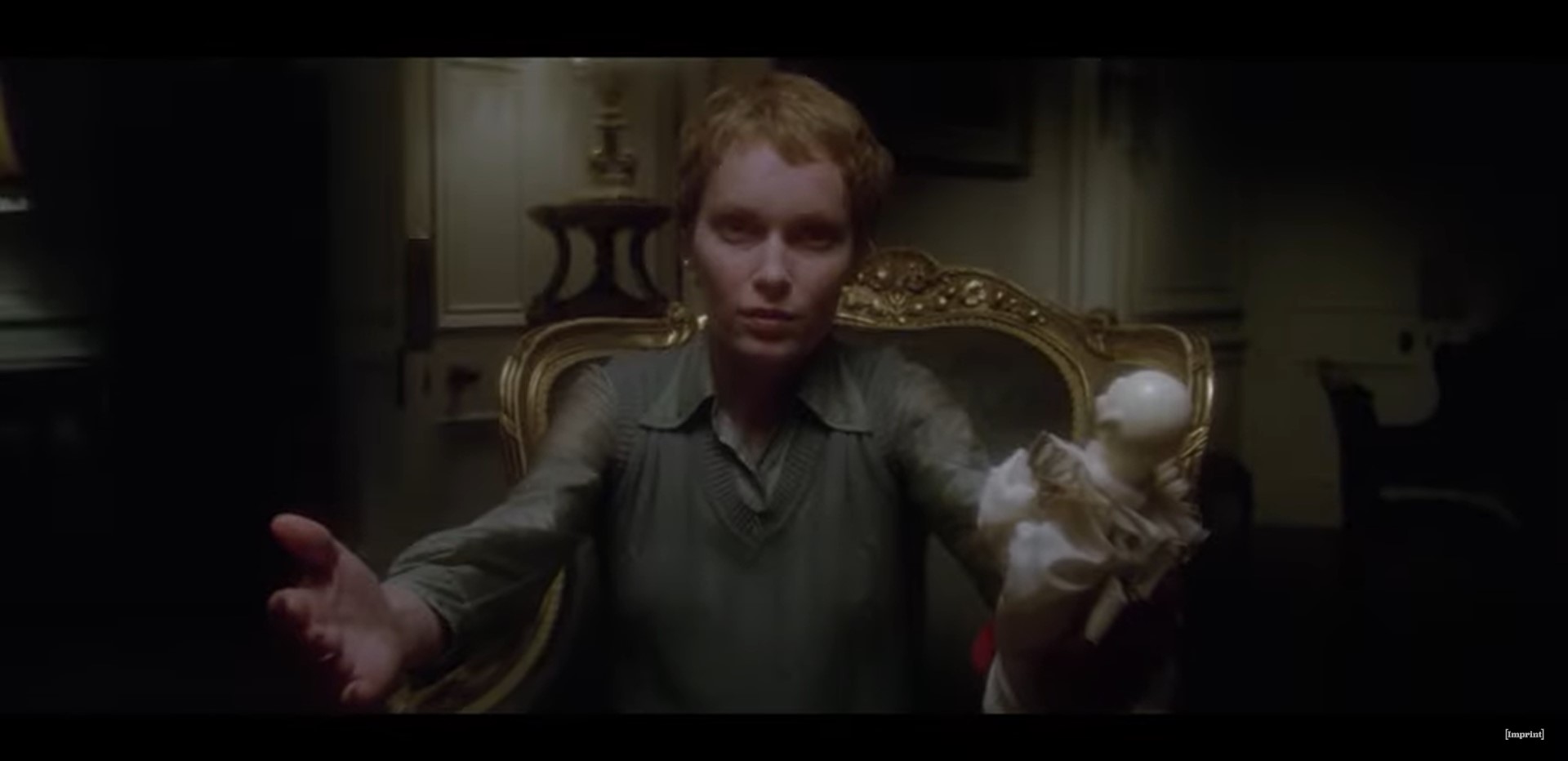
Mia Farrow’s distinct reactions and acting style very much engulfs the majority of horror experienced in “The Haunting of Julia,” as well as exhibited in “Rosemary’s Baby.”  The glassy eyed, long stares, the frightened, coiled emotions that swirl seemingly out of control, and the switch-gear ability to be strong and compliant in tense-riddled situations that just only involve herself in the scene.  While “Rosemary’s Baby’ and “The Haunting of Julia” may exact the same gothic aperture for child-themed horror and both are adapted literary works, “The Haunting of Julia” unfolds not in the anticipating of child birth but rather postmortem with the aftermath affliction of a child’s sudden and terrible demise that occurred in the frantic mother’s misguided embrace to take a knife right to her child’s jugular in hopes of dislodging an air denying obstruction.  This opening scene shocks us right into a grim framework that simultaneously divides trust and empathy for Julia as circumstances unveil what we might suspect all along, that Julia’s mental health suffered immensely.  What pushes Julia into undue stress is her controlling, dispassionate husband Magnus. Played by “Black Christmas’s” Keir Dullea.  Dullea pulls off the unsympathetic impassive father who just lost a child and can’t see the underlying psychological unrest his wife suffers.  In short, Magnus attempts to gatekeep Julia’s damaged psyche by trying to strong arm her back into normalcy, even going as far as manipulating Julia and his own sister Lily (Jill Bennett, “The Skull”) into slipping his foot into the door with a wife who fled from his grasp as soon as released from the hospital for essentially shutting down after their daughter’s death.  That toxic pressure is coupled with the seemingly unnatural incidences in her new home that clash her old life, chained to an unconsciously broken family, with her new life that seeks to decompress from a pair of diverse traumas.  “The Haunting of Julia” rounds out the cast with Tom Conti (“Blind Revenge”), Mary Morris (“Prison Without Bars”), Anna Wing (“Xtro”), Pauline Jameson (“Night Watch”), Peter Sallis (“Frankenstein:  The True Story”), Susan Porrett (“Plunkett & Macleane), Edward Hardwicke (“Venom”), and Sophie Ward (“Book of Blood”).

More or less forgotten by U.S. audiences due to no fault of the film’s own acclamatory measure or the audiences willing participation, the international produced “The Haunting of Julia” wasn’t publicized in the U.S. despite the two American leads – Mia Farrow and Keir Dullea.  Richard Loncraine’s film has incredible merit to the idea of a mother’s loss within the construct of gothic horror, which, in another aspect of unfathomable irony, resembled more closely to the American gothic style of the supernatural sequestered dark house.  Yet, this house is in London, wedged in like row homes, but as mentioned numerous times in the film, the house has distinction and grandeur that overlooks the buried ghostly history of the previous owners.  Julia absorbs the stories, filters through them, and comes to believe her own daughter is either trying to reach out to her or is hellbent on revenge for the amateur hour tracheotomy.  Loncraine does the phenomenal job of shocking our core with the early choking death scene of Julia’s daughter but once that dust settles, the pacing becomes more rhythmic to the point of building, slowly, Julia’s encounters with unknown forces that, at first, are just seemingly bizarre happenstances of left on bedroom plug-in radiators and playground visions of a girl that resembles her daughter cutting up another kid’s pet turtle.  These events play into their evident conspicuousness to push audiences deep into Julia’s mysterious milieu, officially sealing something isn’t right with the clairvoyant Ms. Flood’s scarred-screaming vision of a bloody child.  Julie become engrossed into learning the truth, eager to determine if that child is her late daughter and is fed tidbits of the house’s history that not only continues her own investigation but other research into other house tragedies that fork-split her presumptions.  As all this noise tornadoes around Julia, the stories, the occurrences, the deaths, viewers will never deduce to a reason closer to home, to Julia herself, until possibly too late at the end with a grisly open-ended finale that what Julia has been experience may have been done at her own forlorn hand. 

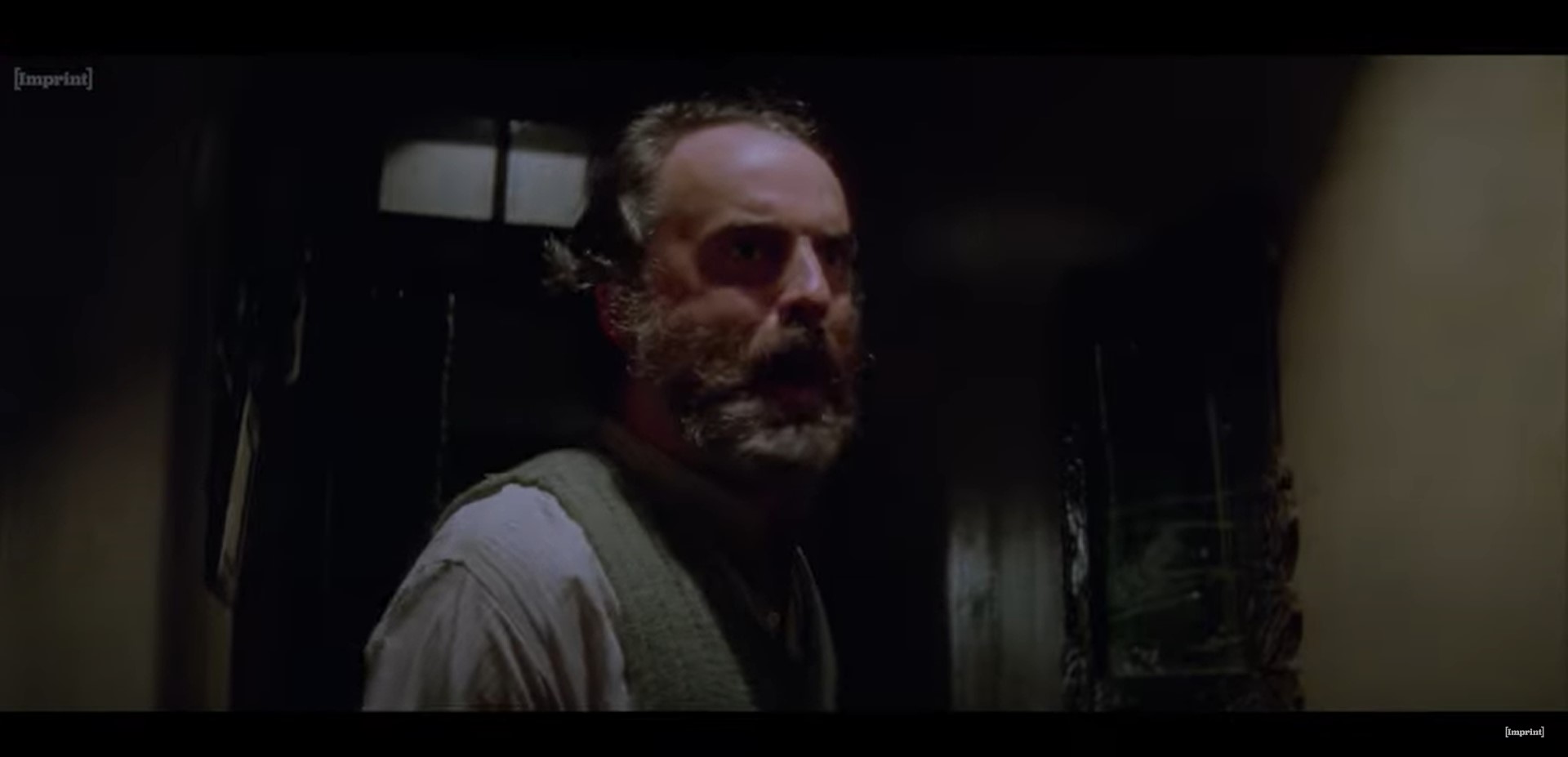
Atmospherically sound, undoubtedly creepy, and spearheaded by strong performances, “The Haunting of Julia” is the unspoken heroine of late 1970s supernatural horror – until now.  Imprint and Via Vision of Australia release a limited edition, high definition 1080p, 2-disc Blu-ray set with an AVC encoded BD50 of a new 4K scan transfer of the original 35mm negative. Presented in an anamorphic widescreen 2.35:1, the 4K scan is super sharp with virtually no compression issues on the formatted storage. Blacks, and negative spaces in general, are rich and void, despite Peter Hannan’s low-contrast and hazy surreal veneer that definitely plays into a psychotronic dreaminess. The resolution goes unaltered, and the natural grain maintains the original theatrical presentation for a revered 4k transfer. The English LPCM 2.0 mono track mix audibly delineates a viable one input split to make the dialogue and all other tracks comprehendible. Despite some slight here and there hissing, dialogue is amped up nicely for better resolved results that still remains mingled with the ambience in an all for one, one for all audio format. “Space Trucker’s” Colin Towns’s insidious and distinctly composed soundtrack reaches into the recesses of soul and strikes at the very nerve of fear with an unsettling score, perfectly suited for a mother drowning in the pitfalls of a supernatural sanctum. Optional English Hard-of-Hearing subtitles are available. The first disc special features include two audio commentaries – one with director Richard Loncraine and Simon Fitzjohn and the second, brand new, commentary with authors Jonathan Rigby and Kevin Lyons, new interviews with composer Colin Towns Breaking the Circle, cinematographer Peter Hannan Framing the Circle, and Hugh Harlow Joining the Circle, a new video essay by film historian Kat Ellinger Motherhood & Madness: Mia Farrow and the Female Gothic, the original trailer, and an option to play the film with either “The Haunting of Julia” or “Full Circle” opening title. The second disc is a compact disc of Colin Town’s 11-track score featuring 20 minutes of previously unheard music out of 60:52 of music. The limited-edition set comes with a neat lenticular cover on front of the hard box of what we assume is Julia’s ghost glaring at you from all angles as her eyes follow you. Inside is a clear Blu-ray snapper that’s a little thicker than your traditional snapper and comes with a built-in secondary disc holder. The cover art is simply Mia Farrow cowering outside the bathroom door but the reversible cover displays an original “Full Circle” poster as the front image. The disc arts are illustrative and compositions with the feature presentation disc the same as hard box lenticular without it being lenticular and CD pressed with Mia Farrow’s face in the background and a child’s cymbal banging toy in the foreground. Also in the hard box is a 44-page booklet feature an historical background essay by critic/writer Sean Hogan that has black and white and color photos and various poster art. The film, which comes in as Imprint catalogue # 218, runs at 97 minutes, is unrated, and, is assumed, for region A playback as it’s an Australian release – there is no indication on the package. “The Haunting of Julia” is Mia Farrow’s shining, yet lost effort post Roman Polanksi and is a remarkable look at subtle disconnection from extreme guilt when in every corner, every sign, is thought to be about your lost child.

Limited Edition of “The Haunting of Julia” Available at Amazon.com!


EVIL’s Blight is Captured off and on Film. “Cursed Films” reviewed! (Acorn Media International / Blu-ray)

“Cursed Films” Now Available on Blu-ray in the UK!  Purchase at Amazon.com By Click the Cover Below.

What do “Poltergeist,” “The Omen,” “The Exorcist,” “Twilight Zone: The Movie,” and “The Crow” all have in common? They’re just not successful horror-thrillers with extraordinary actors and directors, they’re also tagged as some of the worst cursed movies of our time. Severe ailments, planes struck by lightning, bombings at previously booked restaurants, egregious injuries, and even death, lots of death, have surmised belief that the otherworldly powers or the omnipotent universe has waged warnings and, if gone ignored, has blown the kiss of the death. For years, these films held power of people because of a string of unfortunate incidences that link back to rumors that possibly incite mystical retribution for using real corpses, telling stories about the birth of the antichrist, and even family lineage curses by ancient Chinese spirits. There’s no shortage of superstition in the world, a country practically built on the idea of a martyred Jesus rising from the grave, and Hollywood is no exception that the bad things that happen in life will always course people to find a reasonable explanation even if that explanation is an untenable supernatural one.

When we think of curses as a whole, we’re generally point and look to the obvious occult brewing with black magic of vindictive witches, ancient incantations to evoke demonic bidding, Gypsy ill-wills that have lycanthropy teeth, or ominous warnings inscribed by long-ago Egyptian priests keep mummified remains from being marauded by intruders.  These hexes and jinxes are storylines popular in movie culture since the beginning of the first movie pictures, used to entertain, excite, and thrill to the furthest extent of the means.  Who would have known there is a reality bound, darker side to the curse mythos that has been insidiously rooted in the illustrious and dream making film industry?  Cursed films have been the talk of Tinsel town, ambulance chasing tabloids, and the short-lived internet fandom for years, decades now even, surrounding the mysterious misfortunes of certain films.  The Shudder 5-episode docuseries, “Cursed Films,” goes into the weeds with retrospective interviews from cast, crew, religious experts and even mavens of black magic and witchery.  Jay Cheel wrote, directed, and edited the series removes the characters from the story and focuses on building the humanity of the affected, dives into possible reasons for the film or individuals involved to be cursed, and the unfortunate outcomes that have resulted in the loss of life surrounding the project.  Muse Entertainment Enterprise, one of the companies behind CBS hit U.S. comedy “Ghosts,” serves as the production company behind the 2020 released Shudder exclusive series.

With any documentary, the cast are plucked right out of history, fast-forward into the present, to tell their firsthand account of events. Directors, producers, special effects and makeup specialists, and those beyond the realm of the film industry recollect and provide their own interpretation of a beleaguered saga with an interviewer, assumed to be “Cursed Films'” writer-director Jay Cheel, posing the questions to get open access to the inner thoughts of the grieved and impressed to give in full detail their wholehearted accounts. Cheel is able to nab different perspectives that play into the divisive nature of the whole cursed narrative, such as with those, mostly cast and crew, who don’t invest into the transcendental nonsense that has sense become either a minor or major stain on their careers. Others see the unexplainable coincidences to be godsent and beneficial to the production. For example, “The Omen’s” star Gregory Peck’s plane and producer Mace Neufeld’s plane were both struck by lightning in route to the London set only a few days apart. Neither plane sustained life-threatening damage and, thus, strokes of good luck and fortune seemed to be attached to the project along with other instances of death and destruction that averted harm from those involved with the film. Still, many still feel “The Omen” is a cursed film, mostly on the internet horror communities where conspiracies, misinformation, and false narratives run rampant like COVID in the early years. Often when Cheel obtains the perspective a black magician or a witch, Cheel’s attempting to gain not only an understanding of that world from real world practitioners but also to embellish a great melodrama into the episodes. Then, there’s the emotionally poignant Richard Sawyer segment. As the production designer on John Landis’s “Twilight Zone: the Movie,” Sawyer saw firsthand the tragedy that befell one of the film’s segment stories. Lead actor Vic Morrow (“Humanoids of the Deep,” “1990: The Bronx Warriors”) was cut down, along with two children, during a scene with a helicopter that went terribly wrong, and Sawyer’s account is powerfully traumatizing and great representation of how this series should be affect and chill viewers to the heart and to the bone.

“Cursed Films” reveals the terrible mishaps and misfortunes of limelight. If a private person is dies due to illness, accident, or foul play, there’s usually not a major production made out of the occurrence and no grand, “Final Destination” design beyond our understanding is erected to give it all meaning. Under the public eye and recorded by every entertainment medium known to mankind at the time of filming presents public scrutiny, public panic, and public speculation that plots points and charts graphs toward a giant, flashing sign that says, in big bold letters, CURSED! To any given horror fan, much of Jay Cheel’s docuseries is already common knowledge for the most part with the fresh and emphatic take from at the scene interviewees who add compassion and empathy as a shield against those who still think the sweet-faced Heather O’Rourke was doomed by some malison brought to fruition by India-removed skeletons. To the non-horror fan, much of Jay Cheel’s docuseries will have that new car smell and can be engrossed by Cheel’s spin of oppositions that never lay claim to either side as truth but only further what Zelda Rubenstein and Richard Sawyer tried to dispel with reason and tangible accounts is that there is some underlying curse reaching up and grabbing the throats of these films to point of choking the very goodness out of the cast and crew’s souls and only provide morbid curiosity to those seeking out the works stuck in a perpetual cycle of occultism.

Become reeled in by the notorious historical compendiums of “Cursed Films” in the first season that aired in 2020 and is now finally on Blu-ray home video in the UK from Acorn Media International. Though listed as a PAL release, the AVC encoded Blu-ray is presented in a 2.39:1 aspect ratio and is in 1080p, high-definition resolution, so a PAL encoding description would be inaccurate for a HD release. Image quality varies between the clean digital recordings with the interviews in interiors and exterior settings, polished transfers snipped from your favorite classic (and “cursed”) movies, and the raw, unpolished frames or clips that were cut from the film or remained as behind-the-scenes supplemental. All-in-all, picture quality is fine and clear in any regard with no issues of compression on the various mediums. The English language DTS-HD 5.1 surround sound stakes prominences on the dialogue for this is a docuseries reliant on firsthand accounts. Some historical footage can be staticky and flat but fits into the documentary design that pulls clip examples from the archives. “Cursed Films” isn’t going to be actioned packed or atmospheric but the composing duo of “Kicking Blood,” Justin Small and Ohad Benchetrit, offer an engaging soundtrack that could tell the story without the interviewee’s tale of sadness, mysticism, etc. English subtitles are available. For each episode a director’s audio commentary is available as a special feature. The physical feature comes in a slightly thicker Blu-ray snapper with the cover art, which is the same as the U.S. RLJE release, of an unspooling film reel displaying iconic tokens from each movie. The 141-minute and region B playback release houses the film’s certified 15 rating for strong horror, strong language, strong injury detail, sex references, domestic abuse, suicide, and bloody images. Whether you believe in curses or not, “Cursed Films” is a peradventure that’s powerful and uncanny to this very day that’ll have you straddling the fence of labeled condemned films.

“Cursed Films” Now Available on Blu-ray in the UK!  Purchase at Amazon.com By Click the Cover Below.

EVIL is Released When the Rent is Due! “The Dead Girl in Apartment 03” reviewed! (Wild Eye Releasing / Blu-ray)

Get Spooked by “The Dead Girl in Apartment 03” on Blu-ray!  Purchase at Amazon.com!

Massachusetts native Laurel has been living in New York City for a few months with a roommate she barely knows or sees because of their opposite work schedules.  When Laura discovers her roommate’s dead body in their shared apartment, the living space no longer feels comfortable, and the uneasiness keeps her awake long after the police and coroners remove the body that has left them baffled with a cause of death.  The mystery of her roommate’s demise, the agony splayed on the corpse’s face, and knowing her lifeless body has been undiscovered for at least a couple of days just next door to her room leaves Laura shuddered to the point of reaching out to her ex-boyfriend to hear a friendly, comforting voice, but bizarre and supernatural occurrences slip Laura in a state of panic and fright with a presence that has suddenly haunted her urban home and with the unearthing of her roommate’s black magic paraphernalia and a demonic symbol under her bed, Laura just uncovered a hidden nightmare that would have been a life saver if listed in the roommate wanted newspaper ad.

Atmospherically creepy and part of the reason I don’t like having roommates, “The Dead Girl in Apartment 03” is the little known, highly effective supernatural haunt horror from writer-director Kurtis Spieler.  Spieler has crossed our paths previously with the 2013 released lowkey thriller under the guise of a werewolf with “Sheep Skin” distributed by Unearthed Films and the review came out on top with a positive write up that noted the film as “a fresh suspenseful spin on lycanthrope mythos.”  Since then, the American filmmaker has re-directed and completed the 1984, John Liu unfinished cult and martial arts actioner, “New York Ninja,” for a Vinegar Syndrome exclusive release and has also preceded his dead girl paranormal enigma model with “The Devil’s Well” that has a similar plot but with a found footage medium.  Spieler’s latest venture provides the opportunity to work again with a couple of actors from “Sheep Skin” under the banner of Invasive Image with the director co-producing alongside longtime collaborator and Invasive Image co-founder, Nicholas Papazoglou, and one of the film’s principal leads and “The Sadist” screenwriter, Frank Wihbey. 

“The Dead Girl in Apartment 03” is one of those indie films that snags and headlines a genre icon to thrust the title into the spiraling coil of a massively oversaturated low-budget horror pool in the hopes that the film sticks to the now desensitized fans who have been burned too many times too often by radioactive junk.  The tactic is not always necessarily nefarious or a fool’s paradise to lure in fans into a schlock storm of insipid independent media as “The Dead Girl in Apartment 03” proves that though the original “Friday the 13th” actress and scream queen, Adrienne King, might be the top billed, the actress is definitely not the star and the film still manages to provoke a keen spine-tingler with a lesser known and younger cast dipping their toes into the what King has already lapped twice, if not three times, over for decades.  King’s name becomes the proverbial foot in the door for new, upcoming talent for audiences to be exposed to, such as with Laura Dooling playing as, well, the spookily chipped away, panic-induced Laura.  Dooling immerses us into her character’s complete physical cutoff from friends and family as a woman stewing in an uncomfortable sixth sense that surrounds the disturbing faculties of her roommate’s death.  Dooling nails the superb chiller despite the one-sided act with no other cast to react off of for the majority of the runtime, paralleling her character’s isolation with her own to root out goosebumps unaccompanied.  King and Frank Wihbey head up the detective detail as the around-the-block Detective Richards and the fresh understudy Detective Miller.  The older woman, younger man character dynamic rides a similar trajectory to their professional colleague one and I’m not talking about cougars, if that is where your mind take you.  Though she certainly can be a cougar if she wanted to, King is more of a mentor on camera than she is off camera, playing the seasoned detective who warns the ambitious Miller not to get involved with active case women.  Wihbey’s a suitable fit as the double-edged sword eager rookie to King’s cooler, calmer approach to bestow path-treaded wisdom for a reason.  One of the highlighted performances stems from “Sheep Skin” actor Michael Shantaz, a tall and intimidating presence that sizes up Dooling’s terror tenfold from the very first scenes of the deceased’s dazed boyfriend Derrick crossing the threshold into Laura’s apartment.  Subdued and stony-faced, Shantaz adds to the tangible terror in contrast to the paranormal one at hand, yet both are ostensibly woven from the same thread.  Fellow “Sheep Skin” actor Bryan Manley Davis along with Jasmine Peck and Jennie Osterman (“Dickshark”) fill out the cast.

I’m always intrigue, or maybe just easily entertained, by titles that goad into viewership for the simple fact of fulfilling title-spurred questions with answers.  The title “The Dead Girl in Apartment 03” elicits many unexplained uncertainties that become an itch you can’t scratch until the end credits fade to black.  I want to know who is the Dead Girl?  Why is she dead?  What’s terribly important about the specified Apartment 03?  Do the Dead Girl and Apartment 03 correlate more significantly somehow in the story?  All these internal queries, prompted by a non-generic, puzzling title, are just cascading through the mind in a deluge of I-gotta-knows and for the most part, the team behind the quaint thriller does rub the itch to a smoothed over satisfaction while also working the edits, the angles, the sound design, and the lighting toward a decent scary movie.  What’s fascinating about the story is the exploration of the immediate after when Laura is left shivering in shock, solitude, and a sense of grim thought knowing she’s been living with a corpse for the last 48 hours.   She hits all the stages of a post-traumatic situation by reaching out to family and friends, diving into comforts like making tea or taking a shower, and even finding ways to keep busy and remove the macabre image from her mind by cleaning up the crime scene herself.  That portion of etching into Laura’s psyche distracts her in an ironic, detrimental way because as she attempting to self-soothe by any means possible, she oblivious to the grotesque presence coming and going and in-and-out of the negative space with its body jerking as it glares at Laura with blood running down it’s shirt.  Laura is also not cognizant of the things that go bump in the night as they barely make a blip on her radar or trigger her into a deeper stage of fright until it’s too late.  The climatic ending stretches the story further into love hexes and demonic contracts that perk up the ears in interest as the story gets into the nitty-gritty of details of what’s happening and why but doesn’t quite reach the finish line of resolve with a deflated conclusion that supposed to leave you shocked when it really just leaves you. 

Not your typical bottom-of-the-barrel budgeted or gore-drenched debauchery Wild Eye Release, “The Dead Girl in Apartment 03” looks and feels like a big-budget ghost film with all the muscle-seizing suspense.  The bold independent home video distributor delivers the Kurtis Spieler picture onto a Blu-ray collector’s edition, which, again, is atypical for the label.  The AVC encoded, high-definition, 1080p Blu-ray is presented in a 2.35:1 widescreen aspect ratio.  Spieler has defined himself as a master of the negative space and, fortunately, there’s no lossy image from a deficient compression, leaving a crisp view of the lurking, crooked dead entity soon to fill the void or not as the director tends to position the camera for an uncertain possibility.  Details are relatively good within a muted color scheme and many of scenes are dark lit, bordering on a neutral to high contrast with a palpable delineation, with only the dead girl’s room projecting a stony mustard illumination and spotted moments of candle and hand torch lighting.  Other scenes, more so involving Detective Richards and Miller, dip into the cop-noir with gel and back lighting that looks vivid and mysterious on screen.  The surprisingly backwards tech of the English language LPCM stereo relies heavily on dialogue than ambient jolts of jumps scare sounds though there are a few, effective examples about and is balanced well with the dialogue that is a little on the mumbling side but comprehensible and free of obstruction, interference, sound design, or otherwise. The dual channel stereo works and is adequate for the size of the picture that doesn’t require a multi-channel audio format as there are no explosions, whirring bullets, or a large cast to create depth range.  Soundtrack composed by Connecticut based, VHS-inspired synthwave artist, Brian Burdzy – aka Satanic Panic ’81, delivers a low and lively and often deadened (pun intended) but rhythmic sound reminiscence of John Carpenter scores that gives Spieler’s film a very “Halloween” vibe. Aforesaid, Wild Eye Releasing doesn’t accompany a ton of special feature material with their releases unless on their Visual Vengeance sister label but the seemingly new special edition line, in conjunction with a regular standard release, bears more supplementals for the storage.  An audio commentary with filmmaker Kurtis Spieler , a behind-the-scenes featurette featuring cast and crew retrospective interviews of their time on the film, Spieler’s 2011 short western thriller “No Remorse for Bloodshed” (though mistitled on the back cover as “No Remorse Bloodshed,” Take 3S Video – a montage of actress Laura Dooling humorously pretending to be clipped by the marker clapper on third takes, an image gallery, and Wild Eye Releasing trailers of “Smoke and Mirrors,” “Wicked Ones,” and “The Bloody Man.”  The physical aspects of the release include a clear Blu-ray latch snapper with a macabre illustration of the titular dead girl holding a knife on the front cover, as you’ll see in the image below for the trailer.  The cover art is reversible with a still image of Laura Dooling in one of the more thrilling scenes on the reverse side.  Inside the snapper insert is a folded mini poster of the SE’s O-case slipcover with another illustration of two more characters in a 70s inspired retro design.  The region free, unrated film clocks in with a 72-minute runtime – an easy, breezy thriller with punch.  “The Dead Girl in Apartment 03” is a perfect selection for a Halloween night movie. An eerie apparitional residuum that’s character-driven, tense, and thoroughly carried by the small cast.

Get Spooked by “The Dead Girl in Apartment 03” on Blu-ray!  Purchase at Amazon.com!