After the sudden passing of her father, Emma stays with her cousin, Taylor, along with her aunt and drunkard uncle. Taylor pressures Emma to be part of her prank habitual group of friends, trying to convince Emma how this is how things will be from now on while also trying to be a compassionate shoulder to her reserved cousin. With Taylor’s uncle passed on the sofa downstairs and her mother flying in from out of town, an impromptu sleepover encourages the group of girls to connive a break-and-entering prank to scare a new neighbor, a teenage girl named Julie, across the street. Emma half-heartedly participates by producing a way into the house, allowing her cousin and her heedless new friends onward on their scaring scheme, but when only two of the four girls return, the prank has turned terribly wrong as an urban legend about the house across the street might actually be true.

Breaking out from helming television documentaries and into the genre feature realm is filmmaker Jud Cremata debuting with his written and directed bloodcurdling slumber party, “Let’s Scare Julie,” premiering on in home theaters on digital and VOD come October 2nd, 2020. Starting off Halloween with an innovative filming structure and a good ole fashion horror tale, Cremata never eases on the reins of terror from nearly a single, continuous take of his mischievous teenage girls meet malevolent ghost story that occurs over a single night, condensed further to a time frame that’s almost parallel to the film’s runtime. Formerly known as “Let’s Scare Julie to Death,” the Santa Clara filmed, real time hijinks gone awry spook show is the first horror production from the Los Angeles and Moscow based Blitz Films in association with “Becky’s” Buffalo 8 Productions. Jud Cremata and Marc Wolloff produce the feature alongside Blitz Films’ Eryl Cochran and Nick Sarkisov.

Comprised with a small cast of new talent, “Let’s Scare Julie” focuses around a group of five teenage girls and one elementary grade school girl concentrated more so around a life rebounding Emma played by Troy Leigh-Anne Johnson, making her introduction into feature length films. What makes this a phenomenal role and performance for Johnson is the fact that the young actress has to maintain in-character for the entire length of the film with the camera rarely parting away from her in every moment of the nearly continuous take and she has to adjust her dynamics with a variety volume of characters ranging in temperament from meek, to obnoxious, to terrifying, to drunk, and to the perpetuance of adolescence behavior from her protective, yet peer pressuring cousin Taylor (Isabel May), the obnoxious goof Madison (“Ladyworld’s” Odessa A’zion), the unassertive duddy Paige (Jessica Sarah Flaum), and the confident showoff Jess (“Unearth’s” Brooke Sorenson). Individually, the characters are well developed, hinting more towards unravelling their true selves with each progressive moment their on screen, but not overly enough to have each figured out and that leaves their hopeful futures in ruin, offering more substance to their potential demise. Rounding out “Let’s Scare Julie” cast is Dakota Baccelli, Blake Robbins (“Rubber,” “Martyrs”), and Valorie Hubbard (“Resident Evil: Extinction”) as the evil spirit, Ms. Durer.

Uncomplicated with less fancy footwork adorned, “Let’s Scare Julie” is all about the story and less about the effects hoopla usually associated with vindictive phantasma creepers, especially ones like Ms. Durer who like to seep into her victim’s personal bubble using voodoo black magic dolls while wearing nothing more than her dirty nightgown and scathing glare on her face. The simplicity of the movie is almost refreshing in the inherent campiness of the anecdotal urban legend spieled by the girl living next to the house of ill repute, but one thing about the story that irks me is the marketing of “Let’s Scare Julie” being shot in one continuous take; yet, there are a few edits that not necessarily cut to a different scene, but rather just jump seconds of a frame and continue the moment. Whether the edit’s intent was because of timing, reducing frames in a scene to meet a certain runtime, or to give the actors a slight break, the expectation wasn’t fully met when the handful of edits are slipped in condemning that anticipated single take to just a still impressive compilation of long takes. Chuck Ozea’s maneuvering cinematography seamlessly tells the tale without so much of a hiccup as the veteran music video DP choreographs somewhat of a dance around Troy Leigh-Anne Johnson to capture her slow simmer into terror. “Let’s Scare Julie” does more with less as a round about ghost story, building up suspense above the guise of guilt-riddled themes without placing the perspective in the middle of the supernatural action.

Sometimes, pranks backfire and, in this case, this prank is to die for in the Shout Studios distributed “Let’s Scare Julie,” scaring up into home theaters on Digital and On Demand at the beginning of Halloween season on October 2, 2020. Being a brand new film, there were no psychical media specs to report nor would there would be any A/V if specs were available since this review copy is a digital screener of the film. As a digitally recorded production in this day and age, expect the found footage-like video and sound as faultless as expected, but the quality will be determined by your internet connection and streaming platforms. There were no bonus material with the screener nor were there any additional scenes during or after the credits. Five teens’ prank spree ends on a dark and stormy night of terror where urban legend trounces cruelty over shenanigans in the crafty and solid shiver-inducing “Let’s Scare Julie.”
Tag Archives: ghosts
To Be EVIL, You Must Capture EVIL! “Thir13en Ghosts” reviewed! (Blu-ray / Scream Factory)

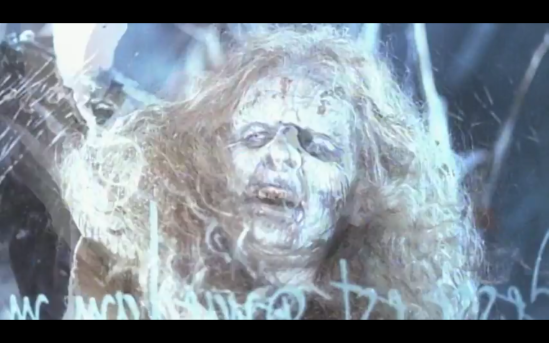
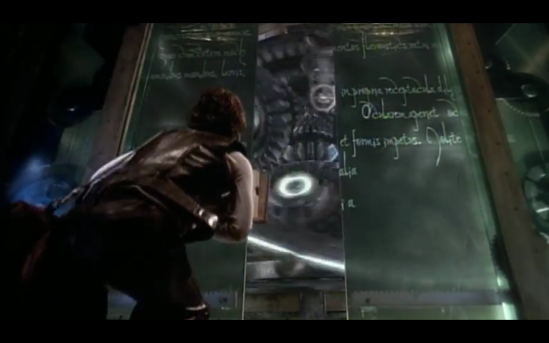
A maniacal and obsessed ghost hunter, Cyrus Kriticos, traps 12 tormented and violent spirits with the help of an avaricious, but anguished psychic, Dennis Rafkin, but when trapping the last ghost, the worst of the worst, a barbaric mass murder in life and in death named Juggernaut, Cyrus is killed in the process. His death leads to the inheritance of a one-of-a-kind house to his widowed nephew, Arthur, and his two children who are barely scraping by after the unexpected fiery death of their beloved wife and mother. When they enter what seemingly feels like a godsend house, immaculately structured entirely out of glass and metal, they find themselves trapped inside after tripping a series of mechanism that turn the isolated and elegant abode into a labyrinthic machine. Stuck inside with Arthur and his family are Dennis Rafkin and a ghost friendly liberator, Kalina Oretiza, who explain that the house is actually an evil machine with a goal of opening the eye to Hell and that the ghosts, imprisoned in the basement, are components that are being set free one-by-one in order to fulfill the ritual.

In the world of remakes, only a select few ever surpass the original. In fact, on rare occasions, do remakes actually replace the original due in part to being beyond respectful as well as masterful amongst critics and genre fans that have bestowed the reimagining an untouchable rendition to which no one can find anything wrong with it; this films include John Carpenter’s “The Thing,” David Cronenberg’s “The Fly,” and Chuck Russell’s “The Blob,” with Zack Synder’s “Dawn of the Dead” and Tom Savini’s “Night of the Living Dead” receiving well-deserved honorable mentions, because let’s face it, topping George Romero’s original work can be said to be blasphemous slander. What about those remakes in between? Those just above the pile of awfulness that generally makeup remakes? I consider Steve Beck’s “Thir13en Ghosts” to be one of this mid-level remake films that registers well with fans, but on the flips side of that coin, doesn’t ascend to total prominence over its predecessor. Written by longtime Full Moon Entertainment writer Neal Marshall Stevens (“Hideous!” and “The Killer Eye”) and Richard D’Ovidio (“The Call”), “Thir13en Ghosts” is a 2001 near-total rework of the 1960 William Castle directed and Robb White scripted “13 Ghosts” that used gimmicks like 3D specter glasses to draw audiences into the theater. “Thir13en Ghosts” was the second film after another William Castle remake, “House on Haunted Hill,” of the newly formed, William Castle nod-to, Dark Castle Entertainment, a division of Joel Silver’s Silver Productions formed by Silver, Robert Zemeckis (“Back to the Future”), and Gilbert Adler (“Bordello of Blood”) that honed initially on producing stylishly modern takes on classic gothic horror, such as “Ghost Ship,” the remake of “House of Wax,” and “Orphan.” What came out of this collaboration between Steve Beck and Dark Castle Entertainment is a complete dismantling of the wood paneling and lament flooring story for a modern marvel to emerge of unique terror that hasn’t been duplicated since.

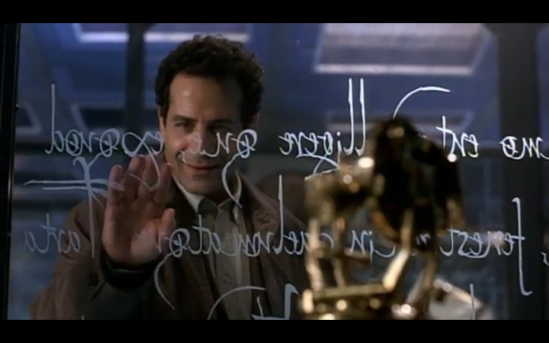
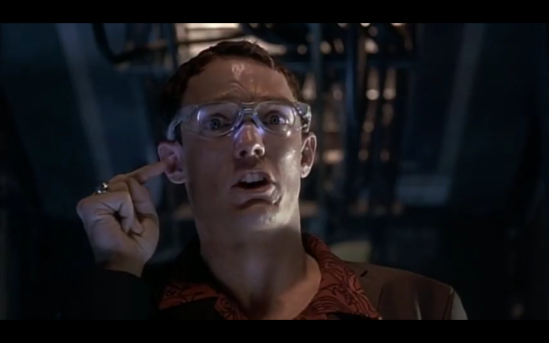
“Thir13en Ghosts” has an impressive, if not all-star, cast with diverse range of styles and experiences that it’s almost dumbfounding on how the filmmakers were able to contract some of these talents, including F. Murray Abraham, who has had an already eclectic credit list with “Amadeus,” “Surviving the Game,” and Mimic, and Tony Shalhoub who hand standout performances in “Addams Family Values,” “Men in Black,” and “Galaxy Quest.” Abraham and Shalhoub bring a sense of classical and methodological structure in a stark contrast between rationality and irrationality built upon an indifference of solitude and a sense of family. Then, there’s the comedic relief in the midst of danger, Matthew Lilliard (“Scream”) as the suffering psychic who uses his wit tongue to spur others and introducing hip-hop artist, Rah Digga, in one of her only motion picture performances to alleviate suspension with more tongue-and-cheek moments. Lilliard and Digga offer up two different comic styles while sustaining the underlying severity of being trapped inside an evil machine full of violent ghosts. Shannon Elizabeth, who we all know by now as the stunning “American Pie” girl, Nadia, or as I know her as the unfortunately raped and murder victim of a killer snowman in “Jack Frost,” plays Arthur Kriticos daughter, Kathy, who still a fresh faced newcomer to Hollywood despite being a hot commodity after her topless role in “American Pie.” The superb support roles don’t end there with notable roles from JR Bourne (“Ginger Snaps Back: The Beginning”), Matthew Harrison, Alec Roberts, John DeSantis, and EmBeth Davidtz, Sheila from “Army of Darkness,” as the ghost liberator.

It’s hard to believe that “Thir13en Ghosts” is nearly 20-years old. I still recall my 17 year old self sitting in for a theatrical showing, remembering the opening gargoyle growling as the Dark Castle Entertainment logo reveals itself during the opening title credits, and coming out of the maze-like, gory-ghost film having experienced something special, even if then I didn’t understand why, only to years later realize that I’ve never seen something like “Thir13en Ghosts” before in my life. How does a remake reinvent itself so much that it can separate itself from the original film while also beguile with fresh ideas and no take a slew of browbeating chirps from those who holdfast that the original is the one and only? Most remakes cheaply throw gore to the wind, adding buckets of blood in hopes to satisfy horror buffs, but what winds up happening is that we ultimately get bored, having experienced blood and guts from singular storied films. “Thir13n Ghosts’” premise isn’t the only worthwhile experience that deserves praise, but also the spectacular production design by Sean Hargraves that thrusts the glass house concept into new heights with the house actually becoming an interestingly steampunk character itself and the prosthetic effects from a team spearheaded by a trio of the best special makeup effects artists in horror today, such as Howard Berger, Robert Kurtzman, and Gregory Nicotero., turning ghoulish encounters to ghastly visions that convey truly a tormented soul in the 12 ghosts. Though the story itself isn’t perfect, flawed at times with static character development and a few plot holes involving the ghosts and sequences of events, “Thir13en Ghosts” remains a cult favorite gaslit by frightening imagery, a solid cast, and unforgetting production design that started 21st century horror off brazenly strong.

Collect all “Thir13en Ghosts” on the Collector’s Edition Blu-ray courtesy of Scream Factory sheathed in a cardboard slip cover and has a reverse artwork liner that has the original poster artwork and new vivid illustration by Joel Robinson. Presented in a 1080p, high definition widescreen, 1.85:1 aspect ratio, from the original 35mm negative, “Thir13en Ghosts” shares a consistent image and vibrancy layer with the DVD version with an enhanced color stability. No edge enhancement or cropping adjustments rendered or any other blemishes to speak of, but the softer details could have been sharpened to gave a hard edge around the non-spiritual energy. The English language DTS-HD Master Audio 5.1 boosts the already hefty soundtrack that’s full of explosions and ghostly swooshes and moaning hums, finished off with grand, orchestra soundtrack by John Frizzell It’s been said that audience had to excuse themselves from the film due in part to the overbearing noise coupled with the strobe-like imagery, but the overall audio and visuals are a combined one-two punch of sensory power that works well. The Scream Factory release has new interviews in the bonus material, including sit downs with actors Shannon Elizabeth, Matthew Harrison, and John DeSantis and producer Gilbert Adler. There’s also a audio commentary with director’s Steve Beck, production designer Sean Hargraves, and special effects artist Howard Berger. There’s also an in-depth look at the creation of the thirteen ghosts in a small featurette, their backstory profiles, and the theatrical trailer. However you want to call it, whether it’s “Thir13en Ghosts,” “Thirteen Ghosts, or “13 Ghosts,” this new century remake still holds up to today’s horror lot with spellbinding phantom pandemonium in a glass box!
“Thir13en Ghosts” on Blu-ray on Amazon.com
EVIL Choo-Choo Choses You! “Infernum” reviewed! (Indican Pictures / Screener)

When Camille’s parents awake to an unknown and encompassing rumbling and what sounds like agonized wailing, they decide to go investigate not too far from their camping tent where their daughter, Camille, still sleeps. When Camille awakes, the rumbling is now deafening and her parents have disappeared into the night, leaving the young child frightened beyond belief. 25 years later and still haunted by the phenomena, art post-graduate Camille conducts recorded interviews with witnesses of the event along with James, a film studies student working on a documentary project. When the rumbling returns in the Nevada desert, Camille and James take a train to record research just outside the affected area and not become too close to the dangers that’s traumatized Camille, but when the train stalls in a tunnel halfway to the destination, Camille and James awake alone with no passengers or conductors in sight and a rumbling noise that isn’t the train’s engine. Camille finds herself once again in the midst of wailing and now something outside the train is trying to get in.

Stick “Infernum” into the sub-horror category of the great and fear-inducing unknown perhaps based loosely off the unexplained low-frequency hums, such as a Taos hum, stretching from the U.S. to the U.K., writer-director Dutch Marich sensationalizes the phenomena by adding the trimmings of tortured souls howling in torment as a rift opens up between Camille’s world and, supposed, Hell. Filmed primarily inside an antique rail train from the Northern Nevada Railway Museum and inside the railway tunnel west of Ely, Nevada, the “Hunting” and “Miserable Sinners” filmmaker, Marich, slow churns a low-budget friendly and simple plot into a materializing worst case scenario with the anxiety-riddle markings of being trapped, surrounded, and alone inside a dark and confined space with a cacophony of screams, as if in a dark-padded psychiatric cell. Mariach’s Luminol Entertainment and Vekinis Studios, headed by former Luminol Entertainment employee, Peter Panagiotis Vekinis, collaborate on the project.

Playing the traumatized Camille is “American Mummy” and “Dude Bro Party Massacre III” b-movie actress, Suziey Block, who has to not only struggle with coping against the hauntingly strange event plaguing her past, but also deal with an overprotective, yet also apathetic boyfriend in a role filled by who could very well be a young Christopher Meloni lookalike, “Happy Camp’s” Michael Barbuto. Block’s become something of a scream queen over the last few years and “Infernum” continues to make the Michigan born actress keep screaming her lungs out; however, its Camille and Hunter’s hot-and-cold relationship that topples the main theme here as Camille, through Block’s insensate performance, feels disinterested in unearthing what happened to her parents while being too engaged in Hunter’s desensitize, if not rightly justified, position toward her glazed over stress, but Block is engrossed by the fear just enough to sell it. Rounding out Infernum’s cast is Clinton Roper Elledge, Sarah Schoofs (“The Theatre of Terror”), and Rita Habermann.

“Infernum” can feel like a simmering slow burn of paranormal byproduct and resonates closely with Milla Jovovich’s extraterrestrial faux found footage thriller, “The 4th Kind.” The lingering scenes with tedious exchanges render a remote sense of terror that’s teamed with more tension from Hunter and Camille’s argumentative discourse. Yet, when things seem to be dwindling as Camille and her filmography friend, James, board the vintage train to the ghost town of Kimberly (and when I say ghost town, I mean an abandoned mining area), that’s when things go from a steadfast numb to a terrifying turn of the inexplicable circumstance kind. Camille finds herself in a familiar situation like 25 years ago, but the environments different with desolate train, an ominous presence over the loudspeaker, and though most passengers have disappeared, there are some who are found, blue as ice in the face, and lifeless. The tension is thick with the engine rumbling of an infernal-sounding machine that reeks havoc with cries and screams to amplify night jitters. The open ending leaves room for a wide berth of possibilities and interpretation, making “Infernum” metaphysically loiter in between the rifts of our minds.

“Infernum” is a spooky train ride to hell and back, pulling into the DVD home video and digital platform station from the independent film distributors, Indican Pictures. Unfortunately, the video and audio quality will not be covered because of the DVD-R screener, but I can say that the LFE audiophiles are immensely characteristic and behooves viewers to play on a surround sound system or quality headphones will also do the trick. The film’s innate hues are on the bleaker, gloomier side, backdropped by the frigid air of a wintery Nevada dessert. Other than Indican Pictures’ trailers for other films, including “The Lurker” among other films, there were no other special features beyond a static menu. I highly recommend “Infernum’s” spooky vibe and unlimited possibilities all aboard it’s simple, yet effective paranormal premise.
EVIL Drugs Zap the Sanity Out of Ya! “Dry Blood” reviewed!

Struggling drug addict, Brian Barnes, travels to his and his estranged wife’s cabin in a rural mountain community to force himself into isolated detox. He calls upon his friend Anna to assist with keeping him focused to sobriety. As soon as Brian arrives, temptation to score rears an ugly head and in his battle with withdrawal, Brian is frightened by his experiences with grisly, ominous phantoms in the cabin, a unhinged sheriff perversely following him, and the disassociation of linear time. He unwittingly falls into a mystery he doesn’t want to unravel as the occurrences of death and hallucinations intensify every minute within withdrawal and Anna doesn’t believe his frantic hysteria with ghostly encounters, but scared and unwell, Brian is at the brink of snapping, the edge of reality, and on the cusp of reliving his nightmare over and over again.

A harrowing insight into mental illness and abstaining from illicit drug use exaggerated by the overlapping of paranormal wedges of weird into the fold and Kelton Jones’s “Dry Blood” renders shape as a detoxing detrimental peak into exclusively being afraid and relapsing that also touches upon the idea of being afraid repeating relapse without consciousness. Under the Epic Pictures’ Dread Central Presents distribution banner, the Bloody Knuckles Entertainment production is of a few original horror films from a media leader in the horror community, leading an exposure campaign that might not have otherwise been possible. Not to say “Dry Blood” wouldn’t have metamorphosed from idea to realty by any means, but the DREAD line opens up films to a broader market, a bloodthirsty bandstand section of sometimes divisive and opinionated fans, who have seen, under the DREAD banner, an innovative horror lineup including “The Golem,” “Book of Monsters,” and “Terrifier.” “Dry Blood” fits right into the mix that’s sure to be a favorable side of judgements.

Clint Carney sits front seat as not only screenwriter but also the star of the film with Brian Barnes who tries to reclaim his self-worth and life from long time substance abuse. At the slight entreatment from director Kelton Jones, Carney has a better understanding of downtrodden Barnes character more than anyone and having some experience acting in short films, the writer naturally finds himself ahead of the pack on a short list of talent. However, though Carney has a modestly okay performance, the overall quality in selling Barnes as desperate, duplicitous, and genuine misses the mark, exacting a clunky out of step disposition as the character tries to figure the mystery that enshrouds him. Jones also has a role as the deranged sheriff who stalks Barnes like an overbearing, power monger cop who smells blood in the water. In his feature debut, like Barnes, Jones’ splashes a friendly, yet simultaneously devilish smirk spreading wide under a thick caterpillar mustache that adds another psychological layer in caressing Barnes’ madness. Barnes love interest, Anna, is found in Jayme Valentine and, much in the same regards to Carney, there were issues with her performance as the willing friend to be the support beam to Barnes. Valentine just didn’t have the emotional range and was nearly too automaton to pull Anna off as a person whose romantically unable to resist the addict but can manage to keep a safe distance away in order for both of them to benefit in his sobriety journey. “Dry Blood’s” casts out with some solid supporting performances by Graham Sheldon, Rin Ehlers, Robert Galluzzo (director of “The Psycho Legacy” documentary), and Macy Johnson.

“Dry Blood” is certainly an allegorical move toward the severe effects of withdrawal, even with the title that’s a play on words of a former addict staying dry during their difficult abstaining campaign, and with that symbolism, that ambitious ambiguity, to question whether or not Barnes is actually seeing these horrific images of disfigured bodies becomes open to audience interpretation of their own experience with substance abuse or their empathetic knowledge of it. Combine that individual experience aspect with some out-and-out, gritty moments of bloody violence, especially in the final sequences of Barnes careening reality, and “Dry Blood’s” simmering storyline ignites a volcanic eruption of unhinged blood lava that spews without forbearance. Those responsible for acute effects are Chad Engel and Sioux Sinclair with Clint and Travis Carney rocking out of the visual effects to amplify the scenes already raw and gore-ifying moments.

Epic Pictures and Dread Central Presents a paranoia, paranormal, psychological bloodbath of a production in “Dry Blood” and lands onto a hi-definiton, region free Blu-ray home video in a widescreen, 16:9 aspect ratio, distributed by MVDVisual. The 83 minute presentation has a consistent, natural adequacy that delivers strong enough textures to get a tactile sense of the wood paneling of the rural mountain cabin and also the various materials in clothing and skin surface for easy to flag definition. Hues are potent when necessary, especially when the blood runs in a viscous red-black consistency. Darker, black portions have a tendency to be lossy and flickery at times, but nothing to focus on that’ll interrupt viewing service. The English language 5.1 Dolby Digital surround sound has little to offer without inlaying a full size candy bar of action; instead, “Dry Blood” has bite-size appeal that would render okay without audio channel overkill. With that being said, dialogue doesn’t falter and there maintains an ample range and depth of sounds. Surprisingly, the build up of notating the soundtrack composed by System Syn left a disappointed aftertaste as the expectations of an industrial electronic, upbeat score was met only with a casual fling of the group’s spirit. Still, the soundtrack is a brooding horror melody which isn’t unpleasant…just not what was to be expected. Bonus material includes an audio commentary with Clint Carney and Kelton Jones, the making of “Dry Blood,” and teaser and theatrical trailer. Don’t be fooled by “Dry Blood’s” initial crawl approach as when the tide turns, addiction roles into hallucinogenic despondency and mayhem, and the blood splatters on a dime bag detox, “Dry Blood” will factor into being one of the better sleeper horror films of the year.
EVIL Doesn’t Care For Your Fame and Fortune! “The Lingering” review!

Young Dawa Wang and his mother live in a rundown mansion in 1980’s China. Dawa’s father labored in a wood factory over the course of a year, away from his family, and was supposed to return to celebrate in the New Year, but when he didn’t arrive, Dawa’s mother phones the factory to only find out that there was a landslide at the factory that drowned many of the workers. Not only does Dawa’s mother fear his father is dead, she suspects the house is haunted by his spirit on that very New Year’s Eve night. However, the presence was much more malevolent. Years later, Dawa, a young man, leaves home against his mother’s desperate wishes as their life of poverty drives him to seek solace in wealth, but when the news of his estranged mother’s demise, the now upcoming restaurant entrepreneur returns home to identify her body and to collect on a wealthy realtor offer on his childhood home. Dawa again comes face-to-face with the baleful presence, sparking the unravelling of a 30 year mystery.

Derrick Tao and Mak Ho Pong’s “The Lingering” is a Cantonese Hong Kong ghost story written by Edmond Wong {“Ip Man” franchise screenwriter) and the first penned worked by Zheng Dong. Originally titled “Ku Zak,” “The Lingering” marks a freshman film under the directorial duo of Pong and Tao who manage to scare up a rich atmospheric supernatural fright. Laced with Chinese traditions and catered to retain a more modernized kitsch, Tao and Pong have rendered great fluidity through the decades without the realization of a massive time gap between the two first and second acts; a relatively tough obstacle for any first time directors and the filmmakers manage to pull it off seemingly with ease and poise under Mandarin Motion Pictures productions, the company behind the money aggregating “Ip Man” flicks so there was money to toss at the ambitious auteurs.

“Keeper of Darkness” star Kai-Chung Cheung stars as the grown up and successful Dawa who salivates at the prospect of fame and with a lucrative restaurant franchise as his finger tips, Dawa will go as low to ignore his mother and sell her willed estate to further his prosperous image. Perfect for his role, Cheung challenges himself to be the arrogant and thoughtless whippersnapper many elderly quip about while they throw an angry fist in the air in some kind of protest. The character arch feels deserved with Dawa, going from a young innocent boy, to a bratty teen and young adult, to a successful and negligent son, and then reverting back to being the loving boy he once was; the stages were pleasant to behold and both performances, Cheung and the young child actor, did an excellent job at their respective roles. Cheung’s love interest counterpart is played by Anthena Chu, whose previous films included a couple of sequels, that must be mentioned here, were in the series realm of “Raped by an Angel.” Chu, a complete angel in “The Lingering” dons the role of Dawa’s well-off wife with well-off friends who offer well-off contracts to fund a well-off life for Dawa. While Anthena’s role is rather complimentary to Dawa that symbolizes poor and wealthy children can unite as one, her character flounders the rest of the way and becomes a hapless, if not second string, catalyst in Dawa’s rediscovery of love for his mother. Completing the cast around Cheung and Chu is Bob Yin-Pok Cheung, Fung Lee, Yao Tong, and Terry Zou.

From out the gate, “The Lingering” amps up the shadowy, spine-tingling specter action with an ominous roaming presence, a creepy kid, and a surplus of jump scares complete with an equal amount of braised pork dishes. The first act, set 30 years prior, is all about the pseudo scare with mounting music to, low-and-behind, nothing actually there to frighten the Cantonese out of you Westerners and, to give credit to Edmond Wong and Zheng Dong, a developing mystery enshrouds this mother and son of who exactly looms around the rustic Wang mansion. However, as the narrative progresses into Dawa’s older self, a man desperate to forget his roots, the mystery becomes a mystery more so when his family home becomes haunted by his own mother. At this point in the second act, “The Lingering” is up to two different spooks circulating the grounds like illuminating ghosts in Pac Man. By the third act, the whole haunt falls to pieces and an overwhelmingly forced theme is stuff down our throats about how us children should never forget about the sacrifices of our parents and how their love sustains them despite our affectionate inadequacies and equal rights – Dawa’s equal right to be rich – yeah, it’s a stretch, I know. The philosophy is sound but the execution irreverently chokes out the ghostly atmospherics in baffling fashion and a, for a comical effect, blue balls moment.

Sticking around on Blu-ray home video is “The Lingering” courtesy of Well Go USA Entertainment. The region A and widescreen, 16:9 aspect ratio, release teeters heavily on the tint scale with a over-saturating bluish hue, especially during night scenes or darker moments of plight, making defining the object in the mirror or in a brief photo capture difficult to define. Blue for sad as it’s saddening to lose a chunk of that goose bump atmosphere to over tinging. The Cantonese language 5.1 DTS-HD Master Audio is by far the reigning attribute of unfiltered bite tracks including a sparkly clear dialogue track, a formidable LFE score that’ll get the blood pressure up, and simple, yet effective, range and depth with the ghost house antics. Available are English subtitles that sync well, yet are more on the kindergarten-ish side of interpretation; almost as if audiences couldn’t comprehend comprehensive and/or complex sentence structures. Bonus features include the trailer and other Well Go USA Entertainment preview trailers. Clocking in at 87 minutes and more of an ode to parental sacrifices, “The Lingering” doesn’t stick around to neatly gift package to it’s audience an eloquent evil apparition feature as promised in the beginning that saw a 100 meter sprint into a tormenting zone that harrows a mother and son by a bloodied soul aimless in disposition, yet compelled to crucify the family.
[YOUTUBE=https://www.youtube.com/watch?v=AJhtkX0AyZI]