EVIL’s Duality May Be More Than What Meets the Eye. “The Ugly” reviewed! (Unearthed Classics / Blu-ray)

“The Ugly” Limited Edition Blu-ray Now Available!

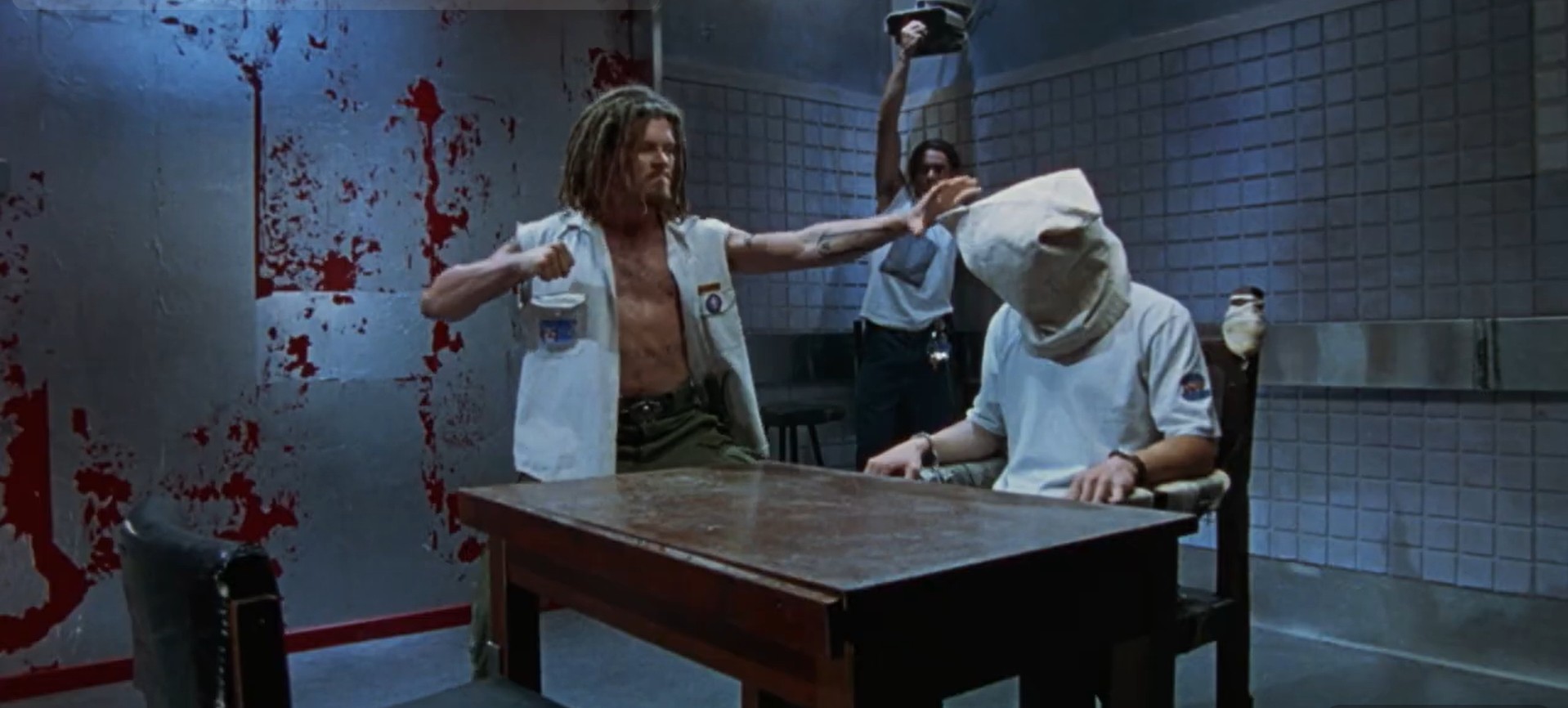
A famed female psychologist is requested to work the possible acquittal case of a serial killer named Simon Cartwright and understand his possible motive for slashing his victim’s throats at seemingly random.  Unscrupulously tormented by a pair of odd orderlies, Simon Cartwright calmly carries himself as a humble, articulate, and friendly conversationalist and confessed killer with a darker side, an ugly side that drives him to kill at will.  Cartwright gives her the anecdotal trappings of his kills that prove to be unprovoked and unsystematic from a side of him he can’t ignore.  Confounded by this, the psychologist pushes him to brink for an exact reason, one Cartwright keeps buried deep inside his subconscious that may or may not be supernaturally driven.  As Cartwright’s past continues to haunt him and with the psychologist assertive herself into his psyche, the dangerous method of analyzing criminal behavior won’t stop a plagued killer from killing again as his next victim might just be sitting across from him in the cross-examination room.  
Themes of split personality, past abuse and trauma, and the limited authority of control course through “The Ugly’s” veins like acid, sweltering with tension and ready to burn a hole through the safety of custody and storytelling once the twisted truth is told.  New Zealand filmmaker Scott Reynolds debuted with his feature length film back in 1997. Reynolds also wrote the script that kept an intimate approach between killer and doctor, kept audiences guessing the supernatural aspect, and made taut the lead-up moments filled with human tenderness that went into subsequent violence that painted a portrait of a conflicted killer afflicted by derangement that might not be his own.  Shot in Auckland, New Zealand, “The Ugly” is a production of Essential Films with funds from the New Zealand Film Commission and is produced by “Jack be Nimble” producer Jonathan Dowling.
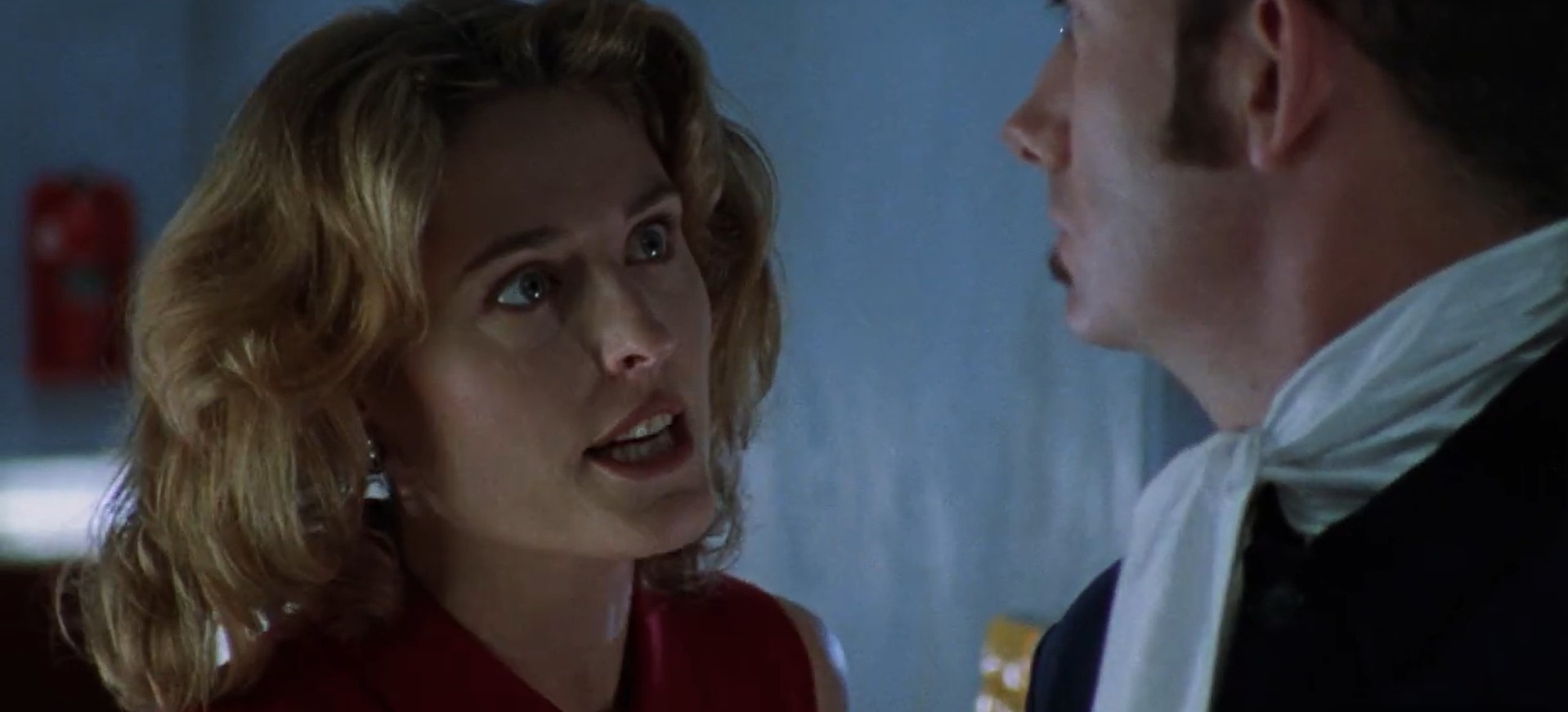
In a vague mirroring of Dr. Hannibal Lector and FBI Clarice Starling from “Silence of the Lambs,” there’s still the intention to understand the mind of a serial killer.  In the Clarice-like role is a civilian, a psychologist to be more precise, one that has received recognition to get the most dangerous criminals released from incarceration, is Dr. Karen Schumaker, played by Rebecca Hobbs (“Lost Souls”) that would be her biggest lead role in the New Zealand film market.  Opposite her, across the table mostly and chained to a chair, is Paolo Rotondo with a cold stare and a handsome face that doesn’t exactly say I’m a serial killer.  When graced with a prosthetic that makes half his face appear melted or scared in fleeting glimmers or reflections, scenes that often felt needed more attention or a longer say, that’s when Rotondo could exact his intimidation upon the viewer as the true monster, as Cartwright has referred to himself in more words.  Instead, Cartwright’s a clean shaven, well-dressed, and respectable Patrick Batman type without the three-piece suit and the Huey Lewis and the News obsession and not as King’s British and as quirky in his demeanor as Anthony Hopkins as Lector.  Both characters fall and fail hard to the supporting case of the two orderlies and their employing resident psychologist.  Sporting dreads and walking with confidence like a WWE wrestling being introduced, Paul Glover (“The Locals”) has more flavor in his mostly stoic intimidating orderly performance alongside his more animated and ragdoll movement buddy in Chris Graham (“Moby Dick”) as the two mistreat the Cartwright with disdain.  Their employer, Dr. Marlowe, has a snooty creepiness about him that’s akin to being a mad scientist-type that’s fits into the goon orderly dynamic with Roy Ward (“Perfect Creature”) at the helm.  Darien Takle and Vanessa Byrnes costar as chief supports. 
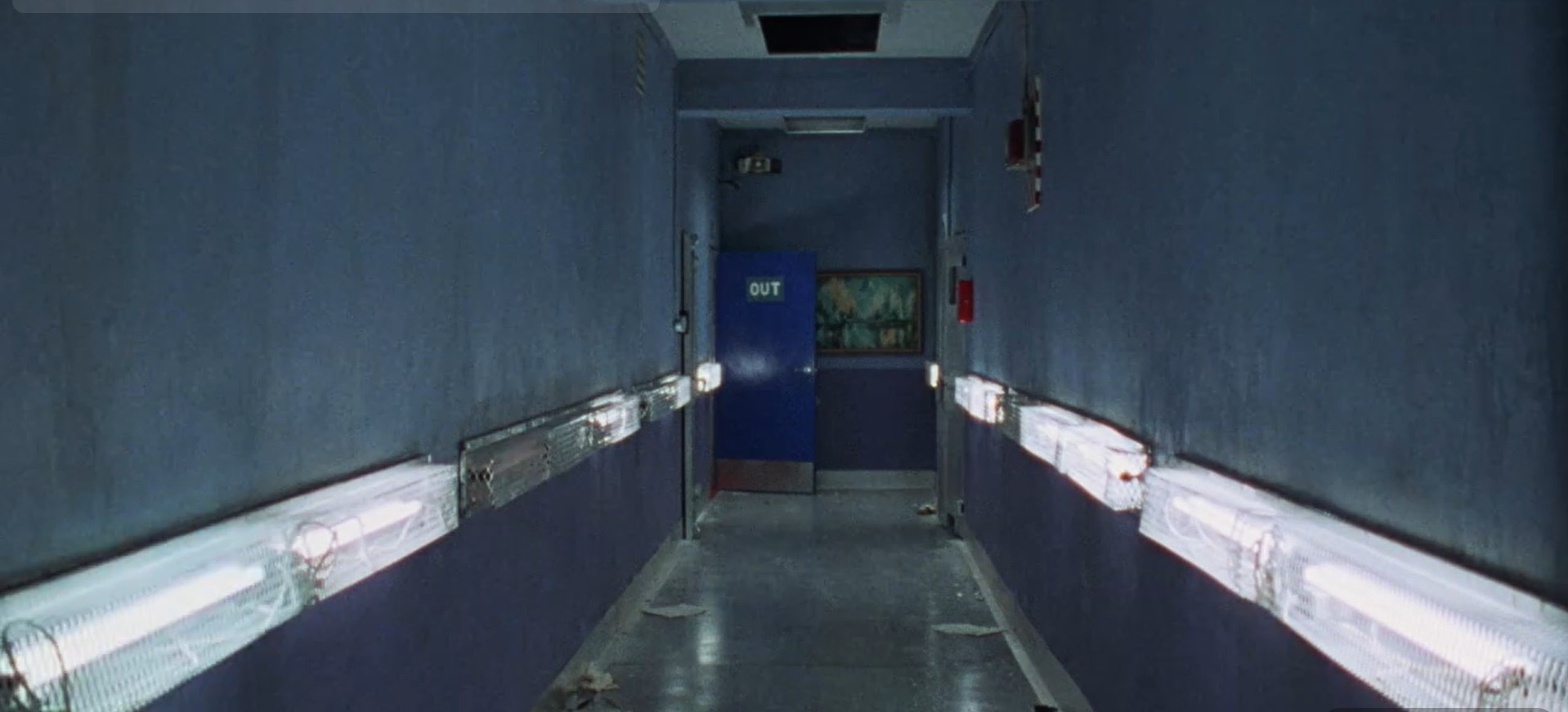
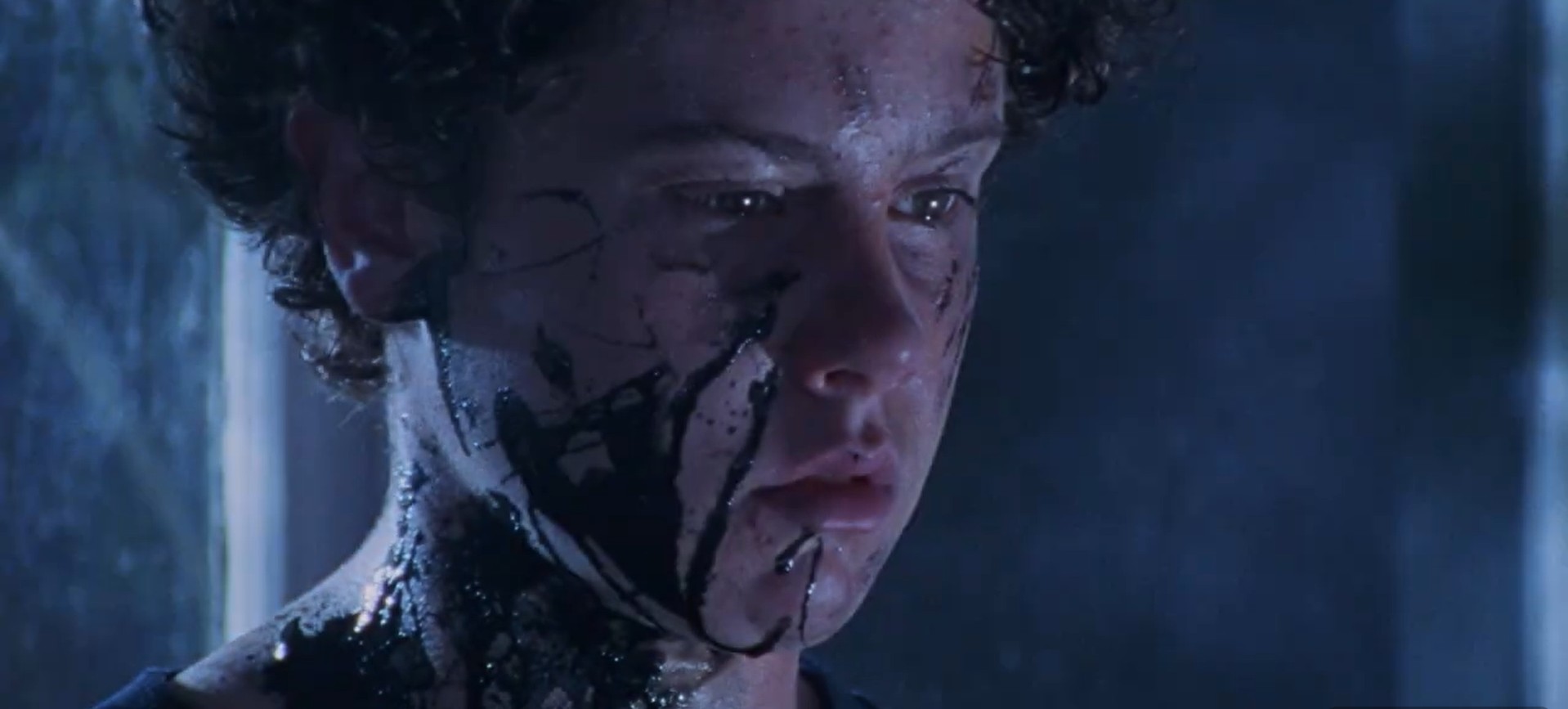
‘The Ugly” is certainly a child of the 1990s with that glossy gleam without it a lens flare spark of digital anamorphic.  The aesthetic matches the subject matter with dreary, cold, and gloomy nu metal nuisances, teetering on the edge of being also grungy.  Editor Wayne Cook’s transitions and cuts are indicative of the era in filmmaking with whooshing transitions and flashes of disorienting cuts, such as white outs or seamless segues.  This techniques also translates into Simon Cartwright’s headspace with acute and fleeting glimpses of his mental state visualized into the real word, or it’s the real world sheathed by a layer from beyond the grave, but either way his perspective quickly provides a glimpse into his reason for killing, his duplicitous degradation into insanity, and that it can be projected to others outside the exclusive rights of his person.  Most of the story is told anecdotally through Cartwright’s perspective and as storyteller, his events are muddled by his own struggle with killing that becomes more evident as the story progresses.  What’s most interesting about Reynold’s film is it’s reality bending to keep the audience engaged as he puts the psychologist character, Dr. Karen Schumaker for those who forgot, right into the frame of his story as a third party speaking directly to Cartwright and only Cartwright can see and hear, but she’s implemented naturally as if sitting at the table with the storied characters or being a part of a three-way conversation that but not truly.  Between these style characteristics and the narrative’s odd macabre, along with the deep black, sour crude oil shaded blood, “The Ugly” is grimly beautiful with visuals and stimulating to watch. 
Unearthed Films, under their Unearthed Classics sublabel, provide a new Collector’s Edition Blu-ray release to the table.  The AVC encoded, 1080p high-definition resolution, BD50 has stored on it a 4K restoration from the film’s original 35mm interpositive and looks neat as a pin presented in it’s 1.77:1 widescreen aspect ratio, rendered with a well-diffused color palette of a lighter blues and grays that contrast starkly with the deeper black blood in a semblance of a dystopian or alternate reality in circa late 90s to early 2000s films.  Saturation is copious with all colors and the details are sharp mostly in the peripheral setting with the focal objects having be defined nicely but there is some textural loss on the skin and clothing under its higher contrast.  The audio formats within are an uncompressed LPCM 2.0 Stereo of the original theatrical audio and a relatively uncommon 4.0 DTS-HD MA that caters to the side and back channels rather than a central output and a LFE subwoofer, so the track is not as deep and resonating and it discerns as such with more range and less punchy impact that encompasses at the dialogue, ambience, Foley, and soundtrack excellently considering.  Dialogue is clean and clear without obstruction or touchups to the original audio files.  English SHD and Subtitles are available for selection.  The collector’s edition contents include an isolated score from composer Victoria Kelly (“Black Sheep,” “The Locals”), a 1997 radio interview from New Zealand with writer-director Scott Reynolds, an audio commentary with chief principal actors Paolo Rotondo and Rebecca Hobbs, Reynolds’ early 90’s short films “A Game With No Rules” and “The M1nute,” “The Ugly Visual Essay” compares “The Ugly” to true crime serial killers of reality, a photo gallery, and the original theatrical trailer.  The physical presence of “The Ugly” is anything but with it’s beautiful packaged design, beginning with the commissioned Slipcover cover art that wholly embodies the essence of the story, rather than being an exploitative mislead, by Scott Jackson of Monsterman Graphic.  The clear Blu-ray Amaray case has a reversible sleeve with the same Jackson art with the reverse containing the film’s original one-sheet artwork.  Inside is a 6-page booklet a pair of essays by Jason Jenkins along with monochrome and colored stills.  The disc is also pressed with a tense hunting scene as well.  The 18th Blu-ray title for the Unearthed Films’ sublabel is region A locked, not rated, and has a runtime of 93 minutes.

Last Rites: As far as understanding the mind of a New Zealand serial killer, Scott Reynold’s “The Ugly” depth charges reality with not only a promising supernatural layer but also a strange world these characters live and act against that invigorates a rather talkative and anecdotal story with eccentric and uncomfortable personalities that rival the killer himself.

“The Ugly” Limited Edition Blu-ray Now Available!

A New Drug, A New Promised Cure, a Result of EVIL Side Effects! “Mirror Life: Modern Zombies” reviewed! (Cleopatra Entertainment / DVD)

“Mirror Life” on DVD from Cleopatra Entertainment!

An experimental drug known as Dumitor has the promise to cure all known ailments but while the animal testing proved encouraging, scientists Donovan and Taylor need to prove their miracle formulation on people.  The formulation creates a mirror reversal of the right-handed nucleotides and the left-handed amino proteins in the biological DNA sequence that could contrary the effects of chronic sickness.  Halfway through the experiment trial, Dumitor appears to be working until one of the participants comes down with hallucinations stemmed by an overload of endorphins resulting in violent behavior.  A failed lockdown and execution of all infected puts the world on the precipice of a pandemic and video journalist Tracy aims to find out what happened to her cousin, one of Dumitor’s trial members, who has mysteriously disappeared.  As Tracy gets closer to the truth, the pandemic spreads, the violence spreads, and the coverup to debunk accusations and prominent names out of the media has turned to desperate aggressive measures by Dumitor’s benefactors.

Based on the actual scientific and controversial theory called Mirror Life and transposed as the basis for the 2025, American horror-thriller, “Mirror Life,” the movie, depicts the cinema sensationalized effects from the synthesized molecular theory put into practice on the human body and mind as the be-all and end all cure for persistent ailments, turning usually mild-mannered and sensible people into crazed and delusion killers being masked under a whitewashing umbrella.  Also known as “Mirror Life:  Modern Zombies,” the film is written and directed by former amateur boxer turned filmmaker Kazy Tauginas in what would be listed as his debut writing credit and directorial.  With that being said, “Mirror Life” is actually a doubled up and mirrored concept of itself in some weird kind of way as a different cut of the Brian Kazmarck written-and-directed “Terminal Legacy” from 2012 that has Tauginas as the story creator.  The plot above is essentially the same with the original shoots being spliced with the integrated documentary investigation from Jordan’s cousin Tracy and her cameraman, interwoven as a non-linear parallel extension to the original concept and re-released with a new title, with the genre hot term zombie thrown into the subtitle for good measure.  “Mirror Life” or “Terminal Legacy” part deux is a production from Crapshoot Productions, New Lease Films, Ugly Puppy Productions and Open Fire Films, produced by Aidan Kane, Louise M. Peduto, Nat Prinzi, Stanislav Puzdriak, Brian Smith, and Kazy Tauginas.

Tauginas also costars in the film as Jordan, a surviving trial participant and Tracy’s missing cousin who finds himself chin deep in Dumitor contagion and a prime target in a containment massacre of his fellow trial mates Lindsay (Tationna Bosier, “Supernaturalz:  Weird, Creepy, & Random), Rosemary (Elise Rovinsky, “Fog Warning”), and Keith (Corey Scott Rutledge) when disturbing signs of infection show.  The small sample group have a decent dynamic with Jordan and Lindsay become hot for each other, Keith donning the bad boy antagonist persona, and Rosemary bringing up the rear as the withdrawn woman as they interact with the three doctors conducting the experiments in a cautious and courteous Dr. Taylor (Cuyle Carvin, “Dolls”), a more confident formulation scientist Donovon (Bristol Pomeroy, “Devil and the Nail”), and a more charge-forth with testing and results in Dr. Campbell (“The House on Tombstone Hill) who have their own contentious dynamic when fast and loose trial and error butts heads with steady-as-she-goes testing.  The original “Terminal Legacy” shot cast has their story spliced with a documentary style investigation by Jordan’s concerned cousin Tracy, played by Courtney Cavanagh who was also in anthological spinoff short of “Terminal Legacy” subtitled “Lost Souls” which doesn’t connect with the Kazmarck feature.  Both “Terminal Legacy” and it’s subsequent, unconnected short tread into being a lesser-known version of the popular sci-fi horror series and movies of “Black Mirror,” hence the word mirror being used to attach “Mirror Life” onto the success of the Charlie Brooker written and produced creation.  The cast fills out with Lawrence Ballard, Sally Greenland, Erica Becker, Mako San, Marc Reign, and Brian O’Neill.

Two shoots from two different times mashed together to form a single narrative structure doesn’t come without any issues, also being a non-linear story that toggles time and characters also doesn’t help.  Yet, “Mirror Life” bulldozes its way to being sound with little overlap puzzlement and only sustaining portions of a la carte plot holes.  Kazmarck’s 2012 script and direction nail a successfully conceive pre-apocalyptic thriller narratively designed like a Steven Soderbergh’s “Contagion” released a year prior snuggly fit into the “Black Mirror” like mold.  Where “Mirror Life” becomes a choppy is with the present tense portion of the shot of video documentary, added in as surplus offshoot to perhaps clean up and close out “Terminal Legacy” with fleshier reel and complexity toward the coverup concept.  By using interchangeable lensed cameras and mock security CCTVs, the spliced in sections create a whole new aesthetic and feels that grasping connection to the original film.  Plus, Tracy’s connection and motivation doesn’t appease her drive to make a documentary or even explain why the compulsive, go-getting cousin is compelled to do the extra leg work for her cousin other than their quickly mentioning their blood relation; there needed to be a deeper conversation of exposition out of Tracy’s emotional vault to get the audience on her side for hounding doctors, sneaking into apartment buildings, and the, essentially, putting herself and her crew in harm’s way for Jordan.  In short, “Terminal Legacy” had the makings of a sufficient sci-fi and apocalypse thrills and chills but without actually seeing the film in its entirety, there’s no way to know if the Kazmarck production went into being development hell, shelved for budget reasons, or had a more incongruous outcome that warranted a redo.

Cleopatra Entertainment distributes “Mirror Life:  modern Zombies” onto DVD home video with a MPEG2 encoded, upscaled 720p, DVD 5.  Presented in a widescreen 1.78:1 aspect ratio, image quality ranges from a third person graded digital capture, a first person raw digital capture, and pseudo-CCTV filter.  For lower DVD storage and the range of perspectives, compression issues are limited to smaller banding issues albeit plenty of darker and negative space opportunities for those milky arch lines to appear.  The grading, however, has a bit of milky residue but not terribly soaked but does keep the black saturation diluted.  Textures around skin and clothing have limited emersion with a smooth or slightly splotchy limitation from the 5-gigabyte compression that has a feature plus bonus content and a soundtrack menu.  For Cleopatra Entertainment, “Mirror Life” is a rights only distributed release, meaning they do not own the music, or rather soundtrack, from the parent company Cleopatra Records.  However, the mix is still an encoded English Dolby Digital 2.0 that has some bite in decibel volume but still can’t quite compare to an uncompressed stereo with “Mirror Life’s” gun-firing, fist-throwing, and the infected guttural sounds; however, the Dolby compression factors into saving space for a decent picture and its accompanying special features.  More importantly, dialogue comes through clearly and prominent.  Bonus features include a director’s DVD commentary, outtakes, deleted scenes, a slideshow, and theatrical trailer.  Cleopatra Entertainment has been constant on packaging with a standard DVD Amaray containing stark and intriguing cover art, especially with “Mirror Life’s” Kerry Russell and Alexandria Deddario-esque Sally Greenland appearing manically and sepia toned with a pair of scissors on the DVD and disc cover.  There are no other physical supplements on the region free DVD that houses an 89-minute, unrated feature.

Last Rites: “Mirror Life” mirrors itself from 2012 with a retouched version of the original film, “Terminal Legacy,” with little-to-no differences and another name slapped on in the director’s section. The horror comes from an effective, scientific relevant story of side effects and coverups but does the Modern Zombies subtitle really, and I mean really, come into play here? It’s a stretch to say the least.

“Mirror Life” on DVD from Cleopatra Entertainment!

EVIL Choo-Choo Choses You! “Infernum” reviewed! (Indican Pictures / Screener)


When Camille’s parents awake to an unknown and encompassing rumbling and what sounds like agonized wailing, they decide to go investigate not too far from their camping tent where their daughter, Camille, still sleeps. When Camille awakes, the rumbling is now deafening and her parents have disappeared into the night, leaving the young child frightened beyond belief. 25 years later and still haunted by the phenomena, art post-graduate Camille conducts recorded interviews with witnesses of the event along with James, a film studies student working on a documentary project. When the rumbling returns in the Nevada desert, Camille and James take a train to record research just outside the affected area and not become too close to the dangers that’s traumatized Camille, but when the train stalls in a tunnel halfway to the destination, Camille and James awake alone with no passengers or conductors in sight and a rumbling noise that isn’t the train’s engine. Camille finds herself once again in the midst of wailing and now something outside the train is trying to get in.

Stick “Infernum” into the sub-horror category of the great and fear-inducing unknown perhaps based loosely off the unexplained low-frequency hums, such as a Taos hum, stretching from the U.S. to the U.K., writer-director Dutch Marich sensationalizes the phenomena by adding the trimmings of tortured souls howling in torment as a rift opens up between Camille’s world and, supposed, Hell. Filmed primarily inside an antique rail train from the Northern Nevada Railway Museum and inside the railway tunnel west of Ely, Nevada, the “Hunting” and “Miserable Sinners” filmmaker, Marich, slow churns a low-budget friendly and simple plot into a materializing worst case scenario with the anxiety-riddle markings of being trapped, surrounded, and alone inside a dark and confined space with a cacophony of screams, as if in a dark-padded psychiatric cell. Mariach’s Luminol Entertainment and Vekinis Studios, headed by former Luminol Entertainment employee, Peter Panagiotis Vekinis, collaborate on the project.

Playing the traumatized Camille is “American Mummy” and “Dude Bro Party Massacre III” b-movie actress, Suziey Block, who has to not only struggle with coping against the hauntingly strange event plaguing her past, but also deal with an overprotective, yet also apathetic boyfriend in a role filled by who could very well be a young Christopher Meloni lookalike, “Happy Camp’s” Michael Barbuto. Block’s become something of a scream queen over the last few years and “Infernum” continues to make the Michigan born actress keep screaming her lungs out; however, its Camille and Hunter’s hot-and-cold relationship that topples the main theme here as Camille, through Block’s insensate performance, feels disinterested in unearthing what happened to her parents while being too engaged in Hunter’s desensitize, if not rightly justified, position toward her glazed over stress, but Block is engrossed by the fear just enough to sell it. Rounding out Infernum’s cast is Clinton Roper Elledge, Sarah Schoofs (“The Theatre of Terror”), and Rita Habermann.

“Infernum” can feel like a simmering slow burn of paranormal byproduct and resonates closely with Milla Jovovich’s extraterrestrial faux found footage thriller, “The 4th Kind.” The lingering scenes with tedious exchanges render a remote sense of terror that’s teamed with more tension from Hunter and Camille’s argumentative discourse. Yet, when things seem to be dwindling as Camille and her filmography friend, James, board the vintage train to the ghost town of Kimberly (and when I say ghost town, I mean an abandoned mining area), that’s when things go from a steadfast numb to a terrifying turn of the inexplicable circumstance kind. Camille finds herself in a familiar situation like 25 years ago, but the environments different with desolate train, an ominous presence over the loudspeaker, and though most passengers have disappeared, there are some who are found, blue as ice in the face, and lifeless. The tension is thick with the engine rumbling of an infernal-sounding machine that reeks havoc with cries and screams to amplify night jitters. The open ending leaves room for a wide berth of possibilities and interpretation, making “Infernum” metaphysically loiter in between the rifts of our minds.

“Infernum” is a spooky train ride to hell and back, pulling into the DVD home video and digital platform station from the independent film distributors, Indican Pictures. Unfortunately, the video and audio quality will not be covered because of the DVD-R screener, but I can say that the LFE audiophiles are immensely characteristic and behooves viewers to play on a surround sound system or quality headphones will also do the trick. The film’s innate hues are on the bleaker, gloomier side, backdropped by the frigid air of a wintery Nevada dessert. Other than Indican Pictures’ trailers for other films, including “The Lurker” among other films, there were no other special features beyond a static menu. I highly recommend “Infernum’s” spooky vibe and unlimited possibilities all aboard it’s simple, yet effective paranormal premise.

Watch “Infernum” on Prime Video!!!