

Living at the edge of the 19th century frontier, husband and wife, Isaac and Lizzy, live in complete seclusion as far as the eye can see until another couple, Gideon and Emma, settle a mile away in a nearby cabin. Unused to the punishing conditions the frontier might yield, the St. Louis bred Gideon and Emma find living without the comforts of urban life challenging and rely on Isaac and Lizzy’s strength and experience for survival. However, the frontier’s harsh reality produces a malevolent presence that flows through the prairie, stalking and toying with the settlers, only revealing itself to Lizzy while the others act if nothing is going on or just acting strange. The sudden and violent death of Emma and her unborn child send Gideon and Isaac on a two-day ride to nearby town, leaving Lizzy to face the isolated terror alone with only a double barrel shotgun that never leaves her side, but in her strife, Lizzy learns more about her newfound neighbors and even unearths some troubling truth about her husband that even further segregates Lizzy from the rest of reality.

If there wasn’t one more single thing to demonize, director Emma Tammi conjures up “The Wind” to mystify the western frontier. As Tammi’s debut directorial, penned by short film screenwriter Teresa Sutherland, the supernatural film’s dubbing could be a rendering of a long lost Stephen King working title, but all corny jokes aside, “The Wind” really could from the inner quailing of Stephen King’s horror show mindset. The film’s produced by Adam Hendricks and Greg Gilreath under their U.S. label, Divide/Conquer, and released in 2018. The same company that delivered the horror anthology sequel “V/H/S: Viral,” Isa Mezzei’s sleeper thriller “CAM,” and the upcoming, second remake of “Black Christmas” with Imogen Poots and Cary Elwes. With a premise dropped right into the fear of the unknown itself and with some powerful production support, “The Wind” should have soared as an unvarnished spook show come hell or high noon, but the jury is hung waiting on the executioners ultimate verdict regarding Tammi’s freshman film.

Five actors make up all the cast of “The Wind,” beginning with the solemn opening night scene with frontier men, Isaac Macklin (Ashley Zukerman of “Fear the Walking Dead”) and Gideon Harper (Dylan McTee of “Midnighters”), waiting patiently outside a cabin door until Isaac’s wife, Lizzy (Caitlin Gerard of “Insidious: The Last Key”) walks out, supposed baby in hand, and covered in blood. The subtle, yet chilling scene sets the movie from the get-go, sparking already a mystery at hand and coveting most of the focused cast. The two characters unannounced at the beginning, swim in and out of flashbacks and toward the progression of Lizzy’s embattlement with “The Wind.” That’s not to say that these characters are any less favorable to the story as “Slender Man’s” Julia Goldani Telles shepherds a vivid description of subtle lust and extreme instability that rocks a strong and self-reliant Lizzy living priorly a stale reality. There’s also the introduction of a wandering and warm pastor that leads to chilling reveal questioning any kind second guesses there might be about Lizzy. All thanks to veteran television actor, Miles Anderson.

“The Wind’s” non-linear narrative teases two courses, one working forward and the other backwards to a catalytic moment that becomes motivational for majority of characters in the prior days and the beginning of the end for one in particular. Though the latter centralizes around Lizzy’s flashbacks and encounters with the evil spectral wind, her descent into madness conjures more violently through the discovery; it’s as if her current state of mind has been stirred, whirled, whipped, tumbled, and agitated from the past that keeps lurking forward into her mind’s eye. Tammi pristinely conveys a subtle message of undertones from the past and present that chip away at Lizzy’s forsaken reality, leaving those around her delicately exposed to her untreated alarms to the nighttime wind of a menacing nature. Teresa Sutherland’s script to story is illuminate tenfold by the wealth in production that recreates the rustic cabins and the callously formed hardships of the western frontier and if you combine that with the talents of cast, “The Wind” will undoubtedly blow you away.

Umbrella Entertainment delivers Emma Tammi’s “The Wind” into the Australian DVD home video market and presented in the original aspect ratio, a widescreen 2.35:1, that develops a hearty American untrodden landscape for the devil to dance in the wind. Cinematographer Lyn Moncrief’s coloring is a bit warm and bland to establish a western movie feel and really had notes of a Robert Eggers (“The Witch”) style in filmmaking with slow churn long shots and a minimalistic mise-en-scene, especially for a similar pseudo-period piece. Eggers invocation solidified itself more so in the Ben Lovett’s crass and cacophony of an instrumental score that adds more to the creepiness factor while remaining relatively framed in the time era. The Umbrella Entertainment’s release goes right into the feature without a static menu so there are no bonus features to dive into. “The Wind” might feel like an unfinished piece of cinematic literature, but remains still a damn fine thriller that seeps ice cold chills into the bones and ponders the effects of loneliness and trauma that’s nearly puts this film into the woman versus nature category, a premise that will be hopefully concluded by a upcoming book adaptation.
Tag Archives: ghosts
EVIL is in the Eye of the Beholder! “Perception” reviewed!

When developer project manager Daniel, on the verge of a lucrative deal in flattening an old rental property , meets Nina, a clairvoyant who rents space on the property, an mystifying, and on the house, psychic reading opens up old wounds of Daniel’s previous life involving the death of his beloved artist wife, Maggie. The successful developer becomes frantically obsessed with reaching Maggie from the other side, believing he is paying Nina handsomely to be a vessel conduit, but as a single mother on the verge of losing everything, Nina exploits Daniel’s fixation on the past that’s more dangerous than initially presumed. Daniel and Nina become sexually and spiritually entangled on two false pretense fronts while behind the scenes, a malevolent presence orchestrates a sinister campaign of perverse revenge.

In her fiction feature film debut, Ilana Rein writes and directs “Perception,” a 2018 suspense thriller aimed unsheathe and reactivate the agonizing secrets and those who reap the benefits from them. Rein, who previously helmed documentaries that includes the award winning Battlestar Galatica fandom documentary, “We Are All Cyclons, pivots from non-fiction into creative invention alongside producer and writing partner Brian Smith. “Perception” tackles various themes from severe mental illness, to dangerous obsession, to how we initially and naively perceive individuals without knowing exactly who they really are, especially when they’re in the white collar, high dollar, social category. Rein focuses on rooting out psychotic and sociopathic qualities through the power of flashbacks while chucking in a scornful spirit into the background for good climatic measure.

“Perception” perceives hard bodies and chiseled faces over a few recognizable ones, which typically isn’t a bad aspect of filmmaking but may not draw a wide viewership. Though in the entertainment industry for some time, Wes Ramsey is one of those fresh faces, headlining as Daniel, the successful developer with an unhealthy mania for his deceased wife. Ramsey has seen more roles in television than in feature films, but the “Brotherhood of Blood” and “Dracula’s Guest” actor pockets horror theatrics here and there and uses his tall, dark, and handsome charm to be a good source for Daniel as the presumptuous, if not stereotypical, good guy. Opposite Ramsey is Meera Rohit Kumbhani, an Indian American actress with beautiful big and round eyes, to star as the clairvoyant Nina. Kumbhani has solid onscreen sincerity and a sexiness to match, but as Ninia’s has a principle crises, Kumbhani is able to sell practically a RickRolls performance that fools us all as uncertainty clouds judgement about her ethics when it’s whether to exploit a desperate widow or pay for her troubled young son’s educational necessities. Together, Ramsey and Kumbhani contently compliment each other’s performances and when you mixed the specter playing Chaitlin Mehner in flashback sequences, an out-of-body love triangle experience ensues. Rounding out the cast is Max Jenkins, J Ro, Vee Kumari, and J. Barrett Cooper as the only face I recognize more recently from Nathan Thomas Millinar’s “A Wish for the Dead.”
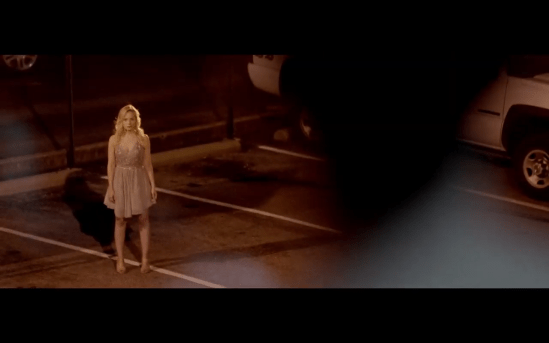
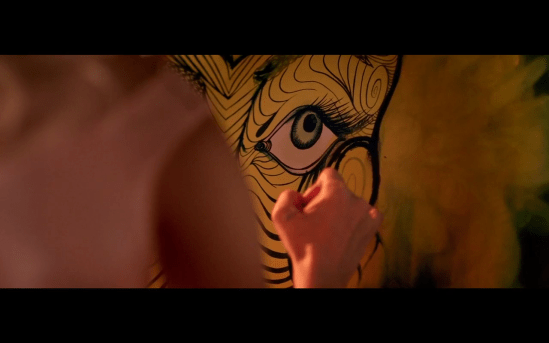
The depth of the story, especially with main characters Daniel and Nina, really hinders judgement on the outputted result. Not enough vivid and harrowing memories of Daniel and Maggie’s rocky relationship stir very little toward a stroppy receipt for disaster. Their coupling went from casual to 120 mph in two scenes flat never laying down a sturdy foundation on why viewers should put stock into their story if there’s no stock to really sell. Same can be said for Nina and her son’s simmering obtuse relationship where Nina believes all is hunky-dory, despite her son’s suddenly mute stature, and her unmotherly attentiveness to his disturbingly illustrated clues to his inner demons. Stronger supporting characters saw through the boy’s facade, such as Nina’s friend J Ro (who plays himself, by the way) and her mother; both of whom are on the polar opposite sides of the clairvoyant spectrum. Those underwhelming characters flaws suck the energy out from the main arteries in Daniel and Nina’s carnal exploits and meddling to thwart the very fiber of “Perception’s” thrilling suspense.
Ilana Rein’s “Perception” comes to DVD home video courtesy of Gravitas Ventures and presented into a widescreen, 16:9 aspect ration. Image quality is obvious clean as with all digitally shot, yet the hues are a slightly warm, favoring more of a yellowish tint into every scene, and while maintaining solid definition, some scenes bask in a softer glow at times. Stylistically, not much to report as the film follows conventional strides. The English language 5.1 surround sound has strong, dialogue favoring, and balanced with depth and range. There is also a dual channel track available, but not really needed, as enough dramatics flare up to tip into the five channel. As bonus features go, there are none. Ilana Rein’s debut into the feature film market could have been worse, but “Perception” is a strong entry into the horror-thriller market with some Hitchcockian undertones. Definitely sexy and psychotic, “Perception” puts onto a pedastal humanity’s worst when the sheep’s clothing has finally shed and that’s worth reviewing.


One Night in an EVIL Sanatorium. What Could Go Wrong? “Haunted Hospital: Heilstätten” review!
Among the outskirts of Berlin lies a vacant and dilapidated Heilstätten hospital once used by the World War II Nazis to conducted “mercy deaths” for tuberculosis patients. Over the years, the hospital has remained dormant in its subsequent closure after the war and infamous labeled cursed and haunted during daytime tours, becoming the sole connection between instances of madness and murder through the decades. When a pair of YouTube pranksters and social media influencer gamble against each other on spending 24 hours inside the hospital for viral stardom to gain more followers, they’ll put the hospital’s paranormal notoriety to the test with the help of Heilstätten tour guide Theo as their access onto the grounds. With all the cameras set up and the stage set for an all-nighter spook show, their viral glory campaign becomes a malevolent presence’s bloodbath welcoming.
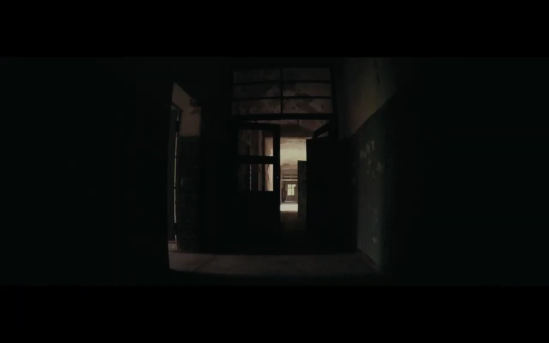
“Heilstätten,” also known as “Haunted Hospital: Heilstätten” under the North American market, is the gruesomely supernatural found footage horror film from “Potato Salad” director Michael David Pate. Pate, who also co-wrote the script with Ecki Ziedrich, helms his own perspective on the sanatorium (English term for Heilstätten) horror that offers more than just a phantom in hospital wings. Deranged and soulless Nazis performed immoral experiments on not just the Jewish people, but also sought to eradicate the sick for their feverish impurities, such as those afflicted with tuberculosis. “Heilstätten” pits history against the present in a egregious tone of respecting the past and diminishing the importance young social media influencers without a peck of smarts or appreciation.
The 2018 film stars “Tape_13’s” Sonja Gerhardt as Marnie, a social media star who records and implores people to face their worst faces, catching up with the group of YouTubers before they dig themselves deeper into their own graves. Gerhardt’s hard sell of her character doesn’t quite shape the sincerity in stopping the carnage before it happens as Marnie is the proverbial monkey wrench in the overnight blood bath. Marnie is drawn to Theo, an ex-lover that hasn’t quite severed her interests in him, played by Tim Oliver Schultz. As the tour guide breaking all the rules, Theo’s compulsion to help wavers on the idea of being just as renowned on the internet as those he’s helping, but there is more to meet the eye with Theo than the surface level material. The more complex characters revolve around the pranksters, Charly and Finn, played by Emilio Sakraya and Timmi Trinks, who become wedged by social media influencer Betty, Nilam Farooq. Charly’s strive for world wide web fandom drives him blind to the circumstances around him, especially when Finn and Betty become romantically involved, and despite Finn’s willingness to be part of the prank, his conscious breaks beyond Charly’s gimmicky barrier where lives actually do matter over stardom when people end up missing or dead at the hands of an ominous force. “Heilstätten” cast rounds out with Farina Flebbe, Maxine Kazis, Lisa Marie-Koroll, and Davis Schulz.
The trick about “Heilstätten’s” allure is the moments that the ghost film isn’t afraid of the blood and flesh bits founded upon a nicely laid foundation with the Nazis’ extermination activities and all the notorious lore surrounding a hospital. The hospital itself, Heilstätten, wasn’t created out of thin air just for the story sake. Pate and Ziedrick used the withering Beelitz Heilstätten as their base, utilizing actual historical facts, such as Adolf Hilter was treated at the hospital during World War I, to even further demonize the setting, but in reality, Beelitz Heilstätten rehabilitated the war wounded rather than mercy death the Tuberculosis-stricken. Yes, the hospital was Nazi occupied, but so did the Russians after the war. “Heilstätten” has rich backstory that basically breeds itself into a horror film. However, one aspect about what discourages “Heilstättens” effectiveness is the use of soundtrack for a found footage horror film. No found footage horror film should ever have a soundtrack that doesn’t add to the realism and renders the film more closely to William Malone’s “House on Haunted Hill” in more than one similarity.
Well Go USA Entertainment admits proudly Michael David Pate’s 20th Century Fox International produced “Heilstätten” onto a dual format, DVD and 1080p Blu-ray, release. The Region 1 and A, not rated film is presented in a widescreen, 16:9 aspect ratio, that’s relatively free of problems. The second act shadows find definition hard to make out under the quick, stark edits, but the “Predator” heat vision is nice touch to liven things up when the darkness is as black as night. The German language DTS-HD Master Audio lives up to the supernatural maelstrom that cause the covers to be pulled up to your eyeballs with range and depth to personify the gloomy corridors and multi-level death snares. The hard-lined English subtitles are well synced and accurate and the release also offers up an English dub track. The DVD comes with an English language Dolby Digital track too. Bonus features a slim with a just a trailer to it’s name. “Heilstätten” is one effectively spooky, atmospherically creepy, and dreadfully engrossing good time with a full-bodied backstory topped with Blut und Eingeweide.

Buy today at Amazon.com!

Bank Robbers Find Evil in “The Vault” review!

Leah and Vee, Two estranged sisters, their knee deep in debt brother, Michael, and a couple of money hungry hired hands take siege of an old bank to score a half a million dollar payday. With hostages bagged and tagged, security cameras disabled, and no outside communication to the police transmitted, the situation and plan seems to be going smoothly, but when the actual pay load is lighter than expected, desperation takes over and panic overwhelms when the prospect of load sharks will seek to take more than just fingers for payment. A more than helpful assistant bank manager is eager and willing to share information about how to obtain the 6 million dollars in an archaic vault beneath the upper levels just as long as nobody gets hurt, but the heist’s meddling into the basement’s vault stirs a malevolent evil force and their fates will be sealed inside an unsafe repository.

The 2007 “The Signal” director, Dan Bush, directs and co-writes 2017’s “The Vault,” a supernatural thriller co-written by “The Reconstruction of William Zero” scriber Conal Byrne. Tense and polished, “The Vault” has the makings of a velvety heist film that holds up formidably strong, setting up a hostage situation after a well-executed pilferage involving zesty characters with dire complexities that drive them to villainy. The opening credits provide glimpses into the duration along with associative theme, much along the same lines as Victor Salva’s “Jeepers Creepers” that scores the Harry Warren and Johnny Mercer’s jazzy “Jeepers Creepers” track from 1938 that inspired fear before the arrival of The Creeper. “The Vault” uses a song 30-years junior to “Jeepers Creepers” with Tommy James and the Shondells’s psychedelic pop track, “Crimson and Clover.”

The sisters could be exemplary examples of fire and ice; Vee’s hotheaded obstinacy and violent tendencies makes her a volatile wildcard whereas Leah’s calm, cool, and calculating measures maintain their heist from derailing into violent panic. Their estrangement boils from a tiff about Leah’s loyalty to her family as Vee burgeoningly bludgeons Leah and her their brother, Michael, that Leah will skate soon after their escape, leaving the family one-third complete yet again, but Leah being involved in this heist, coming to her brother’s aid from her possible story bred locale of South America, or wherever she might have been, has Michael questioning Vee’s steadfast position. “Orange is the New Black’s” Taryn Manning is a natural born roughneck on screen and Vee is no stretch from her Pennsatucky character on the Netflix hit comedy-drama. Manning opposites Clint Eastwood’s piercing round-eyed daughter, Francesca Eastwood, whose a complete badass in her own rite. The two actresses might be short in stature, but Manning and Eastwood effectively symbolize large personalities in “The Vault” to the point where no other character can come close to competing with them, not even James Franco as an assistant bank manager with an all-too-happy to help personality. Franco, who sports a sweet stash and wavy dark hair, provides a steeliness shroud around his character, whose credited as Ed Mass in the credits, but never specially mentioned by name. Mass is a pivotal character to the story and, if analyzed thoroughly, can be unsurprisingly figured out with relative ease, but the who, what, and why are vital questions that go unfortunately unanswered. Scott Haze rounds out the four main roles with Michael, the gentle brother to Vee and Leah whose deep in debt with collectors who have already diced off one of his fingers. Haze, who has worked alongside “127 Hours’” star in a number of films such as “The Institute,” “Future World,” and “In Dubious Battle” to name a few, doesn’t have much interaction with Franco, but is more a satellite in his own regard becoming the protector of his two more than capable sisters. Supporting cast includes Q’orianka Kilcher as lead teller, “Day of the Dead: Bloodline’s” Jeff Gum as bank officer, the late Keith Loneker as a shotgun toting cohort, Michael Milford as the safe cracker, and “Traffic’s” Clifton Collins Jr. as the shady detective Iger.

Initially, Dan Bush played his cards right setting up the pre-heist all the way through the locking down the bank and all bank employees and customers are bound and gagged. Conal Byrne’s characters spill enough backstory to water our mouths, eager to know more about the angst between the two sisters, the lopped off finger of their brother Michael, and how the turmoil between the robbers is spurred and transitioned to resolution with the introduction of the helpful assistant bank manager and his helpful information about more money in a dank, dark basement vault. At this point, the salivation is intense when only tidbits of bank’s frightening phantasms are given that place the ball on the tee, stomach high, ready to knock the living daylights out our hapless and woebegone thieves, but the surefire, can’t miss swing tops the ball that scuttles in and out of bounds. The second and third acts are a completely clunky with abrupt and disjointed storytelling involving a copout exposition on the bank’s wretched backstory that ultimately leaves that important Ed Mass character hanging out in the pointless wind. Near the tail end, the film just didn’t feel complete, bordering dangerously in choppy filmmaking waters without a woolly and unexplored antagonist at the helm and Bush can’t quite pull all the end strings together to tightly knit a harrowing climax, vacating character substance with disingenuous plot twists.

MVDVisual and FilmRise introduce “The Vault” for the first time on a full HD Blu-ray home video. The widescreen, 2.39:1 aspect ratio, presentation is a great digital asset that favors a night and day conception. Ground level on the bank is pure daylight or exact lighting that vibrant and clear, not a lot of noise, and no observation of aliasing. In the basement, the abyss like somber darkness doesn’t fade away any details, but in all fairness, the haunting figures in the dark are nearly saturated with creeping ill-lit blackness. The English Dolby Digital 5.1 and stereo 2.0 audio tracks evenly set the dialogue and ambient tracks with diverse depth, but with the 5.1 surround sound and basement dwelling apparitions that indirectly cause explosions, the range didn’t embark through the varying to and fro levels appropriately and, thus, impresses a lackluster lasting impact. FilmRise has been quite a bust for bonus content lately and “The Vault” is no different with only the theatrical trailer attached. “The Vault” has sturdy initial framework of agitated vehement characters and a clouded venomous basement, teasing the prospect of two powerful rams running to tangle horns, but, without warning, the narrative unfairly falls to pieces as if one of the male sheep decided to swerve last minute before the game of chicken came to a crash and morbid curiosity becomes sorely deprived of cinematic lethal misgivings.

Buy “The Vault” on Amazon.com

An Evil Stare Conjures a Peeping Tom! “Butterfly Kisses” review!
Struggling filmmaker Gavin York discovers a stowed away box full of film cassettes in his in-law’s basement. As York delves into the tapes, he becomes obsessed with the tapes’ contents involving two film students documenting the evoking of localized folklore phantom, known as Peeping Tom, as their thesis. Capturing Peeping Tom on their camera acting as a human lens, the two students can’t escape the malevolent presence that gets closer and closer to their reality with every shutting off the camera. York, himself, is also being documented by a group of filmmakers, attempting to capture the far-fetched story of Gavin’s unravelling of the historic legend as well as to turn a profit in revealing that Peeping Tom does, in fact, exist. The two tales of filmmakers ride a distressing parallel that spirals them into ghastly obsession and forces them to never, ever blink again!

“Butterfly Kisses” is the 2018 supernatural faux-documentary from writer-director Erik Kristopher Myers. The “Roulette” filmmaker finds inspiration in Ellicott City, Maryland’s, very own, staring contest champion in Peeping Tom; a 16th century labeled example of a Flickergeist, a shadowy image just on the edge of the peripheral vision, and Peeping Tom also goes by the monikers Blink Man or The Tunnel Man. “Butterfly Kisses” title comes as when Peeping Tom gets closer with every blink of an eyelid, his victim will need to painfully keep their peepers open for as long as they can, but when Peeping Tom is so close, close proximity to the face, flutter’s his eyelashes against her eyes forcing one to blink and succumb to his deadly motives. With Myers’ film, a little bit of this reviewer wanted to see Peeping Tom actually deliver the act of butterfly kisses upon a victim before mangling the poor soul into oblivion.

While both documentaries involve shedding light onto the exposure of a Flickergeist, the narrative harshly shines more of the starlight onto the characters making these films. Gavin York is essentially dissected while he being self-absorbed in himself and his dollar signs he thinks his project is worth to the word. Seth Adam Kallick does Gavin well though perhaps slightly overselling the performance; however, there never was a deeper rabbit hole for York to escape from, leaving not a lot of range for Kallick and his character to arc. York studies and analyzes the original thesis film spearheaded by Sophia Crane, played by Rachel Armiger, and her cameraman Feldman, played by Reed DeLisle. The dynamics are fine between Armiger and DeLisle whom poke the bees nest of folklore legends, but moments to reflect their humanity, why should we care about these two characters as people from abandoned or forgotten footage, didn’t quite translate. Rounding out the cast Erik Kristopher Myers, Matt Lake (Author of the “Weird” state book series), and Eileen del Valle.

The documentary inside a documentary is like looking into a mirror that’s facing another mirror, ping-ponging back and forth between parallel stories that are only set a part bestowed year their recorded while peppering Peeping Tom true to form, as a flicker of a shadowy figure. Myers does his due diligence in editing these two films together, meshing appropriately the intertwining, sometimes combating, docs to find common ground in a linear story. Sometimes the realism just didn’t hit the mark and creating that casual dialect or the valueless moments didn’t blossom, staying focus more on the task at hand. Also, this narrative has been told and rehashed before in some way, shape, or form, whether hunting the legend of Bigfoot or summoning the Slender Man, finding separation between Myer’s film and those other project proves difficult. What’s enjoyable about “Butterfly Kisses” are the welcoming jump scares and while only a couple of jump scares make the cut, the two are well-timed, well-scored, and well-placed to send a shockwave through out the nervous system. Even I jumped on these scenes.

Four-Fingered Films presents Erik Kristopher Myers’ “Butterfly Kisses,” a supernatural documentary that explores a national, Great Depression-born, folklore bred in Maryland and depicts a contagious obsession of stubbornness and worth. Unfortunately, an online screener was provided for this critique so the audio and video aspects will not be reviewed. There were also no bonus material with this screener. “Butterfly Kisses” is a quasi-found footage spook show surrounding another of America’s frightful urban myths, granting Peeping Tom more staying power just inside the corner of our peripheral vision, but the film doesn’t quite highlight and tour the reason or the rhyme to Flickergeist’s true power. Myers chose to detail the downward spiral of those consumed by the sight of his very questionable existence in more than one profitable fashion and that can be more frightening than the realism of a ghoul.
 It's Bloggin Evil!