

Los Angeles’ skid row is the desolated and forgotten residence to countless displaced people living in tents or sleeping bags on the cold streets, fighting ever which way they can to live just one more day. When three University of Southern California students take a wrong turn onto the streets of skid row, a dangerous world opens to them where being young and privileged doesn’t warrant an easy pass through LA’s notorious “The Nickel.” A homeless gang, ramrodded by a vicious vagrant named Wilco, catches them trespassing under the unused sixth street bridge and detains them until the situation turns deadly wrong. When one of the students, Marshall, escapes naked and on foot, a chase ensues through the empty concrete jungle, and as he attempts to retrieve help, he encounters wretched night owls who are just as dangerous, or if not more so, than Wilco and his gang.

The very first impression from the films of “Parasites’” director Chad Ferrin came in the form of Ferrin’s 2003 underground cannibal dweller film “The Ghouls” and, retrieving past critiques or comments from past yonder, I wasn’t too thrilled with his indie sophomore feature. However, after sitting through “Parasites” and being a fan of the 2009 pleasantly berserk “Someone’s Knocking at the Door,” a second viewing might be warranted. The 2016 film, shot on location, defines Ferrin’s immense penchant for independent filmmaking that basically tells a story of one man’s perilous and herring marathon journey through the meat grinder of Los Angeles while also reminding and resonating viewers that the homeless are just an unfortunate alternate version of ourselves.

“Parasites” will suck every once of hope and happiness one might have for humanity to the point of believing in misanthropic perspectives. Purely oozing with cynicism in a nightmare scenario, the story couldn’t have reached such depths without a few key performances such by Robert Miano (“Giallo”), a bold and enduring role for Sean Samuels, and an always pleasant cameo by “Day of the Dead’s” most villainous captain, Joseph Pilato. Though, some exaggerated moments of peculiar over performances and prolonged montage scenes of Sean Samuels running through the barren Skid Row maze run their course with seizing captivation, but Miano steals many scenes with his spiteful portrayal of an overprotective, mad dog violent bum being the venomous snakehead of a 1980’s style street gang whose keen on hunting down and burying a college quarterback.

What I also found interesting about the Ferrin’s scripted-narrative is the severe lack of tension with race and gender relations between the eclectic group of characters. Much of the action and dialogue flows freely without much opposition as if the racial slang or the running down of a young black man is normalcy. Gang leader Wilco only cares about one thing, his dilapidated corner of L.A., and berates everyone in a fit of racism peppered with nihilism. Ferrin purposefully implemented a Hispanic and an Asian in Wilco’s crew to run rampant with obscenities from their leader, along with a hefty woman to whom Wilco objectifies constantly with chauvinistic nicknames such as “Sugartits” and “Sweet Cheeks,” and an athletic black character being the subject of a bizarro-world reversal characteristic witch-hunt that relates awfully too familiar with recent race crimes. The social commentary leaves an everlasting trail of uncomfortable goosebumps, working their way toward the heart’s core of human morality and packing a powerful punch when not nearly one single character has any redeeming value.

Crappy World Films in association with Girls and Corpses Magazine produces “Parasites,” an exhibition a do-or-die survival horror framed to point out the loathsome portions of past, and most certainly, current events. Ferrin’s low-budget film goes the extra mile with the brief, yet effective, violent special effects. I’m unable to critique on the audio and video quality of the 108 Media distribution release, nor the bonus features, as a screener copy was provided. “Parasites'” raw approach through characters, story, and cinematography, breathes life into a desolate place like “The Nickel” and gives power to the powerless, remarking upon the monsters we create by ignoring their existence and shunning their potential worth. The fear from this film is all too real.
Tag Archives: giallo
Evil Surpasses Decades and Has Never Looked So Good! “Francesca” review!
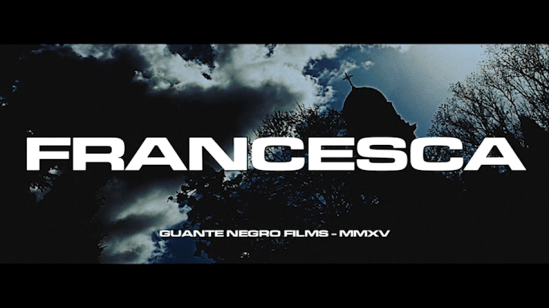
Fifteen years after the kidnapping and disappearance of Francesca, the young daughter of renowned poet and stage performer Vittorio Visconti and his wife Nina, a string of brutal murders by a relentless psychopath links itself to the case of missing Francesca and sparks community outrage with the deaths that are connected with Dante Alighieri’s The Divine Comedy. Detectives Moretti and Succo eagerly take on the case, that’s heavy with burden, to quickly apprehend the murderer but to also solve a more than decade old missing child case. As the bodies pile up and Moretti and Succo attempt to get closer to a resolution in the midst of grave public panic, a web of past dark secrets depict a convoluted picture surrounding the private Visconti family that may or may not be directly involved in what really came of poor young Francesca.

The sweet, bloody sweet giallo genre is not dead! The crime mystery thriller with shockingly grisly murders is alive and well and embodied in the soul of Luciano Onetti’s 2015 sophomore directorial that’s co-written with his brother, Nicolas Onetti. The Onetti brothers’ “Francesca” release gets a treatment deserving of kings with a gloriously and beautifully illustrated cover and inner lining that contains powerfully-packed 3-disc Blu-ray and DVD combo set distributed by the artistic gorehounds Unearthed Films and the multifaceted MVDVisual. Complete with an inscrutable and deranged killer that’s greatly diabolical in their own insane world built upon the Buenos Aires born director’s passion for Italian horror, every giallo loving attribute has been meticulously applied to “Francesca” from the shrouded killer to the use of characterizing the antagonist with simply their leather bound, throat-gripping hands high above the clicking of offbeat high heals not casted far from a creepy doll used to motif the killer’s ominous presence. Blood red violence streaks of eye disfigurements, or any facial disfigurement, throughout a script that’s much attuned to the structure and content, reigniting a flame of hope in a declining genre to which the 33-year-old Onetti appears to hold very dear to his heart.

In addition to the inner mechanisms and the ivory gears that constitutes a giallo film, Luciano Onetti takes his feature that one step further by reducing hues and adding an Italian post-production dub track, overlaying the assumptive Argentinean dialogue, to zip back to the past for a time hop location that’s purposefully set in 1970’s Rome. With props true to the time period, “Francesca” has undoubtedly a budget that delivers the malevolent charm of a Dario Argento slasher with a slightly modern taste for the Michele Soavi ghastliness, working seamlessly together to compile an apt tribute of surging giallo birthed right out of South America. “Francesca” is a stunning visual, a clear marker of filmmaking inspiration inspired by classic filmmaking that’s specific in it’s venture from familiar Italian editing techniques to capturing or creating the menace in even the most mundane of filler scenes.
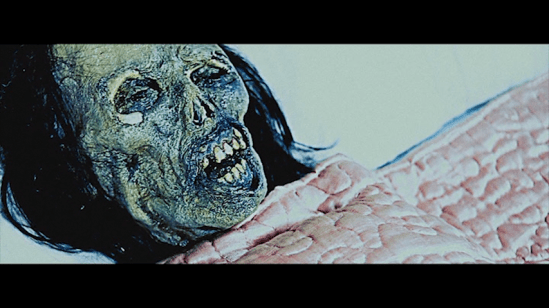
“Francesca” is certainly a film that glorifies the anti-hero with a killer wreaking havoc amongst the public’s most disparaging people who got off the hook easily. When considering the depth chart, this vigilante psychopath exploits Dante’s work as a means of justification where one’s person journey to the gates of heaven must first travel through the gates of hell, providing a similar Charon’s obol of sorts where a metaphorical coin is viewed as a bribe for the gatekeeper or ferryman of souls. Even if considered an anti-hero, the murderer still manages to appeal as the villain because so much of the story’s focus is on Moretti (Luis Emilio Rodriguez) and Succo (Gustavo Dalessanro) and both Rodriguez and Dalessanro make their first on-screen film debut, suitably connecting with “Francesca’s” elderly ambiance.

The Not Rated Unearthed Films and MVDVisual 3-Disc Blu-ray and DVD combo is 77 minutes of pure fanboy gold, presented in a widescreen 2.35:1 in a vary of purposefully pruned coloring and intended faux film stock imperfections to recreate a 1970’s Italian giallo. The Italian dialogue track doesn’t quite synch and, again, that’s deliberate to fabricate a past ideal. My only gripe with this release is with the English subtitles as there were a few issues, including some key mistakes in spelling and with the pace of the subtitle that were way too quick. That shouldn’t sway anyone from this awe-striking and gorgeous limited edition release that comes complimentary with a booklet of an in-depth review from Ultra Violent Magazine’s Art Ettinger. The third disc rounds out the release as the film’s soundtrack, scored by Luciano Onetti and his progressive rock that’s a slight modernization of the synch-prog rock of this particular genre’s decade. “Francesca” comes straight out of a forgotten 40-year time capsule, looking to violate the eyes, minds, and ears of a younger generation and stimulating the nearly flatlined Italian giallo genre.
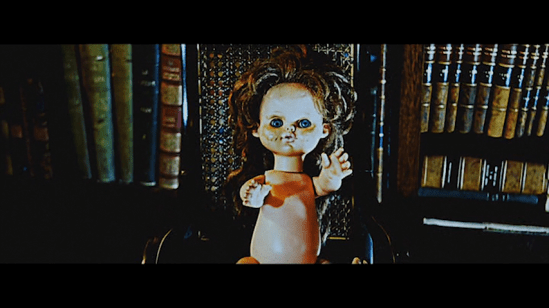

Hurry! “Francesca” is a Limited Edition release! Won’t be around forever!

Strapped for Evil Movie Cash? Daily Movie: “Deep Red” (1975)
Watch for free Dario Argento’s “Deep Red” from the public domain!
Evil Gets Wild! “Cub” review!

A troop of cub scouts set out on a camping trip in the deep forests near an abandoned bus factory. At the helm are three scout masters overseeing a handful of lively young cub scouts. One of children, Sam, has been through a troubled and violent past and has been labeled the outcast amongst the rest of the troop. Sam encounters a feral young boy, who has been trained by a murderous psychopath whom has made the woods his deadly home. As nobody believes Sam’s run-in with the wild boy whose been stealing around camp, the troop hastily concludes that Sam is lying and stealing, resulting in the trop disliking him even more all the while setting up their fate for something far much worse: a killer camping trip.

Booby traps. Children vs. Children. Outside nude showering. An ingenious killer. Fun and newfangled horror has made it’s grand return since “The Collector!” Freshman director Jonas Govaerts, with a boat load of crowd funded money, has brought a keen eye to the campy, wooded survival genre with his independent film “Cub” aka “Welp” in the films original French/Flemish language. Going through the motions of setting up character development and moving the characters seamlessly into a ominous situation is what seems to come natural to director Govaerts. Unnaturally, Govaerts doesn’t explore the psychotic background of such an interesting, yet mysterious killer, leaving everything about the antagonist’s intentions to the imagination. This villain, only known as the “psychopathic mentor” on the Artsploitation Films Blu-ray back cover, maintains a dated, yet marathon technique killing spree operation underground in the dark woods, setting up crafty and deadly traps for those who embark on his land. There’s a little tidbit of setup on the killer from an officer explaining to the scout masters that the vacant nearby factory has made some previous employees disgruntled, making the land a cursed hotspot.

“Cub’s” success mainly stems from it’s actors. Gill Eeckelaert, who has only “Cub” credited under his name, phenomenally creates a superbly feral and masked boy, surviving on the land and in the trees. With a scrawny physique and zero dialogue, Eeckelaert has formed a eerily scary character, more so than the actual menacing mentor. In all honesty, the feral boy should have been the main antagonist pitted against the troop. This character’s counterpart, Sam, played by Maurice Luijten is the epitome of good, yet something is off with the character as told with seldom sharing of the information about his past, his foster parents, his damaged photograph, and the list goes on. While a clear picture of Sam never fully emerges until the finale, the good that bubbles up from his character couldn’t be any more prominent as he’s contrast next to the constant bully shadow of a scout master named Baloo and his mindless troop of followers, looking to be cool in the Baloo’s perverted and unorthodox eyes. With only a handful of ally accompaniments on this trip, those who wish Sam harm outweigh those who want to protect him.

With the “Lord of the Flies” similar attitude and with more than half your cast under the puberty requirement age, Govaerts ruthlessly places every single person in danger and places every single character on the chopping block. There’s no sugar-coated dancing around the innocent minors, making them actually part of the organic story instead of pussyfooting around them as if they’re made of fragile, non-tempered glass. However, I do feel the opportunity was completely wasted or missed to take out each individual character one-by-one with a signature death scene, but I don’t believe the effect of certain character or characters being dispatched watered down the “oh my god” value.

The Artsploitation Blu-ray has a beautiful 2.35:1 ratio, widescreen presentation with only very little aliasing detected and the night scenes just as clear as the day scenes. The 5.1 Dolby Digital mix flawlessly contributes to the overall impact of the story, creating a great balance between LFE and HFE, dialogue, soundtrack, and ambient tracks while providing accurate and well-timed English subtitles. The superb giallo-esque score by Steve Moore, who goes under the pseudo name of Gianni Rossi and worked on “Gutterballs”, delivers an intense, on the edge of your seat synth rendition of danger and chase. “Cub” director Jonas Govaerts and his crew earns their merit badges for constructing a bloody and innovative film. Another winning release for Artsploitation Films and another recommendation from this reviewer.
Evil Rises to Kill Teenagers! “Jonah Lives” review!

A group of bored teenagers decides to up their spirits by dusting off a $25 Ouija board and taking it for a supernatural spin to reach those beyond the grave. When deep in chant, a contact is made with the spirit of a murdered man named Jonah. The arrogant teens conjuring seeks to try and resurrect Jonah for relentless vengeance on his killer – his wife. The teens’ arrogance gets the best of them and Jonah does rise from the grave, but his thirst for murder homes in on the teens’ lives and Jonah traps them inside a basement with no way out and no way of calling for dire help.

“Jonah Lives” construction tends to be a respectful gothic budget horror film of meshed sub genres. Deep within the bone structures of the Luis Carvalho directed film lies a grab bag that includes zombies, possession, torment, and vengeance, but with a conglomerate of styles wrapped into one film, the difficult struggle of pinning down the motivation of our killer Jonah seems lost in translation. Certainly a force to be reckoned with who absolutely looks the part as a deteriorating dead guy, Jonah awakes from his angst-slumber to seek vengeance, but why take it out on the teenagers who resurrected him? That’s the million dollar question. Did the Ouija board inject evilness into Jonah to put him on such a murderous rage? What’s also odd is the character Zora, Jonah’s murderous ex-wife, is part of the cast but not necessarily included in harms way in the basement and isn’t a primary target for Jonah. Instead, Zora party-hardies upstairs with the rest of the intoxicated grownups.

B-horror vet Brinke Stevens headlines “Jonah Lives” as Zora. Stevens’ role is fairly minor when compared to the other cast members who names probably make the D-list film status and are not as recognizable as Brinke Stevens. However, there are some strong performances from the relatively unknown cast giving the film more girth than the story itself. Lead actor Ryan Boudreau’s acting style is very relaxed and smooth as a known-it-all jock with a guilt-ridden conscious that brings the character a full 180 degrees. I wanted to note Nicole LaSala’s character Lydia, who either has a breakdown after the brutal and gruesome death of her boyfriend at the hands of Jonah or she just shares some sort of Ouija board connection with Jonah that drivers her absolutely mad. The tell all about Lydia comes to no unfold. LaSala’s embodies the soul of the Joker from Batman for Lydia who constantly laughs and being mean spirited toward the remaining survivors. I didn’t necessarily feel the spiritual connection between Lydia and Jonah and lean toward nixing that theory.

The special effects are very minor, but appreciatively practical. The minute effects shouldn’t be unexpected due to budgetary constraints. Carvalho and his special effects team along with some simple editing tricks goes a long way. Not as bloody as hoped, but Jonah does commit to a classic zombie bite to the neck and takes a chunk out, stretching the skin and spewing blood out of the wound, chops an arm off Jean Rollin’s “Grapes of Death” style and bashes the victim with it, and caves in a few teen skulls. While there are moments of editing brilliance, there were many scenes that over edited and, basically, replayed the same scene from a different angle and this reoccured multiple times. Also, massive editing effect is like having an epileptic episode that numbs the brain.

“Jonah Lives” hit retail outlets this past April and this 2012 zombie revenge film is looking to rise above the rest of the new releases. I’m thinking it’ll stay grounded because it’s resembles much of the same we’ve all seen before. I’d found myself entranced more with the score by Russell Estrela as it blends tonal styles of Italian Giallo with the 80’s slasher such as the repetition of Harry Mandfredini to the synth’s of John Carpenter. Check it out yourself from Wild Eye Releasing.
 It's Bloggin Evil!