A Homosexual Hooks Up with a Porn Star and Treats Her EVILLY Sleazy. “The Last Foxtrot in Burbank” reviewed! (Full Moon Features / Blu-ray)

“The Last Foxtrot in Burbank” Finally Recognized by Charles Band and Full Moon Features!

In the fictious setting of Burbank, France, a distraught and wandering Paul grieves over the loss of his gay, drag queen lover.  Wallowing in despair as well as barely entertaining his lover’s mother, Paul is on a half-hearted hunt for a new apartment and runs into Jeannine when the two meet looking at the same rental.  A mostly sexualized relationship ensues at the apartment with Paul treating the beautiful French woman and aspiring adult star like a piece of meat in a homosexual way, stemmed by his inadequacies in bed.  Jeanne, becoming fed up with Paul’s obsessive and polarizing behavior during their romantic tryst, lashes out in various ways, one as a gun-toting adult starlet that makes shooting scenes with her all that more dangerous to one’s health.  Paul’s health too becomes a target as Jeanne’s ultimate distaste for his floundering and obsessive ways, especially in condemning her pornographic lifestyle.
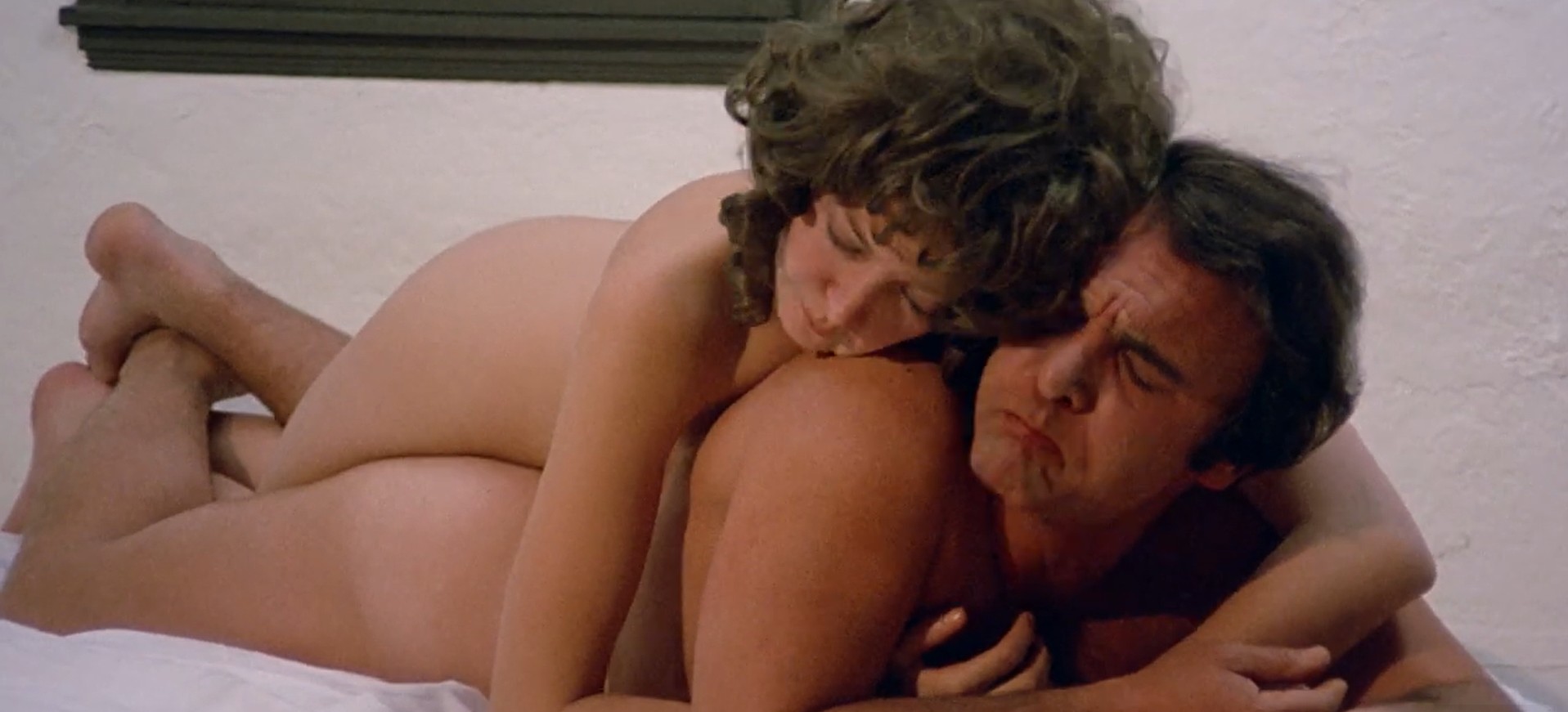
“The Last Foxtrot in Burback” is a film Charles Band (“Puppet Master”) desperately tried to erase and forget along with then newcomer editor, “Halloween’s” John Carpenter, as both filmmakers disassociated and disavowed its existed because of a couple reasons:  1) the romantic satirical spoof was not a horror/sci-fiction film both of them wanted to make at the time and 2) audiences were not appreciating it’s parodical and fleshy colored luster.  The film it removes inspirational humorous bones from is Marlon Brando’s “The Last Tango in Paris,” helmed by Bernardo Bertolucci who is dug a path of steamy sexual dramas, including “Stealing Beauty” and “The Dreamers.”  “The Last Foxtrot in Burbank” aimed to capitalize on its 1972 pushing-the-boundaries of sexualization success with writers Bill Haggard and Sam Vaughn behind the screenplay pages.  Band produced the film with filming held in Los Angeles and Marc Perilli serving as executive producer under the Federal Film Incorporation.
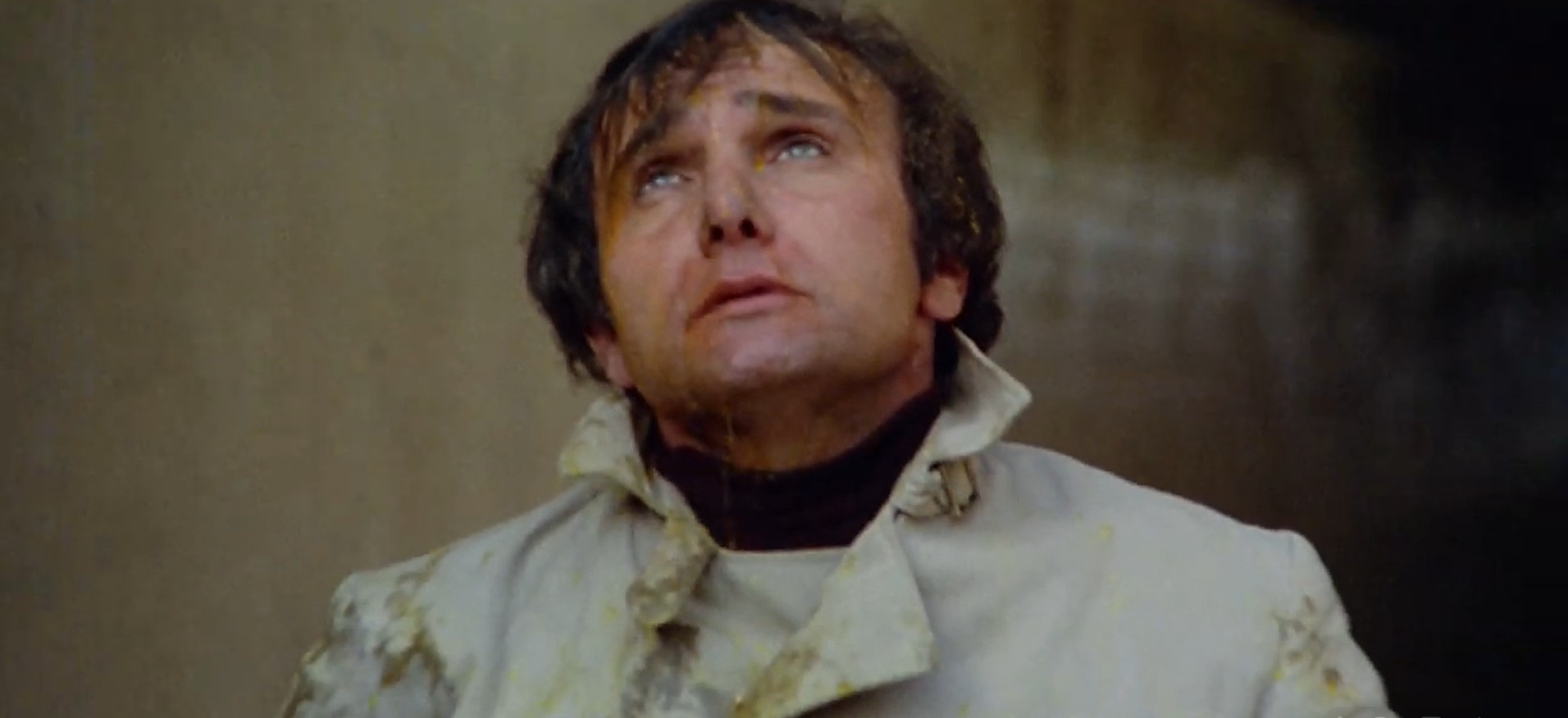
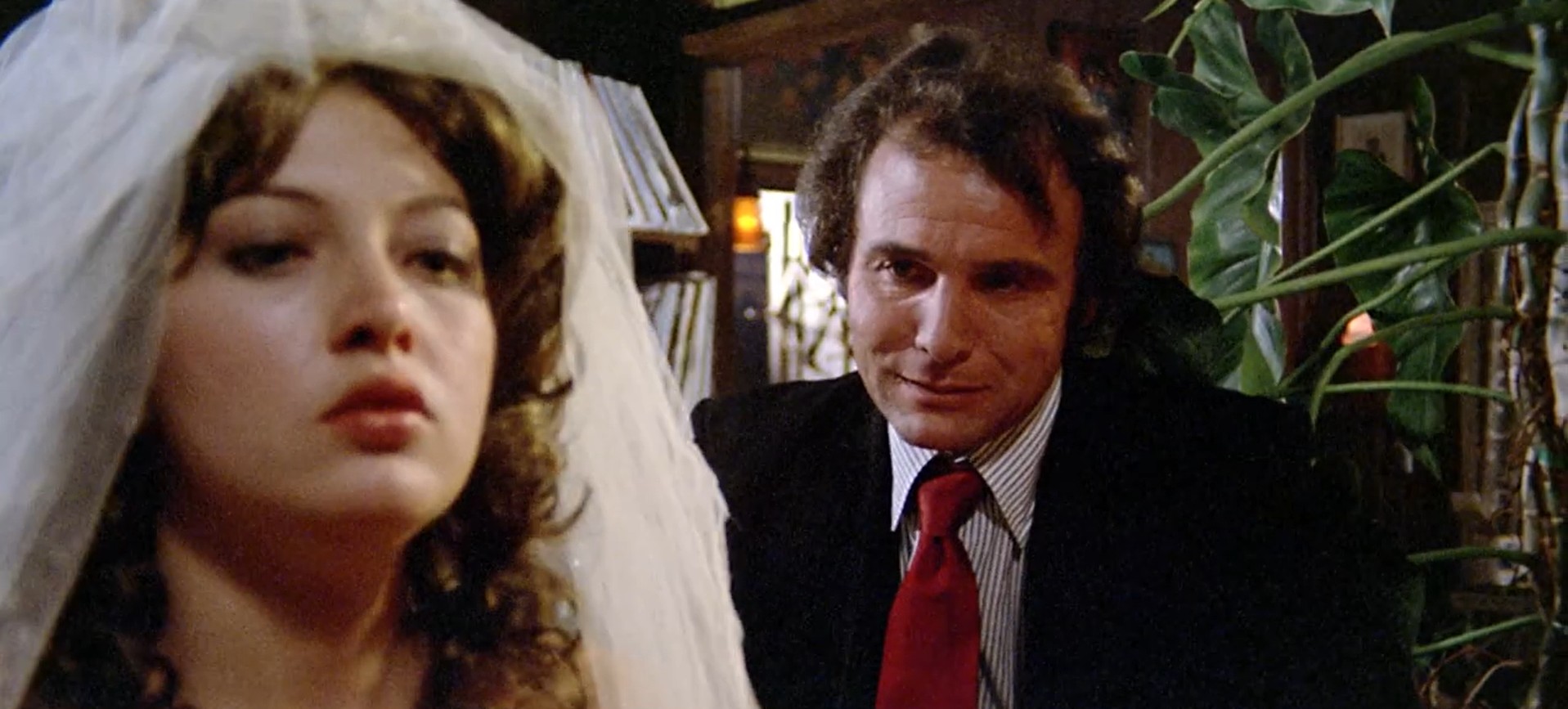
In his best Marlon Brando impersonation, Michael Pataki (“Halloween 4:  The Return of Michael Myers,” “The Baby”) opens his pastiche performance with hyperbole and flamboyance to emulate his version Paul to Brando’s version of Paul while still dishing the Brando-isms and deliveries.  Pataki also opens his trench coat to open-faced frontal nudity.  Yet, the one who is mostly nude is Sherry Denton in the role of Frenchwoman Jeanne.  Her role does harness the same essence of “The Last Tango in Pari’s” Maria Schneider, making Denton’s Jenne harder to define as she absorbs Paul’s verbal and emotional abuse, as she contemplates their arranged sexual rendezvous against her emotional withstand all, and how she manages a life in the adult industry as a sex object that runs parallel with being too a sex object outside the profession.  Pataki and Denton’s scenes together resemble that of a mother humoring a spoiled child.  Denton’s rather levelheaded compared to a full-blown exaggeration of Marton Brando in Michael Pataki with acute yelling spats and irrational sex requests that bleed into pleading and disappointment on a childish person of imprudence.  The gut punch of obsession, desire, and more refined melodrama is lost within Band’s spoof in a combination of bad writing and missed opportunities to sell the performances.  While this version of “The Last Foxtrot in Burbank” is not the pornographic scene splice in version, the actors still must be comfortable with each other in the story’s requirement of genitalia proximity and exposure as some scenes can be often graphic in its simulation of sex as well as be humiliating.  The cast rounds out with Merlouch Drabin, Sally Marr (“Young Lust”), Simmy Bow, and I. William Quinn (“Alligator”).
Supposedly, “The Last Foxtrot in Burbank” is a shot-for-shot spoof but Charles Band’s picture has jagged edges around a nonconformist narrative whereas “The Last Tango in Paris” abides by more linear storytelling.  The gags are not particular funny unless you’ve seen the Brando film and have a puerile sense of humor, but even then, the gags are terribly heavy fisted in a strive to really make light of sexual casualness and obsession in a conduit of Brando’s mumble and gravelly discord with the occasional outburst of hyperbolic flair.  For those who haven’t seen the Brando film, “The Last Foxtrot in Burbank” will be totally lost without a reference, especially the France set story shows it’s budget with the English-laden business and directional signs that play into the running gag of the fictious city that combines Burbank, California and Paris, France.   One could see why Charles Band and John Carpenter wanted to disassociate and distance themselves from this film but for both filmmakers, it’s a significant first film that kind of redirected their career paths when they knew comedy, such as this one, wasn’t their forte.  Charles Band even went as far as destroying all copies of the film and changing his name to a pseudonym, Carlo Bokino, to erase all involvement but he unsuccessful and a print was discovered unphased by his attempts to eradicate all known evidence.  Today, Band accepts his first film and even catalogue’s it with a No. 0 on the spine that makes it official Charlie canon. 
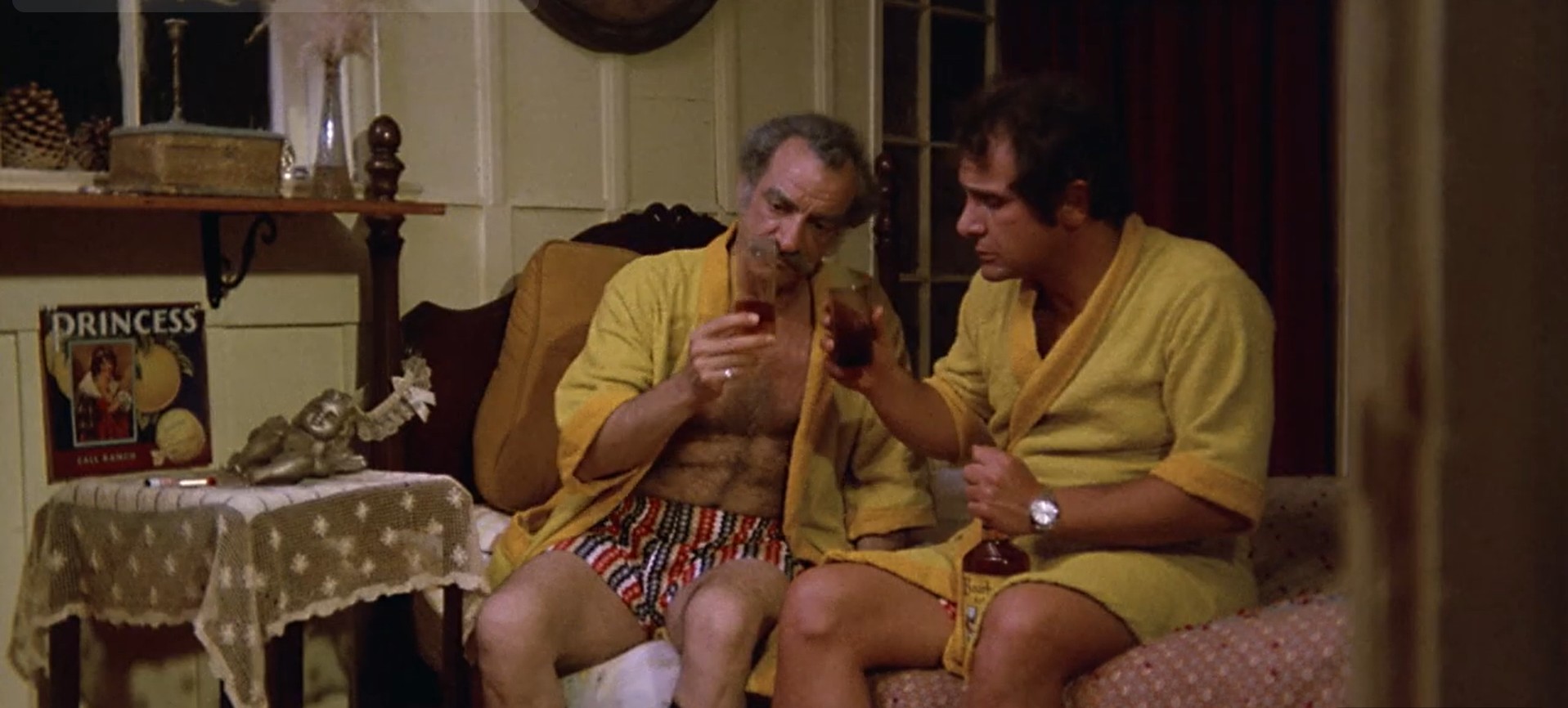
The first official and unofficial film of Charles Band’s career comes to Blu-ray home video from Band’s Full Moon Features in an unlikely genre release from the horror and science fiction regular.  The AVC encoded, 1080p high-definition, BD25 comes uncut and uncensored, transferred from an original negative donated from the UCLA archives under an anonymous donor.  Not much is stated here about what kind of a transfer we’re treated but the 2K scan appears adequate with a freshened image with moderate color saturation and details.  There are times the image appearance has a slightly faded realism, similar to that of William Friedkin’s “The French Connection” where details can be soft at times and ungraded.  Most scenes are better than not with palpable textures around more closeups and medium shots.  Skin tones are little more on the orange side, likely due to the chemical dye in the exposure that has an orange base which results in a natural, fringed tint.  The Blu-ray is presented in a widescreen aspect ratio 1.78:1.  Audio comes with an English LPCM 5.1 and a Stereo 2.0.  Both audio formats provide a crisp track of a dialogue, ambience, and what soundtrack is present, but the surround sound does little to enhance the film with its lack of off-camera or multi-directional scenes with mostly centered performances by the actors and not a ton of action.  The stereo 2.0 suffices.  No hissing or crackling present and the interference is kept to a suitable minimum to digest all its wacky dialogue.  The physical presence of Full Moon’s Blu-ray runs the same course as the others with a standard Amaray Blu-ray case and single-sided sleeve art with no other tangible attributes.  The nearly full-bodied orange colored sleeve mirrors “The Last Tango in Paris’” art to an extent and Full Moon uses stills with nudity on the back cover as an added perk.  The 56 minute Blu-ray, shorter because the cut of the hardcore inserts, is rated R and unlocked for multi-region playback. 

Last Rites: “The Last Foxtrot in Burbank” is a hard sell with its flat lampooning of “The Last Tango in Paris.” A handful of sleaze to be had but there’s nothing more cringy than watching histrionics for an extremely niche market.

“The Last Foxtrot in Burbank” Finally Recognized by Charles Band and Full Moon Features!

EVIL Ted Bundy is “The Black Mass” reviewed! (Cleopatra Entertainment / Blu-ray)

“The Black Mass” on Blu-ray Can Be Ordered Here!

Based off a slice of Ted Bundy’s murderous impulse-driven life, the notorious American serial killer’s escapes from the upper West Coast and lands him residence in Tallahassee, Florida in the moderately warm winter of 1978.  As he picks the pockets of those around him, scrounging up what little cash he needs to survive on, Bundy urges grow to kill grow more intense.  He begins to stalk a nearby university sorority house that’s buzzing with potential prey.  As works out a plan to attack, his good looks and impeccable charm make him desirable around women and men alike, offering opportunities that tend to fizzle out before they can begin, and when his need to spill blood agitates him excessively, he starts to creep out those around him by glaring out them and making off-the-cuff shrewd comments.  With his options declining rapidly, Bundy decides to take advantage of the sorority house’s broken backdoor lock and set in motion a night that will forever live in American infamy. 

For her feature length film debut, scream queen actress Devanny Pinn takes on one of the most vile villains ever to walk the Earth in her biographical horror “The Black Mass.”  The “Song of the Shattered” and “Frost” actress and producer brings a headspace perspective to Ted Bundy committed at least 20 confirmed murders between 1974 and 1978.  The true crime thriller named after what one of the victims described Bundy’s attack on her as simply as a black mass before being bludgeoned.  Brandon Slagle (“Song of the Shattered”) and Eric Pereira (“The Locals”) collaborate on penning the script.  Slagle directed Pinn in the 2022 element horror and survival feature “Frost” and now it’s Pinn to take a stab at the director’s chair with a Slagle screenplay, pun intended.  Pinn coproducers her film alongside Michelle Romano (“Night Aboard the Salem”) and Cleopatra Entertainment’s Tim Yasui (“Frost,” “The 27 Club”) under the production banners of Jaguar Motion Pictures (“Dead Sea”) and Roman Media (“Millwood”).

The main focus in the feature is of the titular character, “The Black Mass,” that is Ted Bundy, almost seeing what he sees through his eyes of skulking and morbid fantasy.  Played by British actor Andrew Sykes, the centrically focused character is experienced not directly through his eyes but over his shoulder, peering from behind as if audiences are accomplices to his murderous wake.  Sykes performs well in a nearly voiceless role that does more lurking than talking but Sykes’s worked up frustration clearly surfaces and erupts out of Bundy when strapped for cash and has a tremendous itch that needs to be scratched as his wishy-washy path to do good crumbles from under his footing.  As the main focal point, no other character really comes close to a lead principal.  The sorority girls are introduced in mass and jump from sister-to-sister individually conversating routine and tales of the day-to-day within the college student context with roles from but not limited to Lara Jean Mummert-Sullivan (“2 Jennifer”), Brittney Ayona Clemons (“Twisted Date”), and Alex Paige Fream (“Into the Arms of Danger”).  Yet, Pinn’s storytelling purpose is paradoxical with the whole story flowing through the perspective of Ted Bundy with his prey hanging mostly in the peripheral and not emanating the warm and fuzzies of sympathetic, relatable characters, but at the end of the film, there’s an acknowledging tribute for the victims who we really know nothing about from the narrative, creating an acute pivot from the killer’s personal bubble.  “The Black Mass” rounds out it’s relatively large passing-through cast with Chelsea Gilson, Susan Lanier, Eva Hamilton, Sarah Nicklin, Elisabeth Montanaro, Mikaylee Mina, Jennifer Wenger, Grace Newton, Devanny Pinn, and with cameos from Lew Temple (“The Devil’s Rejects”), Jeremy London (“Alien Opponent”), Lisa Wilcox (“A Nightmare on Elm Street 4:  The Dream Warriors”), Kathleen Kinmont (“Halloween 4:  The Return of Michael Myers”), and schlock movie veteran Mike Ferguson.

“The Black Mass” is the perfect example of style over substance.  While the story is formatted around Bundy’s outlook, there’s not a significant amount of edification for his warped mindset.  Some backstory leaks through his beseeching phone conversations with ex- or current girlfriend Liv, a phone voiceover presumingly based off the real Bundy girlfriend Elizabeth Kendall, that teeters the appearance of his humanity side as he talks about his addictive struggles and trying to walk a straight line, but any kind of sympathy is quickly tabled without an ounce of provision, likely for his inclination to lie for advantage and exploitation’s sake.  Pinn only teases the inexplicable morose and ghastly gears that rotate inside Bundy’s head, spurring a single blood-drenched daydream of a girl pulling off her skin in the shower, and erotically enjoying it immensely.  The scene feels sorely out of place amongst the rest of reality-grounded narrative that resorts to a cut-rate version of Bundy’s devolving surrounding is fleeting patience and feign niceties.  What’s appreciated mostly about “The Black Mass” is Pinn’s ability to work the camera in not revealing too much of a modern-day society by maintaining that closeup distance behind Bundy and only really showing what needs to be seen for a late 70’s biopic.  Costuming, production design, and vernacular are appropriate for the era as well.  Coming back to the proximity around Bundy, there’s a purposefulness in not showing his full face or looking at him from the front that keeps the particulars of his image in an effective, if not slightly scary, enigma albeit the other characters’ brief descriptions of him in conversation do provide a rough picture of him. 

MVD Visual distributes the newest cinematic Bundy biopic from Cleopatra Entertainment. The AVC encoded, high-definition 1080p, BD25, presented in a widescreen 2.39:1, has welcoming veneer, splashed with a 70’s color scheme saturation, and is graded with a middle-of-the-road or slightly darker color palette. Sufficient capacity and compression encoding offers a clean, sleek digital image without artifacts and with the ample attention to minor era details where possible and Noah Luke’s fill and back-lit cinematography when things get really dark, as in sinister, that snappy image presentation is key. The English language options are a lossy Dolby Digital 5.1 and a PCM 2.0 stereo renders a clean, balanced mix between dialogue, ambience, and dialogue with less suppression on the PCM audio if you’re looking for a lossless option. The setting sounds are nicely immersive compared to the limited and concise framing, opening up the world audibly rather than visually. No technical issues with the digital audio on neither front; however, depth and reality checks are missed marks as all the dialogue doesn’t abide by spatial awareness; when the sorority sisters are talking indoors or from afar while Bundy lurks outside the house, or from a distance, spying on them, all the dialogue is unobstructed and too prominently clear for natural conventions. Bonus features include an image slideshow and the feature trailer. Ancillary content includes other trailers for Cleopatra films with “Frost,” “The Ghosts of Monday,” “The Long Dark Trail,” “What the Waters Left Behind: Scars,” and “Lion-Girl.” Released in a traditional Amaray Blu-ray case, “The Black Mass” sports a Dimension-like front cover, dark and full of characters. No insert or tangible content inside and the disc art mirrors the front cover. Cleopatra’s region free Blu-ray comes unrated and has a runtime 82 minutes.

Last Rites: Devanny Pinn quarterbacking her first feature film with an à la mode Ted Bundy portion, an interpretative taste of his absolute madness, doesn’t faze the long-time scream queen actress and producer who takes on the subject head on, but the overall concept does need tweaking in the area of purpose that can be easily conquered with more practice.

“The Black Mass” on Blu-ray Can Be Ordered Here!