The Itsy-Bitsy EVIL Crawled Down Your Throat and Ate Your Insides! “Sting” reviewed! (Well Go USA Entertainment / Blu-ray)

“Sting” Is Available for Pre-Order for a Blu-ray July 30th Release!

A rebellious, preteen girl wading through the stepfather muck of new family dynamics befriends a small spider she discovers while snooping around a neighbor’s room in her apartment building.  The unique, small spider can mimic her every vocal sound, quickly captivating the girl’s interest as she seeks solace from her upended life, and the spider is constantly hungry being sequestered to a jar as the girl’s newfound pet.  The more she feeds the spider she’s named Sting the bigger it grows in a short period of time.  During the night, Sting unconfines itself and roams the airducts, immobilizing apartment residing animals and people alike with a potent paralyzing bite, to then web-encase them in the ducts and feast upon her captured prizes while still alive.  When Sting threatens the girl’s family, she must put her angsty squabbles and feelings aside and take the fight to her once beloved pet that has now become a giant, flesh-eating, arachnid.

There hasn’t been this much fun in a giant spider movie since “Eight Legged Freaks!”  “Sting” is a 2024, Australian creature feature from “Wyrmwood” franchise director Kiah Roache-Turner who pours portions of his own experiences in life into the script, metamorphosing “Sting” from being not only just a monstrous amount of arachnophobia but also a personally purging of multitude of fears rolled up into one web-slinging scary movie.  The story is set inside a slum apartment building in New York City at the centric mercy of a Northeastern blizzard; however, “Sting” is actually shot on a production stage in Sydney, in the New South Wales province of Australia, that has taken on the doubling duty for The Big apple.  “Sting” is a coproduction between Align Films, Pictures in Paradise, and See Pictures with “Wyrmwood:  Road of the Dead’s” Michael Potin, Jaimie Hilton, and “Daybreakers’” Chris Brown producing.

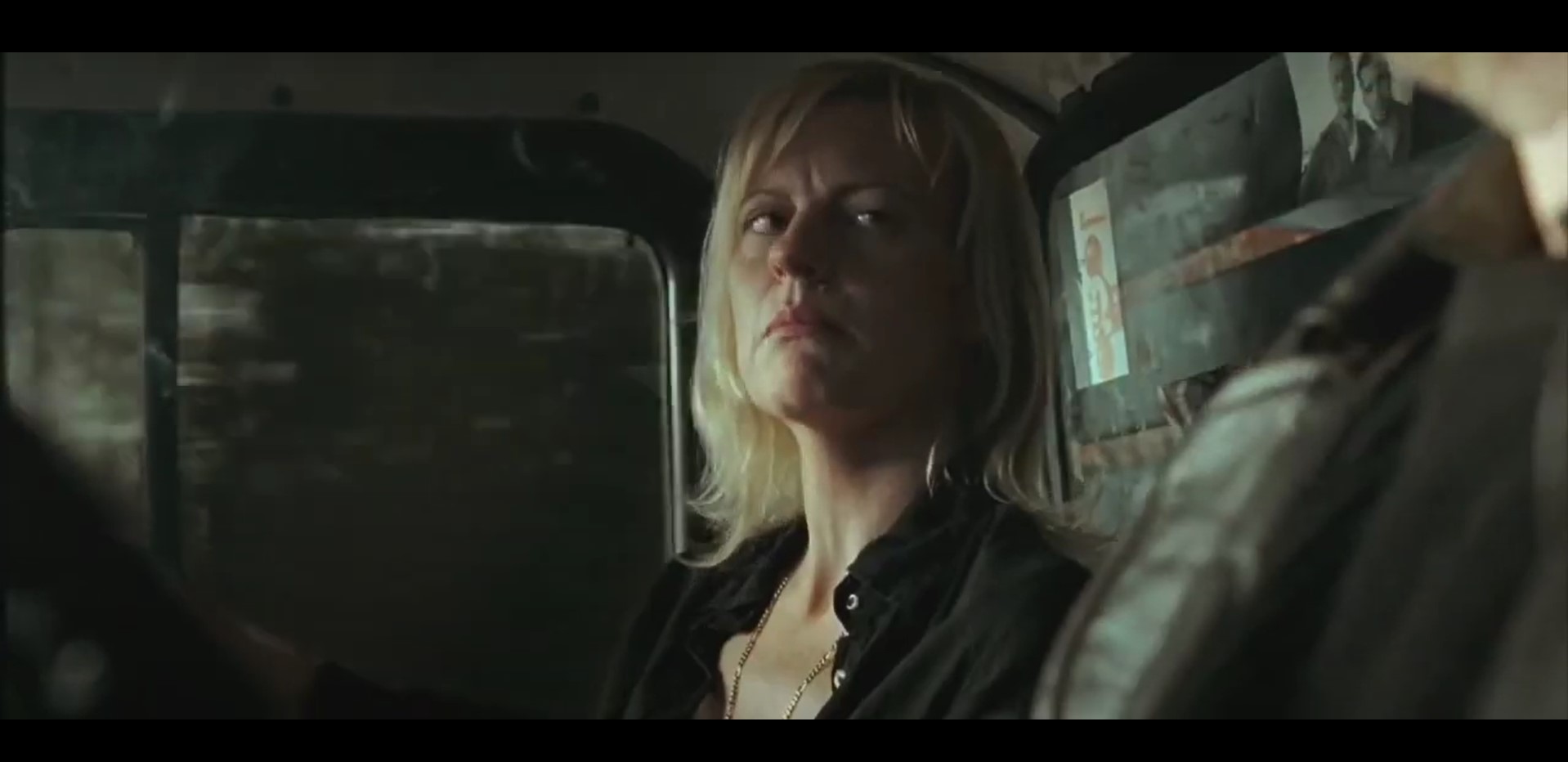
The cast is comprised of mostly Australian actors modulating their voices to the American accent and doing a rather impeccable job at it with only a slight slip of a slower drawl.  The principal nuclear family opens in the middle of new dad throes, the building’s handyman Ethan (Ryan Corr, “Wolf Creek 2”) struggling to not only meet the demands on his slumlord boss / stern aunt by marriage named Gunter (Robyn Nevin, “The Matrix Reloaded”) but also navigate a path toward a better, more-to-his-liking job while also reaching through and connecting with his defiant stepdaughter Charlotte (Alyla Browne, “Furiosa:  A Mad Max Saga”).  Sting, the spider, runs through the apartment tenants that include a depressed and alcoholic widower (Silvia Colloca, “Van Helsing”), a monotone marine biology grad student (Danny Kim), and even a spirited exterminator (the only American in the film in Jermaine Fowler, “The Blackening”) who holsters a nail gun for NYC protection as well as vermin gas bombs on his utility belt.  All-in-all, diversity is rich if not slightly stereotyped, but Roache-Turner does a really good job at telling their backstories through the camera shots and without the need for much expositional dialogue, such as the unsaid death of the widower’s family but enough visuals and grief expressions do formulate what happened.  Components of backstory life heighten the tension, or even share awkward moments, collectively between neighbors and family members that lead to presumptions and to, eventually, an explosion of distrust and anger that makes the perfect screener to blind them what’s really creepily-crawlingly around.  Noni Hazlehurst and Penelope Mitchell (“Hellboy” ’19) conclude the casting as immigrant mother with Alzheimer’s and her first-generation daughter married to Ethan and trying to also navigate a precarious life out from under her slumlord aunt’s grasp.

“Sting” is one of those movies that reminds horror fans why the genre is great and beloved.  Titular spider named after the “Lord of the Ring’s” sword that injured Shelob, the giant spider, in “Return of the King” and a definitive “Alien” inspired film, complete with a viciously blood-thirsty extraterrestrial bug that suspends prey with webbing and a badass female heroine, “Sting” masters the giant spider effect by mostly using practical means.  That’s right, a giant spider puppet, manned by eight puppeteers, checks most of the computer-imagery at the door and enters with confidence from master of effects Sir Richard Taylor and his team from Wētā Workshop, who has help build effects for the recent “Mortal Kombat,” Ti West’s “MaXXXine” films, and has had a helping hand in the MCU.  Skulking on ceilings, stealthily silking down, locomoting with smooth, natural movements as the spider, approximately the size of large black Labrador, has manipulated properties to lurk and hunt to visually feed the need and scare the phobia right into your once comforted being.  The story’s struggling family and honesty-is-the-best-policy themes ground “Sting’s” rabid arachnida with relatable turmoils, especially from a parenting and child point of views and anyone who has had children or parents, like the majority of us do, will understand preteen problems.  Ultimately, Sting represents childish hidden secrets, something they can control of their own volition, and a rebellious cause that’s ironically not good for them, turns uncontrollable, and is an obvious problem, akin to doing drugs for an extended period.  Sting might not be a line of cocaine or a hypodermic needled filled with narcotic poison, but space spider does have toxicity that courses a paralyzing agent conveyed by a single bite. 

Spiders are the demonized sharks of the land and continue to string webs of fear inside audiences.  Well Go USA Entertainment Blu-ray of “Sting” proves spiders still secrete a damn good monster movie that’s one part “Aliens” and one part “Charlotte’s Web” with an AVC encoded, 1080p high-definition, BD25 release presented in a 1.85:1 aspect ratio.  For a Well GO USA product, “Sting” is one of their better compressed discs that I’ve seen, retaining unexpurgated blacks and fling out glistening, texture palpable details throughout, and there were a plenty of black and low-lit areas to what afflicts most of the label’s releases, a potentially image sidelining obstacle. Coloring is a tad soft but moderately sound when juxtaposed against an enormously, slick gun-metal toned spider. The English DTS-HD 5.1 Master Audio surround sound mix renders with strength, a solid, multi-channel testing sound design when the spider creates a clatter in the airducts for back, side, and front localization. Depth appropriate is fine as well as a wide range of audio action onomatopoeia. No issues or obstacles obstructing the clean and clear dialogue, layered in the forefront and level weaved into the action where needed. English subtitles, as well as English SDH and French subtitles, are optionally available. Typically, we do not usually receive in-depth special features from Well Go USA due in part of his long history with Eastern films where bonus content seems nearly nonexistent. For “Sting,” there’s a substantial behind-the-scenes featurette taking a long look on the Roache-Turner’s concept and inspiration, the Creation of the Monster sizes up how the special effects were completed by Sir Richard Taylor’s company, interviews with the cast and crew on making the film, and the theatrical trailer. Encased inside a conventional Blu-ray Amaray, Sting has, in my opinion, a very effective, genuinely creepy poster of a spider walking across the floor next to a body, graded in a blue hue and working deep with the shadow angle for potency. Well Go USA surprises again with the fun disc pressed art of a toon-ish illustration that doesn’t seemingly fit the rest of the package marketing but becomes clear from the storyline. An advert for the company’s other newer releases, “The Flying Swordsman,” “Your Lucky Day,” and “A Creature Was Stirring,” is adjacently tucked in. “Sting” has a well-paced 91-minute runtime, is region A encoded for playback, and is rated R for violent content, bloody images, and language.

Last Rites: No doubt about it. “Sting” is fang-tastic! A modern spidersploitation film that flexes hard, built upon the strong backs of some great pop culture and science-fiction horror moments as an endearing tribute.

“Sting” Is Available for Pre-Order for a Blu-ray July 30th Release!

Return Home to Discover Dad’s An EVIL SOB! “The Abandoned” reviewed! (Unearthed Films / Limited-Edition Blu-ray)

Don’t Be Left Behind. Get Your LE Blu-ray Copy of “The Abandoned” from Unearthed Films

Marie Jones never knew her parents.  Born in Russian, raised in the London, and now lives in the U.S., the low-budget movie producer receives news from a Russian estate notary providing her details on her murdered mother back in 1966 and her existence entitles her to the isolated family farm.  Unable to resist the urge to find out about her mysterious past, Marie travels to her parents’ dilapidated farm settled on an island encircled by a river.  There she meets Nicolai claiming to be her twin brother and that he also, after a similar call from the notary, felt pulled to their family home on the verge of their upcoming birthday, but they’re not totally alone.  Trapped on land that won’t allow them to leave, Marie and Nicolai run into their undead doppelgangers that impel them to dig into their family history and uncover the gruesome truth to what happened to their mother.  All the while, the house around them rewinds back in time before age and weather have taken a toll and the souls living in what was once a home return to bring the family back together again.

A past drawing near story stretching from 1966 and 2008, “The Abandoned” is a haunted house, supernatural, and circular tale that bears down a forlorn ancestry nightmare onto ensnared curious lineage wanderers, bringing them back into a vicious cycle of a family history that should have been left alone.  “Aftermath” and “Genesis” short film director Nacho Cerdá tries his hand at less necrophilia and gore for more daring, open-to-interpretation horror with the Karim Hussain (“Subconscious Cruelty”) original script with some rewrites and sprucing done by “Dust Devil” and “Hardware’s” Richard Stanley.  Filmed in Bulgaria to double as the scenic landscapes and to use the country’s looming, enveloping trees as another margining aspect of being trapped, “The Abandoned,” initially title as “The Bleeding Compass” on Hussain’s original script, is produced by Julio and Carlols Fernández, Kwesi Dickson, Stephen Margolis, and Alexander Metodiev under Castelao Producciones, Filmax International, and Filmstudio Bojana with Future Films’ Carola Ash and Albert Martinez Martin serving as associate producers.

“The Abandoned’s” modest budget regulates casting to, at that time, relative unknowns for the U.S. market but certainly not an experienced lot between English actress Anastasia Hille (“Snow White and the Huntsman,” “Martyrs Lane”) and Karel Roden (“Orphan,” “Hellboy’) playing reunited brother and sister Marie and Nicolai who have not been together since infancy.  Separated at the demise of their mother, Marie and Nicolai have undoubted hesitation to their relation, especially both are met by grisly versions of themselves in the old family homestead.  The double versions of themselves represent a dual life, one connected to their current path, and one connected to their past, and Hille and Roden play into that theme with fortitude and fear in how the past haunts their characters connected to a shadow world in a very “Silent Hill” way.   Hille brings complexity to Marie’s own troubled relation with her daughter, a character we don’t necessarily see physically on screen, but we understand through phone conversations and brief interactions with Uncle Nicolai that the foundation the mother-daughter relationship stands on is shaky and that pushes Marie to pursue the truth about her own mother to avoid that disconnection with her daughter.  For Nicolai, Roden instills a more tragically inclined façade without overcompensating with tremendous evidence in the loss of a woman he loved, aside from their matching tattoos, and his melancholic state is staid by the newfound opportunity to discover his past until unless it also becomes his downfall.  Again, we’re back to the past should stay dead, or in the past.  Hille and Roden underpin “The Abandoned” and its ghostly enigma with brief interjections of supporting ancillaries in Valentin Ganev, Carlos Reig-Plaza, Paraskeva Djukelova, and Marta Yaneva. 

“The Abandoned” is one of those circular narrative stories working toward a revelational end, one that likely won’t be pleasant.  An endless loop of trying to leave Marie and Nicolai’s childhood home only for them to be brought right back into the same room from which they started lend into a couple of preconceived notions of their ringlet wretchedness, both in circumstance and in life, and that being either they’re already dead and in a purgatory or their grieved existence has warped them into a psychological break when returning to a decaying land left in the memories of the heinous death of their mother.  Both theories incorporate a supernatural element where time reverses and, coinciding with the twins’ upcoming birthday, a clock ticks down that will bring the family whole again, this time in the afterlife if the unnatural powers to be have anything to say about it.  That’s the definitive beauty of “The Abandoned’s” open air forbidding allegories with the more than one interpretational rivulets spreading in different directions, shaped idiosyncratically by Marie or Nicolai’s life.  What helps the impervious fate outcome of the principals is that “The Abandoned” also has strong, poignant visuals as a foothold into keeping audiences intrigued on what could be a slippery slope of symbolism.  A mix of practical and composite effects, done amazingly through the editing process, sell duality on every layer as if we’re experiencing two worlds during a collision and waiting with anticipation for one to engulf the other. 

Unearthed Films brings “The Abandoned” home on a limited-edition Blu-ray home video. The AVC encoded, 1080p high-definition, BD50 capacity houses plenty of breathing room for the claustrophobia details to writhe within. Middle-to-higher contrast levels that throw out good shadows without being extremely inky, there’s spectrum discoloration from blotchy-banding, suggesting a good encoded transfer that deciphers more details rather than squeezing everything in under a lossy codec. Range of the darker graded feature does favor a generous bluish green for the interiors while natural light swarms and illuminates into the exteriors, brighten up Anatasia Hille’s already blonde enough hair to almost pure yellow. Fine details pervade over much of the duration, only relinquishing details for dark, cavernous moments to scare up apprehension levels. The English DTS-HD 5.1 and the PCM 2.0 give viewers lossless fidelity and flexibility with audio setups. I preferred the stereo with robust dual channel dialogue; however, the 5.1 showed signs of directional awareness – rustling of leaves, ghostly voices, etc. – through the back and side channels. Dialogue is prominent and clear on both audio options and free of intrusion and interference. English and Spanish subtitles are optionally available. Special features include an abundant of new material exclusively produced by and curated from Unearthed Films, including new, individual interviews with director Nacho Cerdá, screenwriter Karim Hussain, and screenwriter Richard Stanley; there are also new furnished for this release alternate endings that more so involve Marie’s daughter, deleted and extended scenes cut for timing and flow, and outtakes. Archived bonus content has a Making of featurette, location vision in “The Abandoned’s” den, a featurette of Nacho Cerdá: The Trail of Death that looks at the director’s earlier horror inspirations of his trilogy of death shorts, The Little Secrets of Nacho Cerdá goes further into the director’s insights for his varied take on “The Abandoned” story, Nacho Cerdá has a conversational horror discussion with friend Douglas Buck, director of 2006’s “Sisters,” promotional and storyboards gallery, trailers, and a BD-ROM storyboard collection. The limited-edition release has a lissome cardboard slipcover with original poster art of the blood-crying doll from “The Abandoned” on the front. Inside, a standard Blu-ray Amary case has the same cover art image that’s also pressed on the disc. There are no inserts included. The rated-R release has region A playback only and a runtime of 99 minutes.

Last Rites: A step back from the gore and revulsion, Nacho Cerdá is able to scare stiff with “The Abandoned,” a dead and buried family abstrusity squaring the score for lost time by reversing time to welcome back those left living, and Unearthed Films’ limited-edition release is the best version to date that deserves a warm homecoming for its icy, taciturn atmosphere.

Don’t Be Left Behind. Get Your LE Blu-ray Copy of “The Abandoned” from Unearthed Films

What Russian EVILS Lie Beneath in “The Lair” reviewed! (Acorn Media International / Blu-ray)

“The Lair” Has a Deadly Secret!  Blu-ray Now Available!  

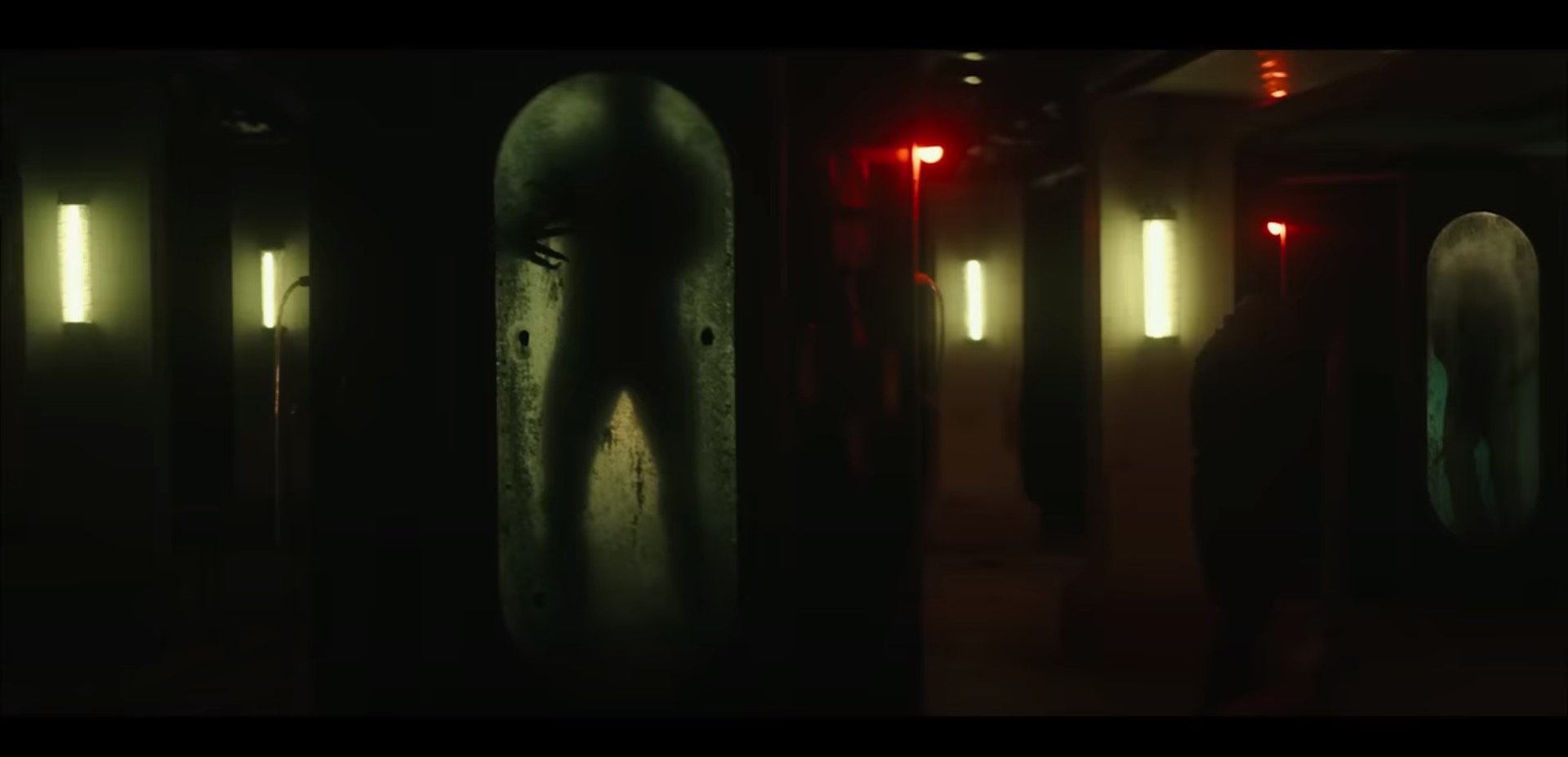
Royal air force Captain Kate Sinclair is shot down over the arid planes of Afghanistan.  Swarming with Taliban insurgents and her command officer killed, Sinclair takes shelter in an old, abandoned Russian bunker from the Russian Afghanistan invasion of the 1980s.  What she stumbles into is an experiment lair housing numerous stasis chambers and dark secrets.  Sinclair manages to barely escape with her life when one of the creatures inside the capsules is released, tearing to shreds her well-armed pursuers.  Rescued by a ragtag team of U.S. military outcasts based in the middle of nowhere as peripheral punishment and joined up by a trio of British special forces in the area, the Captain attempts to warn her rescuers what’s out in the desert only to be on the receiving end of a monstrous invasion that sees the slaughter of nearly everyone in camp, including the camp commander.  Miles from anywhere and not enough supplies to withstand another attack, those soldiers left alive band together to stage their own last stand assault on the creatures’ Russian bunker lair to ensure hostile eradication.

Acclaimed horror director Neil Marshall (“Dog Soldiers”) returns to his roots with a claustrophobic, high-energy, and violent creature feature known as “The Lair.”  Having experienced underwhelming success with the fiery Dark Horse antihero “Hellboy” remake in 2019, Marshall returns to independent scene for the 2022 released film having been shot in the barren lands of Budapest, Hungary to create the illusionary Afghanistan territory backdrop.  Marshall co-writes the script with “The Lair” star Charlotte Kirk, a reteaming affair from Marshall’s last feature “The Reckoning” from two years prior in which Kirk also produced and starred.  Also returning from “The Reckoning” and into the producer’s chair is Daniel-Konrad Cooper along with “Infinity Pool” producers, Jonathan Halperyn and Daniel Kresmery, and “Lords of Chaos’s”, Kwesi Dickson in this Shudder exclusive collaboration from Rather Good Films, Scarlett Productions Limited, Highland Film Group, and Ashland Hill Media Finance with Neil Marshall and Peter Shawyer’s private equity investment group, Ingenious Media, providing financial support.

Star Charlotte Kirk and Neil Marshall have a seemingly natural rapport that has transposed well from their collaboration on “The Reckoning” to the “The Lair,” crossing subgenre that involve the equivocal occult to a more plainspoken physical presence of foreign experiments gone wildly bloodlust.  Instead of being hunted by a 17th century witch hunters just for being a woman saying no to man, Kirk steps into a role of authority as military captain with loads of smarts and adept at close combat as she’s being, once again, chased by predators, but these uber-predators are unearthly, unremorseful, and ugly.  Marshall provides just enough character backstory for understanding the stakes and strengths of each of them but to reach a little more into their history might have been key to stronger motivations and for something to prove in not just being jarhead screwups.  Sinclair finds commonality and sympathy from Sgt. Tom Hook (Jonathan Howard, “Godzilla:  King of the Monsters”) who bears the guilt of losing men in battle and punishes himself to do better.  Psyche profiles for each soldier makes them rise above being flat by providing depth of flaw but what is vexing and irking about each, and this element may very well be intentional as an international thespian bout of poking fun, is the cast is nearly all British playing Americans with stereotypical drawls, ebonics, and punctuating southern accents so overexaggerated it’s downright sickening to hear, like watching a bad old war film, but what’s even worse and what drives a sharp claw talon into the inane heart of trite-tired audiences is the group slow walk before embarking into the battle of no return.  Again, this might be the work of intentional satire.  Some accents are gargantuanly worse than others, such as with “Titanic 666’s” Jamie Bamber’s pirate-patched Major Roy Finch and the Mark Arend’s Carolina-born Private Dwanye Everett.  From there, the elocution grades get better with less cliché but not by much with a cast rounding out of Leon Ockenden (“The Reckoning”), who I couldn’t understand because his accent was so Scottish-ly thick, Troy Alexander, Mark Strepan, Hadi Khanjanpour, Kibong Tanji, Adam Bond, Harry Taurasi, and Alex Morgan.

Neil Marshall not only returns to his horror origins but he also returns to the heyday of prime practical effects with inset creatures of a spliced appearance between the build, the dark full body achromia, and the facial configural layout of Marvel’s extraterrestrial antihero Venom with the eye-less, tongue-lashings and grabbings of Resident Evil’s staple adversaries, the Lickers.  Obvious a man in a prosthetic suit, the simplistic, brawny-framed humanoid basks in nostalgia despite being in a modern day movie, pining for the days when large or small men in full body, head-to-toe, terrifying imagery suits were the antagonists of our youthful nightmares while also providing the cast something to act against for a more realistic and rancorous on screen rendezvous.  The smaller scale production limits Marshall’s possibilities with his Kevlar-fleshed and razor-toothed creatures but the veteran director sells every act of “The Lair’s” story with trenchant action with hardly any downtime to catch one’s breath in between because the next blood-laden blitz rollout is upon us in a blink of an eye.  Between the action, the anomalous characters, and the pulsating, downbeat synthesizer score that courses through its veins, “The Lair” leans itself toward being a callback to the late 80s-early 90’s last stand dogfight subgenre and you can’t one second cease your attention for a director who appreciates the narrative surprise more than anticipated predictability.

Become lured into “The Lair” now on Blu-ray home video from Acorn Media International, a UK distribution subsidiary of RLJ Entertainment.  The AVC encoded, 1080p high definition release is presented in a widescreen 2.35:1 aspect ratio.  The BD25 offers sold flexibility for a film with hefty amount of night shoots and action as potential compression problems seem to stay at bay without any severe noticeable banding, blocking, mosquito noise, etc., however, the details are quite flat with a smoother finish, often in the blur of the fast camera workflow and editing because of the action sequences, leaving depth on characters, as well as in the scene, at arm’s length with monocular vision.  The warm hint of chartreuse embedded grading offers industrials color tones with a rich grit of oxidized bunker steel.  Don’t adjust your audio dial on the release’s English DTS-HD Master Audio 5.1 surround sound track, the dialogue only sounds wonky because its deliberate Americanized dialect set at the forefront and prominent amongst the audio layers which has significant range and depth with explosions, rapid gunfire from different calibers, and the guttural growls of the creatures that echo nicely through the rear and side channels when under the bunker or even affixed in a slightly decreased volume of its form in the attack of the basecamp.  There were no interference blights with the audio track, such as hissing, popping, or other discernible issues.  Special features included only a making-of featurette with clipped interviews during the shoot with director Neil Marshall, actors Charlotte Kirk, Mark Strepan, Jamie Bamber, Jonathan Howard, Leon Ockenden, and others regarding their admiration for the project in different aspects.  Acorn Media’s physical release comes in a slightly larger Blu-ray snapper, typical of the UK releases, with the cover art featuring an up-close and personal look at the creature’s ugly mug.  The same art is also on the disc with no insert inside the snapper case.  The release comes region B locked with a runtime of 97 minutes and is certified 15 for strong gory violence, language, and threat.  If you can stomach the fatuity at times, “The Lair” is a fast paced and staunch creature feature with a bunker full of gore.

“The Lair” Has a Deadly Secret!  Blu-ray Now Available!  

The Old EVIL Scorpion and the Frog Tale in “Drive” reviewed! (Second Sight / Screener)


“Anything Happens in that Five Minues and I’m Yours.”  Drive Limited Edition Boxset at Amazon.com!

A solitary mechanic and movie stunt driver offers his services as a getaway driver for illicit odd jobs.  He falls for his single parenting neighbor and as the two begin their romantic affair, her ex-con lover returns from prison to reintegrate back into her and their son’s life.   When ex-con trouble brews an inescapable situation involving ruthless gangsters calling in their favor for prison protection, the stunt driver involves himself with his moonlighting work but when things go terribly wrong and he becomes a target, everyone he knows and cares for are threatened by the mobsters.  War is waged in the fast lane between the mysterious stunt driver and Los Angeles most feared gangsters for the sake of an innocent mother and her child caught in the middle.

Around 2010-2011, when I first heard of Nicolas Winding Refn’s “Drive” starring “The Notebook” and “Lars and the Real Girl’s” Ryan Gosling, I thought to myself, why would I watch this quirky comedy-romance actor drive around in a run-of-the-mill stunt car action film?  Immediately, I wrote off the film penned by “The Four Feathers’” screenwriter Hossein Amini, whose now penning the stories and teleplays of a little Disney+ streaming series you may have heard of called “Obi-Wan Kenobi.”  I now admit it, as painful to my pride as it is, that I was so ignorantly wrong about Refn’s “Drive” that has turned out to be a cult hit present day and a really good and exceptional crime-drama that’s subtle on the dialogue, high on the graphic violence, and all-around superb performances.  The script is the filmic adaptation based off American author James Sallis’s novel of the same title, keeping the neo-noir intact under of guise of muscle car predilection, and is a produced by Gigi Pritzker and Chris Ranta of Oddlot Entertainment (“Buried Alive”), Jonathan Oakes and Gary Michael Walters of Bold Films (“The Neon Demon”), Marc Platt of Marc Platt Productions (“Wanted”), and Motel Movies (“Blue Valentine”). 

To be upfront, Ryan Gosling has never been a go-to movie star for me, personally, so there might have been some psychogenic bias blocker keeping me away from the film over the last decade.  However, over the years, my pallet has grown in diversity and in tastes, chiefly because of influences in my life, and so curiosity got the better of me in wanting to explore the story of and the craft of Ryan Gosling’s character in “Drive.”  The way Gosling portrays the lead, known only as either the Driver or Kid, heavily relies on expression with minimal dialogue and lets all his emotions be poured through his eyes and body language as well as his actions in an anti-charismatic sense that, in a good way, leaves the character unassuming but still confident.  Watching Gosling’s methodical flow through the role and while having a little knowledge of the neurodivergence, it’s not difficult to see that the principal character comes off as a person somewhere on the autism spectrum and doing some post-credits research, I’m not the only one who had the same thought.  Unsociable, quiet, lack of facial expression, and obsessed with routine, especially when moonlighting as a criminal getaway driver with a set of very specific conditions, are just some examples of his behavior that point in the autism direction.  When the driver meets beautiful single parent neighbor Irene (Carey Mulligan, “Shame”), that is when we start seeing him deviate from his isolation, from his routine, and become more complex with what was previously a non-existent life, but of course as life blossoms into something new and safe, gangster obstacles rear their ugly head and the criminal in him is forced out for a head on collision.  “Ex Machina’s” Oscar Issacs is the first hurdle as the recently release ex-con dragged back into unscrupulous dealings with unsavory organized crime that climb the latter to “Hellboy’s” Ron Perlman and “Taxi Driver’s” Albert Brooks, business partners who oversee the West Coast turf. Perlman is a natural tough guy, as we’ve seen in countless works stretching over numerous decades and I would have never pictured “The In-Laws” and “Finding Nemo” Albert Brooks to be the minatory type but he does in fact have a dark-twinkle in his eye and can extract the false sense of security out of people before he jabs a fork in their eye and slits their throat…wrist….guts….yeah, his character loves to knife others. The all-star cast rounds out with Bryan Cranston (“Godzilla”) as the Driver’s mob-connected boss-friend-agent and Christina Hendricks (“The Neon Demon”) in a lowkey accomplice role that makes a gruesome, unforgettable impact.

Speaking of “The Neon Demon,” a more recent Nicholas Winding Refn film, you’ll begin to absorb the Denmark-born filmmaker’s stylistic motifs between the two films involving lingering shots, graphic violence, and the integration of electro-pop tracks into an eclectic soundtrack. Many of the scenes convey an emotion through dialogue-less scenes and the soundtrack to contrast actions speak louder than words. However, there is one radical theory of mine that I believe has a firm foundation is that everything from point A to point Z in the story is all in the Driver’s fantasy world. I know “Drive” is a movie and the need to suspend belief is important but only to an extent and depending on the quality derived from the filmmaker. Refn’s a good filmmaker, we know this, but everything the Driver experiences pitches upon pure imagination when the truth is stretched to be in his favor for the length of the feature. First example – the Driver slams into the side of another car head on, but the headlights, front bumper, and ventilation grille are all clearly intact. Second example – a tense-elevator scene involving the Driver, Irene, and a mobster assigned to take the Driver out takes an improbable turn when the Driver turns to Irene, both bathed in the sudden appearance of a spotlight, and they kiss passionately for quite a while. The moment become the perfect opportunity for the goon to blow away his target. Instead, he lets them kiss and then a close-quarter fight ensues shortly after. Third example but not last – the Driver is nearly an unstoppable force with no background to who he really is or why he is in Los Angeles, but he fights like a hardened criminal and knows how to play the organized crime game, never really have bad hand in his deck of cards, and even is given an ambiguous “Shane” ending. So, I ask again, is the beautiful girl, the ripe for the picking off gangsters, and the prodigious skillset all in his head?

I’ve clearly misjudged Nicolas Winding Refn’s “Drive” to be pretty-boy, stock-story, waste of time. Though I’m still not convinced about Ryan Gosling’s acting, like a Supreme Court Judge nowadays, I’m overturning my naive judgement and calling “Drive” a true modern day cult film hiding in plain sight, receiving new life from Second Sight films with an UK limited edition 4K UHF/Blu-ray release as well as a standard 4K and Blu-ray release. Unfortunately, this review covers only a BD-R screener so commenting on the true quality of the image and audio will not be recorded, but release specs include a new 4K master produced by the original post-production company with Refn’s approval, the UHD is presented in Dolby Vision HDR graded by the film’s original colorist, audio options include a Dolby Atmos and a DTS-HD Master Audio 5.1 with optional English subtitles, and the 4K UHD are region free while the Blu-rays are region locked encoded on region B. Standard bonus features include a new exclusive commentary by director Nicolas Winding Ren and The Guardian critic Peter Bradshaw, a feature length conversation with Refn, editor Mat Newman, and composer Cliff Martinez reminiscing about their sudden post-theatrical career success with “Drive” when the film saw more success on video, Gutting a Getaway – a new interview with Mat Newman, and 3 Point Turns – a new video essay by Leigh Singer. The limited-edition contents include a premium box set with new Driver Scorpion artwork by AllCity, a 240-page hardback book with new essays by various authors, an exclusive interview with “Drive” author James Sallis hosted by Matthew Thrift, original storyboards, stills, behind-the-scenes photos, the original Sallis novel with new AllCity artwork as well, and 7 collectible art cards. What a massive, massive haul for the film that didn’t do great in theaters due to poor financial support by investors who saw the film as a failure. The film has a runtime of 100 minutes and is UK certified 18. Don’t be like me and neglect a chance to see “Drive,” a great piston-pumping and violently beautiful crime-drama paralleled love story that deserves our time, our attention, and everything including the kitchen sink Second Sight Films pumped into the tremendous limited-edition boxset that dropped this week for release!

“Anything Happens in that Five Minues and I’m Yours.”  Drive Limited Edition Boxset at Amazon.com!

EVIL’s on the Shallow End of “Deep Space” reviewed! (Scorpion Releasing / Blu-ray)

“Deep Space” Invades Blu-ray on Amazon.com!

A government funded space craft containing a monstrous biological weapon crashes to Earth.  The organic creature is genetically coded to be a killing machine with a craving for eating it’s enemy and, now, it’s loose in the city and not responding to the scientists’ command self-destruct codes.  Tough and obstinate cop Ian McLemore and his partner, Jerry Merris, are ordered ot investigate the crash site before government agents take control of the case, even removing a pair of strange organic pods with them for further examination.  When a couple of close colleagues are shred to pieces at the hands of the creature, McLemore will stop at nothing to figure out what’s wreaking havoc in his city and blow it away.  

1988 – a weird, yet greatly satisfying transitional period of fading 80’s horror into nipping at the insanity of 90’s brazen prosthetic creature effects right before the turn of the computer generated decade.  Granted, Fred Olen Ray’s Sci-Fi horror “Deep Space,” which is ironically set on Earth, is very much an enamored 1980’s horror, but the Olen Ray film is where you can kind of see the turning of change on the horizon when the story’s ideas become too grandiose for tangibility alone, no matter how much us fans love to see practical effects over CGI.  The script, cowritten between Olen Ray and T.L. Lankford (“Hollywood Chainsaw Hookers,” “Fatal Passion”), is massive more expensive than anything the filmmaker’s had previously done and with a $2 million budget, “Deep Space” gets a giant explosion, high speed car scenes and wreckage, the iconic face and voice of Charles Napier, a Xenomorph-like creature, and a ultra-bloody chainsaw scene that could give “Evil Dead’s” Ash Williams a run for his money.  “Deep Space” is a production of Trans World Entertainment (no, not the same monikered company that sunk money into the bleeding financially physical media brick and mortar outlets like FYE, Camelot Music, or Suncoast) and shot in Los Angeles under producers Olen Ray, Alan Amiel (“Inner Sanctum”), and Herb Linsey (“Neon Maniacs”) with Yoram Pelman (“Commando Squad”) as executive producer.

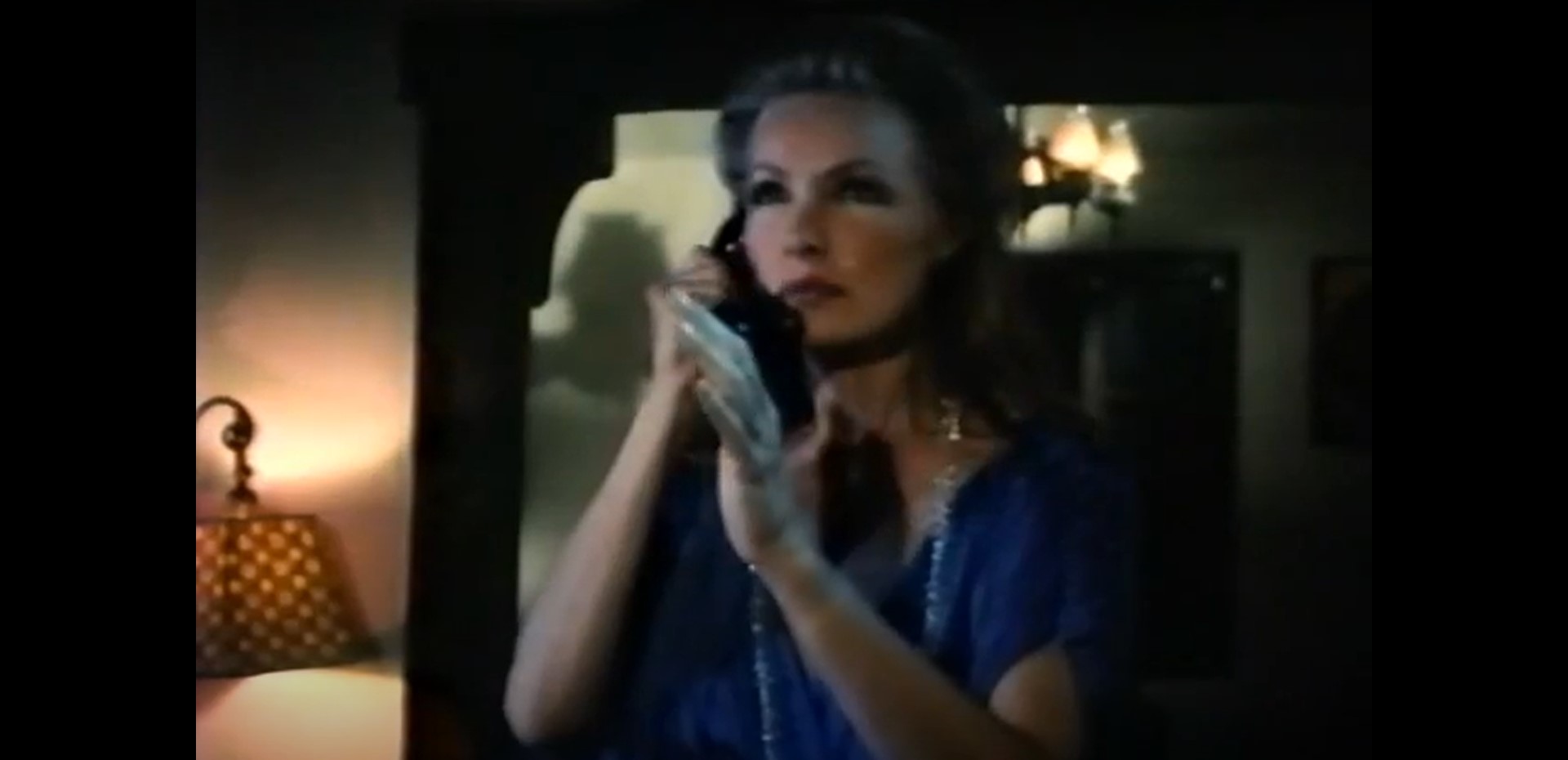
At the center of the chaos is Ian McLemore, a hardnose and stubborn, harmlessly sarcastic detective who goes against the authoritative grain and cuts through bureaucratic tape to get the job done.  Playing McLemore is the unmistakable Charles Napier.  The “Rambo:  First Blood Part II” and “The Silence of the Lambs” actor, who is about as legendary as they come in supporting roles, lands his own lead man role with his own buxom beauty romantic leading lady in Ann Turkel {“Humanoids from the Deep”), as a new, but experienced, cop, Carla Sandbourn, on the L.A. force.  Experiencing Napier as an attractive male lead was a little more off-putting that initially thought.  The veteran actor, who began a career in the movie picture industry in his early 30s which was later than most of his counterparts, is hovering around early 50s in this role, middle of the ground with his physical appearance, and has a masculine square chin akin to Ron Pearlman with matching hair color to the “Hellboy” actor.  At an age gap of approx. 10 years between them at the time of filming, Napier and Turkel make their courtship appear easy; in fact, almost too easy as Turkel’s drops her shirt at the mere sight of McLemore dressed as a Scotsman blowing away at bagpipes for a gag effect in sleeping with him.  Both Napier and Sandbourn are charming enough to pull off a love affair without causing too much of a they’re so old stir.  “Serenity’s” Ron Glass plays the casual with the flow Partner Jerry Merris, “The Inglorious Bastards’” Bo Svenson is full of patience as the McLemore insubordination absorbing Captain Robertson, and the original Catwoman herself, from the Adam West “Batman” television series, Julie Newmar as a psychic who can clairvoyantly see the creature’s murderous mayhem.

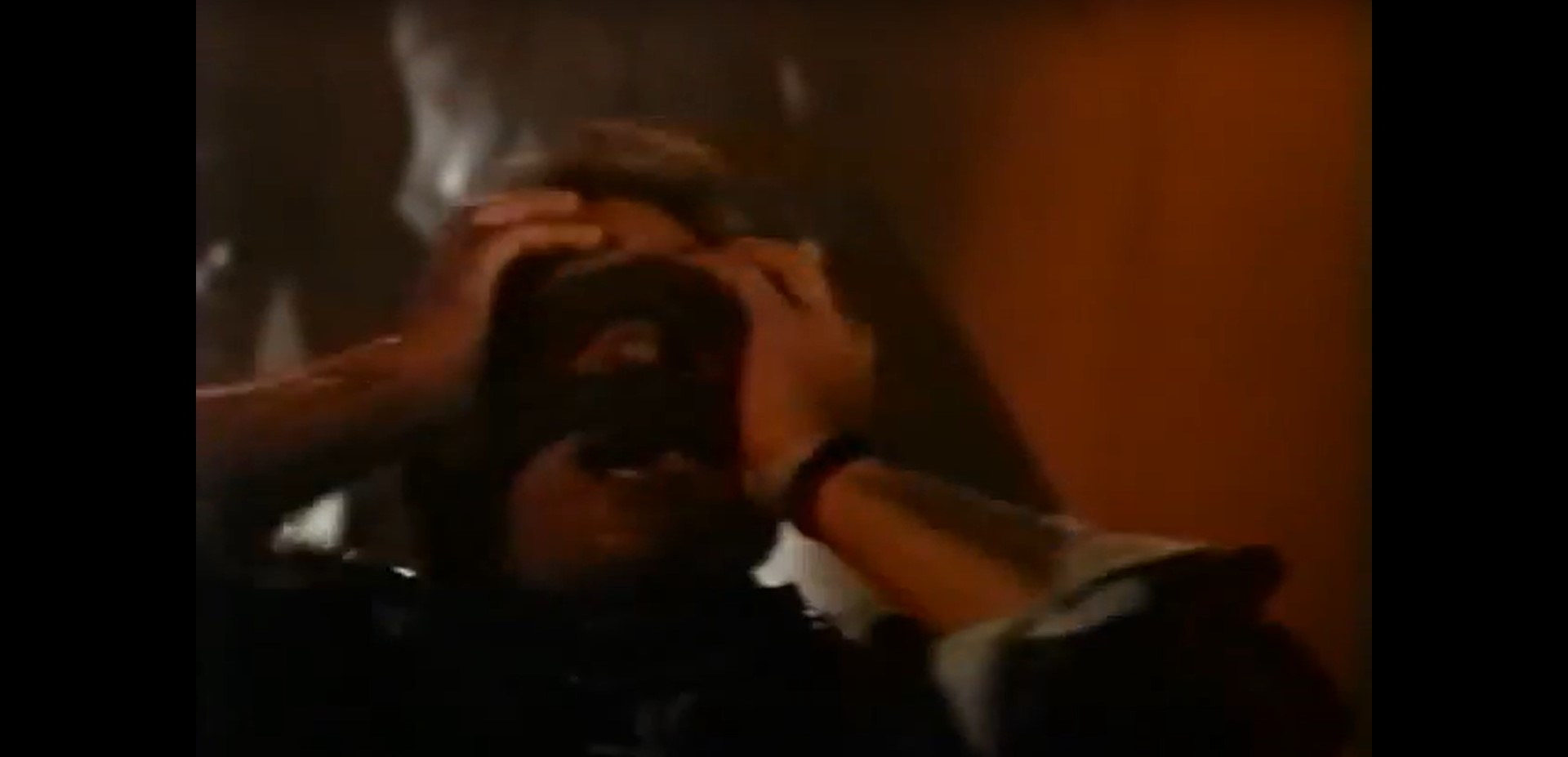
The fact that “Deep Space” doesn’t take place at all in space is innately tongue in cheek to begin with, but that brand of flippancy courses through the film’s veins despite the blood splattering and semi-serious veneer, weaving between an action-horror and a horror-comedy during the entire 90-minutes.  Some of the comedy is intention, such as McLemore’s husky wit and sarcasm, but there’s also the extremely foggy campy side to this gem.  Some of these elements include the creature being hinted as a genetically mutated cockroach or the left field use of Julie Newmar’s psychic abilities that are randomly injected the storyline for the sole purpose of forewarning McLemore over the telephone rather being an intrinsic piece to stopping the creature.  The creature carnage would undoubtedly be investigated and exterminated without the psychic’s help, making her character farcical in futility.  “Deep Space” also pulls a little inspiration from “Alien,” maybe even the sequel, “Aliens,” with a toothy, long-headed, and eyeless black organism that resembles much like a Xenomorph or the Xenomorph queen and there’s also a near shot-for-shot sequence of a security guard whistling to and trying to persuade a cat to come to him while the monster rises from behind and strikes a fatal blow.  The scene is very reminiscent of Harry Dean Stanton’s death in “Alien.”  Being campy has it’s highlights but never can fully overshadow scenes that erect suspense or are saturated with gore which “Deep Space” has both with a combination of editing and piercingly sharp sound design and a rip-roaring, blood-splattering chainsaw kill that’s leaves that good metallic taste in your mouth.

There’s no escaping the blood-hungry tentacles of the “Deep Space” monster coming at you in a brand new 2018 high-definition master Blu-ray from Scorpion Releasing, leased from MGM, and distributed by Ronin Flix and MVD Visual. The hard-locked region A Blu-ray is presented in an anamorphic widescreen 1.85:1 aspect ratio and is rated R. Fred Olen Ray knew how to develop an eerie, twirling fog and wind atmosphere and this master crisps up that iconic trope image. Textural details and natural-appearing skin colors are delineated nicely throughout as you can make out every little blemish and hair on a shirtless Charles Napier as well as really getting into the slimy orifices of the creature and having a sense of its viscosity with a decisive sheen. Black areas are inky and dense with the right amount of grain in the overall picture and no obvious signs of image posterization, retaining the natural shadowing, along with no cropping or border enhancements. The English language DTS-HD master audio stereo finds common quality ground with a tidy dialogue track that does Napier’s resonating and recognizable jest justice. However, there is some hissing early on into the film, especially in the lab scenes in the contentious dialogue between the military general and the lead scientist. Omar Tal’s sound design proves vital to the story that relies on the screeching, the scuttling, the whooshing of tentacles, and the booming roars of the creatures, coinciding appropriately with Alan Oldfield and Robert O. Ragland’s rather run of the mill serrated and discordant electronic score. What “Deep Space” Blu-ray lacks is robust extras with only an audio commentary with director Fred Olen Ray and a scene selection index. “Deep Space” ages about as well as you expect over the last 35 years, but this Fred Olen Ray creature feature relic becomes rightfully preserved for being quintessential B-movie verve that no longer seems to exist in today’s age and also the fact that Charles Napier wears a kilt.

***Stills do not represent or were captured from the Blu-ray release

“Deep Space” Invades Blu-ray on Amazon.com!