Become Wrapped Up in EVIL with “The Shroud” reviewed! (SRS Cinema / DVD)

“The Shroud” now available on DVD from SRS Cinema!

Centuries before, an evil witch is brutally tortured and killed while covered in a white shroud. In present day, a nun, part of a special sect vowed to never let the unholiness of the shroud deviltries be unearthed from the forgotten rubble of a divine stupa, is raped by two men wearing masks. With the help of a hired obtainer, the nun will stop at nothing to get her hands on, even at the defiance of her brother’s advice, but the shroud’s a bewitching mistress and its power are intoxicating. Breaking her piety pact with God and her sworn duty to protect man from wickedness, the nun succumbs to the sin that drips from the shroud’s blood-soaked fabric and exploits its personification powers of evil doings by not only exacting revenge on her attackers, sending the shroud to assassinate her attackers without an ounce of mercy, but also converting her devout habit to a shameless, promiscuous one of immorality.

A made-in-Italia possession film about a killer burial garment and a nun with big guns giving out the last rites. What could go wrong? The immediate impression arises a lot of interest in this 2022 released inanimate killer object flick from writer-director Fabrizio Spurio. As Spurio’s third feature in the horror genre, “The Shroud” envelopes the 50-year-old, Rome-born director’s first ambitious single story length venture behind the more episodic anthology, “Innesti,” and the more obscure “Vanity,” that taps into the willingness participation to do anything for stardom. “The Shroud” embarks into a more religious and supernatural discourse that clashes the sin and the sinner with a blurry line of empowerment. Made with pennies, or rather made on the Italian centismos on the Euro, “The Shroud,” or “Sindome,” is a production of the Dario Argento and Lucio Fulci inspired Goreproduction company, cofounded by Spurio with Francesco Lagonigro tacked on as a fulltime collaborator in shooting low-budget, independent, free-thinking cinema of underground horror.

The last time I saw the sultry lead Italian actress and extreme indie horror luminary, Chiara Pavoni, was in the avant garde “Xpiation” helmed by one of, if not the dominant, underground horror filmmaker, Domiziano Cristopharo.  In her motherly-voyeuristic role, Pavoni radiated with dark, sphinxlike desire in her well-dressed, pin-up sex-symbol performance of longing and control.  Pavoni doesn’t stray far from that archetype with her latest role in Spurio’s “The Shroud” as she plays a woman of virtue, a nun to be more exact, who has quickly turned lubricious and vindictive after her being raped.  Pavoni is certainly bodacious on screen as she adorns tight-fitting outfits that barely contain her snugly-packed large chest, exposing a Mariana Trench deep cleavage in a Spirit Halloween sexy nun getup for much of her role’s sordid side.  As a thespian performer, Pavoni has the subtle moves of a temptress who knows what she wants but dialogue deliveries are something left to be desired as the “Demonium” actress goes through the motions of plain speak as does much of the other cast, including the Goreproduction producer costar Francesco Lagonigro. Lagonigro plays her object obtainer who, by the seducing forces of the shroud, turns into her sex-slave or gothic lackey as visions of death please feed him the sensation of guilty pleasures. Lagonigro’s version of a factotum is about as cheesy as they come with a glaring lowered brow and white and black face paint to embellish something that looks nowhere near sinisterism. If we’re supposed to take Lagonigro’s maniacal manservant role seriously than Spurio, and Lagonigro for that matter, misses the mark badly in a poorly sized up rendition of a Renfield like stooge. “The Shroud” rounds out the cast with many miniscule, nearly nonspeaking roles with Paolo Di Gialluca (“7 Sins”), Andrea Pucci, Allesandro Massari, Giuseppe Andreozzi, Sara Lagonigro, Monica Rondino, and Andrea Pacilli and Samuele Lagonigro who composed the score for the film under the moniker, Sam and Andy.

As you can see, “The Shroud” is a family production for the Lagonigros who won’t hesitate to pitch in to make Francesco’s lewd and crude extreme horror on a bar tab’s worth. Conceptually, “The Shroud’s” an appealing idea of religious hypocrisy and the natural human desire to be immoral. Rules are meant to be broken as Spurio seizes control the very one thing a woman should have control over – her body. By introducing rape by two masked men, Spurio rips away that control and for a nun who whole schtick is to abide by God by maintaining purity in keeping her holy temple intact, she must seethe with humiliation in front of her Lord and inevitable turn away from him because there is nothing left unadulterated to give. She has sinned, whether intentional or not, and so the tainted nun must keep on sinning in various ways: lust, revenge, and murder. Despite being on a budget, Spurio’s ability to liven up a plain white tablecloth is what making movies is all about as the shroud lives and breathes on screen, moving in an agile manner, and becomes a physical presence that can gore a man through. Sleight of hand scene reversals bestows the shroud with a life of its own, creating a slithering dolman of death that looks great in the humble presentation. That kind of DIY special effects translates the same across the slender 76-minute with practical gore gags that rest above mediocracy, and I can say that with a straight face. “The Shroud” will have very few claims to cult fame with a slew of sloppiness that takes the zero-dollar expenditure and makes it appear even cheaper than pocket change. There’s even a scene where the director is clearly reflected into the frame, not even an attempt to hide or review for need to reshoot.

“The Shroud” is warm and cozy when it’s not trying to kill you! SRS Cinema, a leading purveying of underground cinema, releases Fabrizio Spurio’s “The Shroud” on DVD as part of the company’s extreme and unrated nightmare fuel label. Distributed through MVD Visual, the region free DVD5 is presented in an unmatted widescreen 1.85:1 aspect ratio with a commercial grade quality of a standard definition camcorder that maxes out on the higher side of output of a 720p resolution and so the final result looks fairly okay for DVD. For much of the natural lighting, the high contrast works extremely well, creating deep shadows that make the film feel richer than its actual value, but the details and textures are often soft and bleary, washing out any kind of tactile material. Luminescence of green and blue gels as well as double overlays are used to symbolize nightmares and shroud vision are more headache inducing than a stylish solution when mingled with an industrial engine rumble or high-pitched and stretched vocal score with some piano keys tossed in to mix it up. The Italian language dual-channel stereo is a lossy, unbridled catchall. As much as the audio is purely soundtrack, there is still an insurmountable of sounds being captured by the camcorder mic that softens the desired prominent audiles, such as dialogue which becomes trapped in a cavernous state of echos and various levels of pitch inconsistences. The subtitles on the SRS DVD appear to be translated by a person with English as not their primary language as a tone of grammatical errors, punctuation mistakes, and absolutely zero capitalization tarnish an already low-rent feature. If you can work your way through the strangely designed menu options to the bonus features, you’ll find included raw take bloopers, photo gallery, music videos starring Chiara Povani and Francesco Lagonigro, and SRS trailers. The physical package is perhaps the best part of “The Shroud” with a true-to-form beautifully dark illustration of the most memorable character faces to exhibit in the film, crafted and designed by Avery Guerro. “The Shroud” is an estimable underground piece of the extreme horror art pie but slacks in unnecessary places and becomes an exemplar of a shoddy and careless production that ultimately hurts the overall value of its genus.

“The Shroud” now available on DVD from SRS Cinema!

When Life Hands You EVIL, You Make EVIL-ade! “American Zombeland” reviewed! (ITN Distribution / DVD)


In Corsicana, Texas, Sam’s a zero-budget horror filmmaker whose trying to make it big in Hollywood, submitting every garbage zombie movie he can muster. When he receives a letter back from a film festival, he immediately calls for a party with all his friends and family in attendance, but the letter is actually a rejection letter, proving once again, that Sam’s still a filmmaking loser. In a stroke of turnaround events, an actual zombie apocalypse breaks out and the undead are knocking at his door. Jumping at the opportunity of top-notch, free special effects and a horde of zombie “actors,” Sam delegates his friends as the production crew, going out into a zombie infested Corsicana, Texas to shoot his legacy, non-Hollywood zombie epic.

If there was ever an American political and cultural lampooning zombie film, “American Zombieland” is it. Originally titled “Fat Ass Zombies,” the George Bennett written and directed horror-comedy nixes the original title, albeit keeping the rubric for Sam’s movie, and seemingly goes hot off the coattails of the Woody Harrelson and Jesse Eisenberg crowd-pleasing and long awaited sequel, “Zombieland 2: Double Tap.” As Bennett’s freshman directorial, he co-writes the feature with Christopher De Maria and Brave Matthews that’s has little to do with the loveably gory Ruben Fleischer riot. Instead, “American Zombieland” is a none-politically correct satirical farce that’s sticking a hard poker at red state, gun-toting conservatives and the morbidly obese American subsociety lifestyle, sporting the red, white, and blue as if being patriotically proud being 300+ pounds. Brother and sister, George and Karina Bennett, co-founded company, MagicBullet Media, and Summertown productions fund and serve as the production company.

As a running joke, the story continues to deface one of Sam’s zero-budget films, “Dead Beat Zombie Dad.” In reality, “Dead Beat Zombie Dad” is a zero-dollar budget short comedy by David Slayter who wore multiple hats in the cast and crew of “American Zombie” and was not, in fact, a film directed by MagicBullett Media executive product and lead actor of the film, Dave Mussen in his first horror-comedy performance as the downtrodden, piss-poor director Sam. Mussen’s resembles the average joe; he bares no chisel chin, he’s balding, and does a good enough job being a mediocre individual so pretending a hectored filmmaker for his obscene and schlocky small horror ventures didn’t perceive challenging. One of the more memorable characters is the flagrantly perverse, yet harmless Poppers, played by FX’s “The Bridge’s” Johnny Dowers. Dowers dons a Joe Exotic-like green dyed hairstyle, handlebar mustache, and a slippery slope into unfashionable redneck garb with a more than less-Tiger King pizazz. Dowers steals much of Dave Mussen’s scenes as an unforgettable caricature a grease monkey yokel. On the opposite spectrum is A.D. Johnson as Horatio, a tragic character not exactly from the same vain as William Shakespeare’s Hamlet, but deride a proper Englishman’s snide accent to be the ever condescending and stanch critic of Sam’s projects. “American Zombieland” cast and extras are vast, including Kristen Renton (“Xenophobia”), Samantha Walker (“Ghost Story Chronicles”), Bryan Handy, Stephen Archer, Sondra Currie, and Benjamin Chamberlain.

George Bennett and crew attempt a horror-comedy aimed at desensitizing and making light of beliefs and lifestyles. What results is a crude, rude, and painfully stale fly by the seem of the pants zombie ruckus on an average entertainment scale that relies heavily on poop and fart jokes, missing the mark of sarcastic repartee targeting misrepresentative patriotism embodied by big corps, big bodies, and big racism. “American Zombieland” ultimately is a big mess of a narrative with characters coming and going without a visual diagram, segues are muddled beyond the power of understanding, and, again, the ill-approached poop and fart jokes. “American Zombieland” is also a big F.U. to the uppity and disheartening inner workings of Hollywood and, in my opinion, this is where Bennett and “American Zombieland” excels, casting caution to the wind with an unorthodox, zomedy to be frank as possible and not really giving a care of what others think – my self more than likely included. Not everything in the film is unfunny or uninteresting, such as with a pothead’s vivid visual quest of an animated interjection of seemingly random bits of American identifiers, consumerism, and, again, poop and fart jokes; a scene that reminded me of the dessert hallucination/Rob Zombie music video segment from “Beavis and Butt-head Do America.”

“American Zombieland” is the anti-Hollywood, independent zombie-comedy brought to DVD home video by ITN Distribution and Millcreek Entertainment. The DVD is presented in an anamorphic widescreen 1.78:1 aspect ratio, and features a steady natural lighting for much of the 1 hour and 28 minute runtime, not focusing on creative mattes or visual tweaks to up the ante. There are some impressively seamless drone ariel shots that exhibit little lag from the compression. Amongst a lot of the foreground focusing, skin tones look correct despite a minor softness in the detail and the night scenes are balanced out properly. Lastly, the visual effects are above par quality, the ariel shots of smoke and fire coming out of houses, the lawnmower death, and other visual sfx renders out nicely. The English Dolby Digital dual channel audio output has limitations, especially for a zombie film that powers it’s fear by the moans of the undead, but for what it is, the audiophiles are better than expected with a robust two channel mix. Dialogue is clear, soundtrack has range, and ambience is a bit overzealous…again, with the poop and fart jokes. Bonus features only include the trailer. Scatterbrained undead folly, “American Zombieland” is a rash whack of cultural farce without literally scattering brains, falling short of the intended meaning, and becoming tousled in it’s own jumbled message.

Only on DVD! “American Zombieland” at Amazon!

The EVILS of the Jersey Shore! “Exit 0” reviewed! (DVD / Breaking Glass Pictures)


A young New York City couple drive down the Jersey Turnpike down to the Jersey Shore for a quaint getaway in the comforts of Cape May’s Doctor’s Inn Bed and Breakfast. With the hopes of rekindling the spark between them, the omission of the fast churning city living will surely become dampened by the island’s off-season quiet that’s more in sync with focusing on each other. However, after a strange incident at a curbside rest stop, something hasn’t felt right. From the odd tenants to the inexplicable occurrences of the Doctor’s Inn, the strain between their recoupling becomes a daunting wedge and when a videotape is discovered in their room, a videotape that shows a grisly murder on the exact spot they sleep in their room, that wedge not only drives deeper between them but also begins to suspend reality and raise paranoia.

Set on location at the Doctor’s Inn Bed and Breakfast of Cape May, New Jersey is the jarringly fear-fostering “Exit 0” that delivers the grim goods on a dead end, spook story skippered by writer-director E.B. Hughes (“Turnabout”) from a story co-writer with Philadelphian native, Gregory Voigt. Being a local Philadelphian suburbanite myself and a patron visitor of Avalon, New Jersey, having “Exit 0” be a horror-thriller that showcases the tremendous historical and Victorian-laden edifices and tourist retreats like the lighthouse on Cape May point is really invigorating to know that any kind of story, whether horror or otherwise, can be tailored into the seams of just about anywhere on this designer planet. Cape May is charming, inviting, and bustling with touristy customers who’ve answered the call from the beach from up and down the East Coast and surrounding inland areas, but during the off-season, the Jersey Shore, as a whole, is a gloomy and desolate barren land that would emit the appearance of invoking an eerily haunting atmosphere. “Exit 0” is also a charming little independent picture, self-produced by Hughes under his production company EBFIlms.

The cast is comprised of mostly locals in the tristate New Jersey, New York, and Philly area, starting off with Gabe Fazio (“Trauma is a Time Machine”) anchoring down Billy in the lead role of the boyfriend reminiscing about when his parents took him to the Doctor’s Inn when very young and being the plagued victim of severe anxiety when things go strangely muddled during his stay. “The Badger Game’s” Augie Duke plays a constant in Billy’s quickly downgrading opaque craziness as the teetering love interest, Lisa, and though typically the foundering relationship could be the heart of the story, but in “Exit 0,” Lisa might be portion of the reason for Billy’s seemingly unhinged fear. Duke’s wonderfully seductive from a distance, blue balling Billy on his wishful romantic long weekend. Billy and Lisa’s chemistry is in a beaker of unknown substance as we’re not really sure where the stand with each other: Billy doesn’t know whether he loves Lisa or not and Lisa keeps Billy at arm’s length while at the same time attempts to engage in Billy’s sexual advances. Hughes highlights often usual and direct characters to round out Billy’s source of burdens, especially with The Writer played by “The Mask’s” Peter Greene. Greene’s method approach plays into his deep ominous eyes and contoured facial features as a mysterious fixture. Federico Castelluccio plays into the latter direct category as the island’s Detective Mueller. The “Midday Demons” actor perhaps provides a character who becomes the only source of sanity not influencing Billy’s instability and Castelluccio courses a hardnose investigator to reach the truth. “Exit 0” fills out with a couple of veterans in Kenneth McGregor (“Prom Night IV: Deliver Us From Evil”) and Daniel O’Shea (“The Rocketeer”).

“Exit 0” will unavoidably not be a hit with most audiences as a salt of the earth kind of psychological thriller bearing no teeth when considering general moviegoer baits, such as lots of gore, action, and skin, but despite the rudimentary building blocks, E.B. Hughes braises shuttering tension inside a compartmentalized configuration that includes a bit of found footage vehemence mixed with some spun Cape May folklore that’ll find regional nepotism amongst from friends and relatives of the cast and the crew and favoritism from the locals and enigma enthusiastic. Another disadvantage against “Exit 0” is more technical in regards to poor sound editing that picks up way to much noise, ambient and static alike, that’ll certainly dissuade some from enjoying the core plot involving triggering suppressed mental illness and eliciting out of the box interpretation of whether or not what Billy experiences are in fact real or just in his piecing imagination.

Embark on a minatory trip to Cape May with E.B. Hughes’ “Exit 0” on DVD Home Video distributed by Philadelphia company Breaking Glass Pictures. The region 1 DVD is presented in a widescreen, 1.78:1 aspect ratio, with a runtime of 95 minutes. “Exit 0” isn’t a popping color film that limits the ranges to being bleak shades of primary colors that opalescent from scene to scene until we meet The Writer whose basking in a harsh, almost heater like, fluorescent red. These scenes exhibit quite a bit of color banding, noticeably on the walls. Details are moderately soft on times, especially on faces, but there’s plenty of good contour lighting to equalize the effect. The English language dual channel stereo mix initially begins with a rough edit that can’t discern dialogue and backdrop noise audiophiles, making the car ride exchange dampened between Billy and Lisa who are nearly drowned out from the car’s whooshing ambience. Stereophonic sound system feels more mono that can’t grasp the voices and the anxiety riddle milieu that bombard Billy’s crumbling agitation. Dialogue tracks are, for the most part, prominent and can be discerned. Special features include a lengthy and in depth Q and A with director E.B. Hughes, Gabe Fazio, Peter Greene, and Federico Castelluccio, behind the scenes footage, outtakes, a bonus short film “Harsh Light” written and directed by E.B. Hughes about an aging boxer whose career has hit a dead end, and the theatrical trailer. “Exit 0” is abstruse conjecture that mental illness and chilling folklore can be one in the same, depending on one’s subjective perspective, and E.B. Hughes and his anchoring leads masterfully leave open the murky, rheumy wounds for personal contemplation in a hair-raising tale.

Available on DVD at Amazon.com

The Analogies of the EVIL that Plagues Us. “Hole” reviewed! (Wild Eye Releasing / DVD)


Three peoples’ lives become coiled around the unfortunate state of death with each experiencing individual variations of the concept. The recently released convicted felon, Ed Kunkle, faces reality on the brink of insanity as his past demons vilify his temperament in the direction of total carnage. Befriended by Kunkle is Eve Adams, a single mother who struggles to cope with her infant son’s untimely murder that happened right under her watch. Assigned to the Adams Boy’s case is detective Bodie Jameson who struggles with own malevolent urges brought upon by the unsurmountable cases of grisly homicides that come cross his desk while he also tracks down a child killer. Their differences connect them, looking into their future to rediscover the past that molded their disheveled lives into fateful affairs with death.

Over the course of three years between 2007 to 2010, auteur filmmaker Joaquin Montalvan directed and assembled a gritty glimpse into the grubby windows of condemned souls with the 2010 released “Hole,” produced by his own independent production company, Sledgehammer Films, and co-written with his longtime collaborator and wife in life, Eunice Font. “Hole” is Montalvan’s third horror feature following 2002’s beleaguered with loneliness thriller “Adagio” and psychological horror, “Mobius,” which was released the year prior in 2009, plus also behind a string of documentaries. Montalvan’s an optically surreal storyteller basking in a rich and unorthodox story and color palette that revives originality bobbing in an heaving ocean of lemming horror.

“Hole” is comprised of showcasing three stories from three tormented lives. One of those lives, the mentally unfit Ed Kunkel, gorges on being the centric force that thrives the other two into a descendant hell. The late Paul E. Respass tunes into Kunkel’s manic polarity as a person who can be extremely mild mannered and pleasant then explode with caustic abrasiveness and ugly torture. Respass’s shoulder length, wavy hair, graying goatee, and iron contoured face gives him a Charles Manson appearance that goes good with crazy. Behind closed doors Repass’s Kunkle breaks with sanity slaughtering his mother lookalikes as a result of mommy issues, but when conversing with Eve Adams, Kunkle’s maintains an upright keeled temper. Teem Lucas, who like Respass has worked with Montalvan previous, subdues the abnormal imbalance with a normal person’s reactionary response to loss and heartache when Eve Adams copes with the murder of her young child. In the middle these two extremities, detective Bodie Jameson’s work seeps into his psyche, fluctuating between irrational and rational thoughts. Another actor in Montalvan’s corral, Jim Barile, who looks more like a 70’s hippie than a detective, has the hardest performance of them all of slipping into a terrifying unknown mindset while maintaining status quo in work and romantic relationships. Barile’s role isn’t well recieved, flying mainly under the radar with an underperformed and pointless conclusion to detective Jameson right and wrong affliction. Charlotte Bjornbak (“Camera Obscura”), Katherine Norland (“Cannibal Corpse Killers”), Alina Bolshakova (“Dead End Falls”), Dennis Haggard (“Cannibal Corpse Killers), Theresa Holly (“Legend of the Hillbilly Butcher”), Micki Quance, Gavin Graham, and Char Frost (“Someone’s Knocking at the Door”) co-star.

Right away, a strong sense of resemblance washed over me when viewing “Hole.” The lead actor, Paul Respass, and the overall texture felt already acquainted with my visual cortex nerves. My suspicions were justified and my sanity was cleared as I have seen “Hole” before in a later film entitled “Legend of the Hillbilly Butcher,” another Joaquin Montalvan flick featuring Respass as a delusional manic. Yet, “Hole” is one of those films that after the credits role, hasty judgements should be chewed on, reflected upon, and recollected for a second analysis. Hell, you might as well just re-watch it all over. The thing with Montalvan is is that his brand has trademark cognizance on such a level that even if “Hole,” released in 2010, and “Legend of the Hillbilly Butcher,” released in 2014, instinctually ride the same wave, they ultimately compare as individual projects with a distinct personality and artistic flair. For instance, “Legend of the Hillbilly Butcher” denotes more of an homage to early exploitation films and “Hole” puts more stake into societal system failures, even if borrowing from the likes of Ed Gein with the killer wearing a flesh mask and sewing up a fleshy garment. Both films hark about mental illness, but one glorifies the act for the sheer sake of carnage fun and the other considers it a collateral damaging symptom of a broken justice structure. Another difference to note is “Hole’s” three-way non-linear narrative that moves like the Wonkavator from “Charlie and the Chocolate Factory” in every way imaginable and can be daunting to keep up.

Out of the depths of obscurity comes “Hole” distributed on DVD home video by MVDVisual and Wild Eye Releasing under the Raw and Extreme banner. Presented in a widescreen, 1.78:1 aspect ratio, Montalvan and his D.P. R.T. Norland, brightly bedazzling with every shade of matte box and some slow motion, play the field utilizing various techniques to tap into Ed Kunkle’s disorienting madness. Using backdrops like the ghost town of Bodie and the spiritual sanctuary (or bohemian commune) of Salvation Mountain, Montalvan’s able to cast an aberrant vision out inside an independent means. There are some points of posterization, details are softer than desired, and blacks lose composition with blocky noise so there are some drawbacks to the encoding. The English language dual channel audio mix pairs about the same as the video with spliced competing facets that tend to offer come-and-go range and depth. Scream queen moments go into feedback mode during Ed Kunkle’s kill mode, losing the ideal quality via unsound mic placement. Dialoge is okay being on the softer side with some background noise being flowing in and out between the audio edits, emitting a static effect around the dialogue and then cut out when not the actors are not speaking. The bonus features are aplenty and informative with a Montalvan commentary track, an extensive mack of documentary that fine combs every pore of the film that includes interviews with cast and crew, Ed’s Journal segment conversing about the backstory on Ed Kunkle’s perverse family and killed friends portraits and souvenirs, as well as trailers. Bloodhounds will want more from Ed Kunkle’s shed of horrors, but what director Joaquin Montalvan has fashioned threads madness with a neglected mental heath system while polishing a a shiny three prong, moviegoer narrative with blood, body parts, and butchery.

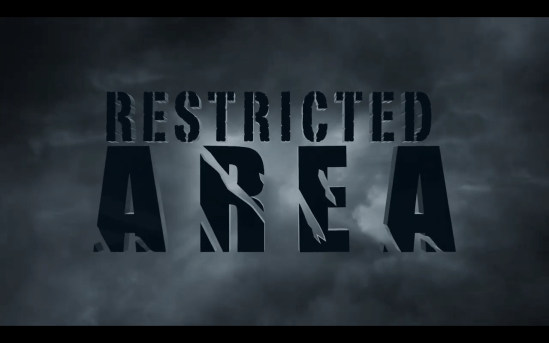
EVIL Knows No Off-Limits! “Restricted Area” reviewed! (ITN Distribution/DVD)


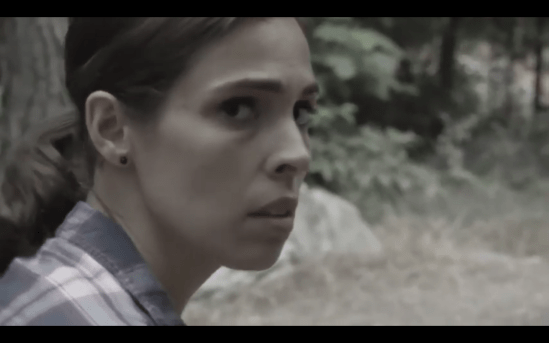
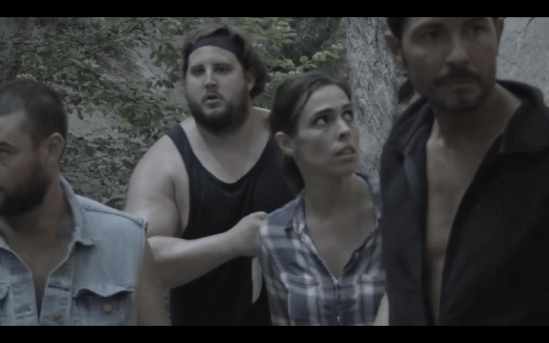
Four blue-collar friends are being laid off from their steel mill jobs; family generations are engrained with the blood and sweet of the mill, but the somber moment is humbling and harsh when responsibilities come to collect. They decided to throw one last hurrah, a boozy camping trip into the rocky wilderness, before life hits them hard. The calm and tranquil getaway turns deadly when acolytes of Unionology, a cult secluded to the restricted areas, sets sights on trespassing campers with the four friends right in the middle of the hunt. After teaming up with another hiker and the disappearance of one of the friends, a fight for survival ensues against armed masked men and an unhinged cult leader along the mountainside where it’s not only man versus nature, it’s also man versus man.

The great outdoors continues to be synonymous with a hot spot for murder, mayhem, and overall doom and gloom in Christopher M. Don’s debut backwoods cult thriller of survival entitled “Restricted Area.” Dons pens as his second script behind the savagery, snowy slopes of his ski-sploitation horror, “Minutes to Midnight,” where masked men with a cryptic agenda hunt down patrons of a ski lodge set upon a mountain. Don must have an fondness for producing screenplays where masked killers stalk in wilderness elements as “Minutes to Midnight” plot is essentially the same as “Restricted Area” without the sound-damping snow. Produced by Gear Up Productions, which I assume is Christopher Don’s company, climbs very little up to being a modest budget feature and retains around camping along the super low financial terrain based off the already exaggerated beliefs of Scientology that, if at all, lightly treads to more escalating and thrilling heights.

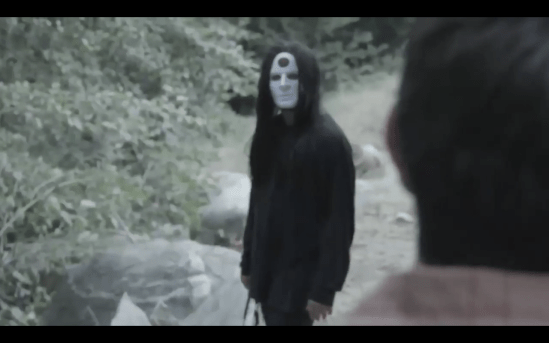
With being an indie feature on a microbudget, Don implements his cast to being his actors as well, including himself as Cody, the nearly silent onscreen brother to his real life brother, Robert Don, as the film’s lead, Tyler. Tyler’s a rough and tough steel mill worker with his biceps bulging from his sleeveless, black puffer jacket and hunting knife strapped to his waist side, but as far as depth goes, Tyler lacks significant worth from little backstory and no character arc. Whatever Tyler does isn’t exactly bursting with energy by Robert Don’s deadpan manner. Who recoils from inexpressiveness is West Murphy playing Axel, the goofy and boastful friend whose really blowhard, and though Murphy sprinkles flavoring upon and around most of the monotonically adrift slop, Axel’s one-trick pony can’t even offer much else to the story, not even a glorious death that would be redeeming for such droll stereotypes. “Restricted Area” houses random entries and exits of characters that can make viewers anxious, concerned, and down right frustrated with the arbitrary fates of Harold (“Big Bad Bugs’” Phillip Andrew Botello) who disappears with only a little sliver of where he might be in the closing scene and the blank white masked cultist with a machete who leaves more intrigue of a boss level villain than is actually divulged in the story. Paige Lindsay Betts, Ross Britz (“Ozark Sharks”), Emily Gardt (“Satan’s Seven”), Nicholas Cole (“Stripped”), Randy Wayne, Gus Moore, Wilmer Hernandez, and schlock horror internet pundits and, Shawn C. Phillips and Danny Filaccio fill out the cast list.

“Restricted Area” already has a zillion things going against the meek and humble feature albeit the aforesaid above from the mishandling of characters, but the bearings, picked from the litter of many categories, never comes into focal clarity and shimmy their way to eek by toward a rather enigmatic end. Out of the 112 minute runtime, Christopher Don’s screenplay couldn’t consists of more than 60 to 70 pages of dialogue and scenes with the remaining footage for the feature being supplemented with overkilled filler scenes of Tyler and his band of survivalists wandering around an idyllic traipse, dysfunctional and unnecessary segue edits repeat nearly themselves and just extend into filler scenes themselves, and the bombardment of landscapes – lots and lots of landscapes. There was even one faux pas of a wooded mountainside that was shamelessly shot straight from a magazine advertisement with the advertised site text very visible in the scene. There’s also a scene with a real rattlesnake that, by chance, wandered into production and Don decided misplace this miracle amongst inside another wandering group montage. To continue on the script, the convoluted nature of the cult wanted to kill a young boy becomes lost as this boy comes and goes as he pleases, pleading without any dire sense of urgency for Tyler to save his life. Yet, this dubious boy never seems to be frightened, frantic, or even in cahoots when considering the cult’s dastardly plan to end his time on this Earth.

ITN Distribution and Mill Creek Entertainment’s call to the wild is a survivalist nightmare in Christopher Don’s “Restricted Area,” pitching a tent into the DVD market with a home video release. The DVD is presented in a widescreen 1.78:1 aspect ratio on a single layer, region one disc. Perhaps one of the worst presentations I’ve seen lately with the low bit rate, big compression artifact issues that denounces detail clarity right from the get-go, settling into a fuzzy and blotchy 112 minute, from start-to-finish, runtime. The color palette doesn’t pop either inside the parameters of a faded natural scheme that bares no attempt to use any shade of tint to offer more than just the bare minimum to survive. The English language Dolby Digital stereo dual channel mix plays the same rugged tune with lossy quality in dialogue, ambience, and Michael Levinson’s synthy soundtrack, which is perhaps one of the film’s few highlights in lieu of his debut. Still, a harsh feedback echo on the dialogue dampens the authenticity of the ordeal and poor mic placement dilutes the fidelity even more. Optional English SDH is available. Bonus features includes an audio commentary, trailer, and a quaint blooper and outtake reel. “Restricted Area” doesn’t have the authority required to be a gouging survival horror as all sides of the cinematic terrain are too rough for an visual and audio trek and the script lays to waste with drone dispositions and careless considerations that needs to be post noted and restricted from itself.

“Restricted Area” on DVD