

Father Augustus Bane is a go-by-the-book type priest and through his unlimited optimism and passion, grudgingly turns the other cheek when life’s bitterly cold callousness bends him over a barrel and pulls his hair until bruised and raw on that very same turned cheek. When the God dedicated man of the cloth is pushed too far after the merciless slaughter of God worshipping parishioners and he is left for dead by a gang of demented family members, the surviving Father Bane is reborn and becomes destined to a vindictive life path with a six-shooting revolver he baptizes as The Lord. Hell hath no wrath like a priest scorned to obliterate all sinners from every walk of life in a blaze of the almighty glory (and gory) of The Lord and those explicitly responsible for the death of his congregational followers and much of the city’s crime and corruption will have nowhere to hide from their lethal penance.

What could be considered as the pious Punisher on steroids, Ryan LaPlante’s offensive-laden, satirical grindhouse exploitation feature, “Holy Hell,” is a confirmation of that films like LaPlante’s are sorely needed and pleasingly free in speech inside the dominion of today’s sensitive and politically correct cultural society. Surely not a product of the U.S. and will certainly piss some viewers off (especially zealots), this Canadian made production could only exist outside a conservative dome, looking inward for a weakness to seep and taint the sometimes too wholesome American cinema market that’s tiptoeing around what should expressively blunt and in your face. Let’s face it, folks, it’s a movie! LaPlante writes, directs, and stars in this movie of comedy, action, and exploitation that’s even too controversial for some of the supporting cast who used pseudonyms, such as punned Yennifer Lawrence and Zooey Deschansmell, as their stage names because of the deviant material.

The man with many hats, Ryan LaPlante stars as Father Augustus Bane, a cheerful priest with a firm belief of charity instead of violence, and as LaPlante’s first and only feature as a writer and director, “Holy Hell” snuggly fits the filmmaker’s contemning, vindictive, “autistic rage monger,” as another character described accurately. Satirically stoic, Bane reminisces the days of yore when severely slighted protagonist broke and the endured trauma became a journey of eye for an eye, tooth for a tooth. LaPlante, whose career pivoted to the video game world and could so seamlessly, understood the mentality of once was with harden, good men turned relentlessly anti-heroic. Father Bane’s opposition had parallel penchants of aggressive stamina, but in a more deplorable and deviant calling. The MacFarlane family is about as coarse and as ruthless as they come ran unflinchingly by Dokes, the head of the family, with his wild eyes and skull earring atop his fishnet undershirt and open Hawaiian button down. Dokes is truly satanic as a ravishing villain from in co-producer’s Michael Rawley’s in his sardonic performance of the father of three. The “Disco Pigs” actor revels as Dokes in not only being the kingpin, but also a special daddy to his three rotten and just as maniacal kids – Trisha (Rachel Ann Little), Buddy (“Red Spring’s” Reece Presley), and, the more flagrant of the trio, Sissy, a labeled sadistic he/she of boundless perversion and a flair for the theatric played vivaciously by Shane Patrick McClurg and McClurg’s Sissy MacFarlane is difficult to dislike and is favorably one of the best and best portrayed characters alongside Father Bane and Dokes MacFarlane. The entire “Holy Hell” cast amazes as deviant delectation and round out with love interest Amy Bonner played by Alysa King (“Slasher” television series), Luke LaPlante, and Austin Schaefer.

While “Holy Hell” trails the established trope about a vindictive good man, a thrilling theme consisting inside half the grindhouse genre films of 70’s to 80’s, Ryan LaPlante doesn’t really offer much new to audiences whom are well versed; however, since “Holy Hell” is one big punch-to-the-face nod toward grindhouse and the filmmaker constructs a complete caricature picture, the shocking, the disgusting, and the hilarity mold almost an entirely new brand of grindhouse or, as I’ve coined, mockhouse. A mock-grindhouse film have natural degrading quality where filmmakers remain on the fray of getting the right look and feel of a grindhouse film, but LaPlante accomplishes the task, echoing the effect while adding his own brand of comedy. Also LaPlante’s bludgeoning of taboo is no holds barred comedy, especially on surface level narratives such as with Father Bane who has a tremendous arch to hurdle as a priest fueled with guilt and rage against an army of inhuman and derange psychopaths, plus all the other miscellaneous miscreants roaming the streets at all hours of the day, but the script is penned like the Divine retribution as the priest endures, almost in a supernaturally reborn or resurrected kind of way, after being shot six times in the form of a cross by Dokes that, ironically, acts as a blessing for Bane to declare war on evil.

Indican Pictures presents a Rogus Gallery production with “Holy Hell” onto a not rated DVD home video. The widescreen, 16:9 aspect ratio, has a warm toned coloring grading from digital grader Defiant and also embellishes the natural grain and blemishes to assimilate into the grindhouse collective. “Holy Hell” is intent only appealing to a comic book illustration that makes definition fuzzy, but not totally cleared from the playing field. The closes up of the gore is nicely displayed with a drenching and gruesome effect. I couldn’t detect a lot of girth from the Englih language 2.0 stereo track which makes me think LaPlante intended on suppressing much of the ambiance and up the soundtrack quality from composer Adrian Ellis, whose upbeat, synch-rock has killer intentions whenever the MacFarlane’s are rolling heads. DVD extras include a director’s commentary and a blooper reel. Chockfull with affronting one liners, “Holy Hell” is utterly sound being well-rounded with the best intentions paved in hooker blood and indecent exposure, as well as being highly entertaining, in one holy redeemable package of horror exploitation blessed by Ryan LaPlante himself.
Tag Archives: indie


Bikini-Cladded Revenge on a Small Time EVIL Crime Syndicate! “Rondo” review!
Disturbed and dishonorably discharged Paul finds solace at the bottom of a glass bottle. As Paul falls deeper into dire depression with drugs, the drink, and cigarettes, Jill, his sister, lays down some ground rules while he crashes on her couch. At her advice and insistence, Jill schedules a psychological appointment for him and the doctor recommends sex as a release and not just any old sex, but the behind-the-doors, underground, Freak-a-leak kind of kinky encounters. Paul joins two other men in a high rise condominium, receiving instructions on how to treat and mistreat an affluent man’s wife, but Paul becomes the witness to an organized murder party and flees for his life, barely escaping the clutches of his captors, and returning home to his sister Jill to tell her everything. The only problem is, the killers know his address and now their business becomes a family affair loaded with straight razor slashing, crowbar bashing, and automatic weapon firing mayhem.

“Rondo” is an icy revenge thriller with bullets and blood galore from writer-director Drew Barnhardt. The “Murder Loves Killers Too” director reinvigorates a pulp noir approach into the independent film market that invokes woman power through all sorts of masculinity muck. Breanna Otts and Gena Shaw flourish as the anti-leading lady by wielding large assault rifles and being the kingpin of killers amongst a bunch of kneeling and broken men. “Rondo” is also about family, believe it or not. Whether bound in endless love or broken beyond repair,the theme of taking care of your own blood comes to the forefront, but before you go showing your kids, “Rondo” takes family to hell and back and then back to hell again for a rough ride of riveting vileness and hard-on revenge.
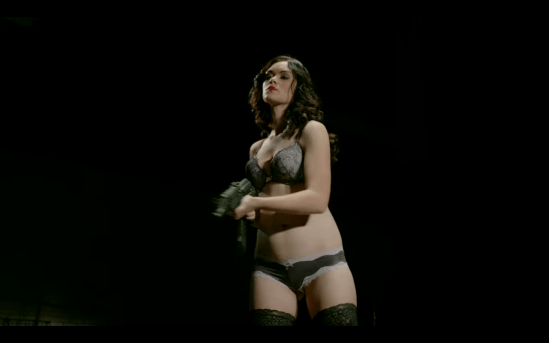
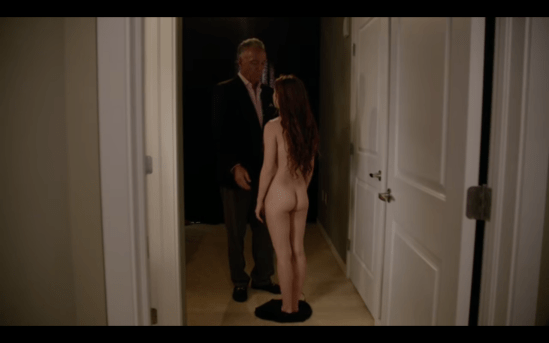
“Rondo” doesn’t necessarily have a lead character. In act one, the voice over utters over the pitiful existence that is Paul (“Galaxy of Horror’s Luke Sorge) who, at the persistence of his sister, tries to step outside the path of destruction by stepping into a sex den at the advice of a radical, and very pregnant, psychologist. The voice over is curiously used since pertaining to the fact that the narration, provided by Steve Van Beckum, becomes nearly Paul’s inner monologue by the end of his tenure. Act two transitions into a father and daughter reunion and then revenge plotters. No voice overs accompany the two, but Jill (“Westworld” and “SWAT” actress Breanna Otts) and her father Sam (“Rage of the Mummy’s Michael Vasicek) have an exposition fest involving what ifs and to dos. Sam felt to be a wasted character; an escaped VA patient returning to his children for revenge that doesn’t quite grow from there. On the other hand, Jill extends into act three as the sole protagonist and her thirst for vengeance is clunky and clanky, stirring up a halfcocked plan in the belly of the beast that happens to work in her favor and in our favor too as Otts ends up in lacy underwear in an episode of boobs and bullets. “Rondo” rounds out with Ketrick ‘Jazz’ Copeland, Reggie De Morton, Gena Shaw, Kevin Sean Ryan, Grant Benjamin Leibowitz and introducing Iva Nora in her first role and first nude scene.
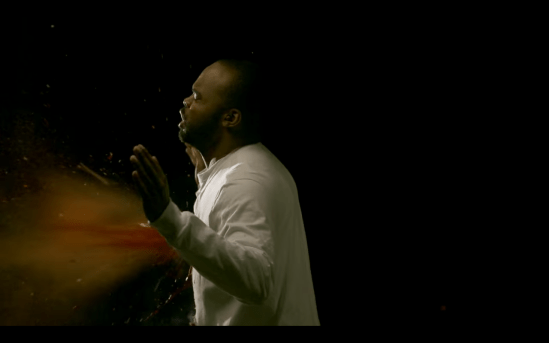
Conceptually, Barnhardt’s tale of ravage savagery rouses out from the cobwebbed conventional anecdotal pathways and while “Rondo” might be a tale that’s rarely been told, apprising the plot into maturity bid Barnhardt with a far more difficulty, leaving to squash the answers to far more questions at the roll of the end credits. One of the more puzzling questions is why does the voice over only narrate for Paul? Kicking off with a voice over that explains Paul’s downtrodden life, then transitioning quietly into Paul’s inner thoughts, and then disconnected completely that literally leaves a punctuation question mark hover just over our scalps. There’s also the question of how deep this criminal organization roots in society? How did Cassie, wife of the barbaric boss Lurdell, get to assimilate herself into positions of power to influence poor souls to become meat for the grinder.
Artsploitation Films distributes an American bloodbath with “Rondo” onto DVD home video. The not rated release is presented in a widescreen, 1.77:1 aspect ratio, and despite some banding, the picture quality spruces a fine package with natural lighting and little-to-no filter use. The Dolby Digital 5.1 Surround Sound pitches perfectly without some much of a hiccup. Range and depth are fine, though the film isn’t necessarily a heavy hitter with action, and the channels are level amongst the LFE gun blasts in the cap your ass finale. Bonus features include a director’s commentary, deleted scenes, selected music commentaries with composer Ryan Franks, and an exhibition of the gritty pulp cover art and lobby cards set to a musical score. “Rondo” is a cult indie classic through the venomous teeth of white-collar Americanisms and a torrent of human immoral inclination that relentlessly shows no mercy scene after scene.

Own “Rondo” on DVD today!

Mad Doctors, Evil Bloodsuckers, and Vengeance in “Lust of the Vampire Girls” review!

After painstakingly trying to argue to her boyfriend that he never hangs out with her drug abusive friends, the woman withdraws to her friends’ exclusive sanctum without telling him. Before he realizes what’s really at stake, the boyfriend learns that her friends are potential Devil worshippers that aim to practice human sacrifices, but little does he know that his girlfriend is beyond the dangers of a Devil cultist as she had unwittingly placed herself in the experimental hands of a mad Nazi doctor named Gunter and his serum produced harem of female vampires and loyal male acolytes. As the boyfriend attempts to infiltrate the cult incognito, he’s overwhelmed by the flesh-piercing, bikini-wearing beauties, but the eldest vampire, whose bored after years of being with Gunter and wants to find true love, spares the man’s life and instantly imprints herself onto him. She shows him that his girlfriend is no longer mortal and promises to be with him forever, but before he can commit, he first must destroy Gunter and his work before the evil scientist distributes a new serum that’ll be able to transform women and men into the upgraded superior race of blood-thirsty vampires.

There have been moments where horror enthusiastic filmmakers have embarked creatively on re-creating cult favorites or re-inventing that of the European, over-sexualized female vampire, Victor Matellano’s remake of Jose Ramon Larraz’s for instance, and most have come out on top with inspirationally faithful stories or portray the particular type of promiscuous vampire. Writer-director Matt Johnson takes a wooden stake stab at the complexities of the homage with “Lust of the Vampire Girls,” his feature film debut, and with a budget that’s resting on a minimalistic mishmash pot of a self and crowd-funded platter, the director runs with his sparsely written script with a vast amount of bodies able to fill a plethora of roles. Instead of mystical, fantastical, or ancient damned souls feeding on the hapless male sex, the “LofVG” story surrounds a Nazi madman injecting his serum into women over the years (No, that’s not an euphemism) which is Johnson’s modern day spin to the genre.

Nameless characters, aside from Gunter, shape the lineup of vampires and humans, starting with Victor Medina as the boyfriend. Medina’s performance further darkens the character whose an utter jerk lacking chivalry and a moral compass, but the actor is able to fulfill the boyfriend’s character arc as he tracks down, and express a figment of empathy toward, his estranged pretty girlfriend played by “Friend Request’s” Amy Savannah. The two battle against each other with petty ventures of, sometimes typically, relationship woes and Medina and Savannah reflect that rather well until coming entangled with Dave Nilson’s Gunter. Certainly fitting the part and wielding a passable German accent, Nilson comes off as power, arrogant, and invincible. In short, perhaps the most convincing performance in the entire film. Leading Gunter’s harem den of vampire girls is a the doctor’s oldest, yet ageless, subject, donned to the lovely Ashley Eliza Parker, whose eagerness falls just beyond the fumes of desperation. Rounding out the cast are Jeff Christiensen, Cherish Dawn, Mary Etuk, Jami Kelly, Flo Median, and Bri Northem.

“Lust of the Vampire Girls” might be billed as a homage to the 1960’s and 1978’s European exploitation, but as the film seeps into a quasi-level surrealistic state garnished with sexy female lasses in undergarments, very much reminiscent of the genre claimed to respect, the allure finitely founders and tilts more toward below a meager attempt that results in wince-worthy acting and female vampires perpetually hissing through their teeth. In the sequence of events, the beginning offers a small non-linear storyline that’s sorely misplaced starting with the pretty girl being lost only to be found by a vampire loyalist, then the boyfriend, surrounded by variously masked cladded acolytes, becomes a sleeper agent in Gunter’s psychosexual church of horrors, but then the couple are having an embattled conversation at a coffee house, and then, before we know it, we’re back at the church again – with, again, the perpetual hissing, underwear garnished, vampires in silky, see-thru robes. Overly sexualized female vampires are a very Eurotrash and the hazy environment is very reminisce of the LSD era, which Matt Johnson pulls off both fairly well, but the greats, like Jean Rollin or Jesus Franco, made them more captivating than just being mindless, eye-candy monsters with a very bad lisps.

Wild Eye Releasing and MVDVisual release Matt Johnson’s “Lust of the Vampire Girls” onto DVD home video. Image quality varies in a numerous shades of tint, but for the majority, there’s a soft glow to the entire stock and macroblocking during night scenes. The stereo track has an unbalance wit about it that’s unsavory in it’s lossy quality during the genre uncharacteristically progressive metal soundtrack and offers a cacophony during scenes of anger and scuffle. Bonus material includes “LotVG” trailer and storyboards. On the surface, Matt Johnson skimmed the exploitation genre the filmmaker was shooting for and whether intentional or not, the quality waivers from script to performance and then there are aspects that just don’t make since (like vampires wearing gas mask..?), but it’s an atmospheric A-to-Z low-budget horror film and nothing more.

Own “Lust of the Vampire Girls!”

A Frat Boy’s Obsession is Evil’s Way of Crying for Help! “Somebody Darling” Review!
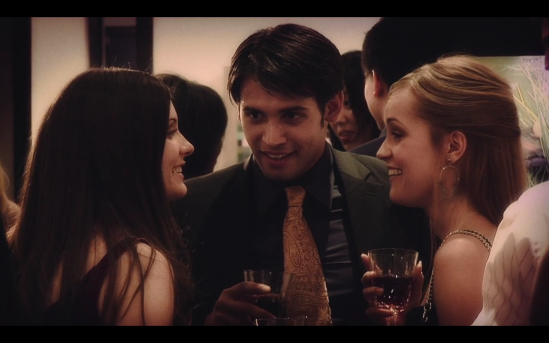
On the campus of Williamsburg University in 2006, a popular fraternity house holds an upscale house party, filled with the most beautiful students dressed in formal wear, liquored with martinis and gin and tonics, and customized to fit the luxurious lifestyle the men of fraternal brotherhood. When the fraternity president Christian Roane conducts a round around to greet guests, he catches glimpse of Sarah Stein, a coed being a good sport by giving into her friends’ urges to party greek. Christian’s unhealthy obsession with Sarah starts innocent enough, but when Sarah doesn’t take that step toward sharing the same affection, Christian’s control goes into self destruction that not only threatens Sarah, but also threatens to unearth the true and ghastly nature of the brotherhood and the brothers aim to lockdown their secret by any means necessary.
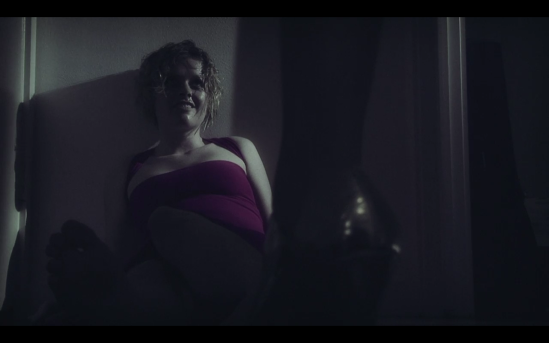
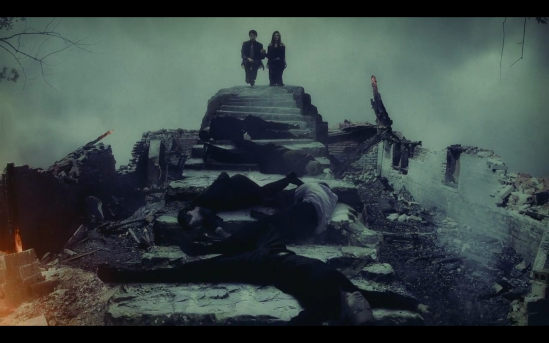
“Somebody’s Darling” is the 2016, independent drama horror from the multi-faceted filmmaker, writer-director Sharad Kant Patel, churned out from a story by Sebastian Mathews. In his directorial debut, Patel, known more for his short film work, heedfully courses through detail and treads lightly on the coattails of a sensitive social issue. His film skirts on the subject of rape culture in the American college and university setting while also touching upon sexuality complexities and severe anguish in today’s youth. Basically, “Somebody’s Darling” is a higher education dissertation on the experiences of collegiate life with a horror twist and all the along the way, Patel slowly paints Christian and his brotherhood onto a canvas of ambivalent malevolence by deconstructing Christian to quickly reconstruct him in a ravaging roundabout. Patel throughout leaves a bread crumb trail of clues that don’t make sense at first, that might lead to other conclusions, and that doesn’t explicitly genre “Somebody’s Darling” as a horror.
Christian is the film’s central focus and with a dark and brooding character, a dark and brooding soul must ride parallel and Paul Galvan intently delivers a cryptic persona. Peppered erratic is Christian obsession Sarah Stein, a run-of-the-mill coed playing darlingly enough by Jessa Settle. Then there’s the brotherhood, whom are begrudgingly split on how to action Christian’s off course fixation, consisting of a youthful lineup of white, stuck-up preppy frat boys with an actor list to match including Fred Parker Jr., “Spirit Camp’s” Matt Tramel, and Mike Kiely. Sarah also has an entourage but not as prominent and, to be honest, the brotherhood weren’t just a hair more involved, but Kristen Tucker and Cathy Baron (“The Lights”), who play Madison and Riley, hit the stereotypical college coed right on the head as the two look to score big when scouring their hot boy wardrobe and provide unnatural sexual banter toward their goody-two-shoes friend, Sarah.
“Somebody’s Darling’s” independent genetic makeup doesn’t hide under a flashy production, but presuming an indie dramatic horror that’s more bark than bite isn’t worth wild should is the incorrect assumption as the climatic end will be attention catching. Granted, the dialogue’s overdrawn breathiness can bog down a regular popcorn viewer and turn away heads that have a disdain for immense screenplay scripture, but to comprehend the whole story and to become invested in the characters, being a viewer from start to finish won’t go in vain. Patel personal investemnt extends to much more than spitfire directions and scribing with a hand in producing, composing, editor, and digital effects with the latter being used sparsely to convey the Christian’s internal aspirations and quondam self. When effects do come into the real word, a practical, lifelike approach is taken and that intensifies the horror tenfold.
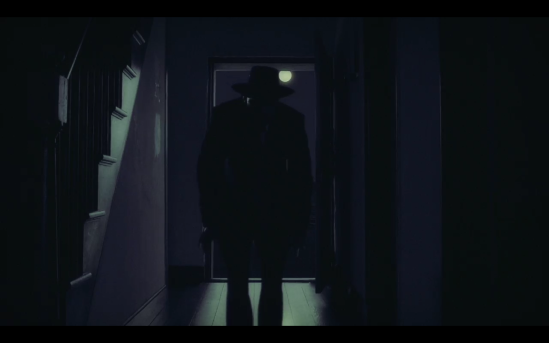
Distribber released Sharad Kant Patel’s “Somebody’s Darling” onto various streaming platforms such as iTunes, Amazon, Google Play, and Vudu on December 1st. I was provided a screener disc and can’t focus on or comment too much on the details of image or sound quality, but the disc did provide bonus material including the making of the score and behind-the-scenes in creating the dream sequence. Sharad Kant Patel’s “Somebody’s Darling” has an edgy appeal that draws you in like an unsuspecting moth to an alluring light and then zaps a fatal shock right into the nervous system as soon as the undertones are evidently a metaphor for something far more sinister.
Trippin’ on Grief Conjures Internal Evil. “Woodshock” review!
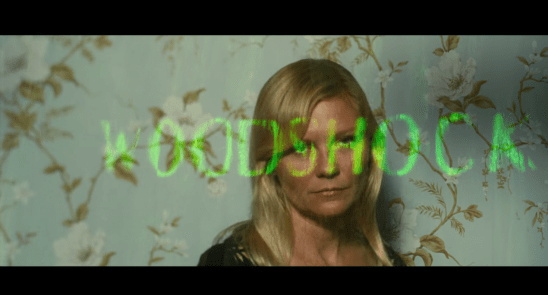
After suffering the tremendous loss of her in-home hospice cared mother, Theresa descends into an inescapable state of grief and severe isolation inside her mother’s woodland home. Stumbling through life, she manages to show up at work, a cannabis distributor in town, with the verbal encouragement from her eccentric boss, but Theresa’s mind can’t grasp the reality of the situation and loses focus resulting in another tragic loss when she mistakenly hands over fatally potent pot to the incorrect customer, subsequently a friend. Along with grief and isolation, guilt comes into the fold and she begins lighting up her own stash of mind altering cannabinoids that thrust her mindset into disjointed delusions and sleepless strolls through the forest.

“Woodshock” is the 2017 drama thriller directed by two sisters: Kate and Laura Mulleavy. Credited as their freshman film, the Mulleavy sisters embark on an internal, unhinged perspective from their main character, Theresa. With that in mind, the filmmakers’ use of nature has both a symbolic and practical substance that paints the inner workings of Theresa’s thought process. Shot on location surrounded by the giant red oak trees of Northern California puts Theresa, this tiny human being, right smack dab in the middle of ginormous towers of pure ancestral nature and unable to fathom the full scope of the trees metaphorically explores how Theresa is unable to fully comprehend the overwhelming amount of emotions she ultimately succumbs to that lead her down a darker path. Nature, whether trees, butterflies, or, more so in general, landscapes, becomes a familiar motif throughout the film with the trees being the most repetitive aspect being exhibited in numerous scenes of being harvested by loggers, stripped and stored at mills, and lingering remnants of their once intact past.
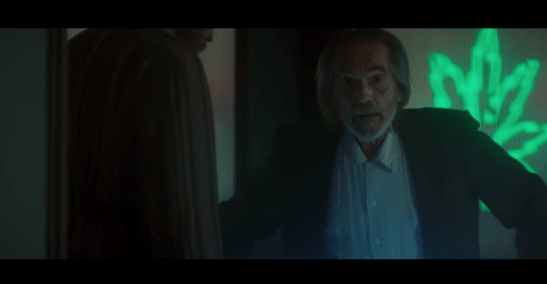
“Melancholia’s” Kirsten Dunst fully embraces the role of Theresa with her mind, body, and soul by not holding back in a role that demands more of a solitary, voiceless performance blanked with grief. Dunst nails it with ease. Accompany the Sam Raimi “Spider-Man” actress is Denmark born Pilou Asbæk as the pot dispenser shop owner Keith who conspires to work out deals with his special customers in need of once and for all ceasing the pain of ailment. The dynamic between the two is hot and cold as the sensation of tension is always present even if the dialogue is not. Asbæk’s Keith actually drives the plot, creating situations that put Theresa in a dilemma inducing pickle and he certainly takes advantage of her grief. Asbæk smug performance couldn’t get anymore complex as he portrays an arrogant, hippie-esque pot shop entrepreneur in a small Washington state town, but exhibits a softer side, especially for his friends and for Theresa, at times. Joe Cole (“Green Room”), Steph DuVall (“Scanner Cop”), and Jack Kilmer costar.
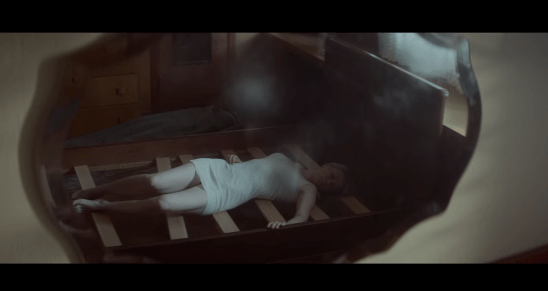
“Woodshock,” as a whole, attempts to grapple too much in the dimension of the subliminal. The Mulleavy sisters focus on symbolizing and using metaphors rather than being straight shooters to communicate Theresa’s internal struggle and between the montage of trees, the vibrant visuals, the double exposures, and various angles of a single action, there’s a choke that occurs, making apprehension hard to swallow. The siblings also display their inexperience at times. Despite completing impressive artistic visuals and able to create some slight movie magic as independent filmmakers, the directors’ choice to keep scenes from being cut and left on the editing room floor are questionable. One example would be Keith in the bar, moving his arms in a slow, locomotive motion, listening to a mellow track on the jukebox This scene is late is near the latter part of the film and doesn’t convey anything more about the character than already established with no transition scene to provide any kind of setup, background, or foreshadowing.
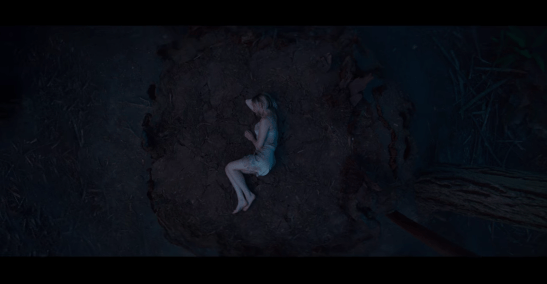
Lionsgate Films presents “Woodshock” onto a slip-covered High Definition, 1080p Blu-ray plus Digital HD. The MPEG-4 AVC encoded BD-25 disc has an widescreen aspect ratio of 2.39:1 that’s conventionally stable. Faint grain filters through, but this could be an intentional cinematography tactic. The English DTS-HD Master Audio track isn’t wired to pair with such slow, mellow storyline that doesn’t have a range to fully test the HD quality except for invigorating Peter Raeburn’s enlightening hodgepodge score. The dialogue track is muddled and nearly unintelligible by the overshadowing score. Bonus material includes “Making Woodshock: A Mental Landscape” that opens up Kate and Laura’s intentions in expressing Theresa as a character, their style in filmmaking, and to up sell their cast and crew. “Woodshock” is an artistic visual stimulation with no rival, but Kate and Laure’s inexperience emanates through more than their subliminal sub-contexts. Kirsten Dunst marvelously challenges herself that inarguably gives her even more of a range as an actress that only proves her ability to not be a one trick pony in and out of Hollywood.

“Woodshock” on Blu-ray!

 It's Bloggin Evil!