With Fame Comes Absurd EVIL Exploitation. “A Tale of Sorrow and Sadness” reviewed! (Radiance Films / Limited-Edition Blu-ray)

Limited Edition Blu-ray of “A Tale of Sorrow and Sadness” Now Available!

To compete against a rival fashion magazine who found profound success after hiring a famous gymnast as their spokesmodel, an ambitious fashion company sees potential in amateur golfer Reiko Sakuraba with her beauty, grace, and a decent enough golf game.  The only problem is Reiko has not won a championship.  The fashion company representative and Reiko’s sport’s columnist writer/manager/boyfriend Miyake strike a deal to get intensely train and mentally exhaust Reiko to be the best by the next tournament.  When Reiko outperforms the tournament’s veteran players, she instantly becomes a fashion icon and celebrity that leads to her own show for the magazine, photoshoots, and a large house in the middle of the suburbs.  Miyake’s aloof behavior continues even after Reiko’s success and while he drives her back home, he hits-and-runs a woman form the neighborhood who blackmails and guilts Reiko into letting her into the rich and famous lifestyle.  Reiko’s mental health slowly declines as pressures mounts.

“A Tale of Sorrow and Sadness” is a tale of how the sudden rise of fame and fortune can quickly lead to world of hurt through inexperience, obsession, misguided love, abuse, and the day-to-day tasks that can even burden even the most common person.  The story also represents a dichotomy between fame and the mundane.  The 1977 Japanese surreal drama is helmed by Seijun Suzuki, a filmmaker once blacklisted by the head of Nikkatsu Studios after his film for the company, “Branded to Kill,” was deemed terrible by Nikkatsu execs, and rode the filmic bench for nearly a decade until his theatrical release of the Shochiku Ltd. Released production that allowed him the freedom for artistic expression.  Also concisely known as “A Tale of Sorrow,” the Suzuki picture is written by Atsushi Yamatoya based off manga by Ikki Kajiware and produced by Yoshiki Nomura, Kenzo Asada, and Tokuya Shimada.  

Yoko Shiraki steps into the tragic golf-cleated shoes of golfer-turned-spokesmodel Reiko Sakuraba who finds herself unknowingly being exploited as object of marketable objectification.  What’s interesting about Sakuraba is she’s totally alone amongst other adults in a real cutthroat and cruel way through her trajectory of success.  In the fashion world, the magazine representative behind the concept (Masumi Okada, “The Living Skeleton”) only wants her for her beauty and success, her boyfriend Miyake (Yoshio Harada, “Lady Snowblood 2:  Love Song of Vengeance”), and even an once starstruck housewife, Kayo Senba (Kyôko Enami, “Killer Whale”) who was struck by Miyake’s car and resents Reiko’s, blackmailing her way into the superstar golfer’s life by forcing her hand to relinquish all from her worldly possessions to her mind, body, and soul.  Shiraki gifts Sakuraba the fault of inability to say no with her innocence and naivety ravaged and exploited beyond the point of no return and beyond repair but Sakuraba clings to dear life, perhaps even sanity, because of tone person that too only reacts negatively around her but since their blood reaction is thicker in the watery connections manipulating her, Sakuraba’s hand is forced to do much all of the golfing and modeling hell for her adolescent younger brother Jun (Tetsu Mizuno), a smart yet reclusive boy with off screen aggression getting into fights with school bullies stemmed likely by his sister’s constant absence.  Sakuraba’s not only a slave to external obsessions of success, image, and greed but also a slave to internal obsessions with Mikyake who deprives her of the most basic primal needs for financial gain and for manipulative control.  Kôji Wada, Shûji Sano, Noboru Nakaya, sao Tamagawa, Tokie Hidari, and Jô Shishido co-star.

“A Tale of Sorrow and Sadness” is Seijun Suzuki’s tour de force return to feature films.  A linear narrative speckled with surrealistic doses creates an unsettling and bizarre atmosphere of strongarm manipulation on the unassertive character of Reiko Sakuraba.  Her raw talent is mined and minced without much consent and pushed past mental exhaustion and collapse in what is an all too true theme surrounding the early television era of celebrity branding with esteemed figures being puppets for large scale companies in order to sell their promoted products.  Money, image, and success steer the helm without any due remorse to the elegant centerpiece of the room, driving Suzuki’s social commentary to extreme levels of misappropriation of a human person with feelings and ambitions of their own.  Instead, Reiko’s meekness is measured by Suzuki’s fabricated milieu of mistreatment represented partly in a behavioralism of semi-surrealism – Miyake’s stoic aloofness, Senba’s brazen hijack of Reiko’s fame and wealth, and even Jun’s withdraw and reclusion are all good archetype of strange conducts illegitimizing Reiko as person.  She’s dehumanized so much so she stops whatever little rationality she had to begin with and becomes a vessel of command that allowed those around to walk all over her.  Suzuki’s suburban reach toward fame theme is satirical for “A Tale of Sorrow and Sadness’s” thin blanketing of dark comedy and the filmmaker often accentuates the moments with elongated sequences, randomized bits of eccentricity, and highly stylized contrasts of sex and violence as well as commercially sensationalized imagery versus Stepford wives’ expectations.

A bleak absurdist dream, “A Tale of Sorrow and Sadness” becomes rightly a part of the Radiance obscure, high level lineup with a new, limited-edition high-definition transfer Blu-ray release.  The AVC encoded, 1080p, BD50 receives the high definition transfer from the Shochiku Corporation, who currently distributes a fair amount of Anime and since “A Tale of Sorrow and Sadness” is adapted from a Ikki Kajiware’s Manga, the film fits right in, and is presented in by Radiance in the original aspect ratio of a widescreen 2.35:1.  Radiance’s image quality surpasses expectations as visually bold in a wide variety of contrasting colors, especially in primaries of yellow and reds juxtaposed against achromatic shades of brilliant whites and deep blacks.  The original print is beyond pristine with virtually no dust, dirt, scratches, or any kind of visual impediments in what appears to be a well-preserved 35mm reel.  Skin tones appear naturally organic and textures pop in their specific fabrics inside an overlay of natural stock grain for that bare-faced aesthetic of clear based film strip.  The Japanese uncompressed mono PCM audio, again, surpasses expectations with a diverse mix through a single output that creates excellent note individualism rather than an indistinct amalgam.  The omitted compression codec provides the original audio framework comfortably upholding against the test of time without a flurry of issues in the single layer.  Hissing, popping, crackling and other types of interference are kept either suppressed or to a bare minimal in another pristinely kept transfer.  ADR dialogue clearly affixes to the images with synchronous efforts being no worse compared to other films of the era out of Japan.  The newly improved English subtitles render without error, are compositionally more-or-less within syntax range of translation, and pace nicely throughout.  Special features include a new audio commentary by film historian and author Samm Deighan, a new interview with assistant editor Kunihiko Ukai, and the film’s trailer.  The clear Amaray case contains Sam Smith commissioned artwork on an obi-strip included reversible sleeve – primary cover composition is of a live still of exhausted Reiko Sakuraba lying next to a bunker with a spirally title font and the reverse cover is more NSFW with a partially nude Reiko with boyfriend Miyake portrayed in soft, dreamy glow.  The white and red disc is pressed with eye-pleasing contrast and the inserted 31-page color booklet provides cast and crew credits, essay “Sorrow, Sadness, and the Sweet Smell of Excess” by Radiance regular contributor Jasper Sharp, an archive essay “The Realisation of a Seijun Sizuki Film” by Atsushi Yamatoya, and the Blu-ray acknowledgements. “A Tale of Sorrow and Sadness” Radiance Blu-ray has a runtime of 93 minutes, is unrated, and since Radiance is a UK boutique label, collectors and film aficionados will get the best of both worlds with a region A and B playback.

Last Rites: Seijun Suzuki’s return to theatrical feature films with “A Tale of Sorrow and Sadness” is a remarkable comeback for the ages and the decade interruption didn’t even cause a missed step for his artistic expression of exploitation and consumerism control ruining young, raw talent which is a clear-cut archetype of sorrow and sadness.

Limited Edition Blu-ray of “A Tale of Sorrow and Sadness” Now Available!

Pinksploitation EVIL is Transgressional Passion! “Love and Crime” reviewed! (88 Films / Limited Edition Blu-ray)

Limited Edition and Numbered Blu-ray / DVD Set Available at Amazon!

The dead body of a young woman arrives at pathology for post-mortem autopsy.  A victim of a heinous crime, the bare corpse already informs the head pathologist of sexual activity before, or after, death because of the fresh semen that’s inside her.  As he toils over her to open the chest, separate the ribs, and get a good look inside to see how and why she perished, the pathologist remains in disbelief that the semen inside her, inside his lifeless wife before him on the cold medical table and under the bright lights, is not his own.  Digging deeper into how someone could kill his beloved wife, the researcher in him hits the books, selecting and scouring through records of similar cases of murderers and rapists from over the years.  Each one under different circumstances concludes in a sentence that reflects the person they have become.  Inside the mind of a killer is a long hard look at ourselves in how far we go for treasure, love, and to quench our insanity. 

“Love and Crime,” or officially known under the Japanese title as “Meiji Taishô Shôwa: Ryôki onna hanzai-shi” aka “Showa Era:  History of Bizarre Female Crimes,” is the Japanese anthology from 1969 that pictorializes true crime narratives of mostly women transgressors, as the title suggests.  Yet, the Teruo Ishii helmed anthology is not entirely female perpetrator centric as the anthology jumps ship briefly to explore crimes against female victims for a crossover, comparative distinction.  Ishii, who played his hand in producing late 1960s sexploitation and violence by directing films in Toei Company’s pinku series that showcased the two subcategories, such as “Orgies of Edo,” “Shogun’s Joy of Torture,” “Inferno of Torture, and among many other titles with similar salaciousness, was thrust into “Love and Crime’s” consolidating short film escapade with a wraparound monologuing narrative that was just as intriguing as the sordid stories themselves.  Shigenu Okada produces “Love and Crime” as well as many of the films aforementioned.

Yoshida Teruo kicks off the wraparound with a mater-of-fact narration running through the head of Murase, the anatomist examining his dead wife’s corpse (Ritsuko Nakamura), in what would be the grisliest part of the anthology, especially when that chest snaps during separation.  Having worked with Ishii previously with “Abashiri Bangaichi,” a crime thriller about a reminiscing criminal aimed to reform himself, Teruo only worked a short stint with the Toei Company but his time spent on such films like “Crime and Love” discerns a piece of the dramatic devotion that would be otherwise missing in these purely exploitative films.  As Marase puts nose to book, he unearths and internally narrates the start of his true crime story journey research, beginning with the cut-throating scheme of the Toyokaku Inn case.  Chiyo (Aoi Mitsuko, “Melancholy Flesh Business:  Sensuous Zone”) and Kosuke (Kenjire Ishiyama, “Kwaiden”) own and run the humble Toyokaku Inn but when Chiyo seeks to changes businesses and cut ties with her philandering husband Kusuke, a treacherous and murderous plot against her is formed between Kusuke, spearheaded by assistant manager Kinue Munekata (Rika Fujie, “Outlaw:  Heartless”), and executed by maintenance man Shibuya (Takashi Fujiki, “Shin Godzlilla”).  From there, the film transitions to other female intertwined crime tales of Sada Abe, a woman who would kill her lover because of love and insistence during alternative sex, the case of Kunihiko Kodaire, a serial rapist and murderer spilling tricks of his trade to authorities, and the last known female murderer executed by katana beheading, Takahashi Oden, for poisoning her husband.  Each performance plays into the intricate patterns described by their true life counterparts with either a chilling contentment in taking a life or hurdling the obstacles inward to do the unpleasantries of what is asked of them  Circumstantial opportunities and conniving plots bury bodies six-feet under in a multifacted range of expression, greed, lust, and all the other deadly sins that plague mortals right to the very end.  “Crime and Love” fill out the pinksploitation anthology with Yukie Kagawa (“Female Prisoner Scorpion:  Jailhouse 41”), Eiji Wakasug (“Inferno of Torture”), Tomoo Koike, Tatsumi Hijikata (“Orgies of Edo”), Yumi Teruko (“Horrors of Malformed Men”), and a special appearance by the actual, reclusive, convicted murderer Abe Sada herself, shot from a distance while being interviewed by Yoshida Teruo.

As anthologies go, especially one rare as true-life crime and love, or in this case sexploitation,” “Love and Crime” has an unsystematic design when it comes to the stories and how they relate to the wraparound narrative.  For starters, not all the bizarre crimes are female centric.  The story of Kodaire revolves about a male serial rapist and murderer divulging his collected anecdotes to investigating confessors and are depicted in monochromatic flashback, the same as his present yarn telling scenes.  Though the case involves multiple women victims, Kodaire greatly stands out amongst the compilation of crimes for the very fact he is a man in an anthology literally entitled History of “Bizarre Female Crimes.”  Was the case of Kordaire a gap filler? Perhaps the uniquity of Japanese serial killers is so low and rare in their culture and history that this particular short story had enough estrogenic blood spilled it avoided the short list cut.  Each story’s relationship toward the wraparound is also thin as neither story suggests a same or remotely similar pattern to death of Maruse’s wife in what is more of a random-generator selection of stories read and worked through for better understanding of the killer female psyche rather than what makes the male killer tick to hit-and-run his wife.

“Love and Crime” is 88 Films’ answer to opening the door of the wonderfully violent and sexually charged world of pinksploitation.  A limited edition and numbered dual-format, AVC encoded, 1080p, 50-gigabye Blu-ray and standard definition, MPEG encoded, dual-layered DVD, set presents the 1969 film in the original aspect ratio of 2.35:1.  With various stylistic color grading outfits, such as grayscale image for the Kadaire case story or the last case of Takahashi Oden that’s starkly cold rooted in blue and green.  There’s not a lot of mention of what kind of work went into restoration but the print has kept in excellent condition with age or damage wear kept to a minimum with nominal vertical scratching and dust speckling.  Colors appear to be handled with true reproduction of the dyed processing, rich and bold leaves no room of ambiguity of image or object representation.  Skin tones appear natural that do flirt a lighter shade of orange at times, textures are coarse and greatly apparent, even in the black-and-white story, and there’s tremendous environment or background distinction that creates an organic depth between character and their setting rather than them being crushed into an all-in-one image.  The encoded audio is the original Japanese language LPCM mono 2.0 that captures the soothing project whir during post ADR.  Dialogue retains prominence with a clean enough clarity albeit some negligible hissing sporadic throughout.  Ambience is not as enlivened within what’s mostly an isolated dialogue mix but is there to complement to composition when necessary, such as the blustery snowfall during the execution that sets a tumultuous tone of desperation and severity.  The improved English subtitles are timely synched and error-free.  Special features include an audio commentary by the 88 Film’s Japanarchy release fire starter and Midnight Eye’s co-editor Jasper Sharp and Fangoria staff writer Amber T., a brand-new film introduction and conversation by film critic and journalist Mark Schilling, a still gallery, and trailer. The Obi-striped 88 Films packaging has a very familiar feel to what Radiance Films, another boutique UK label, is doing with their Blu-ray releases nowadays and “Love and Crime” could be confused for a Radiance resemblance, but clear UK Amary has a gorgeous, commissioned, newly designed artwork from Ilan Sheady that brings all the sordid shades of this anthology to life. The cover art is also reviersible with the original Japanese one-sheet. Inside, the Blu-ray and DVD overlap in a dual-disc lock system on the right while the left stashes 15-page black-and-white-and-colored pictured adorned essay by Nathan Stuart prologued with cast, crew, and release acknowledgments and bounded by the same Sheady artwork without the Obi strip obstruction. 88 Films release comes both in region A and B playback, is not rated, and has a runtime of 92-minutes.

Last Rites: “Love and Crime” will be a love-it or hate-it anthology of early pink violence and sexual discordance because of its broad stroke theme but the 88 Films’ limited edition, Japanarchy debut is an exciting and eager look toward the future of the label’s dive into Japan’s exploitational cinema.

Limited Edition and Numbered Blu-ray / DVD Set Available at Amazon!

EVIL Lies in Ancestral Ties! “Dogra Magra” reviewed! (Radiance Films / Limited-Edition Blu-ray)

“Dogra Magra” on Limited Edition Blu-ray! Purchase Here!

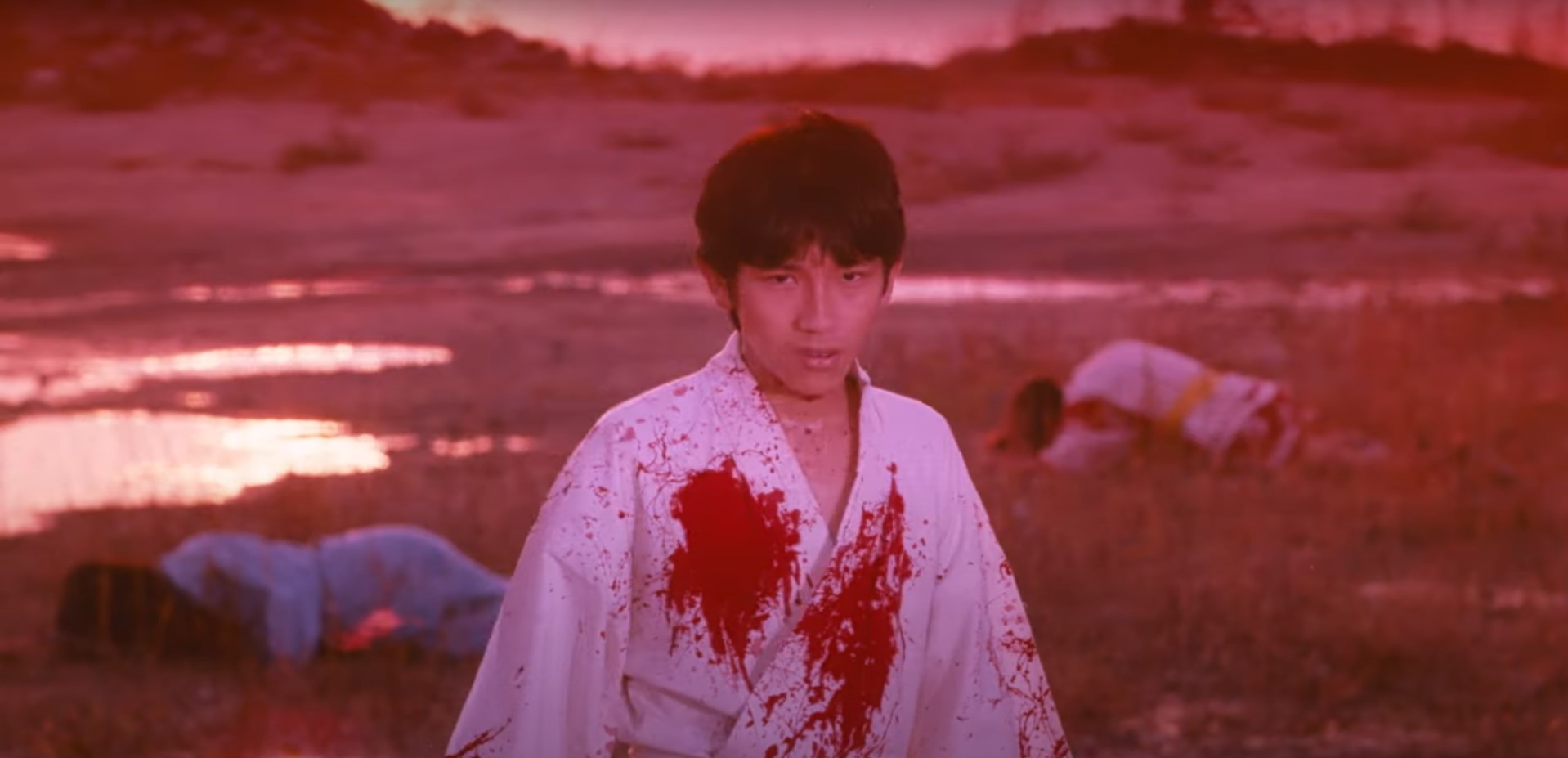
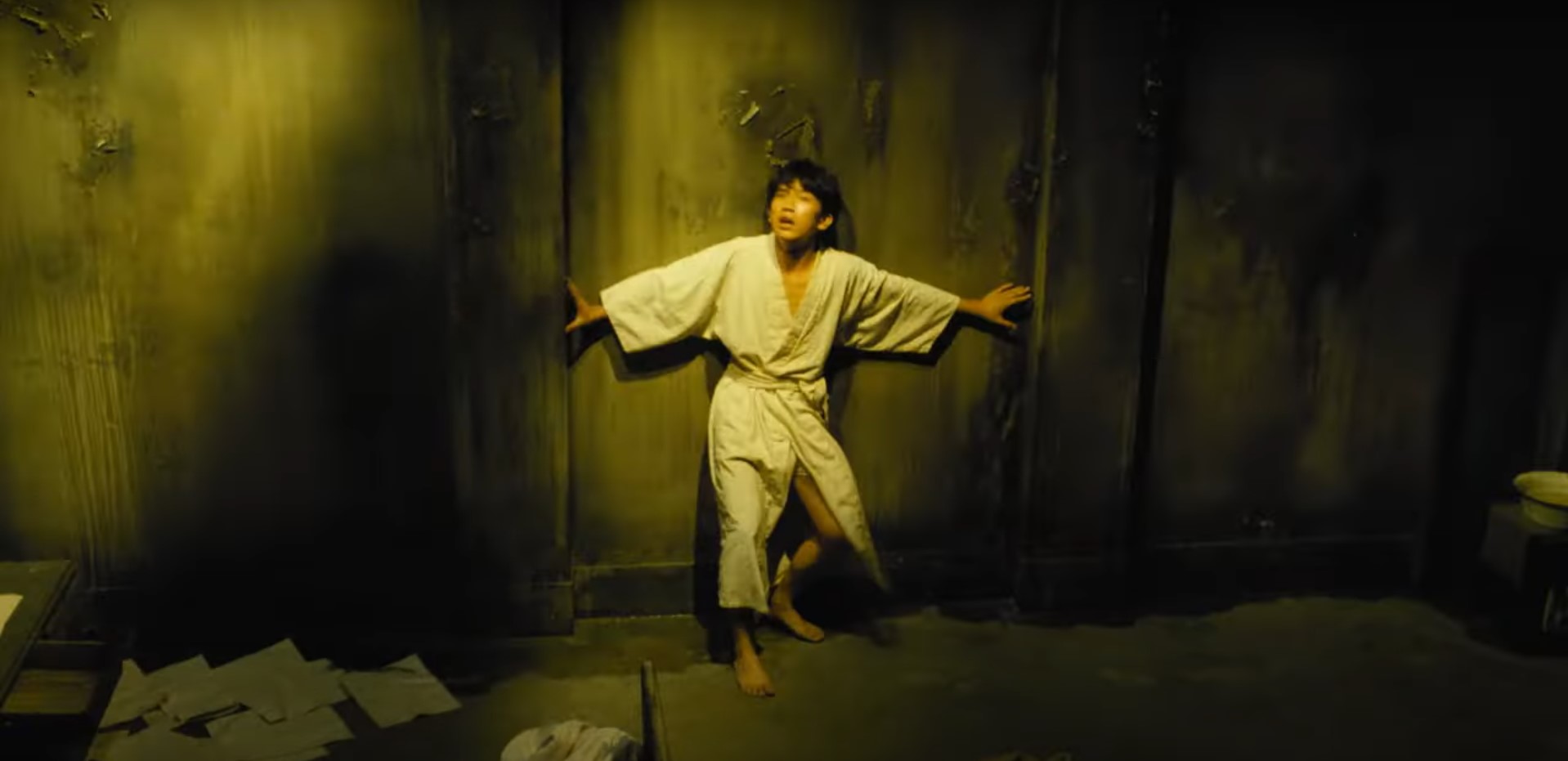
A young man wakes up in an asylum cell, unable to remember how he got there, his name, and doesn’t even recognize his face.  The asylum supervisor, Prof. Wakabayashi, has been overseeing his condition ever since the suicidal passing of former experimenting director, Dr. Masaki, nearly a month ago.  Disoriented, the young man is toured around the hospital grounds where Wakabayashi tells him the tragic tale of a 9th century man who kills his bride the day before their wedding day to capture the stages of her decomposition recorded onto a sacred scroll.  Distancing himself from the possibility of being murderous man, Wakabayashi informs him he is Kure Ichiro, the direct descendent of the groom and he enacted the very same events his ancestor committed long ago.  When the sudden reemergence of Dr. Masaki covertly corners Ichiro in his office, Masaki divulges his and Wakabayashi’s theories about Ichiro’s case but how the events came to fruition just may be plain and simple murder. 

Nature versus Nurture and the psychosis that ensues when discussing Pre-World War II context of Empirical Japan and their either inherent tendencies to repeat a violent past or to be triggered, poked, and prodded toward repeating history is the surmised and experimental plot of writer Yumeno Kyūsaku and his psychoanalytical novel “Dogura Magura.”  The title rearranged to “Dogra Mogra” is used for the film adaptation of Kyūsaku’s novel with the script written-and-directed by the avant-garde filmmaker Toshio Matsumoto (Japan’s “Demons” of 1971).  Matsumoto cowrites the script with Atsushi Yamatoya (“Story of David:  Hunting for Beautiful Girls”) written primarily from the distressed perspective of the protagonist Kure Ichiro only to switch hands when the experimenting Masaki enters the fold.  Shuji Shibata and Kazuo Shimizu inpendently produce the 1988 film under production companies Katsujindo Cinema and Toshykanky Kaihatsu AG.

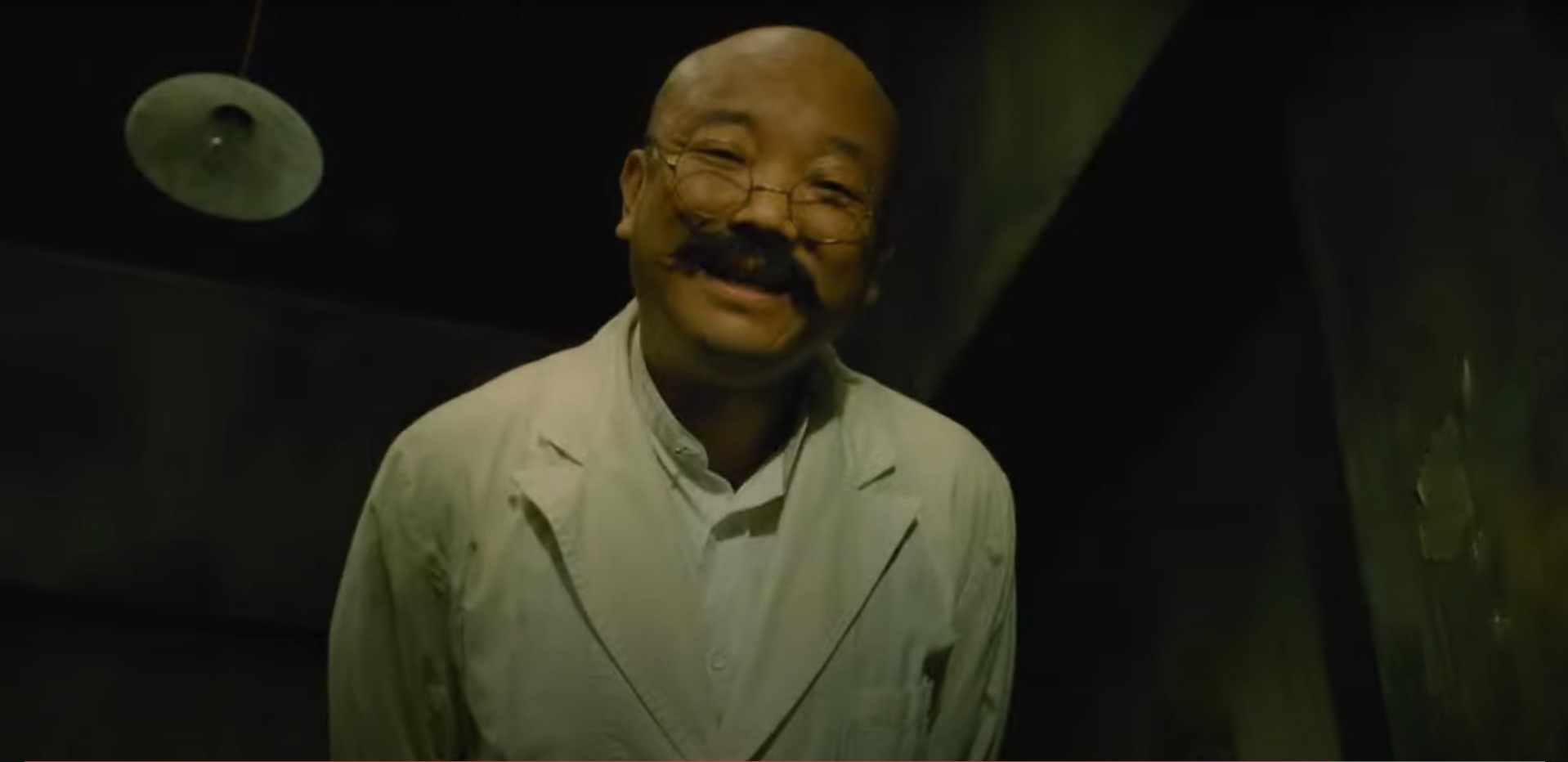
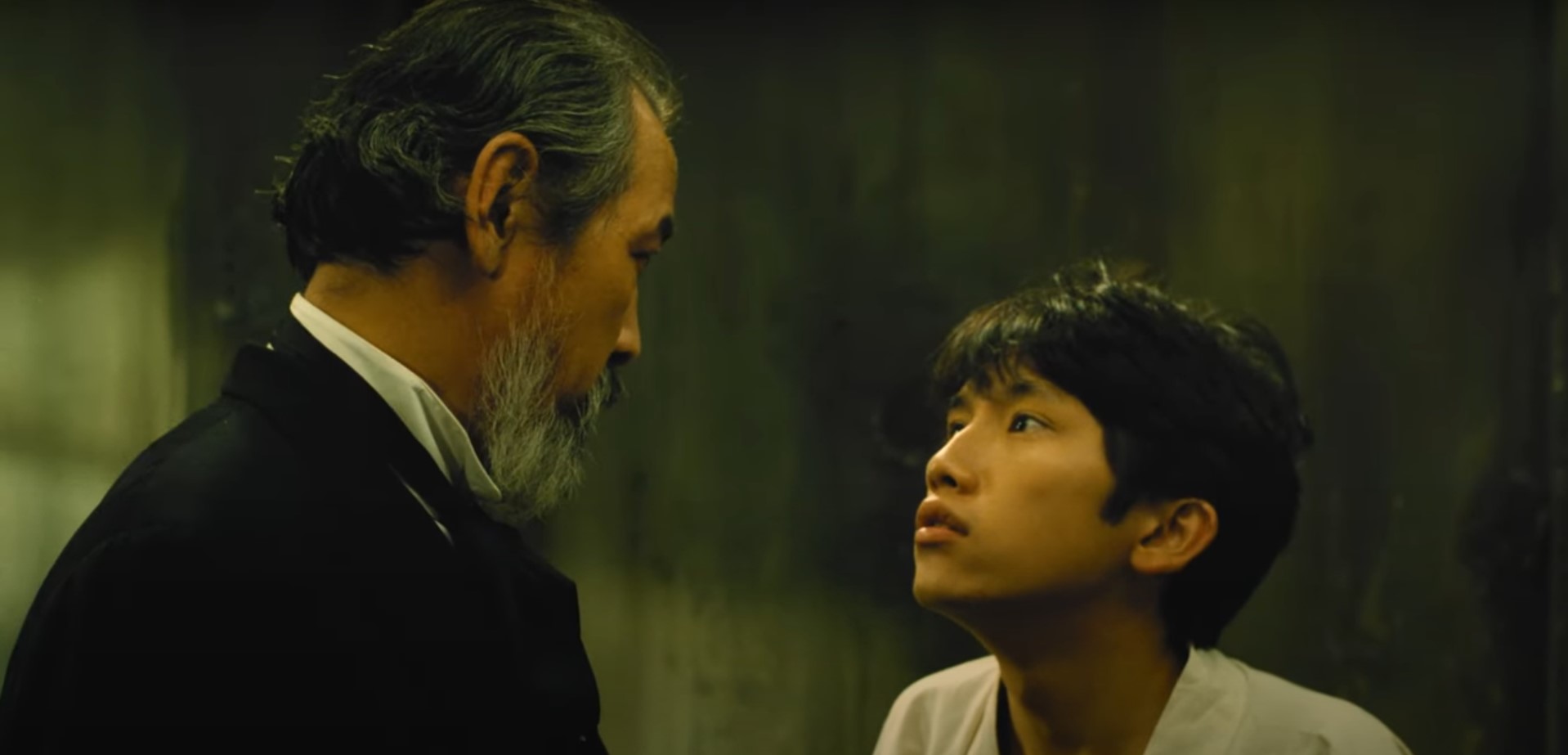
Principal players of “Dogra Magra” boil down to a three-prong outfit centered around Kure Ichiro and his theorized amnesia.  Before being the lead voice actor in “Prince Mononoke,” a decade earlier Yôji Matsuda was waking up with an inexplicable unawareness of who he was or what he had done as Kure Ichiro.  Matsuda feigns forgetfulness with shock and surprise, that will too place audiences in situational darkness, with the young Ichiro arousing in a powerful moment of unfamiliarity.  A shaken, discombobulated Ichiro becomes the object of obsessional mark between two theoretical and experimental-competing psychoanalysts in Prof. Wakabayashi and Dr. Masaki, played respectively by a collectively calm and bearded Hideo Murota (“Rape and Death of a Housewife,” “Original Sin”) that emits a sense of academia and medical security and reason and a hyenic-laughing, bald and glasses-wearing Eri Misawa who is more maniacal and unconventional to the likes of a mad-scientist   Yet both men have motivation that stirs the enigmatic pot of Kure Ichiro’s plight, stemmed from the very same source that drives the brutal murder of his beautiful bride one day before their wedding that eerily follows the footsteps of his macabre ancestral history.  There’s an inarguable difference between Wakabayashi and Masaki’s approach handling the curious case of Kure Ichiro; Wakabayashi’s hides in the clandestine shadows that aims to subvert the thought dead Masaki’s work whereas Masaki, under his blunt-force mania, is straight forward, almost apathetically.  In either case, both psychoanalytical professionals are indifferent to the crux of human life by focusing solely on whether either one of their theories is correct in an odd game of deception and death.  “Dogra Magra” rounds out the cast with Kyôko Enami (“Curse, Death & Spirit”) and Eri Misawa.

An attribute for audiences to become lost in “Dogra Magra’s” ethereal can be contributed by Toshio Matsumoto’s accosting avant-garde disorientation that swallows Kure Ichiro past, present, and future, plays tricks on his mind and eyes, and that also fishes patiently for a conclusion that rarely seems apparent.  The experimental qualities of “Dogra Magra” seep out of the tap of dark comedy and amnestic thriller and into a basin of spreading horror and exploitation.  “Dogra Magra’s” surreal storytelling and interesting, visceral visuals often reminds us of an old-dark house film a decade prior with the Nobuhiko Obayashi film, “Hausu,” and while not based in satirical foreplay like “Hausu,” “Dogra Magra” begins to unravel more questions than answers with a fleeting sense that nothing is real, nothing is as it seems, and maybe perhaps were all stuck in Kure Ichiro’s herded and scrambled mind that may or may not be his inherent, innate doing after all and that changes the narrative entirely.  Themes of historical repetition, ancestral culpability, forgetting the past, and empirical brainwashing are churned intrinsically into “Dogra Magra’s” constitution as well as within Japanese legacy with a formidable and prophetical proposition for no hope on horizon through a chimerical lens of learning and growing into the truth.

Radiance Films continues to starkly highlight underscored and wayward films from around the globe and “Dogra Magra” is no exception with a beautifully curated Blu-ray release.  The AVC encoded, 1080p high-definition, BD50 features the original widescreen aspect ratio of 1.85:1 filmed by cinematographer Tatsuo Suzuki.  The Radiance print for the limited-edition Blu-ray is pulled from the original 35mm elements and transferred in Hi-Def by producer Shuji Shibata and supervised by Tatsuo Suzuki.  The stunning upgrade leaves nothing to the imagination with a starkly harsh color grading that appears rawer than air or bright, leaning into grayscale more with darker tones of a greenish-yellow to accentuate the morbid, maybe even grittier, side of this tale, but often has naturally flourishing landscapes, such as the beach cove and the asylum yard that provides a good stretch of depth when not filtered through a POV celluloid handheld.  What’s a real winner here are the textural details that emerge through a blanket of consistent, healthy stock grain with dust and dirt retained to an extreme minimum.  The Japanese LPCM Mono mix disperse a sure-designed composition between natural audio elements layered upon or spliced with the incongruous tunes of one going through a hallucinogenic and dissociative state.  Dr. Masaki’s maniacal laughter has a sharp authoritarian jest that makes it even more frighteningly surreal.  Dialogue withholds that same sharpness and clarity throughout channeled through a single output, harnessing all the action into a funnel but clearly distinct.  English subtitles are optionally available.  The static menu’s special features store an achieved commentary track from late director Toshio Matsumoto, a 2003 interview with the director, programmer and curator Julian Ross’s visual essay on the cinematography Dogra Magra Through the Eyes of Tatsuo Suzuki, a featurette Instructions on Ahodara Sutra on the subject of the chant used in the story, a still gallery of production sketches, and the trailer.  A 51-page, color book weighs the Blu-ray package with contents that include a director’s statement from 1988, exclusive essays and an interview by Hirofumi Sakamoto Late-Period Toshio Matsumoto and Dogra Magra, Jasper Sharp The Pen is Mightier than the Sword:  The Life of Atsushi Yamatoya, and Alexander Fee and Karin Yamamoto Memory traces:  Interview with Producer Shuji Shibata, and rounding out with transfer credits and release acknowledgements.  The reversible sleeve is housed in a clear Blu-ray Amaray with new illustration compositional art and the original, more traditionally composed, Ukiyo-e artwork on the reverse.  Encoded only for regions A and B, Radiance Films’ limited-edition release to 3000 copies has a runtime of 109 minutes and is not rated. 

Last Rites: “Dogra Magra” psychosomatic surrealism is mind games on methamphetamines and Radiance Films does the 1988 Japanese picture justice rekindling its worth to the world of cinema.

“Dogra Magra” on Limited Edition Blu-ray! Purchase Here!