From the EVIL Clowns to the EVIL Scarecrow. “Die’ced: Reloaded” reviewed! (Dread / Blu-ray)

Go Beyond the Short Film with “Die’ced: Reloaded” on Blu-ray!

As child, Benjamin ripped his parents to shreds with his bare hands after long stints of abuse, including cutting out his tongue to forever silence him.  Now as a mute man, Benjamin remains incarcerated in a psychiatric prison, quiet behind a homemade mask, and under the care of a psychiatric doctor with good intentions.  After a violent, aided escape, leaving the doctor and a nurse mutilated and dismembered, Benjamin finds himself roaming the streets on Halloween night, coming across and killing a young man for his elaborately exaggerated scarecrow costume.  The imposing killer now has his sights set on a teenage girl, Cassandra, stalking her from inside the crowded venue of a friend’s costume party to invading her family home where her father is home alone.  Benjamin becomes a relentless force obsessed with Cassandra and he will stop at nothing and rack up the bodies in unrestricted violence just to have her.

Back in 2023, the co-director of “The Dark Side,” Jeremy Rudd, created a 50-minute slasher short “Die’ced” that took its villainous maniac, a scarecrow mute with a penchant for maiming and slaughtering, and made him into a viral internet hit, snagging the attention of the creative producing team over at Dread.  Along with some meager crowdfunded capital, roughly $3,500 out of a $75,000 goal, Rudd was able to extend his written-and-directed short film into a feature length release in 2025 and rebranded the film with the slightly tweaked title of “Die’ced:  Reloaded.”  Rudd, who has a 20-year career acting in front of the camera, brings his most eyed feature to his home of Seattle, Washington, set on Halloween as the backdrop for the slasher’s body pool, and utilizes Seattle surrounding specific businesses for some of his scenes, such as The Lott Coffee shop and the A&W Bottling Company in Snohomish county as key sets.  Taylor Jones produces with Louis Gallegos and Jeremy’s identical twin brother, Nathan, serving as executive producers.

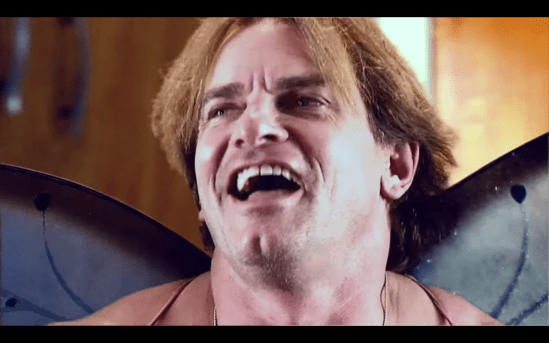
Acting as “Die’ced’s” frontman without a single line of dialogue, Jason Brooks stalks without being stealth as the deranged psych-prison escape Benjamin.  As a character actor of many faces, having donned the mask of the iconic Jason Voorhees character in a handful of short tributes, strapped on the gloves and fedora for a quick Fred Krueger, and has played the monster countless times over and over again, Brooks follows the footsteps of the likes of Kane Hodder, a part time stuntman keen on being the on-screen villain and making the role is own.  As Benjamin, there’s no qualms about the character’s imposing height and careful movements, some being gently infantile while most have an aggressive cruelty like a wild dog shaking a mouse in its jaws to literal pieces in a fit of blood spatter.   In the other corner, the final girl, Cassandra is just a seemingly normal teenage girl trying to live her adolescent life by going to parties and being a sister to brother Tommy.  However, there’s no way you could convince me Eden Campbell and Collin Fischer are playing teenagers.  Typically, a slasher high school cast would be near the edge or just over the threshold of adulthood, but Cassandra and Tommy are way too old to be high school students with an age range of mid-to-late 20s having a noticeable, natural filled out physique of maturity.  Campbell career stretch has her as a micro-scream queen of sorts from a few horror-related roles from her haunted theater debut performance in “Ghostlight” to having a significant role in the two-part Netflix series “Fear Street:  1978” based off the R.L. Stine scholastic book and with “Die’ced,” Campbell is no Lauren LaVera or Jamie Lee Curtis with her final girl character that’s pitted against a scarecrow garbed killer who’s able to take down without much to-do.  The cast rounds out with Christine Rose Allen as Benjamin’s nurse and escape benefactor, John Karyus (“Lo,” “The Gruesome Death of Tommy Pistol”) as an unfortunately psychiatric doctor being utterly taken apart piece-by-piece, and Nigal Vonas (“Coyote Cage”) as the Cassandra and Tommy’s father.

If analyzing “Die’ced: Reload” in the grand scheme of the slasher iconography, Benjamin, the scarecrow, boils down to being an unauthorized spinoff of Art the Clown, a completely unmistakable byproduct of the widely popular, ultra-violent “Terrifer” film and subsequent franchise about a devilish smiling clown immensely enjoying eviscerating victims in all different kind of ways.  With the same traditional traits of a brawny butcher running on vocal silence, Benjamin is compared to the fan favorites of Michael Myers and Jason Voorhees by its filmmakers, but as far as costume and behavior style goes, along with the intense desire to craft art out of the entrails of his victims, the “Die’ced: Reload” antagonist has more qualitative measure toward Art the Clown with the Aguste face makeup that accentuates the odd shape of a distinct facial bone structure, the harlequin jester who revels in the pursued dismemberment and savagery of innocent parties, and the fact a girl/woman becomes the singled out and obsessed target that rivals the Art the Clown versus Sienna inextricable link.  To further the film pretentiousness, the narrative is held together by elementary school graded glue and Scotch tape with an inexplicable twist that fails elucidation and logic and a familiar narrative that also relies too heavily on the gratuitous gore elements to carry it from beginning to end, reducing the once 2023 viral short into nothing more than a too soon hackneyed concept for 2025.  The “Reload” subtitle gimmick extends the original 2023 short by 30-minutes’ worth of additional gore footage and slipping in some of Benjamin’s backstory while the narrative trunk remains unchanged, but the overall outcome bares a slapdash impression as the story isn’t as terrifying or is whole enough for the Benjamin scarecrow to scare off even a murder of cowardly crows.
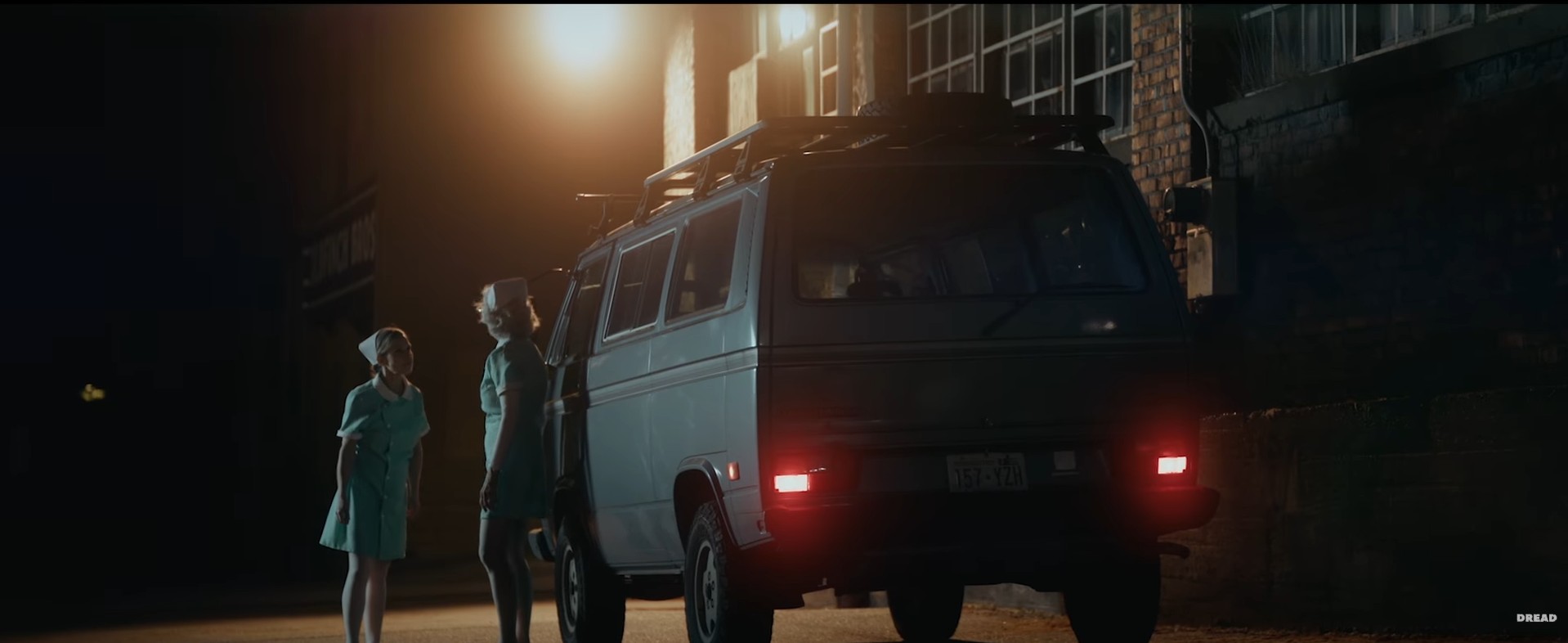
”Reload” scares its way onto Blu-ray from Dread’s home video label, Epic Pictures Group, with an AVC encoded, 1080p high definition, BD25 that’s has definitively no issues with the compression integrity seeing pitch black negative space, delineated outlining, and a stable digital image quality but isn’t quite as sharp.  “Die’ced” and director Jeremy Rudd pride themselves on their retro homage to the slasher genre of yesteryear where “Halloween” and “Friday the13th” reigned supreme and Rudd tries to emulate the effect with hazy fog, low and key lighting, and plenty of corner shadowing that impairs surface details and textual outputs.  Coloring is fine but the dark tone grading hampers the hue explosion that leaves the Scarecrow, or maybe Clownish, makeup moderately subdued under the straw mop and burlap hat. “Die’ced” is presented in a widescreen 1.85:1 aspect ratio and without a grain filter to exact a throwback 80’s slasher.  The English Dolby Digital 5.1 audio mix offers a tampered fidelity through the multi-channel system with a weaker side and back channels to focus more on the front.  Dialogue doesn’t deny clarity and provides enough prominence to be the singled finest element of the audio design that really lacks the range for broader Halloween costumed killer on the loose in Seattle that winds up at a drinking party and a bottling factory without making a bigger splash in the audio pool.  Special features include the original “Die’ced” short film and trailer, plus additional Dread produced film trailers.  Physical packaging is a standard Blu-ray Amaray case with Benjamin’s clown-scarecrow mug menacing smiling through the arch of a bloodstained sickle garnished with one single retro VHS “Horror” sticker which perfectly denotes the extent of “Die’ced’s” throwback slashery.  Epic Picture Group’s Blu-ray is region free and presents the film not rated with an 81-inute runtime.

Last Rites: I’m not seeing the viral sensation the internet saw with a hackneyed antagonist doing much of the same as those who came before, but “Die’ced: Reload” has an extreme slasher violence appeal that can temporarily quench bloodthirst and the open ending leaves more to be explored for character redemption.

Go Beyond the Short Film with “Die’ced: Reloaded” on Blu-ray!

Mama’s EVIL Little Boy. “Mother” reviewed! (SRS Cinema / DVD)

A boy’s best friend…is his “Mother.”  DVD at Amazon.com

In the deep pocket of rural America, a son is born in a country home and over the years, the baby of the house lives a cossetted life by his mother.  Warped by her mollycoddling ways and unaffected by the death of his father, the now young man apathetically bends to his mother will whether she’s conscious of it or not.  He responds in unkind to overprotect his mother when an envious older brother derides their special son and mother bond and is murdered in cold bold.  As more years pass and his mother succumbs to her health deterioration, the son, now the last of his family, remains in solitary at the family home and the absence of his beloved mother haunts him as he processes his unnurtured and unhealthy sexuality onto the unwilling living and the unresponsive dead. 

In 2003, the NY-based indie horror filmmaker Michael P. DiPaolo gave us “Daddy,” an undead rape-revenge zombie-thriller that brought the corpse of an abusive father back from the grave to exact a fate far worse than death on his daughter and her friends who put an end to drunken state defiling of his little girl.   Three years later, DiPaolo releases to us “Mother.”  However, don’t expect this to a companion film connected to “Daddy.”  Instead, “Mother” is a whole new story with a whole new stylistic approach, including zero dialogue in a black and white frame – much like a silent movie but with more Foley and no corresponding continuous piano tunes. Ed Gein became the core inspiration for DiPaolo who retells the Plainfield, Wisconsin described Ghoul‘s horrifying deeds of exhuming corpses, creating trophies out of the remains, and even the slaying of two women, a tavern owner and a general hardware store clerk. DiPaolo self-produces the film under this Black Cat Cinema productions along with associate producer Zachary Balog and shoots the film most of the homestead around Cropseyville, New York, near Albany, and the surrounding area.

Comes no surprise that the actor who once portrayed the former Republican Vice President, Dick Chaney, for Damon Packard’s Fatal Pulse also plays the details likes of one of America’s most notorious murderers. The Buffalo, New York born John Karyus, who had a minor role in “Daddy,” reteams with DiPaolo to present a dialogue-less version of the life and death of Ed Gein by stepping into virtually his skin – that’s an Ed Gein joke in case you were paying attention. Karyus and DiPaolo don’t hold anything back in the peculiar biopic that dives deep into dismemberment madness, fascination killings, and the loss of motherly love. Half of the praise should be awarded to Nina Sobell as the son’s mother. Sobell not only plays mommy dearest but also the hardware store clerk and the tavern owner in an unrecognizable fashion. The up-in-age actress’s comfort level was high enough even for a nude scene in which Karyus has to dress her approaching older age and invalid body. Karyus might be on centerstage as the star of the show, but Sobell’s in the backstage manipulating the pullies, curtains, and supporting Karyus with different angles that give way to the avenues of an aggressor’s cloistered milieu. Other minor characters quickly come and go amongst the silence feature with costars in Jason McCrea as the bigger brother, Phil Sawyer Jr. as the best friend, Adam Zaretsky as the father, and Svetlana as the exhumed corpses brutally hacked away for her bone-afied trophies.

The distorted mind of Ed Gein must have been a surreal inverted world. I think Michael DiPaolo encapsulates a similar essence of the upside-down perspective seen through the eyes of a killer with what can be said to be his woven auteur’s arthouse tapestry. You would think no dialogue would drag the film through the monotonous much and show signs of repetitive tiresome, especially dressed in a colorless monochrome but the crafty cinematography and grisly gestures never waver interests as we’re along for the fall of man beheld as not only mother’s baby boy but also as her ardent admirer. Her presence was a tattered thin tether that kept him secure to reality and once she checked out, the abnormal fascinations that always laid dormant now flourishing with full force like an unchecked weed in an immaculate garden of prize-winning roses. The son goes from a chaperoned teetering-maligned individual to full-fledged grave robber and skin suit tailor, raping and ripping the flesh from dead bodies over the course of years, denoting just how psychologically paramount a mother’s care is for a boy in the balance of good and evil. DiPaolo more-or-less hits every note in the book in regard to Ed Gein’s past, tweaking a few historical moments for dramatization or budgetary limits, while still maintaining a professional code of conduct despite constructing the film on the cheap. DiPaolo definitely knows and understands what he’s doing and how to work the system as clearly seen between the tone and expression differences of 2003’s “Daddy” to 2006’s “Mother.”

First, there’s was the back form the dead “Daddy.” Now, there’s the spoiling to sociopathic “Mother.” A match made in Hell and both available on a region free home video DVD from SRS Cinema. The “Mother” release is presented in black and white on SOV 1.33:1 aspect ratio, reconstructed in an impressive 6-7 megabytes per second due partly because there is nothing to decode from a RGB color signal. Contrasting is good as you can greatly appreciate the spectrum between light and dark patches. Sporting no dialogue, the LPCM 2.0 stereo features slightly exaggerated Foley and a dissonant vocal score, some in the Russian language nonetheless, from the Moscow born, New York residing folk instrumental artist LJova (Lev Zhurbin). There’s clarity over ambiguity to the action-destined soundbites being conveyed even if a bit over-the-top as if to compensate for the no dialogue. The 76-minute film is coupled with a DiPaolo short film “Brutal Ardor” about a woman trapped inside her small apartment and an immense amount of despair living with a sexually overbearing and jealous husband. Also included in the bonus material is a making of featurette voiced over by DiPaolo as he goes through his creative process and techniques (and is also somewhat of a comedy track), a director’s commentary, the feature trailer, Michael DiPaolo film trailers, and other SRS trailers. Perfect for a double bill with DiPaolo’s “Daddy,” “Mother” is a cynical and desolation ark of biblical proportions adapted from a horrid torrent of truth.

A boy’s best friend…is his “Mother.”  DVD at Amazon.com

Even After Death, EVIL Fathers Can Still Be Punitive! “Daddy” reviewed! (SRS Cinema / DVD)

Come to “Daddy” now on DVD at Amazon.com

In a small lakeside, mountain town, a violent rape of a young woman paralyzes her into complete shock, shutting down her power to speak, and spiraling her into a withdraw.  Newly appointed Sheriff Sylvia Carlsen has a personal stake in the case as the woman is a close and dear childhood friend.  The nature of the rape puzzles law enforcement and frightens the small community after evidence of soil and worms are discovered around the scene of the crime and inside the victim.  When another of her close friends is violently rape the same way, Carlsen’s painful recollection of a dark secret involving her and her friends reagitates a dormant fear and familiarities between her past and the rapes appear to me more than just coincidences.  As the attacks continue, the toll on her mounds and a series of erratic behavior incidents put into question her judgement but that won’t stop her digging into her own case of issues.

Have you ever come across a zombie revenge thriller where the decomposing undead, recently fresh from a risen unmarked grave, stuck his worm (no, that isn’t an euphemism) into a hapless female victim?  While not explicitly depicted in what sounds like a niche fetish of the subfloor adult film industry, the image of soil and creepy crawlers inside the vaginal cavity is very real in director Michael P. DiPaolo’s “Daddy” where daddy issues can be extremely violating and gruesomely decaying all in the same rotten breath.  The “Requiem for a Whore” and “Transgression” filmmaker writes and directs the 2003 SOV-shot style, back from the grave indie production, at one point in time was called under the working title of “Rigor Mortis,” hailing from the Albany proximate Averill Park, New York and was self-funded and produced by DiPaolo and Christopher K. Philippo (“Motor Home Massacre”) under DiPaolo’s production label, Black Cat Cinema.

The actresses to be symbolically lubricated with the Earth’s muck are played by four friends, who just happen to be all blonde as if blondes run together like a pack of wino Golden Retrievers. In her first feature film, not a television role, is principal blonde number one Selia Hansen as the frequently boozing, causal sex engaging, newly appointed sheriff, Sylvia Carlsen. Hansen plays the hot-headed Sheriff eager to prove herself but is shredded emotionally by the violent sexual assault against her friends – Leslie (Katherine Petty), Jamie (Cynthia Polakovich, “Date with a Vampire”), and Allison (Bevin McGraw, “Arachnid”). Other than BFF Leslie, there isn’t too much discourse between the good friends and if is conversing between them, the topic of conversation is about the rapes, leaving the groups’ tightly knit friendship barely tethered to Carlsen’s burdened shoulders. Ravaging the community’s blond population is the titular rapist and to avoid obvious spoilers, I will refrain from divulging the attacker’s reason for stalking Sheriff Carlsen and her male unaccompanied friends. In what is perhaps the biggest role of his scarcely career, Aaron Renning lurks around like deviant, tongue-wagging Uncle Fester complete with chrome dome and a dirty dinner jacket grimed with earth and wiggly worms. Renning’s performance has it easy with zip for dialogue and a penchant for being a raving manic with a libido in hyperdrive. The performance bares no crass crudeness as it’s very to the point without revealing the point – if you get my point. Actors following up from Michael P. DiPaolo’s “Transgression” is David Shepherd as the town’s Doctor Vance and Marc St. Camille as the pushover Deputy Richie Dagg. Yet, the most interesting casted member is John Karyus. The “Poultrygeist: Night of the Chicken Dead” to “Big Freaking Rat” B-horror Karyus plays the Sheriff’s ex-husband who’s always peeping and is eager to inform his ex-wife something important but doesn’t ever receive the chance to, marking his scenes utterly pointless.

“Daddy” issues is right. DiPaolo strikes up grave retribution with a zombie degenerate harboring a message, one that I can only hope is accurate, is suppressed emotional trauma can be haunting, if not deadly, when not dealt with its beleaguering demons. However, “Daddy’s” undercurrent is more grossly sweeping and pungent with corrosive, misguided outcomes. Instead of battling trauma, DiPaolo’s depiction of Carlsen’s alcoholic abuse and fleeting affairs coupled with nightmares of the past also speaks illy toward guilt and feeling guilty over an irreversible criminal act done for the right reasons, in self-defense, nonetheless, sets the wrong tone. The finale also doesn’t set well with the fact that DiPaolo inflicts no escape from one’s rapist, no comfort in the knowledge of their death, and that their lives hang in the very balance, targeted by a demented vision. Demented, that’s definitely how I would describe DiPaolo’s serial rapist zombie flick that’s not terribly terrifying as it is one’s twisted filmic folly into incest and inevitable topple of repossession of oneself. “Daddy’s” acting is often stiff and forced, on the cheap effects offer up fake and live worms and a gray palette zombie perv, and the handheld SOV-style camera work from DiPaolo himself is like a fly buzzing around the room at times. “Daddy’s” beyond the dead vindictive nature is only abated by the number of topless blondes being subjected to dry humping in this ill-judged, undead-to-bed fiasco.

Of course, it only makes sense that SRS Cinema would release something to the likes of “Daddy” onto DVD home video. SRS Cinema loves nearly everything shot-on-video, nihilistic, zany, and unconscionable content. Sex and death sells and SRS Cinema has a long history of delivering good on that brand of promise while also luring unsuspected victims, I mean viewers, with exceptional retro-cover art that’s vibrant and detailed in all things macabre. The region free DVD has an aspect ratio of 4:3 and a runtime of 83-minutes. Shot with a videotape camcorder, image quality is about what you expect with an immense amount of interference during night shots and compression artefact issues rampant throughout, especially during black and white flashbacks, but the image is essentially discernible which makes DiPaolo’s use of only natural light more impressive. The English language mono track is hit-or-miss depending on the camcorder’s mic placement with faded hissing to throw another curve back at you. There are moments when the ambience is exquisitely sharp in fidelity and edit, such as the blaring police siren or a car suddenly passing into frame for jump scare effect. Bonus features include a commentary track with Michael P. DiPaolo, a behind-the-scenes featurette with DiPaolo narrating upon how he accomplished more of the difficult and complicated scenes, the feature trailer, and SRS film trailers. Interesting concept piledriven by its creepy subtext, “Daddy” continues to be aversive with a tagline “He comes after bad little girls!” splayed on the front cover that leaves cringed induced wrinkles on my face every time I cerebrate the underground film. In the same breath, I know and love SRS Cinema’s unwavering nihilism, standing admirably behind Michael DiPoalo’s incestuous and rapey, unfatherly film without second guessing commitment.

Come to “Daddy” now on DVD at Amazon.com

EVIL’s Madcap and Meshuga Rabbit Hole! “Frankie in Blunderland” reviewed! (Wild Eye Releasing / DVD)


Frankie is the epitome of underachiever living in small, scummy, suburban house with an antagonistic and obtruding houseguest, Tommy Spioch, indisposed to ever new living accommodations and a brash Katie, Frankie’s wife, who loathes every fiber in his body, but reaps the benefits of his income. Fed up with how the way things are, Frankie impulsively decides to do something about by trying to kill Spioch, but when Spioch kidnaps Katie, Frankie wusses out on his freedom from their oppressors and pines to find Katie by hitting the streets. Frankie encounters the strange and unusual as well as the macho confrontational characters along the way, involving a spider with human face, a homeless man with paradoxical wisdom, naked fairies, Mormon aliens, and a hideous marionette-like boy.

In the midst of writing this review, Lewis Carroll is probably rolling over six feet underneath his English gravestone with the bastardized fantasy-comedy variation of his classic literary tale of “Alice in Wonderland with the 2011 released film, “Frankie in Blunderland,” from director Caleb Emerson (“Die You Zombie Bastards!”). Emerson, who is also a frequent editor for “Tosh.0,” helms the pretzeled script written by the late Marta Estirado, who passed away before the official release of the film, but “Frankie in Blunderland” is the Spanish-born writer’s debut screenplay twisted with browbeating cinema anarchism while juxtaposing circumstantial life defeat with an adventitious urge to be better despite the odds. Shot mainly in the greater Los Angeles area of Echo Park and Eagle Rock, “Frankie in Blunderland” is an Emerson funded, low-budget project that courses the weird and unnatural, a pair of descriptors that aren’t so abnormal on and off the streets of Los Angeles.

After assisting his editor skills with “The Gruesome Death of Tommy Pistol,” which was starred, produced, written, and directed by Tommy Pistol himself, Emerson locked down Pistol, whose credited under his real name of Aramis Sartorio, to be the titular character, Frank Bellini. If you’ve been audience to any of Tommy Pistol’s *cough cough* porn, you’re well aware of the male performer’s more-than-professional uninhibited nature to do anything on screen. The same uninhibited nature transcends out of adult industry and into the off-Hollywood narrative as Satorio unloads a wide array of unbridled range that allows Satorio to not only be a despondently enfeebled and sheepish Frankie, but also extend to his self-assured Tommy Pistol persona on the latter half of the character arc. Thea Martin and Brett Hundley (“The Trek”) play Katie and Tommy Spioch respectively as the adverse versions of Frankie’s wife and best friend. Katie and Tommy sincerely embark on the utmost effort in making Frankie feel like a worthless wanker by belittling him continuously on every whim he allows Katie and Tommy to get away with while they also stir the lobotomizing love triangle with their own sidebar skirmishes and much like the Lewis Carroll’s “Alice in Wonderland,” every character that shows up in “Frankie in Blunderland” is antagonistic to one and another in a bizarre battle royale of an irritational reality. The colorful characters continue with performances by David Reynolds (“House of 1000 Corpses”), John Karyus (“Poultrygeist: Night of the Chicken Dead”), Caleb Emerson, Gio Paloma (“Dawn of the Head”), John Christopher Morton (“Girls Against Boys”), Vincent Cusimano (“Blade the Iron Cross”), John Brookbank, Bryan Planer, Sadie Blades, and special appearances by “Slime City Massacre’s” Debbie Rochon as a human-spider and Evan Stone as a well-endowed fairy.

Like a full-feature skit from Eric Wareheim and Tim Heidecker, “Frankie in Blunderland” will activate your receptive inertia dampeners, slowing your comprehension down to the point of a snail’s speed on what exactly is going on with Frankie and his misadventures through an alternate reality of the real world all the while encountering the obscure and abnormal characters along the way, rekindling that trippy, if not hallucinogenic, sensation one gets when watching any other bizarre renditions more faithful to the Lewis Carroll’s classic but with more dry wit and blood. While I feign to know all the answers about the meaning behind Estirado’s outlandish script, I’m truly at a loss for words at understanding it, a feel much of the cast has also stated, and to interpret “Frankie in Blunderland” is to be a perceptive cinematic aficionado disconnected for reality, but from what themes I think I do perceive, Frankie reverses course on moral obligations for self-importance to become a quasi-anti-hero in bizarro world. For much of the film, Frankie is tormented, internally and externally, as he subsequently beats himself up over the abuse he meekly swallows from wife Katie and no-so-best friend Spioch and as act one continues to punish the mildly manner Frankie, there comes a point where Frankie is a glutton to own his maltreatment, learns to evolve from it, and becomes one with the disparaging masses in order to be part of the salt-in-the-wound collective that attempt to beat into submission or just downright destroy those unlike them, seen with characters like the loafer Mike West, the unsightly disjointed puppet boy, and a doughy-soft security guard named Peanutch, whereas a fem-bot, Maggie Robot, whose secretly a robot posing as a woman, can simulate into the natural order of the Blunderland society. When Frankie begins to thrash against and degrade these said characters is when he ascends beyond his suicidal thoughts and shoving aside his timid nice guy persona for more turbulent attitude toward life. If this speculation is anywhere near being accurate, then “Frankie in Blunderland” is a revolutionary view of unorthodox measures to rise up above despair in a day of stupidity enveloped by a ludicrous satire.

Perhaps not very extreme, but certainly raw, “Frankie in Blunderland” lands onto DVD under the Wild Eye Releasing sublabel, Raw and Extreme, and distributed by MVDVisual. The re-released Wild Eye Reelasing DVD is presented in a widescreen, 16:9 aspect ratio, housed with a new illustrated artwork liner that’s akin to the Ghana hand-drawn posters and, more than like, keeps with the first pressing’s lossy compressed image and spastic image jittering shifting between different levels of picture and detail degradation. The vapid coloring devours any story-telling vibrancy, leaving the scenes seemingly lifeless and aesthetically devoid, especially when Frankie has his loopy, unconscious discharge of repeated scenes and avant garde imagery after passing out thinking he killed Tommy Spioch. The visual effects are almost cut and paste crude, but add to the chaotic charm of Frankie’s living nightmare. The stereo dual channel audio mix is equally as lossy noticeably muffled by the compression, leaving also a faint and lingering hum through the 82 minute duration. The position of the dialogue remains even, if not behind, the ambient and soundtrack audiophiles and without any depth and range to compensate the lack of gusto, dialogue is lost in a lackluster limbo of lame and loitering linguistics. On a microbudget of this level, don’t expect in depth special features, but considering the content, I’m happily surprised of what’s available which includes a Caleb Emerson director’s commentary, cast and crew interviews with Aramis Sartorio, a peculiar interview with Thea Martin, and director Caleb Emerson, along with six teaserettes which are short clips from the film, and rounding out with Wild Eye Releasing trailers. “Frankie In Blunderland” is a labor of love for Marta Estirado and a sure fire way to kill a couple of brain cells in this degradingly funny demoralizing epic.

Purchase “Frankie in Blunderland” on DVD from Amazon!