

Believe Everything You See. “Virtual Reality” on Blu-ray at Amazon.com
A horror movie about a supernatural Celtic killer has just wrapped production and goes into post. The cast and crew what to succeed at all costs, not only in the movie but also in their stagnant careers. However, the director, Matias, craves fame and legacy to the point of committing his soul to whatever it takes to cement his film in acclaimed success. Matias and the arcane producer form a pact with a diabolical computer program and artificial intelligence that’ll bind their movie to esteemed infamy as well as bind their cast and crew to their characters. When Matias invites select cast and crew to a private screening at his home, they realize the movie has scenes of their characters that weren’t shot during principal photography and that whatever happens to their characters in the movie, being chased by the Celtic killer, will happen to them in real life. The only way to survive the movie is to last the full 90-minute runtime.
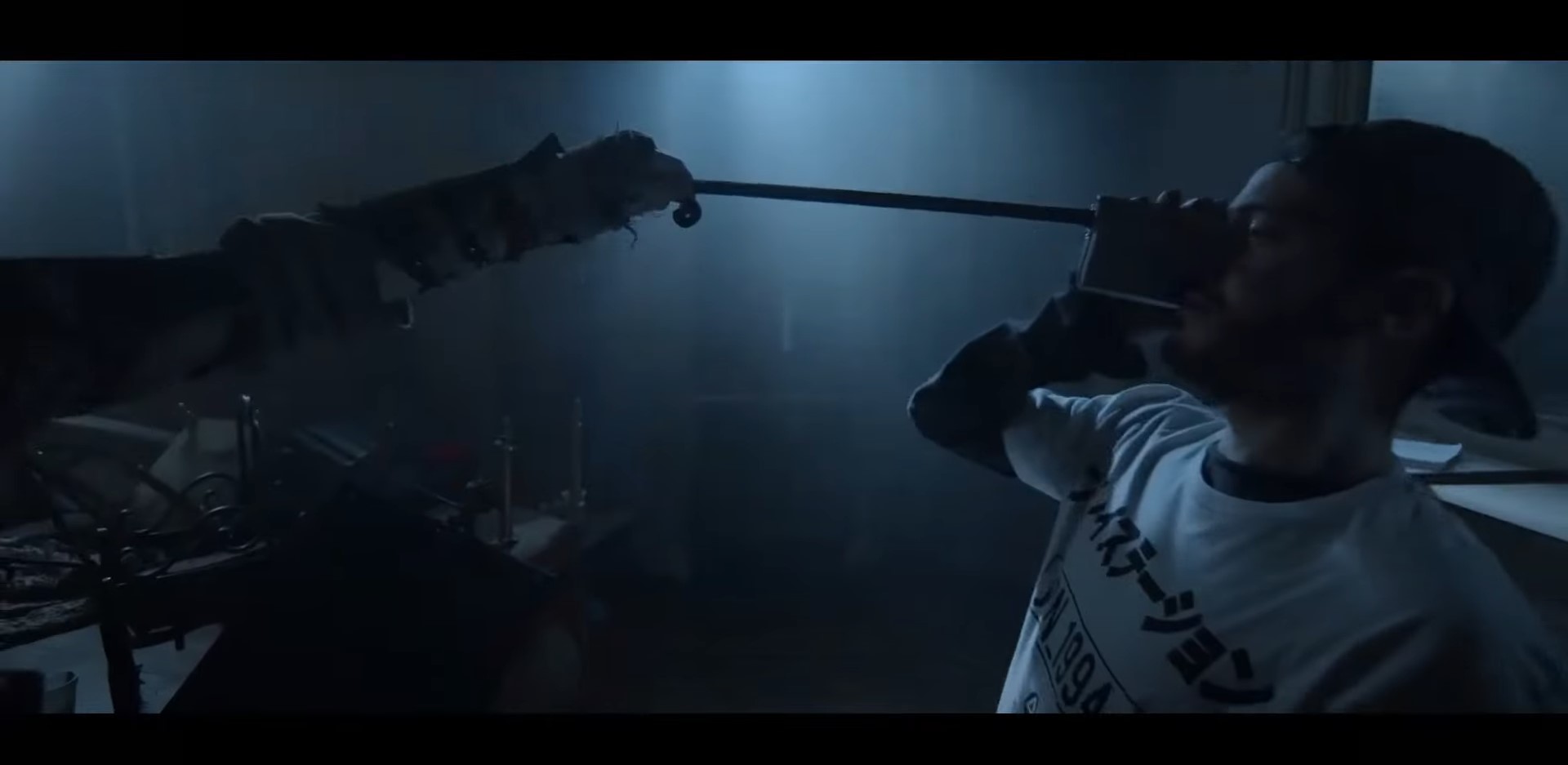
Hailing from Argentina, the South American country that brought us “Terrified” and the “Plaga Zombie” films, comes another tale of terror with the metaverse horror “Realidad Virtual,” aka “Virtual Reality.” The 2006 “Director’s Cut” and 2009 “Breaking Nikki” shot caller Findling continues his traipse through psychotronic land with a story that couldn’t be more relevant today than if artificial intelligence synthesized the narrative itself out of binary ones and zeros. The script comes from Findling and cowriter Lourdes Prado Méndez, an Argentinian romance novelist. Having virtually no romance in “Virtual Reality” whatsoever, the 2021 film stretches Méndez’s range into crafting characters with a foot in two planes of existence while under immense fear and pressure to survive a supernatural slashening. “Virtual Reality” is produced by Gabriel Lahaye under Lahaye Media, who has supported and collaborated on a number of Findling’s previous films, such as “Breaking Nikki” and “Impossible Crimes,” and is also a production of Wit Producciones, Cine Argentino, APIMA, FilmSharks, and INCAA of Argentina.

The story circles around a selectively small and independent film cast and crew finishing up a concluding scene of another to-be-forgotten horror movie by director, Matias (Guillermo Berthold), who has had multiple failed films before now. Yet, the production team remains positive, hopefully the film with jumpstart careers as desperately expressed through the first act, especially with the film’s final girl star Guadalupe (Vanesa González, “Hypersomnia”), or Guad as she’s called by her friends, and her director’s assistant brother Pablo (Santiago Magariños). Berthold plays the sneaky-sadistic director about as a well as most with a fervent penchant to do anything for his creative filmic art even if that means colluding with a shady, mysterious producer in César Bordón (“She Wolf”) whose performance’s obscured or lack of purpose is due in part to the character’s flimsy connection to the diabolical computer program. Bordón can’t help but just be an inhuman human, violent by necessity instead of being violent with a purpose. The producer seeks success for every single one of his films with a subsequent plotted course for the next idea – whether be a sequel or a brand new story – yet his connection to the network of evil of unexplained runes, sporadic pixilation, and artificial intelligent adaptations that can re-edit recordings into a new and inexplicable account of the story has been sorely severed in regard to understanding his background and his motivation of mortal sacrifice for movie fame. Other connects that were left on the cutting room for, so to say, were between the siblings Guada and Pablo and their dying mother in what I suspect was an attempt to shove the sister and brother some sympathy, clearing the way for the two to be the unambiguously heroic duo, but the scene with their mother on her deathbed offered little-to-no compassion, producing a gelatinous lasting effect in what was a more visual one-off of two children spending the time they have left with their mother versus an incentive or arc scene that would hopefully rally up character expectations to look after each other. “Virtual Reality” rounds out the cast with Frederico Bal (“Impossible Crimes”), Francisco González Gil (“El último zombi”), Sofia Del Tuffo (“Luciferina”), and Christian Sancho in a Johnny Depp inspired dressed part of a self-centered actor with a suspected pill addiction.
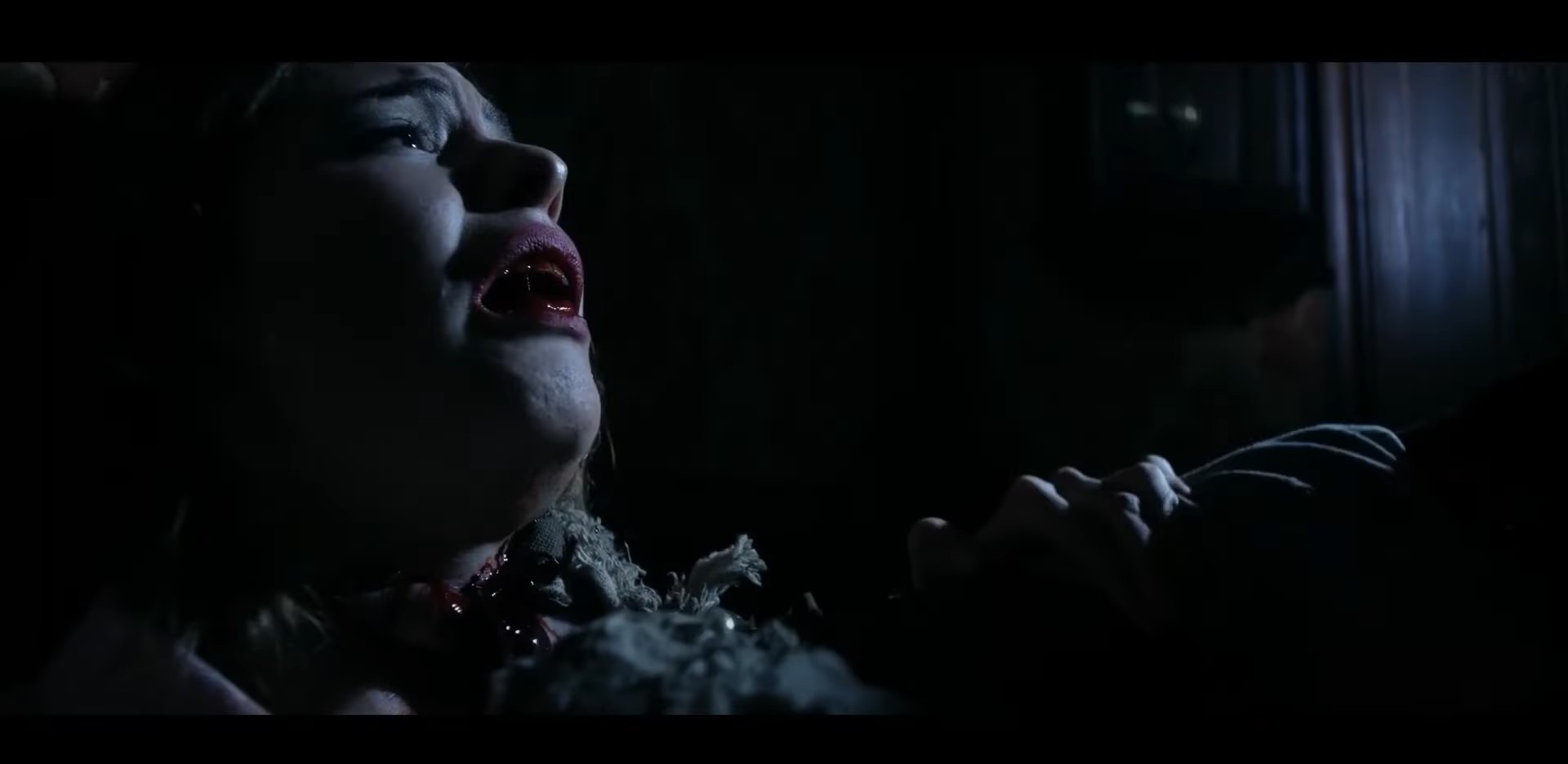
As far as plot designs go, “Virtual Reality” has an interesting concept that involves filming two different harrowing situations and joining them into one parallel plight with the actors reacting more to the events happening on the television screen, which in itself becomes living, breathing character of sinisterism, rather than what’s happening outside the box in the present. Both realities are virtually live and in play for their very being and whatever happens in one, affects the other. “Virtual Reality’s” state of duality, not only in character, but also in linear lines of an alternate universe with lifeline connections, is smart, fresh, and terrorizing to know that your life depends on an A.I. created character coursing through a maze for their very lives. This mirror-meta-effect continues to evolve as the story plays out that leave survivors questioning reality and questioning their individuality of some higher force that has used them like some free-thinking avatar for filmdom fame. This is where “Virtual Reality” starts to become complicatedly crisscrossing as instances of a distorted reality spiral down a rabbit hole of what we thought was true. Findling is nonapologetic for his layered universes that spins and wraps a narrative around another in what is a show of forced fantasy subsisting in that gray area of reality. The Celtic slasher storyline is just a sublevel to the story’s higher level view that defines greed and worth amongst people longings for more and also models itself to reflect that thin line some people cross between reality and fantasy, as foreshadowed early on into the film during the shooting of the final girl scene when method actor Julian gets into the headspace of his Celtic killer character and really starts to strangle Guada in a climactic moment. By the finale, you’re comprehensible pencil might have wandered off the connective dot trail in trying to see the bigger picture of Hindley’s meta-movie but “Virtual Reality” is innovative tech horror that just requires a smidgen of tweaking to be impeccable.
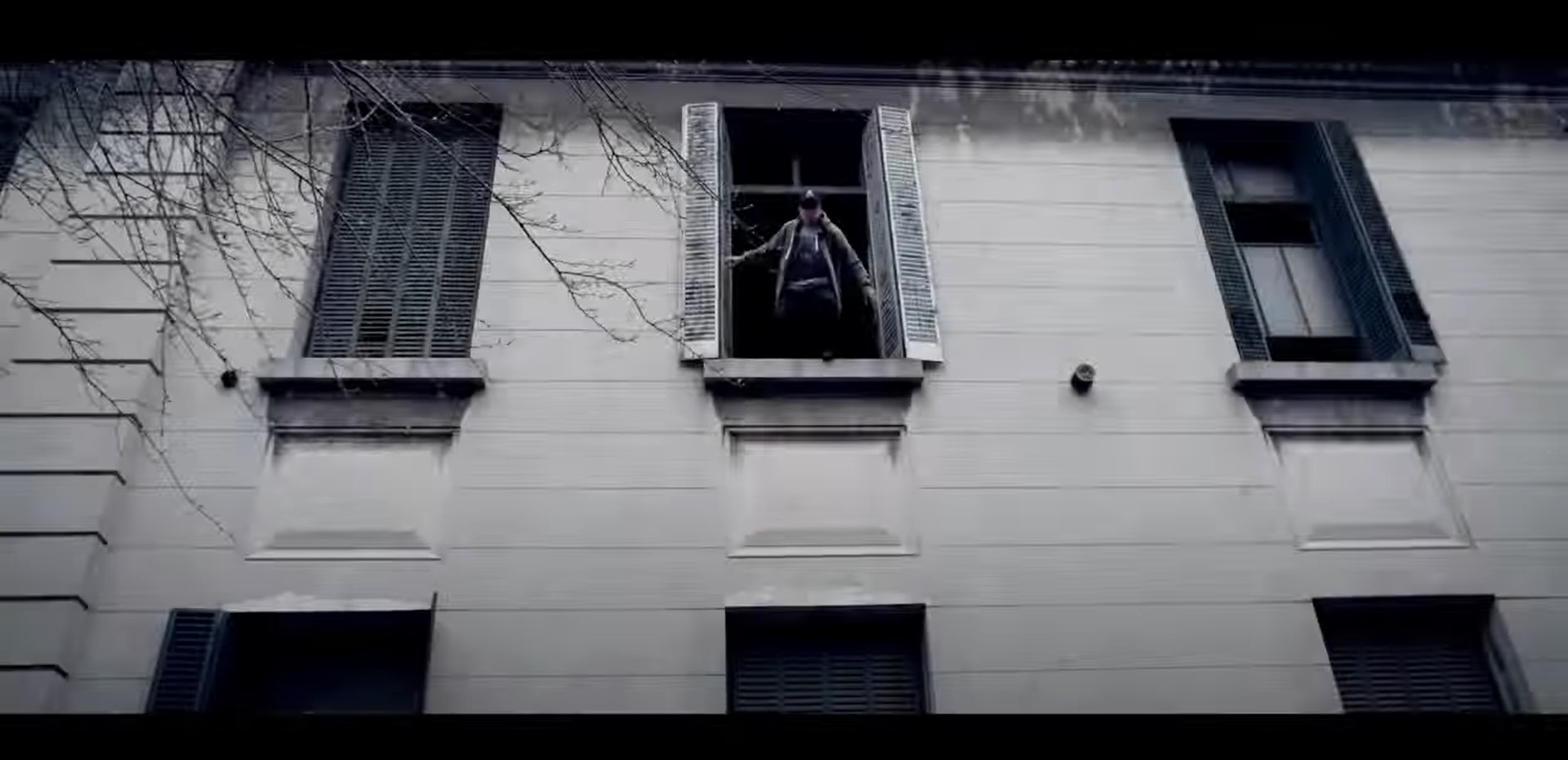
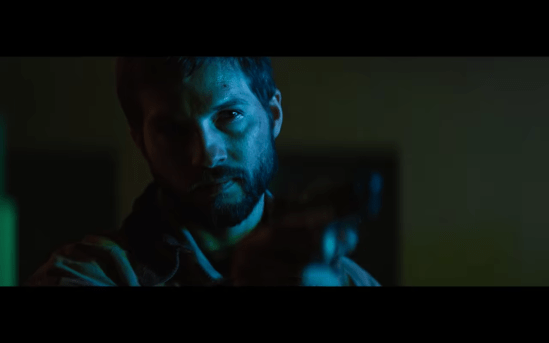
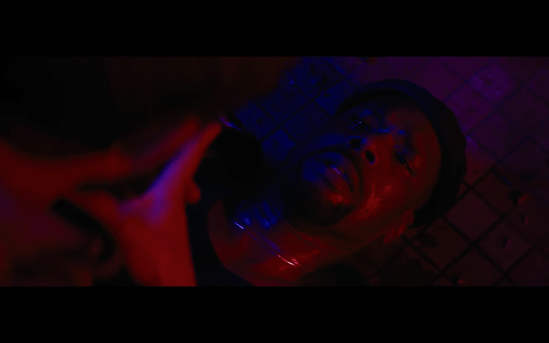
2020. That was the last time I reviewed an Artsploitation Films title. The long 3-year hiatus was due in part of King Lorber purchasing the boutique Philadelphia label that specialized in bringing independent global horror to the U.S. Artsploitation Films and Kino Lorber continue that pursuit with Hernán Findling’s “Virtual Reality” from Argentinian now on a Stateside Blu-ray disc courtesy of the joint label. The AVC encoded, 1080p High-Definition, BD25 is presented in a widescreen 1.85:1 aspect ratio. Cinematically, the format storage is able to capture the true quality of the image with hardly any compression artefacts. There’s not a ton of visual augmenting but what’s presented is a draining of color to a near black-and-white image with pigmented primary color lighting to give the scenes a dash of color that’s in contrast to the moderate-to-heavy in-movie, trope-heavy lack of lighting to create deeper shadows for that gloomy horror movie effect of interior trapped victims running for their lives in the dark. Two Spanish language audio options are available on the release, a DTS-HD 5.1 Master Audio surround sound and a DTS-HD Master Audio 2.0. The 5.1 track has good balance between the ambient, soundtrack, and dialogue tracks albeit a little heavy on the score to clutter, at times, a clear exchange, especially when everyone’s yelling at the television set. Other than that, no technical issues throughout the multi-channel output. English subtitles run at startup but can be turned off. The unrated, region A encoded release has a runtime of 84 minutes but doesn’t come with a menu for special features; however, there is the film’s trailer and, if you stay tuned after the credits, there’s a bonus scene where you, the viewer, becomes the star of your own movie. Artsploitation Films is back, baby! Courtesy of Kino Lorber, “Virtual Reality” is barely tapped meta-horror, that has become all the craze nowadays, and Hernán Findling unboxes that fine line between real and unreal to only merge them together to be one and the same in a twisted interpretation of when art imitates life.





 It's Bloggin Evil!