No EVIL Gets Left Behind! “P.O.W. The Escape” reviewed! (Ronin Flix / Blu-ray)

“P.O.W. The Escape” on Blu-ray at Amazon.com!

Colonel James Cooper’s moto is no one gets left behind.  The seasoned P.O.W. extraction officer volunteers for a politically spearheaded suicide mission to save Vietcong American captives before a cease fire treaty ends the war, effectively turning the P.O.W.’s into M.I.A. and possibly never heard from again.  As the U.S. Airborne Colonel expected, the mission of rescue results in a complete fiasco of resources and being empty handed of prisoners as the enemy suspected an imminent attack.  Cooper becomes a P.O.W. alongside the men who set to rescue but that doesn’t deter the determined officer to plan his escape, but before detailing out a route out, the camp’s warden Captain Vinh has alternative plans for his prized captive in all of North Vietnam.  Vietcong headquarters wants to retrieve the Colonel in two days for public execution but Capt. Ving seeks a better life outside his country and accumulates the K.I.A. and P.O.W.s valuables plus in addition to stealing gold bars form his country in order to relocate him and his family to the U.S. but on his terms with a perilous journey across enemy lines with all the P.O.W.s in order for no one to get left behind.

The Carradine name is one of the most recognizable names in Hollywood with David Carradine the most famous, behind his father John Carradine, with his highly successful television series from the mid-70s, “Kung Fu.”  A part of “Kung Fu’s” success was due in part of the decade itself where kung fu films were a peak popular with rising star Bruce Lee.  A decade later and still in the shadow of that breakout series with a made-for-television movie, Carradine breaks into another rising type of films that trades in hip-throws and round house kicks for M1 assault rifles, Huey helicopters, and the jungles of the Vietnam war.  And coincidently enough, Vietnam actioners were made popular by another martial artist with “Missing in Action” starring Chuck Norris.  Carradine’s venture into the America’s shame frame being exploited for personal gain is P.O.W. The Escape, a rip-roaring and explosive do-or-die war caper from first time director Gideon Amir and penned, and re-penned, by Jeremy Lipp (“The Hitchhiker” TV series), James Bruner (“Invasion USA”), and “Deadly Sins” co-writers Malcolm Barbour and John Langley.  Also known as “Attack Force ‘Nam” and “Behind Enemy Lines,” the Philippines doubling Vietnam production is produced by Yoram Globus and Menahem Golan as a Globus-Golan Production.

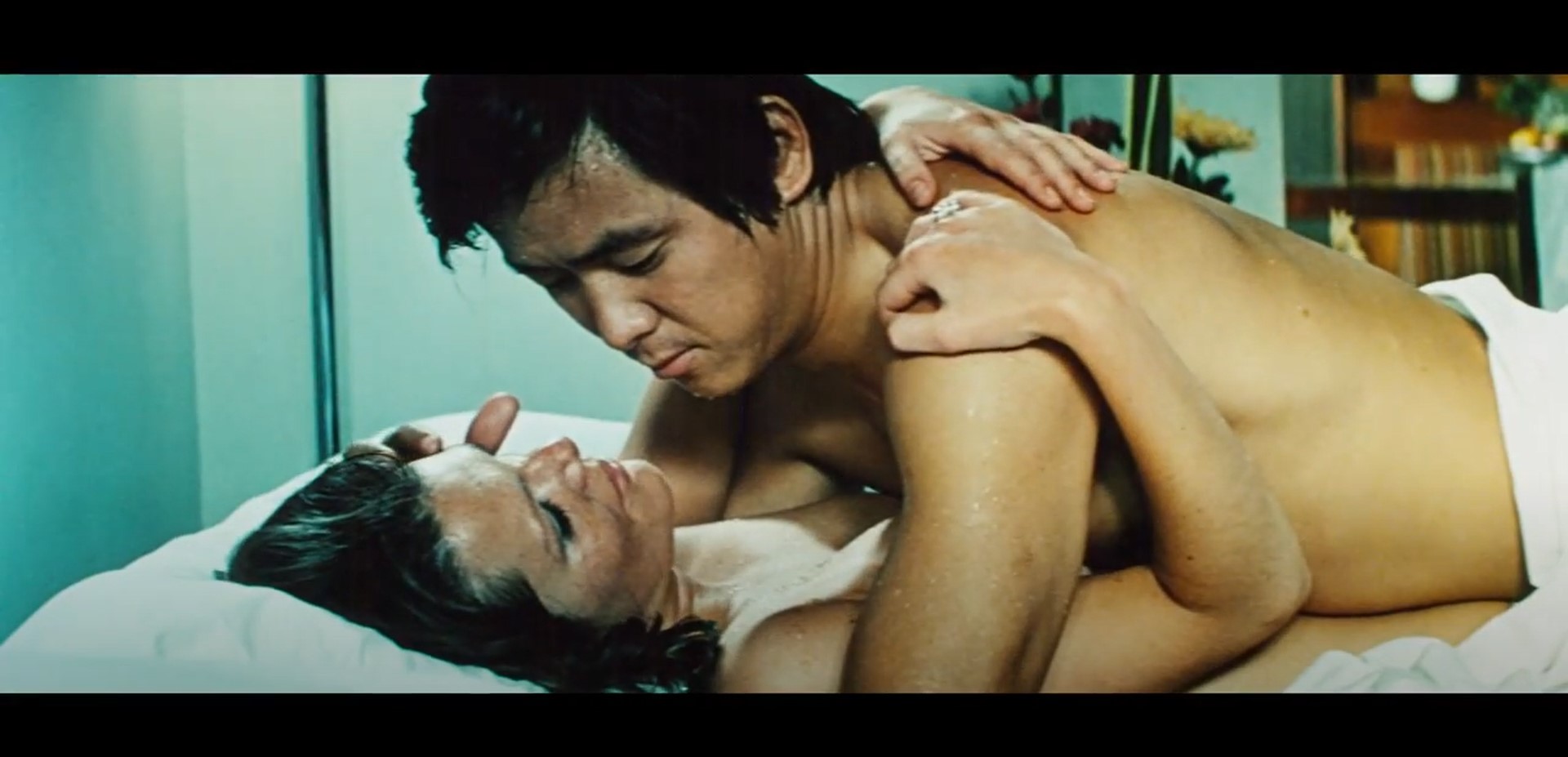
The Late Carradine epitomizes stone-faced patriotism as the exfiltration expert Colonel Cooper.  Showing hardly any emotion except for a handful of scenes that call for it, or else Cooper would be a full-scale unempathetic sociopath, Carradine gives his best harden American warrior as well as an indestructible combat commando where a barrage of bullets whizz around him, explosions don’t impede his health, and an army of Vietcong are no match for the Colonel’s American flag draped, M60 machine strapped fighting spirt in an uphill battle of certain death.  Its farcically funny to behold but that was the traditional one-man-army paradigm back then and, to an extent, still is even today to give audiences as gung-ho and impossibly invincible hero.  Cooper leads a bunch of weary P.O.W. troopers on the brink of becoming lost in wartime politics and only three out of the bunch are highlighted throughout the misadventure toward safety with those roles’ boots on the ground by Steve James (“McBain”), as the order-following Sgt. Johnston, Phillip Brock (“American Ninja”) as wise-cracking know-it-all, good soldier Adams, and Charles Grant (“Witchcraft”) as the maverick Sparks who initially goes against Cooper’s plan.  Sparks is likely the most interesting and complex character with an internal conflict having set into his own path of escape dedicated on selfishness and greed only to feel the tremendous weight of guilt and burden of his fellow soldier while on the bed of a half-naked, North Vietnamese prostitute.  The last major principal is actually a Captain, that is Captain Vinh, played by one of the most recognizable faces in Japanese cinema history, Mako, of Arnold Schwarzenegger “Conan” fame as the Akiro the Wizard.  Understanding Vinh’s motivation hardly musters conclusively on why he wishes to defect his country and why he needed Colonel Cooper to accomplish it.  Perhaps Vinh’s undergoing hate for his own country was lost in the editing room as the film is noted to have gone through multiple re-writes, edits, and additional post-production shoots.  “P.O.W. the Escape” fills out the cast with Daniel Demorest, Tony Pierce, Steve Freedman, James Acheson, Ken Metcalfe, Ken Glover, Rudy Daniels, and Irma Alegre.

For Gideon Amir’s first picture, this Vietnam vehicle is an action-packed romp.  Never letting up on the accelerating peddle, especially with Cooper’s blank determination to get all the men out of the arm struggle before a treaty wraps up the conflict and leaves his charge in casted away in the arms of the enemy, what Amir accomplishes at the behest of his influential producers wonders how this high-value production ever made it past post without being a completely incomprehensible mess.  There lies choppy moments of editing that puts into question it’s original concept even if one isn’t aware of the film’s narrative conflictions.  What ensues is not a traditional rally and escape from a torturous, inhuman enemy camp that one can’t abscond from so easily; instead, the narrative becomes an escapade of itinerant provides various difficult scenarios that split up the group, sees internal turmoil, and propels desperation to get to the friendly Huey’s with their very lives, but doesn’t see Cooper come under threatening fire as he spurts off short rifles rounds and takes out a handful of Vietcong at once with one scene reminiscent on a particular World War II hero charging up hill and taking out a whole German squadron alone with a machine gun.  Audie Murphy, If remembering accurately, but instead of sustaining any projectile wounds, Cooper thrusts forward unscathed while those G.I.s he’s trying to recover and rescue perish in an inescapable firefight.  Carradine’s stoicism throughout the life profit and loss campaign doesn’t match Cooper’s liberation maxim that forces “P.O.W. the Escape” into an impassive, often times comical, attitude with the story’s central character.

Director Gideon Amir and David Carradine tempt their hand at the Vietnam vamoose now on a Hi-Def Blu-ray forged by Ronin Flix through way of Scorpion Releasing’s 2019 HD transfer of the previous MGM print.  The widescreen 1.78:1 aspect ratio presented feature fails to capture impeccable clarity of acme perfection with approx. half the frames wilted away with artefact de-escalation of details. Half the scenes look great with a semi-serious saturation of color, a few of facial and foliage details come out, and textures have tactile range at times, but the film’s glass is only half full within a darker dilution of speckled splotches. The English DTS-HD 2.0 master audio mix relays a fair enough dialogue consignment with comprehensible clarity and is utterly clean but lacks punchiness with a flat as a David Carradine’s poker-face facade. With a robust range of gunfire, explosions, and modes of transportation, especially going through the mucky and miry jungles of war-torn Vietnam, the film definitely needed a stronger suit of sound but was ultimately discharged without dullness. English subtitles are available. Special features include three on-camera interviews with Director Gideon Amir, screenwriter James Bruner, and stunt man Steve Lambert discussing their particular involvement in pre-and-principal shoots, some of the process woes, and how exotic the opportunity was to work internationally and with David Carrine. The film’s original trailer rounding out the special features block. Physically, the Ronin Flix release comes in a standard Blu-ray snapper with an action-packed and commandoed David Carradine blasting off his rifle like in a Ghana-esque illustrated movie poster. Inside, the lack of insert and reversible cover art leads our eyes straight to the disc art that’s the same as the cover, cropped down to fit in the circumference. Rated PG, that is rated 1986 PG with strong war violence, strong language, and nudity, the release is region A locked in playback and has a runtime of 86 minutes. A campy commando campaign capitalizing on the success of the Vietnam prison camp subgenre, “P.O.W. the Escape” could be much worse for wear as a solid action flick fierce in delivery yet fickle in substance.


“P.O.W. The Escape” on Blu-ray at Amazon.com!

Bruce Lee Fought EVIL for Justice. Mark Swetland Follows Lee’s Footsteps in “Blood and Steel” reviewed! (SRS Cinema / DVD)

Hiyah! “Blood and Steel” – the Lost Kung-Fu Film now on DVD!  

The brutal murder of his sister and her husband sends Mark Swetland into a vengeful fury.  Behind the heinous act, a drug smuggling organization, using a steel fabricating warehouse and a dojo school as a front, had sent a merciless assassin to take out Mark’s sister after a previous incident with the organization’s personnel that could bring down the whole drug shipment operation.  As Mark investigates for answers and track down those responsible, he’s greeted with hostility and uses his extensive martial arts experience, and a little help from a few of his closest allies, to bring the syndicate down once and for all, but the cruelty conscious conspirators don’t plan to go down without a fight as they kidnap Mark’s girlfriend and hire a mercenary fighter to bring the fight to them on their own terms. 

If you’re a martial arts film connoisseur or just an aficionado of the action-packed genre, here’s an obscure title from 1990 you desperately need to get your hands on, today if at all possible!  “Blood and Steel” is the Bruce Lee dedicated crime and martial arts actioner from producer, writer, and director, Mark Swetland.  Yes, Mark Swetland plays himself, Mark Swetland, as the unstoppable, vengeful vigilante hero in his own production that pits him going solo against a scumbag kingpin and his narcotic import-export empire.  Only recently discovered after being lost for decades, “Blood and Steel” breathes fresh 2023 air with a new DVD release and institutes a brand new, never-before-heard maxim, created by yours truly, of though white men can’t jump, they can certainly Kung-Fu.  Perms, handlebar mustaches, and tight fitting and unappealing fashion grace the screen as nunchakus and hook kicks pave the way for this seriously gratifying choreographed Kung-Fu spectacular to be resurrected from the cache of forgotten films of the cinematic cemetery, shot in and around upstate New York complete with the N.Y. accented, short-a phonological vernacular.

Mark Swetland, proprietor of a safe and vault cracking company in Cheektowage, New York, was once a martial arts instructor.  At the current age of 62, Mark has looked to cracking open safes instead of cracking open heads with his mixed martial art skills but Swetland also once dappled in film, developing his own low-budget Kung-Fu caper, inspired by his martial arts idol, the late and legendary Bruce Lee.   Ponying up much of the funds for what would be “Blood and Steel,” Mark poured every ounce of his soul and craft into the film that displays his range as a fighter as well as getting his chops busted in delivering lines and acting out emotions.  The former was more of his forte with asserting a magnetic presence as both an onscreen fighter and a competent choreographer to have the fight sequences appear realistic and quick against a slew of antagonistic opponents.  As a thespian, Mark often borrows too heavily from Bruce Lee with overzealous fist poses to even echoing Lee’s idiosyncratic short and elongated kiai sounds.    Swetland’s one-on-one scene with fellow martial artist David Bobnik, as the hired hitman Steiner, is well thought out coordination with lighting punch-kick combinations that would rival the best genre films of its time.  Neither Swetland or Bobnik are overly muscularly cut bodybuilders or the zero percent body fat of Bruce Lee’s rail frame as both men are in an ideal, physically fit shape to add to scenes test of time and doesn’t yell amateur hour of wannabe martial artist attempting half-hearted roundhouse kicks for their low budget movie.  “Blood and Steel” round out with a cast that includes Joanne Gargliardo as Mark’s girlfriend, David Male as drug kingpin Mr. Patterson, Elaine Arnone as the slain sister, Diane Zdarksky as the sister’s best friend, Rick Swetland as the sister’s slain husband, and cinematographer Al McCracken has the role of Mark’s best friend and sidekick to the end, Roy. 

Influenced by quintessential Bruce Lee films, “Blood and Steel” is entirely an homage to the exceptional action icon.  Mark Swetland’s film derives elements from “Enter the Dragon” with a plotline of the protagonists’ sister being killed by a drug trafficking enterprise as well as straight down to Mark Swetland’s yellow tracksuit, the same Bruce Lee wears in “Game of Death” with black lines down the arms and legs.  Despite the derivative aspects, Swetland still manages to output an entertaining reel in what has resulted as a passion project that has been stowed away and forgotten only to be unearthed as a transmogrified time capsule of awesomeness.  Swetland, who wore many productional hats, also edited, scored, and did sound design with a fair amount of adequate know-how.  Transitionally between scenes, “Blood and Steel” works to segue into the next scene with various connective images or fade away dissolve without appearing abrupt or muddled.  The additional Foley work, such as the whipping sound of the nunchakus, are done on a synthesizer with an unquestionable audio yield.   “Blood and Steel” has a little bit of everything that is very indicative of a Bruce Lee actioner.  Dirt bike chases that soar from off of a cliff into an exploding heap at the bottom of a ravine, forward and reverse car chases involving a 80’s Corvette Stinger, practical effects from throats being cut to spike cleats becoming lodged into the back of skulls, ridiculous over-the-head, over-the-knee backbreaking fatalities, helicopter entrances over the colossal Niagara Falls, shotgun squib explosions, and much, much more blood-churning excitement can engage the viewer into “Blood and Steel’s” edge of your seat conflict. 

Emerging victorious as a SRS Cinema home video release is the obscure revenge-action thriller “Blood and Steel” on DVD.  Presented in the boxy 1.33:1 aspect ratio, the standard definition 720p resolution, plus the type of camera being used seen in the bonus feature’s outtakes and the impurity characteristics of the image quality, all point to a super 8 shot feature.  Lined left with barely visible sprocket holes and occasionally lined right, a visible magnetic audio strip, often blue in hue, “Blood and Steel” is without a shadow of a doubt a glorified home movie in the right hands of Mark Swetland.  The washed look is a tell sign of no overlay grading, the tri-color emulsion layer remains as the original, natural grading, creating less shadowy contrast but remaining consistent and more-or-less delineated.  The English, single-channel mono track is about as flat as a pancake, if a pancake could make noise.  With hardly any depth, a steady crackling throughout, and depending on the camera mic placement in the shot, some scenes’ dialogue can barely be heard under what sounds like a soft breath or mumble while others are clearly audible and render no issue with understandability. SRS Cinema’s special features include a Fight Analysis with Mark Swetland and David Bobnik going over scene-by-scene, sometimes in slow-motion repeat, their fight sequences and explaining in commentary fashion how the crew set that all it up. Also included are outtakes, the original trailer, the new trailer, and other SRS trailers! The physical DVD sports the original “Blood and Steel” poster plastered inside a standard DVD case of an 80’s retro-rental mockup with color-coded round stickers of the genre action and of the Please be Kind & Rewind phrase. The disc art is a blowup of Mark Swetland from the original poster art. The film runs at a brisk 87 minutes, is region free, and is not rated. “Blood and Steel” has the independent spirit of the dragon, a fierce and fire-breathing martial arts film with fervent laudation for the late Bruce Lee, and is a white knight knockaround and Kung-Fu Flick that is vengeance glorious.

Hiyah! “Blood and Steel” – the Lost Kung-Fu Film now on DVD!  

One Man Takes on the EVIL Australian Crime Syndicate! “The Man from Hong Kong” reviewed! (Umbrella Entertainment / Blu-ray)

“The Man From Hong Kong” on the Ozploitation Classics Blu-ray from Umbrella Entertainment!

A newly formed Australian narcotics unit busts up a major drug deal that lands a crime syndicate pusher into the custody of the authorities.  The pusher, low on the totem pole of a larger drug organization, speaks no English and with the inexperience of the Australian unit, Hong Kong special branch inspector, Fang Sing-Leng, is requested for interrogation interpretation and be the escort of extradition back to the pusher’s native Hong Kong residence, but while in custody, the pusher is gunned down by an assassin.  Sing-Leng thrusts himself into Sydney’s criminal underworld the Hong Kong way, leaving a trail of destruction in his solo-takedown of formidable drug kingpin, Jack Wilton.

For film loving youngsters, would they know what cinema was like before green screens, motion capturing technology, and other computer imagery devices to create alien worlds and improbable fight sequences?  Would comprehending the idea that before the pre-implementation of these technological advances in film there was a just-do-it fortitude toward the physical and raw aspects of special effects and stunt work?  Those wee moviegoers’ heads would explode into itty-bitty chunks of brain matter by the very slight thought of a man jump kicking another man off a high-speed dirt bike without even one ounce of a tethered harness or helmet for safety.  Hazard upon dangerous hazard is what writer-director Brian Trenchard-Smith offers on the table from his debut martial arts film “The Man from Hong Kong,” the first martial arts film of its kind hailing out of Australia.  Trenchard-Smith’s working title “Yellow Peril” sought to sprinkle in between the high kicks and hyahs an amusingly intended, but greatly nearsighted, prejudice of the subtle racism in how Australian people viewed East Asia; however, Raymond Chow, the Hong Kong-side producer for this two-country co-production, ozploitation actioner, didn’t quite see the humor in “Yellow Peril” (and we don’t blame him).  Thus, “The Man from Hong Kong” title was born with some minor contentious distaste for its generic branding.  Trenchard-Smith’s The Movie Company Pty. Ltd (“Stunt Rock”) and Hong Kong’s Golden Harvest Company (“Sex and Zen”) served as co-productions, releasing the joint venture in 1975 with variable success across the globe.

The first choice Brian Trenchard-Smith had in mind for the role of Fang Sing-Leng was mega-martial arts superstar Bruce Lee hot off the success of 1972’s “Fist of Fury,” 1972’s “The Way of the Dragon,” and 1973’s “Enter the Dragon.”  “The Man from Hong Kong” seemed to be a perfect segue into Lee’s next martial arts box-office hit that may have also reclaimed cinematic stardom for his soon-to-be co-star George Lazenby who fell into a blacklist slump after declining to reprise his 007 James Bond role from “Of his Majesty’s Secret Service.”  Unfortunately, and tragically, Bruce Lee suddenly died at the age of 32, leaving a void to fill not only Trenchard-Smith’s first film but also in the martial arts entertainment world.  In comes Jimmy Wang Yu, China’s former #1-turned-#2 after the quick rise of Bruce Lee.  The “One Armed Swordsman” series Wang Yu not only entrenches himself into the titular role at the behest of producer Raymond Chow as a suitable replacement, but Wang Yu also became Trenchard-Smith’s directorial counterpart of the Hong Kong shot scenes and the fight sequences, the latter being superbly thrilling by Wang Yu and his stunt team’s dedicated skillset to make the showmanship look authentic and bruising.  The extended chase through the streets of Sydney and into a no holds kitchen brawl with legendary stunt man Grant Page (“Stunt Rock”) is one of the best one-on-one rundown combat arrangements of its era.  Lazenby’s an effective villain with his towering height, broad build, and Tom Sellick mustache and has the ability to choreography not-so-half-assed kung fu, meeting and matching Wang Yu’s on screen moves without looking dopey or forced.   Australia’s film industry was so small at the time, there are number of recognizable actors mostly from the “Mad Max” series with the likes of Hugh Keays-Byrne (“Mad Max,” “Mad Max:  Fury Road”), Frank Thring (“Mad Max Beyond Thunderdome”), Roger Ward (“Mad Max”) in key or notable performance roles along with Bill Hunter (“Mad Dog Morgan”) and a pair of titular character love interests in Rebecca Gilling and Rosalind Speirs.

When judging a martial arts film, one critiques the hand-to-hand or melee weapon play contests, scrutinizing every punch thrown and kick taken, for complexity and believability.  If it looks real, it sure as hell feels real when conveyed from off the screen and to the audience.  Though “The Man from Hong Kong’s” scenes feel a little airy, pulling punches slightly too perceptibly, the choreography is quick and exhibits naturally enough through a variety of action and locations, including on top of Australia’s famous tourist attractions Ayers Rock for a wham-bam, drug sting and bust opening with a great-looking and thrilling car explosion shot that nearly takes the camera man’s head off with an unplanned, detonation jettison of a spinning car door toward the camera crew.  Those sorts of risky stunts are prevalent throughout that lends to “The Man from Hong Kong’s” enthralling physicality tone with Trenchard-Smith and his team’s wiliness to learn as they go in their death-defying acts.  The film is a tour de force of stunts, ranging from car chases, glider flights, skyscraper plunges, and an unforgettable kitchen skirmish with real melee weapons kneaded into its very fabric, with a Dirty Harry hero whose more of an anti-hero lawbreaker than the villains he’s up against by specializing in China’s miscreant brand of investigative police work. 

Perfectly suited as number 9 on the spine of the Umbrella Entertainment’s Ozploitation Classics banner is Brian Trenchard-Smith’s “The Man from Hong Kong,” now released on a region free, 2-disc AVC encoded Blu-ray.  Presented in a widescreen 2.35:1 aspect ratio with full 1080p, high-definition resolution, Umbrella has pulled out all the stops to release the best transfer to drool over.  Subtle vertical scratches here and there have no standing impact on viewing and the distinguished color palette is quite good and natural-looking for a film from nearly five decades ago.  There is a healthy amount of positive grain from the 35mm film stock, but the compression never comes into an issuance of sacrificing the quality, leaving darker scenes appearing bright and visible without the effect of enhancement or zealous contrasting.  My only substantiated gripe is with the subtitle cards that, in a way to not have to redo the English subtitles for the Mandarin dialect, the original frames were seemingly kept in and the image reverts back to a lesser quality degree.  Two audio options are available, an English-Mandarin language DTS-HD 5.1 Master Audio and a lossy DTS-HD dual channel.  Umbrella’s kbps output erratically fluctuations between 2400-3400 but even with the rollercoaster ups-and-downs, “The Man from Hong Kong” still had a robust action track and the dialogue came through discernibly clear.  Only goofy aspect about the audio is “Game of Death” and “Bloodsport’s” Roy Chiao’s English dubbing of Jimmy Yang Yu who obviously knew English or knew how to act like he knew English by watching his mouth articulate the native vernacular.  Umbrella also pulls out all the stops for the special features department in this limited to 3000 copies 2-disc set with the second disc a CD soundtrack arranged with Noel Quinlan funk-rock score and the main Billboard topping opening theme “Sky High” by the band Jigsaw.  Also included is a 2001 audio commentary from director Brain Trenchard-Smith, actor Hugh Keays-Byrne, and stunt director Grant Page, an all-new(ish) interview with Grant Page from 2008 entitled Real!Quick! pulled from Mark Hartley’s ozploitation documentary “Not Quite Hollywood,” extended interviews with the director, executive producer David Hannay, cast members George Lazenby, Roger Ward, and Rebecca Gilling, cinematographer Russell Boyd, 2nd unit cameraman John Seal, and first assistant director Hal McElroy from the same Hartley documentary, Trenchard-Smith’s 50-minute documentary “The Stuntmen,” a 75-minute “Kung Fu Killers” TV special directed by Trenchard-Smith and featuring Grant Page and George Lazenby, behind the scenes footage, opening night press conference footage, various and alternate  trailers and promos including a HD theatrical trailer, a cardboard slipcover with new illustrated design, and a reversible Blu-ray case cover art that also lists all 23-tracks on the CD.  The special features runtime outshines the 106-minute feature with a slew of interviews; however, much of the interviews really harp over-and-over upon George Lazenby’s set-on-fire coat mishap scene and Jimmy Wang Yu before the camera rolls catching and eating dragon flies ahead of a kissing scene with Rebecca Gilling.  “The Man from Hong Kong” isn’t notable because it’s Australia’s first martial arts film.  It isn’t notable for the attempt of resurgence of a former James Bond actor or because of its robbed promise of the late Bruce Lee.  What makes “The Man from Hong Kong” important to the film industry as a whole is its precursor value for being the example of a cast and crew to put life and limb on the line for the sake of motion picture art and be damn good at it.

“The Man From Hong Kong” on the Ozploitation Classics Blu-ray from Umbrella Entertainment!