Three Men, a Boat, and One Giant, EVIL “Crocodile” reviewed! (Synapse Films / Blu-ray)

“Crocodile” on Blu-ray and Lurking Behind the Wates of Thailand’s Film Industry!

Along the serene Thailand shores, a doctor and his young colleague take their family and fiancé to a beach resort for some much-needed time away after a massive casualty natural catastrophe on a nearby island swallows the entire village with seismic volcano bedlam.  Little do they know that a component of the disaster has swam to their very watery spot on the beach resort and gnashed without remorse on the doctor’s family and fiancé.  Not knowing what kind of creature could do such carnage, they soon discover through first hand witness accounts and the evidence gathered that a large crocodile, mutated by man’s own disregard for mother nature, is the culprit.  The men, along with a fisherman who believes in a destiny of a beastly showdown, swear to track down the killer croc and kill it.  The crocodile’s bloodlust on mankind is seeming unstoppable as it wreaks havoc swimming down river, destroying entire villages in its destructive and hungry path.

Thailand’s reptilian “Jaws” equivalent, “Crocodile” wriggles with wayward ferocity in this giant creature feature horror that rivals Bruce the shark.  “Computer Superman” director Sompote Sands oversees the enormous amphibious aggressor versus frantic and frightened man film that merged or morphed from Won-se Lee’s “Crocodile Fangs” into a blending of the two productions of the same film of one seamless man versus animal hunt above and below the surface of the water.  Sompote Sands produces the venture along with a postdated credit toward exploitation producer Dick Randall (“Pieces,” “Escape from Women’s Prison”) from “Crocodile Fangs.”  Coproduced by Robert Chan and Pridi Oonchitti, “Crocodile,” or rather “Crocodile Fangs,” was a multi-national undertaking with Thailand and Korean actors and crew and a Japanese special effects company bringing the giant, carnivorous maneater to cinematic actualization.  The Chaiyo Productions spliced feature was distributed into the U.S. under Cobra Media. 

Doctors Tony Akom and John Stromm have it all; Akom (Nard Poowanai, “Ghost Hotel”) has a beautiful wife and child and leads a charmed life despite his vocation challenges of being a doctor always on call. and Stromm (Min Oo) is recently and happily engaged to Angela (Ni Tien, “Black Magic” 1 & 2).  Their vacation doses audiences with a picturesque double date plus one child but does a rough patch setup of Dr. Akom’s family neglecting workaholism that isn’t crafted to be a strain on the relationship he has with his family but rather bring upon him tremendous guilt and inset the good doctor into a studious montage of crocodile research after his family becomes crocodile chow.  Sympathy toward the doctors is incurred but the level of sympathy falls low as the ladies’ death scene falters in the editing room, or perhaps was only partially shot, as only one of them is visually attacked while the others are grieved over in postmortem.  Character will is strong enough to carry the anticipated revenge but the giant crocodile is truly the main star stud, a vicious, village-obliterating mammoth of armor and teeth goes full Godzilla on the riverside communities and dining buffet style on anyone, land or sea, who makes a splash in his kill radius.  Unlike in “Jaws,” “Crocodile” is back-and-forth without the mysteriousness of the shark’s lurking underneath the glassy surface, snatching swimmers and boaters to a watery, gory grave, and this really solidifies the crocodile as an intended principal figure as a well-known, full-visible, antagonistic killing machine spurred by man’s own atomic-making hand; an idea that’s only theorized in exposition and not practically fleshed out.  “Crocodile’s” cast fills out with Kirk Warren, Angela Wells, Hua-Na Fu, Bob Harrison, and Nancy Wong.

“Crocodile” very much embodies the “Godzilla” and “Jaws” with deference without being a total negligent rip of either more widely successful hit.  The crocodile, in the form of its oversized whipping tail and rather big and detailed puppet head, raze miniaturized villages, much the same way Godzilla tramples over Tokyo in the 50s through the 80s, and the storyline for “Crocodile” parallels portions of Steven Spielberg’s 25-foot man-eating Great White tale of three men boarding a boat to hunt down a formidable creature, complete with yellow barrels and a sinking ship to an exploding finale.  Antiquated by today’s standards, for late 70’s, the special effects are a marvel to behold.  Kazuo Sagawa, of the special effects company, Tsuburaya Productions, lead the department with size-mattering scale and detailed depictions of villages and boats being quickly and violent undone by either a crocodile puppeteer or a mini-croc circling the boat and even, at times, being wire-flown through the air, bombarding the model ship with WWF elbows (do crocodiles have elbows?).  Action sustains an intensity that’s wrathful and keeps the heart palpitating with excitement.  The same thing can’t be said about the story through the choppy editing style, often times revisiting cut scenes being spliced into progressive context, but the setting, exterior weather, and clothing haven’t changed.

Synapse Films obtains the original Cobra Media distributed U.S. release and meticulously restores “Crocodile” in a 2K scan from the original 35mm camera negative, premiere the film for the first time on Blu-ray worldwide.  With an aspect ratio of 2.35:1, the AVC encoded, 1080p high-definition, BD50 is a deathroll of beauty and when Synapse says meticulously restored, the poof is in the details and coloring.  Not a ton of age wear or damage, a nearly pristine print for some intricate touchups to invigorate the content.  One brief series of scenes appeared as if the film cell was folded with a blended vertical line down the right side, much like a scratch would appear on the film but this looked different; however, the line did not substantially affect viewing.  Between the rapid severity of the crocodile thrashing and the reduced frames of select slow-motion sequences, there is nothing to fault about Synapse’s compression with objects keeping intact and away from ghosting or aliasing.  Blacks are generally faded but don’t show signs of posterization or banding.  The English print audio spec is a DTS-HD MA 2.0 mono dub.  Fidelity of the original audio is retained, uncompressed for lossless sound in all areas of the ADR, Foley ambience, and the cue soundtrack of the impending or attacking crocodile, with a hint of John Williams theme in the opening credit track.  English subtitles are available, but the dub is perfectly clear and prominent.  Special features include an audio commentary with writer and film historian Lee Gambin, a video interview with Won-se Lee, director of “Crocodile Fangs,” deleted and alternate scenes from different country versions of the film, and the original theatrical trailer.  The standard release comes in a green Blu-ray Amaray without the “nude” slipcover but has the same original, clothed illustrated artwork.  Inside, the disc is pressed with a toothy faceless creature versus and a scantily cladded bikini woman.  Opposite side is the usually accompanying Synapse catalogue for this year, 2024.  The R-rated feature has a runtime of 92 minutes and is region free! 

Last Rites:  A Thailand terrorizing monster movie with unrelenting savagery and terrific special effects for circa late 70s.  if you can withstand the story’s choppy waters, “Crocodile” is a fun and fierce swim through predatory, blood-suspended waters. 
“Crocodile” on Blu-ray and Lurking Behind the Wates of Thailand’s Film Industry!

Happy, EVIL Halloween, Halloween, Halloween. Happy, EVIL Halloween, Silver Shamrock! “Halloween III: Season of the Witch” reviewed! (Via Vision / Limited Edition Blu-ray)

“Halloween III: Season of the Witch” Available on Limited Edition Blu-ray from Via Vision!

Just days before Halloween, a man stumbles hurt and delusional rantings into the hospital of Dr. Daniel Challis.  Clutching a Halloween mask to his chest, Challis figures the man to be crazy before stabilizing his vitals for rest but when the man is heinously murdered in his hospital room and the murderer burns himself alive in the hospital parking lot, Dr. Challis doesn’t know now what to make of the man’s rantings about something or someone is going to kill us all.  In walks Ellie Grimbridge, the man’s daughter, who has been investigating her father’s mysterious death.  Intrigued not only by the case, but also by the lovely Ellie, Dr. Challis and Ellie’s investigative work leads them to the Silver Shamrock mask factory in Santa Mira, the same mask factory that created the mask Ellie’s father was clutching before he died.  What they uncover is a plot of sacrifice on Halloween night, spearheaded by an Irish toy maker in Conal Cochran.

With a novel concept in the hands of one of horror’s most promising filmmakers, John Carpenter, a script penned by an uncredited yet famed British science fiction writer in Nigel Kneale and touched up by Carpenter, and a young Carpenter protégé, Tommy Lee Wallace, at the helm, “Halloween III” attempted to be an off-the-beaten path of success new story for what would have an annual Halloween-themed anthology going forward.  Unfortunately, and regrettable, “Halloween III:  Season of the Witch” failed to connect with an audiences and Michael Myer fanboys too stubborn to let go of The Shape.  It wasn’t until years later that the 1982 feature, released on the coattails of 1981’s part II of the original Michael Myers saga, found footing with fans who now appreciate the unique story, its practical effects, and the bold, yet defunct, vision Carpenter and crew once envisioned.  Carpenter and Debra Hill returned to produce, alongside Joseph Wolf, Irwin Yablans, and Barry Bernadi, with Universal Pictures as the backing studio. 

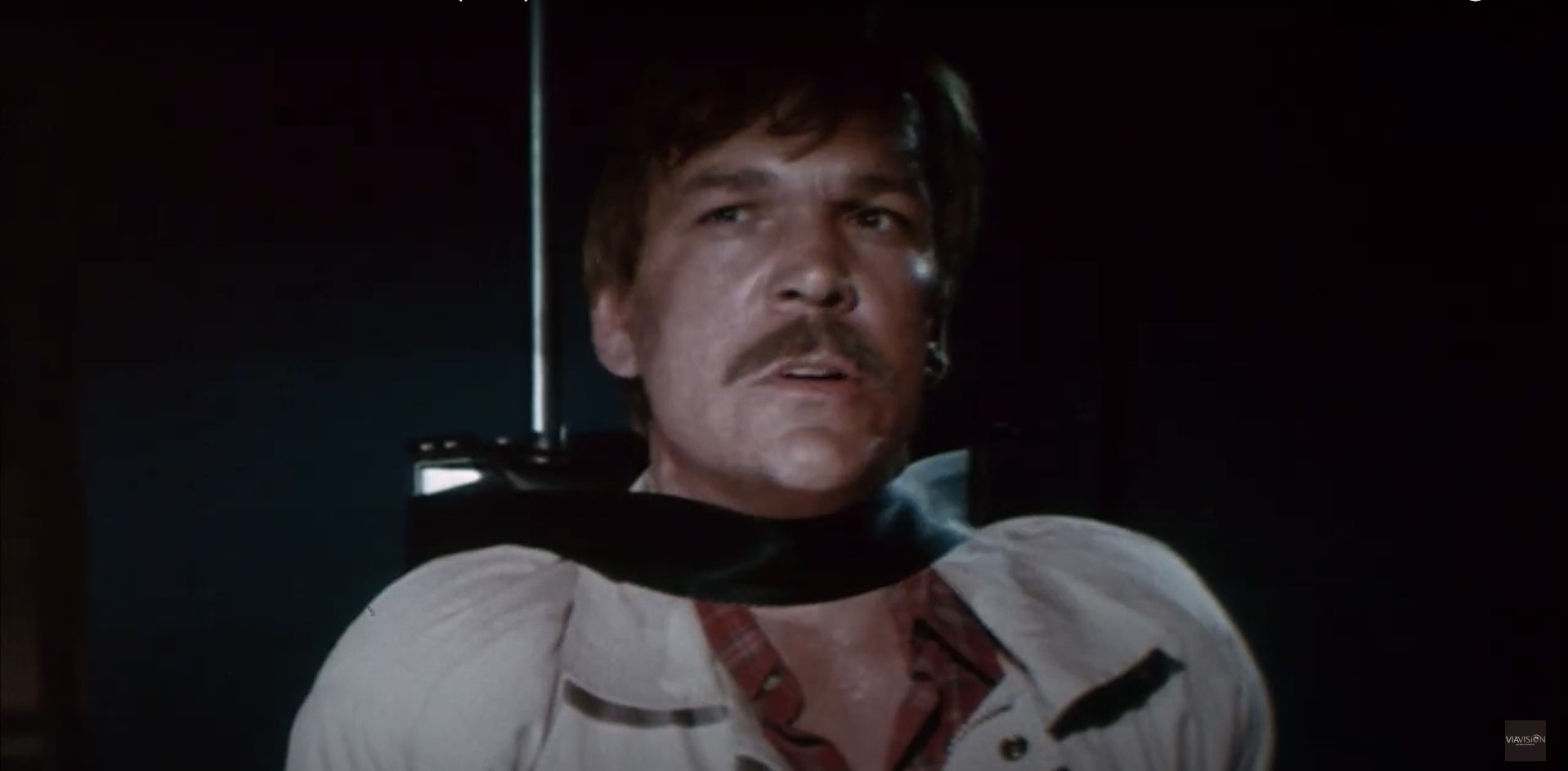
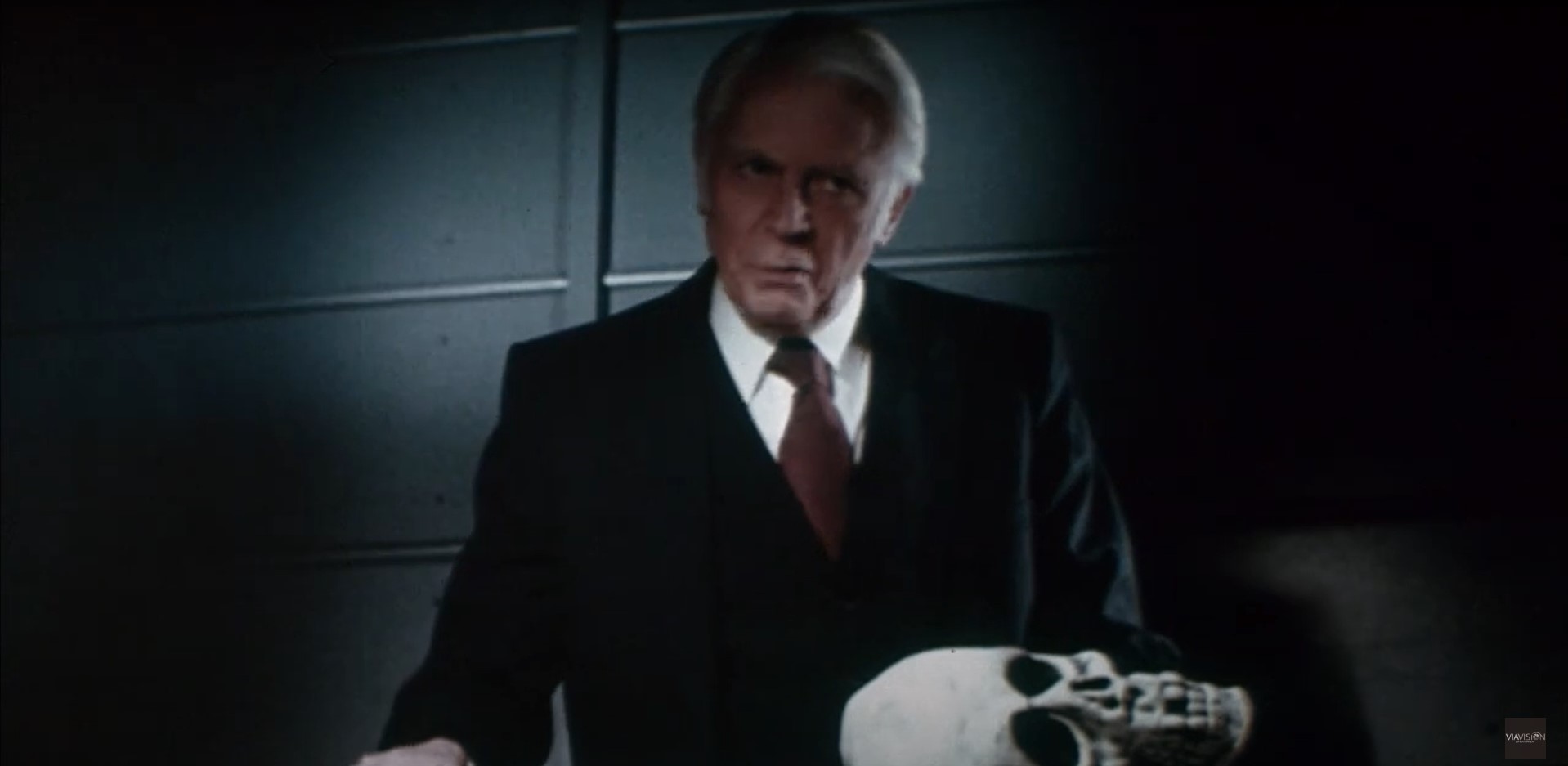
Now, “Season of the Witch” just didn’t star a bunch of nobodies in this offshoot of a newly branded “Halloween” concept.  Before playing the quasi-alcoholic, deadbeat father Dr. Challis, Tom Atkins was already a rising star in the land of John Carpenter films with “The Fog” and “Escape from New York” In 1980 and 1981.  Atkins’s usual confident and charming qualities underneath the rugged good looks and trimmed mustache serve him the better part of man doing his bit part in a not-his-business investigation of a man’s death to please a good-looking woman that happens to be the dead man’s daughter.  That good-looking woman is Ellie Grimbridge, embodied by the Mad Magazine Production’s “Up the Academy’s” Stacey Nelkin, and if you blink, you might miss Atkin’s Dr. Challis being perhaps the worst father ever to his two children and ex-wife.  The subplot is so subtle and overshadowed by the Silver Shamrock Halloween plot that being invested in the crumbling family dynamics doesn’t even hold substantial weight and it truly works to subvert the subconscious and plant a destructive pipe bomb smartly into your moral compass because if you think Dr. Challis is the hero of the story, which in many perspectives he is, he’s also doesn’t keep up with his own children interests or current events, numerously bails on their planned care, runs off and sleeps with a much younger woman he hardly knows, is an active alcoholic, and is quite the handsy philanderer at that when he grabs his much older nurse’s bottom in a playful moment.  No, Dr. Challis is every ounce an antihero hidden in plain sight and in the guise of a potential savior of the children, the world, as he takes on Silver Shamrock and its founder, an Irish toymaker named Conal Cochran with tremendous evil genius and mastermind appeal by Dan O’Herlihy (“The Last Starfighter”).  “Halloween III:  Season of the Witch” rounds out the cast with Ralph Strait, Jadeen Barbor, Al Berry, Michael Currie, Garn Stephens and Essex Smith in key support roles.

Lots of previous opinionated chatter surrounding “Halloween III” collectively concludes to if the filmmakers decided to title the film anything else, maybe just the tagline of “Season of the Witch,” then the film would have won over audiences with a fresh take of science fictional horror and would not have been wrongfully panned by critics and moviegoers.  I call BS on this take.  The original intention was to deliver a new, Halloween-themed horror film year-after-year with John Carpenter attached in some way, shape, or form of bringing novelty terror to our eyeballs and brain.  Instead, public persuasion and studio submissiveness rendered the concept powerless and as a result, and no disrespect to any Michael Myers films that followed, was the departure of John Carpenter and Debra Hill and a string of mediocre and wacky Michael Myer sequels that went deep off the far end.  “Season of Witch” is not a teeny bit at all slasheresque, separating itself far from Michael Myers as much as possible by unconfining itself from location concentration by expanding the threat domestically, if not globally, with a parlor trick plot that involves special, laser-shooting masks that make kids’ heads melt into glop of crickets, snakes, and other creepy-crawly sui generis of the animal kingdom.  While strange in the cause and effect, the practical effects and superimposed visuals work to convey some taught gore and prosthetic knots that can be unraveled, even retrospectively critiquing them by today’s standards.  Wallace masters the film while, at the same time, hitting the ground running on his debut feature that has a look and feel of a graduate from the film of the John Carpenter. 

Halloween season may be months away, but Christmas comes early with Via Vision’s limited-edition Blu-ray set of “Halloween III: Season of the Witch.” The AVC encoded, high-definition 1080p, BD50 presents the film in a widescreen aspect ratio 2.35:1. Much like the Via Vision’s companion release with “Halloween II,” “Season of the Witch” mirrors the same resolution picture quality and stellar package presentation. Dean Cundey’s delivers another smoky noir realism that definably hard-edged and hard-lit that while isn’t the most colorful contrast it does create an abundance of inky shadow to lost in and sink into. A cleaner picture does bring with a reveal of how obsolete some of the composite matte effects but, simultaneously, revives what once was, nostalgia and a more tactile truth in movie magic. Details come through within contour delineation and textural elements. The English language DTS-HD Master Audio 2.0 has dual channel balance and strength with lossless fidelity. Dialogue retains saliency throughout from a rather middle-of-the-road strength ambience albeit a wide range of effects from explosions to laser beam bursts and its constructed, catchy Silver Shamrock jingle, often muted through the television programming, and John Carpenter’s and Alan Howath’s synth collaboration that’s tonally reminiscent of previous “Halloween” films but stands by itself in distinct measure to garner new-sound tension. English subtitles are optionally available. Also, like Via Vision’s “Halloween II” Blu-ray release, a 2024 commentary is recorded and encoded with film critic/historian Lee Gambin and a special appearance by “The Howling” director Joe Dante. Archival commentaries from Tommy Lee Wallace and Tom Atkins are also on the disc with all three commentaries in the setup menu. Special features content includes 2012 Scream Factory-Red Shirt productions with Stand Alone: The Making of Halloween III: Season of the Witch documentary surrounding a Micheal Myers-less picture, it’s critical shockwave, and its ultimate cult following and Horror’s Hallowed Grounds: Revisiting the Original Shooting Locations hosted by Sean Clark visiting a few of the locations used for the film. A still gallery, theatrical trailer, and television spots round out the rest. Of course, my favorite part is the lenticular cover on the limited-edition and numbered cardboard sleeve case of the three, silhouetted little trick-or-treaters with a crone-ish face coming down from above the fire red dusk sky. The slightly thicker Blu-ray Amaray case cover art is stark still image from the movie with another, different image on the reverse side. The black background disc has the skull mask and title across from each other in nice compositional juxtaposition. Next to the Amary case is an envelope with 6 art (picture) cards taken from the film. The Via Vision release is rated M for Mature for moderate violence and moderate coarse language, has a runtime of 109 minutes, and has region B playback only.

Last Rites: Who knew being the outcast looked so damn good. “Halloween III: Season of the Witch” deserved better and received the best on this Australian, limited-edition, lenticular Blu-ray set that’ll leave you whistling the Silver Shamrock jingle and fearing Halloween masks more than ever.

“Halloween III: Season of the Witch” Available on Limited Edition Blu-ray from Via Vision!

Evil’s Crimes Against Nature Will Not Go Unpunished! “Long Weekend” review!


Peter coerces his begrudging wife, Marcia, to forgo the luxurious hotels and chauffeured holidays for a long weekend of camping on a remote beach in Australia. An enthusiastic Peter packs the jeep with thousands of dollars worth of outdoor gear, including a surf board, a spear gun, and a hunting rifle. Marcia loathes the outdoors, can’t stomach the very thought, and she lets Peter know her distaste of his plan every other second while on holiday. Yet, this trip for them isn’t just a routine getaway, but, instead, a trip to get away from the swinging friction of close and very intimate friends, to rekindle their relationship, and save what little is left at a frayed string. The already awkward and complaint-riddle holiday turns from bad to worse when nature looms a foreboding shadow over the estranged couple, unleashing one ill-fated omen to the next that checks their nonchalant attitude toward nature with eco-radical discipline.

“Long Weekend” is an eco-horror film by “Innocent Prey” director Colin Eggleston. Alfred Hitchcock, perhaps, birthed the horror subgenre with his 1963 film “The Birds” that led to such films as “Day of the Animals” and “Grizzly.” Nearly 15-years later, Eggleston hones in on his inner Hitchcock by expanding the background on why nature turns cold and unsettlingly supernatural like. Working off a powerfully detailed and haunting script by “Razorback’s” Everett De Roche that circles around two characters like a hungry vultures, Eggleston vitalizes De Roche’s script with a paper to screen bleak, unsettling imagery on a monumentally minimalistic scale. “Long Weekend” could be considered a Hitchcockian film, and most likely is, but can stand firmly by itself as an extension on how mother nature can be a bitch when push comes to shove.

Two characters and the wilderness. That’s all “Long Weekend” boils down to on brass tacks, leaving two actors on the line to act off each other and off of the ominous presence that has fully engulfed them on an isolated stretch of beach and shoreside forestry. “The One Angry Shot’s” John Hargreaves tackles the conceited Peter with a full-bodied combination of heedless gusto and desperation that Hargreaves can seamlessly become lost in Peter’s self-worth. The Sydney born actor is paired with an English actress by way of Briony Behets from the 1980 film “Stage Fright,” a film also co-written by Colin Eggleston. Behets’ Marcia epitomizes the stereotypical enigma that men all think is the inner workings of a woman’s brain; Marcia is hot and cold with fleeting moments of passion for Peter, yet ready to kill him in the next scene. Behets converts the baffling intertwinement of Marica’s energy and channels it well into the dynamic that is their failing marriage.

What’s really special about Eggleston and De Roche’s film is the overloading symbolism. From subtle to simple, “Long Weekend” has the money betted on working on an underlying moment-to-moment, scene-to-scene in each act; a method tirelessly schlepped through with many modern features of today. Using non-threatening animals, such as a small possum and a sea cow or dugong, to be part of a menacing force driving the ominous presence across the narrative just sets the feng shui mindset of an unadulterated evil genius. Instead relying heavily on a physical entity, Eggleston heavily coincides creature imagery with the use of audible creature cues, whether a baby-like wail in the distance or the overpowering cacophony of animal growls and sneers, to invoke panic, fear, and paranoia to divide the already fragile pair into an atomic disaster of their undoing. “Long Weekend” will overshoot some viewers as piecing the puzzle together can be a slow and long process, but one aspect is certain, the off-camera animalistic stare has a powerful affect.

Second Sight delivers the ozploitation classic, “Long Weekend,” onto Blu-ray home video for the first time in the UK this November. Unfortunately, a review DVD-R disc was provided for this critique and audio and visuals components will not be covered. Bonus material was included on the review disc with audio commentary with executive product Richard Brennan and Cinematographer Vincent Monton, an Umbrella Entertainment produced panel discussion with film historians Lee Gambin, Alexandra Heller-Nicholas, Emma Westwood, and Sally Christie, Uncut “Not Quite Hollywood” interviews with Briony Behets, Vincent Monton, and Everett De Rocha, an extensive still gallery with an John Hargreaves audio interview, and original theatrical trailer. “Long weekend” is man versus nature at it’s best with sheer, unrivaled terror in a quaint eco-horror thriller package with a powerful message that nature will seek extreme judgement against Mother Earth criminals.

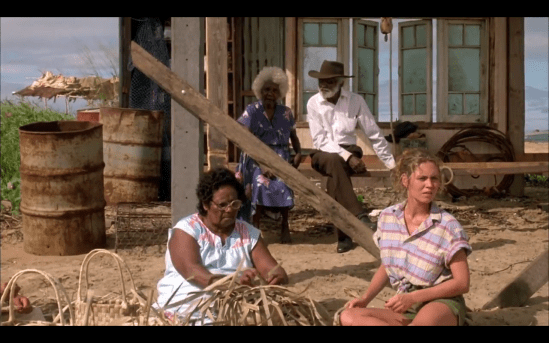
Beer, Guns, and A Giant Crocodile! This is One Helluva Evil Ozploitation Film! “Dark Age” review!


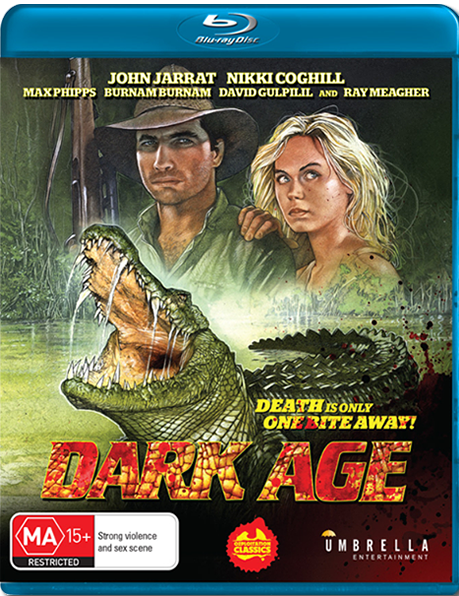
In the Australian outback, a prehistoric and ginormous crocodile has surfaced in the wake of mankind’s gentrification of the wilderness land. Between ambushing crocodile poachers and snatching little Aborigine children from off the river shore, the ancient saltwater hunter has become the hunted as park ranger and crocodile preservation expert Steve Harrison has been assigned to kill the beast, but the local Aborigine tribe holds the killer croc sacred, calling it Numunwari, an ancient, spirit carrying crocodile that has embodied the bones and souls of ancestral aborigine. Together, Harrison and local tribe leader Oondabund must find a way to stop the chaos without terminating the Numunwari while combating drunken poachers and a rattled ranger chief looking to abruptly end public fear. With the enthusiastic help of Harrison’s ex-lover, Cathy Pope, the three devise a dangerous plan to sedate the massive croc and transport it to a secluded habitat before death rears it’s ugly head once again.

Arch Nicholson’s “Dark Age” is the Australian “Jaws” equivalent, introducing a massive crocodile that puts the fear of the murky rivers into the hearts of audiences much like a giant great white shark did for the ocean beaches. “Dark Age” is a raging adventure with a delicate undertone about nature fighting back against an aggressive, occupying force called man, especially the white man, who kills without cause, who plagues without consciousness, and whose power instills a reactionary fear to kill. A single, monstrous crocodile embodies and symbolizes the essence of an entire habitat, chomping through flesh and doing a death roll to make known that nothing can stop nature or as “Jurassic Park’s” Dr. Ian Malcolm so eloquently put it, “Life, uh, finds a way.” Nicholson’s film, from the novel of Grahame Webb novel Numunwari, isn’t solely a man versus nature horror despite marketed as one; instead, “Dark Age” unveils more the cruel side of human nature that’s more Machiavellian than nature running its course.

“Wolf Creek” star John Jarrett, who I better know from “The Odd Angry Shot,” stars as the conflicted park ranger and crocodile preservation expert Steve Harrison. Jarrett’s more convincing a maniac outdoors man than a crocodile conversationalist, but the iconic Aussie convinces us all that being in between two opposing sides is no easy task with this willingness to do what’s right on both sides. Nikki Coghill portrays Steve Harrison’s love interest, Cathy Pope, and Coghill is a dominating female lead by, not only being the only prominent female character, but with her striking ability to overpower Jarrett in scenes and with her also very striking beauty that comes to peak in a fleshy sex scene with Jarrett. The second most recognizable face behind Jarrett is aborigine descendant David Gulpilil. Most Stateside filmgoers may recall Gulpilil’s long locks and distinctive facial features from Crocodile Dundee in a ceremonial Aborigine dance alongside Paul Hogan. In “Dark Age,” Gulpilil plays Adjaral, son of Aborigine tribe leader Oondabund played by Burnham Burnham. “The Howling III” actor acts as a spiritual liaison between the crocodile and the white man world and Burnham Burnham’s childlike presence onscreen makes the actor very memorable and likable. Ray Meagher, Max Phipps, Jeff Ashby, Paul Bertram, and Ron Blanchard co-star.

There have been many installments and versions of crocodile leviathans. In fact, in It’s Bloggin’ Evil’s last review, Sion Sono’s Tag, there’s a dream sequence of a giant crocodile gorily snapping down upon a Japanese schoolgirl with blood spraying everywhere. While the scene is graphic, eye-catching, and notable, the croc was a mockery of reality with disproportionate jowl and a flimsy design that’s more cartoonish than substantially factual. Kuddos to the monster effects and long time visual effects artist Roger Cowland for constructing a frightening behemoth of a crocodile. Though slightly stiff in some scenes, Nicholson camera placement exhibits just enough to warrant a shortage of breath whenever the crocodile goes in for the kill or stalks a prey with the round eyes popping just above the water’s surface. This effect is masterfully executed by the late director who didn’t feel the need to be gratuitously gory with the death scenes that are modest, intense, and sheerly practical.

Yet to be on DVD or Blu-ray in the U.S.A., the good blokes over at Umbrella Entertainment release ultra-rare “Dark Age” for the first time hi-definition on Blu-ray as part of Ozploitation Classic series presented in a 1080p widescreen, 16:9 aspect ratio, format. The image looks clean without any noticeable enhancements, distortions or print damage with only some heavy noise in the darker scenes. The Dolby Digital 2.0 audio track is just as perfect with clarity in the dialogue, a pulsating synthesizing score, and fine fidelity and range. No hissing, popping, or any other noise annoyances were detected. Umbrella unleashes a slew of bonus material includes an audio Commentary with Actor John Jarratt and Executive Producer Antony I. Ginnane, a Bicentenary with Bite: Revisiting “Dark Age”, panel discussion with film historians Lee Gambin, Alexandra Heller-Nicholas, Emma Westwood and Sally Christie, and Uncut Not Quite Hollywood Interviews with John Jarratt and Antony I. Ginnane which are tremendously enlightening about the film’s birth and concluding reactions. There’s also a 1986 documentary entitled Living With Crocodiles with Grahame Webb, author of Numunwari, trailers, and an image gallery. Forget “Rogue.” Forge “Lake Placid” Lets even forget “Dinocroc!” Umbrella Entertainment’s “Dark Age” is the ultimate formidable 90-minute action-horror with trembling induced fear and adrenaline produced thrills accompanied inside a hi-definition release packed to the razor sharp teeth with extras.