A Cop, a Paranormal Investigator, and a Priest Walk Into an EVIL Extermination Plan! “Belzebuth” reviewed!


The joy of a new baby is cut short for Detective Ritter who bares the tragedy of his little boy viciously killed in a massacre of nursey infants by a psychotic nurse before taking her own life.  Five years later, and losing not only his child but also his wife to severe depression, a disheveled Ritter is called in to investigate a mass murder involving a 12 year old boy slaughtering young children in a preschool classroom.  To him, the two events don’t spark similarities, but to a paranormal investigating Catholic priest, Ritter’s tragedy and the events in the classroom are linked by the unorthodox priest’s examination.  All the evidence points to an excommunicated Catholic priest practicing demonology that sends the two men down a path of unholy darkness in a series of murderous catastrophes influenced by the rebirth of the Messiah.

When the first scenes from “Belzebuth” open with a maternity ward nurse stabbing with vigorous force every single infant child in their crib with a scalpel, you know nothing wholesome is sacred and everyone is fair game in what is to be a grim story of infinite barbarity and darkness.  “Belzebuth” falls in the line of fire of Mexico City born writer-director Emilio Portes with an augmented, dark humored social commentary loaded with evil entities and grimace-laden gore.  The “Meet the Head of Juan Pérez” filmmaker cowrites “Belzebuth’s” irrational rational for the unfortunate real world trend of mass murders and touches upon, sensationally, the evolution of Catholicism extremities to battle evil in the world with first time feature length film screenwriter Luis Carlos Fuentes.   The Mexico/American film is produced by Rodrigo Herranz, Michelle Couttolenc, and Jaime Basksht, with Ana Hernandez as executive producer and Pastorela Peliculas in cooperation with patriotic promotion from the Instituto Mexicano de Cinematografia, aka IMCINE, serving as the production companies.

If you Google Mexican actors, the power of artificial intelligence and ignorant manual input couldn’t separate Mexico form any other Latin American country as the powerhouse search engine provided me results like Danny Trejo, John Leguizamo, Jennifer Lopez, Javier Bardem, and Penélope Cruz.  Now, while I respect each and every one of these performers who provide a variety of lush character and emotional erudition to each of their roles, not one of them is born in Mexico.  Some that listed do not even share the same heritage.  But do you know what the most astonishing, most outrageous, and most shameful aspect of my search was this?  The Tepic, Nayarit, Mexico born Joaquín Cosio was not among the top 50 results.  From captivating television with Guillermo del Toro small screen adaptation of vampiric apocalypse of “The Strain” and the intense drug-fueled drama of “Narcos: Mexico” to his Hollywood presence in the star-studded, James Gunn directed “Suicide Squad” to his humbler beginnings that includes Bond, James Bond, in “Quantum of Solace,” Cosio’s a strong and versatile candidate for intense thrillers and “Belzebuth” is right in the actor’s wheelhouse as a downhearted Detective Rigger with a short fuse.  As a supernatural skeptic, Ritter’s forced into confronting his past demons with the demons of the present by tracking down rogue priest Vasilio Canetti (Tobin Bell, “Saw” franchise) with the help of Father Ivan Franco (Tate Ellington, “Sinister 2”) of the Paranormal Forensic Department, which sounds kind of silly because Franco’s squad is an extension of the Church.  Bell brings his delightful deadpan bedside manner as the excommunicated priest in guerilla warfare with a determined, demonic evil trying to massacre as many children as possible to find the reincarnated Messiah in what would be the Third Coming as the Second had come and failed during the Crusades.  Bell is the yin to Cosio’s yang until circumstances rear-end last ditch efforts and all Hell breaks loose in a drug smugglers’ tunnel.  Aida López, José Sefami, Yunuen Pardo, and Liam Villa round out the cast.
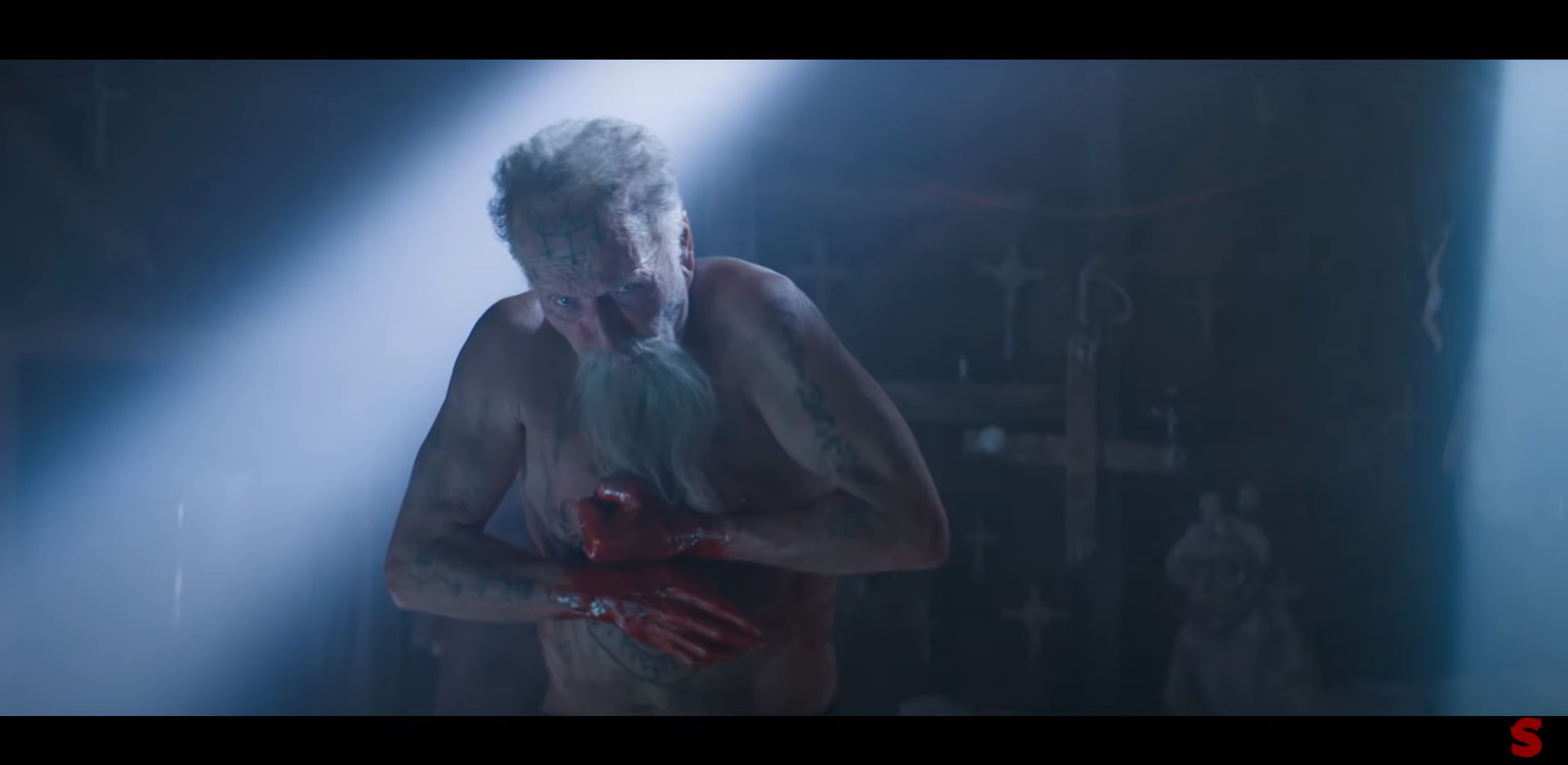
If possession-fueled carnage and the antiheroic archetype weaponizing demonology for good tickles all the right places, “Belzebuth” can be the feather tickler of dreams.  Fans of Clive Barker’s “Lord of Illusions,” Peter Hyams’ “End of Days,” and the graphic novel “Constantine” can indulge into Portes’ explicit nihilism and lack of public conviction in religion in the director’s allegoric telling of something really big and really satanical happening right under people’s noses while a small motely crew of conversant peons try to stop a wall of Deviltry.  Portes also consistently touches upon Mexico’s unsystematic corruption, even among Ritter and other protect and serve officers, and the once firm-handed political system of the Institute Revolutionary Party (PRI) as potential cause for all the suffering enacted demon-rooted abscessations.  The mentioning of drug cartels pop up frequently, too, symbolizing the seemingly random acts of violence are just never just random acts, but an perpetrated hit on a human target much like the cartels’ unsavory methods to either take out competition, eliminate obstacles, or to silence whistleblowers.  Portes does a phenomenal job using his film as an allegory in making a political statement but lacks balance in favoring gore over profile with some characters who rather feel written in just for the sake of a broader English audience.  Father Ivan Franco is such character with interesting combinational vocations as a paranormal investigator and a holy man of the cloth.  Yet Franco, who wields a gun and has supercool video and audio recording specs, spearheads a larger suborganization shielded away from the public eye and, unfortunately, the viewer eye that never feels like a cog in the entire “Belzebuth” machine.  Franco and his team of spook-sleuths, who, by the way, vanish completely from his side early into the investigation, supposedly follow and investigate peculiar tragedies connected to misaligned presences leaving spiritual residue on the real world plane, but how his team comes about connecting the dots exclusively to just the first two tragedies, five years separated, is a bit of stretch and a letdown in fabricated continuity and weight behind Franco’s existence to be involved.  Pockets of plot holes pop up here and there on other facets but generally speaking, “Belzebuth” works black magically as a spiritually and culturally vivisecting detective thriller.
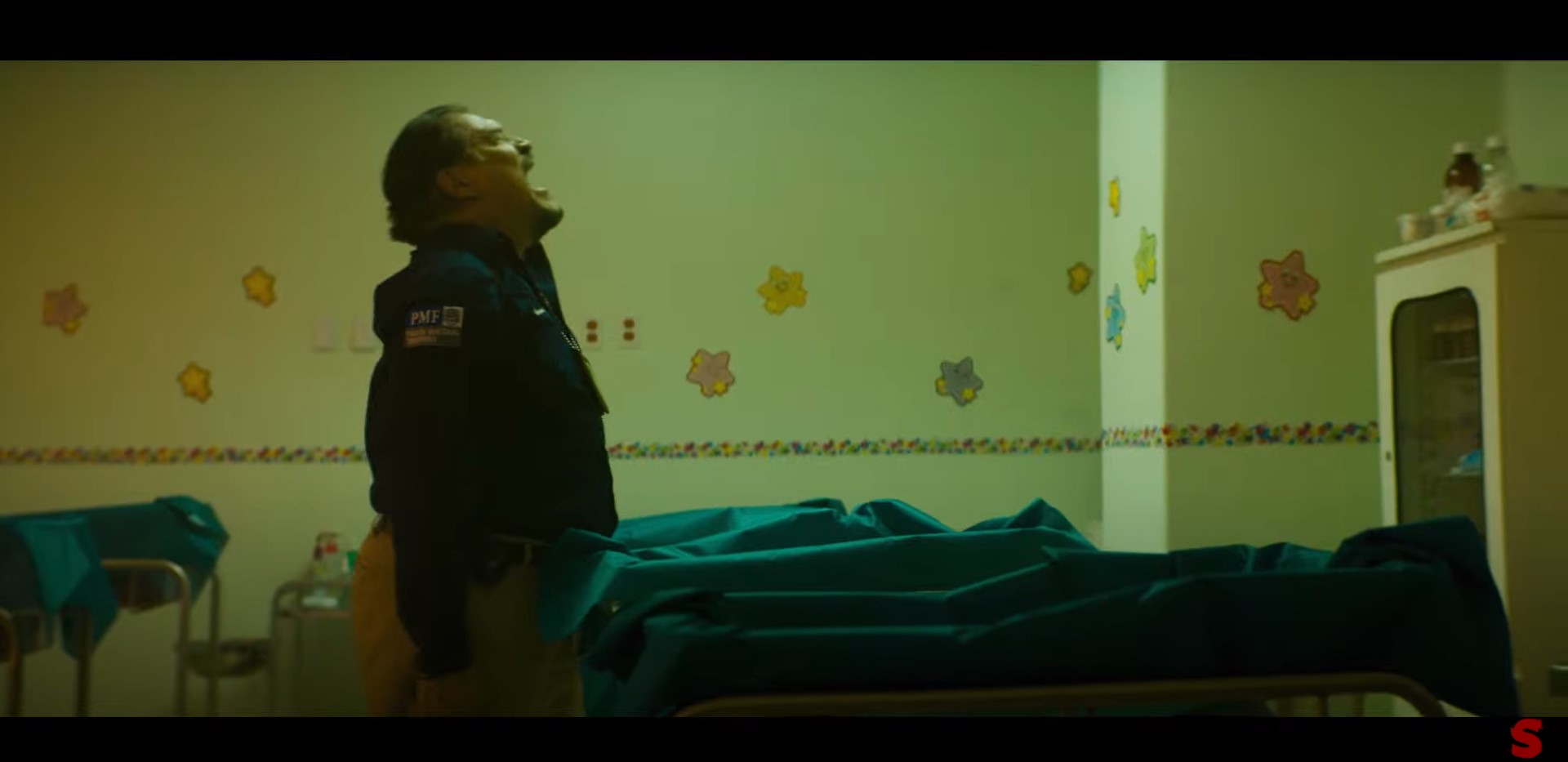
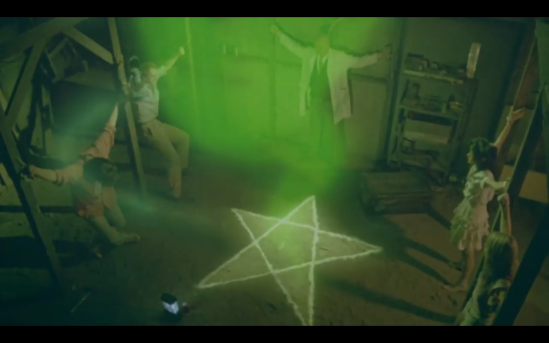
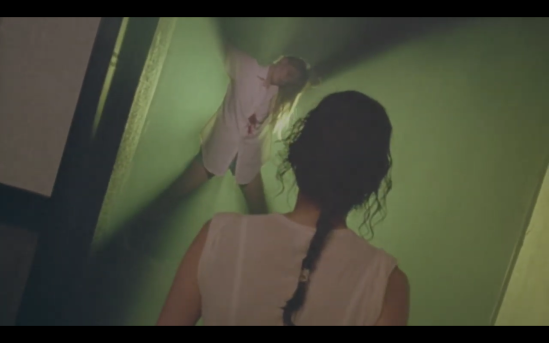
The Shudder original 2017 release, “Belzebuth,” scares up onto an UK Blu-ray release from Acorn Media International. The region 2, PAL encoded, single layer BD25 presents the film in a widescreen, 2.35:1 aspect ratio, with a runtime of 109 minutes.  Ramon Orozco’s cinematography flashes with a gorgeous red and blue color palate that fits the iniquitous tone and adds an ethereal, hazy backlighting to only enhance the tone to more sinister levels.  Acorn’s Blu-ray sharpens Orozco’s already byzantine schemes that enriches the details in the skin as well as a the sacred relic artifact-cladded locations that become claustrophobic and entombing.  Even Juan Martínez Espín visual special effects casts a solid effort of barely a smooth surface computer generated phoniness, especially in one crucifying scene of psychological torment.  You’ll know it when you see it.  “Belzebuth’s” powerful Dolby Surround 7.1 audio track is an assault on the eardrums of the best kind with a husky, industrial melodic soundtrack and hefty sound design with accompanying diverse range and proper depth that could be described as literally placing every creak, stab, and cackling laugh sound right into the darkest corners of your ears.    An unfortunate surprise about the Acorn release is that there are no special features aside from the animated menu that is essentially chaotic “Belzebuth’s” trailer plastered with menu options.  Possession films tend to stale at a dime of dozen, but Emilio Portes’s freshly terrifying “Belzebuth” entertains and scares to the very last morsel.

EVIL Gets Loopy in “Welcome to The Circle” reviewed! (Artsploitation Films / Blu-ray)

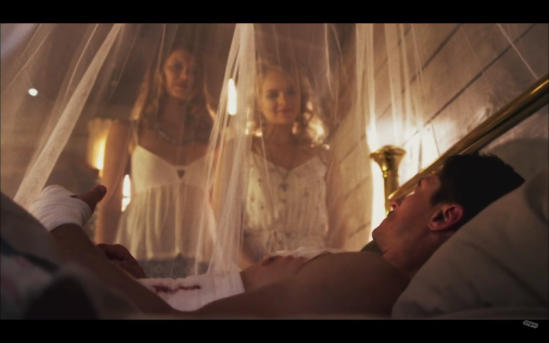
Greg and his young daughter Samantha are turning out the lights on a camping trip in the woods.  When a bear attacks in the middle of the night, Greg awakens in the care of a commune-like camp.  Injured but alive, Greg is given the grand tour of the encampment of a cult known as The Circle where he rejoins with his happy-go-lucky daughter and meets a few other strange and unusual members who worship the legacy and the omnipotent existentialism of The Circle’s creator, Percy Stephens.  What the father-daughter combo don’t realize is that The Circle is a demon worshipping cult bidding on the whimsical demands of Percy Stephen’s rancor and malice.  A group of outsiders led by Grady, a former cult member in his youth, are determined to rescue and reprogram one of the followers close to them, but step into an upside-down world, demonized with smoke and mirrors, set on swallowing their souls for the sake of Percy Stephens delight. 

A diabolical drip of disorienting deception, “Welcome to The Circle” is a roundabout from Hell, cordially ostracizing the love and blessings ideology for more sinister, soul-sucking profit of an unconventional demon film.  “Welcome to the Circle” is a Canadian-made debut independent feature from write-director David Fowler and Fowler, better known for his work on documentaries, knocks on the door of insanity with a tailspin narrative that collides John Carpenter’s “In the Mouth of Madness” with Clive Barker’s “Lord of Illusions” with Aaron Moorhead and Justin Benson’s “The Endless” rapping at the door and the results are an enigmatic nightmare full of stone faced mannequins, body inhabiting occupations, a series of blackhole peculiarities, and being eaten alive by crazed acolytes.  The Vancouver, British Columbia based Canadian company, High Deaf Productions, embarks into the feature film bazaar, with Mack Benz and Michael Khazen serving as company producers, with co-production association from Corvid Arts and Upfront Films.

Broken into two parts, the narrative opens the first portion up to familiarize with the cultist sheep in the stark white attire of wolves’ clothing that throws Greg and his daughter Samantha’s kismet into the uncertain pit of a demon’s impish thirst for souls.  When introduced to Greg (“Dragged Against Concrete’s” Matthew MacCaull), much of the character falls below the waist side as a single father detached from his own child and surrounded by conniving zealots that funnels into becoming weak, if not also immaterial when MacCaull is unable to explore Greg more in depth.  Nothing against MacCaull who performs well enough with an unsympathetic character that has a cold shoulder connection with his insubordinate child and no real background fuel a feed into Greg’s worth as one of the mainstay roles.  I also thought a little more on The Circle’s followers would be constructive to The Circle’s reason for fervor and appeal, but instead, Sky (“Supergirl” television series’” Andrea Brooks), Lotus Cloud (“Pacific Rim’s” Heather Doerksen), Rebekah (“The Wrong Daughter’s” Cindy Busby), and Matthew (“The Unspoken’s” Michael J. Rogers) are members developed only inside a crumbling hierarchy structure obtaining cryptic messages from a demon, Percy Stephens, from beyond their plane of existence.  Percy Stephens is perhaps the best complex character in the fold without having a stable foundational actor in his shoes and is played by various faces of the film’s cast able to reach back toward an immense and mysterious backstory that involves a slew of daring and impressive accomplishments and a demonic tiger shark that may or may not be Stephen’s aquatic damnation to Hell.  The second portion moves greatly away from Greg and his daughter and into a rescue operation, led by the unfiltered and unorthodox Grady, a former The Circle youth who landed in a psyche ward only to be hired to infiltrate the cult to extract Rebekah, paralleling his motives to understand the mechanics of the cult that led to the disappearance of his mother.  “Stan Helsing’s” Ben Cotton delivers a performance that is anything but vanilla as the sharp wit and cool as a cucumber Grady, dominating each and every scene in a disheveled and aloof veneer that becomes Grady’s best defense against Percy Stephen’s engaging entanglements.  The cast rounds out with Taylor Dianne Robinson (The Twilight Saga:  Breaking Dawn Part 2), Hilary Jardine (“Teen Lust”), Matt Bellefleur (“In Their Skin”), Christian Tessier (“Night of the Demons III”) and Jordana Largy (“Rememory”). 

It suffices to say that David Fowler’s topsy-turvy and boundless the fake-fake, a descriptor of the story’s in-between existences, is an alternate universe complete with hope chest portals and wraith approaches that will disrupt the audio and visual perceptions, disconnecting the straightforward wiring only to cross the stepping stones of normalized story structures to fissure what we know into a fractured reality.  The foyer to oblivion, the fake-fake, isn’t an easy one to digest and Fowler is very much aware of the real-real consequences of traversing into the world of the fake-fake.  Fowler forces you to pay a penance for crossing the threshold that will cause dizziness and nausea, the same affects the characters sometimes experience through the compressed spaces of time and planes of The Circle, soldering an unintentionally immersive experience with the combination of simple and natural cinematography infused effects that spun, tilted, and corralled acute fear and isolation from under the DP supervision of Sterling Bancroft. In regards to Fowler’s darkly imaginative story, the script a lively progression of diverse ideas and concepts that construct a little world within a bigger world, especially on a modestly tight budget that can’t afford mind-blowing special effects, but the cohesiveness is heavily reliant on the character’s to explain the actions that are occurring to progress an outline and much of that explanation falls into poetic prose and riddles. Characters Percy Stephens and Grady to much of the grunt work in vocalizing the visuals, but the course is a rocky road and with every bump there’s a meaning within a meaning and to know the meaning is to meaning to know. See what I mean? “Welcome to the Circle” chips away the substantial concrete barrier with a bombardment of incorporeal flak that comes in wave-after-wave of full blown auteur creativity.


To get caught in the loop is to loop in getting caught and that’s what Artsploitation Films has done by acquiring and distributing “Welcome to The Circle” on a Blu-ray home entertainment release. Presented in a widescreen 1.85:1 aspect ratio, the digitally recorded picture is about as immaculate as they come nowadays with tactile textures of grainy log of the cabins, the floral of the forest, and the scruff of Matthew’s bristly beard all looking particular sharply detailed albeit some minor fluctuations of softness seeping into the brush and into more dreamlike sequences and though flat, the colors due run unbridled with the forestry green and the eggshell color of mannequin “skin” that renders subtle differences more distinct. Darker scenes render nicely and smoothly without as much of a flicker of interference and Bancroft’s use of depth forces audiences to focus only on what’s extremely close up or what’s faraway by way of adjusting the focal length. The English language 5.1 DTS-HD Master Audio also has little-to-no complains with a well rounded discernible platter of clear, forefront dialogue, depth and range of vocals and ambience, and a combination score and soundtrack by Reid Hendry with original and haunting folk tracks by Jo Krasevich do an insidious one-two punch that bruises the soul. The not rated, 93-minute film comes with only a theatrical trailer in the bonus features. Despite the dense ambiguity that surrounds the film, the demonic ensnaring doom that accompanies “Welcome to The Circle” is, simply put, psychosis in a bottle that director David Fowler just effortlessly uncorked.

Own “Welcome to the Circle” on Blu-ray!

When the EVIL in Your Dreams Terrorizes You…”Nightwish” Reviewed!


A graduate dream research group experiment on paranormal and sensory deprivation sleep patterns involving controlling their own dreams, even if their terrifying, and examining their own deaths but when they pivot to investigate supernatural activity inside an isolated compound mansion in the midst of an arid desert, the four students and their eccentric teacher conjure malevolencies that include satanic rituals and alien encounters. With their professor spearheading an underlying motive to use them for his diabolical plans, the hesitant and scared group must decide to either force their participation or try and escape their instructors madness, but when the lines of reality blur, friend becomes foe and foe becomes friend with casualties in the middle on all sides as grisly depictions of death and suffering question whether their nightmares are spilling into reality.

Subconscious surrealism on an ultimate terror coaster from writer-director Bruce R. Cook with an unspeakable horror in every corner, from flesh eating extraterrestrials to disillusioned Mad Doctors, in the nightmare-inducing “Nightwish!” The 1989 made and 1990 released “Nightwish” is produced by Paul White and Keith Walley, both of whom collaboratively funded through their Wild Street Pictures production company the early 1990s horror which included another Unearthed Classics release, spine #2, “The Dark Side of the Moon” and, also, put a little cash into the Jeffrey Combs cult favorite, the Brian Yuzna sequel of “Re-Animator,” “Bride of Re-Animator.” However, the real star of the filming crew is none other than Sean McLin. Before going full fledge into being a camera operator, especially around the early days of Power Rangers’ television series, McLin had a short stint as director of photography and his cinematography beyond divine that engrossed to draw audiences into odd angles, mind-boggling depth play, and just colors after colors of spectre ghoulishness. McLin provided a pure motley of mental macabre of the Gregory Nicotero (“Day of the Dead”), Robert Kurtzman (“Lord of Illusions”), and Howard Berger (“In The Mouth of Madness”) powerhouse effects team.

The central characters essentially encompass four graduate students – Bill (Artur Cybulski), Jack (“April Fools’s Day’s” Clayton Rohner), Donna (“Friday the 13th Part VII: The New Blood’s” Elizabeth Kaitan), and Kim (Alisha Das) – along with their stern professor played by the solemn faced Jack Starrett (“Grizzly II: The Concert”). Relatively low on the totem poll names when considering a main cast; hell, I only know Clayton Rohner from his role in the mid-80’s teen transgender appropriation film, “Just One of the Guys” as well as being Admiral Jameson on one episode of Star Trek: TNG. Yet, the combination of crew talent along with the chiseled define facial features of a one Brian Thompson (“Cobra”), the meshed cast suffer no visible calamities or outright fumbles of performance as they each carrier about equal weight into a floating, weightless, construct of boiling human antagonizing fear. The cast rounds out with colorful supporting performances of a muscle head henchmen by Robert Tessier (“The Sword and the Sorcerer”) and the nitwit gate keeper, also animal feeder, Wendall played by Tom Dugan. Yet, Thompson tops the more colorful performances as Dean whose Kim’s ruggedly, manly boyfriend that’s more confident jock without the loss of brain cells. Thompson’s at the height of career, sporing a tank top for most of the film that puts his muscular form on display, but he isn’t the only actor to bare skin as Elizabeth Kaitan and, especially, Alisha Das bare a bit of flesh for the sake of providing a sexual desire to story.

“Nightwish” understandably has a hard chronicle to follow because any film, regardless of genre, incorporating dreams or delving into the state of madness is definitively ambiguous at best, hard to follow, and puts minds into high gear to either understand the just what the hell is going on or to make sense of the chain of events to deduct a reasonable explanation. Sure, over thinking “Nightwish” as a complex construct can be dead wrong. There could be simplicity strewn about and, maybe, we’re too dense or too complicated ourself be aware of the obvious, but Cook certainly knew how to piece together a disjointed storyline that distinctly defines part A of the plot, but parts B and C are so well blend together that the clarity of part A starts to disintegrate and more questions than answers starting whizzing through our think box. “Nightwish” epitomizes the resemblance of nightmare residue and is best left open for personal interpretation.

Spine #3 from Unearthed Films Classics label comes “Nightwish” onto Blu-ray distributed by MVD Visual. The Blu-ray is presented 1080p in a widescreen 1.85:1 aspect ratio through a newly restored 4k transfer, but the transfer, perhaps from the best negative possible, has some minuscule wear with faint scratches and dirt impressions; however, the definition and the color palette ultimately overrun the set hard grain with the minor damage also being an after thought. The uncompressed English 2.0 PCM has a better grade in comparison to the video with clear dialogue and a robust soundtrack throughout to which the ambience is nearly overshadows by but does present itself despite the lack of inertia to progress. Special features include a commentary track with Wild Street Pictures producer Paul White and the president and founder of Unearthed Films Stephen Biro. Also available is a photo gallery, trailers, and an extensive cast and crew bio booklet filled also with production notes and a slew of high resolution stills that’s great to flip through. As another judiciously placed classic for Unearthed Films, “Nightwish” is a dream come true for viewers that combines the effects talents of Nicotero, Kurtzman, and Berger with the terrifying ferocity of facing death through in the dark subconsciousness.

Nightwish available on Blu-ray!

Planning a Jailbreak off an Evil Corporation’s Island Prison! “Escape from Absolom” review!


In the year 2022, Special Forces solider, Captain Robbins, is court martialed for putting a bullet in the head of his commanding officer. After escaping two maximum security prisons and a record of rebellious activity, a corrupt and power hungry warden of the Lactivus prison ships Robbins off to an off shore island called Absolom, where prisoners can roam free with no chance of escape due to 24/7 surveillance by Satellite and rocket launcher armed helicopter gunships surrounding the island perimeter. Island prisoners separate into two factions: the Outsiders and the Insiders. Each with the respective camps, the lawless Outsiders overwhelm the Insider’s numbers by 6 to 1, leaving the small manned community in constant fear of attack and pillage by the Outsider’s merciless leader, Walter Marek. When the insiders learn than Robbins has faced Marek and lived, they take the former solider into their community, but Robbins sole desire is to escape off the condemning rock and with the help of a few good men from the Insiders’ camp, the chances of escape and survival are greater together as long as Marek and his band of starving cutthroats don’t seize the endangered community first.

“Escape from Absolom,” also known as simply “No Escape” in the U.S., is a Martin Campbell directed action film from 1994 that’s futuristic and violent, fun and thrilling, and kitschy without being too cheesy. Campbell, who went on to direct not one, but two, James Bond films, begins a base of epic action that’s toweringly ambitious and pulled off nicely with the stunts and the editing. Based off the Richard Herley novel “The Penal Coloney,” the script is penned by Michael Gaylin who puts pen to paper to scribe a playful, passively aggressive dialogue, but fun and energetic on a the same coy lines of other high visibility action films. Gaylin was able to conform to a story that has no dynamic with the opposite sex in one of the few films that exhibits a rare all male cast.

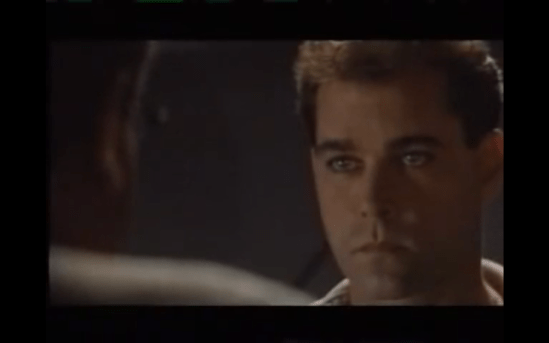
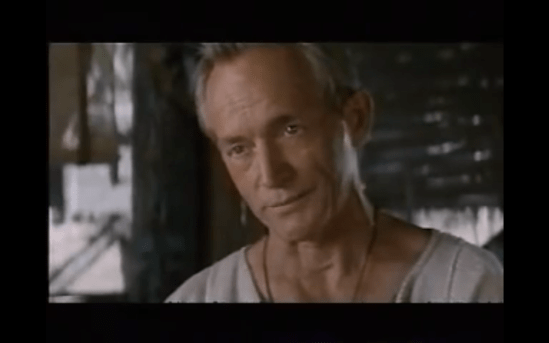
“Goodfella’s” star Ray Liotta finally got his time to shine as the butch and badass action hero that is Captain Robbins, a highly skilled special forces solider and killing machine whose pragmatic intentions, at first, are hard to read. The cockiness overtop a well-cloaked deadly skill set works to the advantage of the blue-eyed actor for New Jersey. Opposite Liotta is Stuart Wilson (“Hot Fuzz”) as Walter Marek, a 7-year island lifer with dreadlocks and nose bridge piercings to match his psychotic leadership. Wilson does psychotic just fine, but the look resembles John Travolta’s atrocious attire from Battlefield Earth. Lance Henriksen, One of the most recognizable legendary genre actors, has a more serene approach in being a mentor and the leadership figurehead of the Insiders camp when compared to conventionally eccentric, sometimes maniacal performances, but Henriksen has a mellow side to him that conveys are very affectionate kumbaya approach, but any personality compared to Stuart Wilson’s internal rampage would be a stark contrast. “Ghostbusters'” Ernie Hudson has his role as security office in the Insiders camp and the sole black man of the film, for obvious reasons, stands out, but Hudson just adapts to anything you put him in though the Michigan born tended to sway toward the thrilling fantasy/sci-fi genre in the height of his career. Rounding out the cast is Kevin Dillon (“The Blob” remake), Kevin J. O’Conner (“Lord of Illusions”), Don Henderson (“The Ghoul”), Ian McNeice (“Dune”), and Michael Lerner (“Maniac Cop 2”).

All things considered, “Escape from Absolom” is a torrent men-in-prison extravaganza that’s one part Sylvester Stallone “Judge Dredd,” one part Chuck Norris “Missing in Action,” and, as a whole, an endangered brand of droll entertainment. Speaking of Stallone, Ray Liotta did it first as a character who is an expert at escaping the inescapable maximum security penitentiaries and instead of Arnold Schwarzenegger and Dave Bautista as contentious, yet supportive allies, the friendly, yet solidly statured Ernie Hudson and Lance Henriksen share Liotta’s Captain Robbin’s unquenchable lust for freedom, even if it to provide unsheathe exposition of the unethical corporate penal system practices. Far from being a perfect film and extremely blantant on a no underlying message, Martin Campbell undoubtedly has a fine tuned niche of capturing the casual eye with large scale action sequences and an affable character allure.

Umbrella Entertainment releases “Escape from Absolom” on a region-all Blu-ray, presented in 1080p, widescreen 16:9 aspect ratio. The coloring is phenomenally remastered and stable compared to previous transfers. There are times when depth becomes two-dimensional or flat, skewing the picture noticeably, but the overall picture quality is spectacular in the vast amount of Australian landscapes and even in the night scenes that show hardly any enhancing, such as sharpening or contrast. The English DTS-HD Master Audio 2.0 track is laid out nicely with audible poise and precision balance. Dialogue is prominent while explosions have just the right amount of oomph under an exact LFE recipe. The release sports other language Dolby Digital audio tracks such as a German 2.0, Spanish 2.0, Italian 2.0, and a French 2.0. Optional English SDH subtitles are available. Bonus material includes a two part making of featurette from around the production of the film with interviews with cast and crew, four TV spots, trailer, and a reversible cover. Runtime is 118 minutes. Martin Campbell’s “Escape from Absolom” is dystopian dynamite, explosive and aggressive with a flare for enjoyable banter amongst defined and diversified characters inhabiting an utopian island of mostly societal scum.