Hear That? That’s EVIL Bamboolzing You! “Ultrasound” reviewed! (Magnet Releasing / Digital Screener)


Driving home from a wedding reception, Glenn’s car suffers a flat tire in the pouring rain.  He finds refuge in the home of married couple, Art and Cyndi, with an extended offer to him to wait out the rain and spend the night, spending the night in bed with Cyndi at the pleading request of Art.    The next morning, Glenn wakes up and Art and Cyndi are gone.  Months later, Art shows up at Glenn’s apartment and shows him a videotape of a pregnant Cyndi.  Unable to make sense how of his role within Art and Cyndi’s lives, Glenn agrees to meet with Cyndi to discuss future plans and wind up a romantic relationship, but when they suddenly wake up in a hospital and kept separated, they believe they lost the baby as well as the use of Glenn’s legs due to an assumed accident.  What unfolds for the couple from then on is bizarre reality that doesn’t make much sense with only a few familiar chords being struck in their mind and every step of their life is being controlled by manipulators with various agendas. 

A gyrating wool over the eyes suspense thriller is set to release this Friday, March 11th. That film is “Ultrasound,” the first feature film helmed by Rob Schroeder, the producer of “Sun Choke” and “Beyond the Gates,” both films starring Barbara Crampton.  Unfortunately, “Ultrasound” doesn’t star the iconic scream queen but the Conor Stechschulte script, based off the Stechschute’s erotic psychological graphic novel series, “Generous Bosom,” produces the high intense frequencies from off the illustrated pages and into the subjected characters and audiences with disorienting loops of truths and falsities.  The U.S. production is a product of the Los Angeles based Lodger Films, cofounded by Schroeder and Georg Kallert, and with co-producers Brock Bodell and Spencer Jazewski.

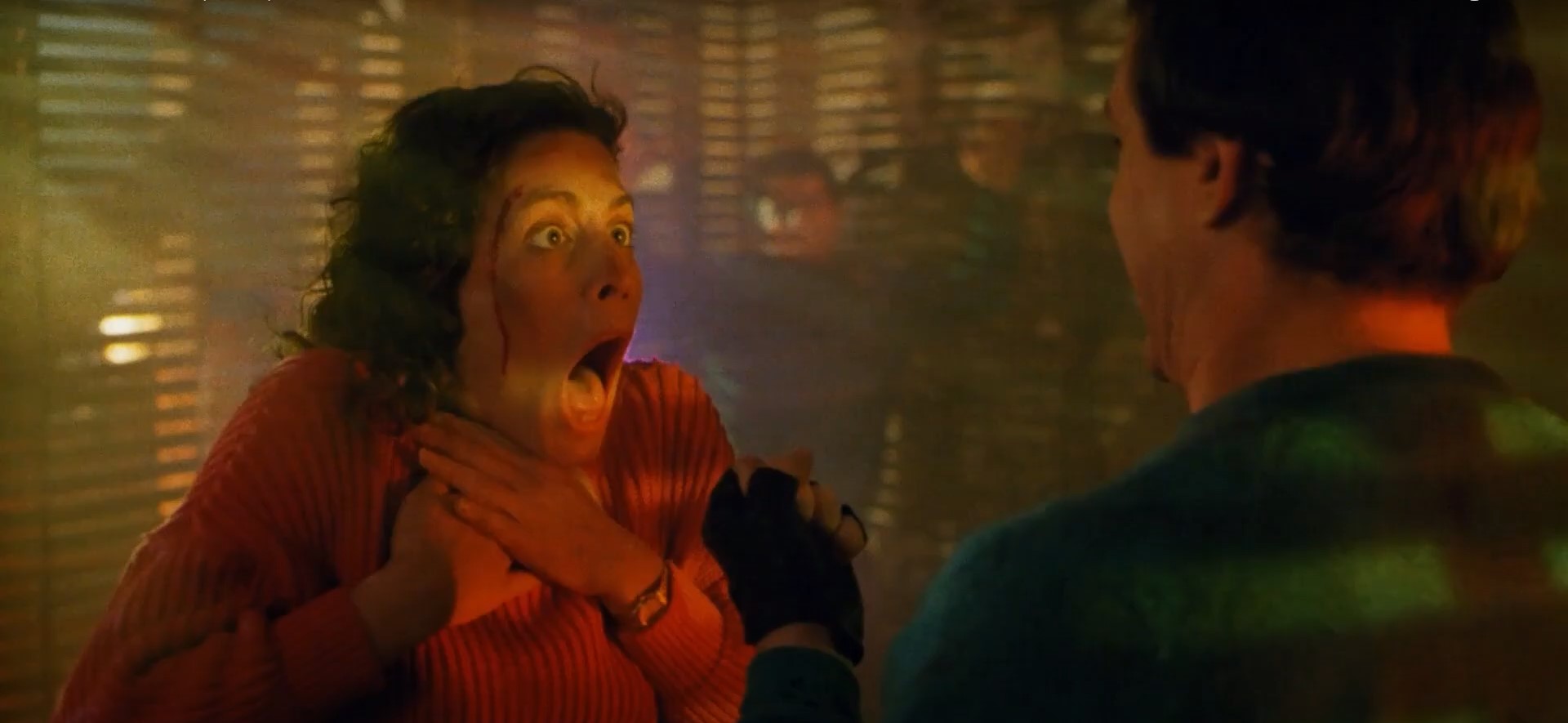
“Ultrasound’s” narrative is a latticework of character arcs divided into two stories that only merge when Glenn and Cyndi are involved in an unusual (some could say almost magical) scheme connived by hypnotist The Amazing Art, played with sure hand nervousness by Bob Stephenson (“Lady Bird”) whose very good at the soft touch of persuasion with his innocent demeanor.  Stephenson works tirelessly his Jedi mind tricks on Glenn, “My Friend Dahmer’s” Vincent Kartheiser, and Cyndi, “Phoenix Forgotten’s” Chelsea Lopez. Kartheiser and Lopez relish in their own deceptions as two strangers being joined by unintended, radical means to fulfill not one but two devious plans. Between political scandal coverups and government sanctioned alternative military tactics, Chris Gartin (“Tremors II: Aftershocks”) and Tunde Adebimpe (“She Dies Tomorrow”) couldn’t be any more different in character engrained into their repelling tangential tales sourced from the same spoiled spring but both actors root deep into the same antithesis garden as a pair of well-informed and completely in control power hungry and idealistic men in idol roles, driving Schroeder’s message right into the heart of public figure facade versus public figure character and both Gartin and Adebimpe nurture that perspective all too well. Then, you throw in a monkey wrench named Breeda Wool (“Mr. Mercedes“) into the well-oiled machine of exploitation to be the controlled outlier only to have the veil lifted for truth. Wool, probably not intendedly punned toward “Ultrasound’s” theme of pulling the wool over one’s eyes or a wolf in sheep’s clothing, casts rightful doubt as Shannon, an innocent associate being kept in the dark, much like Cyndi and Glenn. While the cast is great in roles, none of them stand out in a singular performance and are all a cog in Schroeder’s contrivance. “Ultrasound’s” cast fills in with Megan Fox lookalike Rainey Qualley (“Shut In”), Porter Duong, and Mark Burnham who dons the fleshy mask of Leatherface in this year’s Netflix original and legacy sequel “Texas Chainsaw Massacre.”

Tapping from the same virtual reality vein of Christopher Nolan and David Cronenberg, the idiosyncrasies of perception are no longer our own as audio, visual, and thoughts become the duped fool in “Ultrasound’s” underhanded exploitation.  The concept, high in twist and turns working backwards to unfold what befuddles the hapless into a life believed depressingly real, parallelly touches upon the real-life issue of sleight of hand corruption and scandal.  Because this person is an upstanding politician with a beautiful family or this other person has an advanced medical degree and is respected in the science community, we are supposed to take them at their word when in actuality, they’re pulling the metaphorical rug from under our sensorial feet to the extreme point where everything they have said and done that has crumbled down to a lie has a flummoxing and deafening aftershock effect that almost can’t be believed.  The two-tale narrative connects with Art and his mismanaging of one plan that tosses his subjects into the hands of another group for what’s to become of Glenn and Cyndi and that transfer, much like the disintegrating hypnosis effect at times, is not tight enough and becomes lost in translation inside Schroeder’s illusive imagery and harsh editing to keep in story in line until a point.  “Ultrasound” plagues with hot, intense colors under a low-key lighting, like a deep blue or an intense red, to often relay reality outside the confines of normality.  Even though the word “Ultrasound” revolves around the manipulative use of ultrasonic frequencies, I do find the irony in Stechschulte’s story that at the center of much of the tumultuous misperception, there’s a baby often represented as there or not there depending on how we should perceive the characters and it’s like the filmmakers wanted to plug in, perhaps, the nuisances with scanning technology or dip their toes into body horror with body image.

“Ultrasound” is a great low-level, high-tech Sci-fi brainteaser ready to mess with your mind being released this Friday, March 11th, in theaters and on demand from Magnet Releasing, a subsidiary label of Magnolia Pictures that offers innovative tales of horror and science fiction from new, creative filmmaking talent.  Since a digital screener was provided, we will not delve into any audio or video evaluations, but Mathew Rudenberg, whose worked in the past with Schroeder as DP on “Sun Choke,” has come a long way since his image work on the 2008 alien-driven-zombie film “Evilution” with keeping the frame tight during medium and closeup shots to never expose to much at one time, leaving a little to imagination when the time comes to open up the room, so to speak.  Zak Engel’s analogue and digital synth-score with tangible instrumental highlights from Piano and violin and Bob Borito’s dial and knob sound design swishing static and low-frequency humming sends this soundtrack into a futuristic guise on contemporary grounds that insidiously works into the grand scheme low-tech yet terrifying Sci-Fi. The 103-minute film does not include any bonus scenes during or after the credits. I keep throwing around key descriptors like low-tech for “Ultrasound” and by no means do mean that as a criticism as I speak about the simplest of tech, the original mechanism, of our body and our sensory nodes that receives data input, processes it, and transmits signals to our outputting areas and “Ultrasound” looks at disrupting the supply of data and, just like in today’s pandemic and war climate, a break in the chain can cause unforeseen turmoil that upends lives when cranked up.

EVIL is Only in Your Nightmares. Or is it? “Retribution” reviewed! (Severin / Blu-ray)

Severely depressed artist George Miller attempts suicide by jumping off from his apartment building.  During the exact same time, a low-end gangster is brutally killed by cruel loan sharks.  Being both born on Aril 1st and dying at the same time, the tortured spirit of the gangster possesses the meek artist’s body right before being resuscitated by EMTs.  After a long recovery filled with horrific nightmares, the affable artist returns to his apartment building where he’s welcomed by fellow tenants and an overly warm landlord.  Still plagued by nightmares that have seeped into his awake conscious state, George medicates himself to sleep but the nightmares continue as he sees himself using psychokinetic powers to kill random individuals with extreme malice.  The nightmares are so real he wakes up in a sweaty panic to find out that that exact person was killed the night before the very way it played in his dreams.  When George realizes the gangster has inhabited his body for revenge, he and his friends take measures to put an end to the vindictive carnage. 

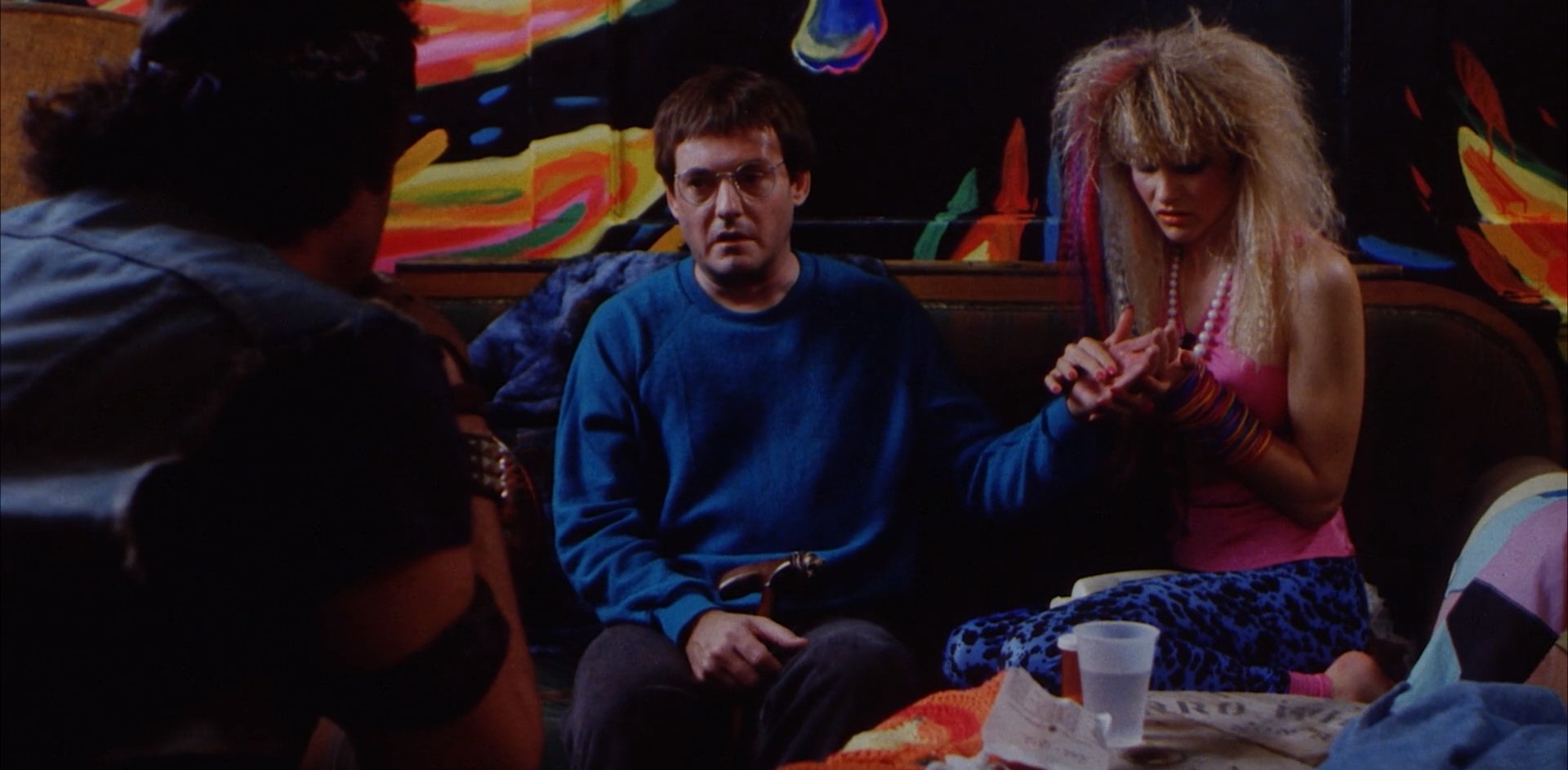
Santa Maria.  Mother of God.  Help me!!!  That phrase, attached to the very last seconds before a gruesome death and announced blankly from fiery, dagger eyes, has forever been seared into the recessed corners of my eardrums as the death cry that echoes throughout Guy Magar’s 1987 gory and visceral possession identity crisis, “Retribution.”  Magar’s ultra-violent and super-chromatic film is the filmmaker’s grand inaugural entrance as a full-length director following up behind a string of director chaired television episodes, including episodes from “The A-Team,” “Blue Thunder,” and “The Powers of Matthew Star” that regularly contained quickly charged, action packed sequences.  The Egyptian-born director translates those intense moments of frenzied disturbance into his mean-spirited and unforgiving vindicator of a script cowritten with then first time screenwriter, Lee Wasserman.  Shot in Los Angeles, “Retribution” is a virtual tour of the city, using the streets of L.A. and real locations, such as the Don Hotel for George’s residence and the nearby House of Neon Art, as a lively, eclectic, and wallet-saving convenient giftwrap for the film’s Dr. Jekyll and Mr. Hyde complexion that feels totally normal compared to L.A.’s divergent glamour.  Magar and Wasserman produce the film with Renegade and Unicorn Motion Pictures serving as the production companies and presented by Taurus Entertainment, formerly connected with United Artists. 

There are probably many actors that could been imagined for the role of George Miller, the suicidal artist plagued with visions of him committing murder, but it’s hard to imagine that venomous stare of complete satisfaction in madness spread across the face of anyone else other than Dennis Lipscomb.  No disrespect to the “Eyes of Fire” and “Wargames” actor but Lipscomb isn’t a chiseled-jawed and muscular leading man; in fact, Lipscomb is quite the opposite, but his range into mild-manner, all around nice guy George Miller into the lust for hatred and murderous revenge George Miller hangs on with complete chasmic permanence.  However, George’s love interest with the street working prostitute and fellow Don Hotel resident, Angel (Suzanne Snyder, “Return of the Living Dead II,” “Killer Klowns from Outer Space”), hardly ever seems natural in not only in the characters’ surreal age-yawning dalliance but also the chemistry looks and feels flat between Lipscomb and Snyder.  Magar and Wesserman neglect diving more into that bond between them but their enamored gleamy eyes for one another is apparent and strong without the context to back it up.  “The Dungeonmaster’s” Leslie Wing also is placed as a George Miller sympathetic advocate in her role as hospital psychologist Dr. Jennifer Curtis, but Dr. Curtis has more background to contend with in comparison to the suddenly conjured fondness from Angel as Curtis is a mental health professional caring for a suicidal patient from at his rock bottom worst to a complete positive turnaround in his mental transformation.  Curtis has more skin in the game with George’s supposed delusions of actually killing people in his nightmares as she defends not only George’s unique supernatural circumstances, but, in a way, herself as a licensed medical profession following HIPAA laws.  “Retribution” holds many dear and unforgettable characters that essentially captures the entire 1980’s spectrum of personalities and, even for a brief scene, the cast gives each role their all, including performances from Susan Peretz (“Dog Day Afternoon”), Clare Peck (“Teen Wolf”), Chris Caputo (“Ghost Warrior”), Danny Daniels (“Voodoo Blood Bath”), Ralph Manza (“Godzilla”), George Murdock (“The Sword and the Sorcerer”), Mike Muscat (“Hunter’s Blood”), and Hoyt Axton who doesn’t stray too far from his good intentions, but naïve, father role in “Gremlins” to being a detective tracking down suspect George Miller. 

I’m in total awe of Guy Magar’s “Retribution.” That opening scene of the suicide attempt with Alan Howarth’s building tension score drops not a single piece of dialogue yet opens with a gripping life and death situation, musically synced to progress toward a harrowing climax, and every frame is dripping with vintage 80’s appeal. Magar definitely knew what strings to pull to get the blood pumping, to get you excited, and to drop an excellent mystery right in the lap, or the middle of the street in this case with George Miller’s body after it flops off the car it just smashed onto. From that point on, “Retribution” peddles forward following the recovery, recouping, and ruination of George Miller’s life at the unseen hands of an exploiting, malevolent spirit that seeks to track down the top-tiered gangsters that shot and burned him alive and exact his own brand of harsh psychokinetic justice. Does it matter how George and this gangster, both born on the same day and both nearly died at the same time, came to fuse transcendently together? Don’t worry. Magar didn’t think it was important either and he’s right! “Retribution” snags all the attention for the sole purpose of the ride and that ride being a beautiful, color-coded daymare. The one aspect that ultimately retracts the buzzing high, stemmed from most 80’s films, is the sluggish love interest subplot between George and Angel stutter stepping into an awkward phase of interactions that hard stops much of core plot and though the plot is neurotically nonsensical to begin with, George and Angel’s desires for each other are about as cringeworthy as they come. Stick with the gore by honing in on Miller’s subconscious alter ego of a gangster serving his killers their just desserts via Kevin Yagher (“Nightmare on Elm Street 2: Freddy’s Revenge”) and his highly effective special effects on a low end budget that, along with a brilliant showing of cinematography by Gary Thieltges, tips into the categorical likes of “The Evil Dead” or “The Exorcist.”

“Retribution” delivers a fervency unlike ever seen in one of the utmost, must-see, shamefully overlooked horrors films of the 80’s.  Now, with a deserved boost and in style, “Retribution” gets the royal restoration treatment with a jammed-packed and sleek 3-disc Blu-ray set from Severin Films and distributed by MVD Visual.  Disc one’s theatrical cut, clocking in at 107 minutes, comes from the recently discovered 35mm pre-print elements, shot on an Arriflex 35 BL3 per IMDB, and has been digitally scanned in 2K, presenting the region free film in 1080p Full High Definition inside the original widescreen 1:85:1 aspect ratio.  “Retribution’s” image pleasingly pops with fine delineating attention to the details that reach out to the point where they’re nearly tactile textures.  Every single setup of Robb Wilson King’s production designs are rich to begin with but are even figuratively injected with a smoother compression growth enhancing hormone, adding more layers of surface level details that personify and personalize the space.  Magar’s chromatically fluorescent vision is a literal tilt-a-whirl palette blast of phantasmagoria.  Disc tow is the extended Dutch video version that adds back in the extended seconds on the longer, gorier kill scenes.  The English language DTS-HD Master Audio 2.0 is the sole mix on the release and, honestly, sates the need with the dual channels.  You obviously don’t get the surround sound, which considering this release would have been ideal, but the stereo mix, as well as the dialogue track, is still full-bodied, identifiable, and spotless of blemishes.  John Carpenter understudy Alan Howarth scores his solo synth-laden story on tenterhooks with a tinge of a Miami Vice theme as well as setting tonal moods that add depth to character layers.  If you want the entire OST, you’re in luck!  The third disc is a compact disc of the entire soundtrack.  Special features includes over two hours of content with Severin exclusive looking back at the experiences with the late director Guy Magar and the ins-and-outs of making “Retribution” interviews with co-writer Les Wasserman Writing Wrongs, actress Leslie Wing Shock Therapy, actress Suzanne Snyder Angel’s Heart, actor Mike Muscat Santa Maria, Mother of God, Help Me!, soundtrack composer Alan Howarth Settling the Score, special effects artist John Eggett Visions of Vengeance, artist Barry Fahr The Art of Getting Even, production designer Robb Wilson King Living in Oblivion.  Other special features include Guy Magar’s student film “Bingo,” stills and poster galley, and the theatrical trailer all packaged under a cardboard slipcover and a reversible snap case cover. Severin Film’s “Retribution” release is a triumph, a proper regenerarcy of revenge cinema, with all the gory details being the star of the show.

Own this Amazing 3-Disc set of “Retribution” from Severin Films!

Fortuity Can Be EVIL’s Plaything. “Like A Dirty French Novel” reviewed! (Blvd. Du Cinema Productions / Digital Screener)


An organized crime and deceitful milieu sets the stage for a missing bag of stolen cash, an unscrupulous bunch of characters, and a mysterious omnipresence being persuasive behind the curtain of a rotary phone.  When ex-lovers Crystal and Hue are not in heated spats over past infidelities, trapped inside their quaint apartment, Crystal moonlights as an adult cosplaying model secretly having an relationship with a stranger while Hue locks himself away in the bathroom conversing secretively and flirtatiously with an unknown woman he knows nothing about.  They become entwined in a heist gone wrong by a group of halfwit robbers that leaves a trail of death, lies, and an evil charting their fates in the shadows. 

Desultory pulp basking in noir fiction, “Like A Dirty French Novel” flaunts a chicly awkward and brazenly unmethodical black comedy and crime drama front from Cuban-American writer-director Mike Cuenca.  The “By the Wayside” and “I’ll Be Around” auteur stitches together a vivaciously satire and minuscule budgeted drama comedy shot in the zero hours of a time crunching, less than a week, schedule with an editing style, edited by Cuenca himself as one of his many production hats, of five chaptered, non-linear tale of sectionalized cynicism and infringing transgressions.  Cuenca co-write the script with Ashlee Elfmann and “I’ll Be Around” co-writer, Dan Rojay, with Cuenca self-producing under the filmmaker’s East Los Angeles-based, DIY encouraging production company, Blvd. Du Cinema Productions.

With an ensemble cast, “Like A Dirty French Novel” spreads out with five chapters, two interludes, and a prologue that begins with three men walking in a desert and approached by a mysterious woman in a chintzy, but intrinsically detailed, Japanese resembling Oni mask.  Before we can invest into these bewildering circumstance that leave the three men screaming for their very lives, Cuenca whisks up away right into Chapter One, introducing bickering ex-lovers Crystal (Jennifer Daley, “Blood Born”) and Hue (Rob Vally, of gay themed Steven Vasquez pictures such as “Angels with Tethered Wings” and “Dancing on the Dark Side of the Moon.”) snooping into each other’s hidden extracurricular activities that leave Crystal daydreaming about romance and Hue surrendering to smutty phone talk.  Not much is revealed in the first chapter before segueing into the second with Forrester Dooley (Grand Moninger), an unhappily married man who switches places with his twin brother and the recently unincinerated Bugs Dooley (also Moninger), but, as fate would have it, Bugs turns out to be a standup, wonderful guy whereas Forrester need for a break ironically places a bullseye on back and he ends up stranded in the desert with two unsavory fellows, circling back to the film’s vague prologue.  The cause for their stranding is because of Lane, a manic drifter delightfully captured by “We Take The Low Road’s” Amanda Viola.  Lane is approached by cool cat Jake (Aaron Bustos) and what ensues next is a montage of innocent dalliance before he suddenly vanishes and is seemingly dead to the world.  Remaining chapters unravel more about the principle players, spilling their hidden agendas and their scheming roles surrounding a duffle bag of thieved cash pinched from a local ruthless kingpin Filmore Demille, played by Cuenca himself donning yet another hat.  The cast rounds out with Dominic Fawcett, Samantha Nelson, Laura Urgelles, Claire Woolner, Dan Rojay, Joey Halter, Miles Dougal, Steven Escot, Arko Miro, and “Murder Manual’s” Brittany Samson as the interlude’s stammering and obsessed fanatic of the masked and sexy graphic novel cosplay model.

“Like A Dirty French Novel” pulsates with pulpy fiction with hints of Lynchian notes through Cuenca’s back and forth pacing of connecting the dots to his equivocal crime thriller.   Cuenca’s gray area, faltering more than any other, lies in making that relating and understandable so important connection of reverting scenes back to earlier ones in order to have actions make sense.  A once over is not enough to fully grasp “Like A Dirty French Novel’s” abstract features and to be recursive would not be a sign of weakness or simplemindedness on our part.  Still, smoothing out the rough patches like with the peculiar finale, which I’m speculating to be the grounds of Hell, would have made “Like A Dirty French Novel” more of an easy read than a confusing one as well as completing most characters arcs with a satisfying tell all fate. Cuenca’s filmic message of what comes around, goes around comes across more clearly with those who reap what they sow. A faux book entitled Porter du Fruit or Bear Fruit yields to positive results and, in which this case, none of those characters who go to the grounds of Hell are saints by any means. Constrained by a shallow pocket budget, settings are simple outdoor public areas, small apartments utilized with polygonal angles, and, if you’re working in L.A. much like this shoot, then more than likely a scene or two, at the very least, is filmed in the desert, but seasoned cinematographer, Jessica Gallant (“The Control Group,” “Shevenge”) spruces up scenes with neon red lighting, dabbing in black and white, and centralizing characters with focal spotlight, adding little classic techniques that still pop in the camera’s eye. Gallant’s wide berth of techniques, from hot pink tints to emulating grindhouse celluloid grain and scratches, keeps a stylized profile wanting to be watched. However, most cast performances are not so debonair as they come across a bit prosy, staged, and without too much magnetism that usually trends with pulp-noir trademarks and, of course, trashy novels érotiques bon marché.   With the exception of the underused Amanda Viola and Cuenca’s solo-scene monologue, sleeping at the wheel performances drives no other standouts in this cast.

“Like A Dirty French Novel” premiered this past August at the independent showcase, Dances With Films film festival, held in Los Angeles at The Chinese Theaters as part of their Midnight lineup; however, no current confirmations on when the first home release – whether physical release or digital releases – will be available yet. Briskly paced at 78 minutes, Cuenca squeezes into one more hat among his list of production duties as author of the eclectic sometime brooding and sometime high energy score along with Carlos Colon composing the pieces that could resemble the minor league notes of Michel Legrand. Alas, Michael Cuenca’s “Like A Dirty French Novel” aims to be more bourgeoisie than an obvious low cut of a few francs with an ingrained pulpy style and more twist and turns than Grand Prix race car driver, but lacks that tour de force it strives to assimilate as because of stiff performances and a wildly untraceable storyline.

EVIL Will Have You Die Laughing! “Too Late” reviewed (Gravitas Ventures / Digital Screener)


Non-stop and around the clock, Violet is the worked obsessed assistant to legendary showman and standup comic Bob Devore at the Too Late comedy club.  Violet books new talent and schedules the lineup day in, day out, but that isn’t all she does for her overly demanding boss.  Bob Devore has been around for a long time and during a very specific moon cycle, Bob needs to eat and we’re not talking pizza or Subway sandwiches.   Bob is a literal monster who feeds on devouring entire people, especially no comedy talent hacks provided by his assistant, Violet.  The longevity of Bob’s Life spans decades, if not centuries, as he sees people come and go right off existence.  When Violet meets a nice guy comic who Bob takes a shining to, the long time lonely assistant decides enough is enough and the time to stand up to the eternal stand up comedian and monster boss is now before what little she has is taken from her. 

I hear the Los Angeles stand-up comedy scene is tough.  Sometimes, even cutthroat.  In D.W. Thomas’ comedy-horror “Too Late,” a blend of mic night funnies with a hunger for full body snacks, dying on stage turns into a whole new meaning!  Thomas’ debut feature film kills it as a low-budget horror that incorporates figurative levels of monstrosities behind the curtain of a stand-up’s spotlight.  The 2021 film is the first screenplay credit for Tom Becker that tackles underappreciated long hours and work ethic of female workers in a typical male dominated profession., touching upon the toxicity of the business.  “Too Late’s” underground comedy-horror sees the light of day under the indie production studio, Firemark Media, and is produced by Thomas and Becker as well as executive producer and long time industry vet, Lonnie Ramati, a production business affairs manager dabbling in producer with the selected credits including “The Expendable” sequels, “Leatherface,” and 2019’s “Hellboy” under his belt. 

“Too Late” marquees mostly tongue-and-cheek talent in a cast list chocked full of comedians, starting with actress, writer, and jack of all trades stand-up comedian Alyssa Limperis in the headline role of Violet.  What’s ironic with Limperis’s “Too Late” role is that Violet is perhaps by design the least funniest amongst the characters as a lonely, borderline depressed, and overworked slave of an assistant to Bob Devore, a renowned variety show presenter and entertainer played by one of my favorite spoof performances by Ron Lynch from last year in Travis Irvine’s “Killer Raccoons! 2! Dark Christmas in the Dark!” as General Negligence.  As Violet begins to blossom after meeting humble comic, Jimmy Rhodes (Will Weldon), after bumping into him renting out one of her friend’s closet since, you know, L.A. is a tough, expensive town, this give Limperis ammunition to turn Violet sour on her abrasive, glass ceiling mentor.  Limpers excellently conceals intentions in each relationship step taken with her new unassuming and amiable beau and this really brings out Devore’ darkness crafted so well by the New York born actor and comedian with a gloomier roaring-twenties vaudeville vibe.  One thing I will say about the chemistry between Limperis and Weldon is I didn’t think there was much spark as their flirting banter catered to good friendzone material.  Perhaps used for their more syndicated appeal, Mary Lynn Rajskub and Fred Armisen add very little to the mix.  “24’s” Rajskub is a no-nonsense hotshot comic who has Devore wrapped around her finger whereas Armisen plays a nearly simpleminded stage hand who adds a bit of levity to the darker tone with his pudding cups and indecisiveness on blue filter gels for the spotlight.  The rest of cast pans out with Jack De Sena (“The Veil), Brooks Wheelan, Jenny Zigrino, Billy Breed, and Paul Danke. 

“Too Late’s” opening drive buildups a focuses around Violet’s passively aggressive position in being an undervalued assistant to her bark-and-you-jump Boss.  Constantly scribble but unenabled to perform her own material be her own self-starting, stand-up comedian, Violent falls into a lonely state that she is unaware of and it takes her best friend/roommate’s lighthearted berating to get Violent to come to a Jesus moment with her total profession and lack of relationship unhappiness. What’s not in the prevalent in the first act is Bob Devore’s permanence, his beastly transmogrification, and his appetite for anthropoids. If you didn’t read the synopsis beforehand, the acute dark turn “Too Late” takes comes at a shock because of how little-to-no prep there is setting up the true Bob Devore. A backfill of creeps a long, like opening the little chocolate stuffed doors on an advent calendar, in a wait and you’ll get more character treats up to a grand finale. About two-thirds of the way through, “Too Late” starts to flounder with what to do about Devore as a character, never expressing a full delineation of character to how Devore ended up at a nightclub, or who, or actually what, the actual hell is he and how Violet, who isn’t as innocent as one might believe, became so fatefully involved. The underlining theme here, noted explicitly in the title, is don’t hold yourself back no matter the circumstances, whether be an actual monster or a monstrous personality, because life is short, time is of the essence, and carpe diem! Violet, a hard working female in a male dominated industry and is undercut by not only her dominating boss but also her advantage taking male peers, need a monkey wrench in the gears of a monotonous, browbeaten life and that happened to be Jimmy Rhodes, a nice, non-threatening, and unimposing comedian who seemed to be just be handed the keys to Violet’s rightful castle just because he’s a man, and though she falls for Jimmy, that’s the career careening straw that breaks Violet’s abuse absorbing spirit.

With a dry wit, “Too Late” black humor is more figurative than funny but first time director D.W. Thomas makes good on her debut horror-comedy that has released this month in select theaters and on digital platforms, such as iTunes, Google Play, Fandango Now and all major cable/satellite platforms from Gravitas Ventures. A digital screener doesn’t allow me to fully dive into the A/V quality but the Scott Toler Collins cinematography grasps the underground comedy scene experience, selling the location of an boutique variety show club, hard mood lit in various colored staged lighting with a smoky irradiance, of tight medium and closeup shots that kind of hover amongst the characters. “Too Late” is not effects heavy though maybe should have been to make Bob Devore a real menacing presence as much of his late night snacking is done off screen, through shadows, or blurred during a shallow focus. We always get the aftermath Bob Devore, bloated and bulging at the seams from a big meal, like a secondhand Eddie Murphy fat suit from “The Nutty Professor.” Still, kudos to Mo Meinhart (“The Walking Dead”) in making Ron Lynch appear farcically 40lbs heavier in what you might typically seen in a Looney Toons episode. Bucking the more modern trend, this indie picture has no bonus scenes during or after the credits. The in-film stand-up is spotty at best but “Too Late” has a lot else to focus on with a deeply disturbing look at machismo arrogance and sexism inequality that are the relevant horrors of today.

“Too Late” on Amazon Prime!

This EVIL Santa is Ho, Ho, Horrible. “Slayed” reviewed! (Terror Films / Digital Screener)

Five years after a murderous, Santa Claus-cladded maniac massacred a couple of young women in the dank basement of a water treatment plant in Harris County, AZ, the stigma of the plant being open has caused enough controversy, heartache, and notoriety for the local residents and will soon close the chained-link gate forever to soon transform into a car dealership. On the last day of operation, Christmas Eve night, the lone survivor of that night five years ago walks vigilantly around the perimeter with a tingled sense that something just isn’t right as he stashes weapons around the facility…just in case. With the last administrative staff gone for the night and a novice guard at the helm of watch, not a creature was stirring, not even a mouse, until there arose such a clatter and who did the guard and the survivor find? It was the return of Jolly Old Saint Nick with an axe to grind.

Merry Christmas, readers! You can’t spread Christmas fear without watching at least one, count them one, homicidal Holidays flick starring our favorite Yuletide strangler, Santa Claus. This year, the Fatman reins down upon a few unfortunate recipients on his coal gifting list in Jim Klock and Mike Capozzi’s “Slayed” that was released digitally this last month of 2020. The script is penned by Jim Klock following another Klock and Capozzi collaboration, the 2019 released Devil trickery detective-thriller, “Red Letters,” that has the unconventional atmospherics of a Christmas themed slasher set in the fictional location of Harris County, Arizona even though the climate of Arizona is semiarid and “Slayed” appears to be taking place in a lush, semi-tropic climate that’s perhaps more in tune with a Floridian winter. However, production company, Jim Klock and Darrell Martinelli”s Code 3 Films, is based out of New Jersey with offices in Los Angeles, suggesting a summer shoot with the cut off shorts, short sleeves t-shirts, and the wicking sporty running attire being worn amongst the limited primary characters.

Klock not only directs, writes, and produces the serial killer Santa but also co-stars as a new-to-the-area, aspiring actor standing in for a regular security guard. Klock enacts a classic clueless constitution for a baffled and bumbling outsider caught in the middle of historical notoriety having returned from the grave. Standing side-by-side and opposite is co-director, Mike Capozzi, who institutes a doomsday prepper’s fantasy come to fruition as the lone survivor of the 5-year bygone Harris County water plant massacre. The role of a water plant operator turned lone wolf of misanthropy never truly fleshes out of a state of rigid inflexible measures that stagnant the character’s mysterious backstory of surviving Santa’s bloody red-handed carnage and extend his development into an explanation of his long-awaited revenge obsession. Klock and Capozzi only bookend the film being in the same scene together, leaving much of the midsection, essentially the second act, for distressing females as hunting game for Santa’s slay. Coel Mahal and Kyra Kennedy, who have previously worked with Klock and Capozzi on previous projects, adequately fill in those rolls to an extent. Mahal’s masculine bity, water plant administrator acutely shifts into trope slasher-fodder of hapless articles of loosely bound prey. Things worsen with Kyra Kennedy’s rando abductee with an uncontrollably irritating sniveling in unprompted immediate danger as she sits in the passenger seat of a truck and just inconsolably cries, cries, and cries. Luckily, “Slayed” is a indie-reined in production that doesn’t swarm with halfhearted and ill-deserving characters as the film rounds out with minor roles casted to Delton Goodrum, Chuck Roberts, and Jennifer Meakin and Crystal Cameron as half-naked, strung up torture toys for a deranged Kris Kringle.

In a peeve already mentioned, “Slayed” rarely invokes as a Christmas chronicled horror film, striking lukewarm resemblances to that of “Silent Night, Deadly Night” or “Christmas Evil,” to which those films set a very low bar to emulated, unless you’re a trash-loving, so-bad-it’s-good, cult film enthusiastic, like yours truly, than its nothing but top shelf quality. However, the unexplained warm weather upholstery cripples “Slayed’s” genre-blend construct that’s been in august status of next level output over the last few years to dispel the happiest time of year into a certifiable time of fear in an apparent hostile seasonal takeover in a return of spite that Halloween shortens every year with Christmas nipping at the heels as soon as the first brown leaf hits the ground. If the shooting location is truly set in Arizona, winter months typically hover around a light jacket and shorts 60 degrees during the day and nippy 40 degrees at night, but the sweaty, wintery deficient clothing worn suggests a sweltering otherwise. Klock and Capozzi’s good faith effort into “Slayed’s” festive fare is in the garish Holiday decorations and ornamental lighting production design denotes the showy display of Christmas spirit, held in which season is not exactly clear. To speak more on the lighting, Emily Adam, another patron believer of Klock’s work, uses a restrained soft fuchsia lens tint, among other vivid primary colors, to elevate the seasonal veneer and Adam’s lighting is especially a favorable hallmark of the season with the use of the soft, but brilliant glow of Christmas string bulbs utilized to lash and tie up up naughty listers. Yet, up to scratch cinematography can’t fix what’s inherently broken with a story penned as a sequel structure that assumes the audiences’ knowledge of past events when, in fact, leaves viewers in blackout darkness with many questions: Why the Harris County water plant? Where did maniacal Santa go for five years? How did the water plant survivor make it out alive and is now determined to end not only maniacal Santa’s life but also his own? Why did maniacal Santa kidnap this random young lady from her house? What’s the significance of Christmas for maniacal Santa and why this period in time to return? I enjoy Christmas horror as much as the next genre votary but wrapping your head around “Slayed” topples any chance of actually enjoying the disgruntled, menacingly muttering “Ho Ho Ho” catch-phrasing, maniacal Santa terrorizing an unjolly skeleton crew on Christmas Eve night.

Ho Ho Horror! Santa delivers the gift of sufferable tidings and killjoys in the Terror Films distributed “Slayed” digitally only onto Prime Video. If you didn’t catch “Slayed” before Christmas when released on December 18th, then no worries! Quickly nosedive into your laptop or television set and catch Santa axing away on Prime Video today! An interesting tidbit about the crew of “Slayed” comes from the music department with composer Jojo Draven, former guitarists for a number of Las Vegas shows such as performance artists, the Blue Man Group, and Gothic street illusionist, Chris Angel. The Indonesian-American female rocker’s agreeable experimental-industrial sound comes across professionally astute toward the context with unbuckling tension baked right into the scene. There were no bonus material included with the screener nor where there bonus scenes during or after the credits. Instead of racing down the stairs, excited by the prospect of unwrapping that one main horror-inspired Christmas movie on Christmas Day, “Slayed” turns out to be a disappointing hefty lump of coal with a few diamond patches sparkling through the sedimentary rock and catching our eye in a rather humbug holiday horror falling short of that so-bad-its-good set bar.

Watch “Slayed” on Prime Video by clicking the poster!