EVIL is a Game Invented by Child and Ran by Clones! “Terminus” reviewed! (Blu-ray / MVDVisual Rewind Collection)

“Terminus” is a Win for the Rewind Collection! Buy it Here!

Super genius boy Mati programs an artificial intelligence RV known as Monster to trek through adversarial armed forces infested territory in a long-haul driving competition to reach Terminus where the winner will receive their weight in gold.  The Doctor, a mad cloning scientist who created the child, aims to subvert the government with Mati’s and the rest of his “unborn” clones under the malicious intentions of his superior named Sir.  When the lone driver Gus, an American woman competing in the game, is imprisoned and subsequently murdered by a ruthless Major after Monster unusual malfunction, Gus is able to pass along the Monster’s accessibility password to her inmate and lover Stump, a compassionate, for-the-people rebel against the military cruelty.  For his love for Gus and to do what’s right, Stump reluctantly joins Monster and a slaved orphan girl to finish the game while the boy genius Mati observes innocently from Terminus, but Doctor and Sir have other plans to use their clones and Monster to subvert government control.  

As you can tell from the synopsis alone, the French-German coproduced, science fiction dystopian actioner “Terminus” makes about as much sense as jumping out of an airplane without a parachute – an exhilarating ride without any understanding from a safety cushion.  Director Pierre-William Glenn, who was born at the height of Nazi-occupied France in 1943, helms the dystopian, futuristic picture from a script cowritten between Alain Gillot, Glenn and Patrice Duvic’s modifications, and Wallace Potts addition of English dialogue.  Glenn, whose main profession is a cinematographer, with a prior 1987 select filmography including “Death Watch,” “The Murdered Young Girl,” and “Wheel of Ashes,” removes his eye from the camera viewfinder to being incorporated into all aspects of the production for one of his first feature length films.  Anne François produces the film that was shot much in the landscapes and studios of Bavaria and Hungary under the European coalition of production companies of Initial Groupe, Les Films du Cheval de Fer, Films A2, CBL Films, and Cat Productions.

The script calls for and delivers color characters in a science fictional scope of subversive intentions, mad science, lone wolves, flawed good guys, mysterious pasts, unjustified brutality, and other varietal traits that run the gamut in this wild and untamed neo-revenge and sense of duty narrative.  For Pierre-William Glenn, he likes to color outside the lines, shading layers with precise measure to flesh out their nature, such as with Stump, a bleeding heart, anti-violence, maverick unwilling to see the impoverished and innocent violated by authoritative rule, played by French rock-n-roll singer and actor Johnny Hallyday.  Stump’s story stretches from how he lost his hand to his reasoning for joining the fight for Terminus unlike his companion Gus embodied by a notable American actress, “Indiana Jones and the Lost Ark’s” Karen Allen.  Gus’s is specifically pointed out as American, perhaps only in the U.S. cut, but her background or reason why she plays the game is ultimately lost or never provided in the cryptic conversations she has with stump during their incarceration intimacies.  We don’t even know why Gus is finitely taken out of the game by the callous Major (Dominique Valera) by either the eluding to the Major’s men gang-raping her or just severing her legs.  Again, very cryptic.  Allen co-headlines with the then up-and-coming “Das Boot” breakout star and Berlin, Germany born Jürgen Prochnow donning three roles, beginning with the head villain and red kimono-cladded Sir and his two clowns, the boy-genius creating “Doctor” and his more brutish field task rabbit Little Brother.  “Robocop 2’s” Gabriel Damon plays whiz kid Mati, designer of the game and of Monster whose being manipulated by Sir as a guinea pig for a super army of super smart clones like himself.  Julie Glenn, daughter of director Pierre-William Glen, brings up the rear as slave girl Princess.  While Julie is no princess Leia joining the rebellion, the young actress is kept mostly quiet without much dialogue to give the gradually important character silent with only a couple of defining narrative moments that save the day.  

“Terminus” has the componential makings of a surreal science fiction fantasy with a “Mad Max” tarpaulin overtop a “Flight of the Navigator” dominant core involving an A.I. Monster truck as a sanctioned, and calculating, entity guiding a path through the onslaught of roll caged government vehicles that drive about as good as Stormtroopers shoot.  Clones are at the precipice of usurpation and the international game of drive hard and fast becomes a ploy for the genetic deception, but Glenn can never really harness that energy at the heart of “Terminus’s” well-built special effects, fascinating characters, set locations and production designs that evoke a failed, if not futile, future.  The oppression angle loosely holds the yoke while Sir and his clones barely scratch the surface of being the true villains lurking in the shadows.  Instead, much of “Terminus” is contained around Stump and Monster’s fostering trust and solidifying the key connection between Mati and Princess and what they mean to a semisoft society.  “Terminus” is terribly lighthearted despite the story’s ugliness which is fleeting at best and audiences will not be confident in what they’re watching that have been intended for general audiences or restricted to an age limit as it all depends on which version, either U.S. or European, is viewed. 

Landing as the 66th release on the MVD Rewind Collection sublabel, “Terminus” provides two varying versions on a new Blu-ray release.  The AVC encoded, 1080p high-definition, BD50 is a collaborative release between MVDVisual and Multicom with a spectacular visual palette from a 2K scan of the original 35mm negative.  There are two cuts of the film both presented in different aspect ratios based on country.  The European Director’s Cut exhibits in the Eurpeaon 1.661 and incorporates back into the story all the edited violence and expands upon scenes with more context and accents by a whole 32 minutes, clocking in a total runtime of 115 minutes, comparatively to the U.S. version’s severely cut 83 minutes and is scene re-edited sequences.  The European Director’s Cut is slightly more compressed horizontally whereas for US audiences is more vertically but there’s no overall image loss other than the cuts themselves.  Grain appears and appeases healthily with little-to-no damage on a softer, lower contrast that brightens details but retains good textural value, especially around facial and skin features with equally organic tones.  Both cuts come with a LPCM 2.0 Stereo mix; however, the Euroean Director’s Cut is strictly French with optional English subtitles while the US Version is English with optional English subtitles.  Fun fact:  Both cuts are of the same film but two different shoots as because due to financial obligations and marketing, production had to principal shoot the same scenes in two different languages and thus is why if it looks like Karen Allen’s mouth appears to be saying the French words, she is actually speaking French.  However, both dialogues are a product of ADR so there’s some dyssynchronous between image and dialogue.  Even Monster’s voice is changed radically between the two films with a more computerized squeaky female (or child) voice in the Euro-cut and a hip-hop and slang crafted male voice that’s less robotic.  Both features handle the Stereo about as well as any front-loaded sound output could but a little more power in this track could go a long way with the explosions, crashes, and visual effect audio bytes being less emphasized and underfoot of the dialogue differences.  Encoded special features include a new video interview with Jürgen Prochnow on the film and growing up in the German/US industries, a new We All Descent – The Making-of Terminus featurette that sees interviews with Pierre-William Glenn’s now adult children Vincent Glenn and Julie Glenn, the latter had the role of Princess in the story, and archival, French dialogued, English-subtitled interviews with the director.  A photo gallery and the original theatrical trailer round out the extras.  The MVD Rewind Collections continues to provide the never-old, always-awesome faux retro encasement with a cardboard o-slipcover with artificial poster wear imagery of an illustrative composition of Johnny Hallyday, Jürgen Prochnow, and Karen Allen and a VHS sticker as the cherry on top.  The reverse cover of the primary, inside the clear Amaray case, has more colorfully alternative and little more kid friendly cover art and the disc is pressed with the plastic grooves of a VHS tape.  An unlikely reviewed PG rated release has region free capabilities to be played across the globe. 

Last Rites: Neither cut of “Terminus” outlines a clear-cut picture, but that ambivalence dotes cult and spurs disarray in parallel function that urges more from a story that wanes to the very end. At least the new MVD release is exceptional!

“Terminus” is a Win for the Rewind Collection! Buy it Here!

Piloting Toward a Path of Mob Hired EVIL! “Flight Risk” reviewed! (Lionsgate / Blu-ray – DVD – Digital)

“Flight Risk” Blu-ray Takes Off and Is Now Availablle to Own!

After tracking down and arresting a criminal kingpin’s accountant in an Alaskan hotel, U.S. Marshall Madolyn agrees to a plea deal with the accountant in exchange for his incriminating testimony that would lock away the mob boss for years, but before prosecution can get underway, the U.S. Marshall must get her witness to New York City.  Charactering a Cessna 208 light aircraft to escort them out of Alaska, the more-than-eccentric rustic pilot is more tirelessly inquisitive than charismatically charming toward the Marshall about having a suspect chained to the seat in the rear of his plane while also gabbing about casual, byway pleasantries and his rural, for-hire lifestyle as a pilot.  Little do Madolyn and the accountant know is that their pilot is a sadist assassin hired by mob boss and by the time they reach cruising altitude, Madolyn finds herself confined with a relentless killer and without the knowhow to fly a plane herself.  

Not since 2016 has “Lethal Weapon” and “Mad Max” actor Mel Gibson directed a film, that film being the World War II action-drama, “Hacksaw Ridge.”  Gibson returns to being behind-the-camera in 2025 with his latest venture, an aerial, hitman thriller “Flight Risk” from a contained debut big picture script by Jared Rosenberg.  “Flight Risk” strays from the normal course of being an epic feature that usually draws the cinematic eye of Gibson with being a smaller production, an intimate cast, and isolated mostly on a deconstructed light aircraft in front of what is essentially a floor-to-ceiling, 180-degree IMAX screen simulator to depict coursing through the snow-topped mountains of the Alaska Range.  Gibson produces the story along with Bruce Davey, John Fox, and John Davis in a Lionsgate presented combined company production from Davis Entertainment, Icon Productions, Media Capital Technologies, Hammerstone Pictures, and Blue Rider Pictures.

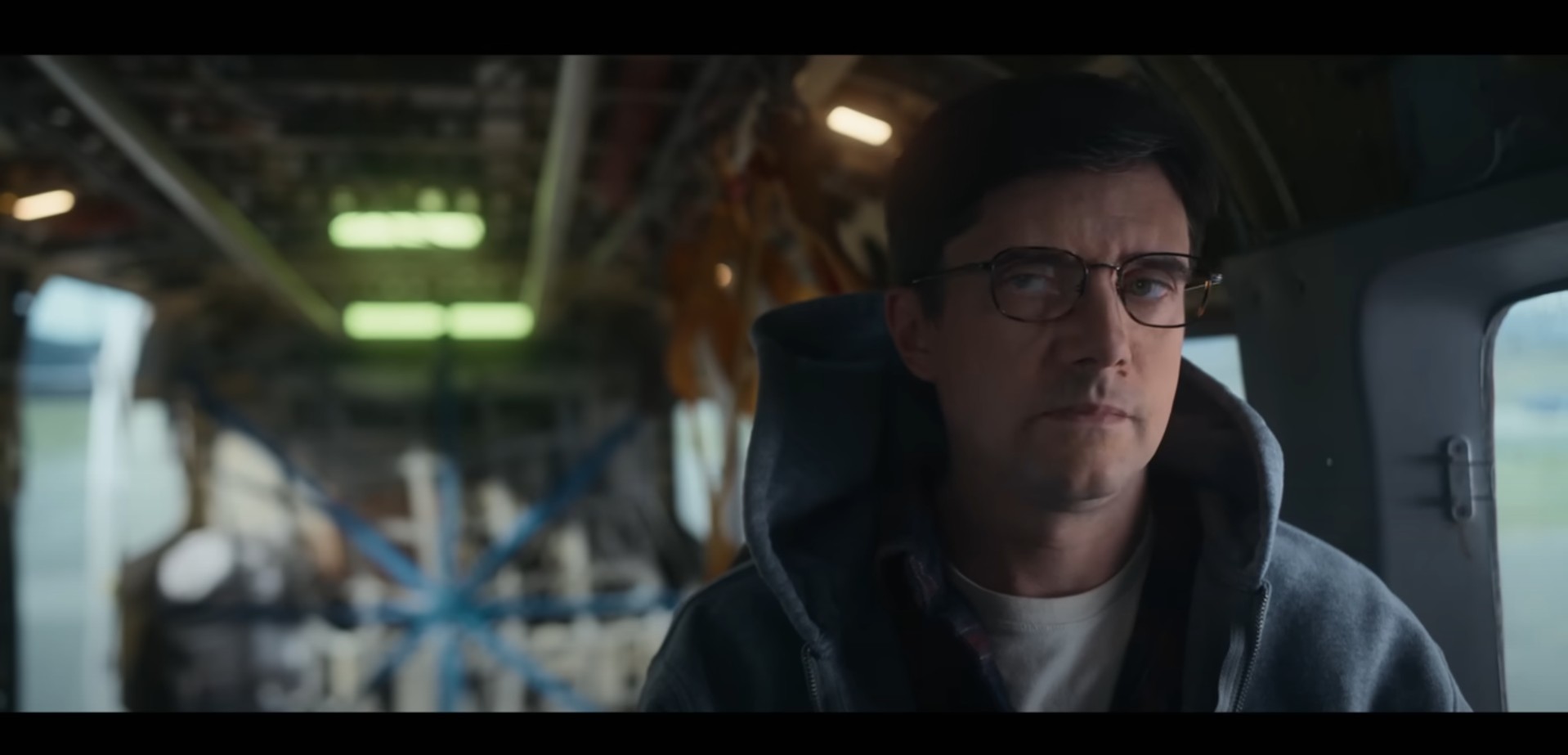
Three onscreen principals and a handful of voiceover work is all there is to “Flight Risk’s” casting with many of the scenes “high” above ground inside the tight confines of a personal aircraft to intensify the close-quartered combat with the unspoken caveat of nowhere to run, nowhere to hide thousands of feet up in the clouds.  Actress Michelle Dockery, known for her role as Lady Mary Crawley in the dynamic upstairs, downstairs period drama series “Downton Abbey,” exchanges her glittering ballroom gowns and British accent for a sidearm Glock and a flat American-beurocratic accent as U.S. Marshall Madolyn with a complicated backstory that places her back into the field after being assigned desk duty when a witness dies in her custody.  Dockery is all business and no pleasure with a retaining wall that holds all her emotions in so she can focus on the important opportunity to be back into the field.  Audiences will be thrusted right the middle of the opportunity and experience her unpleasant history being unraveled exposition as she begins to empathize and sympathize with her current witness, Winston, a skilled accountant with a harmless, passive proclivity played by with the sarcastic reflex of a frightened squirrel in Topher Grace (“Predators,” “Spider-Man 3”).  Madolyn and Winston slowly, simmering bond, merging into a fight or flight friendship out of from being an authoritative escort and detainee, is forged by fire when Mark Wahlberg’s receding hairline, eccentrically crazy, sadistic rapist of a hitman pilot attempts to restrain Madolyn and divert Winstown for his own personal pleasure on the behalf of the Mob Boss instruction.  Likely Wahlberg’s most depraved role since 1996’s “Fear,” the “Transformers” and “Daddy’s Home” actor puts forth less of his muscular tone and good looks by stepping into a balding, gum-chewing wild eye maniac, relentlessly bloodthirsty with the gift of grotesque gab, in a cat-and-mouse tit-for-tat game for the plane yoke and control.  A voice cast rounds out the rest that push the story in deception and direction with Leah Remini (“Old School”) and Paul Ben-Victor (“Body Parts”) as Madolyn’s colleagues who may or may not be corrupt and Maaz Ali (“Anxious”) as your friendly and flirtatious pilot instructor. 

An absolute different kind of project for director Mel Gibson that’s not historical, period, or epic as he takes off into unknown territory and elevating as a director who can remove himself from the bigger picture for a smaller one.  “Flight Risk” is a prime example of what Hollywood should be putting into production rather than squandering millions on grand flops but limited the budget that, in turns, limits the star power and conceding the story to saturate with substance rather than with ostentatious effects.  “Flight Risk” proved to be a modest profiting film on what is now considered a meager budget of $25 million, but a profit is a profit, and the thriller is highly entertaining and engrossing with solid performance supporting a step-by-step, linear story arc.  Granted, the film isn’t completely without flaws.  While Johnny Derango (“Fatman”) can capture the correct angles in the plane’s small, confined space and gratifying the depth with the visual screen through the plane windows, these aspects are negatively counterbalanced by visual effects that stunt the aesthetics with cheap-looking knockoffs of exteriors at the beginning and end of the film.  Fortunately, these scenes are scarce and does continue the yard forward without looking back as girth of Mark Wahlberg, Michelle Dockery, and Topher Grace vie for their moment in the spotlight with their character’s idiosyncrasies. 

The Lionsgate presented “Flight Risk” takes cue from the locomotive folktale being the little film that could, replacing the small train for a small plane and chugging, climbing up the Alaska mountain of nonstop thrills.  The new combo format Blu-ray, DVD, and Digital set from the company evokes many ways to enjoy the latest, and humblest, Mel Gibson picture.  The Blu-ray is AVC encoded, 1080p high-definition, BD50 while the DVD is MPEG2 encoded, upscaled to 1080p, on a DVD9.  In covering the Blu-ray, the picture is near perfect without compression issues faulter a landscape of whites, blues, and the spotted greeneries in between that make up the Alaska geography on the big 180’ volume screen for pseudo flight. The matte visual mixed with the angle of the cameras work to the location’s authenticity and the camera angles solidify that the illusion while the pixel range sharpens any loose ends that might occur in presentation.  Coloring and breadth of saturation diffuse fine with an organic look except for the VFX that stands out like a sore thumb.  English Dolby Atmos creates an immersive audible impression, splicing through the channels that reflect more in the back channels of Mark Wahlberg’s frantic, and sordid, diatribes from the plane’s cargo tail.  Exteriors are not as explosive around the plane as expected with the Dolby’s loss of fidelity but, to the advantage of the story, the engine him and the turbulence has an agreeable depth muffle to it in the surrounding channels and into the frontloaded dialogue, which is intelligible and without unintended equipment interference.  Also included are French and Spanish Dolby Digital 5.1 tracks and an English descriptive audio.  English, Spanish and French subtitles are optional.  Risk Management:  Making flight Risk is the standard fare behind-the-scenes cast-and-crew interviews with some raw behind-the-camera shots surrounding the genesis of “Flight Risk” and the how certain aspects of the film, such as cinematography and Mark Wahlberg’s devilish persona, are achieved.  The theatrical trailer rounds out the encoded special features.  Personally, I was not impressed with the cover art that’s on the Amaray and the cardboard O-slip with a sheen coating that puts Wahlberg front-and-center of a misleading campaign of the ruthless killer looking oddly unflappable while zipping fighter jet theatrics are composited over his midsection; the whole illustration just doesn’t speak the “Flight Risk’s” disposition.  Nothing else to note tangibly other than the 4K digital code insert in its usual slot.  Rated R for violence and language, Lionsgate Blu-ray is region A encoded and has a textbook runtime of 91-minutes.

Last Rites: “Flight Risk” cruises at a palatable attitude of flight dynamics, aerial assassinations, and the rehabilitation of broken character in Mel Gibson’s smaller, but mighty, latest feature.

“Flight Risk” Blu-ray Takes Off and Is Now Availablle to Own!

Etiquette over EVIL Shot in Super 8! “Kung Fu Rascals” reviewed! (Visual Vengeance / Blu-ray)

Kung Fu Rascals Kicking Butt on Blu-ray!

Chen Chow Mein expertly steals an ancient tablet from the evil overlord Bamboo Man from Ka Pow whose plan is to seek complete and total dominion with the tablet stone.  Chen regroups with this acolyte pupils, Reepo and Lao Ze, to visit an old wise man for translation of the tablet’s mysteries and follow it’s mapped out quest that’ll lead them to glory over the land’s malevolent beings, but the Bamboo Man from Ka Pow will not let their journey be so easy by dispatching head minion Raspmutant the Mad Monk to hire the corrupt Sherriff of Ching Wa County and his two apprentices, Dar Ling and Ba Foon, as well as summoning the monolithic Neo Titan to stop them at all costs.  Always training their Kung-Fu etiquette, the trio embark on a journey through a land filled with evil ninja henchmen and must fight together to finish the journey.

Sculptor and creature effects guru Seve Wang might be best known for his work on some of the genre’s most memorable and favorite characters, such as designing the final extraterrestrial jungle hunter of John McTiernan’s “Predator,” created the Mohawk Spider Gremlin in Joe Dante’s “Gremlins 2:  The New Batch,” and sculpted the failed Ripley clones in “Alien Resurrection” amongst other notable cult and blockbuster films.  What you might not know is that Steve Wang had also directed, incorporating too his special effects and sculpting talents behind the camera in a debut feature, a homage to the Kung-Fu and Kaiju genres, titled “Kung Fun Rascals.”  Wang also cowrote the 1992 film with another special effects artist and actor Johnnie S. Espiritu (aka Johnnie Saiko) of “Hell Comes to Frogtown” and “Aliens vs. Predator:  Requiem.”  Wang self-produced the film after a series of short films to gain financial backing for a feature-length production.

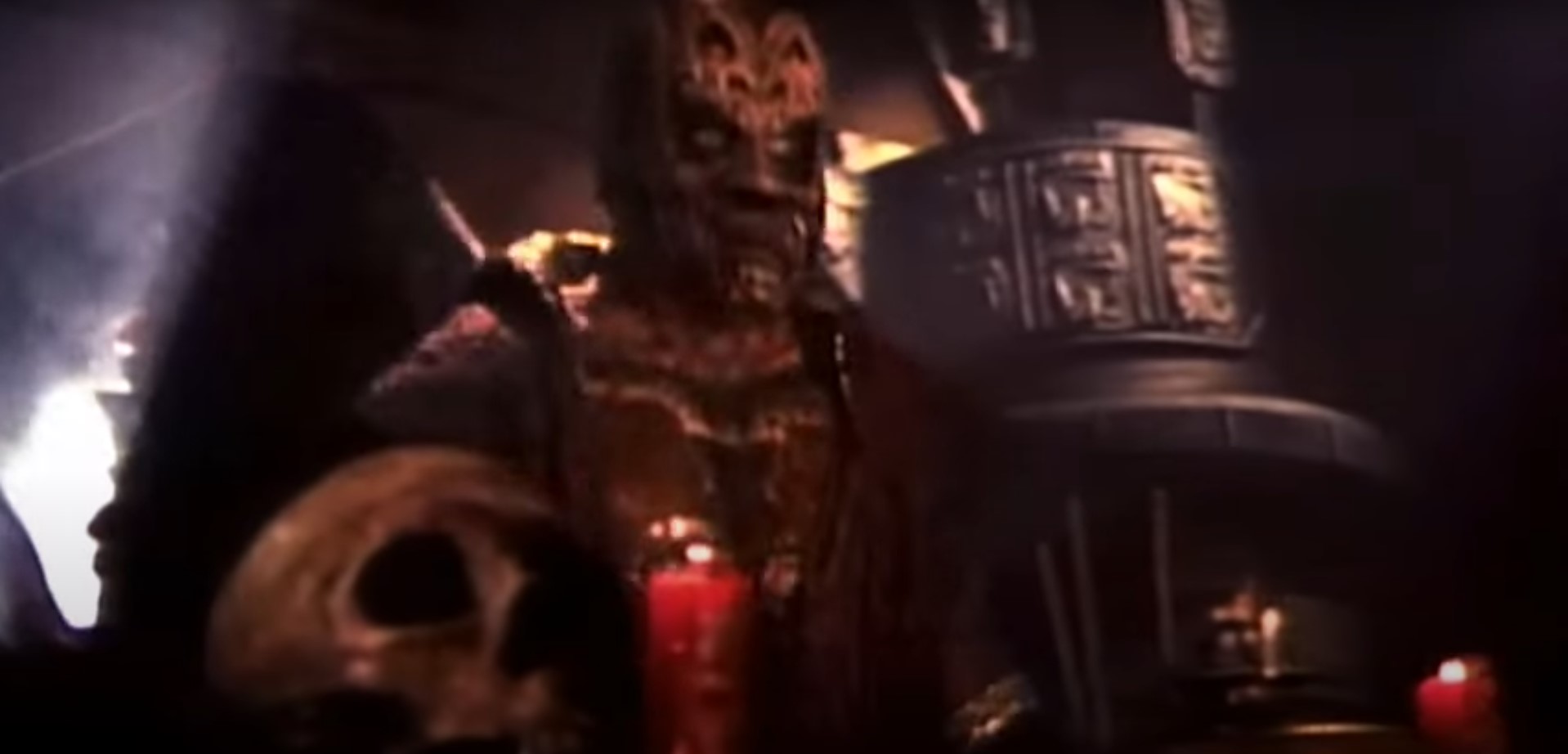
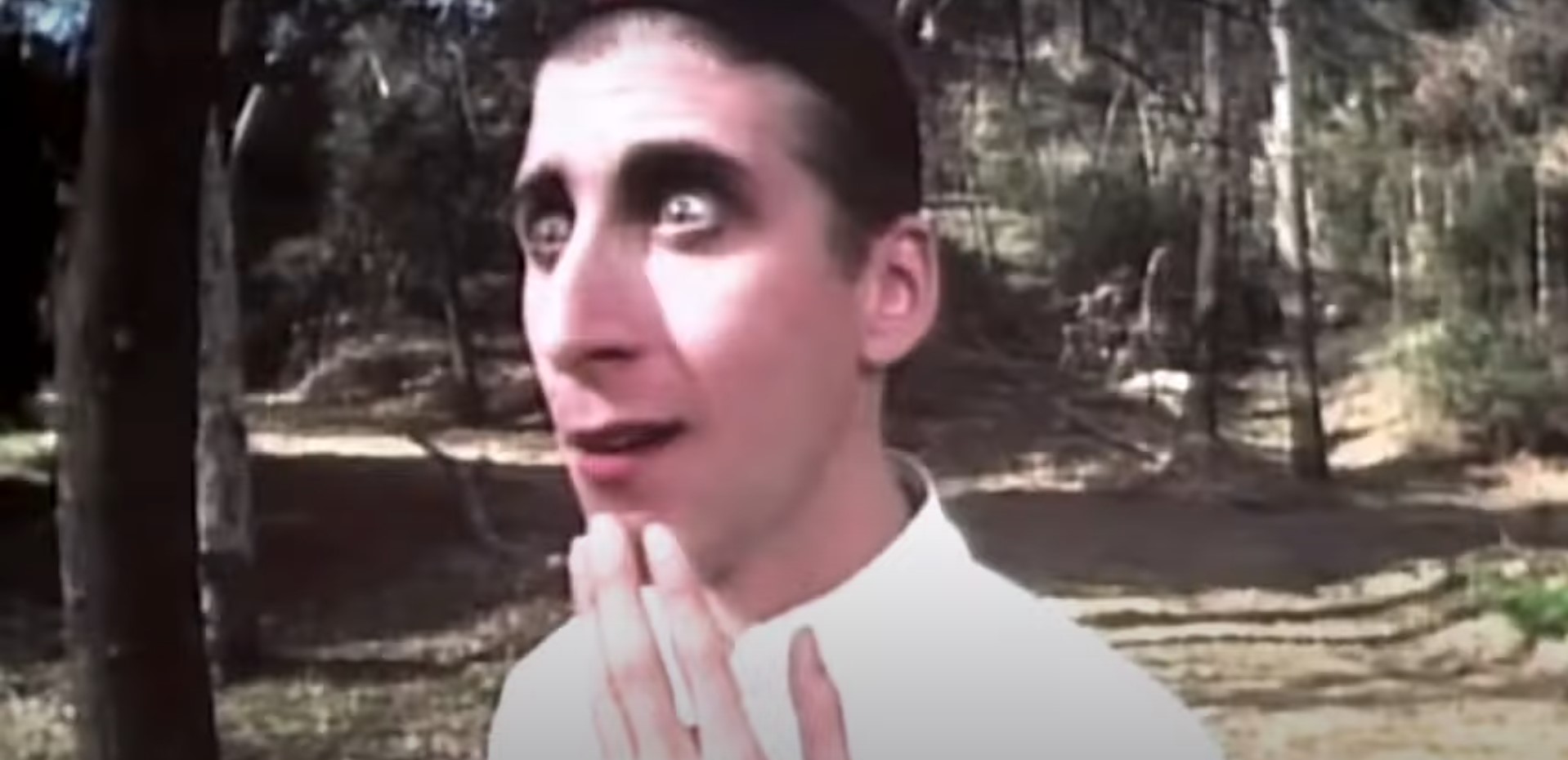
On any self-produced, independent film, the cast usually wears multiple hats.  “Kung Fu Rascals” was no different as writer-director-producer-caterer-sculptor-and etc., Steve Wang also starred as Chen Chow Mien, an expert Kung-Fu fighter who steals a pivotal stone tablet from the Bamboo Man of Ka Pow, one of the many roles played by Ted Smith.  Wang and Smith are friends, and that age-old motif of a friend casted film holds very true for “Kung Fu Rascals,” comprised of mostly the director’s friends, who are also special effects and makeup artists, to accomplish his dream of branching out into a different field in filmmaking.  Johnnie Saiko is also one of those friends and is one of the two actors in this Kung-Fu romp playing Reepo, the trio’s good-natured goofball stylized like a character out of a “Mad Max” movie garbed in black and with a standing mohawk.  The third that rounds out the team is Lao Ze from one of the few actors initially not a part of Wang’s friend pool in Troy Fromin (“Shrunken Heads”).  Quaintly and quietly inspired by the antics and approaches of “The Three Stooges,” the “Kung Fu Rascals” march to a different dynamic drum as quasi-foolish, good-hearted good guys acted with slapstick, sure-fisted parody against a hapless army of animal-flavored mutants and their master with a flair for villainy.  Along with that master villain role, Smith continues his trend of being the guy in the suit throughout the film by being a giant Kaiju Meta Spartan and hilariously plays out of the suit with Dar Ling, a queer flamboyant henchman alongside fellow henchmen and Chicken-style Kung-Fu fighter Ba Foon (Aaron Simms) as they add a sense of diversity and daffy under the leadership Les Claypool’s Sherriff of Ching Wa County.  Yes, the same Les Claypool from the band Primus.  The cast rounds out with Cleve Hall (“The Halfway House”) as an old wise, creepy, and slightly uncouth clairvoyant, Matt Rose as the wild-eyed torturer, Michelle McCrary as The Spider Witch, Ed Yang as the other Kaiju Neo Titan, Tom Martinek as the hoppy Frog guard, and Wyatt Weed (“Predator 2”) doing the devil in the details with every step as the fully anthropomorphic Pig fitted Raspmutant the Mad Monk.

“Kung Fu Rascals” is the tastier, punchier, made with more heart version of “Kung Pow,” and I don’t mean the Chinese spicy stir-fry chicken dish with hints of peanut and accompanied with vegetables and peppers.  For an independent, first-time feature on a budget, Steve Wang and friends sculps and fashions meticulous creatures from head-to-toe.  Not one latex ear, not one molded snout, and not one full-body outfit appears shoddy or cheap overtop encased actors who know what to do underneath all that masking makeup and rubber.  On top of that, the fight choreography, editing, and dimensional effects are high level pointing in all the right directions with interesting camera visuals and angles to turn a little production like “Kung Fu Rascals” into a fully-fledged feature that audiences of 1992 weren’t ready yet until Power Rangers explosively came onto the scene a year later.  Of course, there was “The Guyver” a year earlier, also from Steve Wang, but “The Guyver” was geared for a limited audience that blended science-fiction with gory elements.  “Kung Fu Rascals” settles at the other end of the spectrum with a more family-friendly façade with an homage to Asian cinema and medieval monsters.  “Kung Fu Rascals” might not have been made today being quite politically incorrect with its play-on-names, stereotypes, and white-washing Asians but in the end, it’s Kung-Fu etiquette is entertaining chop-socky. 

Visual Vengeance once again delivers.  A high-end presentation and package of Steve Wang’s “Kung Fu Rascals” finds Blu-ray gold with a high-definition release despite the film being shot in Super 8 film.  The AVC encoded, 1080p resolution, BD50 is presented in a 1:33:1 aspect ratio.  Super 8 is not peak definition or color saturation as the image is captured straight onto the celluloid, color and contrast in all, in a direct positive process that left hardly any room for cleaner reprocessing.  Scenes often look darker at a higher contrast on a lower, blockier resolution, decoding at a broad range of 8 to 25Mbps, and the editing, though keeping continuous fighting scenes seamless, fluctuates with surface finish inconsistency in shots that make some scenes appear dark in the daylight; this could also be result in the filming time-of-day.  Yet, the cinematography is excellent in capturing interesting visual angles and the lighting setup is stunning despite the unpolished Super 8.  Visual Vengeance continues to supply the technical disclaimer with the caveat of using the best possible source materials for their releases, including this director-supervised version of the standard definition master tape and original film elements, which had a few, very minor, linear scratches and dust/dirt speckles.  The English language Dolby Digital Stereo mix is quite sharp and clean that emulates the boxiness of Asian dubbing/ADR.  Thrown punches and kicks hit their audio marks with timed whack and thud Foley and the dialogue, through the cheesy and cheeky antics, suffers from no fidelity loss or reel damage.  I’m surprised how clean the track is with little-to-no static, crackling, or hissing. English subtitles are available though no listed on the back.  If looking for special features, Visual Vengeance has the definitive special features for the Steve Wang’s obscurity with a brand new feature length documentary The Making of Kung Fu Rascals containing interviews with cast and crew, two new feature-parallel commentary tracks with the first being the “Kung Fu Rascals” themselves, Steve Wang, Troy Fromin, and Johnnie Saiko, as well with composter-actor Les Claypool and actor Ted Smith and the second with film superfans Justin Decloux and Dylan Cheung, an exclusive reunion of the Rascals with a sit down conversation between Wang, Fromin, and Saiko, a Steve Wang and Les Claypool reunion, Film Threat editor Chris Gore interview on distributing the VHS, a behind-the-scenes video diary, the 30-minute “Kung Fun Rascals” Super 8 short film, the 9-minute “Code 9” Steve Wang short film, Film Threat video #6 behind-the-scenes article, film and behind-the-scene stills, and Visual Vengeance cut version of the “Kung Fu Rascals” trailer.  Visual Vengeance also has your physical needs covered, and no I don’t mean sexually, with a cardboard O-Slipcover illustrated with a new art design by Thomas “The Dude Designs” Hodge overtop the clear Blu-ray Amaray case.  The reversible sleeve contains two compositional, Asian cinema-homage illustrations that an eye-appealing.  Inside contains a 13-page, Marc Gras illustrated, official comic book adaptation, a 2-sided single sheet insert with a fourth artwork design and Blu-ray acknowledgements, a folded mini-poster of the primary Blu-ray art, and a Visual Vengeance rental stick sheet containing 12-rental theme descriptor stickers.  The unrated release comes region free and has a runtime of 102 minutes.

Last Rites: Phenomenal creature suits and makeup, a lost sense of irreverent, spot-on comedy, and butt-kicking Kung Fu, Steve Wang’s little-known picture is the poster child for satirical, independent comedy-action and a good time overall.

Kung Fu Rascals Kicking Butt on Blu-ray!

EVIL Worming Its Way into Your Body! “They Crawl Beneath” reviewed! (Well Go USA / Blu-ray)

“They Crawl Beneath” on Blu-ray Home Video from Well Go USA!

After a near-death experience, Danny finds himself living on his profligate uncle’s couch when his family-desiring girlfriend fears his occupation will emotionally destroy them if he dies in the line of fire. The turbulent relationship reaches a stalemate, frustrating Danny further into confiding into his imprudent uncle as they work to rehab an old car. When an earthquake takes his uncle’s life, pins his leg underneath the car, and traps him in a closed garage isolated from much of civilization, Danny has limited options for rescue and to make matters worse, the ground opening up has released an undiscovered wormlike creature from the fissures. The severely injured officer now must fight for survival against an enemy unlike any other and face the terrible truth that could possibly change his life forever…if he lives through the night.

“They Crawl Beneath” is subterranean-to-surface horror with large wormlike aggressors hungry for fleshy food. The 2022 creature feature is the screenplay brainchild of writer Tricia Aurand who pens her way through a career of shorts to features with her second full length screenplay, originally entitled “It Crawls Beneath,” developed with the crux of the story surrounding the struggling emotional arc of a couple’s embattled relationship growth while being besieged by the belowground bloodsuckers in a tussle of grit and determination that dually transposes a never give up, never say it’s over theme. “Area 407” and “Reed’s Point” director Dale Fabrigar helms the film in what’s the second collaborator effort between Tricia Aurand and the director that falls upon the complete opposite on the genre spectrum behind the feel-good holiday movie “Middleton Christmas,” cowritten and produced by Suzanne DeLaurentiis and, before your wheels start spinning, there’s no mention of her relation to famous television cook Giada De Laurentiis or Giada’s Italian film-centric father, Dino De Laurentiis. Like an effort to purge cathartically the holiday spirit, Suzanne DeLaurentiis, who wrorte-and-directed 1996’s “Mutant Man,” produces the film with Fabrigar and Aurant spearheading the project under her banner, Suzanne DeLaurentiis Productions,” and presented theatrically by Kevin and Noel Goetz of BBMG Entertainment and “Monstrous’s” Film Mode Entertainment.

“They Crawl Beneath” is essentially a one-man show, puncturing much of the same vein as “Stalled,” “Buried,” or “The Shallows” where a single protagonist much problem-solve to work out from a difficult and deadly situation. Now, “They Crawl Beneath” slightly differs from the examples aforementioned that provides a bit of setup with cop-on-leave Danny (Joseph Almani) down in the dumps and hanging with Uncle Bill (Michael Paré, “Village of the Damned”) as a direct result of having a fallen out with girlfriend Gwen (Karlee Elridge) over a near death experience in a shootout with a perp. Almani gives a wrought performance that’s raps a handful of times on the door of embarrassing ignominy with overzealous one-liners that squander the fervid weight the story works very tirelessly to setup for Danny and his pitfall of troubles. Yet, Danny also can’t grasp the heaviness of Gwen’s decision to leave him as if what matters to her is no matter at all and that’s where the script disproportionally downplays Danny’s pride by having him recoil into the arms of a cool uncle. Michael Paré is the better half of that relationship despite his uncle Bill’s stag behavior. Paré has one of those classic, Golden-Age-type, voices to the likes of Robert Mitchum and though that doesn’t necessary speak to the Gen-X youth as cool, there’s still a panache quality about the 40-year vet actor that makes him feel bigger than the film itself. Elridge’s Gwen undercuts much into Almani’s man versus underground grub with an attitude in scenes that are terribly forced. Elridge, who doesn’t fail on her own accord, falls into an uninspiring role with unimportant lines and scenes just so there can be a prominent love interest for Danny. Gar-Ye Lee, Christopher M. Dukes, Brian DeRozan, and Elena Sahagun co-star.

I’ve read a few threads and comments around the worldwide web comparing Fabrigar’s “They Crawl Beneath” to the creature feature-classic Kevin Bacon-starring film “Tremors.”  Those comments and comparisons are grossly ill-conceived.  Aside from the physical release cover art which displays a well-armed individual standing cool on cracked pavement in the desert while the foreground large fissure in the road exposes a menacing burrowing organism does echo Graboid parallelism, but that’s the extent of it. There’s no “Mad Max” man with a rifle and a handgun in this flick. There’s an outskirt L.A. desert, but much creepy-crawler action takes place in a four-walled and dark garage. And the only similarities between these creatures and the Graboids are the Graboid’s snake-like tongues. The pint-sized creatures with tri-mandible, razor sharp teethed, mouths appear similar but individuated and brandish a stinger to be lethal at both ends of its larva bulbous body. The puppetry is obvious but also fantastic in the same breath. I couldn’t see Fabrigar and the creature effects supervisor pulling off the task any other way that doesn’t grade A visual effects, such as the cast in James Gunn’s “Slither.” “They Crawl Beneath” enters more of a survival horror and less of a creature feature with the principal lead finding himself trapped inside a garage and pinned underneath a car. Typical of many low-cost and independent productions that take refuge in one single, inexpensive location, the setup, the lion’s share act two, and the escape pays off big time in deflection stagnation by keeping Danny occupied with options though more than likely the creatures would have bit off his face during numerous moments of vulnerability. Pacing like this is troubled throughout. As I mentioned, Karlee Elridge’s scenes often created a distraction from the story’s essence and her scenes were intrusively pointless. As Danny finally connects with Gwen on the phone and she proclaims she will get ahold of Officer Holden to send help, there’s a scene following of her driving and calling officer Holden and explaining the situation. The scene bears inane purpose and is repetitive and there are a handful of scenes like this to thicken out the role of Elridge.

Practical effects driven “They Crawl Beneath” is middle of the road magnitude survival creature feather that has squirmed its way onto a Blu-ray home video from Well Go USA Entertainment. The unrated region A Blu-ray is presented in 1080, 1.78:1 aspect ratio with an impressive contrast with enriched negative space that demarcates the well-shot positive space. Picture quality doesn’t seem to suffer compressed on the BD25 as there is no banding in the blacks and there are plenty of darker scenes contained in the garage. Skin, human and Platyhelminth, appear textured aplenty and while typical arid landscapes can whitewash character details due to lack of diverse color and adjacent objects, that’s not the case here as the focus in exterior scenes is tight on the characters and less about what’s in the background. The English language DTS-HD master audio channels cleaning through the output with phonic clarity. Acoustically, the garage sequences can sound slightly isolating which works for the confined space meant to have no sound dampeners to start. Creature screeches are generic but effective and sync aptly to the action without degradation. Option English SDH subtitles are available. The Well Go USA Entertainment release is feature film only with no bonus material accompanying the 88-minute runtime. “The Crawl Beneath” returns to the midnight showings of the USA Network days where the schlock hits the fan with genre features playing at ungodly hours, but the Dale Fabrigar quaking-quagmire is quick to enclose one man trapped in a room full of man-eating slugs and, sometimes, that’s all we want in a film.

“They Crawl Beneath” on Blu-ray Home Video from Well Go USA!

The Best Spies Seek Thrills When Taking Down EVIL! “Deathcheaters” reviewed! (Umbrella Entertainment / Blu-ray)

If Anyone Can Hide from the Grim Reaper, It’s the “Deathcheaters” on Blu-ray from Umbrella Entertainment!

Vietnam War brothers-in-arms Steve Hall and Rodney Cann banded together well after the fighting was over and channeled all their pent up energy into being adrenaline junky stuntmen for movies, television series, and commercials as a living and as a lifestyle.  When the two Australians are duped and setup into a high speed chase and a daring rescue mission by one of their country’s own clandestine government agencies in a ploy to test Steve and Rod’s daredevil abilities, they pass the qualifying assessments and are offered an espionage job by agency head under the pseudonym of Mr. Culpepper who has no other incentive to provide other than the job to be the most challenging, death-defying operation to gorge on by two extreme sport enthusiasts.  Unable to resist, the stuntmen embark to a secret base on a remote island of the Philippines where they’ll dodge bullets, explosions, and over 100 guards to fight their way in and out to obtain classified documents for their country.

“Deathcheaters” became the third viewing adventure involving the actor-director combination of stuntman Grant Page and director Brian Trenchard-Smith that falls right in between “The Man from Hong Kong” and “Stunt Rock” and clearly delineates an understanding that Grant Page was a genuine fascination for Trenchard-Smith who sought to take the daring stuntman out of solely stunt role and puree him into a leading man role, showcasing Page’s hang-gliding, dune buggy, and skyscraper falls,  for the director’s second feature film released in 1976.  And, then, there’s John Hargreaves who we will dive into his there-but-not there presence later on. “Deathcheaters” is an ozploitation action-comedy that fulfilled two of Trenchard-Smith’s obsessions – stuntmen and spy films – from a story by the director and penned to script by Michael Cove and is produced by Trenchard productions alongside a conglomerate of production companies, including “Mad Max’s”  Roadshow Entertainment (a subsidiary of Village Roadshow), D.L. Taffner (“Ghost Stories”), Nine Network Australia, and the Australian Film Commission.

Undoubtedly, “Deathcheaters” stars Grant Page as the relationship unattached and cocky Rodney Cann whose only other interest besides bedding the single ladies is his enamored basset hound, Bismark.  Cann’s best friend, Steve Hall, is newly hitched to Julia who more-or-less disapproves of her husband’s risky vocation.  “Long Weekend’s” John Hargreaves plays the cheeky Steve Hall with sarcastic charm, matching his complement stunt partner and while Hargreaves has the chops to pull of the persona, the late Sydney born actor is well behind the curve when matched up with Grant Page.  Page is a stuntman playing a stuntman while Hargreaves is an actor portraying to be a stuntman and, unquestionably, that delta shows pretty radically when Page is driving the dune buggy, is descending rapidly from a tall building, or scaling a rock cliff without a harness and Hargreaves is relatively stationary.  Hargreaves has his moments but is greatly overshadowed by the veteran Page.  Before she was Brian Trenchard-Smith’s wife, “Stunt Rock’s” Margaret Gerard was John Hargreaves on screen romance who is vocal but wishy-washy on her husband’s exploits, even on the highly dangerous, international espionage mission assigned by the enigmatic Mr. Culpepper (Noel Ferrier, “Turkey Shoot”).  “Deathcheaters” round out with Judith Woodroffe, Drew Forsythe, Annie Semler, and Vincent Ball.

“Deathcheasters’ falls on the heels of the martial arts success of “The Man from Hong Kong” and is another stunt celebratory film from the ozploitation director with a penchant for large explosions and need-for-speed car chases.  All the stunts were perfectly poised in design and well executed.  Trenchard-Smith isn’t at all afraid to have the camera right in the middle of the action, strapping the 16mm camera to whatever plausible to place the audience in the action with the heroes.  As much as Trenchard-Smith goes full throttle with a tour de force, the same tricks become a little stale after, unfortunately, having previously watched “Stunt Rock” and “The Man from Hong Kong” that also featured self-set wet-gel fires, hang gliding, free falling, and among others aerobatic and dangerous acts that are seemingly in Page’s limited bag of showstopping routines.  There’s rarely anything new in “Deathcheaters” that warrant an awe response and that can be cliched, tiresome, and overall detrimental to the experience unless you’ve never seen a Trenchard-Smith film. If you’re one of those people never to have popped in one of his films, don’t expect “Deathcheaters” to be gritty, tough-as-nails, spitfire. Many of Trenchard-Smith’s earlier films, including “Deathcheaters,” sells solely on the witty, clean banter and a knack for the implied something really terrible happened to the bad guys with nothing ostentatiously explicit in the demise category. “Deathcheaters” can be wholesome, light, and aromatic of a repartee trashcan, but you get some great stunt work, explosions, and a car chase from this 1970’s Australian picture.

Like “The Man from Hong Kong” and “Stunt Work,” “Deathcheaters” too receives the Ozploitation Classics Blu-ray honor bestowed upon it from Umbrella Entertainment as spine number 10. Newly scanned in high definition 4K for the first time, John Seale’s cinematic vision has never looked better in this region free release, presented in standard widescreen 1.85:1 aspect ratio. The original vault materials held up nice enough to warrant a clear picture with only a few, brief blemishes. The super 16mm shot film, blown up to 35mm, often still feels ever so lightly flat in contour definition and in color; yet all the scenes look naturally aboriginal from the masters. The English language DTS-HD master audio 2.0 mono is a naturally lossy single speaker audio mix that doesn’t exact full representation of the action on screen though robust in fidelity. Dialogue perceives feebler during exterior scenes as capturing dialogue competes with the elements due to poor boom placement or just inferior equipment. Like the other releases, bonus features are nicely packed with a newly extended interviews with Brian Trenchard-Smith, Grant Page, and John Seale from the Not Quite Hollywood documentary, a new audio only interview Remembering “Deathcheaters” with executive producer Richard Brennan, new liner notes from Trenchard-Smith, a 2008 commentary with the director, executive producer, and leading lady Margaret Gerard (listed as Margaret Trenchard-Smith), Trenchard-Smith trailer reel, theatrical trailer, and a Trenchard-Smith directed bonus feature in “Dangerfreaks – The Ultimate Documentary.” The clear snapper case is housed inside a cardboard slipcover and inside the snapper’s liner is a 16-page comic book adaptation from Dark Oz, much like Umbrella accompanied with “Stunt Rock.” “Deathcheaters” shows its age but still pulls out all the stops with amazing stunt choreography and gave way to Grant Page being solidified lead man material, even with his corny one-liners, and simultaneously building upon Brian Trenchard-Smith’s early career in a niche field of being obsessed with overachieving, arrogant, and unafraid stuntmen.

If Anyone Can Hide from the Grim Reaper, It’s the “Deathcheaters” on Blu-ray from Umbrella Entertainment!