The EVILS of Trauma Band Together to Take Down the Bad Guys. “Riders of Justice” reviewed (Magnet Releasing / Digital Screener)


Estranged form his family due to war torn military deployment, Markus must now come home to take care of his teenage daughter after his wife dies in a violent train accident.  A statistic mathematician, Otto, aboard the same train believes the train accident was no accident at all but a hit on a high profile informant testifying in the coming days against the head of a ruthless gang known as the Riders of Justice.  Joined by his eccentric friends, a therapy-inundated hacker named Lennart and an OCD computer whiz named Emmenthaler, they present Markus a convincing theory that his wife was a casualty of a gang’s complex assassination.  Unable to resist, Markus and his newfound friends set a course to unearth and destroy those who they think are responsible for his wife’s demise. 

With my unhealthy man-crush on “Valhalla Rising” and “Hannibal” star Mads Mikkelsen aside, “Riders of Justice” initial plot teased very little interest in what seemed to be another wife or child dies kill-them-all revenge action-thriller.  “Riders of Justice” also marks the 5th time Mikkelsen and director-screenwriter Anders Thomas Jensen collaborate on a project over the course of the Jensen’s entire 20 year directing filmography.  Jensen, who co-write the film adaptation of Stephen King’s “The Dark Tower,” ping ponged the story idea of the Denmark production with fellow “The Dark Tower” writer and “The Girl with the Dragon Tattoo” adapted writer, Nikolaj Arcel, in a story that brings tormented trauma victims together, latching on to idea they find themselves useful for, and inadvertently find the counsel they need through a dangerous operation in hunting down coldblooded killers.  Sisse Graum Jorgensen serves as producer under the Zentropa Productions entertainment banner and Sidsel Hybchmann debuts in her first producer role after a seasoned run as an associate producer alongside Graum Jorgensen on previous projects and between Graum Jorgensen and Hybchmann, “Riders of Justice” has a strong female producer contingent supporting a nearly all-male cast in bed with their lovable misfit characters that aims to be more about acceptance than revenge. 

Did I mention I have an unquenchable need to see every movie Mad Mikkelsen has starred in?  With “Riders of Justice,” Mikkelsen sports a long, skunk-colored beard with a shaved head in a not-so-typical look for one of, if not the, biggest movie stars to come out of Denmark.  Mikkelsen takes on this look for Markus, a military deployed father who rather be running covert drills and operations with his brothers in arms rather than being a father and husband in what becomes evident an underlining issue with his character.  As Markus tries to comfort his daughter Mathilde (“Andrea Heick Gadesberg) the only way he knows how as a regimentally stoic head of the house, but for being away so long, he knows very little of his now teenage daughter.  Mikkelsen’s natural gift for austere should be award-winning as becomes a lethal enforcer, a role he does extremely well, for a group of traumatically damaged outcasts looking for a righteous cause, beginning with Denmark’s Seth Rogan doppelganger, Nikolaj Lie Kaas, as a fellow train passenger Otto, a brainy mathematician who momentarily befriends Markus’ wife by offering up his seat that ultimately leads to her death.  Otto’s guilt, surging through him a pair of different ways, leads the brilliant mathematician to reach out to Markus with the help of his equally smart, yet equally maladjusted friends Lennart (Lars Brygmann “Flies on the Wall”) and Emmenthaler (Nicholas Bro “Nymphomaniac Vol. 1”). What ensues next are inadvertent events that spin Markus into a plot to assassinate an entire gang based off the statistics of one mathematician’s conspiracy theory evidence and along for the ride are the mathematician and his misfit buddies who might just be too smart for their own good. Every single performance is dead on spectacular with every character lush with tragic communal backstories and are clubbable in their own unconventional rite within the circle of Markus’s fearless vengeance at the center as they are drawn together by their own neurosis behaviors. Gustav Lindh, Albert Rudbeck Lindhardt, and Roland Møller round out the “Riders of Justice” cast.

The one sheet doesn’t do Jensen’s film any justice with a bearded Mikkelsen standing face front taking up much of the negative space, strapped with an automatic rifle around his back and a handgun in hand with the faded images of helmeted dirt bikers riding in the background. Let me tell you this: There were no dirt bikes in the movie. Not one. Mikkelsen looks great, as always, but the poster makes “Riders of Justice” reminiscent Mark Wahlberg’s “Shooter.” “Riders of Justice” stands outside that circle of militia or gorilla tactic action by being about 50% comedy and good comedy at that from Brygmann, Bro, and Kaas who elevate “Riders of Justice” from another run of the mill actioner about revenge, a subgenre plastic bag Liam Neeson can’t seem to escape from, to a heartfelt piece about belonging and mentally recuperating through helpful outreach with a standard whoop ass fare plotline.  Though some of the investigating work pinpointing the gang comes about far-fetched, I still believe “Riders of Justice” is one of the best films released this year, touching upon several multiplex themes of mental health, the urge to reach out for help to battle your issues, father and daughter relationships, and a sense of fitting in and having a purpose as an ostracized member of society. 

“Riders of Justice” has a lot of heart as well as a lot of brutal violence balled up in one remarkably empathetic film.  Magnet Releasing will be releasing the film everywhere May 21st with a limited run May 14th in New York and Los Angeles theaters.  Serendipity plays a huge role in Jensen’s vision of life against the odds and how people can ultimately rally together, sometime unexpectedly, to overcome obstacles often daunting for individuality with a sense of humor that can trump the dark behaviors of a depressive story core.  Kasper Tuxen’s cinematography in the hard lit scenes often confines the actors in a small car or around a table that not only screams cloak and dagger positioning but also exacts a sense of fellowship as they do everything together from planning, to surveillance, to assassinations, to even impromptu counseling sessions. The bookending story fable of happenstance leading from sadness to happiness christens “Riders of Justice” that debatable label, often argued with films like “Die Hard” or “Lethal Weapon,” of whether it’s a Christmas film or an action film. Fans will not have to stay for the credits expecting to see a bonus scene as there isn’t one; instead, enjoy the 115 minutes of fractured individuals coming together to be unlikely heroes in this hilarious shoot’em up ballbuster from Denmark.

One Man Tries to Reclaim his Life When EVIL Suddenly Invades! “The Unthinkable” reviewed (Magnet Releasing / Digital Screener)

Out in the country of Vånga, Sweden, Alex endures his ex-military Father’s demanding and verbally abusive posture.  His only relief is spending time with Anna who is in a similar circumstances with her mother.  The two spend many of their days together amusing themselves on the church piano until Anna is forced to move away to Stockholm, leaving Alex to face his father’s wrath alone.  Alex runs away for his childhood home and, years later, becomes a popular piano recording artist influenced by his time with Anna.  When he returns to Vånga during a time of countrywide unrest to purchase that same church piano of his fond memories, Sweden comes under attack by an unknown force as major roadways out of the country have been blown to smithereens, every power station is the target for destruction, and the rain is contaminated with an airborne chemical that makes people lose their memories and become disoriented.  Alex has to reconnect with his father in order to save Anna, the love of his youth, to survive the unthinkable. 

An invasion on the scale that you’ve never seen blitzes with explosive stunt work and stunning visual effects.  Victor Danell’s action-drama “The Unthinkable” comes out of nowhere with a hard stop pivot of a love story turned survive at any cost as the film’s country of origin becomes warzone raided without mercy.  Under the original title “Den blomstertid nu kommer” in the native tongue, Danell directs and writes “The Unthinkable” along with co-writer and star Christoffer Nordenrot, though credited as their collective production group, as the two team up again after nearly a decade after working on the comedy “Soundcheck,” directed by Danell.  What started as a crowdfunded Kickstarter campaigned ended up being a multi-million dollar production and with such growing fascination amongst eager fans, the 2018 found more financial backing from the former Swedish cinema chain company, SF Bio AB, now known as Filmstaden and is presented as the first feature film of a filmic collective known as Crazy Pictures in co-production with CO_Made and Film I Väst.

As mentioned, writer Christoffer Nordenrot finds himself at the center of the story as Alex, a passionate pianist fighting back against well-armed, well-supplied unknown militant forces all the while processing a dam breaking flood from the rebuilding of shattered emotions when returning to his quaint hometown after abruptly escaping his overbearing father (Jesper Barkselius).  Socially awkward with an obsessive proclivity, but wielding an intellectual thought pattern, Alex appears to be a person likely on the spectrum, but bottles much of his emotions internally, biting his lip at every moment his father disparages him or his absconding mother. When his only friend in the world, a girl named Anna (Lisa Henni, “Haunted Evil Dead”) whose roughly the same age, is being pulled away from Vånga to live in Stockholm with her mother, Alex undergoes a rapid descension of one heart ache to another that leads to him able to flourish and exceed on his own as a new wave pianist, engineering a combination of electronic beats of sound machines with the simplicity of soul from the piano to arouse his repressed emotions for an grandstand audience. Alex finds his way back Vånga for personal gain, a childhood piano him and Anna shared making music over, and to attend the sudden death of his mother from a previous, individual attack in Sweden, but what he stumbles into is avoiding his father at all costs, being swept into a returned Anna’s radial allure, and, oh yea, a massive proclamation of war by an aggressive, chemical warfare and shoot-on-sight enemy of the Swedish people. This is where I find Alex to have a chip-on-his-shoulder complex unhealthy for everyone around him as he doesn’t look past the past and punitively causes discord with his father, who is trying to save not only the last standing power station in all of Sweden himself, but essentially trying to save his entire country, and Anna when Alex finds out she has a husband and child after an afternoon of rollicking in the hay and sharing various moments around town. Performance wise, Nordenrot might not be the action star of tomorrow in his character’s one note of early on narcissism and bad judgement, but challenges himself in the role by losing and gaining weight to accomplish years of age appearances from teenage boy to mid-30’s man and is good enough to swashbuckle against relentless military helicopters and a slew of men capping of M60 machine guns in his direction. Pia Holverson, Krister Kern, Alexej Manvelov, Magnus Sundberg, and Ulrika Bäckström round out “The Unthinkable’s” cast.

With a runtime of 129 minutes, “The Unthinkable” has a lot of story to tell with an ample amount, practically divided in evenly, imparted into two stories – one forgotten romance and family squabbles rekindled and the other a bombardment of annexing Sweden from the country’s own residents by deadly force. The pivot also never feels gradual as act one is all about teenage Alex and Anna growing more than just accustomed together despite lingering family troubles. Once completing the transition from boyhood to successful music man, an irksome sensation still nags in the back of Alex’s mind as he can’t find happiness in all of the boo-koo-bucks his albums and concerts afford him. This leads “The Unthinkable” into a territory of complete selfishness by waterlogging a Red Dawn offshoot concoction, teetering on speculation of Russian invaders eroding the memories in some aspect of chemical weathering, with Alex being one hell of a selfish guy and he’s the supposed hero of the story, but for the sake of me can’t explain his inabilities look past his father’s conspiratorial obsessions and anger issues, his muse’s moving on her with her life with a family after he fled his hometown, and he definitive choice of unable to live with the fact that she’ll never be with him despite all the adversity raining down upon him at the same moment he internally crumbles at his pent up emotions. Cynicism drives the story to a tainted sham ending that’s supposed to be touching and full of heartfelt sacrifice on the part of the hero, yet how can a hero commit himself to an irreversible without an inkling of danger against those he’s doing this for? I, personally, feel cheated by “The Unthinkable’s” character arc, but one thing is for sure is the seamless practical and visual effects action of top shelf quality. Between the great stunt work of remote control tractor-trailers to the computer generated helicopter crashes, reality and fantasy blur to the point where your brain can’t tell the difference. “The Unthinkable” excels in heart-racing action and thrills with narrow escapes from disasters.

An assault on not only the soul of the country of Sweden, but also on it’s people’s memory banks as Crazy Pictures’ spins Russian meddling into an extreme aggression with an epic imperious campaign in “The Unthinkable” that attacks the visual cortex with jaw-dropping affray. Magnet Releasing, a subsidiary of Magnolia pictures, presents “The Unthinkable” in a widescreen, 2.39:1 aspect ratio, and has made boots on the ground showings in theaters and on-demand this month on May 7th. Hannas Krantz, another member of the Crazy Pictures collective group, delivers the war at home on Swedish soil with hard lighting, greyly somber moments of confusion and fleeing, and yellow gunfire illuminated nights after an airy love story, basking in warm, inviting yellows and pleasing in comfortable locales, crumbles to harden our narrative hero. Krantz leaves just enough negative space for the VFX team to implement their movie magic in the makings of a clandestine assault. There were no bonus scenes during or after the credits. Becoming lost in “The Unthinkable’s” high powered effects can become enthralling when climbing the latter of every scene being just as intense and bigger than the last; however, Alex’s arc of a lovesick boy never fully exits from the grown up version of himself, thwarting any kind redemption and respect because of very unlikable and intense egomania.

Rent “The Unthinkable on Prime Video!

Obey EVIL’s Every Last Command! “Held” reviewed! (Magnolia Pictures / Digital Screener)

Emma and Henry Barrett celebrate their 9-year marriage anniversary by renting an isolated house complete with modern day automation bells and whistles. On the morning following their first night’s stay, they come to a horrifying realization someone was in the house and has displaced their clothing. As panic begins to set in and the couple try to flee, the house suddenly locks down, barring the windows and doors under the smart home controls, and a Voice commands them to obey every word in order to reveal devastating secrets and fix what’s broken in their splintered marriage by returning to antiquated ideas of a patriarchal system. Implanted with an electroshock device, Emma and Henry have no choice but to comply to every authoritative command, turning their romantic getaway into a house of wringing pawns.

Out of all of fight against misogynism and #MeToo inspired films that have been released in the last few years, Jill Awbrey’s scripted story is the most fascinating with an implausible overkill plot derived from, and this would be the scariest part, actual male frames of mind that were not systemically changed too long ago and are still ineradicably infesting a good chunk of male psyches today. The Fresno, California-shot film is entitled “Held,” a literally captivating suspense-thriller with whispers of James Wan’s “Saw” crisscrossed with, and I may get flak for this, Wes Craven’s “Scream.” “Held” is steered by Travis Cluff and Chris Lofing, directors of “The Gallows” and the subsequent “Act II”, with a follow up with edgy confines of a pintsize location embellished with hidden rooms and secret passageways bringing normalcy to the forefront of topsy-turvy inequity. Under Cluff and Lofing’s Tremendum Pictures banner, “Held” is also produced by the directors alongside Kyle Gentz and Cody Fletcher.

Jill Awbrey is not only the screenwriter of “Held” but also stars as the Emma Barrett, an internally traumatized woman weary of strange men asking none-of-their-business questions. Her feature film actress debut plays opposite of vet actor Bart Johnson. The television and “Simon Says” actor Johnson puts on his husband hat as Henry Barret frustrated and disheartened by Emma’s recent lack of intimate interest. All of the Henry’s resentment and Emma’s self-reproach fades away when the house comes down on top of them, literally, in a barrage of hidden spy cameras, an uncontrollable to them security system, and by an obscured voice coursing through various wall intercoms with ground rules and instructions. Before trouble finds them in the guise of a vacay rental, Awbrey and Johnson make a fairly convincing seasoned husband and wife with all the rapport familiarity trimmings; Awbrey instills a meekish quality that makes Emma reserved in not being assertive enough to help herself, a condition stemmed from a traumatic event in her past as the opening moment of “Held,” while Johnson follows Awbrey’s lead in an equally good job showing a nurturing and doting husband who wants nothing more than to take care of everything for his wife. When the panic sets in and the possibility of escape seems futile, Awbrey and Johnson have to use separate approaching methods and mindsets that become essential to “Held’s” time warp speeding male chauvinism undertones. The supporting cast is folded into “Held’s” firm two-lead narrative with precision story placement from Rez Kempton (“Stag Night of the Dead”) and Zack Gold (“Fear Lives Here”).

“Held” is a fight in hell for women who feel that there is life bares no choice in the matter, when their voice is silenced by fear, when the prospect of death is as strong as a masculine build, and when an atrocious past experience hinders personal growth. The commanding-to-demanding obedience tale freefalls from worse case scenario to the absolute worst case scenario of a clear cut redeeming need for change and to once and for all extinguish the old-fashioned binary thought of men being stronger, faster, smarter, better, and more dominate then women. Speaking of old-fashioned, Cluff and Lofing incorporate 1950s era technology, such as a tube television set, rotary phone, and computers with nobs and dials, into the vacation rentals’ futuristic hardware as a symbolizing blend of the seemingly evolved present day man being motivated and driven by antiquated thoughts. The filmmakers also work in nicely Awbrey’s misinterpretation of a Biblical paradise by parochial views by warping the fabled beginnings of man and woman for their own selfish desires. The plot point twist was uncomplicatedly easy to predict but wasn’t necessarily unwelcomed either as the turning point layered a crazy subplot involving a radical marketed and hairbrained scheme with such audacity it’s felt unbelievable. And there were a handful of select scenes that did feel unbelievable by computing more a comical reaction than a petrifying one as perhaps intended. What’s probably more even more of a quirk in “Held” is the script’s subdued dialogue that garnished with not one single obscenity, but the action, which includes multiple graphic stabbings, a self-surgery extraction, and one particular scene where Emma is choked slammed through a wall, conveys extreme intensity in a superficial imbalance with the dialogue. Underneath the tender discourse, “Held” has a crupper of brutal violence that never slips.

Those following Ephesians 5:22-24, reading wives should “submit yourselves to your own husbands as you do to the LORD,” will find “Held” as a blasphemous counterattack of disobedience against the strong arming of a behind-the-times complementarian marriage. “Held” will be released by Magnolia Pictures as a Magnet released film, presented in a widescreen 2.35:1 aspect ratio with a runtime of 94 minutes. The Frightfest 2020 film is a perfect union of imperfect times and feminism fight back and director of photography, Kyle Gentz (“The Gallows Act II,” “Zombies 2”) captures it all with a bright, nearly sterile, perspective full from closed circuit voyeurism, to aerial shots of isolation, and to shaky cam with flashing lights to produce ear splitting pain effect. There were no bonus scenes during or after the credits. The Garden of Eden has been man and woman’s place of paradise and destruction but for Travis Cluff and Chris Lofing’s “Held,” the battle of the sexes is more barbaric than it is biblical when Adam’s machoism stakes claim to Eve’s forbidden fruit.

Nurses’ Put Up With All Kinds of EVIL in a “12 Hour Shift” reviewed! (Magnet Releasing / Digital Screener)

In the dwindling days leading up to the turn of the century, Mandy is about to start a 12 hour nursing shift at an Arkansas Hospital.  As a side gig, Mandy must supply fresh internal organs to her dimwitted cousin and organ mule, Regina, to earn a little extra cash to pay for her narcotic habit, a condition prolonged and sustained by a front desk colleague.  When Regina misplaces the bag full of internal organs and doesn’t deliver them to her ignoble black market boss, she returns to the hospital desperate and corners Mandy into coughing up more, even if that means killing a patient or two.   When Mandy profusely refuses, but reluctantly complies, Regina still takes matters into her own reckless hands and as the bodies begin to pile, Mandy has to stave off police interrogation and suspicion long enough to get through the long night shift of twisted circumstances and peculiar characters.

As if nurses didn’t already work tediously long hours on normal circumstances as it is, Brea Grant’s pitch black comedy, “12 Hour Shift,” is a cardiac inflamed melee of drug users, a convicted cop killer, and black market goons slaughtering it out with hapless patients caught in the middle.  “12 Hour Shift” is the sophomore film written and directed by Grant, released 7 years following her feature debut of the apocalyptic drama, “Best Friends Forever,” in 2013 as Grant also costars alongside Vera Miao as a pair of BFF journeywomen.  Now, Grant steps fully behind the camera, cherry picks real life headlines, and blends them with urban myths to inject cynicism right into our plump veins with pulpy anti-heroes and a graphic violence backdropped with a Y2K hyperbole.  Shot on location in Jonesboro, Arkansas, the film is produced by Matt Glass and Jordan Wayne of HCT Media and alongside actors, Tara Perry and David Arquette, and David’s wife, Christina McLarty Arquette. 

“May” star Angela Bettis jumps into scrubs as the steely junkie, Mandy, who teeters on benevolence after a streak of merciful killings of terminally ill patients for vital organs in exchange for addiction withdrawal averting cash. Mandy is stuck between a motley nursing staff, unpredictable cops, and a pair of bad guys as the coupling link scrambling to tread above water.  Bettis brings her harried eyed fortitude as a sarcastic and solitude-immersed nurse who is a jack of all trades contending internally with paper thin sympathetic motivations paralleling her self-preserving abilities.  Mandy’s calculating, on-the-fly smarts comes under threat by Regina’s halfwit, caution to the wind, sociopathy, housed under blonde teased hair sitting upon a model’s thin frame from the build of Chloe Farnsworth (“Crying Wolf 3D”) who dons crazy like a dunce cheerleader of a Renaissance slasher of an 80’s throw back, but instead of being the chest-baring victim killed while having prematernal sex in the woods, Regina is a scrappy and determined go-getter with more Cheeto dust on her fingers than braincells in her brain.  Grant paints a hefty list of colorful characters, written to ooze their own sanctimonious nature or Podunk refinement, a pair of inglorious splendor fallacies of small Southern townsfolk.  Dusty Warren plays one of those roles in the tactless ponytail wearing Mikey, the right hand muscle of the organ trafficker, and Mikey has nerveless feelings toward those that surround him except for his boss and, then, there’s Tara Perry’s Dorothy, a religious chatty-Cathy nurse who is essentially the most good, but less influential character of the whole rotten bunch.  “12 Hour Shift” cast rounds out with Kit Williamson as the cute, but hopelessly funny beat cop, Nikea Gamby-Turner as Mandy’s side hustling quasi-employer/colleague of drugs and organ, Brooke Seguin as the tireless nurse shift supervisor, and a pair of wrestlers, the only and only Mankind, Mick Foley, and the actor-turned-wrestler, David Arquette (“Scream”), who I must note is perhaps in the best shape of his life for this film.

“12 Hour Shift” comes off as like a big, crass joke on Southerners with a bloody knuckle one-two punch domino effect of disaster after disaster mayhem.  Grant satirically captures the hackneyed perceptions of a small Arkansas town from the late 1990s, complete with tube televisions and really bad hairstyles, that doesn’t the support the age old Southern mantra that is Southern Hospitality.  Every character touts an awful version of themselves.  Even Mandy, a junkie who commits unauthorized euthanasians with bleach in exchange for cash, crowns being perhaps the absolute worst of the entire character pool, but endeavors through the chaos as an anti-heroine we want to cheer for but is nowhere on the brink of amiability.  A strong point for Grant is giving every character, from scarce to principle, a once over and also touching on them periodically throughout to keep the minor parts existing in the back of the mind  Only David Arquette’s convicted death row inmate, emitted into the hospital due to self-harm, is the only role that feels half-heartedly fleshed out as a small story outlier or maverick whose dynamic is to only add another layer of obstacle fear without becoming too involved with the heart of the organ trafficking plotline.  The comedic air is dry, bloody, and not egregiously over the top in savoring enough plausibility of the abstracted truths to be told in a verse narrative that relies much on Matt Glass’ cymbal, bass, and snare drum soundtrack to provide an unique rhythm for a feminist story.  The two female leads absorb, react, and solve the issues on their own without male assistance; Mandy’s very own half-brother lies comatose for all of the duration and he’s even the reason for Mandy’s pounding addiction, but she still exhibits compassion for family, as we also see with her cousin by marriage, Regina, in the last act, and will do anything to guarantee his safety.  The attributes of the male characters are inversely heroic with qualities like whining, coquettish, uncouth, and gullible running rampant amongst the behaviors; ergo, female characters Mandy, Regina, and even Nikea Gamby-Turner’s Karen have room to grow in the timespan of Brea Grant’s “12 Hour Shift.”


Magnet Releasing and HCT Media in association with One Last Run presents “12 Hour Shift,” stat, releasing this Friday, October 2nd in theaters and video on demand.  The black comedy from the United States clocks in at 87 minutes of a shift from hell.  Since the screener provided was of a new theatrical release, there will be no A/V specs listed and critiqued.  The only bonus feature outside the any kind of physical release is an extended last scene after the principle credits role that encourages more hospital mayhem, but will alas leave open ended about the destruction that would ensue.   Aforesaid, Matt Glass serves as the composer on the film, but the multi-hatted filmmaker also serves as the director of photography, producing tactile scenes with a lot of rich, natural lighting on a slightly higher contrast scale and with pockets of brilliant, soft hues to exude more dastardly situations. “12 Hour Shift” goes to show you, in extreme measures and unpredictable circumstances, much like real life hospital scenarios, the rigors and pressures of nursing can be unfathomably taxing, but under the gun (literally in the movie), the nursing staff can overcome all obstacles and filmmaker Brea Grant, in her own style, honors with a gritty, black comedy for the profession that, in many instances, goes unappreciated and thankless.

Defy EVIL to Live! “Alone” reviewed! (Magnet Releasing / Digital Screener)

Six months after the suicide of her husband, Jessica struggles to cope living in the city that holds too many fond memories of her once happy life with her husband.  Jessica packs her things and quickly drives out to the wilderness, separating herself from the city as well as her unsupportive parents.   On the road, she encounters an incessant man following her every track before violently kidnapping her and hiding her away in a bare room of an isolated cabin deep within the woods.  Her escape opposes her not only against a calculating captor hot in pursuit, but also against nature’s unforgiving elements, showing little mercy to Jessica’s dire and desperate getaway. 

From eluding the flesh hungry, running zombies of Syfy’s “Z-Nation” and Netflix’s “Black Summer,” director John Hyams has us fleeing once again for our very lives against a more realistic monster in his upcoming abduction thriller, “Alone.” Screenwriter Mattias Olsson takes a backseat from directing “Alone,” which is a remake of his written and co-directed 2011 Swedish film, “Gone,” paralleling the premise about a woman fleeing a family tragedy only to be followed and kidnapped by a man driving a SUV.  Shot in Oregon’s silvan outskirts, “Alone” is a survival thriller with emerging themes of taking back one’s life in more ways than one and no more running from an unbearable past built into a conceivable terror situation that has unfortunately been a common episode all over the globe.  “Alone” will be the second feature film produced under Mill House Motion Pictures, under the supervision of founders Jordan Foley and Jonathan Rosenthal, the latter having a small role in the film, and is also a film from a second Jordan Foley company, Paperclip Limited, who has Lisa Simpson voice actress herself, Yeardley Smith, as one of the active partners, and, lastly, in association with XYZ Films.

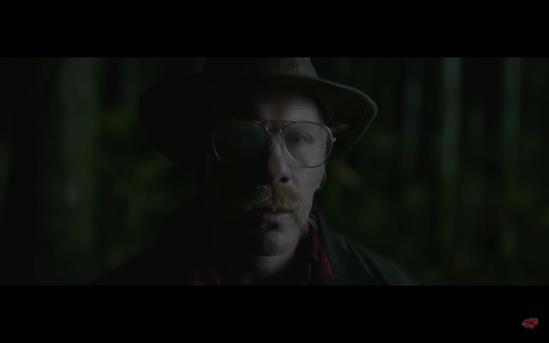
The up and coming young actress, Jules Willcox (“Dreamkatcher”) stars in the lead of Jessica who hasn’t have a friend in the world, alienating herself from her former life and her parents with a sudden escape to the Oregon wilderness.  The physically demanding role withstands the brunt of constant attack, whether from Marc Menchaca’s unnamed assailant character or the natural elements of the forest that include from the massive rapid rivers and torrential rains to the smallest of roots that spear her bare feet while on the run.  Willcox also brings to the role an indistinct mindset, jumbled with the lingering and complicated suicide of Jessica’s husband, paranoia, and an instinctual reaction to survive, especially through Willcox’s eyes that arch from fear to fortitude.  To really envelope Willcox in that unwarranted fear of harm and pushing her character into the unknown of the adversarial complex that is mother nature is Marc Menchaca as a conniving creep looking to do as much pleasurable damage on his bogus business trip as possible.  Menchaca also looks the part, resembling an out of place 70’s-80’s serial killer with round thin-framed glasses and a moderately bushy handlebar mustache overtop a sturdy frame.  Now while these attributes are not indicative to just serial killers, they sure as hell work well on screen to really sell the intensity that Menchaca delivers as a faux Ned Flanders type nice guy, a sheep in a wolf’s clothing so to speak, who acts a lure against his prey before venomously striking.  The small cast rounds out with Anthony Heald of the Anthony Hopkins “Hannibal” films in a small, yet uncharacteristic, good guy role as a hunter caught in the middle of Jessica’s situation.

While suicide might be the catalyst that compels Jessica to drive into the middle of nowhere, Matthias and Hymans only utilize the power theme as an instrument against Jessica’s psyche.  Jessica runs and hides from polite and comfortable society, but the recently widowed soon discovers that she can’t outrun her past as she hits a perverse wall constructed in the form of a man of sordid pleasures and sociopathic tendencies.  Her kidnapper becomes, in a way, her therapist who, at one point, pins her to the ground and scrolls through the personal photos on her tablet, forcing her to talk about her husband up to the point of his death, and consistently throughout the film that his actions were cowardly, removing the blame from her and onto him while emphasizing her tremendous guilt for not seeing the signs earlier.  “Alone” blossoms a wildly curative dynamic that encourages Jessica to then defend herself and her husband’s memory by standing up against not only the man’s relentless chase, but also her guilt.  The thick Oregon setting becomes a security blanket, sheathing her endless dismay, but the forest is actually does more harm than good for Jessica.  Only when does Jessica steps into a wide clearing of lumberjacked tree stumps does hiding from all the pain and torment become no longer an option as she makes her last stand against her attacker, unloading her fear, anger, and guilt upon the man by exposing him as an oppressive killer. While immersed in watching, “Alone” will deprive oxygen from your body that’s desperately gasping to fill your lungs with air in every harrowing chapter, but “Alone” is a breadth with a throng of digging out of despair overtones and a conduit for self-repair that’s unraveled symbolically through the afflictions of bona fide sadism.

“Alone” rises above the call of arms against predatory men in this thrilling remake from John Hyams, releasing into Theaters and VOD on September 18th from Magnet Releasing. The rated R, 98 minute feature will not have the A/V specs critique due to the digital screener, but Federico Verardi (“Z-Nation”) grasps the elegant threat of the woods by using drone shots to shoot the very tippy-top of the swaying trees that conceal the ground, as if obscuring the atrocity being committed below, and applying low-contrast to make insidious hard shadows against green lush that turn beauty dark and deceitful. *Director John Hyams has noted the rapid’s scene where Jessica temps fate to escape her pursuer was practical and performed by stuntwoman Michelle Damis and though looked a little off around the Jessica’s unsubmerged profile as she’s whisked away down the river, the effect is 100% legit. “The Pyramid” and “Becky’s” Nima Fakhrara scores a low-impact tremble for most of the feature with Jessica’s running through the woods is accompanied an equally low-impact drumming, letting the ebb and flow of resonating forest ambience engulf much of the soundtrack to solidify it as a correlative character; even the end credits is purely nature’s ambient noise. Since “Alone” is a brand new feature, there were no bonus material or bonus scenes during or after the credits. “Alone” knicks the core of vulturine power, but turns the tables toward more feminist revelation to fight and take back one’s life.

*Correction: Previously stated the rapids scene was CGI.