EVIL Rides Murderously on the “Highway to Hell” reviewed! (Visual Vengeance / Blu-ray)

“Highway to Hell” on Blu-ray from Visual Vengeance!

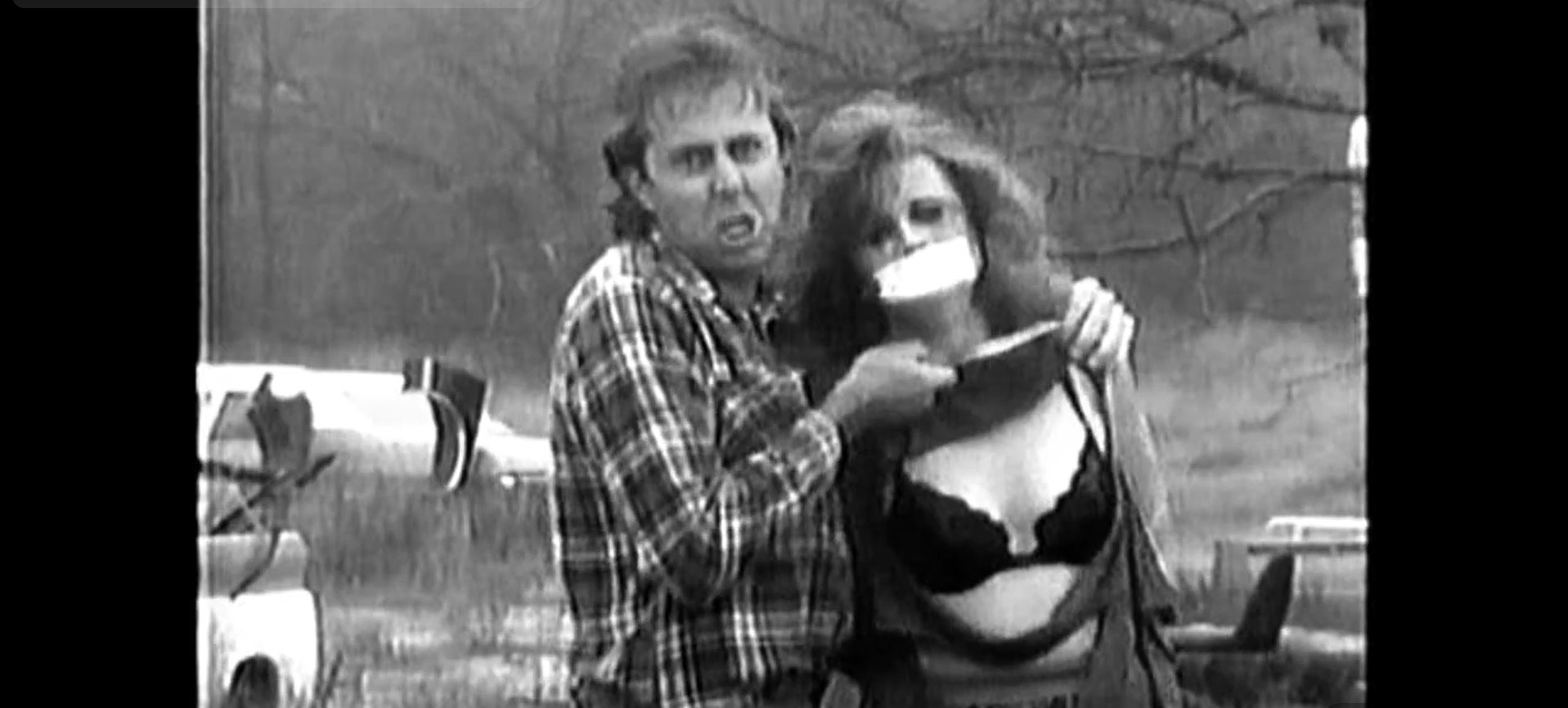
Prison escaped, serial killer Toby Gilmore treks across the Midwestern terrain killing innocent people to take what he needs to retain his freedom.  City photographer Fran Tucker travels to the countryside to visit her family.  When the two collide, Fran is taken hostage after Gilmore shoots a man down on a road rage whim and he keeps her alive because of his loneliness inside a jail cell for years.  As the bodies pile up on Gilmore’s path toward freedom, the keen photographer will use ever clever trick in her repertoire to get away from a maniacal, yet steely, murderer with no sympathy, no remorse.  Sheriff Earl Dent stopped Gilmore once before and regrets not finishing the killer off when he had the chance.  Now, Dent won’t make the same mistake twice as he’s hellbent on stopping Gilmore once and for all before anyone else falls victim to Gilmore deranged acts of violence. 
“The Abomination” and “Ozone:  The Attack of the Redneck Mutants” filmmaker Bret McCormick strays outside the supernatural confines of horror and into a different kind of terror with an escaped prison and serial killer on the loose, titled “Highway to Hell.”  McCormick helms the 1990 release thriller under the pseudonym of B.A. Jenkins with writer Gary Kennamer penning his debut screenplay.  The story was set on the same near by set locations as “The Abomination” and “Ozone:  The Attack of the Redneck Mutants,” such as in the Poolville, Texas area as well as Dallas, Texas.  If you’ve seen all three of McCormick’s films, you may recognize some of the locations in the same shot angle.  McCormick also produces the film but also in a pseudonym of Max Raven, a regular alias used the aforenoted productions.  Mars Film serves as the production studio for the low budget, regional thriller.
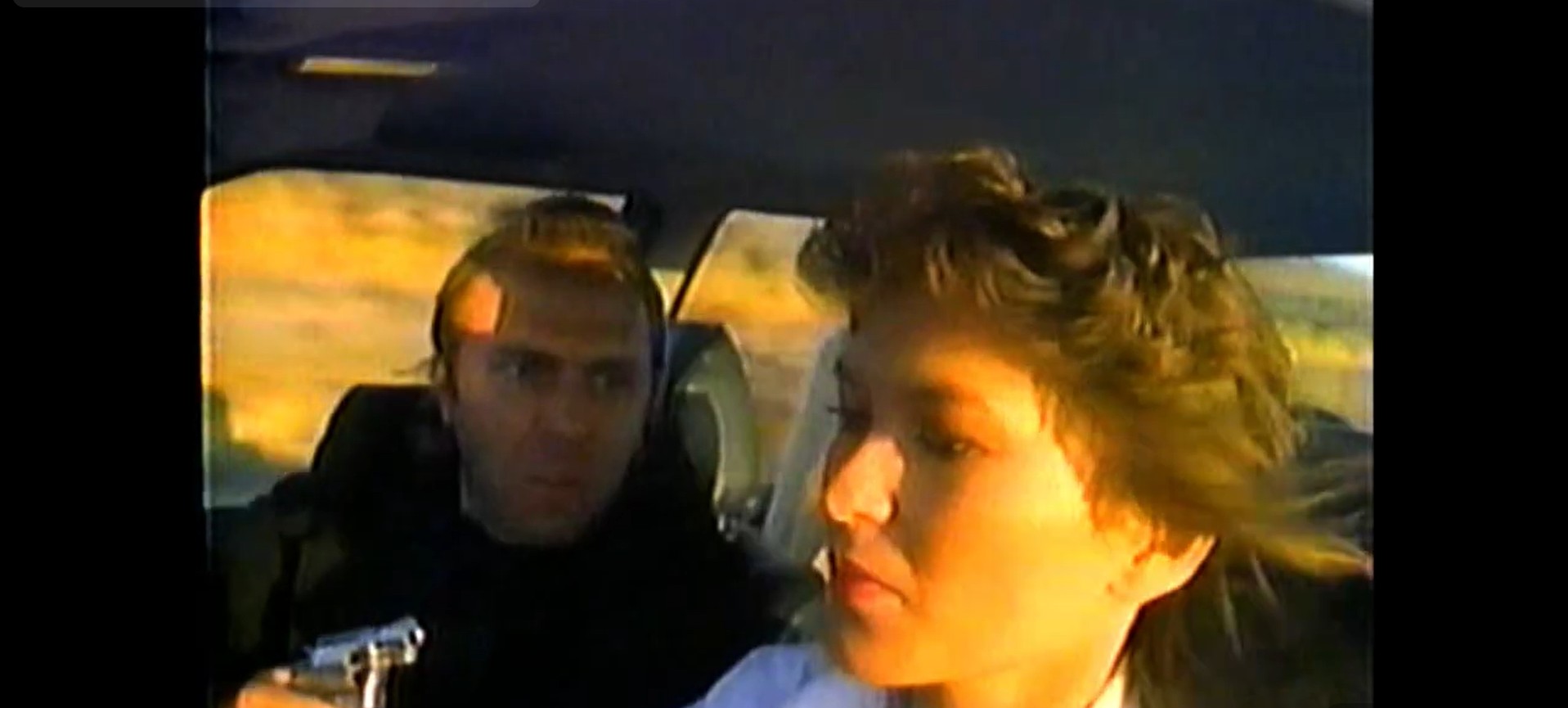
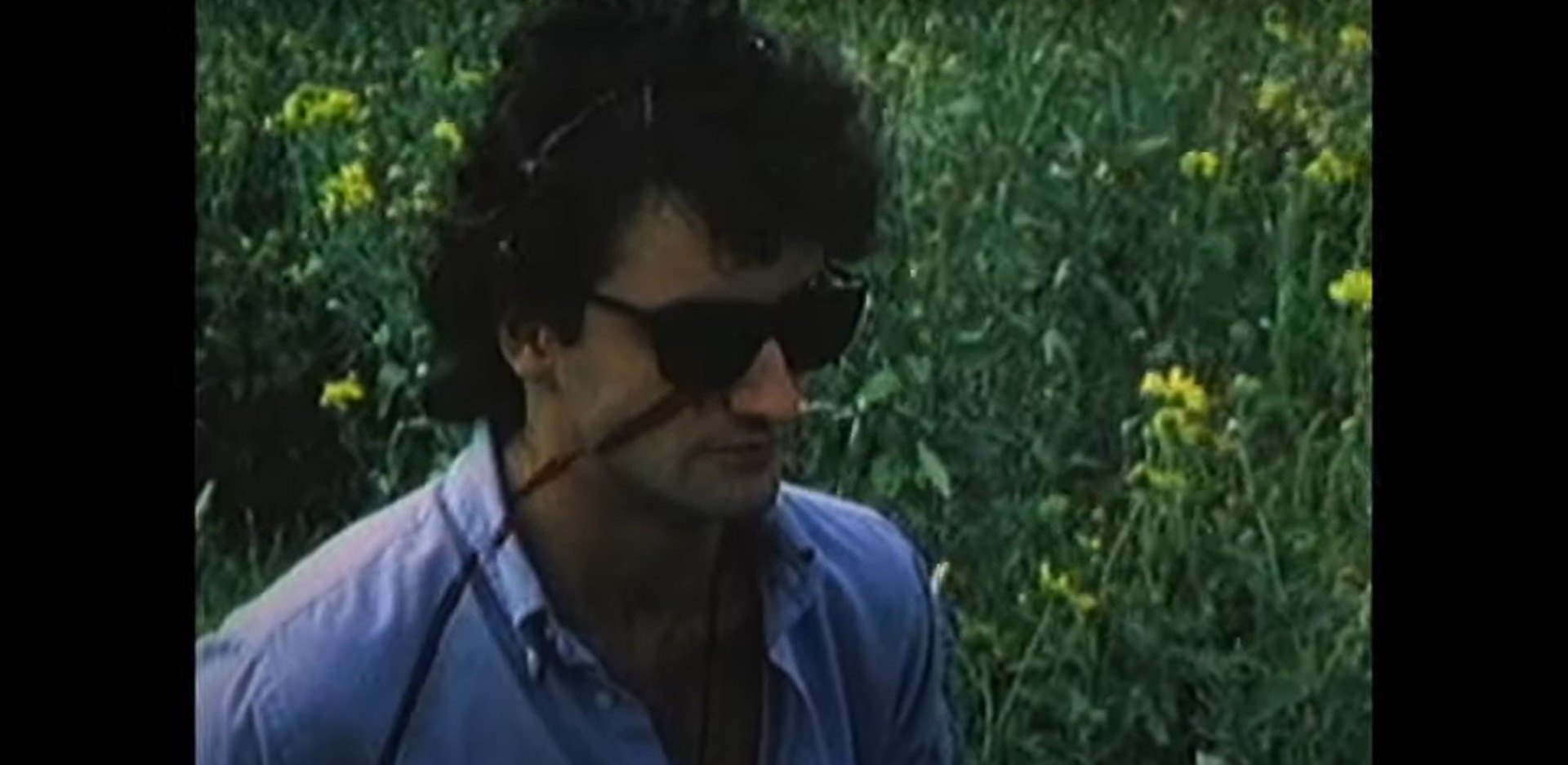
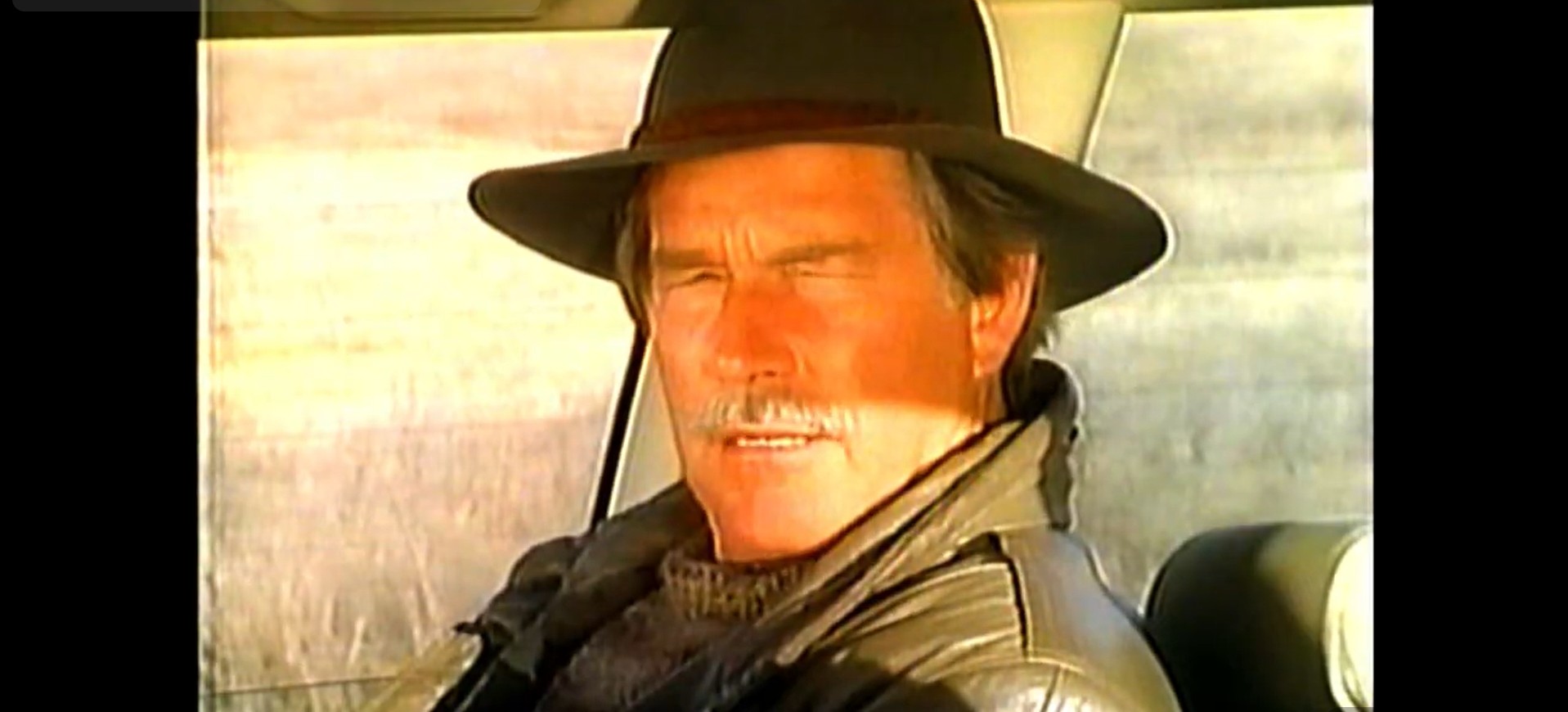
Aside from a large supporting cast of Gilmore whim fodder, a murder spree that’s shows no discrimination, “Highway to Hell’s” cast is chiefly three principal characters, all beginning with Toby Gilmore’s escape from prison involving using stolen jail keys, killing a guard, pilfering the guard’s gun, and absconding on foot through the western landscape.  “Reanimator Academy’s” Benton Jennings, who has since “Highway to Hell” has found success as working up through the minor roles of eclectic of projects, had free reign to mold serial killer Toby Gilmore and the result is a generously entertaining dose of controlled chaos as Gilmore quirks and tics as he runs across the parched Texas land provide insight to his mental mindset but Gilmore is no dummy when he’s calculating next steps with hostages that ultimately benefit his survival.  His guard corpse looted snub-nosed pistol becomes an extension of his madness as he uses it to takeout anyone who puts a pinky toe in his path.  Up against him, his main arch nemesis, is Sheriff Earl Dent, played by an American action star mostly notable for his roles in Italian cinema, such as “Ninja Commando” and “Orgasmo Nero” to name a couple plus with a major role in U.S. “Evil Spawn” with John Carradine.  Harris and Jennings share very little scenes together and the ones they do share are in flashback of Gilmore’s apprehension, one that the Sheriff regrets not putting a bullet in between the killer’s eyes instead.  The other Gilmore antagonist Fran Tucker, an unfortunate photographer on her way to see her family caught in the middle of Gilmore’s escape.  Blue Thompson (“The Abomination,” “Ozone:  The Attack of the Redneck Mutants”) provides Fran’s beauty that strikes Gilmore’s perverse chord after his long jail time stint, providing him the only reason to keep her alive, but Fran isn’t one to backdown and give up her life so easily as she is involuntary thrusted into a misadventure of carnage and death  with no one coming to save her. 
Anchor by Benton Jennings horridness and traversal storyline, “Highway to Hell” doesn’t become stagnant because of its independent and minute budget.  The editing, performances, locations, effects, and overall story are more coherent than not without mostly any confounding measure. There are a couple of plot holes that could have been addressed to sate the quizzical audience, such as how did Toby Gilmore end up with jailhouse keys?  Or how he was able to explode motor vehicles with one shot of his puny revolver handgun?  Gilmore must have been one crack shot.  Yet, the sensationalized key points and action add mystery and cult film nodes to McCormick’s ambitious westernized highway thriller that pits good versus bad, morality versus justice, and insanity versus sanity.  Crackerjack editing from Gregg Phillips and stylistic measures by McCormick salvage any misgivings about the budget or special effects in what is a competent and coherent, yet strangely fascinating, terrain and terror tensioner that has little representational or metaphorical value but high on entertaining merit. 
Visual Vengeance highlights another Bret McCormick Texas hoedown of horror and exploitation with “Highway to Hell” on a new Blu-ray transfer.  The AVC encoded, 1080p resolution, BD50 uses the original SOV tape master and what it lacks in saturation, as tapes usually do, makes up for in quality with a near flawless image quality for a magnetic tape.  Details are not terrible defined, typical of a tape, but there is great delineation and discernibility with all objects in screen.  As mentioned, hues are muted because of analog limitations and the inability to touchup the tape itself.  If a digital transfer was made, doesn’t look like much was done to touch up the color, and perhaps has purposefully retained its analog aesthetic, presented in a full frame 1.33:1 aspect ratio.  The LPCM stereo 2.0 English track offers a dual channel ranged output that has clean and clear dialogue with no issues of hissing, crackling, or any other vocal obstructions.  Overall truck lacks vigorous opportunity within the action context, such as gunshots and explosions, but, again, keeps with the original presented elements of a retro SOV exploitation.  Optional English subtitles are available.  Visual Vengeance delivers another jampacked Blu-ray full of special features that include an audio commentary by Bret McCormick, an interview with McCormick, interview with actor Richard Harrison Red Hot Asphalt, interview with Blue Thompson Road Trip, interview with screenwriter Gary Kennamer Writing a Road Map to Hell, interview with actor Tom Fegan, an image gallery, Gary Kennamer directed movie “Redneck County Fever” from 1992, Bret McCormick interview on Kennamer’s “Redneck County Fever” film, an interview with Kennamer on his movie, a commentary rack with McCormick and Kennamer on “Redneck County Fever,” Kennamer interview on his film, and other Visual Vengeance trailer previews.  Inside the Blu-ray, there’s a stick-your-own, retro VHS sticker sheet, a folded mini-poster with original art, and a reversible cover sheet with new art from Jolyon Yates as well as the original VHS artwork on the reverse side.  The Blu-ray comes in a clear Amaray case sheathed inside a limited-edition O-ring slipcover with more new illustrated artwork almost in a Ghana style fashion.  The 90-minute film is unrated and has region free playback. 

Last Rites: My personal favorite of the Bret McCormick catalogue, “Highway to Hell” is a SOV that’s simple yet effective with its western veneered thrills and a maniac making his will to ride-or-die freedom.
“Highway to Hell” on Blu-ray from Visual Vengeance!

The Little EVIL in the Cupboard. “The Abomination” reviewed! (Visual Vengeance / Blu-ray)

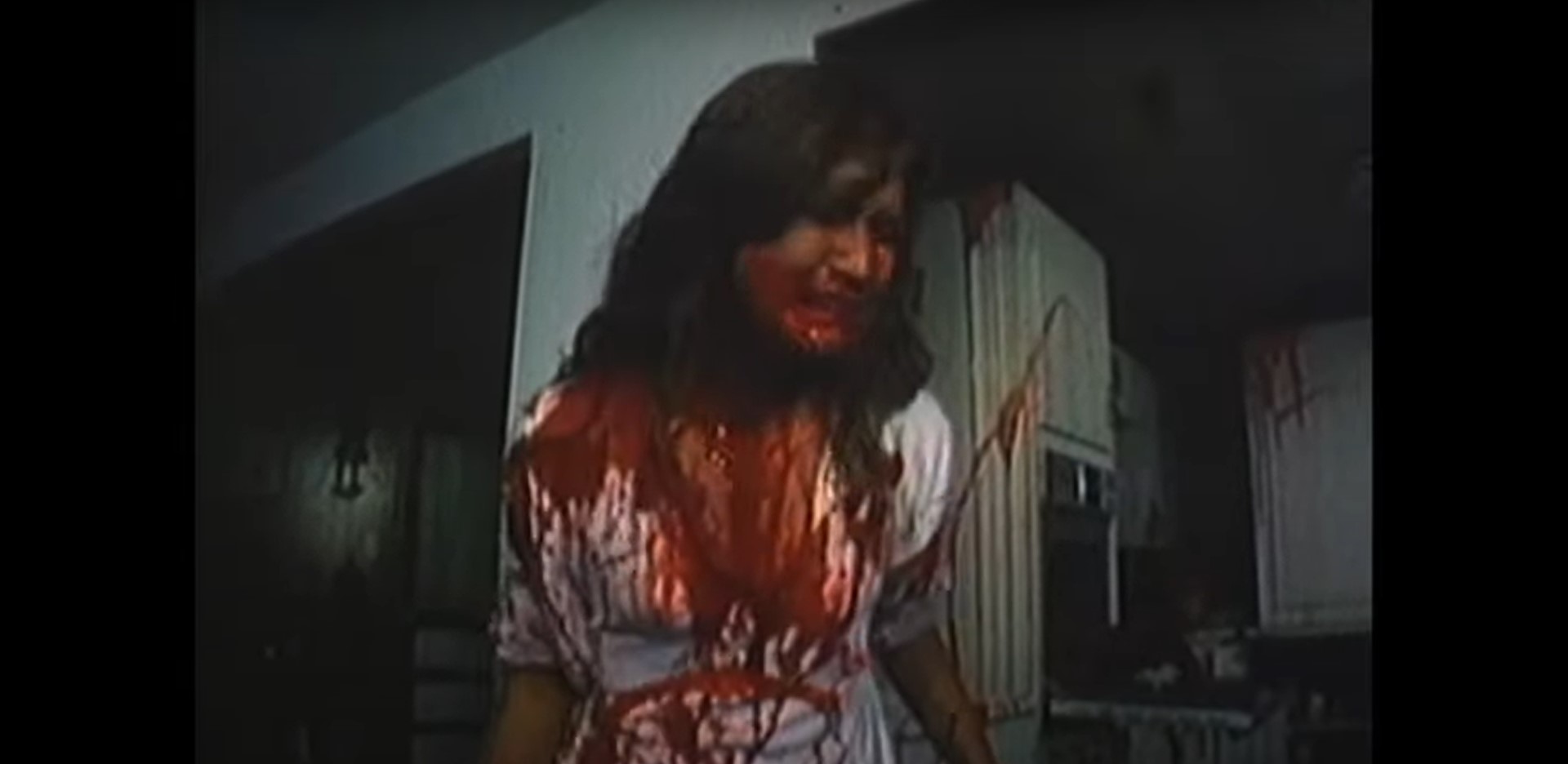
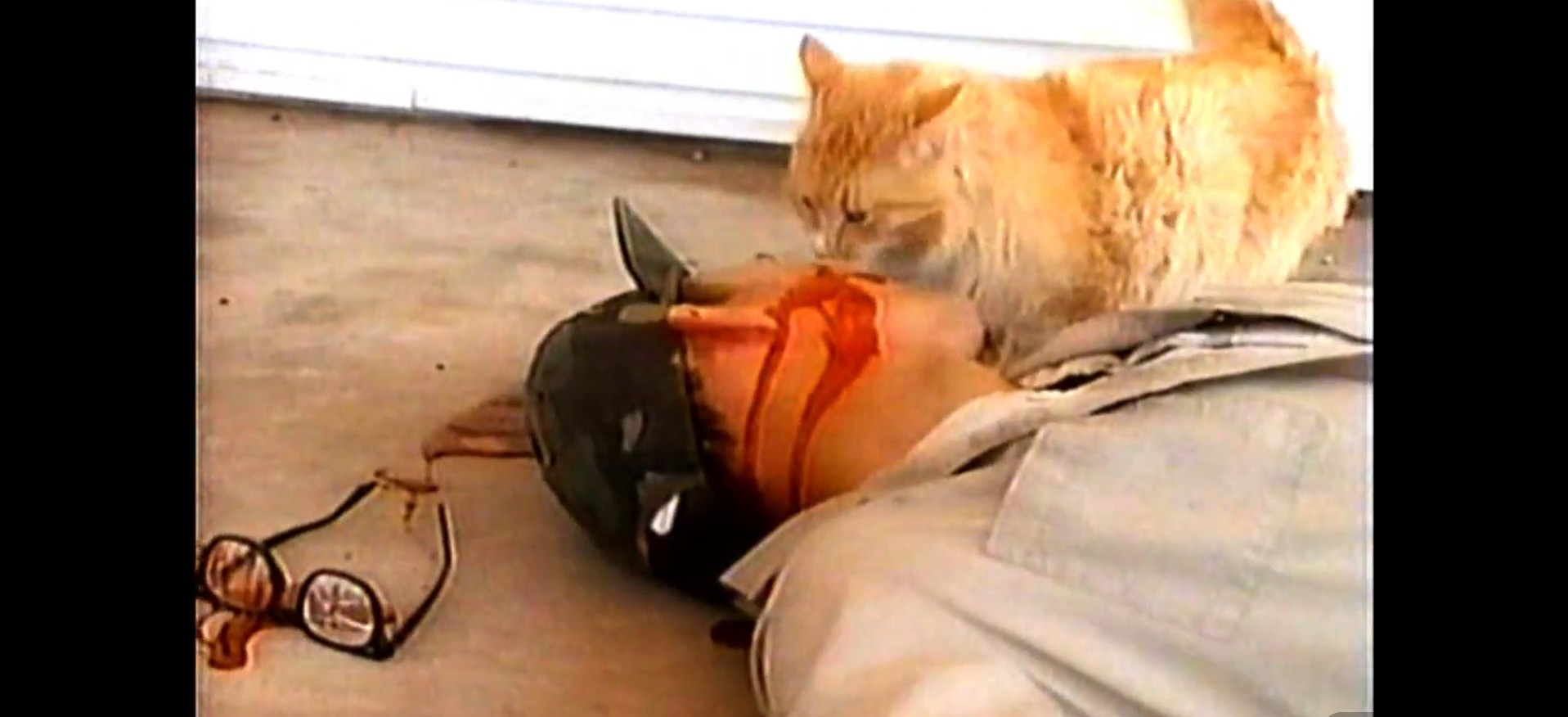
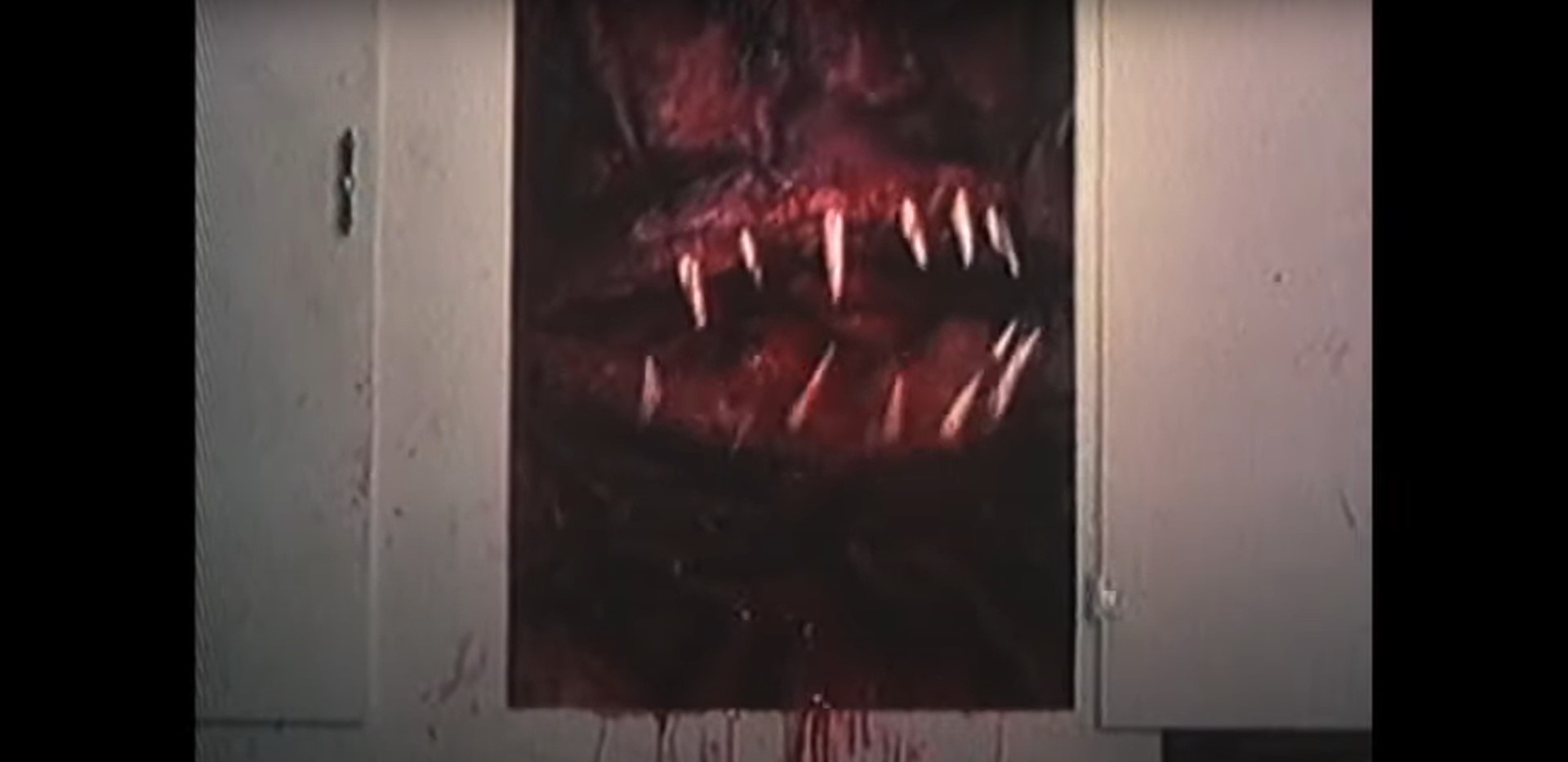
Cody’s devout mother has a large tumor growing in her lung.  Her piety believes will cure her from the ailment or so says the televised evangelical priest Brother Fogg who once listened to her plea.  When she coughs up the tumor onto the kitchen floor one night, the relieved woman becomes ecstatic having been miraculous cured by brother Fogg’s channeling of the holy spirit and her $20 donation to him but little does she know that the tumor is actually a blood lusting demon that slithers down Cody’s sleeping throat, turning the young man zombified and obedient to the demon’s ever starvation for human blood and flesh in order to grow.  Inhabiting Cody’s house like a shell and monstrous with tentacles and large teeth chomping from out of cupboards and the top loading washing machine, Cody heads out into the world to brutally murder his own boss, friends, and even family to serve and feed the abomination living in his home.

Tantamount to “A Little Shop of Horrors” and released the very same year as the Rick Moranis remake of the original Roger Corman killer-plant picture, writer-director Bret McCormick waters to grow his gelatinous creature-feature “The Abomination” onto the home video market.  Ultra-violent and gory against the more, what would be considered in comparison, family-friendly and Hollywood produced rowdy giant flytrap ravenous to devour victims, “The Abomination” is by no means a musical but delivers a tone of tentacle-laden terror around a subtle theme of mental health.  Shot in Poolville, Texas, from the then future filmmaker of “Repligator” and “Highway to Hell” under his pseudonym of Max Raven, the guts-galore indie was also produced by McCormick as well as with longtime partner Matt Devlen, director of “Ozone:  The Attack of the Redneck Mutants” and producer of “The Upstairs Neighbor” with “Woodchip Massacre” and “Cannibal Hookers’” Donna Michelle Productions picking up the film for at-home VHS distribution rights.

However unlikely it may seem with these types of splatter films and with a cast credited with different stage names and pseudonyms, “The Abomination” is undoubtedly a family affair.  Bret McCormick has employed a great deal of his once intact family into filmic roles as creature fodder, which some of us would like to dish up on a daily basis.  Well, McCormick did it from his brother Brad McCormick as Ike, mother Victoria Chaney (“Christmas Craft Fair Massacre”), former father-in-law Van Connery, and even his wife, now ex-wife, Blue Thompson (“Ozone:  The Attack of the Redneck Mutants,” “Highway to Hell”).  Relatives appear game to be in a next-to-nothing splatter horror that offers a soup kitchen of out of body organs being pitchforked fed into gaping jaws living a cupboard.  Performances render suitably as bored rural clodhoppers who fear God, work at junkyards, and give into evangelical sermon with Cody (Scott Davis) and his friends often the more sensible foursome of youth yearning for fun and beer as they race down dirt roads and yuk it up on the back of their 4×4 truck beds.  All of the dialogue is done in post with ADR and so we’re not offered the actors’ original gutturals, conversations, and screams with the silver lining in the audio track being a clean post-principals photography recording of the dialogue.  One shortcoming of the dialogue track lies with Cody’s mother Sarah, played by Jude Johnson (“Tabloid”), with earsplitting screams set on linger as she discovers the truth.  With a small, intimate cast with most being within McCormick’s inner circle, every character is essentially core to the story with the rest being rounded out with performances from Suzy Meyer, Gaye Bottoms, Matt Devlen, and Rex Morton as the equivocally moral televangelist Brother Fogg.

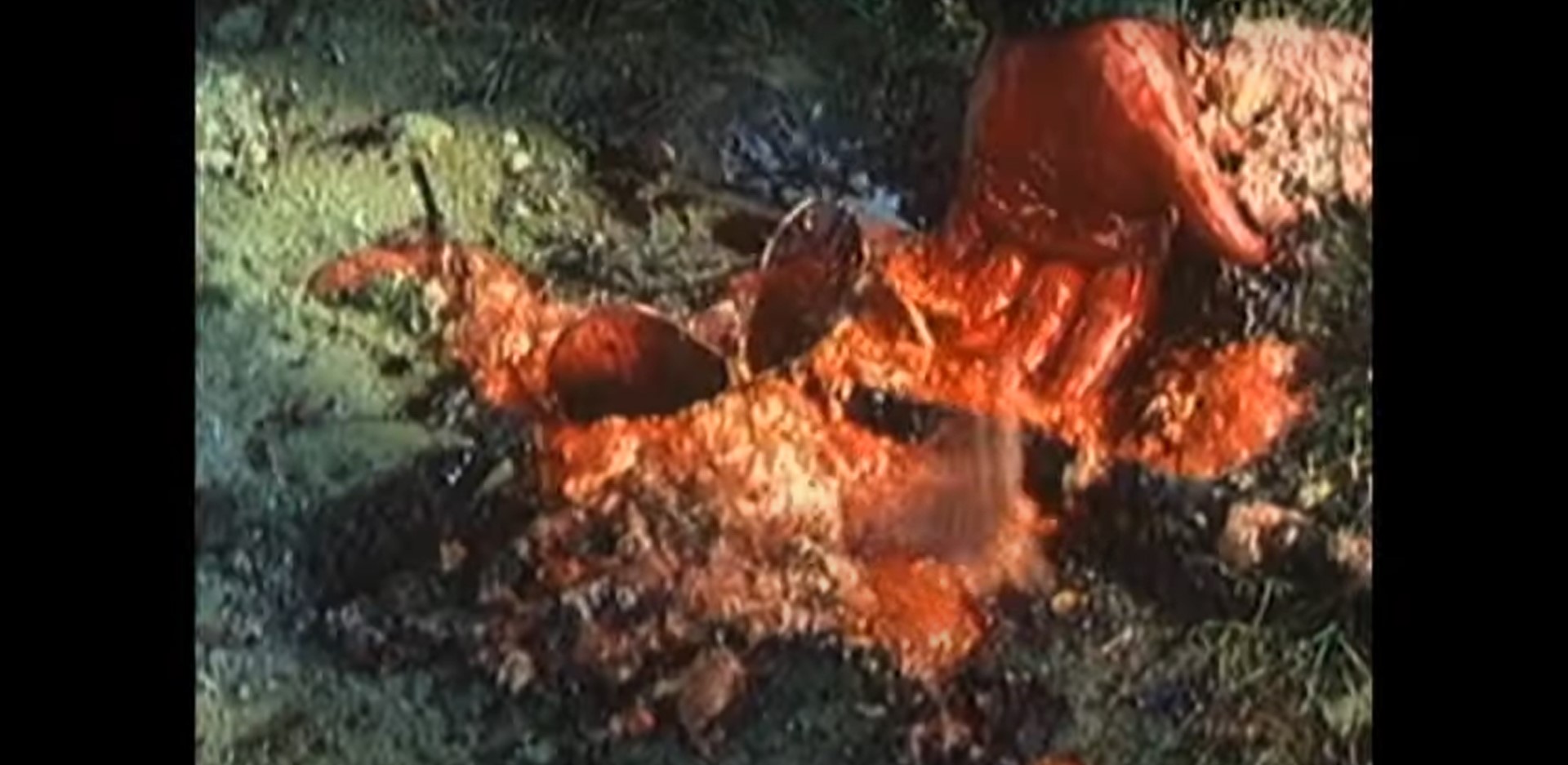
There’s something to be said for low-budget, do-it-yourself, indie horror films with exaggerated and practical special effects.  “The Abomination” is one of those said features that’s’ more splatter than substance but the splatter and the palpable puppetry are the driving force behind McCormick’s attempt to enter the gonzo-gory market of cost nothing commodities popular at the time.  “The Abomination” evokes the very truth of the titular creature without being ambiguously metaphorical, becoming a character, much like Audrey II in “The Little Shop of Horrors,” in itself even if it didn’t talk or sing with boisterously briar.  Before delving into the core narrative, skipping the opening dream sequence/montage may be in your favor as the series of random images of grotesque violence, splatter, and such sum up the film’s entirety in a disordered delusion of dreams. If you can fast forward the montage, the opening secondary setup of Cody and Dr. Russell’s voiceover conversation will suitably add the necessary layer to peel back not only to expose the carnages to come but also sneaks in a thought-provoking twist that will leave audiences reeling over the bookend voiceover conversation between a distraught Cody and the doctor in the final moments.  Not to be exceedingly overshadowed by the immense deluge of blood, the pint size pivot juts out like a nail in a floorboard, insignificant across the entire square footage but once you step on it, the punctured wound leaves an unforgettable impression that makes the entire floor feel the need to be tiptoed around because of the dreadful sensation of sharp, pointy objects covering the entire area.  Narratively, the linear structure works as a son and his mother struggling on the precipice of her cancerous death while believing the televangelist Brother Fogg’s wisdom and spiritual healing will come to her rescue before her demise, but the one element that doesn’t quite work, or is more so unclear, is Brother Fogg’s part in the much darker side of the abomination’s arrival.  In scene, Fogg’s has all the hallmarks of a fire and brimstone swindler but no other clues hint to his involvement in the scourge spawn other than a few dropped lines by other indirect characters that more disconnect the dots then link them.

You have to continue to love Visual Vengeance for their pastime presentation of splatter and obscure VHS films.  “The Abomination” slithers out of incubation as one of their latest releases onto a full-bodied Blu-ray with new artwork, new bonus features, and a new high-definition transfer! The AVC encoded, 1080p, BD50 is presented in a 1.33:1 aspect ratio. McCormick filmed “The Abomination” on Super 8 but had converted the feature through a U-matic VHS playback, resulting in two very different technical looks with the grainy celluloid of a Super 8 integrated into the softer gauze and tape degradation of VHS. We usually see this in the reverse with modern releases being played back through VHS to obtain that SOV/retro look. Visual Vengeance continues to preface all their releases with a warning of quality with their obtaining the best possible standard definition tape masters that may still render poor video and audio quality. A/V does convey a softer simulacrum and a pallid color palette with the occasional tracking lines and even seldom frame damage, but the overall finished product is visually rock solid. The English Dolby Digital stereo mix has the same pallidity as the video but is balanced within the amplification ilk where fading or becoming distorted is virtually nonexistent. Automated dialogue replacement as well as overstepping foley is evident from the start that does provide an undertow of clear consistency without fluctuation. Soundtrack and sound design by Kim and Richard Davis and John Hudek really shines through with a pulsating ghoulish synth-piano key that hints at giallo undertones. Optional English subtitles are available. Visual Vengeance really did outdo themselves with sizeable supplementals beginning with a pair of commentary: Bret McCormick joins Visual Vengeance’s Rob Hauschild and Matt Desiderio while Tony Strauss of Weng’s Chop Magazine goes solo. There’s also a new feature-length interview with McCormick Monster Kid Movie Maverick that entails McCormick starting his life story from Super 8 home movies to the present, a new interview with Blue Thompson, a new interview with Victoria Chaney, and an interview with Michael Jack Shoel of the original Donna Michelle Productions’ VHS distributor. McCormick provides a new location tour between his involvement in “The Abomination” and “Ozone,” raw footage of the testing the tumor and the death of Cody’s boss, McCormick’s Super 8 movies from his youth, a multi-page text screen interview with “The Abomination,” a behind the scenes image gallery, and a trailer archive. Release number 10 on the spine, this Visual Vengeance piece of home video art comes with The Dude Designs’, aka Tom Hodge’s, illustrated rendition of “The Abomination” with phallic tentacles, blood-stained teeth, and a mustard yellow title. Sheathed inside is an even more beautiful front cover art adapted from the iconic scene that left a lasting impression with this reviewer. The uncredited cover, or uncredited because I could not locate the signature or the credit, possesses more depth in detail than the comic book-esque slipcover, a comparable contending front cover from the original VHS art on the reverse side. Visual Vengeance provides hefty insert material that not only includes their staple retro sticker sheet but also a 14-page, black and white official comic book illustrated by Marc Gras, a trifold essay entitled The Tumor that Came to Fort Worth: Apocalypse on a Budget by Tony Strauss, and a folded mini-poster of the front-facing cover art inside the clear Blu-ray case. The disc art has the same The Dude Design slipcover art cropped to fit the BR disc. Bret McCormick fed his ferociously tumorous feature with all that he had, spellbinding with shocking serration, and now three and half decades later, Visual Vengeance celebrates McCormick’s cancerous creature with one hell of a soul-swallowing souvenir!

There’s Nothing Abominable About “The Abomination” Release!