Elizabeth Bathory Evokes the Birth of EVIL! “Blood Bitch Baby” reviewed! (Blood Sick Productions / Blu-ray)

“Blood Bitch Baby” Now Available!

What if Countess Elizabeth Bathory, the Hungarian noblewoman and serial killer who bathed in virgin women blood to obtain youth, didn’t die in a prison cell?  What if Bathory was alive and well, living agelessly as one of the demon Asmodeus’s handmaiden to do his bidding, such as selecting a chosen woman to birth the Antichrist?  The countess does just that by posting a job position of caregiver with Jenny, a unemployed woman with an abusive, greedy boyfriend, responding to the ad.  Selected as the chosen one, Jenny is marked with Asmodeus’s symbol that grants her the power of strength and a craving for human flesh and blood.  After devouring her boyfriend, she meets Iris, a homeless lesbian who witnesses the expedited birth of the antichrist soon after meeting her.  Can Iris and a professor of parapsychology stop the second coming of Satan or will the world be condemned to the Hell on Earth. 
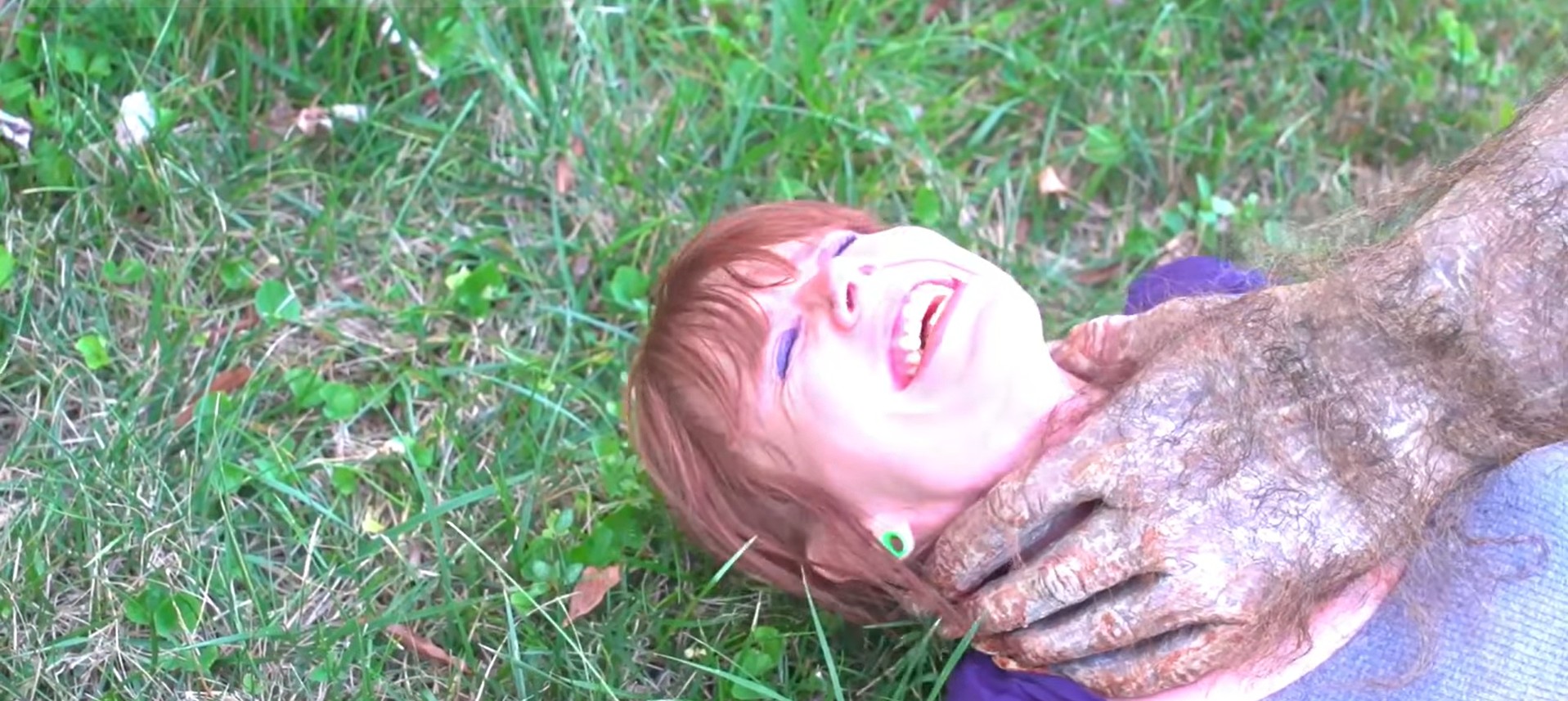
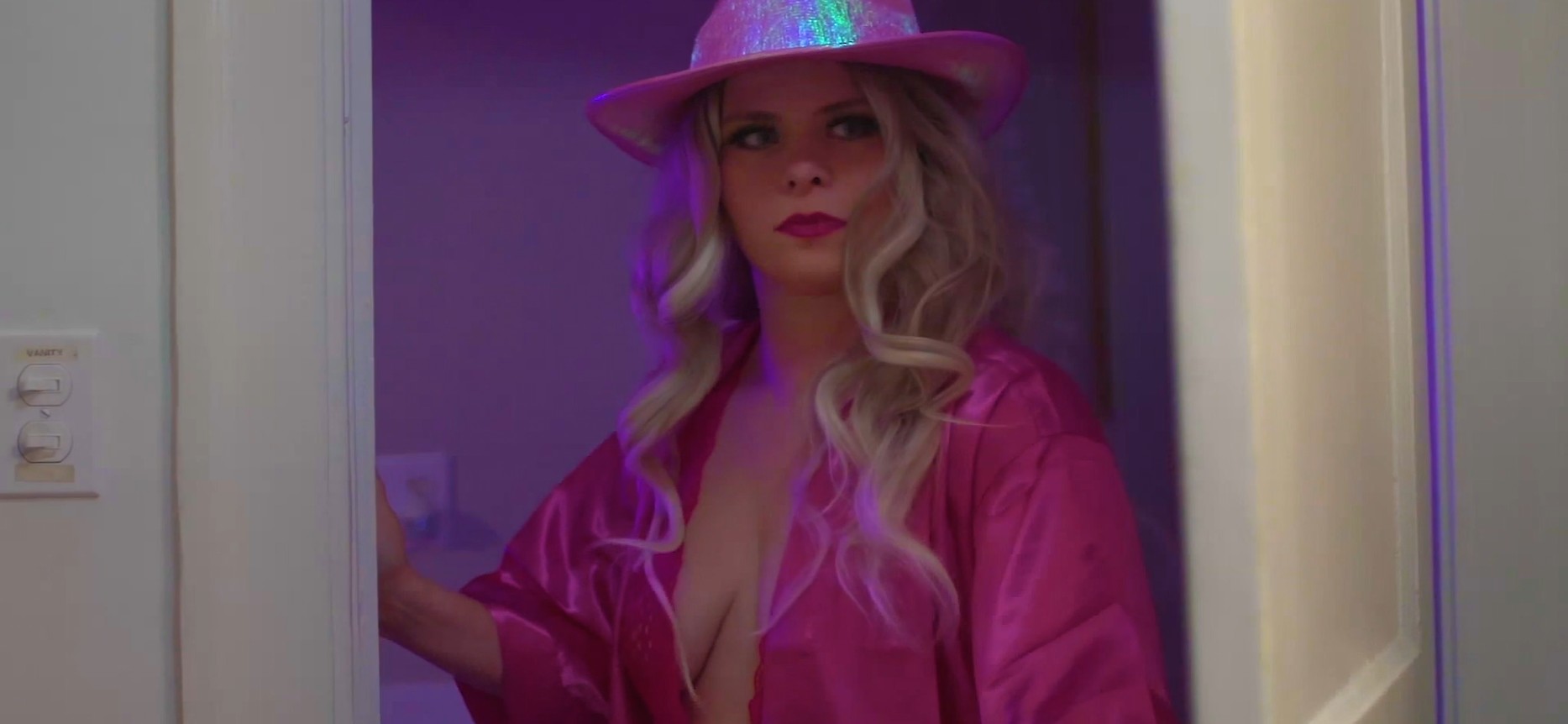
The professional relationship between long time schlocky, low-budget horror director Donald Farmer (“Cannibal Hookers”) and the independent, modern day scream queen Jessa Flux (“Murdercise”) has gone beyond the limitations of a working relationship and into more along the lines of friendship and respect as the two have collaborated on a total of six completed productions from 2023 to date with “Amityville Aliens,” “Darbie’s Scream House,” “Debbie Does Demons,” “Bigfoot Exorcist” and “Shark Exorcist 2:  Unholy Waters.”  The sixth film is the one we’re going to look at today, “Blood Bitch Baby,” aka “Wicked Witch,” provides Flux the opportunity to play a notorious historical figure, the Blood Countess herself, Elizabeth Bathory.  The 2024 released film is also written by Donald Farmer and, if you’re familiar with the cult director’s work, there’s very little money invested into what’s considered a horror spirited feature that takes some liberties with the story.  “Blood Bitch Baby” is produced by the “Coven of the Black Cube” director Brewce Longo under his Blood Sick Productions company.
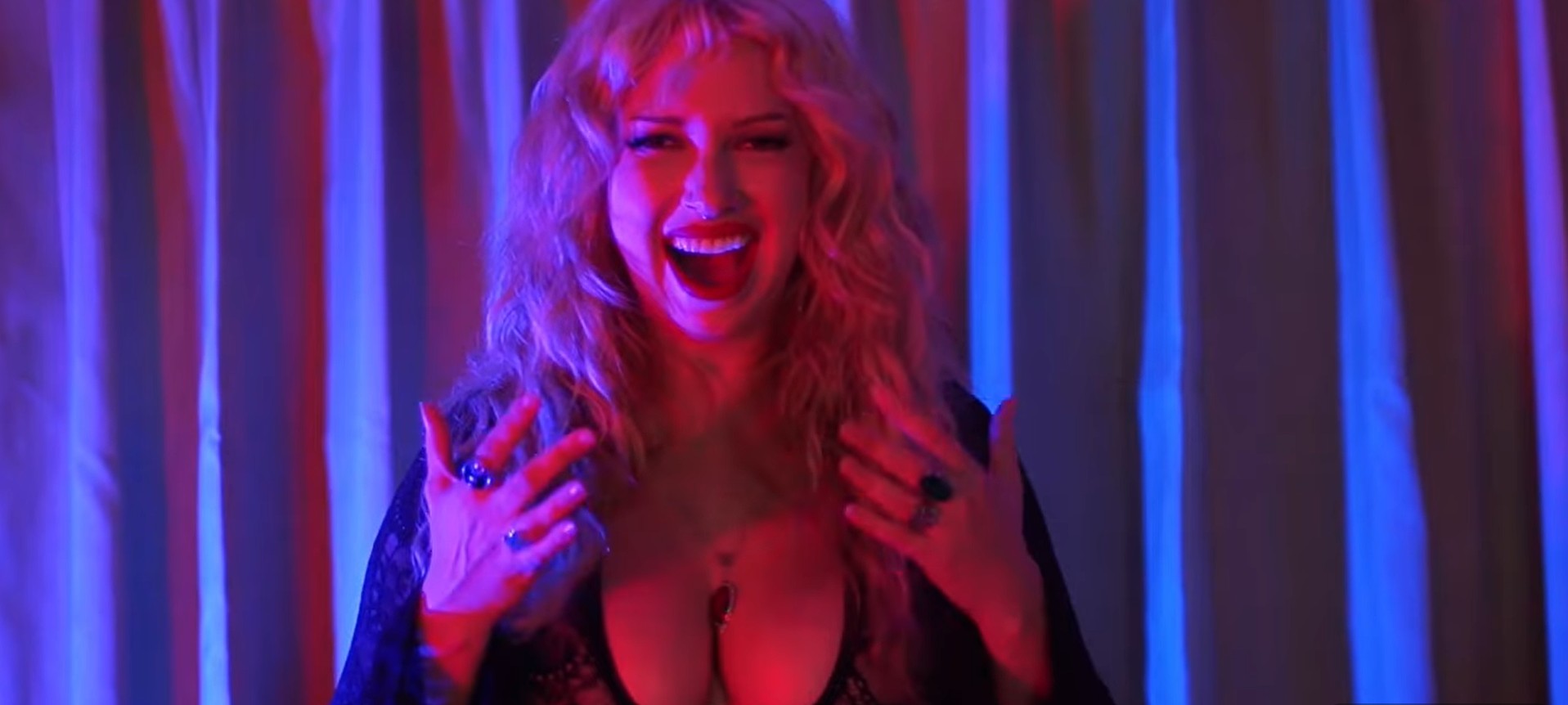
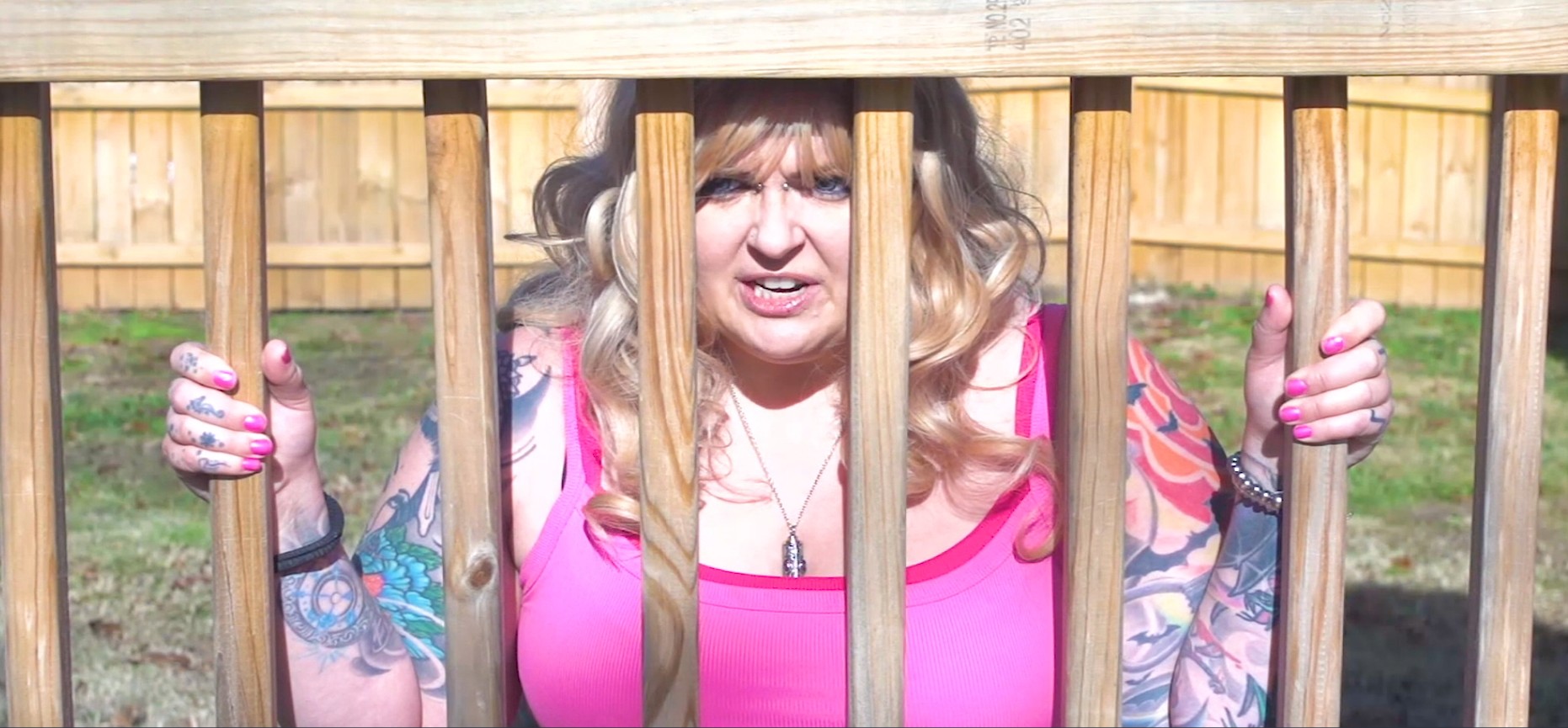
Jessa Flux might headline the movie but that doesn’t make “Blood Bitch Baby” a solo effort as the energetic cast is entirely occupied by Donald Farmer alternative and willing regulars.  Angel Nichole Bradford takes the protagonist lead as the abused and job-seeking Jenny who falls into Bathory’s classifieds trap, ensnared and bewitched to be the biological mother of the Antichrist.  Bradford co-stars in “Crackcoon” and “Darbie’s Scream House” alongside Flux and the petite, auburn-haired actress, in contrasts the voluptuous, curly-blond Flux and who also has a hand in special effects and makeup on these multi-hat productions, has a knack for acting that isn’t monotonic, flat, forced, or with limited range as often some of these cult B-movie actors can produce in attempt to be melodramatic.  When there’s usually Flux and Bradford in the same film together, Mel Helfrin isn’t too far behind as the third into this triple threat of titillating terror.  Helfrin, a vet of horror schlock, also starred in “Darbie’s Scream House” as well as “Night of the Dead Sorority Babes” with Jessa Flux.  The trio really do live up and liven up every scene with enthusiasm for budget horror, hamming it to death for the sake of blood, guts, and sex within its thin plotline structure that often veers off course.  More Farmer regulars in Claude D. Mills (“Debbie Does Demons”) and Joe Casterline (“Shark Exorcist 2:  Unholy Waters”) find themselves in the mix as bite victims of demonic forces.  There’s overperforming, bad performing, and some decent enough thespian to keep progression from staling but there’s definitely a comfortability and jelling within the troupe that sets expectations on a low-level production and a horrendously hackneyed and expositional script.  Jessie Youngs, Ronnie George (“Deadly Dealings”), Fallon Vendette, Marilyn Paige, and Kimberly Cole Zemke (“Debbie Does Demons”) costar. 
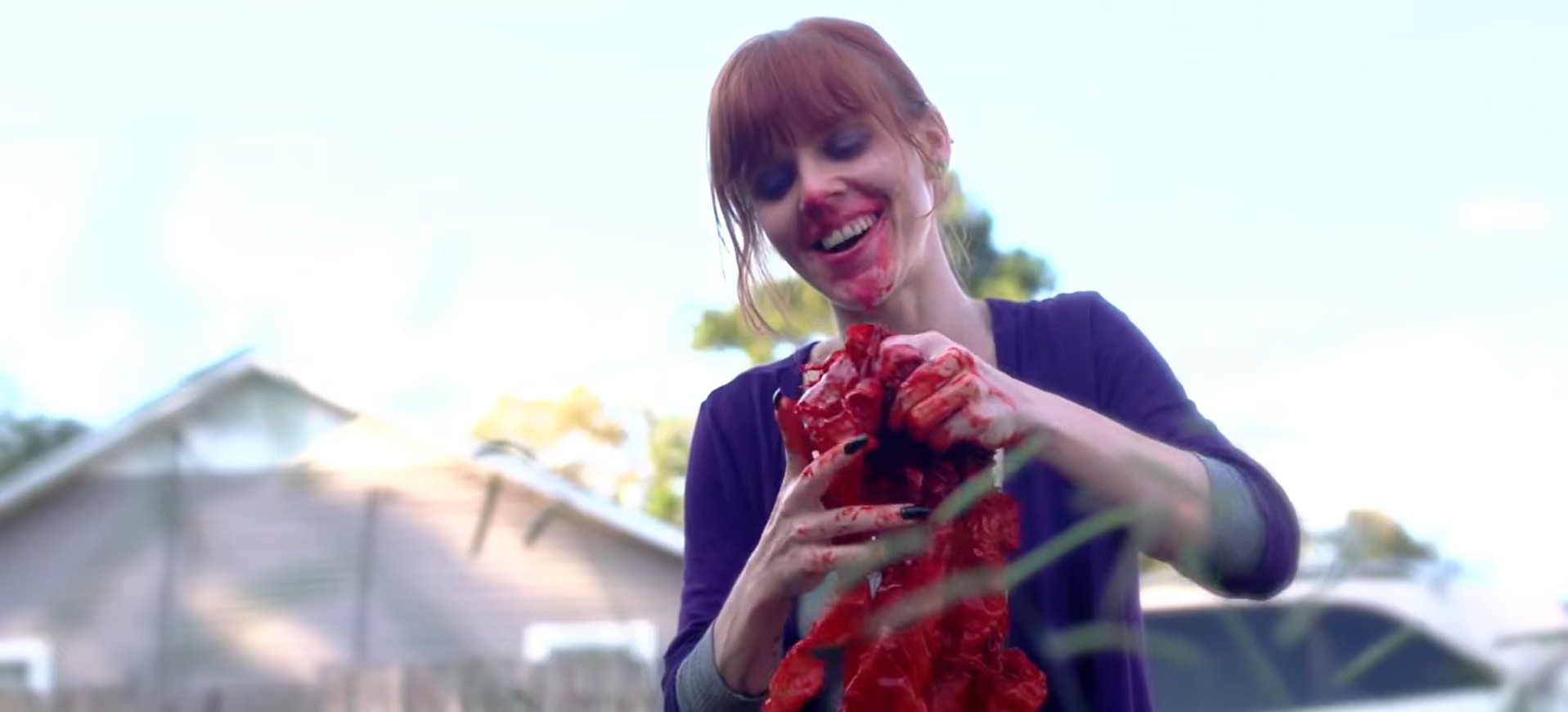
“Blood Bitch Baby” is an alliteration title that makes about as much as the film’s original alliteration title of “Wicked Witch” when considering the story has Jessa Flux in a prologue setup surrounding Elizabeth Bathory’s life post-virginal blood bathing.  Bathory’s deal with demonic forces gives the 16th-century woman what she’s always wanted, youth and beauty, but the agreement is never spoken of again in what’s an integral piece of important backstory to volley the immaculate conception (unless you consider Jenny’s nightmare of a demon raping her the act) of the antichrist.  That’s the theme for the entirety of the film as the story veers and swerves off-course away from a film setup to be about Bathory when really it’s about Jenny as a vessel for antichrist and those around succumbing to the infernal forces that dragon-headed hand puppets in this cost-efficient production.  The film is so strapped for cash that flesh wounds that should result in gaping hole actually grow a slab a raw and discolored meat overtop.  When Jenny eats her boyfriend’s eye, there should be an empty eye socket but what’s there is tumor growth.  The same can be said about Bathory being slashed or bitten in the face by the demon baby as instead of perforating scratches down her face, she too grows a bulbous mass.  Other randomized are added to try and add depth but are terribly too threadbare to fully attach itself with any kind of impression or influence, such as Keller, a Professor of Parapsychology who just randomly shows up at the right place, right time, and Iris, the dope-smoking lesbian who happenstance into a relationship with the recently unattached yet devilishly tranced and impregnated Jenny.  Iris isn’t essential to the story which makes her essentially just a body for sex appeal and for the kill counter.
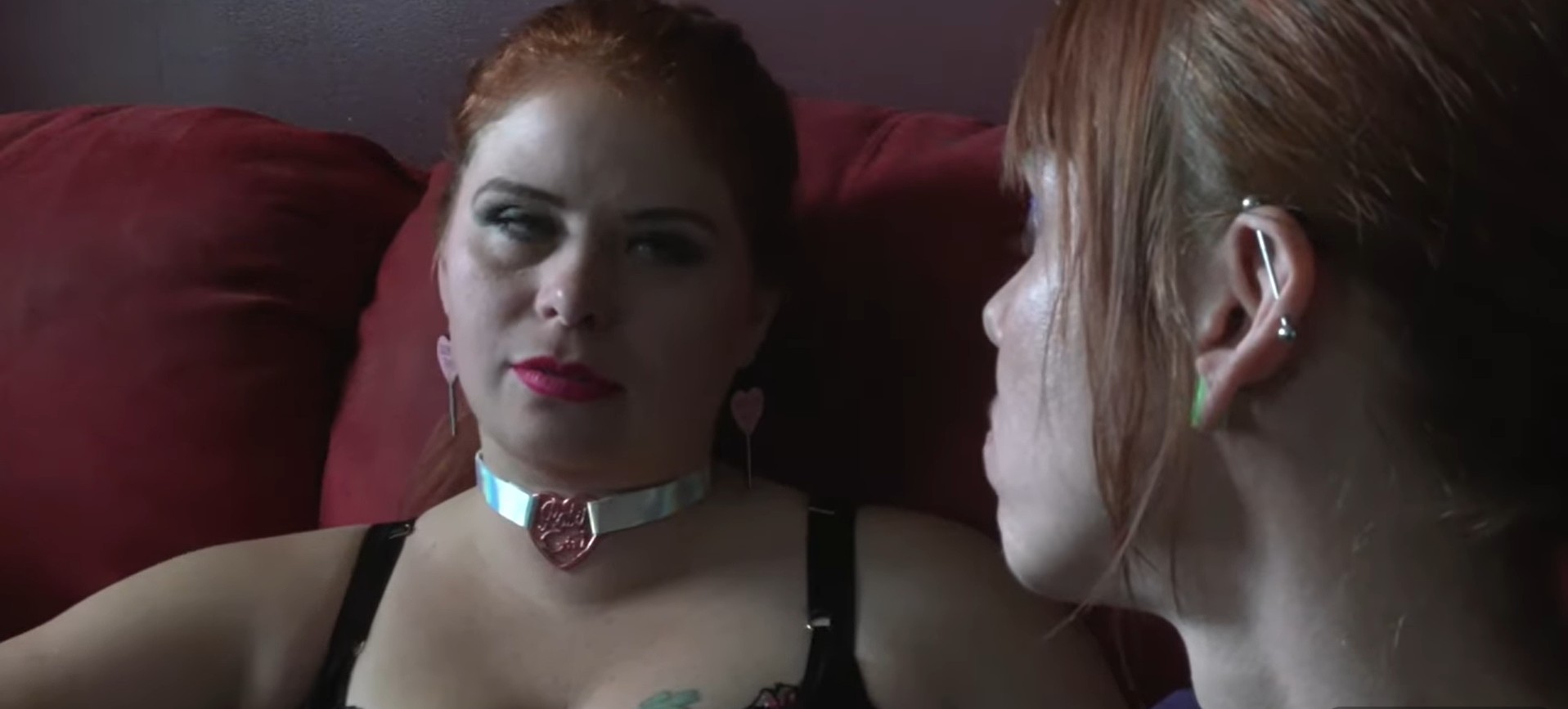
Blood Sick Productions gives Elizabeth Bathory a lifelong change at more malevolence and death in “Blood Bitch Baby” now available on Blu-ray home video.  The AVC encoded, 1080p resolution, BD25 is riddled with colorful gel tints that play havoc in the details, reducing skin and fabric textures with smooth splotches of image posterization.  When using natural lighting or unfiltered key lighting, the details better render through to illuminate the little details, such as skin imperfections and granulated texturing on all surfaces.  Hue changes run rampant with cinematographer Curtis Everitt can’t pin down a singular style, relying heavily on a multi-color use of tinted lighting to feign supernatural surrealism but when edited, the colors change and there are times when there is no coloring at all in certain frames.   The English LPCM 2.0 Stereo is adequate for the release with clear dialogue until the amplified volume static, that’s not filtered out, comes into play, losing some fidelity out of the dual channel.  The audio is overall flat but that’s expected with the mostly closeup and extreme closeup shots that innately don’t have depth.  Range is limited as well with mostly a talking head narrative and ADS demonic creature sounds.  Mike Treblicock and Tim Ritter’s soundtrack pours into the channels nicely, overtaking when needed, such as the dream sequence, and balanced where needed to be defined.  There are no English subtitles available.  Bonus features include a Donald Farmer video introduction with Kasper Meltedhair standing adjacent to him as agreeable arm candy, behind-the-scenes photo gallery, and Blood Sick Productions trailers for other distributed and produced films.  There’re also bloopers in the after credits.  The standard Amaray Blu-ray comes with killer gory artwork by graphic artist Rick Melton.  There is no image on the reverse side of the sleeve, and the disc is pressed with Jessa Flux’s colorfully tinted Bathory face.  Not rated and region free, the Blood Sick “Blood Bitch Baby” has a runtime of 68 minutes. 

Last Rites: Donald Farmer has always been a king of underground, independent schlock horror but over the years, Farmer’s work has tapered from passion projects to more undistinguishable indies with hammy performances and shoddy effects that has “Blood Bitch Baby” cribbed.

“Blood Bitch Baby” Now Available!
EVIL’s Blonde, Beautiful, and Without Genitalia! “Darbie’s Scream House” reviewed! (Wild Eye Releasing / DVD)

Uh Oh Darbie! “Let’s Go Buy “Darbie Scream House” on DVD!

In Doll Town, Darbie is the most popular doll around.  Blonde, beautiful, and busty, Darbie lives a perfect plastic existence.  When her boyfriend Ben wants to plan a surprise birthday bash for Darbie, Tripper, Darbie’s helpful yet gossipy little sister, interprets Ben’s interactions with Darbie’s friends – Danger Darbie, Ditzy Darbie, and Rodeo Darbie – as infidelity despite no evidence of sexual activity, as well no doll in Doll Town having genitalia, and reports back to Darbie with the unpleasant news.   With her perfect world seemingly crumbling down, Darbie pledges to rid Doll Town of her now ex-best friends by taking a big knife to them in vengeful spite, turning her dream life into a spiral nightmare based off a simple misunderstanding and an obsession with contentment, that drives her insane and no one from her friends to boyfriend Ben, to even her sister Tripper, are safe from her accessorial wrath.  

Former, or current depending on how you look at it, alternative adult content creator turned this next generations cult film scream queen, Jessa Flux (“Murdercise,” “Onlyfangs”) co-writes and co-produces her latest venture “Darbie’s Scream House,” a comedy-horror lampooning of Mattel’s Barbie universe.  Flux’s independent film talents hop aboard a legendary name of the same market in Donald Farmer.  The “Cannibal Hookers,” “An Erotic Vampire in Paris,” and “Hi-8 (Horror Independent 8)” filmmaker co-writes and produces with Flux while helming at the seat of the director’s chair.  Together, Flux and Farmer materialize a plastic doll world full of jealousy, rage, scandalmongering, debauchery, and homicidal tendencies.  Crowdfunded through Indiegogo, the campy horror parody.  The 2026 film is a production of Stratosphere Entertainment. 

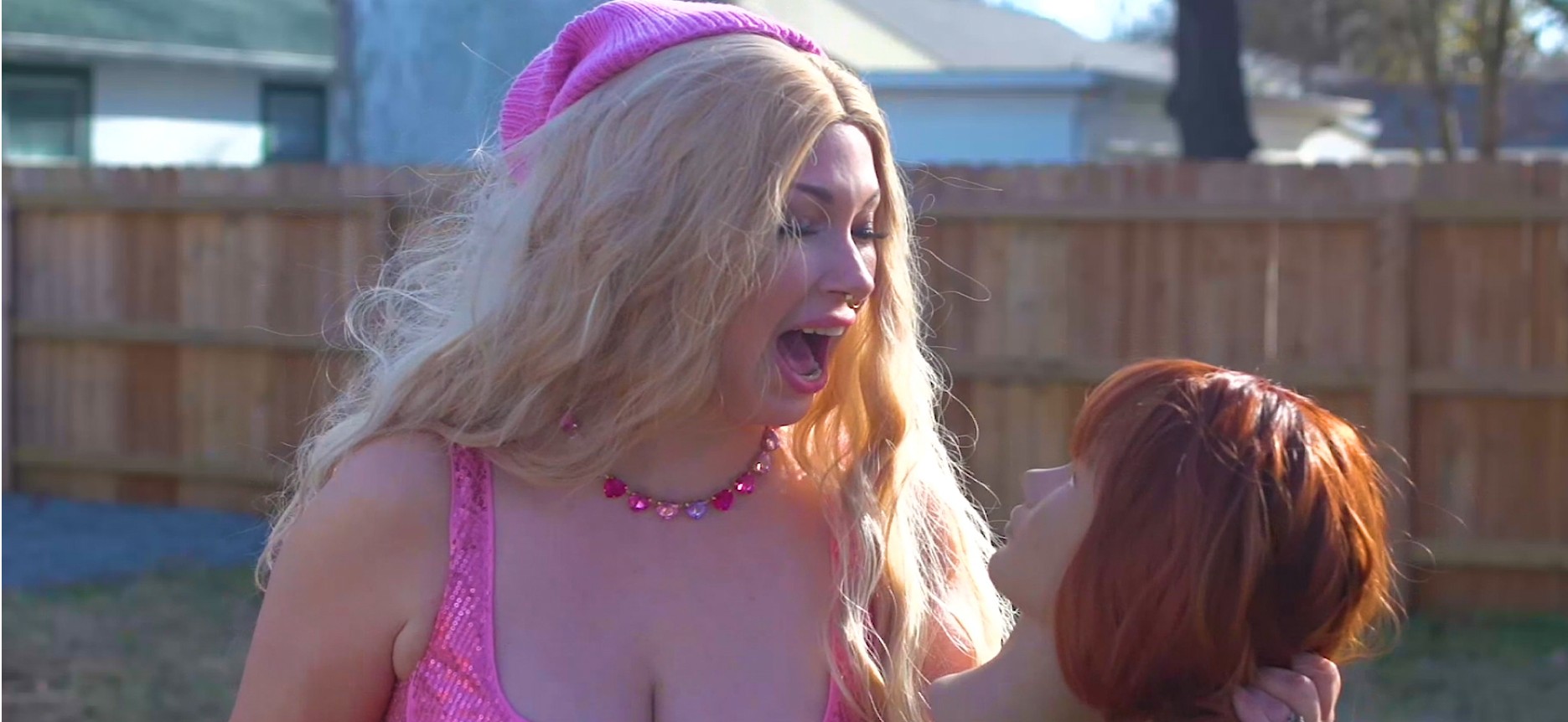
Not only collaboratively writing and producing the feature, but Jessa Flux also stars as the titular character Darbie, the buxom queen of Doll Town with an amiable personality up to a point.  That point is when boyfriend Ben comes under the scrutiny of Darbie’s nosy, troublemaking sister, Tripper.  Claude D. Miles has collaborated with Farmer and Flux on a few other projects, such as Donald Farmer’s “Debbie Does Demons” and “Scream Queens Weenie Roast,” and between Flux and Miles, their rapport doesn’t seem forced as it’s flexed to work as comedic love interests in a parody setting.  Ana Xaden, another indie alternative horror actress, also has worked with Farmer, Flux and Miles on “Scream Queens Weenie Roast” from the year prior, turning the trio into a regular entourage for the “Cannibal Hookers” director.  Xaden also busts out along with Flux as the two become elementary with their dialogue, by that I mean their conversations, whether written in the script like this or just the style of acting incurred by spontaneity upon filming, has an artificiality to it with monotonic delivery and exposition.  Funny thing is, you only really see this flat conjecture between Darbie and Tripper, and maybe even a little bit from Ditzy Darbie (Ashleigh Amberlynn, “Night of the Dead Sorority Babes”) but that’s more expected because of her dunce character.  Ben conversing with Beach Blanket Ben (Joe Casterline, “Shark Exorcist 2”  Unholy Waters”), or any other minor male character, has more natural back-and-forth without any fabricated flavoring, and it’s curious to think that maybe “Darbie Dream House” has a layered depth to that nuisance that speaks to the fake talk and gossip associated generally around women and men letting it, generally again, hang all out.  The cast rounds out with Mel Heflin (“Scarlet Rain”) as aggressive lesbian Rodeo Darbie, Fallon Maressa (“Bloodrunners:  Vampire Wine”) as Dream Date Darbie, and Kasper Meltedhair (“Hooker with a Hacksaw”) as a Doll Town reporter with Kimberly Lynn Cole (“Bloodthirst”) listed in the credits but her scenes cut and placed in the special features’ deleted scene. 

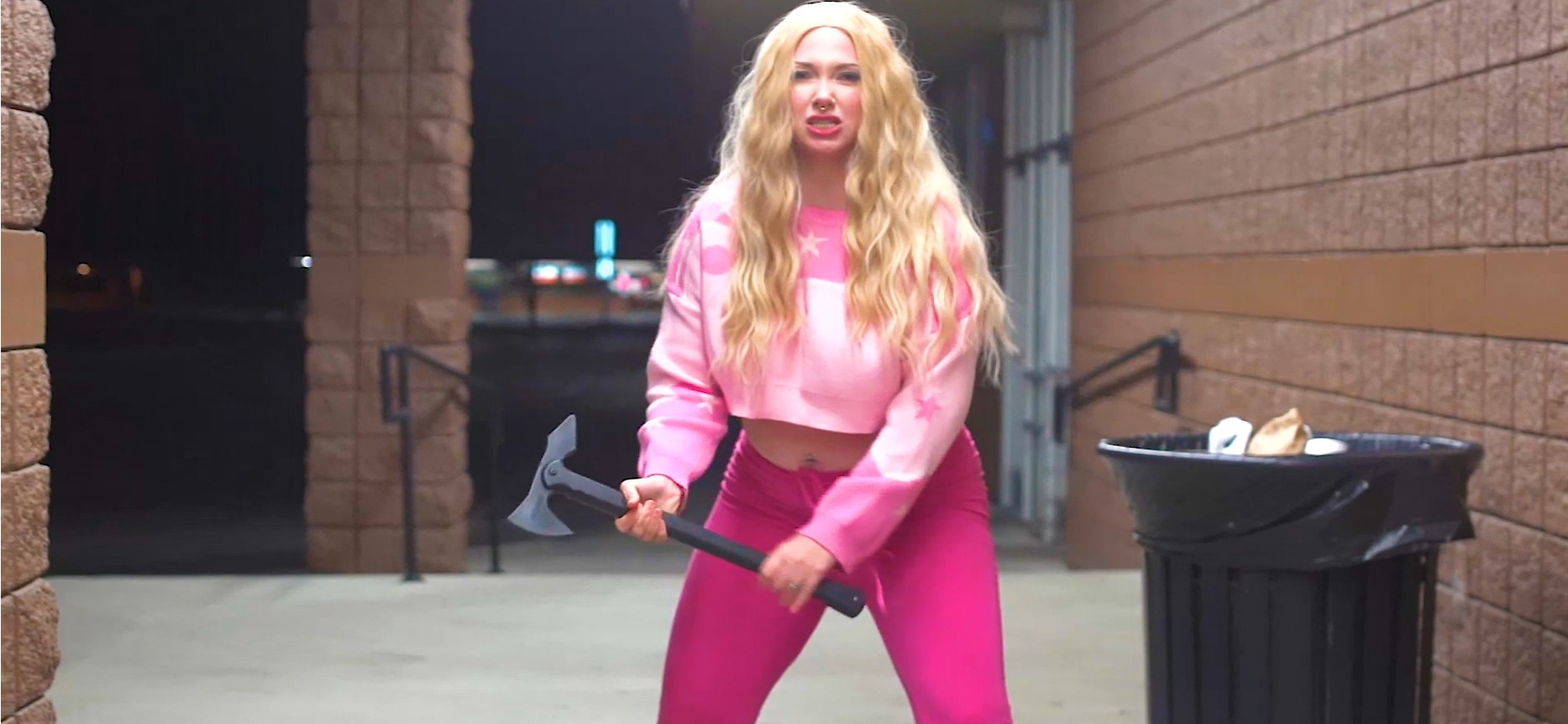
This is not one of those This Is Not Barbie:  An XXX Parody type of film but “Darbie Scream House” very much cold have been with it’s dolled up and naked-positive female cast, male characters with bad wigs and depraved names like Sleazy Steve, and a premise around creeping sexual promiscuity.  However, blood axe-wielding aggression, reared by jealousy, fill in the gaps to level up a cheap stag production to a barebones indie horror that doesn’t take itself very seriously in this meta-existences for the chief characters who are playable dolls of a young, imaginative young girl but who are also moving autonomous with their movements and affairs that are not sanctioned by Barbie or Mattel for that matter.  “Darbie” is a different kind of female empowering doll but in the same breath lacks the informed judgement of a jump-to-conclusions partner, insecure and obsessive over people and ideals.  “Darbie Scream House” caters to that what if scenario if Barbie didn’t have mental positivity and broke into sociopathic tendencies?  The core of the story is there but does heavily rely on the gratuitousness of Jessa Flux, Ana Xaden, and Ashleigh Amberlynn to carry it over the finish line, yet the shoddy effects, poor acting, and mishandling of the meta perspective sink this Donald Farmer production like cemented pink platform and rhinestone shoes. 

This is a no playtime, you can be anything Barbie movie with a house in Malibu and driving a pink convertible.  This is “Darbie’s Scream House,” a bizarro, alternative universe mined form the same vein as the classic children’s characters, such as Winnie the Pooh, Mickey Mouse, and The Grinch, turned into monstrous villains of your nightmares.  “Darbie’s Scream House” is right up Wild Eye Releasing’s alley with plenty of against-the-grain filmmaking, attitude, and shlocky satire, now available on a DVD home video that’s an MPEG2 encoded DVD5 with 720p resolution.  Even if you’re player + television combo can upscale the quality, the image quality is limited to the commercial grade equipment with passable delineation and detail that offers immersive detail but gets the job done. Lots of the details are washed away also but the use of blue or pink saturating gels that flood tense moments of Darbie’s life on the downspin and much of the exteriors are ungraded, using natural the deflection of natural light to the best of their ability.  The English PCM Stereo 2.0 carries an unbalanced depth that’s inconsistent on keeping characters dialogue level within the shot.  Those closer to the camera often have strength priority with the second person only a step or two back sounding as if they’re a good ten yards away in the closeup-to-medium marked shots.  The recording mic also can’t sustain sounds beyond its limitations, such as screaming that breaks the reproduction into bits of static and distortion at high peaks.  Special features contain a blooper reel, a deleted scene, and feature and other Wild Eye Releasing trailers with the physical package sporting an embellished, AI generated cover, which I aways appreciate the fluffing-up of an indie film.  In this instance, the art doesn’t stray from the truth per se but aggrandizes the finer details quite a bit; however, the nice touch here is the Barbie font used for the title.   The reverse sleeve image inside the clear Amaray isn’t afraid to be gory with a severed head from the story that has been lightly touched up for effect.  The not rated DVD is region free for all players and has a runtime of 75 minutes, enough to satisfyingly slay. 

Last Rites: Jessa Flux’s “Darbie’s Scream House” skewers Barbie into an unperfect, deranged universe of emotional unstable killer toy dolls but leaves much on the table of possibility and has a hard time gluing together an airtight campy story that’s too reliant on the kink than the gore.

Uh Oh Darbie! “Let’s Go Buy “Darbie Scream House” on DVD!

The Little EVIL in the Cupboard. “The Abomination” reviewed! (Visual Vengeance / Blu-ray)

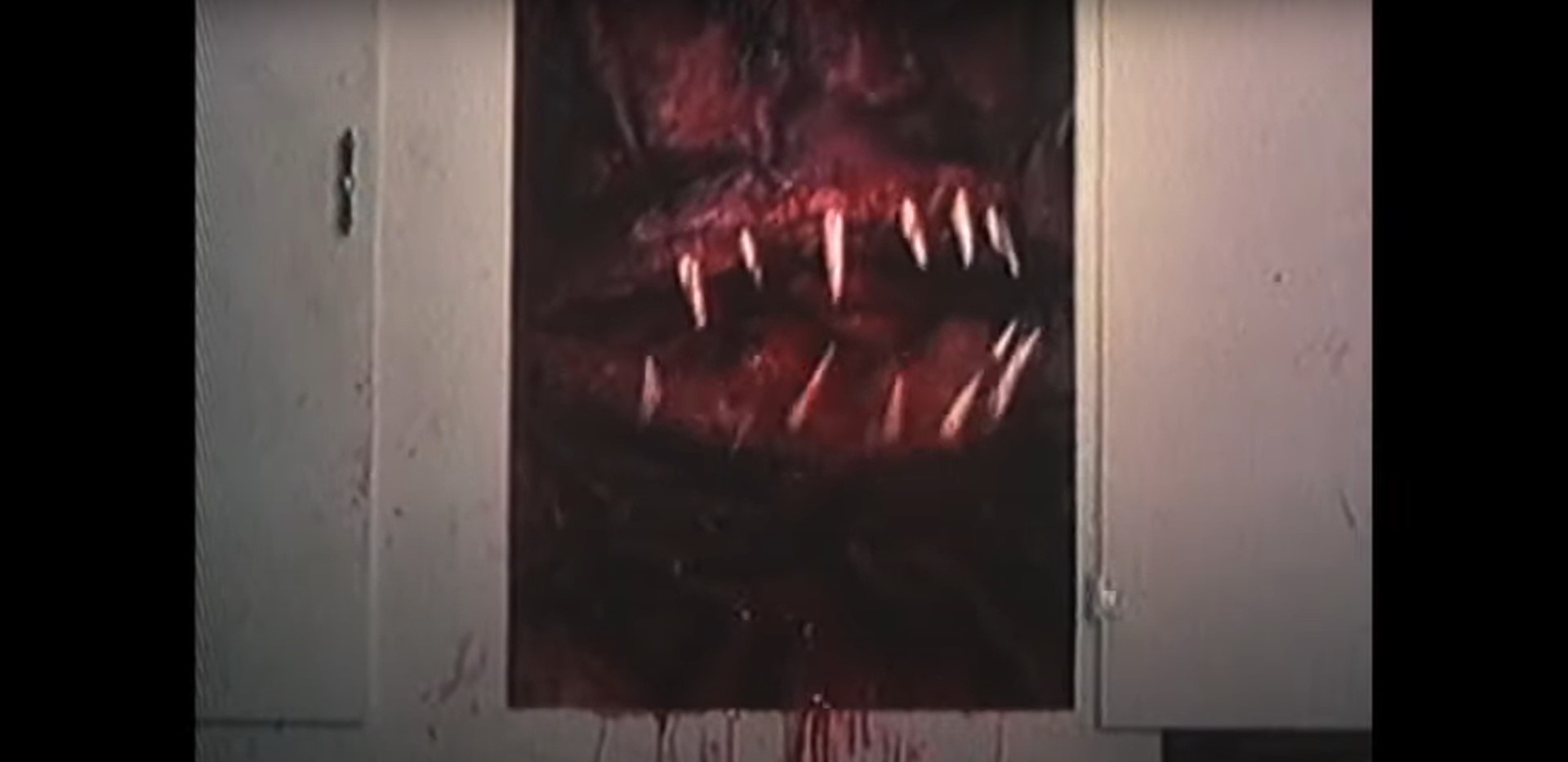
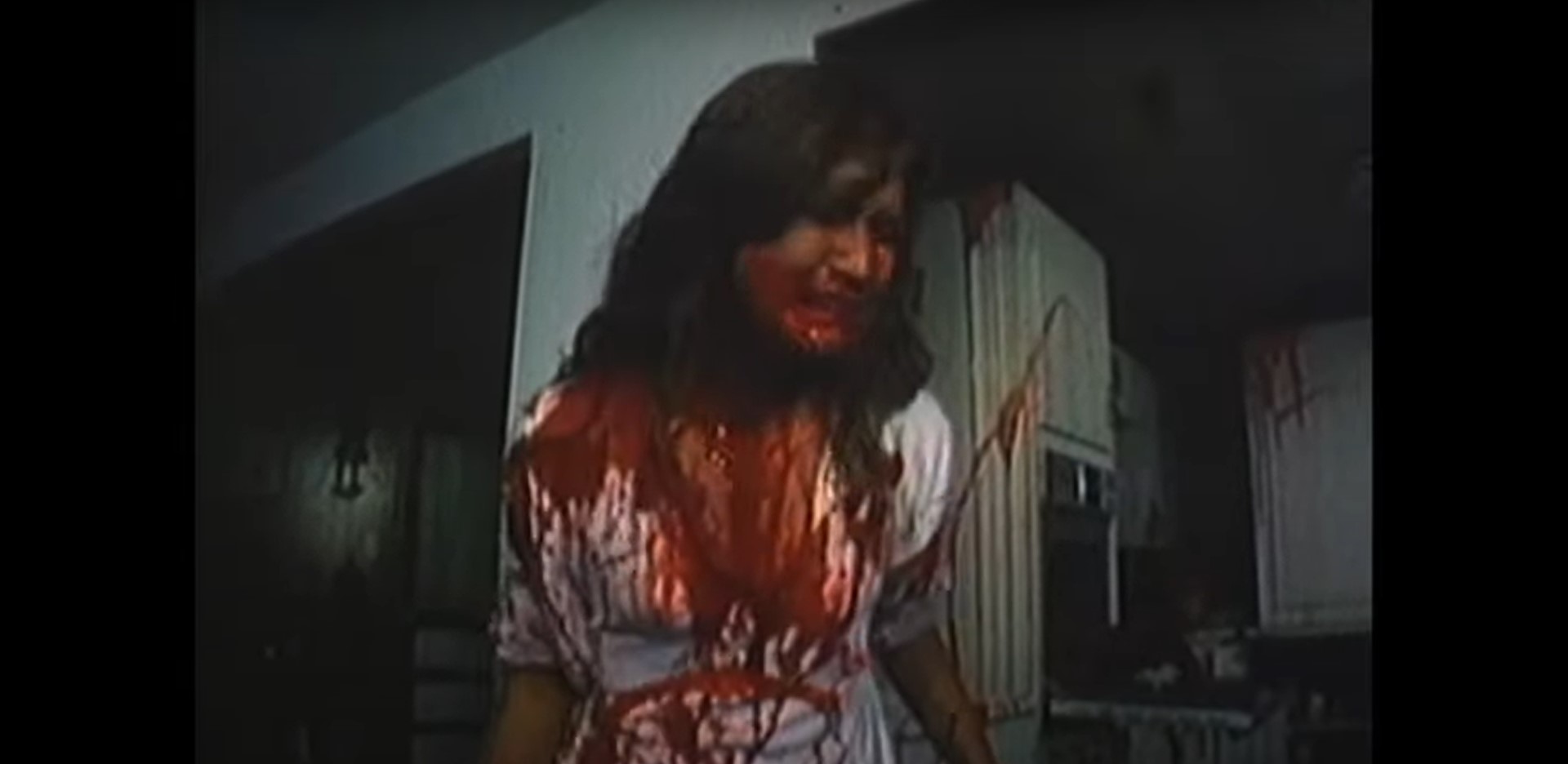
Cody’s devout mother has a large tumor growing in her lung.  Her piety believes will cure her from the ailment or so says the televised evangelical priest Brother Fogg who once listened to her plea.  When she coughs up the tumor onto the kitchen floor one night, the relieved woman becomes ecstatic having been miraculous cured by brother Fogg’s channeling of the holy spirit and her $20 donation to him but little does she know that the tumor is actually a blood lusting demon that slithers down Cody’s sleeping throat, turning the young man zombified and obedient to the demon’s ever starvation for human blood and flesh in order to grow.  Inhabiting Cody’s house like a shell and monstrous with tentacles and large teeth chomping from out of cupboards and the top loading washing machine, Cody heads out into the world to brutally murder his own boss, friends, and even family to serve and feed the abomination living in his home.

Tantamount to “A Little Shop of Horrors” and released the very same year as the Rick Moranis remake of the original Roger Corman killer-plant picture, writer-director Bret McCormick waters to grow his gelatinous creature-feature “The Abomination” onto the home video market.  Ultra-violent and gory against the more, what would be considered in comparison, family-friendly and Hollywood produced rowdy giant flytrap ravenous to devour victims, “The Abomination” is by no means a musical but delivers a tone of tentacle-laden terror around a subtle theme of mental health.  Shot in Poolville, Texas, from the then future filmmaker of “Repligator” and “Highway to Hell” under his pseudonym of Max Raven, the guts-galore indie was also produced by McCormick as well as with longtime partner Matt Devlen, director of “Ozone:  The Attack of the Redneck Mutants” and producer of “The Upstairs Neighbor” with “Woodchip Massacre” and “Cannibal Hookers’” Donna Michelle Productions picking up the film for at-home VHS distribution rights.

However unlikely it may seem with these types of splatter films and with a cast credited with different stage names and pseudonyms, “The Abomination” is undoubtedly a family affair.  Bret McCormick has employed a great deal of his once intact family into filmic roles as creature fodder, which some of us would like to dish up on a daily basis.  Well, McCormick did it from his brother Brad McCormick as Ike, mother Victoria Chaney (“Christmas Craft Fair Massacre”), former father-in-law Van Connery, and even his wife, now ex-wife, Blue Thompson (“Ozone:  The Attack of the Redneck Mutants,” “Highway to Hell”).  Relatives appear game to be in a next-to-nothing splatter horror that offers a soup kitchen of out of body organs being pitchforked fed into gaping jaws living a cupboard.  Performances render suitably as bored rural clodhoppers who fear God, work at junkyards, and give into evangelical sermon with Cody (Scott Davis) and his friends often the more sensible foursome of youth yearning for fun and beer as they race down dirt roads and yuk it up on the back of their 4×4 truck beds.  All of the dialogue is done in post with ADR and so we’re not offered the actors’ original gutturals, conversations, and screams with the silver lining in the audio track being a clean post-principals photography recording of the dialogue.  One shortcoming of the dialogue track lies with Cody’s mother Sarah, played by Jude Johnson (“Tabloid”), with earsplitting screams set on linger as she discovers the truth.  With a small, intimate cast with most being within McCormick’s inner circle, every character is essentially core to the story with the rest being rounded out with performances from Suzy Meyer, Gaye Bottoms, Matt Devlen, and Rex Morton as the equivocally moral televangelist Brother Fogg.

There’s something to be said for low-budget, do-it-yourself, indie horror films with exaggerated and practical special effects.  “The Abomination” is one of those said features that’s’ more splatter than substance but the splatter and the palpable puppetry are the driving force behind McCormick’s attempt to enter the gonzo-gory market of cost nothing commodities popular at the time.  “The Abomination” evokes the very truth of the titular creature without being ambiguously metaphorical, becoming a character, much like Audrey II in “The Little Shop of Horrors,” in itself even if it didn’t talk or sing with boisterously briar.  Before delving into the core narrative, skipping the opening dream sequence/montage may be in your favor as the series of random images of grotesque violence, splatter, and such sum up the film’s entirety in a disordered delusion of dreams. If you can fast forward the montage, the opening secondary setup of Cody and Dr. Russell’s voiceover conversation will suitably add the necessary layer to peel back not only to expose the carnages to come but also sneaks in a thought-provoking twist that will leave audiences reeling over the bookend voiceover conversation between a distraught Cody and the doctor in the final moments.  Not to be exceedingly overshadowed by the immense deluge of blood, the pint size pivot juts out like a nail in a floorboard, insignificant across the entire square footage but once you step on it, the punctured wound leaves an unforgettable impression that makes the entire floor feel the need to be tiptoed around because of the dreadful sensation of sharp, pointy objects covering the entire area.  Narratively, the linear structure works as a son and his mother struggling on the precipice of her cancerous death while believing the televangelist Brother Fogg’s wisdom and spiritual healing will come to her rescue before her demise, but the one element that doesn’t quite work, or is more so unclear, is Brother Fogg’s part in the much darker side of the abomination’s arrival.  In scene, Fogg’s has all the hallmarks of a fire and brimstone swindler but no other clues hint to his involvement in the scourge spawn other than a few dropped lines by other indirect characters that more disconnect the dots then link them.

You have to continue to love Visual Vengeance for their pastime presentation of splatter and obscure VHS films.  “The Abomination” slithers out of incubation as one of their latest releases onto a full-bodied Blu-ray with new artwork, new bonus features, and a new high-definition transfer! The AVC encoded, 1080p, BD50 is presented in a 1.33:1 aspect ratio. McCormick filmed “The Abomination” on Super 8 but had converted the feature through a U-matic VHS playback, resulting in two very different technical looks with the grainy celluloid of a Super 8 integrated into the softer gauze and tape degradation of VHS. We usually see this in the reverse with modern releases being played back through VHS to obtain that SOV/retro look. Visual Vengeance continues to preface all their releases with a warning of quality with their obtaining the best possible standard definition tape masters that may still render poor video and audio quality. A/V does convey a softer simulacrum and a pallid color palette with the occasional tracking lines and even seldom frame damage, but the overall finished product is visually rock solid. The English Dolby Digital stereo mix has the same pallidity as the video but is balanced within the amplification ilk where fading or becoming distorted is virtually nonexistent. Automated dialogue replacement as well as overstepping foley is evident from the start that does provide an undertow of clear consistency without fluctuation. Soundtrack and sound design by Kim and Richard Davis and John Hudek really shines through with a pulsating ghoulish synth-piano key that hints at giallo undertones. Optional English subtitles are available. Visual Vengeance really did outdo themselves with sizeable supplementals beginning with a pair of commentary: Bret McCormick joins Visual Vengeance’s Rob Hauschild and Matt Desiderio while Tony Strauss of Weng’s Chop Magazine goes solo. There’s also a new feature-length interview with McCormick Monster Kid Movie Maverick that entails McCormick starting his life story from Super 8 home movies to the present, a new interview with Blue Thompson, a new interview with Victoria Chaney, and an interview with Michael Jack Shoel of the original Donna Michelle Productions’ VHS distributor. McCormick provides a new location tour between his involvement in “The Abomination” and “Ozone,” raw footage of the testing the tumor and the death of Cody’s boss, McCormick’s Super 8 movies from his youth, a multi-page text screen interview with “The Abomination,” a behind the scenes image gallery, and a trailer archive. Release number 10 on the spine, this Visual Vengeance piece of home video art comes with The Dude Designs’, aka Tom Hodge’s, illustrated rendition of “The Abomination” with phallic tentacles, blood-stained teeth, and a mustard yellow title. Sheathed inside is an even more beautiful front cover art adapted from the iconic scene that left a lasting impression with this reviewer. The uncredited cover, or uncredited because I could not locate the signature or the credit, possesses more depth in detail than the comic book-esque slipcover, a comparable contending front cover from the original VHS art on the reverse side. Visual Vengeance provides hefty insert material that not only includes their staple retro sticker sheet but also a 14-page, black and white official comic book illustrated by Marc Gras, a trifold essay entitled The Tumor that Came to Fort Worth: Apocalypse on a Budget by Tony Strauss, and a folded mini-poster of the front-facing cover art inside the clear Blu-ray case. The disc art has the same The Dude Design slipcover art cropped to fit the BR disc. Bret McCormick fed his ferociously tumorous feature with all that he had, spellbinding with shocking serration, and now three and half decades later, Visual Vengeance celebrates McCormick’s cancerous creature with one hell of a soul-swallowing souvenir!

There’s Nothing Abominable About “The Abomination” Release!  

Insecurity is a Path to the EVILside! “Killing Spree” review!


Airplane mechanic Tom Russo is a newly married man; it’s his second marriage, in fact. Tom’s first go around in marital union didn’t go over so well as found himself on the other end of being a victim of adultery. Paranoid and skeptical, Tom requires his young and hot new wife, Leeza, to become a house wife as he works long, exhausting hours to support his family in a one income household. As the work hours pile, money becomes tight, and tensions build in the back of Tom’s mind, paranoia steamrolls Tom’s reality when he starts suspecting a lonely Leeza of screwing every delivery, repair, and lawn car man that knocks at their door. Without confronting Leeza with his delusions, Tom’s extreme jealously pushes him to kill and bury the men that he envisions involved in the affairs, but his victims don’t stay dead, they don’t stay buried, and seek the eternal suffering for their killer.

A few, long years have gone by since our last encounter with the practical effects-heavy, indie horror director Tim Ritter. From his disturbing tale of destructive descent in “Truth and Dare?: A Critical Madness to his “Switchblade Insane” segment from the SOV masters of horror in the ghastly-variant anthology “Hi-8 (Horror Independent 8)” that also helms short films from Donald Farmer (“Cannibal Hookers”), Todd Sheets (“Dreaming Purple Neon”), and Brad Sykes (“Camp Blood”), the filmmaker has a legacy of blood-shedding entertainment. Today, exploration into Ritter’s “Killing Spree” unearths his passion for horror that develops out of influences from other horror icons before leaving his bloody footprint in the indie scene. “Killing Spree,” written and directed by Ritter, displays the filmmaker’s deep affection for Fangoria magazine having it displayed, repeatedly used as coffee table literature prop. There’s also admiration for “Night of the Living Dead” in the bonkers film about one man’s mind snapping like a twig under the formidable stress. The main character’s name is Tom Russo and Russo is the last name of NOTLD co-writer John Russo and let’s not also forget about the undead rising from Tom’s backyard is fairly synonymous with zombie classic.

While Tim Ritter flicks may not be graced with star-studded actors and actress, even from the B-movie lot, and more than likely don’t spawn hidden talent, there’s still something to be wholeheartedly said about the cast of his films that can only be described as an eclectic bunch of marvelous misfits that bring underground brilliance to the screen. Asbestos Felt is one of those said characters. No, I don’t mean the toxic asbestos felt roofers use as a underlaying backing when nailing in shingles. “Killing Spree” is one of three films Felt and Tim Ritter have worked on together and the scrawny-build with a strung out Grizzly Adam’s head on his shoulders has a wide-eyed spectacle about him when playing Tom Russo spiraling down the crazy train drain. Tom’s obsession with keeping Leeza from the perverted grips on those naughty repairmen would drive any wife away, but not Leeza, played by Courtney Lercara. The “Slaughterhouse” actress is an aesthetic flower growing in the middle of all the mayhem and she protrudes an innocence well received by her character. Other cast members include Bruce Paquette with the white boy dance moves, indie horror vet John D. Wynkoop (“Brainjacked”), Kieran Turner, Alan Brown, Rachel Rutz, Cloe Pavel, and Raymond Carbone as a dirty old pilot with a wise guy brogue.

Remember when I said these types of horror films don’t typically expose acting artistry? Well, behind the camera, one or two crew members start their illustrious careers in the indie trenches. Such can be said for special effects master Joel Harlow who makes his introductory launch with “Killing Spree” and then find work on a couple sequels for “Toxic Avenger,” “Basket Case 2,” and all the way up to the Neil Marshall “Hellboy” and “Godzilla: King of the Monsters.” Yeah, I think Harlow made out OK. Harlow’s effects on “Killing Spree” will “blow your mind,” as stated on the back of the Blu-ray cover. Well, when Leeza’s head turns into giant lips then goes oral on Raymond Carbone’s head until his crown ejaculates, then, yes, these effects will blow your mind…literally! The medley macabre showcase Harlow’s craft from A to Z that includes a torched corpse, a disembowelment, severed undead head, and a nosy neighbor without a nose or without half a face for that matter.

Sub Rosa Studios re-releases “Killing Spree” onto the dual format, DVD/Blu-ray combo set with MVDVisuals providing distribution of the limited 666 copies. Essentially, this is the same release that was made available a couple years back presented in a standard television format of 1.33:1. The Betacamp SP 16mm video has held back the test of time since 1987, but with any video film on a budget, the rather cheap recording method does come with inadequacies, even if being remastered. For the entire runtime and not just in the tinted moments of carnage, the skin tones are akin to Donald Trump’s uncanny neon orange flesh and perhaps could have gone under an extensive color correction. Aside a few very minor tracking issues and faded coloring, the video transfer passes substantially well despite the continuous flare of orange. The English stereo 2.0 mix isn’t hearty or robust. Whenever Tom goes into maniacal mode, his crazy quips are quite soft even when he elevates his voice, and that goes the same with depth and range which are non-existent over the course of a flat audio tracks. Though soft at times, dialogue strongly comes through in the forefront with some fuzzy nuances. Bonus features are killer on this release with the Blu-ray sporting the majority with a never before seen extended director’s cut, a new commentary track from director Tim Ritter, a 90 minute documentary entitled “Blinded by the Blood,” a radio show commentary by H.G. Lewis and Tim Ritter, music tracks, photo slide show, three alternative scenes, blooper reel, and a Joel D. Wynkoop segment. The DVD also includes the director’s cut version of the film, the new commentary by Tim Ritter, and commentary for the original cut by Tim Ritter. “Killing Spree” is as grisly as the SRS cinema Blu-ray/DVD cover implies and then some with all the characteristics of a deranged and unhinged man exerting himself beyond the limits of sanity and mortality to unambiguously protect what is his; a dramatize example rendered as a metaphor for those who will do anything to protect what’s theirs.

Limited Edition. Get it now!

Full Blown Evil is Only One Snort Away! “Dreaming Purple Neon” review


The last bloodline of a black magic rite has manufactured a highly addictive drug called Purple Neon into pill, powder, and injection form and has distributed it through the pipeline of local dealers amongst an unsuspecting community unaware of Purple Neon’s real and highly potent side effects. The drug transforms the dopers into mindless, blood thirsty slaves and connects the them telepathically to a diabolical underworld queen that’s sought to be risen through the blood and body of a youthful human sacrifice and the very spot, deep inside the hellish maze of a business building, is where a motley crew of drug dealers, estranged lovers, and dentistry employees and patrons are caught dead center in the middle of the hell seekers’ ritual. Armed with only melee weapons and their wits, an unspeakable journey trek to the belly of hell pits them against nightmare creatures and a dastardly queen hellbent on ruling the world.

Since the mid 1980s, Todd Sheets’ expansive B-horror library of schlocky old school horror elements have stayed true and brutal for the last four decades. One of his latest ventures, “Dreaming Purple Neon,” has been described by the writer-director as an ode to the the horror films that once were where the buckets of rampant gore covers like wall-to-wall carpets in every scene, where innovative practical effects made the sizably impossible possible, and where the story is chummed into an ocean of entertainment and fun. “Dreaming Purple Neon” favors a long lost market that rarely exists anymore. “Hi-8 (Horror Independent 8,” in which Sheets wrote and directed a segment, showcases directors who revert back to their analog foundation in horror filmmaking. Sheets is credited alongside “Truth or Dare? A Critical Madness'” Tim Ritter and Donald Farmer, director of “Cannibal Hookers.” Sheets continues his legacy, notching another hole in his belt with an ambitious story soused with formidable, if not a bit extravagant, special gore effects.

At the epicenter of all hell breaking loose is Jeremy Edwards as Dallas whose thrusted into the bane experience inadvertently as he’s trying to reconnect with girlfriend Denise (Eli DeGeer from Ron Bonk “Empire State of the Dead”). A better suited budding duo lies with Ray Ray and Tyrone King, respectively Antoine Steele and Ricky Farr, as a pair of hard nose drug dealers tracking down Catriona (Millie Milan) who stole a kilo of Purple Neon and Tyrone’s custom twin beretta handguns.  So far, an eclectic group of characters have formulated but doesn’t end there with two barely cladded actresses, donning sometimes just horned prosthetics on thier nipples, as demonesses. Jodie Nelles Smith bravely and enthusiastically bares it all with full frontal openness to give birth to her Godless vessel demon and her counterpart, the great queen Abaddon, posts up Dilynn Fawn Harvey’s well endowed assets into a sexy medieval getup suiting her ultimate unholy power. Jack McCord receives the last honorable mention in his role of building landlord and high priestess Cyrus Archer to facilitate the Purple Neon and to summon the demon Abaddon. McCord’s theatrics integrate well into Sheets’ splatter film by not only providing exposition for the entire scenario, but also being that faithful right hand henchman to a backdrop antagonist – think Demagogon to the monstrous upside down world creature in “Stranger Things. Grant Conrad, Nick Randol, Jolene Loftin, Ana Rojas-Plumberg, Daniel Bell, Glen Moore, and Stacy Weible costar.

Now, “Dreaming Purple Neon” won’t win any Oscars. Award potential isn’t in the films’s DNA.   Being in a niche horror genre narrows the frame of potential viewers, but Todd Sheets” didn’t write and director “Dreaming Purple Neon” to win hunks of glorified metal and plastic and even though the performances were outright corny, sappy, sometimes frivolous, and delivered cue-by-cue, there inarguably radiates a labor of dedication and passion for a nearly forgotten splatter genre of this magnitude. Realistically, the special effects are the unanimous winners with the overly large intestines, the spray of viscera, and the stretchy ripped flesh that are mutilated, mangled, and meshed together to engross, and to gross, viewers deep inside to become fired up and excited, or maybe just disgusted, about turning nothing into a sickening something that’s out of this world.   Today’s horror is all about the glossy, the shiny, and the clean without much of the muck usually associated with death, destruction, and mayhem. “Dreaming Purple Neon’s” gets the demonic facts right by not only getting down and dirty with the likes of demon horror which films like “Demons,” “Night of the Demons,” or “Demon Knight” are akin, but also solidifies Todd Sheets as a true filmmaker and friend to the gore film even in today’s modern day apologetic society.

“Extreme Entertainment’s” “Dreaming Purple Neon” lands DVD distribution with MVDVisual and Unearthed Films presented in a widescreen 1.85:1 aspect ratio. Clocking in a 1 hour and 39 minutes, the DVD image quality varies from scene-to-scene, but mostly a washed gray display doesn’t exuberant a color palette, but this overall look goes hand-and-hand with Todd Sheets’ analog style. The 2.0 stereo sound isn’t Earth shattering and to be honest, there wasn’t any expectation for it to be so, but the dual channel is uncharacteristically strong and balanced with clear dialogue to which can be all a testament to Sheets’ long list of experience. Bonus materials include a commentary track with Todd Sheets, a behind-the-scenes, and an Unearthed Films trailer reel. Savage. Unapologetic. Herculean. These terms can all describe the feelings felt when watching Todd Sheets’ “Dreaming Purple Neon” that tells a bizarro “Re-Animator” story chocked full of graphic gore and conveyed with a dry and morbid sense of unsullied humor thats contrasted against today’s spoiled and scorched popcorn and soda pop horror film.

Own a copy of Dreaming Purple Neon!