EVIL Rides Murderously on the “Highway to Hell” reviewed! (Visual Vengeance / Blu-ray)

“Highway to Hell” on Blu-ray from Visual Vengeance!

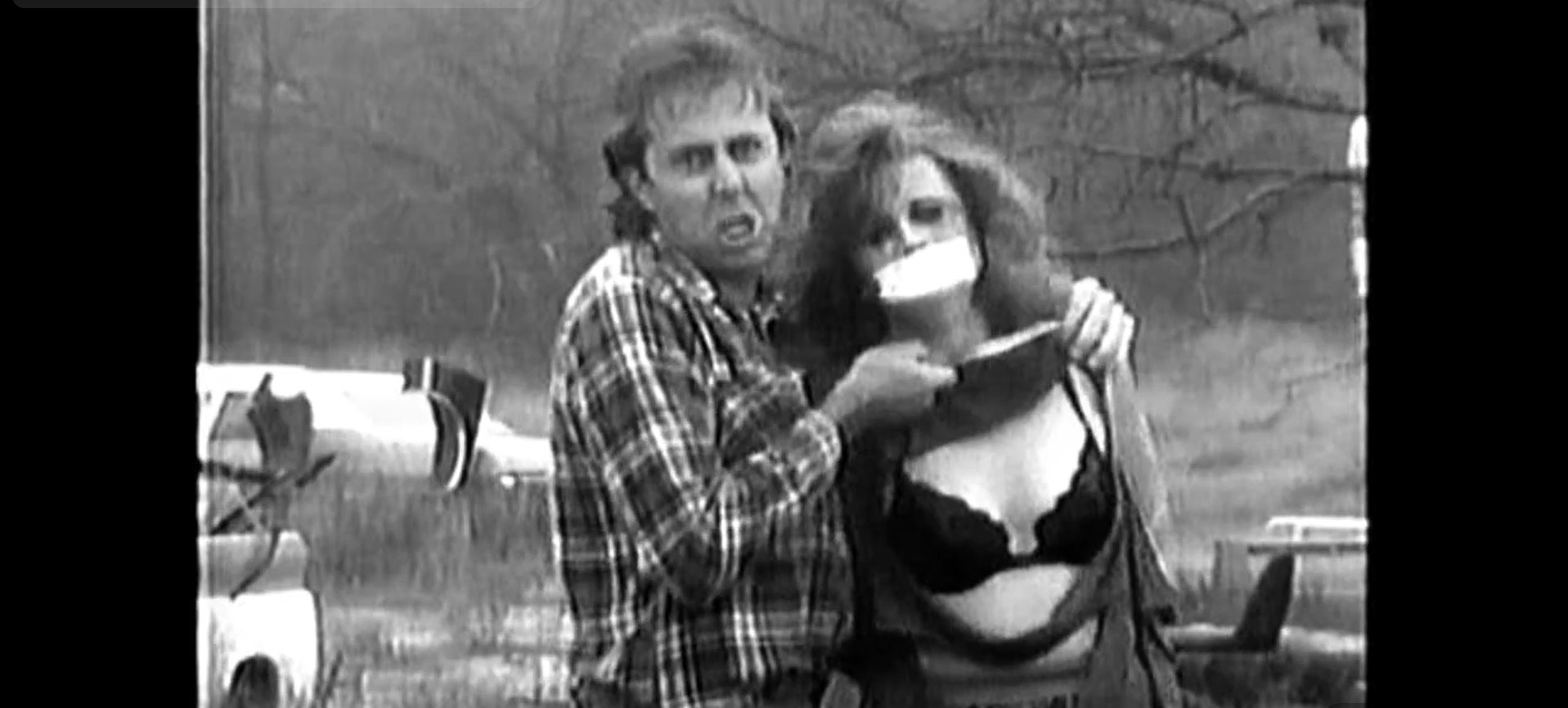
Prison escaped, serial killer Toby Gilmore treks across the Midwestern terrain killing innocent people to take what he needs to retain his freedom.  City photographer Fran Tucker travels to the countryside to visit her family.  When the two collide, Fran is taken hostage after Gilmore shoots a man down on a road rage whim and he keeps her alive because of his loneliness inside a jail cell for years.  As the bodies pile up on Gilmore’s path toward freedom, the keen photographer will use ever clever trick in her repertoire to get away from a maniacal, yet steely, murderer with no sympathy, no remorse.  Sheriff Earl Dent stopped Gilmore once before and regrets not finishing the killer off when he had the chance.  Now, Dent won’t make the same mistake twice as he’s hellbent on stopping Gilmore once and for all before anyone else falls victim to Gilmore deranged acts of violence. 
“The Abomination” and “Ozone:  The Attack of the Redneck Mutants” filmmaker Bret McCormick strays outside the supernatural confines of horror and into a different kind of terror with an escaped prison and serial killer on the loose, titled “Highway to Hell.”  McCormick helms the 1990 release thriller under the pseudonym of B.A. Jenkins with writer Gary Kennamer penning his debut screenplay.  The story was set on the same near by set locations as “The Abomination” and “Ozone:  The Attack of the Redneck Mutants,” such as in the Poolville, Texas area as well as Dallas, Texas.  If you’ve seen all three of McCormick’s films, you may recognize some of the locations in the same shot angle.  McCormick also produces the film but also in a pseudonym of Max Raven, a regular alias used the aforenoted productions.  Mars Film serves as the production studio for the low budget, regional thriller.
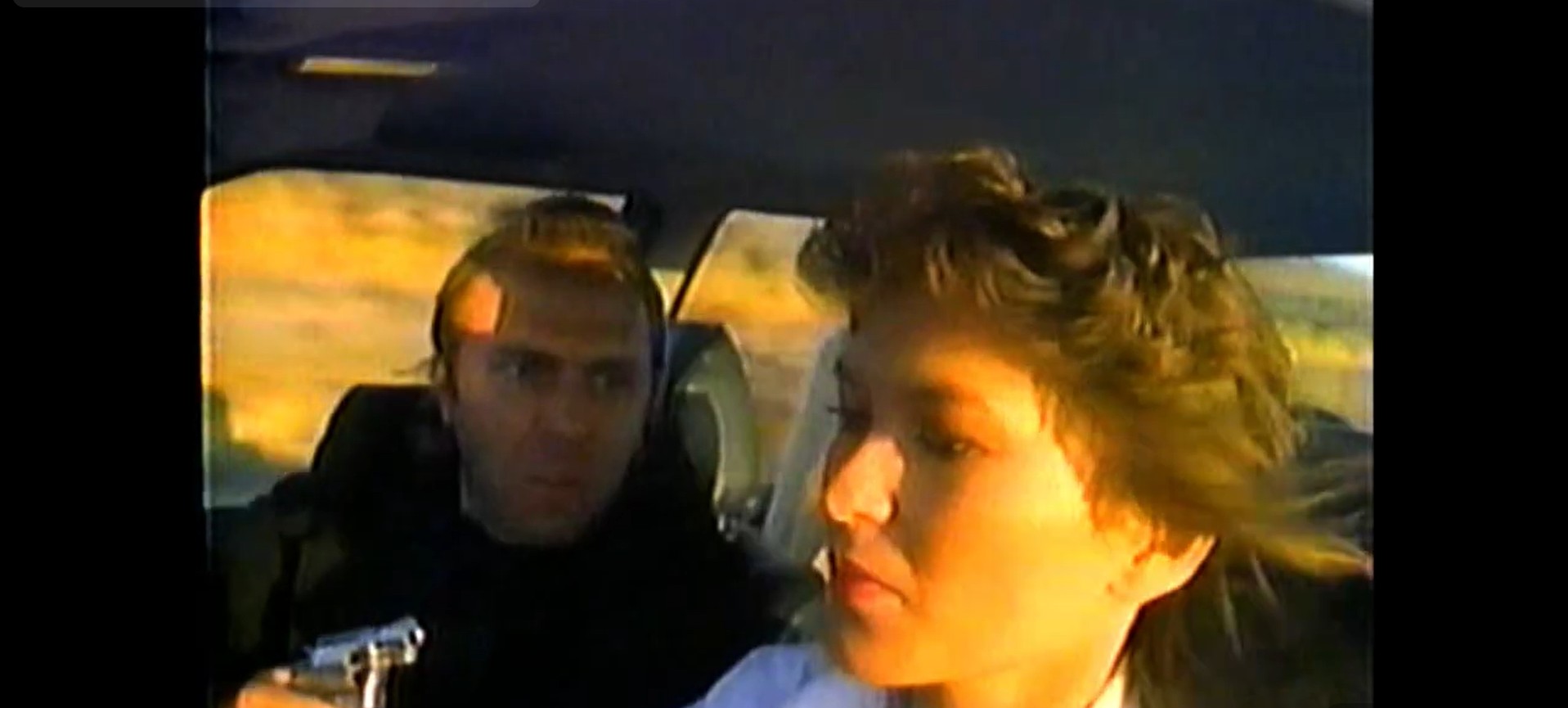
Aside from a large supporting cast of Gilmore whim fodder, a murder spree that’s shows no discrimination, “Highway to Hell’s” cast is chiefly three principal characters, all beginning with Toby Gilmore’s escape from prison involving using stolen jail keys, killing a guard, pilfering the guard’s gun, and absconding on foot through the western landscape.  “Reanimator Academy’s” Benton Jennings, who has since “Highway to Hell” has found success as working up through the minor roles of eclectic of projects, had free reign to mold serial killer Toby Gilmore and the result is a generously entertaining dose of controlled chaos as Gilmore quirks and tics as he runs across the parched Texas land provide insight to his mental mindset but Gilmore is no dummy when he’s calculating next steps with hostages that ultimately benefit his survival.  His guard corpse looted snub-nosed pistol becomes an extension of his madness as he uses it to takeout anyone who puts a pinky toe in his path.  Up against him, his main arch nemesis, is Sheriff Earl Dent, played by an American action star mostly notable for his roles in Italian cinema, such as “Ninja Commando” and “Orgasmo Nero” to name a couple plus with a major role in U.S. “Evil Spawn” with John Carradine.  Harris and Jennings share very little scenes together and the ones they do share are in flashback of Gilmore’s apprehension, one that the Sheriff regrets not putting a bullet in between the killer’s eyes instead.  The other Gilmore antagonist Fran Tucker, an unfortunate photographer on her way to see her family caught in the middle of Gilmore’s escape.  Blue Thompson (“The Abomination,” “Ozone:  The Attack of the Redneck Mutants”) provides Fran’s beauty that strikes Gilmore’s perverse chord after his long jail time stint, providing him the only reason to keep her alive, but Fran isn’t one to backdown and give up her life so easily as she is involuntary thrusted into a misadventure of carnage and death  with no one coming to save her. 
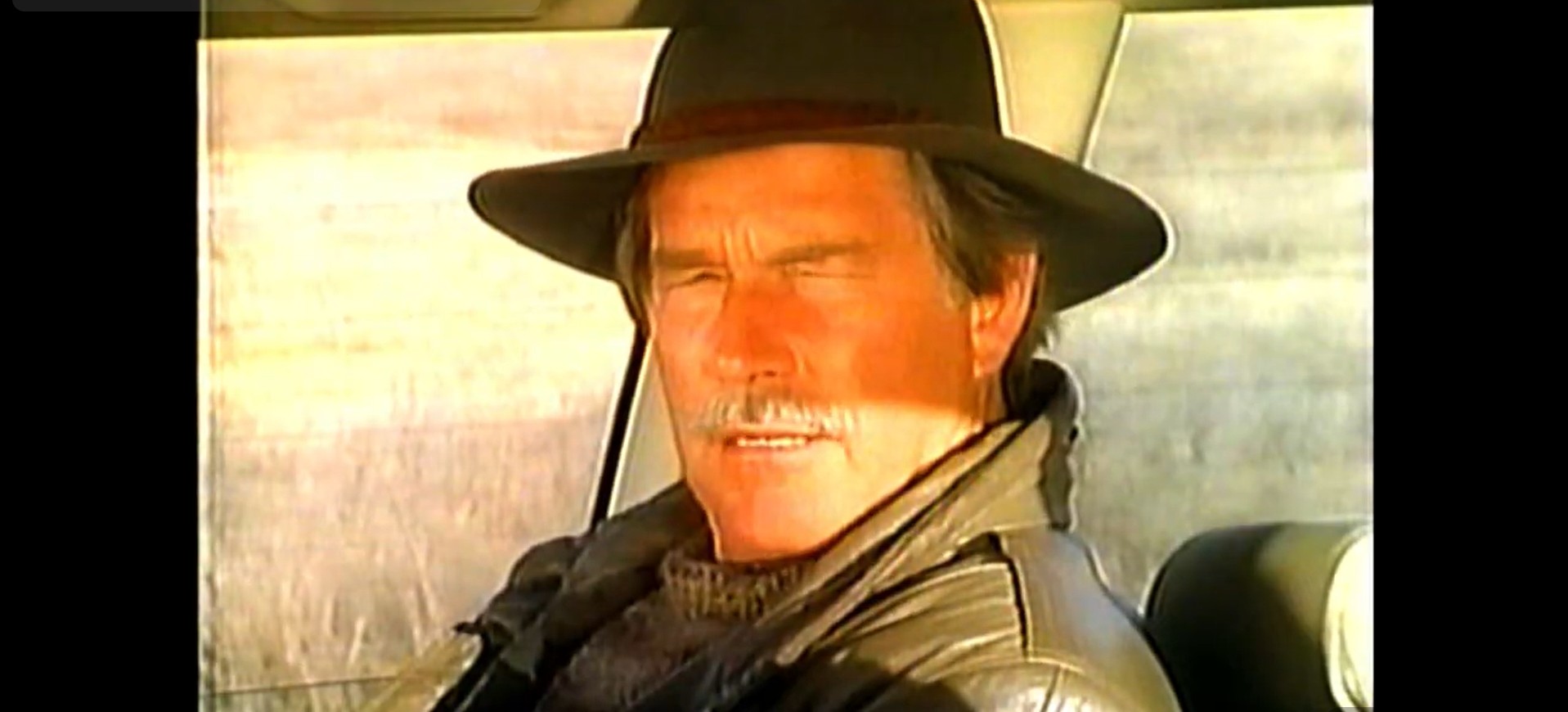
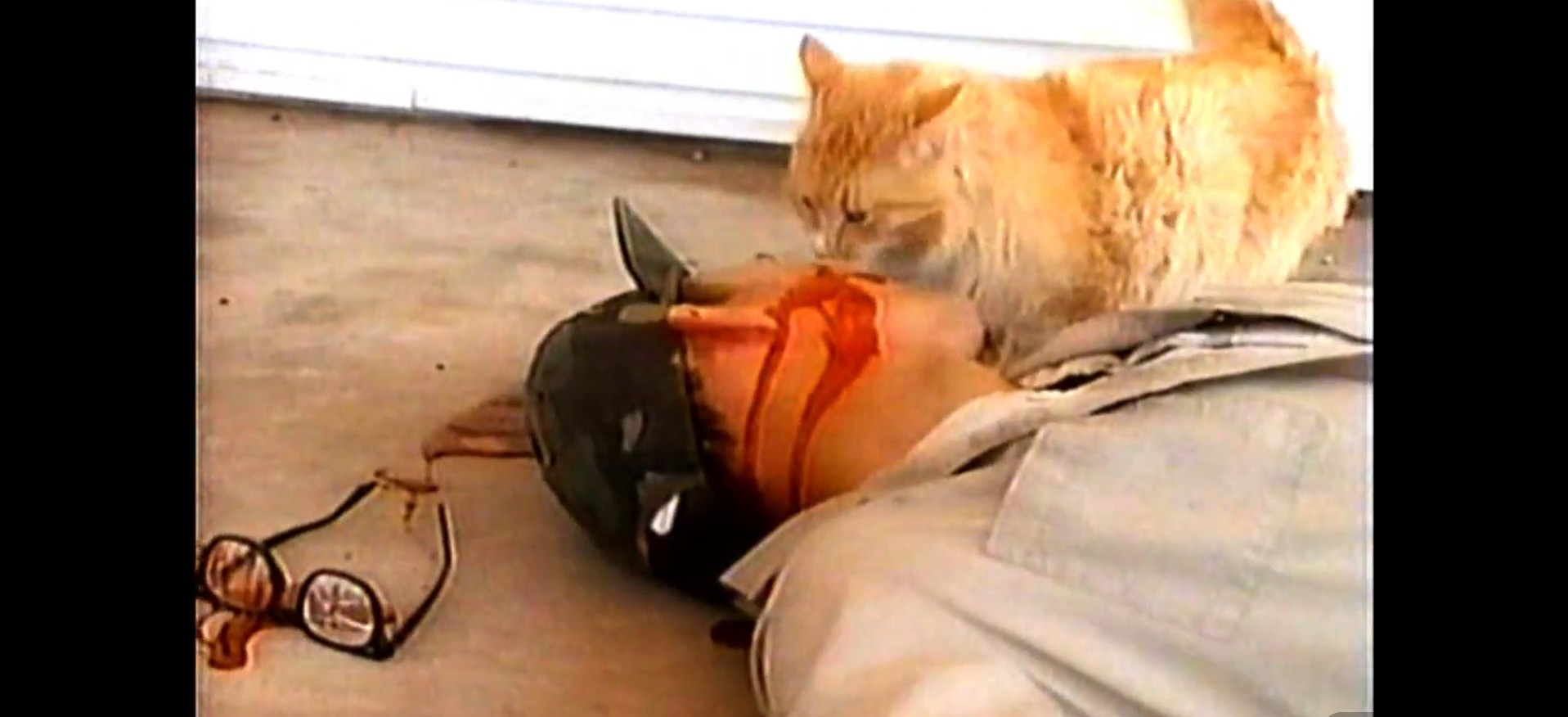
Anchor by Benton Jennings horridness and traversal storyline, “Highway to Hell” doesn’t become stagnant because of its independent and minute budget.  The editing, performances, locations, effects, and overall story are more coherent than not without mostly any confounding measure. There are a couple of plot holes that could have been addressed to sate the quizzical audience, such as how did Toby Gilmore end up with jailhouse keys?  Or how he was able to explode motor vehicles with one shot of his puny revolver handgun?  Gilmore must have been one crack shot.  Yet, the sensationalized key points and action add mystery and cult film nodes to McCormick’s ambitious westernized highway thriller that pits good versus bad, morality versus justice, and insanity versus sanity.  Crackerjack editing from Gregg Phillips and stylistic measures by McCormick salvage any misgivings about the budget or special effects in what is a competent and coherent, yet strangely fascinating, terrain and terror tensioner that has little representational or metaphorical value but high on entertaining merit. 
Visual Vengeance highlights another Bret McCormick Texas hoedown of horror and exploitation with “Highway to Hell” on a new Blu-ray transfer.  The AVC encoded, 1080p resolution, BD50 uses the original SOV tape master and what it lacks in saturation, as tapes usually do, makes up for in quality with a near flawless image quality for a magnetic tape.  Details are not terrible defined, typical of a tape, but there is great delineation and discernibility with all objects in screen.  As mentioned, hues are muted because of analog limitations and the inability to touchup the tape itself.  If a digital transfer was made, doesn’t look like much was done to touch up the color, and perhaps has purposefully retained its analog aesthetic, presented in a full frame 1.33:1 aspect ratio.  The LPCM stereo 2.0 English track offers a dual channel ranged output that has clean and clear dialogue with no issues of hissing, crackling, or any other vocal obstructions.  Overall truck lacks vigorous opportunity within the action context, such as gunshots and explosions, but, again, keeps with the original presented elements of a retro SOV exploitation.  Optional English subtitles are available.  Visual Vengeance delivers another jampacked Blu-ray full of special features that include an audio commentary by Bret McCormick, an interview with McCormick, interview with actor Richard Harrison Red Hot Asphalt, interview with Blue Thompson Road Trip, interview with screenwriter Gary Kennamer Writing a Road Map to Hell, interview with actor Tom Fegan, an image gallery, Gary Kennamer directed movie “Redneck County Fever” from 1992, Bret McCormick interview on Kennamer’s “Redneck County Fever” film, an interview with Kennamer on his movie, a commentary rack with McCormick and Kennamer on “Redneck County Fever,” Kennamer interview on his film, and other Visual Vengeance trailer previews.  Inside the Blu-ray, there’s a stick-your-own, retro VHS sticker sheet, a folded mini-poster with original art, and a reversible cover sheet with new art from Jolyon Yates as well as the original VHS artwork on the reverse side.  The Blu-ray comes in a clear Amaray case sheathed inside a limited-edition O-ring slipcover with more new illustrated artwork almost in a Ghana style fashion.  The 90-minute film is unrated and has region free playback. 

Last Rites: My personal favorite of the Bret McCormick catalogue, “Highway to Hell” is a SOV that’s simple yet effective with its western veneered thrills and a maniac making his will to ride-or-die freedom.

“Highway to Hell” on Blu-ray from Visual Vengeance!

The Golden Ninja Warrior Turns Good Ninja Masters to EVIL! “Ninja Terminator” reviewed! (Neon Eagle Video / Blu-ray)

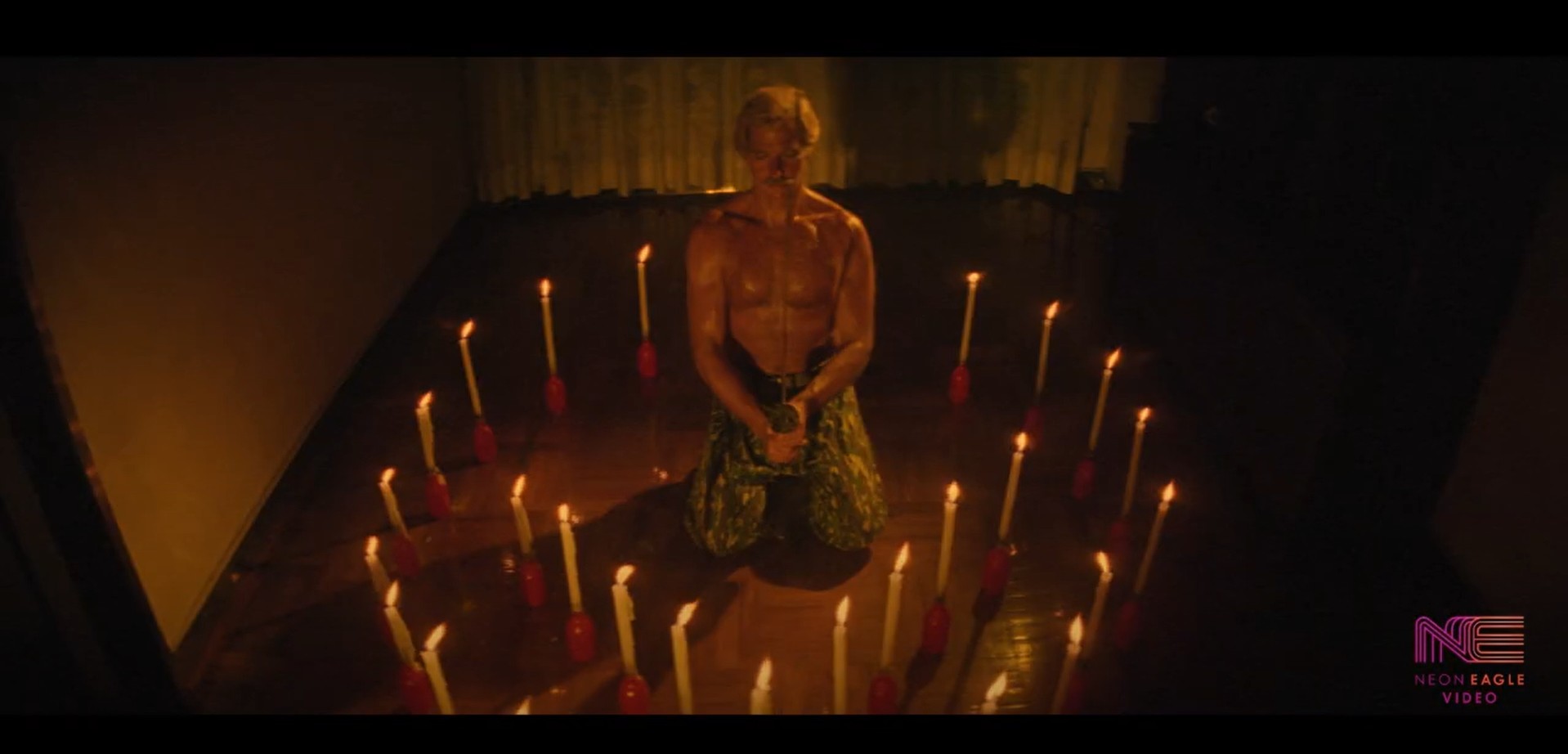
The Golden Ninja Warrior is the corrupt Ninja Empire’s most valued and powerful artifact with mystical powers to whomever posses it’s three pieces, granting them near invincibility against enemy attacks.  The Supreme Ninja leader displays the power of the golden bust, resembling a beastly torse and head wielding a katana, to three of the Empire’s Ninja Masters – Tamashi, Baron, and Harry.  The three Ninja Masters betray their supreme leader, each stealing a piece of the statue for their own intent and purposes.  With one piece back in the hands of the Supreme Ninja leader after Tamashi’s demise, the now crime boss Baron seeks Tamashi’s piece and will do anything, and kill anyone, to get it with the aid of his cruel right hand man Tiger Chan.  Meanwhile, Harry resigned from the Ninja Empire to reform the organization’s criminality but has been unearthed by the Empire’s Supreme leader with an ultimatum to return the pieces of the Golden Ninja Warrior.  With the help of his cocky and confident partner, Jaguar Wong, Harry and Jaguar investigate into Tamashi and his brother’s death, try and protect their surviving sister from those looking for Tamashi’s piece of the Golden Ninja warrior, and defeat any Baron or Empire warriors that stand in their way.

One of the numerous released Godfrey Ho productions in which the director shot new scenes with Caucasian, abroad actors and edited them into an pre-existing film his company owned the international rights.  “Ninja Terminator,” a bestowed title at the height of James Cameron’s highly popular cybernetic, time-travelling thriller “The Terminator,” is the 1986 Hong Kong feature that breathes new life into the South Korean,1984 released, martial arts gangster film “Uninvited Guest” as Ho splices new additional footage to create his own, half-cocked storyline for a cost-effective ninja themed film starring a recognizable white actor.  Ho writes and directs the IFD Films production that’s produced by Ho’s makeshift Ninja feature team of Betty Chan (“Ninja Strike Force”), Joseph Lai (“Full Metal Ninja”), and Steve Kam who regularly took popular U.S. tiltes and integrated them into their own for advantageous marketing.

Where to start with actors and actresses?  Two films shot in two completely different times with renamed characters and additional characters in a jumbled-up mesh of a ninja film.  Lets start with Richard Harrison, an American actor with muscles and good looks who couldn’t quite land the parts he wanted in his home country but found lead man success in other parts of the world, especially in the filmic industries of Italy (“Orgasmo Nero,” “One Hundred Thousand Dollars for Ringo”) earlier in his career and, in this case, Hong Kong (“Inferno Thunderbolt,” Diamond Ninja Force”) later in his career collaborating a handful of times with filmmaker Godfrey Ho.  For “Ninja Terminator,” Harrison isn’t a stealthy cybernetic ninja master but rather an idealistic, benevolent ninja master sporting a unique camo ninja-yoroi to, I guess, blend in around his home and urban environment…?  Still, the camouflaged attire has to be more clandestine than the hot red ninja-yorois of the Ninja Empire.  At least fellow western actor, Jonathan Wattis, as one of the three ninjas who stole a piece of the Golden Ninja Warrior statue and became a crime lord himself, donned a near traditional, black-dyed ninja garb.  Harrison and Wattis do the best they can being spliced into Jack Lam’s film “Uninvited Guest.”  Reconstructed or replayed to be named Jaguar Wong, for his character’s Jaguar fighting style, Jack Lam bests Wattis and levels with Harrison for screen time as a fellow principal lead despite the 2-3 year difference between principal photography but Jaguar fits in aptly enough into an inept chaos of a near nonsensical ninja narrative that jumps to inconclusive subplots with little connective tissue to the core plot.  Maria Francesca, Jeong-lee Hwang, James Chan, Simon Kim, Phillip Ko, Keith Mak, Tae-Joon Lee, Nancy Chan, Gerald Kim, Andrew Lee, and Eric Leung costar.

Cheaply made knockoffs and spirited, gung-ho capitalizing on popular film titles saw fists-of-fury in Hong Kong circa 1970s through the 1980s, much the same way the Italians also didn’t believe the copyright laws when they too took advantage with unofficial sequels, especially in the horror genre.  “Ninja Terminator” is obvious one of those projects and the sly Godfrey Ho manipulated the international market to garner new public interest in what is basically an old film with additional scene, a scheme done pretty much on the regular in various countries, even in the United States.  However, “Ninja Terminator” is not a good movie but rather a hilariously bad one weighed down by irrelevant offshoots to flesh out a scantily structured half-script.  With the additional scenes of Richard Harrison and the others spliced in, plus Jack Lam’s one-man army showdowns against henchmen and sub-bosses, the combat saves “Ninja Terminator” from full frontal embarrassment with competent choreographed fights, plenty of sword, ninja star, and ninja trickery play, and a fair amount of acrobatics, even if some of the scenes are just gratuitous cartwheels and flips in an ostentatious display of skill and of trying to raise the value of a low-budget production.  Granted, there are no cartwheels or flips in Jack Lam’s storyline, nor is there a single ninja, but Lam’s take-on-the-world scenes are confidently hip for the period and that is the jelly to the bold Ninja peanut butter that makes “Ninja Terminator” work on an amusingly bad level. 

Neon Eagle Video, a subsidiary label of Cauldron Films that focuses on the best of the worse of Asian cinema, scour the globe and deliver the best and authorized reproduction of “Ninja Terminator” on Blu-ray in North America, restored from a 4K scan of the original negative and presented in its proper anamorphic widescreen aspect ratio of CinemaScope 2.39:1. I must agree with Neon Video Eagle that this transfer renders the cleanest and clearest reproduction to date, likely ever, in this compilation of source materials to render a corrective, singular 4K scan. The AVC encoded, 1080p high-def resolution, BD50 offers ample storage to limit or squash any compression indelicacies on an already delicate Godfrey Ho production that’s been bootlegged to bastardization for decades. Corrected color timing sizes up the landscape, the mise-en-scene elements, and the characters too with a diffused scheme that holds firm vibrancy across an early 1980’s hip and preppy Japanese fashion. The audio is a forced English dub with an encoded LPCM 2.0 mono. The ADR definitely is seen and sounded as expected with total unsynchronized lips and dialogue, especially when the story is forged from splitting two films into one. What’s also evident amongst the three-prong, rough-and-ready sound design is the unrealistic fighting sounds, overzealous and overexerted to be more like the Hong Kong Kung-Fu movies of the decade before. The last element is the soundtrack that’s got some funk and groove in its ninja-yorois that likely borrowed and repurposed from another Godfrey Ho production to fit this particular need. Optional English subtitles are avaialble.. Special features include brand new material, including an audio commentary by Kenneth Brorsson and Phil Gillon of the Podcast on Fire Network, a second audio commentary by Asian film expert Arne Venema and Mike Leeder, an interview with director Godfrey Ho Ninja Master discussing the popularity of ninja films in the United States and the appropriation of the “Terminator” title as well as touching upon Richard Harrison and his onboarding onto the film, a second Godfrey Ho interview alongside separately dubber Simon Broad Golden Ninja Dubs discussing the quick and loose ADR of Hong Kong cinema, an interview with “These Fits Break Bricks” co-author Chris Poggiali Ninjamania, and the trailer. Neon Eagle Video’s standard release, showcased inside a clear Blu-ray Amaray, presents new artwork by graphic artist Justin Coffee. The reverse side of the cover holds the still capture composition of the original one-sheet. No insert material included, and the disc is pressed with the same Coffee illustration. The region free disc has a runtime of 90 minutes and though not listed as unrated, the film is surely such.

The First Authorized Blu-ray of “Ninja Terminator” Now Available!

He’s a Beast. He’s Ferocious. He’s EVIL! “Mad Dog Killer” reviewed! (Cheezy Movies / DVD)

“Mad Dog Killer” Unleashed onto DVD!

A daring hostage-taking breakout of an Italian prison puts four of the most ruthless killers back on the streets.  Sadistic and full of revenge, Nanni Vitali, the leader of the gang, has one thing of his mind before he begins a reign of outlawing terror, to find and exact due mortal punishment on a stool pigeon that cemented his incarcerated fate during the trial.  Hot on his trail is officer Giulio Santini who will stop at nothing to bring Vitali back into custody or even put a bullet between his eyes, that is until a young woman, Giuliana Caroli, girlfriend of the police informant, becomes caught unwillingly in Vitali’s web of sexual obsession and deviant plans as she’s raped and exploited for Vitali’s personal pleasure and robbery schemes.  When the frightened Caroli betrays Vitali’s trust, she becomes a kill target while Santini’s family also falls into the miscreant’s violence coursing crosshairs. 

“Mad Dog Killer,” aka “Beast with a Gun,” aka “Ferocious Beast with a Gun,” aka “La Belva col mitra,” is an Italian action-crime thriller from the late “The Sinful Nuns of Saint Valentine” and “Violence for Kicks” director Sergio Grieco in what would be his last directorial before his death five years later.  The Rome-born filmmaker also writes the 1977 exploitative and violent caper with additional dialogue from fellow Roman screenwriter, and furthermore director, Enzo Milioni who has had a hand in “The Sister of Ursula” and “Escape of Death.”  A part of the larger, multi-faceted Euro Crime subgenre, or better known as Poliziotteschi, “Mad Dog Killer” hits all the trademark elements, squeezing in a packed lot of similar content as well as stretching out for breathing room by elbowing out the era popular Italian subgenre of the phasing-out Spaghetti Western and bracing for impact against the up-and-coming Giallo films which starts get a footing with Dario Argento and Lucio Fulci paving the way.  The Supercine production is produced by Armando Bertuccioli (“The Sister of Ursula”).

In the crazed-eyed, take-no-prisoners, sandy-blonde shoes of a handsome yet hardnosed criminal in Nanni Vitali is the Austrian born Helmut Berger.  The “Salon Kitty” and “The Bloodstained Butterfly” star is another international actor who found modest success in the Italian film industry of the 1960s-1970s as well as the German movie industry afterwards, but as Nanni Vitali, the rugged actor with piercing eyes doesn’t hold back in a defining performance that’s nowhere near a one-time paltry pass over.  Vitali is so animated and over-the-top, the hot-headed character completely overshadows Inspector Giulio Santini as a counterpart, played by American actor Richard Harrison of “Orgasmo Nero” and portraying many Ninja Master Gordon films in Hong Kong in the late 80s.  No Ninja kicks or ostentatious smoke screens with officer Santini in a rather matter of fact, routine chaser of escape convicts.  The personal connection he has with Nanni, where Santini’s Judge father (Claudio Gora, “The Nun and the Devil”) was Nanni’s convicting judge, is greatly underused to extrude the ferocity needed to match Nanni’s, as so he is described in one of the many titles – a ferocious beast.  This beastly criminal takes captive and tries to psychologically manipulate through sex and threat the wrong place, wrong time victim Giuliana Caroli by the chiseled facial features of Marisa Mell (“Violent Blood Bath”), a fellow Austrian actress.  Caroli’s tall and beautiful on screen but lacks that damsel in distress in initially helpless apprehension of a woman who must restructure her bearings to take matters into her own hands.  Mell’s acting is forced throughout her span, and without that frightened bird despondency in her eyes, she looks as if she could handle Nanni Vitali by herself with ease in stature, broad shoulders, and a fierce look, diminishing Richard Harrison’s Santini role almost out of the picture entirely.  “Mad Dog Killer” rounds out the cast with Marina Giordana, Luigi Bonos, Ezio Marano, Albert Squillante, Nello Pazzafini, Antonia Basile, Sergio Smacchi, and Vittorio Duse.

“Mad Dog Killer” lives up to the designation that attentively develops the lengths the titular principal will go to achieve a wrongful debt that must be paid in full with excessive violence to spare.  Sergio Grieco lays Nanni’s nihilistic sleaze and transgressions on thick, coating the character with monolithic and enduring characteristics of a sordid and lawless bandido with Spaghetti Western type intensity, especially inside a compositional scene where he slowly walks back to the car toward a frightened Giuliana Caroli, eyes affixed onto her soul, and the all-pervading, debut score by Umberto Smaila just swallows you into the moment.  Like a true mad dog, the story never lets up on an unpredictable temperament and trajectory; it foams at the mouth with rabid blackguard that is true Euro Crime fashion, but unlike most Euro Crimes, “Mad Dog Killer” ends on an unconventional note, perhaps an unsatisfactory to some, but definitely askew yet fresh compared to the genre’s dominantly preordained doppelgangers. 

A film that goes by many names usually suggests numerous releases from around the world.  “Mad Dog Killer” receives a cheapie DVD release from our friends at Cheezy Movies with a MPEG-2 encoded, standard definition 480i, DVD5.  Not an upscaled presentation, the transfer used retains the lower quality pixel count that bleeds the definition, often better in brighter contrast scenes than in the darker settings. The forced English dub LPCM mono track, though you can clearly lip read that most principals actors are speaking English, has auditory value; the lossless quality removes compression from the table, offering a clean and robust dialogue and Smaila score through just a thin, faint even, layer of interferential static, and pops. The English dub track is the only audio option available with no optional English, or any other language, subtitles. Cheezy Movies primary goal favors a feature only release so there are no special features encoded or tangible supplementary content. Cheezy Movies pulls the stark front cover image, laced intently with suspense, sex, and violence, from one of the marketing one sheets, used by other labels such as foreign companies like 88 Films and Polar. The disc is pressed with the same image. Not rated and region free, “Mad Dog Killer” has a runtime of 91 minutes.

Last Rites: An enjoyable sadist manhunt romp, “Mad Dog Killer” does criminals gone wild Italian style. Without a higher resolution release, quality of life with this Euro Crime actioner is not at peak levels but the film, by itself, lays waste to many counterparts with a fiercer hand and a charismatic leading villain in Helmut Berger that tips the scale in the film’s favor.

“Mad Dog Killer” Unleashed onto DVD!