After EVIL Was Executed, A Movie Was Released! “Monster” reviewed! (Second Sight Films / Blu-ray)

Own Second Sight Films’ Blu-ray of “Monster.” Order Here!

Aileen had big dreams and big ambitions to be someone in life.  Growing up, she did what she had to do to get ahead, even if that means selling her body at a young age when she had no advantages unlike her peers.  Now getting longer in the tooth, Aileen still unhappily hooks to live hand-to-mouth, day-by-day, just to survive cruel circumstances.  When she meets Selby, a young, lonely lesbian looking for friend, the two become attached at the hip becoming exactly what each other need at that moment.  The two become intwined was not only friendship but passion as Aileen promises to quit the streets and make a better life for her and Shelby but when one of the last nights of prostitution winds up almost killing her and her unloading bullets into attacker, Aileen succumbs to a taste for murdering sleazy men in order to satisfy Selby’s love.  How far will Aileen go to achieve her dream?

The sad story of Aileen Wuornos life is much more than the serial killer segment she’s most infamous for.  Wuornos unlucky dealt hand could be considered the archetype of white trash narratives being born to teenage parents, practically raised without role models or stable parents, sexual and physically abused by those close to her, impregnated during the middle of her high school teen years, kicked out of her grandparents’ house, and learned to survive through the old profession of prostitution.  Yet, all that tragedy is not in the story that is about to unfold before you in “Monster,” the 2003 biopic thriller from “Wonder Woman” director Patty Jenkins.  Mostly authentic with bits and pieces adjusted to protect individuals from the public eye, “Monster” accounts for what Aileen is responsible for, the multiple slayings of clients who were accused by Aileen as rapists and abusers during their sexual transaction.  Also touch upon, and in a very heart-rending sense, is Aileen’s love for another woman and how their relationship crumbled under the stress of life’s tremendously unfair hard knocks.  Jenkins writes-and-directs the film with Wuornos’ blessing under the multiple production umbrella of Media 8 Entertainment, New Market Films, Denver & Delilah Films, K/W Productions, DEJ Productions, and, in association with, MDP Worldwide. 

To play labeled America’s first female serial killer, Patty Jenkins sought after Charlize Theron who, at that time of the early 2000s, was hitting the height of her career having starred alongside Keanu Reeves and Al Pacino in “The Devil’s Advocate,” Johnny Depp in “The Astronaut’s Wife,” and Mark Wahlberg in the remake heist film “The Italian Job.”  Theron, a stunning woman who became the epitome of glamour and beauty in the eyes of Hollywood, put herself through a transfiguration for the role of Aileen Wuornos.  Gaining weight and capturing Wuornos mannerisms and thoughts-process to play, as close as possible, the woman who would go on to murder 7 men in late 80s, early 90s.  Play is perhaps too broad of term for Theron who depicts a drastic overhaul of her looks and her idiosyncrasies to recreate Wuornos in the flesh and in the mind, creating a lifelike illusion of Wuornos on screen that garnered her an Oscar.  Theron’s costar, however, did not dress the part of Aileen’s real-life lover who opted to remain in the shadows of a private life, disconnected from her past sordid by true life crime.  That costar is none other than Christina Ricci.  The “Addams Family” and “Sleepy Hollow” star adds a slender, petite, fictional companion as lonely-lesbian Selby Wall against, who we know more about today, was a heavier set and butch woman that was Aileen’s romantic partner, Tyria Moore.  Jenkins invokes a sense of loneliness between the two women who find each other when they need each other the most, at the lowest point in their lives, and when their journey together seems hopeful, bright, and prosperous, life’s muck and judgement comes raining down life hellfire.  Aileen’s series of johns make up the rest of the cast and a few have familiar faces, such as Pruitt Taylor Vince (“Identity,” “Constantine”), Scott Wilson (“The Walking Dead”), Marc Macaulay (“Wild Things”) and Lee Tergensen (“The Texas Chainsaw Massacre:  The Beginning”) with Tim Ware, Brett Rice, Marco St. John, and the Oscar winner Bruce Dern (“The Burbs’) rounding the cast out. 

Having been released over two decades ago, “Monster” still retains relevance even when the real-life Aileen Wuornos no longer breathing after her execution in 2002.   “Monster’s” focus isn’t about the episodic killings of a laundry list of varietal behavioral clients who either seek sex out of loneliness or seek it for other devilish, wicked means as Patty Jenkins hones in on a more strung along motif of loneliness that connections not just our principal characters but, in a way, most of the Aileen’s men, the clients.  Baked and weathered by the hot Floridan sun and about as vocally turbo-charged as they come, Aileen isn’t the most beautiful street girl, and not even the most pure and refined soul, but provides a service, a service of warm skin, closeness, and pent-up relief.  In turn, that same service becomes her jailor and her undoing, shackling and imprisoning her growth form an early age, stemmed by a childhood she didn’t have, that didn’t allow her to become somebody and to make something of her downtrodden existence.  The murders are in a backseat, second fiddle to that blossoming love story between her and Selby that engulfs and drives the violence that seeks no end.  Itty-bitty details shine through into Aileen’s humanity, as a perk of the person rather than the monster she’s perceived after the fact, after the trail, and after her capitalized death.  Patty Jenkins sought to make an homage as the reason rather than just the basic news coverage of Aileen Wuornos and achieved eye-opening success.

Second Sight Films invests into a new Blu-ray release with new content encoded onto AVC, 1080p resolution, 50-gigabyte disc, scanned in 2K from the original 35mm film and presented in a 1.85:1 widescreen aspect ratio.  What’s impressive about the Second Sight release is retaining the natural looking grain of celluloid film.  Hues are approached organically without an overabundance of grading and this release sees to preserve “Monster’s” hard-edge and enough definitional nooks-and-crannies, especially around the weathered skin and fibrous features of Aileen Wuornos biological appearance.  The Blu-ray comes with two lossless, English audio options:  DTS-HD Master Audio 5.1 and a LPCM stereo 2.0.  Both offers true fidelity through the layers of range and depth but whichever A/V setup you have will dictate the format you choose.  However, the Stereo option is a good, well-rounded, full-bodied option for all as “Monster” is more a talking narrative than a caffeinated spear of action, but the rear and side channels due funnel a nicely diffused environmental ambience of highway traffic and some supplementary crowd noise underneath a well-verbose and amply clean and clear dialogue track.  New, exclusive content line the special features option on the fluid menu, such as a new interview with Patty Jenkins Making a Murderer that goes into depth about her relationship with muse Aileen Wuornos through conversation and letters as well as Charlize Theron’s transformation and performance, a new interview with producer Brad Wyman Producing a Monster, and a new interview with Director of Photography Steven Bernstein Light from Within that captures a late 80s-early 90s without infusing artificial concealer.  Other supplementals available are an audio commentary with director Patty Jenkins, actress Charlize Theron, and producer Clark Peterson, the evolution of the score featurette, deleted and extended scenes with Patty Jenkins commentary, a making-of featurette that bases the film out of being a true story, and the original theatrical trailer.  For a standard Blu-ray release, Second Sight provides a ton of content; however, there are no physical goodies, nor does the standard release come in a rigid box.  Inside a green Amary case, the single sided front comes, in what has become a prolonged motif amongst Second Sight releases, with a two-tone of black and blue or black and purple and austere cover art of Theron’s portrayal of Wuornos looking worn down.  The UK certified 18 release for strong violence and sexual violence has a runtime of 109 minutes and is hard encoded region B locked so you’ll need either a region B or region free player for playback in the Americas.

Last Rites: A beaut of a Blu-ray for the now over 20-year-old “Monster” that sees new content and insights that cast less shade over a troubled existence that inflicted real life killer Aillen Wuornos. Patty Jenkins and Charlize Theron do the story justice and Second Sight Films just follows suit with enhancing its story told quality.
Own Second Sight Films’ Blu-ray of “Monster.” Order Here!

Digging Up the EVIL Disentombs the Past! “Exhuma” reviewed! (Well Go USA Entertainment / Blu-ray)

Open the Blu-ray Coffin on “Exhuma” Today!

A shaman and her assistant recruit a geomancer and a mortician to investigate the case of an American newborn boy’s distressing grave calling that has also haunted every patriarch member of the family for generations.  The large paying job sends them to remote forest where the unmarked grave of the boy’s great, great grandfather lies beneath the dirt.  For the geomancer, all signs point to not disturbing the grave but the father’s eagerness to cure his son’s troubles and the shaman’s persistence for a big payday goes against the wise geomancer’s better judgement.  All is seemingly well after exhuming and transferring the ancestral coffin to be cremated at a nearby hospital the next day until a greedy, hospital official pries open the sealed casket, releasing a long-awaited evil, and digging up out of the same burial ground another malevolent and mysterious ancient force that reaches far beyond the borders of Korea. 

Here as of late, ItsBlogginEvil.com’s last three reviews have taken readers on a genre-diverse tour of Asia, from Japan with Yu Nakamoto’s meta-slashers in “Ikenie Man” and “Harawata Man,” to Hong Kong with David Chung’s affrayed police actioner “Royal Warriors,” to conclude in South Korea with the supernatural horror in the realm of cultural superstitions of P’ungsu, or geomancy, in Jang Jae-hyun’s latest written-and-directed thriller “Exhuma.”  The 2024 film follows a string of religious related, supernatural themes Jae-hyun has put out in his prior two directed projects with “The Priests” and “Svaha:  The Sixth Finger,” and like “Ikenie Man,” “Harawata Man,” and “Royal Warriors,” a portion of Jae-hyun’s films are touched by Japanese culture.  “Exhuma” amounts to the same standard of crisscrossing the two cultures with dangerous results with “Exhuma” digging up a past better left alone.  Park Hyeong Jin and Kwon Ji Yong (“Ghost Mansion”) produce the spiritually turbulent story under Showbox Entertaiment and Pinetown Productions. 

“Exhuma” encircles four culturally inclined characters that entrench themselves into an unorthodox means of exhuming a disturbed essence for what is essentially an exorcism variant to alleviate living perturbation beyond the grave.  The superstition here revolves around the land temperament.  Geomancers find good sites to lay people to rest, ones that exert extrasensory, or grave call, troubles onto family members that place upon them a grief, anxious, and other mentally uneasy state, and it’s the “Exhuma’s” Geomancer who has story predominance, shared only with the young and beautiful shaman woman with tagalongs who resemble more of assistants than coequals.  In an age-old and cautionary tale of wisdom and inexperience, Choi Min-sik (“Oldboy”) and Kim Go-eun (“Monster”) play the respective roles of the reluctant and experienced Geomancer Kim Sang-deok and the naïve eager yet gifted shaman Lee Hwa-rim.  Receiving character voice over monologue introductions and becoming the ultimate deciding factors of this new job is worth the pay, they completely overshadow the Shaman apprentice (Lee Do-hyun,) and the mortician (Yoo Hae-jin) who works with the Geomancer.  Pivotal as these support characters are to the story, not only buffers for the evil that beleaguers them but also as latched on friends and family of the isolating weird and strange subculture to most but normalized in Korea, the shaman apprentice and mortician definitely take a back seat to the more prominent players to the point where they almost seem contributorily worthless to the task.  As a whole, the dynamic works because the shaman and geomancer alone would not be sufficient for diabolical misadventures of an exhumation gone wrong and supplement only when necessary to aid the fight against an ancient evil twice over.  The cast fills out with Hong Seo-jun, Jeon Jin-ki, Kim Jae-Cheol, and Lee Jong-goo.

The wafting back and forth between Korean and Japanese culture, the fraternization of beliefs and superstitions, tells “Exhuma” differently than most hilltop haunts and horrors.  Themes of a haunted past and inexplicable guilt riddle holes through family lineage, resulting rancorous ripples in the form of mental illness, and devised as a story vehicle device of supernatural subverting trauma from the sins of the father.  In America, Shamanism and Geomancy don’t exist, especially in the history, but for Korea and its people, the country is rich in transcendent ritual and mythology that shapes society, even in their cinematic culture as regularly do we see period films of feudal Korea.  History also dictates “Exhuma’s” need to be a representation of purging the long Japanese occupation of Korea for nearly three and half decades from 1910 to 1945.  The occupation was a disruption in Korean way of life with oppression and war machinations stitched into Korean’s fabric, hence the Korean plot of land being very spoiled with vileness in “Exhuma’s” tale of one historically troubled family’s course to remove that uneasiness that has plagued and followed them to America.  Yet, the past is rooted deep and Jang Jae-hyun’s understands the difficulty of eradicating a sullied ancestry by dichotomizing his darkly toned, folklore valued, and occult twisted story into two parts with sublayers as deep as the dirt surrounding the coffin, or rather, coffins with a formidable presence created and conjured by malicious Japanese Yōkai and represented in one of the most iconic Japanese figures as remnants of an Imperial Japan occupation.

Lying in wait underneath the high-definition terra firma is Well Go USA Entertainment’s “Exhuma” on an AVC encoded, 1080p resolution, BD25, presented in a widescreen 1.78:1 aspect ratio. Accompanied by no information on the video vehicle, IMDB.com lists Jang Jae-hyun and cinematographer Lee Mo-gae shoot with an Arri Alexa Mini which offers the ease of use of multiple lenses, and that shows here with a vast stretch to encompass the Korean mountains into the frame as well as keeping tight on characters while keeping in focus the immediate surroundings. Details are sharp under a flinty tone of saturated grays and blacks with spot pops and glows of in-scene lighting and under the capacity’s umbrella, finer textural elements suffuse through the darkness and into the fold. Audio options include the original Korean language DTS-HD 5.1 and an English dub DTS-HD 5.1. Crystal clear dialogue runs through parallel with the visual counterpart and is well timed and potent, touching the side and back channels with the eerie callings of the grave and its inhabited spirits running rampant free while harnessing focus on the character on scene to create a ranging discarnate of deep, ominous sounds that stalk and haunt the principals. English translation paces well and appears to be translated grammatically and is error free. Well Go USA Entertainment releases are feature focused and this one too containing only a making of featurette in the bonus content along with the trailer. The interior of the traditional Blu-ray Amaray comes with a disc pressing of the four principal characters peering into a dug grave. The exterior has a two-tone, subsoil profile forming a face out of a grave with the four principals on the topsoil and the same image also graces the cardboard O-slip that has a pseudo-lenticular sheen. Authored to have a region A playback, “Exhuma” runs just over two hours long at 135 minutes and is not rated.

Last Rites: The addition of learning authentic, practiced rituals benefits “Exhuma’s” folklore frights tenfold and with neat, grounded performances and a superb blend of visual and practical effects, this original, supernatural thriller raises the Korean movie industry up a notch on the global scale.

Open the Blu-ray Coffin on “Exhuma” Today!

The Devil’s Tongue is a Powerful, Influencing EVIL. “The Dark and The Wicked” reviewed! (Acorn Media / Blu-ray)


Siblings Louise and Michael Straker return home to their farmland house when their terminally ill father becomes bedridden.  A long time alone and isolated before her children arrived, Virginia provided suitable care for their father up until the voices started.  Lurking in between the shadows around the rural home, a menacing presence wedges itself into an already splintered family spirit as the harbinger of death coming for their father’s soul.  The influence of voices and grim visions tatter Louise and Michael resolve, testing their unconditional love for family and moral obligations, but evil can be very persuasive the closer their father comes to his end. 

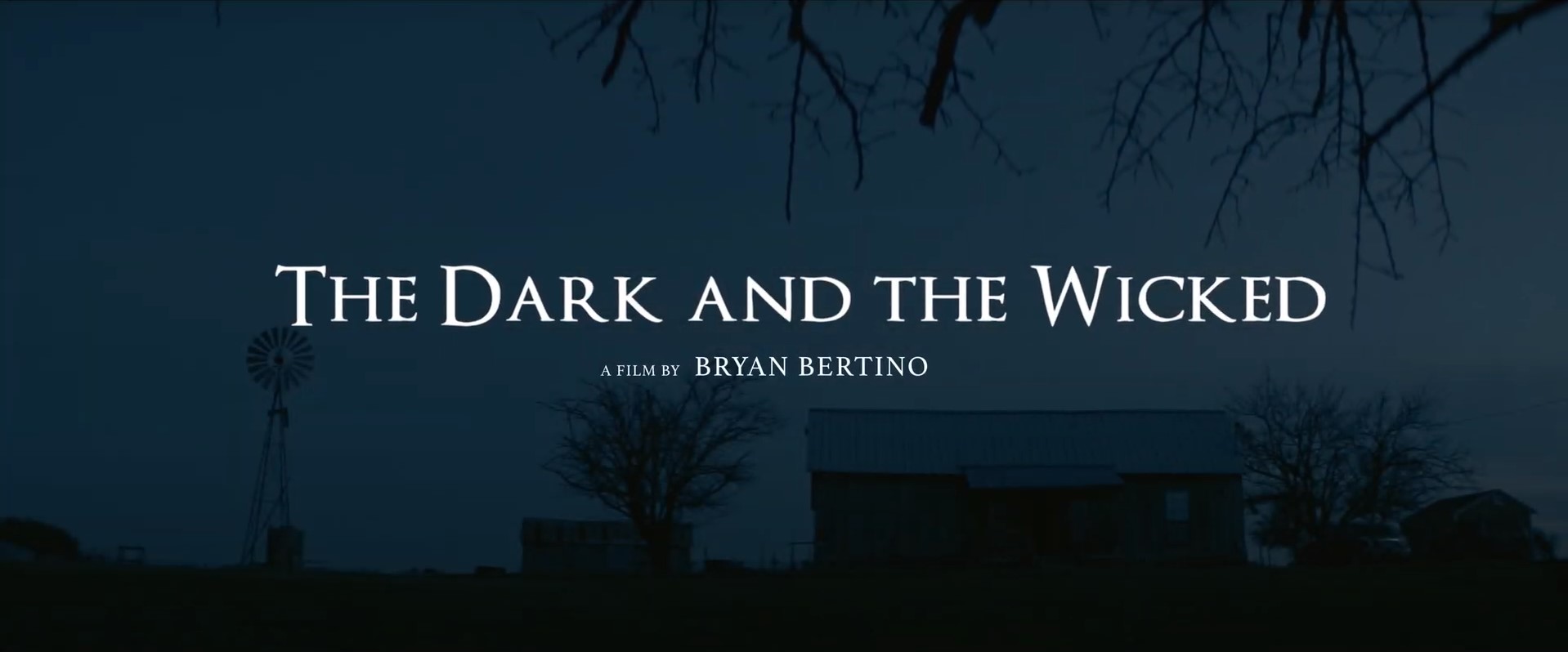
The battle grounds of losing oneself during the verge of loss has commonly been a recurrent topic amongst indie films.  For filmmaker Bryan Bertino, the concept feels deeply personal.  “The Strangers” and “Monster” writer-director’s latest discomforting horror film, “The Dark and the Wicked,” uses Devil speak in mass, detrimental volumes as an allegoric device for the internal deconstruction of family, capitalizing for his tale the use of his family’s rural Texas farm house written as a threatening locale of isolation and the tenebrous unknown.  “The Dark and the Wicked’s” paganistic undertones heavily perceive a dissipating family structure’s disconnect from not only God but from the community who has been all but absent from coming to the fictional Straker family aid.  The 2020 released film is produced by Bertino’s production company, Unbroken Pictures, alongside Shotgun Shack Pictures (“Hurt”), Traveling Picture Show Company (“The Blackcoat’s Daughter’), and in association with Inwood Road Films.

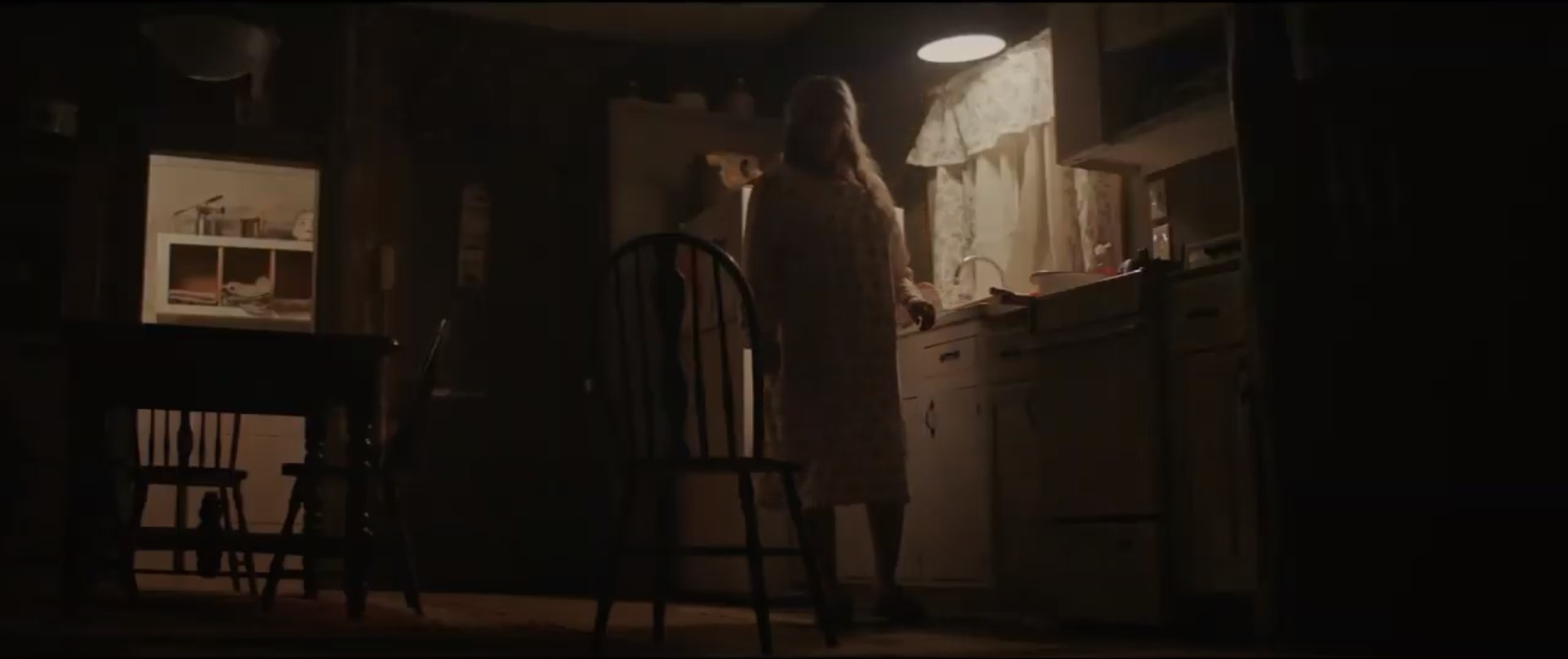
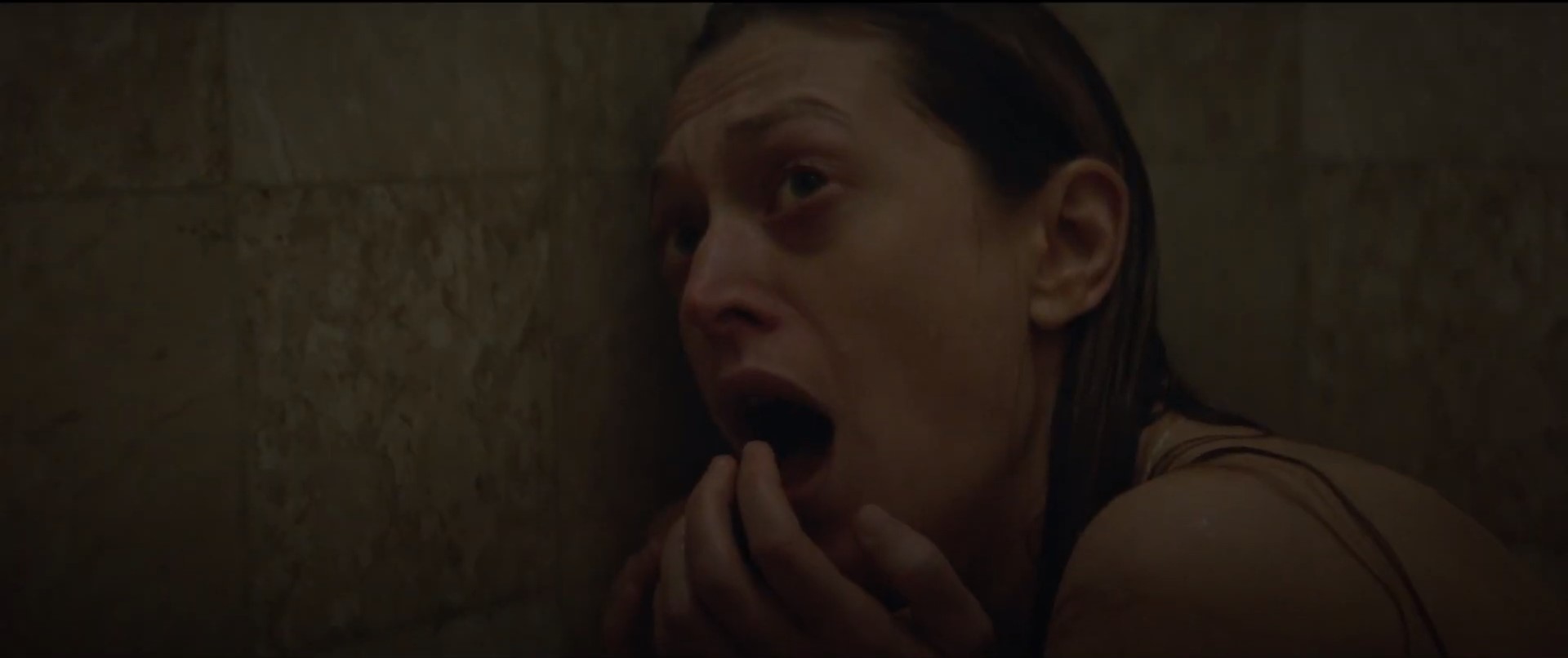
To play characters accustomed to the rural lands of the Texas outskirts, “The Dark and the Wicked” required a range submerged with leisurely movements, a Lonestar draw, and to, of course, look good in plaid and Wrangler jeans.  The cast that emerged was nothing short of spectacularly precise in fabricating the lives of remote lives rural Texans, opening with a Texas-born Julie Oliver-Touchstone (“Bounded by Evil”) sewing dresses in the barn, tending the farm’s goats, and chopping produced in her white nightgown as who will be the catalytic mother, Virginia Straker, that passes not only the 24-hour hospice care to her children but also all the beneath the light misery that drives her terrified.  The girth of the story revolves around, Louise, “The Umbrella Academy’s” Marin Ireland, and Michael, Michael Abbot Jr. from the upcoming “Hell House,” as sister and brother who return back home upon the news of their bedridden father (Michael Zagst).  At this point in the story, where we meet Louise and Michael for the first time, a shrouded background puts a delectable side dish of mystery into making them initially interesting, but over the course of the 96 minute runtime, the enigma dissolves around why Louise no longer works from the Postal Service and what’s stringently being shied away from the thick layered division between the siblings from being close to one another.  The impending standoffish goes unspoken, never comes to a head between them as like the unfolding of “The Strangers” where Liv Tyler and Scott Speedman unravel and expose their marital struggles with the invisible wall between them before, and even in the midst of, being terrorized.  There’s something there that isn’t being part of the exposition or coming back around when the Devil comes really calling for their father’s doomed soul.  Instead, Ireland and Abbot simply assimilate well enough into their falling into farm life dynamics as the sister who must shoulder the responsibility of hospice care and the brother overseeing what could be considered man’s work of handling the duties of raising livestock.   We also get some messed up supporting second fiddlers to execute Satan’s handywork with performances Lynn Andrews, Tom Nowicki (“Conjurer”), Mindy Raymond (“Bigfoot Wars”), and “The Walking Dead’s” Xander Berkeley channeling his best Julian Beck’s Kane performance as a sinister Priest making a house call.

Bryan Bertino has a stillness about his films. Their creepily quiet, stirred in a somber stew of macabre, and utterly deranged in a nihilist coating. What appeals to me about “The Dark and the Wicked,” as well as “The Strangers,” is Bertino’s gift to deliver powerful fatalist realism. His stories couple earthly family drama with otherworldly malevolence stemmed from the deeper affects of prolonged relationship breakdowns that literally assigns a demonizing blame on the supernatural for people’s own crumbling failings. Another aspect is the godless presence wholeheartedly felt throughout from the Straker’s loud and proud proclamation of atheism to the lack of religious artifacts. Michael nearly tosses the priest out of his keester just for making checking and noting his mother’s recent unbeknownst connection to God to which Michael took great offense. This leads into the Straker’s lack of community connection as they seemingly are adverse or are agonized by those who wish to help and those who rather seem them burn under the guise of the malice presence. Goats are thematically prevalent to the story, especially when the shadowy Wicked hides amongst the herd, like a wolf in sheep’s clothing. Goats are often associated with Pagan beliefs, such as with the deity Baphomet, and the evils marked upon them by cultures all around the world and by having the Straker farm be a goat farm is more than just coincidence. “The Dark and the Wicked” brings chaos and confusion much like any circumstances where one or both parents die and all the burdens, all the consequences, and all the pure emotional baggage that comes with death is passed to the children whether the Devil is involved or not. When broken down rudimentary that decline of hope and overwhelming grief can cause a great amount of destruction for any family and even extend to friends with suicide being heavily portrayed in the film. Bertino masterfully touches upon every collateral damage output leaving no one spared from death’s, the Devil’s, hopeless hold on them.

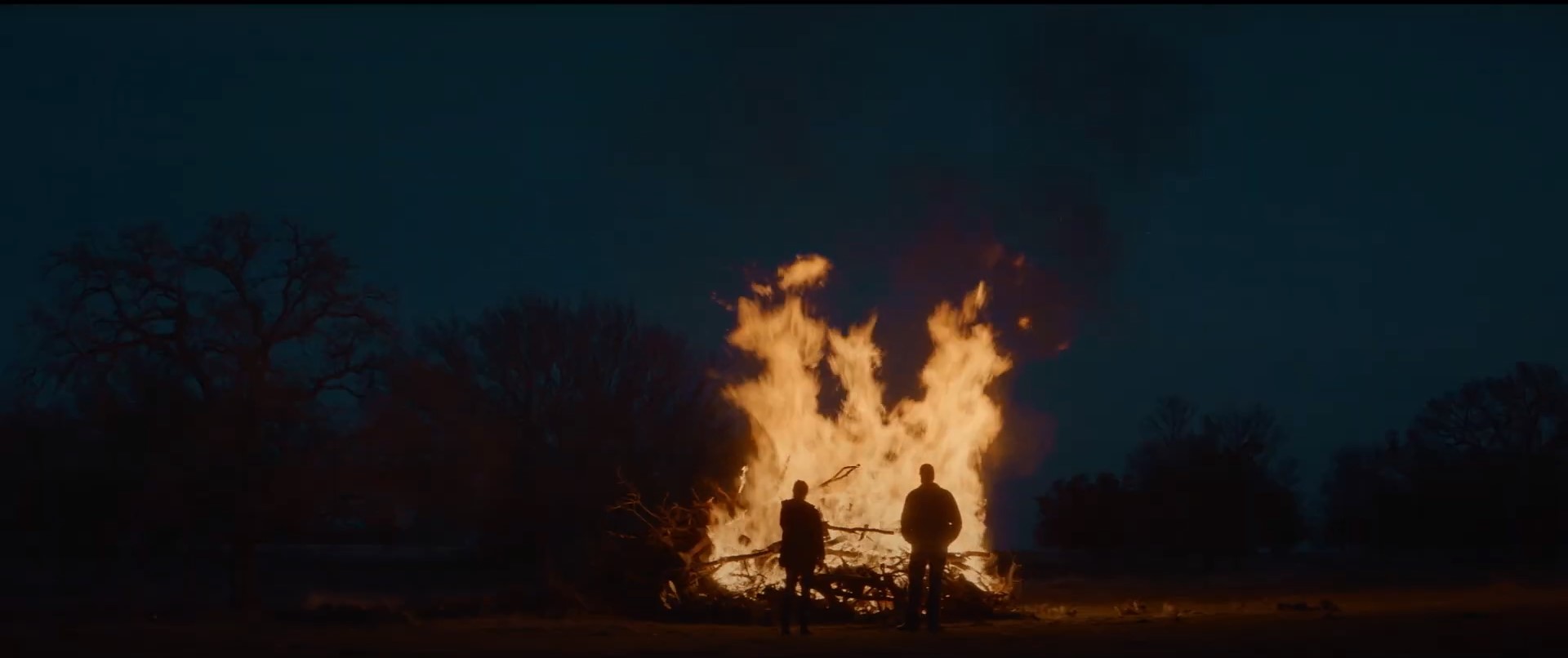
Filled with frightening imagery, plenty of toe-curling suspense, and a loud silence of utter despondency, “The Dark and the Wicked” is a must own for any horror fan and, luckily for you, Acorn Media International just released the Bryan Bertino film on Blu-ray in the UK in alliance with horror’s favorite streaming service, Shudder. Listed as region 2, but more accurately a region B in Blu-ray format, the PAL encoded release is presented in a widescreen 2.39:1 aspect ratio. If there was one word to describe the comprehensive picture that word would be dark. Bertino maintains an eclipsing cinematography through hard lighting, matted lifeless colors, and a reduction tint to give it that extra gloomy blackness. Cinematographer Tristan Nyby’s first collaboration with Bertino is also the first debut into the genre field and Nyby comes out on top with an ability to show just enough, whether through shallow focus or obscured wide shots to always keep the depth and range of the unknown factor alive and frightening. In regards to the Blu-ray quality, “The Dark and the Wicked” has little to offer in details not because of the lack there of but because much of the film is shot in the dark, a fine midnight black with little-to-no wish or noise, and dim lighting . Facial details do appear slightly soft as you can’t make out the blemishes or even skin pores, but the intentional flat coloring steers much of that away from the senses. The English language DTS-HD Master Audio 5.1 surround sound is a boost of jumpscare ambient effects. The range and depth finely pitch the position of well-timed scares, especially when the strung together bottles, glasses, and cans rattle in a discordance. Dialogue has lossy muster that makes discerning characters’, especially Michael or his mother, Virginia’s, Southern draw. English subtitles are optional. Special features include only a Fantasia Q&A with actors Merin Ireland and Michael Abbott Jr that dive into their characters quite a bit and into Bertino’s morose mindset. Bleak and genuinely personal on a whole other level, “The Dark and the Wicked” is quintessential truth when talking about the Bryan Bertino Americana horror film and, believe you me, expect more devilish descriptors that’ll shock you.

EVIL Will Have You Die Laughing! “Too Late” reviewed (Gravitas Ventures / Digital Screener)


Non-stop and around the clock, Violet is the worked obsessed assistant to legendary showman and standup comic Bob Devore at the Too Late comedy club.  Violet books new talent and schedules the lineup day in, day out, but that isn’t all she does for her overly demanding boss.  Bob Devore has been around for a long time and during a very specific moon cycle, Bob needs to eat and we’re not talking pizza or Subway sandwiches.   Bob is a literal monster who feeds on devouring entire people, especially no comedy talent hacks provided by his assistant, Violet.  The longevity of Bob’s Life spans decades, if not centuries, as he sees people come and go right off existence.  When Violet meets a nice guy comic who Bob takes a shining to, the long time lonely assistant decides enough is enough and the time to stand up to the eternal stand up comedian and monster boss is now before what little she has is taken from her. 

I hear the Los Angeles stand-up comedy scene is tough.  Sometimes, even cutthroat.  In D.W. Thomas’ comedy-horror “Too Late,” a blend of mic night funnies with a hunger for full body snacks, dying on stage turns into a whole new meaning!  Thomas’ debut feature film kills it as a low-budget horror that incorporates figurative levels of monstrosities behind the curtain of a stand-up’s spotlight.  The 2021 film is the first screenplay credit for Tom Becker that tackles underappreciated long hours and work ethic of female workers in a typical male dominated profession., touching upon the toxicity of the business.  “Too Late’s” underground comedy-horror sees the light of day under the indie production studio, Firemark Media, and is produced by Thomas and Becker as well as executive producer and long time industry vet, Lonnie Ramati, a production business affairs manager dabbling in producer with the selected credits including “The Expendable” sequels, “Leatherface,” and 2019’s “Hellboy” under his belt. 

“Too Late” marquees mostly tongue-and-cheek talent in a cast list chocked full of comedians, starting with actress, writer, and jack of all trades stand-up comedian Alyssa Limperis in the headline role of Violet.  What’s ironic with Limperis’s “Too Late” role is that Violet is perhaps by design the least funniest amongst the characters as a lonely, borderline depressed, and overworked slave of an assistant to Bob Devore, a renowned variety show presenter and entertainer played by one of my favorite spoof performances by Ron Lynch from last year in Travis Irvine’s “Killer Raccoons! 2! Dark Christmas in the Dark!” as General Negligence.  As Violet begins to blossom after meeting humble comic, Jimmy Rhodes (Will Weldon), after bumping into him renting out one of her friend’s closet since, you know, L.A. is a tough, expensive town, this give Limperis ammunition to turn Violet sour on her abrasive, glass ceiling mentor.  Limpers excellently conceals intentions in each relationship step taken with her new unassuming and amiable beau and this really brings out Devore’ darkness crafted so well by the New York born actor and comedian with a gloomier roaring-twenties vaudeville vibe.  One thing I will say about the chemistry between Limperis and Weldon is I didn’t think there was much spark as their flirting banter catered to good friendzone material.  Perhaps used for their more syndicated appeal, Mary Lynn Rajskub and Fred Armisen add very little to the mix.  “24’s” Rajskub is a no-nonsense hotshot comic who has Devore wrapped around her finger whereas Armisen plays a nearly simpleminded stage hand who adds a bit of levity to the darker tone with his pudding cups and indecisiveness on blue filter gels for the spotlight.  The rest of cast pans out with Jack De Sena (“The Veil), Brooks Wheelan, Jenny Zigrino, Billy Breed, and Paul Danke. 

“Too Late’s” opening drive buildups a focuses around Violet’s passively aggressive position in being an undervalued assistant to her bark-and-you-jump Boss.  Constantly scribble but unenabled to perform her own material be her own self-starting, stand-up comedian, Violent falls into a lonely state that she is unaware of and it takes her best friend/roommate’s lighthearted berating to get Violent to come to a Jesus moment with her total profession and lack of relationship unhappiness. What’s not in the prevalent in the first act is Bob Devore’s permanence, his beastly transmogrification, and his appetite for anthropoids. If you didn’t read the synopsis beforehand, the acute dark turn “Too Late” takes comes at a shock because of how little-to-no prep there is setting up the true Bob Devore. A backfill of creeps a long, like opening the little chocolate stuffed doors on an advent calendar, in a wait and you’ll get more character treats up to a grand finale. About two-thirds of the way through, “Too Late” starts to flounder with what to do about Devore as a character, never expressing a full delineation of character to how Devore ended up at a nightclub, or who, or actually what, the actual hell is he and how Violet, who isn’t as innocent as one might believe, became so fatefully involved. The underlining theme here, noted explicitly in the title, is don’t hold yourself back no matter the circumstances, whether be an actual monster or a monstrous personality, because life is short, time is of the essence, and carpe diem! Violet, a hard working female in a male dominated industry and is undercut by not only her dominating boss but also her advantage taking male peers, need a monkey wrench in the gears of a monotonous, browbeaten life and that happened to be Jimmy Rhodes, a nice, non-threatening, and unimposing comedian who seemed to be just be handed the keys to Violet’s rightful castle just because he’s a man, and though she falls for Jimmy, that’s the career careening straw that breaks Violet’s abuse absorbing spirit.

With a dry wit, “Too Late” black humor is more figurative than funny but first time director D.W. Thomas makes good on her debut horror-comedy that has released this month in select theaters and on digital platforms, such as iTunes, Google Play, Fandango Now and all major cable/satellite platforms from Gravitas Ventures. A digital screener doesn’t allow me to fully dive into the A/V quality but the Scott Toler Collins cinematography grasps the underground comedy scene experience, selling the location of an boutique variety show club, hard mood lit in various colored staged lighting with a smoky irradiance, of tight medium and closeup shots that kind of hover amongst the characters. “Too Late” is not effects heavy though maybe should have been to make Bob Devore a real menacing presence as much of his late night snacking is done off screen, through shadows, or blurred during a shallow focus. We always get the aftermath Bob Devore, bloated and bulging at the seams from a big meal, like a secondhand Eddie Murphy fat suit from “The Nutty Professor.” Still, kudos to Mo Meinhart (“The Walking Dead”) in making Ron Lynch appear farcically 40lbs heavier in what you might typically seen in a Looney Toons episode. Bucking the more modern trend, this indie picture has no bonus scenes during or after the credits. The in-film stand-up is spotty at best but “Too Late” has a lot else to focus on with a deeply disturbing look at machismo arrogance and sexism inequality that are the relevant horrors of today.

“Too Late” on Amazon Prime!

Once You Let EVIL In, EVIL Will Never Let Go. “The Babadook” reviewed! (Second Sight Films / Blu-ray Screener)


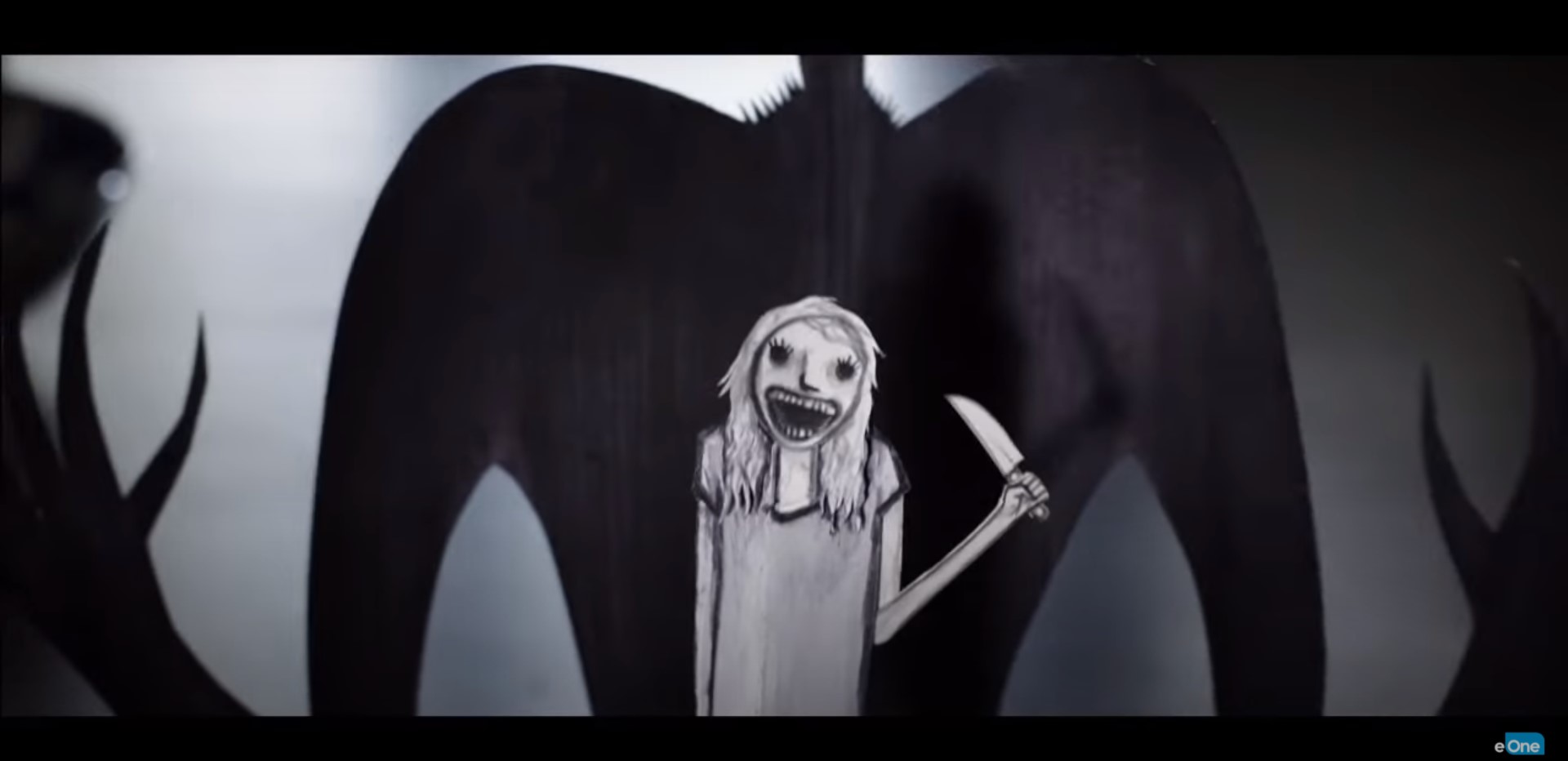
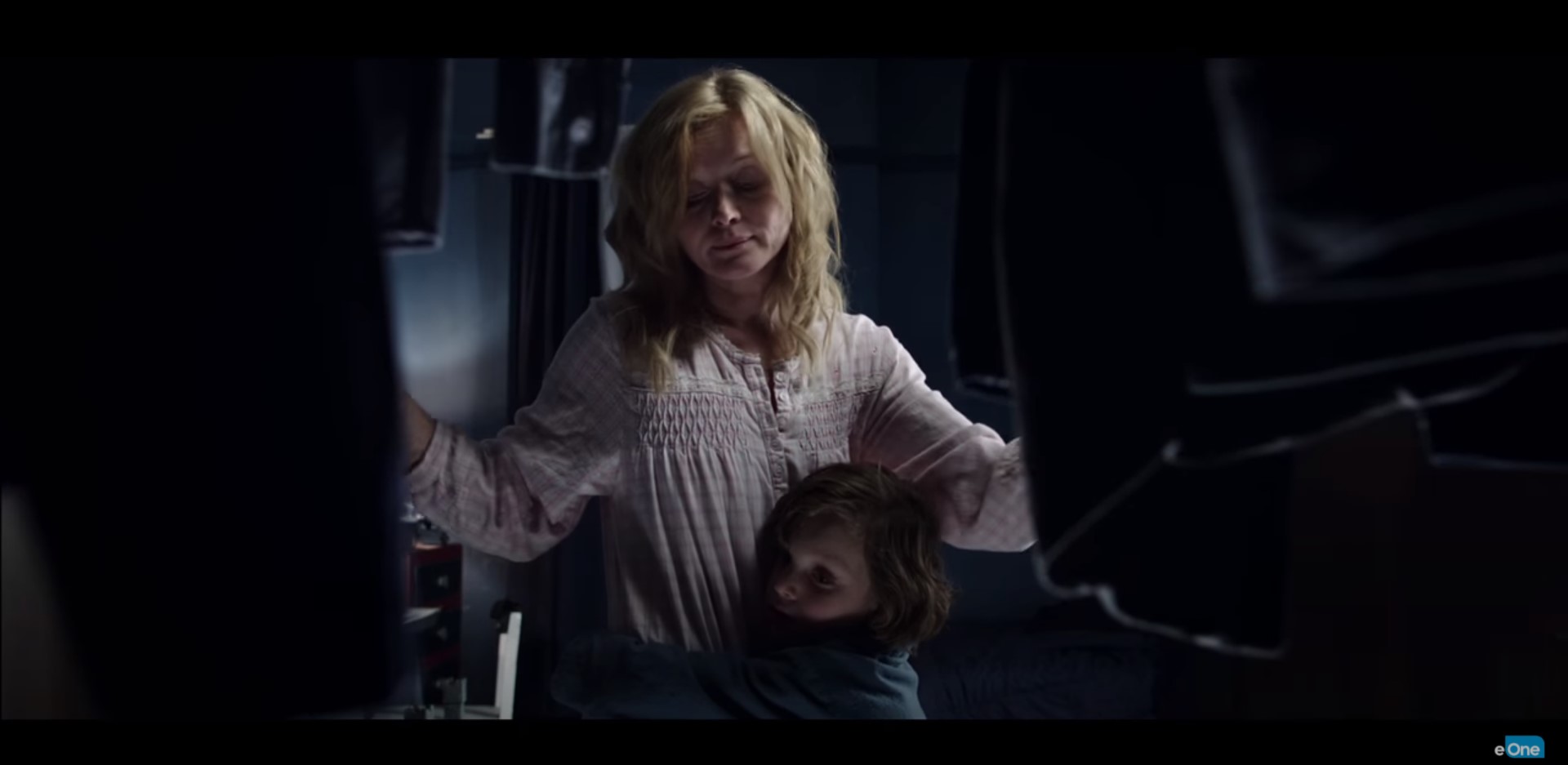
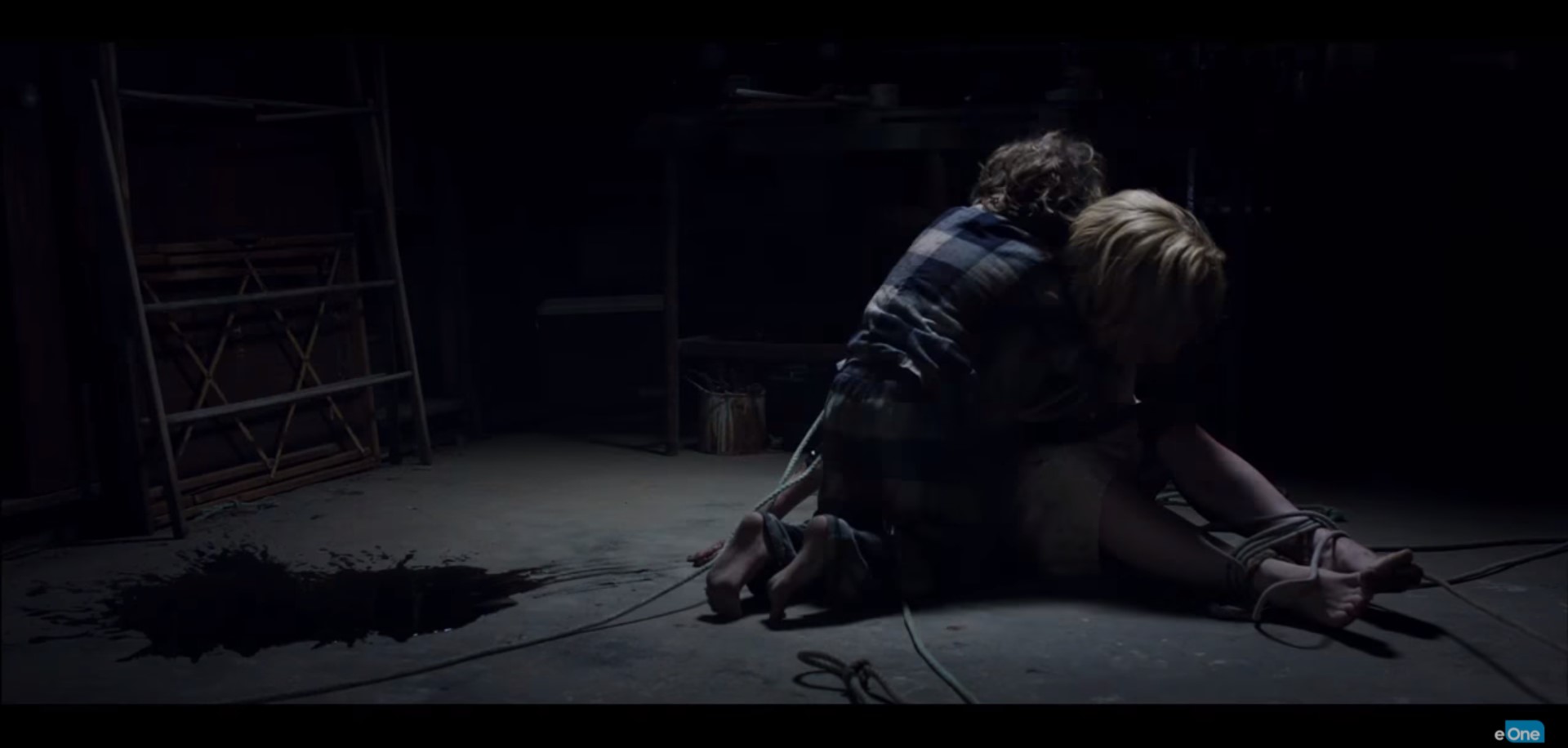
Stage set six years after a car accident involving the death of her husband, single mother Amelia and her difficult six-year-old son, Samuel, struggle to find a harmonious balance in their mother-son relationship.  Samuel’s outbursts and aggressive behaviors deflate the boy’s sometimes sweet nature that has oppressed Amelia into her wits end, alienating her from connecting with other people, even her own sister.  For days Amelia can’t sleep as the stress mounds and Samuel’s erratic temperament continues to worsen, especially when Samuel discovers a mysterious book from the shelf entitled Mister Babadook.  A book he can’t shake from his mind.  The frightening book, filled with graphic imagery and popups, tells of an ominous, dark figure eager to be let into their lives and when the Babadook presence lurks from the pages to reality, hiding in the darkest corners of their home and leeching on the strained anxiety and fear, Amelia and Samuel must rely on each other to wade out the Babadook’s horrible wretchedness only to realize that the way to stop from succumbing to the Babadook’s wrath is to face it head on. 

I can not believe that nearly 7 years has gone by and I have not once sat with a viewing of Jennifer Kent’s “The Babadook.”  Well, luckily for me, genre UK curator and distributor Second Sight Films is releasing the golden egg of limited edition 4K UHD/Bluray sets and was able to snag a screener for review!  The Australian film is an emotionally complex and enormously identifiable thriller that demonizes the post-death states of those dealing with loss and struggling to live on tasked with what’s typically a two person responsibility of mutual support and care.  Kent, who wrote and directed the film, expands upon her original 2005 short entitled “Monster,” by keeping the wrenching core that close in tighter and tighter on the mother and son while upping the visual and audio stylistic elements to make an immersive sympathetic undergo and not just an empathetic one.  “The Babadook” is a production of a conglomerate of companies, including Screen Australia, Causeway Films, Smoking Gun Productions, The South Australian Film Corporation, and Entertainment One and is produced by “Cargo’s” Kristina Ceyton and Jeff Harrison along with “The 13th House’s” Kristian Moliere.

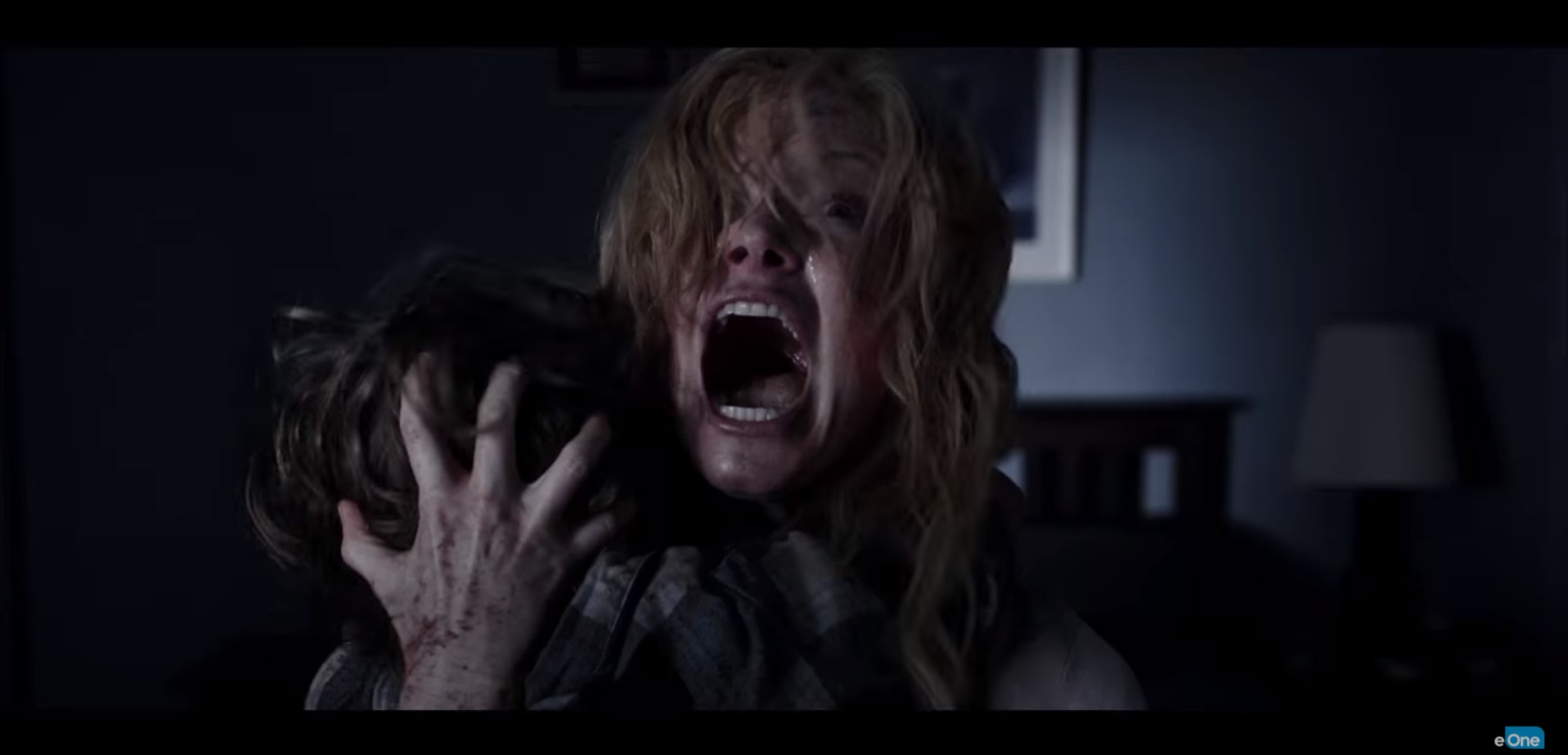
Tackling these performances of a suppressed grief-stricken mother on the edge of snapping and a young boy growing up without a father and innocently oblivious to his own autistic like behavioral issues come with layers upon layers of character depth and, in my firm opinion, Essie Davis and Noah Wiseman crush the roles with a heartbreaking dynamic.   “The Matrix Reloaded” and “Revolutions” star Davis has a tangible wearied performance of a single parent with no one to turn to for help as your unconditional love for her troubled son runs on fumes, dangerously low without an outlet for support, encouragement, or relief.  Samuel has more familiarity in the genre as a relatively new trope, an autistic child that becomes intertwined with a wicked presence that has popped up more recent films, such as Jacob Chase’s “Come Play” and Greg McLean’s “The Darkness,”  as researches learn more about autism and society has been able to authenticate the condition over the years.  The debut feature performance from young Noah Wiseman can get under-your-skin being a restless busy body, a screeching backseat thrasher, and a poke and prod child in constant need of attention, but Noah is able to switch right into a sweet natured young boy with lots of wonderment and love for his mother.  Noah’s inventive, creative, and has a knack for self-preservation when dealing with a looming evil hungry for his fearful submission but because Noah is different from other children, he’s society labeled “disadvantage” is actually advantage, a tool for survival, that keeps him fixated on what’s important.  Focally attuned to just Amelia and Samuel in the story, the film barely registers the supporting cast that rounds out with Hayley McElhinney, Daniel Henshall, Barbara West, and Tim Purcell as the obscured Babadook.

Right from the opening scene, director Jennifer Kent instills a visually stylish premise geared to layer Amelia’s troubled mindset with an etherealized environment nightmare of her husband’s tragic death followed with the reality-grounding energy drain of raising single-handedly a difficult child and the rest of Amelia’s social bubble imploding without a sense of compassion.  From Samuel’s school to her own sister, Amelia is bombarded with delineation of Samuel’s behavior, riddling her psyche with shot after shot of disparaging remarks compounded upon a lingering pain that goes all the way back to her husband’s death nearly seven years ago and to which she subconsciously assigns Samuel blame.  Culminating to a head on Samuel’s birthday, the exact same date of her husband’s death, is a flood of weary and breakdown overtaking Amelia’s last bit of hope for her child and for herself.  This manifests an internalized darkness protruding out into the exterior in the form of Mister Babadook, the embodiment of grief pent up and let loose, feeding off Amelia’s exhaustion and malevolently possessing her being to want to do the worst possible thing overly stressed and repressed parents can do – take out their pain on their children.  Kent masterfully crafts symbolizing grief as an atypical presence of our normal selves.  The sheer amount of dimly lit negative space for the Babadook lying in waiting goes not to waste as when you think something is there, perhaps the Babadook, nothing actually materializes from the ominous shadows, but, in the realm of the story’s reality, that sensation of feeling a presence in the room with you is beyond a tauten tangibility and Kent, playing with that construct, adds stomach knotting audible cues, a guttural discordance, that narrow the eyes, pull the covers over the head, and have you wait with bated breath.

Let the “The Babadook” in with Second Sight Films’ 3-disc limited edition dual formatted, region free 4K UHD and region B Blu-ray, release arriving in the UK on June 21st.  The 4K presentation, an upscaled 2160p, is mastered by the original post production facility and presented in a 10-bit HDR10.  Both 4K and Blu-ray have an aspect ratio of 2.35:1 widescreen.  Audio options include the an English language DTS-HD master audio 5.1 and an English LPCM 2.0, complete with perplexing creature roaring soundbites from the original Resident Evil game on PlayStation.  Since only a screener disc was provided for this review, I am unable to comment on the exact quality of the release’s audio and video outputs; however, the rigid slipcase, with artwork from Peter Diamond, sheaths an abundance of special features, including a new audio commentary by Alexandra Heller-Nicholas and Josh Nelson, “This is My House!” – an interview with lead actress Essie Davis working with the cast and crew as well as her impressions of the story, “The Sister:  Interview with Hayley McElhinney” who talks about her character’s uncompassionate sibling role, and interviews with producers Kristina Ceyton and Kristian Moliere, editor Simon Njoo, production designer Alex Homes, composer Jud Kurzel, and book illustrator of Mister Babadook Alexander Juhasz.  The release also comes with Jennifer Kent’s inspirational short film, “Monster,” the making-off “”They Call Him Mister Babadook,” featurette about production design and set location in “There’s No Place Like Home:  Creating the House,” special effects talk about the sole stabbing scene, segment on stunt work, “Illustrating Evil: Creating the Book” that was illustrated by Alexander Juhasz, and a 150-page hardback book with brand new essays, an achieved interview with the director, concept illustrations, and behind the scenes photos  and collectors’ art cards that were not included with the screener.   Broodingly topical and harrowingly acted with perfection, “The Babadook” is the epithet for silent deadly threats, squirrelled and suppressed away by innate survival instincts only to be a subsonic explosion when the unstable psyche’s flashing point is sparked.