EVIL Cowboys Up! “Ghostriders” reviewed! (Verdugo Entertainment / Blu-ray)

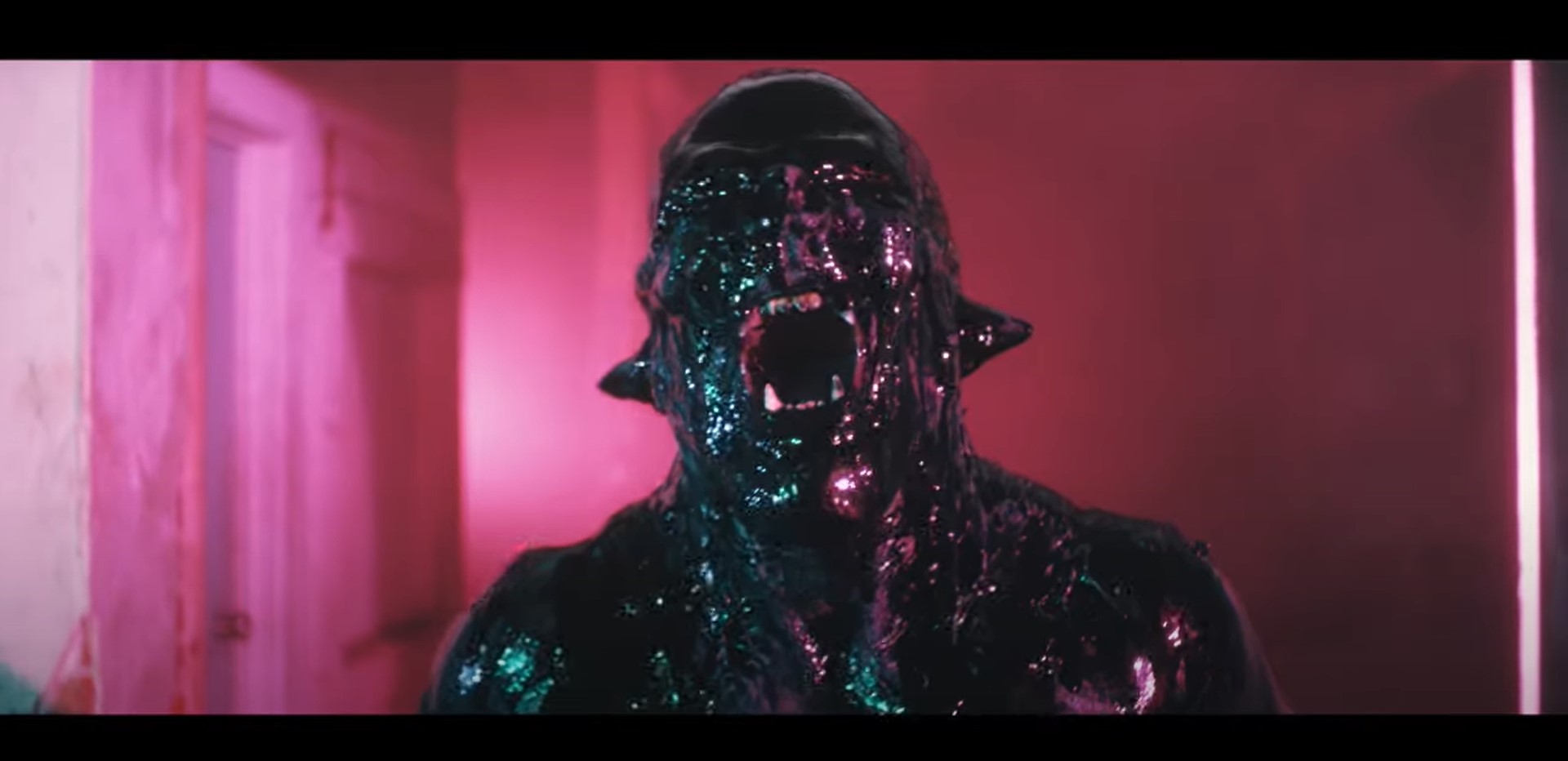
A small Texas town in 1887 took lynch mob tactics upon a jailed outlaw Frank Clements after a prominent resident and his family were slain.  In a last-ditch effort to save their gang boss, Clements’ men come in guns blazing but mob leader, the Reverend Thadeous Sutton, pulls the gallows lever to send Frank Clements to his doom.  Fast forward 100 years later to 1987, renowned historian Professor Jim Sutton researches the notorious murdering bandit, even owning a piece of Clements’ property with a cursed sawed-off double barrel shotgun, but the 100th year anniversary delivers good on the Clements’ curse as he and his men return from the dead and gun down all in the rural Texas backland.  Walking into a supernatural showdown with the undead is the professor’s son Hampton and his friends on a road trip to his father’s isolated estate where surviving the night of continuously respawning malevolent six-shooters will seemingly never happen.

Ghost cowboys.  That small and obscure piece of particular subgenre stemmed from the broad western horror pie can be and has been a hard product to peddle, bucking audiences off its hind side faster than a mechanical bull full of amateur rodeo saddlers.  Think about it.  Can one even name a handful of horror westerns involving cowboys, especially gunslingers back from the grave?  There’s Lee Vervoort “Gun Town” that’s more of a saloon town slasher.   “Ghost Brigade” might be the closer to the theme with Civil War soldiers possessed by evil voodoo spirits.  However, the relatively unknown TV movie “Ghost Town” from 2009, surrounding a group of college students pursued by ghostly outlaws in an abandoned western town, hits the nail on the head.  Again, these titles are rare and if you find one that does exists, more than likely the film’s a waste of cinematic space.  In any case, if you’re hellbent on a decent gunslinging ghoul film, Alan Stewart’s “Ghostriders” will saddle up just nicely.  Penned by Clay McBride (“Ghetto Blaster”) and James Desmarais (“Victim of Love”), the debut film of Alan Stewart resurrected a ruthless gang of gunslingers for pure retribution set on location at the Texas Safari Ranch in Clifton, Texas and was self-produced by Stewart, under Alan L. Steward Productions, along with fellow producers in cinematographer Thomas Callaway, who went on to be the DoP of “Slumber Party Massacre II” and “Deep Blue Sea 2,” as well as composer Frank Patterson, and Alan’s wife/production manager Susan Stewart. 

As you’ve probably noticed, the “Ghostriders” crew is small and wears many large brimmed hats by engaging themselves deeply into this 1987 released indie production.  Same can be certainly said about the cast.  Actor turned stunt man Bill Shaw was booked for dual performances between two characters stretching 100 years apart with the zealous Reverend Thadeous Sutton and the reverend’s grandchild, professor Jim Sutton.  The ancillary gunfighters, led by Frank Clements himself, Mike Ammons, are actually members of a roadside replica of a wild west town.  The actors, trained to shoot revolvers, take fake bullet hits, and learn to be rootin-tootin’ cowboys and townsfolk, took to the camera’s key antagonist roles that required them to also do some stunt work.  When considering the other cast, “Ghostriders” struggles to emerge a lead out of the various roles.  In the role of Professor’s Sutton’s son, Hampton, Jim Peters’ often subtle comedic timing, towering stature, and his cool-and-calm intellect as a stunt pilot points to lead man material, yet there are elements and qualities surrounding his young adopted sidekick Cory, played by Ricky Long, who went on to have a very long and extensive career working on the purple dinosaur kid show “Barney,” that qualifies the often inept and lovesick grease monkey to Hampton’s stunt planes as another candidate for lead man.  Even Bill Shaw could be considered principal.  Either way, for an 80’s flick, “Ghostriders” campy characters and dialogue flatten whatever substance McBride and Desmarais tries to wedge into their narrative.  Whether be the tragic bond that glues Hampton and Cory’s strong friendship or Cory’s inability to read his recent court Pam (Cari Powell) and her fascination toward Hampton, those moments of human depth are cannibalized by “Ghostriders’” round’em-up, shoot’em-down gang of ghosts.

Alan Stewart’s “Ghostriders” might be an intelligible film, but it’s certainly not an intellectual one due to budget and inexperience complications.  Pacing is good with the historical backstory opening transitioning into the present’s continued lawlessness of curse-resurrected 19th century killers after building up the prominent players with depth and humanism in order for us to care about their plight, but also in regard to the characters, there’s much left unsaid and undone to nearly every role for a complete and justifiable narrative arc.  Point in case, Clements and his gang’s ability to return 100 years after the hangman’s knot tightened around their throats goes very much unexplained along with their connection to Clements’ shotgun that seemingly holds the key to their supernatural slaying.  A lack of essence towards the titular antagonists’ return from the pine box to wreak havoc on the Sutton bloodline really has no merit to stand on, leaving a void in the crux that doesn’t serve well within the parameters of an imagination reasoning.  We need some sort of resolution for Clements return, whether it’s a deal with the Devil or perhaps stolen Native American necromancy rituals used to cheat an outlaw’s own foretelling of death, to make sense of the senseless driven chaos because, as far as we’re shown, Clements and his gang are no more than just abnormal bad dudes doing normal bad dude things.  “Ghostriders” also won’t knock your boots off with high dollar special effects.  There’s some superimposing of people and items disappearing and some solid stunt work (again – some of these hombres are moonlight as stunt people), but the most impressive practical special effects used are the blood squibs.  If you like firecracker pops making craters and spurting blood off of bodies, “Ghostriders” has you covered with plenty of squibs with a select few in slow-motion.  

“Ghostriders” rides into the black sunset with a rare cowboy horror from Alan Stewart and the film is receiving new life on an unrated Blu-ray from Verdugo Entertainment and MVD Visual.  Verdugo Entertainment’s an independent cult film distributor seeking to release forgotten retro features of the 70s and 80s, centralizing themselves mainly around westerns, horror, or in this case, a blend of both.   The region free Blu-ray converts the 16mm A & B negative into a 4K scan resolution that maintains impeccable image quality with little to fuss about, such as extremely faint and seldom vertical scratches.  There wasn’t any noticed forced enhancement or cropping which provides logical evidence to a pristine original negative. Though the original English language mono soundtrack bears the same unblemished qualities as the video, the difference lies within the soundtrack’s weak decibel levels that leaves the dialogue corridor stuffy and muddled behind a curtain a fairly perceivable static interference through the duration. The release labels the audio as remastered, and I’m certain the audio was spruced up from a worser quality, resulting in a much more palpable and persistent outcome that works at your attention rather than leaving caution to the wind. Verdugo offers up a nice selection of special features with an audio commentary with cinematographer-producer Thomas L. Calloway, writer-producer James Desmarais, and moderator Steve Latshaw, a brand-new original documentary “Bringing Out the Ghosts: The Making of “Ghostriders” with Desmarais and Calloway recollecting memories of being on set and talking about the cast and crew, an archived documentary “Low Budget Films: On the Set of “Ghostriders” is a Baylor University funded vintage doc about the makings of independent film, more so about this particular one, feature stills and behind-the-scenes photo gallery, the original trailer, and a new reissued trailer, which you can see below, all packaged nicely in a Blu-ray case with a cardboard slipcover with a cheeky illustration of three skeleton desperados cladded in cowboy attire and brandishing Winchester rifles. Nowhere near what the film is like but the comicbook-esque cover is eye-catching and whimsical enough to draw you in. Verdugo Entertainment could have easily chewed up this unknown cult film and spat it out with cheap distribution ease into the marketplace spittoon. Yet, the indie distributor dressed the late Alan Stewart film with respect, properly showcasing a neater, cleaner, and far from forgotten meaner spirited square off against the living and the dead.
EVIL Hangs Ten! “Surf Nazis Must Die” reviewed! (Troma Films / Blu-ray)


Check Out the New Price Drop for the New “Surf Nazis Must Die” on Blu-ray!

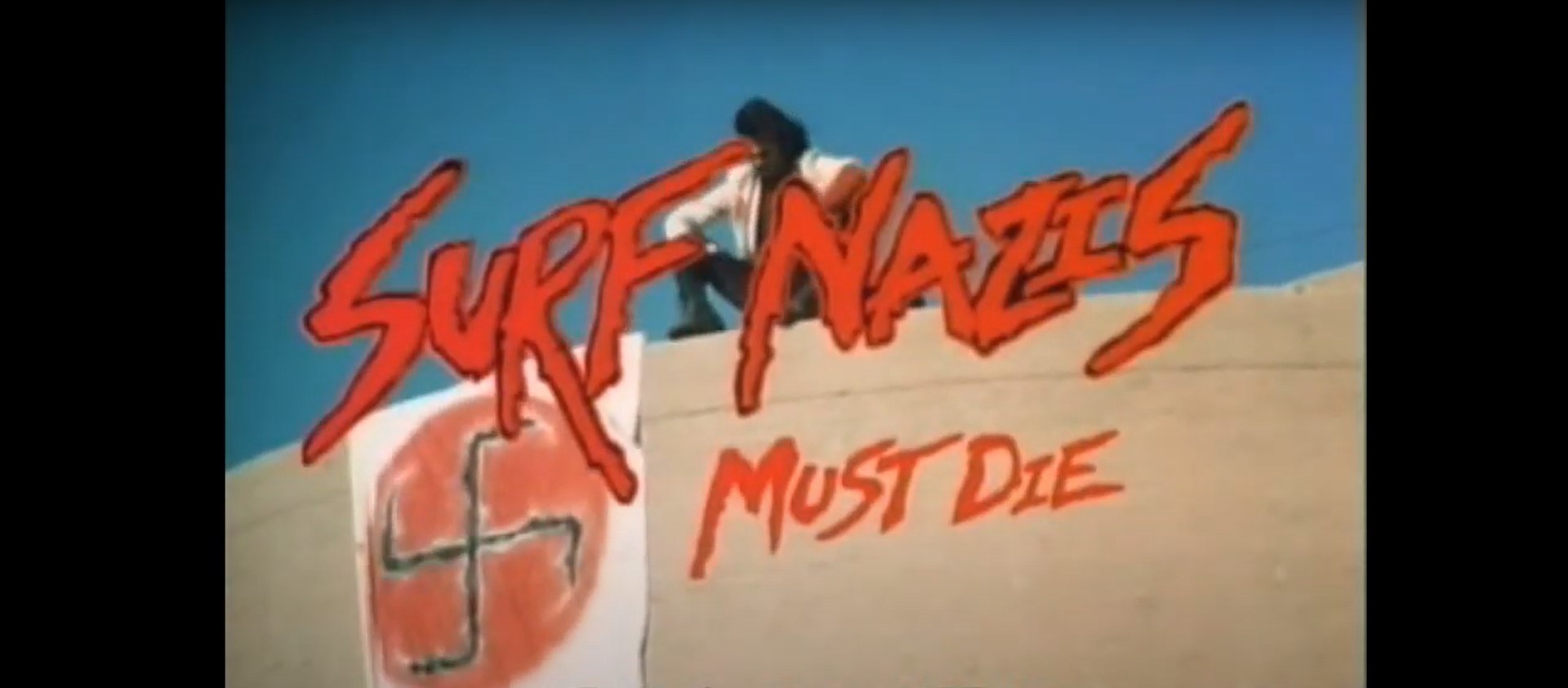
The waves of Power Beach wash ashore red with the blood of territorial gang war.  Wiping out is not an option for the Nazis, the largest and strongest wave riders consisting of new age Neo-Nazis led by Adolf, his lady Eva, and ingenious welding right hand Mengele.  As they surf for turf, the Nazis strong arm the rival gangs into a no choice option of calling a truce amongst themselves to attack and take down the Krauts and regain control over the towering waves and lucrative scores of Power Beach.  Caught in the middle is Leroy, a young black man who becomes gang war collateral damage on the unsafe beaches.  When Eleanor “Mama” Washington gets wind of those responsible for her son’s death, she’s blitzkriegs the surf Nazi’s of Power Beach with her own brand of grenade throwing justice.

Ever since being highly promoted at random on Alex Powers’ wannabe Troma film “Sadistic Eroticism” starring adult film actress Sophie Dee, perhaps as Powers’ favorite Troma release, seeing “Surf Nazis Must Die” tickled the curiosity of the olfactory snout and became one of those must watch titles canonized with outrageous, off-color content that’s routine for the Lloyd Kaufman and Michael Herz independent shock-and-comedy distributor, Troma Films.  Peter George directed his semi-serious, mostly satirical-toned debut film from a Jon Ayre script based off George’s original story idea of incorporating the territorial surfer scene of California with a laying siege, post-apocalyptic, gang and revenge narrative that’s a delectable smorgasbord buffet of low-budget subgenres.  Perfectly situated in front of deep-water oil rigs and the towering smokestacks of power plants and other various manufactories along California’s graffiti-cladded Huntington Beach, “Surf Nazis Must Die” is a production of Peter George’s The Institute alongside company co-owners in editor Craig A. Colton and producer Robert Tinnell (“Frankenstein and Me”).

Tennessee born actress Gail Neely receives her big break in a lead role of a feature film.  Lamentably, that film was full of bad taste and full of punk surfers with red painted swastikas on their black wetsuits who also paralleled nefariously notorious figures of bigotry and war crimes against anyone not white Anglo-Saxon.  Yes, Neely is a black actress pitted against and taking revenge on a group of racist thugs, a narrative we’ve seen before, but the “Naked Gun 2 ½:  The Smell of Fear” actress took an unjust backseat (an unfortunate and unintended Rosa Parks pun) in sharing the lead with the very Nazis she ruthless takes head on.  Trying to understand why Peter George and Jon Ayre decided to focus more on the strategic overthrows of gangland rather than to journey Mama Washington’s revenge in her death wish arch is beyond comprehension in a lopsided narrative that gives more screen time to Nazis and gangs than it does a grieving, nursing home-residing, mother hellbent on avenging her slain son with vigilantism.  The latter is a much better story that breaks up the stagnant gang mentality unwavering throughout.  Neely does her best to pull audiences back into the revenge fold with a grit and attitude that takes us back to 1970’s blaxploitation films of yore, but ultimately, “Maniac Cop’s” Barry Brenner and “Star Slammers’” Dawn Wildsmith and Michael Sonye inadvertently bleed out Neely’s full potential with their respective Nazi counterparts – Adolf, Eva, and Mengele – and their intercompany squabbles and beach brawls against rival gangs.  “Surf Nazis Must Die’s” cast rounds out with Robert Harden (“Dead Girls”) as Leroy, Joel Hile (“Deadly Friend”) as Hook, Gene Mitchell as Brutus, and Tom Shell (“Hard Rock Nightmare”) as Smeg.

With a title like “Surf Nazis Must Die,” the expectation bar was high to bequeath audiences guaranteed politically incorrect exploitation and sizable good versus bad mayhem crashing like a cacophonic wave on the surf.  “Surf Nazis Must Die” does meet that brazen bar that associates surf territorialism to the likes of Nazism by way of excluding outsiders from their surf turf and be nasty about it as well.  Would I compare it to Nazism?  Probably not, but in the heat of control and power over others less fortunate in riding waves might draw a vague resemblance.  In a bit of satire and irony, 1940s Nazi Germany was ruled by an extremely authoritarian people running a tight ship in every facet from the meticulous armed ranks to innovative engineering to the ostentatious decorated halls and buildings of propaganda and flag hoisting pageantry, but Peter George’s Nazis, granted the new age variety, plague themselves about the beach, living off stolen goods while driving around in a makeshift shark modified van, tanning their mostly exposed bodies, or dressed in graffiti stylized wetsuits and trench coats with glitter-face painted swastikas.  The characters are cuter in caricatures than they are in terrorizing tyrants of the beach.  What’s even more interesting about “Surf Nazis Must Die” is that none of the gangs carry firearms despite one of the popular Troma cover arts displaying an archetypal lampooned Nazi riding a wave and wielding an Uzi.  The “Clockwork Orange” gangs meandering about with unprovoked violence carry traditional switchblades, nontraditional switchblade surfboards, nunchakus, staffs, a hook for an arm, and there’s even one guy with a speargun.  Only Mama Washington is armed to the teeth with conventional weaponry of grenades and a handgun that makes this film even more unfathomable at times.

Thirty-five years later, “Surf Nazis Must Die” continues to make waves a war zone with a new Blu-ray released from Troma Films and distributed by MVD Visual. The newly restored, newly remastered, high-definition region free Blu-ray is presented in a widescreen 16×9 aspect ratio from the original 35mm negative and is not quite the fully uncut version, running two minutes short at 83 minutes from the director’s cut that circulates overseas. The color matte lacks bounteous vision that fails to give range to the graffiti art amongst other aspects. The transfer has little-to-no blights with some transparent vertical scratches in a single frame but nothing else more to note. George and editor Craig A. Colton work their magic on a remarkable cutting room performance with splicing in Hawaiian surfing footage with the Huntington Beach narrative in a near seamless manner. The English language lossy LPCM 2.0 track doesn’t hook into you with a linear fidelity with no range or depth but does provide fair dialogue clarity and no impeding audible damage. “Terror Eyes” and “Future Shock’s” Jon McCallum has a fantastic synth score that pulsates life into the overabundance of stagnant moments and the film is worth a watch just for McCallum’s soundtrack alone. Gnarly special features include a new introduction by a locked down stricken Lloyd Kaufman diving into his pool to take a bath, a circa late 80s/early 90s interview with Peter Geoge conducted by the enthusiastic Lloyd Kaufman, another circa late 80s/early 90s snippet interview with producer Robin Tinell, a pair of deleted scenes with Peter George commentary, scenes from the Tromaville Cafe, Radiation March Promo against pollution, a pair of archived Troma NOW PSA announcements that are as sexually titillating as they are meaningful in their message, a Soul of Troma promo trailer,” “Latched” short, and various other Troma promos: Indie artists vs cartels, Lloyd Kaufman gets “fucked” by the Hollywood system, and Lloyd Kaufman’s Audiobiography. There’s also mention of a “Gizzard Face” promo, but I did not see it as an option in the bonus content. “Surf Nazis Must Die” inches along and loses a lot of key momentum along the way building around the striking title. Eventually, the undercutting of gang machoism crumbles away to leave an open path for Mama Washington’s full-blown assault as a true cinematic Nazi hunter extraordinaire.

Check Out the New Price Drop for the New “Surf Nazis Must Die” on Blu-ray!

Sexual Asphyxiation is Just One of the Offered Services in EVIL’s Lavish S&M Prostitution Biz! “Tokyo Decadence” reviewed! (Unearthed Films / Blu-ray)


Own the new Unearthed Films Blu-ray of “Tokyo Decadeance” today!

Ai doesn’t believe she is not good at anything.  Her youth and beauty provide the early 20-year-old financial means of survival as a high class, Japanese prostitute with a fetish niche for clientele desiring sadism, masochism, or both.  Eccentrically demanding and various in age customers range their likes from total self-humiliation by pain and punishment to rape and necrophilia fantasies.  Unable to stop herself from accepting jobs because of her self-loathing cycle, Ai continues to endure most of the sexual whims no matter how outrageous or aggressive they may be during the sometimes hours long sessions.  What keeps her knocking on strangers’ doors is the pining for a former lover, a now famous celebrity she at one time dated pre-stardom, who has since married and left the memory of a fragile Ai in his life progressing wake.  After taking a gig alongside a fellow mistress in humiliating a real estate mogul like a dog, Ai’s invited back to the mistress’s elegant home where she’s exposed to a long night of unlabeled drugs that sends her into an uncontrollable high, looking for her former lover on the quiet streets of Japanese neighborhoods.

“Tokyo Decadence” makes “50 Shades of Gray” look like an inexperienced couple’s first time fumbling into cutesy foreplay.  Though both films are adapted literary works made into controversial features surrounding sultry nipple clips, whips, chains and other playthings, the 1992 Japanese psychosexual drama is the only one out of the two where the novel’s author, Ryu Murakami, has total creative control of his tale of one woman’s squirming through perversion land as the screenwriter and director.  Titled Topâzu in its originating country’s language, “Tokyo Decadence” opens up a carnalized world rarely seen amongst the daylighting fray and the price paying struggles of someone as meek as Ai in that position’s lustfully gripping vise that begs the question, is S&M obscurity an insatiable erotic hunger or is it a choking dangerous fantasy?  Shot mainly in the titular city of Tokyo, the film is a production of the JVD (Japan Video Distribution) with JVD’s Tadanobu Hirao (“High School Ghostbusters,” “Celluloid Nightmare”) as producer alongside Chosei Funahara, Yousuke Nagata, and Akiuh Suzuki.

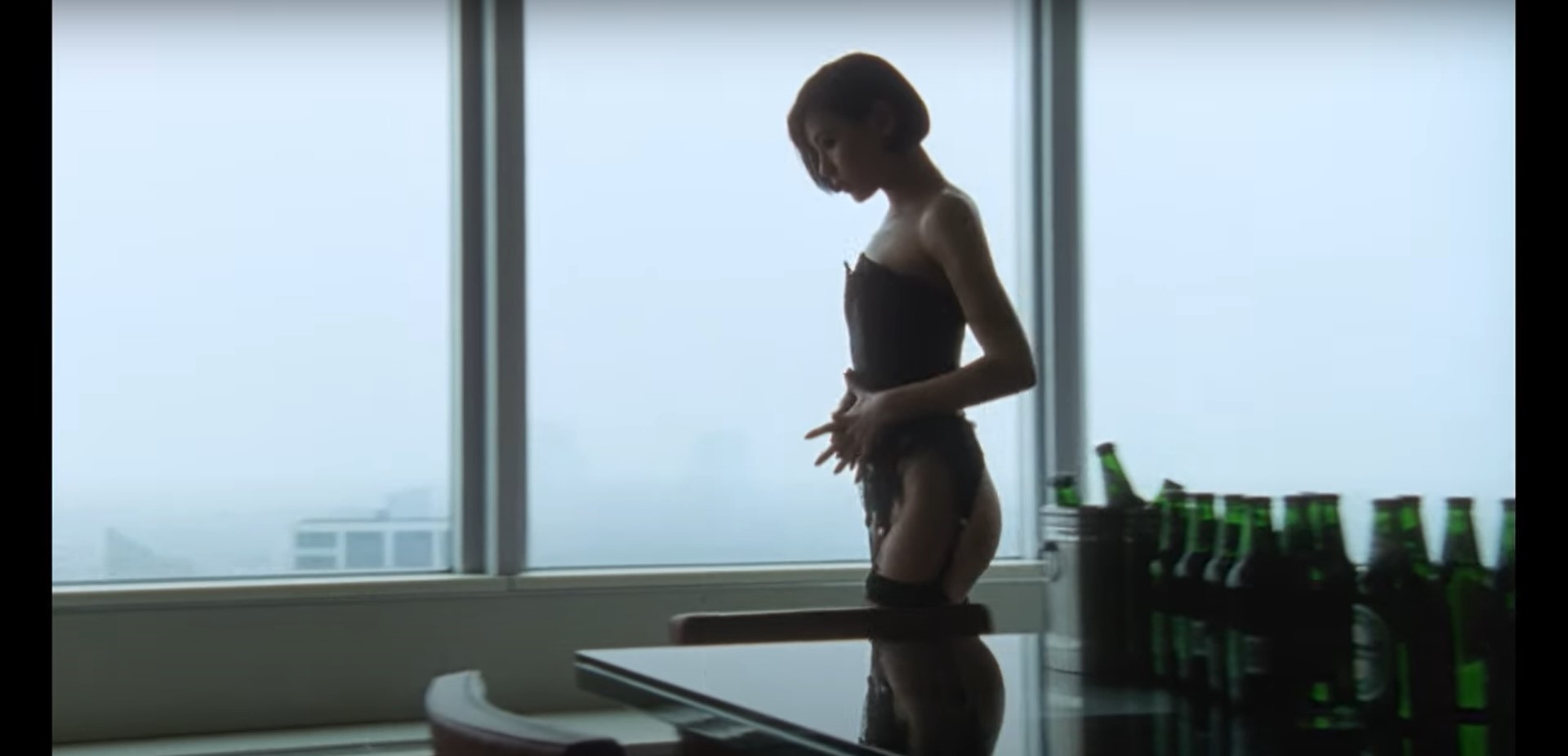
“Tokyo Decadence” is a sure-fire way to start the beginnings of an actress’s career with a rousingly provocative and difficult role that garners attention.  For Miho Nikaido at the very start of her career, the lead role looked like a Tuesday.  The then 26-year-old Nikaido, playing a 22-year-old Ai, stuns as a sympathetically shy S&M prostitute with underlining conflicting issues surrounding her social position, personal interests, and mental status.  The opening scene with her legs lifted and spread strapped into stirrups and her bold colored red lipstick mouth buckled with a black open mouth gag complete with matching blindfold diverts eyes away from the usual nudity focal point.  Instead, we’re more attuned to the happenings of a mild manner, smiling man, who we assume bound her down under professional servicing, as he stands over her, gently stroking her, and telling her to trust him and that he won’t hurt her.  Then, out comes the drug pouch and needle.  The jab sends shock waves of pleasure down Ai’s submissively fastened naked body, ending with Ryu Murakami’s extreme close up on Nikaido’s face after being released from the facial constraints.  Her slightly crooked teeth shiver just past her stark red lips, agape by ecstasy, and the single tear drops from her soft eyes express the gargantuan amount of pleasure coursing through her helpless corporeal temple in a look that says, I am in pure, undiluted heaven.  The opening sets the tone.  Funny enough, Nikaido would go on to have a role in another underground S&M inspired drama “Going Under,” but instead of acting like the subservient dog or humiliating customers by having them suck on her stiletto heels, Nikaido steps aside as the girlfriend to Geno Lechner’s dominatrix role. Sayoko Amano, Tenmei Kano, and Masahiko Shimada co-star.

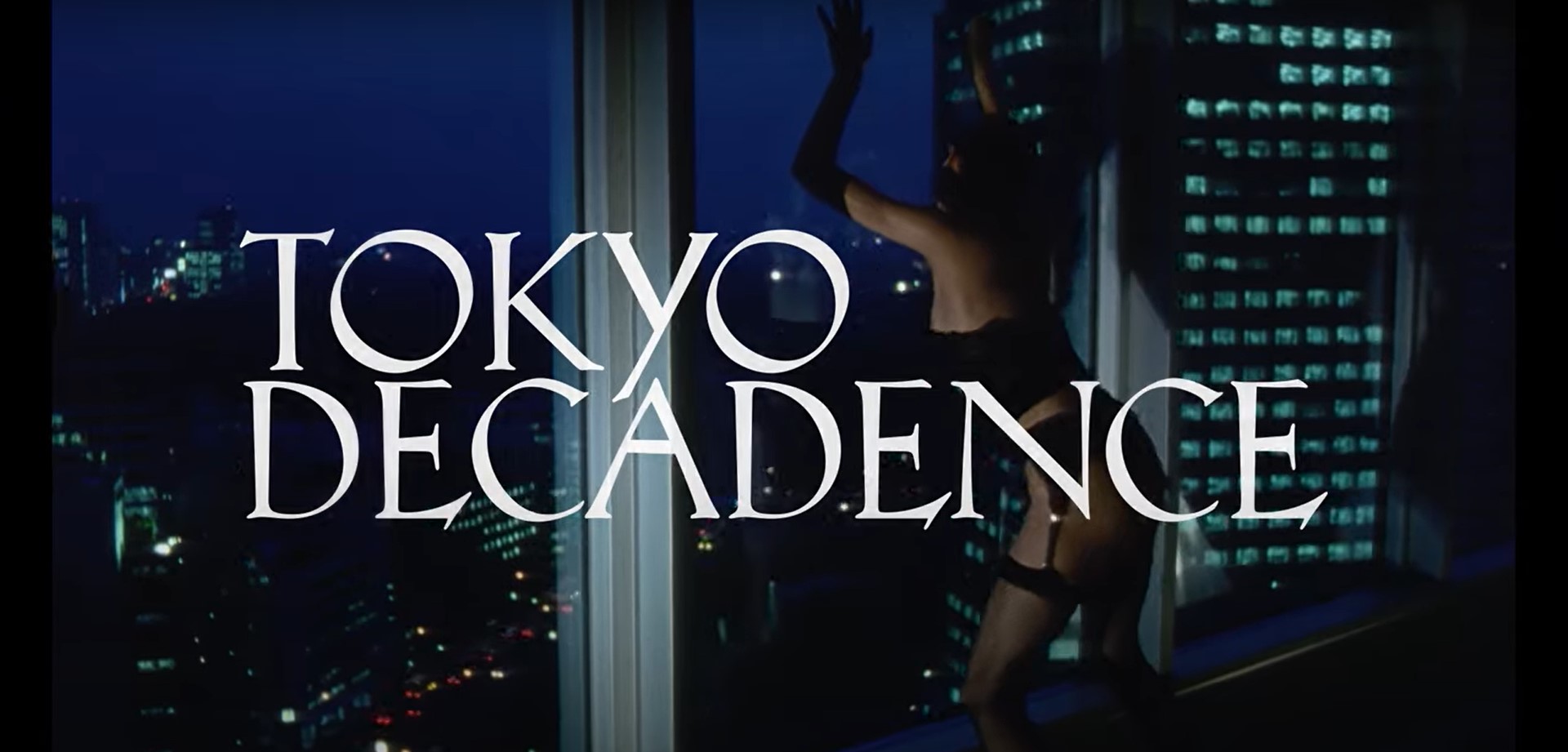
Perhaps one of the most noticeable or mainstream pink films from Japan because of its titillating and iconic cover art of Miho Nikaido arched forward and hands pressed high on the glass above her head, leaning against a tall and large window pane in a skimpy black lace and leather getup and overlooking the city lights and bustling residents,  The very image epitomizes erotica and taboo acts and the narrative itself is nothing short of that slight zing of sordid pleasure we all experience in our minds, bodies, and especially in our more private areas. Pulled straight from Ai’s first job encounter, post-opening credits, with a wealthy business type Mr. Satoh’s and his perversion in dominating and humiliating without much physically contact in the first few couple hours of their session. The long-standing stint pushes Ai’s sexual limits without breaking her spirit that solidifies a baseline for what’s to come and what came crushes Ai’s sexual stimulation beyond the means of pleasure with a petri dish of distinctive peculiarities outside her already fringed tastes. Ai’s self-dismissiveness keeps her plugging away at a profession that’s eating away her, coming close to death in many various forms involving clients’ perversions. When she’s hired by another mistress in a co-op of dominance on a client, an unveiling of empowerment and a lavish lifestyle promises potential happiness away from her fairytale dream of reconnecting with her former lover, but that ultimately becomes a hard pill to swallow after swallowing an unidentifiable pill popper provided by her newfound friend in the trade, a pill that inebriates her into wandering the streets in search for her ex-lover. “Toyko Decadence” is as somber as it is sexy with a paralleling dark trip down delusional happiness and demented fantasy for a young woman clinging onto a past that has completely forgotten her.

Landing in at number seven on the spine is the Unearthed Films release of Ryu Murakami’s “Tokyo Decadence,” receiving a Blu-ray release on the label’s Unearthed Classics line in a widescreen 1.66.1 aspect ratio. The region A release has a runtime of 112 minutes and is plainly evident in exhibiting no rating listed on neither the back of the Blu-ray case nor the cardboard slipcover. After doing some light digging, there is a longer cut of the film with more explicit scenes, especially with Mr. Satoh, that would have adorned the U.S. release with a X-rating. The Unearthed Films release is not that cut; nonetheless, the film before us is still just as decadently beautiful in content and in quality. Stable image and color under the 35mm stock, Tadashi Aoki flipflops between mood lighting and natural light, contrasting the duality of Ai’s worlds with a lightly softness reflecting off the focal subjects. Details extend the same softness as skin textures appear overly smooth most of the time albeit the design of natural color tones. One instance of continuation concern is a prominent scene miscut left in during post at the editing room table. Though the miscut, of a closeup on Miho Nikaido, doesn’t cause a continuity error in the narrative, it does break the integrity of the scene. The Japanese LPCM 2.0 mono sound has a phenomenal, 1920kps bitrate, sound design created around a lite soundtrack that doesn’t leave room for ambient and dialogue tracks to hide behind, as if this release needed to hide behind its brawny audio output. “Tokyo Decadence” is all about the experience and every breath and movement is as felt as it is heard with a discernible dialogue well synched with the English subtitles. An optional English dub track is also available. The Blu’s special features include a release-party featurette/promo trailer that has snippet interviews from the Ryu Murakami during the event, gallery stills, and trailers. An absolute ideal upgrade for one of the best pinksploitation films to ever walk that thin line between sadism and masochism; however, I do believe Unearthed Films insisted upon the safe word by not, whether by choice or other circumstances, retrieving, updating, and releasing the fully uncut and unedited “Toyko Decadence.”

Own the new Unearthed Films Blu-ray of “Tokyo Decadeance” today!

Mindy Robinson Takes on EVIL Strippers in “Brides of Satan” reviewed! (Dark Side Releasing / Blu-ray)


“Brides of Satan” available at Amazon.com!  DVD and Blu-ray!

Engaged happy couple Mary and Charlie want to dip their toes into debauchery before tying the knot.  When they patron a dive strip club, looking to unwind a nervous Charlie down a notch with a sultry, on-stage lap dance, the club is suddenly seized by three well-armed Satanist strippers looking for quick cash and a virtuous sacrifice to conjure a demon.  Kidnapped for the dark ceremony, Mary and Charlie find themselves in their grip with Charlie being murdered to complete half the ritual, but Mary is able to escape when a rival gang claims rights over the territory that sidetracks the Satanists summons.  Mourning over her fiancé’s death, Mary is taken under the wing of a junkyard sensei who trains her to fight and to be fearless against all those in her path for vengeance. 

From horror enthusiast Joe Bizarro comes the filmmaker’s first written and directed feature film, the pastiche grindhouse revenge-thriller “Brides of Satan.”  Bizarro, who co-produced “Another Plan from Outer Space,” the Lance Pollard offshoot homage to the Ed Wood Jr.’s iconic science fiction-horror “Plan 9 From Outer Space,” co-writes his 2021 exploitation with “Take Shelter” cinematographer and first time screenwriter Noel Maitland penned to be a wild-and-strange ride through the various territories of genre landscapes.  Film in and around the greater Los Angeles area, “Brides of Satan” stitches the perceived strange and unusual charisma of L.A.’s alt-scene offerings around a familiar framework with a few arbitrary bits of bizarre.  Along with Bizarro and Maitland is fellow executive financier Lance Pollard, who we mentioned had previous dealings with Bizarro, and the jacks of all trades Victor Formosa (“Iron Sky:  The Coming Race”) along with William Wulff, Celeste Octavia, Lisa Mason Lee, and Mike Ansbach serving as producers on the Joe Bizarro Studios labeled production. 

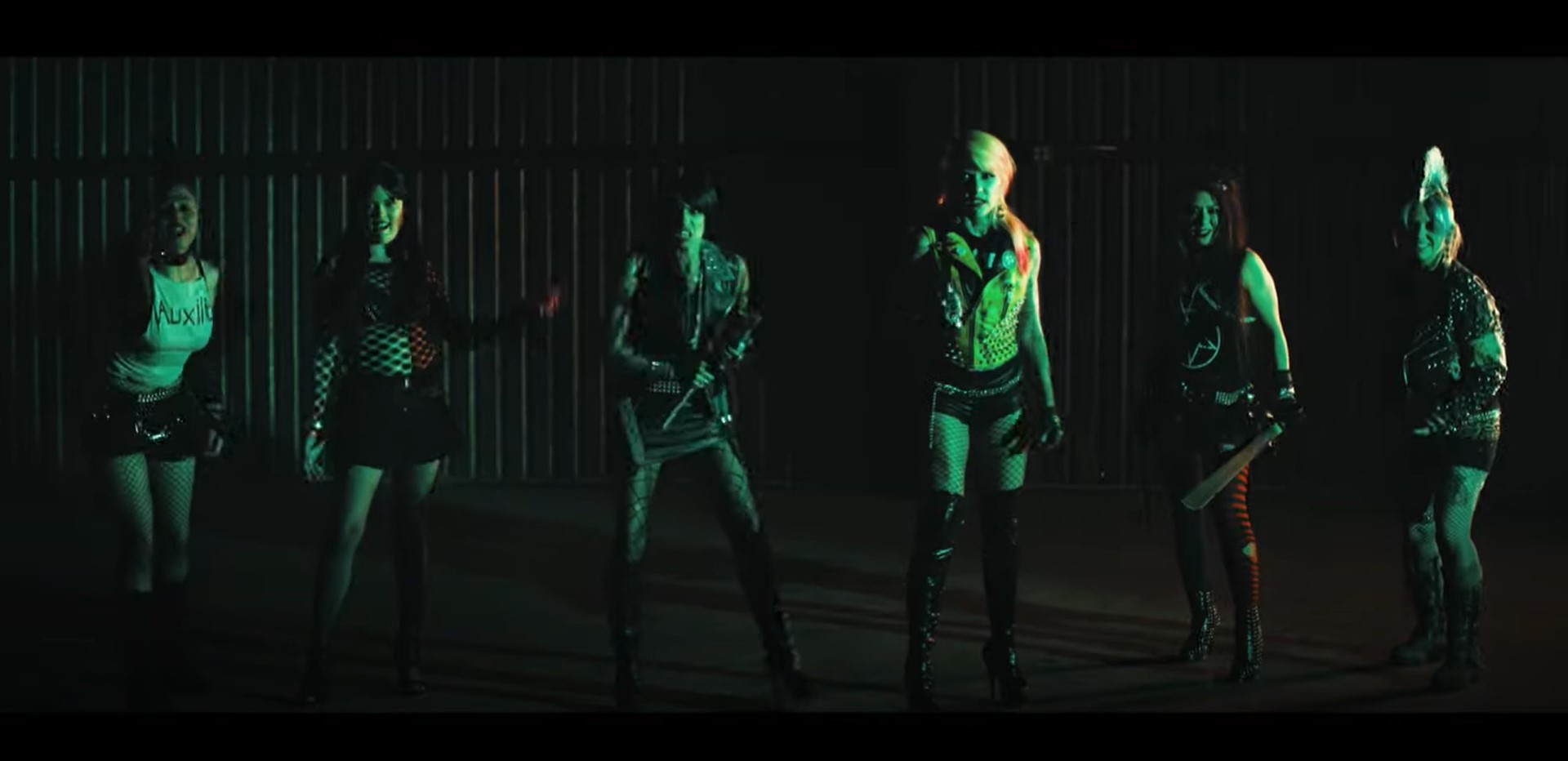
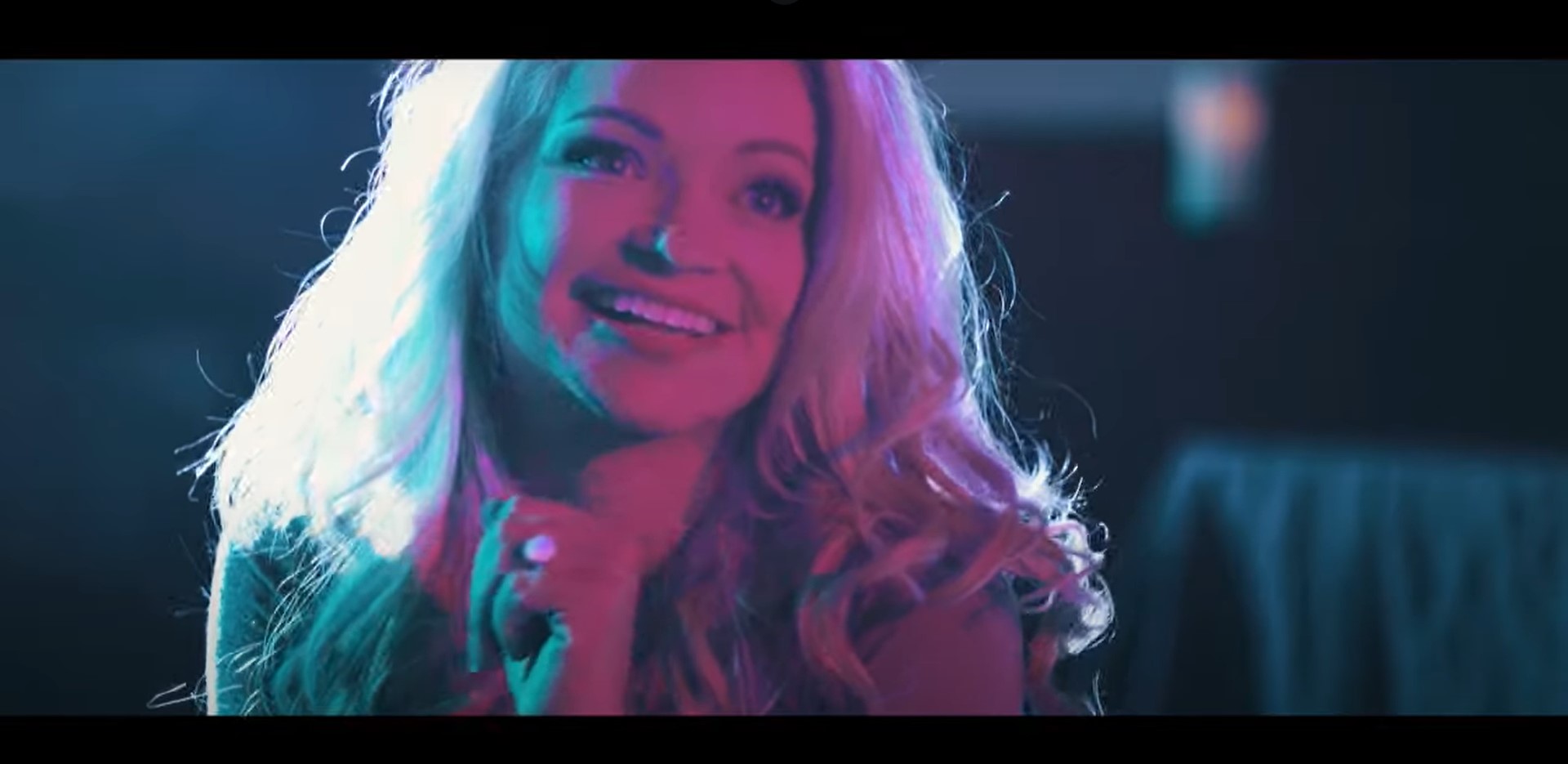
Right off the bat, the montage introduction of the tri-gang strippers, played by Alice McMunn, Joanna Angel, and Rachel Rampage, with sizzling eroticism and skin, seductively gazing into the camera and pole dancing captured in slow motion immediately sets the tone for the rest of the story. Laden from their colorfully neon-dyed hairstyles to their fishnet-led leathery platform heels with body ink, their focal opening is a bit of Joe Bizarro in a nutshell as well as an eclectic look into a cast comprised of goth, burlesque, body-mod, and fetish aficionados.  I was also hoping for a cameo from adult actress Joanna Angel’s husband Aaron ‘The Small hands’ Thompson, but alas, no such luck.  Though McMunn, Angel, and Rampage get the juices flowing and motivate the narrative into a plot point of character deconstruction, reconstruction, and revenge, neither of them are the top bill for lead role.  That responsibility falls solely on the “Evil Bong” franchise – wait, there’s an “Evil Bong” franchise? – actress Mindy Robinson that, through a (Joe) bizarro world, adds an interesting element of casting for the outspoken Republican commentator who happens to also be the girlfriend of former mixed martial artist and “Expendables” actor Randy Couture.  Robinson amiably plays a loving fiancé Mary to an equally amiably, yet unresolved, Charlie (Michael Reed, “The Disco Exorcist”). Eventually, Mary’s woman scorned vengeance becomes a juggernaut of kickass, learning geriatric kung-fu from a junkyard hobo, but Robinson disingenuously leaves her fluffy and bubbly self into a character who’s supposed to be this badass that beats half-naked Satan acolytes in one blow and can vanquish netherworld demons in the bat off an eyelash. Much of the film is Robinson promenading provocative and oddball locales, meeting more provocative and oddball characters, to track down her fiancé’s murderer in a forfeiture of commanding the scenes with scene-stealing presence. Though she bests an array of stud-cladded, garage punk baddies armed with arm drills, nail bats, and switchblades, their brief moments on screen leave more of an impact than the principal protagonist and much like the gang of three strippers, in which two-thirds of them cease to exist after approx. 15 minutes into the film, they’re built up as more prominent players in this psychos-ville showdown yet fizzle to literally just a passing moment in the narrative, giving way to a film full of nothing but near essentially cameos from Anatasia Elfman (“Shevenge”), Ellie Church (“Frankenstein Created Bikers”), Sarah French (“Art of the Dead”), and Damien D. Smith (“The Purge”). There are also true cameos from “Blood of the Tribades” filmmakers Sophia Cacciola and Michael J. Epstein, professional burlesquer Olivia Bellafontaine, and Madelyne Cruelly from the pirate punk band Yours Cruelly.

“Brides of Satan’s” gimmick is to live up to representing the yield of grindhouse cinema and for the most part, Joe Bizarro cultivates a passable resemblance by borrowing from the constructs and the ideals that came from them of the golden age of independent cinema decades between the 60’s and early 90’s and reworked them into his own passion project. “Brides of Satan” is undoubtedly derivative in most of designer elements, but I did find Bizarro’s concept of uniting the alternative network and B-movie troupers into a singular movement to be refreshing in it’s something you don’t regularly see or experience too often out of the shadows and living in the daylight. As disparaging as it may sound, the sensation becomes that carnival sideshow effect where the societal outcasted abnormalities entrance and pluck at your curiosity strings much to the same effect that ostentatious or surreal horror and sci-fi movies are a way to escape the harshness of one’s own bleak day-to-day reality. However, Bizarro didn’t quite achieve the paragon of his idea not because of his cast, who are mostly stupendously talented in their own rites, but rather more with a watery script barely sustaining flavor to its revenging aspects and supernatural rifts, the imbalance amongst characters, and a dialogue so intrusively oversaturated with hackneyed one-liners that the next words out of their mouths are predictable ones. That tiredness, that sparkless originality, that familiar taste again and again is what ultimately quells “Brides of Satan’s” fetching title and it’s weighted of promise.

Rowdy and burning with streaks of fluorescent colors, “Brides of Satan” is a come Hell and high-water tribute for exploitation film lovers and the Joe Bizarro debut is now on high-definition Blu-ray home video from Dark Side Releasing.  Presented in a widescreen 2.39:1 aspect ratio on a BD25, Bizarro and Maitland, whose technical trade in director of photographer is implemented here, opt for a tenebrously smoky and shadowy obscured grindhouse-noir that innately secretes tactile details but do offer that sense of mystique danger and a carnivalesque veneer at times, using lighting techniques to accomplish the desired look.  The English language Dolby Digital stereo has lossless quality from a 384kps bitrate that, despite its dual channel limitations, outputs decent robust tracks.  Dialogue is crisp and clear, ambient background noise and ransacking has ample range and depth, and the original soundtrack from Ausie Jamie Coghill (Jimmy C) of The Jimmy C Band offers a lounge-grunge-like Rock and Roll score hitting all the right notes apt to the narrative.  The opening monologue from Rick Galiher doing his best Vincent Price vocals.  If you closed your eyes and just listened to the tracks, you can distinctly hear every tone and note in everything from a wonderfully broad audible spectrum. The special features include an audio commentary with the director Joe Bizarro, a handful of deleted scenes and bloopers, a photo gallery of stills and alternate posters (which there are a ton of), and a short skit entitled “Rad Roommates,” a pseudo-sitcom produced by Bizarro about a man and his monstrous hairball of a lowlife roommate.  If you’re lazy and don’t feel like navigating through the menu options to the special features, wait until after the feature’s credits roll through as the special features will follow, beginning with “Rad Roommates.” The Dark Lord takes a bemusing backseat that drives “Brides of Satan” more toward solely being a revenge thriller with few incomplete spidering out subplots that belly up by its own creator. 

“Brides of Satan” available at Amazon.com!  DVD and Blu-ray!

Crawling Through the Bavarian Forest is an Eight-Legged, Seething EVIL Spider. “Venom” reviewed! (Twilight Time / Blu-ray)

Own the Limited Edition of “Venom” aka “The Legend of Spider Forest” on Blu-ray!

On holiday in a small sawmill town located in Bavarian countryside, artist and photographer Paul Greville seeks to capture the serenity of nature’s bountiful beauty. When he comes across a strange, wild woman with a spider scar on her shoulder, known as the “Spider Goddess” to the townsfolk as a curse individual, his curiosity sends him poking around the quaint, sleepy village that leads him into discovering also a rare and priceless painting thought lost after World War II. The deeper Greville digs into the mysteriously beautiful, unfettered girl and the valuable lost artifact, the more the town begins to resent his nosiness into their hidden agenda of a former Nazi scientist extracting deadly venom from the lethal forest spiders for noxious nerve gas weaponization.

Screenshot from IMDB.com

Better known as “The Legend of Spider Forest,” or “The Spider’s Venom” in the States, director Peter Sykes pulls from the madcap story cache a sticky, wacky web of lies and deceits with the unwinding-arachnid thriller “Venom” that involved mad scientists, creepy-crawly spiders, a half-naked wildling girl, and a plot planned from a World War sore loser shot in the United Kingdom as the backdrop for a Bavarian woodland. Five years before directing Christopher Lee and Denholm Elliott in “To the Devil….a Daughter,” the Australian-born Sykes was outfitting his sophomore UK feature with real, untrained, bird-eating tarantulas to be the basis of his visual terror in a mind baffling labyrinthine screenplay from the filmic exploitation brothers Derek and Donald Ford who, when not selling sex with their erotica celluloid (“Suburban Wives,” “The Swappers”), they were dappling in low-rung independent horror as such with the psychotronic “Venom” which is a co-business affair between Cupid Productions and Action Plus Productions with Michael Pearsons and Kenneth Rowles producing.

Screenshot from IMDB.com

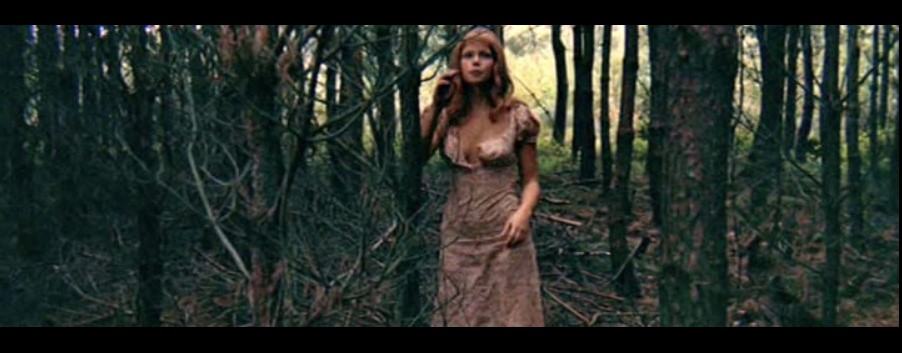
The unlucky sap caught in the village scheming drama is liberal arts enthusiast Paul Greville understood in his thirst for solving the case of the missing medieval art by English actor Simon Brent. The “Love is a Splendid Illusion” Brent, who left acting a few years after “Venom,” finally lands a significant lead man role albeit in a rather stretch of post-war German antics horror that has more twists in the narrative than there are actual spiders. Brent exudes an uncomfortable amount of a curious confidence as he charges through the forest to track down, or rather just happen to run into by chance within the vast area of a mountainous forest, “Erotomania’s” Neda Arneric, a Serbian rugged beauty playing wildling Anna with red-hot hair atop her short frame. We are first introduced to pixie cut Anna during a flashback of a full-frontal skinning dipping frolic in the river with a young, also naked, man and while the unknown man and Anna gaze with an effervescent stars of love in their eyes, the chemistry between Brent and Arneric is about as sparkless as a dud sparkler in a warehouse full of dud fireworks as their characters are too far apart and unalluring to fall for each other at first sight; instead, Brent casts such a demanding go-getter presence with his amateur investigation into the village’s little secret, his murky intentions toward the locally feared Spider Goddess is nothing more than nearly a figment of formulaic structure. We, as the audience, literally attempt to use our own mental will power against them in order to fall in line, or in love. More infatuation buzz surrounds the sawmill boss’s cloak-and-dagger daughter Ellen with “Children of the Damned’s” Sheila Allen as a willing and brazen femme fatale that seduces the hapless artist more than once, especially during one intimate session that restores him back to full health. Although an English production shot in an English forest despite being backdropped in Germany, there is one German actor that gave “Venom” that je ne sais quo toward locale authenticity, beginning with the sawmill boss and self-proclaimed first village resident Huber, played by Gerard Heinz (“Devils in Darkness”) in his last feature length film before his death one year later in 1972. The rest of the cast predominately is English with Derek Newark (“Fragment of Fear”), Terence Soall (“Theatre of Death”), Bette Vivian and one sole Czech actor Gertain Klauber (“Octopussy) giving it all with his very convincing German accent as the village Alps only pub and inn owner Kurt.

Screenshot from IMDB.com

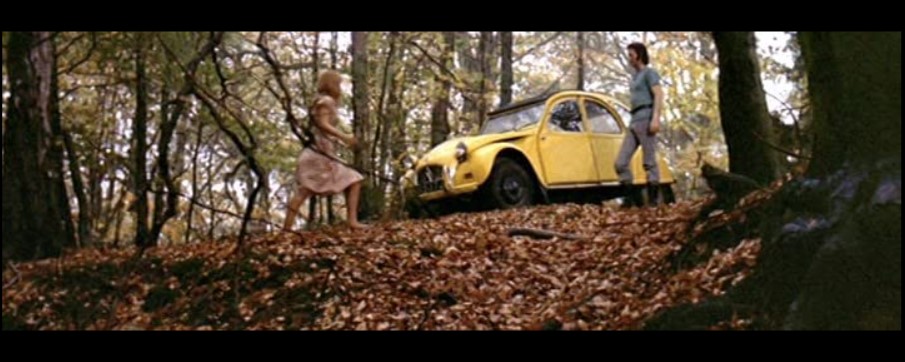
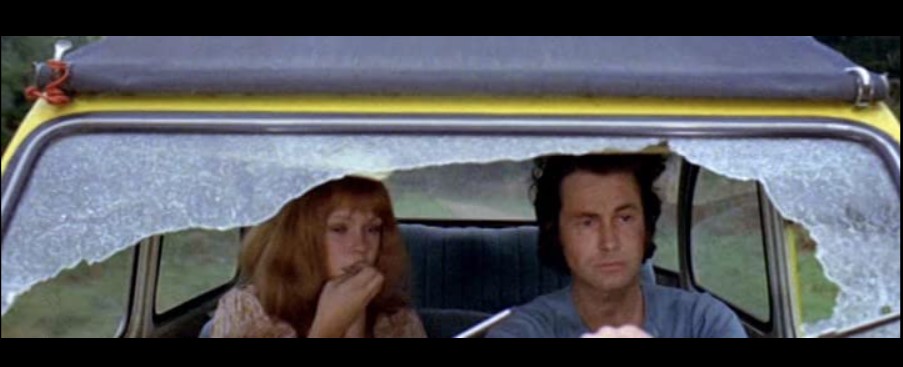
The sting of “Venom’s” unavailing characters is dangerously potent to a near effect of paralyzing the narrative. From Huber’s ireful small talk foreman with his own entourage of blue collar lackies to the mad scientist who doesn’t actually arrive onto the screen until the very last 10 minutes of story, in who is also perhaps the most interesting character garnering deadly spider venom and doing a little crossdressing on the side, “Venom” bears the brunt of unnecessary and disproportionate figures to be an implemented stopgap in managing Simon Brent’s screentime. Sykes teeters away from the majority of Greville’s point of view with little windows outside his perception that drop more diversional obscurity in who Huber and his operatives think Greville really is, why Greville is really there, and how can they handle Greville once he’s become too close to Huber and company’s operations. “Venom” slips unintentionally into the being a low-rent, haphazard Bond film or, better yet, a Scooby-Doo mystery without the Scooby Snacks, but there is ascot fashion. The story implies some exploitation of the mentally instable, using the “Spider Goddess'” strange behavior and her ominous ill-repute to be a warning to outsiders but Sykes conveys the latter allegorically with the destruction of pure, free love by an oppressive governing head, spreading lies about being cursed and deadly, only to find it again in a similar person, a person like Graville seeking to subvert the old wives’ tales and explore his unwaning curiosity no matter the consequences of bodily harm. I just like that Paul Greville drives off-road with a conspicuous bright yellow fiat through the forest shrubby and muck without getting stuck and without blending in.

Screenshot from IMDB.com

The skirmishing climatic finale quickly wraps up loose ends and, at the same time, is an intoxicating delirium of madness and suspense. Twilight Time delivers another Screen restored eldritch mystery onto Blu-ray home video as part of the limited-edition series licensed for a U.S. release from the UK’s Screenbound Pictures and distributed by MVD Visual. Presented in a 1080p, high-definition widescreen 2.35:1 aspect ratio, this is a good-looking transfer with soft, dream-like overtones stemming from a well-preserve original negative with the only drawback being the edge of the 35mm stock occasionally being visible in perhaps a mishandling or misaligning of the film reel that may have also been exposed to light slightly. Other than that, only a few hardly noticeable blemishes are on the image. The English language 2.0 LPCM Dual Mono that separates the dialogue and the ambient/score tracks. You’ll find a robust vocal channel, discerning very nicely from the action, but there’s still quite a bit of hissing and popping on the tail end that denotes more attention needed for better clarity. The film is rated PG but that doesn’t mean much of anything in early 1970’s with Anne Arneric going full-frontal, along with young beau Ray Barron, in emerald green tint as well as other brief flesh scenes from Arneric, arthropod terror, some blood, and the quickest flash edit I’ve ever seen of the lower half of a post-sawed torso. Much like the “Seven Deaths in the Cat’s Eye” release, “Venom” also has zero special features and, as a more tangible replacement, is a 11-page booklet with color and black-and-white stills, various poster art, and an essay by author Mike Finnegan. The Blu-ray cover art is also reversible with a color still on the backside. Don’t expect to contract arachnophobia after watching “Venom” in this high concept, poor execution of cheap boscage thrills.


Own the Limited Edition of “Venom” aka “The Legend of Spider Forest” on Blu-ray!