In a dystopian of metallic wires, continuously spinning gears, and nightmarish creatures, human beings are being driven extinction, enslaved by these same terror creatures that rule the human’s once empowered world. Rounded up like mindless cattle for vivisection, humans dwindle in numbers and in spirit. When one human stumbles upon the embryo, the only object to which the creatures fear and the reason for the humans being vivisected, a new hope of freedom emerges out from the last of the human beings as the last freeborn man implants the embryo inside him. As the horrid creatures learn of the embryo’s whereabouts, a means to an end of their existence drives a frantic frenzy of nonstop destruction before their race becomes obliterated by the embryo’s uniting power.
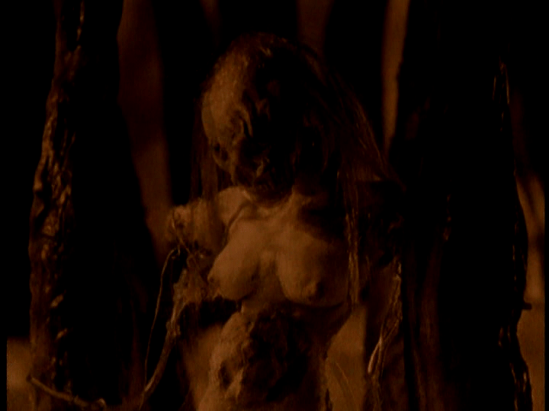
“Mécanix” is a stop-motion, German Expressionistic film that’s a hard sell for most audiences. Director Rémy M. Larochelle and producer Philippe Chabot have extracted hell and beauty out of an idea of post technology cataclysm inspired by the DIY filmmaking. Spanning over a four year production and then another ten 13 years until U.S. DVD distribution, the 2003 released “Mécanix” creeps to make a cult film impact, but Larochelle’s film is making an impact nonetheless. The experimental nature, the stop-motion effects, and the entrenched expressionism of symbolism makes “Mécanix” unique and memorable thats a labor of love stemmed from Larochelle’s painting, drawings, and sculptures.
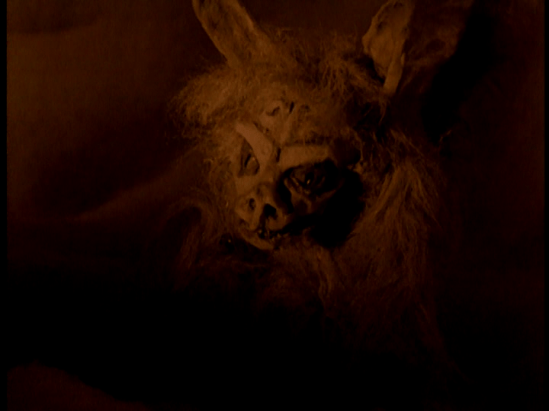
Back more than a decade ago, Larochelle sought to display technology and human interaction organically. The film doesn’t necessarily setup the series of cataclysmic events and lays down layers of assumption that humans have created technology and technology eventually goes Terminator coup, but, as if believing in the existence of the circle of life, technology can’t maintain without the human element and so they’re alignment ultimately comes together. “Mécanix” is a representation of that alignment that’s deeply subjective and disturbing, yet oddly fascinating, hooking automated teeth into an unsuspecting viewer.

Aforementioned, “Mécanix” took four years to completely conjure into a 70-minute motion picture feature. Within that time span, Larochelle painstakingly and thoroughly guides every aspect of the special effects, creating reality and fantasy together from through a 16mm camera to the spectacular finished product on screen, making the composited material flush and fitting for visual consumption. Also, ambient audio flawlessly helps bringing the sculpted terrifying creatures come alive who wield bulbous arms of clanky rebar and fleshy pulp, bares unidentifiable skulls protruding through cyborg tissue, and slither across the floor through dark crevices and nooks.
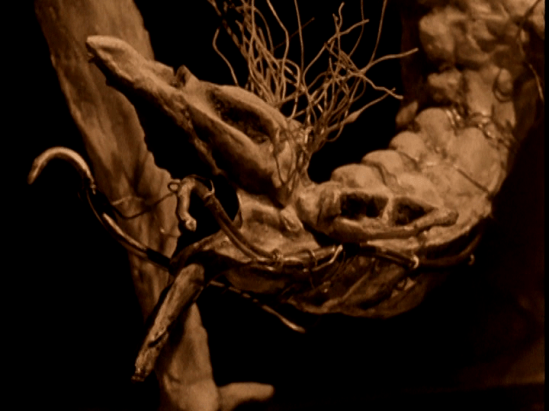
“Mécanix” isn’t an overly gory film, but it’s a hellishly wretched one coming out of Canada. Brief scenes of self-mutilation and depicted re-arrangements of the human anatomy are as about as graphic as “Mécanix” gets, subtly hinting more at explicit content. Stéphane Bilodeau’s freeborn man character, the male lead, and Julie-Anne Côté’s character, the female lead, born from the embryo have light weight speaking roles. The creatures communicate much more of their need for the embryo, giving inanimate characters a good slice of the dialogue, yet Bilodeau and Côté singularly convey their scenes appropriately despite never being in the same scene together. The two main characters present the only non-mechanical beings. Even the humans who are enslaved have a rigidness about them, android-like, while serving their master creatures, who some even don the use a wheelchair to move around – technology needs technology to maintain life sustainability.
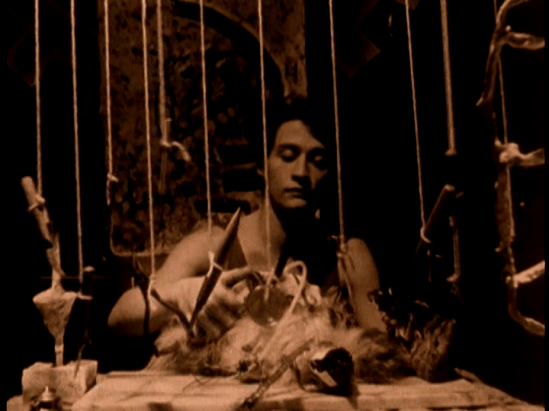
Unearthed Films and MVDVisual brings the IPS Films, Creatio Ex Hihl & Avant-Gore Films “Mécanix” to the U.S. home entertainment market 13 years after the world premiere. Being Rémy M. Larochelle’s only feature film to credit, the director can’t be compared to his other work obviously, but “Mécanix” is a fine debut, especially with the amount of sacrifice put into his inspired “Begotten” similar artistic style. The DVD is presented in a in 1.33:1 full screen aspect ratio with a Dolby Digital 2.0 mix that’s suitable for the drowning tone soundtrack from Southern Lord’s doom metal group Teeth of Lions Rule the Divine. The video quality is an attribute to 16mm standards, containing speckles of imperfections that simple add to the charm. The only extra included is an unorganized, yet entertaining interview with director Rémy M. Larochelle and Philippe Chabot, geeking out over answering prepped questions about the film’s formation and inspiration. “Mécanix” rarity will be the prayerful hope and the ultimate declination towards the film’s success as the market for experimental is never catchy with audiences, but the uncontrollable gawking over the “Mécanix” mechanical creatures and practical effects becomes unavoidable.
Tag Archives: MVDVisual
Does Evil Go Incognito? “Sheep Skin” Review!

A four person punk rock band, known as The Dick-Punchers, kidnap an egotistical businessman named Todd because they suspect the white collar professional to be a vicious, man-eating werewolf. Confined to a chair in an abandoned warehouse, Todd is interrogated, threatened, and tortured to reveal his true beastly self, but as the night drags on, the band’s evidence weakens against Todd and tensions boil to a flare as the band’s leader, Schafer, starts to question their suspicions and motives. Doubts divide the band’s handling of the overwrought situation, especially when Todd’s wife tracks her husband’s phone to his exact location, hoping to catch him in an unfaithful act, but ends up becoming entangled in his internment.

Crafting a werewolf film on a microscopic budget is a daunting and difficult task to accomplish and having the resulting finish to be mediocre is a good achievement for any filmmaker whether working in the independent market or in the Hollywood limelight. Writer-director Kurtis Spieler found a conduit through the immensely barbed brier patch for his 2013 indie horror film “Sheep Skin” and came out relatively unscathed by the pricks. The ambitious werewolf flick was developed on the heels of his Spieler’s 2007 short film of the same title with actor Laurence Mullaney reprising his role of the kidnapped businessman, or maybe a werewolf in plain sight, Todd and with Nicholas Papazoglou returning as producer. With a little more backing behind Spieler’s Invasive Image production company, the director was able to recreate his short to a feature film on a reported $25,000 budget.

The budget amount surely gives a bit of hesitation when going into a viewing of “Sheep Skin,” but by cutting down location costs and maintaining afloat with the equipment already obtained, Spieler puts his heart and soul into the cast of gifted actors and a talented crew and into a story that’s nail-bitingly entertaining without the possibility of a werewolf ever making an appearance on screen. Along side the return of Laurence Mullaney, the relatively unknown Michael Schantz, who had a role in the Alistair Pitt episode of NBC’s popular espionage drama series “The Blacklist,” portrays Schafer, the vengeance seeking leader of The Dick-Punchers. Schantz’s rendition of the character is undeniably acute to the rampant emotions and stakes of kidnapping and holding Todd. Schafer’s band member and girlfriend, Dylan, portrayed by Ria Burns-Wilder finds an unwavering loyalty in her man. The two wild cards, Clive and Marcus, filled in fittingly by Zach Gillette and Bryan Manley Davis. Gillette and Davis play characters that contrast each other very strongly with Clive being more of a bruiser and a hot head looking forward to roid-rage mayhem while Marcus nervously questions his friends’ intentions if the situation goes south. Jamie Lyn Bagley is an It’s Bloggin’ Evil favorite (see our reviews for “Flesh for the Inferno,” “Sins of Dracula,” “Frankenstein’s Hungry Dead,” and “Future Justice“) and the upcoming scream queen becomes the last puzzle piece to a dynamic cast as Todd’s mistrusting wife.

The kidnapping portion of the story starts from the get-go, nabbing Todd as soon as he attempts to leave the office. After all introductions are completed and the plot is set, the pace slows down toward an uneventful position with characters vacillating. Schafer holds many sidebar conversations with his crew, as a good captain should always do, but makes for tedious anticipation instead of white knuckling action. The deceleration of content during this time doesn’t necessarily bore down the story as the characters react rightfully so due in part to Spieler intentionally incorporating doubt into The Dick-Punchers’ plan and when the snowball starts to roll downhill and the strain starts to disintegrate their plan and, ultimately, their friendship, “Sheep Skin” is a juggernaut of confined bloodletting.

Unearthed Films and MVDVisual courtesy releases Kurtis Speiler’s film onto DVD with a widescreen 2.35:1 aspect ratio that soaks in a noir style filter for a mysterious-horror atmosphere. The DVD offers an alternate black and white version of the film that’s preferable as the dark filter kept the image devoid of natural colors. Digital noise overtakes the brighter coloring in which DNR could have reduced the effect for a cleaner finish. The noise also affected the Dolby Digital 2.0 audio with a low lying hum throughout the background of the entire duration. Dialogue tracks levels vary heavily during calmer or character enclosed scenes while the soundtrack booms out LFE during abrupt moments. The DVD has a solid cache of extras including director’s commentary, deleted scene with director introduction, behind the scenes look at the making of “Sheep Skin,” the original short film, The Dick-Punchers music video, and the theatrical trailer. “Sheep Skin” isn’t an archaic werewolf tale, but a fresh suspenseful spin on lycanthrope mythos.
BUY “Sheep Skin” on DVD from Unearthed Films and MVDVisual at Amazon.com! Just clink on the above image.
Evil Spanning Four Decades! “Dangerous Men” review!

Recently engaged lovers Daniel and Mina take a trip to visit Daniel’s brother. When they stop to take in one of California’s breathtaking beaches, two vicious bikers, looking for kicks, intrude on the lovebird’s romantic getaway, looking to rape Mina but ending up mercilessly murdering Daniel. Mina’s grief turns the distraught lover into a vengeful bitch, taking the lives of all salacious and beastly men who wish to exploit Mina’s virginal beauty. Meanwhile, Daniel’s brother, a praised police detective, personally takes on the case despite his Captain’s insistence of not getting to close due to his personal connection. The detective tracks down the drug dealer Black Pepper, the head of a notorious biker gang connected to the slaying of his brother, that results in an all out war!

“Dangerous Men” is an action film you hate to love, being so bad it’s good. The film was the non-aborted child of Iranian born, U.S. bound director John Rad, a pseudo name, who had a life-long vision from way back in 1979 to put an eternal awesomeness on the big silver screen and, in one way or another, completed that feat no matter how long the creative process. Only 26 years stood in between John Rad and his masterpiece “Dangerous Men” from being completed and theatrically released to the public, but, low and behold, “Dangerous Men” didn’t succeed into billions or even millions of box office dollars; instead, Rad’s film gained popularity in its notoriety, gaining almost instantly cult status through a niche group of garbage cinema aficionados. By the grace of the provocative arthouse film brew masters at Drafthouse Films and their continuous begging toward Rad’s daughter, “Dangerous Men” redefines the term guilty pleasure.

But what makes “Dangerous Men” so irresistibly appealing? Is it that fact that Iranian born Peter Palian from “Samurai Cop” fame is the most experienced crew member on John Rad’s amateurish, if not solo performing, team? To properly answer that conundrum-filled riddle, looking at what makes “Dangerous Men” so standardly terrible would ultimately lead to the answer. For one, a prominent lead character doesn’t exist in a plot that can’t focus due in part of the two decades the film was shot that resulted in the actors or actresses not being available or unwilling to complete Rad’s work. Various characters, like Mina (Melody Wiggins) or the cop brother (Dutch Van Delsem), come and go in their respective, decade housed plot paths and like one of Drafthouse Films’s bonus features makes light, the film ends on a still frame of characters who have had less than half an hour of screen time. Secondly, the amateur acting in exposition, the cut and dry editing, and the cartoonish foley, by the also writer-director John Rad, hones straight toward gut-punching you to explode into outrageous, painful laughter. “Dangerous Men” is a serious film that’s full of wacky action and some great moments of exploitation, especially scenes involving women knees, but when all the punching and exasperating is of the identical sound bite, like in a “Street Fighter” video game, taking Rad’s film seriously is hard to fathom. Thirdly, the longevity of filming created many production goofs that mistakenly implied the decade. From props, to haircuts, and to clothes, hints of years were obvious to the naked eye. Lastly, a title like “Dangerous Men” should end on an detonative high note; instead, falls just short of a chuckle and a “WTF.”

“Dangerous Men” snuggly finds a spot within the realm of other bad movies not to be missed. “Troll 2,” “Silent Night, Deadly NIght 2” with the infamous garbage day line, “Leonard Part 6,” and “Jaws: The Revenge” would gladly welcome “Dangerous Men” with open arms as a peer in preposterousness. With a little over a measly $2,300 in ticket sales on opening weekend from a film that probably cost John Rad thousands upon thousands of dollars to produce and a whole hell of a lot of time to construct, “Dangerous Men” is most likely an action-packed feature you’ve never, ever heard of before. One positive remark is the soundtrack, which is also composed by John Rad, was, in my humble opinion, swanky and, well, rad – a true testament to the era and the best effort for such bad film. Unfortunately, John Rad never saw his film blossom as he died soon after the release of his masterpiece, sometime mysteriously between 2005 and 2007.

Drafthouse Films, in association with MVDVisual distribution, courteously releases “Dangerous Men” on a sleek not rated two-disc, 1080p 1.85:1 widescreen Blu-ray and DVD set which has a region free presentation that still manages to hold in the cigarette burns and the faded coloring in a sort of time capsule from the 80’s and 90’s. The original print looks to have been kept in good condition for an easy upgradeable and cleanable transfer. The Dolby Digital mono stereo mix is fairly clean aside from some misaligned dialogue tracks with the video and the prevalence of background noise in certain scenes of poor record quality such as the Daniel and Mina restaurant scene. Drafthouse Films doesn’t discriminate amongst the quality of their releases when considering the bonus features. A 16 page booklet featuring documented full-length interviews with director John Rad, audio commentary featuring “Destroy All Movies” authors Zack Carlson and Bryan Connolly, “That’s So Rad,” an epigram stemmed from this film, is an original documentary about the film and its initial 2005 release, an interview with cinematographer Peter Palian, Rare footage of John Rad’s appearance on local access television, and the original theatrical trailer. Quite the laundry list of extras! “Dangerous Men” is so spectacularly unspeakable and trashy it shouldn’t go unseen for absolutely anything, not even for the birth of your first born child!
No Escape from Evil’s Spell. “Rows” review!

After serving an eviction notice to a strange old woman, with a grisly rumor in her past, for her realtor mogul father, Rose becomes drugged and bound against her will by the old woman who injects Rose with something. When Rose awakes, she finds her self caught in a repetitive cycle of murder, betrayal, and mystery brought upon by a spell conjured upon Rose by the old enchantress woman. The key to breaking the spell is the enchantress’s family home and it’s up to Rose to whether destroying the home or not will save her father who also falls victim to the old woman’s bewitching power.

“Rows” is the fantasy-horror brainchild of writer-director David Warfield and stars “Feast” actress Hannah Schick along side “House with 100 Eyes’s” Lauren Lakis, Kenneth Hughes, Joe Basile, and Nancy Murray as the enchantress or the witch, which I like to title the character. The overall small casts’ performance achieves the toned-down, nearly expressionless portrayal of characters stuck in the confines of a hex; the “something-doesn’t-feel-right” notion is hyped up without the idea constantly up in your face and is more downplayed to let the viewer interpret Rose’s beyond twisted “Alice in Wonderland” experience. Instead of a world full of giant smoking caterpillars and tea drinking mad hatters, Warfield writes about the relatively unknown horrors of corn fields, an endless maze with rows and rows of high stalks that traps Rose and Greta.

But the corn rows go to the back burner when the nature of the house comes to the forefront. The house’s claim to be the smoking gun to all of Rose’s obstacles is undervalued by the poor written construction of the southern belle style home in the script. The house doesn’t loom, isn’t very menacing, and just can’t seem to ever get on it’s feet to become a character wroth being frightened over. Warfield should have stuck with the corn rows which creates a surface murkiness, goes beyond our heroine’s ability to see or hear, shreds any hope for escape, and looks more ominous during the night; the house was always kept in the daytime. However, the old witch’s power stems from the house and for whatever reason, aside from the extended family history under their thumb, there is this unsatisfied, unknown conclusion for the viewer and the finale is up for personal interpretation.

In making the ending open, Warfield’s “Rows” eases onto the border of experimental. Act one and two weren’t exactly straight forward either, but the understanding was clear and present enough. Once the transition, or the epiphany if you will, into the third act begins, a struggle to grasp Rose’s direction and, in the end, destination becomes more difficult. I can only go on my own interpretation of Rose’s journey and, much like that of the fantasy-ridden “Labyrinth” starring David Bowie, I felt like actress Hannah Schick was the Jennifer Connelly character in the sense that Rose has to grow up, leave the comforts of home, and be responsible and this whole event with the enchantress and the spell is an internal mental battle that ultimately is decided by a choice. In Hannah’s case, her inner, warped conflict is to fight her father’s will or embrace it.

Indie Rights Films and MVDVisual distributes the StorySolver Film Lab production to DVD in a stunning 2.35:1 anamorphic widescreen presentation. Details look fantastic from the farm landscapes to the skin tones with no sign of touch up enhancements such as cropping, sharpening, or smoothing. The English Dolby Digital 5.1 audio track clearly balanced and diversifies all sub-tracks, especially the ambient sounds of the rural atmosphere to set an looming setting. There are no subtitle or settings options, nor do extras exist. Only “play” or “chapters” line the menu title. “Rows” has a sizable underlining gloom about it, setting a rightfully impassive mood through the spell world Rose is thrusted into combating.
Torment and Puke is One Girl’s Evil Journey. “Madness of Many” review!

Victoria propels through an discarded and tragic life of torture and suffering. Her parents sexually abuse her as a child and into her adulthood where she finally is able to desperately flee in search of a new and hopeful life, but Victoria’s destined to fulfill a life with more suffering, even worse than while under the abusive and ever watchful eyes of her family. The anguish built structure of her being leads Victoria to an endless amount of pain that grows inside her, sprouting a vast and treacherous sea of meaningful existence, and blossoming into a eye opening, or eye gouging, experience in which she’ll never forget. This is her journey through the gateway of hell to the inevitable rebirth of pain and puke.

Considered to be the “most controversial” film made in Denmark, director/writer/editor/special effects artist Kasper Juhl’s experimental horror film “Madness of Many” goes through four chapters of Victoria’s detestable existence and transformative suffering. There’s never a time when she’s safe, being dredged through the scum and the dirt for all of her life. The former prostitute and drug addict doesn’t ever rehab or recoup from her time as a sex slave, a human pin cushion, or a human fluid dumpster as her story, mostly told off-screen in a monologue accompanied by grotesque and digestible imagery, is considered to be a rise of a phoenix through the clout of ashes.

However, Victoria is not alone. Numerous other women, some representing Victoria in various stages of her life and others just in an akin to Victoria’s situation, are affixed to the same suffrage and, in the same fashion as many Unearthed Film’s features, self-induced vomiting is a big part of their torment (and about 1/4 of the visual story). “Slaughtered Vomit Dolls” and films like it, such as “Madness of Many,” have never really been my cup of hot bloody spew stew, but “Madness of Many,” by far, has better visual effects when considering the torture and the gore amongst the spew-splattering titles. Much like Victoria, the viewer has to suffer through drawn out portions of the narrator’s exposition in order to set up and enjoy Kasper Juhl’s effectively realistic sinew and gut-churning effects.

I must admit there’s a certain poetic underlining and parallelism to Juhl’s film; a sort of an art-house, coffee shop “fung shui” complexity about suffering that can only be told through the Juhl’s telling of Victoria’s devastating story. The actor portrayal diminishes much of that structure that merely falls into the category, for most of the viewing experience, of interpretative dancing told in the eloquent genre of doom metal and deep underground horror cinema. Yet, Victoria’s plight is never a matter to be cheered for, never a route for hope, and certainly never a situation anyone would envy. “Madness of Many” is not, and I repeat, not a feel good movie. Its not a kid’s movie. Hell, it’s not even a movie for most adults. Certain breeds of human would consider the Kasper Juhl’s film in their niche of subversive cinema.

Produced by Hellbound Productions and distributed fittingly by Unearthed Films and MVDVisual, “Madness of Many” delivers controversy; perhaps not in the States, but for Denmark, I’m sure and will cause much controversy for the weak stomachs who find this title in their possession, going into a viewing without the heads up of what they’re getting themselves into. Juhl’s only English film to date isn’t glamourous popcorn horror with a recognizable cast and it’s replay value is next to none, but if the gore and shock genre is the game you’re willing to play to perverse over, then the “Madness of Many” would be right up that twisted alley.