

Pretentious millionaire Mason Murphy hosts the largest and sexiest lunar eclipse party in the close knit community of River Ridge. Murphy renovates the old Mayhew estate, home to the mysterious disappearance of the wealthy Mr. Mayhew in 1926, as the party’s extravagant setting. One of the young party goers is also a practicing partaker of witchcraft and when she attempts to summon upon the spirit of her dead boyfriend to ask about whether he bought a winning lottery ticket or not just before his death, she accidentally aligns all things evil right as the eclipse takes place, trapping the oblivious guests in a nightmarish twilight zone that includes black bat demons, Civil War ghosts, lawn ornament zombies, bar tending vampires, and a slew of maniacal murderers.

Director Mike Donahue’s “Mansion of Blood” is a horror-comedy of an ambitious narrative that was doomed during the middle of production, resulting in a shameless, mishmash heap of a film. From what I’ve read from various article sources, “Mansion of Blood” came to a screeching production halt due in part of a sexual assault claim from an actress or two. The complaint was against the film’s headlining star, Gary “Lethal Weapon” Busey. Are we really surprised here? Busey, who suffered permanent brain damage in 1988 after a motorcycle accident, has sustained from his wild and crazy, sometimes delusional, antics that raises many eyebrows through almost the last three decades. The film’s crew was so fed up with Busey that he was actually fired and massive re-cuts and re-edits caused the story’s downward slope. Aside from the Busey debacle, executive producer and one of the film’s stars Tom Tangen is rumored to have screwed over the film’s investors, leaving director Mike Donahue high and dry.
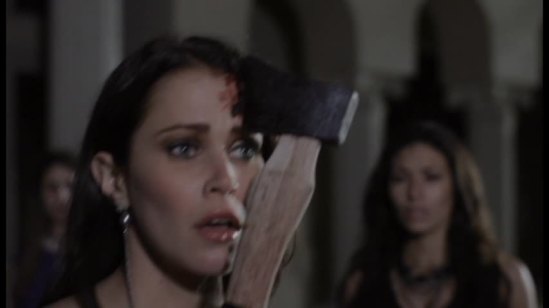
Honestly, I strongly feel “Mansion of Blood” never came an inch off the ground. I get that the film is a horror-comedy in a slapstick sub-genre, but the story is in total shambles. Numerous characters and their individual stories are diluted to the point of being a suffering and aggravated attention deficit disorder. The severely choppy editing, the unbalanced dialogue and ambient audio tracks, and the oafish acting throughout only piles on top of an already high mountain of sadness. And even though I have a soft place in my heart for Busey and his sheer lunacy, in life and on film, his performance as the malicious party host Zachariah was, dare I say it, surprisingly stale. Only a few handful of scenes of Busey’s floating, grinning head faintly superimposed as a ghost or a spirit or as a something are uniquely guilty pleasurable. Not all has failed as the film’s other star, “Star Trek: Voyager’s” and “Innerspace’s” Robert Picardo, attempts and succeeds at a good performance as the party’s caterer who ends up almost being poisoned by his chef wife, played by Lorraine Ziff.
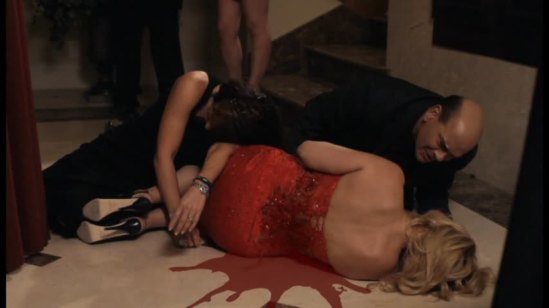
Again, I’m well aware that “Mansion of Blood” is a horror-comedy, but the no budget special effects couldn’t be any more offensive to our intelligence. The “demons” were extras in black face and black leotards with a dark cape and plastered with exuberantly adhesive bat ears. The computer generated lunar eclipse was near 1950’s animated cartoonish. These effects bog down the quality of the film, turning a potential Sci-Fi channel movie spoof to a more of an obsolete, outdated, and cheesy and campy schlock that could be deemed worthy of being presented on Mystery Science Theater 3000. Instead of solidly funded practical and computer generated special effects, Donahue leans firmly on the hard bodies of young (and some slightly older such as Lorraine Ziff) actors and actresses. The naked bodies of upcoming scream queen Mindy Robinson and the industry versatile Dustin Quick are two to name just a few who pair up with the rock hard abs of Kyle Clarke and Frank Mora Jr. One would think Jennifer Tapiero, Sarah Alami, and Tegan Webster would be the group of main characters that would develop and expand throughout the duration since they’re stories begin in a diner, but their characters become junk roles that fizzle into into oblivion and tangents are created for non-setup characters.

“Mansion of Blood’s plethora of characters is too much to handle, especially when the film tries to go in numerous directions that doesn’t give Donahue’s motion picture any direction. The story and script flounders as the legs are cut right from underneath both of them. I empathize that the Gary Busey and the rumored Tom Tangen issues might have derailed this project that categorizes this film into the scrap-to-salvage scenario similar to prior films like “Bad Meat” and “Old 37.” Tom Cat Films and MVD bring “Mansion of Blood” to retail shelves and I encourage those brave enough to venture into the film to remember this particular review because when the credits begin to roll and the popcorn is down to the last few underdeveloped kernels, you will know somewhere in the sands of time and space that I’ll be whispering in the ears of your mind, “I told you so.”
Tag Archives: nudity
#Programming_Evil. “Nightmare_Code” review!

Brilliant programmer Brett Desmond has been hired at a tech start-up to quickly complete the groundbreaking coding of a previous programmer Foster Cotten who went on a murderous rampage at the start-up’s tenth floor office right before killing himself. Desmond, struggling with the federal government breathing down his and his family’s necks due in part of him leaking sensitive classified material, works night and day and around the clock to crack Cotten’s code for ROPER, a behavior recognition program. A small work group remains with Desmond during the day, but at night, Desmond sleeps at the office, working aggressively to make the deadline and get his life back in order. The further Desmond or anyone else becomes familiar with the code, the code starts to modify their behavior, twisting their thoughts, and succumbing them to it’s will of the dead programmer.

From time to time again, the film industry on the subject of pioneer technology relays information upon the fears and consequences of intertwining arrogant brilliancy and controversial technology. From the genres of cyber punk to Sci-Fi horror, decades old films such as the virtual reality plotted “The Lawnmower Man” and “Virtuosity” to the more recent “Transcendence,” transferring consciousness into the machine, have been outspoken against the use of behavior modification and recognition programs. The idea behind the notion can said that the person envisioning the possibilities of such software will become obsessed, power hungry, or vengeful if the creation is taken away from them to which all three can be attributed to director Mark Netter’s 2014 film “Nightmare Code.”

Shot entirely through a surveillance-like setup and notebook web cams, “Nightmare Code,” for most of the duration, is viewed through four screens as like security footage. Netter and cinematographer Robert Fernandez designed this structure not for the sole purpose of a novelty exhibition, but to also confine characters in a small box coded by technology, as explained in an DVD’s bonus featurette, and creating a sense of isolation and distant connections that make the life of a programmer very lonely and depressing which develops in the characters very thoroughly. The story is told through the virtual eyes of ROPER, using it’s self-awareness and advanced modules to voyeuristically watch the small group of programmers and manically motivate their actions by use of altered video projections. ROPER also accesses the past, filling in the gaps that only the infamous story of the genius Foster Cotton can fill, and by accessing the past, the dead programmer’s coding can be understood for it’s malevolent behavior modification.

“Nightmare Code” is complimented by an underrated cast whom work well together through the smaller ROPER displays in the small screen film industry. Andrew J. West, better known for his role as the Terminus cannibal Gareth on “The Walking Dead,” takes on the protagonist role of Brett Desmond who battles legal and family trouble and West epitomizes isolation by effectively taking a man with a moral conscious in leaking immoral government information and leading him down a path of legal morality, but at the same time, being unfaithful, deceitful, and prone to corruption. He becomes pitted against antagonist Foster Cotton, played by veteran actor and long time supporting actor Googy Gress, notably recognized as a NASA mission controller from Ron Howard’s “Apollo 13.” The two foes never have screen time together as their stories live separate lives, tangled by their connection to ROPER, and so without that nourishment from the other actor, West and Gress use their talents to virtually interact with one another, developing a realistic struggling relationship that isn’t really there. The characters that surround Desmond and Cotton are negatively affected by both main characters and Mei Melançon’s supporting character Nora Huntsman figures into that coded nightmare as she becomes affectionate with Desmond. Even though he’s married, Nora feels the urge to fulfill her needs after separating herself from addictions: gaming, abusive boyfriend, and drugs. Melançon, who had portrayed a minor role as a major character, Psylocke, in the mutant world of “X-Men: The Last Stand,” had another hugely important role as a side dish techie lover, but her role doesn’t seem very present and that might because of the editing technique to create the dooming cyber vision.

Netter’s resulting editing style inefficiently told the story, I thought. We’re well aware that ROPER can mislead the performance buggy human race, but ROPER, in my mind, wasn’t responsible for some of the delayed or fast forwarded actions of the characters seen through the security footage as it stylishly seemed unimportantly and pointless. Luckily, these particular editing moments are far and few in between and don’t exactly hinder the narrative. What does hinder the narrative are the quick, considerably choppy, edited scenes. Netter creates long, sometimes drawn out, scenes to convey the office solitude, but then transitions to the numerous and quickly implemented scenes that spawn a constant stop and go narrative that loses the ominous factor. The longer scenes tend to generate gloom, dread, and despair. Supporting characters become underdeveloped in the quickly edited in scenes, affecting not only life recovering Nora, but also the rest of Desmond’s team – Louis, Kevin, and Ray – who become the underdeveloped characters and they are worthless to the viewer, essentially. Still, check out the Tonya Kay scenes as you might care about hers.

The Indie Rights Inc. produced film and MVD distributed release has a clean and sleek 1.78:1 anamorphic widescreen presentation. Colors seem balanced and bright. There lies some minor noise, but that only adds to the security cam charm. The Dolby Digital 5.1 audio is clean and balanced in all channels and douses with Ari Balouzian’s synth soundtrack that embarks to terrorize. Balouzian’s score reminds me of Ennio Morricone’s “The Thing” theme, developing a soundtrack character that contributes to the intensity of “Nightmare Code.” Extras includes the film with commentary and a handful of featurettes explaining briefly the characters, the production, and the fear on the technology horizon. Mark Netter, along with the cast and crew, has good source material here and though this sort of tech horror isn’t exactly novel, “Nightmare Code” is fiercely entertaining and forebodingly frightening on a low-budget, startup scale.
Evil Takes a Ride! “The Lady in the Car with Glasses and a Gun” review!

Dany Doremus, a lonely secretary roped in by her boss to work on a big project at his home, steals her boss’s car for a joyride to the sea as her boss and his family go away on holiday. When she makes numerous stops from town to town, the townsfolk approach her, claiming and swearing they know her even though she’s never been to this particular area before. If things couldn’t get weirder or even more suspenseful, a dead body is discovered in the car’s trunk. Dany wonders if she’s deranged and crazy or just a part of a some elaborate murder mystery conspired against her.
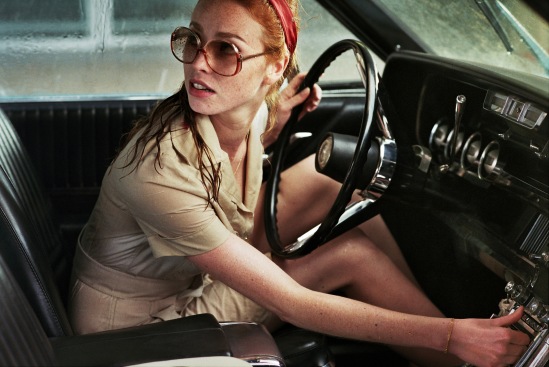
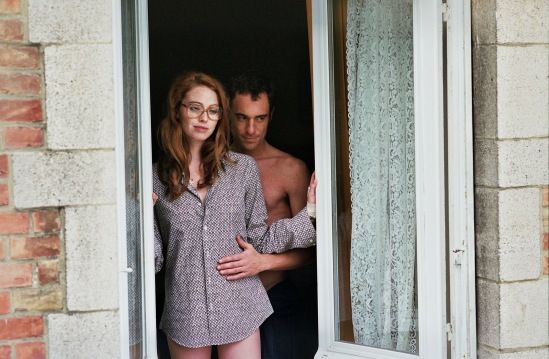
“The Lady in the Car with Glasses and a Gun” is a remake of the 1970 Anatole Litvak film of the same title. Though I’ve never seen the original Litvak film based off the award winning crime novel by Sebastien Japrisot, I’m sure director Joann Sfar’s film doesn’t stray much from the main artery that is the story, but Sfar spices up the tale through the addition of a young and feverishly heart-throbbing cast of actors and actresses. A murder mystery that sells sex more than thrills, Joann Sfar explicitly has Scottish born actress Freya Mavor and “Nymphomaniac’s” Stacy Martin do more than their fair share being sex symbol and straining the barrier of sexual tension, especially with a couple of highly eroticized topless scenes from both actresses. In a bombardment of thigh high mini skirts and tight at the waist dresses, the film setting is to reflect the 1960s to 1970s time period where if the story was in the technology age, “The Lady in the Car with Glasses and a Gun” might have had a totally different outcome.
Autosave-File vom d-lab2/3 der AgfaPhoto GmbH
Like any good crime novels or films, noir plays a bit part and with the Sfar remake, noir is ever present from beginning to end. Dany’s noir scenario has her being plagued by a retraced trip she’s never initially taken, being roughed up by a glove-wearing mystery person in a duo of giallo familiar scenes, and discovering a dead body in the trunk of her boss’s Thunderbird. All the pieces come together to form one big elaborate undertaking with the big twist at the end and while I’m not sure if the novel and the Litvak film do marvelous work in the detail to wrap Dany’s adventure, I feel Sfar’s missed the mark by not filing in the holes that construct a twist ending. Maybe Japrisot’s novel a bit vague too, but there’s certainly multiple voids that needed to be filled to plausibly and logically explain the ending.
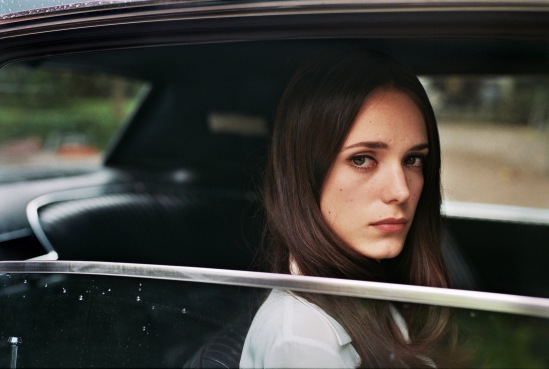
As I said before, Freya Mavor’s sexiness couldn’t be any more potent. The relatively young in the industry actress has tons of potential outside the European film market. Stacy Martin has been on that fringe of the industry since her controversial breakout role in Lars von Trier’s “Nymphomaniac.” Both Mavor and Martin work well together, creating the tension between their characters while pulling off a lustrous vision. The male lead playing Michael, Benjamin Biolay, reminds me of a young Benicio del Toro with a very reserved demeanor and calculating coldness about him.

Autosave-File vom d-lab2/3 der AgfaPhoto GmbH
Magnolia Pictures proudly releases the remake of “The Lady in the Car with Glasses and a Gun” in limited theaters across the nation today, December 18th, and will also be available on demand. Another variation of an award winning story with modern actors set in a time period that has been long forgotten, “The Lady in the Car with Glasses and a Gun” stimulates the whodunit objective that keeps you on the edge of your seat for every second.
Evil Revolts! “The Last House” review!

Erotic escort Love falls for on the side boyfriend Ned, a regular client with who she’s madly in love and with who she doesn’t charge a dime for her services. When Love wants out of the escort business, her controlling pimp Sunny says otherwise by sending her and two other girls on Love’s final trick, an all night mansion party. When the girls arrive at the gated mansion, they’re greeted by three strange hosts: Cleb, Selma, and Hate. Each of the three girls partner up with each of the hosts and move forward to their separate rooms where the escorts fall victim to sadistic tendencies, but Hate has more in store for Love. Ned, concerned when Love didn’t call once all night, sets out on a rescue mission to track down Sunny and gain information in means necessary on the whereabouts of the girl who love struck him.
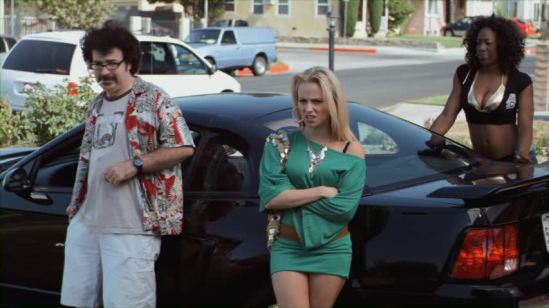
“The Last House” is a 2011 mixed subgenre film directed by b-horror director Sean Cain that was originally released under the title “Breath of Hate” and was penned by first time writer Wes Laurie. The ambitious story plays out cordially with a talented cast of actors behind the camera, but the story, though larger than life for a b-horror flick, follows a non-linear path that builds and builds for a grand finale and while that sort of tension usually creates a good setup, the ending nearly fizzles, not generating enough pizzaz and spark worthy the wait of the last five minutes of the total 91 minute runtime. However, the Laurie script fascinates and entertains throughout because of character structure through the aforementioned non-linear layout and because of the physical and emotional outpouring portrayed by the actors such as Lauren Walsch, Timothy Muskatell, Jason Mewes, and, especially, Ezra Buzzington.

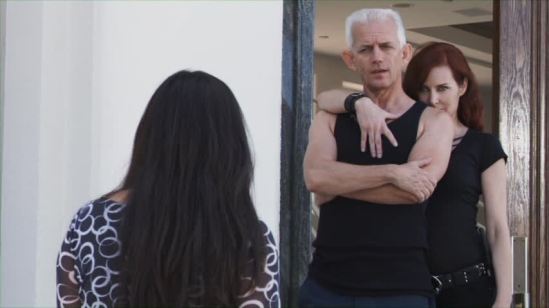
“The Hills Have Eyes” remake actor Ezra Buzzington steals the entire movie as Hate, leader of the three sadistic maniacs, and Hate, in himself, is an interesting character who seeks to start revolutions against humanity through brains and brutality and maybe even something more. Buzzington embodies a “Die Hard with a Vengeance” Jeremy Iron’s type personality with a calm demeanor on one face and a ruthless side on the other, but he single handedly separates the character from the likes of any other and creates Hate, with the help of a Laurie twist ending, to be potentially a long time running franchise character. There is a fierce downside alongside Hate where his lackeys were served a overshadowed injustice. Monique Parent plays another sadist, Selma, and her time on screen didn’t add to the girth and felt unnecessary. The then 46-year-old actress, with more than 100 film credits to her name, looked absolutely stunning, sizzling with lust for her cougar age. That should be no surprise to fans of Parent who are mostly familiar with her previous work in a number of softcore porn films. Sadly, Parent has no nude scenes though the part strongly suggests it; “Evil Head’s” Joanna Angel and “Amateur Porn Star Killer 3’s” Regan Reece take the burden of skin diligently – thank you Joanna and Regan. The third sadist, Cleb, is portrayed by Jamaican native Ricardo Gray. Gray’s take made Cleb, frankly, my least favorite sadist as Gray went overboard with a character that could been a menacing psycho-sexual deviant to a half-witted, Jurassic role-playing pervert. If there was perhaps more of Cleb’s backstory, a better picture of this sadist’s mindset might have reversed the first unfavorable impression.

Jason Mewes has always played the part of the funny guy character. The same stereotype description can be laid upon other actors of similar character such as Hollywood studs Jim Carrey, the late Robin Williams, or the cult favorite Bill Murray. Mewes, a strong supporter of independent work, has most famously, for most of his career, teamed up with writer-director-actor Kevin Smith and produced some of the most notably comedic material to ever be released for about around a decade starting near the mid-1990’s. Not many audiences, aside from fanatical Mewes fans, are aware that the same Jay, of “Jay and Silent Bob” films, has had quite a few horror credits. From John Gulager’s “Feast,” to David Arquette’s “The Tripper,” Jason Mewes doesn’t just do comedy, but what makes “The Last House” unique from the other independent horror films is that Mewes is cast in a serious horror film whereas “Feast” and “The Tripper” are horror-comedies that still tap into Mewes endless vein of laughs. Instead, “Dead Girl” actor Timothy Muskatell takes the reigns on the comedy as a pot smokey, womanizing lackey and Muskatell is born for that type of part. Porn star Timmy Pistol also delivers some goofy laughs in a brief cameo with Jason Mewes and also, fun fact, Tommy Pistol and Joanna Angel were both in “Evil Head!”
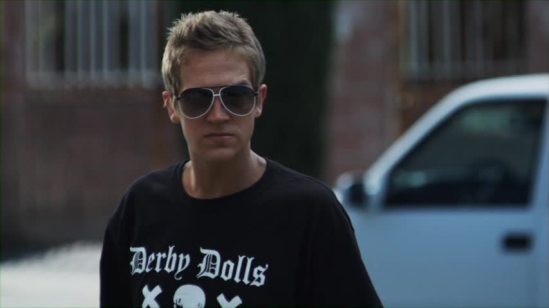
Mewes, Buzzington, and even Parent are major, recognizable names in the movie industry, big enough that even audiences so attached to Hollywood stardom would still be familiar with them. Two of the names mentioned headlining “The Last House” are accompanied by one more name that isn’t familiar to mainstream audiences, but any knowledgeable horror enthusiast would surely recognize. “Sleepaway Camp” actress Felissa Rose is that third headlining name and, unfortunately, shouldn’t have been exploited. Rose’s on screen appearance runs a total of around two minutes as the mansion realtor, but her presence falls from the face of “The Last House’s” universe after her single scene. Her iconic name alone will draw in the horror masses, but when she filmed the minor role, Rose was near popping at 9-months pregnant and she didn’t have one single story merit line or action.
Distributed by Wild Eye Releasing, “The Last House” picture quality looks amazing presented in a detailed widescreen format. The audio quality comes and goes; at some points during outside scenes the ambience or the soundtrack plays at a whisper. When in more confined scenes, the tracks blare with some crackle. However, none of these will impact watchability nor take away from the film itself. “The Last House” aka “Breath of Hate” will make a deep gash into the independent horror scene and Wild Eye Releasing will help deliver Hate into your home entertainment on November 24th.
Turn the Dial to Evil! “The Horror Network Vol. 1” review!
From the demented minds of Brian Dorton and Douglas Conner, “The Horror Network” anthology has set sail on it’s first volume maiden voyage, shipping five petrifying and on the edge of your seat horror shorts right to your television set. Stories so darkly atmospheric and spine tingling that leaving the lights off while watching would be a horrible mistake. Each tale tells a different kind evil including demented demons, child stalking predators, family abusers, and a sadistic plaster saint. Certainly not intended for the faint of heart or the easily offended for each episode turns up the intensity, the fear, and the scares. Leave the lights on, take a blanket to hide under, and make sure you grab a couch partner to watch with you and then ask yourself, are you ready to tune into “The Horror Network?”
“3:00 A.M.”
A young woman named Georgia drives through the English countryside to get away for a few days. When she arrives at her remote farm house, a strange sense of foreboding overcomes her and weird, sporadic noises emit from all around her throughout the day and into the night. When the digital clock nearly reaches 3:00 A.M., she hears a concerning noise from downstairs and when she investigates, a ghostly presence lies in wait.

Before the anthology’s credits even begin to roll, the Lee Mathews directed film “3:00 A.M.” will for damn sure kickstart anybody’s heart. The atmosphere is violently tense when Georgia explores the strange occurrences downstairs and even before the night falls. Initially, the main focus kind of misguides you through much of, what were led to believe to be is, Georgia’s imagination from the one after the other false jump scares: a branch scratching at a window, a cat jumping out of the shadows, a jack in a box toy. Okay, maybe that last one is a bit obvious and not so much a surprising jump scare, but the toy does tie into the story near the end, giving the toy a reason to exist and a hint of menacing. Many of the jump scares are accompanied by screeching sound effects, like fingernails across a chalkboard, which would make any poor soul, who fears the dark and supernatural, jump out of their skin.
“3:00 A.M.” is a good introductory 10 minute short that sets the tone for the four other films in tow; a tone with a subtle message that insinuates the maturity of this anthology. Despite being a little redundant with the classical jump scares, especially with the cheesy jack in the box jump scare that could be seen coming from miles away, for director Lee Mathews, with “3:00 A.M.” being the only credit to his name, creating a nail biting short of that magnitude is fairly impressive and inviting.
“Edward”
Hal has mental problems. He can’t sleep. He can’t stop sleepwalking. He can’t seem to stop dreaming about death. Psychiatrist Dr. Aleksey is determined to root out Hal’s issues, but when Hal informs him about the news of a school friend named Alice being murdered, the good doctor decides to put Hal under hypnosis and determine just what’s going on in Hal’s mind. Under the semiconscious state, Hal recounts his last dream and sleepwalking incident where he describes in detail a man coming into his room from outside his window. The man has Hal follow him into Alice’s room, the same Alice Hal said was brutally murdered prior to going under hypnosis. When Dr. Aleksey discovers the truth about what happened to Alice, Hal’s hidden inner demon named Edward reveals himself, leaving Dr. Aleksey at wits end in trying to cure the incurably evil.
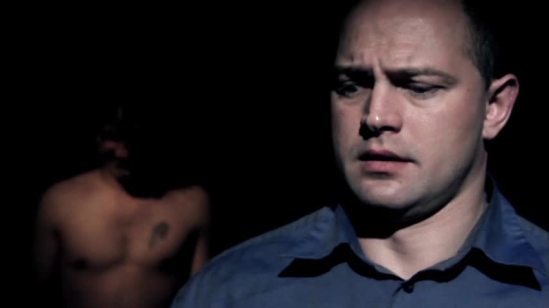
“Edward” is a gothic tale that isn’t too overly gothic in setting onscreen. The ominous presence, whether through the acting of Hal played eerily and perfectly by Nick Frangione or the chilling atmosphere, remains always present in the confined space of Dr. Aleksey’s office. The “Edward” short is a stray genre short from director Joseph Graham, a San Francisco based director who has been credited in directing feature films about homosexuality and the cultural-based stigmas – reminds me a little of the work helmed by Gus Van Sant. Graham’s “Edward” has an pitch black aura that seeks to let loose the horror-elements, yearning to be freed, because everything about the story of “Edward” is well told and well shot, as if you yourself were standing in the room with Hal and Dr. Aleksey, experiencing the fate of both men. However, Dr. Aleksey’s fate could have, and probably should have, contained more exposition, especially when the doctor arrives back home to his wife and sleeping child.
“The Quiet”

Alice, a partially deaf young school girl who particularly loves the quiet instead of using her hearing aid which eventually to taking the brunt of the cruel jokes from her classmates, rides the bus home from school. When she’s being dropped off at her remote stop, she forgets her cellphone on the bus. With her mother no where in sight, Alice decides to walk home alone, but when a suspicious blue van seems to be stalking her, she makes a break for the woods where she unfortunately loses her hearing aid. Lost in woods and unable to hear good, a cat and mouse game ensues between her and the man with the blue van whose on her closing in on her.
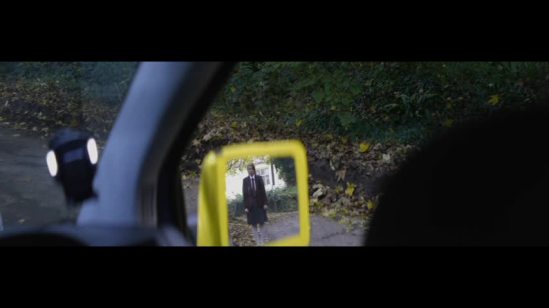
Unlike “Edward” where dialogue catapults the film into a tension-filled frenzy, “The Quiet” lives up to the title with the duration containing no dialogue until the twist ending. The built-in weakness of our protagonist Alice and the constant bullying of her helps the audience sympathize with her character more, making Alice a relatable person rather than a whimsical character everyone wishes instant death upon. The story has a strong beginning, continuing to build once the blue van man is introduced, but there are moments of unclarity that create more confusion than add value to the story; for example, the scenes of a padded room, a tortured little girl’s doll, and someone whispering, “I’ll love you forever,” don’t seem to connect up or match with the rest of the story, making the scenes seem out of place and unnecessary. The twist ending also becomes mysterious and diluted when were giving more information about the man in the blue van, but his intentions still aren’t made crystal clear, leaving way too much to the imagination and not in a good artistic way. Imwiththemproductions is behind the production of “The Quiet,” that’s supposedly based on a true story about a young girl being kidnapped when walking home with friends, and has a runtime of 21 minutes.
“Merry Little Christmas”

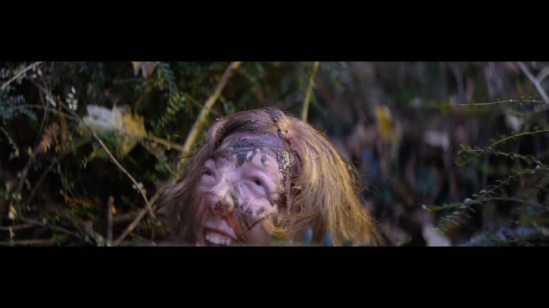
Christina and her mother Lola have lived many years with the scars bestowed upon them by Christina’s father, Lola’s husband. On the Eve of Christmas many years back, Christina’s strikes Lola unprovoked, continuously beating her, slashing her face with a straight edge razor, stabbing her, and raping her. Christina’s inner struggle constantly fights to restrain her internal, monstrous-illustrated hatred and self-destructiveness while Lola’s alcoholism and self-inflicted cutting addiction amplifies every Christmas Eve and this year, the mother and daughter grapple on keeping it together for one more year, but that battle will be lost in a fierce tragedy when they receive a phone call from the man who hurt scarred them for life.

“Merry Little Christmas” is the 20 minute Ignacio Martin Lerma and Manuel Marin visually graphic directed film from Spain. Surprising and suspenseful, “Merry Little Christmas” isn’t your old fashion gay and jolly-filled holiday film where Saint Nick brings all little boy and girls toys. No. In fact, Christmas is defined as a terrible point in time for Christina and Lola, a time when pain and fear are symbolic for tis the season. Lerma and Marin deconstruct the mother and daughter down to reveal their complexity and they’re characters are filled with various demons that become flesh in Christina’s mind when their abuser makes an unexpected phone call. A bravo should be awarded to Blanca Rivera for her bathtub scene, exploring her cutting addiction as well as attempting to learn to lover her body fully in the nude. The demon special effects are downright nasty, frightening and fantastic from “[REC] 2” and “[REC] 3” special effects guru Juan Olmo and the Doug Jones of Spain actor Javier Botet portraying the Demonio, or Demon. “Merry Little Christmas” is callous and cold without any remorse and no apology is needed for the cynicism or the brutally that it portrays.
“The Deviant One”
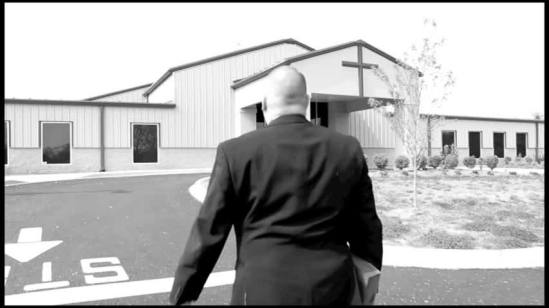
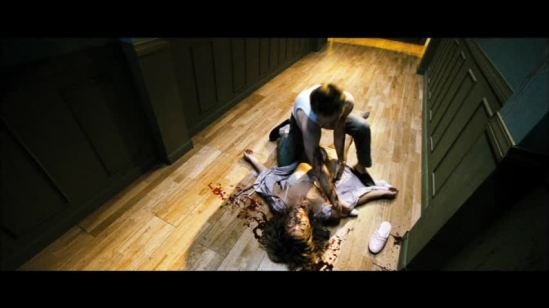
A young man becomes the victim of a suburban sexual sadist who lives a facade life of scripture and holiness. The atrocities committed might be the misinterpretations of the good Lord’s holy book and no one is safe from the deviant’s hungry claws and thirst for sexual and murderous gratification.

Perhaps my least favorite short from “The Horror Network” anthology, “The Deviant One” is helmed by the anthology’s co-creator Brian Dorton who also starred as the deviant neighborhood sadist. In the 8 minute black and white story of a young man’s death, body desecration, and body disposal, a lack of story glorifies the private life, but just doesn’t tell the tale fully of the deviant’s public church-going life. While the deviant walks up to a church, I wanted scenes of him standing at the pulpit, in front of shoulder-to-shoulder filled pews, opening the bible, and reading from the book, preaching his version of the scripture upon those ears listening. An opportunity was missed to strike at the heart of church hidden hypocrisy. On a positive note, Dorton, as the deviant, plays and looks the part so uncomfortably well that it’ll be hard to distinguish his off-camera self from his on-screen character.
“The Horror Network” material is nitty gritty with loads of passion behind the camera and from the crew of all the shorts. One of my favorite anthology releases of 2015 from Wild Eye Releasing. The DVD contains shorts that were shot in various formats and aspects ratios so I won’t be too harsh on the quality of the picture, but I will say that the noticeable posterization in “The Deviant One” and “Edward” stood out from the rest. The audio tracks do need fine tuning as there was some faint, but obvious feedback and the dialogue tracks were slightly overpowered by the soundtracks. The extras include an extended cut of Dorton’s “The Deviant One” which contains dialogue and additional scenes of Dorton, but the short works better without the clunky, kindergarden dialogue and Dorton’s testicles as he makes love to a severed head – yup, testicles. An image gallery and trailers for the shorts round out the rest of the bonus material. The DVD art, from “Merry Little Christmas’s” demons, amazingly exhibits and sells this release and stays true to form from the disturbing short. I expect volume two to exceed the fear bar!

