Tall, handsome, and witty CIA agent Nick West is about to go on a much-needed vacation. As soon as he steps outside of headquarters, he’s approached by British agent Colonel Baisbrook to cash in a favor the CIA owes the British government. Unable to refuse, West agrees to investigate the assassination plot against one President Boong of an unnamed East Asian country. The assassins are nothing short of extraordinary as a bunch of femme fatale infiltrators have put themselves in positions of power all over the globe as wives and girlfriends of nation leaders and President Boong is the only one that has refused to take the bait. West and his good friend Tommy Carter find themselves quipping and philandering amongst the most dangerous female-centric organization on the planet, led by the ruthless and beautiful Sumuru. To protect President Boong, West must become friendly with Sumuru who uses his likeness in a new elimination plot that puts him front, center, and in between saving the world or watch the men become subservient by an ambitious woman seeking world domination.
Double agents. Foreign places. Secret lairs. Suave operatives. Sexy women. These descriptors are the very spirit of a James Bond movie. At the height of the Sean Connery 007 era, plenty of knockoffs were produced to capitalize on the action and sex appeal of martini-drinking covert agent that rules the 1960s. One of those copies was helmed by Lindsay Shonteff in 1967, titled “The Million Eyes of Sumuru.” The “Devil Doll” and “Voodoo Blood Bath” director had already an espionage thriller under his directorial belt with “The 2nd Best Secret Agent in the Whole Wide World,” I bet you can guess who the first was during that time. Kevin Kavanagh pens the script from the original story by legendary B-movie producer Harry Alan Towers (“The Face of Fu Manchu,” “Psycho-Circus”) that would become an incongruously and acerbically witty-tale of pseudo-feminism with hot pursuits, sensual promiscuity, and a dart gun that can turn a person to stone. Towers also produces “The Million Eyes of Sumuru” under his LLC and filmed in Hong Kong at the Shaw Brothers Studios.
As Sean Connery heats up the screen with his double 0 escapades through all over the global to thwart the men of evil and with an astounding amount of carbon copy espionage reels rearing to chase the all mighty buck, “The Million Eyes Sumuru” desperately needed a cast to keep afloat in a flooded spy film market. For the most part, Towers and Shonteff’s cast pull off exactly what the story needed, a caricature of crowning chuckles subdued only by its slivers of spy game ventures. That’s not to say there’s an abundance of gun play and fight sequences with terrific tussling as “House of 1,000 Doll’s” George Nadar uses his tall stature and ear-to-ear smile to be a lover, not a fighter in the wise-crackin’ American CIA agent Nick West. West destroys the all-women Sumuru arsenal with just his manliness in a satirical jab at Ian Fleming’s titular protagonist and, for all intent and purposes, it works in the story to see Sumuru’s plans become ruined by not a gun nor a fist but because women in her organization, even Sumuru (Shirley Eaten, “Goldfinger”) herself, throw themselves onto him at critical moments and Nadar’s timing and screen charm laps every second of it. Frankie Avalon (“Horror House”) and Wilfred Hyde-White (“The Third Man”) play Nick West’s allies as friend Tommy Carter and cavalier British agent Colonel Baisbrook who both play in two totally different capacities. Tommy Carter equals West witticisms but falls behind as the friend who must journey solo to find West in the middle of Asia while Baisbrook effortlessly shows up in the nick of time to be either a savior or West’s handler with another mission in his pocket for West to reluctantly tackle. A pair of principals that are held at bay is the beautiful Maria Rohm (“99 Women”) and the eccentric Klaus Kinski (“Nosferatu the Vampyre”) whose swift takes leave more to be desired as Rohm becomes weak-kneed on her Sumuru femme fatale application and Kinski plays drug-addicted, politically incorrect, and perverse president of this untitled Asian country.
“The Million Eyes of Sumuru” contests to be a smartly funny, exotically set, and action-invested covert operative film of the late 60s, swimming against the current of some of the hard to beats and who have more of a legacy in the subgenre. While “The Million Eyes of Sumuru might be more Swinging 60’s with cavalierism rather than sophistication and intent, the production value could rival the best Bond film of it’s time but it’s the stunts that drive this one down below the bar as Shonteff looks toward George Nadar’s quick wit and budding personality to be the masculine sex symbol that drives the rabid female race to their supposed manhating knees. Its quite comical to see a firm line of feminism course through the plot’s veins, a plot where deadly women penetrate and subvert men world leaders only to become a slave to West’s dunce charm and attractive appearance. West really isn’t the smartest of secret agents as he’s not trying to evade capture with rapid haste or fool anybody of his intentions; instead, he’s just mildly clever with broad shoulders and, apparently, that’s what women droll over instead of carrying out their loyalty pact of a global coup d’etat.
Swinging onto the 4k Ultra HD Blu-ray bandwagon is the Blue Underground’s 2-Disc combo set UHD and Standard Blu-ray release of “The Million Eyes of Sumuro.” The HEVC encoded, 2164p resolution, BD66 has picture quality absolution with a stunning brand-new 4K restoration transfer from the original 35mm camera negative thought originally lost. The rich and colorful picture hits all the important markers with balanced film density that diffuses the hues nicely into every aspect of depth and focus, from the background to the foreground. This goes for texture too. No matter where an object lies in the frame, there’s an accurate representation in the reproduction inside the immense range of color schemes, landscapes, and textures. Delineation is quite pleasing; the close ups of George Nader’s face exhibit ever facial feature with precision without appearing overly bright or smoothed. The AVC encoded, 1080p resolution, BD50 Blu-ray captures much of the same finer points too on a slimmer pixel count but still denotes Blue Underground’s improved restoration, complete with inky blacks and no compressional misses to sully the quality. The extended cut adds approx. 10 minutes of additional footage, which in these cases can often be less-than-pristine upon discovery of the elements but the additional scenes are seamlessly blended into previous releases’ runtime, suggesting the print was greatly protected from all harmful exterior factors. A single channel English DTS-HD mono is the only mix available. Though standard and not as dynamic as more modern audio designs, the uncompressed track provides superb fidelity clearness, cleanliness, and with an even-keeled throughout. The snappy dialogue shows prominence amongst a wide-berth range of surrounding elements. There’s a blend of ADR and live recording, much to the chagrin of the Asian actors who have their English post-dubbed with a more accented stereotype. English SDH are optionally available. Capacity limitations on the UHD keep disc one to just two audio commentaries: Film academics David Del Valle and Dan Marino on the first commentary with usual commentary notables Nathaniel Thompson and Troy Howarth on the second. These commentaries are encoded on the Standard Blu-ray version of the film, accompanied by a new feature-length documentary England’s Unknown Exploitation Film Eccentric: The Schlock-Cinema Legacy of Lindsay Shonteff that has historian interviewees, such as Kim Newman, discuss the brilliance of Shonteff’s work amongst the espionage thrillers of the time, an exclusive RiffTrax Edition of the film, riffed by Mike Nelson, Bill Corbett, and Kevin Murphy, the theatrical trailer, and the poster and still gallery. It’s always a pleasure and a thrill to have tactile elements on the Blue Underground O-slips, such as this release with the embossed title overtop and below the memorable packed compositional, illustrated artwork. The slightly thicker black Amaray casing houses the same artwork with a reverse side of the original Blue Underground DVD artwork. Each interior side contain each format disc, pressed individual with the same cover arts, with the Blu-ray on the left and the UHD on the right. Encoded for all region playback, “The Million Eyes of Sumuru” now clocks in at 89 minutes and is not rated.
Last Rites: “The Million Eyes of Sumuru” has a million positives – a farce of the espionage subgenre, cheekily acted, exotic locations, and an extended, clean-cut version from Blue Underground – to name a few that quickly surmises the Lindsay Shonteff film to be the golden gun of his repertoire.
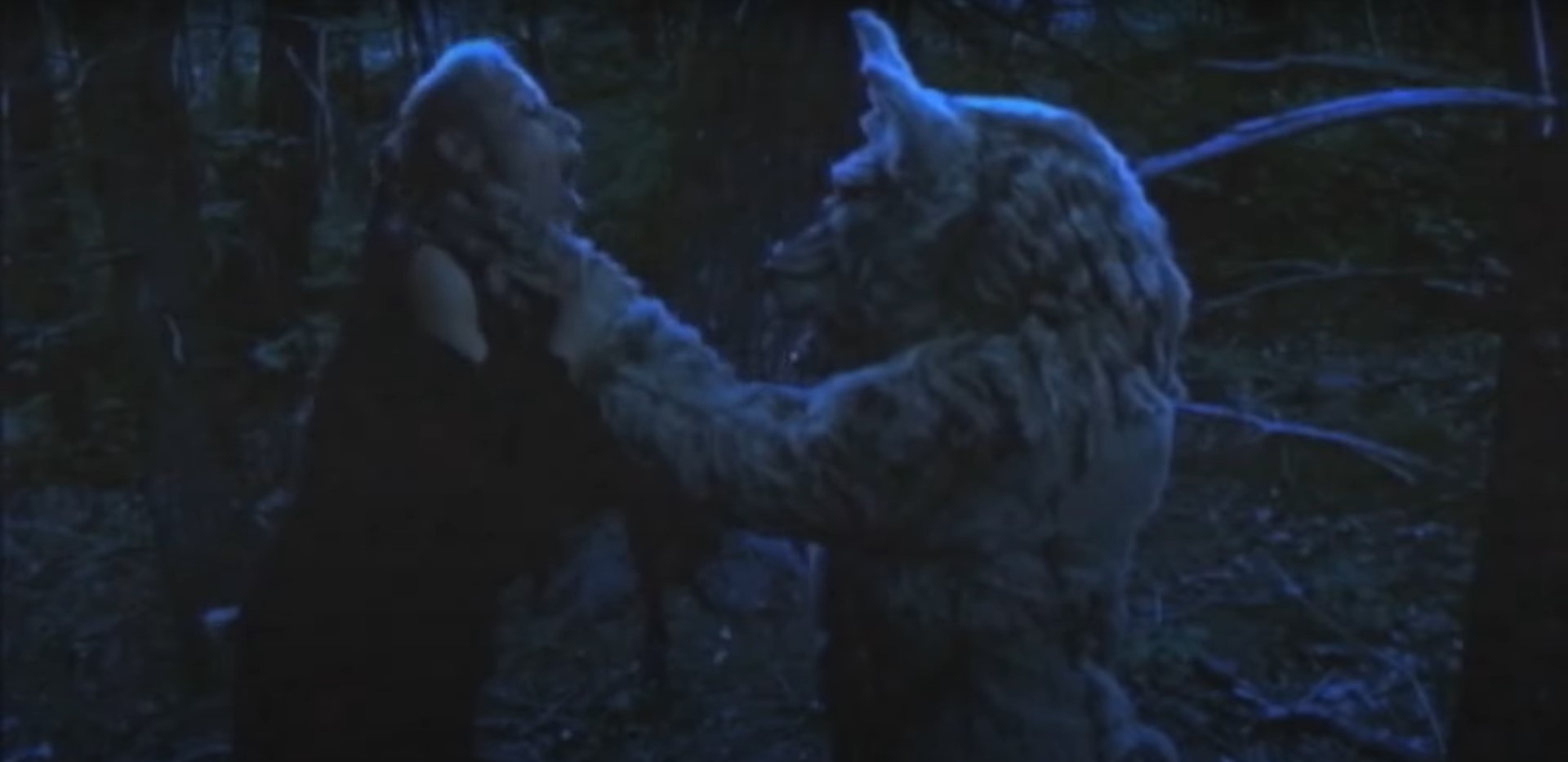
A big city surgeon on the mend of an alcohol problem and two siblings searching for their father who disappeared in the mountains hunting a mysterious big game find themselves in a small town inhabited by an ancient werewolf tribe. Mostly seeking a peaceful way of life, many of the werewolves have tamed their inner beast to live normally isolated from their human neighbors to avoid bad blood and fear-driven conflict, but a rogue faction of werewolves has tasted human flesh, transfixing them with an insatiable need to hunt and feed on human outsiders who have uncovered the small town’s truth. On the verge of the Equinox where every lycanthrope resident will transform into the primal versions of the beast, a select few have been able to conquer not losing their humanity as they team up with trapped, arsenal-ready humans and the eldest werewolf who is half witch to squash the evil werewolf population for good.
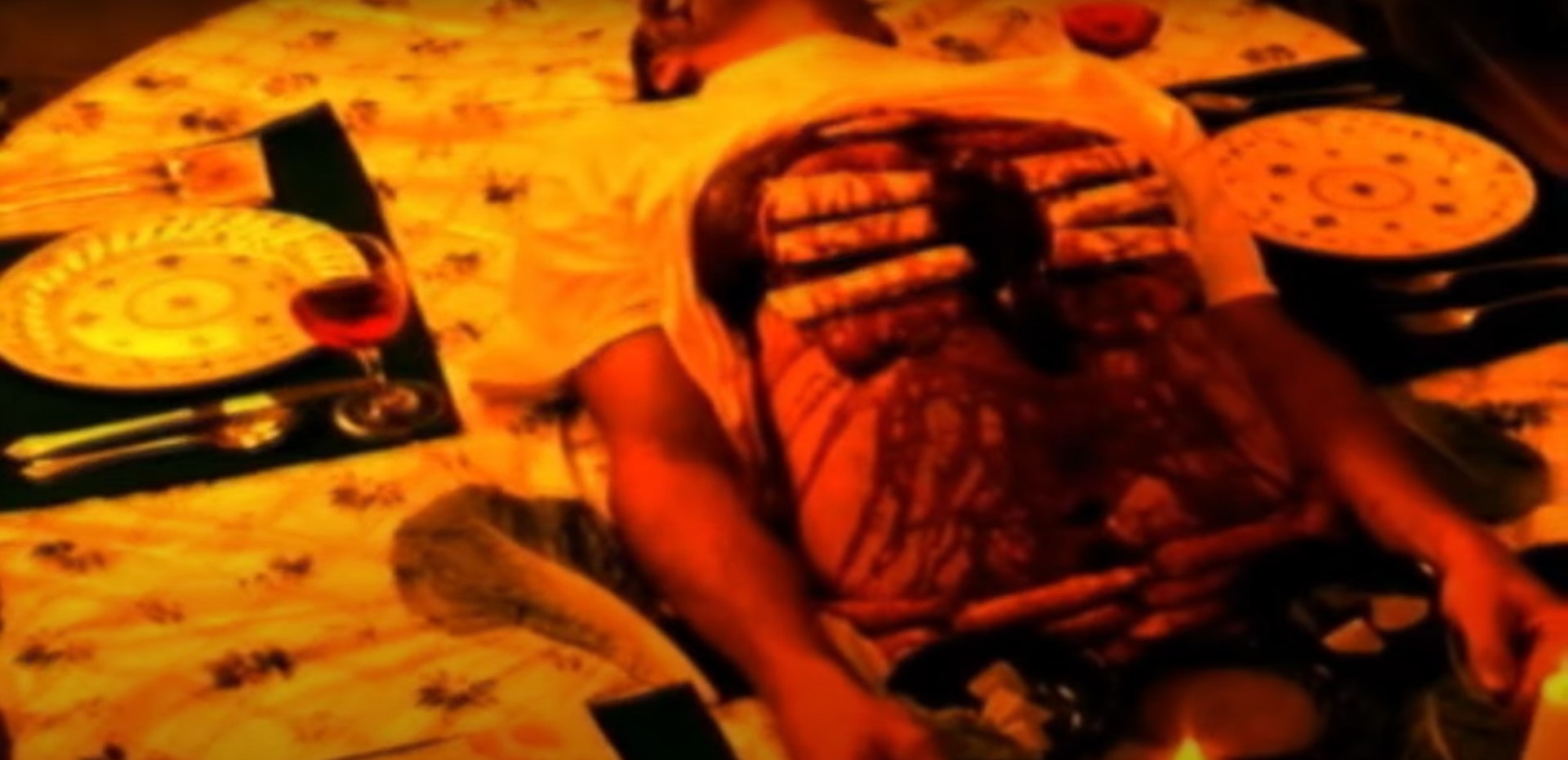
In the rural areas of New Hampshire 2006, Rob Roy tries his creative hand at making a movie, writing a script ingrained with his personal affinity for fantasy and werewolves, with the action-packed, shot-on-MiniDV camcorder thriller “Lycan Colony.” Roy’s first attempt is ambitious to say in the least with a vim and vigor narrative with a visual and practical effects heavy ornament that Roy single-handily constructs all himself learning all the tricks to the trade as he goes. What ultimately results is initially a colossal flop of technical mishandlings, bad acting, and rushed final products, but in recent years nearly two-decades later, “Lycan Colony” has been revived with a second chance by fans of the so bad, it’s good sect who, like the evil werewolves in the film, have tasted blood and want more. Rob Roy self produces the film under his Wits’-End Entertainment company.
In producing a movie yourself, with your time, money, equipment, and the little know-how of the process, Rob Roy casts mostly family, friends, and newcomers in his New England werewolf film. Both of the director’s sons make it into the picture with the older Ryan playing the mistakenly werewolf bitten teenage son of Dr. Dan (Bill Sykes), the surgeon, and Roy’s youngest, Jacob, as a presumed pup running for his life from hunter Sgt. Roger Allen (Paul Henry) as we see in the preface opening. Though an important piece to some aspects of the story, such as Stewart’s creaturized adolescent transfiguration to help Dr. Dan and wife Sandy (Kadrolsha Ona Carole, “Attack of the Killer Chickens: The Movie”) understand and cope with their now lycanthropic son, Roy’s boys are not the centralized characters as the narrative awkwardly pivots from building up Dr. Dan’s choppy family dynamics and his alcoholic mishap substory to more nondescript kickass and chew bubblegum action of good versus evil as the missing Sgt. Roger Allen’s offspring, the commando-suited daughter Russ (Gretchen Weisiger) and the bad werewolf killed yet risen to the ranks of being a good lycanthrope Doug (Bill Finley), team up with the eldest wolf-witch and spiritual liberated Athena (Kristi Lynn, “Hypnagogic”) and David (Sean Burgoyne) who can control his beast side with hero pose mediation and tribal chants. As you can tell, it all becomes disturbingly clear as mud on what exactly we’re bearing witness to, but the “Lycan Colony” burghers flesh out with Sophia Wong, Steve Pascucci, and Libby Collins.
There’s nothing inherently wrong with Rob Roy’s good wolf pitted against bad wolf with man trapped in the middle story. Throw in some subtle themes of alcoholism juxtaposition where the mountain water tames the beast with hints of silver nitrate and Dr. Dan’s post-career predicament that sends him to AA meetings and also themes of puberty or some kind of other rite of hormonal passage and “Lycan Colony” can work as an action-fantasy with a strong horror element. The problem lies in the ambitious undertaking for a first-time filmmaker with more gung-ho carpe diem than actual experience and Roy will be the first one to tell you, as heard in bonus content interviews, his goal is to go big and not limit himself with a tightknit narrative with little-to-no special effects. To the detriment of “Lycan Colony” however, that mentality of thinking took a three-month shooting-script down to a mere three weeks, rushing the final product to the point of using a blue screen for the nearly the entire third act in a real shoddy piece of VFX compositing. Transpiring on screen resembles similar to the early days of 2D fighting video games with its mix of antiquated motion capturing technology, practical effects, and digital matte but while those traits appear raw, lifelike, and add that certain je ne sais quoi that makes it so attractive, for “Lycan Colony,” the effect miscarries for its time in what is a laughable imbrication. For some, “Lycan Colony’s” campy crust will be a holy grail to obtain; one could compare Roy’s film to Dave Wascavage’s “Suburban Sasquatch,” another Visual Vengeance, early 2000s, revived flick that had similar rough-cut visuals. For others, like me, what comedy rises to surface is digestible, the rest of the movie might make you sheepishly queasy.
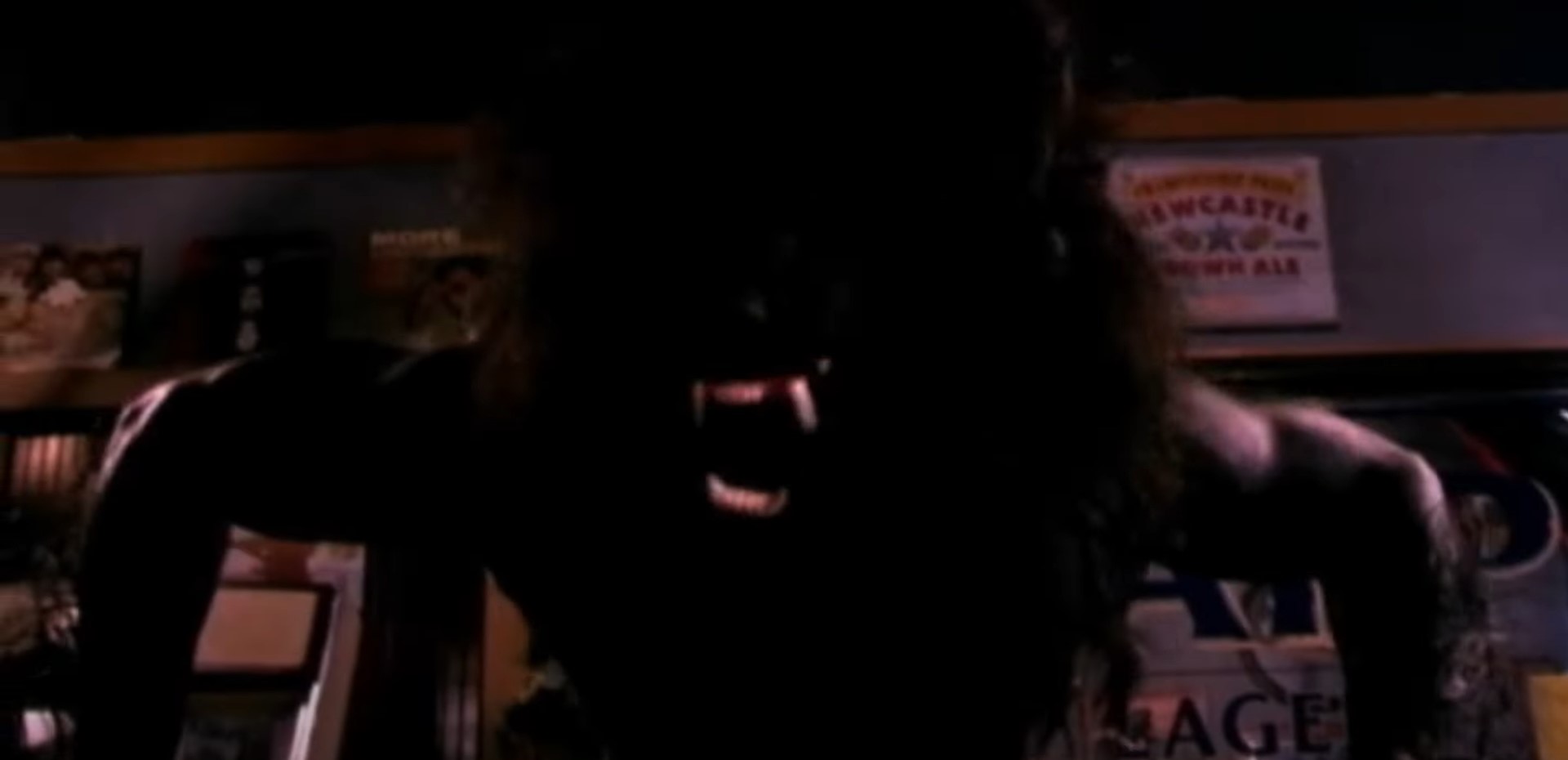
For the first time on Blu-ray, “Lycan Colony” has become a part of the Wild Eye Releasing’s Visual Vengeance tribe. The AVC encoded, 1080i upscaled, BD50 is presented in a full frame 1.33:1 aspect ratio, sourced from an original tape shot on a Panasonic DVX100 MiniDV at 24fps. Safe to say nothing will outshine celluloid, millimeter film or even today’s digital cameras as that period of time where videotape made a stand offered a rival format with cheaper costs and comparable picture quality; yet videotape, as with “Lycan Colony,” squeezes the resolution combined with matted visual effects, making inaccurately distanced composite look even more compressed. Details suffer through the compression of MiniDV’s interference noise, undersaturation, and vertical tape impression lines seared into a few frames. The undersaturation lies the biggest concern leaving behind darker tones that keep the image popping with color, rendering the entire scheme more overcast even when not exposed to rough gel lens which is used quite often in various Crayola hues. The English lossy Dolby Digital stereo 2.0 has enough strength to get around and get through with a tenuous dialogue track complicated by the not truest of fidelities on likely the onboard camera mic and by the boxy echoes of a blue screen stage, likely Roy’s garage. Stock file notes give the full body suited lycanthropes enough growling canine bite and the gunshots are awarded cacophonous explosivity, solidifying a decent range of sound, but there are missed or asynchronized effects against the action with brief seconds of delayed catchup or just plain omission. Boxy areas eradicate the depth, especially in the whole third act when the last battle is held in the woods but is mainly a blue screened forest, so the compounding loss of milieu affects atmospheric track greatly. Visual Vengeance’s track record on delivering new special features has not gone unnoticed and the trend continues with “Lycan Colony” with a new interview with director Rob Roy. Also included are two commentary tracks: one with director Rob Roy and a second with B&S About Movies’s Sam Panico and Drive-in Asylum’s Bill Van Ryn. A second version of the film is a full Rifftrax version, a blooper reel, the “Lycan Colony” music video, original trailer, and the Visual Vengeance trailer round out the release’s ancillaries. The colorful Stephen Gammell-esque, presumably pastel, front cover illustration greatly over exceeds expectations but is nonetheless phenomenal full-moon imagery on the cardboard slipcover and also dichotomizes the style on the translucent Amaray Blu-ray case’s cover art depicting a scene from the film of a hungry wolf behind the alcohol-decked bar. And also true to Visual Vengeance, the release is jammed-packed with inner goodies, such as a New Hampshire Forest Scent air freshener, retro VHS Sticker sleeve, a 3-page pamphlet with essay from Sam Panico with color picture, and a folded mini-poster of the Blu-ray cover art. Not also to neglect to mention is the reversible cover art with the original one sheet art. The Visual Vengeance release comes region free, unrated, and has a runtime of 90-minutes. I’m extremely happy for the appreciation and newfound love director and enjoyer all-things-werewolf-fantasy Rob Roy is receiving for his resuscitated escapism but, for me, “Lycan Colony’s” jerry-built and doesn’t come anywhere close relieving the so good, it’s bad itch in Roy’s filmmaking first pass done on the cuff.
A mystical, murderous beast of lore has suddenly appeared in the woods of a small Pennsylvanian town. Hikers, fishermen, urbanites, and even grandmothers are not safe from the carnage dished out by Bigfoot. Sniffing around crime scenes is eager freelance reporter Rick Harlan to unearth the truth about the recent string of grisly attacks and make a name for himself as a journalist. Harlan finds himself in the middle of a police coverup, a Native American woman-warrior, and one suburban playground where a phasing in-and-out Sasquatch can make a killing whenever and wherever. The Native American, Talia, is destined to square off against the evilest anthropoid her tribe has ever faced, one that thirsts for blood and does the unspeakable with the women it abducts. The story and clash of the century may be Rick and Talia’s last in this brutal man versus beast showdown.
As an aficionado of the horror genre, I’m on what seems to be an eternal quest to unearth the best (I’ll even settle for just good at this point) Bigfoot/Sasquatch film that really can scare the pants off viewers while providing a good storyline and solid special effects for the hairy big guy. Is that so much to ask? The next undertaking to flash across our eyes, like a brisk fur of man-beast in the forest thicket, is the classic SOV-shot and shamelessly spooled special effects endeavor that is “Suburban Sasquatch.” The 2004 Dave Wascavage film is the sophomore project for the writer-director, following up from his deadly fungi party comedy-horror, “Fungicide,” with a shot at the title for best-worst, or is it worst-best, Bigfoot movie in the early 2000s. Shot in my old stomping grounds of West Chester, Pennsylvania, the suburban setting is authentically captured in that piece of the Commonwealth state with sprawling neighbors that give wide berth of land between houses and plenty of parks and wooded areas to Sasquatch-suit tramps. Wascavage produces the film himself, while also wearing multiple hats in many other crew roles and creates the feature under the filmmaker’s very own Troubled Moon Films, a production company that prides itself on low-cost video production and storytelling in which Wascavage self-proclaims Z grade movie making results.
“Suburban Sasquatch” is a pendulum swing between character perspectives, disassociating any one character from being a main lead and focusing more on a group of principals that even includes the suburban sasquatch itself. If focusing on the heroes of the story, or the hero-ish types, then Rick Harlan (Bill Ushler, “Viscera”), Talia (Sue Lynn Sanchez), and the two officers – John Rush (Dave Bonita) and Steve Parker (Juan Fernandez) – would be your best bet as the unorganized protagonists deal with the beastly menace in their own way. The acting is forced and rigid all around but not entirely at the cast’s culpability. The script is extremely breathy and scenes last too long by lingering exposition that resulted in the film’s too-lengthy 100-minute runtime, likely drafted as a shorter run film but dialogue was added to flesh out a full-fledged feature. Even so, performances are blankly vanilla and, to be fair, that’s to be expected inside the low-budget market. Dave Weldon, Rush, Parker, and even director Wascavage himself enact Bigfoot’s posturing and behavior familiar to a mountainous silverback gorilla with wild cupped hands waving overhead and while this seems silly in the obviously cost-efficient makeshift suit packed with unnatural folds of the stomach, a bulging bosom, and a mouth that chews like a latex-fitted gumming grandmother, the trio make the best of Bigfoot’s monstrosity and hirsute lumbering to the point of knowing what you’re getting in a sasquatch for the rest of the film. It’s all about consistency, especially when four actors interpret the movements. Wes Miller, Dallas Quinn, Troy Stephen Sanders, Loretta Wascavage, Edward Wascavage, and David Sitborn, who I thought had the most natural dialogue in the entire story, rounds out “Suburban Sasquatch’s” mania.
Has “Suburban Sasquatch” become the Bigfoot film of my long-awaited dreams? Unfortunately, no. However, what the 2004 inexpensive picture offers is invaluable cabbalism that theorizes one reason why Bigfoot is only briefly caught out of the corner one’s eye, a peripheral phantom, with a phasing feature that allows Bigfoot to go in and out of reality. Like a good b-movie horror writer-director, Wascavage also capitalizes on the creature’s stature by not only arranging a towering comparison against his enemy and food but also by fabricating a big hairy foot, larger than man’s chest, to emphasize more on the beast’s epithet. In order to achieve the height, Wascavage uses easy, practical tricks to jumboize, such as playing with different depths, but Wascavage, in another one of his many hats, also attempts his hand at crude computer generated graphics that stretch beyond the images’ limits to achieve his desired effect. Pixelated and warped without any depth or any amount of smoothness, the cut and paste photoshopped animation is jerry-built “Monty Python” at its worst in a so bad its worth seeing phenomena and certainly priceless for internet memedom, especially when coupled with severed appendages doctored from the local Spirit Halloween flying in all different directions in a Bigfoot’s fit of animalism. A couple of slashing eviscerations, a head-popping decapitation, caricature arrows and tomahawks, attack crows, and a whole lot of thwacks summarize much of the monkey business violence “Suburban Sasquatch” unfurls and while not completely bottom-of-the-barrel terrible, translating better than most SOV post-work, this Bigfoot berserker extends the search for a better entry in the subgenre.
Much like the first three predecessors on the Wild Eye Releasing Visual Vengeance banner, “Suburban Sasquatch” receives a massive, special features loaded Blu-ray upgrade coming in catalogued at number four. Also, like the first three volumes, Visual Vengeance precautions viewers about the source material quality, an array of standard definition master tapes. The region free release is presented unrated in full-frame 1.33:1 aspect ratio and the picture quality fairs better than most SOV releases. While still heavy on the electrical interference with dancing pixels finding difficulty delineating the image, there is less tracking line obstructions and no macroblocking. Details are standard definition quality with softer details, more like smudgy, in the natural color tones and lighting. The English language lossy stereo audio mix has no punch behind unlike Bigfoot who comes out swinging like Rocky Balboa in every human encounter. I would take a wild guess and say the audio is more mono as every aspect from the dialogue to the soundtrack sounds muffled or muted, likely door to poor audio recording equipment and no boom mic, making the actors’ articulation often difficult to hear. Sound effects are the only mix that has any kind of stereo potency with an overboard variation of the impact or ambient sound that adds to “Suburban Sasquatch’s” slipshod satire. Optional English subtitles are available. But if you’re buying the release because you’re interested in the special features, then Visual Vengeance has you covered with a brand new 2021 audio commentary featuring director David Wascavage, a second commentary with Sam Panico of B&S About Movie and Bill Van Ryn of Drive-In Asylum, and a third commentary track, a RiffTrax episode special, that provides hilarious MST3K-like comedy throughout the feature. Other bonus material includes an archival behind the scenes featurette, the designing of the Bigfoot costume, outtakes, the so-called CGI making-of, an interview from David Wascavage, a behind-the-scenes image gallery, the original teaser and theatrical trailer, and other Visual Vengeance trailers. The physical release itself comes with a cardboard slipcover with artwork with new artwork, a reversible Blu-ray cover with the original artwork on the inside, a two-sided insert, retro VHS stickers, and a mini poster. All that is missing, beside the link, is the kitchen sink. To conclude, Visual Vengeance ample format and bonus material enrichment doesn’t take away from the fact that “Suburban Sasquatch” remains the trashiest sasquatchsploitation on SOV ever!





 It's Bloggin Evil!