

“The Last Horror Film” is Now Available on Blu-ray to Obsess Over!
Obsessed with horror scream queen Jana Bates, New York City cabby Vinny Durand heads to France’s Cannes Film Festival to cast her in his own horror movie, “The Love of Dracula.” Halted at every entry point of the private, star-studded events that include Jana Bates and being intercepted and rejected by Bates’s producer ex-husband, a rival producer, current boyfriend-manager, her agent, and a director, all of whom are in an intergroup conflict concerning the starlet, Jana, nothing will deter Durand from his perfect star. When Jana walks in on the decapitated corpse of her ex-husband, a series of murders and missing persons involving her close friends and colleagues ensues in the days after and in all the while, Durand tries every attempt to meet the actress, stalking her with a video camera to film the perfect leading lady in his secret horror movie, invasively stepping into her life in the same instance the murders began to occur.
A deranged NYC taxi driver flying to Europe for an aggressive meet, greet, and casting of a totally unaware horror actress to be in his own B-picture is the plotline everyone could, should, enjoy! What’s not the love? “The Last Horror Film” takes us from the grimy streets of the Big Apple to the exquisite sights and sounds of the seashore Cannes along the scenic French Riviera. Helmed by London-born David Winters (“Thrashin’”) and penned by Winters, Tom Klassen, and Judd Hamilton (“Maniac”), “The Last Horror Film,” also known as “Fanatic,” is one of the best obsessed fan thrillers out there, such as containing the same context of the Clint Eastwood picture “Play Misty for Me,” but is lesser known to mainstream audiences because it features genre icons Joe Spinell and Caroline Munroe and has been primarily distributed under the unconventional indie picture and filmmaking risk taker, Troma Films, who at times isn’t everyone’s cup of tea distributor. David Winters’s Winters Hollywood Entertainment and Shere Productions with Judd Hamilton and David Winters producing the 1982 American feature.

Fans of Joe Spinell (“Maniac,” “Rocky,”) already know this but those who haven’t experienced the New York City-born and bred actor, “The Last Horror Film” role of Vinny Durand is one of his best. Spinell obviously suits psychosis well, but Vinny Durand takes it down a different path and, believe me or not, Spinell finesse with the character is beyond magnificent in all his mannerisms, expressions, and intonations, in addition to his egg-shaped physical, slick greasy hair, and thin black mustache, that make Vinny Durand a likeable and infatuated with obsessed crazy. “The Last Horror Film” is the third costar collaboration with female lead, and genre icon in her own right, Caroline Munroe behind “Starcrash” and “Maniac.” The “Dracula A.D. 1972” and “Captain Kronos: Vampire Hunter” Munroe essentially plays herself in the role of Jana Bates but with a role that comes with more glamour and prestige as horror actresses rarely received such recognition in the major industry circuits. Munroe equals Spinell in performance but in her own right as more of normie actress with accolades living it up at Cannes and eventually landing in the final girl trope, exceled into terror within the radius of her killer. Being embroiled in a different kind of love triangle, one that includes her silver fox husband ex-husband Bret Bates (Glenn Jacobson, “Wild Gypsies”), current boyfriend Alan Cunningham (Judd Hamilton, “Starcrash”), and rival producer Marty Bernstein (Devin Goldenberg, “Savage Weekend”). As the potential body count rises, so does the continued cast list with David Winters himself in a reflected cameo role as a horror director named Stanley Kline, Susanne Benton (“That Cold Day in the Park”) playing an orthographic variant of her namesake in Susan Archer, and Sean Casey as a rockstar lending his castle to Alan and Jana for retreating safety. The cast rounds out with Spinell’s mother, Flilomena Spagnuolo, playing Durand’s mother in a convincingly nagging and comedic way that makes me it’s not terrible too far from the truth of their off-screen relationship.

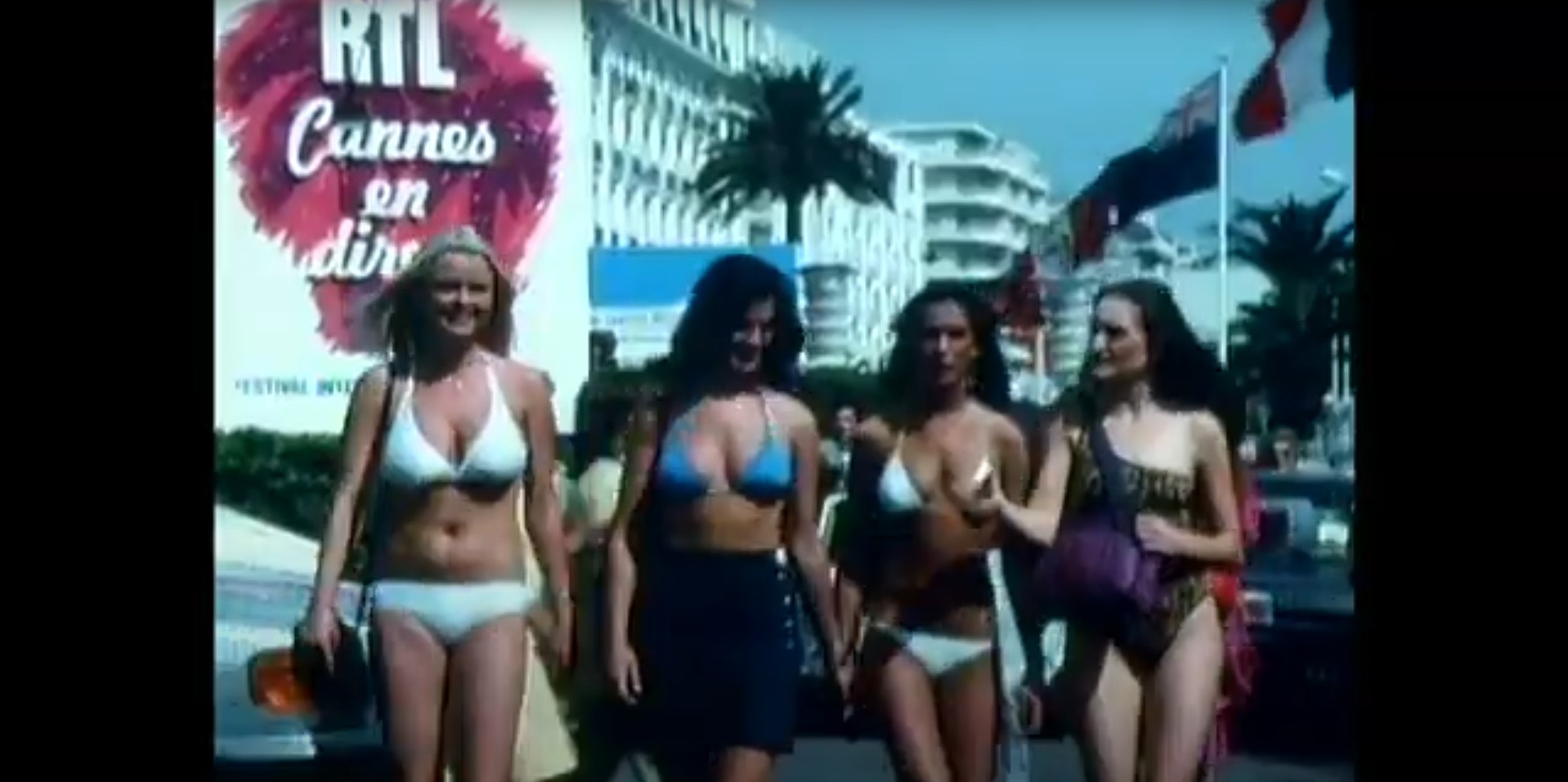
For a Spinell, Munroe, and David Winters production, “The Last Horror Film” is surprisingly vaulting with ambition for an unpermitted guerilla shot feature through the streets of Cannes. Large parapet roof signs, gothic castles, the ritzy and beachy French Riviera, a score of happenstance and scripted extras, and lots of topless women on the beach shots, Winters musters moneyed shots to coincide the well-dressed interiors of Durand’s apartment and hotel room and a slew of exteriors to play into the stalking fold. Couple these manifested scenes of grandeur with the shocking moments of precision and effective gore and Spinell’s theatrically pleasing, creepy behavior performance and you got yourself a halfway decent meta slasher full of red herrings and a high body count, circling and overlapping itself within Duran’s directorial vision, the fake films within the critic panel and festival screenings and, as well as, the gotcha moment ending that gives one pause to think if what was just witnessed was actually the story, but while you’re scratching your head, perhaps feeling like a cinematic dummy of storytelling comprehension, there’s no doubt that David Winters successfully produced one hell of a horror picture starring Joe Spinell.

The new Tromatic Special Edition of “The Last Horror Film” is seemingly a repeat in some ways to the Blu-ray release from a decade earlier down to the exact cover art without the Tromatic Special Edition banner. The AVC encoded, 1080p resolution and 1.78:1 widescreen aspect ratio, is compressed onto a BD50, an uptick in format storage from the 2015 to warrant it a Tromatic Special Edition. However, image refinement is not in this re-release’s repertoire with a mirrored result of a lightly anemic look that still fails to color pop the feature in its eclectic set designs. Darker scenes are in and out based of contrast, losing definition, and are inclined to be grainer negatively in the negative spaces. In the brilliance of light, details can rooted out, especially in skin textures as Spinell’s pot marked face is exhibited in great detail amongst the other casts’ individual facial features. Winter’s diverse and organized framing, plus with a little editing garnish, elevates whatever kitschy content there might have been into a grade-A B-picture; yet that doesn’t go without saying that there weren’t any editing flaws in the print that was subsequently transposed to the Troma transfer as horizontal cut lines and breaks in recurrent cells kink the chain ever so slightly. The release also features the same English Dolby Digital 2.0 mix, a fidelity lackluster that doesn’t reflect the power the action medley and the score, the latter from composers Jesse Frederick, the vocalist of the “Full House” theme, and musical instrument compliment, Jeff Koz. Dialogue renders above the layers but is on the softer side of volume, diluting the more intense moments of chase and murder without that impact punchiness. Troma, like in my instances, flaunt a noteworthy tidbit in their releases, if there is one to flaunt, and in “The Last Horror Film’s” case, Depeche Mode’s track Photographic is the quoted feature music, says in big white and yellow font on the front cover. What primarily separates the 2015 and the 2025 releases are the special features. Archived commentary with Joe Spinell’s assistant and associate producer Luke Walter commentary moderated by Evan Husney from 2009, “The Return of Dolphin Man” short film by director John Patrick Brennan, a segment entitled “Kabukiman’s Cocktail Party,” the feature scrapped “Maniac II: Mister Robbie’s” promotional trailer, the theatrical trailer, and a Lloyd Kaufman intro that dresses him in drag in the streets of an uninterested NYC are included on the special edition that features additional supplements with two more, 2023 produced, re-used commentaries from 1) Caroline Munro moderated by FrightFest’s Alan Jones and 2) again with Luke Walter by moderated by Severin Films’ David Gregory for the label’s own 2023 release. Also from the Severin vault is the Like a Father Figure: Sal Sirchia Remembers Joe Spinell interview with Sirchia’s memories and phoned tape recordings of Spinel’s voice messages, My Last horror Film Ever audio interview with producer Judd Hamilton, and “The Last Horror Film” location revisit featurette from New York City to Cannes, plus additional trailers under the title “Fanatic” (2) and the main title (1). There are additional Troma materials with trailers from “Return to Nuke ‘Em High Vol. 1” and “Vol. 2,” The Toxic Avenger,” “Class of Nuke ‘Em High,” and “#Shakespeare Shitstorm.” Aforementioned, the physical properties of the release nearly identical aside from the special edition banner across the top and the additional bonus content. The 2015 Troma release is region locked A but a decade later Troma realized region free is the smarter move with the single 87-minute cut defining the release that comes not rated.
Last Rites: Take “Maniac” out of the equation, “The Last Horror Film” is Joe Spinell’s finest performance not taken lightly and though the story’s lurching flashes the check engine light, David Winters is able to still cruise along in his fanatic slasher.




 It's Bloggin Evil!