Josef’s Little One-Day Video Diary Bares Unnerving EVIL! “Creep” reviewed! (Second Sight Films / Limited-Edition Blu-ray)

“Creep” on a Limited Edition Second Sight Films Boxset!

Aaron, a videographer, travels to a lakeside cabin in Crestline, California after responding to an online ad for a single day’s worth of work.  There is where he meets Josef, a husband and soon-to-be father dying of terminal brain cancer who wants to film the entire day as a memoriam video for his unborn child.  As the camera rolls, Aaron captures Josef’s strange yet sad behavior in an outpour of unstable emotions that put Aaron in an uncomfortable spot.  When Aaron learns Josef might not be sane, he’s able to elude the creep’s attempts to hold Aaron captive, but the videographer hasn’t entirely escaped Josef’s obsession with video recordings and unusual gifts being sent to Aaron’s home address.  The call to the police proves pointless when Aaron can’t provide detail information about his former, one-day employer and he often feels not alone in his home, but Josef’s last recording shows a different, desperate side of Josef Aaron can’t ignore. 

What happens when two guys with a camera try to shoot a comedy about two strangers having an awkward encounter?  They end up making one hell of an awkwardly scary horror film.  That’s what happened to Patrick Brice and Mark Duplass on their 2014 found footage film “Creep.”   Brice directed the feature along with co-writing the unsettling dark human nature story with Mark Duplass that proved to be more than just another found footage folly as the original film spawned an expansive, 2017 sequel and this year’s Shudder series “The Creep Tapes” with both Brice and Duplass returning to fill their original, multi-capacitated roles in front and behind the camera.  When those close to Brice and Duplass had screened the originally intended comedy, the feedback was to pivot to an uneasy loner and a serial stalker and that’s where producer Jason Blum of Blumhouse Productions came into play that secured additional shots and reshoots to recut and expand upon the creepy creeper.  “Creep” is also a production Duplass Brothers Productions with another “Creep” franchise regular, Christopher Donlon, serving as co-producer.

With a cast of two, the story must be engaging, interesting, scary, and above in order to continuously captivate or induce edge of your seat anxiety-riddled anticipation.  Brice and Duplass control the narrative by being on both ends of the camera that could only go in one of two directions – be a disastrous outcome of looping and stagnant underdevelopments really about nothing at all or could be evolve constantly, but slowly, to build upon, but not reveal to hastily, a slow burn of psychopathic tendencies toward one person.  Duplass as the dying Josef leaves a frightening, unsettling impression of a man glowing with mania and he’s ever effervescent in trying to playfully scare Aaron, played by Patrick Brice looking through the lens, anyway he can, such as running off into the wilderness to pop up and scream, put on a ferocious-looking wolf mask and do a song and dance act that pinches the nerves, and tell him secretive stories of his life that would disturb any listener.  Amid the craziness, we’re not sure why the character of Aaron would stay and film while being subjected to Josef’s impulses.  Yes, Josef pays him handsomely for a one-day gig but there’s no desperation in Aaron to warrant what seems to be frisky abuse at hands of a grown man on the verge of breakdown.  Audiences from the get-go will experience Aaron’s painful staidness of passivity while Josef just runs him like a high school track and while internally thinking how absent Aaron’s situational awareness is, this act of humoring another person can be totally plausible to a fatal flaw.

Found footage has been mostly overused, misused, and abused for the better part of 20-or-so plus years thanks to the global success of “Blair Witch Project,” but there are diamonds in the rough that stand out amongst the murky muddied subgenre and “Creep” is one of those sparkling few to emerge.  What’s fascinating about the design is it doesn’t try to do too much within the frame.  Simple jump scare gags, such as popping out behind doors, are heart-jarringly effective without all the razzle dazzle of visual effects or practical makeup effects.  Another star quality is the story’s music soundtrack, there is none.  Silence is golden.  One of my personal pet peeves with found footage is the use of a musical score that instantly eliminates the realism the subgenre naturally wants to perceive.  “Creep’s” longevity as a realistic scary situation within the unembellished optical camera nerve lasts because of the smaller things, such as having no soundtrack alongside the raw video recording that creates a deafening, shivering quietness and enhances those basic jump scares to a pee-your-pants level.  There’s no overcomplication of material, no unnecessary enhancing, just two guys with a camera trying to make a comedy and come out with a “Creep” of a film. 

“Creep,” the small film that could, receives a new limited-edition Blu-ray set from UK label, Second Sight Films.  The AVC encoded, 1080p resolution, BD50 is collaborative product with Kaleidoscope Home Entertainment and denotes a picture-perfect home video quality found footage always strives to reflect with a 24 FPS run and an image decoding that averages in the mid-30s.  A wide variety of healthy raw-for-realism shots from a Panasonic AG-DVX100 B version digital handheld that allowed to shoot in a widescreen 1.78:1 aspect ratio.  Darkened shades, contrasting variables, and an ungraded finish is a part of the found footage game, but the way Brice handles the camera is less shaky than most of the subgenre, completed with steadier, tracking shots or left-in-place recordings.  Details are not always going to be defined but for this subgenre, a subtle interlacing effect is appropriate and welcoming.  The lossless English DTS-HD Master Audio 2.0 Stereo mix is recorded from the DVX100’s onboard external microphone that captures the natural elements as well as a softer dialogue track for those in front of the camera compared to behind, creating an organic depth where needed, such as when Josef runs off into the woods we hear the fading crackling of brush under running footsteps.  There are some added elements into the sound design for long shots that need more than what the microphone can offer and those are meticulous placed to work with the images.  The softer dialogue does not give away to intelligible or obstructed dialogue as conversation, whether at a slower speech delivery or a heighted yell or scream, maintains prominence and, occasionally, does feedback slightly into the external microphone, adding to the realism of found footage.  English subtitles are optionally available.  Second Sight boxset are jammed packed full of succulent, exclusive content and “Creep” is not exception to the rule.  The set houses a new audio commentary with director Patrick Brice, editor Christopher Donlon, and actor Mark Duplass, an archival commentary with Brice and Duplass from the initial home video release, a new interview with Patrick Brice Peachfuzz, a new interview with Mark Duplass Into Darker Territory, a new interview with editor Christopher Donlon Expand the Universe, a live Q&A with cast and crew 10 Years of Creep, and deleted and alternate scenes and ending that hark back to the “Creep’s” original intention of an awkward and sad comedy.  The limited-edition contents include a rigid slipcase with new artwork by Luke Headland that plays into the fuchsia coloring motif we’ve seen lately with Second Sight front covers, 6 collectible art cards, and a 70-page colored book with additional Headland art and new essays from Kat Ellinger, David Kittredge, Amber T, Sarah Appleton, and Blu-ray acknowledgments and credits.  The release comes region free with an open licensing and so the 78-minute film, which is UK certified 15 film for strong violence, and references to sexual violence, can be enjoyed globally.

Last Rites: “Creep” will definitely creep you out. Second Sight’s highly anticipated and supplemental heavy set contends to be the last best physical release of this calendar year, closing 2024 by showcasing a troublesome and quirky sociopath and his unforgettable aberrant fixations.

“Creep” on a Limited Edition Second Sight Films Boxset!

One Out of 7 Most Freaky, if not EVIL, Places on the Planet! “Gonjiam: Haunted Asylum” reviewed! (Second Sight / Limited Edition Blu-ray)

Become Engulfed by the “Gonjiam: Haunted Asylum” on Second Sight’s LE Blu-ray!

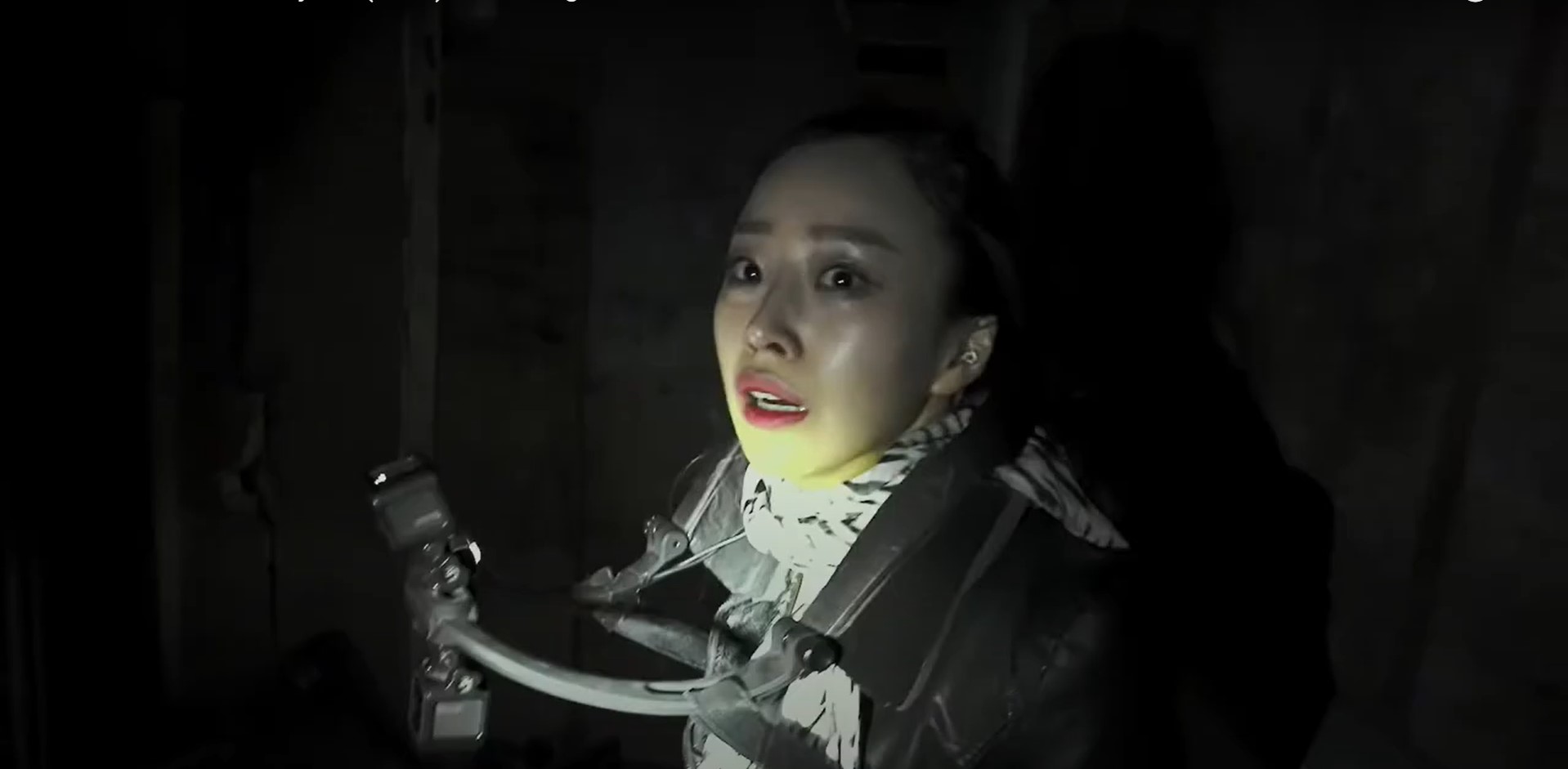
Horror Times, a web series dedicated to horror and hits, travels to the Gwangju providence for their next big event, a special episode aimed to rake in 1 million views worldwide as they explore the supposedly haunted, deserted, and derelict Gonjiam psychiatric asylum after midnight on its anniversary date of its closing.  Already buzzing with historical disappearances of those curious and brave enough to investigate the dilapidated corridors and rooms, Horror Times brings in four guests to join his three-man crew to record every second of what CNN labels one of the seven freakiest places on the planet.  Setup with wall-mounted motion activated cameras, harnessed with individual GoPros, and given a multi-layered script to follow on each of Gonjiam’s four floors, all is going as planned broadcasting live the strange atmospherics that slowly see climbing views from the director’s camped base outside the structure, pulling some fabricated strings to not only heighten his viewer pool but also get genuine frightened reactions from his guest team, but when the team and the cameras unexplainable paranormal occurrences, how far will a director go to reach his milestone goal.

Based off the actual CNN listicle of the top 7 freakiest places on the planet, “Gonjiam:  Haunted Asylum” was a real brick-and-mortar edifice committed to the committedly insane and one of the most suspected haunted places in South Korea until it’s demolishment shortly after the 2018 film’s release.  “Epitaph” writer-director Jung Bum-shik joins the ranks of the South Korean supernatural spookies, accompanying notable entries such as “The Tale of Two Sisters,” “Phone,” and “Cinderella.”  Cowritten by Sang-min Park, Gonjiam:  Haunted Asylum” refreshens the ramshackle mental institutionalized horror subgenre with a dash of social media influence and found footage that entangles grudging ghosts with cyber terror.  Historical thriller and drama producer Won-guk Kim spearheads the project under Hive Media productions and distributed globally by Showbox Films. 

Like a cable-aired, modern-day version of “Ghost Hunters” or “Kindred Spirits,” the vessel Horror Times exploits people’s spirituality beliefs by mingling the exploration of urban legends with gimmicky ploys to keep eyes glued to the show, run up viewership, and earn the root of all evil, money.  The Mystery Incorporated meddling kids might not have a talking Great Dane, but the Gonjiam ghost hunters are a dynamically doomed blend of greed and curiosity, helmed by their captain Ha-joon (Wi Ha-joon, Squid Game) and his on-the-ground, string-pulling marionettes Seung-wook (Lee Seung-wook) and Je-yoon (Yoo Je-Yoon) to conjure up not spirits but pranks under the guise of Gonjiam ghosts.  The unsuspecting portion of the team react as expected, believing the unexplainable as genuine articles of a haunted asylum, until the jokes bleed into the reality of the structure’s incensed force.  Other than Charlotte (Mun Ye-won), a Korean American who travels to Gonjiam to add the location to her lists of CNN’s freakiest places on the planet, there isn’t another mise-en-place character.  Perhaps the others’ backstories are lost in translation but Sung-hoon (Park Sung-hoon, “Hail to Hell”), Ji-hyun (Park Ji-hyun, “The Divine Fury”), and Ah-yeon (Oh Ah-yeon) lose sympathy points for just being there for the sake of being there.  If you haven’t caught on already, the characters and actors name match to add to the faux realism of found footage. 

Veritably surrounded by the actual notoriety of the former Gonjiam psychiatric hospital, the story adds to the established frightening folklore of the rundown building and though the filmmakers were not allowed to shoot inside or on the grounds of the restricted abandoned building, Gonjiam blueprints were used to reconstruction the grimy, trash-laden hallways and various rooms inside a high school.  The effect works like charm used to teleport audiences, along with the help of social media GoPros, selfie sticks, and the like, right into the crumbling ruins; you can almost smell the mold and stank of beyond putrid chemicals and filth.  Yoon Byung-Ho’s cinematography plays with the signal disruption touch, often deploying randomized and intentional interference to convey signal disruptions or, perhaps even, the foreshadowing with the wraithy wrath of spirits; yet “Gonjiam” never truly feels like a found footage film due to its radical differences in video media being implemented and there’s often the unexplainable, no camera-in-use angle that dilutes the subgenre medium.  “Gonjiam” falls into this unquantifiable realm of storytelling that’s hard to digest.  The chaos that ensures in the third act is more palpable, geared toward developing a heavily reliant, hard and fast tension and trembling fear without needing bloodshed for the crowd-pleasing shock factor.

Second Sight sees through the dense barrage of found footage films and spots the pearl amongst the muck with “Gonjiam:  Haunted Asylum,” curating a limited edition, big box, Blu-ray release.  The AVC encoded, 1080p high-definition, BD50, presented in a widescreen 1.85:1 aspect ratio, nears 24 FPS and has flawless technical recording in its digital capturing.  Blacks are dense and rich to create that unknown void apprehension, the neglected belongings of a forlorn hospital have palpable consistency that’s grimy and rusty, and skin textures appropriate lose definition but maintain quality to the extent of equipment limits with GoPros, cell phones, and camcorders in low and hazy key lighting, onboard camera lighting, and some night vision for authentic found footage grip.  There’s not much in the way of diverse color for what is a graded tone of tenebrous obscurity throughout.  I’ve already touched upon Byung-Ho’s purposeful transmissive trouble that impresses more of an annoyance than an integrated factor of fear.  The Korean DTS-HD Master Audio 5.1 delivers on the need-to-hear atmospherics that shudders in echoes and the frantic churn of survival.  What there is not a ton of, and gratefully kept to a minimum, was the eerie wails of the dead as their moments are kept mostly visual in a virtually scoreless runtime that focuses on the surrounding milieu rather than building tension artificially through minor key notes.  Dialogue comes through clearly and clean, especially when muzzled by video camera audio band transmissions.  English subtitles are translated well and synch fine enough with the rapid procession.  Special features include an feature-length audio commentary by Mary Beth McAndrews (Dread Central editor-in-chief) and Terry Mesnard (Gayly Dreadful editor-in-chief), UK’s Zoë Rose Smith’s Fear the Unknown visual-essay on the Gonjiam’s origin, history, and what makes the Korean film scary, and archived featurettes with interviews, including with director Jung Bum-shik amongst various crew, that explore the rumored beginnings of Gonjiam’s notoriety that fuels the production into recreating Gonjiam nearly identically, live recordings of the film’s sheer eeriness told through the images captured by the camera harnesses and phone footage, the new faces of fear that circles around the cast and behind-the-scenes table reads, The Sanctum of Horror that aims to explore the connection between the actual freaky locations and their cinematized yarn to create a legacy of folklore for the now demolished Gonjiam hospital, The Truth of the Ghostlore explores Gonjiam’s history and urban myth and how that forms the ghosts in the film, Korean press conference film launch, and the film’s trailers.  As much as we love Second Sight’s authored special features, which from films of the East are rarely produce, there also plenty to be excited about with the physical attributes of the limited edition set, including a rigid and thick sleeve box with a Luke Headland designed Gonjiam building in red and black.  The inside contents include a 6 collector’s art cards in the same red and black color scheme, a 70-page book with new essays from Sarah Appleton (“The J-Horror Virus”), James Marsh (“Wisconsin Death Trip”), film critic Meagan Navarro, and horror content creator Amber T, and finished off with the film itself, encased in a green-colored Amaray with the same front cover artwork as the rigid slip box.  There are no inserts, and the disc is pressed simply with the title, English and Korean, splashed in red on a black background.  The LE set is hardcoded with a region B playback, has a runtime of 94 minutes, and is UK certified 15 for Strong Supernatural Threat and Language.

Last Rites: “Gonjiam: Haunted Asylum” is not just another shaky cam of paranormal activity. The film incorporates a component of reality, embellishing more on top an already suspected haunted building by giving the story teeth, and released with cultural purpose that binds fact and fiction with a terrorizing outcome of some really pissed off spirits.

Become Engulfed by the “Gonjiam: Haunted Asylum” on Second Sight’s LE Blu-ray!