The EVIL Next Door Invites the Urban Decay. “Terrified” reviewed (Acorn Media International / Blu-ray)


A young boy is hit and killed by a bus.  A housewife is found hung in her bathroom.  A man has disappeared in his home.  Three incidences, three houses, three souls have one thing in common.  They’re neighbors.  The unusualness surrounding each tragedy grabs the attention of former forensics investigator Jano who’s own experience with the paranormal thrusts an unquenchable desire to examine the supernatural.  In a matter of coincidence, Dr. Mora Albreck, a vocational psychokinetic researcher, follows up on the disappearance of the man who called her countless times for help, but then just vanishes.  Accompanied by Dr. Albreck’s assistant, Dr. Rosentock, and Detective Funes, a weary, on-the-edge officer with a bad heart, the divide themselves to stay the night in each house and experience the paranormal phenomena calling from the beyond, but the entities calling just might terrify them. 

Hailing from Argentina comes the shivering, cross dimensional unknown from writer-director Demián Rugna’s 2017 properly titled, “Terrified.”  Originally known as “Aterrados,” the Buenos Aires filmmaker, who’s helmed hell bound thresholds previously with his introductory feature film, “The Last Gateway,” remains inside the grindhouse and horror bubble with another slit between realities thriller.  This particular bubble bursts with a whirlwind of nebulous outbreak of terror while providing microbe commentary about the potential dangers of Latin America’s water system and a perspective theme that speaks volumes on the issues of duality in what really happened and what the general public is told. Don’t trust your eyes! Nothing is what it seems! That’s the whole premise of “Terrified’s” knee-quivering appall, produced by Fernando Díaz under Machaco Films and the Instituto Nacional de Cine y Artes Audiovisuales (INCAA).
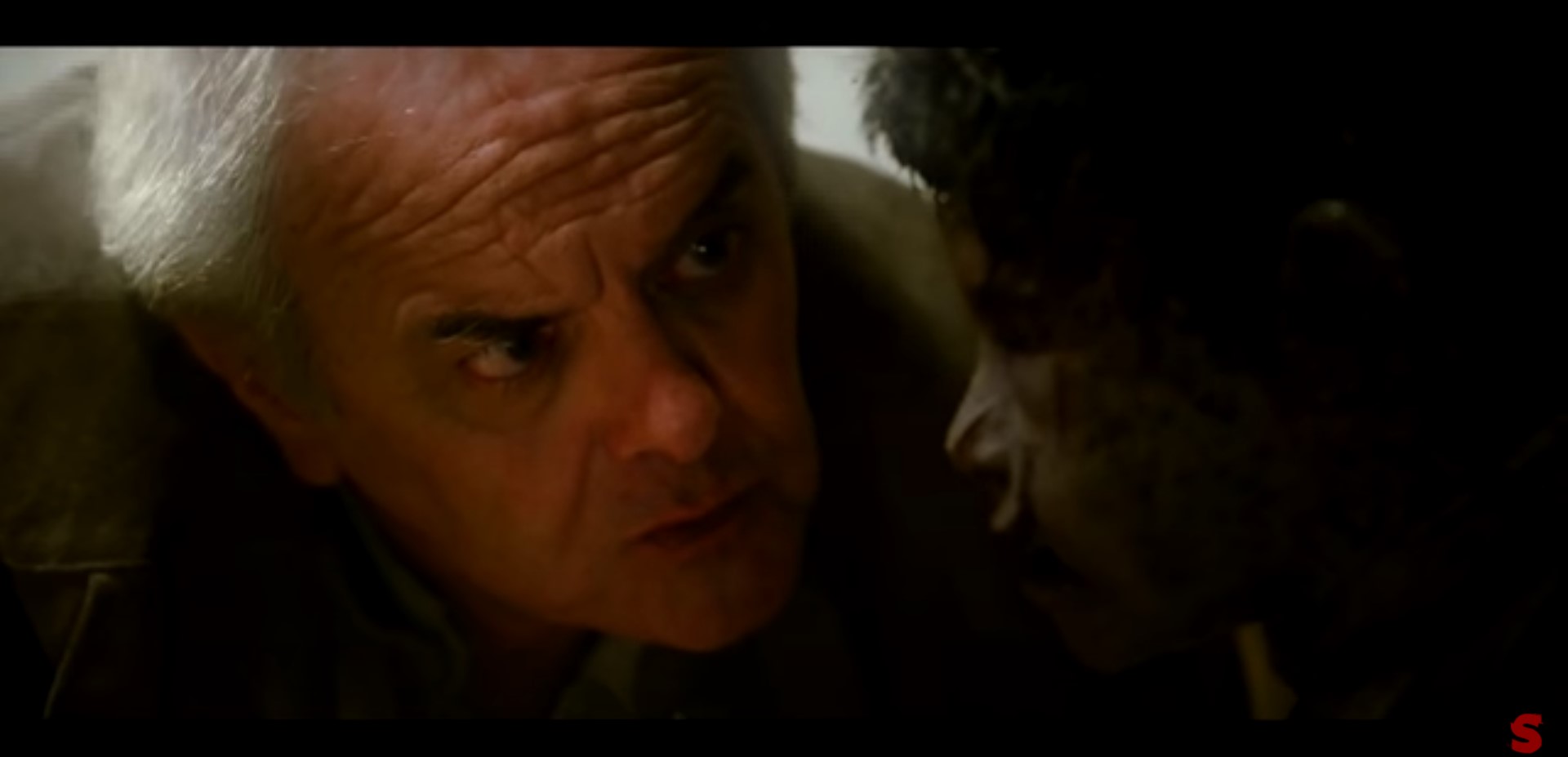
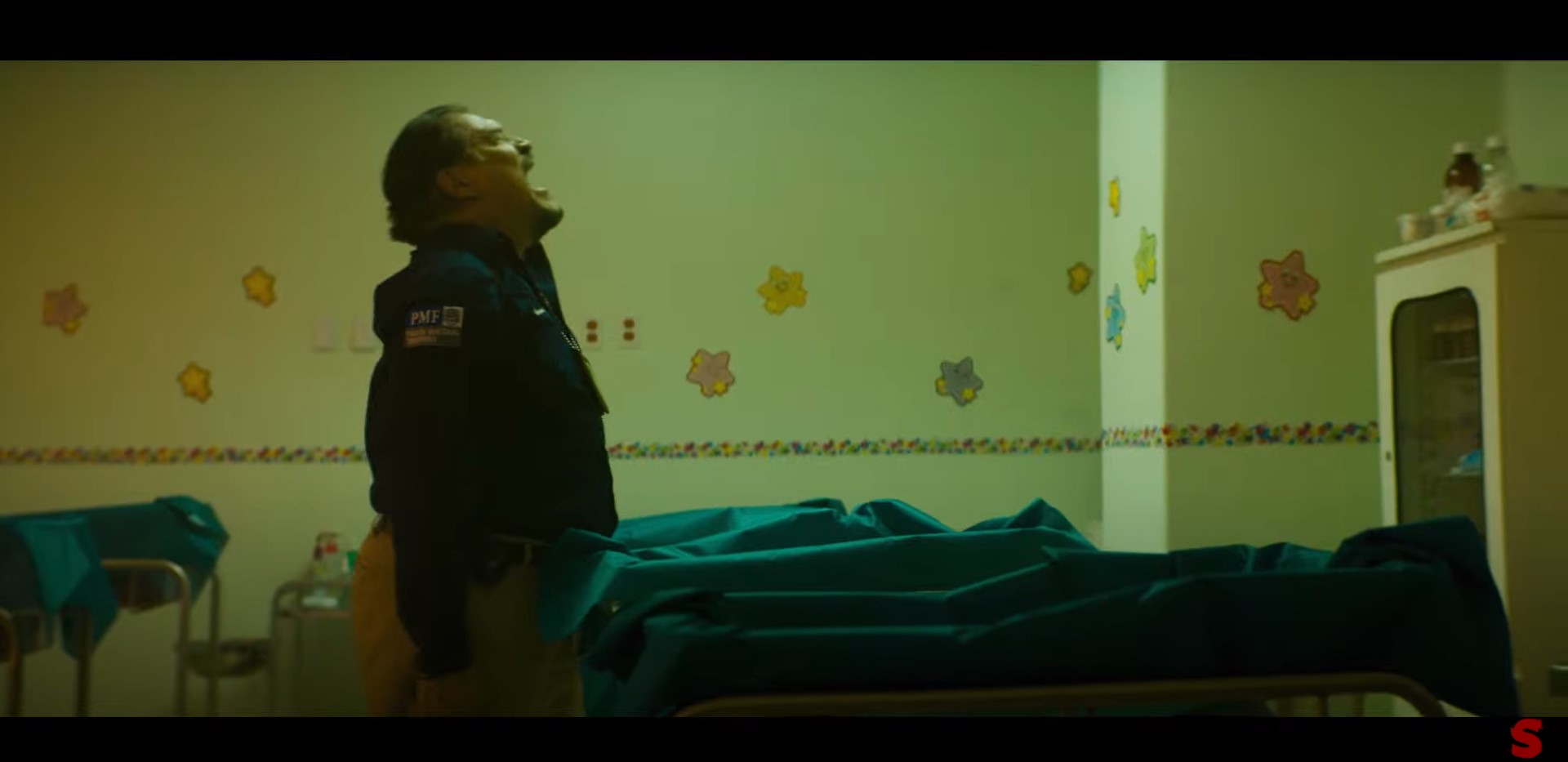
Rugna’s paces “Terrified’s” entropic buildout near the edge of an anthology, ghosting us the one reason for a neighbor’s supernatural experience for the next to eventually bring the heart of the cast together as a motley group of paranormal investigators. Starting with retired forensic specialist Jano who has a morbid curiosity for the unknown that fascinates him more than the abnormal mortifies him with fear. In his first feature length performance outside of television, Norberto Gonzalo understudies the very concept of the character Jano with objective eye for curiosity and knowledge much like any scientist. Jano is invited by Detective Funes, played by another television regular, Maximiliano Ghione, to the investigation of a recently deceased boy’s corpse having returned to his childhood home and is now a rigor mortis statue sitting upright at the dining room table. Though through exposition about their training and partnership over the years, Jano and Funes sit on the opposite sides of the fear spectrum with Funes’s engendered nervousness to the whole uncanny event and mentioning his bad ticker which comes into play later on in the story. Opposite side of the street, in walks into frame Elvira Onetto, an appropriate name for the film at hand. The “Jennifer’s Shadow” actress is Dr. Mora Albreck, renowned paranormal psychologist checking in on a manic patient who recently disappeared. Rugna really appreciates the mindset of the kindred spirits in Jane and Dr. Albreck with their sense of childlike giddiness toward the whole matter while those around them – like Funes or the boy’s mother – shiver with fear or break psychologically. While Jano and Dr. Albreck naturally work their way into the story, Dr. Rosentock is left with being the odd eccentric out. While just as enthusiastic about the phenomena that’s swallowed souls around the neighbor, Rosentock just appears as Dr. Albreck’s assistant who has traveled from a great distance to study…something like what’s happening…so is said in the film. Played by George L. Lewis in his only credited role, Rosentock is as much as self-assured, unafraid, and matter-of-fact as he is a caricature of old Hammer Horror style scientists when dealing with otherworldly entities, imposing a need for a little weight to his story, but, unfortunately, his participation lives and breathes only as participate to Albreck’s project. There are many fine performances around with the ebb and flow of minor characters, played by a talented cast that includes Julieta Vallina, Demián Salomón, Agustín Rittano, and Natalia Señorales.

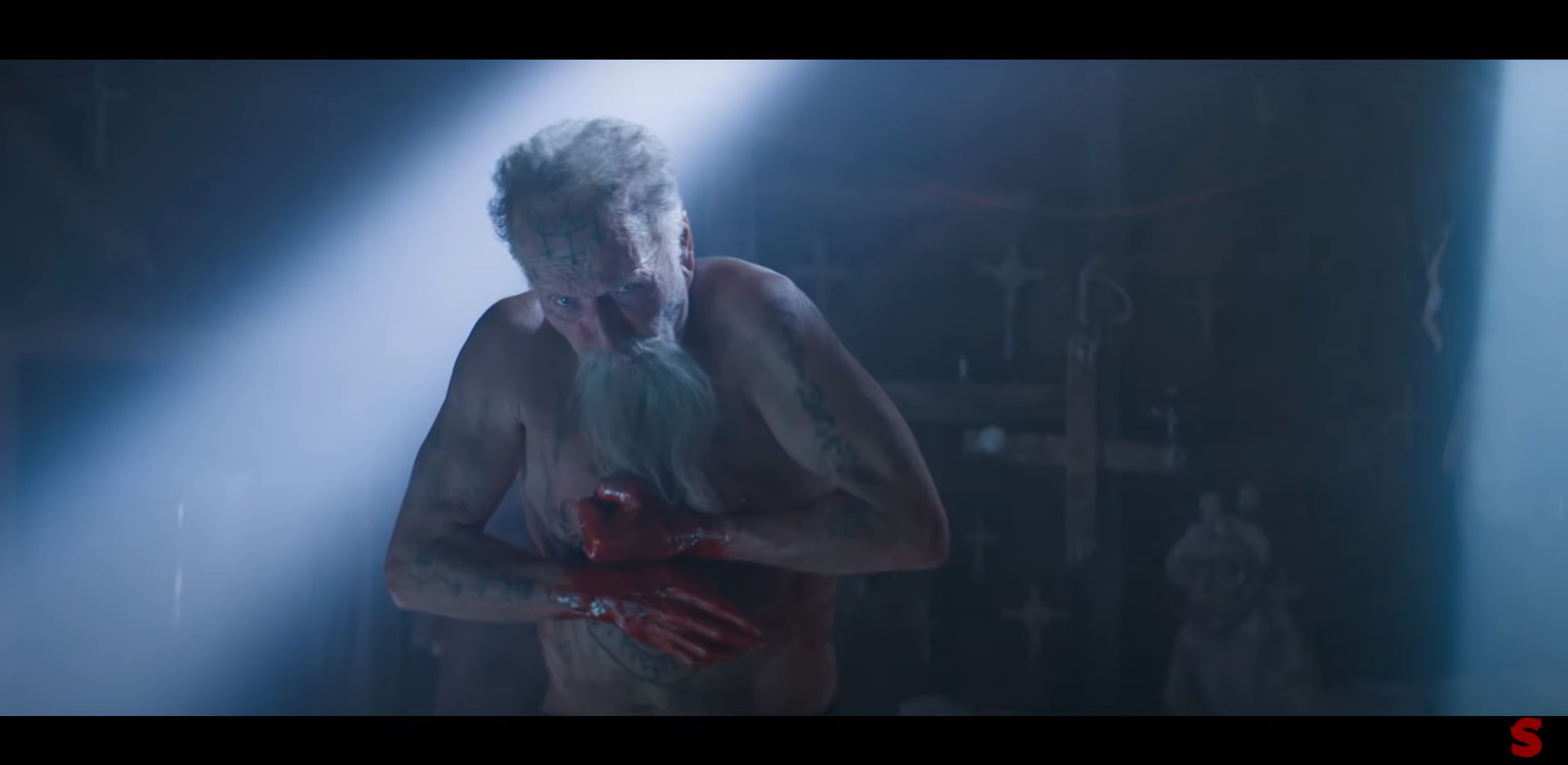
“Terrified” is one of those movies where the silence and the stillness can have a higher affect on the spine-prickles.  Rugna’s gold standard patience establishes a tense tone without the supplementary tumultuous, ear-splitting chaos that usually grinds teeth and curls toes as the sediment of panic begins to settle at the pit of the stomach.  Marcus Berta and Lionel Cornistein’s blend of practical and visual effect are near seamless, but ultimately land the one-two knockout punch of anxiety-riddled scares with tall, crumpled monsters skulking under the bed shadows, glowing eyes peering through wall cracks, and a the stiffly rotten decomposing boy popping into frame in a split second.  Cornistein’s composite designs are not too shabby for the editor and visual effects artist’s first feature rodeo let alone generated a complex olio of otherworld oddities.  In regards to “Terrified’s” themes, in my travels to Central and South America, I’ve been advised to be cautious in drinking the tap water that’s filtered differently compared to the U.S., leaving local microorganisms to swim in the guts of those unaccustomed to them, and Rugna points in that direction by consistently focusing on the water taps, drains, showers, the action of drinking water, and, also, literally spelling it out for us by Dr. Albreck to not drink the water in these spirit plagued houses due to microbes traversing from beyond through the water system.  Dual perspectives becomes important as well.  After the gruesome discovery of the boy corpse sitting at the dining table, Funes needs a rational explanation to report in contrast to the unexplained grisliness, something that makes sense and wouldn’t frighten the daylights out of him, his colleagues, or the general public.  Coincidingly, Rugna creatures also exist on two different planes, sliding between the panes, and not always visible; this is another verbally illustrated facet that unsuitably reaffirms the theme.
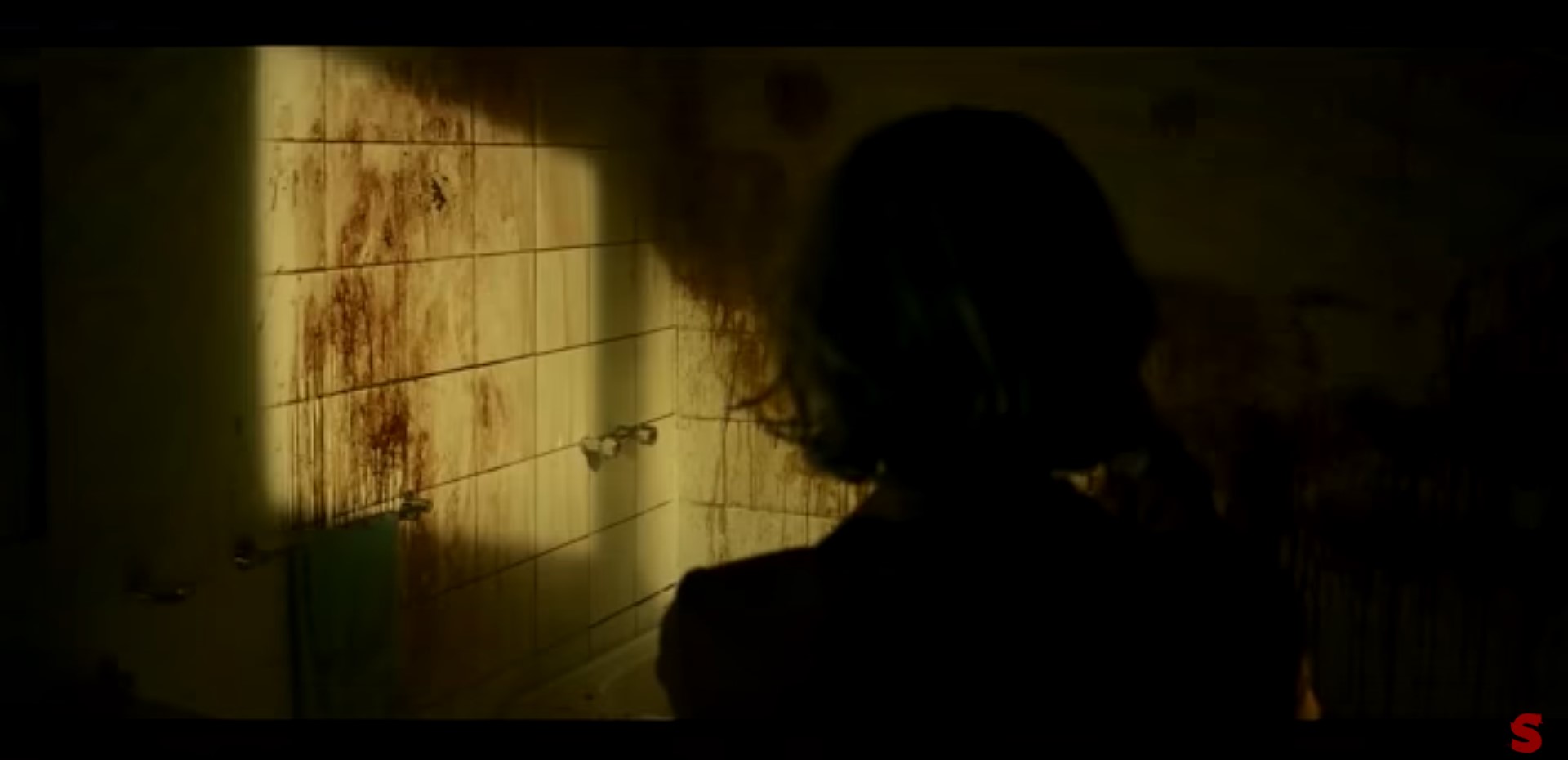
“Terrified” scales the expansion of dimensions with bottomless creepiness and shock value, rifting from Shudder’s streaming service and right onto a UK Blu-ray home disc distributed by Acorn Media International.  The region 2, PAL encoded, BD25 disc houses a presentation displayed in a widescreen, 2.35:1 aspect ratio, with a 15 rating for strong horror, bloody images, and language. The 1080p, HD resolution is an indifference concern with the already blemish free digitally shot film, but director of photography, Mariano Suárez, heeds every shot taking Rugna’s perspective theme to heart with lowlight and obscurities as fear-fodder. The Dolby Digital 5.1 surround sound mix flexes a full-bodied, channel defining muscle with clear, prominent dialogue, a diabolical range in sound design, good depth, and an off-key canorous soundtrack because every horror fan eats up an inharmonious and creep tunes. Unfortunately, much like the “Belzebuth” release, “Terrified” comes with no special features other than a menu with the animated trailer of the film. “Terrified” is the chef’s kiss of Latin American horror, an epitome of jaw-clenching terror that’ll have you sleeping with the lights on tonight.

Buy “Terrified” on Blu-ray (Region 2) from Acorn Media International!

A Cop, a Paranormal Investigator, and a Priest Walk Into an EVIL Extermination Plan! “Belzebuth” reviewed!


The joy of a new baby is cut short for Detective Ritter who bares the tragedy of his little boy viciously killed in a massacre of nursey infants by a psychotic nurse before taking her own life.  Five years later, and losing not only his child but also his wife to severe depression, a disheveled Ritter is called in to investigate a mass murder involving a 12 year old boy slaughtering young children in a preschool classroom.  To him, the two events don’t spark similarities, but to a paranormal investigating Catholic priest, Ritter’s tragedy and the events in the classroom are linked by the unorthodox priest’s examination.  All the evidence points to an excommunicated Catholic priest practicing demonology that sends the two men down a path of unholy darkness in a series of murderous catastrophes influenced by the rebirth of the Messiah.

When the first scenes from “Belzebuth” open with a maternity ward nurse stabbing with vigorous force every single infant child in their crib with a scalpel, you know nothing wholesome is sacred and everyone is fair game in what is to be a grim story of infinite barbarity and darkness.  “Belzebuth” falls in the line of fire of Mexico City born writer-director Emilio Portes with an augmented, dark humored social commentary loaded with evil entities and grimace-laden gore.  The “Meet the Head of Juan Pérez” filmmaker cowrites “Belzebuth’s” irrational rational for the unfortunate real world trend of mass murders and touches upon, sensationally, the evolution of Catholicism extremities to battle evil in the world with first time feature length film screenwriter Luis Carlos Fuentes.   The Mexico/American film is produced by Rodrigo Herranz, Michelle Couttolenc, and Jaime Basksht, with Ana Hernandez as executive producer and Pastorela Peliculas in cooperation with patriotic promotion from the Instituto Mexicano de Cinematografia, aka IMCINE, serving as the production companies.

If you Google Mexican actors, the power of artificial intelligence and ignorant manual input couldn’t separate Mexico form any other Latin American country as the powerhouse search engine provided me results like Danny Trejo, John Leguizamo, Jennifer Lopez, Javier Bardem, and Penélope Cruz.  Now, while I respect each and every one of these performers who provide a variety of lush character and emotional erudition to each of their roles, not one of them is born in Mexico.  Some that listed do not even share the same heritage.  But do you know what the most astonishing, most outrageous, and most shameful aspect of my search was this?  The Tepic, Nayarit, Mexico born Joaquín Cosio was not among the top 50 results.  From captivating television with Guillermo del Toro small screen adaptation of vampiric apocalypse of “The Strain” and the intense drug-fueled drama of “Narcos: Mexico” to his Hollywood presence in the star-studded, James Gunn directed “Suicide Squad” to his humbler beginnings that includes Bond, James Bond, in “Quantum of Solace,” Cosio’s a strong and versatile candidate for intense thrillers and “Belzebuth” is right in the actor’s wheelhouse as a downhearted Detective Rigger with a short fuse.  As a supernatural skeptic, Ritter’s forced into confronting his past demons with the demons of the present by tracking down rogue priest Vasilio Canetti (Tobin Bell, “Saw” franchise) with the help of Father Ivan Franco (Tate Ellington, “Sinister 2”) of the Paranormal Forensic Department, which sounds kind of silly because Franco’s squad is an extension of the Church.  Bell brings his delightful deadpan bedside manner as the excommunicated priest in guerilla warfare with a determined, demonic evil trying to massacre as many children as possible to find the reincarnated Messiah in what would be the Third Coming as the Second had come and failed during the Crusades.  Bell is the yin to Cosio’s yang until circumstances rear-end last ditch efforts and all Hell breaks loose in a drug smugglers’ tunnel.  Aida López, José Sefami, Yunuen Pardo, and Liam Villa round out the cast.

If possession-fueled carnage and the antiheroic archetype weaponizing demonology for good tickles all the right places, “Belzebuth” can be the feather tickler of dreams.  Fans of Clive Barker’s “Lord of Illusions,” Peter Hyams’ “End of Days,” and the graphic novel “Constantine” can indulge into Portes’ explicit nihilism and lack of public conviction in religion in the director’s allegoric telling of something really big and really satanical happening right under people’s noses while a small motely crew of conversant peons try to stop a wall of Deviltry.  Portes also consistently touches upon Mexico’s unsystematic corruption, even among Ritter and other protect and serve officers, and the once firm-handed political system of the Institute Revolutionary Party (PRI) as potential cause for all the suffering enacted demon-rooted abscessations.  The mentioning of drug cartels pop up frequently, too, symbolizing the seemingly random acts of violence are just never just random acts, but an perpetrated hit on a human target much like the cartels’ unsavory methods to either take out competition, eliminate obstacles, or to silence whistleblowers.  Portes does a phenomenal job using his film as an allegory in making a political statement but lacks balance in favoring gore over profile with some characters who rather feel written in just for the sake of a broader English audience.  Father Ivan Franco is such character with interesting combinational vocations as a paranormal investigator and a holy man of the cloth.  Yet Franco, who wields a gun and has supercool video and audio recording specs, spearheads a larger suborganization shielded away from the public eye and, unfortunately, the viewer eye that never feels like a cog in the entire “Belzebuth” machine.  Franco and his team of spook-sleuths, who, by the way, vanish completely from his side early into the investigation, supposedly follow and investigate peculiar tragedies connected to misaligned presences leaving spiritual residue on the real world plane, but how his team comes about connecting the dots exclusively to just the first two tragedies, five years separated, is a bit of stretch and a letdown in fabricated continuity and weight behind Franco’s existence to be involved.  Pockets of plot holes pop up here and there on other facets but generally speaking, “Belzebuth” works black magically as a spiritually and culturally vivisecting detective thriller.

The Shudder original 2017 release, “Belzebuth,” scares up onto an UK Blu-ray release from Acorn Media International. The region 2, PAL encoded, single layer BD25 presents the film in a widescreen, 2.35:1 aspect ratio, with a runtime of 109 minutes.  Ramon Orozco’s cinematography flashes with a gorgeous red and blue color palate that fits the iniquitous tone and adds an ethereal, hazy backlighting to only enhance the tone to more sinister levels.  Acorn’s Blu-ray sharpens Orozco’s already byzantine schemes that enriches the details in the skin as well as a the sacred relic artifact-cladded locations that become claustrophobic and entombing.  Even Juan Martínez Espín visual special effects casts a solid effort of barely a smooth surface computer generated phoniness, especially in one crucifying scene of psychological torment.  You’ll know it when you see it.  “Belzebuth’s” powerful Dolby Surround 7.1 audio track is an assault on the eardrums of the best kind with a husky, industrial melodic soundtrack and hefty sound design with accompanying diverse range and proper depth that could be described as literally placing every creak, stab, and cackling laugh sound right into the darkest corners of your ears.    An unfortunate surprise about the Acorn release is that there are no special features aside from the animated menu that is essentially chaotic “Belzebuth’s” trailer plastered with menu options.  Possession films tend to stale at a dime of dozen, but Emilio Portes’s freshly terrifying “Belzebuth” entertains and scares to the very last morsel.

The EVILs of Slasherman! “Random Acts of Violence” reviewed! (Acorn Media / Blu-ray)

Comic book writer Todd has hit a writer’s block wall on the last issue of his one-shot, popular and extremely graphic series Slasherman based off the gruesome string of I-90 murders of the late 1980s where the killer murdered and mutilated his victims without ever being caught.  Looking for inspiration to conclude his life’s work, Todd, his girlfriend, investing publisher, and assistant head out on a road trip from Toronto to America, specially through the small town of McBain where the murders took place, but when recent mutilated bodies resemble the grisly deaths inside the colorful pages of his comics, the semi-fictional Slasherman story becomes full blown reality that places him and his friends in a maniacal killer’s path whose flipping through the pages of Todd’s murder-glorifying comic for inspiration of his own. 

Like many opinionated reviews before mine, I never imagined Jay Baruchel directing a horror movie.  The long time comedic actor with solid relationships working with other high profile comedians, such as Seth Rogen, Jonah Hill, and Danny McBride in some of the best notable comedies on the side of the century, has stepped into the shadows and professing his admiration for the genre we all love – horror. Baruchel cowrites and directs his first horror film, the big screen adaptation of Justin Gray and Jimmy Palmiotti’s “Random Acts of Violence” graphic novel. Fellow collaborator on the “Goon” movies, Jesse Chabot, branches out with Baruchel on the script and the two Canadian filmmakers yield an intense meta-gore picture focusing toward themes of lopsided public perspective and the glorifying of violence on other less physical mediums. Published in 2010 under Image Comics, the Gray and Palmiotti publication supplied a wealth of visceral material that unfolded faithfully in Baruchel’s Shudder distributed film as a stylish comicbook-esque narrative under the Toronto based Elevation Pictures, Wicked Big, and Manis Film production in association with Kickstart Comics and JoBro Productions. Palmiotti and Gray also serve as executive producers.


Struggling in the search for his perfect ending to Slasherman, Todd immerses himself in a cerebral fixation that envelops him more so then he would like to think.  Todd’s played by social activist and “Cabin in the Woods” actor Jesse Williams whose character is thrust into essentially making a choice, entertain his profession that earns blood money off the backbones of the I-90’s victims or subside his eagerness to finish his graphic novel and be team victim alongside his girlfriend Kathy (“The Faculty” and 2006’s “The Texas Chainsaw Massacre: The Beginning’s” Jordana Brewster) researching a novel that gives the slain victims a voice over their killer.  Brewster hasn’t changed one bit in a role that resembles a mature version of her “The Faculty” Delilah Profitt character complete with glasses and a thirst for reporting.  As a couple, Williams and Brewster hit little on their unconditional love  that’s apparent in the film’s final scenes.  Aside from their opening segment in their Toronto flat, their road trip is filled with Kathy berates Todd at times or Todd never seeming interested in Kathy or her work that’s seen counteractive to his own.  Affection is thin between them and I’m wondering if that’s more of the script writing than a flaw on Williams and Brewster who are credibility solid in their roles.  Same can be said about Jay Baruchel’s Ezra, the indie publisher sponsoring Slasherman, as the writer-director plays little to a publisher’s position of pushing the sales and marketing envolope and appears more to just be a tagalong friend with moments of quietly hawking.  Without much competition surrounding him, Slasherman is the most interesting character of the bunch from prolific stuntman, Simon Northwood.  With a 1000 yard stare that’s more menacing inducing than stemmed by trauma, Northwood brings the graphic novel character to all his glory as an aspiring artist in a contemporary parallelism to Todd who both see one another as their muse.  Northwood’s Slasherman is silently frightening, even more scary when he has to psych himself up to kill, and brings the physical stature of an unstoppable slasher genre maniac.  No one is safe from the merciless Slasherman, including those rounding out the cast in Niamh Wilson (“Saw III”), Clark Backo, Eric Osborne (“Pyewacket”), Nia Roam (“Polar”), Aviva Mongillo, and Isaiah Rockcliffe.   

The hyper violence lands more with a firm hand making good on film title.  Baruchel doesn’t hold much, if anything, back when rectifying violence as the monolithic theme while hitting a few thought-provoking notes involving the public’s perspective on the infamous legacy of serial killers and the tragic, forgotten memory toward their victims.  Somewhere in the gutting-clutter is a message of meta-existentialism tearing between that thin line of a person’s cause and effect actions.  Without the I-90 killer, Todd would not been stimulated into creating the deeply grim anti-heroic antics of Slasherman and, visa-versa, Slasherman would not have returned, coming out from retirement, if it wasn’t for Todd’s life’s work and lack of series conclusion for the Slasherman character speaking to Slasherman’s sanguinary artistic side.  One aspect stiffly hard to place your finger on is Todd’s connection with the town of McBain.  Other than a brief voice over exchange with Ezra, who mentions Mcbain is Todd’s hometown area, not much more of that pivotal connective tissue seizes grounding Todd, but the graphic novelist experiences a multitude of images streaming through his far off gazes, thoughts, and dreams. A boy, the boy’s mother who we know to be one of Slasherman’s victims because of Kathy’s research book, and the collateral damage of some great magnitude of violence surrounding them carry little weight to Todd’s psyche when struggling to piece his visions and these people’s bloodshed moment together and one reasonable theory that might explain that disconnect on our part is partially racially motivated, a detail indicative of gross assumption but a detail that can easily deceive you if you’re not knowledgeable enough about the cast you’re watching. My two cents is not randomized at all on Jay Baruchel’s “Random Acts of Violence” as it’s a brazenly deep and vicious first attempt horror in his own manic words from the glossy, leafy pages of the same titular graphic novel to the tellies of terror now on home media release.

Classified 18 for strong bloody violence and gore, “Random Acts of Violence” hits Blu-ray media shelves courtesy of Acorn Media International. The region 2, PAL encoded single disc BD25 has a runtime of 81 minutes and is presented in a slightly cropped widescreen 2.38:1 aspect ratio. A diverse hue palette of neon extricates Baruchel’s off-brand, real-time comic layout, creating a gritty, yet vibrant world all his own in a near window-blinds noir fashion. The tinkering of tints reaches almost Italian giallo levels without playing much with lighting and fog, relying heavily on the different neon vibrancy as if a colorist was right there pigmenting each scene as it played out. The English language Dolby Digital 5.1 surround sound discerns very well across the board with robust dialogue that even with Williams’ slight lisp, every single word can be hung on. I didn’t think there was a ton of opportunity for depth and range as much of the action is in staged front side of the camera, but for what little there was, those areas saw solid, identifiable outputs. Bonus features include a zoom interview with a very animated Jay Baruchel providing the in depth inner works of the conception of his film while sporting a retro Montreal Expos ballcap, a showreel-esque promo entitled More Than Just A Scary Movie offers brief opinions, thoughts, and highlights on the film edited from longer, on-set interviews, and a look inside how to make an action scene. An on-your-toes, gut-wrenching slasher with a juicy slice of meta proves Jay Baruchel can wander into any genre and come out on top, but “Random Acts of Violence” has kinks to straighten out in this young director’s sophomore feature.

EVIL is in the Waiting Room. “Host” reviewed! (Second Sight Films / Blu-ray Screener)

Six friends, locked down due to COVID-19 quarantine restrictions, hold a séance with a medium over a video chat platform.  With some skeptical of the astral plane practice and connivingly mock the ritual without aware of the consequences, they unwittingly call forth a false spirit under the guise of their seemingly harmless mockery.  In short, a malevolent demon crosses over their spiritual internet connection plane, attaching itself to their domicile surroundings.  Unable to break the connection to the spirit world, surviving a night that was supposed to shoulder quarantine boredom with excitement and booze has beleaguered the friends with a night of undisclosed deadly terror.

When online game night during quarantine life goes horribly wrong in Rob Savage’s “Host.”  The UK bred survival tech-horror is the sophomore feature length film from Savage who co-wrote the cast sundered script with Gemma Hurley and Jed Shepherd, who has previously collaborated with Savage on the director’s short films, “Salt” and “Dawn of the Deaf.”  “Host” plays into being a film of the moment, shot entirely over the pandemic lockdown with unconventional production direction conducted through video chat platforms with each actor pent-up performing in their own personal abode and being subjected to wear multiple crew hats to avoid spreading COVID-19 from face-to-face interactions.  Despite the severe limited enforced by the threat of infection and the local governmental mandates, the film received hefty financial backing from horror’s most prolific streaming service Shudder after director Rob Savage pulls off a video chat prank with colleagues and friends of him checking out a mysterious sound in his antic and seamlessly interlacing a jump scare clip from Jaume Balagueró and Paco Plaza’s “REC” that scared the bejesus out of the unsuspecting participants to his prank.  “Host” is a production of Shadowhouse Films. 

“Host” stars five real life friends, aspiring actresses in the London area looking for work that has become frighteningly scarce in the pandemic’s wake, and they’re joined by a sixth, the outlier male to join the virtual hangout session.  To add authenticity to the circumstances, each actress has their parent-given (or stage-made?) names incorporated into the film, heightening the illusion of a friend being ripped apart by a demonic entity, especially if a sly Rob Savage redacts much of the script to keep his actors in the dark in certain scenes to garner real reactions.  Haley Bishop, who has worked previously with Savage on “Dawn of the Dead,” spearheads the nighttime gathering for a little séance fun, to stave boredom with her closest friends, with prearranged invitations to Jemma Moore (“Doom:  Annihiliation”), Emma Louise Webb, Radina Drandova, Caroline Ward, and Edward Linard, who is the only one of the six not to use his actual name and goes by Teddy.  Each character provides a slight unique viewpoint that integrates into the story nicely, such as Jemme’s jokester and cavalier attitude, Caroline’s bracing for the supernatural consequences, Radina’s distracted relationship troubles, and Teddy’s wild and carefree persona.  “Host” rounds out with minor co-stars enveloped into the séance chaos, including Alan Emrys, Patrick Ward, Jinny Lofthouse, and “Double Date’s” James Swanton as the malevolent spirit.

Cyber and social media horror has no leverage to be groundbreaking horror anymore as a handful of these subgenre jaunts slip into our visual feeds every year in the last decade and “Host,” on the surface, might perpetuate the long line of outputted tech horror in an overcrowded market.  However, “Host” has a beauty about it that doesn’t reach into capitalistic territories like the ill-conceived “Corona Zombies” from Full Moon or the Michael Bay-produced “Songbird” about sustaining love in the time of dystopian pandemic and, instead, redefines how tech horror not only uses innovated methods in creating movies during lockdown but how the knuckle white and teeth chattering terror is perceived in the reinvention of the ominous presence that has found its way through the fiber optic cables and into our cyber lives not in the context of a social media obsessed society but in a quarantine-forced one that brings a whole unique set of isolation fears and complications.  While the characters try to form a much desired human interaction the best way that they can through internet video chats, they’re also connected by the spiritual circle that has engulfed the apart, but together, connection, sparking a palpable atmosphere of mass fear together.  Audiences will be pulled into this fear being visually privy to Haley desktop screen, that’s not quite tipping into the found footage field, as she helms control of the video chat that quickly spirals into a Zoom-screen of death as one-by-one each friend succumbs to the unwittily summoned demon.  Rob Savage has reformed the tech horror genre much like George Romero had revamped the zombie on not so much a social commentary level, but vitalizing new life into it, making “Host” a game-changer in horror. 

While I wasn’t lucky enough to review Second Sight Film’s Limited Edition Blu-ray Boxset of Rob Savage’s “Host,” dropping today, February 22nd in the United Kingdom, housed in a rigid slipcase with illustrated artwork from Thomas Walker with an original story outline booklet, new essays from Ella Kemp and Rich Johnson, and 6 collectible art cards inside, I was graciously provided a BD-R that included the film as well as the bonus content.  The region B, PAL encoded, just under an hour runtime film, clocking at 57 minutes, is nearly shot entirely on Zoom that melds in the position of negative space inside tightly confined camera optics and plays right into the hands of dark spots that the optics can’t entirely define, leaving the space void in a blanket of inky black.  From video to audio, the sound design meshes the natural auditory blights that would conventionally spoil audio tracks for the sound department, but Savage and Calum Sample found the mic static or the distorted or near cancelation of sound during a high pitched screams added elements of grounded fear rooted by technology to where people can relate to when having their own video chat technical difficulties during meetings or such while also playing into the theme with funny face filters, augmented backgrounds, and the bells and whistles of the platform. Second Sight’s slew of special features for this limited edition boxset includes exclusive commentaries with director Rob Savage, producer Douglas Cox, and the cast, cast interviews about their individual takes on the film, a behind-the-scenes feature, Rob Savage’s group prank video that sowed the seed for the film, the same prank done on a single individual, Kate, Rob Savage’s short films – “Dawn of the Deaf” and “Salt,” the actual Séance held by the cast, crew, and a real life medium, a British Film Institute Q&A with the director, Gemma Hurley, Jed Shepherd, Douglas Cox, Haley Bishop, Brenna Rangott, and Caroline Ward, and an evolution of horror interview with cast and crew. The best horror movie of 2020 now has the best release of 2021 from Second Sight Films; “Host” logons to be the heart clutching video call from hell.

Own “Host” on Limited Edition Blu-ray Boxset from Second Sight Films by clicking the poster!