Death Penalized EVIL Returns to Wreak Havoc on Young Women. “The Stay Awake” reviewed! (Cheezy Movies / DVD)

Can You Keep Your Eyes Open at “The Stay Awake?”  On DVD now!

America, 1969. William John Brown brutally slays and sexually assaults 11 women. Before a judge, the serial killer is sentenced to death by gas chamber where his last words proclaim him as the Angel of Darkness sent Earthbound to ravage women. Nearly 20-years later in 1988, the St. Mary’s School for Girls in Europe is holding a stay awake event where a handful of students and one chaperone stay up the entire night as a fundraiser for their school. Dark and nearly vacant, the school basks in an eerie haven for the murderous William John Brown’s returning spirit seeking new souls of the softer sex. Determined to protect the girls at all costs, chaperone Trish Walton will not stop protecting the frightened girls until the entity is destroyed but when the ethereal malevolent spirit takes shape of a monstrous rodent with outstretching attack tentacles and psychokinetic glowing eyes, chances of survival are bleak.

Malevolent forces crossing oceans to death grip the innocent are films that are few and far in between as most transatlantic terror usually stays put, regionalized and localized to keep an authentic aural blend of superstition and history. Director John Bernard attempts to go against the grain with a small crowd of filmmakers who either overcame the parochial provenance and succeeded tenfold or became lost in foreign land narrative and failed miserably.  Bernard and, assumed brother, Johan Bernard co-write “The Stay Awake,” a South African mixed lot of horror elements brewed together into a supernatural schlocker that’s one-half dark and stormy night, gloomy Church Gothicism and one-half final girl survival slasher but equal parts outlandishly overexerted ghost thriller stretching across multiple continents.  “The Stay Awake” is a product of Heyns Film & Television Productions, produced by Thys Heyns of South African action-thriller flicks, as well as produced by Paul Raleigh, the producer of the “From Dusk Till Dawn” and the notable Millennium Films cofounder Avi Lerner, of “American Ninja” and “The Expendables” franchises, in one of his earliest credits from 1988.
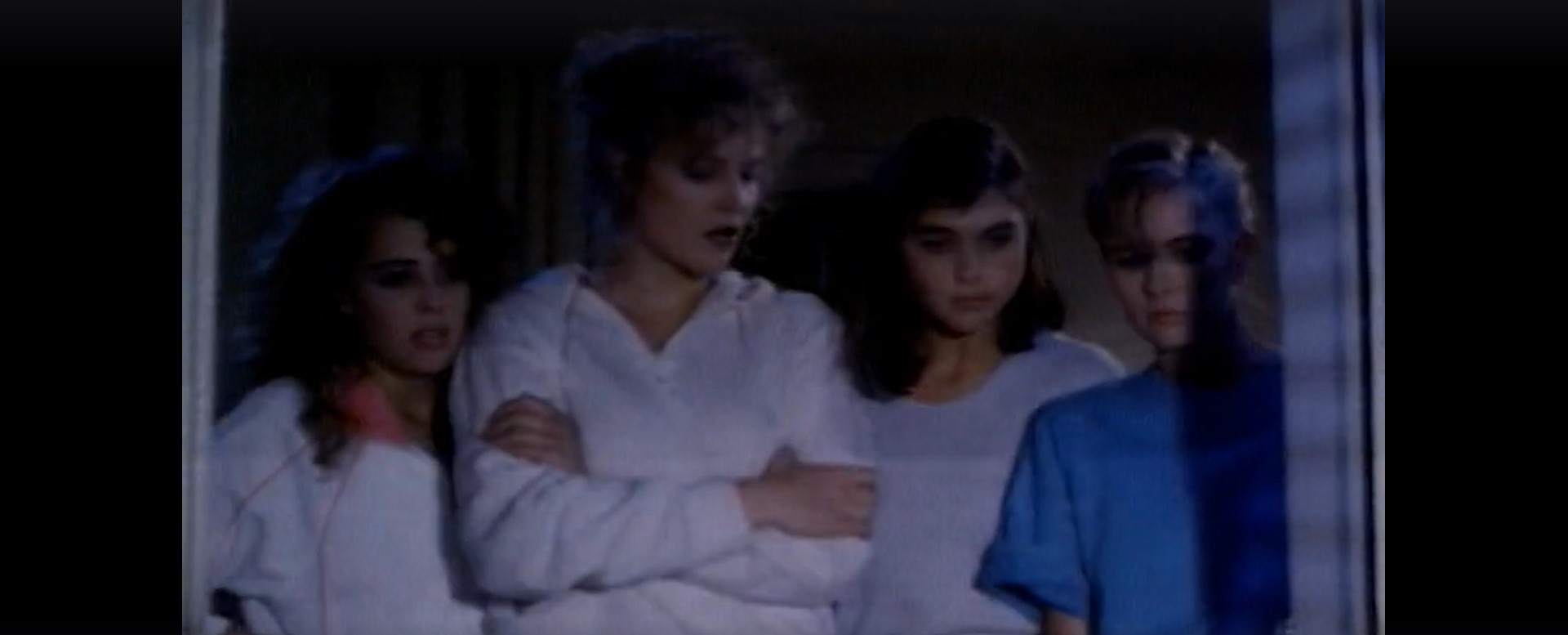
Though the story begins in America and mostly takes place in Europe, the cast is comprised of mostly South Africans trying to pass their accents for British English that is more like a rotating centrifuge of South African sub-accents.  Shirley Jane Harris (“The Most Dangerous Woman Alive”) spearheads the cast of principals with an extremely proclaiming protagonist, delivering lines with flatfeet and flat inflection that makes her one of the more forgettable final girls.  Her foe compares just as bland with a grunting, bodiless entity floating through corridors and hiding behind indoor plants (why would an imperceptible spirit need to hide behind anything at all?) before manifesting into what looks like a giant, big-eyed, and built on steroids rodent that then shows the William John Brown (Lindsay Reardon, “The Masque of the Red Death”) in side profile speaking in omnipresent and menacingly through the beast to taunt his prey.  The script allows just enough the group of young, private school girls to standout cliquishly, contain an ounce of contempt for each other, and underpin some form of individualism to make them retain some interest in their wellbeing.  However, most of the buildup that’s created to antagonize or unify between their personalities ultimately fizzle out into resembling something along the lines of kowtowing sheep or lemmings in more ways than one.  “The Stay Awake” caffeinates with a sizeable cast including Tanay Gordon (“Hellgate”), Jayne Hutton, Michelle Carey, Maxine John (“Howling IV: The Original Nightmare”), Hellie Oeschger, Joanna Rowlands (“Armageddon: The Final Challenge”) as the damsels, Bart Fouche (“Monster Hunter”), Clinton Ephron, Warren Du Preez, and Pierre Jacobs as the imposing boys, and Ken Marshall (“Return of the Family Man”) as the school’s night caretaker.
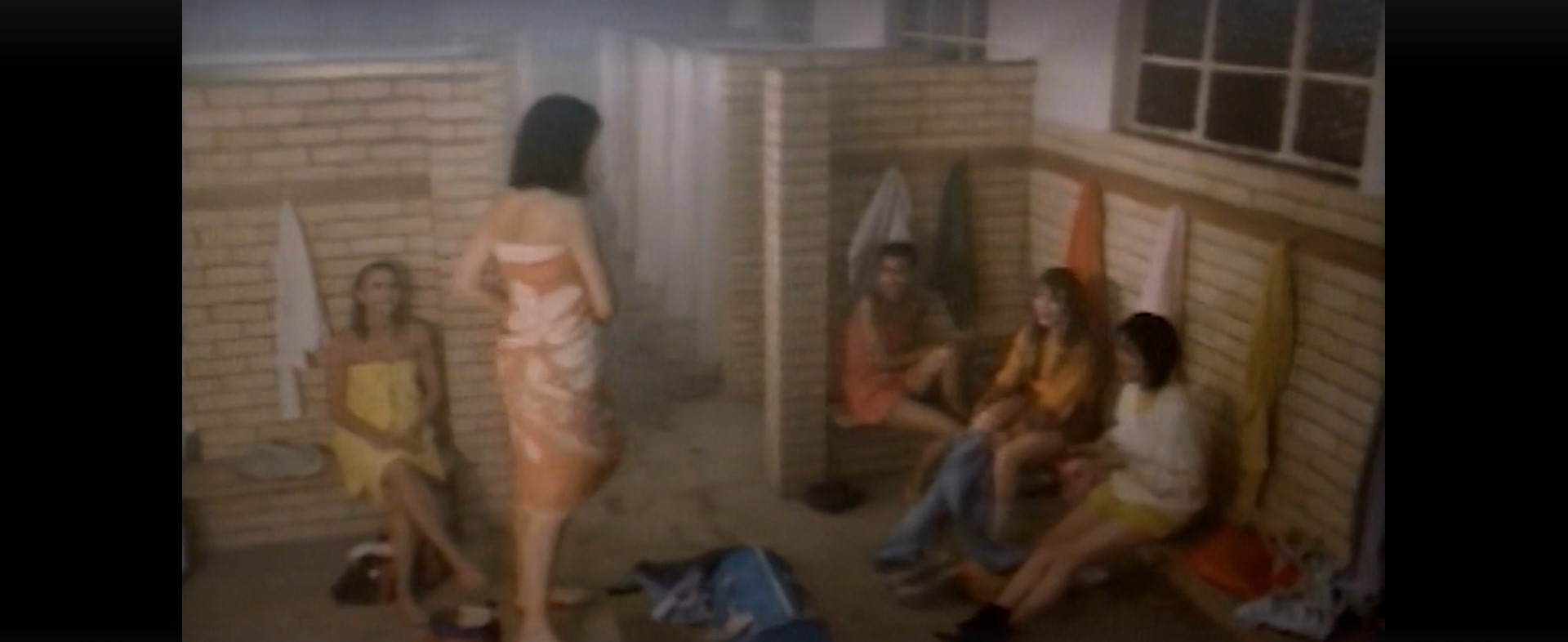
John and Johan Bernard’s logline for “The Stay Awake” likely looked appealing on paper but a full story treatment begs to differ with an inscrutable concept from start-to-finish.  “The Stay Awake” wades in generalities, oversimplifying locations and periods such as “America, 1969” and “Europe, 1988.”  The setup meat in between the disjointed times periods sets up a standard yet effective backstory for the killer, William John Brown, with a Judge’s voiceover of all his brutal transgressions, flashbacks of his victims at the death scene, and a slow walk down the corridor to the gas chamber that clearly denote him as the villain but then accentuates his supernatural supervillainy with a demonic voice screaming his return before the gas engulfs him.  However, why move from America to Europe and why in the span of 19 years does an unexplained possessed version of William John Brown return and select a group of religious school girls while his previous victims look to be a pact of randoms from off the street?  From the start, “The Stay Awake” has little to stay our fictional plausibility.  Couple the perplexation with dry performances, a possibly Hell originated monstrous, burning eyes rat creature, and the gratuitous horror nudity rug being pulled from under our feet as the schoolgirls tease with a shower scene only to be shown showering with towels wrapped around them and what has looked to be a promising possession of perpetual pandemonium  has quickly turned into a deflated disappointment with the only really good thing to come out of the film is the stationary man in a creature suit rat monster built like a bodybuilder.
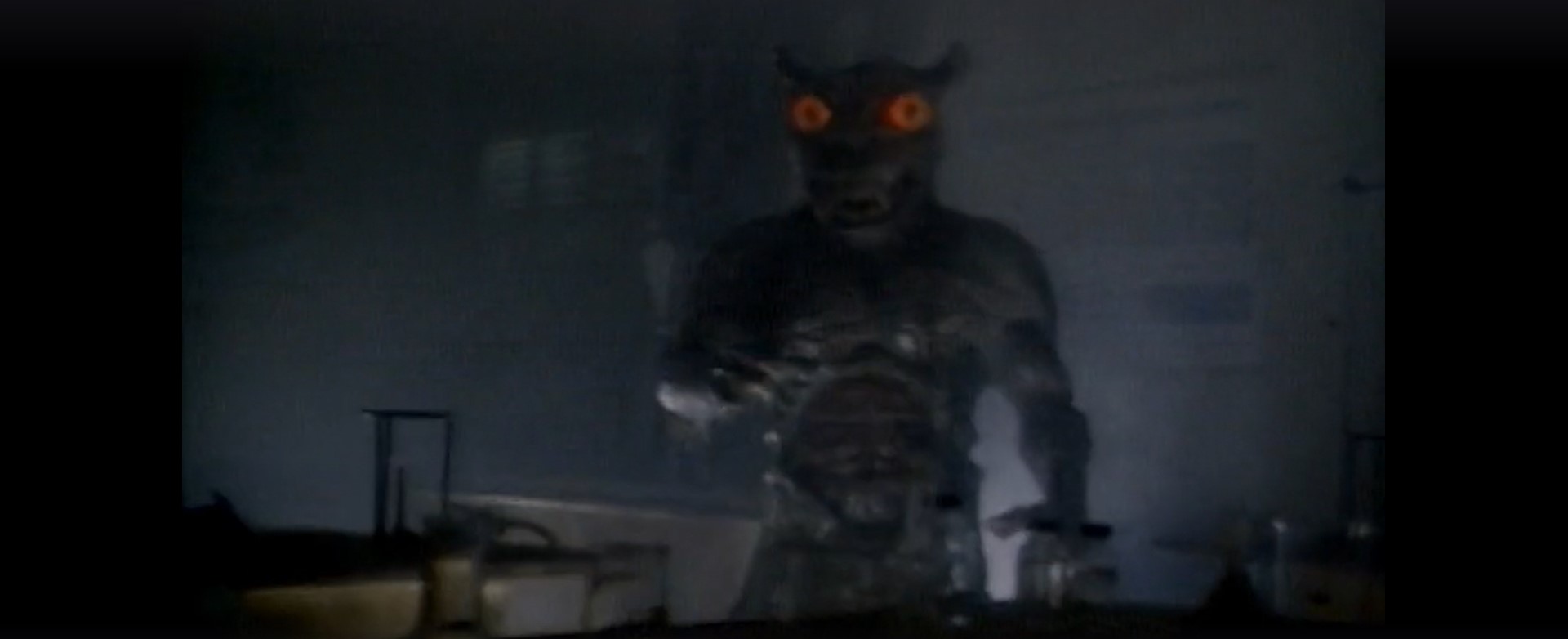
“The Stay Awake” arrives onto DVD distributed by Cheezy Movies in a direct rip of the standard definitional 480i VHS transfer with a letterbox 1.33:1 aspect ratio.  Don’t expect a detailed transfer in a jittery and smoothed over standard definition that’s covered in a harsh blue tinted lens, but the condition of the interlaced video is surprisingly close to being damage free in a well-cared for print.  However, delph and range is difficult to determine due to the obvious lack of delineation but mostly because of the blue tint, poorly lit scenes, and contrast levels that make this presentation nearly pitch-black unwatchable in corridors, classrooms, and in the room of the like, but darkness is seriously enhanced and meshed together by Bernard stylistic choices of backlighting characters or using soft light to center the focus to offer a darkened horror picture. An English Dolby Digital 2.0 stereo serves as the only audio option which differentiates the soundtrack from the rest of the tracks.  Dialogue mostly separates itself to the top of the audio dogpile but is also well imbedded into the other track fighting to be heard that renders the dialogue dull and flat behind a wall of constant and diffused feedback static.  There’s also hissing at the tail end of sentences and faint crackling throughout.  Subtitles are not available.  The only extras on the static menu are back-to-back, quasi-grindhouse style trailers for two Cheezy Movies distributed titles of the blaxploitation “The Man from Harlem” and a “Dirty-Dozen”-esque “Commandoes.”  The physical aspects include a standard black DVD snapper with a rather enticing original title being sandwich with the demon’s glowing eyes on top and four schoolgirls ready to fight at the bottom.  The disk art is the same image except the four schoolgirls are cropped out and an unfortunate placement on the “The” from the title finds it punched out by the disc center/disc lock to just reveal “Stay Awake.”  The rated-R DVD has a region free playback and a runtime of 85 minutes.  “The Stay Awake” has all the indications of a cheap imitation on an established horror formula and this particular physical release doesn’t help the feature’s cause with an extremely dark and nebulous image to match its narrative.

Can You Keep Your Eyes Open at “The Stay Awake?”  On DVD now!

https://vimeo.com/814964711

Do You Know Why EVIL is Fun the Life of the Party? Because He’s a Fungi! “Gaia” reviewed! (Decal / Digital Screener)


Checking and repairing motion capturing surveillance cameras in one of the last untouched forests in the world, a park ranger becomes severely injured while tracking a downed drone.  She finds herself in the company of a nature survivalist, a father and son, living outside the means of the modern world and becoming acolytes to waking entity underneath the forest ground, sprouting up and assimilating the living organisms topside, including people, into spore-growth mutated creatures.  Despite the father and son’s devotion to the being, essentially integrating themselves seemingly uninfected by the airborne spores, they avoid the blind drones who hunt by sound and the survivalist know most of the tricks in the book to dodge their incessant wrath, but the ranger brings new dangers to their sanctuary forest home being an outside influence on the son who takes a keen fascination to her beauty as well as instill in him an interest beyond the edge of the wilderness.  Battling two fronts and keep his devotion to the ancient being, the father must do anything in his power to avoid the corruption of his son even if that means making a sacrificial pact with his God. 

If you dug unearthing Ben Wheatley’s “In the Earth” that released earlier this year, then travel from the United Kingdom to South Africa and definitely follow up with another subterranean deity at the crust of breaking through to our plane of existence with Jaco Bouwer’s nature versus man, out of body experience, thriller “Gaia.”  “Gaia,” from Greek mythology is one of the primordial deities of Earth, plays on themes of youth into adulthood, the parental struggles of children leaving home, and the dangers of a forgotten and neglected nature from a script from South American screenwriter Tertius Kapp, collaborating once again with Bouwer after their work in their respective roles on the crime horror series “Die Spreeus.”  Filmed in the Tsitsikamma forest of South Africa, “Gaia” is a production of the new Film Initiative Africa company in partnership with kykNet Films.

With only less than a handful of actors, four to be exact, the characters are quickly overshadowed and swallowed by the dense growth of an uncultivated forest.  Couple that with an insidious fungi that unhurriedly alters the exposed with toadstools and mushrooms shoots growing from the inside out onto their skin and face until they’re a part of the forest or a syncytial creature and you have an isolating setting of dichotomized terror between the beauty of nature’s miracle and it frighteningly growing right on your forehead. The story opens with park rangers Gabi (“Die Spreeus'” Monique Rockman) and her more playfully cautious partner Winston (Anthony Oseyeme, South African television’s “The Dead Places”) kayaking down river with Gabi using a drone to scout the forest ahead. Eventually, Gabi and Winston become separated because Gabi feels compelled to track down the downed drone alone and Winston bumbles the his watertight inappropriate walkie-talkie right into the river, making it useless and easily setting up obstacles to make reinstating their partnership extremely difficult in a forest that’s literally trying to eat them so to speak. This is where Gabi encounters the austere father and son living on dogma Gabi has yet to be schooled until the pundit father, Berend (“Blood Drive’s” Carel Nel), educates her on him and his son vocation, the forest deity, and, eventually, her own fate. Berend’s son Stefan (Alex van Dyk) is a child raised in the thicket, lamed by his father about the outside world because of his own insecurities. Nel and van Dyk are charismatically mysterious snaking themselves through the woods as one unit and ping well of each other in silent action as they collect spores and set primitive traps. Only when Gabi becomes an inadvertent wedge that lights a small flame of interest under Stefan, who’s at the edge of adulthood as a young man with hormones and a sense of wonder, does Nel and van Dyk begin to dissolve the father and son union that turns into a love triangle, of sorts, to which no parent will ever win when it comes to new and shiny objects and a sexual drive bigger than any spirit dwelling forest.

“Gaia’s” disturbing and omnipresent world imagery creates thought-provoking allegory of nature fighting back against the rapid infestation known as people.  As mankind creeps closer to the borders of naturally preserved habitats, singeing ancient ecosystems with deforestation and various grades of Earth withering pollution, the idea that a planet has a champion of defense, eager to rid the land of detrimental flesh and bone with a fungus cleanse, in an unseen mythological terrestrial being personified as this worshipped-by-few deity is great creative story telling. Paralleling the concept is a secondary of dynamics, the growth of life within the destruction of life. Stefan is nothing more than a boy without knowledge beyond the forest limits until he meets an resident of that outside world with the power to influence and we all know beautiful women have this mystifying power of young men. While Berend sees corruption, a tainting of purity that is his son, Gabi depicts more than just an aesthetic influencer and good-doer eager to save a boy from an unadorned existence, she is also the full-bodied, well-endowed representation of everything persuasive to impressionable minds. Bouwer works the characters interactions inside an imagery soup that bob with meat chunks, that gleam off the edges of rigid noodles, under a milky broth that looks so unnatural that only nature can be the very architect of it’s organic design. The hallucinations, the nightmares, the floating, hazy spores douse the senses, the psyche, with undiluted uneasiness and that’s Bouwer’s defining moment with a trip down a rabbit hole made with cautionary tale fibers too unreal and fantastical to forget.

Part ecological horror, part posture on pollution, and part Biblical narrative with The Binding of Isaac, “Gaia’s” value is as immensely somber as it is scary. “Gaia” is planned to be unearthed to the public exclusively in theaters on June 18th and everywhere digitally one week later, June 25th, as the inaugural feature from the new distribution company, Decal. Jorrie van der Walt’s eye for contrast and distressing imagery is enriching to a soul hungry for the subtle and striking caliginous brink of apocalypses. Bordering pure performance art tinged with intense closeups, Walt easily interchanges the grand forest presence with tight personal trepidation as if nothing else in the world was as important as that exact moment, as you’ll see in the screenshots. The digital effects coupled with the makeup work tilts more to a less textured desire, but integrates well enough into the madness of phantasmagoria. “Gaia” is beautifully shot, edited, acted, written, and directed as a pondering piece for the reality of Anthropocene principles rooted by elemental horror.

EVIL Hoodooism is No Mumbo-Jumbo! “Spell” reviewed! (Paramount Pictures / Digital Screener)

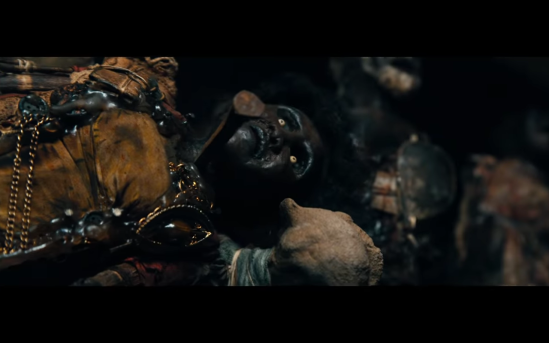
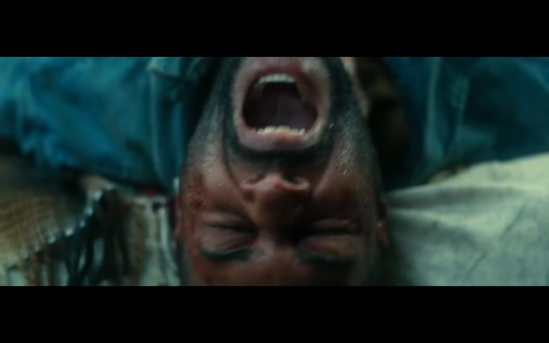
Marquis E. Woods is a powerful defensive attorney good at his job, attaining wealth and position to the likes he’s never had as young boy raised by a fervent and abusive father in the Appalachian mountains of Kentucky; a life now he always wanted he can now share with wife, Veora, and pass to their children, Samsara and Tydon.  The news of the death of his father sends him and family on a flying to the rural part of Kentucky to pay their respects in Marquis’ personal small aircraft.  A terrible storm forces down the plane down in a remote wooded valley and an injured Marquis wakes up in attic on a farm ran by a proclaimed rootwork old woman, Ms. Eloise, with her husband and oxen-strong farm hand.  Trapped and concerned for his missing family, Ms. Eloise slowly nurses him back to health with a Boogity, a Hoodoo figured representation of Marquis comprised of his flesh, blood, and other DNA elements, but her Southern hospitality isn’t for good intentions as she mends and prepares his wounded body, brewing a sinister spell upon his soul, for the forthcoming blood moon that lies days ahead.

Experiencing Hoodoo dark magic horror back on a bigger production scale is on the same extraordinary gamut in discovering the lost city of Atlantis.  Well, maybe not as profoundly archeological as discovering Atlantis, but still immensely impactful. Films like the Mark Tonderai directed “Spell” hit like a ton of brick-shaped talismans, fettering the imagination with hexes that bewitch fascination and captivation, and roots through an endless torrential fountain of ancient beliefs to scour the dark side of the practices for celluloid terror. “The House at the End of the Street” director Tonderai moves away from restraints of PG-13 horror before heading into a stint of helming television episodes only to make a glorious return back to features with the R-rated black magic action-thriller, “Spell,” penned by Kurt Wimmer who knows a thing or two about action-thrillers as the writer of the gun-toting, martial arts dystopian, “Equilibrium,” and bloodily vindictive thriller, “Law Abiding Citizen”.  Filmed in Cape Town, South Africa that, through the slight of hand of movie magic, turns South Africa into rural Kentucky, “Spell” is a co-production of Paramount Pictures, LINK Entertainment, and MC8 Entertainment as well as being a product of puncturing the rarely topical social class and racism division within the same race.

To play a determined and savvy father and husband on the ropes of survival, “Power’s” Omari Hardwick steps into the detained role of Marquis E. Woods, surely prepping himself against Ms. Eloise’s wicked dark magic before battling the flesh hungry undead in the upcoming Zack Snyder zombie-geddon horror, “Army of the Dead.” Hardwick is the ideal actor for a role that, at times, can be physical; his athletic build suits also Woods’ affluence though not required as scene with the brawny farm hand that introduces South Africa’s very own fitness entrepreneur, Steve Mululu.  Woods is pitted not only against formidable muscle, but also has to outwit the four or five lifetime smarts of an old root woman, Ms. Eloise, diabolically portrayed with a legendary entrenched Southern vernacular by the “Urban Legend” actress, Loretta Devine.  On the downside of the character, Ms. Eloise is rich with historical saturation that goes unchecked and unexplored and she seems a little more slapdash with her rituals and her captives.  In what really is a mind game of wit and Podunk wizardry between Hardwick’s Marquis E Woods and Devine’s Ms. Eloise, the remaining cast for “Spell” shoulders only little to annex more substance toward the tensions between the two principles, including performances from Lorraine Burroughs, John Beasley, Andrew Jacobs, Tumisho Masha, RJ-Karlo Handy, Hannah Gonera, and Kalifa Burton.

Aforementioned, “Spell,” between the domestic xenophobia opulence dividing the Woods family, the quaint, yet tangible body horror, and the abhorrent mysticism surrounding Hoodooism, teeters on loose ground with not only Ms. Eloise’s foundation, but also with main character, Marquis E. Woods, who suffers continuously from trauma-induced nightmares of his abusive father. Through flashbacks, Marquis is beaten with verbal assaults and even, seemingly, being stabbed or mutilated by his father. Yet, that’s about as far as the flashback dynamic progresses the thread bare bond until a minor moment at the climax is when Marquis then embraces his father’s aggressive nature, tuning more into a theme of stative stance that Marquis and father might not have seen eye-to-eye, but the son learns to survive through amplified evil by way of his father’s tough, tortuous care. The relationship circles backs with Marquis’ entitled children, whose piggyback wealth has molded them indifferent against the benefits given to them and partisan toward the backwoods people of color, and “Spell” becomes an insidious allegory creeping into the fold with a little tough love from your parents, in this case father, will go a long way. “Spell” also rarely pulls any punches with a welcoming cringe of ghastly violations of the human body (that pulling, inserting, and then re-pulling out the spike in the bottom of the foot gag will make you actually gag!) and inside the rustic and isolating confines of Ms. Eloise’s Kentucky farm compound, there’s a rough-hewn atmosphere that elevates the subgenre, shaking it to the core at times.

“Spell” is terrific urban horror tinged with “Misery” but driven by historical oppression stemmed Hoodoo, releasing just before Halloween on October 30th distributed by Paramount Players, a division of Paramount Pictures that’s still very much in it’s infancy. Jacques Jouffret (“The Purge” franchise) has a tight knit and jarring cinematography that puts the audience in the front, debilitating seat, empathizing the mind-warping effects that Marquis faces with a violent plane crash, nerve seizing torture, and banding Hoodoo hallucinations. Plus, there is fancy crane camerawork that marvels to capture multiple actions between characters. The score from Ben Onono fulfills the tension-riddle need with incessant zest, complimenting the narrative tenfold. Since “Spell” is a brand new release, there were no bonus material included and there were no bonus scenes during or after the credits. Don’t belittle the Boogity in this year’s most unique and contending horror movie that casts a “Spell” over the rest of the competition.

Pre-order “Spell” on Prime Video


The Great White Evil Hexad! “6-Headed Shark Attack” review!


In 1984, a floating marine biological station near Baja, Mexico becomes the target of an unnatural, genetically modified creature – a massive six-headed great white shark! The attack leaves the station afloat, but all the scientists fall victim the six, serrated jaws. Twenty-five years later, William, a couple’s therapy boot camp instructor hones in on assisting estranged lovers rekindling the romantic fire by having the couples journey to a remote, rocky island just off the Baja coast. Struggling to cope with his own divorce turbulence, William takes the reigns of the camp therapy business that was cofounded with his ex-wife, hoping for comfort through the program’s reconciliation message, but when the six-headed shark kills two of his colleagues, William’s new mission is for the safe harbor of his customers. However, every time one brains of the shark is damaged or destroy, the head is ripped off by another head and new one regenerates in it’s place and the beast can also hunt on land, fathoming as turf and surf’s most deadliest unstoppable creature known to mankind.

A SyFy Channel original premiere from The Asylum Home Entertainment group has astonishingly struck pure chaotic shark gold yet again with “6-Headed Shark Attack,” the latest monstrous sequel that follows that same flamboyant titular tradition. Director Mark Atkins, who is no stranger to b-movie shark horror with “Planet of the Sharks” and “Empire of the Sharks,” dives right into the water with his first multi-headed shark attack film that’s penned by Atkins along with Koichi Petetsky, a recognizable name from his scribe work on the recently reviewed “Megalodon,” another The Asylum and SyFy love child. To be honest, “6-Headed Shark Attack” is also this reviewers first venture into the multi-headed shark attack universe and, to be truthful to my audiences again, the absurdity of Atkin’s monster shark roister is reminiscent of the classic monster films that include giant ants and killer shrews!

William’s disheveled intangibility is being held together loosely by the wiry binds of his marriage counseling profession and though the painstaking process of divorce rattles his soul, the potentiality of being eaten by a 6-headed shark doesn’t phase his determination in saving survivors trapped on the remote island. Brandon Auret slips into the William’s embattled shoes and the actor, who been a steady Neill Blomkamp favorite South African for the steampunk-laden director’s films such as “Chappie,” “District 9,” and “Elysium,” finds himself as lead man versus mutant shark, but the multi-lingual and rugged Auret fails to sell the performance that falls flat with tremendous eyeshot quality of awkward hesitations and unsavory emotions. Blomkamp’s high concept science fiction doesn’t quite parallel Atkins’ budget flair that spotlit around great white shark country’s South African filming location that seems unfitting for Auret’s usual Hollywood wheelhouse. The female lead is bestowed upon fellow “Empire of the Shark” vet Thandi Sebe as Mary, one half of one of the four flailing couples, and Mary’s strength and common sense separates her from the pack and even her husband played by a very bushy haired stunt coordinator Cord Newman. The malaise between James and Mary push to a general distressing love triangle that’s been fabricated by a violent and vindictive James; Sebe and Newman aren’t the quintessential unhappy power couple, but they do make a stain that stands out. The remaining shark victims includes Naima Sebe, Tapiwa Musvosvi (also “Empire of the Sharks”), Chris Fisher, Meghan Oberholzer, Jonathan Pienaar (again, “Empire of the Sharks”), and Nikita Faber.

Like most of The Asylum productions, “6-Headed Shark Attack” is made on the extreme cheap. That isn’t to say that the extreme cheap and is extreme garbage as each film that is churned out as a SyFy original has some sort of redeeming quality to it. For “Megalodon,” the shark had characteristic features, like scarring, even if the Megalodon was two dimensional. “6-Headed Shark Attack” also saves itself from full outright embarrassment with schlocky, barmy charm such as a shark walking on land like a scorpion shark, using four of the heads as legs to charge toward steeplechased landlubbers, but the 6-headed shark has no definition from the visual effects team, losing some of the realism much need, or rather desired, in the computer generated leviathan.

MVDVisual and The Asylum Home Entertainment chum the water with “6-Headed Shark Attack” presented the digitally shot film in the original widescreen format, an 1.78:1 aspect ration. The shark was already touched upon that the visual effects lacked the creases, the scarring, and the overall personality a mutant shark should possess, but the look of the rest of the film needs to be questioned as well. The South African shoreline is exquisite and serene that’s beautifully captured by director Mark Atkins who also has an equal hand in being a cinematographer. Yet, the sunny, rocky island favors a washed look (no pun intended) that stems from an overexposure during the digital recording and loses some of the details in obvious portions such as large jagged rocks seemingly smooth or the granules of sand blending together to be one tan blanket on the beach. The English language 5.1 surround sound has no qualms for the most part other than The Asylum go-to stock score tracks by Christopher Cano and Chris Ridenhour, the musical duo behind “Megalodon.” Trailers to the film are the only extras available on a static menu. Having never seen 2, 3, 4 (is there a 4?), “5-Headed Shark Attack,” “6-Headed Shark Attack” seems to not be anchored down by series continuity despite reuniting the cast and crew of “Empire of the Sharks” and “Megalodon” and is a standalone creature feature constrained to being a run of the mill exploitation of man-eater mania.

Buy 6-Headed Shark Attack at Amazon.com!

Burt Gummer is Back to Destroy a Long Time Evil Foe! “Tremors: A Cold Day in Hell” Review!


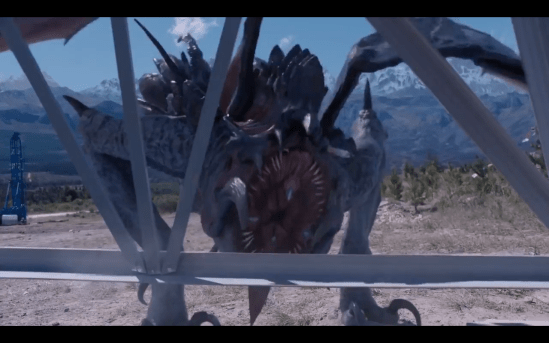
A remote Canadian science team is under the threat of a Graboid situation, hunting drill parties through the ice and ripping them to shreds with their snake-like mouth tentacles. The team phones the only known Graboid hunter, the legendary outdoor sportsman Burt Gummer, who flies from Perfection, New Mexico to the North of the border with his son Travis Welker to terminator their subterranean predator problem. Graboids aren’t the only problem as nasty Ass-Blasters also roam the sky. Stranded on a remote research station and stuck with non-combative administrative researchers, Gummer’s shoulders bare much of the battlefield burden, but the long time Graboid ass-kicker comes face-to-face with an internal Graboid stemmed disease that sidelines his ability to finish the campaign. Travis must pick up the reigns and band together a ragtag team of scientists to not only save Canada from a being swallowed from below, but also to save his father’s life by obtaining antibodies from a live Graboid.

Michael Gross is back! Reprising his role of Burt Gummer, the gung-ho military nut with a penchant for hunting down and killing Graboids, Gross straps on the HK-91 assault rifle once more for Universal’s “Tremors: A Cold Day in Hell,” the sixth installment to the “Tremors” franchise that began 27-years-old in 1990! The PG-13 creature feature is helmed by direct-to-video sequel director Don Michael Paul (“Tremors: Bloodlines”), written by two-time “Tremors” sequel writer John Whelpley, and release appropriately enough on Universal’s 1440 Entertainment label. Whelpley relocates the franchise away from the blistering heat, the scorching sand, and the denim-camo-plaid sporting bedrock to cooler climate of the Canada’s 49th parallel north. Under the ice and the chilled soil are pre-pre-cana Graboids awakened by the ever looming effects of global warming. Al Gore was right; Global warming will kill us all…by rousing the underground beasts who’ve been dormant for thousands of years! The very one aspect the filmmakers wanted shiplap together for this next chapter is to perilously put the invincible Burt through a taste of own mortality, plaguing him with a symbiotic Graboid worm that puts him on the edge of death, and introducing a worthy replacement, or perhaps a legacy, in his son, Travis Welker.

Welker is a returning character from “Tremors: Bloodlines” portrayed by comedian Jamie Kennedy. His role as Brad “B-rad” Gluckman from “Malibu’s Most Wanted” has been forcibly seared in many of our minds and his horror enthusiasm captured our black hearts as the lovable Randy Meeks in Scream, but being Travis Welker nearly upends those personas and transform him into a smooth talking, fast thinking, son of a gun whose perfect to match wits with his on-screen old man, Burt. “Tremors 6” is essentially the Burt and Travis show, leaving many other characters up as red shirts, but waver a handful as potential love interests and bone headed comedic reliefs. Starting with South African Tanya van Graan (“Starship Troopers 3: Marauder”) as the kinda kooky Jamie Kennedy love interest in Dr. Rita Sims. Sims is nearly all over the board being the lead scientist on the research expedition to a complete bad ass with a rifle to being a sultry fox who goes commando with no underpants in the arctic. Then there’s Jamie-Lee Money, just on the cusp of her career, plays Valerie McKee, the offspring of “Tremors'” Valentine McKee (Kevin Bacon) and Rhonda LeBeck (Finn Carter). Money looks the part, but the character is severely downplayed and lifeless that mistreats the legacy of Val who was spontaneous, inventive, and naively charming. Other characters come off goofy, oddball, and arbitrary or insignificantly used played by Greg Kriek (“Lake Placid: Legacy”), Stephanie Schildknecht (“Accident”), and Kiroshan Naidoo.

The entire Tremors franchise has been through a wringer of changes over the last 27-years that has really stretched the incredible substratum monster thinner and thinner. Reducing the physical formidability down to a visual effects monstrosity that still preserves a somewhat tongue-and-cheek campiness, “Tremors: A Cold Day in Hell” doesn’t quite have the “Tremors” flavor. Perhaps it’s the arctic setting. Perhaps it’s the inane special effects. Perhaps it both, but one thing is certain and that is Michael Gross being solidified as the unwavering face of the franchise, but even with that constant variable, this sixth installment attempts to lure back in the original fan base by referencing the original film in numerous instances, such as with Valentine’s daughter, Valerie, or even with Burt’s famous one-liner when he shot-to-death the basement crashing Graboid from the first film, but instead of saying “rec room,” he yells “airplane hangar” as the Graboid explodes in a gush of orange blood as it rams into an underground electrical barrier. It’s a bit of a farce. Yet, there’s still an immense amount of enjoy-ability, energy, and Graboid fun to be had.

Universal releases the PG-13 “Tremors: A Cold Day in Hell” on the home video, 1440 Entertainment label, with a combo Blu-ray + DVD + Digital disc. The 1080p High Definition Blu-ray was viewed for this review which is presented in a widescreen 178:1 aspect ratio and the image quality is deep with details. The terrains absolutely come alive to the screen and, at the same time, expose the visual effects work. No matter how much the visual effects team tries to create an Canadian arctic atmosphere, the sands of the South African landscape couldn’t be optically opaqued. Nonetheless, facial features, character attire, and even the explosions, cascading, and orange Graboid blood gooing is sharp with precision definition. As far as audio, the English DTS-HD Master Audio 5.1 surround sound caters to every audible fissure with an attractive ambiance track (ass)blasting with baritone and ripping semi-automatic fire cues. Dialogue comes over clean and the soundtrack has healthy bones, aside from it’s generic, low-budget assortment. Extras include a making of “Tremors: A Cold Day in Hell” that’s broken down into multiple, short chapters, the anatomy of a scene, and inside Walter Chang’s kitschy market. Since the breaking news that SyFy will not longer move forward with the anticipating Tremors television series with Kevin Bacon, “”Tremors: A Cold Day in Hell” signifies that the withering franchise will not stray from Burt Gummer’s one-man show anytime soon; still, the sixth installment provides a healthy amounts of witty banter and a swimming pool full of Graboid gore, two foundational motifs still vibrant in the Tremors universe.