EVIL Will Suck on Your Menstrual Soaked Tampon. “The Hood Has Eyez” reviewed! (SRS Cinema / DVD)

An Early 2000s Exploitation With Lots of Infamy!  “The Hood Has Eyez” on DVD!

Attending a school ditch party was the last thing the obedient Kimmy wanted to do but the peer pressure from her fellow Catholic schoolgirl friends convinced her to the other side of the tracks of town.  On the way, a half-naked woman runs out in front of their car and in attempt to flee the scene on foot, to protect their innocent repute status, they run into two gangsters holding them at gunpoint in an alley.  The now frightened teens are forced into an isolated park area, joined by the now fully-clothed and not injured woman they hit earlier in what has been revealed to be a ruse to rob them, but the gang leader, Psycho, has more distasteful and violent plans to squeeze more out of his prize than cash.  Psycho brutally rapes Kimmy and is left for dead by not only the gangsters but also the one other surviving girl she had considered to be her friend.  Battered and broken, Kimmy’s morality and reality snaps, sending her down an unmerciful vengeful path against those who condemned her to die.

If filmmaker Terrence Williams set out to make an exploitation film of genital mutilation, forced sodomy, and a man sucking on a bloody tampon, then mission accomplished!  The straight-to-video, SOV rape-and-revenger of monstrosities, “The Hood Has Eyez,” pulls no punches, knows no limits, and cares to give no concern for the atrocities it depicts.  A bastardized yet familiar rephrasing of an early Wes Craven classic, “The Hills Have Eyes,” Williams uses Craven’s basic setup plot to write-and-direct his own version of uncivilized lowlifes exploiting and murdering out-of-their-element travelers in the most graphic and appalling ways.  Williams takes the fear out of the hills and drops it into a remote park plopped in-between the suburbs and urban grounds, swapping out inbred hillbillies for Latino gangsters and a nuclear family for schoolgirls in short skirts and one unlucky white dude.  Collaborating producer and wife of Terrence Williams, Nicole Williams, has previously and subsequently worked together other films, such as “Curse of La Llorona” and “Horno,” under their now defunct joint company, Cinema Threat Productions in Los Angeles. 

The 2007 released “The Hood Has Eyez” reunites a good chunk of the cast from Williams’ “The River:  Legend of La Llorona,” “Revenge of La Llorona, “Llorona Gone Wild” and “Curse of La Llorona” films completed and released within a couple years previously which created a certain level of comfortability and trust amongst the cast as well as the cast and director.  With some of the intimately graphic content of “The Hood Has Eyez,” those warm and cozy congenialities play key to selling a broken bottle scene being rammed up a vaginal cavity or a nail hammered down into penis urethra.  Without that delicate easiness in the air, scenes like the aforementioned won’t work, resulting in the entire project collapsing upon itself even before wrapping up principal photography.  At the tip of the spear are Cyd Chulte and Antonia Royuela as the principled Kimmy and her antithesis, the deranged Psycho.   Chulte, who cut her teeth with roles in “Curse of La Llorona,” takes one-half the lead of a young woman broken by the barbarity and succumbs to justified vehemence for torture, dismemberment, coat hanger abortions, and eventual death but before being pushed to the edge of her life and into a state of insanity, Kimmy’s presence melds into the group of a lemming unit and takes a backseat to the other lead half behind Royuela’s unhinged ultra-violence of a gangster gone rouge from the plan.  Psycho’s posse – Joker (Carlos Javier Castillo, “Axeman”) and She Girl (Anne Stinnett, “Revenge of La Llorona”) – truly reflect their handles as Psycho’s devil and angel on his shoulder, trying to either egg him on or have him withdrawal while withdrawing is still in his favor but, of course, we wouldn’t have a debauchery and savage movie if the angel over the shoulder had prevailed and so Psycho has his perverse way with Kimmy and friends – Susan (Jesselynn Desmond, “Horno”), Rachel (Jamielyn Lippman, “The Absent”), and Jerry (Tom Curitore, “Llorona Gone Wild”). 

The way I see it, Terrence William’s trashy exploitation nod “The Hood Has Eyez” has three distinct parts, much like the three-act structure of any narrative archetype.  Terrence Williams defines these acts tremendously clear in an almost too simple of a way that it feels rudimentary, maybe even old fashioned.  The setup is simple:  overweening teens doing what they’re not supposed to be doing become caught up in an unfavorable part of town with a maladjusted gang.  The confrontation squares the two factions to a literal position of facing each other while the teens coward in fright and disadvantage as they forcibly bend to the will of the gun-toting gang calling all the shots.  The resolution pivots the story 180 degrees, like any good rape-revenge thriller should, after misdeeds thin out whose left for dead and who’s intractable impulses are fully left satisfied and goes right into execution mode without passing go, without collecting $200, and without pause of a trauma processing moment as Terrence Williams wastes no time digging deep into the sludge of psychiatric stability with a hasty move right to rectifying an eye-for-an-eye balance.  Up until a point, “The Hood Has Eyez” carries a lot of dire weight within the confrontational girth that can be hard to stomach.  There’s a few casually lighthearted and fun witty moments peppered beforehand, such as a jokes at the expense of airhead Susan and her player boyfriend, but then after the grave assault that leaves Kimmy left to suffer all the post-traumatic syndrome results, things really go dark, and I’m’ talking black comedy dark.  Kimmy goes into full Rocky Balboa training mode, doing pushups and enthusiastically practicing staff spinning in the light of the falling sun.  Terrence Williams actually gives Kimmy a rousing montage before ripping the dick off a two-bit thug.  Where am I getting to with all this?  Well, I’m not sure how Terrence Williams wanted audiences to digest his brutal film that goes through touchpoints of opposing genres.  Usually, if comedy and gore are present in one narrative, slapstick typically is the go-to conduit – think “Evil Dead II” or “Dead Alive.”  For “The Hood Has Eyez,” the gore effects are hearty, the characters are vicious and victimizable, and Williams maintains an intact beginning-to-end narrative, but confounds with a few choice character actions that sully the overall presentation.

The Cinema Threat Production has now been integrated into SRS Cinema’s Extreme and Unrated Label – Nightmare Fuel – and unquestionably is underground extreme horror at its foulest.  Released with a widescreen aspect ratio of 1.85:1 of the 420p standard definition, camcorder tape footage and in a new director’s alternative cut, “The Hood Has Eyez” has relatively decent image clarity with a very subdued amount of lossy compression results, especially for progressive scan 480 pixels.  Details are soft as expected with the commercial equipment and lower resolution but though a slightly faded color scale, the coloring range renders intense enough for higher marks and can play a trick on the eyes by falsely delineating the objects to create a space based off the hue edging alone.  The English Dolby Digital 2.0 track props up the quality even more with Terrence Williams using a boom mic attachment instead of the built-in mic to gather meticulously the intended dialogue and skirmish kerfuffle.  As a result, dialogue is really sharp here, especially during Psycho’s off-the-rail verbal abuse, rants, and one-liners.  The post-production Foley stands apart from the inhouse sound with prefabricated sound bytes but that’s the way of micro-independent filmmaking.  The alternate cut includes a newly shot opening scene that was originally intended for the original script that was added back in to actualize the Williams’ vision after a cast sudden dropout departure.  Bonus features include a commentary with Terrence and Nicole, a raw, secondary cam behind the scenes footage in making certain scenes, a blooper reel, image slide show, two original cut trailers, a new trailer, and a Women in Horror vignette featuring Nicole Williams discussing the importance of women in horror and her contribution to the genre.  The release is presented in a traditional DVD snapper with a beautifully illustrated cover art based off the shoddy composited “The Hood Has Eyez’s” one sheet.  In the past few years, SRS has upped their game with cover arts and continue to impress with their new branding campaign that makes these films feel no longer cheap at first glance.  Inside, the DVD press art is the same as the cover with much of the RGB removed to a single layer red. There is no insert inside the case.  Terrence Williams set out to capture the inelegant essences of nitty-gritty exploitation and hits the nail on the head, literally, with this passion project of perversity. 

An Early 2000s Exploitation With Lots of Infamy!  “The Hood Has Eyez” on DVD!

The Picked-On Runt Can Be EVIL Too. “Little Corey Gorey” reviewed! (SRS Cinema / DVD)

“Little Corey Gorey” Uncut and on DVD home Video at Amazon.com!

After losing his father to a fatal accident, little Corey Gorey is forced to relocate to a new home with his overweight, alcoholic, and verbally abusive stepmother and similarly so, racist brother-in-law, Biff.  Constantly receiving the short end of the stick, Corey tries to retain a normal life by buying Ozzy Osbourne concert tickets and meeting girls at high school, but when his bigger, older Biff raids Corey’s broom closet of a room searching for a pinup one-sheet, he discovers the concert tickets and hooks up with Corey’s dream girl from school.  In a fit of rage, Corey accidently kills Biff as the two scuffle and with that Corey sows the seeds of salvation as the teen who was constantly tormented and afraid to talk back now is eager to take his life back.  Keeping his stepmother tied to the couch and gagged from making noise, Corey dismembers what’s left of his brother into the storage freezer and includes the sociopathic girl of his dreams into the fold but when a nosy mail carriers begin to snoop around and a drug dealer is seeking payment for the cocaine he fronted Biff, the bodies begin to pile up and Corey finds himself over his head.

Talk about your unhappily ever after Cinderella story, “Little Corey Gorey” goes from rags to wreaking havoc by way of severing limbs and meat grinding body parts all the while trying to sweep a rebellious older high school girl off her feet in an attempt to run away from all the carnage and abusive adults.  Bill Morroni, credited as William Morroni in the film, wrote and directed his debut feature in sunny California that is anything but sunshine and good vibes in this 1993 released, dark horror comedy obscure to many horror fans. A real highlight of early 90’s low-budget horror done right with smartly placed and highly effective practical effects, “Little Corey Gorey” is a begrimed gem waiting to shine, produced solely by Morroni under his self-funded principal production over the course of a few weekends. 

What makes “Little Corey Gorey” half as enjoyable as it turns out to be is because of the cast.  Once plagued by unfortunate circumstances, such as an example with the untimely death Divine (“Multiple Maniacs,” “Pink Flamingos”) who was to have a lead role, that one might consider the film be cursed celluloid even before principal photography, Morroni was able to overcome with a perfectly suited set of talent to tackle Corey Gorey’s gruesome exploits of dysfunctional family survival.  The titular role was awarded to Todd Fortune whose diminutive size really plays against the larger and towering figures that make his life a living hell.  Divine would have stepped into the shoes of wicked stepmother Betty and even though Divine would have done phenomenally in a constant-drunk state of a barraging verbal abuse and torment, Pat Gallagher filled the cankerous role with despicable-inducing results and gives a real witch of a woman performance to not only Corey but also her actual on-screen son Biff.  Greg Sachs might be stiff as a board as the older brother with racist overtones and a compounding dislike for Corey, but Biff turns out twisted enough to be an antagonizing accomplice in building Corey’s pent-up survival garnished with ghastliness.  One of the more scene stealers is Brenda Pope as the bitchiest high school narcissist Jackie who has somehow swooned Corey’s rationality and has him hanging on her tongue with every lie.  From special feature commentary by Morroni, Pope was a real life true-to-form unpleasant person behind-the-scenes as well as in front of the camera but that doesn’t stop her good looks and devilishly delectable moodiness and conceitedness from drying out.   As a group, you can feel every resounding personality types and cluster of chaos that spits out sympathy for Corey despite the curated torture from those who are supposed to care for him and also feel not one ounce of pity for Corey’s tormentors turned minced meat at the hands of the water treading teen.  “Little Corey Gorey” has a neighborhood ensemble featuring parts by Edenia Scudder, Sabino Villa Lobos, Kristin Caruso, Bernice Smiley, John B. Tomlinson, and William Linehan has an escaped prisoner and mass murderer being built up by the news media with his convenient store killings only to be the only part of “Little Corey Gorey” to fizzle out in a subplot to nowhere. 

With a spiffy name, a thematically onboard cast, and some really good editing and camera work, “Little Corey Gorey” surprisingly has a lot going for it despite being shot on 16mm variational stock and using scratch audio, aka studio dubbing, that makes the 1993 feel and appear more rough and ready than necessary, like a wrinkled, toothless middle-aged man after smoking and drinking heavily for half his life, but in the grand scheme of things, “Little Gorey Corey” has held up moderately well in quality and in story.  Through the spikey colored wigs, cut off sleeve shirts, mullets running rampant, and good seat concert tickets with a price tag of $18 might have run their course over father time, bullying remains a hot topic to this day.  Dysfunctional family dynamics, blind and fatal obsession, drugs use, and being in the friend zone with a haughty hottie also hasn’t changed much.  You can’t help not feeling pity for Corey and the excruciating awkwardness of him pulling out all the stops in order for Jackie to notice his heartfelt, romantic gestures and advances only to be immediately blown out of the sky like a Chinese weather-spy balloon gliding over Montana.  Everything that happens to the thick-skinned kid culminates to a head, to a finale of penetrating his usually impenetrable, encrusted scar tissue of a shell that just seems right or justifiable that when the world pisses on you, you cut off its penis with a corded circular saw.   

“Little Corey Gorey” receives a new scan (upscaled?) of the 16mm source material and drops onto a re-release from SRS Cinema!  Though still framed in a full screen 1.33:1 letterboxed aspect ratio, the transfer looks much clearer than the original VHS release with brighter grading and an enriched image that delineates edges and some details.  The variation in 16mm stock is obvious, more so in only a handful of scenes in comparison to others, with only a very select few offering a shoddy, nearly obstructed view of focal objects.    One thing about the SRS Cinema DVD back cover is it lists a new HD transfer from original camera negative, but DVD can’t be high definition. Since the DVD and the limited-edition Blu-ray share the same cover, I assume this speck of information wasn’t removed, redacted, from the Blu-ray back cover. The English Dolby Digital 2.0 scratch track, aka dub track, is what it is – an on-budget audio format that has doesn’t quite run in the same space to the image but is still an impressive parallel audio track that synchs nearly identical to the actors’ mouths. There’s an obvious electronic hum throughout that never quits so the interference often drowns out slightly any ambient noise, if any, were added for depth and weakens the dialogue strength, which was not entirely robust at the beginning. Hair metal becomes “Little Corey Gorey’s” soundtrack to slashing with featured tracks from Creature because if you can’t hire Ozzy Osbourne to score your film, you get the 2nd, 3rd, or 10th best thing that brings the metal. The bonus features include a directory’s commentary, a 77-minute William Morroni interview that unboxes all the aspects of the film from individual cast bios to equipment availability and issues to marketing woes and to the whole kit and kaboodle in regard to his little movie, and SRS Cinema film trailers, including this “Little Corey Gory”. The DVD sports a beautifully grisly illustrated cover art, similar to what SRS Cinema accomplishes with all their other titles, with an accompaniment mustard yellow, retro-grading design. The disc art is duplication of the front cover art and there is no inserts inside the traditional DVD snapper case. The region free DVD comes with an uncut version of the film that has a total runtime of 91 minutes. “Little Corey Gorey” is a big gory lorry that drives a mean-spirited, misanthropic marvel right out of the 90’s and into our television sets as this forgotten film can no longer stay forgotten.

“Little Corey Gorey” Uncut and on DVD home Video at Amazon.com!

EVIL No Longer Swims Only in the Water! “Bad CGI Sharks” reviewed! (Sub Rosa Studios / DVD)


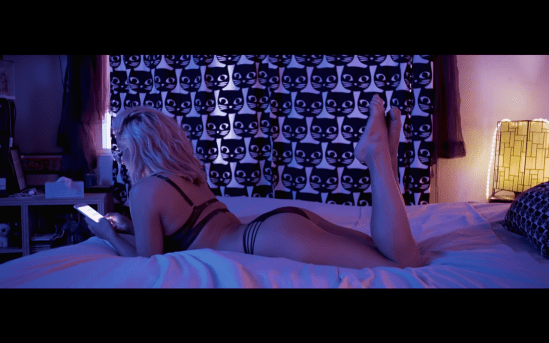
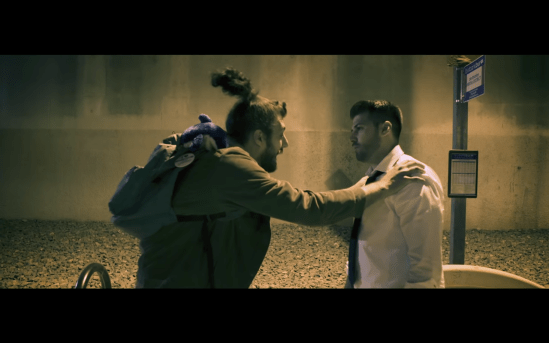
Living hesitant, unconfidently, and unfulfilled in Hollywood, California, Matthew finds himself fired by his employer after experiencing a promotion interview from hell, but that’s not the worst of his problems. Earlier the same day, Matthew learns his estranged older brother, a free-spirited and enthusiastic Jason, has been kicked out of his parents’ home, provided a plane ticket, and sent to live with him possibly forever. The estranged brothers finally reunite after years apart and Jason infiltrates back into Matthew’s uptight life their childhood obsession with sharks to try and finish a rough, shark-thriller script from their past, entitled “Sharks Outta Water.” When a magical movie muse decides to grant them their boyhood cinematic aspiration, the sudden appearance of a poorly render man-eating shark floats about their neighborhood streets, hunting down the brothers during a night of computer imagery terror limned with shoddy shark frenzies.

Out in the surf of the internet, a list lurks just beneath the dark waters of the web. A list containing a flooded genre of some of the worst shark movies detrimental to mankind’s inherent fear of a primordial aquatic creature that was once known to be the ocean’s apex predator. To save us from the cold, bleak shark banality, “Bad CGI Sharks” absorbs all toxic mundane trash skimming the vast global networks and big picture boxes to recourse from the singular trained thought that sharks are much more than a punching bag of relapsed rendered dogfish with jaws. Written, produced, and directed by MaJaMa, an alias for Matthew Ellsworth (Ma), Jason Ellsworth (Ja), and Matteo Molinari (Ma), “Bad CGI Sharks” flaunts a straight-to-video, no-budget comedy-horror in the face of whoever is willing to once again put themselves in front of a speeding bad shark movie train; yet, the filmmaking trio embark on a creative, meta journey risky with little blood shed and a swarm of animated things that mark somewhat of a resemblance to sharks. What crests is insightful satirical wit over the ostentatious flare of gratuitous explosion, nudity, and monstrous sharks.

In keeping to the budget, MaJaMa already wear many hats behind the camera. To extend even further their invested working capital, the filmmakers also star in the lead roles, virtually as themselves, to surely hammer down a film entitled “Bad CGI Sharks” in their own brand of humor. We begin with Matteo Molinari, the Genova, Italy born actor who had a small role in 1994’s “Silence of the Hams,” a spoof starring Dom DeLuise and Billy Zane derived from the Jonathan Demme’s Hannibal Lector thriller, “Silence of the Lambs,” if the title itself wasn’t self-evident enough. Molinari is the only main lead not using his namesake and, instead, becomes the magical movie wizard Bernardo with his muse movie clapper. Bernardo was built for Molinari as the two are synonymous to each other’s manners, speech, and quirky simpatico charm, resulting in an innocent, mischievous movie imp to be the bridge connecting the gulf between Jason and Matthew’s polarizing characters. Jason’s a severe caricature of hyperactivity and of someone whose stuck in the past and while Jason Ellsworth has his moments, without his brother Matthew’s stern, grown-up, and spruced up onscreen self, the dynamic just wouldn’t be as potent as Matthew is essentially the activator spray to Jason’s gluey personality. The cast concludes with Jenn Liu (“Stranger in the House”), Josh Sterling, and Shaun Landry.

Tiptoeing around the fringes of being a stoner film, “Bad CGI Sharks” pushes a hyper-meta reframe of how shark movies, or perhaps the film descends deeper into the water molecule level of just the shark representation itself, should be brought back to the shores of reality from the watery depths of Davy Jones’ poorly rendered locker. Coinciding with crystallizing the shark-sploitation category is a more tender note of embrace with relatable themes of rediscovering brotherhood and mending broken bonds. Matthew’s parental manufactured disgust with his older, yet childlike, brother casts a large, dark cloud that seizes up any kind of affection and the floating shark, the symbolic dream of their childhood, tests their relationship, motivating the the character arches in the face of “Bad CGI Sharks.” Amongst the witty banter and flying carnivorous fish, “Bad CGI Sharks” shows innate signs of no-budget difficulty such as story pacing where the middle sags with Jason and Matthew running around Hollywood for awhile in a progression stagnation and there lies some early editing miscues with audio mixing and mic work. Like a shark, “Bad CGI Sharks” needs to keep swimming or else it’ll upend and die; luckily, MaJaMa saves the cinematic beast with the shark devours the internet and all bets are off!

If you like your sharks floating and roaring, then “Bad CGI Sharks” DVD home video is for you, sailor, courtesy of SRS Cinema and MVDVisual. The not rated, region free DVD is presented in a widescreen, 16:9 aspect ratio, with, an IMDB listed, Sony a75 II Mirrorless camera complete with a “vintage” lens. Most of the image transpires cleanly and sharp, even the inorganic, floating sharks look fair in their farce facade, and with the specialized lens seemingly cornered to just around the Bernardo’s outer shell host duties and intermission skit and also in the initial attack sequence in which is the only scene with any kind blood shed. The English language audio tracks include a 5.1 surround sound mix and a stereo mix. The audiophiles will find solace in knowing “Bad CGI Sharks” doesn’t mean bad audio tracks. Dialogue has clarity throughout, depth and range remains steady, and there’s negligible hum electric feedback. Bonus features include a commentary track with MaJaMa, a retrograde toy commercial for all the characters, the teaser trailer, trailer, and SRS promoted trailers. Though lacking bloody chum, “Bad CGI Sharks” has bite albeit with more comedy than creature feature horror, fleshing out real world problems with hilarity in a cheapjack rendition of a killer shark.

Chomp! Chomp! Chomp!

Nihilism Brings Out the Evil in All of Us! “The Vicious Sweet” reviewed!


Popular B-movie scream queen, Tyler Phoenix, just walked out belligerently from the latest screening for her new schlocky horror film. Fed up with worrisome managers, pressuring producers, and hot-headed directors, the leading lady glazes over her career as the past creeps back into her life, sourly affecting the platonic, one-sided relationship with her boyfriend. Tyler’s downward spiral toward the depths of depression and frustration attractively consider suicide by pills, but when Tyler awakes, she finds herself handcuffed to a bed with a mysterious masked man looming over her. What the man wants is unclear to Tyler, but one thing is absolute, he’s an adoring fan of hers who seemingly knows more about Tyler than she knows about herself. Hours seem like days, days seem like weeks, and weeks seem like months as Tyler is continuously drugged and asked personal questions about her past and about the disparage campaign to capsize her life. Tyler begins to hallucinate and can’t tell what’s real or not as she confronts internal demons while being completely forthcoming to her dangerously devoted captor.

“The Vicious Sweet” captures visceral surreal existentialism from Sub Rosa Studio’s own Ron Bonk in the shoes of writer and director. The 1997 thriller is a cinematic blend of psychological horror, self-deprivation, and coming to terms with one’s own identity. All shot on analog video and on a micro budget, Bonk’s able to depict dreamlike scenes hauntingly and pragmatically without the assistance of costly visual effects that often cheap in appearance on video transfers. Shot in Syracuse, New York, “The Vicious Sweet” could be set anywhere, USA and with locations that set the main characters in close knit quarters for nearly most of the 90 minute runtime, the “House Shark” is able to fashion an under the radar overwrought mystery. Though the SRS Cinema retro DVD cover is lustfully tasteful with an illustrative Tyler Phoenix handcuffed to the bed and in her underwear, “The Vicious Sweet” isn’t about abduction for sexual exploitation. Yes, one scene does represent the DVD cover; however, Bonk’s story tickles the frayed and blurry realm of the mortal coil that can push the limits of not only the story, but also Bonk’s ability to explore that plane of existence that inhibits zombies, large rat-faced looking creatures, and the intangibility of time.

Tyler Phoenix whirls as an angsty actress with a chip on her shoulder and a metaphorical duffle bag full of internalized secrets. Sasha Graham straps herself right into the role, exhorting all the right kinds of anger and cynicism into her seemingly successful character’s career. Graham has seen her fair share of mid to late 1990’s lowballed b-movie films, such as having a substantial role in “Polymorph” directed by “The Dead Next Door” director J.R. Bookwalter and in “Bloodletting” helmed by the “Witchhouse” screenwriter Matthew Jason Walsh, but “The Vicious Sweet” marks the debut of leading lady, a true scream queen role, and Graham wears it well. She’s complimented by the debut performance of the late Bob Licata as the mysterious tormentor who goes by the name of Grimaldi, one of the performers from Phoenix’s early, short-stinted porn career. Grimaldi, who repeatedly notes, is a part of Phoenix and, for a lack of a better term, symbolizes the actresses betwixt past and present on a conscious level of trying to make sense of all that’s entangled in that screwed up and complex mind of hers. Licata, in regards to his character, is cold and consistent, playing the act of a passionately solemn and unpredictable serrated fan hellbent on trying to expose Tyler Phoenix’s true self. “The Vicious Sweet” also stars Jason Wicks, Theresa Constantine (“Bloodletting”), Jeffrey Forsyth (“Gut-Pile”), Al Marshall, Steve Wood, and Jeff Jones.

The story progression through Tyler’s figuratively personal hell hardly goes stagnant despite, for most of the her status, being manacled to a bed for relentless interrogation. Tyler’s put through a variant ringer of drug induced hallucinations and cerebral caprices and much of the credit, alongside Sasha Graham, should go to writer-director Ron Bonk who is able to translate from script to screen his vision. Contrary to the restraints of a SOV production, the creativity of Bonk’s camera work in masking, in more ways than one, Grimaldi’s stoic façade and centralizing Tyler’s and her experiences is evocative , the antiquated practical effects are still appositely poignant, and the diverse content holds “The Vicious Sweet” to a larger scale than the finances suggests. I’m not trying to elevate Ron Bonk’s film up to being the Holy Grail of low budget horror held in the vibrancy of limelight, but in my opinion, to dismiss the appreciation for producing something out of nothing would be a tremendous disservice to all auteurs. “The Vicious Sweet” leaves us with an open for interpretation perspective that somehow manages a jaw-dropping mound of shock and perplexity, nothing short of the likes of Christopher Nolan’s “Inception” ending.

The SRS Cinema DVD home video release of Ron Bonk’s “The Vicious Sweet” is presented region free, 1.33:1 aspect ratio from a S-VHS Betacam SP, that mostly result with black bars on each side of your 16:9 HD television. The limited edition Blu-ray is marketed as remastered, but the DVD image quality is awfully poor from the analog master transfer and doesn’t seem to have a smidgen of touch up where marco-blocking artifacts and aliasing run rampant. What also doesn’t help matters is the faded coloring and the blacks nearly void of any shape of definition as if you’re in a bright room and the light is shutoff and nothing but a blurry black void is present between the light and the time you’re eyes can adjust. The English language lossy 1.0 uncompressed mono track is frail and shaky, but still manage to push through without an obfuscate obstacles. Dialogue cozily lies low on the audio totem pole and the range and depth lack during more fantastical moments of zombies and monster swarming about. Bonus features include a director commentary, a director and Sasha Graham commentary, and SRS Cinema trailers. The best DVD feature, along with the film itself, is the illustrated, VHS letterbox DVD cover of the aforesaid Tyler Phoenix beautifully bound to the bed with candles lit by her table side and dressed scantily with a nice Please Be Kind, Rewind cherry on top. Despite the technical woes, “The Vicious Sweet” remedies the longstanding misinformed notion that independent b-horror movies are a hack and burden to the cinema fuselage with vast imagination and sturdy ambition.

The Vicious Sweet DVD is a must buy!

An EVIL Beast’s Carnivorous Addiction! “The Hidden” reviewed!


A sewer dwelling beast attacks and kills a cocaine fueled junkie. Now hooked on the drug and pained with addiction, the beast needs more cocaine. Every exchange meet up by the sewer entrances become a deadly encounter and as dealers and customers start to disappear, winding up dead, a drug cartel kingpin mourns the loss of his business. On the opposite side of the spectrum, the junkie’s older brother is also suffering a loss. Spiraling down a path of grief, he must find his brother’s killer at any cost, even if that means breaking up with the love of his life. A vindictive brother and a savvy drug dealer must team up to hunt the beast that stalks the sewers, looking for it’s next high, and put an end to a reign of terror.

Australia. Early 1990’s. Nathan Hill wrote and directed a crime thriller SOV, shot on a Video8 handheld, that just happened to have a bloodthirsty beast roaming the sewer system who unwittingly becomes addicted to cocaine after munching on a junkie. The 1993 film was entitled, “The Hidden,” which is not to be confused with the late 1980’s science fiction-horror, “The Hidden,” with “Twin Peaks'” Kyle MacLachlan. Hill’s film, also considered a sci-fi venture, had a minuscule, barely functioning budget and in a sense of unawareness, the filmmaker didn’t quite realize that a film, already popularizing the title, had the exact same moniker. In any case, Hill’s “The Hidden” has a premise far from the already established indulging in a vindictive creature feature with an internal turmoiled drug cartel subplot.

“The Hidden” comes to no surprise that the cast is constructed of no-named actors and actresses. Simon Mosley debuts as Michael Wilcott, a grief stricken brother looking for vigilantism vengeance. Mosley doesn’t have an acting bone in his body as he punches doors and pushes pushers around as if on command and carries a monotone, automaton performance throughout. He’s only rivaled by Daniel Rankin from another Nathan Hill directorial, 2011’s “Seance” (aka “6:66: Seance Hour: if that makes any more sense). Rankin’s a tall, muscular drink of water in comparison to Mosley and has a bit more acting chops that not only contemplates the hits he’s taking on his drug gig as dealer Guy Taylor, but also pulls a little more weight as a compassionate individual who takes a homeless boy as his surrogate father. As Mosley and Taylor team to battle the beast, the unlikely duo also have another foe to hurdle in the obstinate Steve, a junkie with a hard on for being bad, a role fit for the blonde haired and severely acned Chris Robbie. Paul Mosley, Chris Goodman, John Goodman, and Narelle Sinclair, as Michael Wilcott’s girlfriend, co-star.

Now while “The Hidden” has rough SOV quality, that’s is nowhere near the issue with Nathan Hill’s debut feature. Nick Goodman’s script spits out varying story tracks that never really shape subplots into being an unquenchable and flaccid tangent. For example, Guy Taylor’s adopted son, Carl. With the exception of a brief flashback of Guy and Steve working out together and coming across the boy. The scene’s brief but affective substance lies with setting up Guy to be a big softy on the inside and making Steve a complete jerk, yet keeps the relationship between Guy and Carl disjointed and ingenuous. There’s also the little (as in little of) mentioning of the special effects. No special effects technician is credited and it shows as the beast is absent in nearly the entire 77 minute runtime with the exception of the Predator first person infrared vision and it’s not until the climatic finale does “The Hidden” come visible and it’s a big whomp-whomp.

Nathan Hill Productions, under his NHProduction company, presents “The Hidden” distributed by SRS Home Video and MVDVisual onto DVD home video that’s encased in nostalgic, VHS cover art with a “Please Be Kind and Rewind” cherry sticker on top. The Video8 SOV image is quite washed and unstable in the 4:3 aspect ratio as if the color has been zapped right out, even after being re-animated, reduxed, and remastered. The limitations of the Video8 camcorder hinder the single channel audio, leaving the range and depth something to wonder rather than experience. Along with the anemic audio and video presentations, the bonus features doesn’t stray far as only the trailer and bonus trailers are included. “The Hidden” is unglamorous under the eye-catching cover art and more attuned to being an investigative thriller than a creature feature and a recommendation wouldn’t be hard-pressed for anything stellar.

“The Hidden” available on DVD