Being Lesbian is Not as EVIL as Being a Homophobic Subverter. “Herd” reviewed! (High Fliers / DVD)

Having been banished by her abusive and intolerant father, Jamie Miller struggles inside her once amorous relationship with girlfriend Alex as they make a new life for themselves in the city.  The dwindling connection between them forces their hand into a couple’s canoe trip retreat down a river near Jamie’s hometown to hopefully rekindle what was lost.  When Alex accidently breaks her leg after a nasty couple’s spat, Jamie has no choice but to seek help within town only to find the town is under siege by a mutating virus, turning infected into shambling shells of their former selves.  The Government’s downplaying of the containment of the small town leads to armed militias warring against each other for food and supplies and Jamie and Alex are caught in the middle of a tripartite conflict between her Father’s prejudicially like-minded militia, a ruthless band of rogue soldiers, and the walking infected.
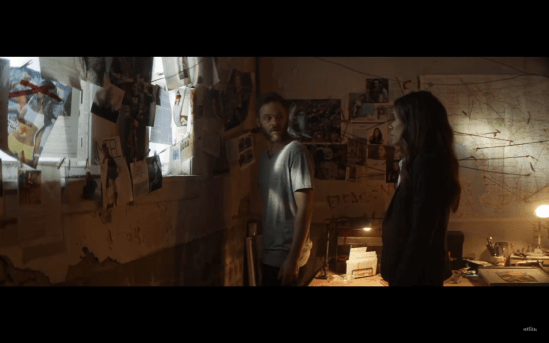
Socio-political outbreak horror “Herd” is the latest project from music video and documentarian filmmaker Steven Pierce trying his hand at a full-length fictional narrative.  Pierce co-pens the film with James Allerdyce, both of whom have worked on the 2020 music documentary “Jose James & Taali Live from Levon Helm Studios” about the creative process of live-streaming performance at Woodstock venue.  The song and dance of the 2023 released “Herd” pulls inspiration from recent popular talking points in America with a couple of conspicuous drifts from one surface level incredible horror, a lesbian couple stumbling into the unbridled mess stirred by virus mutated townsfolk, to a more realistic horror of gun-toting narrowmindedness, extreme self-preservation, and government half-truisms.  Alongside Steven Pierce and James Allerdyce producing are also debuting fictional narrative filmmakers with Michael Szmyga, Matt Walton, Lev Peker, Matt Mundy, Bret Carr, Lori Kay, and Ryan Guess under the banner of Framework Productions.
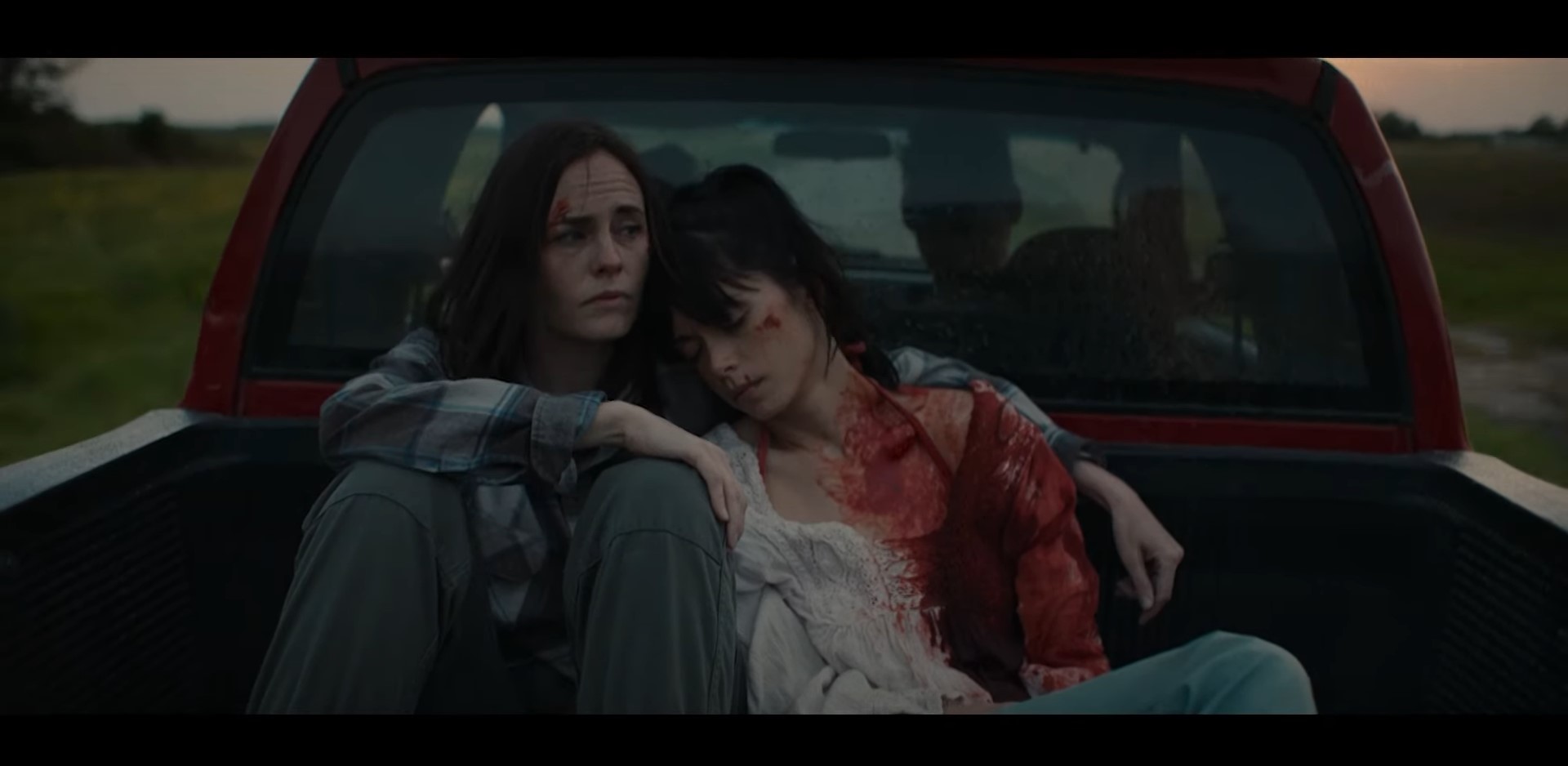
Initially after the opening scene of something zombie-contagiously brewing, the story dives head first into despondency of Jamie Miller (Ellen Adair, “Trick”) and Alex Kanai (Mitzi Akaha, “Bashira”).  Not at first evident of what kind of relationship sends these two on a canoe trip in the middle of nowhere but becomes evident quickly that the two are a couple with Alex forcing a last ditch effort hand to rescue a ship that’s slowly sinking in the abyss with troubled girlfriend Jamie.  While Jamie has her extraneous displeases with their relationship, very similar to most couples, the knotty crux more so lies Jamie’s abusive, bigot of a father who lives inside her head and, for some reason or another, has flared up recently despite be resolutely at bay for what seems to be years into the relationship. That bit of missing backstory becomes an harbinger of many other unexplained or underdeveloped aspects of “Herd’s” genetic makeup that funnel down to not fleshing out many characters, such as the father character who is plainly found deceased in the second act with yet to no significant progress made with a character who has tormented our heroine protagonists to the point of a near mental breakdown with disturbing visions of a faceless mother amongst the crippling of her disavowed, disapproved relationship with another woman.  “Major League’s” Corbin Bernsen plays the father briefly before succumbing to an offscreen fate and Bernsen’s no stranger to zombie genre having directed one himself (“Dead Air”) and would have greatly added to “Herd’s” undercurrents as a headstrong xenophobe with a radical complex.  Instead, we get Big John Gruber (Jeremy Holm, “Don’t Look Back”), a complete and utter 180 from the volatile buildup of Bernsen’s conditioned and dogmatic militant.  Nothing inherently flawed about Big John’s softness and sympathy toward a difficult situation, even going as far as supporting Jamie’s same-sex relationship, in what could be construed as a parallel of dispositions that ultimately bleed red all in the same as redneck conspiracists will never bleed out, such as seen with militia lackeys Bernie Newson (Brandon James Ellis) and Tater (Jeremy Lawson, “Happy Hunting”) who hold onto their conspiracies as well as their guns.  Amanda Fuller (“Starry Eyes”), Steven Pierce, Matt Walton, Ronan Starness, and “Shallow Ground’s” Timothy V. Murphy and voice actor Dana Snyder of “Squidbillies” fill out the cast.
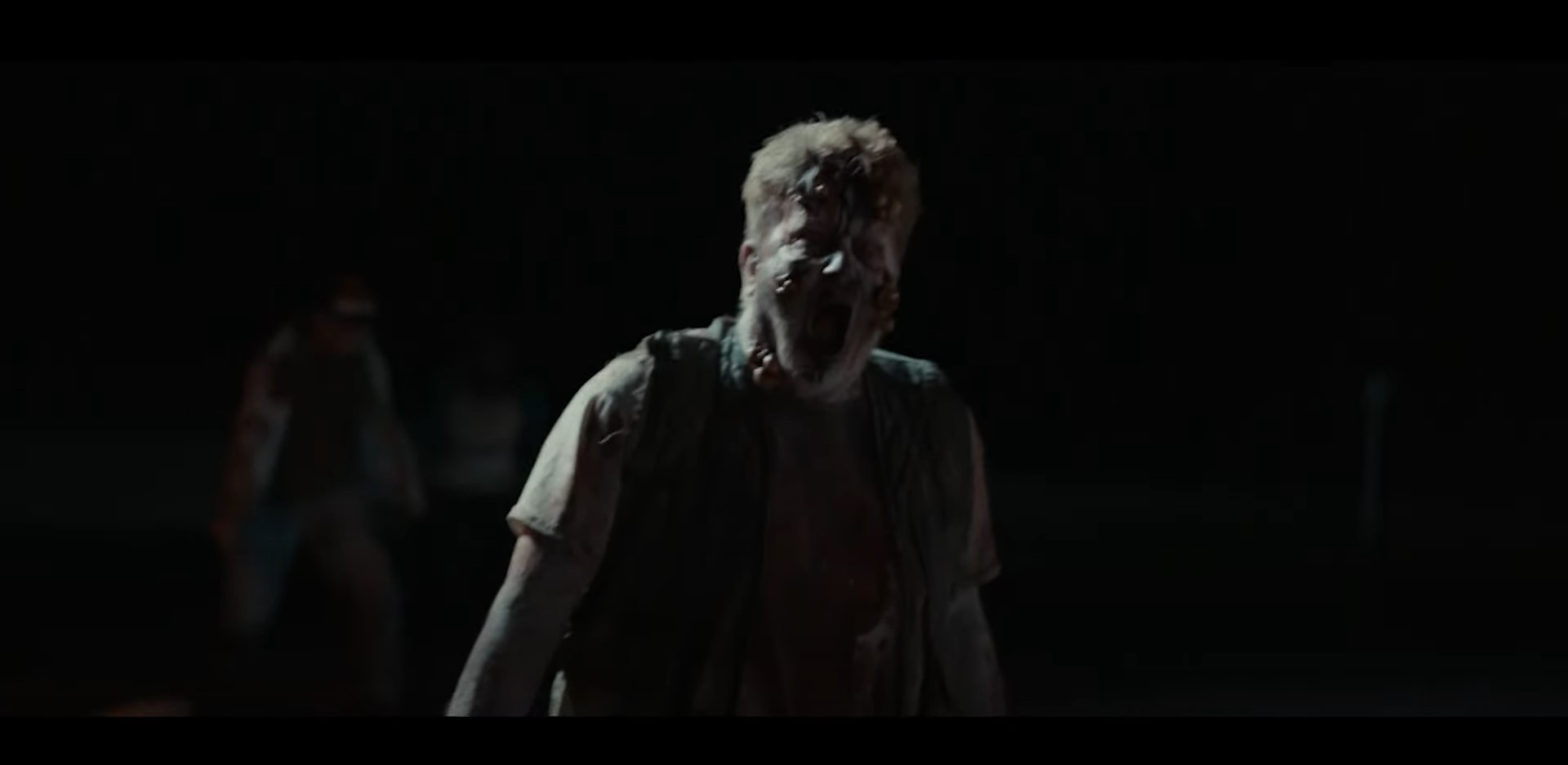
“Herd,” once titled “It Comes From Within,” very much implies the sheep who blindly follow the influential proximal powers into separating factions of dependency on the very moment national authority downplays the truth and designates into a free-for-all for survival, a doomsday prepper’s wet dream.  “Herd” catapults a very anti-government harpoon message right into the lampooning of Midwest gun nuts and schismatic truthers.  These instances surrounding a not-too-exaggerated truth detrimentally snaps the arc for the initial, more considerable character metamorphosis with heroine lead Jamie Miller.  We’re no longer on her track toward parental recovery that’s laid a substantial foundation in the first two acts with flashbacks of her father verbally tirades and banishment, only able to visualize her mother’s faceless corpse, and the brittle relationship she has with girlfriend Alex when going into the third act careens into a clash of the small-town titans.  The disinvestment of an endeavoring lesbian courtship plagued by mind-traumatizing scar tissue and a frustrated partner is ran over by the warring militias to the point where we’re scuttled from face-off to face-off and Jamie and Alex road-to-unity takes a backseat wholeheartedly.  The unexplained infected are also pulled into the backseat as an unfortunate consequence of said conflict that missed the mark explaining the climatic scene with the infected, shambling, boil-riddled bodies’ near unintelligible and moaning in unison wail that conveys a less antagonized existence and to defend themselves when threatened.  The humanizing moments are lost in the wake of war and conservative hoopla that insidious impale anything meaningful, but perhaps that was the message all along, a sort of blindness or autocratic ways to diverge free thinkers, as exampled with Big John Gruber whose liberal opinions and talk did nothing for him in the end.
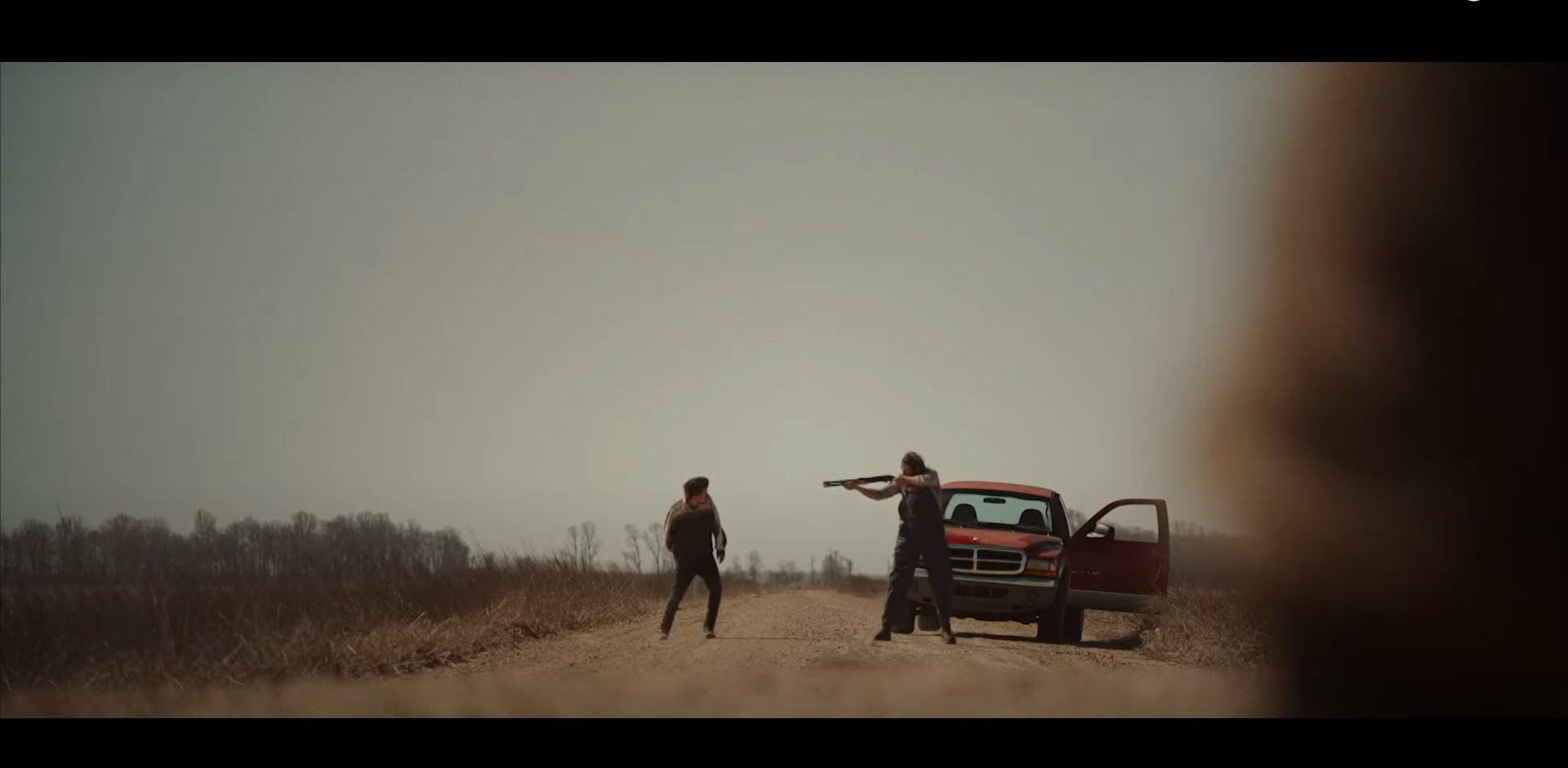
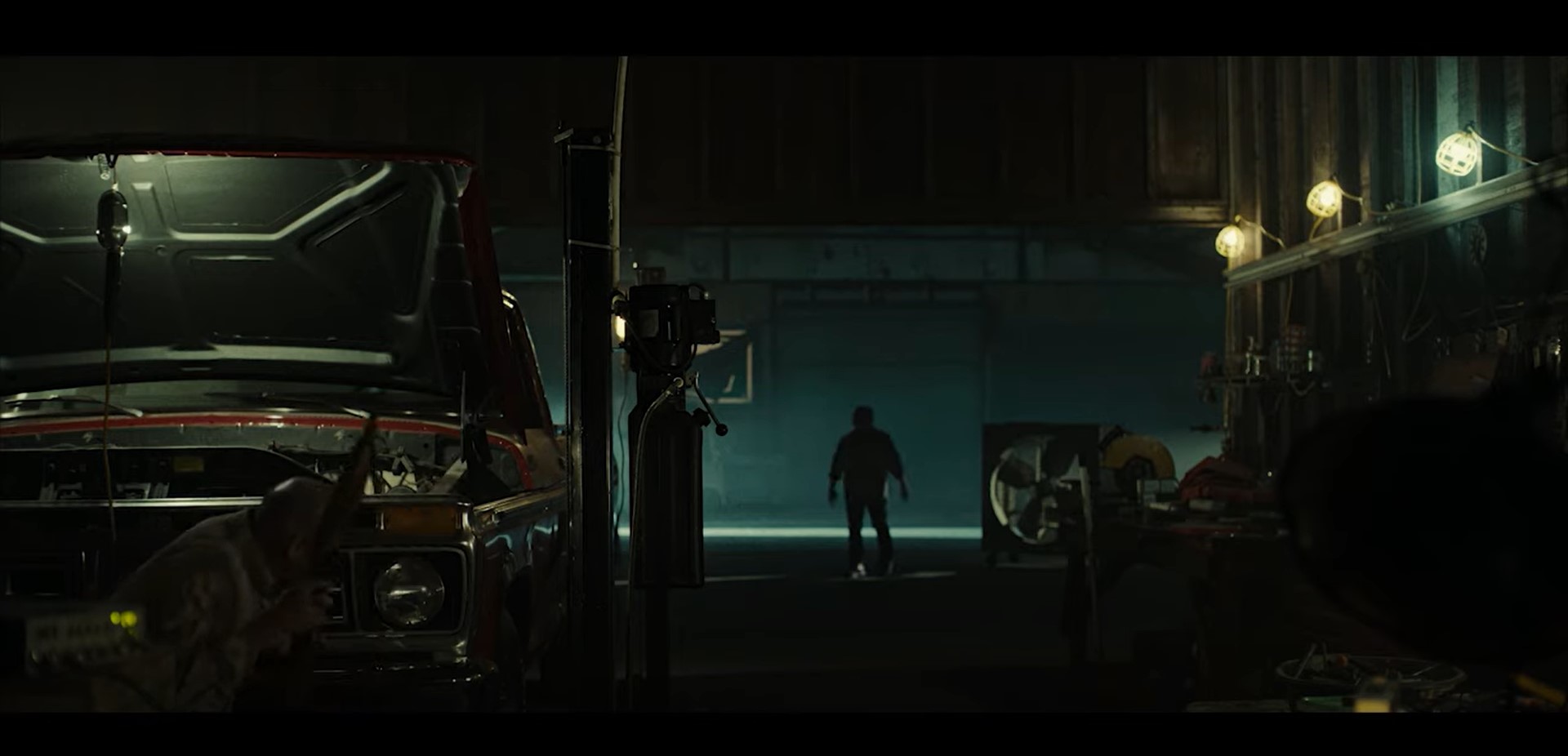
Get into the “Herd” mentality with a new DVD from the UK distributor High Fliers Films.  The MPEG-2 encoded PAL DVD has a widescreen display with a 2.35:1 aspect ratio.  Compression decoding bitrate has impressive measure up to an average of 7 Mbps, leaning toward more detail, less artefact intrusion.  Shot in more rural areas of Missouri, though I believe the story takes place in the Midwest, Kansas maybe from the dialogue, an enriching scope of landscape, such as a dusty crossroads or a vast river shot from above, adds palpable details and texture with a natural grading.  Brennan Full doesn’t go fancy with an extravagance appears but exercises control over the contrast and shadows to obscure the infected lurking about and also handles the camera professionally, resulting in a cleaner, precise, and full of various angles and shots that typically would be nonexistent in most indie works.  Full also retains much of the natural and environmental irradiance for lighting without the use of gels to augment tone.  Two English audio options are available to select from, a Dolby Digital 2.0 stereo and a Dolby Digital 5.1, though not listed on the back cover. The surround sound mix shepherds in a better flexier channel distribution with back and side channels offering broader infected gutturals and militia gunfire. Dialogue is clear and clean of hiss and other banes in the leveled whereabouts of the digitally recorded audio layers. No subtitles are available. The High Fliers DVD is void of special features within the static menu framework. The clear amaray case unfortunately displays a shoddy composite image of a boil-repleted infected man with a beard trimmed with bad photoshop scissors giving way to a horde of baldies, which the latter doesn’t closely represent the “Herd.” There is no insert inside the casing. UK certified 15 for a sundry, laundry list of strong language, violence, gore, threat, horror, domestic abuse, and homophobia, the DVD’s playback is region 2, PAL encoded, and has a runtime of 97 minutes. “Herd” variegates down many different possibilities – a tumultuous fraught lesbian couple, tormenting father issues, governmental lies, rural dissidence, inexplicable infected creatures – but never settles to resolute one of them with confidence and that’s hurts the film’s better laid in visual portraiture.

Little Book of EVILs. “The Last Thing Mary Saw” reviewed! (Arachnid Films / Digital Screener)


Southold, New York, 1843.  A young, once-proper, daughter, Mary, of a puritanical family sits before an investigator as suspect of the brutal massacre of her family.  Her eyes having been gouged and plucked from her skull, Mary can’t see the musket rifles pointed straight at her as she’s assumed to be practicing dark dealings being the sole survivor.  She must recount the exact details of story that begins with the family’s severe punishments imposed upon her and the house maid whose practically publicized intimate relationship was seen as wicked, sinful, and embarrassing.  Unable to be discouraged by disapproval and cruel corrections, Mary and the maid continue to sneak their forbidden affair but did she and her lover commit the heinous crime or was there more behind the veil involving an infinite evil, bound by a mysterious book, pulling at the marionette strings that has cursed Mary and her bigoted family?

Tackling themes of homosexuality in the 1800s in the time of itchy-trigger-finger heresy pointing and dogmatic ideologies comes the debut horror film of writer-direct Edoardo Vitaletti entitled “The Last Thing Mary Saw.”  The Northeastern Americana thriller is a fermenting tale of a remote extended family, of some wealth and stature, trying to remedy the eldest daughter’s uninhibited rendezvous with an equal in age young house maid by subjecting them both to torturous corrections aka kneeling on uncooked rice while reciting a specific passage regarding sin from scripture.  Vitaletti’s first feature length film is from executive producers Joseph Michael Lagana (“Actress Apocalypse”), Mike Nichols (Eli Roth’s “Fin”), Keryn Redstone, and Scoop Wasserstein and from New York based production companies Arachnid Films and Intrinsic Value Films. 

“The Last Thing Mary Saw” has an intriguing cast as well as a cast, at least I think, everyone should love.  When this Washington, D.C. born actress is not pretending to be a creepy psychotic child, “Orphan’s” Isabelle Fuhrman finds other ways to slip into tightknit family structures.  The now 24-year old Fuhrman plays house maid Eleanor who continues to fight for Mary’s affection despite Mary’s closed minded and religiously persecuting large, all-in-one-house family.  Mary, the titular character played by “Insidious:  The Last Key’s” Stefanie Scott, has stars in her eyes as she’s hot for the maid, but I couldn’t find that deeper connection between Fuhrman and Scott whose characters even further themselves from each other by being more intent on beating the system rather than being romantically and consummately intimate.  It’s almost as if Vitaletti starts beyond the point of building up the relationship, having prefabricated Eleanor and Mary’s love, and is only thirsty for the consequences that follow.  The lovers become embroiled into the family’s personal problem with their daughter’s relationship and at the helm of it all is the matriarch at the hands of Judith Roberts.  The “Dead Silence” and “Orange is the New Black” actress embodies coldly an unyielding crone that eager wants to keep the so-called troublesome maid with the family, even if that means passing her skillset to uncle Eustace (Tommy Black) and his wife and adolescent child (Dawn McGee and  “Starry Eyes’” Shane Coffey).  The crux of the problem starts with the father (Michael Laurence) who brings a book filled of peculiar, teratology-related storiettes that might not be odd today, but were damn near witchcraft in the mid-19th century, and that’s when things begin to spiral bleakly with manipulation and suffering in various ways.  “The Last Thing Mary Saw” rounds out the cast with Carolyn McCormick, P.J. Sosko, Daniel Pearce, Stephen Lee Anderson, and “Scream 4’s” Rory Culkin as credited “The Intruder.” 

What intrigues most about Vitaletti’s script is no character is inherently labeled as a conventional genre trope.  The chapter-storied narrative plays out in three parts with the title paralleling the contents of the mysterious red book as well as the action in each plotted chapter.  What seems orthodox for the film’s set period in punishing those in same-sex relations alluded “The Last Thing Mary saw” to be a tale of sordid, Godless misconceptions and yearning attraction between two young women, but then the catalyst  happens, a supernatural being is revealed, and then the tide turns from the sinister misguided to the sinister malevolent.  Another Vitaletti explores another theme: hate.  Mary hates her own family to the point of setting out revenge upon them; she would do anything to not separated from Eleanor, but yet Eleanor remains in the house, not dismissed, or reassigned to another house.  Hate festers into everything, boils closely at the edge, not just for Mary and Eleanor but for the family who hates secular unions, hate embitters in the grounds security guard after his leg was purposefully crippled for running away, and hate also tears are Rory Culkin’s The Intruder whose monstrous birth has left him with no family or respect amongst his peers so he must take away from others.  Without production designer Charlie Chaspooley and costume designer Sofija Mesicek, there wouldn’t be this resurrection of early 1800s resemblance that’s essential for the story’s period and the acting also smooths out the dialogue of a yonder-forgotten dialect of a lingering British-English set in area of Long Island.  Though I like where the story progresses and how climactically ends, following along with Vitaletti’s script falls nearly deaf on a coherent understanding.  Plot points do come out of nowhere at times that don’t segue neatly enough for comfort and we’re left with a mountain of enigma that somehow ties Mary, the book, and an unconventional Matriarch together into a dysfunctional family affair; yet, the sullen atmosphere makes for good unbenevolent folkloric horror coupled with Vitaletti’s incredible patience the scenes with immense anticipation and dread.

Premiering worldwide at the virtual rendition of the Fantasia Film Festival, “The Last Thing Mary Saw” will be a part of the festival’s first wave of films for attendees. No digital, on demand, or physical release dates have been set for this occult horror drama from first time feature director Edoardo Vitaletti, so you will have something to look forward to in the coming days of new releases! Director of photography, David Kruta, has come along way since the unfinished mess with the discarded survival-slasher “Old 37” by maintaining Vitaletti’s natural rustic scheme of the early 1800s and then toil with the phantasmal occult in one or two scenes with an airy, dreamy, and, if not, an ethereally beauty in it’s parlous context. Situational context is also key when a scene with a long stretch of no dialogue becomes the means to an end and Kruta has to capture culmination of storytelling through the facial emotions and body gestures coordinating in light charade as well as a more hefty depressed language. “The Last Thing Mary Saw” is unpretentious horror done right with a melancholic reflection of a bygone past mixed with obscure occult elements wresting life from already blinded grips consumed by hate and arrogance is pure bread and butter for a director just getting warmed up.

You Can’t Run From the EVIL That Seeks Out the Competition. “Homewrecker” reviewed! (101 Films / Digital Screener)


Michelle is at the point in her life, struggling as a 30-something year old interior designer, where the urge to have children is strong.  When trying to conceive with her husband seems to be going downhill, she is befriended by an overly obsessive stranger, Linda, who has took an uncomfortably intense interest in her personal life.  An innocent enough invitation back to Linda’s house proves costly with Linda’s flickering infatuation for Michelle’s private business that turns quickly sour in a cat and mouse game of survival.  Trapped, Michelle must understand Linda’s madness in order to stay alive.

Ca-ra-zyyy!  That’s one of many ways to label Zach Gayne’s woman-on-woman scuffle in the comedy-horror “Homewrecker” that will surely turn many feminist heads at breakneck and contentious speeds with the better woman standing scenario.  Gayne’s freshman film tests the wills of two very different women and their counter mindsets while excavating a common core connection rooted subconsciously deep within them both.  A distinction that gives the 2020 riotous feature an edge is the two sole actresses, Alex Esso (“Starry Eyes,” “Doctor Sleep”) and Precious Chong (“Luba”), daughter of famed stoner comedian Tommy Chong, portraying Michelle and Linda are also “Homewreckers” cowriters alongside Gayne, equipping their characters with an authentic image by filling the roles themselves and getting out of the project exactly what’s desired.  The trio also produce the film in a coproduction with fellow producer Josh Mandel of Industry Standard Films and under the financials of Precious’s mother Shelby Chong, Chris Morsby, and Delaney Siren as executive producers.

Precious Chong, hands down, steals all the glory in “Homewrecker” with her wide-eyed, mentally unstable, zany, and stuck in the 80’s single white female that makes Glenn Close performance seem diminutive and more like an innocent and shy little crush in “Fatal Attraction.”  Linda epitomizes the very definition of crazy as a person unable to progress from an era of her peak youth being the most popular girl in school, judging by the VHS tapes, 80’s soundtrack, and outdated board games, I’d say Linda’s popular party girl inner nature hasn’t disembarked from the late 80’s to early 90’s train, and Chong delivers a singularity tweak of neurosis and delusion that frighteningly teeters from over exaggeration to real representation.  Unfortunately, Chong’s invasive, off-the-rocker performance overshadows Alex Esso’s more level-headed, amiable, and fight or flight Michelle and her unconventional responses and reactions to Linda’s incessant behavior in, perhaps, a more poorly written character.  Michelle is the too nice to the point where opportunities arise for escape or attack and she chooses the total opposite in trying to reason with an unreasonable person.  The motivation behind Michelle for even going to Linda’s house is rather slim so either something deep in her subconscious wills her to go (maybe Linda’s eagerness to lend an ear on a torrent of personal unloading) or she’s a just gullible to a fault.  Rounding out the cast is the man in the middle, Robert, played by Kris Siddiqi and the friendly neighbor Wilson, played by Tony Matthews (“The Craft: Legacy”), in a bit part that’s a clever homage to the Wilson character in Tim Allen sitcom, “Home Improvement,” as he peeps just over the fence to say hello as well as an contradictory play on the “Homewrecker” title.

Aforementioned, there is gray area in the character actions and rationales that thins much of the story’s harrowing affect and even seeps slightly into the more dark comedic moments.  Yelling (in my head) at the screen for Michelle to jump out the window (after lingering half out for clearly a minute) or taking advantage to overpower Linda (during a moment of long poignant embrace) was just a waste of my mental breath as the Michelle is frustratingly too timid, too nice, too afraid to cut the unseen bounds that holds her back from reinstalling balance in her upheaved life held in Linda’s unstable hands.  The pacing a bit of a drag as well by holding onto scenes, with various cuts, longer than necessary.  For a film slightly over an hour long, the conversing segments between the principle characters, Linda and Michelle, could last up to 20 minutes with more than most of the chat awry by Linda’s idiosyncrasies.   What works for “Homewrecker” is single day story set inside Linda’s home that really hones in and develops the snowballing turmoiled relationship between the two women. Being the film’s strong suit in unveiling the crux of the problem that’s not surface level crazy person versus sane person, the plot point revelation truly did blindside me and I was like, whoa.  Everything made sense without having to dig deeper into exposition to understand the minor details of what was happening exactly.  “Homewrecker” also has great brief climatic gore involving an emblematic sledgehammer and a pair of sharp scissors that, again, comes unexpectedly from a cat and mouse game that has been rather tame for most of the film.  Zach Gayne’s film pleasantly puts a blood red cherry on top of a deranged ice scream sundae dripping with fanaticism fudge in a scrumptious little fatal attraction.

Efficiently compact but just as aggressive as an overly jealous and overactive girlfriend plagued by psychosis, “Homewrecker” premiered it’s way digitally into UK homes by 101 Films back on May 24th.  The Toronto, Canada production is presented in a widescreen 2.39:1 aspect ratio with a lean runtime of 76 minutes.  Co-producer Delaney Siren serves as the cinematographer for “Homewrecker’s” regular split screen and multiple angle shots denoting a clear sense of where each character location is without the film feeling like a typical slasher while maintaining the focus on telling both women’s side.  “Homewrecker” marks Siren’s first feature film as a cinematography, but has multiple credits in the genre for macabre inspired music videos under the Toronto based music recording and film production company, “Reel Wolf Productions.”  For a film that has completely and satisfactory bookends, there are no bonus scenes during or after the credits.  Quirky and dark, “Homewrecker” is a read between the lines comedy-thriller about abduction, devotion questioning , delusional obsession, and honesty.

The Greatest Trick EVIL Ever Pulled Was Convincing Couples the Perfect Marriage Ever Existed. “Happily” reviewed! (Saban Films / Digital Screener)

Tom and Janet have been married for 14 years.  By that amount of time elapsed, marriage has moved past the honeymoon stage and settled into routine with the spark having dulled and sex life becoming nearly, if not totally, stale, but for Tom and Janet, their libidos are the equivalent to hormone-driven teenagers.  Their marriage has happily sustained over the years, never veering off course, but when a couples’ retreat invitation is rescinded by their friends because of the envied desire for each other and a mysterious man arrives at their door step next day offering a syringe injection that will cure them into a normal married couple, Tom and Janet believe they’re a part of a sick joke by one of their so-called friends, leading to a dead body, a brief case of unknown substance, and a re-invitation to the couples’ retreat where they must figure out who is and who isn’t of the four other couples are on team Tom and Janet.  Yet, the trip founded on the idea booze and relaxation turns into a disclosure of lies, secrets, and deadly disconnections. 

What’s the secret to a long lasting marriage?  Good sex, obviously.  But can an ostensibly impenetrable marriage be flawless?  That’s one of the themes writer-director BenDavid Grabinski toys with in his inaugural feature film directorial of “Happily” that disparages the unsullied union of Tom and Janet by a quartet of couples, who are also Tom and Janet’s closest friends, who aim to stick it to the happy couple because of their own marriage and life failures.  Grabinksi, creator and writer of revamped “Are You Afraid of the Dark?” television series, incorporates that element of grim tale mystery for allegorical effect into the psychology of envious, mal intent friends projecting their negativity on Tom and Janet’s positivity and love.  “Happily” is a production of the Arizona based Common Wall Media, an indie record and film production labeled owned and operated by Chuckie Duff, and, perhaps, the reason “Happily” has a killer soundtrack that includes Tim Capello “I Still Believe.”  Jack Black (“Tropic Thunder,” “Goosebumps”) also produces the film under his Electric Dynamite Productions, Inc. banner in collaboration with Indy Entertainment (“Nightmare Cinema”). 

I find extreme difficulty seeing Joel McHale in anything remotely with a serious tone for someone who grew up with the comedian during his 12 season days of E!’s spinoff of Talk Soup titled simply, The Soup.  McHale’s range as a funny man is beyond being paramount with great comic timing and able to deliver an unlimited amounts of laughs in just his mere expressions and that has translated well into his filmic career from comedies such as “Ted” to “The Happytime Murders” and even well into his more earnest and darker roles in “Deliver Us From Evil” and, his most recent release which is “Home Alone” for a more mature audiences, “Becky.”  In “Happily,” McHale plays Tom, a loving husband to wife Janet who can’t keep their hands off each other and never fight for more than half a day in what’s staunchly considered a perfectly sickening marriage by their closest friends.  One thing I’ve learned from watching Joel McHale in this role is not only can he bear the weight evenly of an emotional thriller, but the guy is jacked!  Opposite McHale is “Penny Dreadful:  City of Angels” star Kerry Bishé, matching the sexual and profound tone as the wife, Janet. Bishé takes on Janet’s ever benevolent wifedom, elevating it to a whole new level as the working spouse, ready to gratify Tom by any means possible and in any compromising position possible, who’s also served hand and foot by the same man who knows how to reciprocate at the right moment. Bishé’s a favorable compliment to McHale as a power couple daring the odds together on the same page until losing they’re way because, simply, they’re inevitably human. Tom and Janet square off against four other couples under suspicion of a suspected prank-gone-wrong after meeting with a mysterious man played by “Office Space’s” Stephen Root. Could the pranksters be the flamboyantly affluent, but unaffectionate Karen and Val (Natalie Zea of “The Following” and Paul Scheer of “Piranha 3DD”)? Could it be the uptight lesbian couple Carla and Maude (Shannon Woodward of “Westworld” and Kirby Howell-Baptiste of the upcoming “Cruella”)? Or is it the carefree Patricia and her inhospitable husband Donald (Natalie Morales of “The Santa Clara Diet” and “Mastermind’s” John Daly)? Maybe its the anger unmanaging Richard and his newfound fiancé Gretel (Breckin Meyer of “Freddy’s Dead: The Final Nightmare” and Charlyne Yi of ” Puppet Master: The Littlest Reich”)?

Grabinski forcibly shoves the happily in “Happily’s” Tom and Janet’s marriage down our throats with a diabolical lustful half-exposition, half-hanky-panky action before title sequence intro into their infinity spicy life. The couple screw like two teenage rabbits hopped up on an aphrodisiac more than a typical mundane couple of 14-years should ever seen in their union’s lifetime, but, then, Grabinski throws in the proverbial monkey wrench into the gears. The question comes up, and lingers throughout, whether Tom and Janet are inherently broken, a defect in their existential creation, and that begins to snowball down the hill of insidious thoughts as the protagonists have their idyllic marriage tainted by the hair brain idea of a stranger, carrying two syringes of an insta-fix made up of unknown, illuminating material, who beguiles them with bureaucratic niceties to lie his way into their home and tells them he works for a higher power. Is this mysterious man God? Perhaps, the Devil? Grabinski smartly keeps that little detail under wraps and, for the first half of the film, stays a mystery upon itself. In time, each couple begins to unravel cankerous secrets, all of which have been targeted at Tom and Janet for their perfection and that’s perhaps where “Happily” struggles a bit as a story as Grabinski has a rolodex of past events being flipped through a plethora of interaction exposition, leaving morsels to try and puzzle the uneasiness of the morose couples’ retreat together. The long and short of the story is that the audience will need more morsels to chew on, get the creative juices flowing, to understand character motivations because, in the end, “Happily” is one big couples therapy session of divulging secrets to wash away, more or less, soul-deteriorating sin.

Before all hope is lost between two people, an intervention is warranted, even if it’s a divine one in BenDavid Grabinski’s dark comedy “Happily” heading our way to theaters, digital, and on demand come Friday, March 19th from Saban Films. The R-rated film runs for 96 minutes is presented in a widescreen 2.39:1 aspect ratio that gets to showcase more of Adam Bricker’s luridly dreamy style. The “Starry Eyes” cinematographer instills a firm taste of precise, primary coloring tinting that evokes the intensity of the scene rather than pitching an outlined overlay on top of his soft lighting. The red “Predator”-esque vision through CCTV lens is a nice touch of also breaking up the more natural lit scenes for that ominous approach. Since “Happily” is coming to theaters, there is obviously no bonus material, but stick around for scenes during the credits and after credits. Lies, betrayals, murder, and the uncanny are soaked into “Happily’s” absorbent fibers as one of this years best dark comedies that hones in on ascertaining that nothing is perfect but the perfection that you make together.

Father and Son Bring EVIL Down Upon a Tormented Detective in “Darkness Falls” reviewed! (Vertical Entertainment / Digital Screener)


Los Angeles detective Jeff Anderson has his perfect world turned upside down upon discovering his beloved wife dead of suicide in their apartment bathtub. Losing his bid for Captain and having his life be in utter shambles, Anderson becomes obsessed with lurking around incoming suicide calls on the CB radio, trying to make sense of his wife’s sudden reasoning to end it all. When a similar case produces a survivor from a familiar fate as his wife’s, Anderson learns two men are behind similar forged suicides stretched out over the past ten years against prominent women figures in and around the L.A. area. The detective spins a wild theory that has him following every lead to track down and stop the father and son serial killers without any backup from his local precinct, forcing his hand to choose whether to be a cop and uphold the law or seek lethal retribution for the woman he loved.

From French director Julien Seri comes “Darkness Falls,” a crime thriller released in 2020 that is entirely shot in English, a first for the French filmmaker who helms a script from the executive producer on “Starry Eyes” and “The Man Who Killed Hitler and Then the Bigfoot,” the Belgium native, Giles Daoust. Also produced by the Belgium, the film, that was formerly titled “Anderson Falls,” gorges on the detective exemplar of the prodigal crime fighter stripped down to next to nothing before regaining footing against the two experienced serial killers out to reduce the highly professional woman population with one bottle full of sleeping bills and one razorblade at a time. “Darkness Falls” is an exaggerated piece of nurture versus nature on systemic toxic masculinity seething under the guise of one man’s oppressed childhood from the abusive women in his life and then enlightening his son to his ways while the open minded, Renaissance man climbs back up the mountain toward redemption, not only for himself or his wife, but for all women being forced in a dual parental role. “Darkness Falls” is released under the production companies Koji Productions, Lone Suspect, and Giles Daoust’s Title Media.

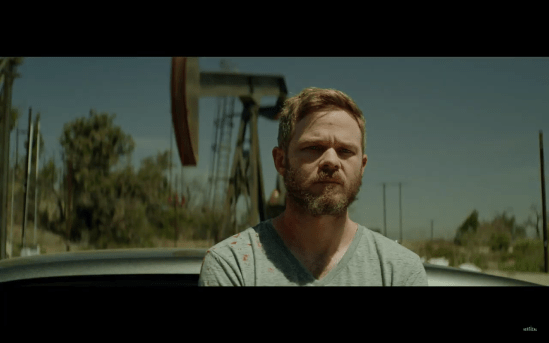
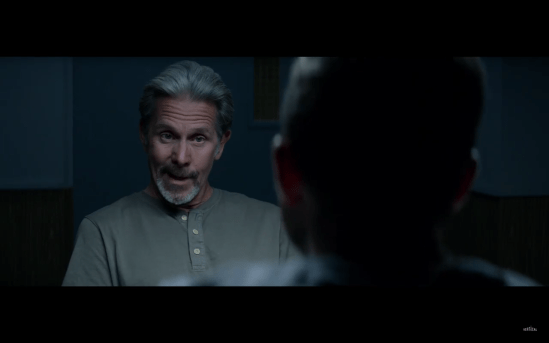
Despite the international production and filmmakers, the solid cast is compromised of familiar faces from respectable actors, starting with not-the-Elsa-“Frozen’s” Shawn Ashmore. Ashmore, who I considered to a steady part of any project – he’s phenomenal in Fox’s “The Following” with co-star Kevin Bacon, – finds himself in the shoes of a L.A. detective who has fallen by no cause of his own, but as consumed as detective Jeff Anderson is with proving his wife’s murder, Ashmore doesn’t sell Anderson’s convictions and doesn’t properly apply Anderson’s super sleuth talents to wade through the sea of angst and torment. Anderson’s also written poorly as a man who consistently lingers around suicide call-ins and has constantly has numerous visions and memories of his wife that serve little to her importance to him, serving more toward just being story fillers instead of providing a little more value to Anderson’s character. What attracted me more to “Darkness Falls” was Gary Cole as one-half of the father-and-son serial killer team. Cole takes a break from the Mike Judge and Seth McFarland humor to stretch his legs amongst the thriller genre, playing an unnamed dark toned character derived from hate, abuse, and the thrill of seeing women die. Cole’s performance is a step above Ashmore’s lead role, but still flat, flat to the point of almost monotonic pointlessness that doesn’t exalt his need to kill high profile women. “Darkness Falls” rounds out the cast with Danielle Alonso (“The Hills Have Eyes 2”) as a Anderson’s former partner turned police captain, Richard Harmon (“Grave Encounters 2”) as Gary Cole’s accomplice son, and the legendary Lin Shaye (“Insidious”) as Anderson’s mother.

While “Darkness Falls” conveys a strong, if unintentional, message that grossly sheds light on the overstepping male view toward the idea of a successful woman, director Julien Seri missteps multiple times through the dramatics of a cop on the edge of the law and on the brink of despair while also not completely rigging out Gary Cole and Richard Harmon with more conniving wit, especially when their kindred reign of terror is well versed throughout the years. What fleshes out from Ashmore’s rolling on the floor and spitting shade performance at pictures of women on his crime wall trying to get into the head of the killers and Cole’s character who relinquishes freedom in sacrifice, even after a daring great escape from a botched crime scene that involved killing two cops in the process, is this weirdly uncharismatic collapse of a story from within the parameters of a well-established cast and premise. “Darkness Falls” barely pulls out a believable crime thriller that can only be described as vanilla, a term that stakes the heart terribly knowing that Shawn Ashmore and Gary Cole deserve so much better just from their lustrous careers and polar acting styles that don’t counterbalance the dynamics at all in this film. The original title, “Anderson Falls,” is fresher salt than the stale, rehashed title change of “Darkness Falls” to, perhaps, gain traction in a fruitless action of selling more tickets, adding even more vanilla flavor.

Releasing on VOD and Digital this month is “Darkness Falls,” an unrated release, courtesy of Vertical Entertainment. Streaming services such as iTunes, Amazon, Apple TV, Google Play, FandangoNow will carry Shawn Ashmore’s 84 minute sordid themed detective thriller as well as all major cable and satellite companies. Since this is a digital screener, the audio and video aspects will not be reviewed, but if running on digital and VOD, the presentation should be excellent provided that your internet’s not sluggish and a good connection is established. I will say that the score by Sacha Chaban is against the grain with a brawny anti-brooding soundtrack more suitable for intense action than stylish poignancy than ends in uninspired ca’canny. That’s also not to say it wasn’t a good score. There were no bonus material included with the digital screener and no bonus scenes during or after the credits. Sitting through “Darkness Falls” was tough to sit through as the anticipation for the morbidity level to increase with due pressure onto detective’s Anderson’s browbeaten shoulders for a hellish ride solving his wife’s untimely death was never sated, sputtering along as a halfcocked story with performances to match.

“Darkness Falls” available for rent on Prime Video!