Do EVIL, Get Dead! “A Day of Judgment” reviewed! (Severin Films / Blu-ray)


1930s rural America – the dejected town priest resigns his congregational duties after failing the local townsfolk who have all but returned to the Church and reclaim their faith in the savior lord Jesus Christ and God.  On his exit of the town’s border, the priest crosses paths with a shadowy figure riding an austere wagon and holding a scythe.  A town full of heartless schemers, adulterers, swindlers, and murders have their unforgiving stories told that leave their fellow townsfolk, their friends, and even their families left suffering in their wake.  The shadowy figure tracks each sinning stray down to face retributing judgment.  The righteous and terrible punishments send the unsavable souls to an eternal existence in Hell.
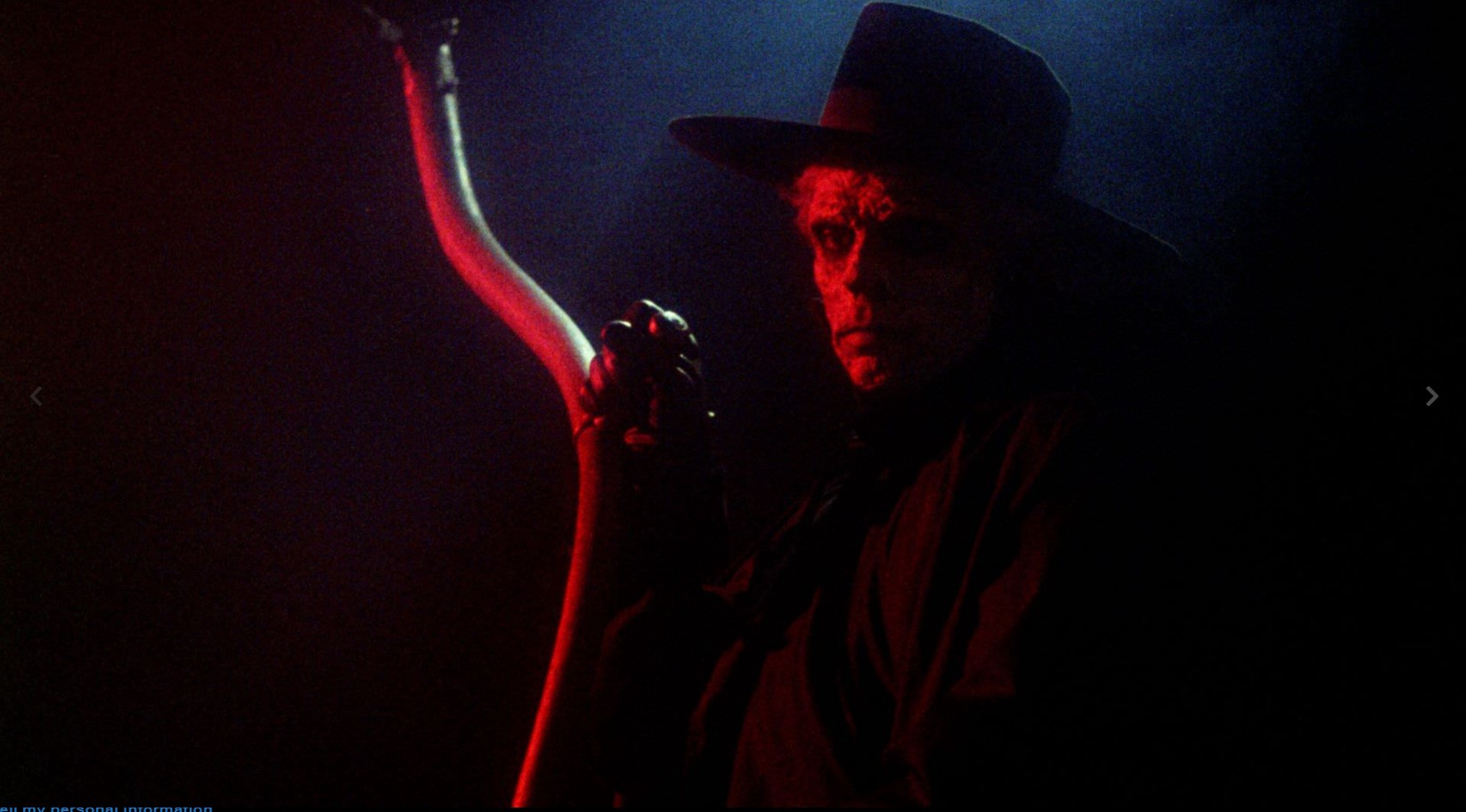
The Grim Reaper cometh. Screen cap courtesy of Severin.

What was once considered to be a Christian-centric educational project had turned into a Christian-centric damnation of horrors in the quasi-anthology “The Day of Judgment,” where the sinners of sin town deviate from the Godfearing path and into a vat of immorality and ungodly aberration.  “The Day of Judgment,” occasionally under the U.S. bootleg title of “Stormbringer,” is the one and only directorial from C.D.H Reynolds (aka Charles Reynolds), an academic educator turned briefly to film working under the legendary, North Carolina based Earl Owensby Studios that produced the 1981 released film.  The script is penned by Owensby Studios’ regular writer, Thom McIntyre, who inked the film between a pair of genre credits, including the incarcerated grindhouse actioner “Seabo,” also known as “Buckstone County Prison” a few years earlier and a snippy flick of a pack killer Rottweilers terrorizing a mountain resort in “Dogs of Hell” a couple of years later.   Owensby, obviously in regard to his own studio work, took part as the fire and brimstone tale’s producer along with associate producer and longtime “Power Ranger” director Worth Keeter curating the final touches as the creative architect of the script’s grimmest portions or more line as the assistant director of adding the bleaker, bloodier fates of the sinners.
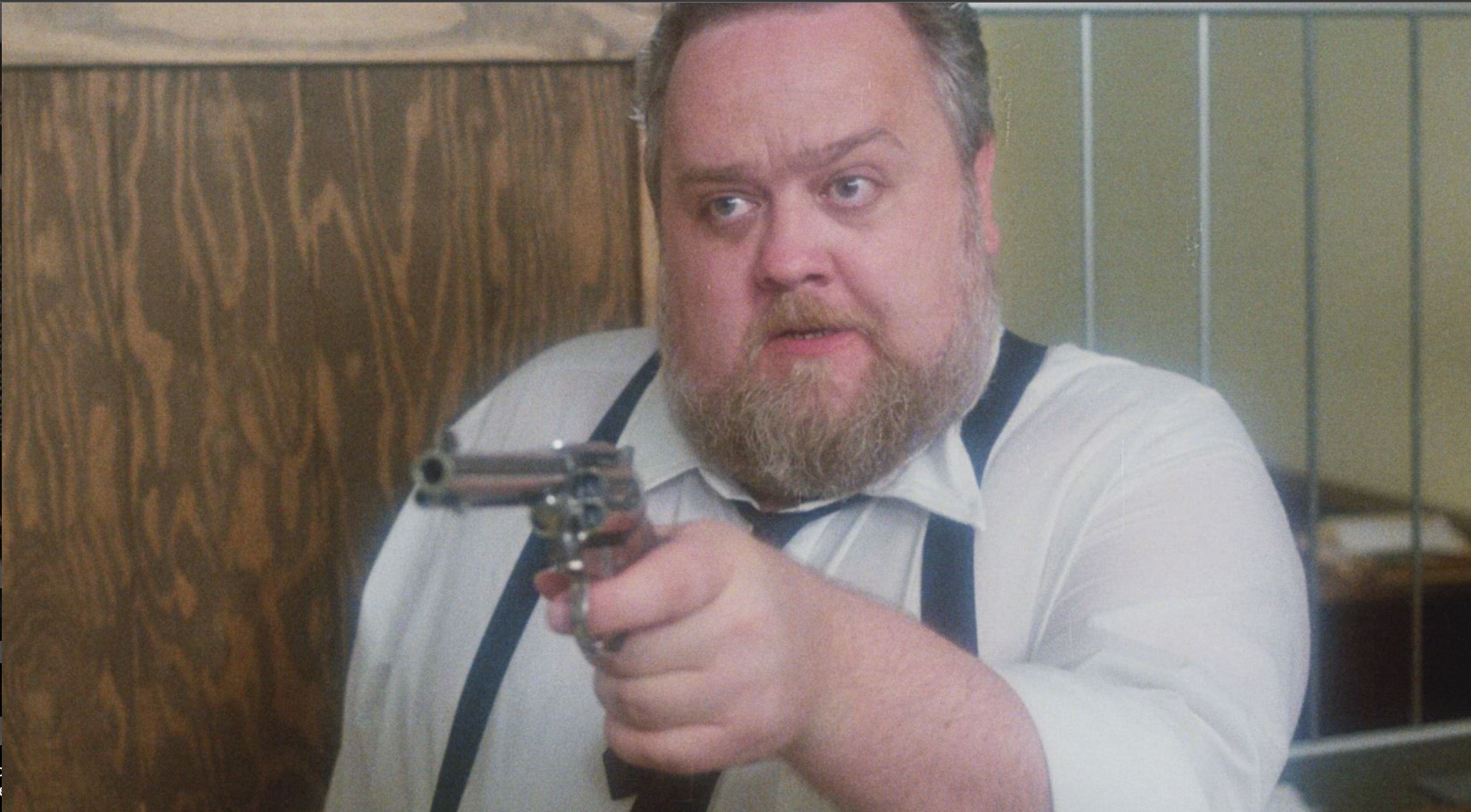
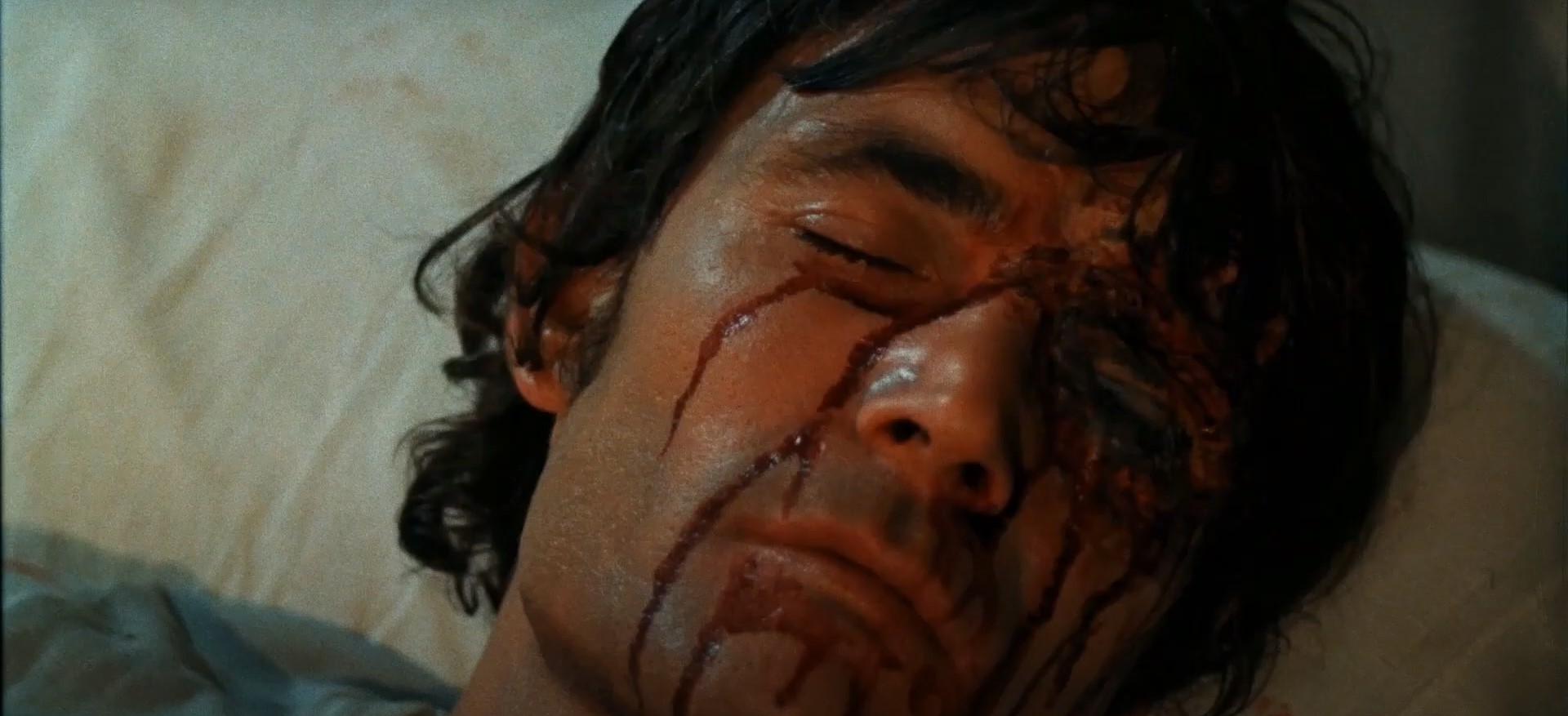
William T. Hicks. Screen cap courtesy of Severin.

“A Day of Judgment” has a non-linear anthology-like structure that swings back and forth between different character scenarios of wickedness.  You may meet one character at the very beginning of the story and don’t meet them again, until you’re already through having sent a good chunk, if not all, of the sinners to Hell in a handbasket.  But McIntyre hones in well on setting up nicely each character’s backstory, those who the priest crosses paths with as he exits the town and delivering their ultimate demise (with an assistant from Worth Keeter’s gloomier approach).  The director himself Charles Reynolds plays the crestfallen Reverend Cage in a classic expository preacher riding out of town and crossing paths with soon-to-be-troublesome townies in William T. Hicks (“Death Screams”) as a greedy and heartless bank owner, Careyanne Sutton and Larry Sprinkle (“Trick or Treat”) as man slaughtering, pretense adulterers. Toby Wallace as the hometown disparaging mechanic scheming to steal the family business out from his parents noses to sell, Helene Tryon (“Dogs of Hell”) as the frettingly kook and paranoid old lady poisoning the local children’s pet goat, and Brownlee Davis (“Wolfman” ’79) as the delusional and disgruntled former employee of his best friend looking for a finality in revenge.  “A Day of Judgment” had this weirdly transitional acting style for an 80’s released horror that resembled the Golden Age of cinema through the 1950s and 1960s where everything is loud and pronounced without much reflection, pause, or change in tone.  Though the style sticks out like a sore thumb, perhaps Reynolds made a shallow attempt to recapture the 1930s as which the narrative period is set.  The acting isn’t terrible but is more staged and reactionary to the course of events.  The cast rounds out with Carlton Bortell, Richard Dedmon, Inga Dennis, Denise Myers, Jerry Rushing, Harris Bloodworth and Fred Roland.
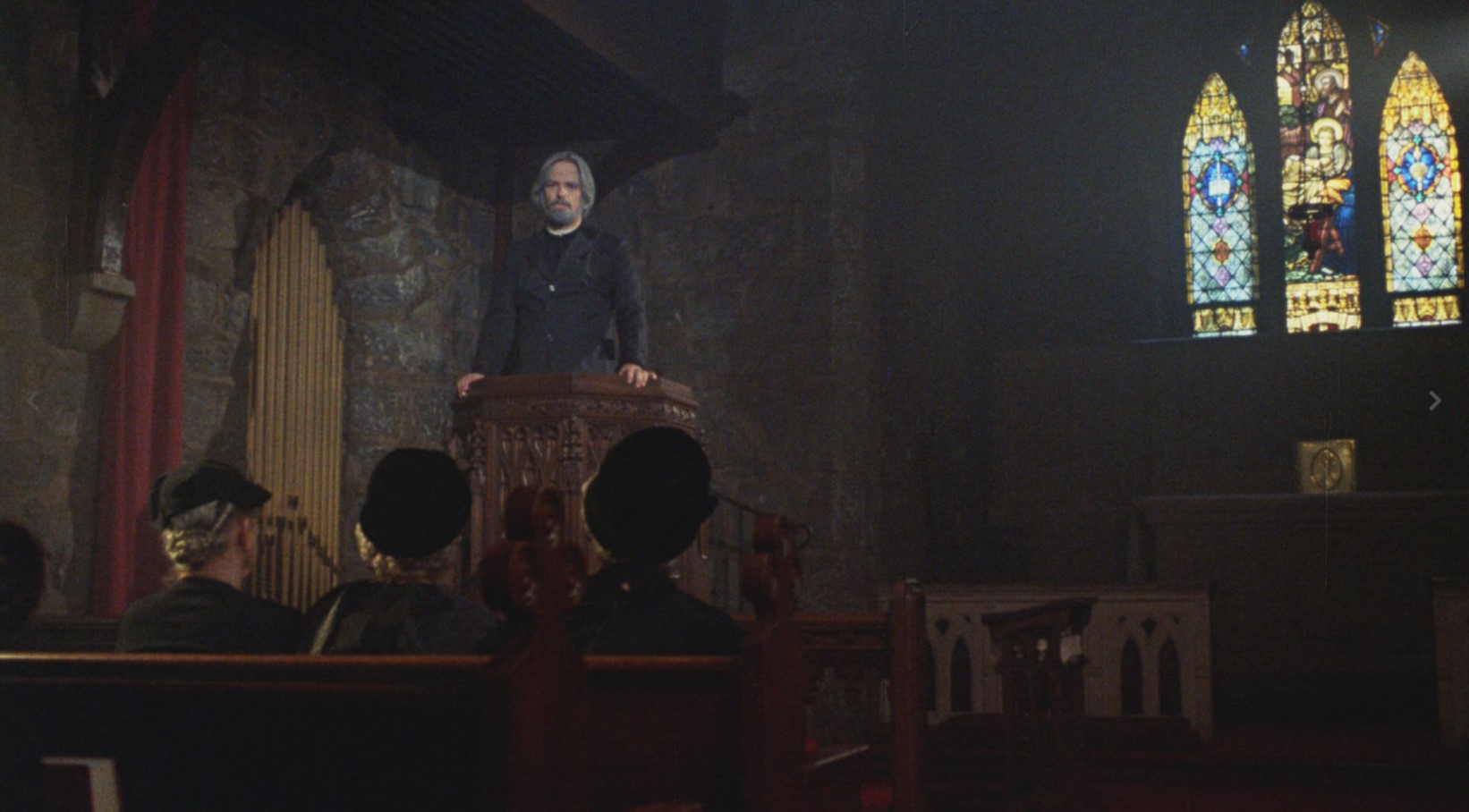
C.D.H. Reynolds as Reverend Cage. Screen cap courtesy of Severin.

Earl Owensby produced films were not known to be big box office hits as they coursed the grindhouse, drive-in theater circuits with relatively unknown talent nearly strict to the back pockets of the Owensby Studios and still meeting profitable margins on low budgets.  “The Day of Judgment,” which doesn’t feel like a grindhouse film, carried meager success by way of production design and wardrobes alone.  Give credit where credit is due with an Owensby film that can dole out a variety of era appropriate automotive roadsters and specific period garments for the illusion.  Some sets are dressed scarcer than others with lots of blank spaces and sparse knickknacks to build upon the 1930’s décor but the overall impression is quite effective, transporting one out of the 80’s and into the depression era the narrative frequently suggests.  I also favored the non-linear anthology of individual hell bound circumstances as that structure rendered “A Day of Judgment” as a whole rather than a pie sliced into six-even segments with a common core connection that, at times with other films, individual stories can feel untethered to the main theme.  In today’s times, “A Day of Judgment” is severely antiquated but the more “bleaker” character demises often landed with underripe special effects and a fair amount of cheesiness that’s a Loony-Toons illustrated representation of Hell that looks more like Wile E. Coyote’s Southwest American desert home.  I was anxiously awaiting the beep-beep of Roadrunner, speeding across the screen, and the drop an ACME anvil on top of the sinners’ melons. 
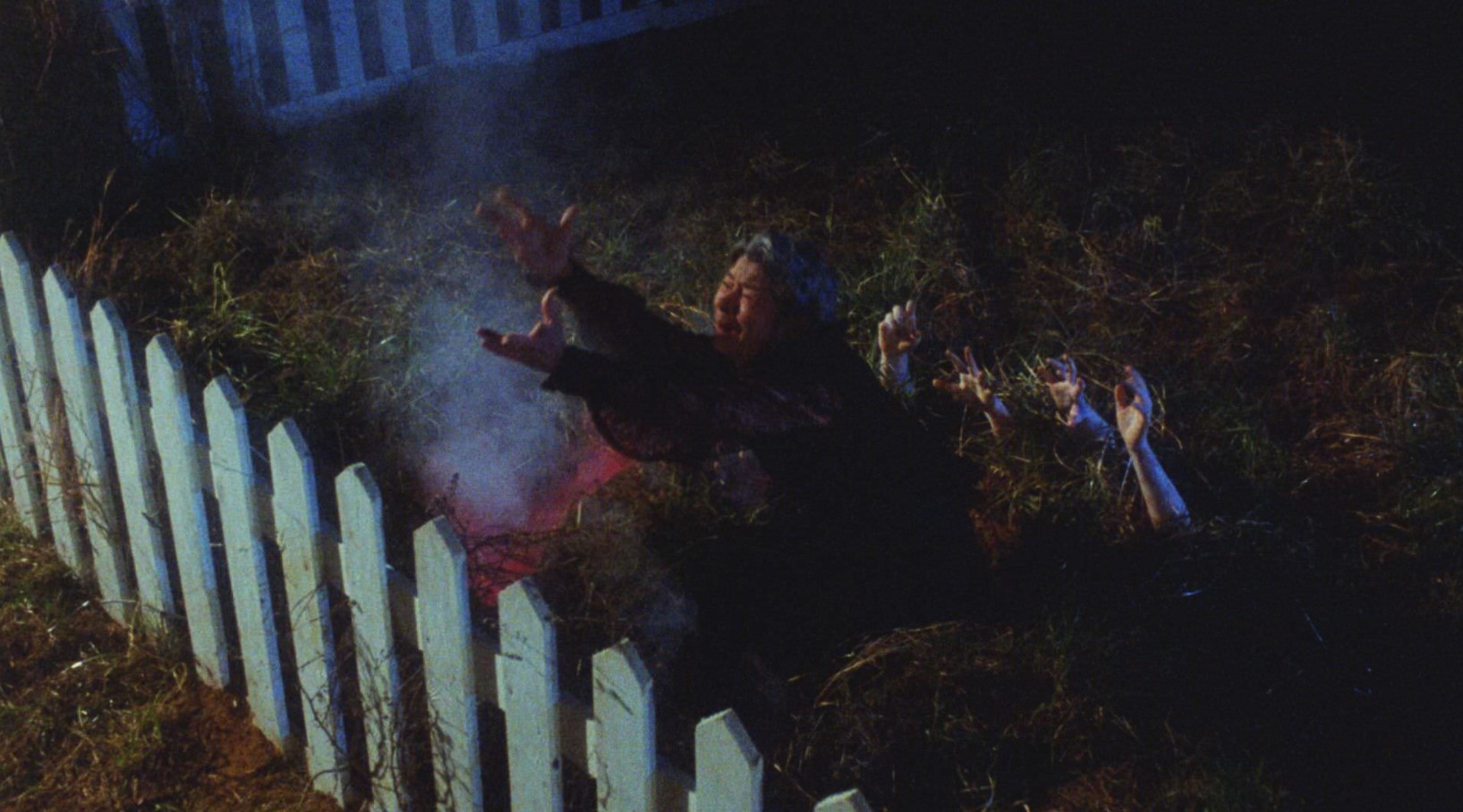
Helene Tryon being dragged to Hell. Screen cap courtesy of Severin.

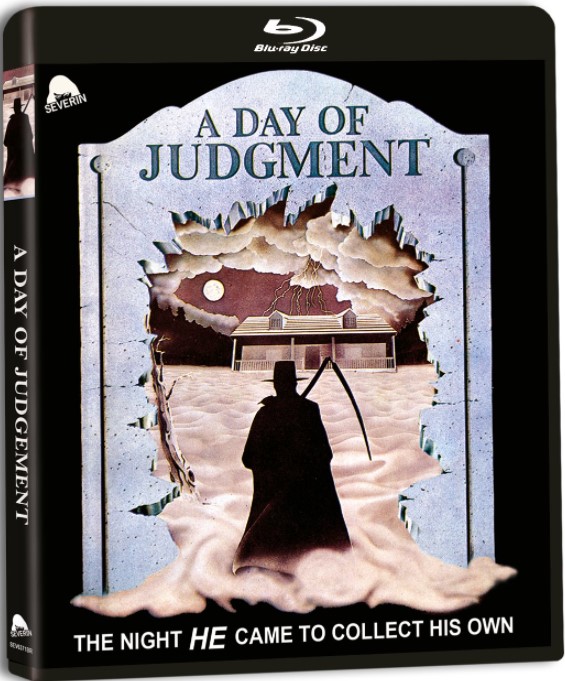
The overall message in “A Day of Judgment” is clear that sin and crime doesn’t pay, and the wrath of God’s retribution will come down hard in the form of a scythe.  Severin Films presents up a new Blu-ray, scanned in 2K of the original interpositive print now in full 1080p HD resolution of the widescreen 1.85:1 aspect ratio. Preserved pristine and having virtually no wear from age, “A Day of Judgment” is an amazing picture to behold for its first Blu-ray release with heightened resolution that extricates more details than possible than any other release can provide, especially when those other releases are the official VHS and DVD bootlegs. Here the color grading excellently pops with deeper hues of prime colors to provide more life into the death that’s onscreen. One thing to note about the release is the immense phosphorescence glow around whites and other lighter colors that can be eye-catchingly distracting when a piece of white paper becomes the main focus due to a conspicuous radiance. Other than that, the picture is clean, the grain is healthy, and no obvious signs of alterations to enhance the visual spectrum. The English language mono audio track, though emitting crystal clarity without any audio blemishes, is not terribly clear on whether Severin went with Dolby Digital or the DTS-HD. Other listings on the web offer up “A Day of Judgment” with a dual channel DTS-HD Master Audio while the back cover displays the Dolby Digital logo with a detached written description as a mono track, which coincides with Severin’s official site. With the film’s outmoded ingrained technology, Dolby Digital would be, to me, the obvious format that produces higher quality sound using a lower bitrate. Special features include a pair of new Severin exclusive interviews with British author Stephen Thrower of “Nightmare USA” in The Atheist’s Sins and snippet interviews from Worth Keeter and Thom McIntyre in Tales of Judgment. Final spec notes on the Blu-ray are a region free coding and has a runtime of 97 minutes. Stuck in stasis of prim and conservatism, “A Day of Judgment” has become this oddball labeled slasher of the 80s era that aimed to explore new and unusual stories and techniques on every avenue, but still leaves this impression of Bible-thumping Christian values that serve as a stern warning for all ye sinners!

“A Day of Judgment” on Blu-ray and DVD from Severin Films.  Click Here to Purchase at Amazon.com

One EVIL Deed Doesn’t Correct The First EVIL Deed! “Cannibal Man” reviewed (Severin / Blu-ray)

Marcos, a middle-aged abattoir worker, resists the pleas of Paula, his young girlfriend, to confess their self-defense killing of a taxi driver.  When Paula decides she’s inform the police without him, Marcos strangles her and stows her body in the bedroom of his outworn house.  The killing continues when loved ones come poking around to find answers about the disappearance or discover the macabre scene in Marcos bedroom.  Bodies pile up, the smell reaches decaying levels, and Marcos is plagued with nervous guilt.  Every day using his meat clever, he chops up bits and pieces of each victim and takes them to the slaughterhouse processing to rid the evidence and the smell, but no matter how many body parts he unburdens or how much fragrance he sprays, the sweet smell of death sticks with him. 

If someone would have said to me – you need to see a flick from Spanish director Eloy de la Iglesia – would you have ever guessed my first stop would be with his 1972 “The Cannibal Man” shocker?  To get to know a filmmaker’s directorial style and personal themes, the most gruesome horror can sometimes be a reflection into the soul of full disclosure because life, as most of us know from our own personal accounts, demons, and happenstances, can be ugly, nasty and unfair and can be cathartically expressed through film by a wretched shell navigating an undercurrent message to others.  That’s how Eloy de la Iglesia’s “The Cannibal Man” speaks to me.  Also known as “La semana del asesino,” or “The Week of the Killer,” as well as “The Apartment on the 13th Floor,” don’t expect an archetypical slasher and cannibal framework from this picture with many names.  “The Cannibal Man” is no “Texas Chainsaw Massacre” or similar to that of “Wrong Turn” as the film stands alone, conveyed as unsurmountable struggles of renewing oneself, a social commentary of class structures, and, also, dabbles in homosexuality suggestion.  Executive producer José Truchado, who also produced “Hundra” and had bit roles in Jesús Franco’s “The Mistress of Dr. Jykell” and “Killer Tongue,” finances the film under his self-titled production company and presented by Atlas International Film (“The Blind Dead Collection”).

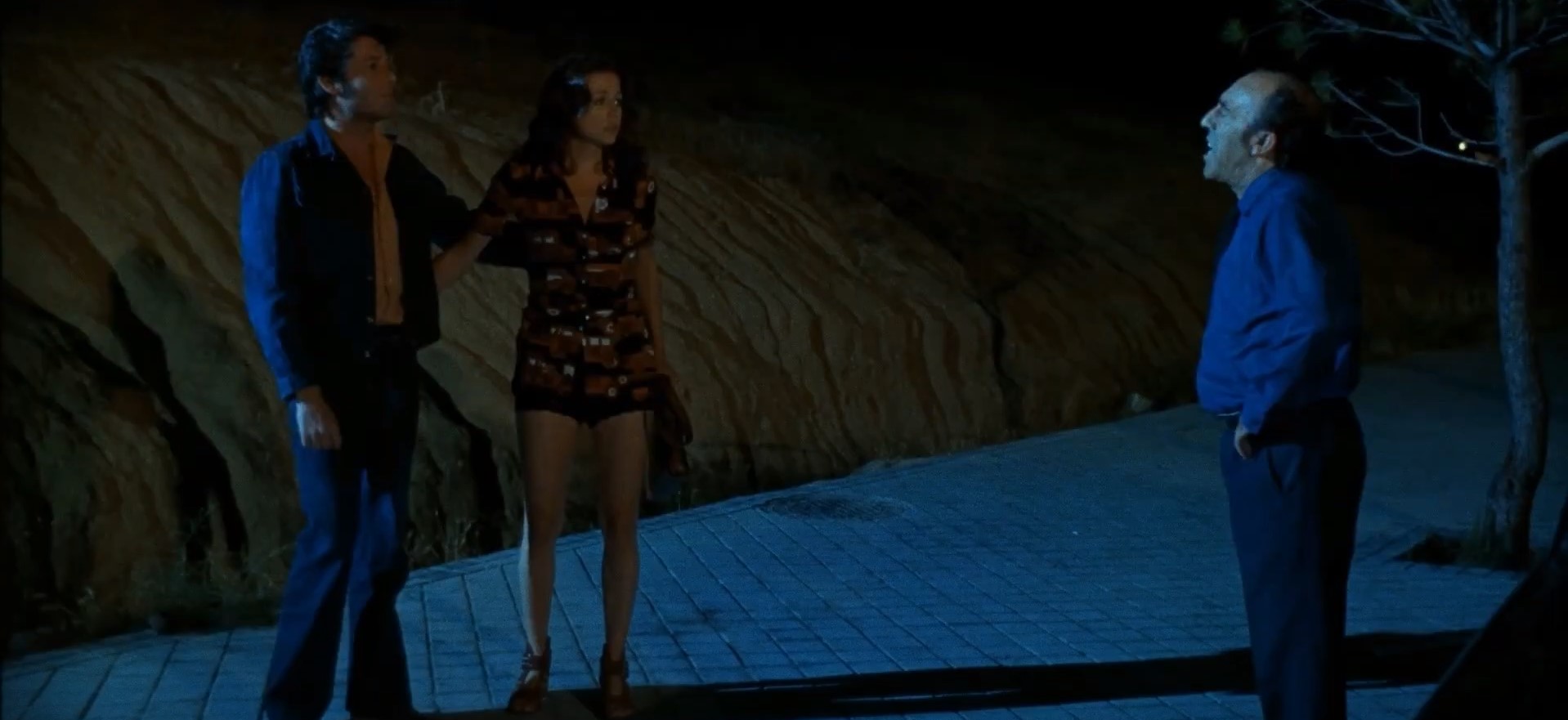
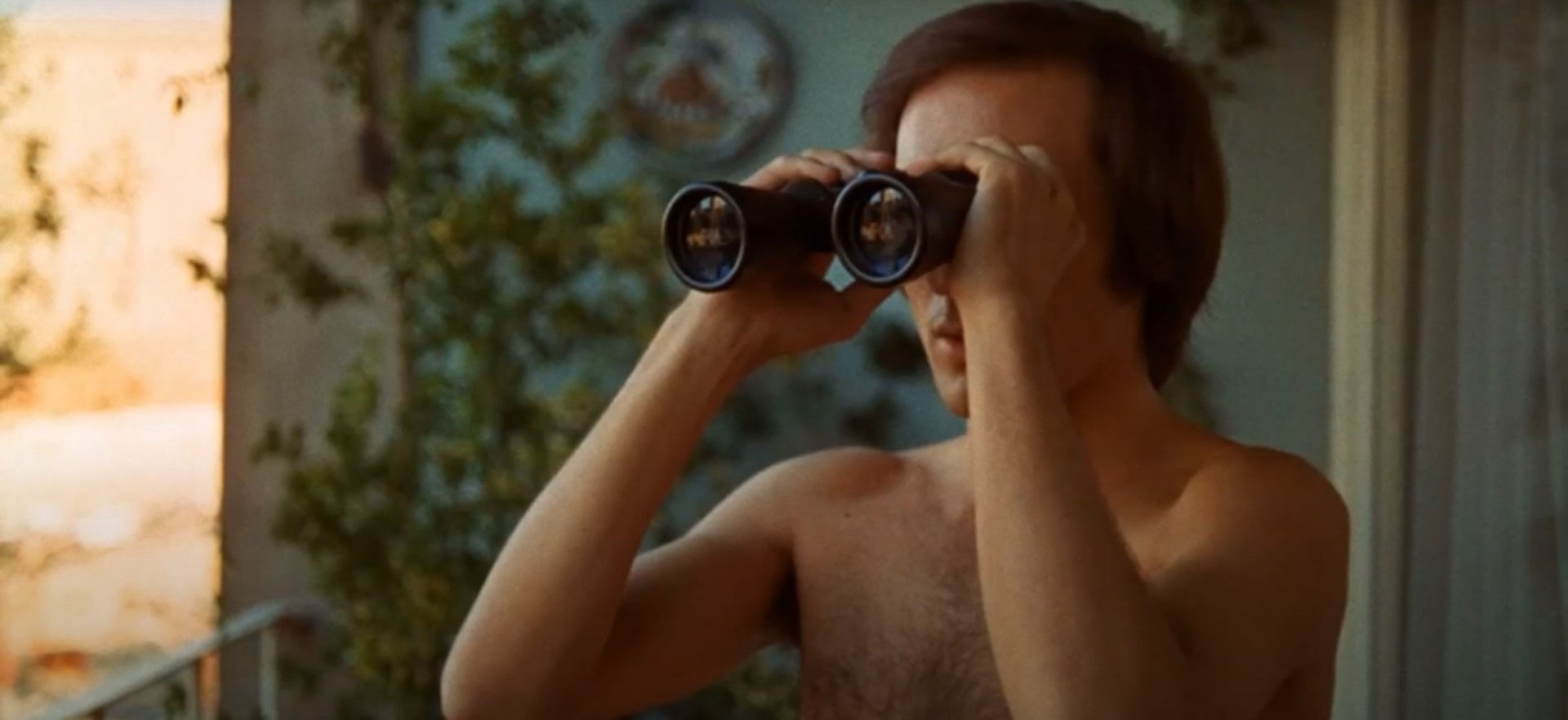
Looking to separate himself from strapping hunk typecasting and to show the world he can do more than just romantic comedies and action, the Madrid born Vincente Parra undertook a massive risk with the lead role Marcos, a meat processing factory worker in his, presumably, late 30’s to early 40’s with little education and social status who’s keeping company with a younger woman still living with and under the rules of her parents.  Let’s not to forget to mention Marcos’s grisly acts of murder and the homosexuality suggestions during his middle of the night rendezvouses with new best bud and neighbor Néstor (Eusebio Poncela, “The Death of the Scorpion).  Nothing sexual happens but the innuendo is there as, aside from his dog, the single bachelor Néstor often invites a tense Marcos out for a late night café visit, an afterhours swim at the local late night pool, and up to his swanky apartment where Néstor often watches Marcos from his high-rise balcony through Marcos’s makeshift skylight with binoculars.  Iglesia, who is gay, puts his own spin on the characters to allude to, and often over played as well, the two men as equally interested parties without ever having to speak a single word or make visible a single touch that would confirm otherwise.  Parra and Poncela couldn’t have acted better a disinterested-interested pair full of sexual tension and naïve foreplay.  Aside from the significant love interest characters from Vicky Lagos, who plays local waitress, Rosa, at the eatery Marcos patrons and “Night of the Walking Dead’s” Emma Cohen, Marcos’s girlfriend Paula, no other character have reoccurring scenes and are simply drafted as what should be major roles in the story to then be cut down by Marcos’s undervaluing psychopathy.  Charly Bravo, Fernando Sánchez Polack, Goyo Lebrero, and Lola Herrera fill in the rest of the cast list.

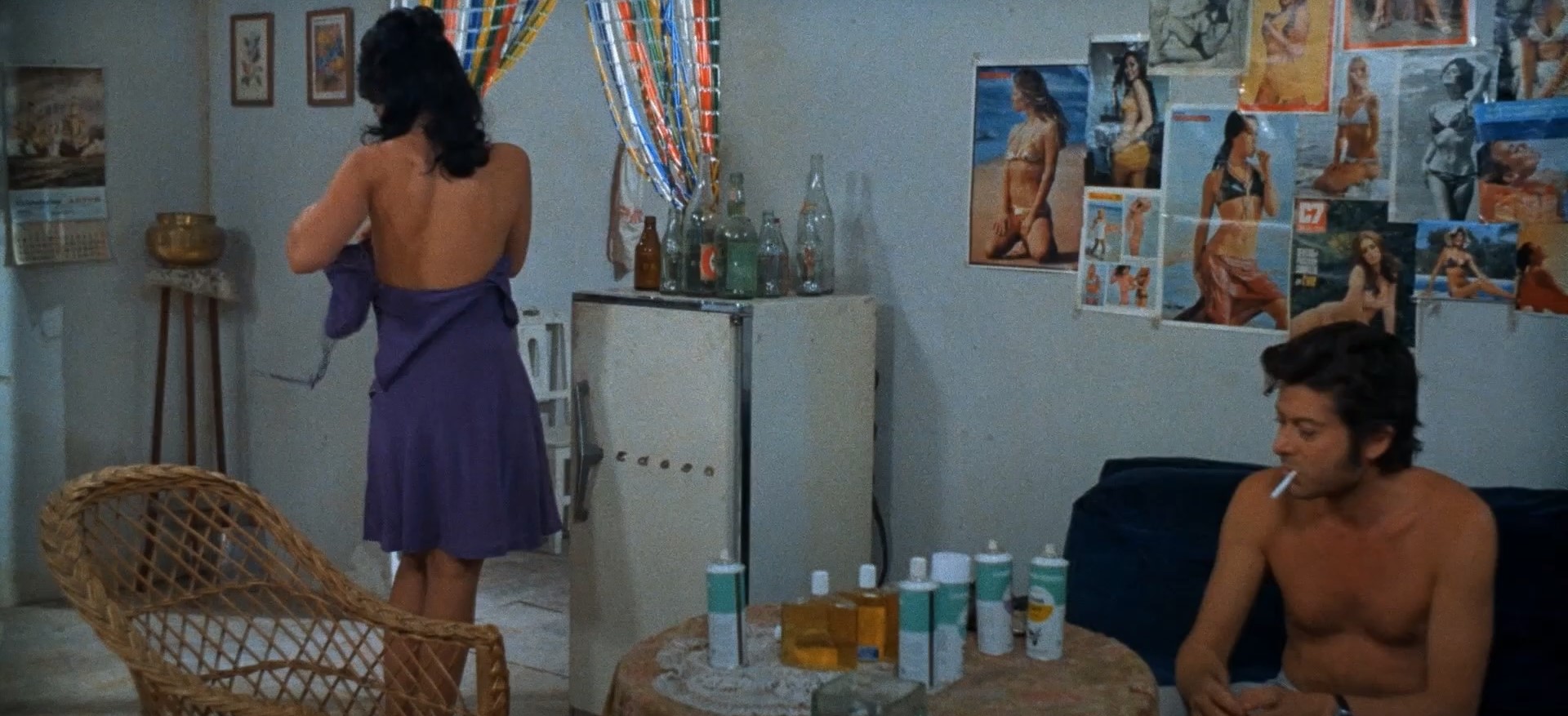
Strike out the slasher category for “The Cannibal Man” as Iglesia offers more than just a mindless, demented, hack’em up killer.  Behind Marcos brown eyes lies a reason of cold truth about his place in the world as a man who is ultimately and foremost stuck.  Stuck at a dead-end job.  Suck in his relationship with Paula.  Hell, Marco is even stuck living in a small bygone bungalow sticking out like a sore thumb right in the middle of new and wealthy high rise buildings.  He’s unskilled and uneducated, living in his brother’s house, and with no end to his personal wedging between his lackluster coursed life and his own short failings as a man until all that mediocre and mundane misery begins to ooze and shape into the one thing he tries to control – murder.  Even murder starts to spin out of control and heavy, burdensome guilt sets as seen in scenes with Néstor who’s choice of words perk up Marcos’s jumpy ears with fear of being caught.  Iglesia is a master at scene compositions that use audio cues, along with a jarring, tonal reversing soundtrack, to accentuate Marcos’s ascending paranoia as well as accentuating the scenes of the more period radical grasping social commentary on homosexuality and the unthinkable back-to-back-to-back-to-back murders.  Editor José Luis Matesanz also slyly cuts transitional scenes together in a stunningly seamless and crafty way that resemble close to Robert Wise (“Citizen Kane,” “The Andromeda Strain”) with harsh cuts that form a directional track and utilizes semi-abstract panning and reverse panning to fill in less significant gaps between the action.  Don’t expect a large amount of cannibalism in the story either.  Marcos isn’t gnawing on bones or baking a flesh brisket; instead, his act of cannibalism falls upon irony in that the bodies he tries to purge from his home ends up coming back to haunt him in more ways than one. 

If you love obscure, foreign horror that sustains a fresh packaged air about it, in story and in a remastered transfer, I highly recommend checking out Severin’s newly scanned, region free Blu-day distributed by MVD Visual.   The BD50 comes with two versions of the film, the 98-minute international cut and the 107-minute Spanish version extended cut, newly scanned from the original 35mm negatives for the first time.  Both transfers have excellent picture quality, some of the best I’ve ever seen come out of Severin, presented in 1080p in a widescreen 1:85:1 aspect ratio.  Not a lot of age wear and tear on the either transfer with each cut having only minor and light scratches scarcely throughout.  There’s sufficient, natural grain in both versions, but the extended cut’s grain flattens up, looking coarser, in the extra scenes.  Coloring grade is gorgeous with natural looking skin tones and you can see the details were refined and redefined.  Both versions come with an English dub and Spanish language DTS-HD Master Audio 2.0 track with some back-and-forth forced English dub in those coarser grained scenes that make the flow unsettling.  Both versions render hearty range and fidelity with a strong dialogue track that syncs well with the option English subtitles, but slightly off sync with image unity.  Underneath the double-sided cardboard sleeve, Severin’s special features include Cinema at the Margins – a Stephen Thrower (author of “Beyond Terror: The Films of Lucio Fulci”) and Dr. Shelagh Rowan-Legg (author of “The Spanish Fantastic: Contemporary Filmmaking in Horror, Fantasy and Sci-fi” on director Eloy de la Iglesia, The Sleazy and the Strange – interview with Spanish film scholar Carlos Aguilar on director Eloy del la Iglesia, deleted scenes, and trailer.  An engrossing bodega of vile Euro horror is what “The Cannibal Man” presents as a first-rate cutthroat thriller from the shamefully underrated filmmaker, Eloy de la Iglesia.

Own “The Cannibal Man” on Blu-ray!  Buy at Amazon.com

Undercover. Underwear. Whatever Defeats Evil Sex Trafficking in “Two Female Spies with Flowered Panties” review!

Cecile and Brigitte have served two of their twelve month sentence for inappropriate sexual acts involving prostitution and stripping. International authorities, including an American Senator, remove the two ladies of the night from their incarcerations and have them audition a private and provocative dance routine that will spring them from prison life and place them into a contract for hire that the pair of beauties find difficult to refuse. Cecile and Brigitte use their God-gifted talents to slip undercover as a pair of lesbian dancers in order to spy on Mr. Forbes, the Flamingo club owner on the Canary Islands who moonlights as a sadistic sex trafficker. Forbes kidnaps, rapes, and then, with the help of his wife Irina Forbes, hypnotizes well-known and famous women to be the ever faithful lovers of Mr. Forbes wealthily clients and to stop the egregious trafficker, any smoking gun evidence must be photographed for the international police to make a move on an arrest.

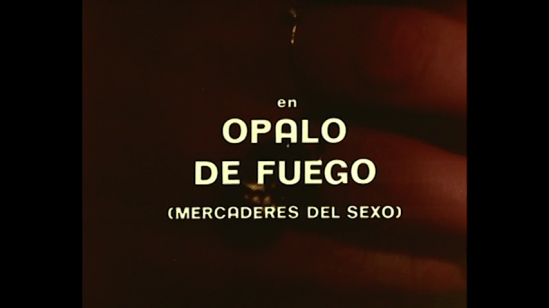
Jess Franco is the maestro of guilty pleasure shlock and the 1980 violently erotic, crime drama “Two Female Spies with Flowered Panties” is no different inventoried with ubersleaze spiced in folly comedy and tense sadism. The sort of mixed bag genre film only writer-director knew, and understood, how to achieve on a minuscule budget level in hastily conditions, but “Two Female Spies with Flowered Panties,” whether designed or by chance, stemmed from the combination of old and new footage, re-edited out of the original title, “Ópalo de fuego: Mercaderes del sexo,” and told a slightly different tale with slightly rearranged character backgrounds and graphic scenes, and featured two different locations that were later labeled Las Palmas of the Canary Islands to tie it all together. Severin has included both versions on a limited edition Blu-ray (“Two Female Spies with Flowered Panties”) and DVD (“Ópalo de fuego: Mercaderes del sexo”) release to experience both versions.

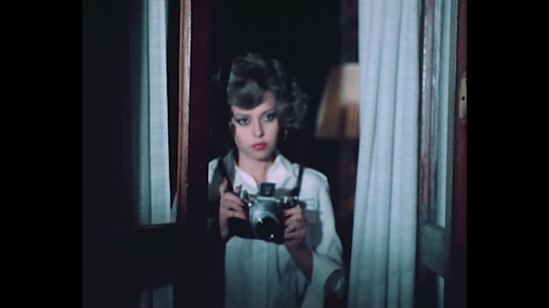
Franco’s long time common law, then legal in 2008, spouse Lina Romay, under pseudonym Candy Coster stars as Cecile in really a non-seductive, non-promiscuous, and only pinched with erotica role. Unlike Romay’s “Bare Breasted Countess” (aka “Female Vampire”) role, Cecile undercuts the erotic tone with more gratuitous comic and threatening nudity. Relishing into a staple of erotica are all of Romay’s supporting cohorts consisting of “Zombie Lake’s” Nadine Pascal, “Women Behind Bars'” Joëlle Le Quément, Susan Hemingway of “Love Letters from a Portuguese Nun.” Interesting enough, Hemingway isn’t credit in either version of the film. Pascal offers playful dilly-dally while practically be nude throughout whereas Quément slips into a deeper carnality with an unhinged relationship with her sex trafficking husband Mr. Forbes while Hemingway just provides a taken-advantaged vessel to plunder her dignity, soul, and body for easy money. Surrounding the gorgeous vixens are ruthless, dirtbag men played by Claude Boisson as the club owning sex trafficker and “Elsa Fräulein SS’s: Olivier Matthot as the sleazy American Senator Connelly. The role with the most opaqueness between the two versions of the film goes to Mel Rodrigo as Milton, the club’s gay artist organizer with an existential crisis and a quick to rebel attitude.

Though charming in its own delectable unchaste ways, Jess Franco deploys a haphazardly glued story inflamed with by chance moments shrouded with psychosexual tendencies. Sexually ostentatious and manic, “Two Female Spies with Flowered Panties” wildly pivots like an out of control sprinkler, spitting lustful filth, jovial comedy, and menacing suspense everywhere while still, by way of only Franco can accomplish, accurately hitting the intended mark of downright Eurotrash entertainment. A shocking, yet hardly noticeable, factor of the director’s is his film withholds any large amounts of blood or gore; in fact, gore is absent and the blood is sparse, especially during the girls-on-girl torture scenes involving bondage, a switchblade near the hind parts, and a cinder-weaponized cigarette, but the element that sparks gritty fortitude in those same said scenes, shot intently with fraught close-ups and well positioned shadows, could culminate a subversive tone that ultimate could convey a scene without words.

Severin’s limited edition 2-disc release of the Eurocine produced “Two Female Spies with Flowered Panties” has rightfully been graced with the Blu-ray treatment. The release also has the Spanish edit version of “Ópalo de fuego: Mercaderes del sexo.” The Blu-ray is a 1080p encoded AVC transfer presented in a near stand definition aspect ratio format from a restored into HD, uncut print. The overall color palette appears fairly washed with only some segments, especially peering out over the water or inside tight quarters, stand out with rich color. Darker scenes are heavily splayed with turquoise that, again, give the washed overlay, but the richness of the shadows with grindhouse print grain is stellar. Franco’s struggle with focusing, as part of technical self embattlement or as part of an against-the-grain auteur, are prominent throughout. The two LCPM 2.0 tracks are dubbed only in English or French and while not tracked in the native Spanish, either track will serve as a palpable substitute despite the English track being transcribed awfully cheesy and the French track with consistent hiss. Bonus material includes “Two Cats in the Canaries: An Interview with Jess Franco” is an undated interview with Franco recalling his love for the Canary Islands and being a genre maverick. There’s also a 1993 interview with long time Franco composer Daniel White conducted by “Cannibal Hookers'” Donald Farmer, a thorough analyst of Franco and “Two Female Spies with Flowered Panties” by Stephen Thrower, location outtakes, and a theatrical trailer. While “Two Female Spies with Flowered Panties” is not the best example of Jess Franco’s credits, the vicious erotic thriller is arguably ambitious and epitomizes the style of the legendary filmmaker with sultry, fringed performances and an unforgettable narrative lined up in a one-two punch package from Severin Films!