EVIL Masked as a Religion. “Bryan Loves You” reviewed! (MVD / Blu-ray)

All New Blu-ray release of “Bryan Loves You” on Amazon.com

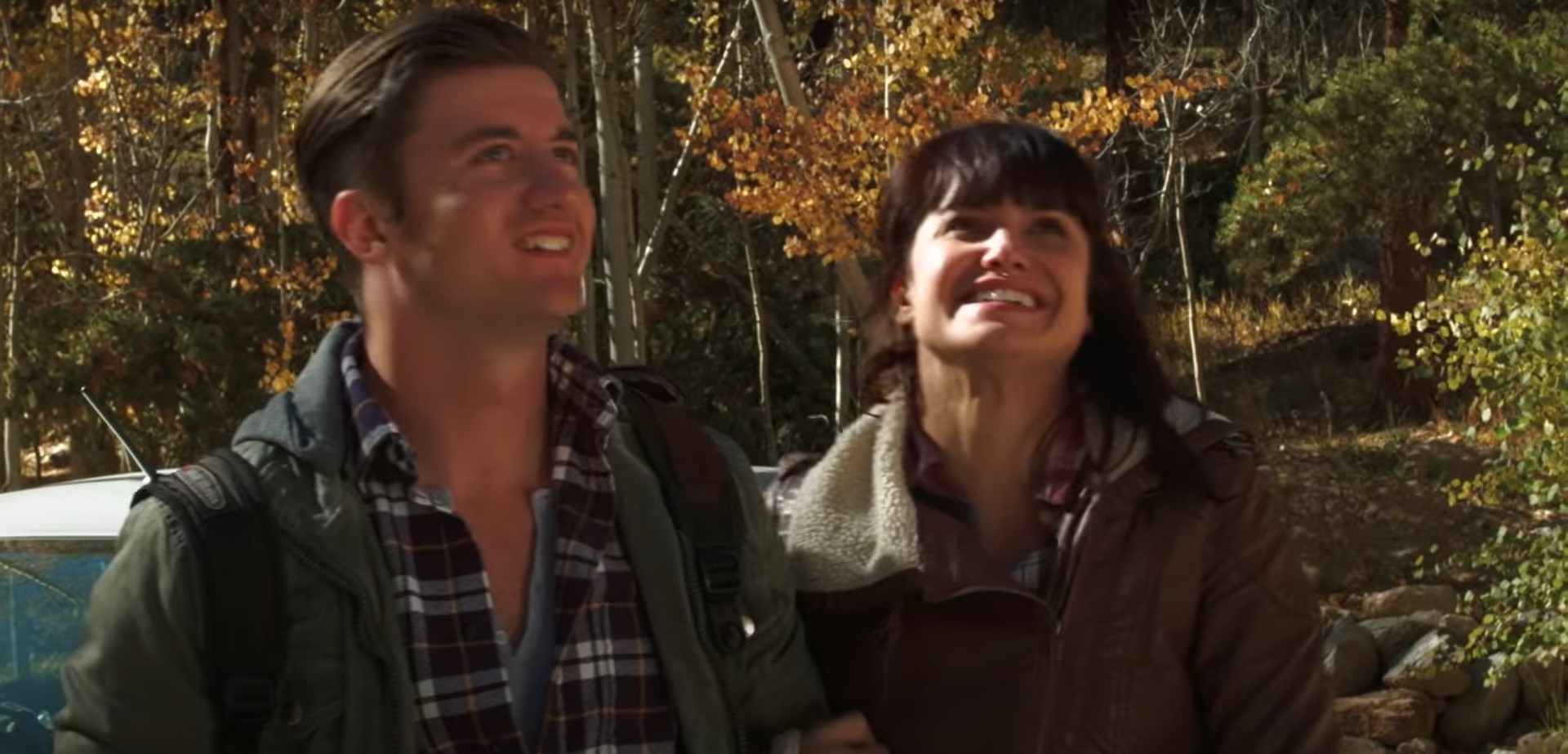
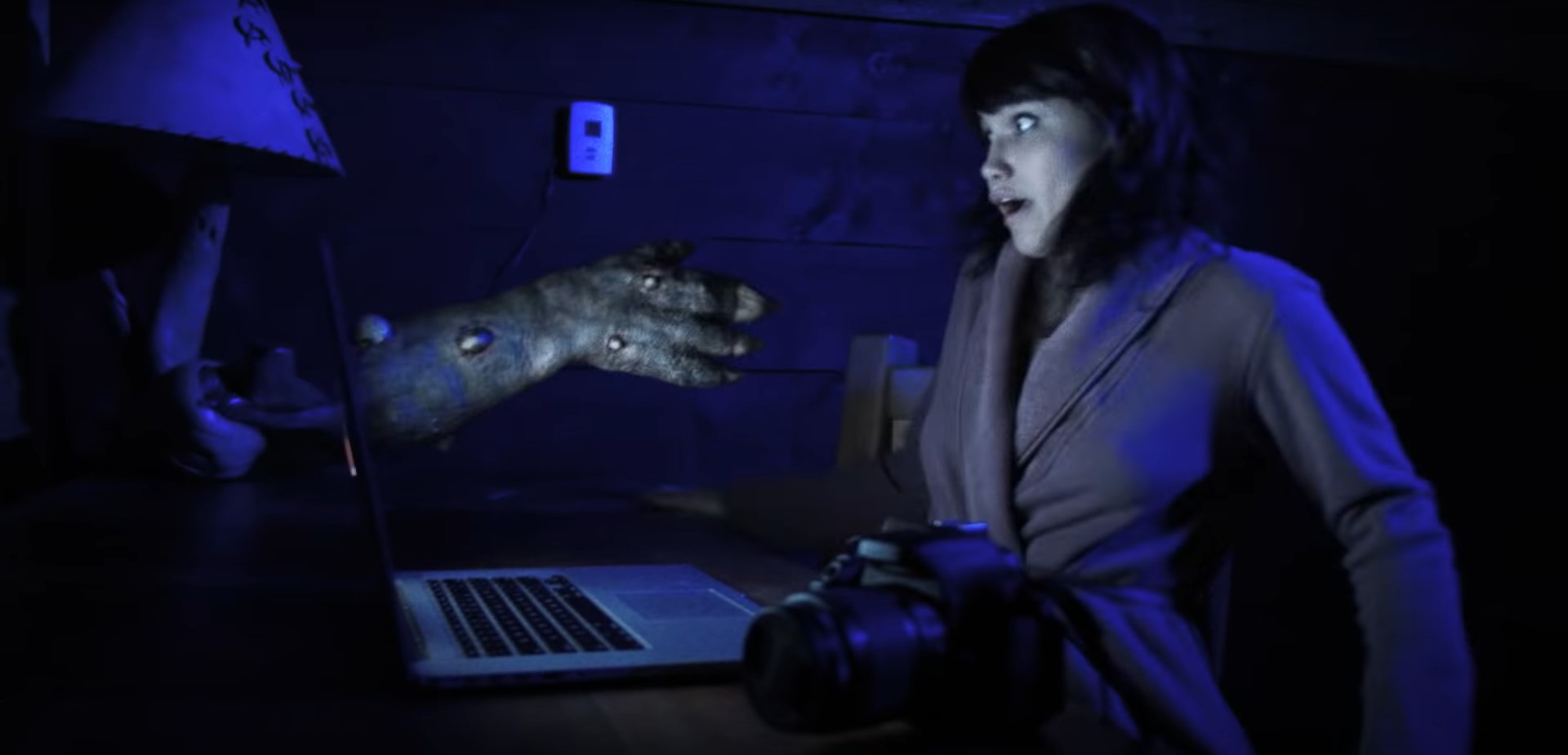
Something weird is spreading across a small Arizona town.  A chapter of a new religion has influenced most of the community into believing in Bryan, a pure and pious young boy from long ago who was brutally slain by the devil.  Jonathan, a local psychotherapist receives a camera from his uncle, also a health professional, with a self-recording that warns Jonathan that Bryan zealots are a dangerous, violent cult.  Deciding to document the situation himself, Jonathan repurposes the camera to clandestinely record the widespread Bryan gatherings and even infiltrate their church where they speak in tongues and wear the scarred mask of Bryan.  As Jonathan goes deeper into the uncomfortable insanities of Bryan’s world, the more Bryan followers takes an interest in reconditioning Jonathan. 

“Bryan Loves You’s” grainy SOV pseudo-documentary lacquer not only captures the icy blank stares, the unabating drone chanting, and the brainwashed coup of an insidious cult assimilating small town America, but the Seth Landau written and directed film also homogenously captures, all too presently well, that sense of ambivalent and conspiracy dread that knots apprehension uncomfortably in the pit of the stomach.  The 2008 released “Bryan Loves You” has the story set in 1993 Arizona made out to be a historical home video and CCTV recorded account of the analyzed and dissected suppressed footage coming to light for the first time incomplete with censored last nights and specific addresses to make the pseudo-doc appear more genuine and shocking.  Filmed in and around the suburbs of Scottsdale and Phoenix, Arizona, “Bryan Loves You” is a found footage subgenre production self-produced by Mike Mahoney and Seth Landau, under the filmmaker’s Landau Motion Pictures, and marks the debut feature film of Landau’s humble career that started roughly around 2003 as a production assistant on “Arrested Development.”

For the average popcorn movie goer, “Bryan Loves You” is about obscure as they come with a no-name director and a cast with relatively no-name actors with the exception of one that might have a chance of recognition by the common Joe Schmo.  Old heads may recognize George Wendt, one of the barflies from the sitcom “Cheers” and the Saturday Night Live sketch of Super Fans, in his brief and strange scene as a patient holding a doll that speaks to him about people who talk about him.  For chin-deep genre fans, Wendt is about the biggest A-lister you can have in an indie film and what’s unusual about “Bryan Loves You” is the stacked list of iconic made-by-horror names that make up the cast list.  It’s impressive.  Landau’s connection to the late great master of horror Stuart Gordon (“Re-Animator”) opened the door to George Wendt, who starred in Gordon’s “King of the Ants,” and, likely, led to the onboarding fan favorites such as Brinke Stevens (“The Slumber Party Massacre”), Tiffany Shepis (“Tromeo and Juliet”), Lloyd Kaufmann (“The Toxic Avenger”), Daniel Roebuck (“The Devil’s Rejects”), Chuck Williams (“Demon Wind”), and Tony Todd (“Candyman”).  Now, with these many names, none of them have starring roles and few have reoccurring scenes, but they are headlined to draw attraction for “Bryan Loves You.”  Honestly, the performances are hardly worth nothing.  Steves and Kaufmann have little dialogue and are shot at weird angles that makes them hardly recognizable.  Best scenes go to Tony Todd as a hesitantly disturbed and full of fear narrator standing in an empty board room and talking directly into the camera about what we, the audience, are about to witness, even directing viewers to turn away or to be ushered out of the theater (did this get a theatrical release?) if the content becomes too shocking to behold.  Seth Landau stars as the principal lead Jonathan who can’t be taken seriously as a psychoanalyst as there is no depth to the character in those regards.  Plus, as someone who’s supposed to uphold ethical standards, Jonathan breaks quite a few HIPPA regulations and breaks into houses with a camera, filming Bryan acolytes without their consent.  “Bryan Loves You” rounds out the cast with Tori King, Candy Stanton (“Exit to Hell”), Shane Stevens (“The Graves”), Jilon VanOver (“Bad Blood”), Tom Noga (“Anonymous Killers”), Jesse Ramiawi, Jacqui Allen (“Blue Lake Butcher”) and Daniel Schweiger (“Die-ner”)

Seth Landau’s found footage cult film is a rough cut of rudimentary psychological suspense restrained by its limiting low-ceiling budget.  The acutely hard cut editing and wonky framing is enormously puzzling within the narrative’s supposed single camera source documentary structure that suddenly diffuses into being a splice between Jonathan’s camera, which he loses halfway through the story, and a bunch of randomly placed CCTV footage across all of Arizona, in which some scenes are randomly placed in the desert where no structures are seemingly present to house a camera.  Who gathered and edited all this multi-video footage together?  Or does that play into the mystery, no matter how illogical, of adding to “Bryan Loves You’” unsettling allure?  What Landau does accomplish compares closely to what directors Eduardo Sánchez and Daniel Myrick were able to profoundly achieve with their unexpected breakout found footage blockbuster, “The Blair Witch Project.”  Now, I’m not saying “Bryan Loves You” had the audience gasping power as the “The Blair Witch Project” but the air in the story still feels very uncomfortably still, like in holding your breath, because something sinister is closing in and that type of disturbing presence, coupled with the erratic demonic behavior boiled to the surface if love for the almighty Bryan is absent, is all too relatable in today’s political climate.

Though “Bryan Loves You,” MVD Visual really loves Bryan right back with a high-definition Blu-ray release, remastered and upscaled from the original master source, a digital recorded standard definition, with an approved up-conversion of 172,800 pixels to over 2 million pixels per frame to achieve full HD.  For SOV, the handheld cam footage turns out more detailed than expected with suitable tinctures that are often less vivid in the found footage genre; however, there are still varying levels of quality from lower quality posterization to better than mid-grade delineation.  Though stated as presented in a widescreen 1:78:1 aspect ratio on the MVD Marquee Collection back cover, the actual ratio is a pillarbox 1:33:1 without straying from that display. The English language dual channel stereo track also has varying fidelity levels using the inconsistency of a built-in handheld mic but the good bones behind the range and depth retain the natural auditory proportionate. A few augmented audio tracks are snuck in for effect, such as the preacher’s demon-speak and the school PA system. English subtitles are optional. With a new Blu-ray release comes all new special features with a few short film-length interviews between filmmaker Seth Landau and George Wendt (44:50 minutes), Tiffany Shepis (50:49 minutes), Daniel Roebuck (59:35 minutes), and Brinke Stevens (31:46 minutes) touching upon more than just “Bryan Loves You” but also various career moments and other media cultural topics. Also featured are two commentaries: a 2008 commentary with Landau, select cast and crew, and JoBlo critic James Oster and a new 2022 commentary with only Landau. Plus, a brand new 2022 theatrical trailer. “Bryan Loves You” draws parallels to the 1993 Waco, Texas cult led by David Koresh of the Davidian sect preaching fire and brimstone, but writer-director-product Seth Landau adds his own supernatural concoction in a trade-in of doom and gloom for mindless devotion and diabolism that turns folks into followers and flesh-hungry fiends at times. Maybe not the prime cut of the cult genre but does stand out even if you don’t really love “Bryan.”

All New Blu-ray release of “Bryan Loves You” on Amazon.com

You Must Put EVIL to Fire! “You Are Not My Mother” reviewed! (Magnet Releasing / Digital Screener)

Quiet and meek Charlotte lives with her granny and mother in Northern Dublin, Ireland. When Charlotte’s mother spirals into one of her depression fits after dropping off Charlotte at school, her mother disappears without a trace only to return a day later, wandering into their home in the middle of the night. Happy to see her mother acting jovial, the teen aims to reconnect the mother-daughter bridge that has long been under disrepair due to severe mental depression, but she then notices a string of fits, fits not concerning depression but of violent, erratic behavior too frightening for Charlotte to believe that this person who came back home in the middle of the night is the same person, her same mother. When her Granny suspects that mom has been replaced with a changeling, Charlotte and her new best friend Suzanne seek to uncover her mother’s true self on Halloween night when the barrier between our world and the spiritual world is at its thinnest.

There are many customs and cultures surrounding Halloween for various countries. Sometimes, the day that most of us horror fans look forward to every 31st day of October every year isn’t always about dressing up in costume, obtaining bags upon bags full of candy, doing mischievous pranks, or even sitting down to marathon the Michael Myers’ “Halloween” franchise. For UK, specifically in Northern Ireland, bonfires light up the land on Halloween,” or what is called Samhaim, for an array of reasons, one more traditionally being to keep evil spirits from crossing over from their dimension and into ours when the “All Hallow’s Eve” barrier between the two realms near kiss in proximity. Today’s Irelanders set ablaze bonfires more for an extravagant, beer-drinking party than to defensively thwart the uninvited spirits from gliding into our world and this becomes the Halloween backdrop for Kate Dolan’s written-and-directed, debut feature length folklore horror film, “You Are Not My Mother,” as a battle against the supernatural hidden in plain sight as one of us, a doppelganger. Dublin-based Fantastic Films (“Vivarium”) and the sweeping Screen Ireland compose as the film’s production companies with “Vivarium” and “Sea Fever’s” Deirdre Levins as producer.

The touch and go fragile battlegrounds of where children tiptoe on already severely fractured eggshells around their parents debilitating and volatile depression can be tough to capture on screen.  The voyeuristic hesitancy of sunken melancholy keeps the child around the fringes and ever guessing their parent’s rotating state of mind and “The Green Sea’s” Hazel Douple, as the teenage daughter Charlotte, nicknamed Char, and Carolyn Bracken (“The Dublin Murders”), as the unstable mother, connect strongly with that unnatural relationship imbalance.  Douple is perfectly reserved with Char’s mother’s erraticism, witnessing, and conveying a different response with just her eyes, every emotional stage washes over her mother from listlessness to jovial dancing to complete abusive rage, a range Bracken unnervingly does so frighteningly well.  Eventually, Char would need to realize the truth that her mother’s manic behavior is not solely due to a mental health issue but a malevolent fairy issue and need to break the chains of restraint to save the only parent she has left.  There’s no mention of a father figure throughout the narrative and could only speculate that the father either past or hightailed the relationship due an infinite amount of reasons with one being more prominent against mom’s harmful instability.  Amongst the multi-generational, female-driven, character story is the top matriarch in Granny, played by “Citadel’s” Ingrid Craigie, who is positioned awkwardly as a bypassed presence and not really substantial weight bearing down on the contentious tension in the house they all share together.  Granny’s off-putting and mysterious ever since the opening scene with a layer of understanding and occultism hardly tapped into or even with a slight of exposition as she builds talismans and goes off to visit a friend to discuss Char’s mother.  Paul Reid (“The Ritual”), Jordanne Jones, Katie White, Jade Jordan, and Florence Adebambo co-star.

“You Are Not My Mother” continues to be a tsunami of new wave UK horror washing onto the shores of theatrical, digital, and home video platforms and any film that starts with burning a baby just might be okay in my book.  No, I’m not a psychopath, I just like to be overcome by dreadful content; yet, though the Kate Dolan cinematic accession as a feature film writer-director doesn’t start with perfection with the story burdening more wrinkles than the direction  I’ve already touched upon the mishandling of Granny and her connection to a supernatural belief goes without say that her role as mediator falls severely short of development key to Char’s total comprehension of her mother not really being her mother due to XYZ reason.  The backstory also tries to reinstate itself into the present story but can’t shape up from its gelatinous yarn, giving little for Char and the audiences to work off of and take all that is happening with good faith on face value. There are continuous instances of this weak bridge connection between characters and events as we also see between Char and a school bully Suzanne who instantly become best friends after a single shared connection that’s not poignantly stabbing, but for the narrative, it’s enough for Suzanne, who wants chewed gum and stuck it on Char’s school notes or help set a photograph of her mother on fire, to open up a soft spot instantaneously without a hurtle to overcome.  Where “You Are Not My Mother” succeeds is in the character and story driven parameters without relying heavily on gratuitous special effects with enough practical to scare the wits out of you and firmly no CGI to supplement the creation of Carolyn Bracken’s facial dysmorphia, like a disturbing happy face emoji, as a replaced mother.

“You Are Not My Mother” is a Halloween movie, an Irish folklore Halloween movie, prickled with Samhain traditions at the very core of Kate Dolan’s story.  The film is slated for a March 25th release in theaters and on demand from Magnet Releasing. The 93-minute folklore horror is equally matched by its rifting, soul-stirring composition from the Belfast-based and worldly-sound of Die Hexen who also double-dips as sound designer, blending sometimes delicate but often jarring synthesized ensemble of sound. Narayan Van Maele’s cinematography has an overcast austere, almost icy, in the rendering of what is usually a lush in greenery and rich in historical, old-world place, but the Maele’s wide and long shots are engrossing accompanied by a tighter edge that often feels cramped when inside the house, good for close quartered domestic contention in the family drama parameter. There were no bonus scenes during or after the credits for this film. If not for Carolyn Bracken and Hazel Douple’s fiery and lucid performances to keep glued to, “You Are Not My Mother” would simply fall apart at the seams, squandering much of the Irish folklore that already hangs by a thread.

Sexual Asphyxiation is Just One of the Offered Services in EVIL’s Lavish S&M Prostitution Biz! “Tokyo Decadence” reviewed! (Unearthed Films / Blu-ray)


Own the new Unearthed Films Blu-ray of “Tokyo Decadeance” today!

Ai doesn’t believe she is not good at anything.  Her youth and beauty provide the early 20-year-old financial means of survival as a high class, Japanese prostitute with a fetish niche for clientele desiring sadism, masochism, or both.  Eccentrically demanding and various in age customers range their likes from total self-humiliation by pain and punishment to rape and necrophilia fantasies.  Unable to stop herself from accepting jobs because of her self-loathing cycle, Ai continues to endure most of the sexual whims no matter how outrageous or aggressive they may be during the sometimes hours long sessions.  What keeps her knocking on strangers’ doors is the pining for a former lover, a now famous celebrity she at one time dated pre-stardom, who has since married and left the memory of a fragile Ai in his life progressing wake.  After taking a gig alongside a fellow mistress in humiliating a real estate mogul like a dog, Ai’s invited back to the mistress’s elegant home where she’s exposed to a long night of unlabeled drugs that sends her into an uncontrollable high, looking for her former lover on the quiet streets of Japanese neighborhoods.

“Tokyo Decadence” makes “50 Shades of Gray” look like an inexperienced couple’s first time fumbling into cutesy foreplay.  Though both films are adapted literary works made into controversial features surrounding sultry nipple clips, whips, chains and other playthings, the 1992 Japanese psychosexual drama is the only one out of the two where the novel’s author, Ryu Murakami, has total creative control of his tale of one woman’s squirming through perversion land as the screenwriter and director.  Titled Topâzu in its originating country’s language, “Tokyo Decadence” opens up a carnalized world rarely seen amongst the daylighting fray and the price paying struggles of someone as meek as Ai in that position’s lustfully gripping vise that begs the question, is S&M obscurity an insatiable erotic hunger or is it a choking dangerous fantasy?  Shot mainly in the titular city of Tokyo, the film is a production of the JVD (Japan Video Distribution) with JVD’s Tadanobu Hirao (“High School Ghostbusters,” “Celluloid Nightmare”) as producer alongside Chosei Funahara, Yousuke Nagata, and Akiuh Suzuki.

“Tokyo Decadence” is a sure-fire way to start the beginnings of an actress’s career with a rousingly provocative and difficult role that garners attention.  For Miho Nikaido at the very start of her career, the lead role looked like a Tuesday.  The then 26-year-old Nikaido, playing a 22-year-old Ai, stuns as a sympathetically shy S&M prostitute with underlining conflicting issues surrounding her social position, personal interests, and mental status.  The opening scene with her legs lifted and spread strapped into stirrups and her bold colored red lipstick mouth buckled with a black open mouth gag complete with matching blindfold diverts eyes away from the usual nudity focal point.  Instead, we’re more attuned to the happenings of a mild manner, smiling man, who we assume bound her down under professional servicing, as he stands over her, gently stroking her, and telling her to trust him and that he won’t hurt her.  Then, out comes the drug pouch and needle.  The jab sends shock waves of pleasure down Ai’s submissively fastened naked body, ending with Ryu Murakami’s extreme close up on Nikaido’s face after being released from the facial constraints.  Her slightly crooked teeth shiver just past her stark red lips, agape by ecstasy, and the single tear drops from her soft eyes express the gargantuan amount of pleasure coursing through her helpless corporeal temple in a look that says, I am in pure, undiluted heaven.  The opening sets the tone.  Funny enough, Nikaido would go on to have a role in another underground S&M inspired drama “Going Under,” but instead of acting like the subservient dog or humiliating customers by having them suck on her stiletto heels, Nikaido steps aside as the girlfriend to Geno Lechner’s dominatrix role. Sayoko Amano, Tenmei Kano, and Masahiko Shimada co-star.

Perhaps one of the most noticeable or mainstream pink films from Japan because of its titillating and iconic cover art of Miho Nikaido arched forward and hands pressed high on the glass above her head, leaning against a tall and large window pane in a skimpy black lace and leather getup and overlooking the city lights and bustling residents,  The very image epitomizes erotica and taboo acts and the narrative itself is nothing short of that slight zing of sordid pleasure we all experience in our minds, bodies, and especially in our more private areas. Pulled straight from Ai’s first job encounter, post-opening credits, with a wealthy business type Mr. Satoh’s and his perversion in dominating and humiliating without much physically contact in the first few couple hours of their session. The long-standing stint pushes Ai’s sexual limits without breaking her spirit that solidifies a baseline for what’s to come and what came crushes Ai’s sexual stimulation beyond the means of pleasure with a petri dish of distinctive peculiarities outside her already fringed tastes. Ai’s self-dismissiveness keeps her plugging away at a profession that’s eating away her, coming close to death in many various forms involving clients’ perversions. When she’s hired by another mistress in a co-op of dominance on a client, an unveiling of empowerment and a lavish lifestyle promises potential happiness away from her fairytale dream of reconnecting with her former lover, but that ultimately becomes a hard pill to swallow after swallowing an unidentifiable pill popper provided by her newfound friend in the trade, a pill that inebriates her into wandering the streets in search for her ex-lover. “Toyko Decadence” is as somber as it is sexy with a paralleling dark trip down delusional happiness and demented fantasy for a young woman clinging onto a past that has completely forgotten her.

Landing in at number seven on the spine is the Unearthed Films release of Ryu Murakami’s “Tokyo Decadence,” receiving a Blu-ray release on the label’s Unearthed Classics line in a widescreen 1.66.1 aspect ratio. The region A release has a runtime of 112 minutes and is plainly evident in exhibiting no rating listed on neither the back of the Blu-ray case nor the cardboard slipcover. After doing some light digging, there is a longer cut of the film with more explicit scenes, especially with Mr. Satoh, that would have adorned the U.S. release with a X-rating. The Unearthed Films release is not that cut; nonetheless, the film before us is still just as decadently beautiful in content and in quality. Stable image and color under the 35mm stock, Tadashi Aoki flipflops between mood lighting and natural light, contrasting the duality of Ai’s worlds with a lightly softness reflecting off the focal subjects. Details extend the same softness as skin textures appear overly smooth most of the time albeit the design of natural color tones. One instance of continuation concern is a prominent scene miscut left in during post at the editing room table. Though the miscut, of a closeup on Miho Nikaido, doesn’t cause a continuity error in the narrative, it does break the integrity of the scene. The Japanese LPCM 2.0 mono sound has a phenomenal, 1920kps bitrate, sound design created around a lite soundtrack that doesn’t leave room for ambient and dialogue tracks to hide behind, as if this release needed to hide behind its brawny audio output. “Tokyo Decadence” is all about the experience and every breath and movement is as felt as it is heard with a discernible dialogue well synched with the English subtitles. An optional English dub track is also available. The Blu’s special features include a release-party featurette/promo trailer that has snippet interviews from the Ryu Murakami during the event, gallery stills, and trailers. An absolute ideal upgrade for one of the best pinksploitation films to ever walk that thin line between sadism and masochism; however, I do believe Unearthed Films insisted upon the safe word by not, whether by choice or other circumstances, retrieving, updating, and releasing the fully uncut and unedited “Toyko Decadence.”

Own the new Unearthed Films Blu-ray of “Tokyo Decadeance” today!

When the EVIL Hammer Strikes. “Student Body” reviewed! (1091 Pictures / Digital Screening)


“Student Body” now available on digital from Prime Video

Trying to integrate herself into a close group of slacker friends, high school genius Jane Shipley can’t seem to win with neither her friends nor her passionate for hard work teachers as she has a foot in both contrasting worlds. When peer pressure forces Jane to convince a stern calculus teacher into a re-test her friends had flunked and fails, Jane is forced into another uncomfortable and injustice situation by her friends with exploiting the teacher by turning their meeting into an overstepping of boundaries with a student. The administration, threatened with school board interference, dismisses the teacher that gives the five friends freedom to think they can do whatever they want, including sneaking around school at night and raiding the gym teacher’s liquor stash for some fun. The night not only strains close relationships within the group but also brings a reign of terror when a killer, dressed as the high school sledgehammer-carrying mascot, hunts them down one-by-one.

In her feature film directorial debut, writer-director Lee Ann Kurr hits the ground running with a subgenre all horror fans should be familiar with, the high school slasher. “Student Body” is led by a crew of female filmmakers telling female-driven story about two close, yet very different, best friends with diverging goals about their relationship, touching upon the fluid complexities of growing up and growing apart. Kurr’s classical acting trained background and her music video experience guides Kurr to develop an austere narrative with a sleek contemporary look while expressing relatable themes of school-aged fears, such as never meeting other’s expectations and envy driven intentions. “Student Body” is produced by Rachel Liu, whose comedy romance-horror “Bite Me” is currently on the press release circuit as it releases the same day as “Student Body,” under her Hyberbolic Media production company and Sandra Leviton in her first feature film product credit under her production company, Under the Stairs Entertainment.

In the role of the vacillating Jane Shipley is the Texas born Montse Hernandez. Jane, set sometime after the passing of her mother’s terminal illness, leans solely on her childhood best friend turned the snobbiest and most popular girl in school, Merritt Sinclair, on keeping up her personal upkeep and social connection to others. Played by Cheyenne Haynes, Merritt’s the most equivocal character with trust fund motivations that steer her decisions, gaining reluctant confidence by playing people against each other. Haynes is very tight on Merritt’s conceited and resentful green-eyed behavior that has been stowed away in hopes to keep her image above all else’s whereas Jane wears a few imperfections, and many perfections, on her shoulders. Hesitant in displaying her gifted talents, yet obliviously showy in her unkemptness, Jane submits to Merritt’s whims and plans based off what once was a longtime friendship. Through only a pair of Polaroids and a few lines of dialogue, we’re led to assume at one point in time, pre-high school perhaps, their bond was extremely close but since then, Merritt embroiders herself into high school popularity status that creates a wedge from being authentic to Jane. Hernandez plays well into being the agreeable patsy as she’s coerced throughout the story by not only Merritt but also by her daunting teacher (Christian Camargo, “Penny Dreadful“) with straining persuasion to show off her to intelligence and her other friends, the class clown (Austin Zajur, “Scary Stories to Tell in the Dark”), the brutish athletic competitor (Harley Quinn Smith, “Once Upon a Time….in Hollywood”), and the level-headed and confident hunk (Anthony Keyvan). While nothing to flaw with the cast performances, the characters themselves fall into tired tropes of the high school slasher with the token goof, the token jock, token good guy, and token self-centered snob that eats into any of the novelty Kurr attempts to put forth into her film.

“Student Body” is held back in after school detention by the very same stumbling blocks that trip up its banal and flat character body. The one-dimensional narrative hardly strains any effort into the possibility of other outcomes within its formulaic slasher design and even struggles with its own thematic voice of internalized growing pains in angsty youth that usually run the spectrum of emotions. Kurr cradles to cautiously Jane’s development from a smart, weak-minded follower to a smart, self-respecting person by thrusting the leading principal, who’s unable to bloom being stuck in tug-a-war limbo, into a do or die situation, hinging her growth solely on the masked killer to draw it out with a murderous spree that’s a metaphorical kick in the pants to unravel an undercurrent of problems. In other shades, the killer represents Jane’s subconscious desires for growth and confidence, eliminating the suppressing influences that serve as a roadblock against her ability to move forward and flourish naturally without social consequences and setbacks. The problem that plagues “Student Body’ boils simply down to fine tuning themes, especially revolving around sacrifice, as well as rounding the jagged edges of backstories and the hammering of disrespectful teenager’s heads to be not terribly black and white for Jane’s extrication into maturity.

When we use to get bad grades in school, the typical automatic response from most of us, usually in our heads, was the self-punitive expression, our parents are going to kill us! In Lee Ann Kurr’s “Student Body,” receiving a F can literally be deadly as the slasher arrives onto digital platforms today, February 8th. The independent film distributor 1091 Pictures, the company behind the releases of “What We Do in the Shadows,” “Verotika,” and “10 Minutes to Midnight,” distributes the film for purchase and rent on Apple TV and Amazon’s Prime Video. Since the release will be digital, the audio and video aspects will not be covered in this review; however, Luka Bazeli’s hard lit cinematography often times feels very soft while also commanding the space, providing a rich depth, especially in more confined hallway scenes, with a longer lens on the ARRI camera that encroach upon a constant sense of dread. Alex Liberatore’s score offers a low-toned and pulsating centric theme that sticks tension into you like a knife alongside a complimentary string instrument accompaniment piece in the overwrought buildup. There’s a bit of teen synthpop-rock to bring you down. If you’re looking for bonus scenes, in or after credits, there are none. “Student Body” has strong and arduous performances from Montse Hernandez, Cheyenne Haynes, Christian Camargo and among the others, but sleeps on its own message of growth and has a soporific slasher surface under its sleek cinematography and diverse soundtrack.

Rent or Purchase “Student Body” on Prime Video!

Mindy Robinson Takes on EVIL Strippers in “Brides of Satan” reviewed! (Dark Side Releasing / Blu-ray)


“Brides of Satan” available at Amazon.com!  DVD and Blu-ray!

Engaged happy couple Mary and Charlie want to dip their toes into debauchery before tying the knot.  When they patron a dive strip club, looking to unwind a nervous Charlie down a notch with a sultry, on-stage lap dance, the club is suddenly seized by three well-armed Satanist strippers looking for quick cash and a virtuous sacrifice to conjure a demon.  Kidnapped for the dark ceremony, Mary and Charlie find themselves in their grip with Charlie being murdered to complete half the ritual, but Mary is able to escape when a rival gang claims rights over the territory that sidetracks the Satanists summons.  Mourning over her fiancé’s death, Mary is taken under the wing of a junkyard sensei who trains her to fight and to be fearless against all those in her path for vengeance. 

From horror enthusiast Joe Bizarro comes the filmmaker’s first written and directed feature film, the pastiche grindhouse revenge-thriller “Brides of Satan.”  Bizarro, who co-produced “Another Plan from Outer Space,” the Lance Pollard offshoot homage to the Ed Wood Jr.’s iconic science fiction-horror “Plan 9 From Outer Space,” co-writes his 2021 exploitation with “Take Shelter” cinematographer and first time screenwriter Noel Maitland penned to be a wild-and-strange ride through the various territories of genre landscapes.  Film in and around the greater Los Angeles area, “Brides of Satan” stitches the perceived strange and unusual charisma of L.A.’s alt-scene offerings around a familiar framework with a few arbitrary bits of bizarre.  Along with Bizarro and Maitland is fellow executive financier Lance Pollard, who we mentioned had previous dealings with Bizarro, and the jacks of all trades Victor Formosa (“Iron Sky:  The Coming Race”) along with William Wulff, Celeste Octavia, Lisa Mason Lee, and Mike Ansbach serving as producers on the Joe Bizarro Studios labeled production. 

Right off the bat, the montage introduction of the tri-gang strippers, played by Alice McMunn, Joanna Angel, and Rachel Rampage, with sizzling eroticism and skin, seductively gazing into the camera and pole dancing captured in slow motion immediately sets the tone for the rest of the story. Laden from their colorfully neon-dyed hairstyles to their fishnet-led leathery platform heels with body ink, their focal opening is a bit of Joe Bizarro in a nutshell as well as an eclectic look into a cast comprised of goth, burlesque, body-mod, and fetish aficionados.  I was also hoping for a cameo from adult actress Joanna Angel’s husband Aaron ‘The Small hands’ Thompson, but alas, no such luck.  Though McMunn, Angel, and Rampage get the juices flowing and motivate the narrative into a plot point of character deconstruction, reconstruction, and revenge, neither of them are the top bill for lead role.  That responsibility falls solely on the “Evil Bong” franchise – wait, there’s an “Evil Bong” franchise? – actress Mindy Robinson that, through a (Joe) bizarro world, adds an interesting element of casting for the outspoken Republican commentator who happens to also be the girlfriend of former mixed martial artist and “Expendables” actor Randy Couture.  Robinson amiably plays a loving fiancé Mary to an equally amiably, yet unresolved, Charlie (Michael Reed, “The Disco Exorcist”). Eventually, Mary’s woman scorned vengeance becomes a juggernaut of kickass, learning geriatric kung-fu from a junkyard hobo, but Robinson disingenuously leaves her fluffy and bubbly self into a character who’s supposed to be this badass that beats half-naked Satan acolytes in one blow and can vanquish netherworld demons in the bat off an eyelash. Much of the film is Robinson promenading provocative and oddball locales, meeting more provocative and oddball characters, to track down her fiancé’s murderer in a forfeiture of commanding the scenes with scene-stealing presence. Though she bests an array of stud-cladded, garage punk baddies armed with arm drills, nail bats, and switchblades, their brief moments on screen leave more of an impact than the principal protagonist and much like the gang of three strippers, in which two-thirds of them cease to exist after approx. 15 minutes into the film, they’re built up as more prominent players in this psychos-ville showdown yet fizzle to literally just a passing moment in the narrative, giving way to a film full of nothing but near essentially cameos from Anatasia Elfman (“Shevenge”), Ellie Church (“Frankenstein Created Bikers”), Sarah French (“Art of the Dead”), and Damien D. Smith (“The Purge”). There are also true cameos from “Blood of the Tribades” filmmakers Sophia Cacciola and Michael J. Epstein, professional burlesquer Olivia Bellafontaine, and Madelyne Cruelly from the pirate punk band Yours Cruelly.

“Brides of Satan’s” gimmick is to live up to representing the yield of grindhouse cinema and for the most part, Joe Bizarro cultivates a passable resemblance by borrowing from the constructs and the ideals that came from them of the golden age of independent cinema decades between the 60’s and early 90’s and reworked them into his own passion project. “Brides of Satan” is undoubtedly derivative in most of designer elements, but I did find Bizarro’s concept of uniting the alternative network and B-movie troupers into a singular movement to be refreshing in it’s something you don’t regularly see or experience too often out of the shadows and living in the daylight. As disparaging as it may sound, the sensation becomes that carnival sideshow effect where the societal outcasted abnormalities entrance and pluck at your curiosity strings much to the same effect that ostentatious or surreal horror and sci-fi movies are a way to escape the harshness of one’s own bleak day-to-day reality. However, Bizarro didn’t quite achieve the paragon of his idea not because of his cast, who are mostly stupendously talented in their own rites, but rather more with a watery script barely sustaining flavor to its revenging aspects and supernatural rifts, the imbalance amongst characters, and a dialogue so intrusively oversaturated with hackneyed one-liners that the next words out of their mouths are predictable ones. That tiredness, that sparkless originality, that familiar taste again and again is what ultimately quells “Brides of Satan’s” fetching title and it’s weighted of promise.

Rowdy and burning with streaks of fluorescent colors, “Brides of Satan” is a come Hell and high-water tribute for exploitation film lovers and the Joe Bizarro debut is now on high-definition Blu-ray home video from Dark Side Releasing.  Presented in a widescreen 2.39:1 aspect ratio on a BD25, Bizarro and Maitland, whose technical trade in director of photographer is implemented here, opt for a tenebrously smoky and shadowy obscured grindhouse-noir that innately secretes tactile details but do offer that sense of mystique danger and a carnivalesque veneer at times, using lighting techniques to accomplish the desired look.  The English language Dolby Digital stereo has lossless quality from a 384kps bitrate that, despite its dual channel limitations, outputs decent robust tracks.  Dialogue is crisp and clear, ambient background noise and ransacking has ample range and depth, and the original soundtrack from Ausie Jamie Coghill (Jimmy C) of The Jimmy C Band offers a lounge-grunge-like Rock and Roll score hitting all the right notes apt to the narrative.  The opening monologue from Rick Galiher doing his best Vincent Price vocals.  If you closed your eyes and just listened to the tracks, you can distinctly hear every tone and note in everything from a wonderfully broad audible spectrum. The special features include an audio commentary with the director Joe Bizarro, a handful of deleted scenes and bloopers, a photo gallery of stills and alternate posters (which there are a ton of), and a short skit entitled “Rad Roommates,” a pseudo-sitcom produced by Bizarro about a man and his monstrous hairball of a lowlife roommate.  If you’re lazy and don’t feel like navigating through the menu options to the special features, wait until after the feature’s credits roll through as the special features will follow, beginning with “Rad Roommates.” The Dark Lord takes a bemusing backseat that drives “Brides of Satan” more toward solely being a revenge thriller with few incomplete spidering out subplots that belly up by its own creator. 

“Brides of Satan” available at Amazon.com!  DVD and Blu-ray!