The Devil’s Tongue is a Powerful, Influencing EVIL. “The Dark and The Wicked” reviewed! (Acorn Media / Blu-ray)


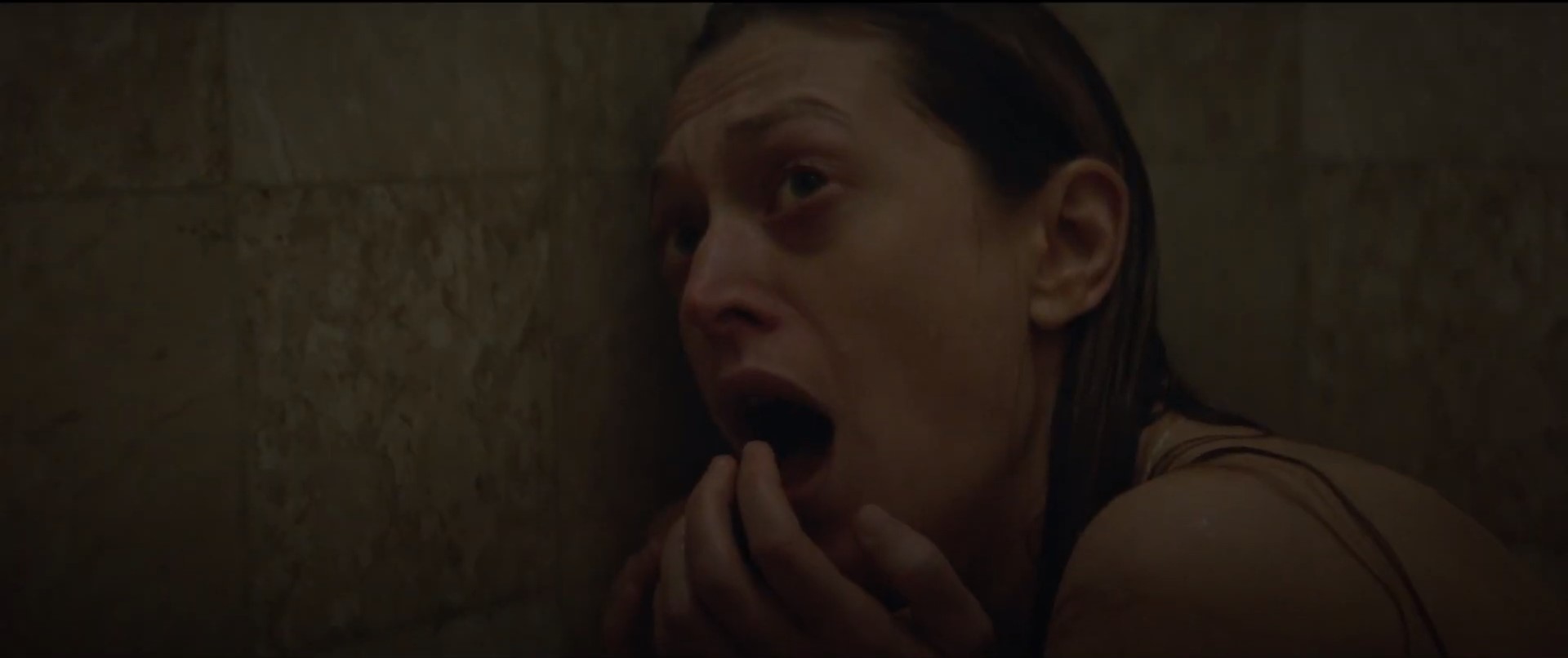
Siblings Louise and Michael Straker return home to their farmland house when their terminally ill father becomes bedridden.  A long time alone and isolated before her children arrived, Virginia provided suitable care for their father up until the voices started.  Lurking in between the shadows around the rural home, a menacing presence wedges itself into an already splintered family spirit as the harbinger of death coming for their father’s soul.  The influence of voices and grim visions tatter Louise and Michael resolve, testing their unconditional love for family and moral obligations, but evil can be very persuasive the closer their father comes to his end. 
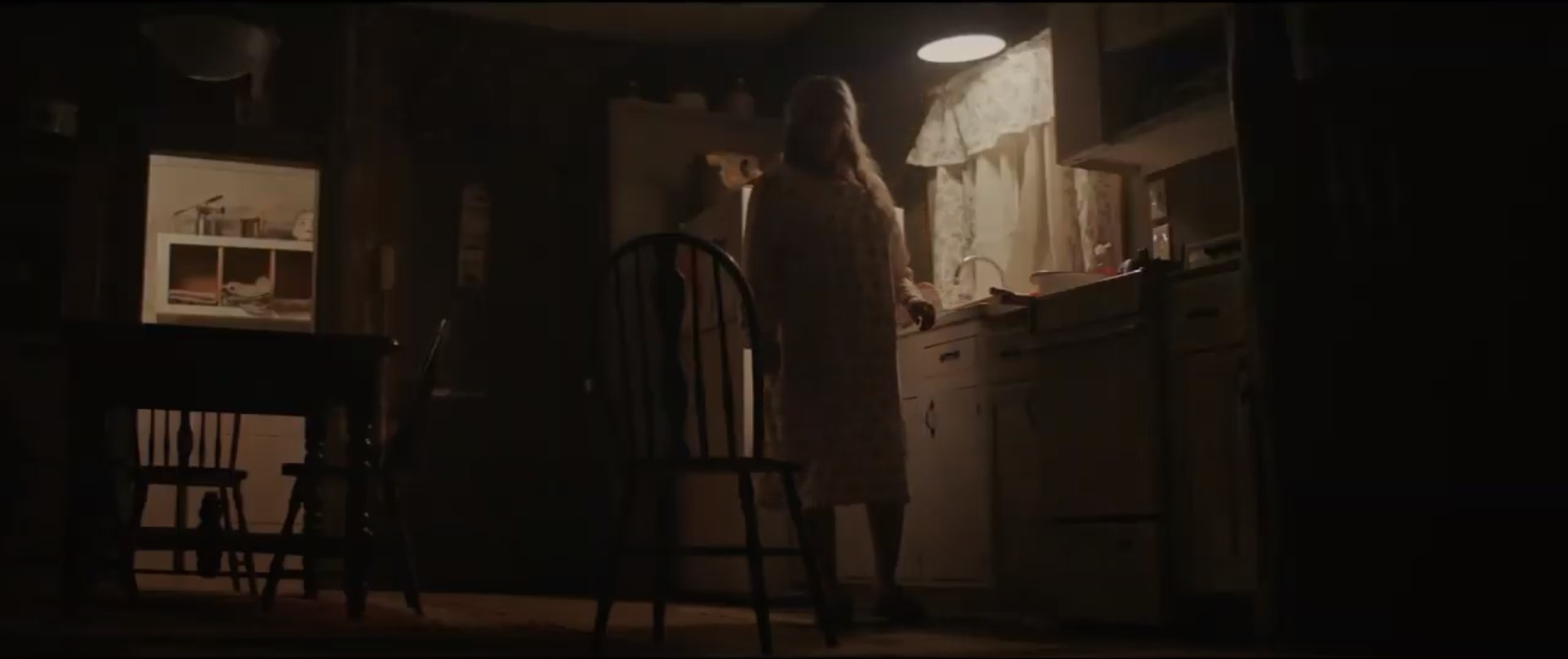
The battle grounds of losing oneself during the verge of loss has commonly been a recurrent topic amongst indie films.  For filmmaker Bryan Bertino, the concept feels deeply personal.  “The Strangers” and “Monster” writer-director’s latest discomforting horror film, “The Dark and the Wicked,” uses Devil speak in mass, detrimental volumes as an allegoric device for the internal deconstruction of family, capitalizing for his tale the use of his family’s rural Texas farm house written as a threatening locale of isolation and the tenebrous unknown.  “The Dark and the Wicked’s” paganistic undertones heavily perceive a dissipating family structure’s disconnect from not only God but from the community who has been all but absent from coming to the fictional Straker family aid.  The 2020 released film is produced by Bertino’s production company, Unbroken Pictures, alongside Shotgun Shack Pictures (“Hurt”), Traveling Picture Show Company (“The Blackcoat’s Daughter’), and in association with Inwood Road Films.
To play characters accustomed to the rural lands of the Texas outskirts, “The Dark and the Wicked” required a range submerged with leisurely movements, a Lonestar draw, and to, of course, look good in plaid and Wrangler jeans.  The cast that emerged was nothing short of spectacularly precise in fabricating the lives of remote lives rural Texans, opening with a Texas-born Julie Oliver-Touchstone (“Bounded by Evil”) sewing dresses in the barn, tending the farm’s goats, and chopping produced in her white nightgown as who will be the catalytic mother, Virginia Straker, that passes not only the 24-hour hospice care to her children but also all the beneath the light misery that drives her terrified.  The girth of the story revolves around, Louise, “The Umbrella Academy’s” Marin Ireland, and Michael, Michael Abbot Jr. from the upcoming “Hell House,” as sister and brother who return back home upon the news of their bedridden father (Michael Zagst).  At this point in the story, where we meet Louise and Michael for the first time, a shrouded background puts a delectable side dish of mystery into making them initially interesting, but over the course of the 96 minute runtime, the enigma dissolves around why Louise no longer works from the Postal Service and what’s stringently being shied away from the thick layered division between the siblings from being close to one another.  The impending standoffish goes unspoken, never comes to a head between them as like the unfolding of “The Strangers” where Liv Tyler and Scott Speedman unravel and expose their marital struggles with the invisible wall between them before, and even in the midst of, being terrorized.  There’s something there that isn’t being part of the exposition or coming back around when the Devil comes really calling for their father’s doomed soul.  Instead, Ireland and Abbot simply assimilate well enough into their falling into farm life dynamics as the sister who must shoulder the responsibility of hospice care and the brother overseeing what could be considered man’s work of handling the duties of raising livestock.   We also get some messed up supporting second fiddlers to execute Satan’s handywork with performances Lynn Andrews, Tom Nowicki (“Conjurer”), Mindy Raymond (“Bigfoot Wars”), and “The Walking Dead’s” Xander Berkeley channeling his best Julian Beck’s Kane performance as a sinister Priest making a house call.
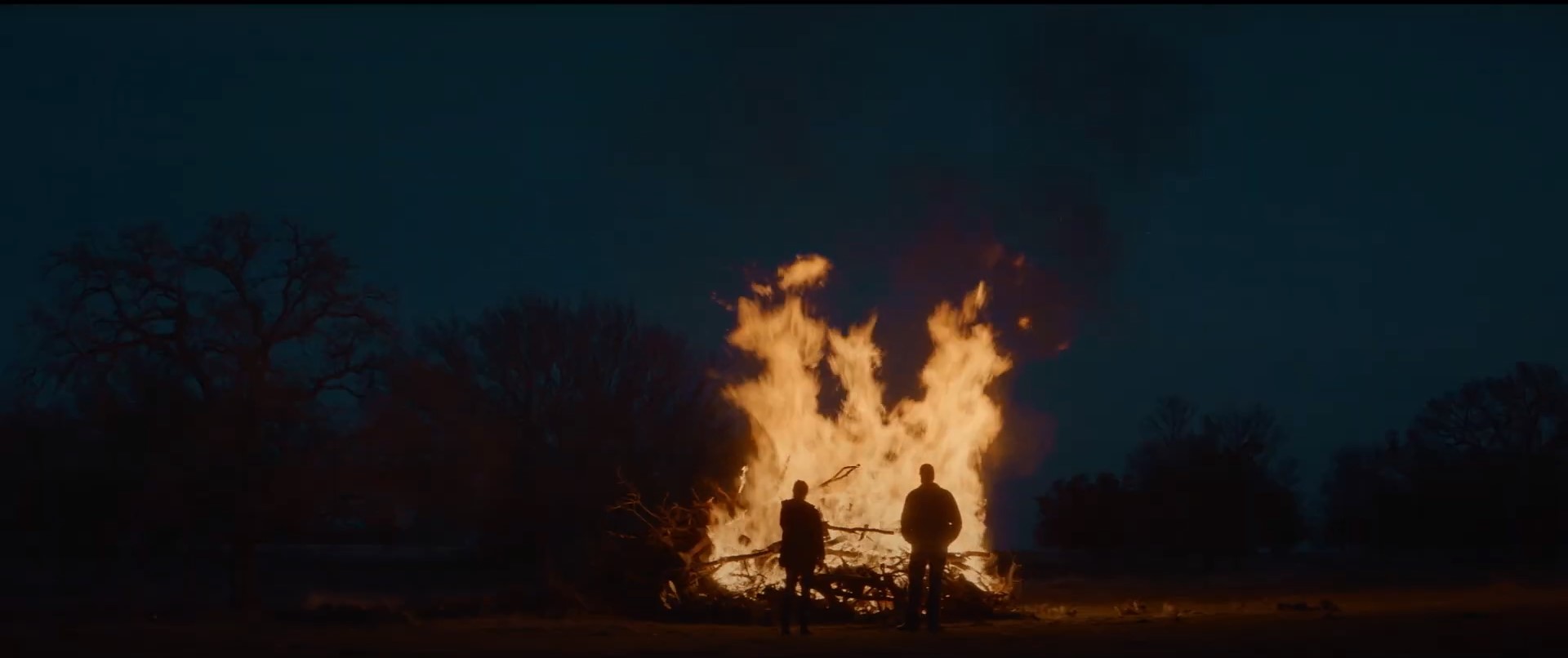
Bryan Bertino has a stillness about his films. Their creepily quiet, stirred in a somber stew of macabre, and utterly deranged in a nihilist coating. What appeals to me about “The Dark and the Wicked,” as well as “The Strangers,” is Bertino’s gift to deliver powerful fatalist realism. His stories couple earthly family drama with otherworldly malevolence stemmed from the deeper affects of prolonged relationship breakdowns that literally assigns a demonizing blame on the supernatural for people’s own crumbling failings. Another aspect is the godless presence wholeheartedly felt throughout from the Straker’s loud and proud proclamation of atheism to the lack of religious artifacts. Michael nearly tosses the priest out of his keester just for making checking and noting his mother’s recent unbeknownst connection to God to which Michael took great offense. This leads into the Straker’s lack of community connection as they seemingly are adverse or are agonized by those who wish to help and those who rather seem them burn under the guise of the malice presence. Goats are thematically prevalent to the story, especially when the shadowy Wicked hides amongst the herd, like a wolf in sheep’s clothing. Goats are often associated with Pagan beliefs, such as with the deity Baphomet, and the evils marked upon them by cultures all around the world and by having the Straker farm be a goat farm is more than just coincidence. “The Dark and the Wicked” brings chaos and confusion much like any circumstances where one or both parents die and all the burdens, all the consequences, and all the pure emotional baggage that comes with death is passed to the children whether the Devil is involved or not. When broken down rudimentary that decline of hope and overwhelming grief can cause a great amount of destruction for any family and even extend to friends with suicide being heavily portrayed in the film. Bertino masterfully touches upon every collateral damage output leaving no one spared from death’s, the Devil’s, hopeless hold on them.

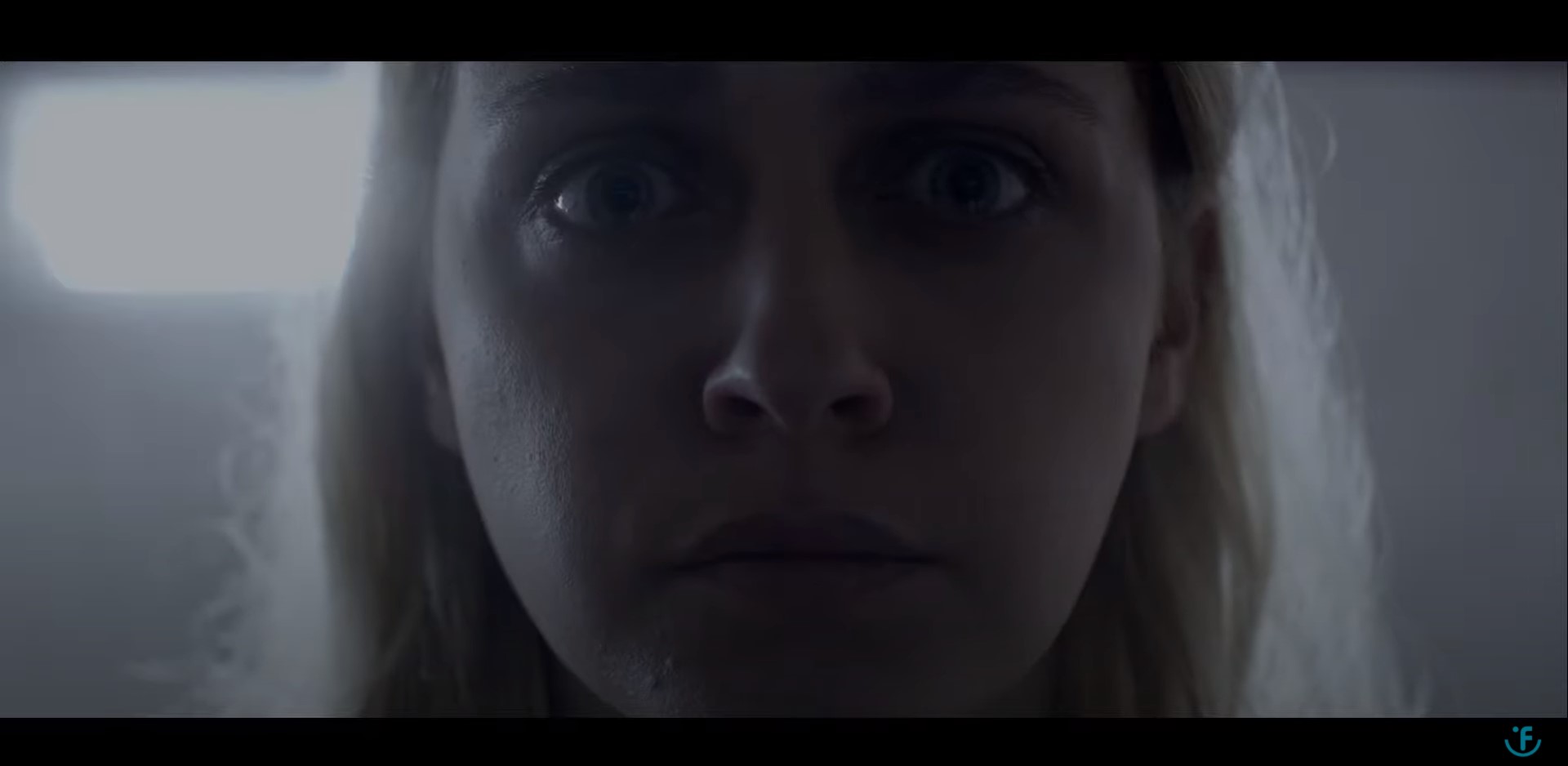
Filled with frightening imagery, plenty of toe-curling suspense, and a loud silence of utter despondency, “The Dark and the Wicked” is a must own for any horror fan and, luckily for you, Acorn Media International just released the Bryan Bertino film on Blu-ray in the UK in alliance with horror’s favorite streaming service, Shudder. Listed as region 2, but more accurately a region B in Blu-ray format, the PAL encoded release is presented in a widescreen 2.39:1 aspect ratio. If there was one word to describe the comprehensive picture that word would be dark. Bertino maintains an eclipsing cinematography through hard lighting, matted lifeless colors, and a reduction tint to give it that extra gloomy blackness. Cinematographer Tristan Nyby’s first collaboration with Bertino is also the first debut into the genre field and Nyby comes out on top with an ability to show just enough, whether through shallow focus or obscured wide shots to always keep the depth and range of the unknown factor alive and frightening. In regards to the Blu-ray quality, “The Dark and the Wicked” has little to offer in details not because of the lack there of but because much of the film is shot in the dark, a fine midnight black with little-to-no wish or noise, and dim lighting . Facial details do appear slightly soft as you can’t make out the blemishes or even skin pores, but the intentional flat coloring steers much of that away from the senses. The English language DTS-HD Master Audio 5.1 surround sound is a boost of jumpscare ambient effects. The range and depth finely pitch the position of well-timed scares, especially when the strung together bottles, glasses, and cans rattle in a discordance. Dialogue has lossy muster that makes discerning characters’, especially Michael or his mother, Virginia’s, Southern draw. English subtitles are optional. Special features include only a Fantasia Q&A with actors Merin Ireland and Michael Abbott Jr that dive into their characters quite a bit and into Bertino’s morose mindset. Bleak and genuinely personal on a whole other level, “The Dark and the Wicked” is quintessential truth when talking about the Bryan Bertino Americana horror film and, believe you me, expect more devilish descriptors that’ll shock you.

Censorship is the Very Definition of EVIL! “Censor” reviewed! (Magnet Releasing / Digital Screener)


British film censor, Enid, views video nasty after video nasty day in and day out, certifying ratings based on the realism of the violence, and receiving public hellfire when a gruesome murder is vilifies her approval of a film.  After viewing one in particular that strikes a familiar nerve, one involving around the circumstances of her little sister’s disappearance from years ago, she digs deeper into the filmmaker’s background, piecing together a puzzle that her sister may still be alive.  With her parents given up hope declaring their youngest deceased and under mounds of criticism pressure from inside and outside of work, Enid’s lone rove through distasteful filmic horror and probing the crew involved sends the censor into a frantic frenzy between what’s real and what’s not. 

For the record, just so we’re clear between you and I, film censoring is a complete crock that limits artist expression and can negatively alter the tone of work far from the original message or effect.  I can see where censorship is necessary for the greater good when considering public television that aims to evade young eyes from extreme violence, gore, nudity, and harsh language while still appeasing adults with a semi-intelligible cut of the film, but to have the MPAA, or any censor board for that matter, do what they do in order to classify and certify a rating to meet a criteria is a slap in the face of personal responsibility.  Yes, some individuals need a rigorous structure to tell them what to do, but you know comical and asinine when there are three different cuts of a film in the U.S. market, not to forget to mention all the various versions around the globe to sate countries distinct regulations and requirements.  Luckily, Prano Bailey-Bond’s immersive reality checking horror, “Censor,” makes no assumptions on the matter and we can just enjoy the dark side of story based off the UK filmmaker’s 2015 short entitled “Nasty.”  The story, set in the 1980’s at the height of violent and gory VHS movies known as video nasties, is co-written by fellow “Nasty” writer Anthony Fletcher and is produced by the London based, female operated and story-driven Silver Salt Films as the company’s first feature credit and is financially supported by the Film4, Ffilm Cymru Wales, and BFI.

If not for Irish actress Niamh Algar in an virtuous cyclone encompassing lead of Enid, a stern censor agent, the dismal atmospherics whirling around Enid’s processing of possible new evidence in her sister’s vanishing wouldn’t be as timorously potent.  The “From the Dark” and “Raised by Wolves” actress embodies a strong stoic stance of not only a censor with a target on her back every time the public blames her for ill-fated news involving the extreme films she approves, but also as a woman in the workplace who is subjected to subtle objectifying by male coworkers, in which some are more privately outspoken than others, and male film producers with a diminutive eyesight of her professional demeanor by making unwanted advances in lieu offering their support to make their films depicting rape and murder of usually female victims more approachable and marketable to the censor board.  Algar perfectly poises Enid in her ticks, the abrasive fidgeting of her nails against each other or the slight rolling back of her shoulders that makes an awful, unnatural cracking sound, sharpen Enid’s complexion.  Even Enid’s hard gulping is felt in unison of the tension of a woman on a verge of sudden collapse.  Clearly the film’s one and only frontrunner as we dine off Enid’s sole perspective, Algar runs off with “Censor’s” gloomy tone by her performance of unwavering convictions blended with throbbing agitation in her character’s repressed explosion trajectory.  Supporting players do their part living in Enid’s unique vision with Sophia La Porta, Adrian Schiller, Clare Homan (“Afraid of the Dark”), Andrew Havill, Guillaume Delaunay (“Victor Frankenstein”), Richard Glover, Clare Perkins, Danny Lee Wyner, Vince Franklin, Nicholas Burns, and Michael Smiley (“The Nun”) as a topnotch sleazy extreme film producer rounding out the cast.

Performances all around are stellar and the idea is sound as I can see a video nasty censor of the 1980’s fall victim to the job because of an unclear and checkered past, but problems with pacing jet Enid from composed posture to immediate wreck in a blink of an eye without much of a fundamental development for unravelling being greatly depicted other than the jarring movie that sends her spiraling for answers.  This doesn’t hurt “Censor’s” main theme of the inconclusions of what really drives the murderous animalistic qualities in all of us regarding nature versus nurture.  The longstanding idea that video nasties promote influential violence and sordid behaviors has been the talk of controversy for decades and science, at least none of that I’ve read, hasn’t 100% proven that extreme films dictates the mind’s will other than those impressionable in the sponge-like children.  Bailey-Bond decides not take a stance in declaring a clear cut opinion, merging both assumptions together in a mesh of madness still leaving the theorists spinning their notions and evangelical nuts spewing their anti-liberal arts sermons.  What really sells “Censor” for me personally is the tell all climatic finale of Enid’s disturbing outcome in a warped contraview, flipping back and forth through the static of the back button during the times of higher numeral, unsubscribed pay-per-view channels where glimpses of picture pop into the frame for a split second.

“Censor” is nowhere near what’s consider a video nasty, but the Prano Bailey-Bond psychological thriller still has the grip of an inexorable depth for what’s to come, for violence, far from hitting the cutting room floor as the film heads to theaters June 11th and on demand one week later June 18th from Magnet Releasing. Shot in two aspect ratios, more so in a widescreen 2.39:1 aspect ratio than in the pillarbox 1:33:1 to reflect the video nasty format in the time period, Bailey-Bond and director of photography, Annika Summerson, continue to stay as true as possible to the Golden Age of 80’s horror by shooting in 35mm in a handful of various style to blend Enid’s reality with the fiction of lurid dreams and the daily grind of workplace hazards (which, to me, watching horror movies all day long sounds like a dream job! The censoring part, no so much). Runtime clocks in at 84 minutes with no wiggle room for bonus scenes during or after the credits. The Brits have always had a hell of a go with film censorship, weaponizing and vilifying for political gain, as films become the lamb for the slaughter for public outcry against social-economical woes, even arts bedeviled by the harsh censors of it’s own country, and “Censor” aims to be the carrier wave of that historical downspout of misguided judgement while also shredded the thin moral fabric of one woman’s reality into tiny bits of off the rocker guilt.

For One Exhausted Truck Driver, EVIL is on the Move! “Goodbye Honey” reviewed! (Freestyle Digital Media / Digital Screener)

Dawn has been driving for over 30 hours straight schlepping a customer’s belongings from point A to point B. Unable to keep her eyes from closing, she pulls over and parks in an empty lot of a state park. Before Dawn could close her eyes, a mysterious and frightened woman approaches her asking for help, informing Dawn that she has been held captive for months. Treating with suspicious eyes, not fully trusting this young woman’s thinly laid out accusation, the exhausted truck driver is eager to protect her truck from would-be thieves and vandals, but decides to assist though her phone is broken and her truck keys are lost, leaving the two women stranded in the middle of nowhere with a radical abduction story and the captor is not too far behind. What seemed to be a quiet night of deserved rest and relaxation for a truck driver who just drove straight-through without much as taking a break is about to unfold an eye-opening, harrowing ordeal that puts the two women in for the long haul.

Would you trust a harried and jonesing-looking straight knocking on your day cab door of your straight moving truck in the very early AM hours of the night? This iffy scenario plunges audience into that exact pressure point of Max Strand’s feature film directorial debut of “Goodbye Honey.” The 2020 abduction-thriller is also written by Strand and co-written alongside Todd Rawiszer, collaborating for a second time since 2011 for their cannibalistic-comedy, the family kills together, eats people together, “The Labbinacs.” Generally most abduction thrillers takes the viewpoint of the captive, but for “Goodbye Honey,” Strand and Rawiszer take the perspective of an outsider with unlucky happenstance and makes persevere over their own hang-ups in the dealt lousy hand called life. “Goodbye Honey” is produced by Joshua Michaels from the Examined Dots Pictures, a subsidiary of the video media company, Examined Dots Media, and is the first feature length film production from the company.


The point of view from the trucker sparks a clean slate inception of events as Dawn is oblivious to the entire occurrence that has scared and scarred this young woman whose animal instincts have kicked in and is working against her advantage with Dawn as desperate spurs her to act instead of thinking logically about what to do.  Pamela Jayne Morgan (“The Manor”) headlines “Goodbye Honey” in her first breakout role of 2020 stepping into not only an impromptu lifesaving moment but also into the steel toed shoes of a trucker’s life behind the wheel that features sleeping in her cab, eating lunch in her cab, and being driven into the ground by a demanding, world’s most dangerous, profession.  The only uncouth trucker habit Morgan does not do in her cab is urinate into a bottle.  Oh wait, she does bottle potty!  However, the circumstances surrounding that moment is not because of her profession and only adds to the many layers, including her tragic background and lost ambitions, that makes Dawn a complex character working the mental gears to do what she can to survive and save a life in terror’s grip.  And just like Dawn, we’re weary to believe the fantastic accusations coming out of Juliette Alice Gobin’s lip-quivering mouth who sizes up to the very still with fright the shaken and traumatized abductee in Phoebe as she narrowly escapes her captor, played by Paul C. Kelly (“Devils Prey”).  Gobin debuts her talents in horror with flawless strokes that paints Phoebe more of a misunderstood threat than a distressed victim of kidnapping.  Morgan and Gobin’s hot and cold dynamic perfectly rouses doubts as nothing, at first, is entirely clear.  “Goodbye Honey” has an indie size cast, but the performances are robust with layered intensity from the principle roles to the momentary characters played by Peyton Michelle Edwards, Rafe Soule, Jake Laurence, and Keara Benton.

There’s always been this uniquely bizarre fascination of which story angle an abduction thriller should play from and in “Goodbye Honey’s”, the story doesn’t follow a linear narrative of the abductee but backtracks with anecdotal flashbacks as Phoebe divulges the events leading to her snatching and how’s she’s been isolated in a small room for months to her only hope and savior, an emotionally downtrodden and physically fatigued Dawn.  While not entirely new, as we’ve seen a structure similar in John Oak Dalton’s “The Girl in the Crawl Space” that relives the victim’s held captive experience through mental flashbacks and therapy sessions, “Goodbye Honey,” bills far superior dread unlike the 2018 film, which suffers from monotonous exposition and topical offshoots.  Strand plops us in the unravelling thicket of action with gripping what-ifs potentially lurking in the midnight shadows surrounding Dawn’s painted white beacon of hope on wheels.  Character curveballs also hit empathetically hard with twist and turns coming out of the ears of all the narrative pawns and not just confined to the black and white abduction that brings them together. As much as Phoebe needs Dawn’s help to escape the clutches of her captor, Dawn also needed Phoebe’s accidental life purpose healing that fills the void in Dawn’s life left by the passing of her husband and reaffirms her passion for helping people no matter her personal circumstances.  Oddly enough, I found Kelly’s captor lacked substance to the story other than the characteristic ploy of revenge that agitates the action as his endgame for Phoebe isn’t exactly clear other than spouting, “she needs to pay.”  The serendipitous connection between Dawn, Phoebe, and the abductor has designer destiny stitched into the natural fabric of life in an almost comical happenstance of events, but makes for good entertainment nonetheless knowing that there is a circle of connectivity, a sense of purpose, and a reason to fight back in “Goodbye Honey’s” pressure cooking recipe.   

On May 11th, “Goodbye Honey” was released on digital HD and on cable VOD in North America from Freestyle Digital HD after a successful stint of festival wins including Best Thriller Feature, Best Actress (Pamela Jane Morgan), and Best Supporting Actor (Rafe Soule) at the Garden State Film Festival, Best Lead Performance (Juliette Alice Gobin) at the Nightmares Film Festival, and Best Actress (Morgan) at NOLA Horror Film Festival. Todd Rawiszer didn’t just co-write the film he also shot the film, his first feature film credit at a cinematographer. Inside 96 minutes and with a narrative taking place over a single night, Rawiszer casts a variety of hard lit shadows with glimmers of intermittent portable lights and neon reds kept tight with medium to closeup shots and rarely venturing out beyond that range with clarity as much of the wide shots or long shots are obscured, in a haze, or blurry to the eye as Rawiszer never wants you to know what’s exactly out that far. A pair neat editing montages by Jay Yachetta, with the meal plate and door slamming alongside Phoebe going mad with stir crazy is some of the best work I’ve seen a long time that can trigger an epileptic episode and still be insanely cool in the cruelty. Top those montages with an aggressive sound design and you’re head will surely pop off with unsettling jubilation. No bonus scenes during or after the credits are included. Regardless of budget or the stigma of low budget pictures, nothing but good vibes and good things to say generally about Max Strand’s “Goodbye Honey,” a startling trembler of persistence to outlive a night of terror that stars two stellar leading ladies at the heart of the film’s success.

Rent or Own GoodBye Honey on Amazon Prime!

HELLelujah! God Does Not Deliver Us From EVIL! “We Still Say Grace” reviewed! (101 Films / Digital Screener)


A family living in deliberate solitude looks to God to provide them with everything they need to sustain.  Harold’s two teenage daughters have never experienced beyond the 14 acres of land their father and mother own, but the youngest, Maggie, can’t help but think of the wonders outside her father’s god-fearing, draconian sheltering.   When three teenage boys travelling to California suddenly break down on Harold’s remote land, an eager Maggie can’t wait to taste a mere glimpse of their perception of the outside world.  Being a good Christian man, Harold welcomes the hapless travelers into his home and convinces them to follow the rules and stay the night, but the boys’ seemingly happenstance car troubles is manipulated into an unavoidable sign of God’s will, or at least so in Harold’s eyes, and he decides to carry out a predetermined family suicide pact for him and his family to be welcomed into the gates of Heaven.

The one think learned, or maybe had shed more light on, out of this pandemic is the unstable relationship people have with God.  Religious extremist have weaponized the Powerful and Almighty against every day people like you and myself with contentious, hate-filled vocabulary such as damnation, burning, hell, etc., for those who do not seek his glory the way asininely seek it.  “We Still Say Grace” epitomizes that very lifestyle of devout fanaticism that has also been highlighted with buffoonery as the very same people who verbally condemn others usually don’t walk-the-walk but only talk-the-talk or are a charlatan involved in a more sinister plan.  “The Lodge’s” Brad Helmink and John Rauschelbach write and direct the film that has become their second feature horror film produced by the filmmakers under their Brothers Shamus Pictures, Mark Sonoda of Dauntless Studios, Room in the Sky Films, and Lexicon Entertainment. 

Now, I’m not a religious man or spread the word of the divine in my reviews, but God love Bruce Davison as the “Dahmer” and “X-Men” actor is a silver fox crazy man of God living rurally with his wife and two teenage daughters.  Davison relentlessly rallies Harold’s madness and is having a good old time performing as a man with a hidden agenda.  Harold is an intriguing character with little-to-no information about the character’s background or reasoning for being unreasonable, but that doesn’t seem to faze the legendary actor who had cut his teeth into horror 50 years ago as the original rat-speaking avenger, “Willard,” as Davion trots down a path of deceitful radicalism and manipulative exploitation.  Those he unscrupulously cons with pious smoke and mirrors are his own family in wife Betty (Arianne Zucker, “Days of Our Lives” daytime soap opera), Sarah (Rita Volk), and Maggie (Holly Taylor, FX’s “The Americans”).  As a viewer who is currently, at this very moment, chin deep in catching up on FX’s Cold War espionage thriller series of Soviet spies living as ordinary Americans in Washington, D.C. as they carry out missions in the name of Communism, I found difficult in separating Holly Taylor from her the 2018 series that ended its successful run in 2018 when she was a teenager.  Taylor’s roll in “We Still Say Grace” typecast the actress as another teen though having filmed the movie as a young adult woman, but the lighting is different and I don’t mean in a literal illuminating sense.  Taylor steps out from “The Americans’” 80’s setting and into, what I presume, is the 1990’s based off some wardrobe choices, car models, and the time frames that fit into those constructs and while she still has this inkling of suspicion that her parents are up to something, a parallel that has carried over, there hasn’t been this much ill-fitting reverence of a man hellbent on belting those he breaks bread with on a daily basis.  There is hesitancy and fear in Taylor eyes and that’s breaks up her from a reoccurring teenager role.  When the three teens (Dallas Hart, Frankie Wolf, and Xavier J. Watson) show up at the front door, that’s when things go, more than usual for Maggie, terribly awry. 

Aside from Bruce Davison, the other performances muster little faith in their roles with overplayed tropes, especially the stranded teens who could be plucked out as the Three Stooges of horror they’re so easily identifiable across the genre.  The premise itself isn’t exactly novel of a Bible thumping person teaching and preaching self-sacrifice, aka suicide, as a way to transcend beyond the heathens of this Earth but marketable and attainable as a small independent production with a California desert location, minor but effective special effects, and a handful of actors where much of the money is spent on talent.  “We Still Say Grace” is structurally very loose with character development and plot points, leaking continues dribbles of minor shifts that never patch themselves up on the backend.  For example, Harold’s not the black and white evangelical nut he seems to be but that is where his arc pauses and doesn’t backtrack into reasoning.   Helmink and Rauschelbach do better on the scene setups and interiors that make Harold uncomfortably fearsome and hostile in any context as he sometimes looms in the shadows of his farm chic house or toys with people, even his own family, like rats in a maze as he guides them along to their doom.

Premiering for the first time in the UK courtesy of 101 Films, “We Still Say Grace’s” penitent themed horror-thriller releases digitally this month of May.  As for the imagery presentation, and take this with a grain of salt with any digitally released film, the nearly 94 minute runtime seems to be filmed with a sun derived dust and light haze that I would compare the appearance more akin to trying to look through the bottom of a hard water stained glass.  Under the cinematography of Douglas Quill, the haziness plays into the rustic and dusty atmospherics that give age to the story and Quill frames Harold as a dominant and isolated figure, especially amongst the holy trinity ablaze in human flesh, as if he was the sole antagonist against the world.  The moment for shattered lives remains intent on the very edge of our corneas with the holy hell of “We Still Say Grace’s” patience brittle villain ready to gaslight and sacrifice anyone resisting against the grain of God’s good graces. 

Unleashed, Nature Inspires the EVIL in All of Us! “In The Earth” reviewed (Neon / Digital Screener)

A deadly virus has ravaged the world, placing the inhabitants on a high alert edge of incessant sanitation and relentless paranoia. Martin, a scientist from the city, ventures to an ecological nature preserve to convey equipment for tests being conducted deep in the forest. Park Ranger, Alma, guides him on a two day trek toward a camp in total isolation supervised by Dr. Olivia Wendle, but during the second day of the journey, Martin and Alma are attacked in the middle of the night, left with no gear and a vague sense of what happened. The virus has yet to stake a claim on those living within the woods, but another malicious-driven presence, entombed by superstition and mental manipulation, enacts the forest to come alive around them, forcing them into a direction that presents a summoning of nature’s folkloric revenant.

COVID-19 has brought a tremendous amount of sorrow and an unforgiving plight upon the world, but for a few filmmakers, a global pandemic has been a source of inspiration that been a silver lining amongst the Earth’s population upheaval. Director Ben Wheatley tapped into that filament, you could say ,with his man versus nature mystery horror “In The Earth.” The filmmaker of “U is for Unearthed” short from the “ABCs of Death” and soon-to-be helming the follow up big screen sequel to novelist’s Steve Alten’s widely popular monster shark book series with “Meg 2: The Trench,” Wheatley writes and directs a quarantine start-to-finish feature that also incorporates the pandemic into the story, much to the same likes as Rob Savage’s “Host” that uses the virus as a means to drive the characters into doing something they normally wouldn’t be doing. The UK production is from Wheatley’s founded Rook Films and Neon, who last co-produced Brandon Cronenberg’s violent sci-fi thriller, “Possessor.”

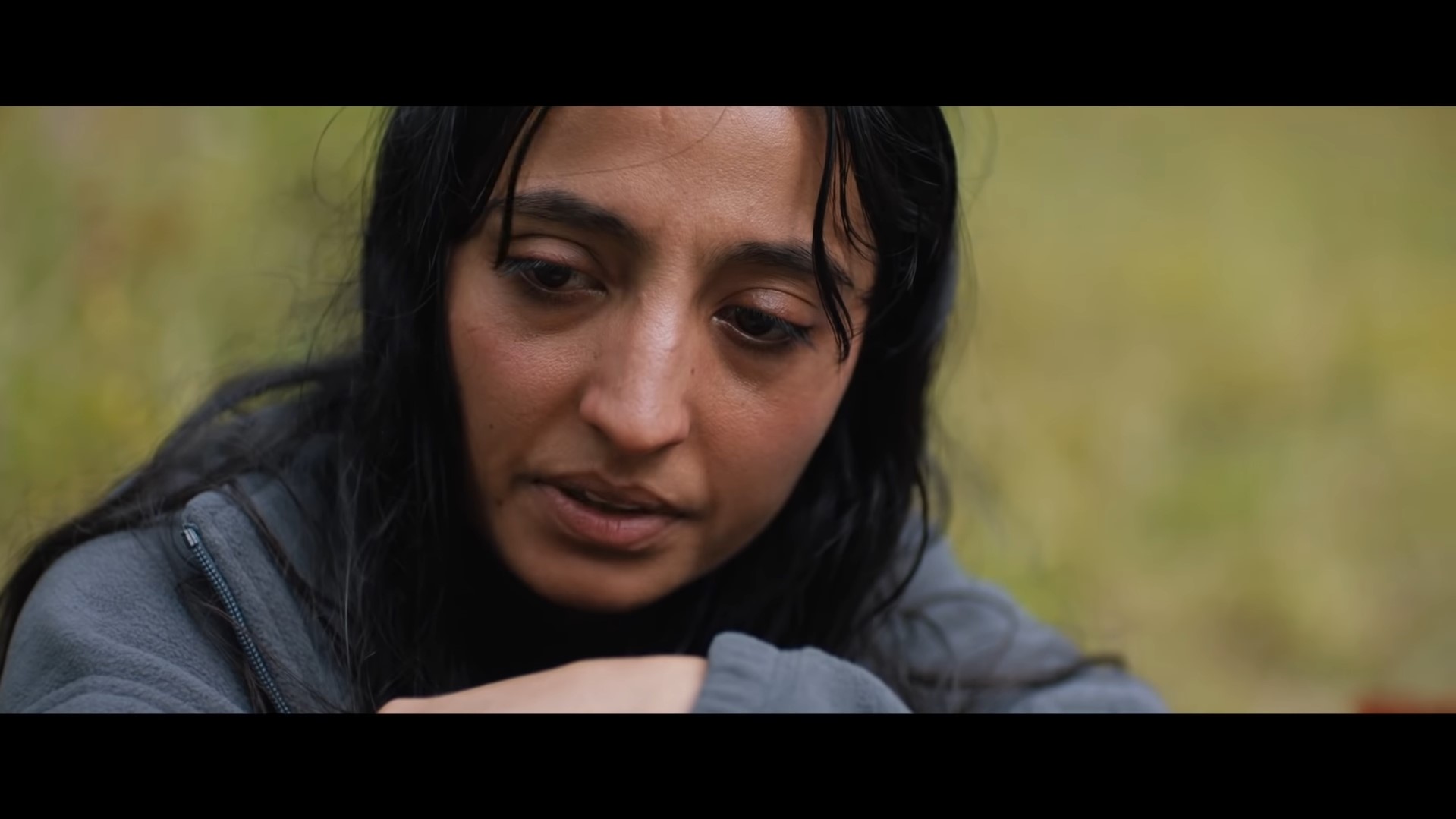
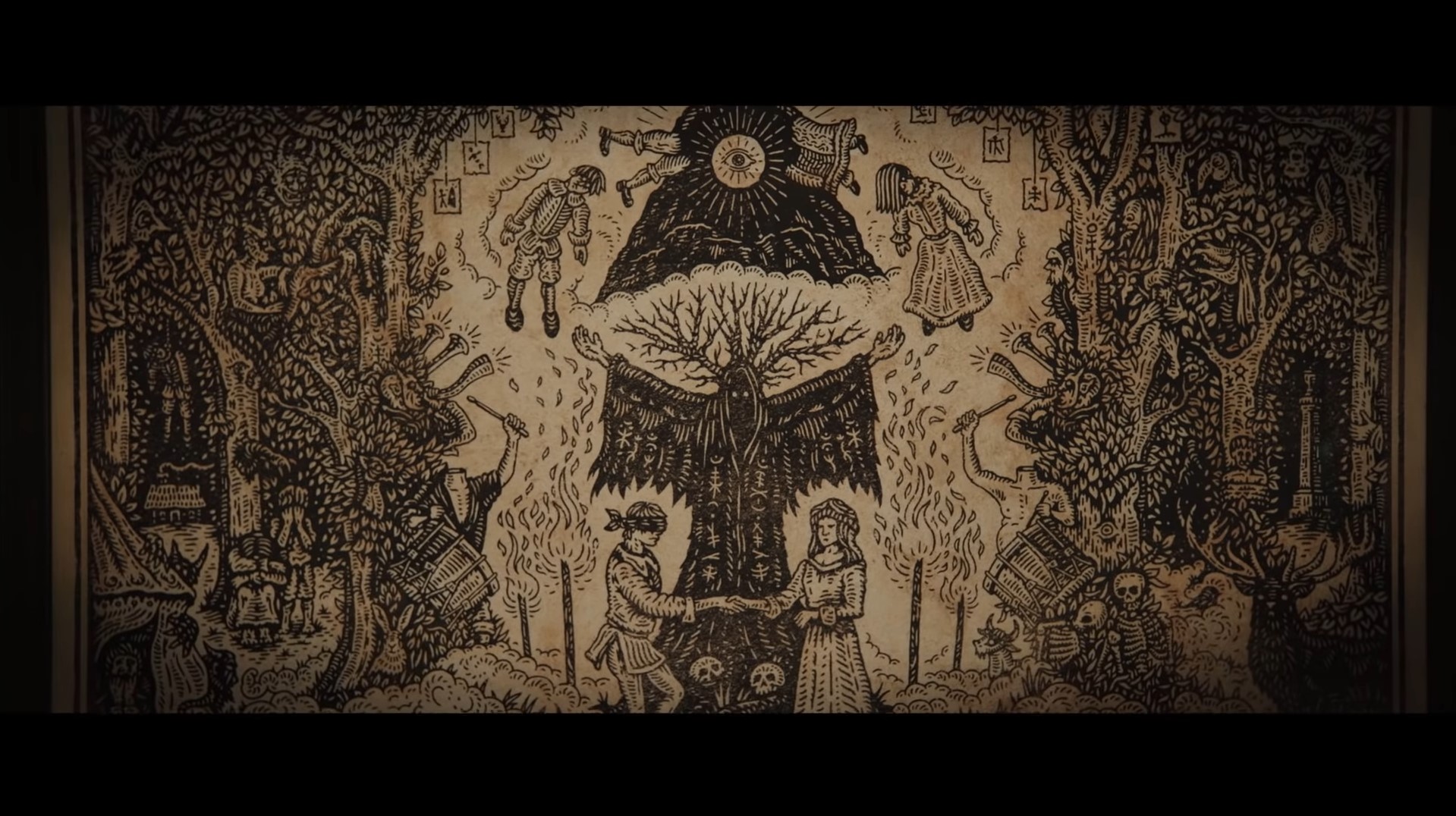
With the pandemic resulting quarantine and a story set in the thicket of woods, “In The Earth” is innately slim around the casting waistline that concentrates the performance zest amongst a few, beginning with the introduction of Martin the scientist walking up to the sentry lodge located at the forest edge. Played by Joel Fry (“Game of Thrones”), the London born actor must endure as a hapless city boy taking woodland shots on the chin without much complaint, but definitely a grimace, a whimper, and a pass out. Guiding Martin through the woods is Alma, a seasoned park ranger under the eye of “Midsommar’s” Ellora Torchia who balances out her travel companion’s near ill-equipped, yet hazardously attempting, roughing the outdoors. Martin and Alma are nearly mirrored by the only other two people they come across in the forest – Zach and Dr. Wendle. Yet, Zach and Dr. Wendle’s similarities channel through how they instrument a link to the forest being, known as Parnag Fegg, that calls them to release it from the timber and foliage prison. Zach (Reece Shearsmith of “Shaun of the Dead”) honors Parnag Fegg with ritualistic images and symbols while Dr. Wendle (Hayley Squires) uses a combination of technological lights and experimental music to speak with the powerfully alluring presence. Shearsmith is devilishly certifiable with Squires backing up his character craziness with her own version that never places Martin and Alma into a safe haven’s circle. “In The Earth” rounds out the cast with Mark Monero and John Hollingworth.

“In The Earth’s” binary coding of nature versus urban, plus sublets of traditions versus technology, runs as a seamless motif to a bigger theme that nature has a global network web of personified communication and reason. I imagine Wheatley succeeded in what M. Night Shyamalan tried to accomplish in the Mark Walhberg’s headlining “The Happening” with bringing nature to the forefront stand against man who continuously seeks to destroy themselves and the world, forcing nature’s hand to take drastic measures, but Wheatley’s film more so tells not the story of a worldwide assault on mankind but rather as the resurrection of a single entity, an archaic necromancer of local legend, eager to walk the Earth once again after being driven to disembody their spirit to the forest. “In The Earth” also provokes a literal meaning toward an age old saying of “nature calling” by using the aforesaid network to unconsciously lure specific individuals into the woods and gather near a gateway relic or stone,. This act of intention calls for a sacrifice of purity and so one of the four individuals – Alma, Martin, Zach, and Olivia – will involuntary be the vessel of Parnag Fegg’s return while the others, under the persuasion of forest spirit, due it’s song-and-dance bidding. Ben Wheatley taps into a very John Carpenter archetype of people on the cusp of unleashing certain doom upon the world, invoking not only a spirit but also that very sense of last stand against damnation as epitomized in “The Thing” and “The Prince of Darkness.” “In The Earth,” however, isn’t so easy to see the forest through the trees with an first act setup that zips through the situation that leads Martin and Alma trekking through the woods and Parnag Fegg is only briefly dappled to be a dangled carrot for bigger things to come.

A chiseled, fey story with a dark, ominous cloud of impending doom lingering overhead, “In The Earth” is transcendence horror at it’s finest. Neon is set to release the R-rated, 107 minute film, “In The Earth,” in theaters on April 30th. The scaled down budget didn’t hinder Wheatley’s grand platform and with Nick Gillespie’s sophomore credit as feature film cinematographer, the playbook was unwritten for Gillespie to rework how to shoot a film under the confines of a pandemic with limited cast, a living forest, and still maintain safe social distant practices under strict mandated guidelines. Gillespie formulated wide-angles to capture an expanse of trees diminutively enshrouding the characters, almost like the forest was going to gulp them at any moment. A composition of artful imagery compiled together in a collage of intoxicating colors and feverish styles interprets nothing concrete in the heroines journey of an nearly unknowable presence only knowledgeable by world of mouth, leaving also the audience induced with a psychedelic vision at the whims of Wheatley’s direction. There were no bonus scenes during or after the credits and the perfunctory ending opens the door for interpretation that can be more impacting than a firm resolution. Born and bred from the depths of the coronavirus pandemic, “In The Earth” dispatches a diversion from the immediate, the real world, and the tumult of a virus with a bewilderingly diversion of troubling folk horror sown directly into Mother Nature herself.