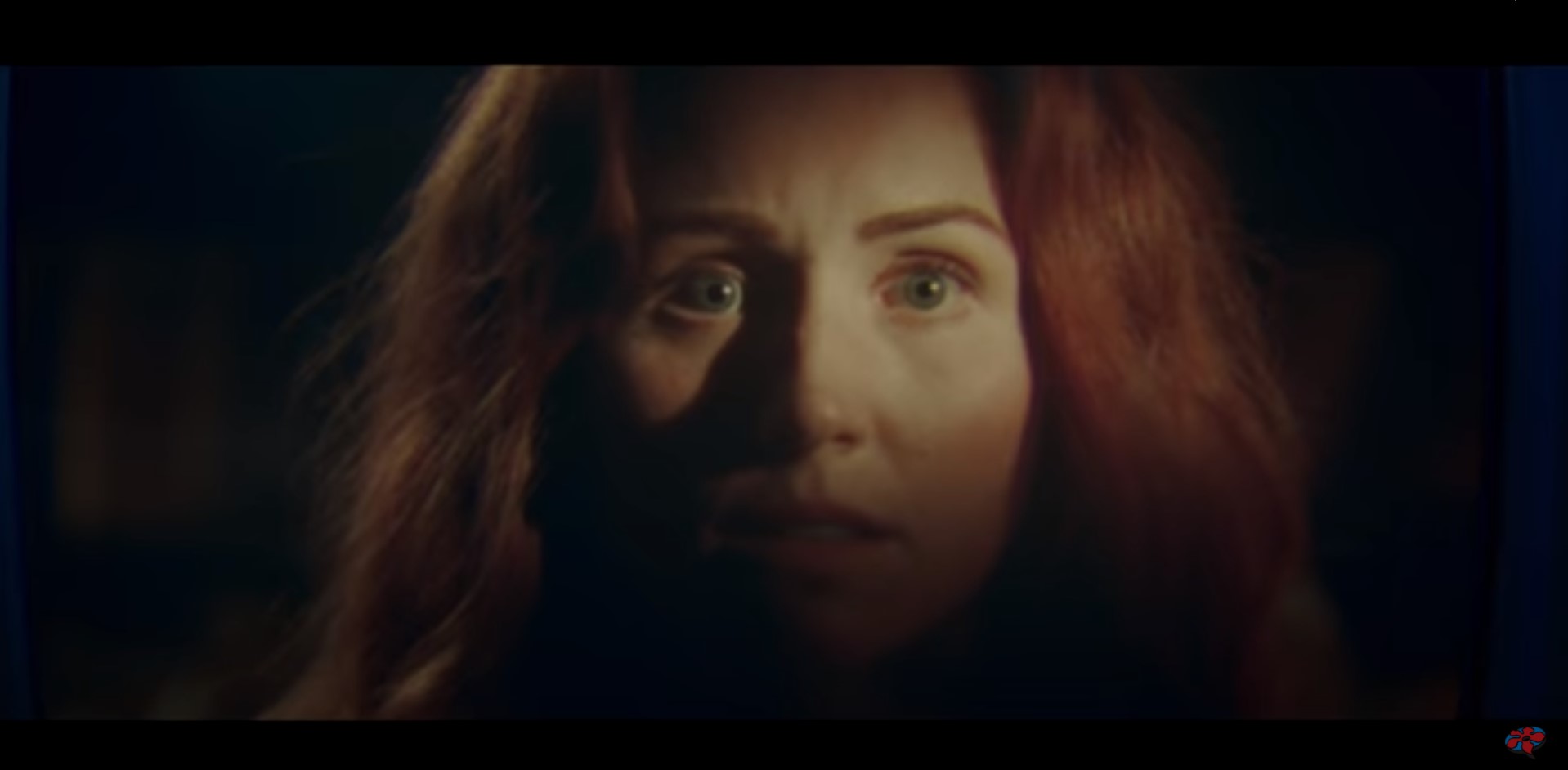
After being suspended for roughing a fellow detective, Collymore returns to the middle of a nightmarish case of people killing themselves within the throes of their worst fears. Struggling through a terminal health issue and sharing his young daughter in shared custody, Collymore focuses his efforts on the case with evidence pointing directly toward a new immersive video game called Jitters that uses brain scans and artificial intelligence to infiltrate the network of the human brain. A maniacal clown with a twisted sense of humor and electrifying headgear presents players with a riddle and if they can solve it, players will be free from his delusion-creating hold that’ll eventually send a person gravely mad to death with fear. Collymore plays the game to try and stop Jitters from spreading across the city, protecting his daughter from being exposed, but he must investigate through a team of infected developers puzzled by their tailored riddle before they meet their fate.

Clowns are not a new trope to horror – “Killer Klowns from Outer Space,” “Funhouse,” and we can even through in the infamous, now-mostly banned “Clownhouse” – but in the past five years there has been a reemergence of the killer clown, thanks to one Art the Clown of the “Terrified” films who put the funny bone back into the assortment of removed human bones with a bone saw. “The Jester,” “Clown in a Cornfield,” and “Helloween” use the bright blue, red, white face paint to mask their malevolent Jokesters outside the circus tent and into our safe space to crank up the coulrophobia in “Terrifier’s” wake, and perhaps with a little help from Pennywise in the “IT” remakes. “Jitters” is the next clownsploitation feature with a sophomore screenplay by George Wilcox (“Homeless Ashes”) and directed by Marc Zammit (“Witch”). The 2016, United Kingdom film is an Aptitude Films production and crowdfunded by Indiegogo patrons with nearly £13,000.

In the role of a Jitters, the clown face riddler with ostentatious electro-lit up headgear, is Daniel Jordan (“Witch,” “Embryonic”) harnessing his best virtual AI assistant from Hell, infiltrating every software system to organic system with mischievous jester poise with wicked wordplay. Jordan can be jaunty enough to make the clownish killer be mad with a “Virtuosity” spread of fear through the global cyberspace network but there’s room for terror toying improvement as the fear doesn’t carry over much to the audience. Opposite Jordan is Fabrizio Santino (“Are We Dead Yet,” “Witch”) as the black sheep detective Collymore hot on his first case back with the investigation of a girl scared to death while playing a computer game. Santino’s low gruff and breathy tone naturally gives me the leg up on Collymore’s terminal ailment that has the detective coughing up blood in private. Yet, that illness never has a purpose to the story other than to garner sympathy from ex-wife Julia (Lauren Budd, “Cinderella’s Curse”). As Jitters rival, or as another play in the Jitters deadly game, Collymore’s determination to beat the AI clown levels the playing field but the detective is hardly challenged by Jitter’s strong and influential manipulating powers others succumb so easily to in their own version of fear-induced hell. “Jitters” supporting cast rounds out with Boo Miller (“Afraid of the Dark”), Guillaume Rivaud (“Big Bad CGI Monsters”), Jessica Impiazzi (“The Tombs”), Russell Shaw (“The Lockdown Hauntings”), Richard Wisker and introducing Chloe Hews. There’s also Anto Sharp (“Witch”) who I follow as a comedic content creator and who did a phenomenal job as Collymore’s partner as I did not realize it was content creator Sharp, suggesting good acting to step into a less funny role.

“Jitters” is not a direct riff on the “Terrifier” series or any other notable previous killer clown movie but adding a clown mascot to a not-so-carnivalesque AI program can seem like a bandwagon move to cash-in on clownsploitation craze that’s currently happening. However, with the “Brainscan” edge to the story, the clown getup has unnecessary written all over it. What Jitters does very well is the themes it tackles, such as video game brain rot, an artificial intelligence takeover, and facing one’s fears no matter how overwhelming they can be. Jitters, the clown, toys with players’ intrinsic fears that can affect so much on a granular level that they don’t even know exactly what they’re afraid of and that gives the narrative more suspense when time ticks away toward an inexplicable runout threshold and the clown brings an end to the game in stylish fashion involving their fear. There’re some on-screen gory bits but “Jitters,” overall, is tame on the blood and violence that leaves a few moments to the imagination but leaves just enough to sate the primal, gut-level reaction. While the story adds a layer of hypothetical futuristic technology that doesn’t quite make sense when you think about it but glad to indulge for the sake of movie progression, I found more distracting detective Collymore’s life complexity to be a softball toss up that never challenges his being or puts his back against the wall. Collymore evokes workplace violence against an unscrupulous, yet lawfully acquitted, officer that goes without receiving himself a severe managerial punishment for socking him in the office other than some unpaid leave, Collymore also has terminal cancer that’s a narrative non-key element that spurs no action and no conflict. Lastly, ex-wife Julia gives him too little pushback on their former marriage and how he raises their daughter when she’s with him, and there’s an almost near reconnection between them that’s hastened toward dye to the lack of contention in what’s mostly amiable co-parenting. Julie and their daughter Chloe never face true peril and have become also naïve or ignorant to Collymore’s pursuit of ridden the world of “Jitters” and that seems task is too big to let potential collateral damage be ignored.

101Films and Reel2Reel’s AI-gone-bad and videogame rot thriller “Jitters” arrives onto Blu-ray home video with an AVC encoded 1080p Hi-Def resolution, BD25. Presented in a widescreen. Presented in a 2.40:1 widescreen aspect ratio, “Jitters” has compressed cinematic coveralls that’s noir polished with a darker grading of blues, greens, and browns. The digital image delineates details more than fine within the Blu-ray codec with no compression issues to note. Textures and fabrics are tangibly perceived; there’s great detail on Jitter’s electric headgear that has a heavier appearance than it probably is in reality, and this is a testament to the fabricated work of the production and art design crew. Surprisingly, the 2026 release only has an encoded uncompressed PCM 2.0 Stereo track and not surround sound. The omnipresent AI infiltrator of hardware and organic hookup gives “Jitters” ample range and breadth of depth but instead of a multi-channel 5.1 or 7.1 surround sound, the release is limited to a dual output between the audio of dialogue and everything else. Usually, stereo formats are adequate, but “Jitters” requires the extra legroom as the boisterous soundtrack does insidiously creep onto the other audio layers, diluting the dialogue strength to an elucidating mumble and barely perceivable. English subtitles are available for selection. “Jitters” is a feature only release with only the trailer as a title menu option. The 101 Films and Reel2Reel Blu-ray is housed in a clear Scanova case with a one-sided sleeve that’s detailed and contrast heavy of the titular villain. The 94-minute film is region encoded B as it’s a UK release with UK certified 15 for strong horror, gore, violence, suicide, self-harm and language.
Last Rites: “Jitters” pulls off being an AI-inspired horror in another round-about of us set on destroying ourselves with our own creation but the added clown element can’t help but think the killer clown craze has struck again, this time negatively.