We Are All Just Playing Characters in an EVIL Movie! “Virtual Reality” reviewed! (Artsploitation Films – Kino Lorber / Blu-ray)

Believe Everything You See.  “Virtual Reality” on Blu-ray at Amazon.com

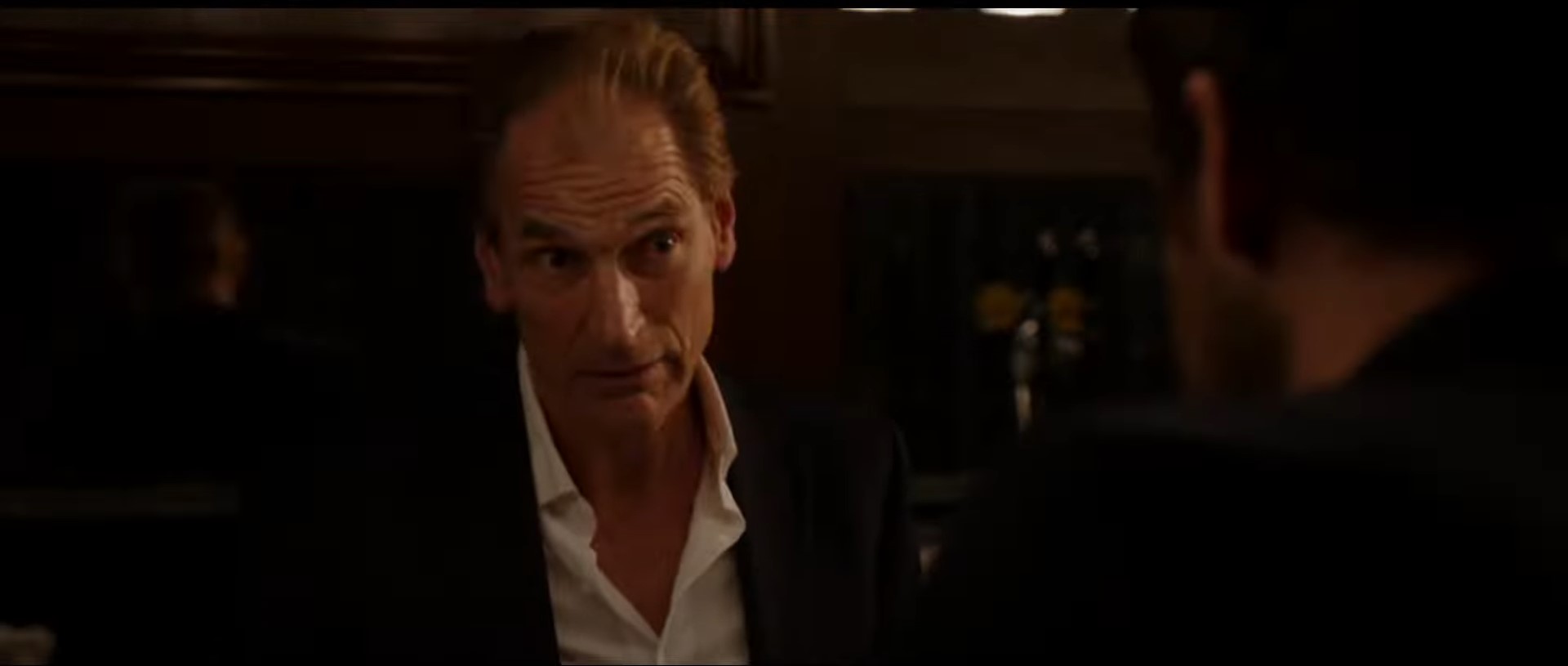
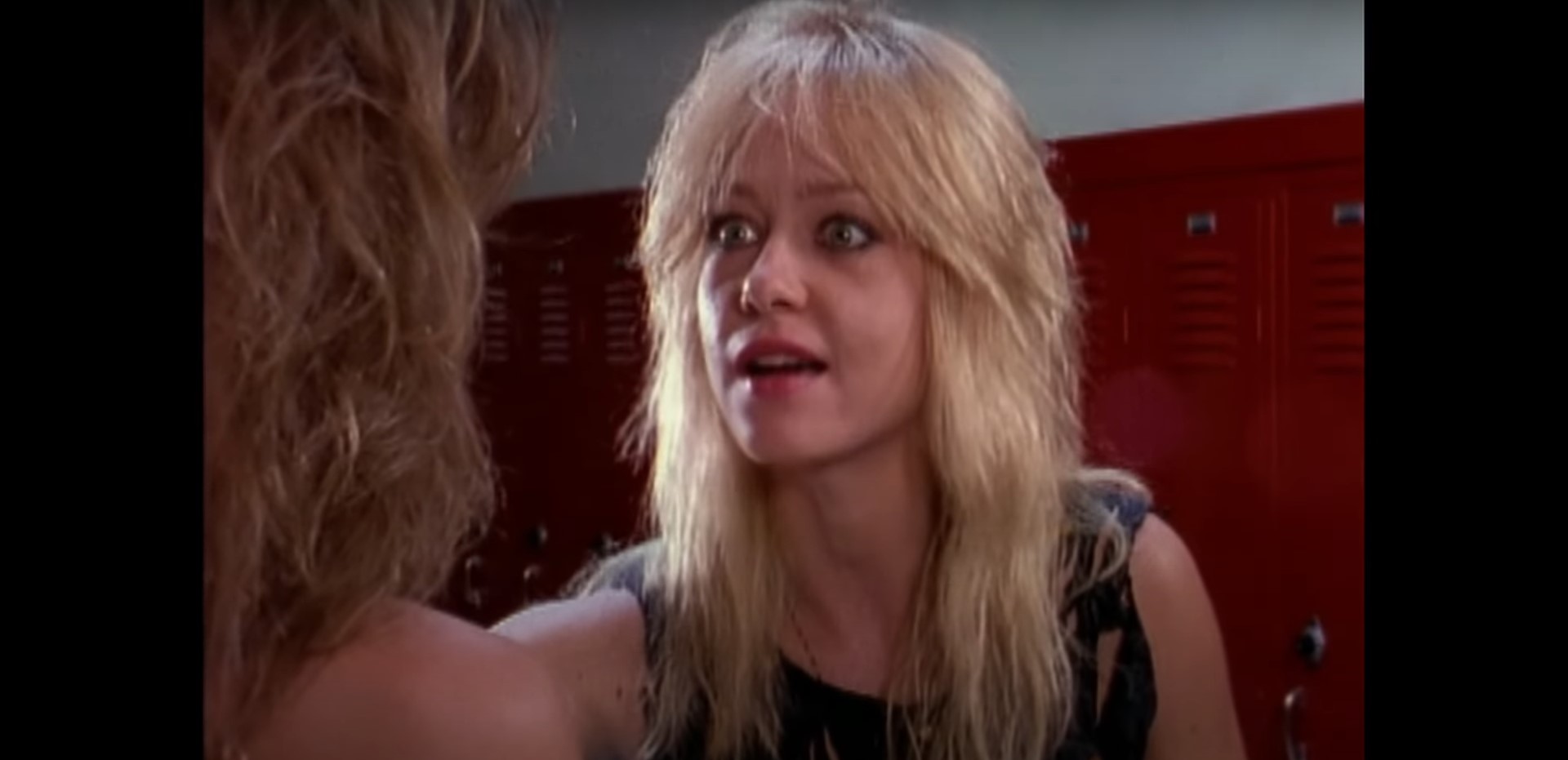
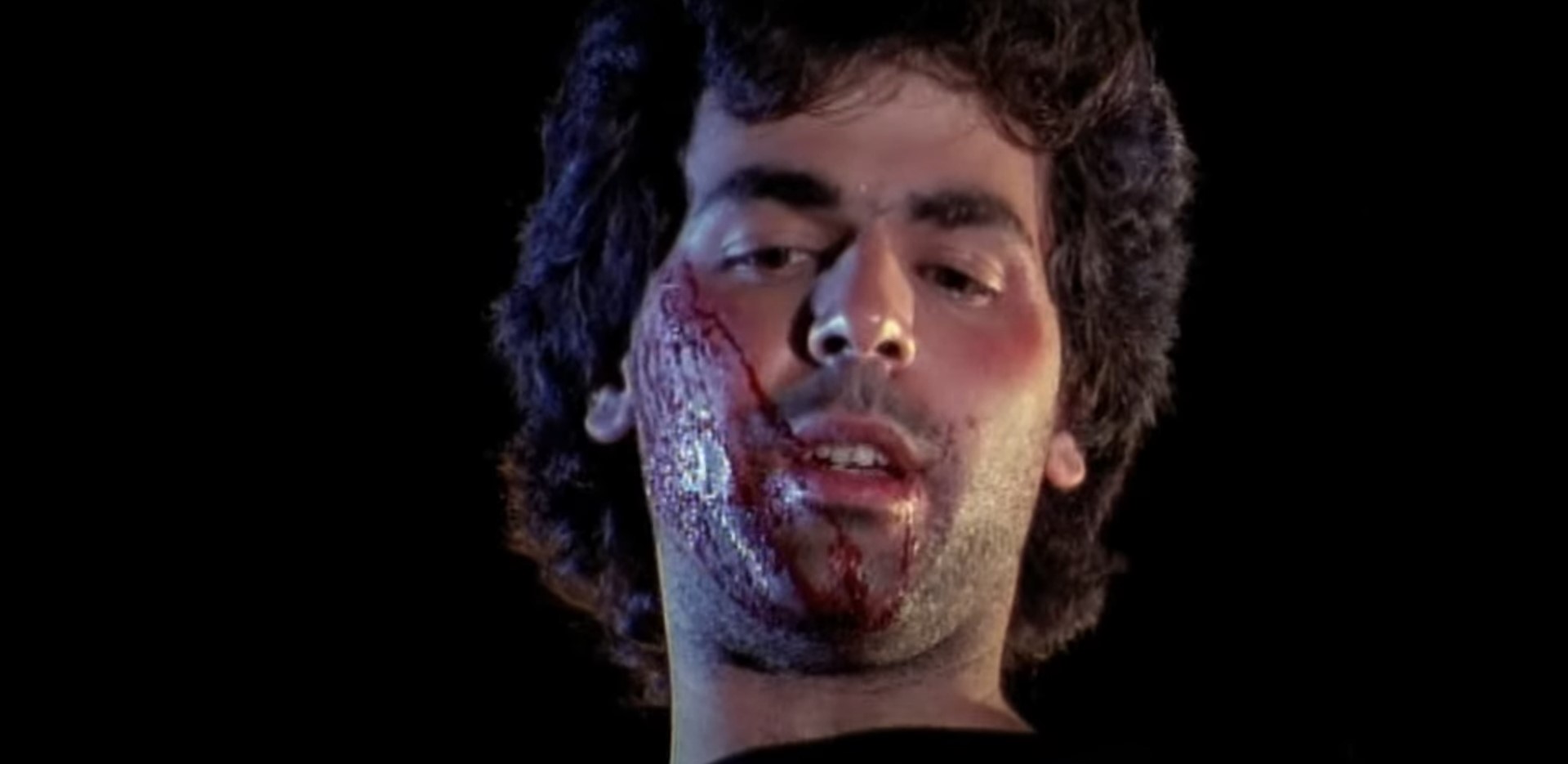
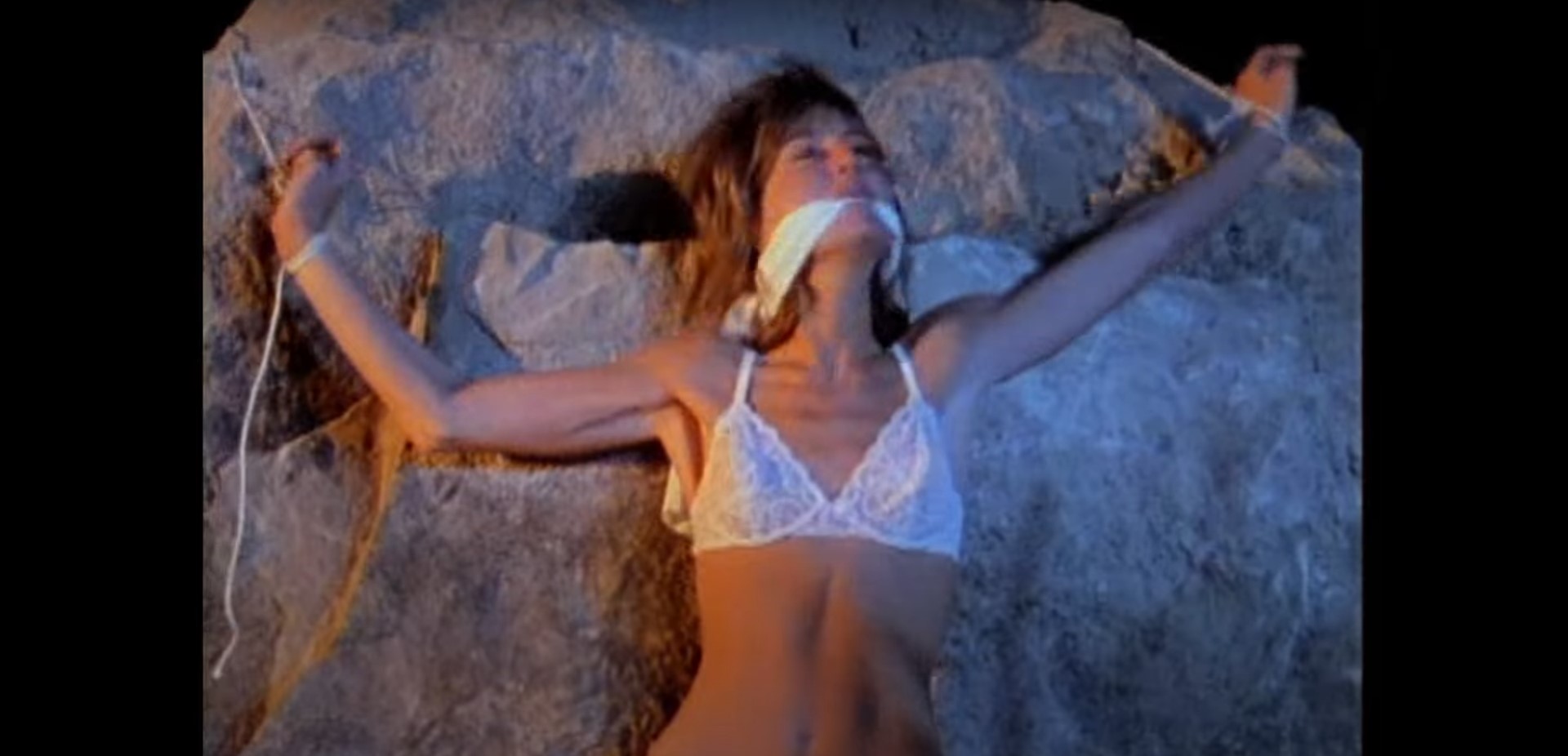
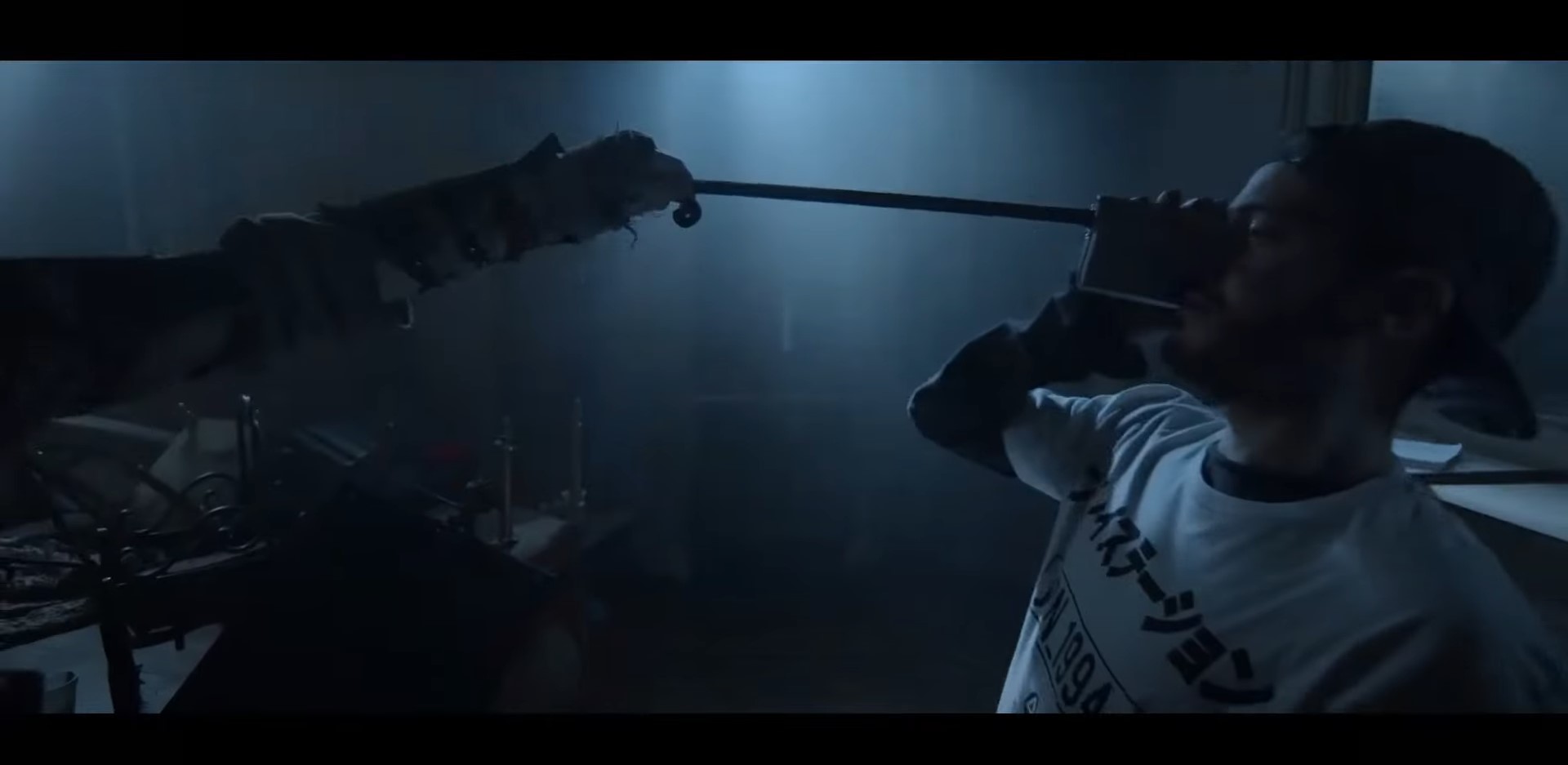
A horror movie about a supernatural Celtic killer has just wrapped production and goes into post.  The cast and crew what to succeed at all costs, not only in the movie but also in their stagnant careers.  However, the director, Matias, craves fame and legacy to the point of committing his soul to whatever it takes to cement his film in acclaimed success.  Matias and the arcane producer form a pact with a diabolical computer program and artificial intelligence that’ll bind their movie to esteemed infamy as well as bind their cast and crew to their characters.  When Matias invites select cast and crew to a private screening at his home, they realize the movie has scenes of their characters that weren’t shot during principal photography and that whatever happens to their characters in the movie, being chased by the Celtic killer, will happen to them in real life.  The only way to survive the movie is to last the full 90-minute runtime.
Hailing from Argentina, the South American country that brought us “Terrified” and the “Plaga Zombie” films, comes another tale of terror with the metaverse horror “Realidad Virtual,” aka “Virtual Reality.”  The 2006 “Director’s Cut” and 2009 “Breaking Nikki” shot caller Findling continues his traipse through psychotronic land with a story that couldn’t be more relevant today than if artificial intelligence synthesized the narrative itself out of binary ones and zeros.  The script comes from Findling and cowriter Lourdes Prado Méndez, an Argentinian romance novelist.  Having virtually no romance in “Virtual Reality” whatsoever, the 2021 film stretches Méndez’s range into crafting characters with a foot in two planes of existence while under immense fear and pressure to survive a supernatural slashening.  “Virtual Reality” is produced by Gabriel Lahaye under Lahaye Media, who has supported and collaborated on a number of Findling’s previous films, such as “Breaking Nikki” and “Impossible Crimes,” and is also a production of Wit Producciones, Cine Argentino, APIMA, FilmSharks, and INCAA of Argentina.

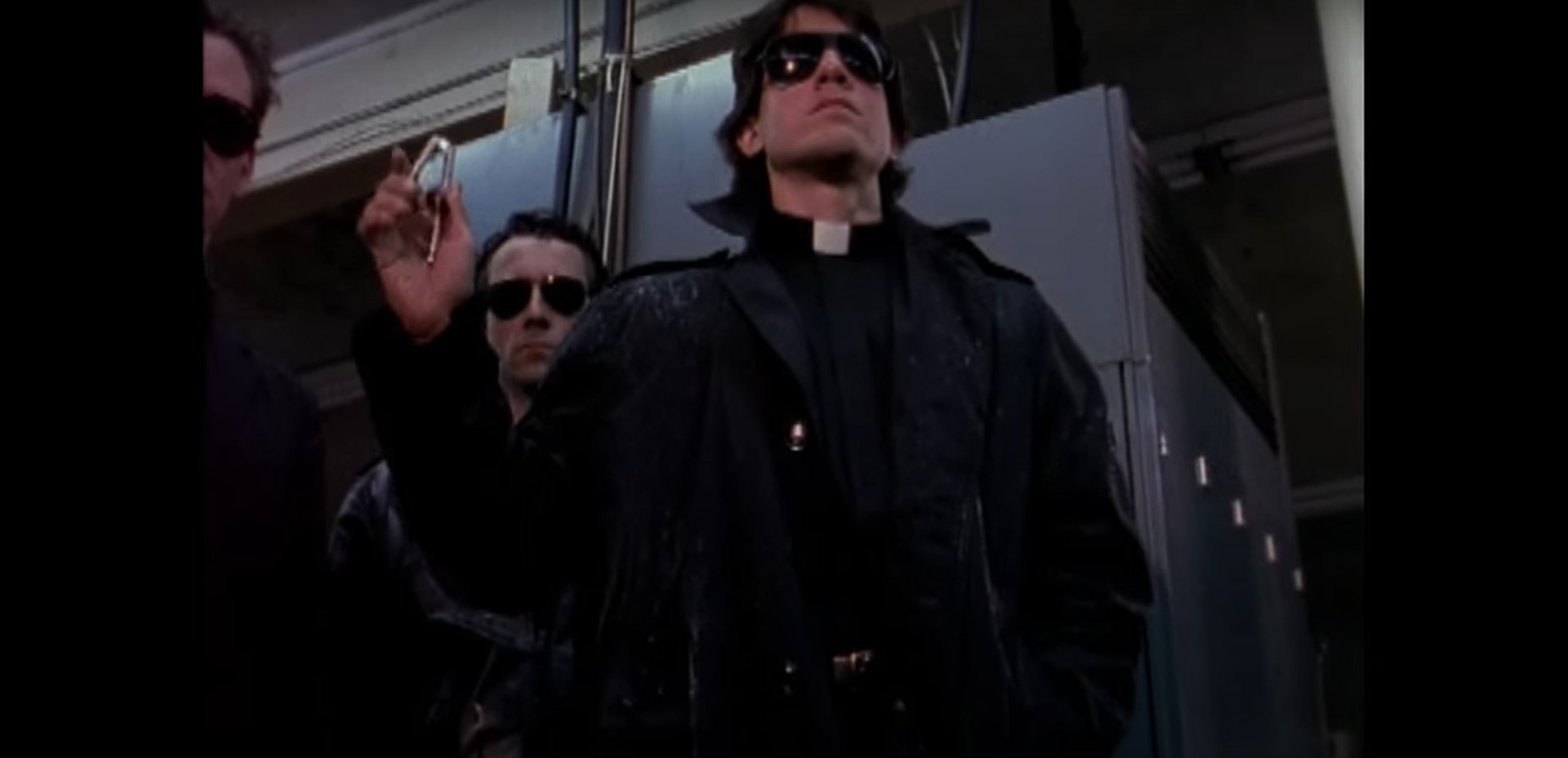
The story circles around a selectively small and independent film cast and crew finishing up a concluding scene of another to-be-forgotten horror movie by director, Matias (Guillermo Berthold), who has had multiple failed films before now.  Yet, the production team remains positive, hopefully the film with jumpstart careers as desperately expressed through the first act, especially with the film’s final girl star Guadalupe (Vanesa González, “Hypersomnia”), or Guad as she’s called by her friends, and her director’s assistant brother Pablo (Santiago Magariños).  Berthold plays the sneaky-sadistic director about as a well as most with a fervent penchant to do anything for his creative filmic art even if that means colluding with a shady, mysterious producer in César Bordón (“She Wolf”) whose performance’s obscured or lack of purpose is due in part to the character’s flimsy connection to the diabolical computer program.  Bordón can’t help but just be an inhuman human, violent by necessity instead of being violent with a purpose.  The producer seeks success for every single one of his films with a subsequent plotted course for the next idea – whether be a sequel or a brand new story – yet his connection to the network of evil of unexplained runes, sporadic pixilation, and artificial intelligent adaptations that can re-edit recordings into a new and inexplicable account of the story has been sorely severed in regard to understanding his background and his motivation of mortal sacrifice for movie fame.  Other connects that were left on the cutting room for, so to say, were between the siblings Guada and Pablo and their dying mother in what I suspect was an attempt to shove the sister and brother some sympathy, clearing the way for the two to be the unambiguously heroic duo, but the scene with their mother on her deathbed offered little-to-no compassion, producing a gelatinous lasting effect in what was a more visual one-off of two children spending the time they have left with their mother versus an incentive or arc scene that would hopefully rally up character expectations to look after each other.  “Virtual Reality” rounds out the cast with Frederico Bal (“Impossible Crimes”), Francisco González Gil (“El último zombi”), Sofia Del Tuffo (“Luciferina”), and Christian Sancho in a Johnny Depp inspired dressed part of a self-centered actor with a suspected pill addiction. 
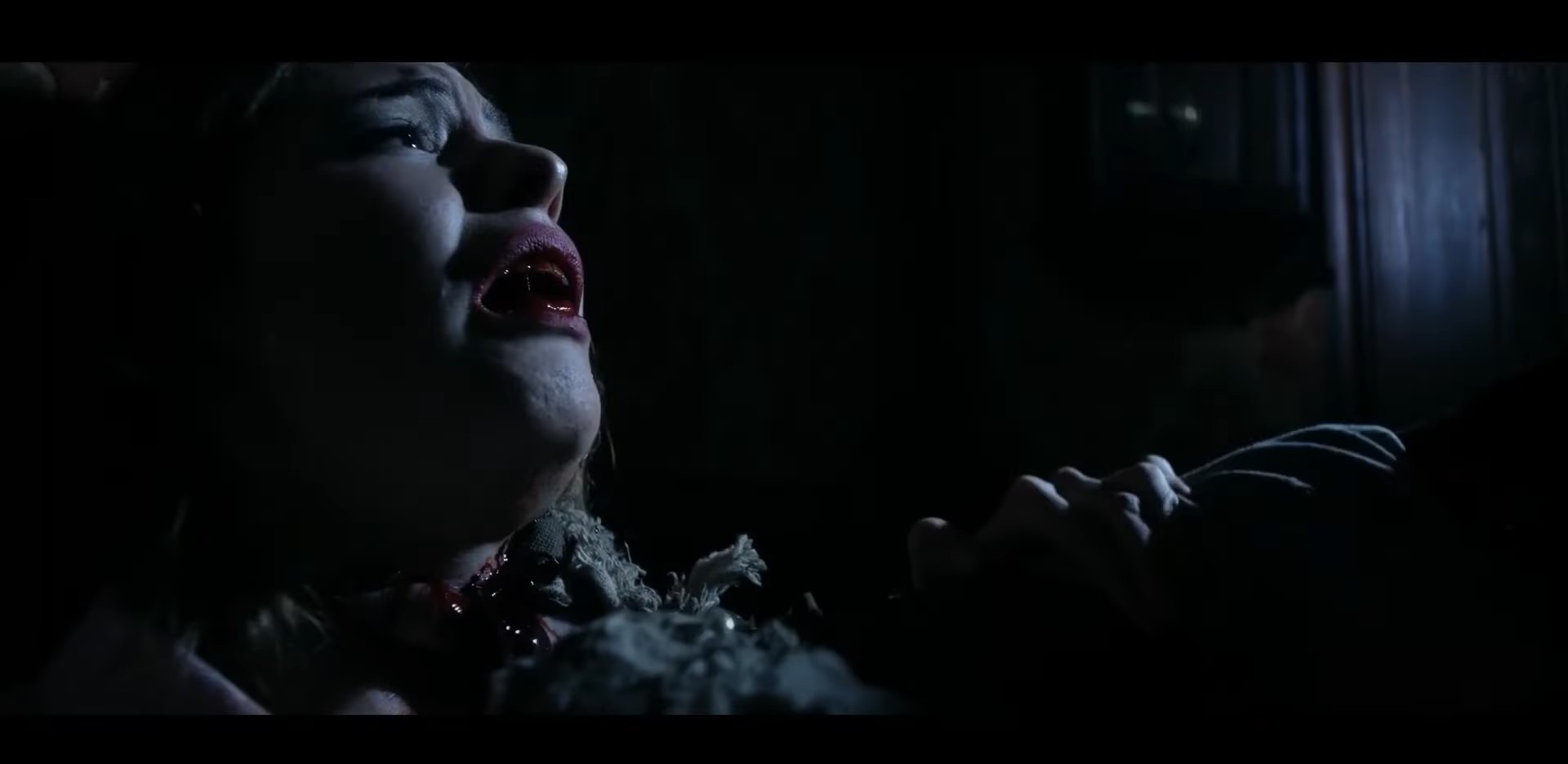
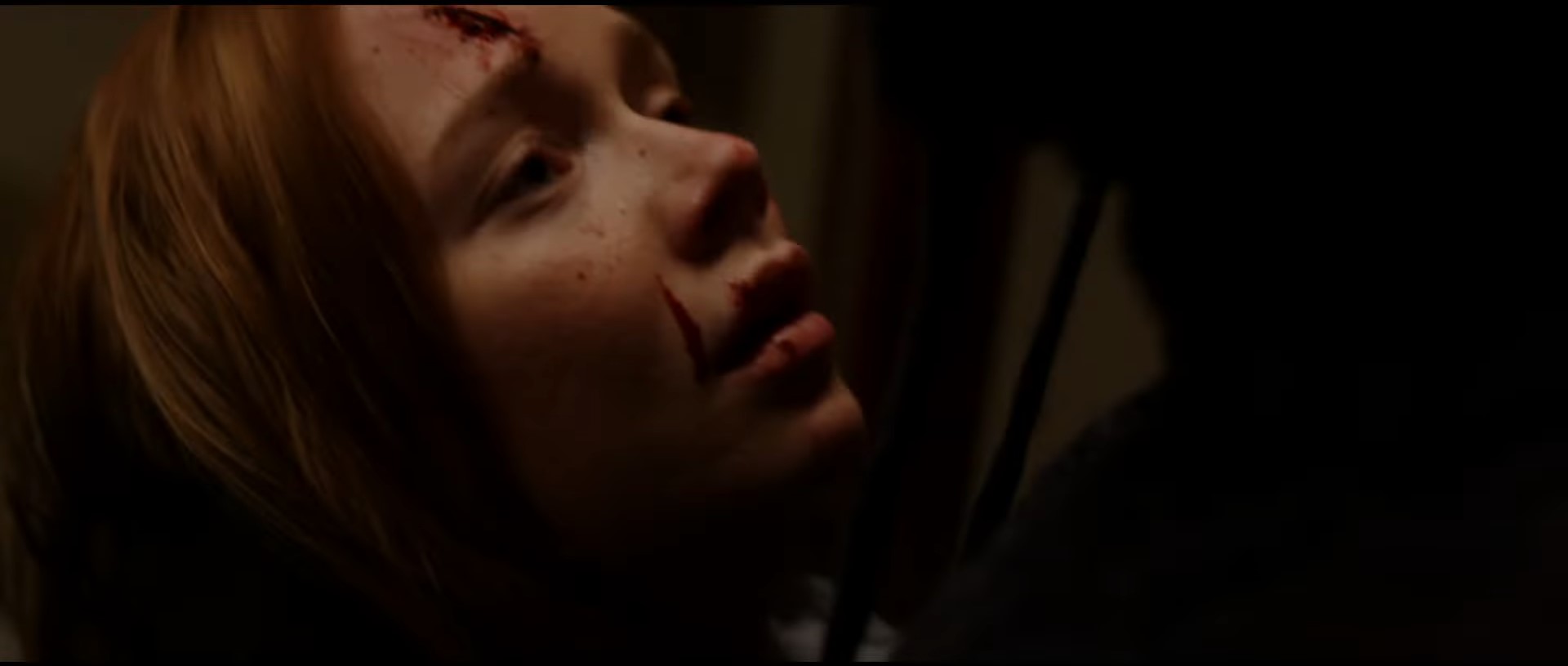
As far as plot designs go, “Virtual Reality” has an interesting concept that involves filming two different harrowing situations and joining them into one parallel plight with the actors reacting more to the events happening on the television screen, which in itself becomes living, breathing character of sinisterism, rather than what’s happening outside the box in the present.  Both realities are virtually live and in play for their very being and whatever happens in one, affects the other.  “Virtual Reality’s” state of duality, not only in character, but also in linear lines of an alternate universe with lifeline connections, is smart, fresh, and terrorizing to know that your life depends on an A.I. created character coursing through a maze for their very lives.  This mirror-meta-effect continues to evolve as the story plays out that leave survivors questioning reality and questioning their individuality of some higher force that has used them like some free-thinking avatar for filmdom fame.  This is where “Virtual Reality” starts to become complicatedly crisscrossing as instances of a distorted reality spiral down a rabbit hole of what we thought was true.  Findling is nonapologetic for his layered universes that spins and wraps a narrative around another in what is a show of forced fantasy subsisting in that gray area of reality.  The Celtic slasher storyline is just a sublevel to the story’s higher level view that defines greed and worth amongst people longings for more and also models itself to reflect that thin line some people cross between reality and fantasy, as foreshadowed early on into the film during the shooting of the final girl scene when method actor Julian gets into the headspace of his Celtic killer character and really starts to strangle Guada in a climactic moment.  By the finale, you’re comprehensible pencil might have wandered off the connective dot trail in trying to see the bigger picture of Hindley’s meta-movie but “Virtual Reality” is innovative tech horror that just requires a smidgen of tweaking to be impeccable.
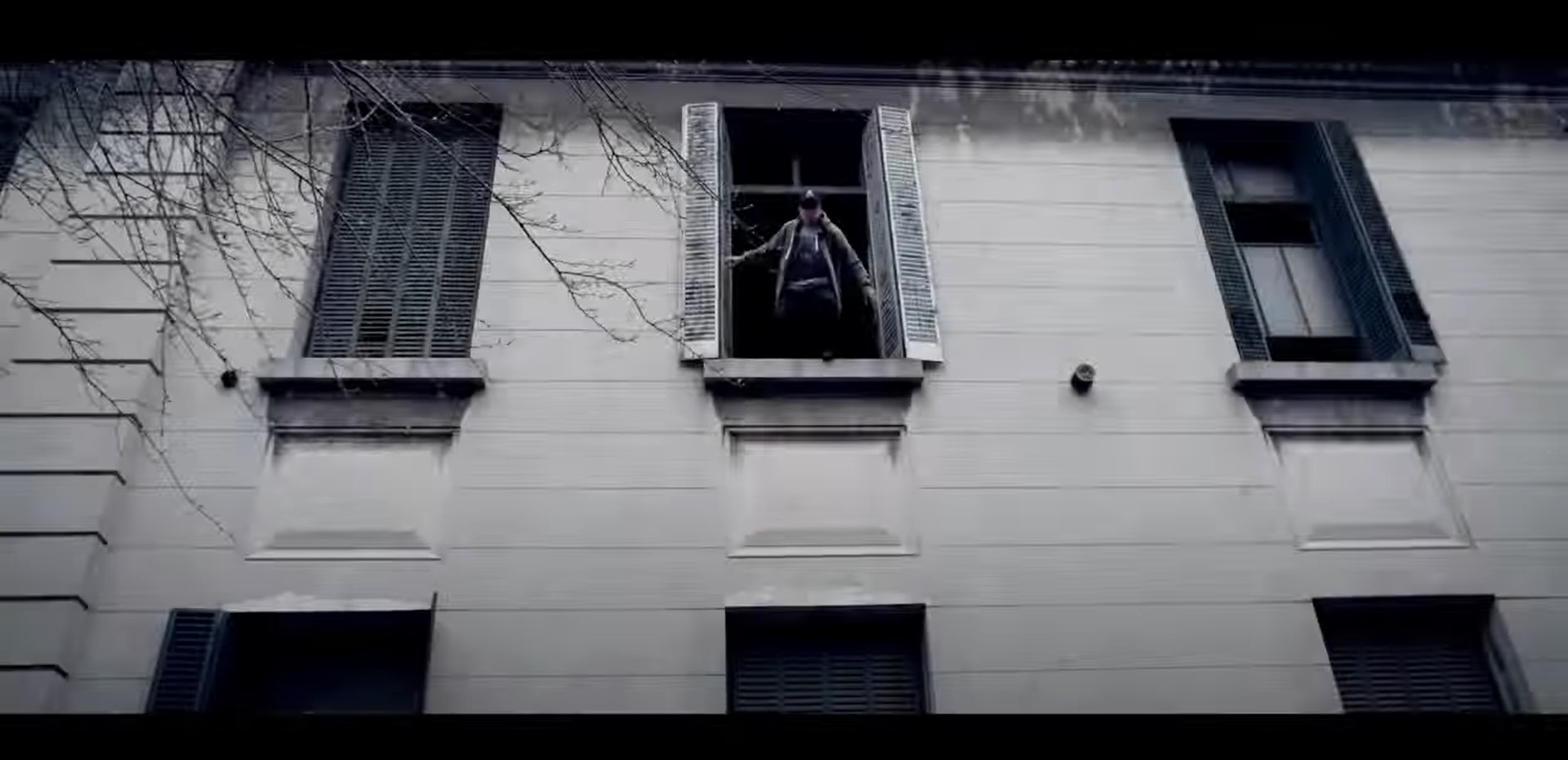
2020.  That was the last time I reviewed an Artsploitation Films title.  The long 3-year hiatus was due in part of King Lorber purchasing the boutique Philadelphia label that specialized in bringing independent global horror to the U.S.  Artsploitation Films and Kino Lorber continue that pursuit with Hernán Findling’s “Virtual Reality” from Argentinian now on a Stateside Blu-ray disc courtesy of the joint label.  The AVC encoded, 1080p High-Definition, BD25 is presented in a widescreen 1.85:1 aspect ratio.  Cinematically, the format storage is able to capture the true quality of the image with hardly any compression artefacts.  There’s not a ton of visual augmenting but what’s presented is a draining of color to a near black-and-white image with pigmented primary color lighting to give the scenes a dash of color that’s in contrast to the moderate-to-heavy in-movie, trope-heavy lack of lighting to create deeper shadows for that gloomy horror movie effect of interior trapped victims running for their lives in the dark.  Two Spanish language audio options are available on the release, a DTS-HD 5.1 Master Audio surround sound and a DTS-HD Master Audio 2.0. The 5.1 track has good balance between the ambient, soundtrack, and dialogue tracks albeit a little heavy on the score to clutter, at times, a clear exchange, especially when everyone’s yelling at the television set.  Other than that, no technical issues throughout the multi-channel output. English subtitles run at startup but can be turned off.  The unrated, region A encoded release has a runtime of 84 minutes but doesn’t come with a menu for special features; however, there is the film’s trailer and, if you stay tuned after the credits, there’s a bonus scene where you, the viewer, becomes the star of your own movie.  Artsploitation Films is back, baby!  Courtesy of Kino Lorber, “Virtual Reality” is barely tapped meta-horror, that has become all the craze nowadays, and Hernán Findling unboxes that fine line between real and unreal to only merge them together to be one and the same in a twisted interpretation of when art imitates life. 

Believe Everything You See.  “Virtual Reality” on Blu-ray at Amazon.com

Before Careful What Hotel You Book Online. There Just Might be an Ancient EVIL Lurking in the Basement! “The Ghosts of Monday” reviewed! (Cleopatra Entertainment / Blu-ray)

 “The Ghosts of Monday” is now on Blu-ray Home Video!  Click to Cover to Purchase!

A small film crew of ghost hunters travel to the Grand Hotel Gula, a magnificent resort that accommodated tourists from all over the world, to document the hotel’s horrible past on a rare 53rd Monday of a year when the hotel befell into notorious tragedy as guests attending a party were poisoned and the three owners had committed suicide soon after.   Eric, the director of the show, is on his last leg to make the show a success as he becomes pressured by local benefactors and even the show’s host personality, Bruce.  At the request of Bruce, Eric brings his wife Christine who Bruce raised as a child.  From day one, the empty stunning foyer and luxurious accommodates pale against the ambient creepiness of the dark corridors and basements and the ominous sounds that lurk from within the shadows.  When the shooting commences into an investigation, the unsuspecting filmmakers find themselves in an ill-boding situation with an ancient evil that has been kept hidden away from the world for eons.

I want to prelude this review by saying that my thoughts are with Julian Sands family and if there is any hope left to grasp onto, we want sincerely to yearn for the outcome of Julian Sands disappearance in the hiking region of Mount Baldy, California to be a positive one and see the actor, the husband, the father of three alive and well.  As an entertainer, Sands gave us a malevolent sorcerer in the “Warlock” trilogy and providing us with notable performances in David Lynch’s “Naked Lunch” and the fear of spiders-inducing “Arachnophobia.”  Since the turn of the century, Sands has more-or-less fell out of the limelight with sustaining his presence mostly on direct-to-video releases and appearances on TV series.  The British actor’s latest low-budget horror “The Ghosts of Monday” is a film helmed by Italian director Francesco Cinquemani on the little-known getaway island of Cyprus, a country located in the Mediterranean Sea.  Cinquemani, who typically directs his own scripts, co-writes the film with Andy Edwards (“Zombie Spring Breakers,” “Midnight Peepshow”), Mark Thompson-Ashworth (“POE 4:  The Black Cat”), and Barry Keating (Killer Mermaid,” “Nightworld: Door of Hell”).  “The Ghosts of Monday” appears to be a blend of region myth and cultural belief pulled locally and from the stories of Greeks Gods into one abandoned hotel horror full of cult sacrifice and betrayal, produced by the “S.O.S.:  Survive or Sacrifice” producing team of Loris Curci (“The Quantum Devil”), Marianna Rosset, and Vitaly Rosset under the Cyprus production company, Altadium Group.

Julian Sands might not be the principal lead of the story but is a major player in what culminates into an ambuscade of doomsday deliverance at the expense of others.  As the documentary’s host and a Cyprus local, Sands plays the eccentric, often frisky, heavy drinker Bruce who has been a father, or the adopted father-figure as it’s not entirely clear, to Sofia (Marianna Rosset, “S.O.S.:  Survive or Sacrifice”).  Christine is distant and disordered returning to her Cyprus homeland with her husband Eric, the director, played by “The Turning’s” Mark Huberman.  Almost seemingly estranged from each other, Eric and Sofia display some noticeable pensive and tension-riddled issues between them that the story never fully fleshes out for the audience.  Christine is under medication for a sleep disorder, Eric’s feeling the pressure from powerful producers, and none of that external strain has defined or even as much delineated itself in full in their aloof relationship that has glimmers of hope and smiles as the wall between them is more up than it is down despite Eric’s constant vigil over her.  Performances from Rosset and Huberman meet the need of concern, desperation, and pressure forced upon them more from in the outside than in, especially in Huberman with a slightly better angle on his creative-driven, project-lead sudden derailed from his narrow focus to deliver a quality product as his career careens out of control and that brings out his rougher edge we see in the latter half of the story.  In comparison, the more iconic and recognizable figure, Julian Sands, doesn’t land his role well in what could be seen as if his performance landing gear only had one wheel down before touching pavement but was able to jerry-rig a not-big-enough wheel to get him safely through.   “The Ghost of Monday” has some mysteriously odd and menacing individuals in hotel owner Frank (Anthony Skordi, “Carnal Sins”), his wife Rosemary (Maria Ioannou, “Waiting Room”), and the producer couple Dom (Loris Curci), and Pat (Joanna Fyllidou, “Girls After Dark”) as hovers, prowlers, and the overall conventional creeps in the corner, watching you.  On the other side of the coin, you have a film crew who are more or less victim fodder for the evil powers to be with Anna (Kristina Godunova) and suspected lesbian lovers in sound designer Christine (Elva Trill, “Jurassic World:  Dominion) and cinematographer Jennifer (Flavia Watson) because A/V is just another acronym for LGTBQ+.  With the exception of Frank and Rosemary’s background on why they bought the forsaken hotel, none of the other characters constitute a piece of the pie as they are thrown into the mix, sprinkled with tidbits of intrigue, before their dispatched into the feast or famine categories.

We have ghosts in the title. There are cult members, sometimes shrouded in obscuring clothing, sometimes just lingering exposed outright. We have silent but deadly twin girls with kitchen knives. There is also a slithering creature lurking in the basement. “The Ghost of Monday” is a variety show of vile villains with very little coherence to bring the elements together, but what is clear is a mythical being at the center of the surrounding maelstrom that’s quickly closing in on the protagonists. With the script penned by a cohort of writers experienced in resort massacres and killer aquatic creatures, all director Cinquemani has to accomplish is the effectuation of ideas, but what results is haphazard derision from what feels like “Ghostship” in a hotel and looks like “The Shinning” without the isolating madness all in the confines of a very shaky and marred cinematography. The core of the story is inadvertently lost amongst the competition of where audiences should retain their attention which is a shame because at the core is a deeper, broader, and more mythically rich in Grecian horror with a gorgon immortal that’s equated as the devil itself and linked to life’s destruction if not sacrificed a corporeal shell.  Viewers will be treated to only a glimpse of that circling terror during the climatic end and, more than likely, budgetary reasons ground the story’s larger-than-life concept with only a mixed bag clash of content leading up to the end.

Plugged as Cyprus’s first native horror production, “The Ghosts of Monday” arrives onto a Blu-ray home video release from the Cleopatra Entertainment, film division of Cleopatra Records, and Jinga Films with MVD Visual distributing.  The featured release is presented in a widescreen 2.35:1 aspect ratio, shot on what IMDB has listed as the Sony CineAlta Vince with a Zeiss Supreme Prime Lens.  The AVC encoded Blu-ray retains a quite a bit of compression issues throughout the entire digitally recorded package as video ghosting is the biggest image culprit.  I’m sure that type of ghost was not what “The Ghosts of Monday” were referring to in the title.  Aliasing, banding, and small instances of blocking also appear occasionally and in conjunction with the ghosting which makes this transferred format nearly impossible to watch with hardly any detail in what should be a high-definition release that renders closer to 480 or 720p as the video decodes at a low 22 to 23Mbps average.  The Blu-ray has two audio options, an English 5.1 Dolby Digital and a LPCM Stereo 2.0. Though both outputs render nearly identical because of the lack of explosions or an extensive ambient track, the surround sound mix offers a better side to the A/V attributes with a barren-disturbance sound design and a solid score that keeps the concerned glued to the television sets, waiting for something spooky to pop out from behind. Dialogue doesn’t perceive with any issues with clear and clean conversation, as expected with most digital recordings, and is greatly centered and balanced without sounding echoey and out of depth’s scope. The bonus features are scantily applied with only an image slideshow and feature trailer, plus trailers from other Cleopatra Entertainment productions, such as “The Long Dark Trail,” “Frost,” “A Taste of Blood,” “Baphomet,” “Scavenger,” “The Hex,” and “Skin Walker.” The physical attributes of the release come with a traditional Blu-ray snapper cast with latch and cover art, that’s slightly misleading, of a glowing apparition. The region free release has a runtime of 78 minutes and is unrated. “The Ghosts of Monday” doesn’t buck the trend for Cleopatra Entertainment’s string of C-grade horror but is an unusual, new venture in the sense of strictly being a horror story without an eclectic soundtrack of signed artists to carry it through to the end.

 “The Ghosts of Monday” is now on Blu-ray Home Video!  Click to Cover to Purchase!

Copperton Cult Commands You to be EVIL! “Heartland of Darkness” reviewed! (Visual Vengeance / Blu-ray)

Own Your Copy of the Lost Linnea Quigley Film “Heartland of Darkness” by Purchasing at Amazon!  Click Here to Amazon.

Copperton, Ohio – a quaint and quiet, unsuspecting small town if looking to downsize from the big city hazards.  However, beneath the provincial veneer lies a satanic cult spearheaded by the local Reverend Donovan and his flock of townsfolk worshippers.  Donovan’s grip reaches far beyond just the local municipality as the insidious cult schemes to turn the state’s top officials into devoted followers of Satan.  Copperton’s new local newspaper editor, Paul Henson, along with eager reporter, Shannon Cornell, use their journalistic gut instincts to unearth and expose the corruption by Donovan up to the ladder of the town’s sparse governmental hierarchy, but with only a few residents unsubscribed to Donovan’s fanatical sermons, Paul and Shannon have nowhere to turn in order to protect themselves, Paul’s daughter Christine, and the entire state of Ohio from succumbing to Satanic domination. 

Once lost in limbo for three decades, “Heartland of Darkness” finally sees the light of retail shelves day!  Left unfinished for many years, director Eric Swelstad, then an Ohio State film student, supervises the completion of the horror thriller that revolves around satanic cults, grisly sacrifices, and sheep mentality based on the 1980’s satanic panic craze that swept the nation.  Penned by Swelstad, who moved on with this lift and helmed a handful of direct-to-video titles, such as “The Curse of Lizzie Borden 2:  Prom Night” and “Frankenstein Rising” in the early 2000s, and filmed in and around Columbus and the Granville village of Ohio, the 1989 principal photographed production was thought to be ultimately completed by 1992 but due to funding and production constraints, that was not the case.  The film also went through a couple of other titles, beginning with Swelstad’s original script title “Fallen Angels” and then changed to “Blood Church” at the behest of a possible financier that eventually fell through.  In the end, the film settles on “Heartland of Darkness” as a privately ventured production Steven E. Williams (“Draniac!”), Wes Whatley, Michael Ray Reed, Thomas Baumann, Mary Kathryn Plummer, and Scott Spears (“Beyond Dream’s Door”) serving as producers.

One of the reasons why the obscurity adrift “Heartland was Darkness” was so sought after by horror fans is because the title became one of the lost films of scream queen Linnea Quigley.  Standing at only 5’2’’ tall, the “Return of the Living Dead” and “Night of the Demons” actress was a hot commodity during the late 80’s and a genre film giantess who ended up having a fairly prominent, written-in role just for her hire in what is, essentially, a student film.  Quigley’s role as the town’s high school teacher, Jessica Francine, makes the hormonal boy in me wish my teachers actually looked than beautiful and provocative in high school, but in the same perspective, Quigley doesn’t appear or is barely older than Sharon Klopfenstein as Paul Henson’s daughter, Christine.  The two share a high school hallway moment while sporting crop tops, tight bottom wear, and discussing paganistic occultist Aleister Crowley and Nazi mass murderer Adolf Hitler and while the additional scene gives Quigley screen time, it evokes risibly campy optics.  Dino Tripodis defines the principal lead Paul Henson, a former Chicago Tribunal editor having left the midwestern journalism powerhouse after the death of his wife.  Stepping into a world of cultism, Paul’s eager to save what’s left of his family at all costs by exposing grisly murders as more than just drug-related collateral damage (I didn’t know drug wars were such a big thing in Ohio).  The debut of Tripodis’s performance fairs well enough to solidify himself as the marginalized hero against a Goliathan opposition that’s deep rooted and backed by powerful leaders, but hands down, Tripodis is outdone by Nick Baldasare as the dark featured, maniacally calm Reverend Donovan.  Baldasare has such a tremendous presence as a fire and brimstone agent of the most notable archfiend that his performance swallows the shared screen moments with Tripodis.  A few principals come off as rigid and flat in their efforts.  As the sheriff of Copperton, Lee Page is the biggest offender with an obvious staged act of busting Tripodis’s balls for a better part of the story.  “Heartland of Darkness” is a mixed bag of showings from a remaining hyper-localized cast compromised of new to little experiences actors including Shanna Thomas, Sid Sillivan, Ralph Scott, Dallas Dan Hessler, Ray Beach, Mary Alice Dmas, and with the John Dunleavy in a magnetic role of a cult-crime fighting preacher.

Hard to fathom why but still completely understandable how “Heartland of Darkness” remained in celluloid purgatory for so many years.  Swelstad had tremendous ambitions for a student film that included a visual effects storefront explosion, but the money well dried up to finish shooting, touch ups, effects, and digitizing the filmmaker’s efforts onto a marketable commodity to distribute.   At last, here we are, 33 years later with a finished copy of the “lost Linnea Quigley film” and, boy-oh-boy, does not disappoint, living up to the expectational hype surrounding the film’s once stagnant, hidden from the world existence.  Swelstad creates the illusion of vast world from the small town of Copporton to the big cities where the District Attorney and Governor reside.  Car chases, rock quarries, a church nave, animal intestine smeared ditches, and a slew of constructed sets, an array of offices, and an abundance of diverse exteriors. “Heartland of Darkness” might have a lot going on and is often repetitive in the scenes with Paul and Shannon pleading their case to multiple officials to probe into gruesome deaths and the cult’s leadership but not to the story’s detriment as all the progressive storyline dig Paul and his small band of investigators into a deeper danger hole with Donovan and his Devil devotees under the guise of God’s Church. Scott Simonson’s entrail splayed and blood splattering special effects culminates to a shotgun showdown at a virgin sacrifice and an impressive full-bodied impaling that is, frankly, one of the best edited shots of the film. “Heartland of Darkness” is rayless and scary, callous and cold, formidable and shocking with a pinch of sex and is finally within our grasp!

Visual Vengeance, a pioneer in curating the lost, the forgotten, and the technically shoddy indie cult and horror films, releases for the first time on any format ever “Heartland of Darkness” on Blu-ray. Coming in as VV08 on the spine, the Wild Eye Releasing banner strays their first seven SOV features to bring aboard a 16mm negative transfer, director-supervised from original film elements of the standard definition masters. Visual Vengeance precautions viewers with the usual precursing disclaimer that due to the commercial grade equipment and natural wear of aging, the presentation is the best possible transfer available, but, honestly, the full screen 1.33:1 aspect ratio presentation looks outstanding without much to critique. Obvious softer details were expected but with the celluloid film, there’s not much in way of macroblocking or tracking complications as common with shot-on-video tape features. Compression verges to a near perfect reproduction of the picture quality. Skin coloring and overall grading is congruously natural in grain and stable image. The English stereo mono track doesn’t pack a punch but isn’t also frail with strong mic placement and the dialogue is clean and clear of imperfections as well as major hissing or popping. The faint 16 mm camera whir can be heard but isn’t distracting, adding a comforting churr to the footage. Optional English subtitles are available. Special features include a new 40-minute behind-the-scenes documentary Deeper into the Darkness, an audio commentary by writer-director Eric Swelstad, actor Nick Baldasare, cinematographer Scott Spears, and composer Jay Woelfel, a new interview with cult icon Linnea Quigley, commentary with Tom Strauss of Weng’s Chop magazine, an archival Linnea Quigley TV interview, the complete “Fallen Angels” 1990 workprint, the same workprint with audio commentary with Swelstad, vintage cast and crew Ohioan newscast interviews in the Making of Fallen Angels, the original promotional video for “Blood Church,” a behind-the scenes image gallery and footage, and the original TV spots and trailers, of this feature and other Visual Vengeance films, from the static, composite menu. Ready for more? “Heartland of Darkness” comes with just as much physical bonus swag with a limited-edition prayer cloth, a six-page liner notes from Tony Strauss complete with color beind-the-scene stills, a folded mini-poster of a leather-cladded Linnea Quigley’s high school hallway scene, and retro Visual Vengeance stickers inside a clear Blu-ray latch snapper with new, illustrated cover art that also has reversible art of the original “Blood Church” promo art, sheathed inside a cardboard slip cover with a different and new illustrated cover art. The region free, 101-minute release is unrated. Visual Vengeance continues to pump out gilded, undiscovered treasures and giving them the royal treatment. For “Heartland of Darkness,” this sublime release was 33 years in the making and is one Hell of a bounty!

Own Your Copy of the Lost Linnea Quigley Film “Heartland of Darkness” by Purchasing at Amazon!  Click the Cover Below.

Those Little EVIL Buggers Ruin Everything! “Ankle Biters” reviewed! (Dark Star Pictures / Digital Screener)


Injured hockey goon Sean Chase has severe on-ice anger issues but leave from the game curbs his temper for the better after meeting an internally distraught Laura Haywood.  Enamored by the mother of four who enjoys rough sex as much as he does, Sean decides to willingly plunge into marriage by asking Laura for her hand against his friends and family passive advise him of the hefty, multi-kid baggage in Laura’s tow.  To set the romantic mood, Sean takes Laura and her young kids to his family’s lakeside cabin where all the locals know him, personally and professionally, but when the girls discover cell phone footage of Sean and Laura’s bedroom exploits and interpret them as Sean hurting their mother, they devise mischievous retribution on Sean in order to protect mommy. 

From being a bare knuckler enforcer using the rink as his boxing ring to becoming the haplessly smitten and blind to four little girls’ perception of him as the bad guy, the once penalty box denizen Sean Chase is now the penalized good guy in the Canadian dark-comedy “Ankle Biters” from writer-director Bennet De Brabandere.  Also known as “Cherrypicker,” the title used in the film, the film is Brabandere’s first feature length film based off a story by lead actor, Zion Forrest Lee (“Hit It”), who oft puts delicate notes of misperception as the main theme in his tale.  Shot primarily in the harbor village of Ontario’s Tobermory “Ankle Biters” is produced by Michael Flax of Flax Films, director Bennet De Brabandere, long time makeup artist Sean Sansom with credits from “Land of the Dead” and “eXistenZ, and special effects company, Mindwarp Productions’, Francois Dagenais (“Saw” franchise, “Chucky” SyFy series).  The film is presented in part by APL Films.

As if seeking some sort of self-punishment, story originator Zion Forrest Lee takes the form of a punching bag for four overprotective little girls; four real life sisters, in fact, played by Rosalee, Dahlia, Violet (“Bad Santa 2”), and Lily Reid, the latter Reid having played a significant role in Johannes Roberts’ recent “Resident Evil” reboot as young Claire Redfield and will be involved in another Lee and Brabandere collaboration in the upcoming apocalypse thriller, “Salvation.”  As a father of three girls myself, the Reid girls are nothing short of genuine, killing their roles with tweaked difference in each of their individual personalities as cute and morbidly curious children and siblings.  Lee offers up a rather over-the-top approach toward Chase’s Mr. Perfect in a way that doesn’t come across naturally as the performance is stuck somewhere between Phil Hartman in “Jingle All the Way” and Chevy Chase in “Christmas Vacation” (I’m in the Christmas spirit with my films, if you can’t tell) with a suave sexy toward the women who swallow it up and dorky goofball toward kids who don’t understand it. Chase’s legendary hockey status has been interweaved into the community surrounding his family’s lakeside cabin, such as the local cops with Officer Brian (Gareth Moyse), local shopkeepers like Jordy (Jordan Mills), and even other vacationers, a pair of lakeside neighbors in Anthony (Doru Bandol) and Caprice Gaddis (Maria Sant’Angelo) with their blossoming teenage daughter Matia (Matia Jackett, “Crimson Peak”). By far one of the more interesting characters, Matia doesn’t actually progress the story with her flirtatious crush on Chase as she’s used as more of a device to propel the Haywood girls into full-blown psycho-kiddies as Matia bites off more than she can chew on a what should have been a routine babysitting gig. The biggest name in the film is the “Who’s Line is it Anyway?” comic Colin Mochrie in an unfunny role as the town’s police chief. “Ankle Biters” houses many curious characters come and go, adding little to story or not adding enough, with select bit performances from Evert Houston, Michael Copeman, and Jani Lauzon amongst the Canadian cast.

Not one single member the cast had that it factor that sparks allurement, intrigue, laughter, hate, or any other kind of emotion they’re trained to extract from you or intent on to make you feel in certain crucial points in the story. As a dark comedy, “Ankle Biters” lacked, well, comedy with an overreaching and flat satire on the innocence of mistaken circumstances. When the opening credits roll with the Gary Glitter “Rock and Roll” sampling “The Hey Song,” a track used for decades at sporting events, and we’re immediately exposed to a confrontational and bearded hockey player punching the eye out of an opposing team player into the title sequence, investing myself was easy as the synch of melodious Jock Jams and brutality is promised for the horizon; however, quickly skating from the ice is our beloved bloody-knuckled goon gone in a matter of oddly edited and sequenced scenes and is rarely seen again, even in flashbacks, as we’re dumped into post-hockey career, clean shaven, and on the behavior mend of Sean Chase trying to quickly nail down a woman with four kids who obviously dislike him a whole lot. I fail to see the transition, I don’t want to see the transition, and I’m angry “Ankle Biters” ended up in this transition whereas having Chase continue to be the injured, but still a fisticuffing and bearded enforcer, going toe-to-toe with brats would have been much more (Canadian) of an amusing watch. The better side of this genre blending coin is the darkness portion that really elevates during the latter half of the lakeside trip. Dead bodies, baby spiders crawling out of an ear, open wound fractured skull, a knife to the eye are just a few of the effective practical and composite applications from Francois Dagenais’s special effects company, MindWarp Productions, that keeps the story grounded with destroying the human anatomy as well as keeping up with the human fallibly in order to not have the film fall completely on its face with everything else erroneous.

Released back in mid-November, “Ankle Biters” landed onto On Demand platforms and DVD home video courtesy of Dark Star Pictures. Even though I’m unable to fully cover the audio and video details from any digital screener, I don’t think what was provided was even a finished version of the film that came complete with top left corner running timestamps and some obvious missing special effects, such as the missing prop knife tip when removed from the eye socket and then the tip is back whole on the next shot. No information on the DVD specs was given to me either. Brabandere and Lee do tease with a follow up sequel involving the “Son of Cherrypicker,” named after the lakeside penned “Cherrypicker murders” in the film which, again, was never made a solidifying connection to other than a brief news report ticker on television. If comparing a film close to “Ankle Biters,” Peter Berg’s “Very Bad Things” fits that gruesome bill with one gross misstep in front of another that eventually culminates to a shocking and even deadlier kill or be killed ending with a grown man versus four little girls.

Watch “Ankle Biters” On Amazon Prime Video

When Alone, EVIL Will Be Your Company. “The Wind” reviewed!


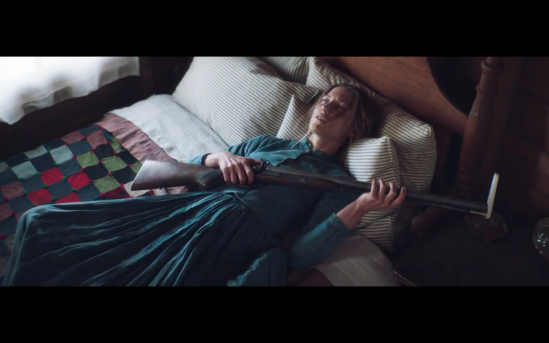
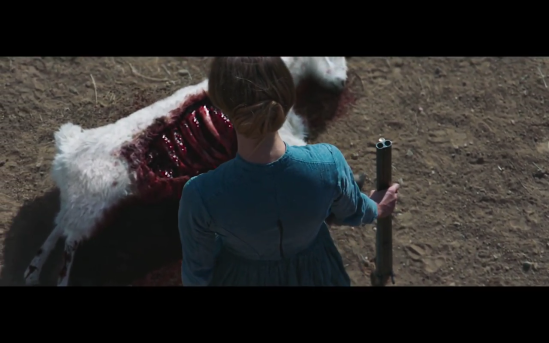
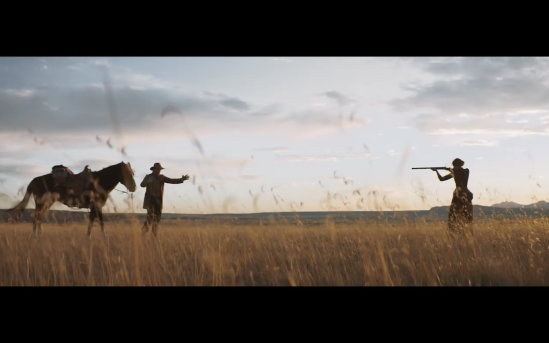
Living at the edge of the 19th century frontier, husband and wife, Isaac and Lizzy, live in complete seclusion as far as the eye can see until another couple, Gideon and Emma, settle a mile away in a nearby cabin. Unused to the punishing conditions the frontier might yield, the St. Louis bred Gideon and Emma find living without the comforts of urban life challenging and rely on Isaac and Lizzy’s strength and experience for survival. However, the frontier’s harsh reality produces a malevolent presence that flows through the prairie, stalking and toying with the settlers, only revealing itself to Lizzy while the others act if nothing is going on or just acting strange. The sudden and violent death of Emma and her unborn child send Gideon and Isaac on a two-day ride to nearby town, leaving Lizzy to face the isolated terror alone with only a double barrel shotgun that never leaves her side, but in her strife, Lizzy learns more about her newfound neighbors and even unearths some troubling truth about her husband that even further segregates Lizzy from the rest of reality.

If there wasn’t one more single thing to demonize, director Emma Tammi conjures up “The Wind” to mystify the western frontier. As Tammi’s debut directorial, penned by short film screenwriter Teresa Sutherland, the supernatural film’s dubbing could be a rendering of a long lost Stephen King working title, but all corny jokes aside, “The Wind” really could from the inner quailing of Stephen King’s horror show mindset. The film’s produced by Adam Hendricks and Greg Gilreath under their U.S. label, Divide/Conquer, and released in 2018. The same company that delivered the horror anthology sequel “V/H/S: Viral,” Isa Mezzei’s sleeper thriller “CAM,” and the upcoming, second remake of “Black Christmas” with Imogen Poots and Cary Elwes. With a premise dropped right into the fear of the unknown itself and with some powerful production support, “The Wind” should have soared as an unvarnished spook show come hell or high noon, but the jury is hung waiting on the executioners ultimate verdict regarding Tammi’s freshman film.

Five actors make up all the cast of “The Wind,” beginning with the solemn opening night scene with frontier men, Isaac Macklin (Ashley Zukerman of “Fear the Walking Dead”) and Gideon Harper (Dylan McTee of “Midnighters”), waiting patiently outside a cabin door until Isaac’s wife, Lizzy (Caitlin Gerard of “Insidious: The Last Key”) walks out, supposed baby in hand, and covered in blood. The subtle, yet chilling scene sets the movie from the get-go, sparking already a mystery at hand and coveting most of the focused cast. The two characters unannounced at the beginning, swim in and out of flashbacks and toward the progression of Lizzy’s embattlement with “The Wind.” That’s not to say that these characters are any less favorable to the story as “Slender Man’s” Julia Goldani Telles shepherds a vivid description of subtle lust and extreme instability that rocks a strong and self-reliant Lizzy living priorly a stale reality. There’s also the introduction of a wandering and warm pastor that leads to chilling reveal questioning any kind second guesses there might be about Lizzy. All thanks to veteran television actor, Miles Anderson.

“The Wind’s” non-linear narrative teases two courses, one working forward and the other backwards to a catalytic moment that becomes motivational for majority of characters in the prior days and the beginning of the end for one in particular. Though the latter centralizes around Lizzy’s flashbacks and encounters with the evil spectral wind, her descent into madness conjures more violently through the discovery; it’s as if her current state of mind has been stirred, whirled, whipped, tumbled, and agitated from the past that keeps lurking forward into her mind’s eye. Tammi pristinely conveys a subtle message of undertones from the past and present that chip away at Lizzy’s forsaken reality, leaving those around her delicately exposed to her untreated alarms to the nighttime wind of a menacing nature. Teresa Sutherland’s script to story is illuminate tenfold by the wealth in production that recreates the rustic cabins and the callously formed hardships of the western frontier and if you combine that with the talents of cast, “The Wind” will undoubtedly blow you away.

Umbrella Entertainment delivers Emma Tammi’s “The Wind” into the Australian DVD home video market and presented in the original aspect ratio, a widescreen 2.35:1, that develops a hearty American untrodden landscape for the devil to dance in the wind. Cinematographer Lyn Moncrief’s coloring is a bit warm and bland to establish a western movie feel and really had notes of a Robert Eggers (“The Witch”) style in filmmaking with slow churn long shots and a minimalistic mise-en-scene, especially for a similar pseudo-period piece. Eggers invocation solidified itself more so in the Ben Lovett’s crass and cacophony of an instrumental score that adds more to the creepiness factor while remaining relatively framed in the time era. The Umbrella Entertainment’s release goes right into the feature without a static menu so there are no bonus features to dive into. “The Wind” might feel like an unfinished piece of cinematic literature, but remains still a damn fine thriller that seeps ice cold chills into the bones and ponders the effects of loneliness and trauma that’s nearly puts this film into the woman versus nature category, a premise that will be hopefully concluded by a upcoming book adaptation.