Knights, Murder, Zombies…It’s an EVIL Smorgasbord! “Erotic Nights of the Blind Dead” reviewed!


Buitrago, Spain in 1310, Templar priests set forth on a mission, wandering the countryside to root out evil witches for torture, flogging, and eradication, but what the priests kept secret from public eye is that the village women they were apprehending were actually innocent and used as a means for sacrifice. The sadistic, malevolent priests drank the blood of their innocent victims for eternal life. Fed up with the Templar priests authority, the village men tracked them down to a gruesome end as the vowed in the throes of death to return for revenge. Buitrago, Spain in 1976, the Templar Priest, decomposed to the bone inside their tattered and dirty ceremonial robes, arise from their shallow graves with a hunger for vengeance and feed upon the flesh and blood of unsuspecting outside partygoers under the moonlight night.

Baring a thin shred of anything approximating a resemblance to Joe D’Amato’s “Erotic Night of the Living Dead” and Amando de Ossorio’s “Tombs of the Blind Dead” from the 1970’s to early 1980’s is Vick Campbell’s “The Erotic Nights of the Blind Dead. Also known as “Graveyard of the Dead” or, in it’s original language, “El Retorno de los Templarios,” is the 2007 Spanish produced throwback to the gothic and erotic ghoulish horror genre that once widely flourished through Europe and parts of South America and has, more or less, been nearly forgotten admirably for decades. “Erotic Nights of the Blind Dead” marks Campbell’s feature and script debut that blends the gothic and the erotic for an entry into the soles (or souls, perhaps?) of considerable shoes to fill and the consensus is Campell’s a size 10 trying to fill out into a size 18 wide but leaving too much wiggle room for missteps.

Campbell, also known Vick Gomez, commissions mostly a Spanish cast of the unknown variety, starting off with Eloise McNought in her breakout performance as the troubled, young Miranda who has been sexually abused by her father and has, somehow, misplaced her husband. Miranda’s backstory has an equal amount of ambiguity as the rest of the cast with bits of family melodrama to piece together her obviously distraught mental state. McNought’s a budget actress at best as she sometimes looks right at the camera in the midst of intense scenes and Campbell has a knack for upskirt scenes with McNought which feels creepy and impertinent to the story. Miranda’s the searched figure for her brother Jorge, Albert Gammond. Gammond, who had a role in Campbell’s short “Violencia gore,” has less backstory as the estranged son of the family and when he arrives to 1976 Buitrago, out of nowhere, to search for his sister, the siblings tango the enigmatic dance of who, what, when, why, and how? Gammond’s few dialogue moments are eaten up by Jorge trying to convince a distressed Miranda he’s her brother and reminding them of the childhood songs they sang as kids. Thais Buforn, Rick Gomans, Anarka de Ossorio, Dani Moreno, Anthony Gummer, Julian Santos, and Jose Teruel co-star.

“Erotic Nights of the Blind Dead” flatters being as an economic version of an Amando de Ossorio “Blind Dead” film, which centers around the vile and wretched depravities of the ghastly Templar Knights ethos and while Campbell captures the essence of the Knights and their menacing macabre presence of soiled garbs and persistence, the attention to the rest of a, literally, non-story is hastily slapped together or stuffed with cinched time wasters. The first half hour involves nothing more than Templar Priests roaming the countryside, flogging with an endless crack of a whip those who they deem dissident. The Knights’ whip must be malfunctioning as it could not rip flesh or break the souls of man until well into the lashing that mercifully warrants an edit for some bloody, but still steadfast firm, scarring and sheered rags. I felt the floggers arm and shoulder pain with such extensive beatings. Next, the majority of the second act consists of Jorge pleading with his sister Miranda to listen to him and convince her about his brotherly love and bring her back home. At this point, flashbacks of her father’s lust for her are introduced to backstory Miranda’s despair; the smoking gun catalyst finally rears a father-daughter rape-incest ugly head in act three when the Templar Knights have resurrected for blood thirsty revenge and gives some context of Miranda’s blabbering incoherency in the middle of the dry Buitrago landscape; yet, Miranda’s daddy issues hardly explain why the Templar Knights have returned at this point in time and just want the undead Knights tend to accomplish with their revenge at hand. In fact, there’s no explanation given at all…they just return and rampage. Campbell extends upon the risible execution of an Amando de Ossorio film by inverting scenes that are the same shot just in reverse, utilizing a single ambient track over and over again on multiple scenes, and countering whatever shred of terror from the Knights with an easy way out of unexplained reasoning for their befuddling demise. Almost as if Campbell didn’t know how to end his film and gave up with a snap of his fingers. Who does he think he is, Thanos!?

“Erotic Nights of the Blind Dead” lands DVD home video distribution from MVDVisul and Wild Eye Releasing on their Raw and Extreme banner. More raw, then extreme, Vick Campbell’s gleaming debut homage offers no eroticism either on the region free, 70 mintue runtime title, but, rather, lingers over incest and whipped-bloodied breasts of slim illicit pickings and suggests the title was more a ploy against “Graveyard of the Dead” to gain buys. The picture is presented in a widescreen format, but suffers from horrible color banding and severe compression issues that nearly make this title indiscernible like an aged or scores of duplication VHS transfer. The Spanish language stereo track also has flaws with speckled quality and coarse feedback at times due to bad mic placement. As aforementioned with the repetitive ambient and score tracks, range and depth do not reside with these versions of the Templar Knights that are probably inundated in a violent anguish of the same loop of rattling chains and heavy breathing. To add salt to the audio wound, the English subtitles are riddled errors such as Obbey instead of Obey or Swete instead of Sweetie. Special features include a behind-the scenes segment of ho-hum production takes, deleted scene, and Wild Eye trailers. One thing I think might be interesting is actress and executive producer Anarka de Ossorio who, I can’t confirm, might have some relation to Amando de Ossorio; the idea would be neat if his legacy still lives on through his kin. A brooding atmosphere from beginning to end, “Erotic Nights of the Blind Dead” has little else to offer under a guise to link itself to legendary Euro-trash gold, but filmmaker Vick Campbell detrimental diegesis could tarnish the very jeweled films in which he attempts to honor.

Purchase Erotic Nights of the Blind Dead on DVD!

High School Musical Meets EVIL in “Anna and the Apocalypse” reviewed!


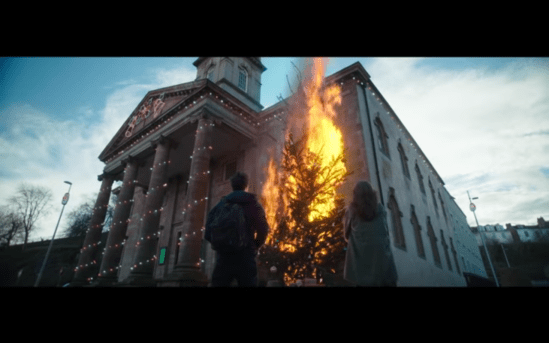
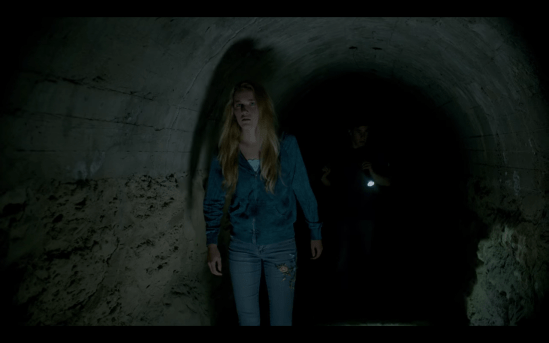
Anna’s a senior at Little Haven high school whose not thinking about what University to attend after she graduates. Instead, Anna focuses on working all the time as a shoe counter girl at the local bowling alley to pay off a year’s worth of traveling despite her father’s wishes, even working through Christmas, but when a sudden zombie apocalypse derails her and the worlds’ plans, Anna’s friends and father are her first priority. With her father trapped at the high school, Anna and her closest friends must trek and battle through a horde of the undead from the bowling alley before striking out dead themselves. Despite social differences and teenage angst, they must dance and sing to put now frivolous juvenile issues aside and work together if to not become one of the living dead.

Timed just right from 2019’s Christmas holiday season is Second Sight Films’s two-disc set of “Anna and the Apocalypse,” a contagiously fun, well performed, and cheekily gory musical comedy-horror by the United Kingdom’s John McPhail directing a script written by Alan McDonald and the late Ryan McHnery, based off McHenry’s short student film “Zombie Musical.” As true to the marketing behind the film, “Anna and the Apocalypse” is certainly the “High School Musical” with teeth-gnashing, putrid-walking, and flesh hungry zombies. The Scottish bred production comes from Blazing Griffin Films, Parkhouse Productions, Constellation Creatives and Creative Scotland to flash mob dance and sing in chorus through the apocalyptic melee while figuring out their complicated adolescent troubles, such as what to do after graduation, turbulent romantic emotions, and being different and alone.

The ensemble cast is heftily made up of unknown talent beginning with, then 17 year old, Ella Hunt in her debut lead performance as the titular character. Hunt’s a fresh, young face with an astonishing amount of acting range with Anna whose defiant against the wishes of her father, but, deep down inside, still wholeheartedly cares for him as he’s her only parent left alive, and Hunt has natural poppin’ dance moves and pop-star vocals. In Anna’s core group of friends, Sarah Swire’s Steph North stands amongst them as the LGBTQ representative whose strongly portrayed as courageous, caring, and independent while her characterization at the beginning of the films focuses on downing her life to the pit of despair with parents, who Steph claims wants nothing to do with her, are on holiday in Mexico and her romantic partner won’t be spending the holiday with her. Swire’s choreographic and musician background, along with an edgy look, make her a perfect fit for Steph. There’s also Anna’s best friend, a boy named John, played by Malcolm Cummings in his first feature film. Cummings has to be the hapless friend zone boy that remains sidelined when trying to find the opportune time in expressing his true feelings for Anna, but finds himself the third wheel in a high school love triangle conscripted with Nick, a hot-to-trot prick and bully colorfully depicted by Ben Wiggins. Christopher Leveaux and Marli Siu are the gang’s love birds, Mark Benton is Anna’s custodian father, and “Game of Thrones'” Paul Kaye antagonizes with a power hungry assistant headmaster gone crazy!

Honesty, I wasn’t sure how “Anna and the Apocalypse” was going to work, or be successful, or be entertaining at all as a horror movie. Horror-musicals are a rare breed that come with a mind-boggling quantitative algorithm to make them truly work wonders and, somehow, John McPhail dusted off his abacus, powered up his TI calculator, and put note to pen to paper and delivered a holiday spectacular on a horror scale stage. The horror, though very prominent and unmistakable, takes a backseat to the powerful soundtrack by the ensemble cast, ranging from caricatured with Fish Wrap to the desolation of personal connectivity with Human Voice to a couple of Christmas satires to bring a little joy with the merry mayhem. The mayhem is absolute with all the trimmings of a zombie apocalypse, even right down to the military being the butt of a joke when they’re overrun by a slow-moving force, but while there’s some gore early on with a dead head decapitated by a see-saw and a pair of bowling balls pop the top of one alleyway corpse, the blood flows downward to a little more than a dribble and “Anna and the Apocalypse” cobbles together a mere mediocre zombie film from then on out.

Already seen a couple of standard releases from other distributors, Second Sight Films reserved “Anna and the Apocalypse” to the royal treatment with a special features heavy region B, two-disc Blu-ray set containing two versions of the film – the theatrical release cut and the extended version which will include a musical number that didn’t make the theatrical cut. The Arri Alexa SXT shot film is presented in 1080p and in the film’s original aspect ratio, a widescreen 2.37:1, with a featured ProRes 3.2k format that allows upscaling to UHD quality providing a high resolution output that’s clean and bright. The color palate has real vibrancy under the director of photography’s, Sara Deane, direction to use colorful outfits and neoned and darkened sets. Some scenes become a little choppy with some sloppy editing work, but as a whole, the story remains coherent. The English language DTS-HD Master Audio 5.1 vivaciously energizes the soundtrack with alternative pop numbers, harmonious melodies, and a synchronized chorus, but there are times the dialogue falls into a lossy grey area. A stereo 2.0 track is also available as well as optional English SDH subtitles. The Second Sights Films’ release is chock full of extras with disc one including an audio commentary with director John McPhail, writer Alan McDonald, composers Roddy Hart and Tommy Reilly, a behind-the-scenes featurette, an alternate opening scene, a deleted song “What Side Are You On?”, a deleted bathroom scene, the Hollywood Ending cast and crew lip dub, footage from the EdinBurgh Film Festival, and, of course outtakes. Disc two includes a brand new feature-length documentary with new interviews by the actors and filmmakers. Plus, the original short film – “Zombie Musical.” A definite definitive two-disc set from Second Sight Films goes hand-in-hand with “Anna and the Apocalypse’s” feel good charm and unruly undead charisma complete with catchy tunes and bloody zombie goons in a modern day holiday cult classic.

Two-Disc Blu-ray Set of “Anna and the Apocalypse!” The perfect Christmas Gift!

A Birthday Bash Festers with an Evil Infestation! “What’s Eating Todd?” reviewed!


Todd’s birthday starts out fun with a birthday cookout that includes family, friends, and his girlfriend Valerie. Afterwards, his easy going uncle Carl drives Todd, his friends, and cases of beer to an abandoned factory in the woods where Todd has planned a one-night, underaged boozing, camping trip. The infamous factory has a manifold of ghost stories that circle around a single common piece – a cannibalistic maniac. When night falls, Todd suddenly disappears and his friends, including Valerie, believe Todd and his uncle Carl are revving up a good scare after Carl’s creepy campfire story earlier in the day, but when a dead, mutilated body is discovered, something sinister is hunting them and those stories about a cannibal killer no longer seem farfetched in an all-nighter fight for survival.

“What’s Eating Todd?” is a Here and Now production from a duo of women filmmakers with director Renata Green-Gabor making her directorial feature film debut from a story penned by first time screenwriter Brandi Centeno. The 2016 horror-thriller is a spun take on the weary zombie genre without necessarily going the full-fledged slow shuffle and moan zombie route from a story involving an antagonistic infected metamorphosing from an infestation strain of flies. The parasitoid concept is a closely related to a sensationalized man versus nature horror tale seen with a fair amount of anonymity attached and, the film, perhaps, could be an indie homage version of the George Langelaan’s short story, “The Fly.” Almost for certain that Green-Gabor received some sort of influence for “What’s Eating Todd?,” which she shot through the summer of 2013, from her thespian mentor Jeff Goldblum, the face of David Cronenberg’s remake of “The Fly” released 1986, and thus answered the call to chance her first steps into feature films that had this connect to her mentor while providing and retaining her own originality into incubational horror or even a small minute into body horror, releasing the film three years later.

The marketing and selling points for “What’s Eating Todd?” is not the humble acting talent. It’s not a criticism. It’s the truth, as the cast is constructed of unknown names and unrecognizable faces. However, what is also true for a film written by female writer and quarterbacked by a female director is a leading role arising for an aspiring or established female actress. In this case, the role of Valerie goes to a modestly versed Madison Lawlor (“The Axe Murders of Villisca”) who not only becomes the strong and adaptive survivalist protagonist painted against a backdrop of coarse and flawed men who are either exposed of their short comings, involved in illegalities, or anguished to reveal their true nature. Lawlor maintains Valerie’s unwavering love and faithfulness to Todd, being the voice of reason amongst a naïve and obnoxious crowd that are mostly consisted of her cousin Alex (“Mega Shark vs. Mecha Shark’s Phil Biedron) and his friend Duane (“The Zombinator’s” Scott Alin). Alex and Duane are a couple of super frivolous “bros” primarily integrated into the story to raise the body count. Cousins Valerie and Alex do attempt some kind of meaningful connection regarding identity and status in the hierarchy of high school, but was meagerly written and comes to be more a bickering battle of perspectives. Biedron and Alin sufficiently exact the right amount of goofball, oversexed, and dumb-wit to pull off a surface level duo. Todd (“The Z’s” Adam Michael Gold) is certainly the biggest failure out of the group of friends. The birthday boy’s upheaval from being the luckiest guy in the world to the world’s biggest problem goes into squandered territory that floods more questions than answers into Todd’s from baseline growth relationship with Valerie to his revamped mentality and accomplishments from ambiguous, circumstantial backstory of flesh eating and conspiracies. The weight of Todd and Valerie’s connection is only expositional rather than shown and the groundless Todd absorbs the downfall during an anti-climactic finale of internal struggle with Valerie as the source material. The film rounds out with Danny Rio and Carlos Antonio.

Though the cast won’t draw in an audience, the snappy “What’s Eating Todd?” title might turn some heads in it’s direction. However, “What’s Eating Todd?” inherently sounds like a farce and if you’re expecting humor, disappointment will rear its ugly, funny-less head as Green-Gabor had no intentions for a comedy element. Another misleading of marketing is the Indican Pictures’ DVD cover, which I’m assuming is also the film’s actual poster, of a woman in a cutoff sleeve jersey t-shirt with “Zombie Killer” in the name field and holding a sword (katana, maybe?) while blurry silhouettes of lumbering undead move at an unknown pace toward her in the background. Let’s analyze the comparison between cover art and actuality. As mentioned, the story’s female heroine is appropriate to the cover, but isn’t contextually accurate to the film. Valerie, the supposed character on the cover, isn’t holding a sword nor is she dressed in a “Zombie Killer” jersey t-shirt. As for the zombies, the term zombie is only made in jest by one of the bros and there is some undead moments of gore including gnawing and ripping out the jugular, but no tearing out of intestines, no munching on fingers, nor are there any instances where eating people like finger-licking fried chicken is happening here. Plus, there is only one adversarial fiend and not more as the cover suggests.

Indican Pictures distributes a Here and Now Production of “What’s Eating Todd?” onto a not rated DVD home video. The region 1 release has a runtime of 89 minutes and is presented in an anamorphic widescreen, 1.85:1 flat aspect ratio, on a 35mm, hand held camera. The digitally shot image renders brightly and clean with hardly any flaws worth disclosing. The night scenes are slightly tinted blue with a higher contrast to lighten up the image without being overly dark in the middle of the woods without much natural lighting and the digital noise has little intrusiveness despite the budget constraints of an indie production. The English language Dolby Digital surround sound has adequate range and depth and, for the most part, a dominating dialogue presence. Brief moments of Revenge of the Bimbot Zombie Killers’ Andy George’s original score would drown out dialogue during imperative, but happened too far and few in between. Other than a typical static menu and preview trailers from Indican Pictures, no other bonus materials reside on the release. “What’s Eating Todd?” is not a zombie movie despite the hoodwinking cover. What Renata Green-Gabor did direct can be categorized as a branch of the undead, an infestation altering DNA that mounts to destruction on and around of the affected that, technically, no longer makes them a part of the living human race. In short, expect a sheep in wolf’s clothing in this roughly run-of-the-mill horror that aims high, but misses low by offering too little to sanction a good story.

Rent. Own. What’s Eating Todd? Do you know?

One Wish Sparks a Lifetime of Evil. “A Wish for the Dead” reviewed!


Ever since his wife’s life has staggered on the near brink of death, John’s mental state has been thrust into constant turmoil. Unable to get straight answers from doctors and stuck inside the vapid white walls of a hospital, John remains by his unconscious wife’s hospital bed. When a mysterious man with a severely disfigured face wrapped in bandages offers him a locket that will grant him a single wish, John’s desperation to try anything to save her soul stretches beyond logic and reality, overpowering his rational principles. Despite coming with an ambiguous warning on how to detail his wish, John heedlessly requests that death cease to exist. The locket grants endless life not only for John’s wife, but for everyone as the dead rise from their eternal slumber in perpetual anguish that sends them into a frenzy of violence without a means to an end.

“A Wish for the Dead” is the first venture into a Renegade Art production and a Shami Media Group, or SMG, release for Its Bloggin’ Evil and, to be frank, the viewing re-establishes a couple of important things: 1) “A Wish for the Dead” has tremendous bite for an under the radar flick and 2) never rule out modestly financed films based on their technical appearances. The 2014 micro-budget indie horror from the short film director of “The Confession of Fred Kruger,” Nathan Thomas Milliner, along with the editing, photography, and co-writing assistance from “Girl Number Three” writer Herschel Zahnd, takes the cautionary tale themed with a careful what you wish for approach when despondency has one backed against the wall that leads to direly lethal negligence. Milliner’s film that’s based off a comic book of the same title might not be “Wishmaster,” starring Andrew Divoff, but can certainly be grouped into that similar genre realm where the ugliness of mysticism mischief can be personally devastating instead of gratifying. The film can also be lassoed into the over saturated zombie category because, well, you know, the whole arise of the undead thing.

“A Wish for the Dead” has a fairly large cast, but doesn’t have definitive leads. Instead, Milliner and Zahnd scribe a tale with miniature, personal scenarios for characters with John being a considerable catalyst or, an interpretation, of a centralized character. John’s played by Chris Petty, who had a bit part in the Zac Efron Ted Bundy biopic “Extremely Wicked, Shockingly Evil and Vile,” and despite the character being fairly one dimension, Petty sells the performance of a grieving, greedy husband. John encounters the mysterious, disfigured stranger in a trench coat, head wrapped like a mummy, and nodding John over like a he’s going to sell him a knockoff Rolex from the inside lining of his coat, in Robert Hatfield that tempts him with the wish granting locket. Hatfield version of a biblical villain has charismatic and devilish value, but nothing new to note the rendition from previous performances of shallow humor and sly mischief upon an cutting grin. Branch off stories that indulge into supporting characters un-charmed, demised lives fill in the gaps and provide fuel for the undead fire and these supporting characters include Lori Cooke (“Girl Number Three”), Kristine Renee Farley (Hi-8 – Horror Independent 8), Adam Pepper (“The Zombie Movie”), Julie Strebl (“Volumes of Blood: Horror Stories”) and Ashley Anderson.

The beginning of this film starts off oddly as soon as the title credits roll for the feature film and coming to the realization that the viewer is actually not submersed into the actual story yet. First slither portion of the film is a short thriller, noted at the conclusion as being directed also by Milliner, that becomes clearly distinct from the rest of the plot line. The abnormal sequence snaps the story’s fluidity as a seamed segue that then constructs the multiple-tiered building blocks for the heart of the feature. Once the short has past, much to our chagrin that we believed to be the actual film, “A Wish for the Dead” goes into a precision mode with coordinating individually wrapped death backstories and while Milliner attempts to get us to care about these characters, all is washed away and lost when death revokes all their previous, present, and future terminations. The backstories become null and void when not circled back to for the exception of John and his wife that find’s a sweet ironic malevolency making “A Wish for the Dead” satisfying in the end.

MVDVisual and Shami Media Group courteously releases Nathan Thomas Milliner’s “A Wish for the Dead” onto a not rated DVD home video. Presented in a stretched 16:9 aspect ration, the lossy video quality and the lack of color, mostly in a squashy greenish-yellow, chap into sore spots along the 80 minute runtime to the almost the point of SOV quality. Darks are plagued with digital noise that remove the sharp quality from the image, leaving the story to fend for itself and make up for the lack of presentation. The English 2.0 stereo sound mix pops during the higher pitches of dialogue and of some action points, but the dialogue is in the forefront and nicely balanced amongst depth and range considering. There are no bonus features on this release, but as an interesting note, Milliner illustrated much of Scream! Factory’s home video artwork (releases such as “Halloween II and III”) and for HorrorHound Magazine. The artist and filmmaker’s graphically detailed and perfectly suited talents grace the SMG cover as well. A wish granted for the major win with “A Wish for the Dead” as a macabre success story for independent filmmaking for aspiring artists despite the post-production engineering for a cleaner release, but death isn’t pretty, is it?

Watch “A WISH FOR THE DEAD” on PRIME VIDEO!

Ancient Aztec EVIL in the Heart of U.S. “American Mummy” review!


A group of anthropology university students discover the remains of a mummified corpse in a New Mexico desert. A dig site is erected and weeks go by as they unearth the entirely wrapped skeleton out from a shallow grave inside a small cave. The work week wraps up and only the weekend crew stays behind to maintain a presence of study and security at the excavation area, but when one of the students, obsessed with notorious legend of Lord Tezcalipoca, performs a primordial blood ritual with the mummy, the student releases hell on Earth when blood tainted by Lord Tezcalipoca become his blood hungry servants and willing acolytes. The skeleton weekend team has to piece together the carnage before rendering themselves helpless against the vehement and poisonous blood of an once almighty Aztec autarch.

Based off the factual historical figure, Tezcatlipoca, that’s TezcaTlipoca which is left out in the film, who was one of the deities in the Aztec religion. In Charles Pinion’s “American Mummy,” Tezcalipoca has a backstory that reflects the “smoking mirror” God as evil divinity and will one day resurrect from his resting place to lay claim to all. Though listed as a 2014 film, the San Fran cannibal “We Await” director, Pinion, actually shot “American Mummy,” also known as “Aztec Blood,” back in 2011 in California and wasn’t released until approximately three years later in 2014. The director pens the script with “Adventures in Pornolands'” Greg Saleman and, together, the duo bring the inverted Aztec lore soiled in blood and wretched with horrible havoc on the land of the free.

“American Mummy,” from the beginning, conjures up, through perhaps it’s own ominous blood ritual, the final girl trope used in many previous horror films prior to, but Pinion and Saleman do their due diligence in building in many other characters who could, with a sliver hope, be the ones left standing by the end of the ordeal. However, from the beginning like mentioned, we can all count on Becca being the survivor to tell the tale of the Mummy madness. Played by “Dick Night’s” Jennifer June Ross, Becca is an obvious shoe in for saving as she bares the least skin. That’s right. “American Mummy” follows all those slasher rules laid out by Randy Meeks in “Scream.” Those who give a little peek-a-boo to their private parts, Carmen (Esther Canata of “Hired Gun”), Connie (Erin Condry), and even the faculty staff who sits around in a mini-kimono for lengthy scenes, professor Jensen (Suziey Block from another Aztec horror – Aztecsploitation? – film “The Aztec Box”), all put their I’m a survivor of an Aztec deity cards into question. The male cast, well, no a lot of hairy backsides to speak about, but their blatant cowardice and slow-witted qualities might as well put them out to pasture. They round out the cast with Aidan Bristow (“All American Zombie Drug”), Aaron Burt, Jack Grimmett, Rudy Marquez, Peter Marr, Rigo Obezo, and even Greg Saleman as the Russian scientist Dr. Lobachevsky in his best Russian language.

In continuing my reign of beating dead horses, I’ve sure I’ve mentioned that mummy films are few and far in between. These types of undead ghouls, though classic, are not the it undead go-to films. Zombies and vampires reign supreme in that department, churning a feature film out every 10 seconds or something like along those lines. To put in simply, “American Mummy” was an anticipated treat from a genre teeter on the edge of literals mortality, but Pinion’s entry is about as desiccated as the genre itself for at least the first two acts that drown out in heaps of abysmal performances, an effortless progression, and a first act that’s peppered with nudity, which is not necessarily a bad thing. No? However, by the climatic end, I ended up enjoying “American Mummy’s” schlocky and immensely gory posture in a very zero to 60 in 1.8 seconds way. I’m not talking infinitely bloody, but Pinion has a splatter third act that can spellbinding despite the obvious technical goofs that give his movie magic secrets. Also, a healthy amount of background research offers a bit of positive authenticity. The burial mask is beautifully faithful and Tezcatlipoca was an Aztecan God.

“American Mummy” comes courteously from Wild Eye Releasing, Tom Cat Films, and MVDVisual onto a not rated, limited edition triple formatted DVD, Blu-ray, and Blu-ray 3D release! Despite being listed as an all region Blu-ray, the playback is locked on region A for those will region adjusting players. Perhaps the first 3D picture to be shot with a pole cam, the image, without 3D glasses, will be an eyesore. Unfortunately, “American Mummy” does not include a pair, you’ve been warned. If by chance you don’t have a stockpile of 3D glasses, have no fear, the 2D version is available on both formats. The lossy English language DTS-HD Master Audio 2.0 frailly packs little punch. The uncleaned dialogue suggests bad mic placement and the distortions run rampant through the dialogue mix while the losing much girth muffled by the soundtrack. Topped with shameful cheap foley, the audio expectation was little more than just a simple let down for a film shot in 3D. Bonus features include a miscellanea behind the scenes, a few outtakes, promotion videos, and the official trailer. I think the lack of 3D glasses is the stinger here. Simple bloodshed gratification saves “American Mummy” from being a widely cursed dreck dumpster fire of a film, but don’t embalm, dry-up, and wrap Charles Pinion’s film for entombment in haste, the filmmaker does have some blood he’d like to spill.

Tom Cruise Couldn’t Stop an Aztec Curse! Buy it over at Amazon!