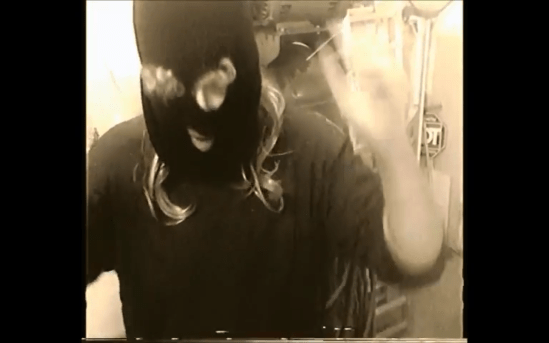
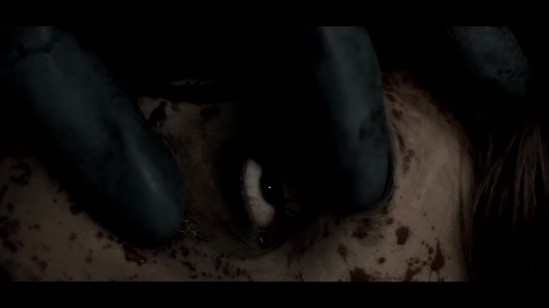
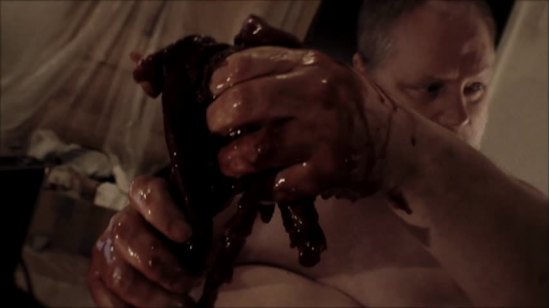
In a dystopian of metallic wires, continuously spinning gears, and nightmarish creatures, human beings are being driven extinction, enslaved by these same terror creatures that rule the human’s once empowered world. Rounded up like mindless cattle for vivisection, humans dwindle in numbers and in spirit. When one human stumbles upon the embryo, the only object to which the creatures fear and the reason for the humans being vivisected, a new hope of freedom emerges out from the last of the human beings as the last freeborn man implants the embryo inside him. As the horrid creatures learn of the embryo’s whereabouts, a means to an end of their existence drives a frantic frenzy of nonstop destruction before their race becomes obliterated by the embryo’s uniting power.
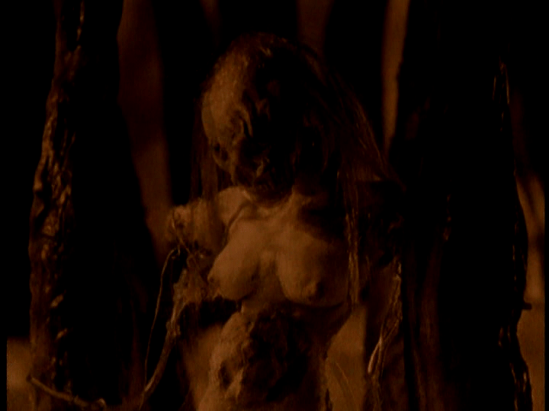
“Mécanix” is a stop-motion, German Expressionistic film that’s a hard sell for most audiences. Director Rémy M. Larochelle and producer Philippe Chabot have extracted hell and beauty out of an idea of post technology cataclysm inspired by the DIY filmmaking. Spanning over a four year production and then another ten 13 years until U.S. DVD distribution, the 2003 released “Mécanix” creeps to make a cult film impact, but Larochelle’s film is making an impact nonetheless. The experimental nature, the stop-motion effects, and the entrenched expressionism of symbolism makes “Mécanix” unique and memorable thats a labor of love stemmed from Larochelle’s painting, drawings, and sculptures.
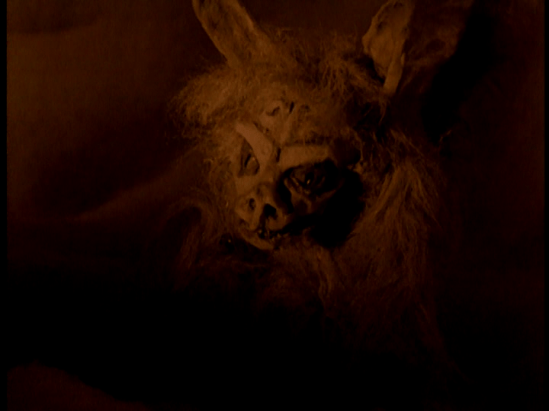
Back more than a decade ago, Larochelle sought to display technology and human interaction organically. The film doesn’t necessarily setup the series of cataclysmic events and lays down layers of assumption that humans have created technology and technology eventually goes Terminator coup, but, as if believing in the existence of the circle of life, technology can’t maintain without the human element and so they’re alignment ultimately comes together. “Mécanix” is a representation of that alignment that’s deeply subjective and disturbing, yet oddly fascinating, hooking automated teeth into an unsuspecting viewer.

Aforementioned, “Mécanix” took four years to completely conjure into a 70-minute motion picture feature. Within that time span, Larochelle painstakingly and thoroughly guides every aspect of the special effects, creating reality and fantasy together from through a 16mm camera to the spectacular finished product on screen, making the composited material flush and fitting for visual consumption. Also, ambient audio flawlessly helps bringing the sculpted terrifying creatures come alive who wield bulbous arms of clanky rebar and fleshy pulp, bares unidentifiable skulls protruding through cyborg tissue, and slither across the floor through dark crevices and nooks.
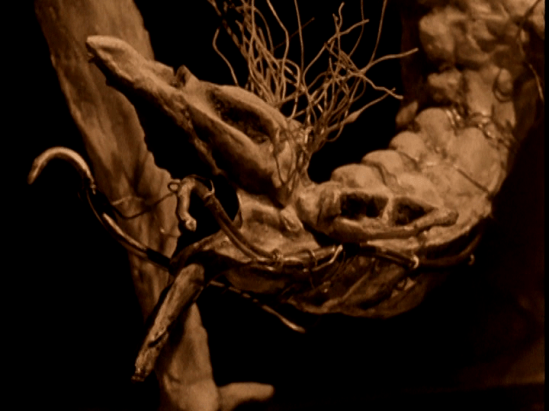
“Mécanix” isn’t an overly gory film, but it’s a hellishly wretched one coming out of Canada. Brief scenes of self-mutilation and depicted re-arrangements of the human anatomy are as about as graphic as “Mécanix” gets, subtly hinting more at explicit content. Stéphane Bilodeau’s freeborn man character, the male lead, and Julie-Anne Côté’s character, the female lead, born from the embryo have light weight speaking roles. The creatures communicate much more of their need for the embryo, giving inanimate characters a good slice of the dialogue, yet Bilodeau and Côté singularly convey their scenes appropriately despite never being in the same scene together. The two main characters present the only non-mechanical beings. Even the humans who are enslaved have a rigidness about them, android-like, while serving their master creatures, who some even don the use a wheelchair to move around – technology needs technology to maintain life sustainability.
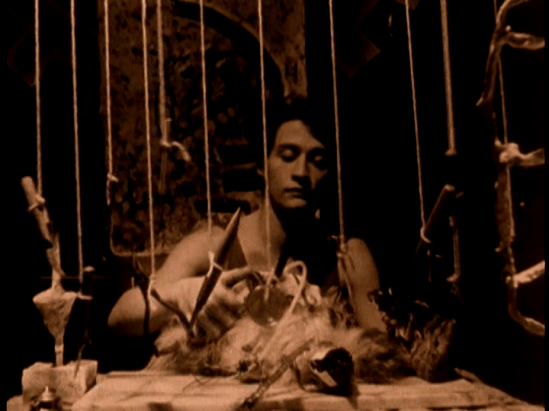
Unearthed Films and MVDVisual brings the IPS Films, Creatio Ex Hihl & Avant-Gore Films “Mécanix” to the U.S. home entertainment market 13 years after the world premiere. Being Rémy M. Larochelle’s only feature film to credit, the director can’t be compared to his other work obviously, but “Mécanix” is a fine debut, especially with the amount of sacrifice put into his inspired “Begotten” similar artistic style. The DVD is presented in a in 1.33:1 full screen aspect ratio with a Dolby Digital 2.0 mix that’s suitable for the drowning tone soundtrack from Southern Lord’s doom metal group Teeth of Lions Rule the Divine. The video quality is an attribute to 16mm standards, containing speckles of imperfections that simple add to the charm. The only extra included is an unorganized, yet entertaining interview with director Rémy M. Larochelle and Philippe Chabot, geeking out over answering prepped questions about the film’s formation and inspiration. “Mécanix” rarity will be the prayerful hope and the ultimate declination towards the film’s success as the market for experimental is never catchy with audiences, but the uncontrollable gawking over the “Mécanix” mechanical creatures and practical effects becomes unavoidable.
Tag Archives: unearthed films
Sex, Drugs, and Satanic Evil! “My Master Satan: 3 Tales of Drug Fueled Violence” review!

Allister, Bubba, and Charlie are friends. They’re friends who do drugs together. They’re friends who do drugs together and steal from people. They’re friends who do drugs together, steal from people, and kill people. Allister, Bubba, and Charlie are serial killers. Serial killers on a drug fueled killing spree without limitations or exceptions, not even some of their closest drug distributing friends are exempt from their murderous wrath. Being serial killers isn’t their only disturbing hobby as they dig up the graves, lay torch to corpses, and torture-to-kill innocent, doughy eyed animals. Deep rooted depravities clutch so fiercely to the fragments of their tattered souls that the Devil himself can communicate to them through the hallucinations of a bad trip and, after that little glimpse of hell, hailing Satan and spilling blood feels too good to pass up on command.

Underground filmmaker Dakota Bailey helms a rough and insensitive “My Master Satan: 3 Tales of Drug Fueled Violence” that’s extremely gratuitous in it’s violence and purposefully plotless to be episodic in Allister’s and his ghastly friends’ grisly acts. Labeled as an anthology, “My Master Satan” is suppose to intertwine the individual stories of Bubba (Matt Marshall), Charlie, and Allister into a single entity, but the Bailey written story is more literal than described. The stories circle more around Allister, the glue that pieces the story together, and his interactions with Bubba and Charlie rather than with Bubba and Charlie saturating the scenes with their own segments. Allister is the kind of friend to have in your corner and not piss off; he’s merciless and nihilistic, burning to rip to shreds anyone and anything for the simple joy of delivering pain in the name of Satan. The supporting characters come and go in and out of the story, but seem to motivate Allister, Bubba, and Charlie with tasks of drug dealer’s assassinations and perversions along with conversing, briefly, with other just as insane homicidal friends.

Bailey intentionally downgrades the video quality to start the ambient hallmarks of an underground shock feature on a VHS format; a film we may experience and see from Unearthed Films distributed features similar, yet watered down versions, of “Slaughter Vomit Girls or the “Guinea Pig” installments or films that were shot by a Hi8 or VHS camcorder made gloriously from cult favorite directors like Brad Sykes, Donald Farmer, or Tim Ritter. Though the video quality purposefully sets the disconsolate tone, the two-third inaudible dialogue audio negates the desired brazen effect from the lack of good mic placement, leaving our ears more toward the screen than our eyes. However, Bailey surely epitomizes the film as a clandestine venture into shock horror that will only find a niche market for those who adore sadomasochistic ultra-violent behavior accompanied with a death metal soundtrack. Luciferian Insectus wasn’t affected by the audio and paired well with the scenes.

The real shocker to take away from “My Master Satan” is the lack of good practical effects that usually coincide with a micro-to-zero budget project. Underground movies usually require gallons of blood, mise-en-scene implemented extreme violence, or to somehow find a way to stand out amongst the herd of the countless independent filmmakers. A high school biology class skeleton and an actor having simulated sex with a blow up doll doesn’t speak highly of the film’s caliber and won’t cut the mustard. The editing techniques are shaky at best and, even sometimes, relied to heavily on the words on a screen exposition to help the viewer along.

“My Master Satan: 3 Tales of Drug Fueled Violence” feels like a labor of love from Dakota Bailey and his crew of supporters; however, the film staggers along with unoriginal content that just becomes part of the collective. The intention to unnerve is evident, but the execution didn’t connect nor could the story spark any interest. Not even the autoerotic scene aided in produced a jump to unsettle. The hindrance of dialogue audio loses much of the film’s plotted course, especially when Little Blunt sends Allister on death calls. Not even Bailey’s baritone and slightly raspy voice could be heard at times. Again, an underground feature from Denver, Colorado needs polishing, but shows heart and initiative to relay hurt and allegiance to the dark Lord.
Does Evil Go Incognito? “Sheep Skin” Review!

A four person punk rock band, known as The Dick-Punchers, kidnap an egotistical businessman named Todd because they suspect the white collar professional to be a vicious, man-eating werewolf. Confined to a chair in an abandoned warehouse, Todd is interrogated, threatened, and tortured to reveal his true beastly self, but as the night drags on, the band’s evidence weakens against Todd and tensions boil to a flare as the band’s leader, Schafer, starts to question their suspicions and motives. Doubts divide the band’s handling of the overwrought situation, especially when Todd’s wife tracks her husband’s phone to his exact location, hoping to catch him in an unfaithful act, but ends up becoming entangled in his internment.

Crafting a werewolf film on a microscopic budget is a daunting and difficult task to accomplish and having the resulting finish to be mediocre is a good achievement for any filmmaker whether working in the independent market or in the Hollywood limelight. Writer-director Kurtis Spieler found a conduit through the immensely barbed brier patch for his 2013 indie horror film “Sheep Skin” and came out relatively unscathed by the pricks. The ambitious werewolf flick was developed on the heels of his Spieler’s 2007 short film of the same title with actor Laurence Mullaney reprising his role of the kidnapped businessman, or maybe a werewolf in plain sight, Todd and with Nicholas Papazoglou returning as producer. With a little more backing behind Spieler’s Invasive Image production company, the director was able to recreate his short to a feature film on a reported $25,000 budget.

The budget amount surely gives a bit of hesitation when going into a viewing of “Sheep Skin,” but by cutting down location costs and maintaining afloat with the equipment already obtained, Spieler puts his heart and soul into the cast of gifted actors and a talented crew and into a story that’s nail-bitingly entertaining without the possibility of a werewolf ever making an appearance on screen. Along side the return of Laurence Mullaney, the relatively unknown Michael Schantz, who had a role in the Alistair Pitt episode of NBC’s popular espionage drama series “The Blacklist,” portrays Schafer, the vengeance seeking leader of The Dick-Punchers. Schantz’s rendition of the character is undeniably acute to the rampant emotions and stakes of kidnapping and holding Todd. Schafer’s band member and girlfriend, Dylan, portrayed by Ria Burns-Wilder finds an unwavering loyalty in her man. The two wild cards, Clive and Marcus, filled in fittingly by Zach Gillette and Bryan Manley Davis. Gillette and Davis play characters that contrast each other very strongly with Clive being more of a bruiser and a hot head looking forward to roid-rage mayhem while Marcus nervously questions his friends’ intentions if the situation goes south. Jamie Lyn Bagley is an It’s Bloggin’ Evil favorite (see our reviews for “Flesh for the Inferno,” “Sins of Dracula,” “Frankenstein’s Hungry Dead,” and “Future Justice“) and the upcoming scream queen becomes the last puzzle piece to a dynamic cast as Todd’s mistrusting wife.

The kidnapping portion of the story starts from the get-go, nabbing Todd as soon as he attempts to leave the office. After all introductions are completed and the plot is set, the pace slows down toward an uneventful position with characters vacillating. Schafer holds many sidebar conversations with his crew, as a good captain should always do, but makes for tedious anticipation instead of white knuckling action. The deceleration of content during this time doesn’t necessarily bore down the story as the characters react rightfully so due in part to Spieler intentionally incorporating doubt into The Dick-Punchers’ plan and when the snowball starts to roll downhill and the strain starts to disintegrate their plan and, ultimately, their friendship, “Sheep Skin” is a juggernaut of confined bloodletting.

Unearthed Films and MVDVisual courtesy releases Kurtis Speiler’s film onto DVD with a widescreen 2.35:1 aspect ratio that soaks in a noir style filter for a mysterious-horror atmosphere. The DVD offers an alternate black and white version of the film that’s preferable as the dark filter kept the image devoid of natural colors. Digital noise overtakes the brighter coloring in which DNR could have reduced the effect for a cleaner finish. The noise also affected the Dolby Digital 2.0 audio with a low lying hum throughout the background of the entire duration. Dialogue tracks levels vary heavily during calmer or character enclosed scenes while the soundtrack booms out LFE during abrupt moments. The DVD has a solid cache of extras including director’s commentary, deleted scene with director introduction, behind the scenes look at the making of “Sheep Skin,” the original short film, The Dick-Punchers music video, and the theatrical trailer. “Sheep Skin” isn’t an archaic werewolf tale, but a fresh suspenseful spin on lycanthrope mythos.
BUY “Sheep Skin” on DVD from Unearthed Films and MVDVisual at Amazon.com! Just clink on the above image.
Torment and Puke is One Girl’s Evil Journey. “Madness of Many” review!

Victoria propels through an discarded and tragic life of torture and suffering. Her parents sexually abuse her as a child and into her adulthood where she finally is able to desperately flee in search of a new and hopeful life, but Victoria’s destined to fulfill a life with more suffering, even worse than while under the abusive and ever watchful eyes of her family. The anguish built structure of her being leads Victoria to an endless amount of pain that grows inside her, sprouting a vast and treacherous sea of meaningful existence, and blossoming into a eye opening, or eye gouging, experience in which she’ll never forget. This is her journey through the gateway of hell to the inevitable rebirth of pain and puke.

Considered to be the “most controversial” film made in Denmark, director/writer/editor/special effects artist Kasper Juhl’s experimental horror film “Madness of Many” goes through four chapters of Victoria’s detestable existence and transformative suffering. There’s never a time when she’s safe, being dredged through the scum and the dirt for all of her life. The former prostitute and drug addict doesn’t ever rehab or recoup from her time as a sex slave, a human pin cushion, or a human fluid dumpster as her story, mostly told off-screen in a monologue accompanied by grotesque and digestible imagery, is considered to be a rise of a phoenix through the clout of ashes.

However, Victoria is not alone. Numerous other women, some representing Victoria in various stages of her life and others just in an akin to Victoria’s situation, are affixed to the same suffrage and, in the same fashion as many Unearthed Film’s features, self-induced vomiting is a big part of their torment (and about 1/4 of the visual story). “Slaughtered Vomit Dolls” and films like it, such as “Madness of Many,” have never really been my cup of hot bloody spew stew, but “Madness of Many,” by far, has better visual effects when considering the torture and the gore amongst the spew-splattering titles. Much like Victoria, the viewer has to suffer through drawn out portions of the narrator’s exposition in order to set up and enjoy Kasper Juhl’s effectively realistic sinew and gut-churning effects.

I must admit there’s a certain poetic underlining and parallelism to Juhl’s film; a sort of an art-house, coffee shop “fung shui” complexity about suffering that can only be told through the Juhl’s telling of Victoria’s devastating story. The actor portrayal diminishes much of that structure that merely falls into the category, for most of the viewing experience, of interpretative dancing told in the eloquent genre of doom metal and deep underground horror cinema. Yet, Victoria’s plight is never a matter to be cheered for, never a route for hope, and certainly never a situation anyone would envy. “Madness of Many” is not, and I repeat, not a feel good movie. Its not a kid’s movie. Hell, it’s not even a movie for most adults. Certain breeds of human would consider the Kasper Juhl’s film in their niche of subversive cinema.

Produced by Hellbound Productions and distributed fittingly by Unearthed Films and MVDVisual, “Madness of Many” delivers controversy; perhaps not in the States, but for Denmark, I’m sure and will cause much controversy for the weak stomachs who find this title in their possession, going into a viewing without the heads up of what they’re getting themselves into. Juhl’s only English film to date isn’t glamourous popcorn horror with a recognizable cast and it’s replay value is next to none, but if the gore and shock genre is the game you’re willing to play to perverse over, then the “Madness of Many” would be right up that twisted alley.
An Evil Bouquet of Purgatory. “Flowers” review!

Six dead women relive pieces of their previous mucky lives embodied in one seamless soul that’s trapped in the literally gory innards of their serial killer’s home. Forcibly held in the limbo of a filthy purgatory, each woman find themselves in a different, and extremely hellish, part of the house and each carry the same gruesome autopsy laceration across the front of their chest, crudely stitched together and coming apart at the seam ready to pop open their insides at any moment. Unknown to why their confined, an ill-fated reason develops at the end of the maze’s demented journey through the home made of severed body parts, decorated with pieces of human tissue, filled with decomposing bodies, strewn with ghastly entrails, and drenched with blood.

Director Phil Stevens composes an avant-garde horror story orchestrated with no dialogue what so ever through the duration and spatially effective in close, uncomfortable quarters . Certainly unique from anything else I’ve ever witnessed, “Flowers” doesn’t apologize for being overly gory and disgusting, pursuing a stomach-churning reaction from all allegoric angles. Slip-and-sliding through the murderous muck and goop, each of the six dead women seem hysterically unfaded, yet more intriguingly curious to their surroundings, even if that means putting their hands through a tonnage of viscera and ripping their own flesh open. Indie films like Phil Stevens’s “Flowers” will never catch the eye of most mainstream audiences and will never know of their existence, but a few lucky viewers, like myself, get to experience the surreal work from the horror underground. Fans of Marlan Dora’s “Cannibal” or Jörg Buttgereit “Nekromantik” will revel in “Flowers’s” grisliness and gloomy nature.

The cast is made up of six alternative lifestyle women, each one credited only as Flower 1 through 6, and take up a particular different segment and sprinkled into their story is their merciless and necrophiliac killer, only credited by the name The Exile. In sequential order, the Flowers are played by Colette Kenny McKenna, Krystle Fitch, Anastasia Blue, Tanya Erin Paoli, Kara A. Christiansen, and Makaria Tsapatoris and the killer is played by Bryant W. Lohr Sr. The majority of the actresses take on more than their literal roles in the movie. The physical body horror effects are applied by Anastasia Blue and Krystle Fitch to create open wounds across the actress’s chests and the uncleanliness costumes and wardrobes are provided by Makaria Tsapatoris, whose experience has been from the 15 year participation of the horror season attraction Eastern State Penitentiary in Philadelphia.

The abstract story is intensively focused on the women’s lives rather than their slaughterer The Exile. Their stories are personally tragic as if the Flowers are trying to purposefully or unintentionally ignore real life by way of drug abuse, prostitution, or both. Each actress has to put forth extra effort in their silent performances as dialogue is nonexistent and they’ve successfully compel themselves to act out the scenario, working with their surroundings and being, well, dead. The Flowers may not seem frightened of their killer’s house made of guts, but the Flowers are definitely disgusted, nearly tossing their insides in a few putrid cladded rooms. You may not want to eat while watching some of the segments. Very little is known about The Exile, a very large, but well kept man with a hankering to kill the gutter girls, bathe in their guts, and, sometimes, have sex with their gut-exposed dead body.

“Flowers” is available in two DVD editions, a standard one disc which is reviewed here and a three disc limited edition set, from Unearthed Films and distributed by MVDVisual. The technical video is presented in a widescreen 1.85:1 aspect ratio with a 2.0 dolby digital audio and, frankly, the two channel audio is all “Flowers” needs with no dialogue or major sound effects as a poetic soundtrack guides with harmony mostly through all of the audio work. The image quality is detailed and vividly enticing, but the colors are intentionally dull and for darker scenes that create ebony silhouettes that are practically not visible or coherent; these scenes only deter for only the first 20 minutes of crawling through the house’s bloody undercarriage and won’t ruin the remainder. For only the disc one edition, extras are fairly good with interviews with The Exile actor Bryant W. Lohr Sr., an audition tape of Makaria Tsapatoris, behind the scene stills, an isolated FX track, and commentary tracks with director Phil Stevens and associate producer “Ravage’s” Ronnie Sortor. I recommend the grotesque “Flowers” to any horror fan without a weak stomach and a mind for the abstract!