Sooie EVIL Sooie! “Pig Killer” reviewed! (Breaking Glass Pictures & Darkstar Pictures / Blu-ray)

On This Farm There Was a “PIg Killer” now on Blu-ray!

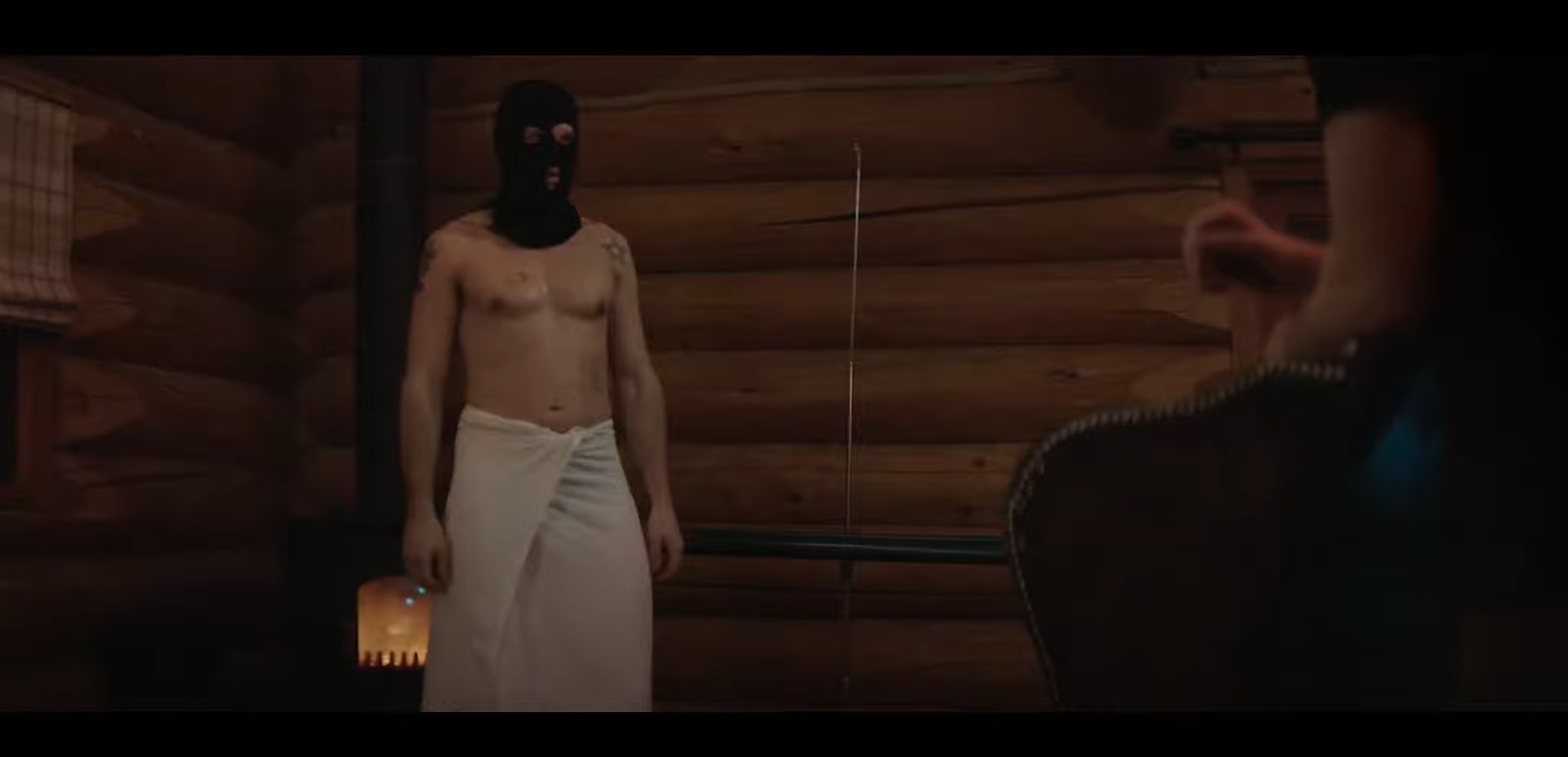
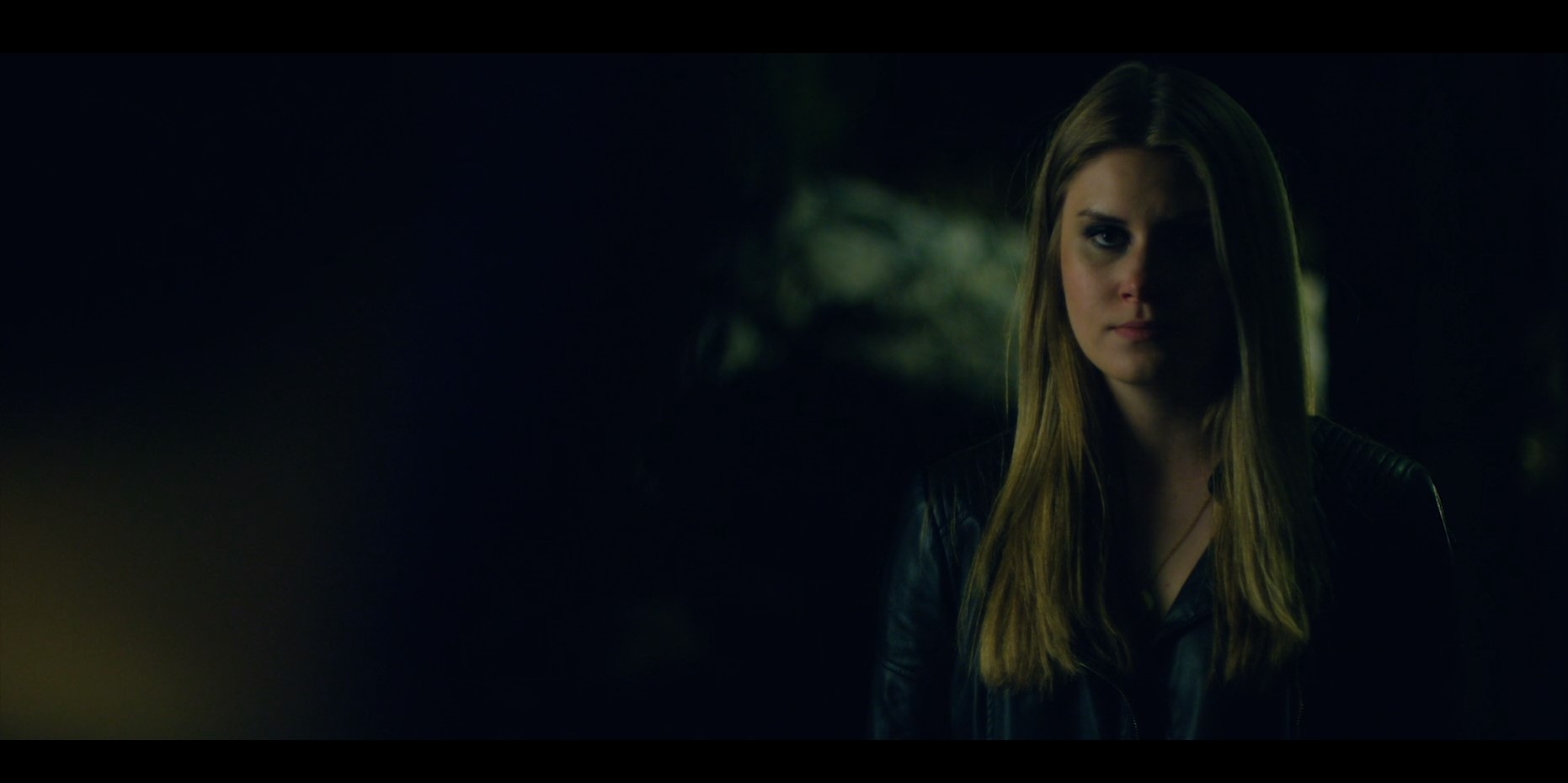
Pig ranching landowner Robert “Willy” Pickton’s compulsions to pick up unprincipled women involved in prostitution and drugs and horrifically rape and murder them in the name of salvation stems from a severely abusive childhood with the father’s physically and mentally tormenting as well as a scornful mother sexually assaulting him.  Willy’s fanatical obsession threatens his drug-fueled, orgy-laden, rock-n-rolling Piggy’s Powwow party, a regular throwdown held at his ranch that has elicited a cease and desist letter from the city, but Willy pushes the party forward despite his brother David and their lawyer’s stern opposition.  Paralleling Willy’s story is Wendy Eastman who almost dies of an accidental drug overdose.  The incident stirs more the already contentious bad blood between her uncompromising stepmother and insecure father that leads to storm out and bump into Willy at a bar with the feeling of destiny bringing them together only to horrifically discover Willy’s unsavory secret the hard way. 
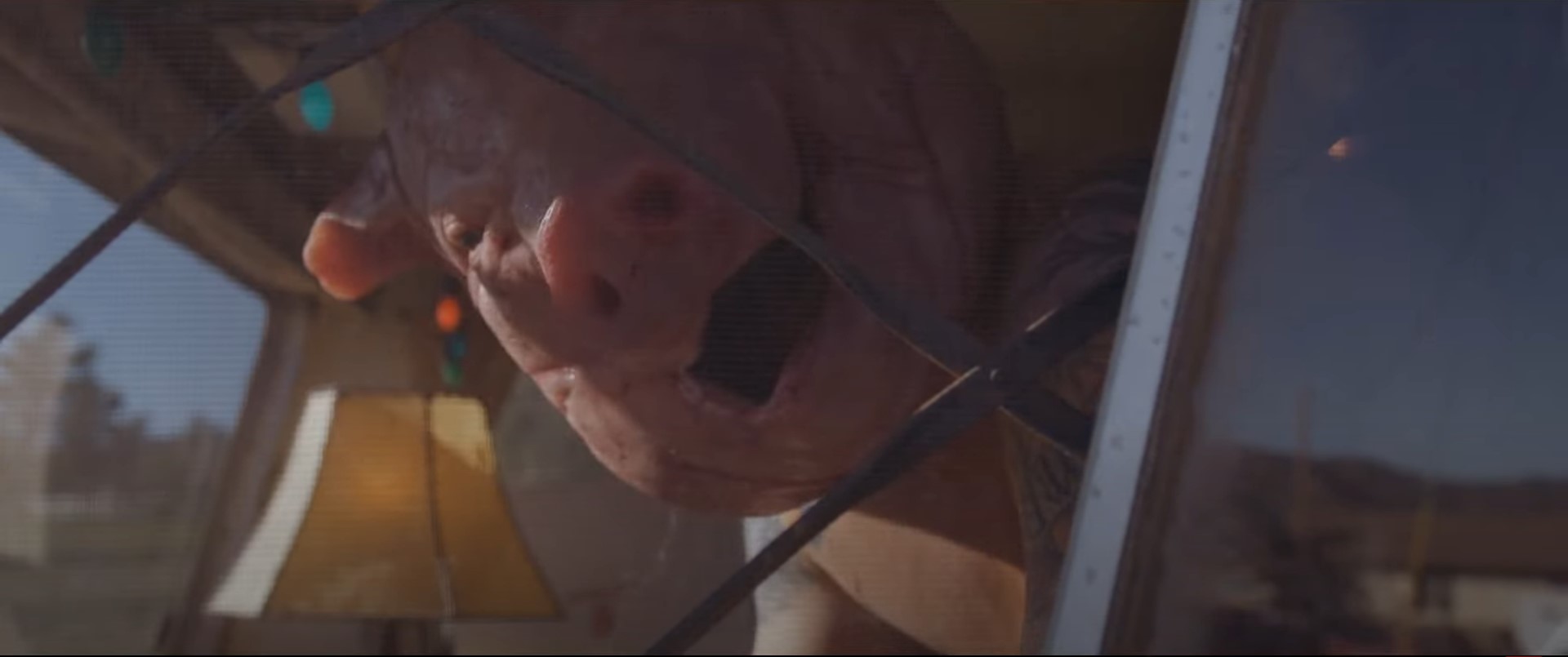
Part one of my reviews on serial killer biopics, headfirst we go into the psychotic world of Robert “Willy” Pickton, a pig former turned one of Canada’s most notorious serial rapists and killers living in Port Coquitlam, British Columbia.  While the extent of his butchery is vague at best and even in some ways evolving over the course of the last two decades, Pickton was able to be the filmic inspiration for the Chad Ferrin brazen biopic “Pig Killer.”  The “Easter Bunny, Kill! Kill!” and “Someone’s Knocking at the Door” director wrote-and-helmed the interpretation of the egregiously presumed methods Pickton executed upon his female victims, mostly drug-addicted sex workers from the Eastside of Vancouver.  Once under the working ttile of “Pork Chop Rod,” Ferrin’s Crappy World Films, Girls and Corpses (of Robert Steven Rhine’s Girls and Corpses Magazine), and the post-production company Laurelwood Pictures served as co-productions with 50-year acting vet Robert Miano (“Malevolence,” “Giallo”) co-producing.
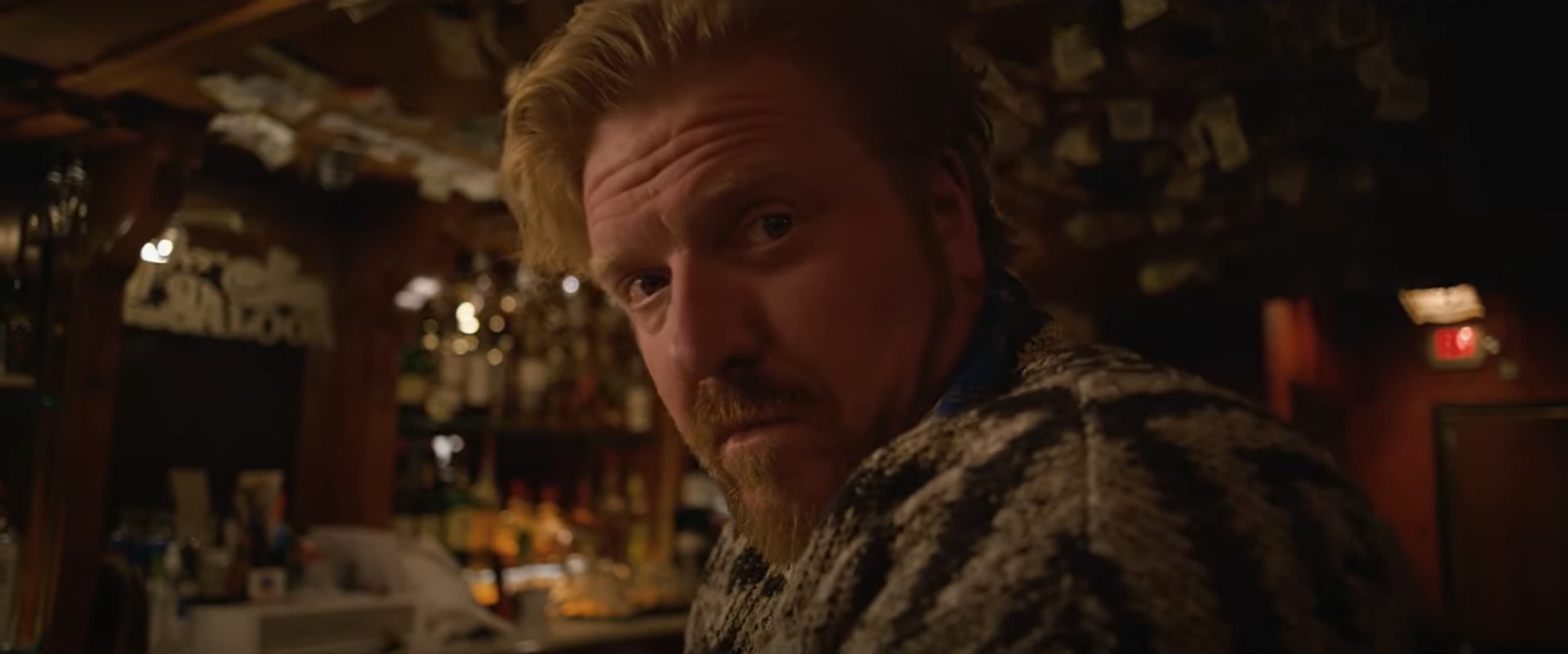
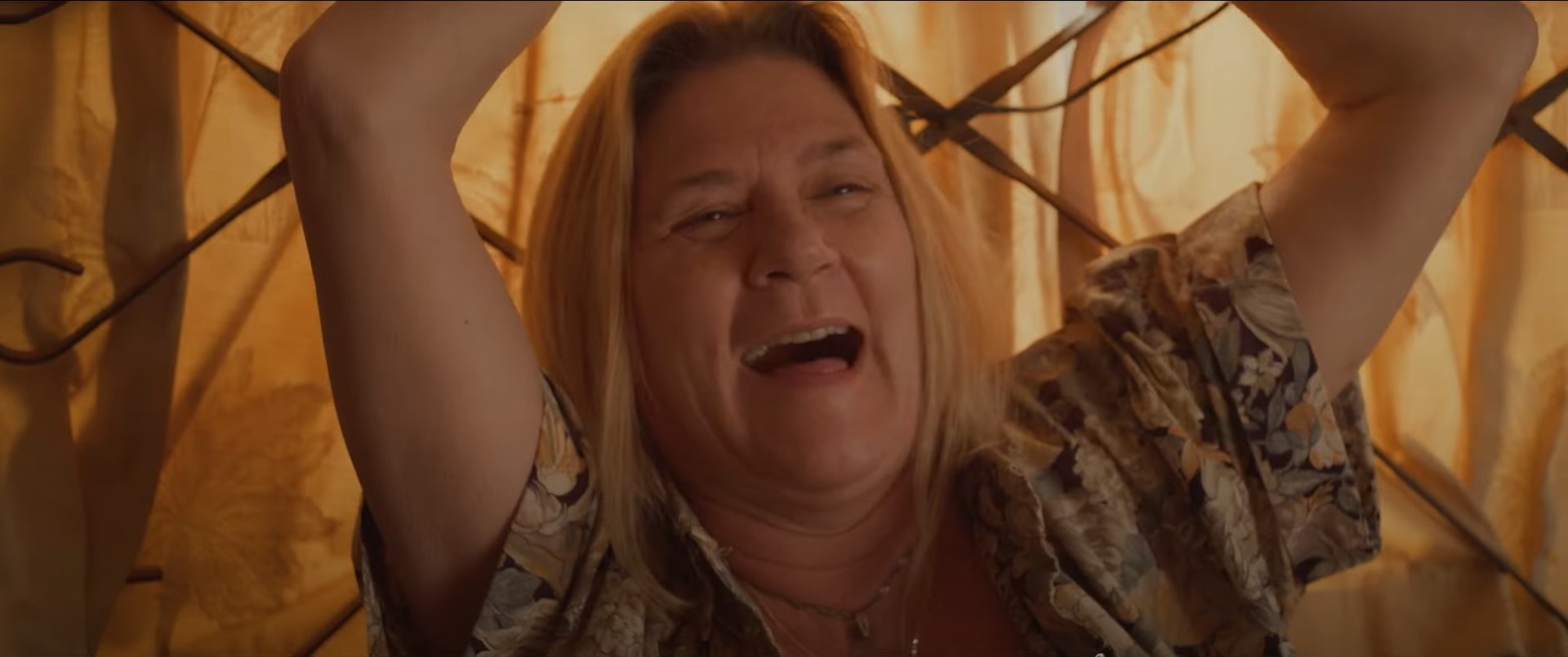
Even though this actor has portrayed serial killers in “Identity,” “The Hitcher II,” and “The Frighteners,” and even a deranged zealot in “Contact,” I would never have imagined in a million years “Starship Troopers” actor Jake Busey would have stepped into the sordid shoes of Willy Pickton in a Chad Ferrin production.  There’s something to be said for Jake Busey’s nerve in moving forward with eccentric and controversial and Willy Pickton is every fiber of those infamy traits and all that is in between.   Disheveled and dirty, maniacal and demented, prosthetic phalluses and dildo revolvers, pig masks and masturbation – Jake Busey doesn’t hold back on an exigent script important to Pickton’s state of mind.  Creepy and apathetic blanked by his deceased mother’s devout spitefulness and her incestuous sexual abuse, Busey secretes these irascible qualities held dormant in Pickton until the sleaze is sated and his patients runs out then it’s time to go hog wild, literally. Lew Temple (“Halloween,” “Devil’s Rejects”) plays Willy’s brother David who also has mother issues, but that avenue is not as profoundly travelled as Willy’s, both men see delusional visions of their mother’s tirades but definitely lopsided in disfavor of Willy and that leaves David left in the dust some to not have his mental faculties inspected.  Their flashback, foul-mouth, and Electral loving mother goes to an unabashed by former adult actress turned low-budget horror scream queen Ginger Lynn Allen (“Murdercise,” “31”) in what her scenes can only be described as uncut and uncomfortable lewdness as she bares it all at the ripe young age of 60 years old.  Another standout performance goes to Kate Patel as the debut actress, who in her own right is an Amazonian goodness buff beyond rebuff in black lace underwear, finds her voice as a young woman named Wendy Eastman in a complicated and dysfunctional household after the death of her mother, at odds with a wicked stepmother, and an insecure father with passive fortitude.  The only obstacle that can be rendered cleanly from her performance is how her character’s written to be drawn to Willy Pickton as because between age gaps and social differences, the two have nothing tangible to drawn them together mutually.  “Pig Killer” rounds out the cast with producer Robert Miano as Wendy Eastman’s father, Michael Paré (“Streets of Fire”) and producer Robert Rhine as Detectives Oppal and Schneer, Silvia Spross (“Parasites”) as Wendy’s disparaging stepmother, Jon Budinoff (“Someone’s Knocking at the Door”) as Wendy’s friend and drug source, Elina Madison (“Caged Lesbos A-Go-Go”) as a druggie sex worker, Bai Ling (“Exorcism at 60,000 Feet”) as also a druggie sex worker, and Kurt Bonzell (“Parasites”) as Willy’s disfigured and throat-cancer suffering friend Pat. 
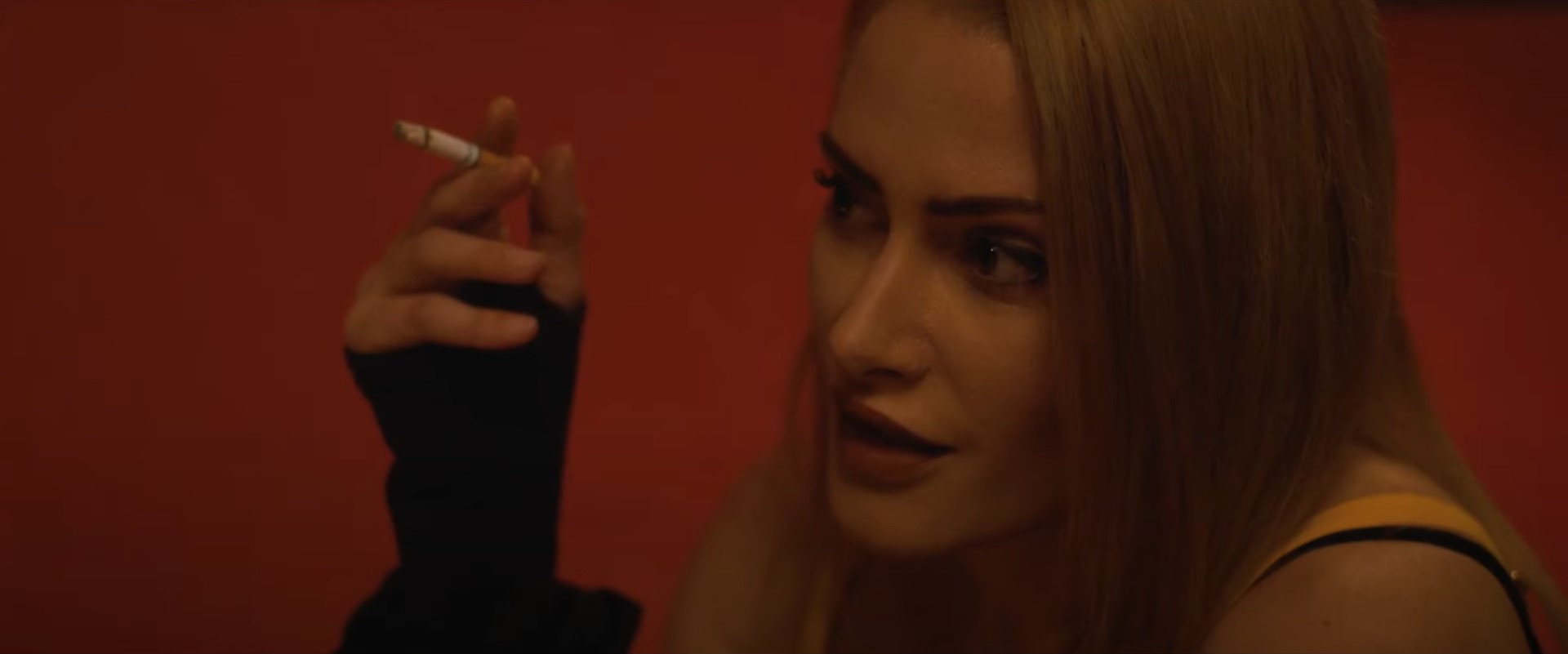
Sensationalized for cinematic charm, the story behind the “Pig Killer” hits near the bullseye of all major bullet points from the escape of Wendy Eastman (actual person being Wendy Eistetter) and her coinciding her drug addiction to the wild gathers at the Pickton farm known as Piggy’s Powwow (actual title being Piggy Palace Good Times Society) where motorcycle gangs and prostitutes congregated for a drug-fueled good time.  If having viewed a few of Ferrin’s credits before, some of the unrestrained gore and shock will not come at a surprise.  The benumbing unconcern of misanthropy is poignant amongst Ferrin’s soft-pedaling of horror with a whimsical manner within a gritty film that doesn’t feel as gritty as it should be considering the subject and subject material.  Another mitigating moment, one that’s more counterproductive to the Pickton storyline, is the parallel melodramatics of Wendy Eastman that eventually rendezvous with the titular “Pig Killer” and become the rendition of Wendy Eistetter supposed personal backstory and escape from death.  Wendy’s overdose and family issues provide reason for her subsequent run away from home, but the extent of the backstory unnecessarily rivals Willy Pickton’s and the whole destiny meetup enlists some deeper rooted significance that isn’t neatly fleshed out, turning awkwardly impertinent that waters down their entanglement. 
Arriving onto a Breaking Glass Pictures and a Darkstar Pictures collab, “Pig Killer” oinks itself onto an AVC encoded, 1080p, High-definition Blu-ray.  Presented in an anamorphic widescreen 2.39:1 aspect ratio, “Pig Killer” under the warm glow and desert dry eye of cinematographer Jeff Billings (“The Deep Ones”) sundries the shot types in various techniques, such as closeup slow motion to be inside Willy’s moment of divination, to provide Ferrin’s feature with comely appeal even in the vilest of moments. Details are sharp and delineated nicely albeit the quick editing for intensity purposes and to float Willy in and out of psychosis. Coloring is more natural than anything else with a few gels scatter about to spruce up the vibrancy. The lossless English DTS-HD 5.1 master audio renders clear dialogue without any distortions or other audible disturbances; however, the strength of the dialogue favors an infirm conveyance to grasp a few exchanges, especially in the exterior. A maximal Gerard McMahon soundtrack scores the entire biopic from start to finish with a range of 80’s power ballads to 90’s pop rock; the 76-year-old not only scores the project but also has a concert performance role with his band G Tom Mac. Depth and range supplement greatly as sound design cater to the surrounding atmospheres, such as the echo vibrations under the Eastside bridge or the pig-pen oinks and frenzies when feeding bits and pieces of sex workers to his farmyard swine. English SDH is optionally available. Packed with extra content, supplements included are an interview intercut with scenes with Ginger Lynn as well as a few of her clothed adult industry spreads/modeling, a behind-the-scenes footage with Michael Paré, deleted and extended scenes, and Q&A from Cine Excess, the making-of the Pig Mask, a making-of the film entitled Canadian Bacon, an introduction to Spunky the Pig aka Willy’s pig, a screen test of Kate Patel in the role of Willy, which was considered before Jake Busey landed the role, “Pig Killer” auditions, and the trailer. The clear Blu-ray Amaray case sports a dark-and-dirty gilt image of a half-naked Kate Patel and a menacing pig-masked person holding a clever overhead. Reverse side contains a still image of the insides of Willy’s pigsty camper while the disc is pressed with the same menacing pig and clever but more prominent. The collab release has a region A playback, a runtime of 122 minutes, and is not rated. The back cover also lists a 2000 production date, conflicting with the 2023 release states elsewhere, but the 2000 date would be before Willy Pickton’s arrest and so that might be a misprint. Chad Ferrin and Jake Busey jointly tackling the monster that is brutal serial killer Willy Pickton with an inkling of lighter material coursing through its arteries, style secreting through the madness, and, of course, gore, the most important ingredient to the likes of a film entitled “Pig Killer.” 

On This Farm There Was a “PIg Killer” now on Blu-ray!

Eating Disorder? More Like EVIL Disorder! “Binge and Purge” reviewed! (SRS Cinema / DVD)

“Binge and Purge” on SRS DVD Home Video!  This One Is Hard to Keep Down!

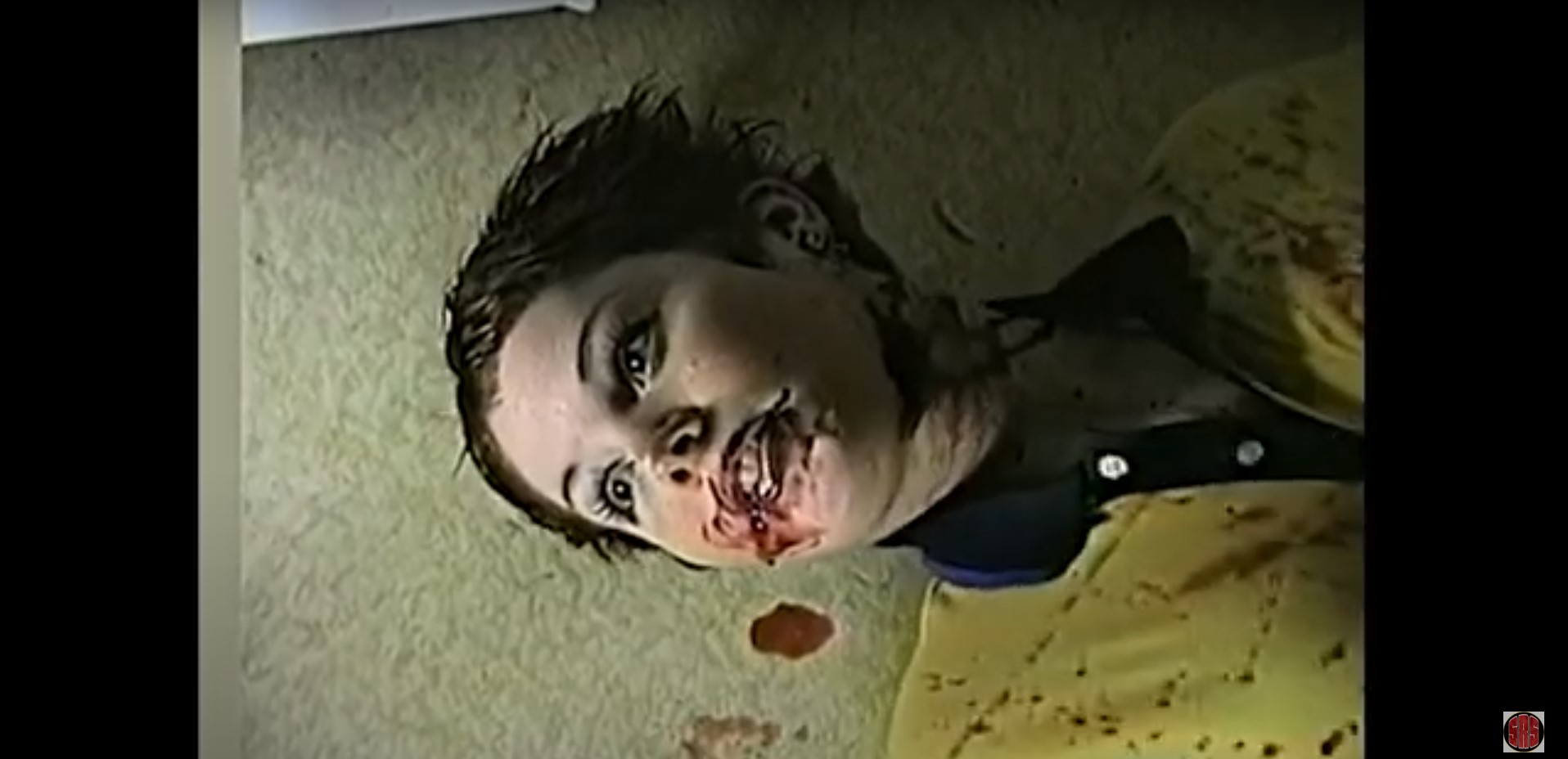
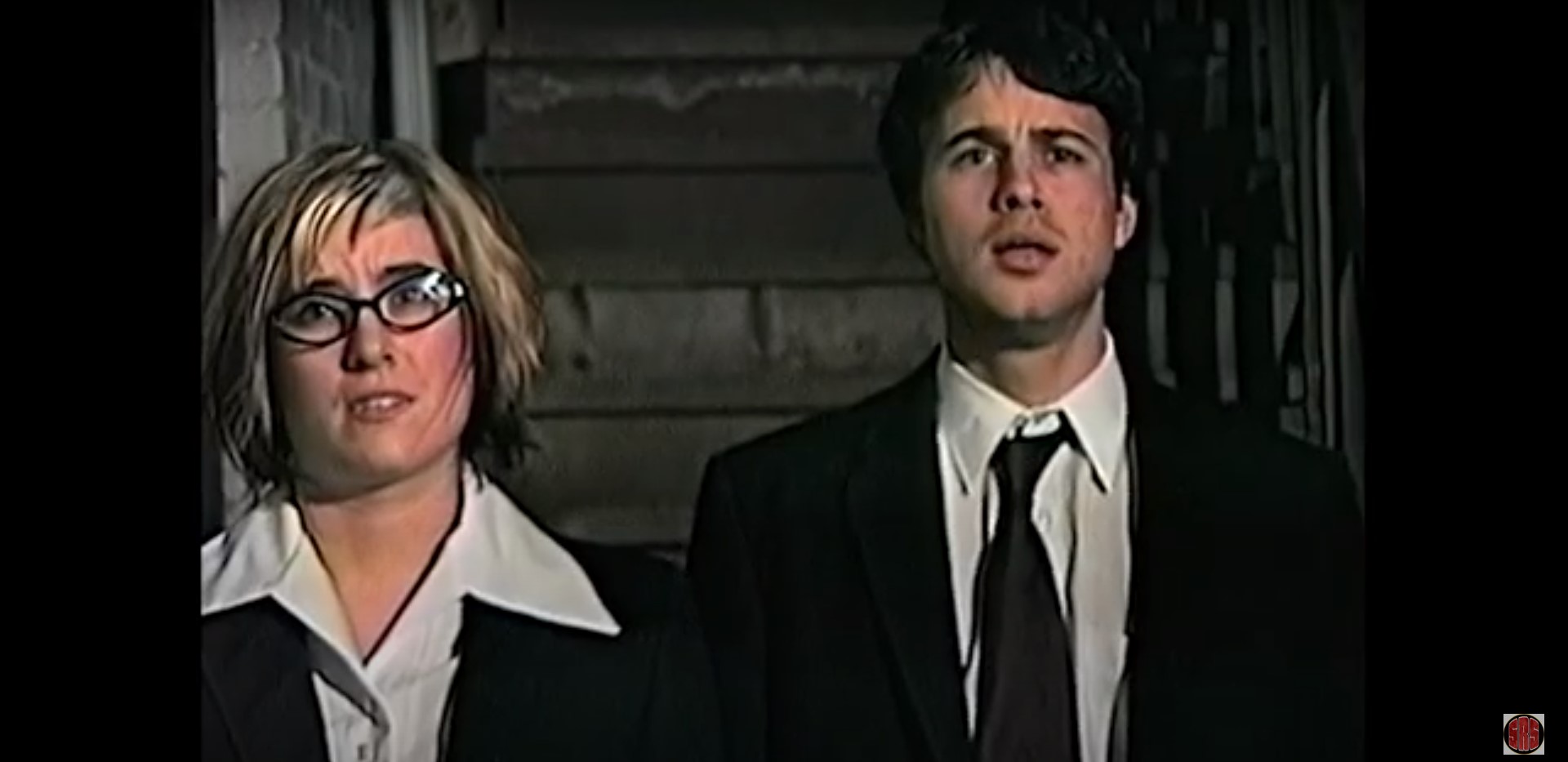
Three former police officers now private sector detectives find themselves embroiled in a cannibalistic frame up by the police state in a near dystopian future.  Their no choice, self-preservation investigation leads them to a group of models who consume people in order to stay vibrant and young as if frozen in time.  The mastermind behind the models’ ravenous new diet is a former Nazi science experiment-turned-fashion designer who has not only spread his indelicacies throughout the fashion world but also into a corrupt authoritarian police department helmed by a sordid chief.   As more and more people succumb to the ghastly craving of human beings, the rebellious detectives embark on an ambitious plan to cut off the head of the snake by working up the fashion designer’s human-hungry hierarchy but are they too late to stop the meat-eating madness?  Has the world been forever infected by the touch of pure evil? 

The first Christmas horror film review of 2023!  Brought to you by the Canadian-born, “Meat Market” trilogy director Brian Clement, the filmmaker’s written-and-directed third feature, “Binge and Purge,” is the 2002 genre melting pot of action, horror, and comedy set in an undisclosed urban jungle of North America where a person’s legal rights no longer exist, beauty and fashion insidiously influence, and normalcy becomes rebel factions’ reason to fight tooth and nail to hang on to it despite the coursing corruption and taking refuge from repressive authorities on their tail.  While sounding glum and despondent, Clement’s addition of black humor adds a loose layer of lurid levity to the bizarro-world society mirroring our own that teeters toward a path of culture and humanity deterioration with radical political and influential figures.  Once considered being the third film in the “Meat Market” series and alternatively known as “Catwalk Cannibals” in other countries, “Binge and Purge” is produced by Clement under Frontline Films. 

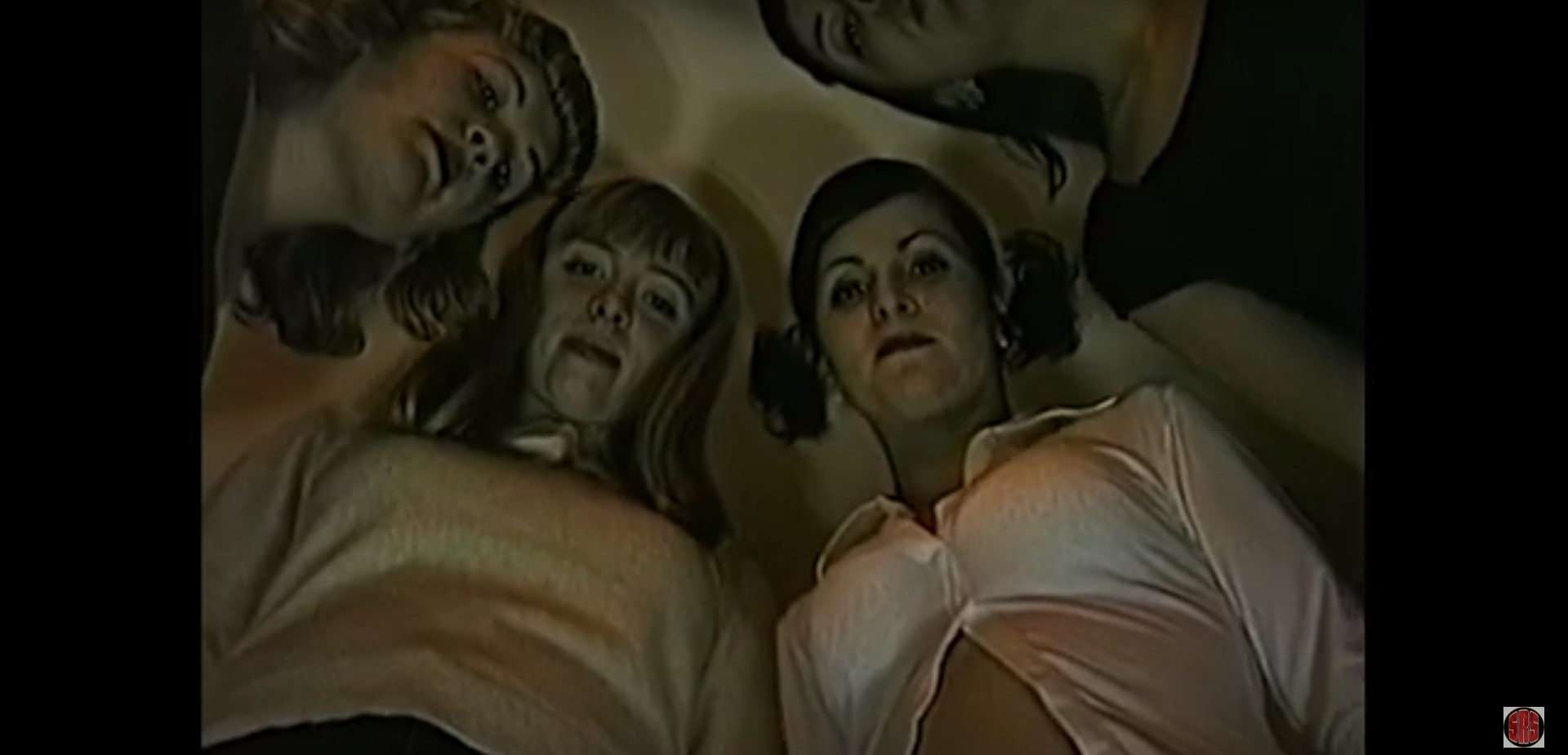
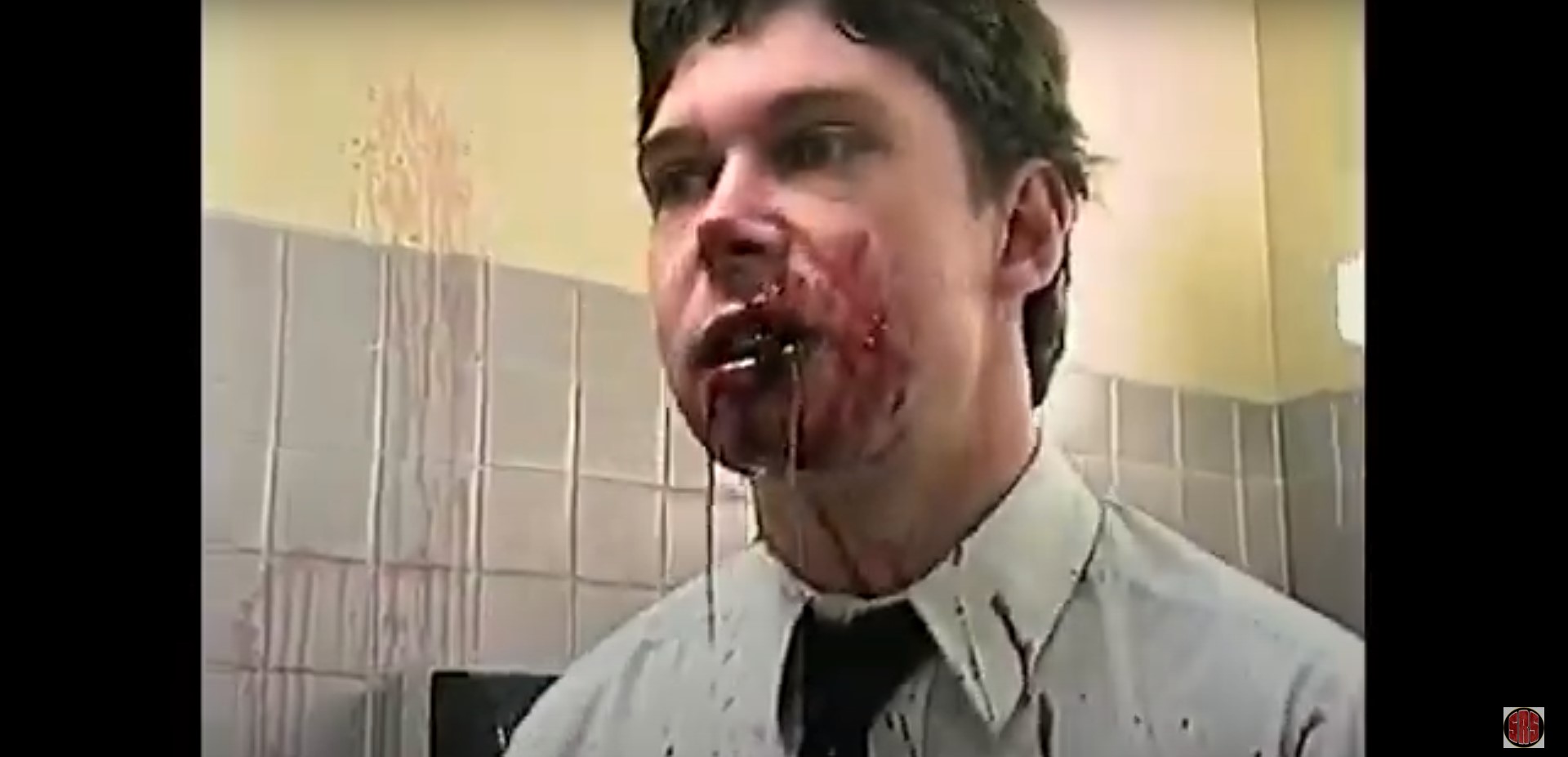
One thing to note about SOV independent production is the impressive number of cast involved.  The large cast helps manifest Clement’s ambitious dystopia and chaos-riddled world.  Without it, “Binge & Purge” would have been too anorexic to sustain selling grandiose on the cheap.  Typical formula for flesh-eater films persists with secluding a handful of principal roles, majority only speaking roles, fleshed out with an epic apocalypse contextualization of little-to-no dialogue, story arc, or any other sort of prominent screen time stock or background characters in a horde of the undead in crude bloodstained suits.  Clement establishes good guys and bad guys clearly but doesn’t necessarily the focal characters with an ebb and flow pattern between the three detectives May (Tamara Barnard), Vanzetti (Stephan Bourke, “Exhumed”), and Number 11 (Fiona Eden-Walker), who we gather was a former highly trained operative so engrained into the training and operations that her name was lost or forgotten, reduced to a number and the troupe of man-eating models under the eternal fashion designer Karl Helfringer (Gareth Gaudin). The models consist of not your slender-hip vixens with shaved down noses and hungry-looking figures but rather the curvy, pin-up types to wet a seemingly heathy appetite. Moira Thomas, Samara Zotzman, Amy Emel, Becky Julseth, Terra Thomsen and Melissa Evans lavish in so much delight over the sticky glop and spilling intestinal scenes of shoulder-to-shoulder cannibal chow downs that there isn’t an ounce of hesitation or disgust before enamel stabs into the fresh viscera but where the enthusiasm mostly falters is with the monotone dialogue deliveries with hardly any swing in inflection, tone fluctuations, or any kind of gesturing during the more emotive occurrences. “Binge and Purge” rounds out with Robert C. Nesbitt and Chuck Depape respectively as a fashion magazine reporter turned human hungry minion and the coke-snorting corrupt police captain.

“Binge and Purge” is more than just a Christmas horror.  Amidst the meandering storyline of touching points in time and space with numerous characters and flashbacks skating on thinly laid context ice, such as the Spanish Civil War of the 1930s, Nazi experiments of the 1940s, and how America became a police state, the girth of “Binge and Purge’s” main coarse actually spans across the end of the holiday season in that week between Christmas and New Year’s, approximating a Y2K scare vibe of total chaos and confusion by way of cannibalism contagion instead of a feared computer bug, but that’s one area lacking in Brian Clement’s production laced with insatiable consumerism and consumption with in regard to really hyping up the cheerful holiday atmosphere to become besmirched by the corrupted filth of dirty cops, a plague of death, and a conspiratorial coup by high fashion.  The occasional Santa hat makes an appearance in a model shoot and the end of the year countdown denotes the pinnacle of a MP5 massacring finale, and though I can’t be certain, even the soundtrack sound to be distorted versions of the perennial Christmas classics, but that’s the extent of Clement’s holiday backdrop that would have easily fissure a chasm between “Binge and Purge” and the next low-budget cannibal shocker.  If you’re going to set the film during Christmas, deck the freaking halls, man!  Where Clement bedecks the film is with blood and gore that sees stringy sinew and a high body count’s insides become outsides over an encircling of edible entrails and on literally finger food trays.  Another shining highlight area is the action with agreeable submachine gunfire and the creative pyrotechnic-flares for explosion special effects that does rich up production value, inching the film more toward a magnetic, practical effect-laden, SOV spectacle worth the viewing calories. 

Shot on S-VHS, SRS Cinema gets their hands on the best master print director Brian Clement could carve out of his body of work. The MPEG2 encoded DVD presents the feature in 1.33:1 pillarbox aspect ratio in a 480p resolution. S-VHS master looks pretty darn good despite the caliginous reflection that produces more shadows and illumination on the tape, even if S-VHS offered better illumination as a format, and a lower, poor resolution than S-VHS’s Betamax predecessor. Still, this print has enough delimiting factors to produce a well-oiled image suitable for public distribution with a mix of neon warm and soft color capturing and crude lighting for maximum gritty-palpable product. The English LPCM mono track also has admirable lossless fidelity with a bitrate decoding of 192kbs, that has come typically standard, and greatly appreciated for audiophiles, on SRS releases. Some scenes are better than others, but the dialogue does retain some tail-end hissing and can be soft in spot. Otherwise, dialogue renders clearly enough. The release offers no subtitles. Bonus features include an archived audio commentary and a new SRS cinema produce audio commentary both of which include a self-deprecating Brian Clement going through his “least favorite” work’s production wishful do-overs, where the cast are nowadays, and his favorite gags and setups, a handful of deleted scenes, a slideshow, a new SRS cut trailer, and other previews for other SRS distributions. SRS Home Video release is mocked up with a retro VHS box-impression Amaray DVD case complete with graphically printed-in Please Be Kind, Rewind and Horror stickers. The not rated film has a runtime of 83 minutes and is region free. Nowhere near being a bulimic gorge for expulsion to empty one’s cinematic capacity, “Binge and Purge” is fully digestible grubby grub of horror, action, and comedy. 

“Binge and Purge” on SRS DVD Home Video!  This One Is Hard to Keep Down!

Staying in the Closet Can Lead to an EVIL Series of Events! “The Latent Image” reviewed! (Cinephobia Releasing / DVD)

Out today on DVD “The Latent Image” from Cinesphobia Releasing!

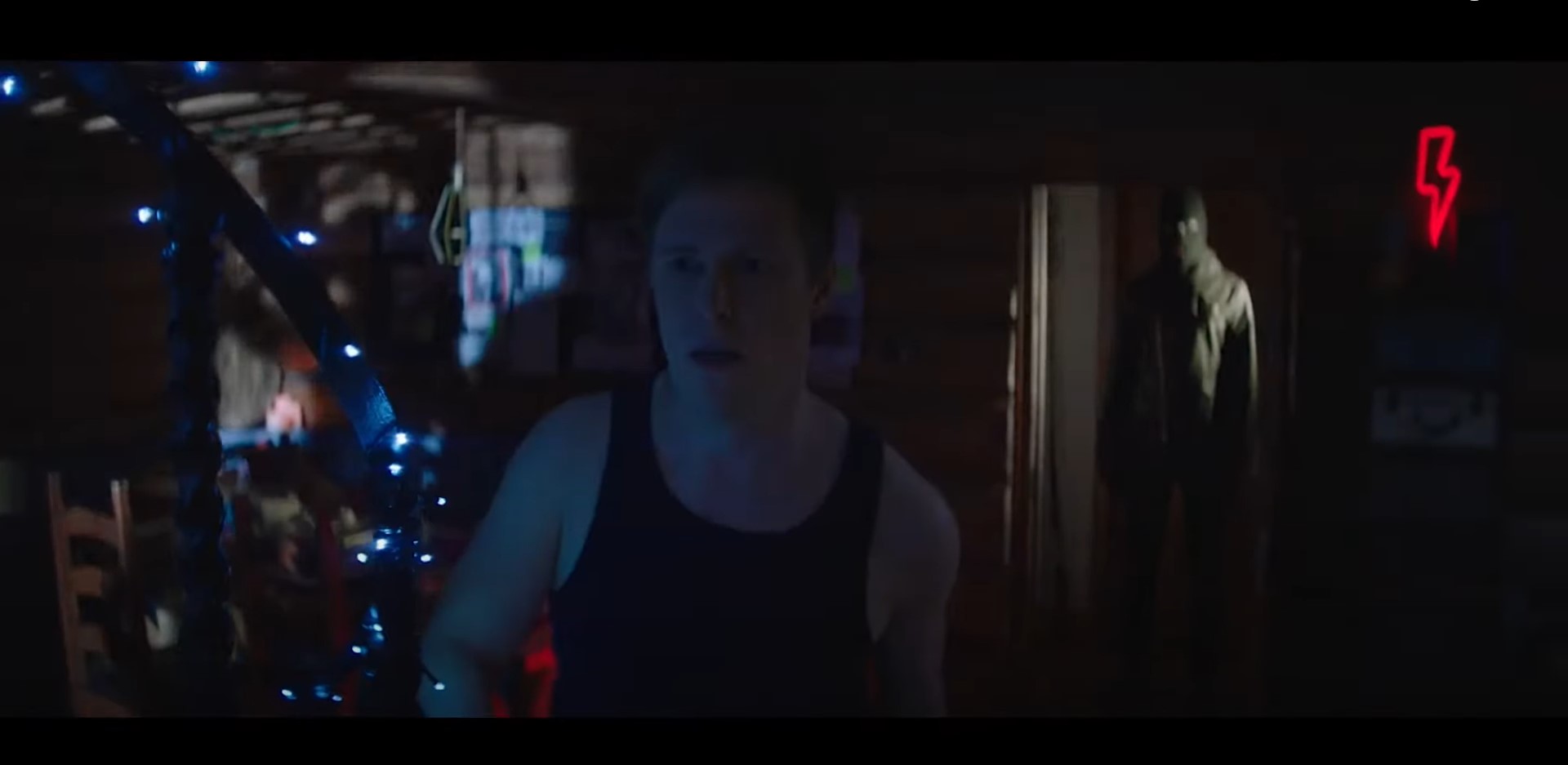
An aspiring novelist isolates himself in a secluded cabin to write his work-on-progress thriller without distractions, especially avoiding he contentious ones with his longtime boyfriend. Working through the night hours on the precipice of a storm, a mystery man drifts into the cabin, injured and claiming car trouble. After letting him stay the night on the couch and knowing he should ask the drifter to leave, the man’s rough allure instills deep desiring dark fantasies to bubble up to the surface that result in keeping his lingering presence around while also the experience doubles as subject inspiration for his novel. Yet, there’s something off about his unexpected and unusual visitor that lends to curiosity into what’s being hidden or being unsaid. The drifter’s trunk becomes an object of obsession that turns into wild speculation. Fear and fantasy collide into an explosive and destructive cat-and-mouse game of downlow and deadly secrets.

Based on the 2019 short film of the same title, writer-director Alexander McGregor Birrell (“Braincell,” “Sleepaway Slasher”), alongside co-writer and star Joshua Tonks, return to “The Latent Image” for a 2022 full script treatment to flesh out a fleshy grass isn’t always greener on the other side homoerotic thriller.  “The Latent Image” is Birrell’s third feature length film of essentially is Joshua Tonks inaugural writing and producing credit into the United Kingdom production that clashes tantalizing and dangerous one-time temptations with the safety and security of routine and longevity woven out of being inside a complicated gay relationship that stings with old systematic-induced worries and consequences.  Latent Image defines as an exposed picture or film not yet developed and Birrell and Tonks use that to purposely shield viewers from the utmost truth until the petrifying picture is clear.  Latent Image LLC in association with the queer community storytelling serving June Gloom Productions are the picture’s production handlers with the latter company’s Brandon Kirby and Michael Varrati as executive producers and Tonks and Birrell co-producing their debut feature collaboration.

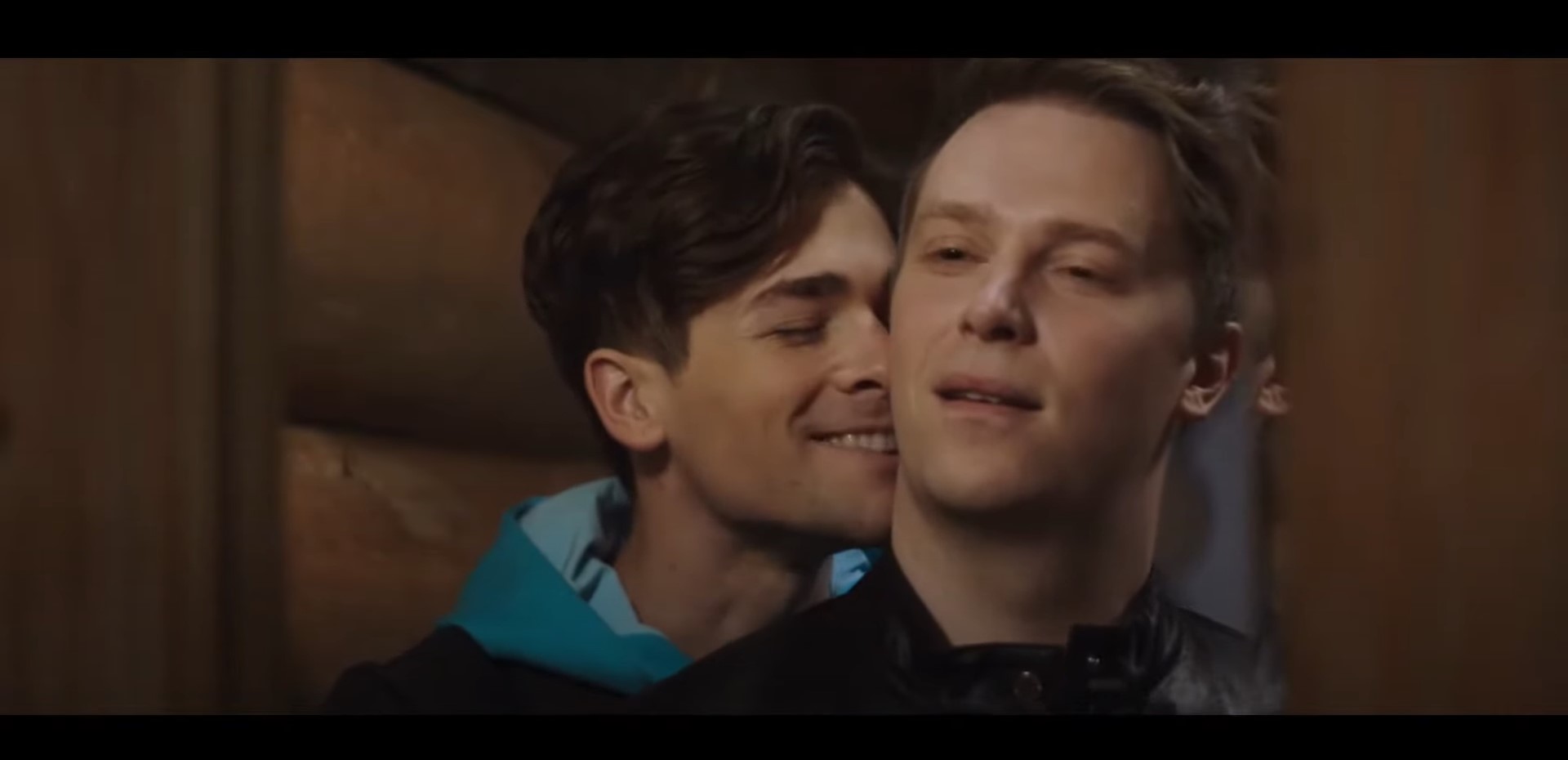
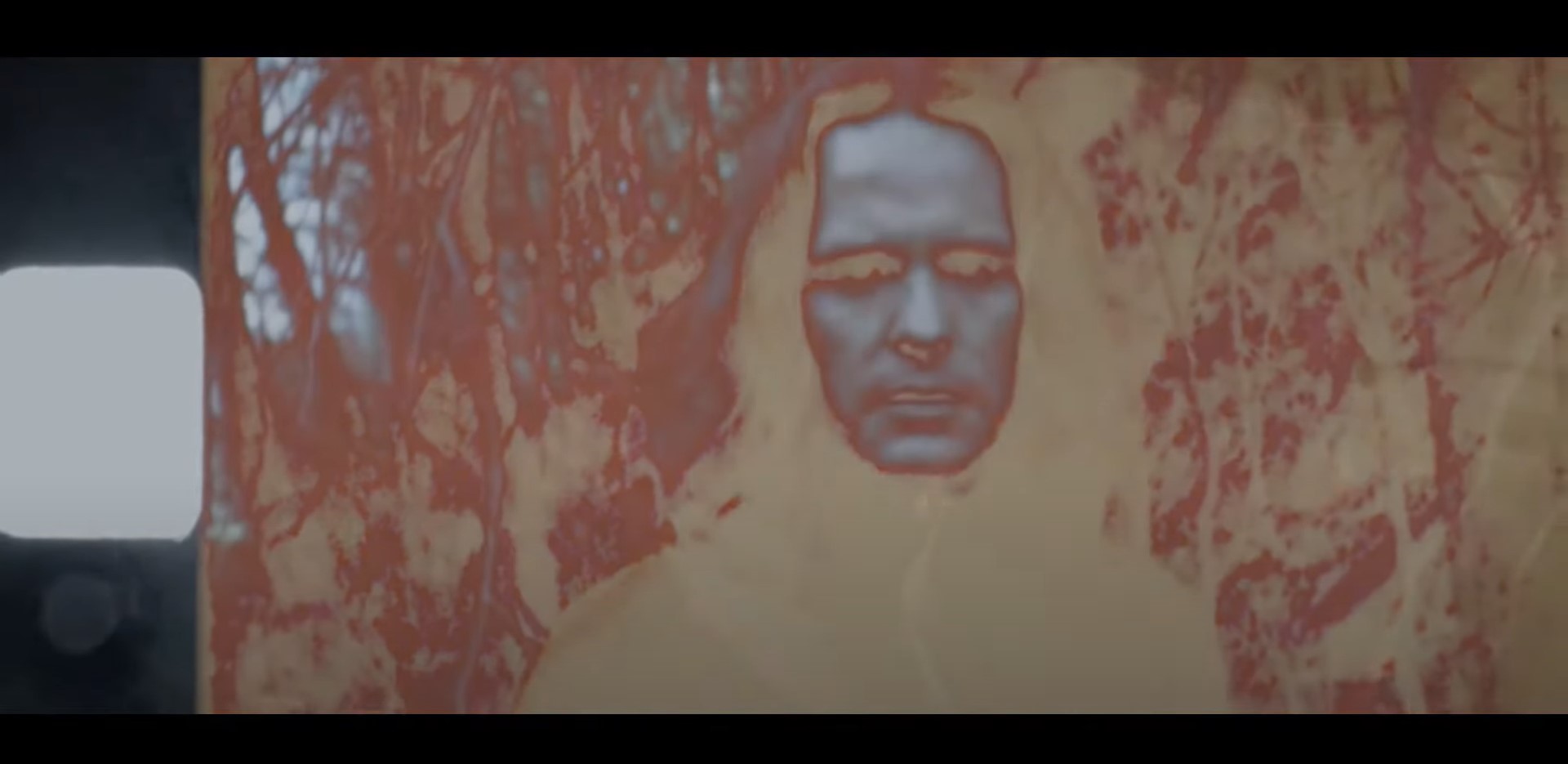
Being Joshua Tonks’s grandstand into his first feature production and as the lead character, the British-born, Vancouver film school-trained actor reprises his short film part with only two significant differences:  one being a principal name change from Robert to Ben and the other in providing Ben with more substantial backstory in the form of reveries or creative abstractions of a linear trickster narrative.  Ben’s old school, a reflection seen through his love for old photography without a display screen, his typewriting of the novel, and filming on celluloid film stock with a Super 8 camera.  This affinity for the antiquated matches his sexual stigmas, a flaw that shepherds in more harm than good.  Tonks readily handles Ben’s technological quirks as well as deepen his character’s philandering fantasy life with sexual daydream and night terror trances of being pursued, abused, and enjoying it.  Tonks works off the more indelicate stranger-danger of fellow Vancouver film school graduate Jay Clift.  Long hair, leather jacket, rugged approach, Clift in the role simply known as The Man portrays patience as weapon to wield to win over the quasi confidence and trust of the lonely and relationship confused novelist with an active imagination, a deadly combination to be caught with your pants down.  Clift becomes the character interloper in Ben’s life in more ways than one, some more subtle than others, and equivocally provides baited lure to either seduce the novelists or setup him for a fate far worse.  To complicate matters, Ben’s boyfriend, who he has a current agitated relationship with and viewers will initially think is safe and cozy back at their abode, will eventually enter the picture with newcomer William Tippery in the role to complete the all-male, three-man cast.

“The Latent Image” plotline doesn’t justify Birrell’s picture as anything else but another stranger showing up at cabin in the woods thriller.  However, beyond the shallows of the film’s surface level tension are deeper waters surrounding Ben’s parting of pathways.  The novelist not only struggles to conjure up a decent spinetingling narrative, but he also struggles personally with an uncertainty of where he fits into his relationship with at-home boyfriend Jamie and with this new, dark fella wandering into the cabin in rake portance.  From the beginning, Birrell and Tonks often visits Ben’s unconscious chimera but also often feels very real in its merge of reality and fantasy of what Ben’s sometimes wishes would happen, but don’t expect this thriller to be a based in psychosis.  “The Latent Image” is not a mental health movie of one man’s isolation snaps his baseline reality.  That would have overdone, overcooked, and overserved with stale bread and flat soda.  What “The Latent Image” taps into is not the age-old tale of a drifter’s in doubt motivations but rather a fear of being found out or fear of oneself when they themselves are unsure of who they are as a person and that can be a scary thought to let the imagination run wild. 

“The Latent Image” lands a debut distribution deal with the Philadelphia based Cinephobia Releasing.  The single layer DVD, arriving on retail shelves September 12th, is a compressed MPEG presented in anamorphic widescreen 2.39:1 aspect ratio.  Between the use of anamorphic lens, split lens, Super 8 reverse stock, and a ton of mood lighting, “The Latent Image” really pops cinematically with a variety of visuals and looks that can induce a breadth of emotions.  For a DVD presentation in an age where Hi-Def continues to the upward climb, the Cinephobia Releasing has tremendous sharpness and detail inside and out of the fuzzy warmth and often the vividly brilliant, focused lighting that induce back and front shadowing, decoding at average of 8 to 9 Mbps that eliminates any prospect of compression complications.  The English audio options include a Dolby Digital 5.1 surround sound and a Dolby Digital 2.0.  The 5.1 trumps the 2.0 In offering much environmental elements of rustled foliage and depth of character actions.  Dialogue conveys strongly, securing its spot Infront of the other tracks where depth allows.  English optional closed caption subtitles are available in the setup menu.  Special features include an audio commentary with director Alexander McGregor Birrell and stars Joshua Tonks and William Tippery going over their mindset of the characters, background, and visual and stylistic choices in an enlightening discourse, the 2019 short film “The Latent Image,” the audio commentary for the short featuring just Birrell, and other Cinephobia Releasing trailers.  The 83-minute film is released not rated and has region 1 layback, untested for other regions.  Well executed indie suspenser with a subtext clout to one’s essential nature and a smartly planned story has exposed “The Latent Image” as impressively top-notch and worth seeing. 

Out today on DVD “The Latent Image” from Cinesphobia Releasing!

A Gnostically, Esoteric EVIL Acid Trip. “Archons” reviewed! (Syndicado / DVD)

“Archons” are Watching You.  You Can Watch Them on DVD!  Click the Cover to Purchase!

A once promising, up-and-coming rock trio struggles years later to exit the shadow of their only hit song. They embark on an acid-stimulated spiritual canoe trip down the meandering river pathways of British Columbia, hoping the creative juices will flow under the influence while connecting the native wilderness. Along the way, they pick up a beach camping super fan and continue their trek toward mapped out checkpoints and take a hit of acid at each stop. The drugs have seemingly taken effect in a strange, voyeuristic way as if someone, or something, is watching them at each campsite. The visions become terrifyingly vivid as a pair of humanoid creatures rummage through their gear during the night and survey them from afar no matter where the band are or how far they travel. To make the situation worse, the acid they’re ingesting might be the root cause that not only expands their mind beyond the brain’s limited scope but also grows a biological entity wriggling for more room space.

The influence behind Nick Szostakiwskyj’s “Archons” is something fascinatingly outlandish in what’s a simile to the Scientology handbook. Rulers of the realm, creators of the physical universe, guardians of the celestial heavens, architects of the kingdom of darkness, archons, as some historical cultural teachings would have it, rise above traditional and conventional spiritualities with an expanse and infinitude of spiritual knowledge as related to the Gnosticism belief system. For the Vancouver filmmaker, Szostakiwskyj adapts the ideology with a bad acid trip in his 2020 cosmic horror that was once under the working time, “Hammer of the Gods.” “Archons” is the third feature film for Szostakiwskyj and the second otherworldly horror following “Black Mountain Side,” a precursing complementor that also captures the spectacularly natural, yet ominous lit, Canadian terrain in the Winter opposite season compared to “Archons’s'” Summer. The independent Canadian feature is A Farewell to Kings Entertainment production and is produced by Szostakiwskyj with Cameron Tremblay and alongside with the now defunction A Farewell to Kings Entertainment executive producer team of Samantha Carly and Steve Kaszas, who are now in the leadership team of Alright Alice Productions, and James and Susan McDonald.

“Archons” is tightly casted with less than a handful of canoers being spied upon by the gnarly gatekeepers of the universe. The story surrounds the spiritual and drug-laced scull trip of Dog Sled, a three-piece rock band who have lost their creative mojo and star power momentum with a fickle music fanbase. Lead singer Mitchell Ashley-Hoffman doesn’t have the emotional range to synthesize great lyrics but has the vocals of a sway fans and is played with Kurt Cobain-esque and mellow concern by Josh Collins. Rob Raco and Samantha Carly play bassist and songwriter Eric and drummer Olivia, aka Liv, and the pair are more in tune with each other while Mitchell mind wanders and drools over the ride hitcher and tarry eyed fan, April (Parmiss Sehat). The Vancouver based cast have enough chemistry to be slowly dismantling as a band on the fringe of collapse with backdoor dealings from one of them aiming to go solo into the limelight and to hold secrets that lead to life-threatening consequences all in the name of spiritual retreat.  However, to the extent of the being followed, spied upon, and endangered by hostile creatures, the character concern level is too low as if apathy for interdimensional beings that at first were cloaked and now are full view is not at the top of the internal fear alarm list for any of them.  The situation is written downplayed and the subtle actions to understand what’s in front of them mutes the anxiety for the audience.  “Archons” rounds out the cast with radio voices, minor roles, and two archons with Billie-Rae Grant, Lauren Donnelly (“Viral”), Michael Dickson (“Driver From Hell”), Timothy Lyle (“The Revenant”), Cameron Tremblay, Nathaniel Gordon, Marc Anthony Williams (“Black Mountain Side”), and Quinton Boisclair (“Demonic).

“Archons” has this beautiful backdrop of British Columbia’s topographical nature in a panoramic view in a breathtakingly serene opening shot and continues the wilderness motif with a thick forest and a never-ending river that seemingly swallow a group clearly not in their usual element.  “Archons” also has a beautifully disturbing breadth of perception concept laced with drugs and the gnostic universe.  The cosmic horror element is not forced or over-the-top being wrapped and shrouded in ambiguous mystery that keeps audiences glued to the progression baby steps before coming to terms with a dropped veil that causes reactionary looks over your shoulder with every unexplainable sound not in view.  Szostakiwskyj is in no hurry to quickly build an underlayer reality that ties into a dualistic system of two worlds running parallel to each other and colliding when drugs produce the sneak peek behind the curtain.  What shouldn’t be seen is clearly bad for the protagonists’ health, much like drugs in themselves if abused, and Szostakiwskyj plays into that limitation of the mind as if the part the brain or the organism that allows to see it all overloads, or overdoses if you will, the network of tissue and neurons until it bursts outward like a Yellostone geyser in a spray of blood in what is a pretty neat and simple effect, one of the few practical effects by Geoff Ingeberg in this rather performance driven film, as well as a neat scene to behold while the group travels down river when the unexpected pop occurs.  “Archons” is open for a numerous of interpretations, leaving the possibilities endless, but we don’t exactly know where Eric the bassist obtained the snack baggie drugs, what the creatures are intently undertaking, or if the vague final scene is the aftermath of a horrible acid trip gone fatally wrong and has dislodged memories of events, jumbling them up to the point where nothing makes sense and leaves more questions than answers.  The story definitely ends with more desires in detail, delineation, and context but isn’t the less-is-more concept the bread-and-butter of cosmic horror where the unknown is the scariest part that makes us feel infinitely small knowing the world around us is infinitely bigger?

Splice into a new and startling reality with your own DVD copy of “Archons” courtesy of Syndicado Distribution. Stored on a DVD9, “Archons” is presented in a widescreen 2.39:1 that enhances the initial landscape shots in the opening scenes. From then on out, Cameron Tremblay’s cinematography sticks to eyeline mid-to-closeup framing with a here-and-there upward angle to inject foreboding if the scene calls for it. Despite being pitch black, the aphotic zones Tremblay creates without the use of artificial lighting or tinting day scenes provides a sobering and somber authenticity of young people being stalked in the woods. Syndicado stakes a larger storage capacity for a low-budget film and the result pays off despite the decoding 5-6Mbps rate with the blacks looking especially inky without an inkling of compression issues, such as banding or splotchiness that plague darker scenes. The cooler color pallet digs a little more into bleak atmospherics, but there are warm pops of the BC bush with lime green leaves. The English Stereo 2.0 challenges to be more potent than it should be as the quiet and desolate trek the nature should incite more directional channels for a sound design that relies on the rustle of branches and the creatures’ low gutturals off in the distance and in an undeterminable bearing. What’s essentially a bare bones release, the region 1, clear cased DVD comes with the theatrical trailer on a static menu that also includes chapter selection. “Archons” is unrated with a runtime of 88 minutes. A low-key cosmic horror with eye-opening chills, “Archons” is cabbalistic cinema for the selective few who will understand it but does harp on the relatable proverb of with seeking fame comes a price.

“Archons” are Watching You.  You Can Watch Them on DVD!  Click the Cover to Purchase!

Reap the EVILS You Sow. “Wired Shut” reviewed! (101 Films / DVD)

The failings of a once famed novelist, Reed Rodney, have come calling after a horrific car accident leaves Reed with reconstructive surgery and his mouth wired shut.  Stuck in remote mountain home, sipping pain meds through a straw and hitting terrible writer’s block after the critically trashed last novel, fortune and distinction never seemed so lonely until his estranged daughter, Emmy, shows up at his front door, looking to spend some time with him before going to school abroad.  Their hoary embattled relationship, built on alcoholism, lies, and abuse, urges Reed for a change of heart, willing to reconnect with Emmy by any way necessary, even if that means being a punching bag for her bottled up emotional outpourings.  When an unexpected intruder exposes a callous secret and lives are at stake, Reed and Emmy must rely on each other to survive a twisted prowler’s sadistic games. 

“Wired Shut” is the teeth-clenching, family quarrelling, sociopathic surviving inaugural full-length feature from Vancouver born director Alexander Sharp.  The home-invasion thriller too hails from Vancouver, Canada with an old-fashion tale of an inside job story co-written by Sharp and the director’s steady collaborator Peter Malone Elliott in which the project is also the first full-length script for the two writers.  “Wired Shut” houses a single location with a small cast but indulges varying levels of crazy and a good amount of bloodshed initially pie-eyed by the immense build up of downtrodden characters.  Singed family relations, the ebb and flow of trust, and the untangling of an ugly knot to retether a stronger bond becomes the parallel of reconnecting in this GoFundMe crowdfunded film under Lakehouse Productions and Alexander Sharp’s Sharpy Films presented by Motion Picture Exchange or MPX.

In a role where you have to keep your trap shut at all times because you’re playing a former self-centered rake who crashed his Lamborghini and had to have your mouth wired shut, Blake Stadel (“Rise of the Damned”) has one of the easiest parts in all of move making history.  Thank about it.  Zero lines of dialogue, you’re feigning an ego that is as shattered as your character’s jaw, and you write or type if you have to communicate.  Now, I’m not belittling Stadel’s once famous novelist, Reed Rodney, as the actor has to absorb the pity, the verbal abuse, and the overall confinement resulted by his injury as a sort of surrender to unfortunate happenstance.  Reed’s moment of life-altering clarity came pre-introduction when crashing the Lambo that left him vulnerable and alone, two bad, pre-depression dispositions of mind and being.  Across the table stews the stark opposite with Reed’s daughter Emmy, played by Alexander Sharp’s sister, Natalie Sharp (“Baby Monitor Murders”).  Pent up with anger and seething with intent, Emmy is executed with these qualities with perfection by Sharp.  However, Emmy extinguishes her fiery eyed hate too quickly in the fate upturning twist that creates a dubious bubble around her and not in a good way.  Emmy’s defining moment of clarity is weakly pawned off just for her and her dad to have a slither of reconnection in a breakneck transition without any struggle or sacrifice to change her mind.  Her blurry change of heart quickly becomes moot by Behtash Fazlaili’s (“The Evil In Us”) unhinged performance as Emmy’s delinquent boyfriend, Preston.  Preston eclipses the entire father and daughter dynamic with a clichéd villain by monologuing and squandering wasted opportunities to end it all and getaway scot-free.  Fazlaili’s performance also doesn’t inspire terror or much of anything at all except for frustration with the cavalier, walk-on act that’s supposedly a mentally broken man fallen to and reshaped by life’s hard knocks.  What’s on screen is Joker-esque mush relating little backstory that drives him to scheme and to be completely off his rocker whereas, in contrast, we know what motivates Emmy and we know what motivates Reed.

The slow burn of “Wired Shut’s” first two acts attempts to humanize Reed as a dejected and alone with Emmy sparking life into an object he can now be fixated on to mend his meaningless, post-accident existence, but Emmy, herself, lugs her own daddy-issue baggage giving way for the two to buttheads in exacting their feelings upon one another.  Sharp fishes for sympathy but keeps loose with expressing Reed and Emmy’s contentious relationship; a relationship that truly never existed with an alcoholic Reed’s persona no grata behavior around Emmy’s mother and her that extends his jet setting lifestyle with the next mistress.  Though loose, you can see both stand and the foreseeable twist coming because of it in an unsurprising turn of events.  What is surprising is Preston’s sudden Jekyll and Hyde as if Reed’s salivated score is Sharp’s theme that for the love of money is the root of all evil.  The theme is peddled and not exactly discerned in Fazlaili’s character who’s more concerned with the cat and mouse game of unbelievable hilarity.  Part of the absurdity has to do with Reed’s three story house with a built-in elevator and if you’ve ever ridden an in-home elevator, the cramped, smaller versions of a regular Otis are slow as Hell dripping with molasses.  Yet, somehow, Reed and Emmy happen to beat Preston down a meager two stories with the push of a button while Preston stops to take an injury breather at the third story landing.  Getting in the elevator should have been easy pickings when exiting, but in entertainment for some, keeping the audience attentive is pinnacle even if that means sacrificing the story for cheap thrills by stretching the realism just a little bit.

“Wired Shut” will leave you speechless with a pedestrian anticlimax after watching the DVD. Distributed by the United Kingdom’s 101 Films, the region 2, PAL encoded, 91 minute thriller is presented in an anamorphic widescreen, 2.39:1 aspect ratio on a DVD5 and thoroughly soaked in a sea of tenebrous blue tint as the first, many firsts for these filmmakers, feature length cinematography for Martin Taube. Crystalized sleek and fresh with a modern, straight-edge finish, Taube main objective centers around personal space and to detox comfort with the strain and psychopathy, using close ups and up or down angling to exact an uneasy position during strenuous moments. The continuous tinting from start to finish could have been done without as it chokes the story in nearly an unviewable consumption. The English language Dolby Digital Stereo AC3, 5.1 surround sound mix, is a LFE sound cannon with a bass-heavy rattling industrial soundtrack by Oswald Dehnert and Rayshaun Thompson. The soundtrack’s sonorous tone crackles at the format’s compression, leaving granulated pops when the volume levels peak, which is really surprising for today’s digital and format spec cautious handling. Dialogue levels render nice and clear and the sound design’s not bad either with a complex range of soundbites inside a single setting, especially when Reed pops the wires when forcing open his mouth. The DVD is bare bones with special feature and the DVD cover itself is poorly misleading with a hooded figuring, standing backlit in the woods, with a large blade in hand. There is no such slasher figure in the movie. “Wired Shut” is not a slasher. I repeat. Not a slasher. “Wired Shut” is rated 15 for strong threat (gun pointing, knife to the throat), injury detail (stabbing, slicing, and surgical fastening coming undone), and language (Yes, foul language is present). As far as home invasion films go, “Wired Shut” says nothing new about the subgenre, but offers an intriguing ingredient of incapability and the strength to push through to the other side with the if there’s a will, there’s a way mentality underneath intruder chaos.