Joe Lewis Takes on the EVILs of the World Church! “Force: Five” reviewed! (MVD Rewind Collection / Blu-ray)

“Force: Five” On a New Blu-ray Collector’s Set!

U.S. Government contractor Jim Martin is an expert martial artist, hired as a contracting agent in the field to handle special missions against country threats when they arise.  When Martin is subcontracted by a wealthy man who has ties to U.S. politicians, he’s assigned to rescue the plutocrat’s daughter from the clutches of the World Church, a fronted religious cult promising to its followers a palace of celestial tranquility from an oppressive world but their intentions are to trick the trust funded young adults into signing over their inheritance to support smuggling drugs and guns.  Martin builds a team of hand-to-hand fighting specialist to take down the World Church’s martial arts master Revered Rhee and his large right-hand man, Carl.  Infiltrating with a visiting U.S. Senator, masquerading as his aids, the team also tries to convince the U.S. Senator of the organization’s corruption while searching for their assigned rescue target. 
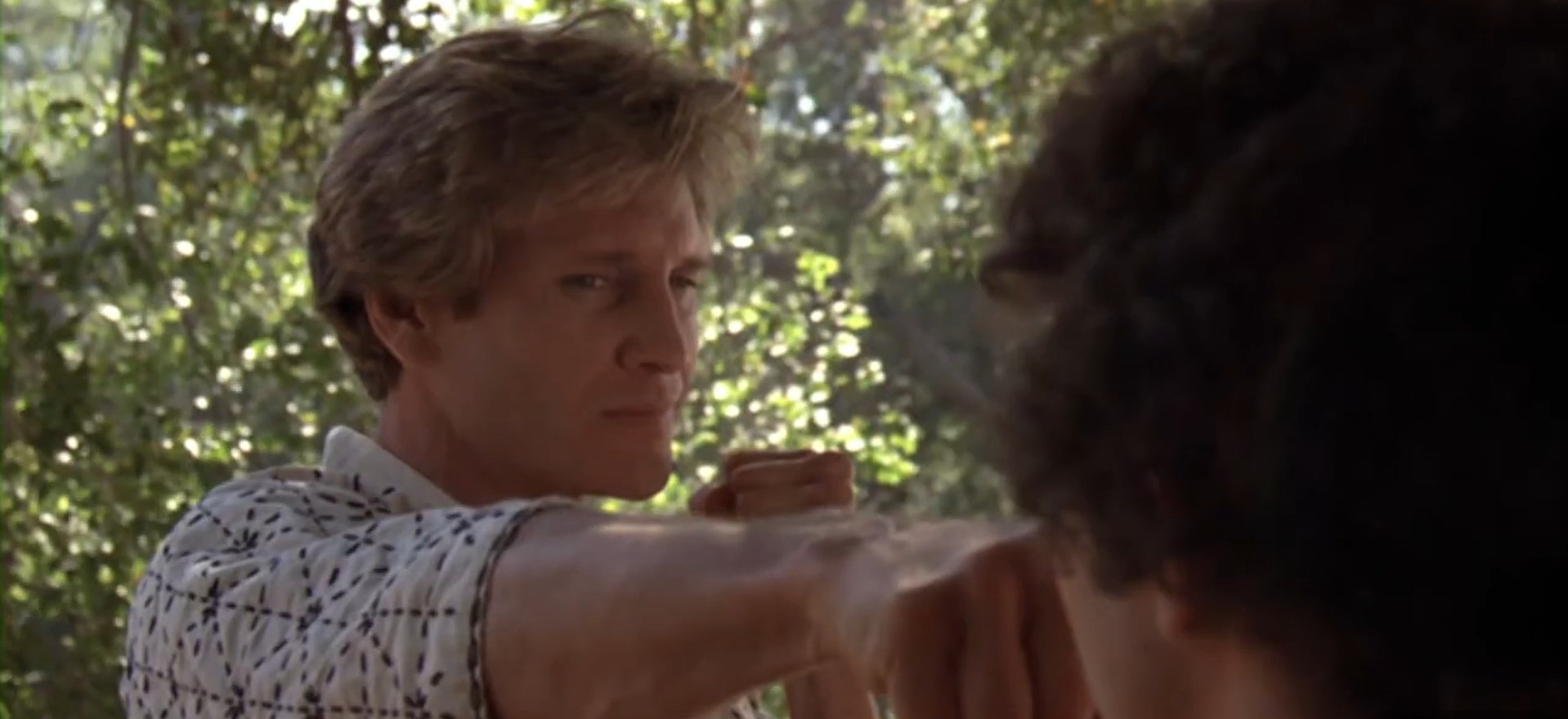
Joe Lewis, known as the Father of Modern Kickboxing and perhaps one of the leading martial artists out of the U.S. of his time, had his time on the action-packed silverscreen like most popular fighters of his ilk, such as Chuck Norris and Bruce Lee but certainly not as profound in appearance credits.  One of his first films is a martial arts and rescue actioner titled “Force:  Five” that was released just off the heels of the swanky 1970’s where the disco and soul-infused soundtrack and the chopsocky Kung-fu films reigned as one of the supreme sounds and subgenres on the globe’s East and West terrains.  Serial martial arts film director Robert Clouse, famously known for his co-direction on Bruce Lee’s “Game of Death” and notoriously known for his it’s so bad, it’s good “Gymkata,” writes-and-directs the film based on an alternate screenplay from debuting writers Emil Farkas (“Vendetta”) and George Goldsmith (“Children of the Corn”).   “Enter the Dragon” and “Black Belt Jones” producer Fred Weintraub hoped to capitalize on the melding of the aging martial arts and with the rising rescue/POW films that were on the rise and base the idea off of real events, such as People’s Temple and their cult leader Jim Jones that spanned two decades prior to the film’s written foundation and subsequent finished release.  The Italian language disc is pressed with the same sleeve art with the second disc pressed with alternate, dark-toned artwork, also original to the initial film release. 
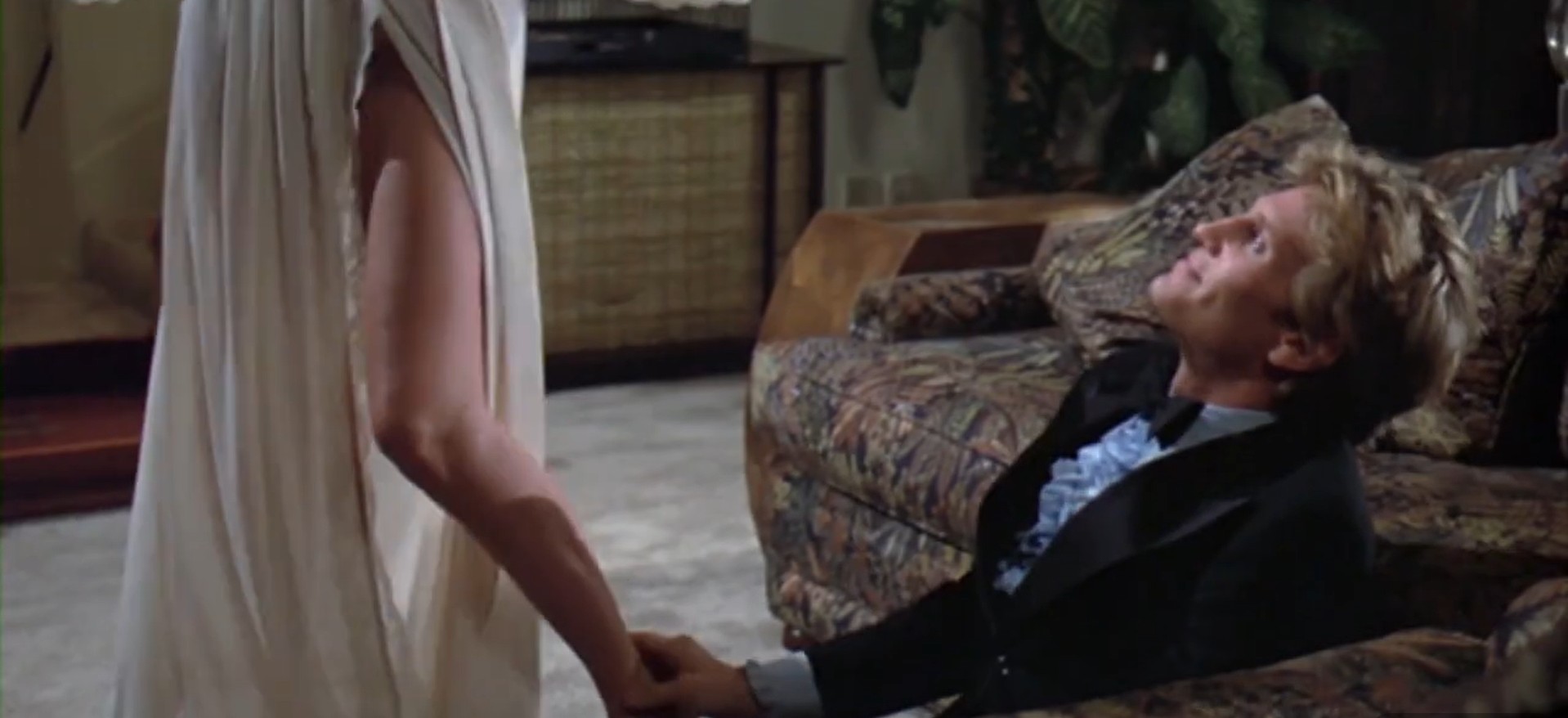
Having already touched upon the star of the film, one of the best martial arts competitors in the world, having once beat Chuck Norris in an official event, Joe Lewis is surrounded by an entourage of real fighters who dabbled in acting.  Sonny Barnes plays the large muscle Lockjaw, the only black character in the story, and Barnes is trained and became a Sensei in Kenpo Karate, and he wasn’t the only minority listed in the eclectic group with Latino and Native American representation in Spanish-American Benny “The Jet” Urquidez, a skilled black belt Kickboxer with proficiency in a variety of fighting styles.  Lastly, Richard Norton, another major name in martial art features, hails from Australia and implanted his styles of Karate, Brazilian Jiu-Jitsu, and Kickboxing in his work on both sides of the moral fiber with his characters, having played good and bad guys in “The Octagon” opposite Chuck Norris and in “China O’Brien” with Hong Kong superstar Cynthia Rothrock.  Rounding out the “Force:  Five” team is the only female member in Pam Huntington (“They Call Me Bruce”) with no fighting background and another nonfighter in Ron Hayden as the unhinged chopper pilot.  Though Huntington and Hayden’s fight scenes are limited to just a few in contrast to the trained martial artists, even the nontrained eye can tell the actors haven’t spent years learning the craft.  Now, what really nags at the pedantic in those in the audience is the film is titled “Force: Five” but the team listed above consists of six members so there’s ambiguity in if that was an elementary math error on the story’s part or the “Force:  Five” is just the team minus Joe Lewis, that’s not entirely clear, but what is clear is the antagonists with Korean grand master Bong Soo Han (“Kill the Golden Goose”), master of Hapkido, as the duplicitous Reverend Rhee and the very large and blank faced Bob Schott (“Gymkata,” Russ Meyer’s “Up”) taking trust babies fortune to back their drug and gun smuggling operation through an alternative church façade and scheme.  Reverend Rhee is a character that embodies the very essence of a stereotypical chop-socky or evil organization boss with bad lip sync and a flair for the ostentatious death, “Force:  Five’s” being a killer bull goring those in its labyrinth path, a deadly trap that’s a man-eating shark tank-type, James Bond-like thing to have in his possession. 
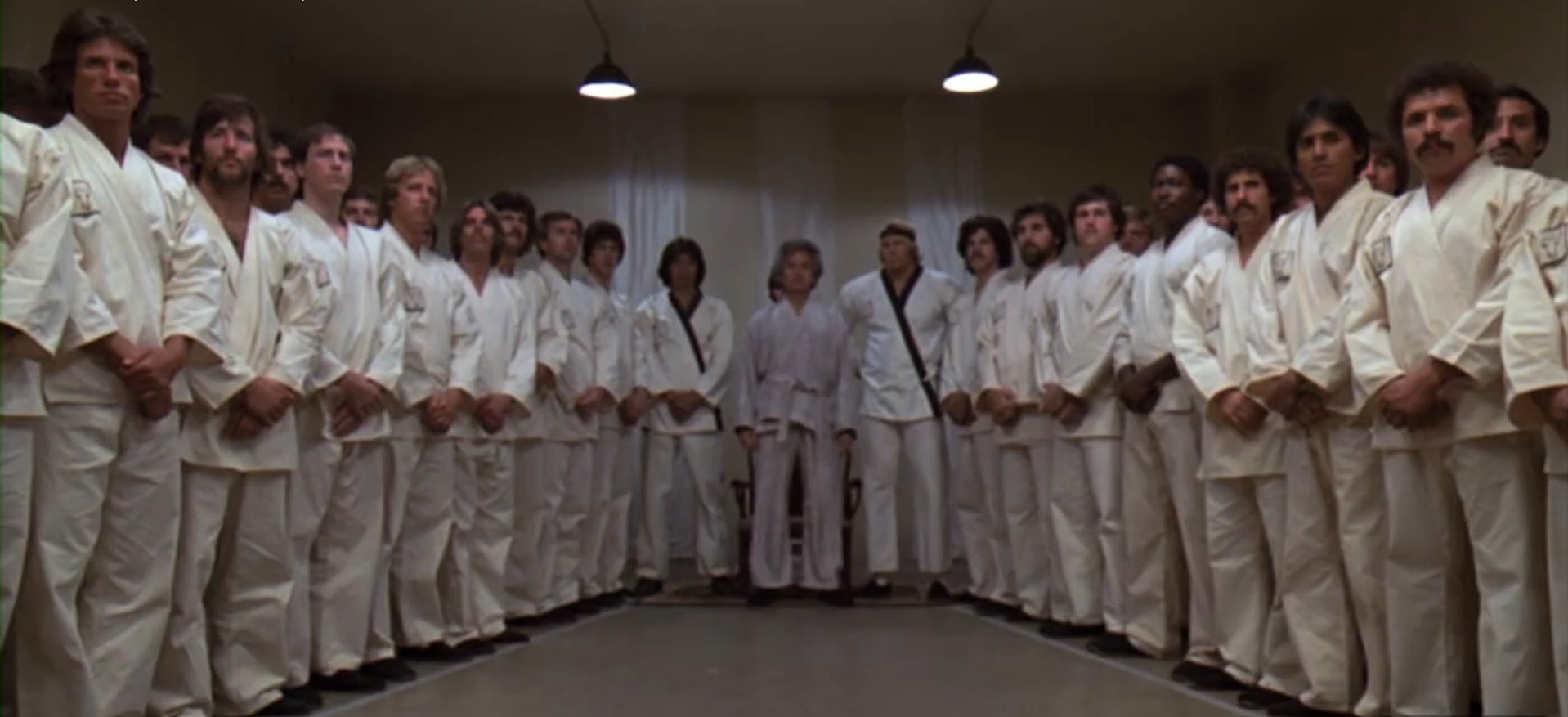
By today’s standard, “Force:  Five” is extremely formulaic but for 1981 and with the rise of the action rescuer, mostly inspired by the rescuing of POWs in either during or post-Vietnam War, the film’s a treasure trove of classic conventions of the subgenre that’s inundated with different kick and punch techniques and styles that strayed away from the Bruce Lee or Jackie Chan type of kung-fu that’s more an ostentatious showcase of ability rather than practicing in the practical realm but still pays homage to the craft masters.  Yet, these films resembled an espionage structure with an incognito infiltration, extraction, and scheming villainy pool rounded out exactly how we think movies play out in our head, with a swanky soundtrack that integrated the heart of Carl Douglas’s everybody was Kung-Fu Fighting into a clandestine operation conducted by U.S. operation contract agreement with confident, slightly cocky, Jim Martin.  However, “Force:  Five,” unlike other ensemble entrenched soldiers on a mission, came out too clean for comfort with an unscathed extraction and not one team member lost.  There isn’t even any nearly escape death by the edge of a fingernail.  Joe Lewis takes a couple of kicks to the face by Reverend Rhee and a handful of peripheral characters on the side good did take mortal damage at the hands of the bull and the wishbone split of one main contractor at the hands of Carl’s impatience, but none of the actual operators took one for the team and that usually puts a sour taste in the mouth by begging the question, was the mission really that impossible?  It appeared all too easy from the comforts of the couch to see an unarmed team of martial artists stroll into heavily armed compound (recall – they’re selling drugs and guns) and make it out alive without as much of a minuscule ballistic scratch. 
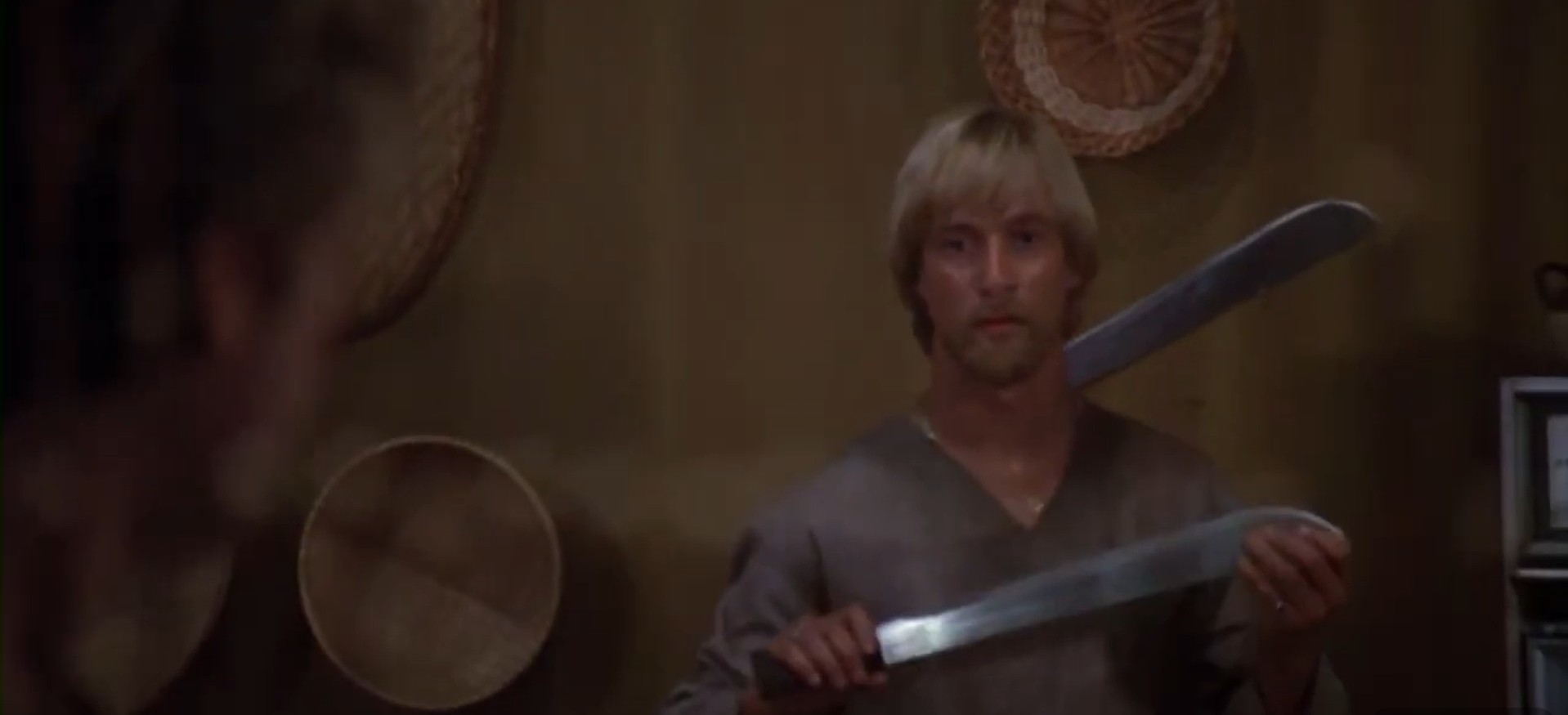
Coming in at number 70 on the catalogue of the Rewind Collections, MVD’s throwback sublabel, “Force:  Five” kicks itself back onto Blu-ray having been out of a print for nearly a decade on Hi-Def.  A slight better presentation with it’s return to the original widescreen aspect ratio of 1.851, the 2K scan evolves the detail levels to an only slightly higher degree when enlarging the pixels without sacrificing quality, producing a cleaner image perhaps from an advanced scanner.  There’s a balanced color diffusion with warmer palette that focuses mostly on greens and browns and there’s no sacrifice of grain but there’s still some dust/dirt speckling and the occasional vertical scratch but nothing too egregious to note viewing disruption.  The original 35mm print has been nicely preserved and now stored on an AVC encoded BD25.  The audio is generally the same as the previous Blu-ray release with an uncompressed English LPCM 2.0 mono that brings the double impact of all audio layers through the dual channel network, relishing in its small triumphs with small, enclosed explosions.  Dialogue has adequate carry over but there are hissing discharge and underlining crackle, but the overall general discourse is coherent in its post-production recording that leaves Master Bong Soo Han unfortunately reminding us of the higher pitched villainous voice of Betty from “Kung Pow:  Enter the Fist.”  Soundtrack doesn’t instill motivation or embark on danger with its standard stock coursing.  Foley hits and kicks are where “Force:  Five” makes its bread and butter with plenty of vehemently overlaid whomps and whacks.  Special features include a number of archival interviews, or more so toward fighting instructions, from a pair of actors, beginning with Joe Lewis in a sit down that really feels tense when he discusses his martial arts training and contests that lead into the movies and ending with Benny “The Jet” Urquidez offering fighting lesson tidbits in a pair of archived video instructions, such as wrapping your knuckles properly to avoid injury.  The original theatrical trailer rounds out the encoded extras.  The Rewind Collection’s physical treatment is unrivaled with a retro O-ring slipcover that doubles as a faux top secret objective folder on the backside and a VHS rental semblance on the front with previously viewed for sale stickers and mock wear of sun bleach and box creases.  The clear Amaray case inside houses a reversible slipcover with a cleaner, saturated image of the slipcover that has the same layout design on the reverse but with a variant character composition design encircled by a black border.  Inserted inside a mini-folded poster of the primary Blu-ray art.  The disc is also pressed with VHS nodule imagery that further it’s retro appeal into videotape.  The region A release has a runtime of 95 minutes and is rated R. 

Last Rites: “Force: Five” is about as skilled as any Chuck Norris or Jean Claude Van Damme film, and just as hokey as well, with an ensemble of experts of the kick and punch craft that go into a cocky show of bulldozing armed and dangerous smugglers with nothing more than their feet, fists, and wits.

“Force: Five” On a New Blu-ray Collector’s Set!

Just Because Your EVIL Dad Says Its Okay, It’s Probably Not. “Netherworld” reviewed! (Blu-ray / Full Moon Features)

Enter the Netherworld on Blu-ray!

A wealthy owner of the Thorton plantation bequeaths to his willfully neglected son, Corey, his large Louisiana estate. He’s welcomed by the estate’s unusual lawyer, a house caretaker with an affinity for birds, and her beautiful daughter Diane who, despite her teenage muliebrity, immediately takes an interest and liking to the handsome young man. Corey is also met with his shirker father’s penned testament, to be resurrected from the dead by a sexually alluring brothel woman and necromancer named Delores who works at the local bordello and bar named Tonks. Fascinated by the idea, Corey hangs around the bar and becomes just as engrossed with Delores as his father as he seeks to abide by his father’s supernatural wishes but there’s a warbler cult connected to Delores and Corey’s father with an underhanded scheme that doesn’t favor the new, young estate owner trying to save and possibly get to know the father he never knew, the same one who abandoned him as a small child.

One of the more stranger Charles Band productions to every come out of Full Moon Entertainment, and that’s saying something for a media empire that made killing on hawking killer dolls amongst other oddity-saturated, carnivalesque sci-fi and horror for many decades, “Netherworld” is the early 90’s, Cajun-encrusted, occulter of the Full Moon legacy director of “Tourist Trap” and “Puppet Master,” David Schmoeller, who also cowrote the film alongside Charles Band. “Netherworld” harkens to a time before Band became visionally crazed by dolls, or miniaturized maniacs in general, with a plot that promises Cajun black magic beyond the traditional spells and curses of Louisiana Voodoo, a son desperate to reconnect with his long-lost father who abandoned him, and a flying stone hand with finger extremities that turn into vicious snake-like creatures when attacking the quarried head, but is “Netherworld” too extrusive of the regular and in vogue poured cement of solidified psycho-dolls? ‘Netherworld” is executively produced by Charles Band, produced by Ty Bradford (“Trancers II”) and is a part of the vast Full Moon Entertainment catalogue of productions.

Unsuspectingly walking into between the veil of the living and the dead is predominately television actor Michael Bendetti (“21 Jump Street”) embarking on his first ever horror feature as Corey Thorton, the city boy, or so we assume as he leisurely journeys down a windingly steamy Louisiana tributary in a button-down shirt and tie, who learns his deadbeat, rich father has left him a large amount of property. For having been left fatherless for all of his life, the pill that read as Corey’s deep-rooted longing to familiarize with a flake of a father is a hard one to swallow. The angle that Schmoeller should have attacked more resurrection motivation is the one that involves Corey searching for answers in his father’s disfavor, choosing to live without the flesh and blood legacy of a son, and why now, posthumously, does his father want to reconnect? Audiences will find the answer overly obvious, but Corey Thorton’s thickness proves more difficult to penetrate, especially when he’s beguiled by an enchantress who can summon a flying, snake-fingered hand that emerges an affixing binding wire out from its stony skin and can turn whorehouse johns into caged birdies, literally, if they misbehave or become indelicately frisky. The house keeper’s horseback riding daughter Diane is marred by Holly Floria (“Bikini Island”) with an excessive Southern Belle accent when her character’s status doesn’t stem from sophistication and affluency but rather from the blue collared starry eyes of Anjanette Comer’s (“The Baby”) motherly and hospitality position. When the climax arrives in grand temps and we’re face-to-face with Corey’s ghostly pops, living in the titular Netherworld, the story takes a sudden branch drop that executes any voyage into the void between worlds and there’s quite a bit of neglect for Robert Sampson (“Re-Animator”) as Corey’s father who barely has any scenes to live up to being the film’s primo antagonist pulling the strings of the marionette of his flesh and blood. “Netherworld” fills out the cast with Robert Burr (“Ghost Story”), Alex Datcher (“Passenger 57”), Holly Butler (“Vendetta”), George Kelly (“Jugular Wine: A Vampire Odyssey”) and Denise Gentile (“Ordinary Madness”) as the super-sexy, premium prostitute Delores with parapsychological powers that connect her to the land of the dead.

Off the tip of a gator’s nose, “Netherworld” offers a taste of Full Moon’s 90’s production, promising radically outlandish F/X with a monstrous airborne hand, saucy sexual content, and gore. Corey’s inner thoughts exposition and waterway introduction tends to be more private eye monologuing in the explanation setup of his unplanned inheritance and it also feels like the brittle beginnings of a trashy romance novel: young man travels down the river to his inherited late father’s estate, torn between a pubertal young daughter of the long-standing estate housekeeper and the haram brothel seductress with an eldritch, supernatural inveiglement. Corey’s past lacks backstory, leaving an even playing field across the board of all characters and participating audiences in what to expect from the wild card that is Corey. Immediately drawn to the wanton Tonks not for carnal desires but rather the one woman who her father says can restore his past expiration, Corey’s not a wild card of ambiguity as his role lacks the pull of tough decisions, often between character versus character conflict, with basically a mind already made up to visit the bar-and-bordello despite the ominous warning signs between George Kelly’s sloppy bayou cajuner wanting to dance with Corey at Tonks, Diane’s strong opposition for Tonks in general, and amongst others dubious gratifying points. “Netherworld” very much lives in a world of opposition, like Superman’s bizarro world that defies logic. Logic such as the transition of people into birds, or being inducted into a clan of avian cultists, or ciphering who’s a good guy and who’s a bad guy, or, and this is the most important or, the suddenly cleaved ending that not only doesn’t allow a satisfying ending but also doesn’t explain much, in dialogue or in action, what came into existence once Corey was stuck in the Netherworld other than the obvious trade his father wanted to force.

Full Moon Features brings Hell to Blu-ray with an uncut and remastered from the original camera negative transfer of “Netherworld” in the continuous effort by the empire to upgrade all their classics for a new wave of format availability. Scanned into 2K from the 35mm negative, the AVC encoded, 1080p, high-definition Blu-ray looks pretty darn good. Well kempt over the years, the negative appears to have sustained little age or wear that progresses the hi-def upgrade with relative ease. Color grading is warm and stoked with detail that encrusts every object – the lushy bayou forest, the stony power of a flying hand, Michael Bendetti’s layered curly-perm mullet – all of it is greatly textured and delineated for depth, presented in the 1:78:1, widescreen aspect ratio. Compression doesn’t appear to be an issue despite a lower storage BD25 but that might be due to the utter lack of bonus accompaniments. The release offers two audio options: an English Dolby Digital 5.1 surround sound and an English Dolby Digital 2.0 mix. Both options are equally suitable as the there’s not much more environmental oomph through the extra channels despite the full-bodied cacophonous cicada singing, which unfortunately doesn’t open up depth in the back channels despite the prevalence of the singing in the story’s background sonance. However, dialogue doesn’t feel cheated with a dominating layer and decent range to go with it. Along with essentially what is a bare bones disc, there are also no subtitles available with this release. What is available to view outside the feature is other Full Moon trailers and the original VideoZone segment that covers this particular 1992 gem. Physical features don’t stray too far from VHS, to DVD, to Blu-ray with the same flinty hand rocketing outward in a 3D-like position on the front cover. There are no inserts included with this release. “Netherworld” Blu-ray comes region free, with a runtime of 82 minutes, and, for the first time ever, uncut! An opposition to the usual spun of Louisiana voodoo-hoodoo, there’s another dark magic brewing in the bayou in “Netherworld,” but the promising story can’t coherently piece together down river in an uneven quagmire of quandaries.

Enter the Netherworld on Blu-ray!

Evil Messes With the Wrong Family! “Pickings” review!


Ruthless mobsters crack down hard on barkeeps, strong arming their way into seizing every bar in town. When they mess with Jo Lee-Haywood, the too cocky gangsters messed with the wrong Southern gal as Jo turns out to be Jo Pickings, one of three dames of the notorious Pickings gang. Jo tries to abide by a straighten arrow inspired by her deceased husband and four kids, but crime tugs at her violent past, scraping the good from her clean off. With the help of her brother, Boone, and her sisters, Doris and May, Jo and her family of heavily armed outlaws aim to fight back against thugs and thieves in this modern day western.

“Pickings” is the freshman film of first time feature film producer, writer, and director Usher Morgan. The contemporary gritty western is a maelstrom of goliath turf wars that’s stylized with rotoscoping and other comic book fatigues to dress Morgan’s film as an aesthetically popping story with illustrative visuals, anomalies, and raw tooth violence. The clear cut message, a fairly popular thematic motif among westerns, is don’t mess with family, even if family has been through an estranged time, and though Morgan’s theme runs a fairly conventional line, the “Sin City”-esque overlay gives “Pickings” a strong double take. What’s an especially fun and unique concept is having one of the characters, Sam “Hollywood” Barone, be exhibited in black and white while everyone else is in color as if the character was pulled straight from a Humphrey Bogart classic.

Elyse Price headlines as Jo-Lee Haywood, a wife-mother scorned by notorious gangsters, but the tough as nails mother of four runs a tight-ship when it comes to her bar and to her family. Price doesn’t hold back, taking the gut-checking hits and delivering a twice as big response with a performance of contempt and revenge. Price is joined by Joel Bernard, the sole brother of the Pickens gang whose as tough as they come, especially when you’re the only boy with three sisters. Bernard does the job matching Price’s hard nose character with his own more subtle version. The two other sisters, Doris and May played by Michelle Holland and Lynne Jordan, barely scratch the surface in an appearance that makes their characters difficult to absorb. Aside from Jo Lee-Haywood, the only other character with a significant character arc is her daughter Scarlet Lee-Haywood filled in by Katie Vincent. Vincent’s softens up against her mother’s violence despite being a passive witness to her cornered brutality, but can adhere to the akin familiarities of her family’s long and violent history. The cast rounds out with Yaron Urbas, who in my opinion is a decent mobster, Michael Gentile, and Emil Ferzola.

“Pickings” doesn’t come without problems and one of the problems is is the story concludes on a really too clean note. The inner monologuing exposition of Jo Lee-Haywood conveying her start-to-finish tale of her involvement with the three dames, Doris, May, and Jo, is a good visual like the rest of the Morgan’s film, but is just that, a good visual, and doesn’t carry the weight of suspense and becomes even more diluted when Doris and May have little interaction with Jo and barely any screen time at all to put the oomph into conveying their badassness. Aside from being obvious and telling, the gun blazing finale is also a bit underwhelming and disappointing, chocking everything to a one sided victory without any, or the hope of any, dire loss to compensate just feels empty and, again, too clean for comfort.

Courtesy of Dark Passage Films comes “Pickings” onto DVD and Blu-ray home video. The DVD is presented in a widescreen 1.85:1 aspect ratio that capture the neo-noir facets of shadowing figures and haunting mysteries. Morgan’s film doesn’t necessary pop with color, but that’s particularly the nature of the genre. Aside from that, no real issue with the DVD transfer. The audio is a stereo option that has an ample dialogue track and a stocky ambient accompaniment. Katie Vincent’s bootlickin’ acoustical score never wavers, cracks, or looses range. Extras include deleted scenes, filmmakers’ commentary, “The Mop” a Pickings short, a behind the scenes featurette, and a spoof reel during the end credits. Loaded with female empowerment, “Pickings” is a violent crime drama with neo-noir battle garments of two warring clans ready to get along like the Hatfields and McCoys, but the undercutting finale puts a sharp spur in one’s couch melding backside, leaving much to be desired from a women scorned vendetta.