The Little EVIL in the Cupboard. “The Abomination” reviewed! (Visual Vengeance / Blu-ray)

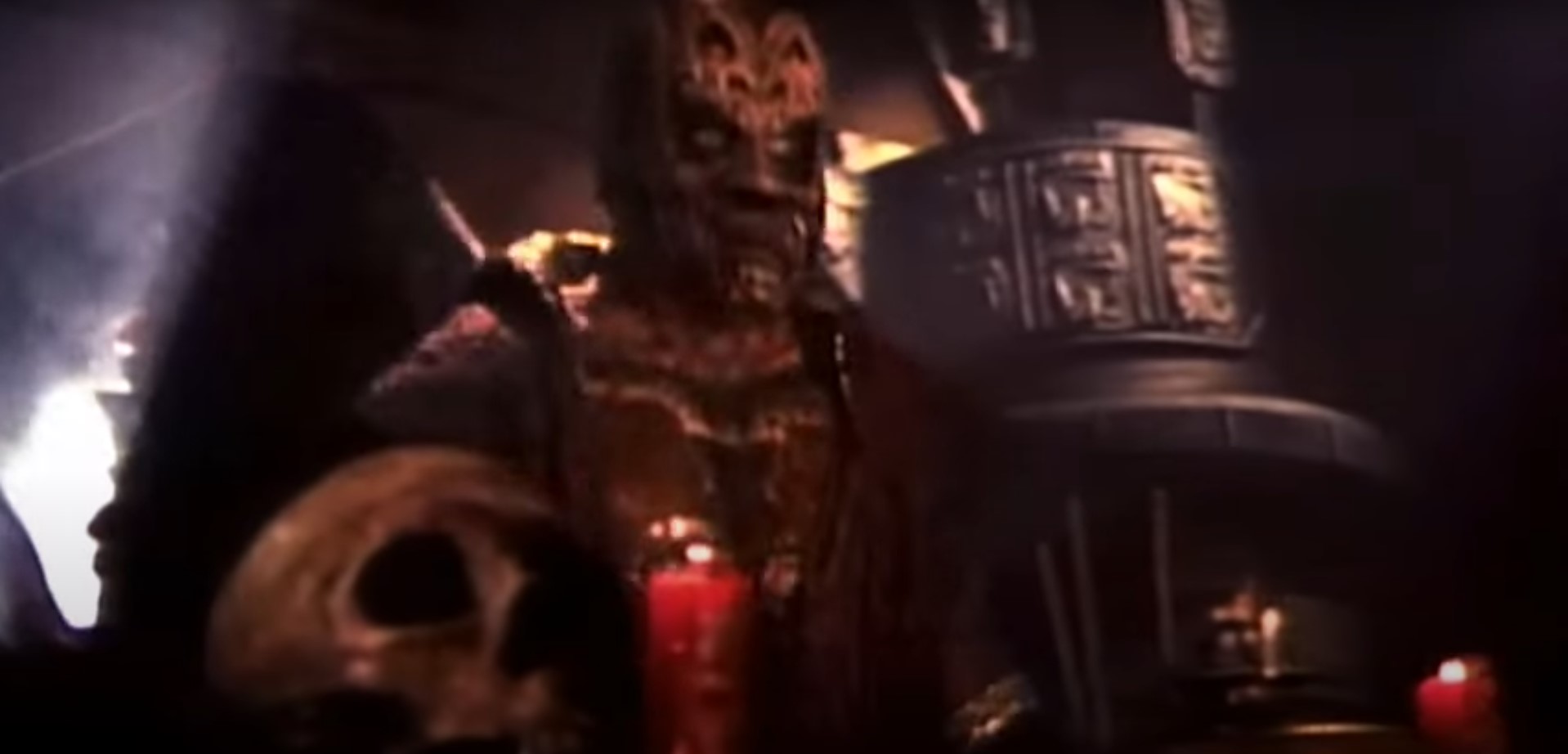
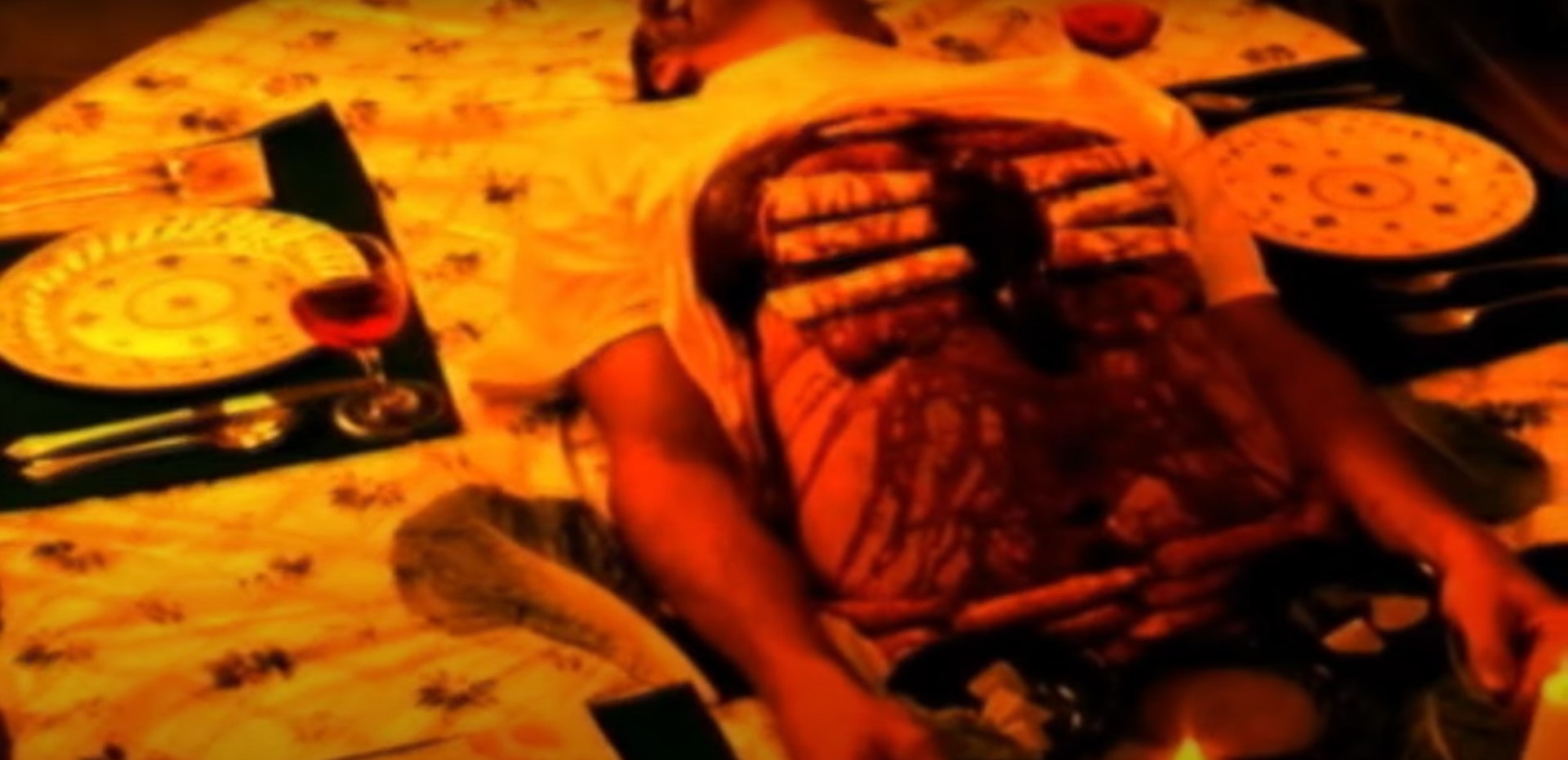
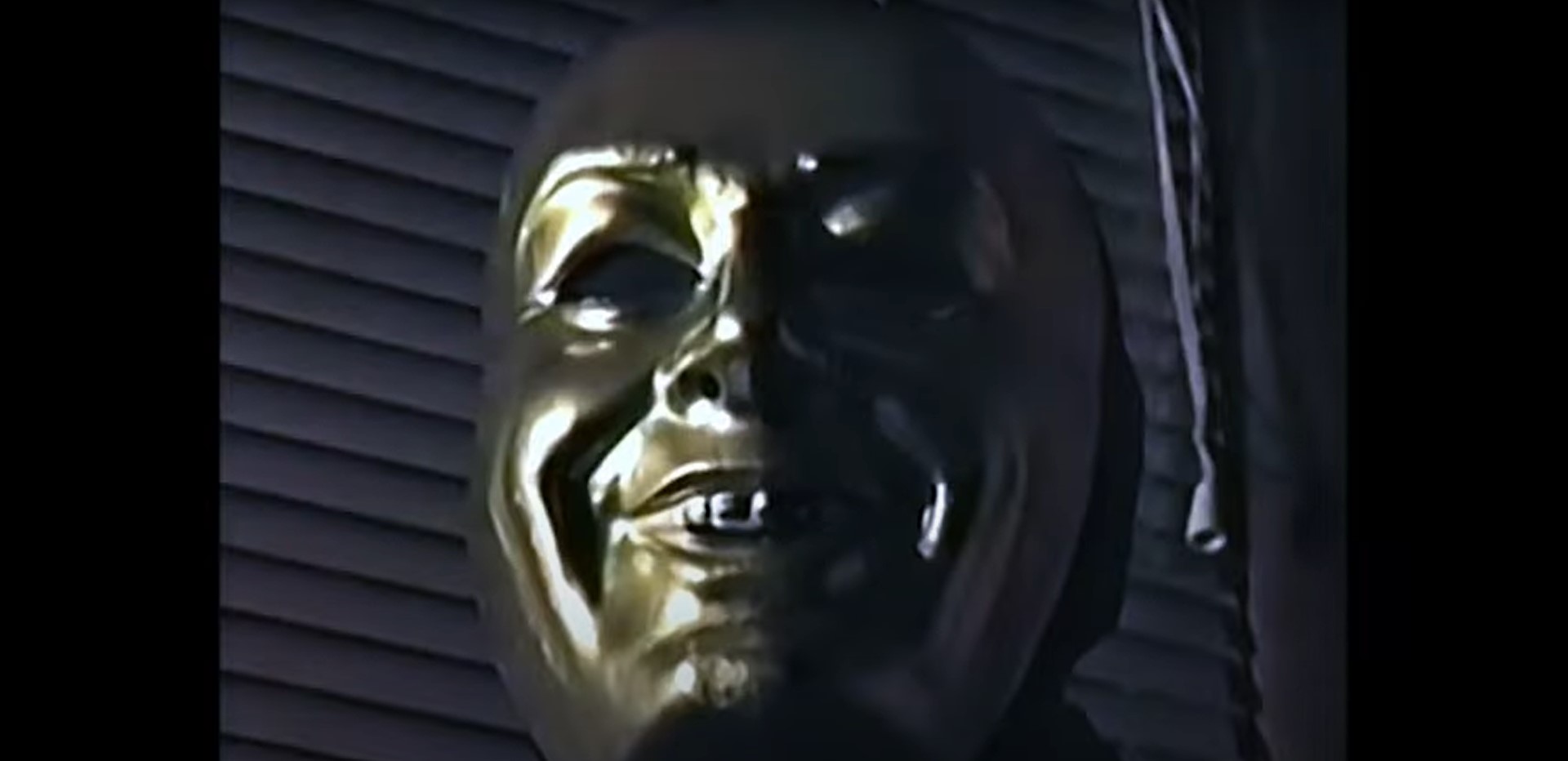
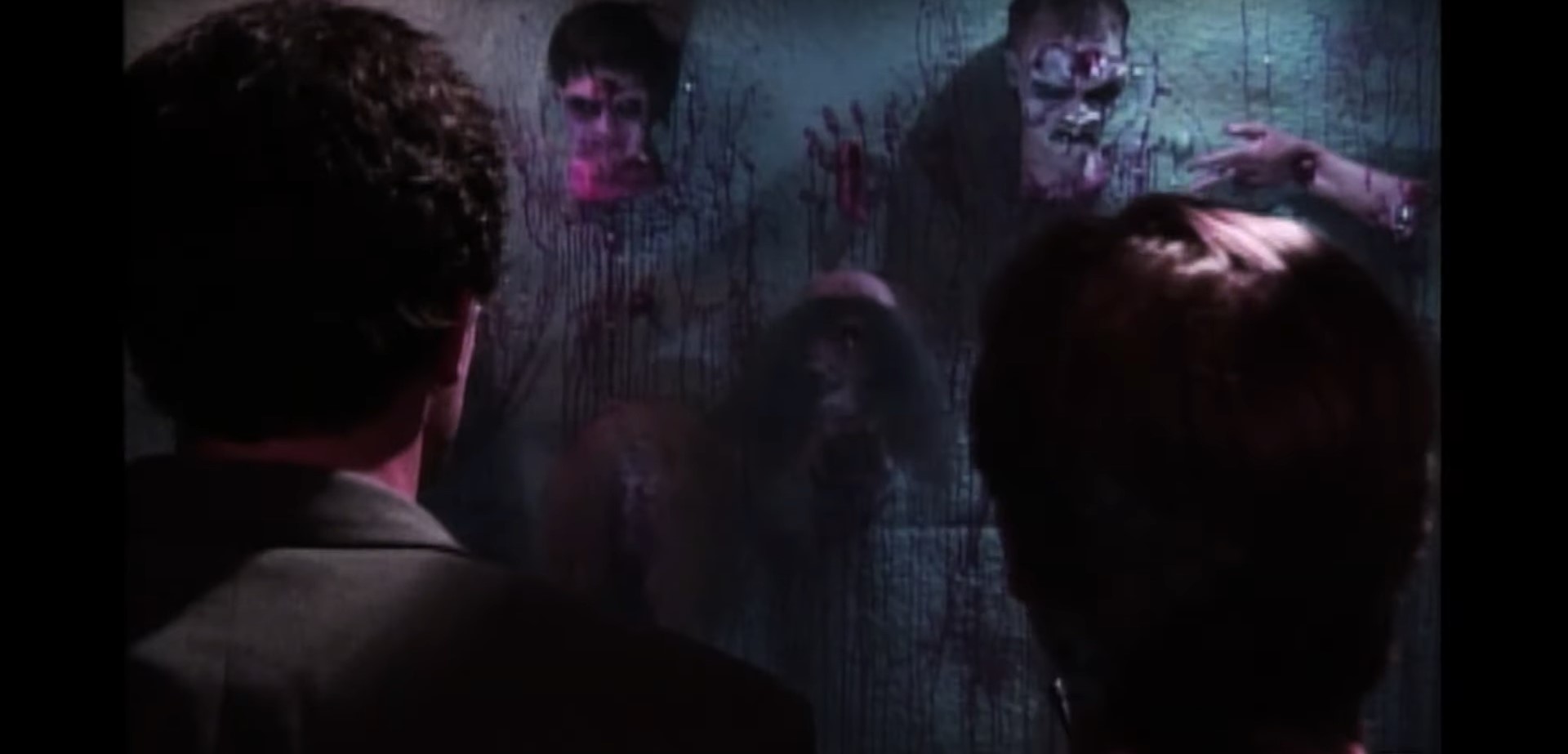
Cody’s devout mother has a large tumor growing in her lung.  Her piety believes will cure her from the ailment or so says the televised evangelical priest Brother Fogg who once listened to her plea.  When she coughs up the tumor onto the kitchen floor one night, the relieved woman becomes ecstatic having been miraculous cured by brother Fogg’s channeling of the holy spirit and her $20 donation to him but little does she know that the tumor is actually a blood lusting demon that slithers down Cody’s sleeping throat, turning the young man zombified and obedient to the demon’s ever starvation for human blood and flesh in order to grow.  Inhabiting Cody’s house like a shell and monstrous with tentacles and large teeth chomping from out of cupboards and the top loading washing machine, Cody heads out into the world to brutally murder his own boss, friends, and even family to serve and feed the abomination living in his home.

Tantamount to “A Little Shop of Horrors” and released the very same year as the Rick Moranis remake of the original Roger Corman killer-plant picture, writer-director Bret McCormick waters to grow his gelatinous creature-feature “The Abomination” onto the home video market.  Ultra-violent and gory against the more, what would be considered in comparison, family-friendly and Hollywood produced rowdy giant flytrap ravenous to devour victims, “The Abomination” is by no means a musical but delivers a tone of tentacle-laden terror around a subtle theme of mental health.  Shot in Poolville, Texas, from the then future filmmaker of “Repligator” and “Highway to Hell” under his pseudonym of Max Raven, the guts-galore indie was also produced by McCormick as well as with longtime partner Matt Devlen, director of “Ozone:  The Attack of the Redneck Mutants” and producer of “The Upstairs Neighbor” with “Woodchip Massacre” and “Cannibal Hookers’” Donna Michelle Productions picking up the film for at-home VHS distribution rights.

However unlikely it may seem with these types of splatter films and with a cast credited with different stage names and pseudonyms, “The Abomination” is undoubtedly a family affair.  Bret McCormick has employed a great deal of his once intact family into filmic roles as creature fodder, which some of us would like to dish up on a daily basis.  Well, McCormick did it from his brother Brad McCormick as Ike, mother Victoria Chaney (“Christmas Craft Fair Massacre”), former father-in-law Van Connery, and even his wife, now ex-wife, Blue Thompson (“Ozone:  The Attack of the Redneck Mutants,” “Highway to Hell”).  Relatives appear game to be in a next-to-nothing splatter horror that offers a soup kitchen of out of body organs being pitchforked fed into gaping jaws living a cupboard.  Performances render suitably as bored rural clodhoppers who fear God, work at junkyards, and give into evangelical sermon with Cody (Scott Davis) and his friends often the more sensible foursome of youth yearning for fun and beer as they race down dirt roads and yuk it up on the back of their 4×4 truck beds.  All of the dialogue is done in post with ADR and so we’re not offered the actors’ original gutturals, conversations, and screams with the silver lining in the audio track being a clean post-principals photography recording of the dialogue.  One shortcoming of the dialogue track lies with Cody’s mother Sarah, played by Jude Johnson (“Tabloid”), with earsplitting screams set on linger as she discovers the truth.  With a small, intimate cast with most being within McCormick’s inner circle, every character is essentially core to the story with the rest being rounded out with performances from Suzy Meyer, Gaye Bottoms, Matt Devlen, and Rex Morton as the equivocally moral televangelist Brother Fogg.

There’s something to be said for low-budget, do-it-yourself, indie horror films with exaggerated and practical special effects.  “The Abomination” is one of those said features that’s’ more splatter than substance but the splatter and the palpable puppetry are the driving force behind McCormick’s attempt to enter the gonzo-gory market of cost nothing commodities popular at the time.  “The Abomination” evokes the very truth of the titular creature without being ambiguously metaphorical, becoming a character, much like Audrey II in “The Little Shop of Horrors,” in itself even if it didn’t talk or sing with boisterously briar.  Before delving into the core narrative, skipping the opening dream sequence/montage may be in your favor as the series of random images of grotesque violence, splatter, and such sum up the film’s entirety in a disordered delusion of dreams. If you can fast forward the montage, the opening secondary setup of Cody and Dr. Russell’s voiceover conversation will suitably add the necessary layer to peel back not only to expose the carnages to come but also sneaks in a thought-provoking twist that will leave audiences reeling over the bookend voiceover conversation between a distraught Cody and the doctor in the final moments.  Not to be exceedingly overshadowed by the immense deluge of blood, the pint size pivot juts out like a nail in a floorboard, insignificant across the entire square footage but once you step on it, the punctured wound leaves an unforgettable impression that makes the entire floor feel the need to be tiptoed around because of the dreadful sensation of sharp, pointy objects covering the entire area.  Narratively, the linear structure works as a son and his mother struggling on the precipice of her cancerous death while believing the televangelist Brother Fogg’s wisdom and spiritual healing will come to her rescue before her demise, but the one element that doesn’t quite work, or is more so unclear, is Brother Fogg’s part in the much darker side of the abomination’s arrival.  In scene, Fogg’s has all the hallmarks of a fire and brimstone swindler but no other clues hint to his involvement in the scourge spawn other than a few dropped lines by other indirect characters that more disconnect the dots then link them.

You have to continue to love Visual Vengeance for their pastime presentation of splatter and obscure VHS films.  “The Abomination” slithers out of incubation as one of their latest releases onto a full-bodied Blu-ray with new artwork, new bonus features, and a new high-definition transfer! The AVC encoded, 1080p, BD50 is presented in a 1.33:1 aspect ratio. McCormick filmed “The Abomination” on Super 8 but had converted the feature through a U-matic VHS playback, resulting in two very different technical looks with the grainy celluloid of a Super 8 integrated into the softer gauze and tape degradation of VHS. We usually see this in the reverse with modern releases being played back through VHS to obtain that SOV/retro look. Visual Vengeance continues to preface all their releases with a warning of quality with their obtaining the best possible standard definition tape masters that may still render poor video and audio quality. A/V does convey a softer simulacrum and a pallid color palette with the occasional tracking lines and even seldom frame damage, but the overall finished product is visually rock solid. The English Dolby Digital stereo mix has the same pallidity as the video but is balanced within the amplification ilk where fading or becoming distorted is virtually nonexistent. Automated dialogue replacement as well as overstepping foley is evident from the start that does provide an undertow of clear consistency without fluctuation. Soundtrack and sound design by Kim and Richard Davis and John Hudek really shines through with a pulsating ghoulish synth-piano key that hints at giallo undertones. Optional English subtitles are available. Visual Vengeance really did outdo themselves with sizeable supplementals beginning with a pair of commentary: Bret McCormick joins Visual Vengeance’s Rob Hauschild and Matt Desiderio while Tony Strauss of Weng’s Chop Magazine goes solo. There’s also a new feature-length interview with McCormick Monster Kid Movie Maverick that entails McCormick starting his life story from Super 8 home movies to the present, a new interview with Blue Thompson, a new interview with Victoria Chaney, and an interview with Michael Jack Shoel of the original Donna Michelle Productions’ VHS distributor. McCormick provides a new location tour between his involvement in “The Abomination” and “Ozone,” raw footage of the testing the tumor and the death of Cody’s boss, McCormick’s Super 8 movies from his youth, a multi-page text screen interview with “The Abomination,” a behind the scenes image gallery, and a trailer archive. Release number 10 on the spine, this Visual Vengeance piece of home video art comes with The Dude Designs’, aka Tom Hodge’s, illustrated rendition of “The Abomination” with phallic tentacles, blood-stained teeth, and a mustard yellow title. Sheathed inside is an even more beautiful front cover art adapted from the iconic scene that left a lasting impression with this reviewer. The uncredited cover, or uncredited because I could not locate the signature or the credit, possesses more depth in detail than the comic book-esque slipcover, a comparable contending front cover from the original VHS art on the reverse side. Visual Vengeance provides hefty insert material that not only includes their staple retro sticker sheet but also a 14-page, black and white official comic book illustrated by Marc Gras, a trifold essay entitled The Tumor that Came to Fort Worth: Apocalypse on a Budget by Tony Strauss, and a folded mini-poster of the front-facing cover art inside the clear Blu-ray case. The disc art has the same The Dude Design slipcover art cropped to fit the BR disc. Bret McCormick fed his ferociously tumorous feature with all that he had, spellbinding with shocking serration, and now three and half decades later, Visual Vengeance celebrates McCormick’s cancerous creature with one hell of a soul-swallowing souvenir!

There’s Nothing Abominable About “The Abomination” Release!  

EVIL is Released When the Rent is Due! “The Dead Girl in Apartment 03” reviewed! (Wild Eye Releasing / Blu-ray)

Get Spooked by “The Dead Girl in Apartment 03” on Blu-ray!  Purchase at Amazon.com!

Massachusetts native Laurel has been living in New York City for a few months with a roommate she barely knows or sees because of their opposite work schedules.  When Laura discovers her roommate’s dead body in their shared apartment, the living space no longer feels comfortable, and the uneasiness keeps her awake long after the police and coroners remove the body that has left them baffled with a cause of death.  The mystery of her roommate’s demise, the agony splayed on the corpse’s face, and knowing her lifeless body has been undiscovered for at least a couple of days just next door to her room leaves Laura shuddered to the point of reaching out to her ex-boyfriend to hear a friendly, comforting voice, but bizarre and supernatural occurrences slip Laura in a state of panic and fright with a presence that has suddenly haunted her urban home and with the unearthing of her roommate’s black magic paraphernalia and a demonic symbol under her bed, Laura just uncovered a hidden nightmare that would have been a life saver if listed in the roommate wanted newspaper ad.

Atmospherically creepy and part of the reason I don’t like having roommates, “The Dead Girl in Apartment 03” is the little known, highly effective supernatural haunt horror from writer-director Kurtis Spieler.  Spieler has crossed our paths previously with the 2013 released lowkey thriller under the guise of a werewolf with “Sheep Skin” distributed by Unearthed Films and the review came out on top with a positive write up that noted the film as “a fresh suspenseful spin on lycanthrope mythos.”  Since then, the American filmmaker has re-directed and completed the 1984, John Liu unfinished cult and martial arts actioner, “New York Ninja,” for a Vinegar Syndrome exclusive release and has also preceded his dead girl paranormal enigma model with “The Devil’s Well” that has a similar plot but with a found footage medium.  Spieler’s latest venture provides the opportunity to work again with a couple of actors from “Sheep Skin” under the banner of Invasive Image with the director co-producing alongside longtime collaborator and Invasive Image co-founder, Nicholas Papazoglou, and one of the film’s principal leads and “The Sadist” screenwriter, Frank Wihbey. 

“The Dead Girl in Apartment 03” is one of those indie films that snags and headlines a genre icon to thrust the title into the spiraling coil of a massively oversaturated low-budget horror pool in the hopes that the film sticks to the now desensitized fans who have been burned too many times too often by radioactive junk.  The tactic is not always necessarily nefarious or a fool’s paradise to lure in fans into a schlock storm of insipid independent media as “The Dead Girl in Apartment 03” proves that though the original “Friday the 13th” actress and scream queen, Adrienne King, might be the top billed, the actress is definitely not the star and the film still manages to provoke a keen spine-tingler with a lesser known and younger cast dipping their toes into the what King has already lapped twice, if not three times, over for decades.  King’s name becomes the proverbial foot in the door for new, upcoming talent for audiences to be exposed to, such as with Laura Dooling playing as, well, the spookily chipped away, panic-induced Laura.  Dooling immerses us into her character’s complete physical cutoff from friends and family as a woman stewing in an uncomfortable sixth sense that surrounds the disturbing faculties of her roommate’s death.  Dooling nails the superb chiller despite the one-sided act with no other cast to react off of for the majority of the runtime, paralleling her character’s isolation with her own to root out goosebumps unaccompanied.  King and Frank Wihbey head up the detective detail as the around-the-block Detective Richards and the fresh understudy Detective Miller.  The older woman, younger man character dynamic rides a similar trajectory to their professional colleague one and I’m not talking about cougars, if that is where your mind take you.  Though she certainly can be a cougar if she wanted to, King is more of a mentor on camera than she is off camera, playing the seasoned detective who warns the ambitious Miller not to get involved with active case women.  Wihbey’s a suitable fit as the double-edged sword eager rookie to King’s cooler, calmer approach to bestow path-treaded wisdom for a reason.  One of the highlighted performances stems from “Sheep Skin” actor Michael Shantaz, a tall and intimidating presence that sizes up Dooling’s terror tenfold from the very first scenes of the deceased’s dazed boyfriend Derrick crossing the threshold into Laura’s apartment.  Subdued and stony-faced, Shantaz adds to the tangible terror in contrast to the paranormal one at hand, yet both are ostensibly woven from the same thread.  Fellow “Sheep Skin” actor Bryan Manley Davis along with Jasmine Peck and Jennie Osterman (“Dickshark”) fill out the cast.

I’m always intrigue, or maybe just easily entertained, by titles that goad into viewership for the simple fact of fulfilling title-spurred questions with answers.  The title “The Dead Girl in Apartment 03” elicits many unexplained uncertainties that become an itch you can’t scratch until the end credits fade to black.  I want to know who is the Dead Girl?  Why is she dead?  What’s terribly important about the specified Apartment 03?  Do the Dead Girl and Apartment 03 correlate more significantly somehow in the story?  All these internal queries, prompted by a non-generic, puzzling title, are just cascading through the mind in a deluge of I-gotta-knows and for the most part, the team behind the quaint thriller does rub the itch to a smoothed over satisfaction while also working the edits, the angles, the sound design, and the lighting toward a decent scary movie.  What’s fascinating about the story is the exploration of the immediate after when Laura is left shivering in shock, solitude, and a sense of grim thought knowing she’s been living with a corpse for the last 48 hours.   She hits all the stages of a post-traumatic situation by reaching out to family and friends, diving into comforts like making tea or taking a shower, and even finding ways to keep busy and remove the macabre image from her mind by cleaning up the crime scene herself.  That portion of etching into Laura’s psyche distracts her in an ironic, detrimental way because as she attempting to self-soothe by any means possible, she oblivious to the grotesque presence coming and going and in-and-out of the negative space with its body jerking as it glares at Laura with blood running down it’s shirt.  Laura is also not cognizant of the things that go bump in the night as they barely make a blip on her radar or trigger her into a deeper stage of fright until it’s too late.  The climatic ending stretches the story further into love hexes and demonic contracts that perk up the ears in interest as the story gets into the nitty-gritty of details of what’s happening and why but doesn’t quite reach the finish line of resolve with a deflated conclusion that supposed to leave you shocked when it really just leaves you. 

Not your typical bottom-of-the-barrel budgeted or gore-drenched debauchery Wild Eye Release, “The Dead Girl in Apartment 03” looks and feels like a big-budget ghost film with all the muscle-seizing suspense.  The bold independent home video distributor delivers the Kurtis Spieler picture onto a Blu-ray collector’s edition, which, again, is atypical for the label.  The AVC encoded, high-definition, 1080p Blu-ray is presented in a 2.35:1 widescreen aspect ratio.  Spieler has defined himself as a master of the negative space and, fortunately, there’s no lossy image from a deficient compression, leaving a crisp view of the lurking, crooked dead entity soon to fill the void or not as the director tends to position the camera for an uncertain possibility.  Details are relatively good within a muted color scheme and many of scenes are dark lit, bordering on a neutral to high contrast with a palpable delineation, with only the dead girl’s room projecting a stony mustard illumination and spotted moments of candle and hand torch lighting.  Other scenes, more so involving Detective Richards and Miller, dip into the cop-noir with gel and back lighting that looks vivid and mysterious on screen.  The surprisingly backwards tech of the English language LPCM stereo relies heavily on dialogue than ambient jolts of jumps scare sounds though there are a few, effective examples about and is balanced well with the dialogue that is a little on the mumbling side but comprehensible and free of obstruction, interference, sound design, or otherwise. The dual channel stereo works and is adequate for the size of the picture that doesn’t require a multi-channel audio format as there are no explosions, whirring bullets, or a large cast to create depth range.  Soundtrack composed by Connecticut based, VHS-inspired synthwave artist, Brian Burdzy – aka Satanic Panic ’81, delivers a low and lively and often deadened (pun intended) but rhythmic sound reminiscence of John Carpenter scores that gives Spieler’s film a very “Halloween” vibe. Aforesaid, Wild Eye Releasing doesn’t accompany a ton of special feature material with their releases unless on their Visual Vengeance sister label but the seemingly new special edition line, in conjunction with a regular standard release, bears more supplementals for the storage.  An audio commentary with filmmaker Kurtis Spieler , a behind-the-scenes featurette featuring cast and crew retrospective interviews of their time on the film, Spieler’s 2011 short western thriller “No Remorse for Bloodshed” (though mistitled on the back cover as “No Remorse Bloodshed,” Take 3S Video – a montage of actress Laura Dooling humorously pretending to be clipped by the marker clapper on third takes, an image gallery, and Wild Eye Releasing trailers of “Smoke and Mirrors,” “Wicked Ones,” and “The Bloody Man.”  The physical aspects of the release include a clear Blu-ray latch snapper with a macabre illustration of the titular dead girl holding a knife on the front cover, as you’ll see in the image below for the trailer.  The cover art is reversible with a still image of Laura Dooling in one of the more thrilling scenes on the reverse side.  Inside the snapper insert is a folded mini poster of the SE’s O-case slipcover with another illustration of two more characters in a 70s inspired retro design.  The region free, unrated film clocks in with a 72-minute runtime – an easy, breezy thriller with punch.  “The Dead Girl in Apartment 03” is a perfect selection for a Halloween night movie. An eerie apparitional residuum that’s character-driven, tense, and thoroughly carried by the small cast.

Get Spooked by “The Dead Girl in Apartment 03” on Blu-ray!  Purchase at Amazon.com!

Copperton Cult Commands You to be EVIL! “Heartland of Darkness” reviewed! (Visual Vengeance / Blu-ray)

Own Your Copy of the Lost Linnea Quigley Film “Heartland of Darkness” by Purchasing at Amazon!  Click Here to Amazon.

Copperton, Ohio – a quaint and quiet, unsuspecting small town if looking to downsize from the big city hazards.  However, beneath the provincial veneer lies a satanic cult spearheaded by the local Reverend Donovan and his flock of townsfolk worshippers.  Donovan’s grip reaches far beyond just the local municipality as the insidious cult schemes to turn the state’s top officials into devoted followers of Satan.  Copperton’s new local newspaper editor, Paul Henson, along with eager reporter, Shannon Cornell, use their journalistic gut instincts to unearth and expose the corruption by Donovan up to the ladder of the town’s sparse governmental hierarchy, but with only a few residents unsubscribed to Donovan’s fanatical sermons, Paul and Shannon have nowhere to turn in order to protect themselves, Paul’s daughter Christine, and the entire state of Ohio from succumbing to Satanic domination. 

Once lost in limbo for three decades, “Heartland of Darkness” finally sees the light of retail shelves day!  Left unfinished for many years, director Eric Swelstad, then an Ohio State film student, supervises the completion of the horror thriller that revolves around satanic cults, grisly sacrifices, and sheep mentality based on the 1980’s satanic panic craze that swept the nation.  Penned by Swelstad, who moved on with this lift and helmed a handful of direct-to-video titles, such as “The Curse of Lizzie Borden 2:  Prom Night” and “Frankenstein Rising” in the early 2000s, and filmed in and around Columbus and the Granville village of Ohio, the 1989 principal photographed production was thought to be ultimately completed by 1992 but due to funding and production constraints, that was not the case.  The film also went through a couple of other titles, beginning with Swelstad’s original script title “Fallen Angels” and then changed to “Blood Church” at the behest of a possible financier that eventually fell through.  In the end, the film settles on “Heartland of Darkness” as a privately ventured production Steven E. Williams (“Draniac!”), Wes Whatley, Michael Ray Reed, Thomas Baumann, Mary Kathryn Plummer, and Scott Spears (“Beyond Dream’s Door”) serving as producers.

One of the reasons why the obscurity adrift “Heartland was Darkness” was so sought after by horror fans is because the title became one of the lost films of scream queen Linnea Quigley.  Standing at only 5’2’’ tall, the “Return of the Living Dead” and “Night of the Demons” actress was a hot commodity during the late 80’s and a genre film giantess who ended up having a fairly prominent, written-in role just for her hire in what is, essentially, a student film.  Quigley’s role as the town’s high school teacher, Jessica Francine, makes the hormonal boy in me wish my teachers actually looked than beautiful and provocative in high school, but in the same perspective, Quigley doesn’t appear or is barely older than Sharon Klopfenstein as Paul Henson’s daughter, Christine.  The two share a high school hallway moment while sporting crop tops, tight bottom wear, and discussing paganistic occultist Aleister Crowley and Nazi mass murderer Adolf Hitler and while the additional scene gives Quigley screen time, it evokes risibly campy optics.  Dino Tripodis defines the principal lead Paul Henson, a former Chicago Tribunal editor having left the midwestern journalism powerhouse after the death of his wife.  Stepping into a world of cultism, Paul’s eager to save what’s left of his family at all costs by exposing grisly murders as more than just drug-related collateral damage (I didn’t know drug wars were such a big thing in Ohio).  The debut of Tripodis’s performance fairs well enough to solidify himself as the marginalized hero against a Goliathan opposition that’s deep rooted and backed by powerful leaders, but hands down, Tripodis is outdone by Nick Baldasare as the dark featured, maniacally calm Reverend Donovan.  Baldasare has such a tremendous presence as a fire and brimstone agent of the most notable archfiend that his performance swallows the shared screen moments with Tripodis.  A few principals come off as rigid and flat in their efforts.  As the sheriff of Copperton, Lee Page is the biggest offender with an obvious staged act of busting Tripodis’s balls for a better part of the story.  “Heartland of Darkness” is a mixed bag of showings from a remaining hyper-localized cast compromised of new to little experiences actors including Shanna Thomas, Sid Sillivan, Ralph Scott, Dallas Dan Hessler, Ray Beach, Mary Alice Dmas, and with the John Dunleavy in a magnetic role of a cult-crime fighting preacher.

Hard to fathom why but still completely understandable how “Heartland of Darkness” remained in celluloid purgatory for so many years.  Swelstad had tremendous ambitions for a student film that included a visual effects storefront explosion, but the money well dried up to finish shooting, touch ups, effects, and digitizing the filmmaker’s efforts onto a marketable commodity to distribute.   At last, here we are, 33 years later with a finished copy of the “lost Linnea Quigley film” and, boy-oh-boy, does not disappoint, living up to the expectational hype surrounding the film’s once stagnant, hidden from the world existence.  Swelstad creates the illusion of vast world from the small town of Copporton to the big cities where the District Attorney and Governor reside.  Car chases, rock quarries, a church nave, animal intestine smeared ditches, and a slew of constructed sets, an array of offices, and an abundance of diverse exteriors. “Heartland of Darkness” might have a lot going on and is often repetitive in the scenes with Paul and Shannon pleading their case to multiple officials to probe into gruesome deaths and the cult’s leadership but not to the story’s detriment as all the progressive storyline dig Paul and his small band of investigators into a deeper danger hole with Donovan and his Devil devotees under the guise of God’s Church. Scott Simonson’s entrail splayed and blood splattering special effects culminates to a shotgun showdown at a virgin sacrifice and an impressive full-bodied impaling that is, frankly, one of the best edited shots of the film. “Heartland of Darkness” is rayless and scary, callous and cold, formidable and shocking with a pinch of sex and is finally within our grasp!

Visual Vengeance, a pioneer in curating the lost, the forgotten, and the technically shoddy indie cult and horror films, releases for the first time on any format ever “Heartland of Darkness” on Blu-ray. Coming in as VV08 on the spine, the Wild Eye Releasing banner strays their first seven SOV features to bring aboard a 16mm negative transfer, director-supervised from original film elements of the standard definition masters. Visual Vengeance precautions viewers with the usual precursing disclaimer that due to the commercial grade equipment and natural wear of aging, the presentation is the best possible transfer available, but, honestly, the full screen 1.33:1 aspect ratio presentation looks outstanding without much to critique. Obvious softer details were expected but with the celluloid film, there’s not much in way of macroblocking or tracking complications as common with shot-on-video tape features. Compression verges to a near perfect reproduction of the picture quality. Skin coloring and overall grading is congruously natural in grain and stable image. The English stereo mono track doesn’t pack a punch but isn’t also frail with strong mic placement and the dialogue is clean and clear of imperfections as well as major hissing or popping. The faint 16 mm camera whir can be heard but isn’t distracting, adding a comforting churr to the footage. Optional English subtitles are available. Special features include a new 40-minute behind-the-scenes documentary Deeper into the Darkness, an audio commentary by writer-director Eric Swelstad, actor Nick Baldasare, cinematographer Scott Spears, and composer Jay Woelfel, a new interview with cult icon Linnea Quigley, commentary with Tom Strauss of Weng’s Chop magazine, an archival Linnea Quigley TV interview, the complete “Fallen Angels” 1990 workprint, the same workprint with audio commentary with Swelstad, vintage cast and crew Ohioan newscast interviews in the Making of Fallen Angels, the original promotional video for “Blood Church,” a behind-the scenes image gallery and footage, and the original TV spots and trailers, of this feature and other Visual Vengeance films, from the static, composite menu. Ready for more? “Heartland of Darkness” comes with just as much physical bonus swag with a limited-edition prayer cloth, a six-page liner notes from Tony Strauss complete with color beind-the-scene stills, a folded mini-poster of a leather-cladded Linnea Quigley’s high school hallway scene, and retro Visual Vengeance stickers inside a clear Blu-ray latch snapper with new, illustrated cover art that also has reversible art of the original “Blood Church” promo art, sheathed inside a cardboard slip cover with a different and new illustrated cover art. The region free, 101-minute release is unrated. Visual Vengeance continues to pump out gilded, undiscovered treasures and giving them the royal treatment. For “Heartland of Darkness,” this sublime release was 33 years in the making and is one Hell of a bounty!

Own Your Copy of the Lost Linnea Quigley Film “Heartland of Darkness” by Purchasing at Amazon!  Click the Cover Below.

An Experiment Backfiring with EVIL Payback. “Moonchild” reviewed! (Visual Vengeance / Blu-ray)

“Moonchild” now on Blu-ray from Visual Vengeance!

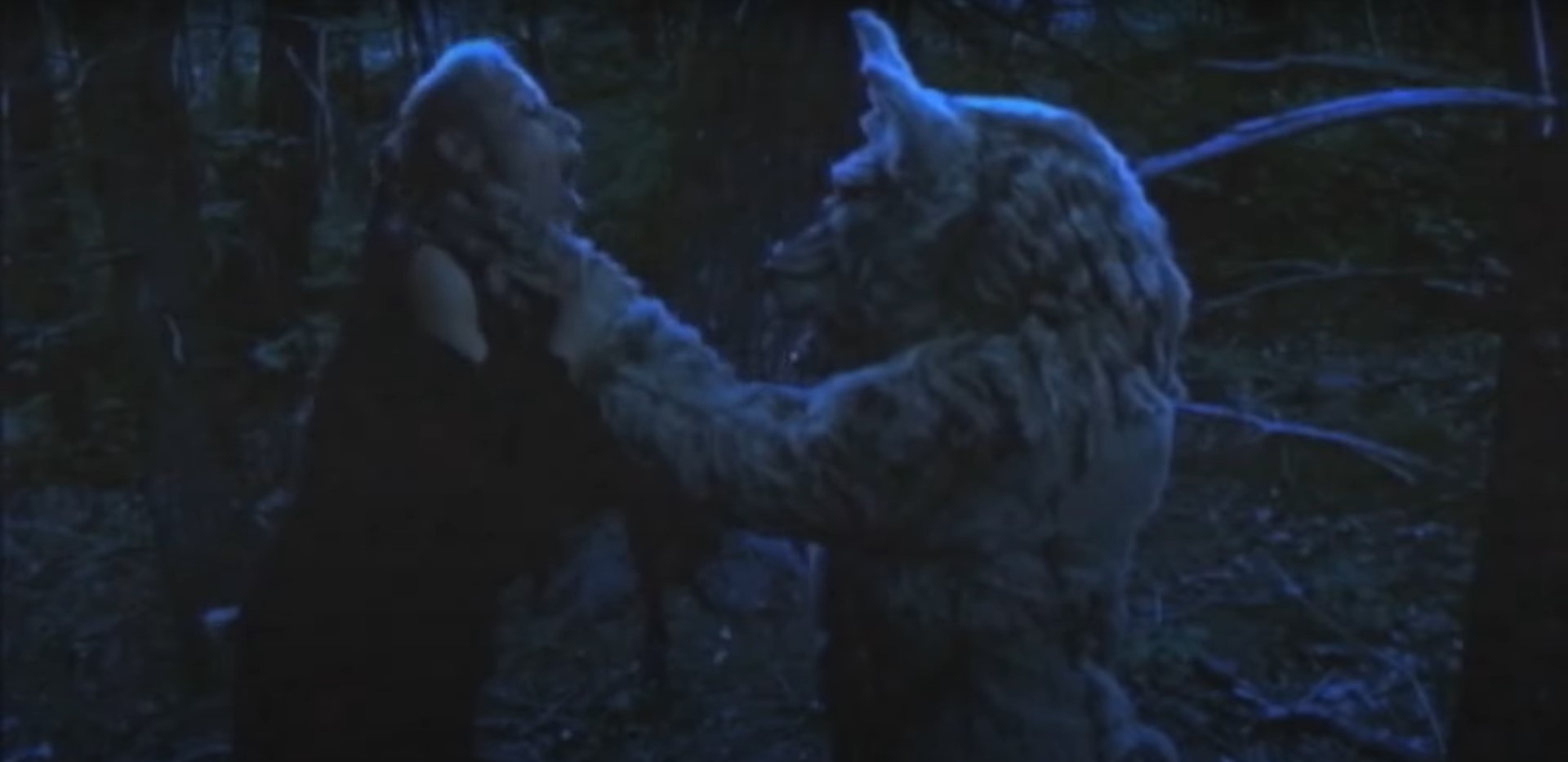
An Inhuman government body of a dystopian future experiments with genetic splicing to create the ultimate weapon, known as Project Moonchild, against the human rebellion. That weapon, Jacob Stryker, is unaware of his newly encoded abilities when he escapes one of their holding labs to rescue his captive son from the very same apathetic regime. Stryker teams up with a group of human rebels and uncover by mistake Stryker’s hidden super solider talent of turning into an unstoppable beast – a werewolf. Hellbent on taking down his son’s brainwashing captives by any means necessary and to do it before an intestinal bomb explodes within 72 hours, Stryker convinces the rebels to assist him and now they have an ace in the pocket as they traverse in search for Stryker’s boy, encountering android and mutant bounty hunters, cannibalistic human survivors, and a surfeit of governmental soldiers hot on his tail, but when the werewolf comes out, Project Moonchild is out to seek and destroy those son-stealing son-a-of-bitches by ripping them to shreds.

Director Todd Sheets has long been considered one of the kings of SOV. The “Zombie Rampage” and “Clownado” Kansas City filmmaker writes and directs “Moonchild,” the 1994 direct-to-video, post-societal, lycanthropy actioner is Sheets’ attempt in splintering himself away from the gore. The American Prince of Gore and the Master of Splatter accomplishes the lessened bloodletting and liquid innards coming outwards werewolf feature with a dystopian rescuer that pits what remains of a separatist human society on a verge of collapse to go on a quest to cure a dividing mutation affliction and to go up against the malign immortals of killers and assassins constructed with nuts and bolts and sawblades on a super independent budget. The ambitious project comes with car chases, a large cast, and a hairy beast that fights for family! Executive producer Greg Petrak returns to Todd Sheets’ side after “Bloodthirsty Cannibal Demons” and is a production of Sheets’ very own Extreme Entertainment, a now 34-year standing product company based out of Kansas City, Missouri. Feel old yet?

Playing the lab rat, the werewolf, and the integral hero, Jacob Stryker, to the story is Auggi Alvarez (“Zombie Bloodbath”) as a widowed father who will stop at nothing to save his son Caleb (Stefan Hilt) in the hands of iron-hearted inhuman leader, Lothos (Harry Rose). Alvarez, like much of the rest of the cast, fall into a monotonal expositional black hole that can make “Moonchild” a slog between the excitement. While fleeing captivity, Stryker runs into Rocky (Julie King, “Zombie Bloodbath 2”), Talon (Dave Miller, “Violent New Breed”), and Athena (Kathleen McSweeney, “Violent New Breed), a band of underground resistant fighters who are desperate enough to overthrow the authoritarian ruling class that’s comprised of henchmen with duct tape masks and are skippered by a mustache wearing an unadorned samurai kabuto helmet – catching a tad resemblance to Mel Brooks’ Lord Helmet of “Space Balls.” If you have noticed already, the cast is an entourage of Todd Sheets regulars, a small niche of actors and actress with close ties to the Master of Splatter and have reoccurring roles in most the director’s early 90s indie gems. That trend continues with Carol Barta (“Prehistoric Bimbos in Armeggedon City”) as the bounty hunter, Medusa. Looking more like your next-door neighbor grandmother, Medusa is viper-tongued assassin with an unforgettable cackle and a throaty super ability that’ll inject nightmares for nights to come. Barta’s performance is one of those cliched it’s so bad, its good acts that you have to see to believe. Cathy Metz, Kyrie King, Rebecca Rose, Jody Rovick, and Mike Hellman round out the cast.

Character names drenched with Greek mythology inspiration and a contemporary take on the werewolf canon, “Moonchild” is an interesting and unorthodox story to say at least. Todd Sheets had obviously perfected the limited capabilities of S-VHS shooting or was confident enough to build in a lengthy car chase into a project that didn’t rely on disgusting audiences with blood and guts, but rather actionable thrills and singular characters of the post-apocalypse with only a smidgen of horror. You see, the werewolf doesn’t make too many appearances on screen, only surfacing from beneath Jacob Stryker’s human skin twice in total. The wolfish transformation is shoddy but for the budget, there is an appreciation for the amazing looking effect as well as the other practical effects throughout the feature. “Moonchild’s” pacing can be concernedly plodding to make sure the exposition covers aspect of Stryker’s intentions, slowing down the film to the point sluggishness. It doesn’t help that the scripted word-for-word, automaton performances are not tonally textured with droning dialogue that can’t captivate and contributes to the fatigue at times. Though “Moonchild” is an evolving project for Sheets with conviction in his ability to produce, there are still some editing continuity blunders that downgrade the overall result. Upward closeup shots of Julie King as she looks down when supposedly holding a rifle on Auggi Alvarez show her hand mock holding a rifle as it comes into the frame and then the next cut is the actress actually holding a rifle. Another scene involving King has her smash in the head of a traitor on a concrete floor and the next shot is of her running down the hallway away from where the body should be but wasn’t. The corpse had vanished. Howlers, pun intended, like these conspicuous examples are what depreciate an already discounted movie, curbing any kind of recognition for Todd Sheets going outside his blood and guts comfort zone.

As one of Visual Vengeance’s SOV cult-horror titles, we come to expect temperamental image and sound quality from the Wild Eye Releasing banner due to the consumer grade S-VHS equipment and the novicey of the filmmakers as, and mostly related to the former, Visual Vengeance warns of prior to the start of every feature so thus far, but the 50GB, MPEG-4 encoded, 2-disc Blu-ray set, that presents the feature in 1080p of the 1.33:1 aspect ratio, is the best technical-looking SOV to date for the company. Hardly any tracking issues, artefact issues, and any tape distortion of any kind and while still lacking premium quality as we all expect today, nothing is taken away from “Moonchild’s” original SD master transfer that is a director supervised. The single soundtrack audio option is an English analogue 1.0 mono mix and the dialogue as well as the score come over nicely despite a less punchy channel output. There’s a steady, feature length electrical interference from start-to-finish that is no surprise and is not terribly audio intrusive. Depth suffers mostly with the type of equipment that doesn’t filter and level out ambient noise, but the range of sound is pleasant with the added clip tracks. English subtitles are option. The bonus features include two new audio commentaries – director Todd Sheets and star Auggi Alverz and Todd Shoots and Visual Vengeance. Other bonus features include the alternate VHS cut, Wolf Moon Rising documentary, archival behind-the-scenes cast and crew interviews featurette, the original VHS trailer, deleted ending, the Todd Sheets’ directed music video Burn the Church by the now defunct Kansas City-based, goth metal band Descension, short film “Sanguinary Desires,” trailer for Todd Sheets “Bonehill Road,” and other Visual Vengeance trailers.” The phyical release comes with a 2nd disc, a bonus audio CD of the movie soundtrack, reversible cover art featuring original VHS cover on the inside, new art on the clear cased Blu-ray snapper, and original art on the cardboard slipcover by The Dude Designs aka Thomas Hodge. Inside the snapper lining are four-page liner notes by Matt Desiderio, folded mini poster of the snapper front cover, and the standard VHS throwback sticker sheet. “Moonchild” on a Visual Vengeance Blu-ray comes unrated, region free, and with a runtime of 87-minutes. Todd Sheets is a maniacal moviemaking machine with “Moonchild” being released a decade after the gorehound began and there’s plenty of admirable spirit and effects in the Kansas City werewolf in dystopia tale, but one can’t shrug off the oversights and the exasperating exposition that goes way off trail the turbulent path of indie filmmaking.

“Moonchild” now on Blu-ray from Visual Vengeance!

Channeling the EVIL from the EVIL DEAD! “Slaughter Day” reviewed! (Visual Vengeance / Blu-ray)

SOV “Slaughter Day” on Bluray for the First Time Ever!

A pair of friends who run a small construction company drive up to an isolated cabin project in the outskirt nooks of Hawaii.  When they arrived, they encounter disgruntled employee John Jones who dabbles in the dark occult.  Having murdered already one of their construction crew members, Jones invokes the evil from the book of the dead, the Necronomicon, to bestow upon himself unnatural powers to seek revenge for years of abuse on the job.  Enslaving two other members of the construction Crew, Jones relentless goes after his former employers who must fight tooth and nail for every minute of their lives.  The fight stretches across the island and spills into the streets, abandoned factories, tropical brush, and even on the side of a mountain. 

“The Evil Dead” meets “Double Dragon!”  A fierce bareknuckle fight against a malevolently possessed construction crew is the not-stop action and gore premise of the Brent Cousins’ “Slaughter Day.”  The heavily influenced Sam Rain and “The Evil Dead” 1991 shot-on-video occult survival horror is co-written by Brent’s twin brother, Blake Cousins.  The twins’ filmic debut concept where a maniacal occult enthusiast goes on the offensive with his vindictive side by conducting dark, Necronomicon evil against the two construction supervisors is pieced together, scene-by-scene, from the various shorts created when they were adolescents.  The four short films from their inspired youth were revisited and remade into a full length feature film financed by a nearly a next-to-nothing zilch budget, but with more than a little can-do attitude, a group of close friends and family, and a willingness to drench the cast in splatter bags fill of fake blood, Brent and Blake’s balls-to-the-wall, commercial grade equipment schlocker never lets up and pays endearment to the legendary video nasties that have stimulated their need for tangible blood-shedding effects.  “Slaughter Day” is a self-funded labor of love under the Cousins Brothers Productions and is made in one of the more tropical places on Earth, the Big Island of Hawai’i, with a few scenes shot in the town of Honokaa.

Aside from being one of the two writers, Blake Cousins jumps in the front seat to become one of the hapless heroes in the suddenly twisted, Hellish ride of that classic story of good versus evil. Blake embodies one of the few aspects that makes the viewing of “Slaughter Day” so infectiously exciting with a high intensity level somewhere around near redline critical. The intensity spreads to each and every actor in front of the camera and with Blake’s breakneck pacing as the film’s post-production editor, there’s a side-scrolling, beat’em-up video game quality about the whole run through. The acting isn’t terribly good with haywire yelling and screaming from start-to finish with a lack of professional training that gives way to under developing a story, but story be damned, the brother Cousins ambitiously puts caution to the wind by balancing out the acidic acting with exceptional camera work that occasionally would involve hazardous to their own health amateur stunt work. The unharnessed and unpadded fight sequence in the back of the pickup truck gets mad props in succeeding instead of squashing someone’s head under the tire. If everyone lives and you get the shot, it’s a win, right? The fight sequences themselves are extensive, as I aforesaid, the breadth of the short feature is like experience a live action “Streets of Rage 2,” and they have the smack of decent choreography with near miss blows and head whips. Some of the bigger fake hits lack sterling results but are nonetheless entertaining and expected. “Slaughter Day’s” cast is made up of essentially a closeknit group of friends with performances from Sam Bluestone, Dave Anderson, John Lambert, Kulaka Branco, Jeremy Couchiardi, Joe Ross, and Lincoln Ross who all have never again seen the gaffer lights of another film production.

“Slaughter Day” has many flaws: bad acting, continuity mistakes, not much of a plot, etc. While honest attempst were made to rectify a handful of those sore points, those very same imperfections are what make “Slaughter Day” ironically perfect in the SOV canon. Some of the gags land relatively smooth, such as being John Jones being bent backwards in half and sucked into a copy of the pop media cultural influencing H.R. Giger’s Necronomicon book, and others kind of flounder in the lukewarm stew of unskilled technical know-hows. Yet, I do firmly believe the brothers achieved a memorable salute to Sam Raimi’s breakthrough 1981 video nasty, “The Evil Dead” in pulling more so the macabre-isms then comedic slapstick elements of the “3 Stooges.” Brent and Blake obviously understood what they wanted to see and how much familiar content they wanted to rework to open the recesses of our memory banks to access and recall “The Evil Dead” playbook, but then the flyby the seat of their pants filmmakers take their committed vision farther by adding certifiably crazy stunts and be big and bloody as all bloody hell! Severed limbs, decapitations, exploding shotgun bursts, and impalings are difficult for even the most seasoned effects artist, taking sometimes years to master a simple effect to perfection. With “Slaughter Day,” the brothers are unafraid to take risks, something the filmmakers proved with audacious stunts, by rendering a practical effect inclined storyboard or script thought to the screen tactic and owned it with a pinch of panache pizzazz!

“Slaughter Day” might be release number five for Visual Vengeance but is clearly the Wild Eye Releasing cult-horror SOV sublabel’s second adulation of “The Evil Dead,” following “Bloody Muscle Body Builder in Hell.” The rough-and-ready S-VHS quality, presented in a full screen 1.33:1 from the original standard definition master tapes, can take on a grueling affect with a below par outcome. Tape lacks the proper color resolutions and that displays here immensely with full of deep and warm purples, reds, and yellows that you’d think the brothers were using gels to tint the picture. Tape wears, static interference, tracking lines… you name it, ‘Slaughter Day” visually had it. Delineation and details are deduced to a softer, overlapping ghost image that barely yokes together resolution pertinent pixels. Like always, Visual Vengeance’s disclaimer warns of the consumer grade equipment issues. These issues extend also into the English Stereo audio mix with a consciously underlay of static shushing, lo-fi dialogue recording, and zero depth and range to add more fuel to the “Slaughter Day’s” chaotic fire. Perhaps that’s why the dialogue is terribly rampant with the hope to invigorate and illicit engrossing captivation. The video game punch throw sound bites are a good touch and a innovative way to keep with the fighting game motif. The special features include a new audio commentary by directors Brent and Blake Cousins, a new audio commentary with Visual Vengeance’s own Matt Desiderio and Rob Hauschild, a quickly paced new interview with the Cousins Brothers regarding the genesis of “Slaughter Day” and they’re excitement about the new Blu-ray release, all four original “Slaughter Day” shorts, an earlier short entitled “Full Metal Platoon,” the “Slaughter Day” theme song, trailers from other Cousins films, such as “Rising Dead,” and the original trailer cut. Physical release features include a mini poster of the Visual Vengeance cover artwork, a three-page colorful essay from long time cinema contributing writer Tony Strauss, retro Visual Vengeance stickers that has graced all the company’s releases so far, a reversible cover art with new artwork as well as the original VHS art, and a cardboard slipcover with a heavily demonic and menacing Thomas “The Dude” Hodge design. The film comes unrated and has a runtime just shy of an hour at 58 minutes. I always get the warm and fuzzies when obscure works of art receive the red-carpet release treatment and “Slaughter Day” is an exemplar of SOV at its best while being innately its technically worst. Lots of ambition, lots of derived creativity, and lots of guts behind and in front of the camera to make a life-long dream of filmmaking come true.

SOV “Slaughter Day” on Bluray for the First Time Ever!