EVIL’s Brew Just Needs a Severed Head! “The House of Witchcraft” reviewed! (Cauldron Films / Blu-ray)

“The House of Witchcraft,” a part of The Houses oof Doom series, Now on Blu-ray!

Luca Palmer has experienced the same reoccurring nightmare for months of him finding shelter from being chased inside a large countryside house with an ugly hag boiling his severed head in a large cauldron.  The dreams have required him to find professional help in a psychiatric ward but without any real mental or physical health concerns, he’s released to his incompatible, witchcraft practicing wife Martha who sets up a country house getaway in a last ditch effort to save their dwindling marriage.  When they pull up to the house, Luca immediately recognizes it from his nightmares.  From then on Luca believe he’s seeing the malicious old woman from his dreams around on the estate grounds and urges his psychiatrist, who is also his late brother’s wife, to visit him to assess his state of mind, but the visions keep coming and those around him keep dying a horrible death with his wife being the key suspect of witchcraft related deaths.

“La casa del sortilegio,” aka “The House of Witchcraft” is a made-for-television, witch-centric movie for the four-film series The Houses of Doom concept created under the companies of Dania Films and Reteitalia’s producing team Massimo Manasse and Marco Grillo Spina.  The 1989 witchy-slasher hybrid and the third film of the series is helmed by another notable Italian schlock and shock director, Umberto Lenzi (“Seven Blood-Stained Orchids,” Cannibal Ferox”), as well as Lenzi writing the script from the story of The Houses of Doom envisaging duo Gianfranco Clerici and Daniele Stroppa.  “The House of Witchcraft” speaks the very essence of what to expect in a traditional sense regarding witches while really stepping up with Italian nastiness inside the slasher principles, filmed in the heart of Italy in the popular Chianti wine municipality of Rufina where the landscape is lined with vineyards, churches, and castles.

Luca Palmer is committed to his mental health by committing himself to his sister-in-law’s psychiatric hospital after months of nightmares involving a witch and his severed head as the main ingredient for her boiling stew.  Perhaps, because of his rocky relationship with wife Martha, played by French actress Sonia Petrovna (“Flashing Lights”), Luca just needed a break from her witchcraft obsession and loveless aloofness to clear his head.  Either way, the American-born and ‘Naked Rage” actor Andy J. Forest is one of Umberto Lenzi’s go-to action stars, of such Lenzi’s war films “Bridge to Hell” and “The Kiss of the Cobra”, whose taken off the film battlefield and positioned as the confounded centerpiece of a cackling witch tale, completing his task as a the tall, handsome, and flawed hero of a man haunted and driven by unpleasant night terrors of the long face, broad features of the fittingly named Maria Cumani Qausimodo as the dolled-down witch.  Quasimodo is no stranger to the filth and frights of Italian schlock with roles in “Behind Convent Walls,” “Five Women for the Killer,” and even the notoriously porn augmented “Caligula” and her physical traits, long stare of blue eyes, and pandering of character’s wickedness transform her into an ideal archetype of the original folk-acholic Brewmeisters.  Characters for the slaughter tin this supernatural slasher and to be intertwined into the suspect and innocent pool are played by Paul Muller (“Lady Frankenstein”), as the sixth sense blind homeowner Andrew Mason, Marina Giulia Cavalli (“Alien from the Deep”) as Andrew’s visiting niece Sharon, Susanna Martinkova (“Fracchia Vs. Dracula”) as the psychiatrist sister-in-law Dr. Elsa Palmer, and Maria Stella Musy as the doctor’s daughter Debra tagging along with her mother to visit the barely mentally managing Luca. 

Umberto Lenzi’s rollercoaster career has seen its fair share of misses overtop what are today considered trashy, cult triumphs that lure fans to seek out his even lesser known, poorly critiqued titles more often than required for any more than the casual horror moviegoer. However, “The House of Witchcraft” is not one of those latter, threadbare produced pictures as Lenzi instills more aesthetic style and cinematic substance of searing phantasmic enthrall and danger with an unwavering villainess vile down to her very rotten teeth and scraggly, gray hair.  Offing houseguests left and right is the witch’s supernatural birthright but why exactly Luca Palmer, a stressed out journalist, to be the target of precognitive events is more opaque than it is clairvoyantly evident but we get some great malevolent manipulation and sleight of hand with black cat familiars, bulgy maggot-infested corpses, unusual indoor freezing precipitation, severed heads, and a face transfiguration that’s pretty damn good that has no right to be in a Lenzi film, mostly in part to special f/x and makeup artist Giuseppe Ferranti (“Anthropophagus,” “Nightmare City’), his favorable, collaborative relationship with Lenzi, and the fact he’s locked into the 4-part film series The Houses of Doom provides him creative freedom, flexibility, and fluctuation in diversity.  “The House of Witchcraft” is not the one-all, be-all witch story but does scratch that warty itch in the foulest of cloak-wearing evils without flying a broomstick! 

The second of four Blu-rays for The Houses of Doom lineup produced by Cauldron Films, “The House of Witchcraft” is an AVC encoded, 1080p high-definition, BD50 with a transfer scanned into 2K, uncut and restored, from the original film negative.  Very similar to Lucio Fulci’s “The House of Clocks,” Cauldron Films scan is quite impeccable.  A pristine picture with no wear or tear and age deterioration, “The House of Witchcraft” is deep and rich with immense coloring timing efforts, defining an authentic look without overcorrecting to a fault.  There’s no perfunctory enhancing or extreme variability with contrasting, retaining a smooth, consistent picture quality throughout its European aspect 1.66:1 presentation.  Even in the more stylistic lighting work that creates clear tone of how the indoor snow should feel cold or the lightning strikes and wind brings a chill of ominous doom, there’s plenty of delineation to provide space and demarcations of depth between objects.  There are two DTS-HD 2.0 mono mixes with an ADR Italian and an ADR English dialogue.  Synchronously smooth, a noticeable dialogue separation between audio and video is not easily perceptible, which is kudos to the post work on the post-crew efforts, and Cauldron’s mixes have clarity without a fault in the compression means.  The two channel funneling of the mono output separates the dialogue and ambience/score.  Backing of the boiling cauldron stew or the knife swipes that severe heads and stab fleshy trunks, leaving impacting thuds and thwacks, are good examples of the conveyed foley audio that leaves a lasting impression through component construction in the audio design.  There are optional English subtitles on both language tracks.  Special features include Cauldron Films’ produced interviews with FX artist Elio Terribili Artisan of Mayhem, cinematographer Nino Celeste The House of Professionals, and a commentary track with Eugenio Erolani, Nathaniel Thompson, and Troy Howarth.  Also like “The House of Clocks” release, Matthew Therrien and Eric Lee compose a composition of illustrative graphic artistry of film’s decomposing and maniacally laughing madness and logo design for The Houses of Doom series on the front cover inside the clear Scanavo case.  Reverse cover has a still image of the black cat and the disc is pressed with the same front cover artwork but cropped to focus primarily of the witch with title and company logos at the bottom half.  The region free release has a runtime of 89 minutes.

Last Rites: Umberto Lenzi’s “The House of Witchcraft” casts a spell over the hex canon, beguiling it with mystery, enchanting it with surrealism, and bewitching it with blood. Cauldron Films’ Blu-ray is topnotch for an obscure made-for-TV Lenzi production.

“The House of Witchcraft,” a part of The Houses oof Doom series, Now on Blu-ray!

Blind, Witchy, EVIL! “Beezel” reviewed! (Epic Pictures / Blu-ray)

“Beeze” is the Witchiest Blu-ray of 2024! Get it here!

May, 1966 – a young boy is murdered, eaten, in his Northeast home.  Nearly six decades later and a series of disappearances and strange deaths in between, a young couple inherent the property that the locals have feared haunted, cursed, and possibly even inhabited by a witch.  As the house-inheriting husband is eager to sell the house to get rid of the reminder of his mother’s abandoning betrayal, the wife is equally eager to keep the house, settle in, and start a family.  The house possesses a presence captured by the corner of the eye, the hairs on the back of the necks, and the overall sense of dread that lies heavy in the pit of the stomach as the more the couple stay in the house, the more the Beezel, a blind evil witch lurking and hiding in the basement, influences their dreams and reality.  Beezel also wants a child and will take what it desires and kill anyone standing the way. 

What the horror genre needs nowadays is a ferocious witch film and I’m not talking the spellcasting, broom-riding, cauldron-congregating kind of witches with black pointed hats, large warty noses, and catty familiars.  I’m talking about hardcore old and ugly broads with an extreme hunger for not just children but for all of humanity, capped off with, perhaps, a good, solid cackle that’ll redefine the iconic figure from the traditional sense to a reverse revolutionized hag rooted in folklore but scorned by life itself.  A few filmmakers have tackled the idea and filmmaker Aaron Fradkin has taken a stab at it with “Beezel,” a 2024 Northeast-shot, visceral supernatural witch tale that was originally a short film expanded into a full-length feature film based on the short’s positive feedback.  The “Val” director cowrites with wife and fellow “Val” actor-writer, Victoria Fradkin under their cofounded independent film production company Social House Films. 

Because “Beezel” was first a short film, to flesh out a full length, the Fradkins smartly built around the short story an episodic series around it that spans decades.  Different actors are casted to reflect different periods, circumstances, and develop a variety of reactions to keep with and keep going a timeline of change, connected all by one single element, the carnivorous blind witch lurking in the basement shadows.  1966 starts off with more of child’s perspective who opens a secret bathroom hatch to the basement to see his pleading-for-food mother before his arm is snatched and he’s rip-to-shreds off camera.  The vicious and quick opener doesn’t leave open the door of development and we don’t get a real sense of anything or anyone until LeJon Woods (“The Hangman”) meets Bob Gallagher (“I Don’t Want to Drink Your Blood Anymore”) about 20 years later outside the home as the documentarian and homeowner, Apollo and Harold Weems.  Having seen now three films his this year, LeJon Woods feels very much like a one-note actor playing the same person throughout those roles.  Gallagher dips into a more sinister cover as the seemingly Mr. Rogers or Ned Flanders neighbor that drops breadcrumb clues of his dark secret and its one scary in-character conversation he has with Apollo.  From there, we jump another 20 years into the early 2000s with what was initially the original short film of an at-home nurse named Naomi (Caroline Quigley) replacing another nurse who disappeared in the Weems house.  This leads into the third act really sets up nicely Harold Weems second wife, Deloris (Kimberly Salditt Poulin), who’s on her deathbed in hospice care and solidifies the tone with a girth of suspense that leads into what would be the final moments left unseen of young couple Lucas and Nova (French actor Nicolas Robin and the director’s wife Victoria Fradkin).  Lucas, who inherited the neighborhood blighted house from his mother Delores, is eager to remove all denotations of his mother from memory, the free-spirited and more forward Nova wants to settle, have children, and start living her life.  Their bond sours overtime with the witch influence invading the subconscious and conscious body for her own ravenous gain in a blood-spilled buffet of knives, guts, and videotape.  The film rounds out with Elise Manning, Leo Wildhagen, and Aaron Fradkin dons the makeup and prosthetics to play the blind witch Beezel.

Fradkin’s able to capture desolate mood with limited production sets.  Most of all the “Beezel” story is set inside Fradkin’s childhood home in Massachusetts and with real, cold, New England snow that latter half of the story takes place.  Every tight and cobwebbed crawl space, every radiator-induced floorboard creak, and every outdated, antiquated, and obsolete feature of his parent’s home gave every ounce of spooky energy to “Beezel,” which, ironically enough, is what Beezel actually inflicts upon the current residents of the house.  Editing and the practical witch effects build the tension and suspense without giving too much away of Beezel’s hideous figure, cherishing Beezel for timely appearances rather than relying on its overuse which often leads to exposing too many rubbery and prosthetic flaws.  The episodic nature also keeps the story from being stale by jumping years, if not decades, that shepherd new characters and new scenarios into the fold as the story evolves through the difference lens of technology, in a half-ominous and half-found footage perspective with the latter being shot in super 8, VHS, and digital handheld camcorder and the original short breaking up the pattern with a microcassette tape deck.  “Beezel” perfects the blend of live-action and found footage without feeling forced and unnecessary with a truly frightening approach to the witch trope that’s worth devouring whole. 

The Social House Films brings the meanest witch this side of 2024 and Dread, the subsidiary label of Epic Pictures Group, who also pushes their own boundaries with “Beezel’s” visceral path, as well as sport some uncommon nudity in one of their films, has the Blu-ray for you! The AVC encoded, 1080p resolution, single-layer BD25 manages to scare through the lower end of capacity format with really no issues with compression. No banding, no blocking, nor any other noticeably ostentatious artefacts to speak about as the rendered image, despite its softer detailer markers, pulls off a passable and potent portentous story through a digital, anamorphic 1.78:1 aspect ratio lens, often switching between media parallels of POV Super 8mm, VHS, and DVX camcorder that vary in levels of detail and grain. Dread Central presents two English audio options, both lossy: a Dolby Digital 5.1 and a Dolby Stereo 2.0. Surrounding, multi-level house atmospherics, various media equipment, in-and-out of the dream subconscious, and, of course, the blend witch herself, create an unfaltering, ample, and competent sound design although the format doesn’t reproduce true fidelity. Back and side channels flourish with frightful house creaks and other environmental elements while basking in the silence for a solid jump scare or building palpable tension. English subtitles, as well as Spanish subtitles, are available for selection. Special features include an in-depth look at the making of the film, Aaron Fradkin’s short films “Doctor Death” and “The Sleep Watcher,” and other Dread Central distributed film trailers. I had aforementioned Beezel not being shown too much in the film but her rather grotesque, bloodied-mouthed face captured in still image, glammed up and embellished for public consumption, graces Epic Pictures’ one-sided, front cover image, warmly soaked in a reddish-orange glow. The disc is pressed with a Scolopendra, or Giant Centipede, coiled over the title. No other tangible items come with the release. The not rated release has a runtime of 82 minutes and is region free for all!

Last Rites: As we close out 2024 with an evil old hag, “Beezel” is one hell of a movie to close out on. Soul-tattering story that spans decades, “Beezel’s” the witch with an incredible insatiability and her hunger will have you recoil in fear of being the main course.

“Beeze” is the Witchiest Blu-ray of 2024! Get it here!

Ancestor’s Didn’t Quite Incinerate All the EVIL. “The Ones You Didn’t Burn” reviewed! (MVD Visual / DVD)

Burn While You Got’em. “The Ones You Didn’t Burn” on DVD home video!

Siblings Nathan and Mirra are reunited at their childhood farm home after their father suddenly passes away from drowning.  The self-well-kempt Mirra handles the business end of their father’s farmland estate as the recovering drug addict Nathan struggles with his past urges while also helping with the cleanout of their father’s things.  They meet farmhand Alice who still maintains the crops and who is close to her unusual and quieter sister Scarlett.  Soon after, Nathan begins experiencing vivid nightmares on drowning and an unknown woman crawling out from the depths of the ocean.  He also feels the presence of malevolent forces around him and digs into his father’s past only to find that his ancestors were once witch burners and that the farmhand and her sister’s family lineage had settled from Massachusetts long ago.  In the midst of piecing the clues together, the siblings find themselves in the lingering black cloud of darker forces seeking retribution of a fiery ancestral past.

“The Ones You Didn’t Burn” is the 2022 released, independent horror from writer-director-and-costar Elise Finnerty.  The first-time feature film director from Long Island, New York infuses a slow dread of psychological thrills with a painted American folklore maquillage where past imprudence and costly mistakes catch up with the future generations stuck in a rut of their own problems. Filmed in and around Finnerty’s hometown, “The Ones You Didn’t Burn” is a family affair film with the filmmaker producing her first film co-produced by the immediate Finnerty family of father Dennis, mother Diana, and brother Sean.  Nicolas Alvo and Brett Phillips also co-produce with executive producers lined up with Estelle Girard Parks, Maxine Muster, Shannon Gallagher, and Alec Phillips financially footing the feature under the banner of Red Booth Productions, founded by Estelle Girard Parks and Elise Finnerty.

With the smaller production comes an intimate cast working in a handful of public locations and only a couple of home interiors and about a third of the cast are also working multiple roles in front and behind the camera, such as Elise Finnerty and Estelle Girard Parks not only the chief governors of “The Ones You Didn’t Burn’s” creative process but also as the inscrutable sisters Alice and Scarlett.  In principal roles, you receive exactly what writer-director Finnerty intends with her happy-go-lucky helping hand farm manager that strikes a small odd chord within the adrift Nathan, son of the drowned father who never recalls his father mentioning Alice.  Nathan, played by Nathan Wallace, is clearly exhibited and stated as a habitual user attempting sobriety but the more delineated the dreams become and the uneasiness that washes over him, mixed with the sudden, subconscious grief of a lost father and being peer-pressured by an immature, drug-fueled, and degenerate high school buddy Greg (Samuel Dunning), Nathan becomes mentally bombarded to the point of using again and breaking, though ambiguity leads us to believe that some witchery might be subverting his faculties.  Wallace shows great range in a downward spiral character arc, complimented by sheer intensity when that strangeness takes hold and shape.  Also feeling the pressure, in a different manner, is Nathan’s sister Mirra, sequestered by Jenna Rose Sander to make Mirra go solo sorting all the postmortem to-dos of her father’s belongings, extending out any hope or chance of Nathan and Mirra to reconnect in light of death.  In fact, the siblings become even more estranged and tensions simmer, especially when Mirra finds comfort in newfound friends, such as Alice and Scarlett, lending to more loss and disconnect for Nathan and other, again, possibly witchery waywardness to divide and conquer in the name of rancorous retribution.

“The Ones You Didn’t Burn” certainly is a slow burn filled with more fluff and reoccurring scenes than desired in an intriguing face value premise of a pair witches setting the wheels in motion to rid the land of witch burning descendants.  Insidious dreams and ubiquitous tarot card dinner flavor the film’s underlining horror but there’s not a ton of dynamics between characters as progression evolves almost without interactive sway, relying heavily on those dream sequences and Nathan’s zippy scrutiny into his father’s past as he comes up with not a lot, or rather circumstantial, evidence to deduct Alice and Scarlett as witches.  Finnerty certainly parallels Nathan’s supernatural trepidation with a more relatable one, drugs, stress, and lack of purpose that could be instigating a false drive to put a stop to the evil at work, affecting the only family he, a money-less addict, has left to rely on.  Finnerty provides some lucratively strong visuals with the stark night beach scenes of an unfaced woman crawling from out of the surf toward a bewildered Nathan in only what could be described as psychosexual and ominous.  Does Nathan fear beautiful women who have influence or authority over him and his family now that the patriarch is gone?  Mirra loaned him money and is successful professionally that initiated a denotation of inferiority only aggressively exaggerated by Alice and Scarlett’s inclusion of Mirra into a trifold takeover that will inevitably exorcize his junkie backside for good.  In any case, whether you believe Finnerty’s intention is to ride a fine line between witchcraft payback, and one being cut loose from his threadbare support system, “The Ones You Didn’t Burn” is a character-driven story that needed more character development and story devices but has tuned in performances and some eerie dreamscapes. 

MVD Visual in partnership with Jinga Films and Danse Macabre release “The Ones You Didn’t Burn” on DVD.  Presented in a widescreen 1.85:1 aspect ratio, the MPEG2 encoded, single-layered DVD5 settles for mostly natural grading in the exteriors with interiors being hard-lit by the natural light blocking features with the low-lit nightmares casting tenebrous drapes with key lighting techniques to isolate main objects.  Compression on here is decent with pleasant detail to show for it and only a few patches of softer nuances around skin layers.  The back cover lists a 5.1 stereo audio mix but the sole English language available, per my player technical readings, on the DVD is a 2-channel Dolby Digital stereo and I do believe the latter over the former as there is no singular output from the multi-channels; however, what’s render is par for the course and suits the release well with ample volume in all regards:  range, depth, dialogue, and a brooding, melancholic, and, at time, tension building soundtrack from composer Daniel Reguera.  Dialogue renders clean and clearly throughout.  English subtitles are optionally available.  Only other MVD and Jinga Films trailers, along with this feature’s trailer, are listed on the static menu in regard to bonus content with trailers of “After,” “Midnight Son,” and “Gnaw.”  On the standard DVD Amaray case front cover is an illustrated and portrait compositional of Elise Finnerty’s Alice character overlapping with yellow and black branches that give it that folklore and woody-witch coating.  The disc is pressed a same art but cropped and there is no insert or reversible cover included.  The region free DVD has a runtime of 70 minutes and is not rated.  “The Ones You Didn’t Burn” debuts Elise Finnerty as a competent filmmaker with a retrained witch tale with payback overtones and dysfunctional family undertones. 

Burn While You Got’em. “The Ones You Didn’t Burn” on DVD home video!

EVIL Spam E-Mail Wants to Play a Game! “Planet Zee” reviewed! (Darkside Releasing / Blu-ray)

Land onto “Planet Zee” now on Blu-ray! 

Struggling woman filmmaker Zee Bronson is trying to make what she loves a supportive career. Smoking pot, drinking beer, and living with her grandmother Sam mellows out Bronson’s anxiety of potentially landing a writer-director’s gig one day. When her sleazy producer, Serge, closes a deal with an investor interested in her script, Zee eyes widen with excitement, but her premature celebration quickly turns sour when Serge notes the financer wants someone else to direct her screenplay. A vexed Zee turns to a weird email spam virus that has seemingly appropriated her computer to propose a game of life with superpowers or death. Convincing Serge into joining her, the two unwittingly open a diabolical portal that traps them inside the apartment, subjecting them to battling a demon and persuading them to kill one another. As their relationship dissolves slowly throughout the night, lines a drawn between friend and foe in order to escape the grip of a computer-commanding Game of Power.

There is bottom-of-the-barrel independent schlock done with very half-hearted inspiration and then there’s bottom-of-the-barrel independent film done with A for effort around a difficult to sell single-locale story that includes witty dialogue and humble homemade effects. Some of these mighty, homegrown indies stem from one ultra-eccentric Berlin, Germany physics and prehistoric archeology studied-turned-artful filmmaker Zetkin Yikilmis in her second written and directed feature, “Planet Zee.” Her B-movie, or should I say Z-movie, is the epitome of independent filmmaking in knowing the production’s limits and how to make the most of a film with what little material is available to use, such as a deluging cash flow for big budget grandstanding that’ll get your name on marquees, posters, and regional commercials. Instead, “Planet Zee” is very much meta love and confidence concept toward Zetkin Yikilmis herself, as the title implies, being a woman in a typically projected masculine dominated industry. Yikilmis follows up her sophomore film from an array of micro shorts and her 2019 released debut feature, “Some Smoke and a Red Locker,” incorporating elements of the stoner horror-comedy into her 2021 film that’s self-produced by Yikilmis and her cinematographer husband, Dominic, as well as longtime collaborator S.B. Goldberg.

Zetkin Yikilmis, obviously, stars as Zee Bronson, a bohemian screenwriter attempting her hand at filmic success while having her grandmother live with her in a small apartment. Having surveyed Yikilmis’s micro shorts, her droll act as stoner-chic Zee Bronson imitates far from her other self-applied roles with a sluggish repartee and often tinkering with slapstick with fellow costar Alexander Tsypilev as squalid producer Serge. Yikilmis and Tsypilev’s reconnection after “Some Smoke and a Red Locker” gives way to a natural onscreen dynamic that has experience role reversal, gender role reversal, and to test their association connection. With a tight-fitting shirt that flirts with exposing his slightly protruding belly, Serge fits swimmingly into the cesspool of sexist producers with Tyspilev crafting Serge’s slimy mold with little pinches of details toward the producers first-rate me-first attitude. While Bronson and Serge are the two chief residents of “Planet Zee,” there is often a forgotten third wheel who bookends the narrative. Sam, Zee’s elderly only in looks grandmother played by Trish Osmond who had a small role in Zack Snyder’s “Army of Thieves.” The 1944 born English actress bloomed late in her career that begin in 2014, but that doesn’t stop Osmond from being a dominating player of goodwill toward bizarre films and roles, especially playing ones involving an usually vigorous old woman with underlying uncanniness probably important to the story. Minor characters fill in the rest with small brushes with minor scenes from Roland Bialke and Michael Tietz.

Through the veneer of bare budget and puerile comedy, “Planet Zee” puts together a couple of ugly statements well versed like a stain amongst the film industry but only brought up more recently during the #MeToo movement and seen as ingrained into industry as par for the course. Yikilmis mentions in the dialogue that as a woman filmmaker she fears oppressive struggles in forming a passionate career in creating art, her art being satirical comedy-horror motion-pictures, insinuating female-driven aspirations are often squashed by misogynistic viewpoints akin to the British journalist and author Christopher Hutchinson’s claim that women are not funny because they are pretty and do not need to appeal to men through humor. Yikilmin writes pitting herself, as Zee Bronson, against a sleazy and dismissive producer who exploits her with pretense friendship, mirroring the real-life exploitation of certain long-standing, fundamental moguls who instead of being held responsible for distasteful chauvinistic corruption, held women’s careers in the palms of their hands with a conniving, convincing promise of blacklisted ruinous slander or unfounded gossip if unethical compliance to their advances were denied. In lighter terms of the film’s satire, Yikilmis uses the situation as an allegorical parallel of who really has control over the story – the creator or the producer. As the creator, Zee Bronson yearns to maintain creative rights in telling her tale whereas the producer gives into the meddling whims of the highest bidder, reaching for the dollar signs that illuminate over their eyes. Serge’s me-first persona during the game offers no collaboration as he literally pushes down Zee for the faint prospect of survival and causes more harm than beneficial good. Look past the stock electricity effect visuals, polished lens flares, and the cheaply made demon getups and you’ll see inside “Planet Zee’s” fiery core, a passively seething call to overcome the darker side of a biased film industry.

Explore the terrain of Zetkin Yikilmis’s “Planet Zee” now on Blu-ray home video a part of the Darkside Releasing, as feature #24 on their Darkside Collection line, and distributed by MVD Visual. Shot and released in an aspect ratio of 1.78:1 widescreen, “Planet Zee” isn’t breathtaking with nearly the full 97-minute runtime inside Zee’s tight apartment living room, aka Yikilmis apartment where many of her shorts were filmed, and so the 1.78:1 aspect ratio is overkill or wasted on nothing spectacular aside from the trippy wallpaper or the bone-curtain that linger the background. In truth, “Planet Zee” could have been shot in a 4:3 for better framing inside a vertical inclined ratio. The full high definition, 1080p output does look good in the details. The trippy-cladded apartment and warm toned outfits pop with robust color. Though not labeled on the Blu-ray back cover, the release offers a DTS-HD 5.1 surround mix and despite being produced in Germany with Germany actors, the original language track is in English thick with a dialect accent but overall adequate and clean in delivering dialogue. Ambient effects often feel just as distant or separated from the visual trunk as their digitally rotoscoped onto the frame. Special features include a behind-the-scenes that actually isn’t anything relevant to behind-the-scenes material with a couple of rehearsed statements on set from Alexander Tsypilev pretending to be scared of Zetkin Yikilmis’s feigned dictator-like direction. Other bonus content includes a string through of Zetkin Yikilmis’s micro-shorts with Yikilmis serving as a host in between and a woman in horror trailer reel. “Planet Zee” is an unpretentious good time. Small, yes. Limited in budget, yes. Unknown cast, yes. Yet, where the film lacks with high dollar density it makes up for in free reign creativity and breezy humor that becomes a middle finger to inequality and duplicity.

Land onto “Planet Zee” now on Blu-ray! 

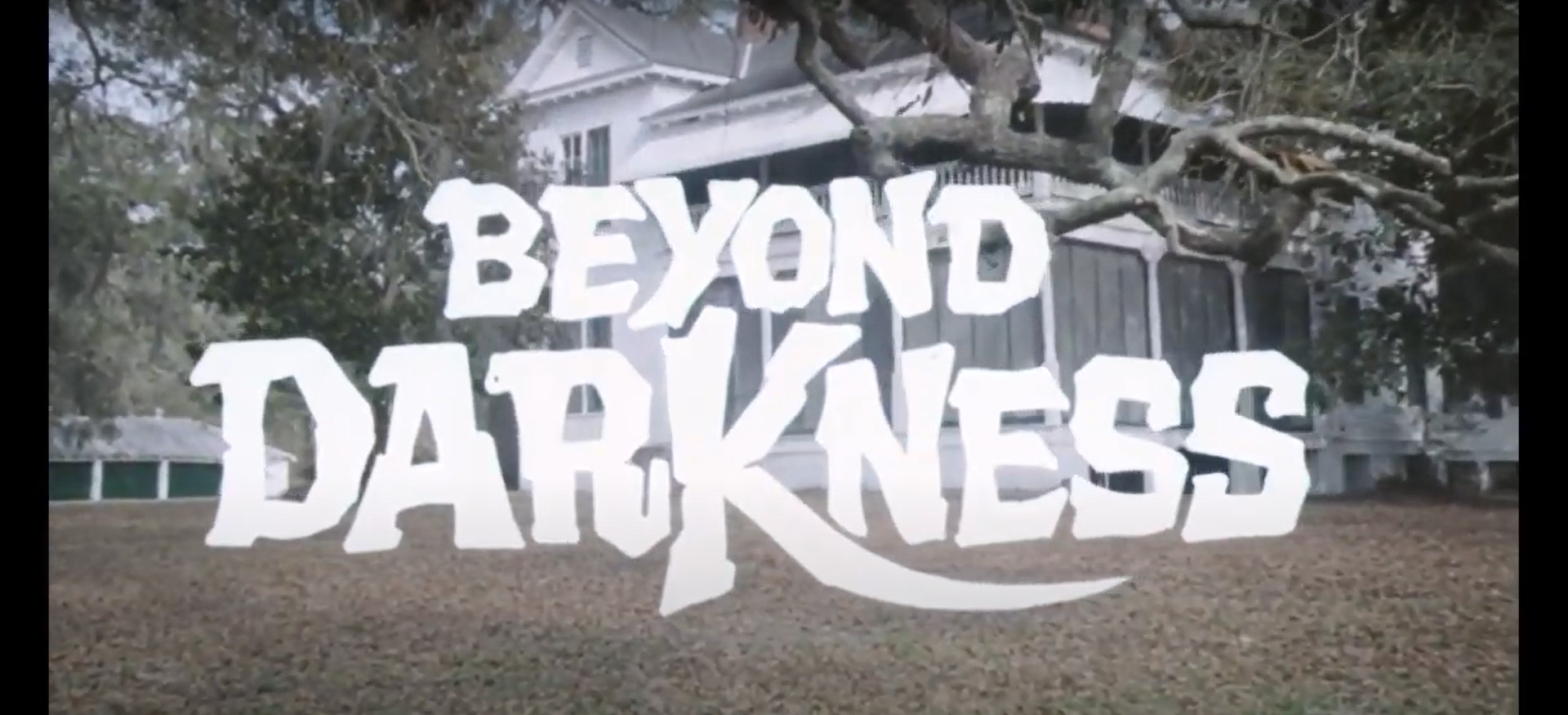
Don’t Mind the Glowing, Ominous Hole in the Wall. That’s Just a Gateway to Evil. “Beyond Darkness” reviewed! (Severin / Blu-ray)

A witch acolyte of Ameth, an underworld demon, is executed on multiple counts of child murder.  The priest who oversaw the witch’s last rites came in with a doubtful heart and upon researching Ameth through an unholy book, disavowed his own religion only to fall into a near drunken stupor of atheism.  Months later, a new priest and his family move into a home arranged by the archdiocese, but soon after settling into the old house, a series of disturbances point to a closed in wall behind a door that’s uncovered to be a gateway to another plane of existence; an existence where the child killing witch is granted access to seek the souls of the priest’s young children.  Fighting with his own struggles of faith, the ex-Jesuit assists the priest and his family in an attempt to cast out evil once and for all. 

Perhaps common knowledge amongst diehard horror fans, but not so much among the casual curiosities of an oblique coursed moviegoer is the fact that “Beyond Darkness” and Sam Raimi’s “The Evil Dead” share a cinematic series connection.  Well, not one in any official capacity one at least.  Drained from the same bloody vain that unofficially corrals Lucio Fulci’s “Zombi 2” as a sequel to George Romero’s “Day of the Dead,” retitled in Italy as “Zombi,” the American-made, Italian-orchestrated “Beyond Darkness” too fell upon the slew of Italian title changes sword with a rechristening into the “La Casa” series.  With the success of “The Evil Dead” in the U.S., Raimi’s video nasty was renamed to “La Case” and “Beyond Darkness” became the fifth “sequel” in the series as “La Casa 5.”  Since Italy has no copywrite laws, a light breeze can easily change any filmic title.  Even the director, Clyde Anderson, dons a false pretense as the Americanized alter ego of Italian director Claudio Fragasso.  The “Scalps” and “Troll 2” Fragasso pens “Beyond Darkness” with longtime script confederate Rossella Drudi, under the Sarah Asproon pseudonym.  “Beyond Darkness” is shot in the deep American South of Louisiana under the Joe D’Amato (aka Aristide Massaccesi) founded Filmirage (“Anthropophagus: The Grim Reaper,” “Deep Blood”), produced by D’Amato, as the Filmirage Production Group.

While behind the camera is mostly an Italian production team, in front of the camera is a cast of American and English actors with an opening Louisiana penitentiary pre-execution theology debate between Bette the witch, played by Mary Coulson, and Father George, a priest having a crisis of faith, played by one of D’Amato’s regulars in English actor David Brandon (“StageFright,” “The Emperor Caligula:  The Untold Story”).  Coulson’s role may be punitively small as the “Beyond Darkness’” lead witch and predominant face of the core evil, but the actress puts all into the Bette character comprised of a maniacal laugh and a lots of very European skin-tag makeup effects whereas the classically trained David Brandon has an array of lively emotions and facial expressions sized to fit Father George’s clerical shirt and white tab collar when he’s not sloshed with doubt.  Both characters interweave into the life of a new-to-the-area priest, his wife, and two kids who move into an old house, built on unholy ground, to start his new chapter in priesthood.  Days later, as the kids become instantly okay with a giant black swam rocking horse in the middle of their bedroom, the family is terrorized by flying kitchenware, flooded with a bayou mist, and frightened by figures in black, tattered shrouds seeking to steal their children’s souls.  Christopher Reeve’s lookalike Gene LeBrock (“Night of the Beast”) fails at double father duty in his poorly lit excuse of a worried father with his children being lured to the realm of the spirit side and as a grounded in faith Father combating the forces of evil without a solid sense of what to do.  Both parents are equally written off as incompetents who continue to stay in the house despite on the continuous threat of Baba Yaga wannabes knocking at every door in the house.  As the mother, Barbara Bingham felt as if she had a little more skin the game.  Perhaps having just come off the legacy success of a “Friday the 13th” sequel (“Jason Takes Manhatten”) she felt the responsibility of maintaining a more diligent approach toward being a mother coursing through occult’s dire straits.   Michael Paul Stephenson (“Trolls 2) and Theresa Walker excel much better in their roles as the two kids, Martin and Carole, who’ve become the centerpiece of Bette’s maliceful desires. 

“Beyond Darkness” will come across as very familiar amongst both horror fans and fans of movies in general with a story pulling inspiration from films like William Friedkin’s “The Exorcist” and Tobe Hooper’s “Poltergeist.”  Fragasso picks and chooses a blanket of trope elements to rework with great malleably in order to not be a total copy.  However, for those who know anything about low-budget Italian horror, Fragasso’s rousing similarities to major and independent hits should come as no surprise.  Notoriously renowned schlock horror directors Joe D’Amato and Bruno Mattei, amongst a sea of others, use to fabricate out of fame at every opportunity by gobbling up successful films, chewing them up, and spitting out their Italian produced counterparts without a second thought just to cash in on just a fraction of the original narrative’s success.  The way I see it, the method was (and still is) an honorable form of flattery. Yet, flattery doesn’t cure sloppiness and “Beyond Darkness” is about as sloppy as sloppy joes. Plot hole after plot hole stack up on Fragasso’s inability to amalgamate elements in an entirely coherent way. There are underwhelming revelations to anticipating character build ups that fizzle; such as a thick-tension mystery behind the local archdiocese and their involvement to place a good Christian family in a house built on evil land or what precisely convinced Father George of Ameth’s power to sink him into an alcoholic pit of despair? I already mentioned Martin and Carole’s inept parents on not fleeing the house at first sign of poltergeist activity or any activity since then so don’t get me started. The story needs some fine tuning but not after is amiss. The acting is not entirely a humdrum of monotony, Carlo M. Cordio’s eclectic synthesizer riff and haunting keynotes score is on another level akin to a composition pulled right out of a survival horror video game, and Larry J. Fraser, another one of Joe D’Amato’s pseudonyms, has an honesty about his scenes unlike we’ve ever seen before in a D’Amato production as the cinematographer captures the fog luminously and effervescently surrounding and chasing the family from out to in.

“Beyond Darkness” is no “The Evil Dead” but is a solid demon and ghost dog and pony show from 1990. Now, the Claudio Fragasso (or is it, Clyde Anderson?) classic is heading straight to your level room television set with a new 2-disc Blu-ray. The hardcoded Region A is presented in widescreen 1.66:1 aspect ratio in a full high definition and 1080p resolution. With only a possible color touch up here or there, I would venture to say the transfer used is the most pristine copy with hardly any damage or any age deterioration. The grain looks amply checked and no cropping or edge enhancing at work in an attempt to correct any issues, if any ever existed. Severin offers two audio options: an English language DTS-HD master audio 2.0 and an Italian dub of the same spec. With dual channels, there retains an always room for growth inkling and with the film’s broad range in sounds, a difficult to swallow lossy audio pill plays the aftertaste tune of, man, this could have been way better. Yet, the track is solid enough, if not more so, with virtually zilch damage. Dialogue comes across clean and clear, but there tails some minor hissing. Like with many Severin releases, new interviews are the star of the special feature show with one-side, talking head interviews with writer-director Claudio Fragrasso Beyond Possession, co-writer Rossella Drudi The Devil in Mrs. Drudi, and actor David Brandon Sign of the Cross. Though the theatrical trailer rounds out the first disc special features, Severin also includes Carlo M. Cordio’s superb soundtrack as disc number two along with a two-page booklet with an introduction to the ingredients of a horror score and to Cordio himself as well as a listing of all 17 tracks. “Beyond Darkness” is Claudio Fragrasso’s unbridled mutt, a motley of motion picture royalties rolled up into an adulating and piggybacking horror beyond comparison.

“Beyond Darkness” 2-disc Special Edition Blu-ray Available on Amazon