Well known country boy Hank has everything he could ever need in the small, rural Florida town: having an establish family lineage, being the owner of a local bar hotspot, and obtaining the love of the beautiful Abby. Their gleaming happiness suddenly goes dim when Abby abruptly takes off, leaving a note with little information of her whereabouts or her plans. Fraught in her absence, Hank drinks himself into a stupor most nights of romantic nostalgia while also fending off his rustic home from a beast out of the surrounding woods that continuously scratches at his front door nightly. Hank’s friends believe he’s suffering a mild mental break as night-after-night, the snarling beast evades Hank every effort to capture and kill it.

“After Midnight” is a sheering melodious and delicately programed romance-horror from “The Battery” writer-director Jeremy Gardner allotting co-directorial duties again with continuous collaboration beside Christian Stella. As Gardner’s third film in the director’s chair, second inside the realm of horror, “After Midnight” brandishes more a sappy love story that sings the tune of a love lost warrior where the relationship woes lie within the deepest, darkest corners of himself rather than being a frontline horror sprinkled lightly with dusted coating of amorous renewal. “After Midnight” is a topsy-turvy monster movie not for an insouciant genre fan who rather skim the surface for blood on the topsoil than dig feverously for the originating root. If you’re also a fan of the mysteriously acclaimed, H.P. Lovecraft-inspired “The Endless,” the filmmakers behind that film – David Lawson, Aaron Moorhead, and Justin Benson – produce “After Midnight” under their Rustic Films label in association with Vested Interest, Cranked Up Films, and Kavya Films, casting that querying memento clinging like a foreboding, nagging scratch needing to be itched.

Not only is Gardner the director, he also stars as Hank, enduring the multi-hat involvement in his films in thematic fashion from his previous films, spearheading the roles in “The Battery” and “Tex Montana Will Survive!,” and Gardner has also branched out beyond his work, having roles in the visceral Joe Begos’ films “Bliss” and “The Mind’s Eye.” Gardner sports his common wear of a U-shaped V-neck t-shirt and bushy beard overtop his large frame and wields a sharp tongue, whiplashing small witticisms as he charms his serenading rustic charisma upon Brea Grant as Abby. The “Dead Night” actress enacts every man’s inherent fear of being lost without their better half when Abby hightails from Hank’s steadfast stance on life. Grant provides a flood of emotional drought through a series of Hanks’ melancholy, good times flashbacks that provide backstory fuel to Hanks’ quickly withering grounded state. Gardner and Grant’s chemistry eerily dons the routine life span of young love and weary complacency without so much showing the beat work argumentative discussions and differences of a diminishing relationship; their natural banter never derails even amongst a bedeviling beast with nightly visitations on a drained Hanks’ doorstep. “After Midnight” fleshes out with a cast of superb supporting roles with nearly Henry Zebrowski (“Cut Shoot Kill”) stealing the show as a half-wit yokel, Justin Benson (“The Endless”), Ashley Song, Nicola Masciotra, Taylor Zaudtke, and creature performer Keith Arbuthnot as the man in the monster suit.

Speaking of the monster suit, the unknown origin creature is very Guillermo del Toro-esque with a quasi-rubbery look, but still renders terribly real with the puppetry facial expressions and Keith Arbuthnot contorting his body to exuberate natural movements. However, don’t look to be thrilled by a ferocious beast as the constant the source of contention. It’s more of an afterthought, a pleasant afterthought, filling Hank’s Abby void or is it? It’s a question you’ll be contemplating when the credits role when a monkey wrench finale disrupts your premediated blue print scheme of a reason for the creature’s existence. Romance and melancholy cross paths in an overwhelming heap of love sickness, guilt, disappointment, and jealousy in a well thought out, smart dialogued version of a self-growth narrative.

There always seems to a malevolent monster behind the scenes, perpetrating the demise of a flourishing relationship exemplified by a beautifully wicked allegory in “After Midnight” distributed onto DVD home video by Umbrella Entertainment. The transfer is presented in the original widescreen, 2.35:1 aspect ratio, on a region 4, 83 minute runtime disc. The presentation is virtually flawless with palatable natural coloring, gleaming southern-sweat coated, natural looking skin tones, and overall details with Hank, and Hank’s house, looking specifically grimy and unkempt. Greenery is of a brown lush backdropped inside what could be anywhere small town America. The English language 5.1 Dolby Digital surround sound audio renders a nice range and depth with the monster’s muffled scratching and growling outside the door, the shotgun blasts are powerfully exalting, and the dialogue clearly couriers through all relationship qualms and Hanks droll dialogue. As of many Umbrella Entertainment standard feature releases, there are no bonus features nor a static menu. “After Midnight” is a contagious love story for not it’s mushy, heartfelt, weepie doting into the tears of self-pity, but for that lingering presence of sinister cynicism the monster epitomizes, a stark terror scratching every night under the skin until the unbearable hole in our hearts is finally sated by love’s return.
Monthly Archives: March 2020
The EVILS of the Jersey Shore! “Exit 0” reviewed! (DVD / Breaking Glass Pictures)

A young New York City couple drive down the Jersey Turnpike down to the Jersey Shore for a quaint getaway in the comforts of Cape May’s Doctor’s Inn Bed and Breakfast. With the hopes of rekindling the spark between them, the omission of the fast churning city living will surely become dampened by the island’s off-season quiet that’s more in sync with focusing on each other. However, after a strange incident at a curbside rest stop, something hasn’t felt right. From the odd tenants to the inexplicable occurrences of the Doctor’s Inn, the strain between their recoupling becomes a daunting wedge and when a videotape is discovered in their room, a videotape that shows a grisly murder on the exact spot they sleep in their room, that wedge not only drives deeper between them but also begins to suspend reality and raise paranoia.

Set on location at the Doctor’s Inn Bed and Breakfast of Cape May, New Jersey is the jarringly fear-fostering “Exit 0” that delivers the grim goods on a dead end, spook story skippered by writer-director E.B. Hughes (“Turnabout”) from a story co-writer with Philadelphian native, Gregory Voigt. Being a local Philadelphian suburbanite myself and a patron visitor of Avalon, New Jersey, having “Exit 0” be a horror-thriller that showcases the tremendous historical and Victorian-laden edifices and tourist retreats like the lighthouse on Cape May point is really invigorating to know that any kind of story, whether horror or otherwise, can be tailored into the seams of just about anywhere on this designer planet. Cape May is charming, inviting, and bustling with touristy customers who’ve answered the call from the beach from up and down the East Coast and surrounding inland areas, but during the off-season, the Jersey Shore, as a whole, is a gloomy and desolate barren land that would emit the appearance of invoking an eerily haunting atmosphere. “Exit 0” is also a charming little independent picture, self-produced by Hughes under his production company EBFIlms.

The cast is comprised of mostly locals in the tristate New Jersey, New York, and Philly area, starting off with Gabe Fazio (“Trauma is a Time Machine”) anchoring down Billy in the lead role of the boyfriend reminiscing about when his parents took him to the Doctor’s Inn when very young and being the plagued victim of severe anxiety when things go strangely muddled during his stay. “The Badger Game’s” Augie Duke plays a constant in Billy’s quickly downgrading opaque craziness as the teetering love interest, Lisa, and though typically the foundering relationship could be the heart of the story, but in “Exit 0,” Lisa might be portion of the reason for Billy’s seemingly unhinged fear. Duke’s wonderfully seductive from a distance, blue balling Billy on his wishful romantic long weekend. Billy and Lisa’s chemistry is in a beaker of unknown substance as we’re not really sure where the stand with each other: Billy doesn’t know whether he loves Lisa or not and Lisa keeps Billy at arm’s length while at the same time attempts to engage in Billy’s sexual advances. Hughes highlights often usual and direct characters to round out Billy’s source of burdens, especially with The Writer played by “The Mask’s” Peter Greene. Greene’s method approach plays into his deep ominous eyes and contoured facial features as a mysterious fixture. Federico Castelluccio plays into the latter direct category as the island’s Detective Mueller. The “Midday Demons” actor perhaps provides a character who becomes the only source of sanity not influencing Billy’s instability and Castelluccio courses a hardnose investigator to reach the truth. “Exit 0” fills out with a couple of veterans in Kenneth McGregor (“Prom Night IV: Deliver Us From Evil”) and Daniel O’Shea (“The Rocketeer”).

“Exit 0” will unavoidably not be a hit with most audiences as a salt of the earth kind of psychological thriller bearing no teeth when considering general moviegoer baits, such as lots of gore, action, and skin, but despite the rudimentary building blocks, E.B. Hughes braises shuttering tension inside a compartmentalized configuration that includes a bit of found footage vehemence mixed with some spun Cape May folklore that’ll find regional nepotism amongst from friends and relatives of the cast and the crew and favoritism from the locals and enigma enthusiastic. Another disadvantage against “Exit 0” is more technical in regards to poor sound editing that picks up way to much noise, ambient and static alike, that’ll certainly dissuade some from enjoying the core plot involving triggering suppressed mental illness and eliciting out of the box interpretation of whether or not what Billy experiences are in fact real or just in his piecing imagination.

Embark on a minatory trip to Cape May with E.B. Hughes’ “Exit 0” on DVD Home Video distributed by Philadelphia company Breaking Glass Pictures. The region 1 DVD is presented in a widescreen, 1.78:1 aspect ratio, with a runtime of 95 minutes. “Exit 0” isn’t a popping color film that limits the ranges to being bleak shades of primary colors that opalescent from scene to scene until we meet The Writer whose basking in a harsh, almost heater like, fluorescent red. These scenes exhibit quite a bit of color banding, noticeably on the walls. Details are moderately soft on times, especially on faces, but there’s plenty of good contour lighting to equalize the effect. The English language dual channel stereo mix initially begins with a rough edit that can’t discern dialogue and backdrop noise audiophiles, making the car ride exchange dampened between Billy and Lisa who are nearly drowned out from the car’s whooshing ambience. Stereophonic sound system feels more mono that can’t grasp the voices and the anxiety riddle milieu that bombard Billy’s crumbling agitation. Dialogue tracks are, for the most part, prominent and can be discerned. Special features include a lengthy and in depth Q and A with director E.B. Hughes, Gabe Fazio, Peter Greene, and Federico Castelluccio, behind the scenes footage, outtakes, a bonus short film “Harsh Light” written and directed by E.B. Hughes about an aging boxer whose career has hit a dead end, and the theatrical trailer. “Exit 0” is abstruse conjecture that mental illness and chilling folklore can be one in the same, depending on one’s subjective perspective, and E.B. Hughes and his anchoring leads masterfully leave open the murky, rheumy wounds for personal contemplation in a hair-raising tale.
The Analogies of the EVIL that Plagues Us. “Hole” reviewed! (Wild Eye Releasing / DVD)

Three peoples’ lives become coiled around the unfortunate state of death with each experiencing individual variations of the concept. The recently released convicted felon, Ed Kunkle, faces reality on the brink of insanity as his past demons vilify his temperament in the direction of total carnage. Befriended by Kunkle is Eve Adams, a single mother who struggles to cope with her infant son’s untimely murder that happened right under her watch. Assigned to the Adams Boy’s case is detective Bodie Jameson who struggles with own malevolent urges brought upon by the unsurmountable cases of grisly homicides that come cross his desk while he also tracks down a child killer. Their differences connect them, looking into their future to rediscover the past that molded their disheveled lives into fateful affairs with death.

Over the course of three years between 2007 to 2010, auteur filmmaker Joaquin Montalvan directed and assembled a gritty glimpse into the grubby windows of condemned souls with the 2010 released “Hole,” produced by his own independent production company, Sledgehammer Films, and co-written with his longtime collaborator and wife in life, Eunice Font. “Hole” is Montalvan’s third horror feature following 2002’s beleaguered with loneliness thriller “Adagio” and psychological horror, “Mobius,” which was released the year prior in 2009, plus also behind a string of documentaries. Montalvan’s an optically surreal storyteller basking in a rich and unorthodox story and color palette that revives originality bobbing in an heaving ocean of lemming horror.

“Hole” is comprised of showcasing three stories from three tormented lives. One of those lives, the mentally unfit Ed Kunkel, gorges on being the centric force that thrives the other two into a descendant hell. The late Paul E. Respass tunes into Kunkel’s manic polarity as a person who can be extremely mild mannered and pleasant then explode with caustic abrasiveness and ugly torture. Respass’s shoulder length, wavy hair, graying goatee, and iron contoured face gives him a Charles Manson appearance that goes good with crazy. Behind closed doors Repass’s Kunkle breaks with sanity slaughtering his mother lookalikes as a result of mommy issues, but when conversing with Eve Adams, Kunkle’s maintains an upright keeled temper. Teem Lucas, who like Respass has worked with Montalvan previous, subdues the abnormal imbalance with a normal person’s reactionary response to loss and heartache when Eve Adams copes with the murder of her young child. In the middle these two extremities, detective Bodie Jameson’s work seeps into his psyche, fluctuating between irrational and rational thoughts. Another actor in Montalvan’s corral, Jim Barile, who looks more like a 70’s hippie than a detective, has the hardest performance of them all of slipping into a terrifying unknown mindset while maintaining status quo in work and romantic relationships. Barile’s role isn’t well recieved, flying mainly under the radar with an underperformed and pointless conclusion to detective Jameson right and wrong affliction. Charlotte Bjornbak (“Camera Obscura”), Katherine Norland (“Cannibal Corpse Killers”), Alina Bolshakova (“Dead End Falls”), Dennis Haggard (“Cannibal Corpse Killers), Theresa Holly (“Legend of the Hillbilly Butcher”), Micki Quance, Gavin Graham, and Char Frost (“Someone’s Knocking at the Door”) co-star.

Right away, a strong sense of resemblance washed over me when viewing “Hole.” The lead actor, Paul Respass, and the overall texture felt already acquainted with my visual cortex nerves. My suspicions were justified and my sanity was cleared as I have seen “Hole” before in a later film entitled “Legend of the Hillbilly Butcher,” another Joaquin Montalvan flick featuring Respass as a delusional manic. Yet, “Hole” is one of those films that after the credits role, hasty judgements should be chewed on, reflected upon, and recollected for a second analysis. Hell, you might as well just re-watch it all over. The thing with Montalvan is is that his brand has trademark cognizance on such a level that even if “Hole,” released in 2010, and “Legend of the Hillbilly Butcher,” released in 2014, instinctually ride the same wave, they ultimately compare as individual projects with a distinct personality and artistic flair. For instance, “Legend of the Hillbilly Butcher” denotes more of an homage to early exploitation films and “Hole” puts more stake into societal system failures, even if borrowing from the likes of Ed Gein with the killer wearing a flesh mask and sewing up a fleshy garment. Both films hark about mental illness, but one glorifies the act for the sheer sake of carnage fun and the other considers it a collateral damaging symptom of a broken justice structure. Another difference to note is “Hole’s” three-way non-linear narrative that moves like the Wonkavator from “Charlie and the Chocolate Factory” in every way imaginable and can be daunting to keep up.

Out of the depths of obscurity comes “Hole” distributed on DVD home video by MVDVisual and Wild Eye Releasing under the Raw and Extreme banner. Presented in a widescreen, 1.78:1 aspect ratio, Montalvan and his D.P. R.T. Norland, brightly bedazzling with every shade of matte box and some slow motion, play the field utilizing various techniques to tap into Ed Kunkle’s disorienting madness. Using backdrops like the ghost town of Bodie and the spiritual sanctuary (or bohemian commune) of Salvation Mountain, Montalvan’s able to cast an aberrant vision out inside an independent means. There are some points of posterization, details are softer than desired, and blacks lose composition with blocky noise so there are some drawbacks to the encoding. The English language dual channel audio mix pairs about the same as the video with spliced competing facets that tend to offer come-and-go range and depth. Scream queen moments go into feedback mode during Ed Kunkle’s kill mode, losing the ideal quality via unsound mic placement. Dialoge is okay being on the softer side with some background noise being flowing in and out between the audio edits, emitting a static effect around the dialogue and then cut out when not the actors are not speaking. The bonus features are aplenty and informative with a Montalvan commentary track, an extensive mack of documentary that fine combs every pore of the film that includes interviews with cast and crew, Ed’s Journal segment conversing about the backstory on Ed Kunkle’s perverse family and killed friends portraits and souvenirs, as well as trailers. Bloodhounds will want more from Ed Kunkle’s shed of horrors, but what director Joaquin Montalvan has fashioned threads madness with a neglected mental heath system while polishing a a shiny three prong, moviegoer narrative with blood, body parts, and butchery.
Shady Organizations Flush Out EVIL in “The Witch: Subversion” reviewed! (Well Go USA Entertainment / Blu-ray)

High school teenager Ko Ja-yoon lives with her adopted parents on a struggling cow farm. Ja-yoon‘s amnesia struggles with recollecting her past, she’s plagued with severe headaches, and suffers to retain any strength in her body. When her best friend persuades her to enter a popular singing contest, Ja-yoon’s nationally televisions performance triggers a covert agency to seek her out, dispatching Korean-American hitmen with supernatural abilities and local hit squad agents to track her down to either capture her alive or kill her. As the devious factions close in on her, placing her family in great danger, her past begins to unravel, revealing a troubling truth regarding who she really is and what she’s capable of effectuating.

Not to be confused as a sequel to Robert Eggers’ critically acclaimed, Americana gothic folklore tale “The Witch” from 2016, Park Hoon-jung’s “The Witch: Part 1 – The Subversion” diverges itself as the tenebrous action-mystery of a two-part film series from South Korea. Entitled “Manyeo” in the native Korean tongue, “The Witch” refers to a moniker bestowed upon the agency acquired children provided with genetically enhanced brains to open up their full, existential potential of God-like violence shrouded in the murky shadows and cutthroat conspiracies. “I Saw The Devil” writer Park also pens the script for his produced 2018 film that resupplies the darkness of a detective noir into another fantasy thriller furnished with a bloody veneer of a R-rated superhero movie. Gold Moon Film and A Peppermint and Company co-produce the Warner Bros. Pictures distributed picture.

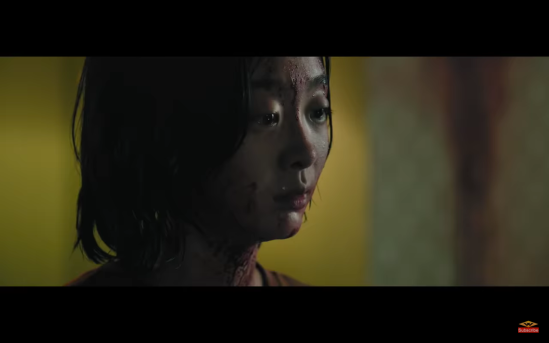
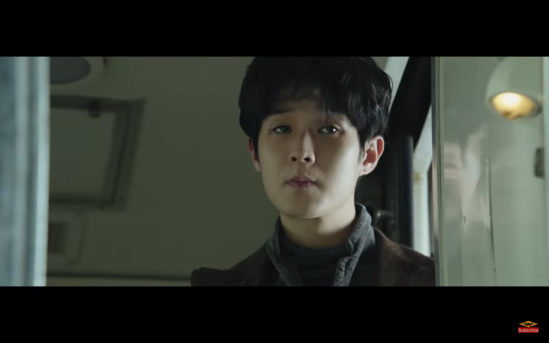
Starring as the titular character, Koo Ja-yoon as The Witch, is South Korean actress Kim Da-mi making her introductory debut that’s considerably demanding for the early 20’s actress to tackle with little-to-none prior experience in “Avengers” level action, but that’s where the subversion sets in when Kim undermines with a body frail tool performance, throwing pity bait to sucker in the bigger fish, and then opening her ranges to play on the opposite side of the spectrum in a slim, but killer, authoritative absolute suit. Ja-yoon’s American counterparts are equally as intriguing with Korean-Canadian actor, Choi Woo-shik (“Train to Busan”) leading the pack of vicious and powerful mercenaries. Choi’s monstrous 2019 lineup of award-winning (“Parasite”) and action-packed (“The Divine Fury“) films set “The Witch” up for inherent success in a now powerful and versatile recognized Korean film market. Upstaging has a strong aurora inside Korean filmmaking as every scene invokes an intense stare, an action of grandeur, and dialogue – every actor has lots and lots of dialogue – and so, bold performances stand out from the remaining cast list who includes Jo Min-soo (“The Cursed“) as the prideful genetics doctor, K-pop’s 2Eyes band member Daeun as the cut from the same cloth American-Korean super villain, Go Min-se as Ja-yoon’s bestie, and Park Hee-soon as the curious Mr. Choi with a vendetta against all who are enhanced.

“The Witch: Part 1 – Subversion” is over two hours of grand chess and superhuman stratagem culminating at a writ large do-or-die finale. Even with a 125 minute runtime, Park Hoon-jung has to inertly cram a whole lot of story into a seemingly abundance and bountiful timeframe. As the staggering conspicuous tension builds and characters evolve into an elucidated light, scenes start stepping into confounding placement that bedevil slightly the storyline. If you’re able to piecemeal together the puzzle and able to follow casually, Park is able to eventually reel captivation back from surmountable follies of structure with flashbacks and, in this case, a generous amount of exposition to get viewers on track once again. The prodigious action rivals the Marvel movies of today with complimenting cannonade and psychokinesis while ushering in a heroine tapped from same vein as “Hannah” or “Lucy” into the Korean moving pictures.

Warner Bros Pictures and Well Go USA Entertainment entertain us with GMO action in “The Witch: Part 1 – Subversion” on a single format Blu-ray home video release presented in a widescreen, 16:9 aspect ratio, on a region A, BD25 disc. What I really like about Well Go USA releases are the consistencies of arrangements. The brightly lit, natural landscapes are vivid, floaty, and serene as if all of life is an idyllic safe haven for visual leisure. The black, almost gun metal black, of the nighttime segments render a more sinister and unfavorable approach to arms and danger likely ahead. Some posterization occurs during these moments, but little-to-no ill effect to the scenes themselves. Some of the chunkiness to the visual effects stem from combative action of the genetically altered, fighting against the slower normals with their high caliber, fully-automatic rifles and, also, against themselves, but these battles are interspersed to not violate audiences corneas to beyond the max extent of the natural law. The Korean language DTS-HD Master Audio mix offers a wide range of varied leveled action, from the mundane ambience of rural and urban life to the precision of activity during the more upbeat commotion of fight sequences and gunplay in tighter quarters. Dialogue placement renders nicely and is prominent while the option English subtitles captures beautifully with well synced and timed captioning. Bonus features three trailers which are two international trailers and one U.S. trailer. If Part 2 is anything like “Subversion,” the game of deceit will continue to unfold surprises one after another and beguile with the mysteries surrounding “The Witch’s” genetically invasive backstory that’s inherently pervading throughout, leaving an agape of wonderment, intrigue, and thrills.
Mom Sees the EVIL in her Son in “M.O.M. Mothers of Monsters” reviewed! (Indie Rights Movies / Screener)

Abbey Bell is extremely worried about her teenage son, Jacob. Worried that Jacob, an intelligent boy with good grades and is a social magnet, is plotting a mass shooting at his school. After countless preemptive attempts to warn authorities and medical professionals of her suspicions of his psychopathic tendencies, Abbey begins recording a diary and setting up spy cameras inside the family home hoping to catch Jacob’s unpredictable and dangerous suggestions and threats on tape. The videos will also serve as blog fodder for other desperate mothers experiencing similar disturbing behavioral issues with their children. As the single mother and her son continue their at home war of bickering words and distraught suspicions, the maternal bond once shared between mother and son begins to deteriorate and evolve into unsurmountable distrust between each other; a distrust that has been simmering ever since Jacob was a toddler stemmed by Abbey’s dark family secret sheathed for many years until Jacob weaponizes it for his utmost survival against his concerned mother.

Before the coronavirus pandemic transformed powerful sovereign nations into panic-induced introverts wetting their pants at the first spray of a sneeze hitting their skin, news medias around the globe delectably ate up headlines of mass shootings as there would seem, at least for a good stretch, to be a sad and unfortunate mass shooting every single day. Tucia Lyman’s “M.O.M. Mother of Monsters” derives from that fearful climate while also purposing another sub-topical issue of a parent’s position in that circumstance. Lyman tackles one fictional woman’s tale of internal turmoil as her directorial debut and the sophomore script of a feature film not in a documentary format, pivoting away from the “Untold Stories of the ER” and “I Didn’t Know I was Pregnant” junk food that consumes about 2/3’s of television comatose Americans. The “found footage” 2020 released psychological thriller is produced by Elain White and Austin Porter whom both have collaborated with Lyman in the past.

While not as sexily depicted and as authoritative as Emilia Clarke is depicted to be the Mother of Dragons in HBO’s “Game of Thrones,” New York City born Melinda Page Hamilton can surely sell a mother of a monster as Abbey Bell, vending sharply laid out doubts and uncertainties with a mountain of convincing circumstantial evidence against her only child. The “Not Forgotten” actress quietly folds into herself as the submissively passive Abbey on a histrionics mission to out her son as a danger to society. Bailey Edwards commands a subversive and rebellious teenage Jacob Bell that can use his millennial powers to steamroll over his mother’s lack-of-assertive powers. This film will be Bailey’s first substantial co-staring venture, along with minor performances in “My Dead Boyfriend” starring Heather Graham and Netflix’s “Bright” with Will Smith, and who will subtly introduce Jacob as some white nationalist, gun enthusiasts who has a gas mask with a swastika insignia, first person shooter gear and video games, and scenes of him walking in front of gun shops. While Hamilton and Edwards dominate the majority of screen time, the short cast list rounds out with Janet Ulrich Brooks, Julian de la Celle, and a special appearance from “The Mary Tyler Moore Show’s” Ed Asner as a behavioral doctor Skyping perspective therapy with Abbey. Does anyone believe a 91-year-old knows how to use a video chat? It’s a bit of a stretch….

“M.O.M. Mother of Monsters” throws caution to the wind embarking on a viewpoint of how far a mother will go to expose her child’s dissident and, potentially, deadly behavior. Lyman also digs deeper into the psyche of the mother and the child, sticking them with a ticking time bomb that is the heredity factor. Mental illness is a huge underlined theme that Lyman slips into the fold as signs of one person’s erratic behavior can be stemmed from the secrets of little known relatives and their seemingly destined out of control path can no way be influenced externally without reserving counseling, extenuating the age-old debate of nurture versus nature. Lyman’s storytelling smartly preserves an obscured aspect, cloaked by selective denial and tremendous paranoia, that becomes a catalyzing game changer of disturbing consequences. The narrative isn’t at all flawless with weak spots in the character structure that pigeonhole the roles to be stuck inside this cat and mouse cycling mindset between Abbey and Jacob. For instance, Abbey’s an obsessive, 24-hour recording zealot whose documenting never reveals anything else happening in Abbeys life, like work, friends, etc., whereas Jacob’s intermixed recordings with a female friend outside the contentious home reveal a life beyond his skirmish with this mother and his videogame shut-in habitat, but these recordings stick out awkwardly as much of the story’s is from Abbey’s perspective so how did Jacob’s casual conversation videography become a part of Abbey’s cautionary tale for other distraught mothers? Whether intentional or not to exhibit the imbalanced social complexities between Jacob and Abbey’s personal lives or lack thereof, Jacob’s exterior scenes course out of bounds, penalizing portions of the plot.

Become submersed in dark thoughts and monomania with Tucia Lyman’s “M.O.M. Mothers of Monsters” hitting the digital HD VOD platforms soon after premiering at the Los Angeles Arena Cinelounge this past Friday the 13th through Indie Rights distribution. Since this is a theatrical and VOD title, there is no home video release to provide technical specs and assessments; this also includes no special features. “M.O.M. Mothers of Monsters” hammers down the sociopolitical hot topics of mental illness, gun violence, and presumptive fear teeming in America with a spitting image and climate aware psychological thriller bristled with family dysfunction.