Heart and Body Reunited Forges Immortal EVIL! “Witchtrap” reviewed! (MVD Visual / Blu-ray)

Get Caught in the “Witchtrap” on Blu-ray!

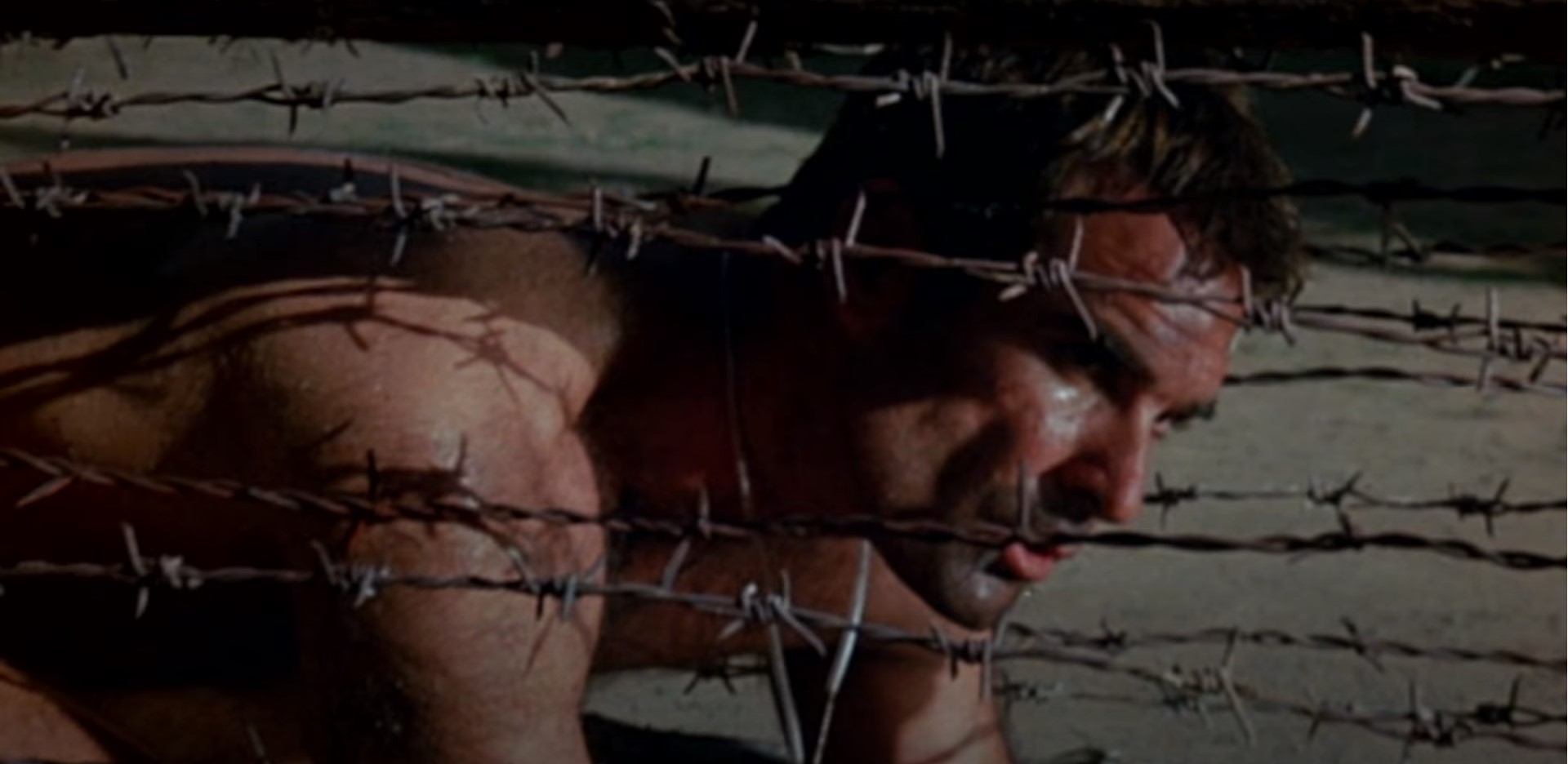
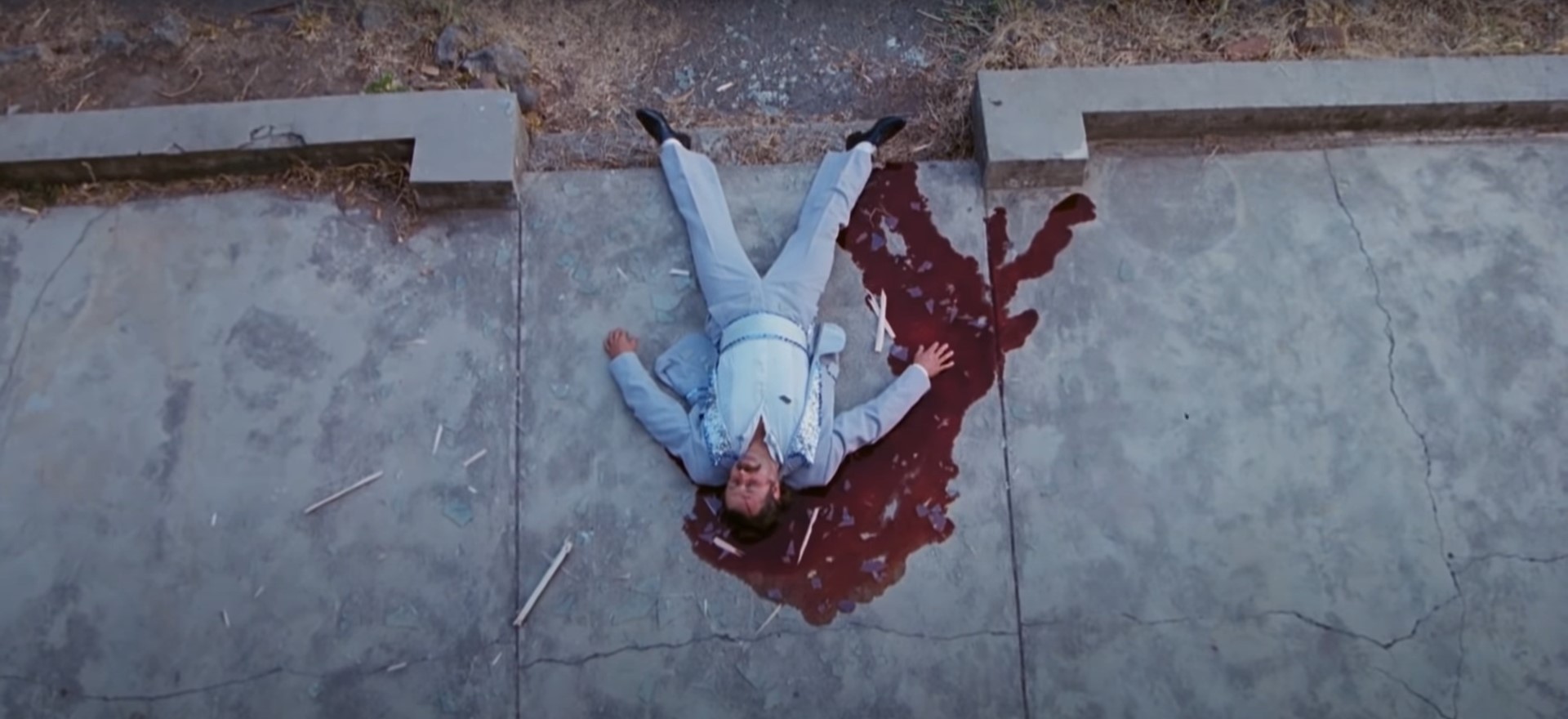
A motley crew of parapsychologists and private security are hired to investigate the haunted house of powerful warlock and accused serial killer Avery Lauter.  Before the graveyard side home can be turned into a themed Bed & Breakfast by Lauter’s inheriting next of kin, the team is brought in to eradicate the infamous house of any kind of malevolent spirits after the mysterious and gruesome death of a magician who agreed to stay at the house as a test run of the level of malignance.  When the investigators make contact with a confident and evil Lauter, the warlock tricks them by using the team’s physical medium to murder a far-too-inquisitive investigator one-by-one in order to finish a satanic ritual he started before his death that will make him immortal.  It’s up to non-believer, and wise-cracking, private detective Tony Vincente to make sense of the murders and put an end of Lauter’s reign of terror from beyond the grave before it’s too late.

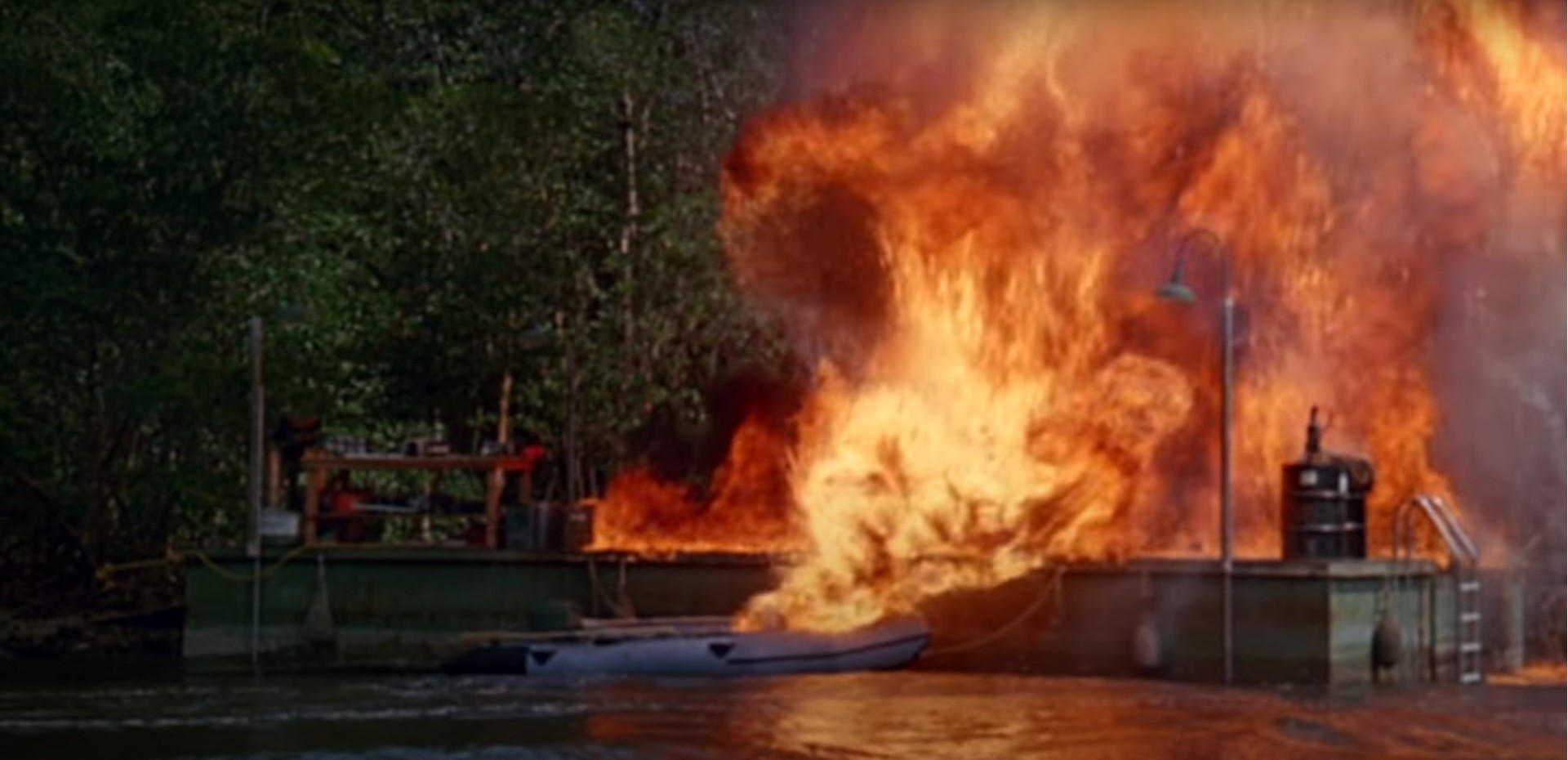
A necromantically-charged slaughterhouse of a film, “Witchtrap” is the 1989 phantasmal thriller of the omnipresent, omni-powerful dead versus a group of clueless living always one-step behind in attempting to make sense of everything.  Also known as “The Haunted” or “The Presence,” the Kevin S. Tenney written-and-directed film succeeds the director’s cult classic “Night of the Demons” and Tenney’s debut film “Witchboard,” which is not a sequel to “Witchtrap” despite a similar title and the hiring of some of the same actors.  Shot in Fairfield, California on a 400K budget, the independence production showcases topnotch gore and pyro effects from makeup artist Judy Yonemoto (“Dance or Die,” “The Newlydeads”) and special effects supervisor Tassilo Baur (“House,” “DeepStar Six”) and is produced by Tenney alongside Daniel Duncan under Mentone Pictures; Duncan also produced Tenney’s “Brain Dead” later in the filmmaker’s career.  Cinema Plus, represented by executive producer Ryan Carroll, serves as the presenting company.

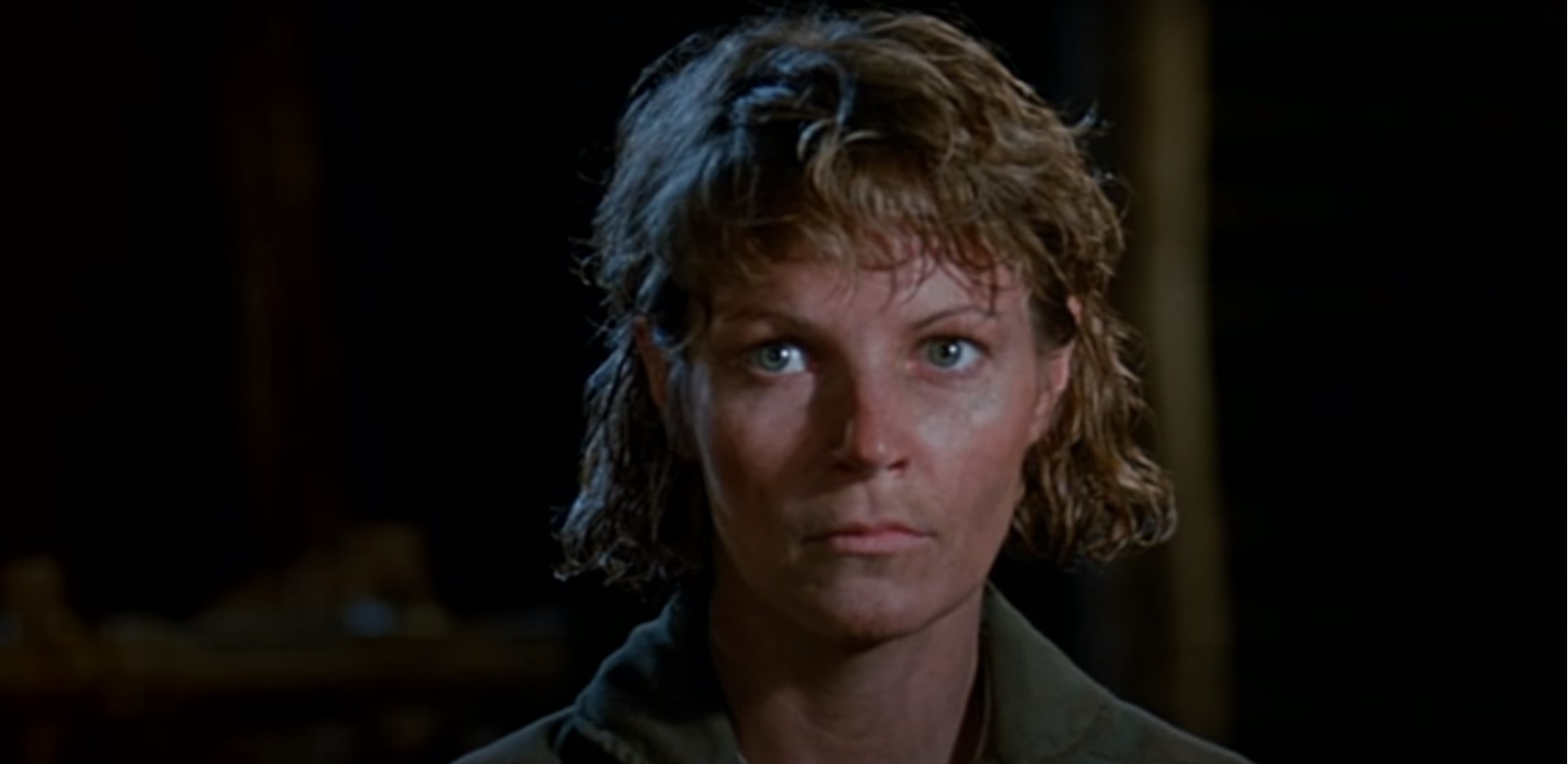
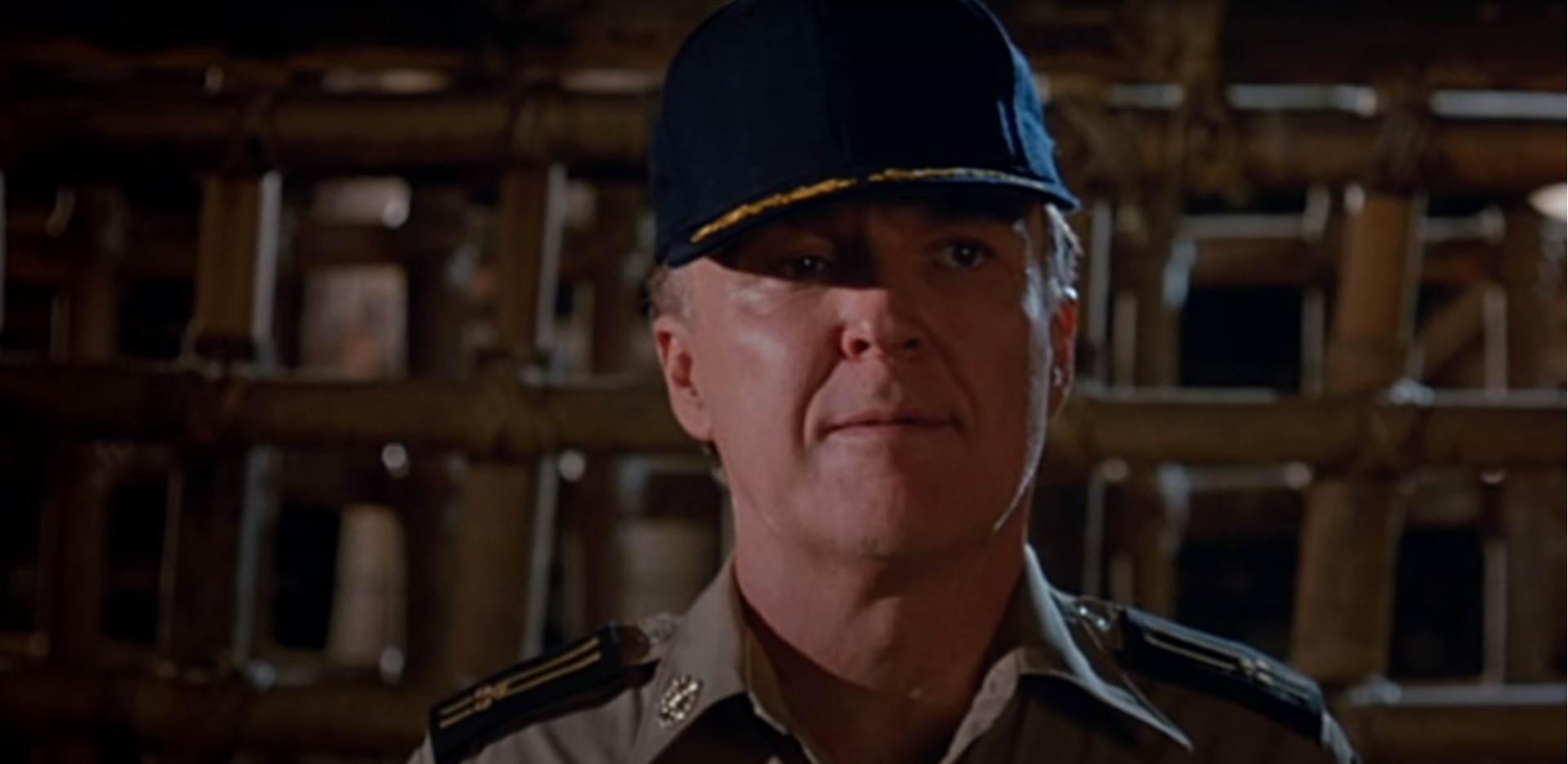
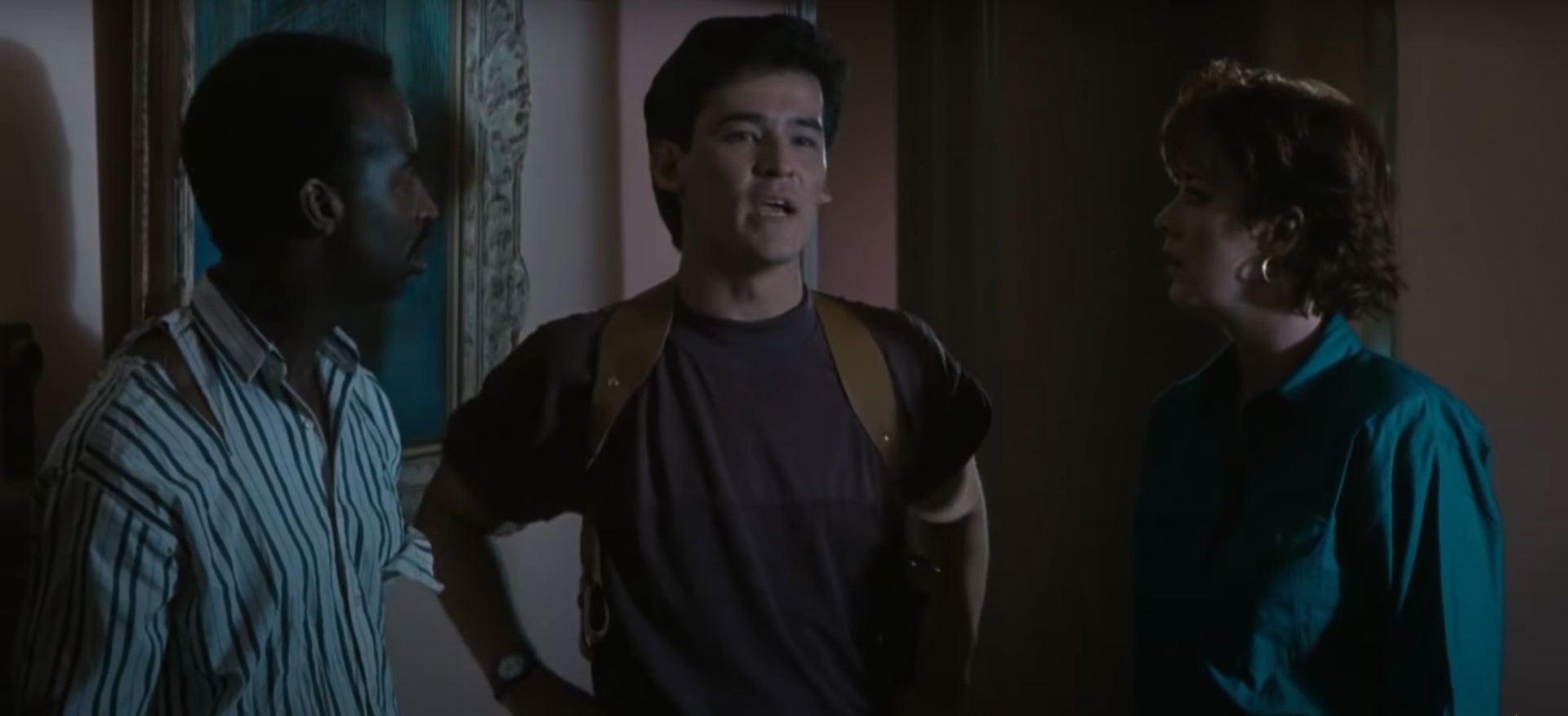
Tenney has been noted saying “Witchtrap” was a gift for the actors who have stuck with him over the years, playing pivotal parts in his student films that pole-vaulted his career into being a cult horror director.  “Witchtrap’s” leading man, James W. Quinn, has worked with Tenny since grade school and was cast in a principal role in “Witchboard” as well as in a minor role in “Night of the Demons.”  Quinn’s Tony Vincente is by far the best dialogue deliverer of the principal ensemble with a smartass ex-cop script that highlights Quinn to be the good guy but while being a complete jerk.  The rest of the cast is painfully flat, with little-to-no inflections, and a severe lack of dynamism or gesticulation that, despite how interesting their character backgrounds are, are just too dull with monotone script-reading.  “Night Visitor’s” Kathleen Bailey is likely the second best to liven up her character of Whitney O’Shea, the religious and reluctant physical medium with shark thrashing spams every time Avery Lauter channels her for to violently wipe out a parapsychologist team member, spearheaded by an eager ghost trapper Dr. Agnes Goldberg (Judy Tatum, “Witchboard”) and her mental medium husband Felix (Rob Zapple), and the accompanying private security forces that also include Vincente’s partner Levi Jackson (Clyde Talley II) and boss man Murphy (Jack W. Thompson).  Dangerous ambitions and irrational greed stir the pot between each of these groupings that side with personal stake over the safety of their existence that make for better character building underneath the rickety performance framing.  And, of course, we can’t neglect mentioning Linnea Quigley bringing up the rear with her rear as the bleached blonde, cropped seater topped A/V technician that can capture ghosts with her ectoplasm detecting gear.  Quigley, and also Judy Tatum, provide a bit of T&A, especially Quigley with an eye-popping full frontal in the prime of her career.  The remaining cast includes Hal Havins (“Sorority Babes in the Slimeball Bowl-O-Rama”) as the creepy groundskeeper and J.P. Luebsen (“Witchboard”) as the cap-wearing and wild-eyed bearded warlock Avery Lauter. 

Oddly enough, what makes “Witchrap” entertainingly great, is Tenney’s attractive and amusing dialogue.  Between the quips, banters, diatribes, and the depth conversations, Tenney formulates a dialogue that can match or even surpass the outstanding special effects that course through the narrative.  Without Vincente’s brutal mockery of the entire paranormal research and investigation scheme as well as an unmercifully, nonstop degrading position toward his contentious boss, left with only the tedious prosaic to hear, “Witchtrap” would be one of those great-gore, dull-dialogue features that force your hand to fast-forward to the good parts in order to not pass out asleep from the in between drag.  Instead, “Witchtrap” is 80’s cult-horror treasure, comfortably embedded somewhere between the cinematic Earth’s lithosphere and asthenosphere layers just waiting for someone to unearth and dust off its sheening crimson colored cabochon.  Definitely not elevated horror that makes one think about the auteur intended message, the feature remains true to Tenney’s previous like-mad credits with an outlandish and mortally fair game theurgy that’s surface-level eye candy and audibly dulcet, despite the audio recording snafu that sent the entire dialogue track to the post-production recording studio.  Though producers and marketing attempted to cash-in on “Witchboard’s” moderate success with a similar, familiar title, “The Haunted” and “The Presence” are no more than generic designation fodder that lacked tremendous flavor; “Witchtrap’s” a kitschy and blunt title that works and literally estimates what audiences should and will expect although Avery Lauter is a Warlock and not necessarily a witch per se. 

A part of the Eric Wilkinson’s throwback video club and Rewind Collection series from MVD Visual, “Witchtrap” arrives a fully restored, high-definition Blu-ray, presented on an AVE encoded, 1080p, BD50 and in a widescreen 1.85:1 aspect ratio.  This transfer essentially mirrors the Vinegar Syndrome release a few years back that had reinstated many of the MPAA cuts the general public hasn’t laid eyes for nearly 30 years until 2016.  Picture quality retains a fresh, renewed look without compromising the natural characteristics, such as grain, of the 35 mm celluloid.  There are sporadic scenes that slip due to generational loss but, for the most part, a solid 2K scan restoration of the interpositive. The English LPCM 2.0 mono track is post-production concomitant due to an inexperienced sound mixer that resulted overbearing hum throughout the dialogue. ADR was introduced in post subsequently diminishing depth and creating an artificial sounding mix with a silver lining being a near perfect match for actor emotionality, inflections, and synchronization. Optional English subtitles are available. Bonus material includes a commentary track with director Kevin Tenney, producer Dan Duncan, Cinematographer Tom Jewett, and actor Hal Havins. Also included are interviews with Kevin Tenney, Linnea Quigley, Tom Jewett, and Tassilo Baur who more-or-less say a lot of the same retrospective accounts regarding “Witchtrap’s” sound issues, pranks on Kevin Tenny, cheap film hints outside of L.A., and how constrained the budget was. This release also comes with the edited VHS version at 92-minutes, same as the Blu-ray, a photo gallery, and the original trailer. Physical features include a sweet throwback cardboard O-Slipcover of the original poster compressed inside a 1-inch, matte red border that’s back and front. The O-slip covers a clear Blu-ray case that holds a reversible Rewind Collection cover art that’s roughly the same as slipcover poster art with cropped out credits for a vivid red filled, white-lined title. On the other side of the cover is alternative European cover art of a puffy white cloud merged with a demonic face hovering over a white picket fenced house, reminiscent of the MGM “Return of the Living Dead” or the original Columbia “Fright Night” DVD covers. Inside the case is a folded mini-poster of the factory-wrapped front cover. MVD’s release is rated R and comes region free. “Witchtrap” epitomizes restless ghost syndrome with a head coup de grace motif and is a seance that conjures potent witty dialogue to hoist Kevin Tenney’s third feature up to another plane of existence.

Get Caught in the “Witchtrap” on Blu-ray!

EVIL Strikes with Thousands of Disastrous, Deadly Fangs! “Calamity of Snakes” reviewed! (Unearthed Films / Blu-ray)

Save the Date!  “Calamity of Snakes” Slithers onto Blu-ray and DVD!  Available at Amazon!

A greedy, time-is-money land developer pushes his project manager and structural architect to complete his condo building earlier than scheduled, even if that means to cut corners.  While digging to lay the structure’s foundation, a massive pit of deadly snakes is unearthed.  With no times to waste, the land developer orders the mass killing of the snakes by the crew and even takes matters into his own hand using a backhoe as a weapon against the wishes of more sensible architect.  Those who are karma-included and God-fearing believe the mass murder of the snakes will result in retribution with fears being validated when workers fall victim to random snake attacks.  Shrugging it off as superstition mumbo-jumbo, the land developer finishes marvelous residential condo and fills the units in record numbers.  His success becomes the tenant’s death trap who can’t escape the swarming thousands of deadly slithery serpents infesting every nook and cranny and climbing toward his penthouse, seeking revenge against the snakebit developer’s cruelty and greed. 

Warning.  If you have a severely crippling phobia of snakes, then do not press play on “Calamity of Snakes” or you’ll be crying in the fetal position for hours afterwards with imaginational visions of venomous serpents dangling around your neck and arms, clinging to your punctured flesh with their sharp, tapered fangs. Trust me.  I know from experience after having watched the William Chang Kee (Chi Chang) creature feature and going into the viperous vengeance film with my own form of sweat-inducing ophidiophobia, an extreme fear of snakes.  Kee’s 1982 production comes with a bit of notoriety that may put the film in hot water with Peta or other animal rights organization, it also may be a silver lining for those petrified by the carnivorous reptilians that lurk underfoot, but don’t worry, from Unearthed Films news board, the home entertainment distribution company pledges to donate a percentage of the “Calamity of Snakes’” sale profits to the Save the Snakes, an organization that aims to converse and repopulate all species of snake around the world.  Penned by Kee with cowriters Kang-Nien Li (“The Lady Avenger”) and Kuo Jung Tsai (“Crouching Tiger, Hidden Drago”), The Chinese film made in Taiwan, “Calamity of Snakes” wriggles to-and-fro between different genre elements with pieces of horror, martial arts, and comedy packed so tightly together that making diamond shaped heads and rattling tails difficult to define the kind of film Kee intended to convey, but what came to fruition fabulously depicts the can-do attitudes of developing a preposterous idea into something insane, terrifying, and effectuated with countless real snakes.  Chi He Film Company and the Hong-Kong based Kee Woo Film Co. serve as the production companies with Tsai-Ching Wang producing and Golden Sun Films (“Dr. Lamb”) distributing.

Despite the animal cruelty, which undoubtedly can’t be ignored, you have to give credit to the Chinese for their willingness to do just about anything in order to get the shot.  If that means two of the actors’ role violently around on a floor covered with live snakes, screaming their heads off, then they certainly have more cojones than I ever will.  From a recent interview I watched with Michelle Yeoh, the “Everything Everywhere All At Once” Academy Award winning actress describe the Chinese film industry of the 1980s to be stunt demanding and really did lack the strict safety standards when compared to the U.S.  “Calamity of Snakes” appears to be no different with the easily handling of cobras and an overall serpent magnitude that can’t be denied. Yun-Peng Hsiang stars as the young, U.S.-studied architect with a sensible and rational head on top of his shoulders, overcome with the feeling that his dealings with the unscrupulous land developer (Yuen Kao) and the two passive aggressively buttheads throughout the narrative that eventually lends to the developer getting what he wants by way of money, power, and backdoor dealings that denotes an allegory of affluence being blind to the perceptible cause-and-effect dangers ahead while the studiously educated are left ignored, exploited for their talents. “Calamity of Snakes” cast rounds out with Lui Cheung, Ying Lee, Tung-Min Huang, Ying Lee, Pei-Ying Lo, and Ping-Ou Wei as the land developer’s chucklehead assistant.

“Calamity of Snakes'” hardest part to digest is the disgusting display of snake homicide. In what becomes a grouping of three scenarios that are just scene after scene of killing snakes by the hacks of machetes, the release of mongoose going right for the head of the snake, and in a blaze of flame throwing fire, cruelty is terribly too integrated into the pericardium encased heart of Kee’s ecohorror and makes the snake outdoor market delicatessen scene that dispatches a cobra for use of consumption that much more palatable despite the graphic skinning, organ removal, and blood draining for a special drink cocktail that can supposedly cure what ails you. Down the hatch! After the ginormous scenes of genocide, rooting for the snakes to bite back against the unbridled cruelty of humans to come crashing down in a heap of revenge-seeking serpents is a sight of satisfactory glory. Kee, also known for his cheap but fast-paced martial arts films, creates a loose hierarchy amongst the ophidians by fabricating a boa constrictor that can kung-fu with the best human snake whisperer. The showdown scene takes flight with the constrictor whipping through the air using its large, serpentine tail as a formidable blunt object and its body to innately crush the life out of foes. In contrasts, the chop-socky, though wonderfully fast-paced and choreographed, is a bit out of place with a flying, unrealistic boa against the real slithering slitherers creeping along the floors and walls, decorating the rooms with slick, shiny scales that encircle terror around frantic condominium residents and the boss-level land developer who unsheathes a katana in another scene of snake cleaving in slow motion.

The day of the snake is here and now, on a high definition 1080p, AVC encoded, Special Edition Blu-ray from Unearthed Films as part of the boutique distributor’s Unearthed Classics sublabel and slotted at number 12 on the spine. The primary feature is presented in a widescreen 2.35:1 aspect ratio with a genuine digitized effort toward the best possible 2K scan rendition of the photograph film source print. There’s not a ton of wear, tear, or much of anything regarding damage aside from a few vertical scratches. Delineation is consistent with delivering characters and snakes transposed clearly, but often you might see the boa constrictor scenes share a softer exposure because of that accelerated camera work with the martial arts. Color reproduction does maintain a certain image fidelity, but the grading comes off placid, never giving the snake, or snakes, a chance to gleam a venomous glare with those eyelid-less and verticalized wide-angle seeing eyes. The original elements offer little to work with, but the Unearthed Films’ release is still top-notch work in delivering the best possible picture. The Mandarin, Cantonese, and English dub PCM mono 1.0 provide the typical options available when released in Taiwan decades ago; In fact, they’re all scratch tracks but I went with the Mandarin track that synchs not too adversely to viewing pleasure. With the mono, dub track, depth is done before it can even get started but “Calamity of Snakes” has immense range that conveys the whooshing actions of living things flying through the air during fight sequences, flamethrowers singe the very audible air, and the Foley keeps up to any and all actions with a more than satisfactory overlay track. Dialogue being the important aspect of anything film is fine here being in the forefront and clean albeit some moderate background crackling-static throughout. English subtitles are available and discern no issues with pacing or with spelling slips but there is a sense of something lost in translation as the dynamic discourse seesaws in an irregular way that feels forced and unnatural. Unearthed Films doesn’t just deliver one version of the film, the company offers two more edits for equality. If you’re not one for animal cruelty, a cruelty free version is available that omits the snake snuff. Also, the theatrical edit is a censored version, but Unearthed Films does include the 4:3 uncut, unrestored versions that adds back in prolonged sex acts and one very brief nudity scene. A From Shaw to Snake: The Venom And Violence of Early Chinese Language Horror Cinema brings back some key far East scholars, such as Calum Waddel, and new academic faces with Dr. Lin Feng, to discuss the background limbotic tug-a-war of Taiwan between the democratic island and mainland China that also morphs into the rising of Shaw Brothers’ films in the mid-20 century to eventually Golden Sun’s competitive rise, and subsequently the Shaw Brothers’ as well, into the kitschy crowd favorites of the horror genre. Reptilian Recollections: Lin Kuang-Yung In Conversation With Chui-Yi Chung converses in an interview with Lin Kuang-Yung recalling moments from production involving the countless number of snakes and the safety assurances with the cast and crew, despite some being bit a few times. The special features round out with a commentary track with Nathan Hamilton and Brad Slaton, alternate opening and ending credits, and a still gallery. The physical portions of the release come with a traditional Blu-ray snapper case inside a cardboard o-slip with the original Thai poster art by illustrator Kham, provided by the M. Wright Collection. The same poster art is used for the disc art as well. Inside the snapper case lies no insert or reverse cover art. The region A locked Blu-ray clocks the feature presentation in at 96 minutes and is not rated. “Calamity of Snakes’ is the original “Snakes on a Plane” of the 1980’s, a coiling revenge plotted by nature with potent venom and disturbing imagery that deserves to be a classic in its own right soon to once again see the light of day on DVD and Blu-ray come April 25 from Unearthed Films.

Save the Date!  “Calamity of Snakes” Slithers onto Blu-ray and DVD!  Available at Amazon!

EVIL Wants You to Be Mindless! “Night Feeder” reviewed! (SRS Cinema / Blu-ray)

“Night Feeder” Is a Brainless Trip Through the New Wave Eighties! 

A woman is found dead on the city streets.  The cause of death is the same as two others before with similar wounds; their brains are sucked out completely through a slit in the eye socket.  As the neighborhood community cowers in fear, Jean Michaelson, a female magazine journalist and who also just moved to the residential city district, takes it upon herself to uncover the truth before her new home becomes an unlivable nightmare.  At the center of suspicion is Bryan Soulfield, a musician a part of the band Disease, previously involved in the death investigation of three women groupies who overdosed on a drug called DZS that shares the same phonetic name Soulfield’s band.  Inspector Alonzo Bernardo spearheads the investigation with an ever-watchful eye on his best suspect, Bryan Soulfield, and an even keener interest in Jean Michaelson as they both feel the grip of public pressure and come intimately closer to each other and to the unsuspecting and shocking truth as the bodies become more frequent around Jean’s apartment.

Obscure, one-and-done horror can often be worth the viewing calories and 1988’s “Night Feeder” is definitely the epitome of those hidden gem genre films from America’s exploration into the video format and stemming into another branch of liberal arts.  “Night Feeder” was the result of an assemblage of a painter and a pair of novelists who, out of the blue, decided they wanted to make a movie.  A gouache and oil painter of portraits, often nude, Jim Whiteaker tries his talented brush stroking hand at directing a full length shot-on-video feature with mystery writers Linnea Due and the late Shelley Singer crafting a murder whodunit in a grisly brain slurping fashion that conveys heavily on the theme of misjudging a book by its disfigured and notorious cover and end with a killer you never see coming – because it’s sucking out your brain through your eye socket!  “Night Feeder” is also emblematic amongst other spoiler-inducing concepts that we’ll dive into later in the review.  Shot in the dark corners of the San Francisco Bay area at the liberal arts focused Dutch Boy Studios, “Night Feeder” is glam horror ripe for attention, produced by James and Jo Ann Gillerman under the production banner of Gillerman-Whiteaker-Gillerman.

For an investigative horror-thriller in the crevices of a phasing new wave and post-punk era, the low-budget production has a remarkably versed cast of unknown, likely hyper regional, actors.  Kate Alexander (“Kamillions”) cut her teeth as principal character, journalist Jean Michaelson, and instills a healthy dose of raw emotion into an unlikely B-flick, tamping her performance firmly into the role caught in a love triangle between punk musician and prime brain-sucking suspect number one, Brian Soulfield  (Caleb Dreneaux) and by-the-book police inspector, Alonzo Bernardo (Jonathan Zeichner) confounded by killer’s strange methods.  Not to forget to mention the ominous presence that possible lurks around every corner that drives shivers up Michaelson’s tattered spine, making her vulnerable and blind to what’s really in front of her, romantically and threateningly.  We’re briefly introduced to support characters, aka soon to be victims, and then eventually snowball into the quickly dispatched before having a chance to steal or swallow the protagonist predicament for their own, but these support characters are engaging enough to be either drug pushing scoundrels, intolerant jerks, or spaced-out mothers so you can tell from the beginning their level of likeableness before their fatal end, but at least they’re not benign, vanilla cogs in the machine. The cast fills out with Lissa Zippardino, Jac Trask, Ginger Seeberg, Roger J. Blair, Robert Duncanson, Robert Hogan, and the Bay-born cultural critic Cintra Wilson and a special soundtrack performance by the new wave rock band, The Nuns as the fictitious band, Disease. On top of that, Dutch Boy artists fill the gaps in minor roles like waiters, party guests, and concerns citizens as a public gathering.

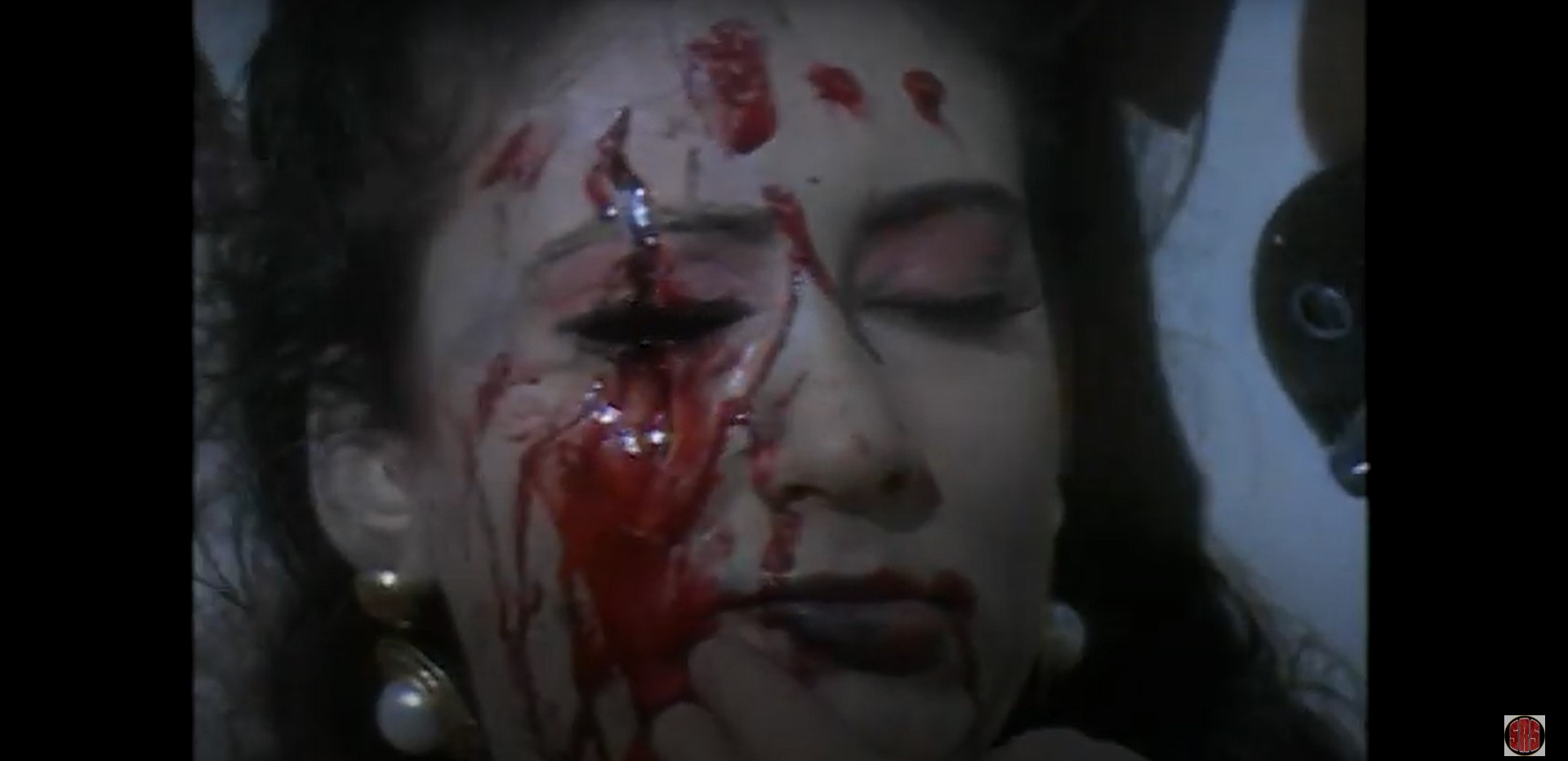
Despite playing out like a police procedural investigation that narrows down suspects until the killer is unearthed and either arrested or gunned down in a harrowing, desperate moment, we all know ahead of time “Night Feeder” is cladded with more than just plainclothes of cops and robbers.  The big tell is the brain being liquified and sucked out from the eye cavity like a Slurpee minus the brain freeze because, well, there’s no brain!  “Night Feeder” sounds like a mindless Z-grade film and while the narrative involves mindlessness in a way, the 80’s creature feature is anything but a ponderous film with an immense underground punk presence, eccentric personalities, and a standoffish and reticent romance brewing in the background sandwiching the strange deaths of unconnected murders piling up around the heroine’s noir-esque, urban jungle neighborhood and perplexing the lone law authority on the case.  Whiteaker and his writing team thoroughly include the residents and residents’ concerns which makes “Night Feeder” bigger than it really is as it is often with lower-budget creature features will neglect to include the angry, scared mobs into the conversation.  The narrative intends to spark public fear and uses it to drive Jean into a rabbit hole of truth that has now become more personal than professional since her space has been affected by an invading killer.  Her best friend ending up dead in the tub of her apartment during a neighborhood party and with her ex-husband found slumped out of the driver’s seat of his car shepherds violently out her old life into a new, scary territory of relationships.  A director having an artistic background and working with creative storytelling minds lends to a more than average physical special effects and becomes a Jonathan Horton (“Enemy Mine”) showcase of skill that removes “Night Feeder” from the average pool of shoddy effects films and into a higher class of eye-catching, detailed creepiness that is unique and can’t be unseen with an autopsy that’s all too realistically educational and with its climatically exposed humanoid creature and it’s protruding cerebral sucking device.

Strong effects, strong story, and a strong female character serve the “Night Feeder” as a secret menu item in the SRS Cinema catalogue!  The Cursed to Crave Forbidden Flesh tag lined film is presented on a single disc, AVC encoded, 1080p high definition Blu-ray with a letterboxed full frame aspect ratio of 1:33:1.  One of the better looking 80’s film on a budget, “Night Feeder” is tremendously insignificant SOV interference, which makes me believe Whiteaker and director of photography, Paul Kalbach, had their hands on non-commercial grade video camcorder and after doing some research, the camera used was a BetaCam SP that increased the horizontal likes to over 340, likely from to Whiteaker and Gillermans’ artistic music videos and seemingly at the advantage of Kalbach’s Artichoke Productions in the Bay area that gained him a reputation as a visual artist and “Night Feeder” very much plays into being a vision of New Wave horror with a glowing aura, vibrant warm, almost neon-like lighting hues, and, of course, the two semi-music videos of The Nuns making their way in front of the camera.  Virtually no technical issues with the image albeit a flat coloring, a blip here and there with a brief blip screech, and softer details with the glow haze outline that provides the movie a prolonged dreamy coating or an inescapable nightmarish ethereal within the context of the scene.  The English language Dolby Digital 2.0 stereo carries a lo-fi but sustainable level that celebrates the dialogue and divvies the other tracks to accommodate the little depth it can muster with the BetaCam recording. English subtitles are not available on this release.  Special bonus features include a commentary by director Jim Whiteaker who provides the genesis of the film and gives background on the characters and actors, a movie still slide show, and SRS trailers that include “Day of the Reaper,” “Garden Tool Massacre,” “The Son of the Devil,” “Hellbox,” “Truth or Dare?” Physical features are housed in a traditional Blu-ray snapper case with new composition artwork with the original embossed title and a still one of the more gory-ladened victims, but the reversed side carries the one of the original key arts that embodies the true essence of “Night Feeder” in illustration of a monstrous hand in the foreground of skyscrapers, reaching up and over a sensuously positioned lifeless woman who resembles the lead actress. The disc art is printed with the same illustrated image. The region free Blu-ray has a runtime of 95 minutes and is region free but is listed as a 2020 film in the same design grouping where usually the date listed is in the production release date, which in this case would be 1988. Tidied up and polished, SRS Cinema Blu-ray of “Night Feeder” is a quarried gem by a group of diverse artists bringing their leathery inlaid and new wave touch of artistic licenses to develop a subgenre standout in the 80’s creature feature category.

“Night Feeder” Is a Brainless Trip Through the New Wave Eighties! 

EVIL’s Blight is Captured off and on Film. “Cursed Films” reviewed! (Acorn Media International / Blu-ray)

“Cursed Films” Now Available on Blu-ray in the UK!  Purchase at Amazon.com By Click the Cover Below.

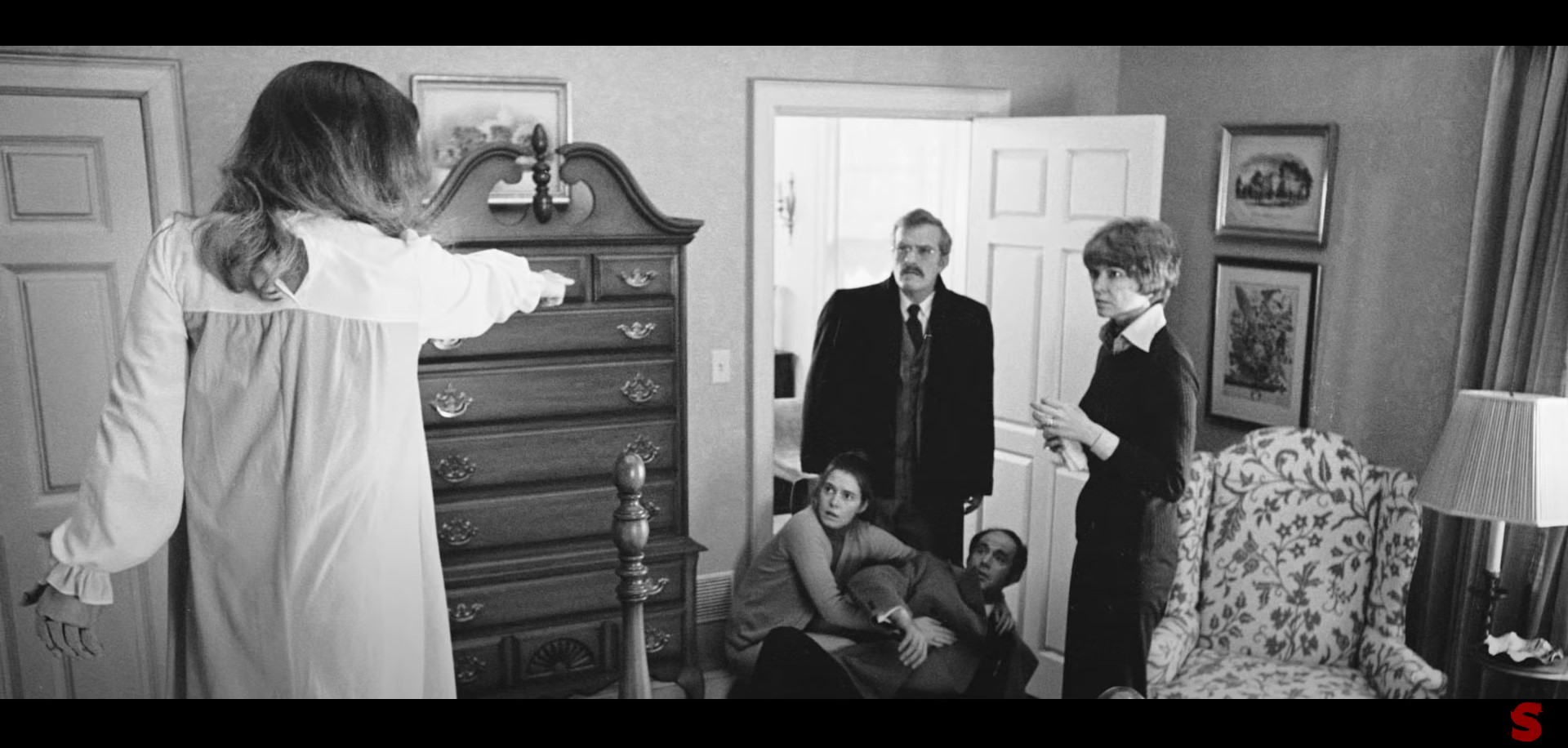
What do “Poltergeist,” “The Omen,” “The Exorcist,” “Twilight Zone: The Movie,” and “The Crow” all have in common? They’re just not successful horror-thrillers with extraordinary actors and directors, they’re also tagged as some of the worst cursed movies of our time. Severe ailments, planes struck by lightning, bombings at previously booked restaurants, egregious injuries, and even death, lots of death, have surmised belief that the otherworldly powers or the omnipotent universe has waged warnings and, if gone ignored, has blown the kiss of the death. For years, these films held power of people because of a string of unfortunate incidences that link back to rumors that possibly incite mystical retribution for using real corpses, telling stories about the birth of the antichrist, and even family lineage curses by ancient Chinese spirits. There’s no shortage of superstition in the world, a country practically built on the idea of a martyred Jesus rising from the grave, and Hollywood is no exception that the bad things that happen in life will always course people to find a reasonable explanation even if that explanation is an untenable supernatural one.

When we think of curses as a whole, we’re generally point and look to the obvious occult brewing with black magic of vindictive witches, ancient incantations to evoke demonic bidding, Gypsy ill-wills that have lycanthropy teeth, or ominous warnings inscribed by long-ago Egyptian priests keep mummified remains from being marauded by intruders.  These hexes and jinxes are storylines popular in movie culture since the beginning of the first movie pictures, used to entertain, excite, and thrill to the furthest extent of the means.  Who would have known there is a reality bound, darker side to the curse mythos that has been insidiously rooted in the illustrious and dream making film industry?  Cursed films have been the talk of Tinsel town, ambulance chasing tabloids, and the short-lived internet fandom for years, decades now even, surrounding the mysterious misfortunes of certain films.  The Shudder 5-episode docuseries, “Cursed Films,” goes into the weeds with retrospective interviews from cast, crew, religious experts and even mavens of black magic and witchery.  Jay Cheel wrote, directed, and edited the series removes the characters from the story and focuses on building the humanity of the affected, dives into possible reasons for the film or individuals involved to be cursed, and the unfortunate outcomes that have resulted in the loss of life surrounding the project.  Muse Entertainment Enterprise, one of the companies behind CBS hit U.S. comedy “Ghosts,” serves as the production company behind the 2020 released Shudder exclusive series.

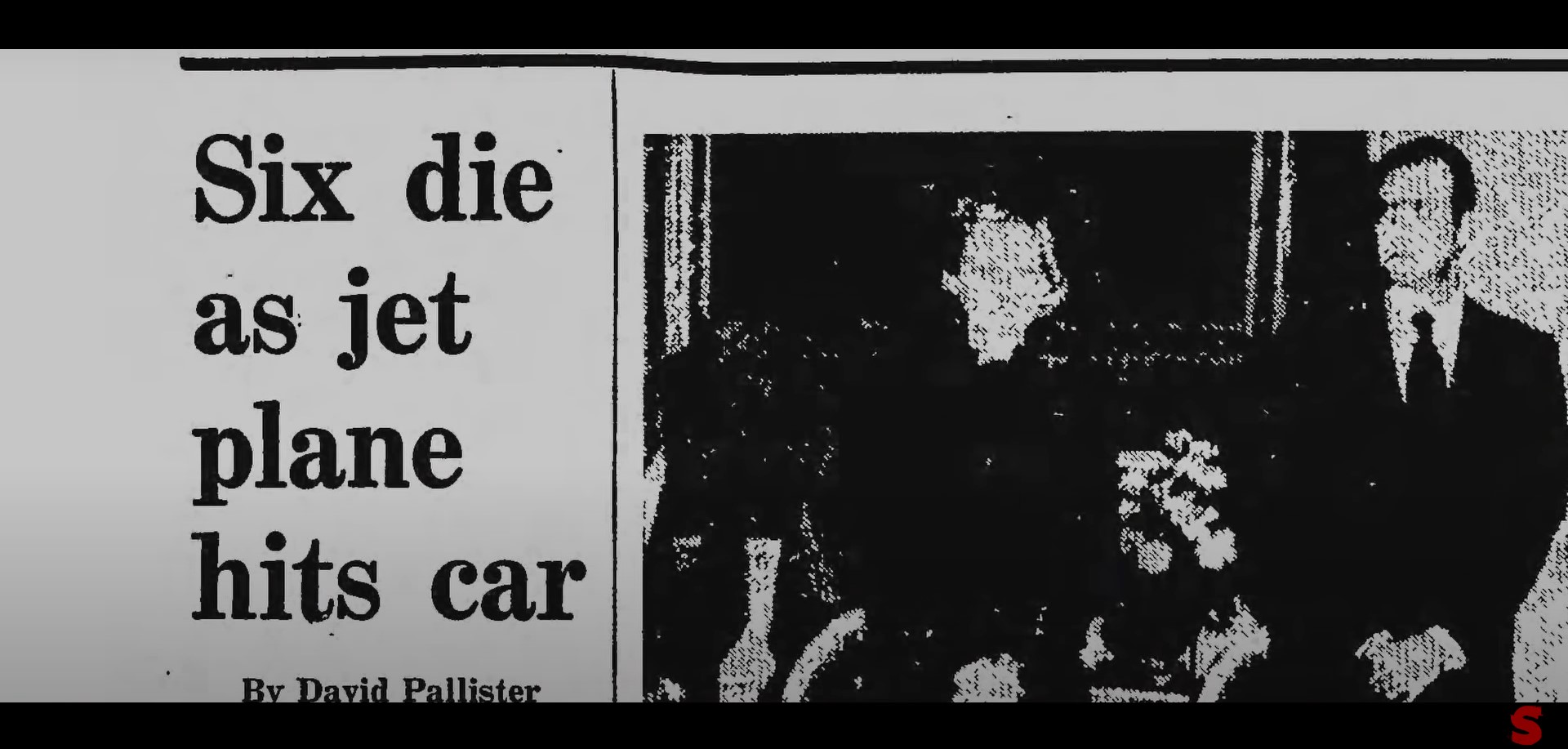
With any documentary, the cast are plucked right out of history, fast-forward into the present, to tell their firsthand account of events. Directors, producers, special effects and makeup specialists, and those beyond the realm of the film industry recollect and provide their own interpretation of a beleaguered saga with an interviewer, assumed to be “Cursed Films'” writer-director Jay Cheel, posing the questions to get open access to the inner thoughts of the grieved and impressed to give in full detail their wholehearted accounts. Cheel is able to nab different perspectives that play into the divisive nature of the whole cursed narrative, such as with those, mostly cast and crew, who don’t invest into the transcendental nonsense that has sense become either a minor or major stain on their careers. Others see the unexplainable coincidences to be godsent and beneficial to the production. For example, “The Omen’s” star Gregory Peck’s plane and producer Mace Neufeld’s plane were both struck by lightning in route to the London set only a few days apart. Neither plane sustained life-threatening damage and, thus, strokes of good luck and fortune seemed to be attached to the project along with other instances of death and destruction that averted harm from those involved with the film. Still, many still feel “The Omen” is a cursed film, mostly on the internet horror communities where conspiracies, misinformation, and false narratives run rampant like COVID in the early years. Often when Cheel obtains the perspective a black magician or a witch, Cheel’s attempting to gain not only an understanding of that world from real world practitioners but also to embellish a great melodrama into the episodes. Then, there’s the emotionally poignant Richard Sawyer segment. As the production designer on John Landis’s “Twilight Zone: the Movie,” Sawyer saw firsthand the tragedy that befell one of the film’s segment stories. Lead actor Vic Morrow (“Humanoids of the Deep,” “1990: The Bronx Warriors”) was cut down, along with two children, during a scene with a helicopter that went terribly wrong, and Sawyer’s account is powerfully traumatizing and great representation of how this series should be affect and chill viewers to the heart and to the bone.

“Cursed Films” reveals the terrible mishaps and misfortunes of limelight. If a private person is dies due to illness, accident, or foul play, there’s usually not a major production made out of the occurrence and no grand, “Final Destination” design beyond our understanding is erected to give it all meaning. Under the public eye and recorded by every entertainment medium known to mankind at the time of filming presents public scrutiny, public panic, and public speculation that plots points and charts graphs toward a giant, flashing sign that says, in big bold letters, CURSED! To any given horror fan, much of Jay Cheel’s docuseries is already common knowledge for the most part with the fresh and emphatic take from at the scene interviewees who add compassion and empathy as a shield against those who still think the sweet-faced Heather O’Rourke was doomed by some malison brought to fruition by India-removed skeletons. To the non-horror fan, much of Jay Cheel’s docuseries will have that new car smell and can be engrossed by Cheel’s spin of oppositions that never lay claim to either side as truth but only further what Zelda Rubenstein and Richard Sawyer tried to dispel with reason and tangible accounts is that there is some underlying curse reaching up and grabbing the throats of these films to point of choking the very goodness out of the cast and crew’s souls and only provide morbid curiosity to those seeking out the works stuck in a perpetual cycle of occultism.

Become reeled in by the notorious historical compendiums of “Cursed Films” in the first season that aired in 2020 and is now finally on Blu-ray home video in the UK from Acorn Media International. Though listed as a PAL release, the AVC encoded Blu-ray is presented in a 2.39:1 aspect ratio and is in 1080p, high-definition resolution, so a PAL encoding description would be inaccurate for a HD release. Image quality varies between the clean digital recordings with the interviews in interiors and exterior settings, polished transfers snipped from your favorite classic (and “cursed”) movies, and the raw, unpolished frames or clips that were cut from the film or remained as behind-the-scenes supplemental. All-in-all, picture quality is fine and clear in any regard with no issues of compression on the various mediums. The English language DTS-HD 5.1 surround sound stakes prominences on the dialogue for this is a docuseries reliant on firsthand accounts. Some historical footage can be staticky and flat but fits into the documentary design that pulls clip examples from the archives. “Cursed Films” isn’t going to be actioned packed or atmospheric but the composing duo of “Kicking Blood,” Justin Small and Ohad Benchetrit, offer an engaging soundtrack that could tell the story without the interviewee’s tale of sadness, mysticism, etc. English subtitles are available. For each episode a director’s audio commentary is available as a special feature. The physical feature comes in a slightly thicker Blu-ray snapper with the cover art, which is the same as the U.S. RLJE release, of an unspooling film reel displaying iconic tokens from each movie. The 141-minute and region B playback release houses the film’s certified 15 rating for strong horror, strong language, strong injury detail, sex references, domestic abuse, suicide, and bloody images. Whether you believe in curses or not, “Cursed Films” is a peradventure that’s powerful and uncanny to this very day that’ll have you straddling the fence of labeled condemned films.

“Cursed Films” Now Available on Blu-ray in the UK!  Purchase at Amazon.com By Click the Cover Below.

Michelle Yeoh Versus the EVIL Japanese Imperial Army! “Magnificent Warriors” reviewed! (88 Films / Blu-ray)

“Magnificent Warriors” Now on an Amazing Blu-ray from 88 Films!   Click The Poster to Purchase!

Ming-Ming is an adventurous, mercenary pilot unafraid to herself mixed up in the worst of trouble and against the tremendous odds.  When her patriotic grandfather and military uncle present Ming-Ming a mission of resistance against the Japanese Imperial Army during World War II, the odds, again, will be stacked up against her as she must track down China’s top-secret agent to extract the City Lord of Kayi City, a fortified Chinese city on the outskirts under Japanese control with ambitions to build a strategic, poisonous gas plant.  When Ming-Ming’s is shot down by a Japanese fighter pilot and the mission proves to be more difficult than expected, a small band of unlikely heroes become resistance fighters that inspire Kayi City to rise up against an oppressive, super nation threat to take back their home.  The city of spears and arrows must defend its people from an overwhelming army of rifles, mortars, and tanks in a fight to the death.

Michelle Yeoh is so hot right now.  The Malaysian-born, long-time actress has been under the U.S. mainstream radar for decades up until recently.  Before now, she was well enough for her roles in Ang Lee’s four-time Academy Award winner “Crouching Tiger, Hidden Dragon” without Yeoh receiving a nomination.  Twenty-two years later, Yeoh receives her first Academy Award nomination for “Everything Everywhere All at Once,” but we all knew she deserved the coveted U.S. award well before now.  U.S. audience never got to experience Yeoh earlier in her career as an Asian action star that rivals the likes of male counterparts Jackie Chan and Chow Yun-Fat.  In “Magnificent Warriors,” Yeoh’s diligence to the demanding workload foretells a superstar in the making.  The David Chung directed Hong Kong picture is relentless and action-packed with stunning and intense choreographed martial arts and having a large-scale showmanship of numerous grand explosions and a vast production pocket that include countless background actors.  The script is penned by frequent Stephen Chow collaborator Kan-Cheung Tsang who has wrote many of Chow’s directorial films, such as “Kung Fu Hustle,” “Shaolin Soccer,” and “The Mermaid.”  “Munificent Warriors,” also known as “Dynamite Warriors” is produced by Linda Kuk (“Hard Boiled”) and David Chung’s “Royal Warriors” producer John Sham and executive producer Dickson Poon under the D&B Films banner.

In a career that spans decades plotted by a number of strong female characters, Michelle Yeoh has embodied strength, intelligence, and beauty for this generation.  Under her early credited name of Michelle Kahn, the actress, who in the last five years has entered the Marvel Universe, the Star Trek Universe, and is slated to be in the upcoming James Cameron “Avatar” sequels,” is the driving force behind what makes “Magnificent Warriors” so engrossingly magnetic.  Trained to use a bullwhip and able to accomplish major stunts, unsafely I might add, on her own, Yeoh pulls off the demanding role with sheer confidence radiating from her performance.  So much confidence that the quality beams from her eyes to the point that her gaze nearly appears to be a sadistic grin of her own masochism.  Yeoh seizes Ming-Ming’s adventurous spirit, fully embraces it even, and stands out, but meshes well, amongst the mix of characters, including a hapless and bumbling drifter played by Richard Ng.  The “Mr. Vampire Part 3” star has a recognizable and distinguishable face as a well-known Hong Kong actor from China.  In “Magnificent Warriors,” Ng’s character is clearly the odd man out with zero ambitions and zero fighting skills, providing roughhouse comedic relief with lucky escapes with his life, but as far as character arcs go, the drifter, who cheats and scams gamblers for money and thinks about saving his own skin, succumbs to the resistance call of helping China and becomes one of the leaders of the core Kayi City defenders.  There are three others in this band of five with the City Lord (Lowell Lo, “Spider Woman”) who has a similar character arc as the drifter in being a bit of a scaredy-cat as a traitor against the Japanese Imperial Army but sees the light of his people needing his boiled down bravery and leadership, and his involvement with Shin-Shin (Cindy Lau), a daughter of a Japan loyalist who is obsessed romantically with the City Lord and can kick ass as well that surmises a feminism theme that women are just as strong as men and can have a better moral compass, especially compared to the bumbling man in power, the City Lord, and the drifter con artist.   The weakest fifth character, with an equally weak performance, in the group is Secret Agent No.1, as he’s described in the subtitles, played by Derek Yee (“Black Lizard”).  Though pivotal to the resistance operations to succeed, Secret Agent No. 1 fails to make his impact like the others, character divulging a vague history of his climbing to be China’s best secret agent and also teetering on the supposedly feelings for Ming-Ming that doesn’t ever come despite blatant suggestions to the contrary.    Matsui Tetsuya, Hwang Jan Lee (“The Drunken Master”), Meng Lo, Fung Hak-on, Jing Chen, and Ku Feng round out the “Magnificent Warrior’s” cast.

With extraordinary martial arts choreography, the impossible become possible in what can be experienced as an epic ballet of fists, kicks, and dueling weapons.  Every battling moment translates perfectly on screen without the flinch of error, though I’m sure many takes were took.  Back when outside Hollywood film studios relied on their determination and skill, with a pinch of luck, to get them through tough and rigorous stunts without the aid of wire, pads, or any union approved safety measures for that matter in what feels remarkably alien, like being on a whole other world where the rules of physics and safety do not apply.  “Magnificent Warriors” is truly a magnificent stunt-driven, wartime story revolving around revolutionism, a contemplation of the relationship between a home and its people, and a principled life of standing up for what’s right.  Director David Chung manages to massage out the numerous themes under the façade of a great thrust of nonstop action.  The set pieces, locations, and wardrobe are all fitting for the late 1930s-1940s era, especially with the Japanese uniforms that extend into their armored vehicles, such as in the brief, for show, scenes of its war plane and handful of Type 95 Ha-Go tanks. It’s refreshing to see an older film have a different angle on the overplayed World War II narrative; instead of the typical European or Asian Pacific campaigns involving American troops, “Magnificent Warriors” goes granular into The Second Sino-Japanese War during the Second Great War the world has ever experienced. Japanese implemented chemical warfare into their strategy of expanding their dominating military advances and establishing a footprint in China. “Magnificent Warriors” embellishes the poisonous gas narrative with the imperial army seeking to use Kayi City as a chemical producing plant, steering the film’s epic grapple over the city from out of underlying truth of the actual conflict. Every stage of story progresses into a larger scale of the previous skirmish which bottles up the grossing pressure between the imperial army, the resistance fighters, and the collateral damaged city folk caught in the middle. Sprinkled with comedy and charisma, and an ever so delicate dark tone, “Magnificent Warriors” is impeccable Hong Kong cinema and exposes the world to an underrated performance by Michelle Yeoh who kicked ass then in this film and still kicks ass today.

UK distributor 88 Films releases the “Magnificent Warriors” onto an AVE encoded, 1080p, high-definition Blu-ray, presented in a 2K restored transfer of the original theatrical cut on the company’s USA line. Exhibited in the original 2.39:1 aspect ratio, the anamorphic picture can appear globular at times, resulting in a packed image but more on so on pan shots than anything else. The overall picture quality suggests a pristine original print of the theatrical cut with a clean presentation from start-to-finish. Mostly warm with a flaxen degree of a desert background within a Mongolian Mountain valley, when the story does transition to a night shot or to interiors, the grain roughly sustains the change to keep a unified picture consistency that lives in a low contrast field without any deep shadow work or hard lined delineation. Compression issues are non-existent and there’s not obvious, unwanted touchups here to note. The release comes with two audio options: A Cantonese DTS-HD Mono and an English dub DTS-HD Mono. Preferrable choice is always the original intended language; however, this film’s audio options are both dubs but the Cantonese synchs better with grammatically suitable English subtitles albeit their breakneck speed to keep pace. Dialogue is clean, clear, and the action sound design is audibly potent with pinpoint precision on the homogenous strike. There are moments I thought the quick editing, especially during the plane chase, would hinder the ambient effects to keep up but I was pleasantly surprised, and the prop and gunfire intensity presents a nice exchange of open aired depth, range, and dynamisms. Software bonus features an archive interview with Michelle Yeoh (circa early 2000s), an archive interview with stunt coordinator Tung Wai, an English credits opener, the Hong Kong and International trailer, and still gallery. The hardware features are a tad better with a double-sided A3 poster, a 35-page color picture booklet with historical and filmic essay by Matthew Edwards, a limited cardboard slipcase featuring new art by Sean Longmore, and a reversible cover art in which shares its illustration with the booklet. The case isn’t the traditional slim Blu-ray snapper as it’s thicker to handle the booklet and poster. The release comes not rated, region A coded, and has a runtime of 92 minutes. Drawn into a big war shieled and overlooked by a bigger war, “Magnificent Warriors” not only time capsules a piece of Asian history but does it with fantastical fight and character that delivers one Hell of a timeless film with Michelle Yeoh at the helm.

“Magnificent Warriors” Now on an Amazing Blu-ray from 88 Films!   Click The Poster to Purchase!